Article Contents:
- When old wooden furniture can be updated without full restoration
- What exactly is changed when updating old furniture
- What to buy for updating old furniture
- Replacing handles: the fastest way to update a cabinet, nightstand, or facade
- Replacing legs: how to change the silhouette of old furniture
- Facade decor: carved overlays, rosettes, and moldings
- How to choose decor to match furniture style
- Ready-made scenarios for updating old furniture
- What not to do from scratch if you have ready-made STAVROS elements
- What to buy together: a kit for updating old furniture
- How not to confuse decorative elements with similar products
- Practical selection for specific situations
- Need to update an old cabinet without replacing the facade
- Need to update an old cabinet with handles and legs
- Need to update a sideboard with wooden decor
- Need to cover old holes from handles
- Need to make the facade of old furniture more classic
- Need to select a part for painting
- How to update old wooden furniture without full restoration?
- What to buy for updating old furniture?
- Can you update old furniture with your own hands?
- Which handles to choose for an old cabinet or chest?
- When should you replace furniture legs?
- How to choose wooden legs for old furniture?
- How to decorate furniture facades with carved overlays?
- Can wooden rosettes be used for facade decor?
- How does furniture updating differ from restoration?
- How not to ruin old furniture when replacing hardware?
- Can an old cabinet be updated without replacing the front?
- What is better for the front: moldings, overlays, or rosettes?
- Do I need to buy handles, legs, and decor as a set?
- Which STAVROS elements are suitable for updating fronts, drawers, and doors?
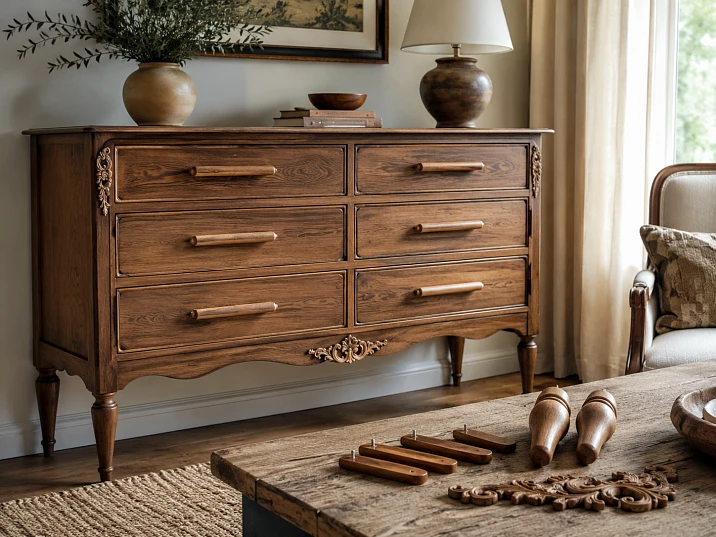
How to update old wooden furniture if the body is still sturdy, doors hold, drawers open, but the appearance no longer fits the interior? A full restoration with disassembly, removing old coating, repairing veneer, and complex joinery is not always necessary. Often, furniture can be noticeably transformed through details: replace handles, install new legs, add decor to the front, decorate doors with moldings, cover old holes with overlays, and assemble everything in one style.
This approach works especially well with cabinets, nightstands, sideboards, bedside tables, consoles, dressers, small credenzas, and furniture that is visually outdated but has not lost its strength. An old item does not have to be thrown away. Sometimes it just needs the right silhouette, new hardware, a neat relief on the front, and a connection to the rest of the room's decor.
The main mistake is buying decor randomly. Beautiful wooden handles, shaped legs, or carved overlays may not work if you do not consider the size of the front, old holes, furniture height, room style, future finish, and attachment method. Furniture updating looks convincing only when all elements work together: handles match the doors and drawers, legs change proportions, overlays do not overload the front, and moldings help compose the design.
STAVROS offers wooden elements that help transition from the idea "I want to refresh old furniture" to a specific set: handles, legs, decorative overlays, carved decor, moldings, and other details for fronts, doors, and drawers. Below is a detailed breakdown of what to buy for updating old furniture, how not to confuse decorative elements with similar products, and in which cases a cosmetic update is sufficient, and when it is better to first repair the base.

When old wooden furniture can be updated without full restoration
Update and restoration are not the same thing. Restoration is needed when the furniture is structurally damaged: the body is loose, the veneer has peeled off, joints are broken, drawers are warped, doors are sagging, the coating is cracking in layers, and the wood requires serious preparation. In such cases, new handles or overlays will not solve the problem. They will only draw attention to the weak base.
Cosmetic update is suitable for a different situation. The body is strong, the furniture stands steadily, the fronts are intact, but the appearance is outdated. For example, an old cabinet is too low and heavy, a sideboard looks dark and massive, a small cupboard has lost its expressiveness, a bedside table does not match the new bed, a console seems plain after renovation. In these cases, you can not replace the entire item, but update it through details.
Three areas most strongly influence the perception of old furniture. The first is handles. They are always in sight, touched every day, and quickly convey the style. The second is legs. They change the height, lightness, silhouette, and placement of the furniture in the room. The third is the front: doors, drawers, central panels, corners, empty areas. This is where carved overlays, wooden rosettes, moldings, and other applied decor work.
If the furniture is old but solid, updating can give it a second life without complex rework. A new set of parts helps eliminate the feeling of randomness: old holes can be covered with decorative overlays, a low cabinet can be raised on new supports, flat doors can be framed with molding frames, and outdated handles can be replaced with wooden elements that match the room's style.
This route is especially convenient when the furniture is already liked for its size and function. The cabinet is in its place, the cupboard fits in depth, the sideboard is convenient for storage, the console is well integrated into the hallway. Replacing the entire item for the sake of appearance is not always reasonable. It is much more practical to understand which parts to buy so that the update looks not like a temporary alteration, but like a thoughtful work with the front, silhouette, and hardware.




What exactly changes when updating old furniture
Old wooden furniture most often becomes outdated not all at once. One item may have a good body but weak handles. Another has a successful shape but too heavy a base. A third has a flat and empty front, although the size and function are completely satisfactory. Therefore, before purchasing, it is useful to break down the furniture into zones.
Handles are responsible for the first impression and convenience. If they are plastic, metal of random shape, too small, or do not match the style of the furniture, the item looks cheaper. Replacing handles is the fastest way to update a cupboard, cabinet, sideboard, or drawers.
Legs are responsible for the silhouette. Furniture on a heavy base looks squat. The same cabinet on wooden legs can become visually lighter, taller, and closer to the interior. This is especially important for old furniture: sometimes a piece seems outdated not because of the facade, but because of the heavy lower part.
The facade is responsible for the style. An empty door can look too simple. A drawer without relief appears flat. The central area of a sideboard may call for a decorative accent. Overlays, moldings, decorative wooden rosettes, and carved decor help here.
Finishing ties everything together. Even properly selected details can clash if the handles are one shade, the legs another, the facade a third, and the overlays remain unprepared. Therefore, before purchasing, you need to understand whether the elements will be painted, tinted, lacquered, or used as is. Current finishing options and parameters should be checked in product cards or clarified with a STAVROS manager.
| Furniture zone | What can be replaced or added | What changes visually | What to check before ordering |
|---|---|---|---|
| Handles on doors and drawers | Wooden handles, knob handles, bracket handles | Furniture looks neater, a new style and tactility appear | Size, shape, old holes, grip comfort |
| Legs and supports | Wooden furniture legs, unfinished legs for finishing | Height, lightness, proportions, and stability change | Seat, mounting, load, height |
| Facade | Carved overlays, decorative rosettes, moldings | Relief, frame, center of composition appears | Facade size, symmetry, decor thickness |
| Old holes | Handle overlays, decorative elements | Surface looks neater after replacing hardware | Match with new handle, overlay scale |
| Item style | Set of handles, legs, and facade decor | The furniture is perceived as a whole, not as a set of random parts | Combination of form, material, finish, and room |
This table shows why the question "how to update wooden furniture" is better solved not with a single action, but with a set of related solutions. You can replace only the handles, but if the legs are too heavy, the furniture will still look old. You can install beautiful legs, but if the facade is empty and damaged, the update will remain incomplete. A good result appears where every detail has a clear role.
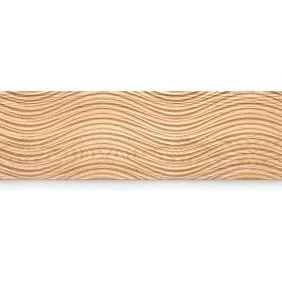
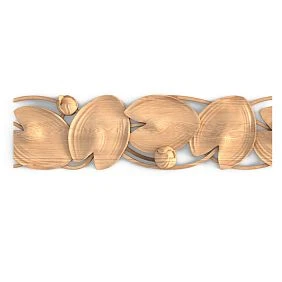
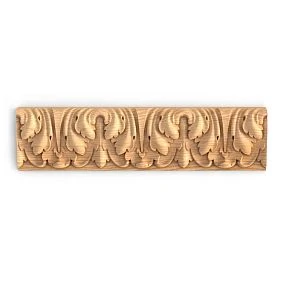
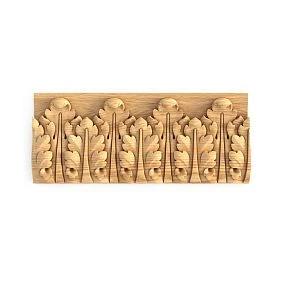
Our factory also produces:
What to buy for updating old furniture
Before buying, it is useful to define not the product, but the task. Need to quickly refresh the appearance? Start with handles. Need to change a heavy silhouette? Look at legs. Need to decorate the facade of an old cabinet or chest? Work with overlays, moldings, and decorative rosettes. Need to cover old holes after replacing hardware? Choose overlays for handles or decorative elements of the appropriate size.
| Task | What to buy | What changes visually | Which items it suits |
|---|---|---|---|
| Quickly refresh the facade | New handles | Style, accent, ease of opening | Cabinet, sideboard, chest, dresser, nightstand |
| Lift the furniture and change the silhouette | Furniture legs | Height, lightness, proportions | Nightstand, console, chest of drawers, small cabinet |
| Close old holes | Decorative overlays | The facade looks neater after replacing the handles | Drawers, doors, old facades |
| Add a classic style | Carved overlays | Relief and decorativeness appear | Sideboard, cabinet, nightstand, facades with empty areas |
| Make the center of the composition | Decorative wooden rosettes | The facade gains accent and symmetry | Central doors, wide drawers, sideboards |
| Make frames on the facade | Moldings | A paneled effect appears | Flat doors, cabinets, cupboards, consoles |
The minimal set for updating old furniture is handles and legs. It is suitable if the facades are intact, without noticeable defects, and do not require complex decor. A more expressive set includes overlays, moldings, and rosettes. Such a kit is needed when the facade is too simple or you need to achieve a classic, neoclassical, vintage, or more furniture-like character.
If you want to buy wooden furniture handles and immediately match them with other details, it is more convenient to look not at one card but at adjacent categories. For example, Wooden furniture handles can be linked with facade decor and legs so that the update looks cohesive. If the item will be repainted, it is worth separately looking at uncoated wooden handles. If a more finished detail is needed, you can explore wooden handles with coating.
For the lower part of furniture, it's useful to look Solid wood furniture legs. They particularly noticeably change nightstands, consoles, small cabinets, and chests of drawers. If the future finish hasn't been chosen yet, you can pay attention to from STAVROS open boundless possibilities for designers, furniture makers, and anyone striving to create unique high-quality furniture., to then select the finish to match the body or facade.
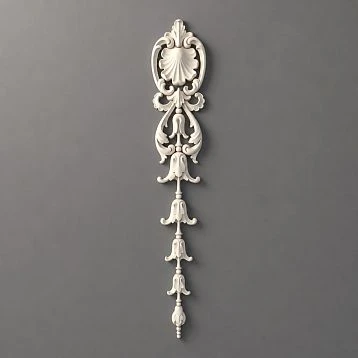
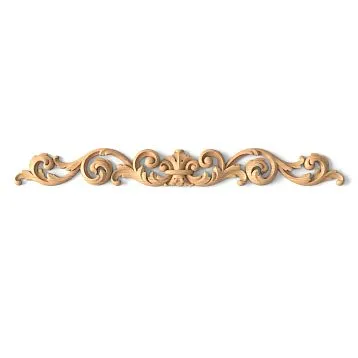
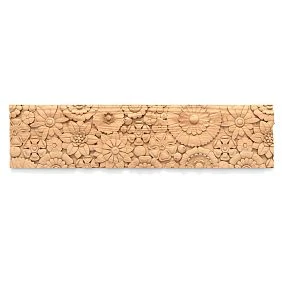
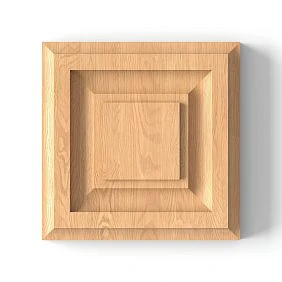
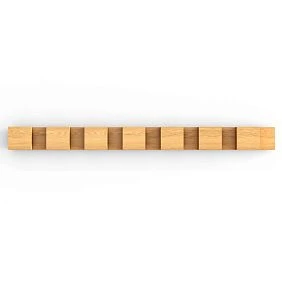
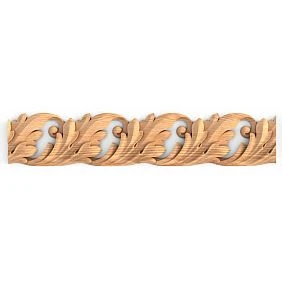
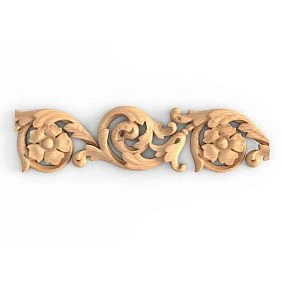
For the facade, suitable are Decorative solid wood overlays. They help add relief, cover empty areas, design doors and drawers. If a more expressive classic effect is needed, you can use Carved wooden decoration. And for frames, lines, and a paneled effect, useful are Solid wood moldings, cornices, and baseboards.
Get Consultation
Replacing handles: the fastest way to update a cabinet, nightstand, or facade
Handles are the first detail to check on old furniture. They can be worn, mismatched in style, too modern for a classic body, or too simple for an updated interior. Even if the body remains the same, new hardware changes the impression of the piece.
Wooden handles are especially well-suited for furniture that you want to make warmer and more expressive. They connect the facade with natural texture, better support wooden legs and overlays than random metal hardware. For an old sideboard, nightstand, cabinet, or bedside furniture, a handle can become not just an opening point, but part of the overall decor.
When choosing, you need to consider not only the shape. The old holes are important. If the facade already had pull handles with a center distance, the new handle must either match the mounting, or the old holes will have to be closed, puttied, repainted, or covered with a decorative overlay. If the holes are not closed, the update will look untidy.
For cabinet doors, knob handles or small pulls are often suitable. For wide drawers, elongated handles are more convenient. For a sideboard, you can use a more expressive shape, because the item itself is usually larger and more decorative. For a bedside table, it is better not to take too massive elements: they can visually weigh down a small facade.
If you need to buy wooden furniture handles for an item to be painted, decide in advance whether the handles will be painted in the color of the facade or remain a separate wooden accent. The first option makes the furniture calmer. The second helps to emphasize the material and support other wooden elements in the room. For classic and modern classic furniture, a combination often works well: a facade in a calm finish, wooden handles, neat overlays or moldings.
A separate nuance is the ease of grip. The shape may look good in a photo but be uncomfortable every day. For a drawer that is often opened, it is better to choose a handle that is easy to grasp. For a decorative door that is rarely opened, you can afford a more expressive shape. Before ordering, it is always worth checking the dimensions and parameters in the product card.
Replacing legs: how to change the silhouette of old furniture
Legs change furniture more than it seems. An old cabinet on a heavy base can look squat. The same furniture on new wooden legs visually becomes lighter, taller, and neater. A nightstand gets a different character, a console starts to look slimmer, bedside furniture pairs better with the bed, and a small sideboard no longer seems too massive.
When a buyer is looking for where to buy furniture legs, it is important not to reduce the choice only to appearance. The leg does not work as pure decor. It holds weight, sets the height, affects stability, changes the furniture's stance, and may require a specific mounting method. If you put too thin legs on a heavy body, the item will look unsteady. If you choose too massive supports for a light cabinet, the furniture will become coarser.
Wooden legs are appropriate where you need to support the material, facade decor, or handles. For example, an old cabinet with new wooden handles and legs is perceived much more holistically than an item where the handles are wooden and the supports are random metal or plastic. If there are carved overlays on the facade, the legs can support the classic character. If the furniture is to be painted, unpainted elements will help match the finish to the overall color.
The height of the legs depends on the task. Low supports maintain a stable, calm silhouette. Higher ones make the furniture lighter and easier to clean underneath. Shaped legs add a classic character. Simple shapes are better for a restrained update. It makes sense to buy adjustable furniture legs when the floor is uneven or precise positioning is important, but for a decorative update of old wooden furniture, you often need to think not only about adjustment but about style and proportions.
Before ordering, check the furniture base. Is there room for mounting? Is the bottom part strong enough? Do drawers, baseboards, or old fasteners interfere? Do the mounting areas need reinforcement? If in doubt, it is better to check compatibility with a specialist before purchasing. The leg should be not only beautiful but also appropriate in terms of load, height, and installation method.
Facade decor: carved overlays, rosettes, and moldings
The facade is the most visible surface of old furniture. It shows doors, drawers, old holes, empty areas, wear, and proportions. While handles provide a quick effect, facade decor changes the character of the piece more deeply. This is where molding frames, carved overlays, decorative wooden rosettes, and other elements appear.
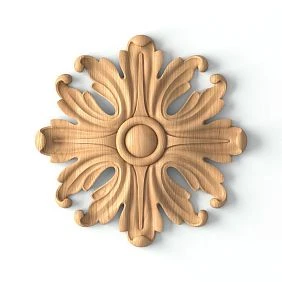
Carved overlays are suitable when the facade needs a classic accent. They can be placed on cabinet doors, the central part of a chest, wide drawers, or the top or bottom area of a sideboard. The overlay helps cover an empty surface, add relief, and connect old furniture with an interior that already features wood, classic profiles, frames, and decorative elements.
If you need to buy carved overlays specifically for furniture, it's important not to choose them solely by pattern. Consider the size of the facade, the thickness of the piece, the handle placement, and the overall scale. A small overlay will get lost on a wide door. A too-large one will overwhelm a nightstand. If the overlay is placed next to a handle, there should be enough space between them.
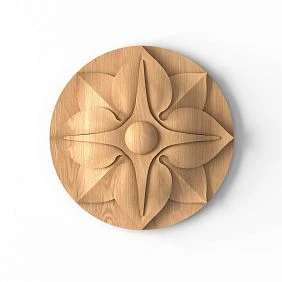
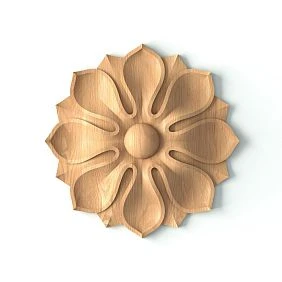
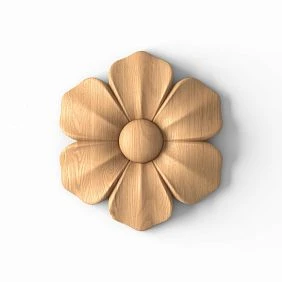
Decorative wooden rosettes should be bought when a centerpiece is needed. A rosette can work on a sideboard facade, a cabinet door, in the middle of a molding frame, or as a repeating motif. It's important to clarify that these are decorative furniture rosettes, not electrical outlets or switches in a wooden frame. For furniture restoration, you need decorative elements that work with the facade, not electrical hardware.
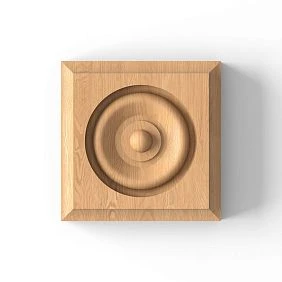
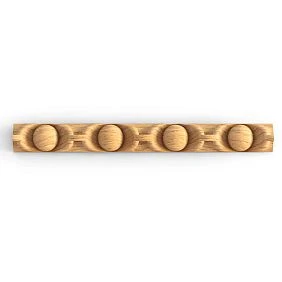
Moldings help create a frame. Decorating old furniture with moldings is especially good for flat doors. Molding makes the facade look paneled, sets proportions, and helps hide the feeling of an empty surface. If the furniture will be repainted, moldings can be made in the facade color. If you want to emphasize the wood, they can be finished separately, but then you need to plan the combination with handles and legs in advance.
Facade decor should not be chaotic. Doors require symmetry. Drawers require repetition. If the top drawer has one overlay and the bottom drawer has another without reason, the piece looks random. If one door has molding and the other only a handle, the composition falls apart. It's better to use fewer elements but place them precisely.
How to choose decor to match the furniture style
The style of old furniture can be enhanced, softened, or changed. But it's difficult to completely contradict the original form of the piece. A massive sideboard with classic proportions is hard to turn into a minimalist piece just by changing handles. A simple chest without relief can be brought closer to neoclassicism, but for rich classicism, it will likely need facade overlays, frames, and expressive legs.
For classicism, carved overlays, wooden rosettes, shaped legs, and more prominent handles are suitable. But classic decor requires scale. On a small nightstand, it's better to use small overlays or knob handles rather than large ornamentation. On a sideboard or wide cabinet, a more expressive composition is allowed.
For neoclassicism, moldings, symmetrical frames, calm handles, and clean finishes work better. Here, it's important not to overload the facade with carving. You can make doors framed, add neat handles, and install new legs that lift the silhouette. This option is well-suited for a city apartment, bedroom, hallway, or living room.
For country style and warmer interiors, wooden handles, simple shapes, natural textures, and calm legs are appropriate. Carving may be present, but it should not look too palatial. Details that emphasize a handmade, warm, and homey atmosphere work best here.
For Provence style, light paint, neat handles, light overlays, and soft shapes are often used. But it's important not to confuse Provence with overloaded decorativeness. An old piece can be made lighter, add handles and some facade relief, but not turn every door into a separate decorative panel.
For modern classic, restraint works. The shape can be wooden, but without excessive carving. Smooth moldings, quality wooden handles, neat legs, and one or two decorative accents are suitable. This approach is especially good for furniture that should fit into a new interior, not look like a museum piece.
Ready-made scenarios for updating old furniture
The same set does not suit everyone. An old cabinet, nightstand, sideboard, and console require different approaches. To avoid buying unnecessary items, it's helpful to start with a ready-made scenario.
| Item | What to replace | What to add | What effect will be achieved |
|---|---|---|---|
| Old cabinet | Handles on doors | Moldings on doors, small overlays | The facade will become neater and closer to classic or neoclassic style |
| Cabinet | Legs and handles | Facade overlays, molding frame | The furniture will become taller, lighter, and more expressive |
| Buffet | Handles, legs | Rosettes, carved decor, moldings | The item will gain a decorative center and a more cohesive look |
| Bedside table | Knob handles or small brackets | Small overlays, understated legs | The cabinet will be refreshed without being overloaded |
| Console | Legs or decorative supports | Overlays on the facade, handles | The silhouette will become more expressive, the facade more complete |
| Commode | Handles on drawers | Overlays for handles, moldings | Drawers will look neater, but the dresser won't be the only scenario for the article |
For an old cabinet, the main question is the doors. If they are flat, moldings can help create a frame. If there are old holes from handles, overlays can cover the traces. If the cabinet is small, the decor should be calm.
For a nightstand, legs are especially important. Old nightstands often look heavy precisely because of the base. New legs and handles can change the item without complex work on the facade. If you add overlays, the nightstand will become more decorative.
For a sideboard, you can use richer decor. The sideboard itself is larger and often allows carved elements, rosettes, frames, expressive handles. But symmetry is needed here too: the left and right parts must be connected.
For a bedside table, it's better not to overdo it with large carvings. A small item quickly becomes overloaded. It's enough to replace the handle, add neat legs, and add a small element to the facade if it's really needed.
For a console, the silhouette is important. The legs, bottom line, and front strip work together. If the console is in the hallway or living room, it is often visible immediately upon entry, so random handles or weak legs are especially noticeable.
What not to make from scratch if there are ready-made STAVROS elements
Many people start updating furniture with the idea of doing everything themselves: cutting out an overlay, searching for a blank, picking a strip instead of molding, reworking old handles, fitting random legs. This path is possible, but it often leads to wasted time and uneven results.
You don't have to manually carve a decorative element if you can choose a ready-made facade decor. You don't need to look for random handles that roughly match the style if there is a separate category of wooden handles. You shouldn't pick legs without understanding the material and purpose if you can immediately look at solid wood furniture legs. You don't need to assemble a frame from an unsuitable profile if there are moldings designed for decorative use.
Ready-made elements do not eliminate independent work. The buyer still needs to measure the facade, mark the placement, check old holes, prepare the surface, plan the finish, and carefully install the parts. But ready-made decor removes the most difficult part—creating the shape. This is especially important for carved overlays, rosettes, shaped legs, and handles.
This approach helps avoid the main risk: after updating, the furniture should not look like a set of random parts. When handles, legs, overlays, and moldings are selected within a single logic, the item looks calmer and visually more expensive. The buyer does not waste effort searching for similar elements in different places but assembles a set for the task: facade, supports, hardware, finish, installation.
What to buy together: a kit for updating old furniture
Buying one part rarely solves the entire task. New handles can highlight old legs. Beautiful legs can make an empty facade more noticeable. A carved overlay can look lonely without a frame or matching handle. Therefore, it's better to think in terms of a set.
If you started with handles, check the facade around them. Old holes, mounting marks, scuffs, and chips may remain visible. In such a situation, it helps to buy, which will allow you to transform your furniture using carved wooden elements. You can use the C-003-3 decor set to decorate furniture, walls, doors, or any other surface. The C-003-3 decor set is made of oak or beech, known for their strength, durability, and beauty. You can buy the C-003-3 decor set at the Stavros decor store, which specializes in producing and selling decorative elements and hardware for furniture and interiors. At the Stavros decor store, you will find a wide selection of decor sets of various shapes, sizes, and styles. You can choose: overlays can cover weak areas and make the handle part of the composition.
If you started with legs, evaluate the top part. New supports make the item lighter, but old handles may remain visually foreign. Then, you should select handles and facade decor to match the legs.
If you started with overlays, think about the frame. A carved element on an empty door can look like a randomly glued part. Molding helps give it boundaries, and a handle completes the facade.
If the furniture is to be painted, it is wise to pre-select elements without coating where available, and clarify surface preparation. If you want to preserve the wood accent, details can be chosen to complement each other in texture.
| What to add to the purchase | Why this is needed | Which scenario it suits | What to pay attention to |
|---|---|---|---|
| Wooden handles | They complete the facade update and make the furniture more convenient. | Cabinet, chest, sideboard, dresser, bedside furniture. | Old holes, size, grip comfort, coating. |
| Solid wood furniture legs. | They change the silhouette, height, and visual lightness. | Nightstand, console, chest of drawers, small cabinet | Load, base, fastening, height. |
| Decorative solid wood overlays | They add relief and can cover weak areas of the facade. | Doors, drawers, old holes, empty panels. | Scale, symmetry, thickness, connection with the handle. |
| Carved wood decor | Gives a more expressive classic character | Sideboard, cabinet, facade with central zone | Do not overload small facades |
| Moldings, cornices and baseboards made of solid wood | Help assemble frames and make the facade look like a paneled one | Flat doors, cabinets, cupboards | Indents, angles, repeatability |
| Uncoated wooden handles | Convenient for furniture for painting or tinting | DIY update, facade repainting | Compatibility of future finishing |
| Wooden handles with coating | Suitable when ready-made fittings are needed | Quick update without separate finishing | Color, style, card parameters |
This comprehensive approach is especially useful if you are updating not just one piece but a furniture group. For example, a cabinet and a console in the hallway, two bedside tables in the bedroom, a sideboard and a cabinet in the living room. Repeating handles, similar legs, and matching facade decor tie the pieces together.
How not to confuse decorative elements with similar products
When updating furniture, it is easy to confuse products that are similar in material but serve different purposes. A handle, overlay, molding, leg, rosette, and carved element do not replace each other.
A handle is needed to open a door or drawer. It can be decorative but must still be comfortable. If a handle is beautiful but awkward to grip, the furniture will be annoying every day.
A leg is needed for support. It can be shaped and decorate the furniture, but it cannot be chosen solely as an ornament. The weight of the item, base, attachment, and stability must be considered.
An overlay is needed for the facade. It decorates the surface, covers empty areas, helps to conceal old holes or add relief. It does not replace a handle and should not interfere with opening.
A molding is needed for frames and lines. It does not create a central carved accent, but it helps to assemble the facade into a clear geometry. If you want a paneled effect, you usually start with moldings.
A decorative wooden rosette is needed as an accent. It can be placed in the center of the facade, in a frame, on a door, or used in a symmetrical pattern. But it is important not to confuse it with electrical outlets. For furniture, you need decorative rosettes, not electrical components.
Carved decor is a broader group. It can include elements for facades, walls, furniture, and interior compositions. Before purchasing, you need to check the size, purpose, and how the specific part will look on the furniture.
If you are unsure, ask yourself a simple question: what task does the element solve? Does it open a drawer? Hold the body? Decorate the facade? Create a frame? Cover holes? Make the center of the composition? When the role is clear, the purchase becomes more precise.
Practical selection for specific situations
Need to update an old cabinet without replacing the facade
First, look at the doors. If they are flat and empty, you can add molding frames. If there are old holes from handles, consider new handles and possible overlays. If the cabinet is small, do not take too large carved decor. It is better to make a calm symmetry: handles, frames, one repeating motif.
Need to update an old nightstand with handles and legs
The silhouette of a nightstand often suffers. It can be low, heavy, visually outdated. Start with the legs: a new height immediately changes the item. Then choose handles. If the facade is simple, add small overlays or molding. A nightstand handles such an update well because it usually has a small area and clear geometry.
Need to update a sideboard with wooden decor
A sideboard allows for richer work. Here you can combine handles, legs, decorative rosettes, carved overlays, and moldings. But a sideboard requires a system. The upper and lower parts must be connected. Handles on doors and drawers should match. Carved elements are best placed symmetrically.
Need to cover old handle holes
First, measure the distance between the holes and their position on the facade. If the new handle doesn't match, old marks need to be covered or the surface prepared. A decorative overlay can help, but it should be part of the design, not a patch. It's good when the overlay is repeated on several drawers or doors.
Need to make the facade of old furniture more classic
For a classic effect, carved overlays, rosettes, moldings, shaped legs, and wooden handles work. But don't use everything at once. Start with a frame or central decor, then add a handle. If the bottom of the furniture is too plain, choose legs. This way, the facade and base will support each other.
Need to select a part for painting
Look at elements without coating where they are accessible, and plan the finish in advance. For painting, surface preparation, material compatibility, and careful marking are important. If handles, legs, and overlays are painted the same color as the body, the furniture will become calmer. If part of the wood is left visible, a warm accent will appear.
Preparation, installation, and finishing: what to check before buying
Before buying furniture legs, handles, or facade decor, you need to inspect the item itself. Don't start with the cart. Start with an inspection.
Check the body. It should not wobble. If the furniture is unstable, first solve the structural problem. New legs won't save a weak base.
Check the facades. Doors should open without sticking, drawers should slide out smoothly. If a facade is skewed, the decor can emphasize the problem. First, align the geometry, then mark the overlays and handles.
Check the coating. If the old varnish is peeling, the new decor may not adhere well. If the furniture is to be repainted, surface preparation becomes a separate step. Do not glue or attach elements over an unstable layer.
Check the old holes. They affect the choice of handles. Sometimes you can select a new handle to match the old center-to-center distance. Sometimes it's better to cover the marks with an overlay. Sometimes the facade needs to be puttied and repainted.
Check the symmetry. On furniture, a small error is immediately noticeable. If handles on two doors are at different heights, the update looks sloppy. If moldings have different offsets, the facade looks homemade. Marking is necessary even for simple elements.
Check the opening. The overlay should not interfere with the handle. The carved element should not touch the adjacent facade. New legs should not interfere with the baseboard, floor, carpet, or the placement of furniture against the wall.
Check the finish. If elements are to be painted, you need to understand the order of work. Sometimes it's more convenient to first fit and prepare the parts, then paint. Sometimes it's better to finish separately. Exact recommendations depend on the material, coating, and chosen installation method, so parameters should be verified before ordering.
Mistakes when updating old wooden furniture
The first mistake is buying handles without measuring the old holes. The new handle may not match the mounting, leaving extra marks on the facade. Before purchasing, you need to measure the distances and decide if the old holes can be covered.
The second mistake is putting heavy legs on a light cabinet. Supports should match the scale of the item. Too massive legs make small furniture look bulky. Too thin legs may look unstable on a heavy body.
The third mistake is overloading a small facade with carving. A bedside table, small cabinet, or narrow console cannot handle a large number of details. One neat element is better than several competing ones.
The fourth mistake is not checking the attachment of the legs. Beautiful legs are useless if the furniture base is not suitable for installation. Before ordering, you need to understand if there is a mounting area and whether reinforcement is required.
The fifth mistake is mixing different wood shades without a plan. Handles of one tone, legs of another, overlays of a third shade can look random. If elements will be coated, this needs to be thought out in advance.
The sixth mistake is gluing overlays without marking. Any asymmetry is noticeable on the facade. Before installation, it is better to make markings, check the indents, and look at the furniture from a distance.
The seventh mistake is not accounting for the opening of doors and drawers. Decor can interfere with the adjacent facade, handle, or drawer movement. This is especially important for sideboards and cabinets with multiple doors.
The eighth mistake is making decor on only one facade without an overall composition. If the item has several doors or drawers, the elements should repeat or at least be logically connected.
The ninth mistake is using electrical wooden rosettes instead of decorative furniture rosettes. The facade requires decorative elements, not electrical fittings.
The tenth mistake is confusing cosmetic updates with full restoration. If the furniture is damaged, work on the base is needed first. Decor should only be added after the item has become stable and suitable for further use.
Who this update method suits, and who should choose a different path
Updating through handles, legs, and facade decor suits those whose furniture is sturdy but visually outdated. This is a good option for old cabinets, cupboards, sideboards, consoles, bedside furniture, and dressers that are still convenient in size and function.
This approach is suitable for DIY updates at home if complex carpentry restoration is not required. The buyer can replace handles, select legs, mark overlays, decorate the facade with moldings, and prepare the item for painting or finishing. At the same time, complex decorative shapes do not need to be made by hand: they can be selected ready-made.
The solution is suitable for those who want to keep old furniture but make it closer to the interior. For example, after renovation, an old bedside table started to stand out in the bedroom, a sideboard looks too heavy in the living room, a cabinet in the hallway seems plain, and a console needs more expressive legs.
But there are cases when it is better to choose a different path. If the body is loose, the fronts are destroyed, the veneer is severely damaged, the drawers do not work, and the base does not hold fasteners, a cosmetic update is not enough. First, restoration or repair is needed. If the furniture does not fit in size and function, new parts will not solve the problem either. If the piece is too small for active decor, it is better to limit yourself to handles and a calm finish.
A good update does not try to hide everything. It enhances what is already there: shape, material, convenient size, the item's history, connection to the interior. When the base is weak, decor becomes a mask. When the base is good, details reveal the furniture anew.
Where to buy handles, legs, and decor for updating STAVROS furniture
It is best to start shopping by understanding the scenario. For a quick update, open the handles section. For changing the silhouette, look at legs. For the front, consider overlays, carved decor, and moldings. For furniture to be repainted, pay attention to elements without coating, if such an option is available in the desired category.
On STAVROS, you can assemble a kit for updating old wooden furniture: handles for doors and drawers, legs for cabinets and cupboards, decorative overlays for fronts, carved decor, moldings, and elements for a more expressive composition. Before ordering, it is worth checking the dimensions, material, coating, purpose, and compatibility in the product cards.
If the piece is complex — for example, an old sideboard with several fronts, a cabinet with damaged holes, or furniture that is planned to be repainted — it is better to think through the entire kit in advance. What handles will be on the doors? What handles on the drawers? Are legs needed? Will overlays cover old marks? What decor will be repeated on the front? How will everything combine after finishing?
A conscious order is more convenient than random selection. You do not buy separate beautiful elements 'just in case,' but assemble a working route: front, handles, legs, decor, finishing, installation. This is how old furniture gets a new look without the feeling of a random makeover.
FAQ: questions about updating old wooden furniture
How to update old wooden furniture without full restoration?
If the body is intact, you can replace the handles, install new legs, add carved overlays, moldings, or decorative wooden rosettes to the facade. This method is suitable when the furniture is visually outdated but remains sturdy and comfortable.
What to buy to update old furniture?
The minimum set is new handles and legs. For a more noticeable update, you can add decorative overlays, carved decor, moldings, and furniture rosettes for the facade. The specific set depends on the item: cabinet, cupboard, sideboard, console, or bedside furniture.
Can you update old furniture with your own hands?
Yes, if complex restoration is not required. Handles, overlay decor, and some types of legs can be selected and installed after measurements, marking, and surface preparation. If the base is weak or the facade is damaged, repairs are needed first.
Which handles to choose for an old cabinet or cupboard?
Wooden handles, knob handles, and brackets work well for old furniture. It is important to check the old holes, facade size, grip comfort, and future finish. Small cupboards do not need too heavy handles, while a sideboard can support a more expressive shape.
When should you replace furniture legs?
Legs should be replaced if the furniture looks too low, heavy, unstable, or does not match the interior style. New legs change the silhouette, height, and visual lightness of the item.
How to choose wooden legs for old furniture?
Look at the weight of the item, the base, height, shape, and method of attachment. The legs should match not only in style but also in load capacity. For furniture to be painted, you can consider unpainted elements if they fit the parameters.
How to decorate a furniture facade with carved overlays?
First, measure the facade and determine the location for the decor. It is better to place overlays symmetrically: on doors, drawers, in the center of a panel, or next to a handle if it does not interfere with opening. Large elements are not suitable for every facade, so the scale should be checked before ordering.
Can wooden rosettes be used for facade decoration?
Yes, if these are decorative furniture rosettes, not electrical outlets. They can become the center of a composition on a door, sideboard, wide panel, or inside a molding frame.
How does furniture updating differ from restoration?
Updating changes the appearance through handles, legs, overlays, moldings, and finish. Restoration restores the damaged base: the body, veneer, joints, coating, geometry. If the furniture is technically weak, restoration is needed first.
How not to ruin old furniture when replacing hardware?
You need to measure the old holes, check the thickness of the facade, choose the appropriate handle size, and decide in advance how to cover up any extra marks. Do not drill new holes without marking and checking symmetry.
Can an old cabinet be updated without replacing the facade?
Yes, if the facade is intact. It can be decorated with moldings, handles can be replaced, and small overlays or decorative elements can be added. If the surface is damaged, preparation is needed first.
What is better for a facade: moldings, overlays, or rosettes?
Moldings create a frame and panel effect. Overlays add relief and a classic accent. Rosettes work as a central decorative point. They can be combined, but it's important not to overload the facade.
Is it necessary to buy handles, legs, and decor as a set?
Not always, but thinking in terms of a set is useful. Even if the purchase starts with handles, it's worth checking if the legs, facade, and future finish match them. A set approach reduces the risk of mismatch.
Which STAVROS elements are suitable for updating facades, drawers, and doors?
For facades, you can look at decorative overlays, carved decor, moldings, and decorative rosettes. For drawers and doors — wooden handles. For changing the silhouette — solid wood furniture legs. Before ordering, you need to check the parameters in the product cards.
Conclusion: old furniture can be beautifully updated if you choose details as a set
Old wooden furniture does not always require full restoration or replacement. If the body is strong, the facades are intact, and the item is convenient in size and function, it can be updated through details: handles, legs, overlays, moldings, decorative rosettes, and carved decor. This approach helps change the style, cover weak areas, improve proportions, and connect the furniture with the interior.
Start with diagnostics. What is more outdated: handles, silhouette, facade, or finish? Then select elements for the task. For a quick update, handles will do. For changing the stance — legs. For the facade — overlays, moldings, and decorative elements. For a cohesive result — a set where each detail supports the other.
STAVROS helps you put together such a route without random selection: choose wooden handles, furniture legs, overlays, carved decor and moldings, check the parameters in the product cards, and plan the update before purchasing. Then an old cabinet, chest of drawers, sideboard, console, or bedside furniture will look not like a temporarily altered item, but like a consciously renewed part of the interior.