Article Contents:
- Renovation doesn't forgive mistakes in purchasing
- Three purchase channels: an honest comparison
- Specialty catalog: maximum information
- Marketplace: convenient but requires caution
- Home improvement hypermarket: minimal selection
- Polyurethane molding catalog: how to read and choose
- First level: categories
- Second level: dimensions
- Third level: article and series
- How to calculate linear footage: without errors
- Step 1: Perimeter of frames or room perimeter
- Step 2: Trimming at corners
- Step 3: Joints of long runs
- Final calculation
- Which profile is needed for your task: quick selection
- What to check in the product card: buyer's checklist
- Technical specifications
- Commercial parameters
- Compatibility
- Glue for moldings: don't grab the first one you see
- Price of moldings: how to read price tags
- Polyurethane moldings in St. Petersburg and across Russia: delivery and pickup
- What to buy with moldings: a complete set
- Essential minimum
- Extended set
- Typical mistakes when buying moldings
- Mistake 1: "I'll get it later"
- Mistake 2: "The profile matches in width, but has a different relief"
- Mistake 3: The length of the plank was not checked
- Mistake 4: Bought "any construction adhesive"
- Error 5: Didn't buy sealant
- Molding installation guide — for those doing it themselves
- Frequently Asked Questions
- About the Company STAVROS
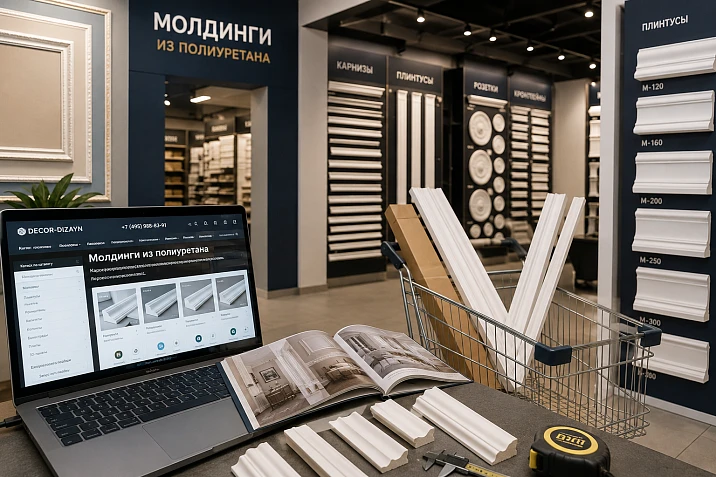
Polyurethane moldings are better bought not just by price and photo, but by a full set of parameters: size, profile, length, article number, stock, glue, painting, and the ability to buy the same element later for a neat finish. This article is a practical guide for those who are already choosing, not just looking at pictures.
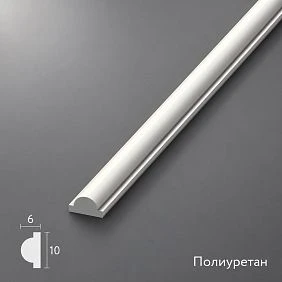
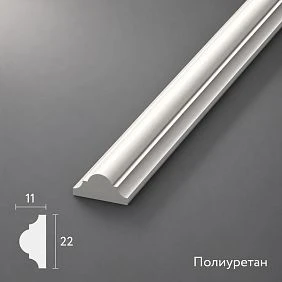
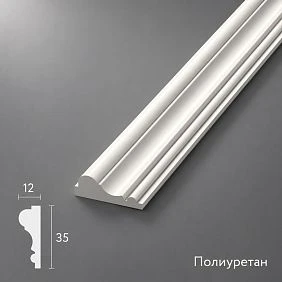
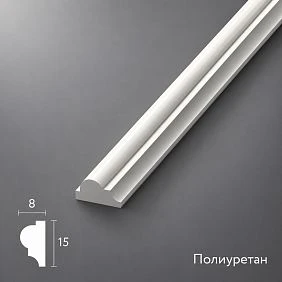

Renovation doesn't forgive mistakes in purchasing
Imagine: you ordered moldings, received the package, started installation — and discovered that the profile is wider than it seemed in the photo. Or the plank length turned out to be 2 meters, not 2.5 as you expected, and you don't have enough linear footage. Or it turned out that this article is no longer produced, and you need to buy three more meters.
These are not hypothetical situations. These are real stories that repeat over and over again among people who chose moldings only by price and the first photo they liked.
A molding is not a product you choose intuitively. It's an architectural element, and a mistake in its selection is discovered not upon unpacking, but already on the mounted wall. That's why the question 'where buy polyurethane moldings' is actually a question about what product data you get before purchase and how reliably you can buy the same thing later.




Three purchase channels: an honest comparison
Today, polyurethane moldings can be bought in three main ways: in a specialized online catalog of the manufacturer or a specialized store, on a large marketplace, or in a construction hypermarket. Each channel has its own opportunities and pitfalls.
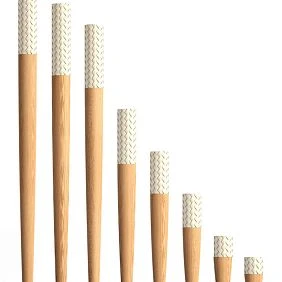
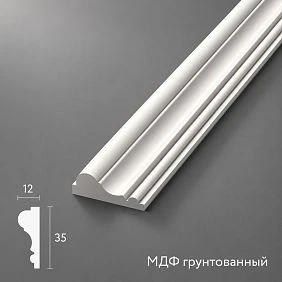
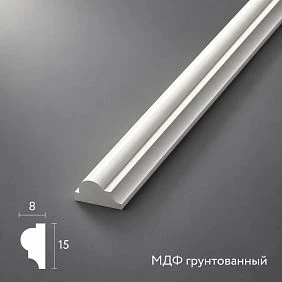
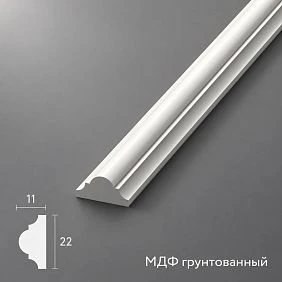
Our factory also produces:


Profile catalog: maximum information
A profile catalog from a manufacturer or specialized online store is the place where everything is known about moldings. Not just that they are 'beautiful', but also what they are made of, their exact geometry, how they behave when painted, which glue is compatible, and how to handle corner joints.
Advantages of a profile catalog:
-
Exact dimensions: width, profile height, relief depth, plank length — all specified for each article;
-
End and cross-section photos: shows the actual profile shape, not just a 'nice angle';
-
Clear article system: one profile — one number, which can be used for reordering a year later;
-
Completeness: glue, corner pieces are immediately available alongside the molding, Decor for Molding and related items;
-
Consultation: you can ask about element compatibility, clarify the technology;
-
Assortment stability: the profile you buy today will be in the catalog a year later.
In the of polyurethane moldings STAVROS offers profiles from different series — with different sizes, reliefs, and purposes. This is not "one molding for all occasions," but a systematized assortment for specific tasks: from a narrow thin profile for small rooms to a wide classic one for grand spaces.
Get Consultation
Marketplace: convenient, but requires caution
A marketplace is convenient: fast delivery, familiar interface, reviews from other buyers. But this convenience has a downside that is critically important specifically for moldings.
Problem 1: The photo lies
A product card on a marketplace is a marketing product, not technical documentation. A photo of a molding taken at the right angle, with the right lighting, and without a scale reference creates the impression of a larger and more prominent profile than it actually is. Buyers regularly receive profiles that are 15 mm wide, expecting them to be at least 25–30 mm.
Problem 2: Dimensions are not a priority
On a marketplace, the product card often only shows the length of the strip (usually 2 meters) and the total footage per package. The profile width, relief height, and projection depth — these parameters are often hidden in the "specifications," stated inaccurately, or not stated at all.
Problem 3: SKU does not guarantee repeatability
A seller on a marketplace may change suppliers, update their assortment, or simply remove an item from sale. If you need to buy an additional 3 meters of the same molding three months later, there is no guarantee that it will be available under the same name from the same seller.
Problem 4: Unclear material composition
"Polyurethane molding" on a marketplace is not always real polyurethane. Under this name, you can find polystyrene, foamed PVC, and other materials with different properties: they hold relief details worse, are more brittle, harder to paint, and give a different result after installation.
What to check on a marketplace first:
-
exact dimensions in the specifications (width × height × length);
-
photo of the end or cross-section;
-
material composition — specifically "polyurethane", not "foamed material";
-
reviews with photos after installation and painting;
-
availability of multiple packages of the same SKU (if you need a large footage);
-
ability to ask the seller a question about reordering.
Construction hypermarket: minimal selection
Construction hypermarkets usually offer 5–15 molding items — and these are typically the most popular standard profiles. This may be enough for basic tasks, but if you need a specific profile, a specific width, or the ability to choose a set, the selection here is minimal.
The main limitation of a hypermarket: there is no system. There is no way to select a molding, baseboard, decorative element, and glue from the same line — with a guarantee that everything will be compatible in scale and relief.
Catalog of polyurethane moldings: how to read and choose
If you decide to buy from a specialized catalog — let's figure out how to work with it properly. A good molding catalog contains several levels of information.
First level: categories
catalog of polyurethane moldings usually divided by profile type and purpose. It's important to understand that "molding" is a broad class of products, within which there are subcategories:
-
Straight profiles — for frames on walls, horizontal bands, contour lines;
-
Cornices — for the transition between ceiling and wall;
-
Baseboards — the lower boundary of the wall;
-
Corner moldings — for external and internal corners;
-
Flexible profiles — for radius and curved sections.
Before choosing a specific SKU, determine which category your task belongs to.
Second level: dimensions
Each molding card must include at least three parameters:
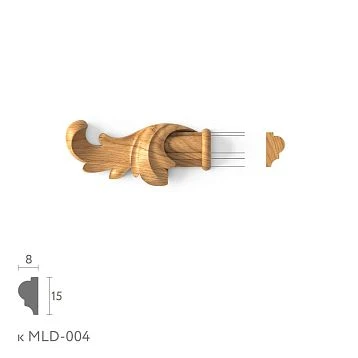
Width (A) — the horizontal size of the profile on the wall. This parameter determines the "weight" of the molding in the interior: 20 mm is a delicate line, 60 mm is a noticeable architectural element.
Height or projection (B) — how far the molding protrudes from the wall. Small projection (5–8 mm) is a "flat" profile with a delicate relief. Large projection (15–25 mm) is a voluminous profile with a pronounced shadow.
Plank length — standard values are 2 meters and 2.5 meters. Important to consider when calculating: 2-meter planks will result in more joints and more waste from cutting than 2.5-meter planks.
Third level: SKU and series
SKU is a unique profile identifier. Write it down. If you need to buy more in three months, the SKU will allow you to find exactly the same profile without error. Buying from a specialized catalog with a stable assortment gives you this guarantee. On a marketplace — it does not.
How to calculate linear footage: without errors
One of the most common reasons for molding shortage during installation is incorrect calculation. The "calculated the room perimeter" approach does not account for several important factors.
Step 1: Perimeter of frames or room perimeter
If you are making frames on walls — you calculate not the room perimeter, but the total linear footage of all sides of all frames. For example, four frames 60×90 centimeters: perimeter of one frame = (60+90)×2 = 300 cm = 3 meters. Four frames = 12 meters. Plus a horizontal molding belt around the room perimeter — calculated separately.
Step 2: Cutting at corners
Each frame corner is a 45° joint, where a piece of molding is lost. On one frame with four corners, an average of 10–15% of material is lost. For multiple frames, losses add up.
Step 3: Joints of long runs
On a long wall, molding is installed in several strips. At the joint point, a small piece is also lost for adjustment. For a horizontal belt on a wall 5 meters long from 2-meter strips — three joints = additional losses.
Final calculation
Basic calculation: perimeter of all elements × 1.15 (safety factor of 15%). For rooms with complex geometry or a large number of frames — × 1.20.
This is a standard recommendation for buy polyurethane moldings with the correct margin.
What profile is needed for your task: quick selection
Before opening the catalog, answer three questions:
Question 1: What is the ceiling height?
| Ceiling Height | Suitable molding width |
|---|---|
| up to 2.6 m | 15–25 mm |
| 2.6–2.8 m | 20–35 mm |
| 2.8–3.2 m | 30–50 mm |
| Above 3.2 m | 45 mm and above |
Question 2: What is the task?
| Task | Profile type |
|---|---|
| Frames on the wall | Straight profile with moderate relief |
| Horizontal belt | Flat or heel |
| Cornice at the ceiling | Ceiling molding-cornice |
| Transition through external corner | Corner profile |
| Radius wall, arch | Flexible molding |
Question 3: Interior style?
-
Classic, neoclassical: profile with pronounced relief, ornament, or volumetric forms;
-
Modern, Scandinavian, minimalism: flat or geometrically clean profile without ornament;
-
Transitional styles: moderate relief, fillet, or torus.
What to check in the product card: buyer's checklist
Regardless of where you buy — in a specialized catalog or on a marketplace — go through this list before clicking the "Buy" button.
Technical Parameters
-
Profile width (mm) — is it explicitly stated?
-
Profile height or projection (mm) — is it explicitly stated?
-
Length of one plank (m) — 2 meters? 2.5 meters?
-
Material — specifically polyurethane?
-
Is there a photo of the end or cross-section?
Commercial parameters
-
Is the article number indicated?
-
Price per piece or per meter?
-
Available quantity (if large footage is needed)?
-
Possibility to purchase more in 3–6 months?
-
Delivery and packaging conditions?
Compatibility
-
Is there a recommendation for glue?
-
Is the profile suitable for painting?
-
Are there corner elements available for this profile?
-
Can I choose a baseboard or cornice from the same line?
Glue for moldings: don't grab the first one you see
Choosing glue is a separate topic that cannot be ignored when buying moldings. Incompatible or poor-quality glue means the molding will start peeling off the wall after six months.
For polyurethane moldings, use:
Construction adhesive for polyurethane — a specialized compound with the right viscosity and adhesion to polyurethane and standard wall coverings (plaster, paint, paintable wallpaper). This is the optimal choice for most tasks.
Liquid nails — they work, but with caveats: you need a compound compatible with polyurethane (not all liquid nails are suitable). Check compatibility on the label.
Acrylic sealant — not for fastening, but for sealing joints between molding sections and between the molding and the wall. It is mandatory as a finishing step before painting.
What not to do: do not use solvent-based adhesives — they dissolve the polyurethane surface.
Price of moldings: how to read price tags
Pricing for moldings can vary, and it's important to understand exactly what you are comparing.
Price per piece — one strip of a certain length (2 or 2.5 meters). To compare with other offers, you need to convert to price per linear meter.
Price per linear meter — the most transparent format. Simply multiply by the required length with a margin.
Price per pack — several strips in a box. Check how many meters are in the pack, and again calculate the price per meter.
Example of conversion: a strip 2.5 m long costs 450 rubles — that's 180 rubles per linear meter. A strip 2 m long costs 340 rubles — that's 170 rubles per linear meter. Formally, the second is cheaper, but with 2-meter strips there will be more joints and more waste — the final project cost may be higher.
Polyurethane moldings in St. Petersburg and across Russia: delivery and pickup
For buyers from different regions, the logistics issue is important. A few practical points:
Fragility during transport: polyurethane moldings are quite durable, but long strips (2–2.5 meters) can deform or break at corners if poorly packaged. Check packaging conditions: strips must be packed rigidly, without the possibility of shifting.
Long-length items: planks 2–2.5 meters are classified as long-length cargo, which affects delivery method and cost. Please clarify these conditions before placing an order.
Pickup: for major cities — Moscow and St. Petersburg — pickup allows you to collect the item without risk of damage during transport and check the completeness on site.
Regional delivery: large specialized stores deliver across Russia via transport companies. Clarify the timelines — especially if you have a tight renovation schedule.
What to buy together with moldings: complete set
Smart purchase of decorative polyurethane moldings — is not just the profile itself. Here is a full list of what you need to buy at the same time to avoid returning to the store at each stage of installation.
Mandatory minimum
| Position | Purpose |
|---|---|
| Moldings (+ 15% spare) | main profile |
| Mounting adhesive for polyurethane | wall mounting |
| Acrylic sealant | sealing joints |
| Acrylic primer | preparation for painting |
| Paint in selected color | Finish coating |
| Painter's tape | fixation while drying |
| Fine sandpaper 180–220 | sanding joints |
Extended set
| Position | Purpose |
|---|---|
| Decor for Molding | corner elements for frames |
| Decorative stucco | overlays, medallions, accents |
| Polyurethane wall decor | additional decorative elements |
| Baseboard from the same line | Lower wall boundary |
| Ceiling cornice | ceiling-to-wall transition |
| Flexible molding | for curved sections |
Typical mistakes when buying moldings
Experience is a costly teacher. To avoid paying twice, let's break down the most common mistakes.
Mistake 1: "I'll get it later"
You bought moldings, installed them, painted them — and discovered that 80 centimeters are missing in one spot. You go to the store — and it turns out this item is out of stock, and a similar-sized profile from another series has a different relief. The joint will be visible.
Solution: always buy with a 15–20% margin. It's cheaper than redoing it.
Error 2: "Profile matches in width but has a different relief"
You buy molding of the same width but from a different source. After painting, a monochrome wall mercilessly shows the difference in relief: one profile has a soft fillet, the other has a sharp bevel. This is always visible.
Solution: buy all molding for one project in a single order from one source.
Error 3: The length of the plank was not checked
You calculated the footage based on 2.5-meter planks — but got 2-meter planks. Not enough. And more material is wasted on joints with 2-meter planks.
Solution: always check the plank length in the specifications, don't assume the standard.
Error 4: Bought "any construction adhesive"
The adhesive is not suitable for polyurethane, adhesion is poor — after a few months, the molding starts to come off at heat points (near radiators) or in areas with humidity fluctuations.
Solution: use only adhesive recommended for polyurethane profiles.
Error 5: Didn't buy sealant
Without sealing the joints between molding sections with acrylic sealant after painting, they will be visible as dark lines. This is one of the most noticeable "common" mistakes during installation.
Solution: sealant is a mandatory item in the kit, not an option.
Instructions for molding installation — for those doing it themselves
Technical installation details — cutting corners, methods for sealing joints, painting sequence — are thoroughly covered in a special article on installing polyurethane molding. It also includes recommendations for working with corner elements and final painting.
Frequently asked questions
Where is the best place to buy polyurethane moldings?
In the profile catalog of a specialized store or manufacturer: there you will find exact dimensions, stable article numbers, the ability to select a complete set, and purchase the same profile later. Marketplaces are convenient for delivery but require careful verification of all parameters before placing an order.
How to avoid mistakes with molding size when buying online?
Always check: profile width (mm), relief height (mm), and plank length (m). Do not rely solely on the photo — it does not convey scale. Look for a photo of the end or cross-section. If dimensions are not clearly stated in the specifications, request them from the seller before purchasing.
How much molding stock should I take?
15% of the calculated footage for rooms with straight geometry and a small number of frames. 20% for complex rooms, a large number of frames and corner elements.
Can I buy more molding later?
In a profile catalog with a stable assortment — yes, by article number. On a marketplace — not guaranteed: the article may disappear. That's why stock on the first purchase is not waste, but insurance.
What is the difference between polyurethane molding and polystyrene molding?
Polyurethane is denser, holds relief details better, is stronger under mechanical impact, and gives clearer lines after painting. Polystyrene is more brittle, cheaper, but the quality of relief and durability are lower. Check the composition when purchasing.
What to buy together with moldings?
Mounting adhesive for polyurethane, acrylic sealant, primer, paint, painter's tape, sandpaper. When working with frames — Decor for Molding (corner elements). For an extended project — decorative molding и Wall Decor.
How to calculate the cost of a project with moldings?
Calculate the total linear footage of all elements (frames + belts + cornices), multiply by 1.15–1.20 (stock), multiply by the price per linear meter. Add the cost of glue, sealant, primer, and paint. This is the total cost of materials.
About the company STAVROS
Buying moldings is the beginning of the work, not its end. Next comes installation, cutting corners, sealing joints, priming, painting. Each of these stages requires precise material with clear characteristics. That's why it's important to buy from a place where you will be given not only the profile but also complete information about it.
STAVROS is a Russian company with a full range of decorative polyurethane products. The catalog includes moldings of all formats and profiles, cornices, baseboards, decor for moldings, wall decor, decorative stucco. Each item has precise technical specifications, a stable article number, and the possibility of reordering.
STAVROS works with both private customers and designers and construction companies. Delivery is available throughout Russia.
In the STAVROS catalog: Buy polyurethane wall moldings, Decor for Molding, decorative molding, Polyurethane wall decor and the full range in the section Buy moldings.