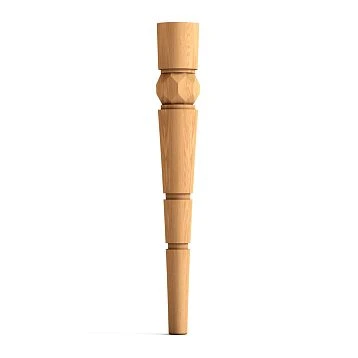
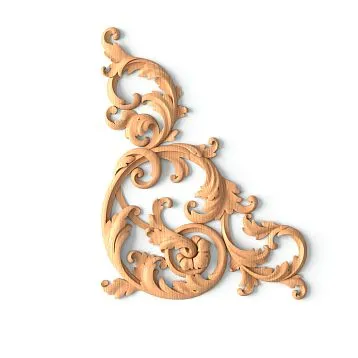
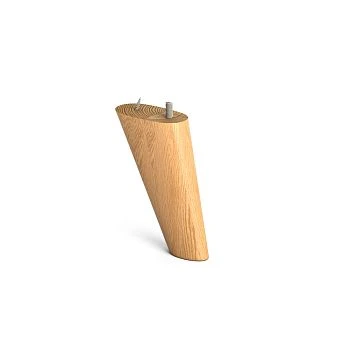
Article Contents:
- "Custom" does not mean every part has to be made from scratch
- Ready-made SKU first, then custom: how to build the right workflow
- Component Resolution Matrix: the status of each item before final detailing
- Decision Tree: STANDARD or CUSTOM
- What to check on any ready-made part before including it in furniture
- Source of Truth: which document is the main one
- Wooden handles: a custom facade still has to be drilled for the actual SKU
- Brackets and decorative supports: a ready-made element is first checked as geometry
- Unpainted elements: a strong scenario for custom furniture
- Sample, Prototype, and Golden Sample are three different things
- Custom Readiness Gate
- Production Release Gate
- Why the STANDARD / CUSTOM split affects the price of custom furniture
- Project BOM and Procurement BOM are not the same thing
- Change Freeze: when we stop freely changing parts
- Replacement Chain
- Project Snapshot
- Matrix of typical errors
- Zero-Ambiguity Test
- Custom furniture parts to customer dimensions: where the line of promise lies
- Final algorithm
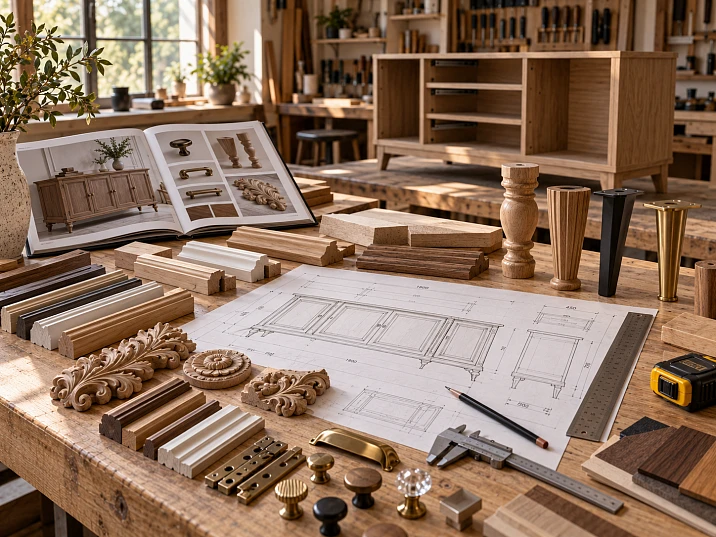
A custom cabinet is rarely fully "non-standard" in the literal sense. The carcass is fitted to the niche, the fronts are calculated for a specific height, the decorative composition is assembled for the interior — but this does not mean that every leg, handle, overlay, socket, or molding needs to be designed and manufactured from scratch.
For a small furniture workshop, it is wiser to start with a different question:
which positions of a custom project can already be covered by ready-made serial parts, and where is custom truly needed?
The working sequence looks like this:
custom project → sketch geometry → component categories → check the ready catalog → real SKUs → dimensions → trial part → final detailing → BOM → purchasing → custom only for uncovered positions.
In this approach, the furniture itself remains custom. Its individual components can be serial.
For example, a cabinet is made strictly to the client's dimensions, but ready-made legs, wooden handles, carved overlays, and molding are used. If there is no suitable size, shape, or material for a particular position, only then does it appear CUSTOM-01.
This way, the workshop does not turn every new order into a separate mini-factory for developing components.
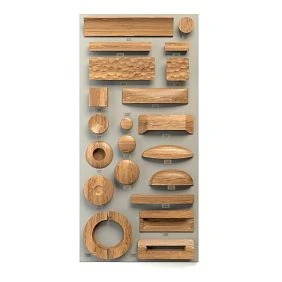
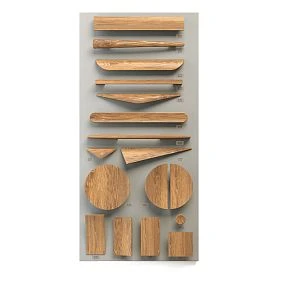
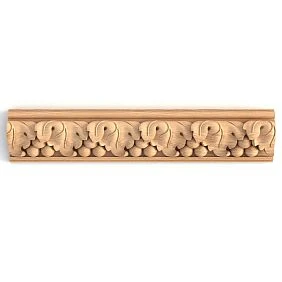
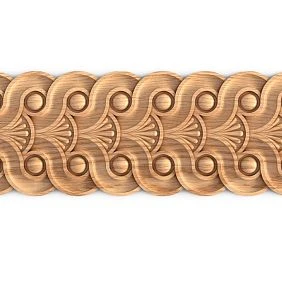
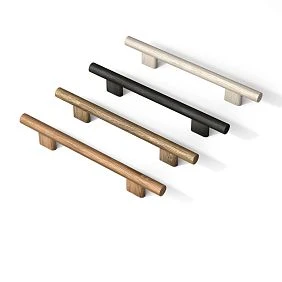
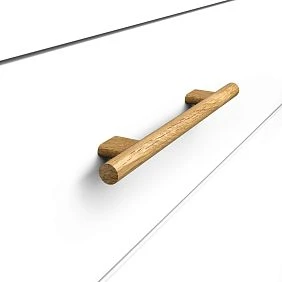
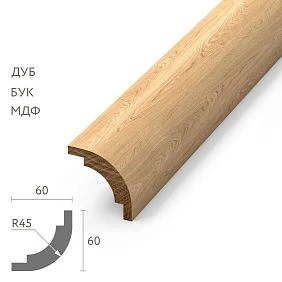
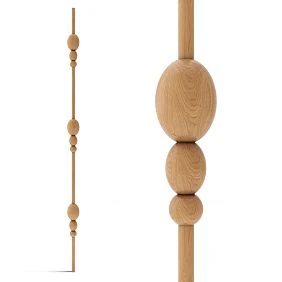
"Custom-made" does not mean every part must be produced from scratch
The phrase "custom furniture" describes the way the final product is designed.
It does not dictate how each component is sourced.
A custom wardrobe can have:
- its own carcass;
- custom fronts;
- non-standard height;
- bespoke layout;
- unique color;
and simultaneously:
- standard legs;
- standard handles;
- ready-made overlays;
- ready-made rosettes;
- standard wooden moulding;
- standard bracket.
What is truly individual in the project.
Typically these are:
- dimensions;
- design;
- combination of details;
- facade composition;
- body material;
- finishing;
- method of installation in the room.
What does not have to be individual.
A separate component that already exists as a suitable off-the-shelf product.
If a real leg of the required height is available in the catalog, the workshop does not necessarily need to separately create its model, tooling, and production process.
If a suitable wooden handle exists as an SKU, there is no point in automatically converting it to custom just because the cabinet itself is made to an individual drawing.
Why this changes the economics of the project.
A custom item requires a separate cycle:
idea → drawing → approval → prototype / sample → manufacturing → inspection → series.
A ready-made item:
catalog → SKU → size check → trial part if necessary → order.
The more items can be covered by the catalog without compromising the project, the fewer developments have to be launched from scratch.
For an initial check, you can use the catalog solid wood STAVROS products и carved furniture decor.




First the ready-made SKU, then custom: how to build the right workflow
A strong configuration scheme doesn't start with the question:
who will make this part to order?
First, you need to check:
does a suitable standard component already exist?
Stage 1. Concept furniture.
Determine:
- purpose;
- overall dimensions;
- structural design;
- facade composition;
- decor zones;
- the material;
- overall character of the product.
At this stage, placeholders are acceptable.
Stage 2. Component categories.
Divide the project:
LEG
HND
DEC
RST
MLD
BRK.
That is:
- legs;
- handles;
- Plates;
- Outlets;
- moldings / trim;
- Brackets.
Stage 3. Catalog verification.
For each category, look for real SKUs.
Not a “similar leg.”
But:
Manufacturer + SKU + Size + Material.
Stage 4. Replacing placeholders with real products.
After that, the following are specified:
- cabinet dimensions;
- height;
- frames;
- fields;
- holes;
- Cutting;
- quantity.
Stage 5. Gap List.
Anything not covered by the standard catalog is moved to the custom list.
For example:
CUSTOM-01 — non-standard furniture cornice
CUSTOM-02 — leg based on a custom sketch.
Stage 6. Final detailing.
Only now does the drawing become a working one.
Stage 7. BOM.
Standard and custom items go into a single list, but are marked with different statuses.
The main advantage of this process.
Custom is used not out of habit, but only where it truly solves a specific problem.
This saves:
- development;
- approval;
- prototyping;
- technologist's time;
- repeat checks.
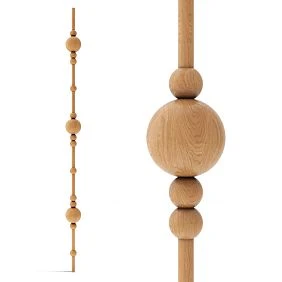
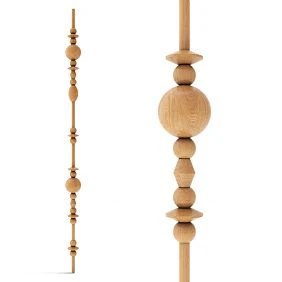
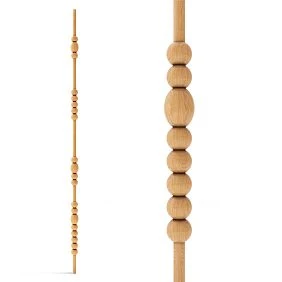
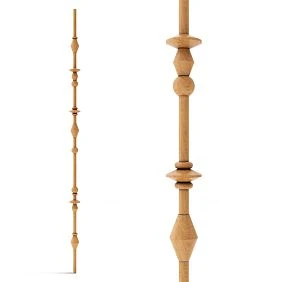
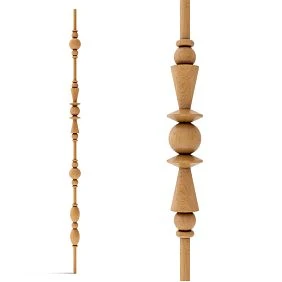
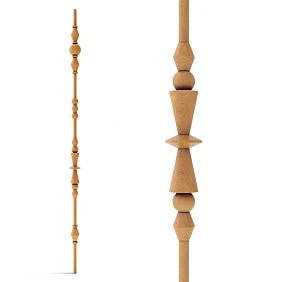
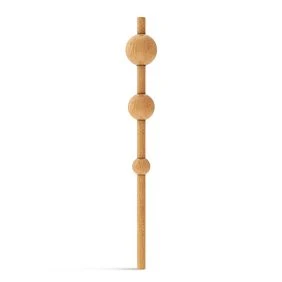
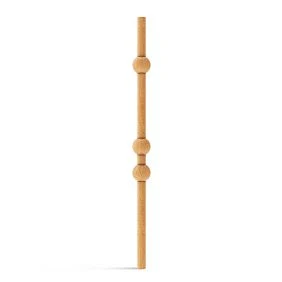
Our factory also produces:
Component Resolution Matrix: status of each item up to final detailing
For a complex custom project, it is convenient to keep a short matrix.
| Code | Function | Resolution | Next Action |
|---|---|---|---|
| LEG-01 | Support | STANDARD FOUND | Check sample |
| HND-01 | Handle | STANDARD APPROVED | include in the drilling pattern |
| DEC-01 | Overlay | CANDIDATE | check A/B/C |
| MLD-01 | Cornice | NO STANDARD FIT | CUSTOM |
| BRK-01 | bracket | HOLD | clarify load / geometry |
Status NO STANDARD FIT much more useful than a vague note:
something non-standard is needed.
It explains why the item moved to custom.
The reason for custom is worth recording.
For example:
CUSTOM REASON = no suitable section.
Or:
CUSTOM REASON = exact historic repeat.
This prevents the reverse situation: a month later, another employee finds a similar serial SKU and doesn't understand why it was already rejected.
HOLD is a normal status.
If there isn't enough data, the item shouldn't be forcibly closed.
HOLD better than a made-up size.
Especially if the following are unknown:
- installation;
- the material;
- exact function;
- critical size.
This way the project reveals the gap rather than hiding it.
Get Consultation
Which custom furniture parts can be conveniently covered by a ready-made catalog
Not all furniture elements are equally suitable for serial configuration.
| Detail | Often can be covered by a ready-made SKU | When custom is more likely |
|---|---|---|
| Leg | Yes | unique height / shape / mounting |
| Handle | Yes | signature geometry / special fit |
| Overlay | Yes | unique ornament / non-standard scale |
| Rosette | Yes | historical replica / special size |
| Molding | Yes | unique cross-section |
| Molding | Yes | non-standard profile |
| bracket | Yes | special geometry / construction |
| custom carved detail | sometimes | often custom |
Why this table is not a rule.
Any serial item must go through a specific project.
A finished leg may be beautiful, but too tall.
A molding may have a suitable pattern, but the wrong depth.
An overlay may fit in width, but conflict with the handle.
Therefore, the category answers only one question:
does it make sense to look for a ready-made option, or is custom almost inevitable?
The final decision is made by geometry.
The criterion is simple.
If a standard product solves the task without significant furniture modifications, it should be considered first.
If it requires destroying the design, custom may be more rational.
Decision Tree: STANDARD or CUSTOM
Before assigning a technologist to develop a new part, go through a short decision tree.
1. Is there an element with the same function in the catalog?
No → custom candidate.
Yes → continue.
2. Does the actual size fit?
No → check adjacent SKUs. If none fit — custom.
Yes → continue.
3. Does the material or available finish fit?
No → custom or another product.
Yes → continue.
4. Is it necessary to change the critical geometry of the finished product?
If yes, the advantage of the serial SKU disappears.
If not — the ready-made item remains a strong candidate.
5. Does custom provide measurable project value?
For example:
- unique profile;
- exact reproduction of a historical detail;
- signature ornament;
- critical custom size.
If the answer is “no, I just want a slightly different shape,” it may be more reasonable to adjust the furniture to fit a standard component.
The catalog as a filter against excessive development.
This is especially important for small workshops.
Each custom item adds:
- a separate file;
- a separate approval;
- a separate check;
- a separate risk;
- a separate reorder story.
If a project contains 12 decorative items and 9 of them can be covered by ready-made SKUs, custom remains only in three places.
This way, individuality is concentrated where it is truly needed.
Do not confuse “similar” with “suitable.”
A similar element may differ by a few millimeters in size and still break:
- the frame;
- height;
- the drilling;
- the joint.
A serial component is considered suitable only after checking the actual geometry, not visual similarity.
First the furniture project, but ready-made components — before the final drawing
There is an important distinction here between a sketch and a production drawing.
First, the furniture is designed.
But the final detailing is already produced for the actual components.
Concept level.
This can be understood as:
- a leg will go here;
- a handle here;
- a central overlay here;
- molding along the perimeter.
Production level.
Need to know:
LEG-01 → specific SKU
HND-01 → specific SKU
DEC-01 → specific SKU
MLD-01 → specific SKU.
Why you can't release the final detailing before choosing an SKU.
Because the actual component can change:
- height;
- width;
- the depth;
- holes;
- the drilling;
- the frame;
- free field;
- external dimensions.
A good order.
concept geometry → actual SKUs → final geometry.
Not:
final geometry → search for products that happen to fit into it.
A short example.
The dresser must have a final height of:
H = 850 mm.
Leg in the sketch is provisional:
150 мм.
After selecting the actual SKU, it turns out:
H_leg = 180 mm.
If the overall height is maintained:
H_body
it needs to be reduced by 30 mm.
It is better to do this in CAD, not after cutting the cabinet.
What to check on any finished part before including it in furniture
Different categories have their own parameters, but there is a common minimum.
Identity.
- Manufacturer;
- SKU;
- name;
- material variant.
Geometry.
- width;
- height;
- depth;
- mounting plane;
- overhang;
- cross-section, if it is a profile.
Orientation.
- symmetrical;
- L/R;
- vertical;
- horizontal;
- other controlled orientation.
Mounting.
- number of mounting points;
- seating area;
- alignment with furniture;
- conflict with internal hardware.
Finish.
- uncoated;
- coated;
- for custom finishing;
- species.
Availability.
Before purchasing, it is checked again.
What you don't need to make up.
If the card does not provide:
- load-bearing capacity;
- exact installation dimension;
- fastening technology;
you cannot fill this in with general advice.
You need to request the data or check a sample.
Project Code → SKU: how to link a custom drawing to the catalog
It is convenient to use internal codes:
LEG-01
HND-01
DEC-01
MLD-01
BRK-01.
On the drawing, they are short.
In the specification, each code is explained.
Example:
| Code | Manufacturer | SKU | Detail | Material | Status |
|---|---|---|---|---|---|
| LEG-01 | STAVROS | … | Leg | Beech | APPROVED |
| HND-01 | STAVROS | … | Handle | Oak | APPROVED |
| DEC-01 | STAVROS | … | Overlay | Beech | SELECTED |
| MLD-01 | STAVROS | … | Molding | Oak | APPROVED |
A different code is needed for custom.
For example:
CUSTOM-01.
Or:
C-LEG-01.
The main thing is that the code should immediately make it clear that this is not a serial product.
Why you cannot write a single line “decor”.
Because then the following disappear:
- different SKUs;
- different material;
- quantity;
- status;
- replacement;
- price.
One Project Code — one item within one revision.
When replacing:
LEG-01 REV01 = SKU-A
LEG-01 REV02 = SKU-B.
There is no need to silently overwrite the past.
This is especially important if the client orders a repeat of the furniture a year later.
Source of Truth: which document is the main one
To keep a custom project from splitting into multiple versions, it helps to define in advance:
| Data | Main source |
|---|---|
| part placement | Drawing |
| SKU of the serial item | BOM / Specification |
| custom geometry | Custom Drawing |
| finish | Finish Schedule |
| Quantity | BOM |
| Current price | Procurement Check |
| revision | Issue Register |
If the drawing and the BOM diverge, the order is blocked until verification.
Revision Lock before production.
Example:
DRAWING CAB-07 REV04
BOM CAB-07 REV04
CUSTOM-MLD-01 REV02.
If the custom profile has changed but the facade drawing remains old, production is not ready yet.
Why a URL is not a Source of Truth.
The link helps open the product.
But:
- The URL may change;
- the product card may be updated;
- the item may be discontinued.
Therefore, the primary identifier of a serial position is:
Manufacturer + SKU.
The URL is the navigation layer.
What to do after replacing a finished SKU.
It's not just about changing a line in the BOM.
Need to pass:
new SKU → geometry check → drawing check → quantity check → revision.
If a component affects the design, replacement sends the project back to a previous stage.
Furniture legs and supports: a serial part that changes the overall dimensions of the product
Furniture Legs and Supports — one of the most obvious categories for ready-made components in custom furniture.
They must be selected before the final height of the cabinet.
What to check.
- height;
- maximum width;
- top platform;
- installation;
- the material;
- finishing method.
Conditional calculation.
Desired chest height:
H_total = 900 mm.
Cover:
T = 25 mm.
Leg:
H_leg = 180 mm.
Then the cabinet:
H_body = 900 − 25 − 180 = 695 mm.
If the leg is later replaced with 220 mm:
H_body = 655 mm.
If the cabinet has already been produced, either the final height changes or the leg does not fit.
When custom is justified.
- the required height is not available;
- the top mounting plate is not suitable;
- a branded shape is needed;
- the furniture series uses its own support design.
When it is easier to adapt the project.
If a suitable standard leg differs from the nominal one by a few millimeters and the change does not disrupt the structure or proportions, it is sometimes more rational to adjust the cabinet than to create a custom one.
But this should be a design decision after verification, not an automatic rule.
Wooden handles: an individual facade must still be drilled for the actual SKU
Wooden furniture handles can be fully standard even in unique furniture.
The main thing is to choose them before drilling.
They are checked.
- overall dimensions;
- overhang;
- installation method;
- number of mounting points;
- mounting geometry;
- material / finish.
Why a handle rarely requires custom.
If the project doesn't need a unique branded shape, a ready-made SKU is usually simpler:
- test;
- reorder;
- reorder;
- include in the BOM.
When custom is justified.
if:
- the handle is part of the original design concept;
- a non-standard length is required;
- a special fit is required;
- standard options do not solve ergonomics.
Custom furniture does not eliminate the need for a drilling template.
If a series consists of three cabinets, after the handle is approved, one template is created for the specific SKU.
This way the handle remains a standard series item, while the furniture is custom.
Overlays, sockets, and carved decor: a custom facade can be assembled from ready-made elements
Carved decorative inserts for furniture they are especially convenient for custom furniture, because the complex carved geometry already exists as a separate standard component.
The workshop designs not the ornament itself from scratch, but the composition:
- where it is located;
- what size the front is;
- what frame;
- where the handle is;
- how many identical elements are needed;
- what material and finish.
Central overlay.
Used as:
- center of the wardrobe;
- dresser accent;
- headboard element;
- compositional center of the door;
- part of the furniture panel.
Checked:
- A/B/C;
- free field;
- axis;
- handle;
- frame.
Corner overlay.
Works together with the facade border or molding frame.
Here, the following are especially important:
- size;
- orientation;
- L/R;
- symmetry;
- repetition on all facades of the series.
rosette.
Wooden sockets suitable as:
- standalone center;
- intersection point of frames;
- small repeating accent.
Why ready-made decor doesn't make a project "generic".
The same SKU can be used:
- on a facade of a different size;
- in a different position;
- with a different molding;
- with a different finish;
- in a different composition.
The element remains serial.
The way it is applied is individual.
Moldings and trim: a standard profile often solves a custom task without new development
For custom furniture Wooden trim и Wooden moldings especially useful as ready-made profiles.
They can be used for:
- facade frames;
- furniture cornices;
- decorative bands;
- plinths;
- frames;
- doors;
- mirror frames.
Why the profile must be chosen before the final drawing.
The cross-section affects:
- the frame width;
- inner field;
- the depth;
- joint;
- outer dimensions;
- Cutting.
Conventionally:
W_outer = 420 mm.
Profile:
b = 30 mm.
Inner field:
W_inner ≈ 420 − 2 × 30 = 360 mm.
If the profile changes to:
b = 50 mm,
Field:
W_inner ≈ 320 mm.
A 40 mm difference can change the overlay or handle.
When the standard SKU is stronger.
If the catalog already has a profile:
- of the required width;
- of suitable cross-section;
- of the required material.
Then custom may not provide real design benefit.
When custom is needed.
if:
- the cross-section differs critically;
- a historical repeat is needed;
- the profile must continue an already existing architecture;
- the standard product range does not solve the junction.
The calculation must be based on cutting.
Linear meters cannot be left as a line item:
12 meters.
Required:
- individual lengths;
- stock length;
- cut plan;
- Order Qty.
Brackets and decorative supports: a finished element is first checked as geometry
Wooden Brackets can be used in:
- shelves;
- libraries;
- consoles;
- upper add-ons;
- furniture cornices.
But a visually suitable bracket does not yet mean that it suits the project.
What to check.
- height;
- width;
- the depth;
- rear plane;
- the top plane;
- the material;
- mounting point;
- adjacent profile.
Do not invent structural capacity.
If a part must bear a load, one must rely on the actual data of the specific product and the design of the assembly.
A decorative appearance by itself does not confirm a load-bearing function.
When custom becomes justified.
if:
- the bracket must precisely support a specific shelf;
- standard sizes do not match;
- custom geometry is needed;
- the assembly is too specific.
Trial part: a physical sample is needed before mass use of a new SKU
For a custom project, it is especially useful to physically test not the entire catalog, but one specific element.
Strong candidates for a trial order:
- a new leg;
- handle;
- a large overlay;
- bracket;
- unusual profile.
What is checked.
- dimensions;
- scale;
- the material;
- surface;
- fit;
- installation;
- custom finish;
- interaction with furniture.
Why 3D is not enough.
3D shows proportion.
A physical sample shows:
- grip;
- actual depth;
- surface quality;
- fit;
- tactility;
- behavior under finish.
Test Card.
| Check | Result |
|---|---|
| SKU | confirmed |
| Size | approved / reject |
| Material | confirmed |
| Mounting | approved / rework |
| Finish | approved / reject |
| Project Fit | approved / reject |
| Reuse | yes / no |
after the test.
The position receives:
APPROVED.
And only after that does it finally enter the project.
Unpainted elements: a strong scenario for custom furniture
For custom furniture, one of the best hybrid options:
ready-made geometry + the workshop's signature finish.
The craftsman can purchase:
- leg;
- the handle;
- overlay;
- Molding
unfinished and finish them together with the furniture.
Why this is useful.
The individuality of the project is preserved not only through form.
It is often created by:
- color;
- tinting;
- with patina;
- varnish;
- a combination of several wooden components.
Finish Code.
Useful to store:
LEG-01 / F-02
HND-01 / F-02
DEC-01 / F-02.
Thus, a single finishing system links several serial components.
Beech or oak.
You shouldn't choose the material in the abstract.
Look at:
- furniture material;
- transparent or opaque finish;
- visible texture;
- a specific available SKU finish.
With a transparent finish, the wood species becomes part of the visual result.
With enamel, geometry and the quality of surface preparation matter more.
Sample, Prototype, and Golden Sample are three different things
A Sample is a production-ready finished part that the workshop checks physically.
A Prototype is the first manufactured instance of a custom item.
Golden Sample — the approved reference standard for replication.
It is useful not to confuse these concepts.
For a finished leg, a Sample may be sufficient.
For a new custom cornice, a Prototype is needed.
After approval, both can become a Golden Sample.
What to store next to the reference standard.
- Code;
- SKU or Custom Drawing;
- material;
- Finish Code;
- revision;
- approval date.
Phrase:
that very oak sample,
does not work after a year.
When a physical sample is especially important.
- natural wood with a clear finish;
- large leg;
- deep overlay;
- bracket with a pronounced overhang;
- complex handle;
- custom profile.
A physical check covers what isn't visible on the drawing:
- scale;
- surface;
- grip;
- real relief;
- visual weight.
A sample does not guarantee current availability.
Before reordering, you still need to check current availability and execution.
The reference confirms what the workshop wants to receive, not what is currently available.
When custom is truly needed
Custom is not a fallback option "just in case."
It must solve a measurable problem that the standard catalog does not cover.
No suitable size.
For example, all ready-made legs are too tall.
No suitable shape.
The project is built around a unique profile.
An existing sample needs to be replicated.
For example:
- Restoration;
- reconstruction;
- replication of an old furniture element.
Custom ornament.
If the decorative element is part of the workshop's signature model.
Special mounting assembly.
A serial component physically does not fit.
Custom size.
The request "custom furniture parts to customer's dimensions" must be interpreted precisely.
For a finished SKU, the size is determined by the product page.
If a different size is needed, this is already a custom item.
You cannot promise a custom size for the entire serial range automatically.
CUSTOM must be a separate entity.
For example:
CUSTOM-01.
It has:
- own drawing;
- the material;
- quantity;
- revision;
- status.
It should not be disguised as a serial SKU.
Drawing, sketch, photo, or sample: these are not interchangeable source data
If there is no ready-made element, custom development begins.
And here it is especially important to understand the quality of the source.
Working drawing.
The best source of dimensions.
It can show:
- dimensions;
- sections;
- holes;
- base;
- axes.
But material and finish must be specified separately.
Sketch.
Good for:
- ideas;
- proportions;
- character of the shape.
But it is not production geometry.
photo.
Useful as a reference.
But it does not replace:
- dimensions;
- sections;
- the landing;
- scale.
A physical sample.
Shows:
- real relief;
- surface;
- scale.
But it needs to be measured and converted into working geometry.
What to provide for a custom position.
Minimum:
- general drawing;
- critical dimensions;
- the material;
- quantity;
- desired finish;
- sketch / photo, if needed;
- range of permissible changes.
Why this matters.
Phrase:
make the same leg as in the photo,
leaves too much uncertainty.
You need to decide:
- what height;
- what mounting plate;
- which material;
- what radius;
- what cross-section;
- what finish.
Custom Readiness Gate
A custom item should not be sent to calculation or production until four groups of data are complete.
Function
What should the part do?
Geometry
Which dimensions are critical?
Material
What should it be made of?
Quantity
One, four, twenty?
Without this, the manufacturer has to guess the task.
What to provide for a custom position.
The work package may contain:
- general view;
- dimensions A/B/C;
- cross-section;
- mounting planes;
- holes;
- the material;
- quantity;
- finish requirement;
- photo / reference;
- project number.
What a photograph does not provide.
It does not determine:
- the depth;
- scale;
- cross-section;
- the seating geometry.
Therefore, a photo is a reference, not a finished production document.
A physical sample requires a decision: whether to copy the shape or the current condition.
An old part may be:
- worn;
- deformed;
- repaired several times.
If the task is to reproduce the original geometry, the sample must be interpreted rather than simply scanned as absolute truth.
Custom made to drawing becomes a full-fledged SKU-like entity within the workshop.
Even if it has no manufacturer's catalog item number, the workshop can assign:
CUSTOM-LEG-01.
And store:
- Drawing ID;
- REV;
- material;
- Qty;
- supplier;
- Golden Sample.
This way, a repeat custom order becomes manageable.
Do not order custom before checking the catalog
This is one of the most practical steps for a small workshop.
Before starting a custom order, ask five questions.
- Is there a ready-made element with the same function?
- Does its actual size fit?
- Is the material suitable?
- Can the furniture be slightly adjusted without compromising the project?
- Does custom provide real value, rather than just a minor difference?
When a minor project adjustment is reasonable.
For example, a conventional leg in the sketch:
160 мм.
There is a suitable one in the catalog:
150 мм.
If changing the overall height or cabinet by 10 mm does not disrupt the project, a serial SKU may be more rational than developing a new leg.
When furniture cannot be adjusted.
if:
- height is critical;
- the handle must align with a specific drilling pattern;
- the profile must replicate the historical cross-section;
- decorative element — branded;
- the change breaks the proportions.
Then custom remains correct.
The serial catalog should be a filter, not a limitation.
The goal is not to force the entire project to conform to ready-made parts.
The goal is not to develop from scratch what already exists and fits.
Production Release Gate
Before starting cutting and drilling, it is useful to check the entire project set.
STANDARD
- SKU approved;
- dimensions confirmed;
- sample closed;
- material defined.
CUSTOM
- drawing approved;
- REV is current;
- prototype closed if necessary;
- material defined.
BOM
- quantity counted;
- STANDARD and CUSTOM separated;
- spare is marked separately.
DRAWING
- references current Codes;
- matches the BOM.
If at least one critical item is in CANDIDATE, the project is not yet ready for production.
Why this is especially important for custom furniture.
In a serial factory model, many decisions are already standardized in advance.
In custom furniture, almost every project has its own combination of parts.
Release Gate replaces the craftsman's memory with a formal check.
Procurement Pack.
The following are passed to Purchasing:
- Code;
- Manufacturer;
- SKU;
- material;
- Order Qty;
- clean URL;
- status.
For custom:
- Code;
- Custom Drawing;
- REV;
- material;
- Production Qty;
- supplier.
Production doesn't need to choose components.
The workshop must receive a finalized solution.
If the assembler finds out for the first time which leg or handle to install, the design phase isn't finished.
Ready-made and custom items must be separated in the BOM
A custom project can contain both types.
Example:
| Code | Type | SKU / Drawing | Detail | Material | Qty |
|---|---|---|---|---|---|
| LEG-01 | STANDARD | SKU | Leg | Beech | 4 |
| HND-01 | STANDARD | SKU | Handle | Oak | 6 |
| DEC-01 | STANDARD | SKU | Overlay | Beech | 2 |
| CUSTOM-01 | CUSTOM | DWG-C01 | Cornice | Oak | 2 |
| MLD-01 | STANDARD | SKU | Molding | Oak | By cutting |
Why this matters.
STANDARD and CUSTOM have different logic.
STANDARD
- product SKU;
- product price;
- availability;
- repeat order.
CUSTOM
- development;
- approval;
- prototype;
- production;
- own revision.
Do not mix into the line “decor — set”.
Otherwise it is impossible to understand:
- what to buy;
- what to order for production;
- what is already ready;
- what has not yet been approved.
Status.
You can use:
STANDARD APPROVED
CUSTOM DEVELOPMENT
CUSTOM APPROVED
FOR ORDER.
Thus the BOM shows not only the composition, but also the maturity of the project.
Why the STANDARD / CUSTOM separation affects the price of custom furniture
A serial component and a developed part have different cost models.
STANDARD.
It is usually considered:
Unit Price × Qty
Pros:
- delivery;
- finish;
- installation;
- incoming inspection.
CUSTOM.
Added:
- development;
- drawing;
- model;
- prototype;
- setup;
- tooling;
- approval.
Therefore, a single custom item may be more expensive not because of the amount of wood, but because of the fixed preparatory operations.
A conditional formula.
Custom Total = Development + Prototype + Setup + Unit Production × Qty.
For a serial item:
Standard Total = Unit Purchase × Qty + Handling.
The workshop plugs in its own numbers.
Why you cannot calculate custom only "by price per piece."
Because the first part carries all the development.
For a large batch, this cost is distributed.
For a single order — it is not.
Project BOM and Procurement BOM are not the same thing
The Project BOM shows what the product needs.
The Procurement BOM shows what can actually be ordered.
For example:
Project:
LEG-01 × 4
HND-01 × 6
CUSTOM-MLD-01 × 2.
Procurement:
- finished SKUs — by product items;
- custom — as a separate production order.
Calculated Qty and Order Qty.
For a serial item:
Calculated Qty
— how much the furniture requires.
Order Qty
— how many are we buying.
The difference may arise due to:
- justified spare;
- packaging;
- minimum order quantity;
- service stock.
For custom, Production Qty is added.
For example:
Calculated = 4
Prototype = 1
Production = 4
Or:
Production = 5, if one instance remains as a control.
But this decision must be explicit.
The cost of custom should be split into fixed and variable.
Conventionally:
Custom Cost = Development + Prototype + Setup + Unit Cost × Qty.
For standard:
Standard Cost = Unit Price × Qty + Delivery + Finish / Handling.
This way, the customer and the workshop see why one custom part can be expensive for a small batch.
Don't compare only the price per piece.
For a serial part, the development is already
The workshop doesn't waste time on what already exists.
Why this is better than "everything ready-made."
The project isn't forced to conform to an unsuitable bracket and profile.
Custom is preserved where a serial product would really break the idea.
This is the right blend of STANDARD and CUSTOM.
Practical scenario: a custom kitchen
A kitchen is almost always individual to the space.
But this doesn't mean custom for all wooden elements.
Ready-made ones can be used to close.
- handles;
- Plates;
- Outlets;
- furniture moulding;
- part of the decorative legs.
Custom may be needed.
- special cornice;
- unique profile;
- non-standard portal;
- custom carved detail.
Why BOM is especially important.
A kitchen contains many repetitions.
If one HND-01 goes to 18 fronts, an error in the SKU multiplies.
If one overlay goes only on the two central fronts, its quantity is counted separately.
Quantity.
Qty per facade × Number of facades.
But for linear trim, a separate cut plan is used.
Repeatability within a custom project.
The project itself is unique.
The components within it can be repeatable.
This is the strong model for custom furniture.
Change Freeze: when we stop changing parts freely
In a custom project, client revisions are natural, but they must have a boundary.
While the project is at the concept stage, replacing a leg, handle, or overlay is relatively inexpensive: the model and documentation change.
After APPROVED any replacement can already affect:
- building;
- holes;
- Cutting;
- finish;
- quantity;
- order;
- custom drawings.
Therefore, before releasing into production, it is useful to establish CHANGE FREEZE.
This does not mean that changes are prohibited. They become manageable.
What happens after Change Freeze.
Any change receives:
- reason;
- a new revision;
- a list of affected documents;
- a new quantity calculation;
- a new deadline if necessary.
For example, the client changes HND-01 after approval of the facades.
The designer checks:
- whether the mounting geometry matches;
- whether the drilling pattern needs to be changed;
- whether the appearance changes;
- whether a new sample is needed;
- whether the BOM changes.
Only after that does the new handle become part of the project.
Why this is related to STANDARD / CUSTOM.
For a serial SKU, replacement usually starts with the catalog.
For custom, it starts with a new version of the drawing.
Both positions may change, but the route of change differs.
Change of custom after prototype.
If the prototype has already been manufactured and approved, even a small dimensional shift may require:
- a new drawing;
- a repeat prototype;
- new tooling;
- a new price.
Therefore, it is especially important to "freeze" custom positions before the main release.
What to communicate to the customer.
In the commercial part of the project, it is useful to separate:
- changes before APPROVED;
- changes after APPROVED;
- changes after production launch.
This is how the client understands why a late adjustment 'by 5 mm' sometimes costs not like five millimeters, but like a new production cycle.
Acceptance of the kit before assembly.
Before installing ready-made and custom components, it is useful to verify:
- Code;
- SKU / Drawing;
- Qty;
- material;
- finish;
- revision.
If one item does not match, it is better to stop assembly until it is clarified.
Especially when the part is part of a symmetrical composition or is repeated on several facades.
The final principle of change management.
First freedom of choice, then precision.
The sketch allows for variations.
Production Release — no longer.
This is exactly what allows custom furniture to remain individual without turning production into constant improvisation.
Repeat order: the first individual project becomes a ready-made production system
The client orders a second identical chest of drawers.
If the first project is documented correctly, the repeat does not start from scratch.
Preserved:
- Project Code;
- SKU;
- material;
- size;
- finish;
- Qty;
- custom drawing revision;
- URL;
- photo of the result.
STANDARD items.
Checked:
- whether the SKU exists;
- whether the same material variant is available;
- whether the size has changed;
- whether the finish can be repeated.
CUSTOM items.
Opens:
- drawing;
- revision;
- sample;
- production file.
If the SKU has disappeared.
A replacement appears.
It cannot be accepted automatically.
The following are checked again:
- dimensions;
- fit;
- facade;
- quantity.
If a custom item recurs regularly.
It stops being a "one-off".
For the workshop, this is already its own standard.
It can be transferred to the internal MASTER library.
Replacement Chain
For a long-term history, it is useful to store:
LEG-01 REV01 = SKU-A
LEG-01 REV02 = SKU-B.
For custom:
CUSTOM-MLD-01 REV01
CUSTOM-MLD-01 REV02.
This way it is clear which furniture was produced according to which version.
Project Snapshot
An old project should not be automatically updated together with the master library.
If SKU-A was used in 2026, the project archive must preserve exactly that.
The MASTER library may already recommend SKU-B.
These are different tasks:
- MASTER — current corporate memory;
- PROJECT — a historical snapshot of a specific item.
Reorder Readiness.
For a repeat order, the item is considered ready if the following is available:
- Code;
- SKU / Custom Drawing;
- material;
- size;
- finish;
- Qty;
- revision.
If something is missing, the repeat order turns into a new investigation.
What to check before reordering.
For standard:
- whether the SKU exists;
- is the material available;
- does the size match.
For custom:
- is the drawing up to date;
- has the reference sample been preserved;
- has the material / finish changed.
A photo of the result is also useful.
It does not replace the documentation.
But it helps you quickly understand how the component looked in real furniture.
How not to lose custom project data
A folder with photos of finished furniture is not enough.
Minimum structure:
PROJECT
- Drawings;
- BOM;
- Standard SKU;
- Custom Drawings;
- Finish;
- Samples;
- Photos;
- Orders.
For a serial item.
Store:
- SKU;
- material;
- size;
- URL.
For custom.
- drawing;
- REV;
- material;
- quantity;
- approved sample.
For finish.
- Finish Code;
- sample;
- approval date.
Why this saves time.
A repeat order stops being a "reconstruction from memory."
It becomes a normal production operation.
Matrix of common mistakes
| Mistake | What's happening | How to prevent |
|---|---|---|
| immediately order custom | unnecessary development | check the catalog first |
| ready-made SKU is chosen after the drawing | furniture has to be redone | choose before final detailing |
| PROJECT Code is not linked to SKU | procurement guesses the item | maintain Code → SKU |
| photo is used instead of a drawing for custom | geometry is ambiguous | provide dimensions / sections |
| custom and standard are written on one line | lead times and price are mixed up | separate the item type |
| replacement is changed only in procurement | drawing becomes outdated | issue a revision |
| price is stored without a date | the old price appears current | perform a current commercial check |
| old project is automatically updated | history is lost | store a project snapshot |
Zero-Ambiguity Test
Before ordering, hand the BOM to another person.
They should determine, without additional questions:
- what to buy;
- what to manufacture;
- which SKU;
- which custom drawing;
- how much;
- which material;
- which finish;
- what revision.
If the question arises:
is this a ready-made leg, or does it still need to be ordered according to the drawing?
then the STANDARD/CUSTOM distinction is not clear enough.
Before ordering custom, check the catalog once more.
This is useful even after development.
While the custom was being approved, a suitable option may have appeared in the assortment.
But if the project has already been approved and the new serial SKU changes the geometry, the replacement still needs to be processed via revision.
The current price and availability are volatile data.
Do not store them as a permanent property of the item.
Better:
Price Checked Date
Availability Checked Date.
This way, the previous project does not mislead.
Custom furniture parts to customer dimensions: where the line of promise lies
The request sounds broad, but within the article it must be interpreted precisely.
A ready-made serial part
has a fixed size for a specific SKU.
For example, a leg from the catalog does not automatically become a “leg of any size” just because the furniture is made to order.
Custom item
can be designed for an individual size if the specific production technology and the manufacturer allow it.
One cannot be substituted for the other.
Phrase:
parts to customer dimensions,
must not mean:
any product from the catalog can be manufactured in any size.
More correctly:
- check the standard assortment;
- select a ready-made SKU if it fits;
- if the size does not fit — create a separate custom task.
Why explain this to the customer.
The client often perceives “custom furniture” as unlimited freedom for all components.
It is useful for the workshop to show two levels:
- standard proven elements;
- individually developed items.
This makes the calculation clearer and reduces the number of unexpected approvals.
Changing a standard size can turn a SKU into a custom one.
If a standard leg fits in shape but a different height is required, you cannot simply keep the original SKU in the documentation.
A new size is a different production entity.
He receives:
CUSTOM-LEG-01.
This way the BOM stays honest.
Where to order parts for custom furniture
The commercial stage begins after the project is split into STANDARD and CUSTOM.
For ready-made components, you can use:
- Solid Wood Items;
- Carved furniture decor;
- decorative elements for furniture;
- carved appliqués;
- Furniture Legs and Supports;
- Wooden furniture handles;
- Wooden trim;
- Wooden moldings for furniture.
If the required item is not in the catalog, STAVROS publicly states the possibility of development and manufacturing from sketches and drawings. But it makes sense to launch custom only after checking the ready-made assortment.
Commercial request for STANDARD.
For example:
HND-01 / SKU / oak / 6 pcs.
For custom.
For example:
CUSTOM-MLD-01 / Drawing REV03 / oak / Qty 2.
Do not mix the two types of request.
A standard item is purchased.
Custom — developed and manufactured.
These are different timelines, documents, and prices.
Final algorithm
- Determine the furniture and its dimensions.
- Break the project down into part categories.
- Check the catalog of ready-made SKUs.
- Select real dimensions and material.
- Integrate ready-made components into the drawing.
- Order sample parts for new SKUs.
- Create a Gap List.
- Transfer only open items to CUSTOM.
- Prepare drawings for custom.
- Assemble a single BOM.
- Separate STANDARD and CUSTOM.
- Check sample / prototype.
- Release the final revision.
- Start furniture production.
- Save the data for reorder.
Final formula:
CUSTOM FURNITURE PROJECT → CHECK STANDARD STAVROS SKU → USE READY COMPONENTS WHERE POSSIBLE → CUSTOM ONLY FOR UNRESOLVED POSITIONS → BOM → ORDER.
Custom furniture remains individual even when half of its decorative and functional components are taken from a serial catalog. For a small workshop, this is often the most rational path: design unique elements where uniqueness is truly needed, and don't waste time reinventing a leg, handle, overlay, or profile that already exists as a ready, verifiable, and repeatable SKU.