Article Contents:
- Ready-made model or custom manufacturing
- Which dimensions can be renegotiated
- Create a parts map for the individual project
- Custom furniture parts are selected based on actual execution
- Legs are coordinated with the height and lower assembly of the cabinet
- The handle must suit the front and the opening method
- Molding is selected before the final frame dimensions
- Overlays are checked against the clear area of the front
- Sockets help assemble a repeating decorative unit
- The bracket is selected based on its interface with the furniture
- Material and finish are coordinated for the entire set
- The sample is checked in the future installation unit
- Approved parts are transferred to the procurement list
- Quantity is calculated by products and individual versions
- Before production, check the compatibility of the entire set
- Questions about ready-made and custom parts
- When you need furniture parts made to the customer's dimensions
- Can ready-made parts be used in custom furniture
- Is a ready-made element always cheaper
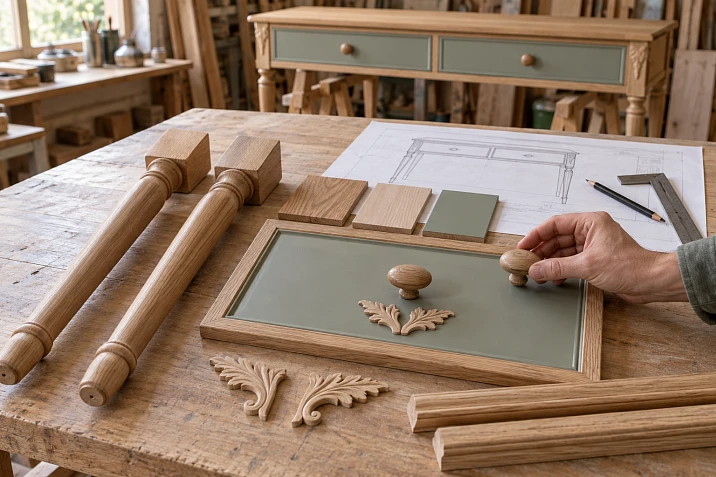
A cabinet of non-standard width can have ready-made handles and moldings, while a chest of drawers made to an individual sketch can have catalog legs and carved overlays. The uniqueness of furniture is determined by the combination of dimensions, construction and appearance. Making every visible part from scratch is only required where a ready-made element does not meet the task.
When choosing parts for custom furniture, first establish which parameters cannot be changed. These may be the overall height of the item, the mounting seat, the location of holes or the exact pattern of a lost ornament. Then check ready-made models against these conditions. A suitable element is included in the drawing, checked on a sample and ordered in a specific version. A part with a critical mismatch is sent for individual development, or the related furniture assembly is revised.
This is how the workshop separates genuinely unique work from the selection of ready-made components. It is especially useful to do this before making the carcass and drilling the fronts: later, even a small replacement may affect operations that have already been performed.
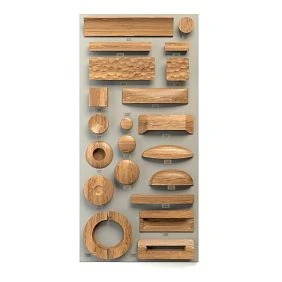
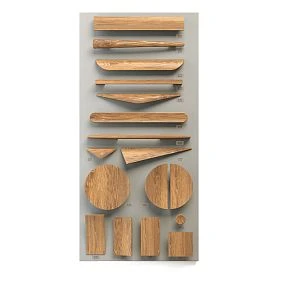
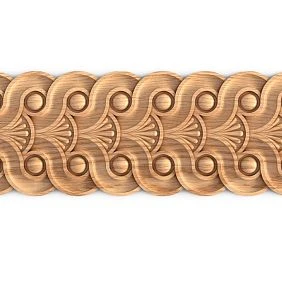
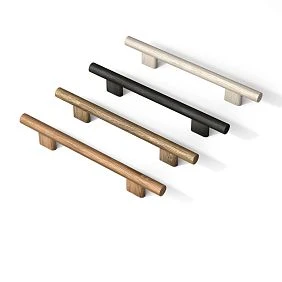
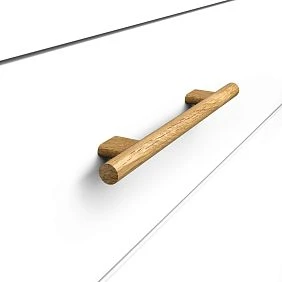
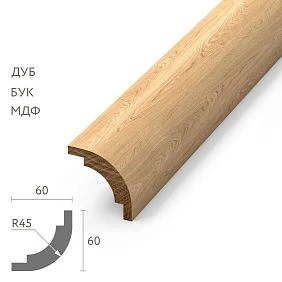
Ready-made model or individual production
A ready-made furniture part is a specific model with a known shape and available versions. It may be in stock or produced after an order is placed. Therefore, having an article number does not mean immediate shipment, and the production of a catalog item after ordering does not mean its dimensions can be changed arbitrarily.
For selection, it is useful to compare the project requirement with what is already offered in the catalog.
| Situation | Which solution to consider |
|---|---|
| The model matches in dimensions, mounting and material | A finished part in a proven design |
| Several identical elements are needed | A finished model, if its parameters suit the entire set |
| A complex carved pattern is needed without requiring an exact copy | First, selection from existing ornaments |
| The size of the mounting seat is fixed and cannot be changed | An exact match of a finished part or custom manufacturing |
| A copy of a lost historical element is required | Custom work based on a surviving sample and measurements |
| Differences in dimensions are acceptable for the structure and composition | Approval of a ready-made model with project refinement |
Quantity alone does not determine the decision. Even for twenty identical parts, custom development may be required if no ready-made model fits. Conversely, for a single cabinet it makes sense to buy a ready-made handle if its shape, mounting and finish already meet the project.
The request "custom furniture parts to customer dimensions" should be translated into a specific requirement. Do you need a special length of a standard profile, a unique cross-section, a different thread pattern or a different mounting? These are different tasks, and their feasibility is agreed separately.




Which dimensions can be re-agreed
A difference of a few millimetres can be acceptable or critical. An overlay of slightly smaller width may leave a freer margin. A handle with a different centre-to-centre distance will no longer fit the existing holes. A taller leg will change the height of the entire piece of furniture.
Divide the requirements into mandatory and those allowing selection. Mandatory ones include mating dimensions, working clearances, the agreed height and operating conditions. Variable ones may include the width of a decorative band, the scale of an ornament or the position of an accent — as long as these decisions are not yet approved and not tied to manufactured parts.
If a ready-made element almost fits, check the cost and consequences of changing the project. Sometimes it is easier to move a handle that has not yet been drilled. Sometimes, for the sake of a different overlay, you will have to change the frame, the facade mesh and the entire composition. Saving on one item then loses its point.
Do not treat arbitrary trimming of a purchased part as a universal solution. Linear stock is usually cut to length, but with a shaped leg or overlay, shortening may damage the mounting, change the proportions or disrupt the pattern. The permissible modification is determined by the construction of the specific element.
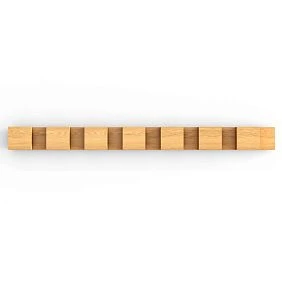
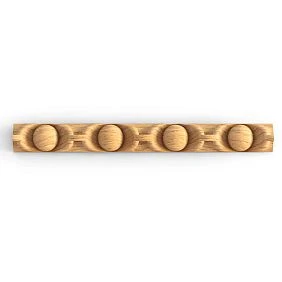
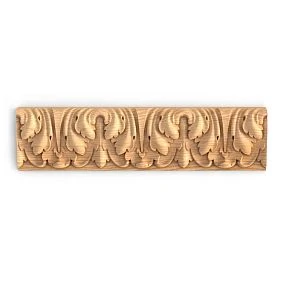
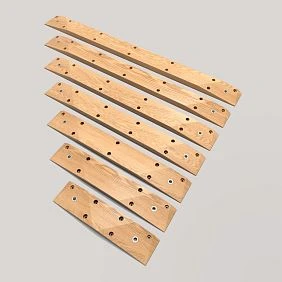
Our factory also produces:
Create a parts map for a custom project
On the furniture sketch, mark the base, facades, top, side verticals and decorative fields. Next to them, note which elements the workshop makes itself and which it plans to buy. This reveals the places where a catalogue part must connect with a custom construction.
| Furniture assembly unit | Purchased part | What needs to be coordinated with the project |
|---|---|---|
| Base | Leg or support | Installed height and mounting |
| Door or drawer | Handle | Holes, grip, access to fasteners |
| Front frame | Molding | Cross-section, joints and inner field |
| Central field | Overlay or socket | Contour, protrusion and installation axis |
| Top or side joint | Bracket, capital | Mating surfaces and overall dimensions |
The map shows the project composition, but it does not yet replace the purchasing list. The entry “four beech legs” does not define a specific model, size, and installation. This information will appear after suitable options are reviewed.
At this stage, it is useful to identify the moving parts. Decor on the door and the fixed side panel may be compatible in the closed position but overlap when opening. Even an element chosen primarily for its appearance can affect how the furniture works.
Get Consultation
Custom furniture parts are selected based on the actual configuration
Open the card of a suitable model and check the entire combination of parameters: size, material, surface preparation, and installation method. One item number may combine several variants. A photograph does not confirm that the correct one has been selected in the order.
Transfer dimensions to the drawing with direction names. In one product group, a letter denotes width; in another, height. The entry “size 150” is useless without understanding what was measured and from which plane.
Joints require data on fit and fastening. If the card does not show the reverse side or the hole locations, this information is clarified before final design. A hidden mounting area must not be drawn in based on a front photograph.
Purchased wooden furniture parts are best linked to a specific drawing version. Then a change in the size of the front or base immediately shows which components need to be rechecked. A previously approved item number remains suitable only if its installation conditions are preserved.
The legs are matched to the height and the lower cabinet unit
Before buying wooden furniture legs, determine the installed height of the support unit. It accounts for the actual position of the leg, the mounting hardware and the fit. The overall dimensions in the product card are not always equal to the distance from the floor to the underside of the cabinet.
If the top panel is installed on top of the cabinet without being recessed into it, the calculation is as follows:
Total height = installed support height + cabinet height without the top panel + top panel thickness.
For example, suppose the finished product should be 940 mm high, the top is 30 mm, and the installed support unit is 120 mm. That leaves 790 mm for the cabinet. If the support is replaced with a 150 mm unit, the cabinet would have to be reduced to 760 mm. With an already manufactured cabinet 790 mm high, the total height would become 970 mm.
This is a conditional example with a given assembly scheme. If the top is already included in the cabinet dimensions, it must not be added a second time.
In addition to height, check the mounting area, the fasteners, the offset from the edge and the access for assembly. With your own finish, you can consider from STAVROS open boundless possibilities for designers, furniture makers, and anyone striving to create unique high-quality furniture.. The suitability of the supports and the base in terms of load and stability is assessed for the assembled furniture, not just by the external size of each leg.
The handle must suit the front and the opening method
wooden furniture handles are selected before drilling the fronts. Clarify the number of fastenings, the position of the points, the centre-to-centre distance for two fastenings, the connection parameters and the permissible front thickness for the selected fastener.
For a new product, the handle position can still be coordinated with the frame and internal mechanism. On an existing front, the holes become a constraint: the same external length as another model does not make it interchangeable.
Check the space for your hand. A relief overlay may not touch the handle but can still get in the way of your fingers when gripping. If the moving part is hard to open, first assess the hinges or slides: enlarging the handle does not fix a faulty mechanism.
Access to the fastening must remain from the back. A position that is convenient in a sketch sometimes coincides with an internal partition or is blocked by a drawer box. This is determined during the assembly design, while the layout can still be changed.
To match the front color, you can choose uncoated furniture handles and test the finish on a sample. A check is also needed after painting: the surface in the grip area must suit the conditions of use, and the coating must not interfere with the intended installation.
The molding is selected before the final frame dimensions
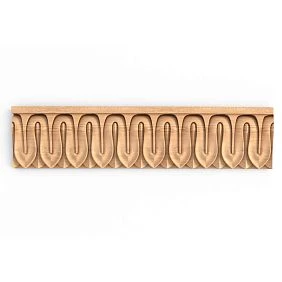
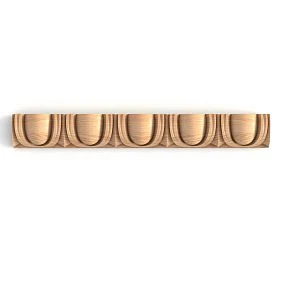
У wooden moldings for furniture check the cross-section and length of the blank. The profile width determines how much space remains inside the frame. The cross-section height affects the protrusion above the front and the interaction with the handle or adjacent parts.
Suppose the outer width of a rectangular frame is 440 mm, and a 20 mm wide molding is positioned entirely within this outline. The inner field will be 400 mm. With a 30 mm wide profile, the field shrinks to 380 mm. For a central overlay 320 mm wide, the side gaps decrease from 40 to 30 mm.
Such a change may be acceptable, but it needs to be seen in the design. The previous front layout cannot be kept after changing the cross-section without verification.
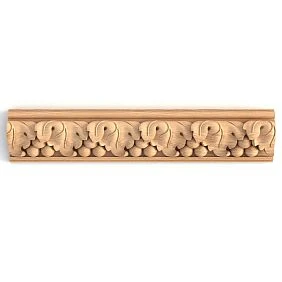
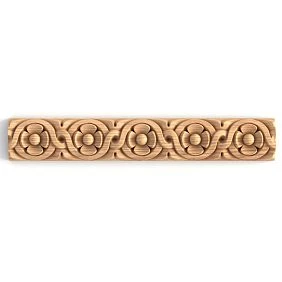
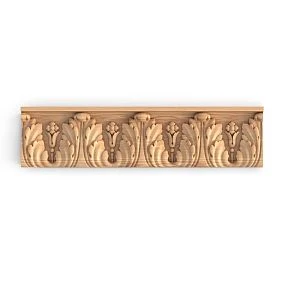
У wooden trim with an ornament, also assess the joints: where the pattern ends, how it meets in the corner, and whether additional elements are needed. Lengthwise, the profile is adapted to individual furniture by cutting; a unique frame length does not automatically require creating a new cross-section.
Overlays are checked against the free field of the facade
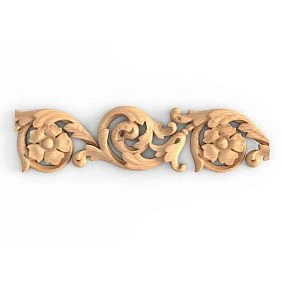
The free field is the surface remaining after the frame, handle and other mandatory elements. It is used to select Carved decorative inserts for furniture, taking into account the entire outer contour, including the outermost leaves, scrolls and protrusions.
Width and height answer the question of whether the design fits on the plane. Thickness and the shape of the back side show how the part will be installed and how far it will protrude. Overall thickness is not equal to the depth of individual relief cutouts.
For a directional ornament, select the required left or right version. Rotating the part does not always replace a mirrored model: the top of the design changes along with it. In the drawing and order, the sides are specified separately.
Check door opening and drawer movement with the actual protrusion of the decor. For custom furniture, this is especially important at corners, adjacent doors and side decorative verticals. A frontal image does not show what will happen at an intermediate point of movement.
If a suitable overlay is slightly smaller than the sketch, it is sometimes enough to change the offsets. If an exact copy of the design or a strictly specified contour is required, simple selection by size does not solve the task.
Rosettes help assemble a repeating decorative node
Wooden sockets they are convenient for a compact accent, repetition on several facades or finishing the intersection of profiles. They are selected by overall dimensions, shape, protrusion and axis position.
If the rosette connects moldings, first decide exactly how they meet it. The strips may end at its contour or form a separate frame next to it. Their lengths and the type of joint depend on this.
On a narrow door, a socket of suitable diameter may be too tall in relief. Therefore, compliance with the free field is checked both in plane and from the side. In a repeating composition, identical references to the facades are retained, rather than marking out each part separately by eye.
The bracket is selected based on its interface with the furniture
Wooden Brackets used in compositions of libraries, consoles, shelves and furniture portals. When selecting, height, width, depth and the shape of the contact surfaces are compared with the specific assembly.
For example, a bracket that fits in frontal width may protrude beyond the shelf or hit the door when opening. A side view and an understanding of which plane it is attached to are needed. If the upper element has a complex cross-section, the actual abutment is checked, not just the overall dimension.
Decorative purpose and load-bearing function are separated already at the design stage. When a bracket is to support a load, the suitability of the product, the fastening and the base is confirmed separately. The permissible shelf weight cannot be assigned from a photograph of a carved element.
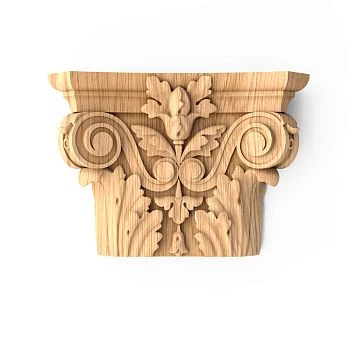
The capital, together with the pilaster and cornice, is also considered as a connected assembly. Ready-made parts may suit a custom cabinet if the width, fit, overlaps and overall height of the installed composition are coordinated.
Material and finish are coordinated for the entire set
Beech and oak are selected with the expected surface in mind. For dense enamel, beech can be considered if it is structurally suitable and available in the required model. Where the wood is visible, oak is appealing for its pronounced grain. At the same time, a clear finish is possible on various species, and an opaque color by itself does not guarantee complete concealment of the texture.
Clarify the preparation of the blank for the selected coating. In the requirements for the quality of wooden products STAVROS distinguishes between veneering for enamel and for tinting. For semi-transparent finishes, selecting lamellae by color and texture matters; the quality of sanding is a separate parameter.
If the legs, handles, and overlays should be perceived as a single set, compare them after a trial finish. The same composition can look different on a flat molding and on deep relief. Mixing species is acceptable as an agreed decision, but it must not be masked by a generic "solid wood" entry in the specification.
For your own painting, choose compatible Mounting and finishing materials. Consider the actual joint surfaces: a coated reverse side and bare wood may require different fastening approaches.
The sample is checked in the future assembly joint
A sample is needed to confirm a specific decision. The handle is installed on a trial front of the required thickness. The leg is joined to a fragment of the intended base. The overlay is fitted together with the frame and adjacent parts. Checking a product lying on its own answers only some of the questions.
For preliminary selection, the following may be suitable Product samples. But a material sample or a short profile section does not replace a full-size part if you need to check the overhang, fastening, or movement of the front. The composition of the trial order is chosen according to the task.
After checking the geometry, a trial finish is applied. It is compared with the carcass and other visible elements. If the material or quality of the blank in the main order differs, the result of the old sample cannot be automatically transferred to the new set.
It is convenient to split the approval into three records: "size and fit checked", "joint operation checked", "finish approved". This is more precise than a general "suitable" mark. A part may be acceptable in shape but not yet have a chosen fastening or a final color.
For a new design, checking a single support does not confirm the stability of the entire piece of furniture. On the assembled product, the position of the supports, the performance of the joints, and the opening of moving parts are additionally checked. The full set is ordered based on the results of the checks that are actually necessary for the project.
The approved parts are transferred to the procurement list
After selection, each item must have an exact description. The list links the supplier's catalog, the working drawing, and the furniture assembly. It is more convenient to keep this information together than to search for parameters in messages and individual photographs.
| Field | What to record |
|---|---|
| Position in the project | Part name and location on the furniture |
| Article number | Exact supplier model designation |
| Finish | Dimensions, length, left or right side if necessary |
| Material | Actual wood species |
| Preparation | Surface condition and agreed blank quality |
| Mounting | Verified joining method and required mounting parts |
| Finishing | Designation of the agreed sample |
| Quantity | Per item and for the entire order |
| Drawing | The current version of the associated sizes and layout |
| Approval | What has been checked and what questions remain |
Fasteners should not be considered included in the delivery without checking the complete set. A separate line item may be needed for assembly, and the screw length depends on the actual joint. This is especially easy to overlook when the main focus is on the wood and the finish.
A link to the category helps in selecting components for custom furniture. The final bill of materials needs a specific model and its variant. If the product page contains several sizes, a single page address is not enough.
For future repeat orders, keep the bill of materials and the approved sample. Natural texture can vary between batches, so repeating the item code does not eliminate the need to check the material and color.
Quantities are counted by items and individual variants
For example, suppose each of two dressers needs four legs, six handles, and a pair of directional pads. The production requirement will be eight legs, twelve handles, two left and two right pads. Left and right items remain separate lines even if they cost the same.
If a previously purchased sample handle is kept in the workshop as a reference, all twelve handles are included in the furniture order. If the sample is suitable for installation and will be used on one dresser, eleven need to be purchased. The reserve is accounted for separately in both cases.
Moldings are calculated based on the cutting map, not just the total number of meters. The lengths of the blanks, miters, kerf, and the placement of the ornament are taken into account. For a clear finish, matching adjacent sections by texture is added.
For custom items, the sets may differ. A wide dresser will have more handles, while a narrow one will have a different frame size. In that case, quantities are calculated per model, and only fully matching purchased items are combined. A general note like "decor for two dressers" hides these differences.
Before production, check the compatibility of the entire set
Assemble a control unit or product according to the current drawing. Check the parts together: a handle, molding, and overlay that fit individually may turn out to be incompatible on the same front.
Before launch, six things must be clear:
- Which elements are purchased ready-made and which are made individually.
- Which versions are approved and where they are specified in the drawings.
- How the fastenings are designed and whether access for assembly remains.
- Whether the overall dimensions, clearances, and movement of the fronts have been checked.
- Whether the material, preparation, and final finish have been agreed.
- Whether the quantity, completeness, and deadlines for receiving the parts have been confirmed.
Incoming inspection is carried out before irreversible operations on the batch: cutting, drilling, and painting. First, they make sure that the required versions have been received, then they distribute them among the products.
If the supplier has proposed a replacement, they return to the affected parameters. For a handle, these may be the holes and the projection; for a leg, the height and the mounting; for a molding, the facade field and the joints. The replacement is recorded in the same list. Otherwise, the designer will have one model, and a different one will appear at assembly.
Questions about ready-made and custom parts
When you need furniture parts to the customer's dimensions
When the critical parameters cannot be matched with the available models. To discuss custom manufacturing, prepare a drawing with dimensions and tolerances, the material, the quantity, the surface requirements, and the joining details. For a copy of a carved part, data on its shape will also be needed. The contractor confirms the feasibility, cost, and lead time of such work separately.
Can ready-made parts be used in custom furniture?
Yes, if they match the project. The body's own proportions, the facade composition, and the finish can be combined with ready-made handles, supports, and profiles. At the same time, all purchased elements undergo the same dimensional and installation checks as parts made in-house.
Is a ready-made element always cheaper?
No. They compare the cost of a part suitable for installation: purchase, receipt, preparation, fastening, and possible reworking of the assembly. If a ready-made model forces you to redo an already manufactured body, a custom solution may prove more rational. At the early stage of a project, there are usually more options to choose from.
Where to buy parts for custom furniture
In the STAVROS catalog you can select ready-made wooden elements for furniture: legs, handles, profiles and decorative details. Within the general section, check the material of the selected item, since MDF products are also presented there.
If you need to buy Carved wooden decoration, start with the free field, the grain direction and the permissible protrusion. For supports, the starting point will be the lower node of the cabinet; for handles, the mounting and working area. This way the selection leads to verifiable parameters rather than a set of photographs that match in style.
Before purchasing a full set, agree on the specific versions and obtain the necessary samples. A catalogue model offered with made-to-order production is ordered in the provided variants; the possibility of a non-standard modification requires separate agreement.
It is convenient to select parts for custom furniture from the construction to the component: determine the mandatory conditions, find a suitable ready-made model, check it in the assembly, and record the result in the specification. Individual manufacturing remains for those elements where a unique size, shape or joint is truly necessary for the project.