










































































Article Contents:
- Why an opening without a door needs finishing
- When a portal is needed instead of a regular architrave
- The opening looks "empty" even with architraves
- Interior in a classic or neoclassical style
- The opening connects formal areas
- Need to tie the opening to furniture and architecture
- Country house with wooden accents
- What elements make up a wooden portal for an opening
- Mouldings: basic framing
- Pilasters: architectural verticals
- Capitals: classic finishing touch
- Wooden cornice: horizontal finish
- Moldings: additional detailing
- Carved decor: individual accent
- Wooden portal application scenarios: from kitchen to study
- Opening between kitchen and living room
- Opening in a classic living room
- Opening in hallway and foyer
- Opening in a country house
- Opening in a study or library
- Comparative table: how to choose the type of portal depending on the room
- How to choose proportions: rules that are not discussed
- Pilaster width and opening width
- Cornice height and opening height
- Capital height and pilaster height
- Profile depth and slope depth
- Designing an arched opening with a wooden portal
- Option 1: Wooden architraves along the arch contour
- Option 2: Pilasters with an arch and impost
- Option 3: Emphasis on the arch spring points
- Wooden portal and wooden patterns: style through ornament
- Material for a wooden portal opening: what to choose and why
- Solid oak
- Solid beech
- MDF for painting
- Installation of a wooden portal in a doorway without a door: what you need to know before starting work
- Surface Preparation
- Acclimatization
- Installation Sequence
- Fasteners
- Mistakes when decorating an opening with a wooden portal
- Too massive portal in a narrow opening
- Capitals without pilasters
- Lack of a top cornice
- Inconsistency with baseboards and doors
- Mixing different carving styles
- Too small decor for a tall opening
- Ignoring wall thickness
- Asymmetric installation
- How a wooden portal connects different interior elements
- Wooden portal in commercial interiors: restaurant, hotel, boutique
- Restaurant
- Hotel
- Boutique and showroom
- What to buy for a wooden portal opening: list of elements
- FAQ: answers to the most frequently asked questions
- About the Company STAVROS
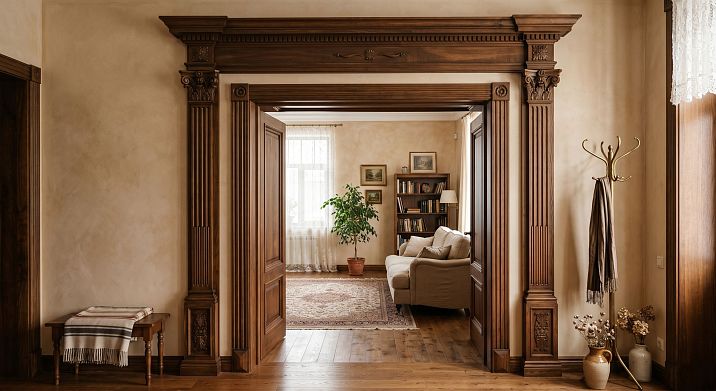
An opening without a door is an architectural pause. A place where one room ends and another begins. A place that in most apartments and houses exists as a construction leftover: just a hole in the wall with plastered slopes. No face, no character, no meaning.
Yet this very opening is one of the best opportunities in an interior. Because an empty opening between the kitchen and living room, between the hall and the main room, between the study and the library — this is where a wooden portal works with maximum impact. It does not compete with a door. It creates what a door fundamentally cannot: an open architectural accent that simultaneously marks the transition and enhances both rooms at once.
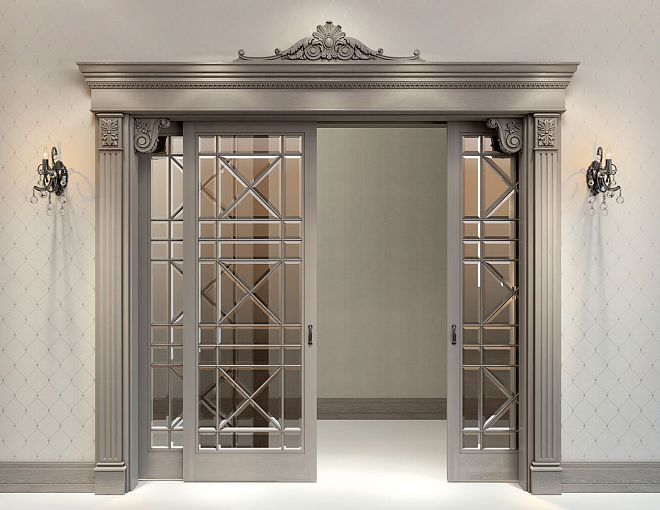
A wooden portal for an opening without a door is a complex: Wooden casings, pilasters, Capitals, wooden cornice, moldings and carved decor. It is not a single item — it is an architectural solution that turns a construction opening into an interior event.


Why an opening without a door needs finishing
Ask yourself an honest question: what does an opening without a door look like in your interior right now? In most cases, the answer is one — nothing. White plaster, straight slopes, possibly wallpapered. And nothing more.
This is not negligence. It is simply incompleteness. The opening functions — people pass through, light penetrates, space is connected. But visually, it looks like a construction fact, not a design solution.
What happens when an opening receives wooden finishing?
First — it gains scale. Pilasters on the sides visually stretch the opening upward. The cornice creates a horizontal finish. The space around the opening becomes proportionate to the room's architecture.
Second — it creates rhythm. The wooden portal rhymes with other wooden elements in the interior: door trims, baseboards, furniture. The opening ceases to be "out of context."
Third — it becomes two-sided. A door is either open or closed. A portal is always open and visible from both sides. One side is visible from the living room. The other from the kitchen. A well-designed portal is beautiful from any direction.
Fourth — it is an irreversible quality solution. A wooden portal, properly designed and installed, lasts for decades. It does not become outdated as trendy surfaces and colors do. The classic form is timeless.




When a portal is needed instead of a regular casing
Not every opening requires a portal in the full sense of the word. Sometimes it's enough wooden molding — and that already makes the opening complete. When exactly is a portal needed?
Our factory also produces:


The opening looks "empty" even with casings
It happens that casings are installed, but the opening still seems unfinished. The reason is insufficient scale of the framing. If the opening is tall (from 2.2 m) and wide (from 100 cm), a regular casing may not provide the necessary visual weight. Here you need pilasters on the sides and Cornice on top.
Get Consultation
Interior in classical or neoclassical style
In classical and neoclassical styles, architectural logic dictates: every opening is an event. A portal with pilasters and a cornice is mandatory here — it's not an excess, but a style requirement. Without it, the interior will look unfinished, even if everything else is done correctly.
The opening connects formal areas
The transition from the hall to the living room, from the living room to the dining room, from the study to the library — these are formal transitions. They should be designed accordingly. A wooden portal here is an architectural gesture that says: "an important space begins here."
Need to connect the opening with furniture and architecture
If the room has cabinets with a wooden portal, wooden moldings on the walls, classic furniture with carved decor, an opening without framing will stand out. The portal creates a connection: one style code for the entire interior.
Country house with wooden accents
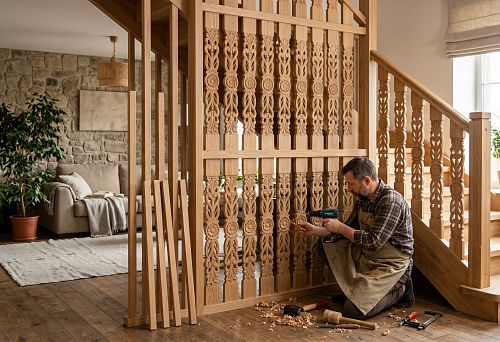
In country houses, wood is the main material. Wooden beams, wooden floors, wooden stairs — and a wooden portal in the opening becomes an organic part of this system. Portals made of solid oak with an oil finish work especially well in this context: natural texture, warm color, lively character.
What elements does a wooden portal for an opening consist of
This is an architectural question. A portal is not a set of details, but a system with internal logic. Each element has its place and performs its function.
Casing: basic framing
wooden casing — this is the starting point. It covers the joint between the opening and the wall, creating the primary framing contour. A 93 mm wide casing is a classic option that works in most interiors: wide enough to create visible framing but not overload the space.
As part of a full portal, casings serve as the "frame": they define the contour of the opening. All other elements — pilasters, cornice, moldings — are built on top of or next to this base.
For openings without a door, it is especially important: the casing is installed on both sides. From each of the two rooms, a neat wooden contour should be visible. Therefore, casings are selected either symmetrical (identical on both sides) or different — if the rooms are in different styles, but this requires careful justification.
More about door decor with casings, moldings, and carved overlays can be read in a separate article.
Pilasters: architectural verticals
wooden pilaster — a flat decorative post installed on the sides of the opening. It turns a simple rectangular passage into an architectural portico: with vertical supports that create the feeling of a load-bearing structure.
A pilaster in a doorway without a door works differently than in a cabinet portal. Here it not only decorates—it sets the scale of the transition. A wide pilaster (70–100 mm) in a doorway between formal halls is a ceremonial architectural gesture. A narrow pilaster (40–60 mm) in a doorway between the kitchen and living room is an elegant accent without dominance.
An important nuance: for a doorway without a door, pilasters are installed on the side slopes or on the adjacent wall next to the opening—depending on the width of the slopes. If the slopes are narrow (less than 5 cm), the pilasters are mounted on the front plane of the wall.
Capitals: the classic finishing chord
wooden capital — the upper decorative element of the pilaster. It is what elevates the portal from the category of "quality finishing" to the category of "architectural statement."
For a doorway without a door, capitals work in a dual mode: they complete the pilaster and create a visual connection with the horizontal line of the cornice. Without a capital, the transition from the vertical of the pilaster to the horizontal of the cornice will be abrupt. The capital smooths this transition and gives the entire structure completeness.
The choice of capital is determined by the style:
-
Doric—strictness, minimalism, for studies and modern classics;
-
Ionic—with volutes, for neoclassicism and calm classics;
-
Corinthian—with acanthus leaves, for a rich classical interior;
-
Custom—for interiors with non-standard design.
You need to buy the capital simultaneously with the pilaster — they must match each other in width. The capital is 10–20 mm wider than the pilaster on each side — a standard principle.
Wooden cornice: horizontal finish
wooden cornice above the opening — a horizontal line that completes the portal from above. It performs three functions: covers the upper slope of the opening, creates the "entablature" of the portal, and sets a horizontal rhythm connecting the portal with other horizontals in the interior.
For an opening between rooms, the cornice is chosen depending on the ceiling height and the scale of the portal. If the ceilings are 2.5 m — a cornice of 60–80 mm. With ceilings of 3 m and higher — 90–120 mm or more. The higher the ceiling, the more monumental the horizontal finish line can be.
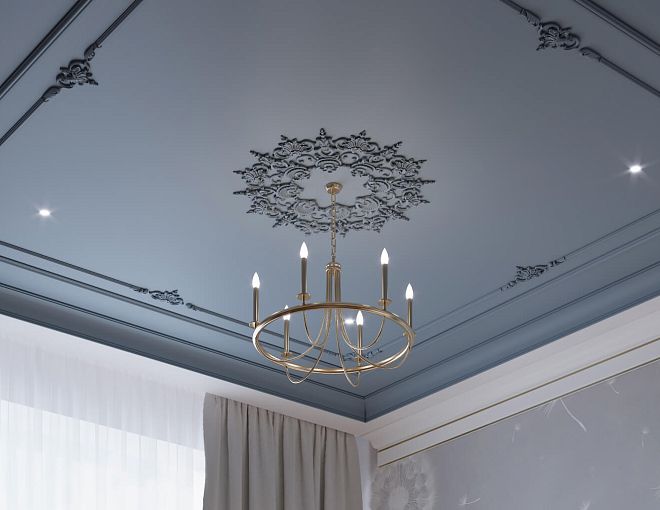
If the cornice is installed at the same level as the ceiling plinth — they will create a continuous horizontal line around the perimeter of the room. This is one of the most elegant design techniques in a classic interior.
Moldings: additional detailing
wooden molding within the portal works on several levels. They are used to decorate:
-
a horizontal belt between the upper cornice and the body of the portal;
-
frames on the side pilasters — this is especially characteristic of classic style;
-
joints between elements — the molding hides connections and makes the structure visually monolithic.
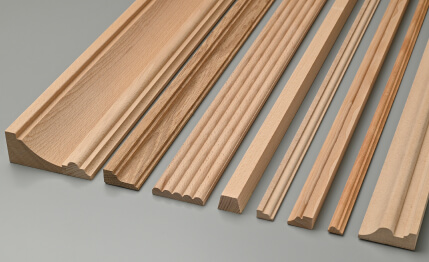
Thin moldings (15–25 mm) create delicate detailing. Wide ones (40–60 mm) create a more expressive relief. The profile shape (oval, scotia, ogee, cavetto) determines the degree of light-and-shadow play on the surface.
Carved decor: a personal accent
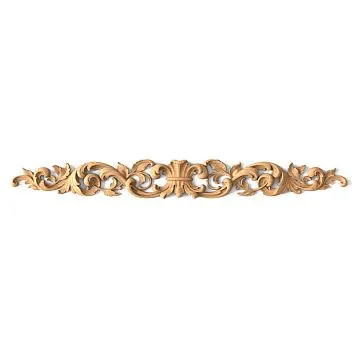
Carved wooden decoration — an element that transforms a portal from standard to unique. Rosettes in the corners of frames, an ornamental frieze at the top, a cartouche in the center — each of these elements adds a focal point.
For an opening without a door, carved decor is especially effective in the center of the upper cornice: a keystone with carved ornamentation creates the feel of a real architectural arch, even if the opening is rectangular.
О wooden patterns as an independent subject can be read in a separate article — it covers various ornamental traditions and their application in modern interiors.
Scenarios for using a wooden portal: from kitchen to study
Each opening is a unique situation. Zone, function, style, scale — everything determines the solution.
Opening between kitchen and living room
This is the most common case. Open-plan kitchen-living rooms are the norm today. But the opening between them often looks like just a hole in the wall. A wooden portal here solves the aesthetic problem without functional sacrifices.
For a kitchen-living room, a moderate portal is recommended: Casings with a good profile, possibly — thin pilasters, small wooden cornice on top. Without excessive carving — the kitchen requires functional cleanliness. The portal should be noticeable but not overload the space.
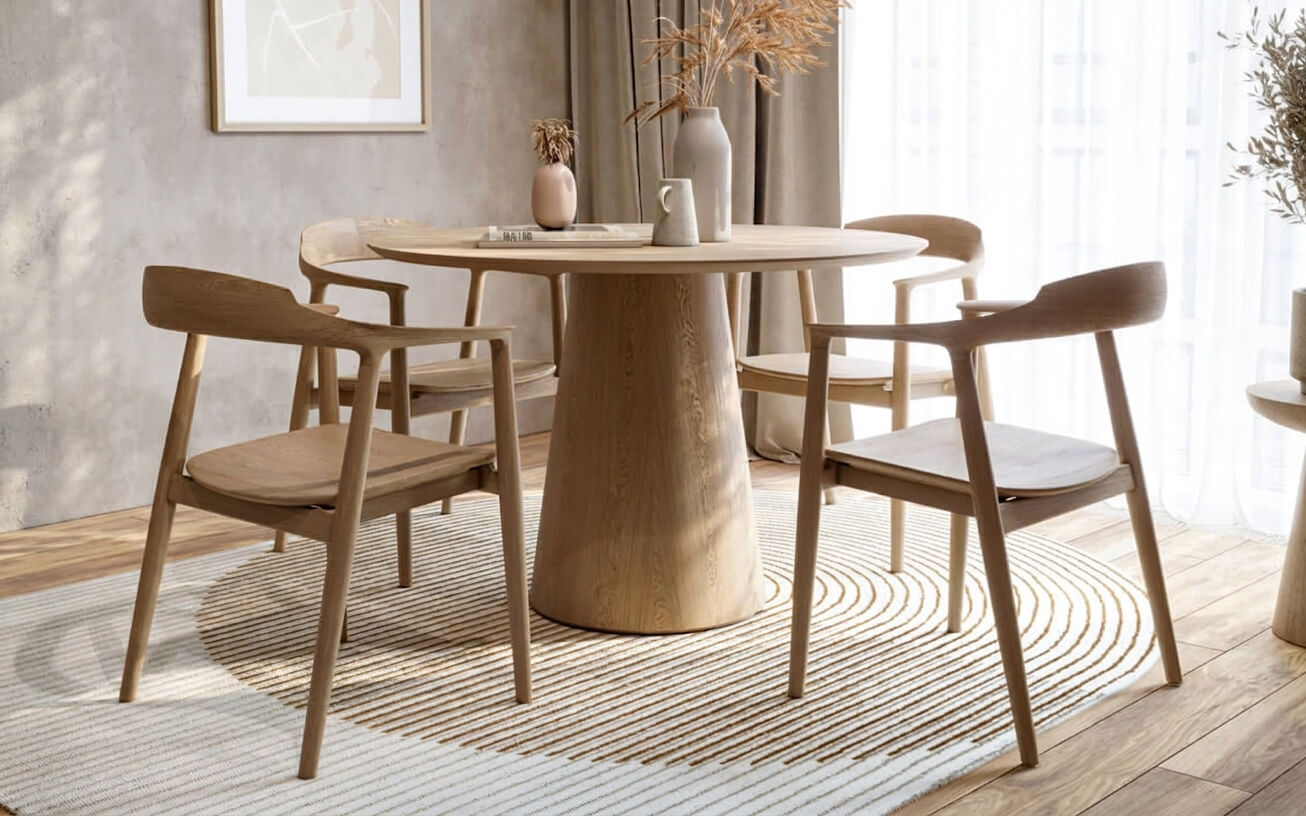
Finish: white or cream enamel — matches most kitchen facades. Natural oiled oak — for interiors with wooden accents. Important: the finish must be resistant to grease splashes and wet cleaning — polyurethane-based enamel or hard-coat varnish.
Opening in a classic living room
Here you can go all out. Wide pilasters with Corinthian or Ionic capitals. Multi-tiered wooden cornice with profiled divisions. Molding frames on the pilasters. Keystone with carved ornament.
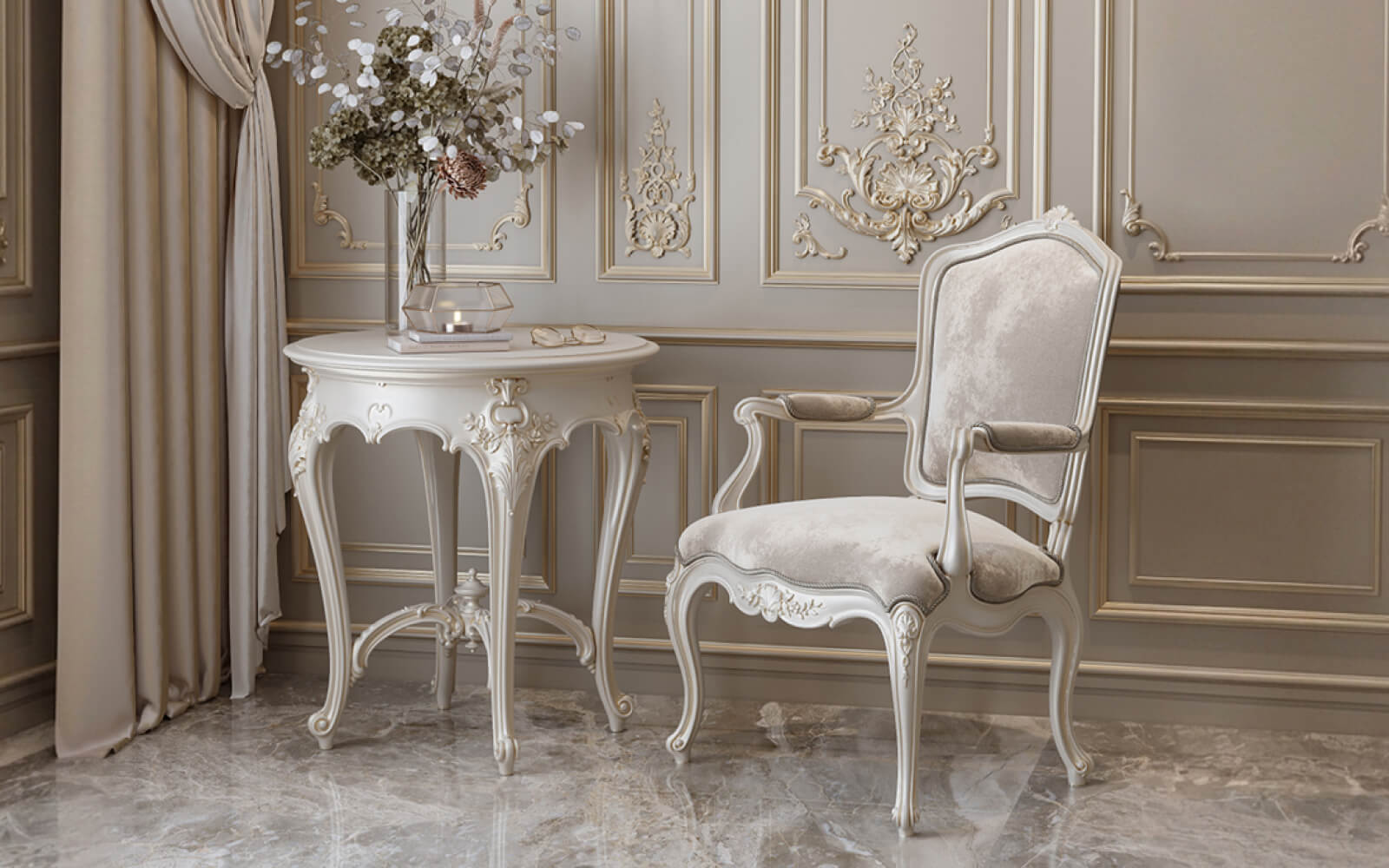
This is a portal visible from both sides, creating the feel of a grand passage — like in a mansion or estate. Finish: white enamel with gold patina, or dark lacquered oak — depending on the interior color scheme.
Opening in the hallway and foyer
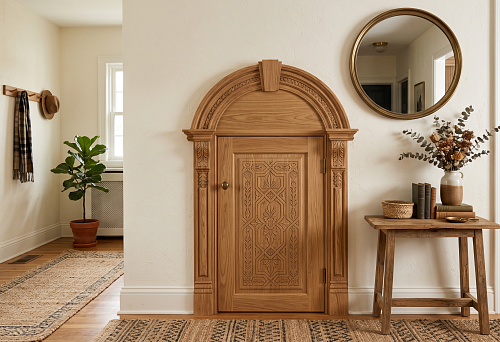
The hallway is the space of first impressions. A wooden portal in the opening from the hallway to the living room or from the hall to the corridor sets the tone for the entire house. Here, the portal should be coordinated with the front door, the casings of other doors, and the floor baseboard.
Principle: if the door casings in the hallway are wooden, the portal should be made of the same material and in the same style. The unity of the wooden Door Decor and the portal creates a feeling of a designed, rather than assembled piecemeal, interior.
Opening in a country house
Here, wood is the main language of the interior. A wooden portal made of solid oak with stain or oil finish is an organic element of a house with wooden beams, floors, and furniture.
For a country interior, portals with a more natural character are suitable: without complex carvings, but with expressive wood texture. Wooden trim made of oak or beech with an oil finish is the foundation. Ornamental wooden patterns in a traditional spirit are possible if the house is in a Russian style.
Opening in a study or library
A study is a place of concentration. Its portal should create a feeling of transition into a special, closed, and intelligent space. Dark wood, strict pilasters, a massive cornice, minimal carved decor — only architectural clarity.
Doric pilasters, dark oak with a "tobacco" lacquer finish, horizontal cornice without curves — English cabinet style in its pure form. This is a solution that works regardless of fashion.
Comparison table: how to choose the type of portal depending on the room
| Room | Pilasters | Capitals | Crown Molding | Carved decor | Finish |
|---|---|---|---|---|---|
| Kitchen-living room | Thin or not | No | 60–80 mm | Minimum | White enamel, varnish |
| Classic living room | Wide | Corinthian / Ionic | 100–150 mm | Active | Enamel with patina, oak under lacquer |
| Hallway / foyer | Medium | Simplified | 70–100 mm | Moderate | Matching the doors |
| Suburban house | Medium | None or Doric | 80–100 mm | Natural ornament | Oil, stain, varnish |
| Study / library | Wide, strict | Doric | 100–130 mm | Minimal | Dark varnish, stain |
| Neoclassical | Medium | Simplified | 70–90 mm | Calm | White/gray enamel |
How to choose proportions: rules that are not up for discussion
Proportions are what distinguishes a professionally designed portal from a homemade 'set of elements.' None of these principles are complicated, but each is fundamental.
Pilaster width and opening width
The pilaster width should be 6–10% of the opening width. For a 100 cm opening — a pilaster of 6–10 cm. For a 150 cm opening — 9–15 cm. A narrow pilaster on a wide opening looks like a pencil next to a gate. Too wide — narrows the opening and makes it cramped.
Cornice height and opening height
The vertical size of the cornice is 4–6% of the opening height. For a 230 cm opening — a cornice of 9–14 cm. For a 270 cm opening — 11–16 cm. A small cornice on a high opening gets lost. An excessively large one feels oppressive.
Capital height and pilaster height
The capital occupies 15–20% of the pilaster height. For a pilaster 220 cm high — a capital of 33–44 cm. This is a principle of classical architecture: the capital is not a minor detail; it should be visible from a distance.
Profile depth and slope depth
Wooden casing and pilaster have a certain thickness. It is necessary to ensure that this thickness does not exceed the slope depth — otherwise, the elements will protrude too far beyond the wall plane and create inconvenience when passing.
The standard thickness of a pilaster is 20–30 mm. With a slope of less than 20 mm, pilasters are mounted on the front wall next to the opening, not in the slope.
Designing an arched opening with a wooden portal
An arched opening is a special case. It has no straight top lintel, meaning a straight horizontal cornice is not used here. But this does not mean that an arched opening cannot be decorated with wooden decor.
Option 1: Wooden casings along the arch contour
A curved casing along the arch contour is a technically complex but possible solution. The wooden Trim for the arch must be made from several joined segments or from bent veneer — depending on the curve radius.
Option 2: Pilasters with an arch and impost
Straight pilasters are installed on the sides up to the level of the arch spring (arch springing). At this level, a horizontal impost (wooden beam) marks the point where the straight part transitions into the curve. Above — the arch slopes remain clean or are finished with a thin profile.
Option 3: Emphasis on the arch heels
If the pilasters only go to the heels, Capital it is installed exactly there — at the level of the curve's start. This creates the feeling of an "arch on columns" — a classic Romanesque or Renaissance motif.
Wooden portal and wooden patterns: style through ornament
Ornament is the language that wood speaks. Each element carved decor elements carries a cultural and stylistic code.
An acanthus leaf on the capital is Greece, Rome, classicism. It speaks of order, perfection, civilization. A geometric meander on the frieze speaks of precision and infinity. A vine speaks of nature and life, of a country lifestyle.
For each type of interior, its own ornament:
-
Classic: acanthus, laurel, egg and dart, dentils;
-
Russian style: izba, mansions, carved window frames with cockerels, solar rosettes, leaves;
-
Renaissance and Baroque: rocaille, cartouches, garlands;
-
Neoclassicism: simple geometric motifs, minimal carving;
-
Art Deco: zigzags, stepped forms, geometric inserts.
wooden patterns In the context of a portal, this is not just decoration. It is the signature of the style that the space constantly carries.
Material for a wooden portal opening: what to choose and why
The choice of material affects the price, appearance, and labor intensity of installation. Three main options — and each has its own niche.
Solid oak
Oak is the first choice for a portal under a transparent coating. Density 750–900 kg/m³, strength, durability. Expressive texture with wide fibers — each board is unique. Stain, oil, wax, varnish — oak accepts all types of treatment and always looks rich.
Disadvantage: price. Oak is more expensive than beech and MDF. But for a portal that will last 30–50 years — this is not an argument against, it is an argument for.
Solid beech
Beech is the choice for a portal under enamel paint. Homogeneous structure, absence of large pores, smooth surface — an ideal base for white or colored enamel. For classic white portals, beech is the best natural material.
Slightly softer than oak, but in dry residential conditions — the difference is insignificant.
MDF for painting
MDF is an economical option for a portal under enamel. Absolutely flat surface, no material movement with humidity changes, accepts milling of complex profiles well. Limitation: not suitable for high-humidity rooms, not recommended for natural coating — without wood texture, MDF looks synthetic.
Installation of a wooden portal in an opening without a door: what you need to know before starting work
Surface preparation
The slopes must be even and durable. Plaster — without cracks or delamination. If necessary, slopes are leveled before installing wooden elements. Wood will not hide unevenness — it will emphasize it.
Acclimatization
Wooden elements need to be kept in the room for 48–72 hours before installation. Wood adapts to the room's temperature and humidity — after that, movement is minimal.
Installation order
-
Marking — verticals of pilasters, horizontal of the cornice, symmetry along the opening axis.
-
Installation of pilasters — with mounting adhesive and hidden screws into the slope.
-
Installation of capitals — on pilasters, with additional fixation.
-
Installation of the cornice — horizontally, at the level of the top of pilasters or capitals.
-
Installation of platbands — along the contour of the opening.
-
Moldings — as auxiliary profiles and decorative frames.
-
Carved decor — apply with glue, last step.
-
Final treatment — putty joints, primer, paint or varnish.
Fasteners
For solid oak — screws + construction glue. For MDF — finishing nails + glue. Large elements (cornice, posts) — mechanical fastening required: glue alone won't hold.
Mistakes when framing an opening with a wooden portal
Each of these mistakes turns a good idea into disappointment. Studying them in advance is the only way to avoid them.
Portal too massive for a narrow opening
Opening 80 cm, pilasters 10 cm on each side — portal reduces passage to 60 cm. Uncomfortable to walk through. For narrow openings — thin elements or only architraves without pilasters.
Capitals without pilasters
A capital without a pilaster is an accessory without clothes. It visually has no support, looks like a random detail. Capital always paired with Pilaster.
Missing top cornice
Pilasters without a cornice form an incomplete structure. There are verticals, but no horizontal finish. Visually, the portal "hangs" without a top line. wooden cornice mandatory in any portal with pilasters.
Inconsistency with baseboards and doors
A Baroque-style portal next to doors with modern thin trim creates a conflict. All wooden decoration in the room should belong to one stylistic register.
Mixing different carving styles
Ionic capitals and Baroque rocaille on the frieze is not eclecticism, it's visual noise. One portal — one stylistic code.
Too small decor for a high opening
Fine cut-through carving, readable from 30 cm, is completely lost from 3 meters. For high openings — large, readable ornament. The scale of decor should match the viewing distance.
Ignoring wall thickness
In thick walls (35–50 cm or more), the slopes are wide — and this opens up additional possibilities. The inner surfaces of the slopes can be faced with wooden panels or decorated with moldings. This makes the portal three-dimensional and voluminous.
Asymmetrical installation
Pilasters must be at the same level relative to the opening axis. The cornice must be strictly horizontal. Even a deviation of 2–3 mm is noticeable to the eye — especially when viewed from an angle.
How a wooden portal connects different interior elements
A portal is not an isolated object. Its strength lies in becoming part of the architectural language of the entire space.
Connection with the ceiling cornice. If the wooden cornice of the portal matches the height of the ceiling plinth, they form a continuous horizontal line around the room. This is a powerful design technique.
Connection with the floor plinth. The lower base of the pilaster should be at the level of the floor plinth or slightly above it. This creates a visual axis from floor to ceiling.
Connection with door trims. wooden casing The portal and door trims in the same room should be in the same style and made of the same material. This is fundamental.
Connection with furniture. If the furniture is in a classic style with moldings and carved overlays, the portal should be in the same decorative system. All wooden decor in the interior speaks the same language.
Connection with the staircase. In country houses where the staircase is a central element, a wooden portal next to it creates a unified architectural ensemble. More about wooden items for the interior — in the full catalog.
Wooden portal in commercial interiors: restaurant, hotel, boutique
A wooden portal for an opening is not just a residential solution. In commercial spaces, it works as a tool for creating atmosphere and branding.
Restaurant
In a restaurant, the portal between zones is a grand entrance to a "different" world. It sets the tone: dark wood with gold — an expensive classic restaurant. A white portal with simple pilasters — a modern cafe with a touch of elegance. Carved elements with floral patterns — a country or ethnic restaurant.
Hotel
In hotel lobbies, in transitions between zones, in the reception area — wooden portals create the feeling of a mansion, a family home, a place with history. This is exactly what forms the "atmosphere" that guests describe with words like "cozy," "expensive," "homey."
Boutique and showroom
A portal at the entrance to the fitting room area, to the VIP lounge, to a separate department — it marks the transition to a "special" space. Psychologically, this works: a person feels they are entering another zone — and behaves accordingly.
What to buy for a wooden portal opening: list of elements
Complete list for creating a portal in an opening without a door:
-
Wooden casings — for framing the opening contour on both sides;
-
wooden pilasters — side architectural pilasters;
-
Wooden capitals — top finish of pilasters;
-
wooden cornice — horizontal finishing line;
-
Wooden molding — for frames on pilasters and auxiliary profiles;
-
Wooden trim — for the bottom base and transition profiles;
-
Carved wooden decoration — overlay elements: rosettes, keystones, ornamental friezes;
-
Wooden items — the entire range for selecting additional elements.
FAQ: answers to the most frequently asked questions
How to frame an opening without a door?
Wooden architraves along the contour — the minimal option. A full portal includes pilasters on the sides, capitals, wooden cornice on top, moldings, and Carved Decor if desired. It all depends on the room's style and budget.
What is better — regular architraves or a wooden portal?
wooden casing is a frame. A wooden portal is an architectural accent. If the task is simply to cover the slope, an architrave is enough. If the task is to make the opening the main element of the room, a portal is needed.
Can a portal be made between the kitchen and the living room?
Yes. For this area, a moderate portal is chosen: without excessive carving, with a moisture-resistant coating, matching the kitchen facades or the wall color. Architraves plus a small cornice is the optimal solution.
Are capitals needed in a portal?
Capitals are always needed when pilasters are used in a classic interior. In neoclassicism and modern classicism, a version without a capital is possible — the pilaster ends with a simplified profile extension. Only the minimalist version works completely without capitals.
What material should I choose for the portal?
For a portal under a transparent coating — solid oak. For a portal under enamel — solid beech or MDF. For commercial projects with volume — MDF saves the budget without losing visual results.
Can I order a portal with custom dimensions?
Yes. STAVROS manufactures elements for custom projects. Non-standard pilaster width, special cornice shape, unique carved decor pattern — all of this is possible when ordering.
How to coordinate the portal with doors in the same room?
Key principle: one profile, one material, one style. Door trims and portal framing from the same series or order family — and the space looks designed as a single whole.
Can I install the portal myself?
Yes, with basic construction skills. You need a miter saw, level, mounting glue, and a drill. The most critical operation is precise marking of verticals and horizontals before starting installation.
About the company STAVROS
A wooden portal for an opening without a door is a task where everything matters: profile accuracy, solid wood quality, coating uniformity. A 1 mm error on the trim, a bubble in the varnish on the capital, an uneven cut of the cornice — all of this is visible. Because the portal stands in the most visible place of the interior.
STAVROS is a manufacturer of wooden decor since 2002, starting its history with the restoration of the Konstantinovsky Palace and the Hermitage. Today, the company's catalog includes — Wooden casings, pilasters, Capitals, Wooden cornices, Moldings, Trim и Carved Decor — everything you need to create a wooden portal of any complexity.
STAVROS works with private clients, designers, construction companies, and commercial properties. Production is in Saint Petersburg. Showrooms are in Moscow and Saint Petersburg. Delivery is throughout Russia and CIS countries.
When the opening in your home ceases to be just a hole in the wall — and becomes an architectural event — that will be the work of STAVROS.