










































































Article Contents:
- Why a plastic window looks "not right"
- The material doesn't match a warm home
- Slopes — an empty plane
- No connection with other elements
- Seven elements of wooden window framing
- Wooden window sill
- Wooden slopes
- Wooden casings
- Wooden molding around the window
- Wooden cornice above the window
- Decorative wooden frame
- Carved decor above the window
- Step-by-step strategy for decorating a plastic window with wood
- Step 1: determine the interior style and wooden code
- Step 2: start with the windowsill
- Step 3: slopes
- Step 4: architraves
- Step 5: moldings and cornice
- Step 6: decorative accents
- Use cases: window area in each room
- Window in the living room
- Window in the bedroom
- Window in the study
- Window in the kitchen
- Window in the children's room
- Window in a country house
- Window without curtains
- How to connect a wooden window with the rest of the interior: the principle of a single code
- Window and doors
- Window and baseboard
- Window and furniture
- Window and wall panels
- Window styling by style: decision table
- Technical nuances of installing wooden elements
- How to attach trims to a window
- How to attach wooden slopes
- Joints of wood with plastic
- Coatings and care
- Mistakes when decorating a plastic window with wood
- Frame too massive for a small room
- Sash opening not taken into account
- Wooden casing overlaps the window handle
- Mismatch with style and other elements
- Painting white without prior preparation
- Slopes finished, windowsill is original plastic
- Forgetting about the radiator under the window
- Not protecting wood in the kitchen
- What to buy for wooden window trim
- FAQ: answers to popular questions about decorating a plastic window with wood
- About the Company STAVROS
There is such a paradox of modern renovation: money is spent on walls, money on floors, money on furniture. And the window? The window remains as the builders installed it. White plastic, white slopes, a simple windowsill without character, no connection to the interior. And this is not because the owners did not want to make it beautiful. It's just that no one suggested that a plastic window is not a death sentence.
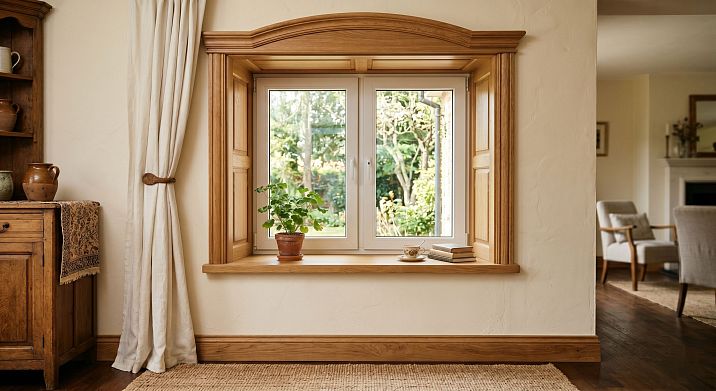
Decorating a plastic window with wood is one of the most effective techniques in a modern interior. It does not require replacing the frame, does not disrupt the structure, and does not entail large expenses. It is enough to add a few wooden elements — and the window area transforms: it becomes warm, cohesive, connected to the rest of the space. The white plastic ceases to be conspicuous, giving way to a wooden frame that speaks the same language as the furniture and doors.
In this article, we will analyze each element — from the wooden windowsill to carved decor elements above the frame. What to install, how to choose, how to mount, how to avoid mistakes.



Why a plastic window looks "not right"
Before talking about the solution, it is worth honestly addressing the problem. Why does a plastic window so often stand out from the interior?




The material does not match a warm home
Plastic is a cold material in a psychological sense. It is appropriate in an office, in production, in a medical facility. But in a living space, especially in an interior with wooden furniture, parquet, textiles — it looks like an alien from another world.
A white frame without any decorative elements around it is just a hole in the wall. It has no framing, is not "grounded" in the interior, and is not connected to adjacent surfaces.
Our factory also produces:


Slopes — an empty plane
After installing a plastic window, the slopes (side and top inner planes of the opening) are most often plastered and painted white to match the frame. The result: the window is "inserted" into a white rectangle. Without depth, without shadow, without material.
This solution is functional, but decoratively — zero.
Get Consultation
There is no connection with other elements
In the interior, the principle of a unified code works: doors, baseboards, furniture facades, architraves should speak the same language. If throughout the room it's wooden Skirting made of solid wood, wooden doors with architraves, wooden furniture — and the window stands in a white plastic frame with bare slopes, it falls out of this system.
It is the wooden window trim that solves this problem: it includes the window in a unified decorative ensemble of the room.
Seven elements of wooden window trim
Each of these elements can be used separately or in combination. Together they create a full wooden framing for a plastic window.
Wooden windowsill
The windowsill is the most noticeable and most influential element of the window area. It is what catches the eye first: a horizontal surface at direct eye level, well-lit (the window always has maximum lighting), often used as a shelf.
A standard plastic windowsill is a white plane that screams "cheap." A solid wood windowsill made of oak, ash, or beech is a completely different feeling: warmth, weight, materiality, texture.
Dimensions. A solid wood windowsill is made to the full width of the opening with small side projections (2–5 cm). Depth: from 20 to 40 cm — depending on the depth of the opening and the desired function of the windowsill (just a shelf or a place to sit).
Coating. In the kitchen — polyurethane varnish with moisture resistance. In the living room and bedroom — oil with wax (it protects the wood and preserves the tactile warmth of the surface). In the study — dark varnish for a "desk" look.
Installation. The wooden windowsill is laid on mounting foam over the existing plastic one — without removing it. Or it is installed from scratch during the complete arrangement of the window area.
Wooden window reveals
Window reveals are the three planes around the window opening from the inside: left, right, and top. They create the "framing" of the window and give depth to the opening.
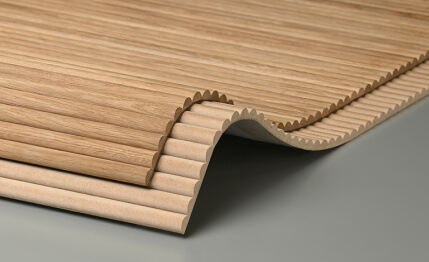
Wooden window reveals made of trim or from wooden panels — this is a replacement for boring plaster. They add volume, texture, and warmth.
Execution options:
-
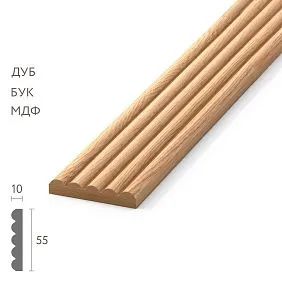
Molding strips laid vertically on the side reveals and horizontally on the top reveal;
-
Solid wooden plywood panels with wood veneer, trimmed with wooden profile around the perimeter;
-
Combination: flat wooden panel + Wooden molding around the perimeter of the slope.
Depth of slopes. Usually 15–35 cm depending on wall thickness. Wooden slopes work well in houses with walls 50 cm or more — there the opening is deep and the wooden trim creates a real "well" of wood.
Style. In a modern interior — smooth panels of beech or ash. In classic — with molding framing and figured profile. In a country house — oak slats with oil finish.
are used to decorate door and window openings, giving them a finished and aesthetically pleasing appearance. They protect openings from mechanical damage and emphasize the architectural style of the room.
Wooden casing — a flat or profiled wooden trim that is attached around the perimeter of the window opening on the outside of the slope. It covers the joint between the slope and the wall, creating a neat decorative frame around the window.
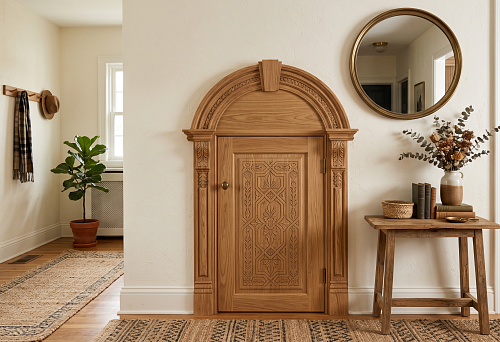
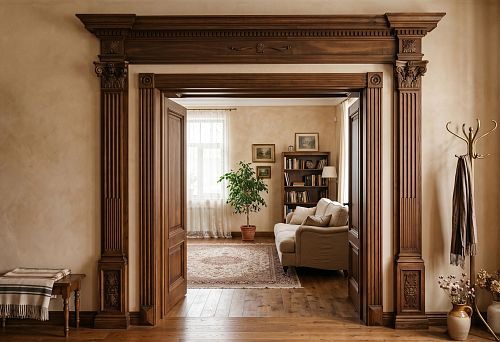
The casing is exactly the element that "includes" the window into the interior system. Because the same casings are on the doors. The same wood species, the same profile, the same finish — and the window and doors become part of a unified wooden theme.
Casing profiles. Straight flat — for modern interior. Curved with a fillet — for classic and neoclassic. Wide with a frame profile — for country interior with wooden accents.
An important nuance. Window casings are attached only from the inside — to the slopes or to the wall around the opening. They do not contact the plastic frame and do not interfere with opening the sashes.
Dimensions. Casing width: 40–80 mm — depending on the opening size and desired visual effect. Narrow casing 40–50 mm — delicate contour. Wide 70–80 mm — expressive frame.
Wooden molding around the window
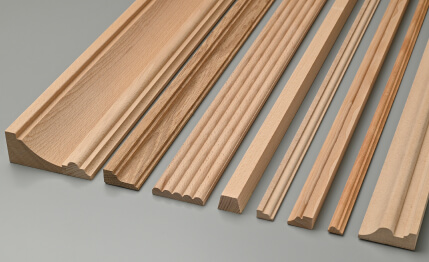
Wooden molding — a thinner and more elegant element than a platband. It is a narrow profiled molding that is installed in combination with wider elements or independently — to create a thin decorative line.
Moldings around the window work in two scenarios:
Scenario 1: moldings as an additional contour. Outside the platband — an additional, thinner molding. It creates a stepped frame of two contours. This is a classic technique in a neoclassical interior: two or three concentric wooden profiles around the window.
Scenario 2: moldings on the slopes. On the plane of the wooden slope — a molding frame. This creates a relief slope panel, like in furniture facades. It works especially well if the entire room is decorated with wall panels with molding frames.
For profile selection — a large assortment of wooden moldings of different sections and wood species.
Wooden cornice above the window
wooden cornice — a horizontal profile above the window, which serves simultaneously as the top finish of the wooden frame and as a base for curtains or a lambrequin.
A solid wood cornice above a plastic window is a powerful technique. It:
-
covers the top joint of the trim or slope with the wall;
-
creates a horizontal accent above the window;
-
allows hanging curtains organically, without an unsightly metal rod;
-
adds an "architectural" element to the window area.
In a classic interior, a wooden curtain rod above the window is standard. In a modern one, it should be concise, without a complex profile. In a country house, a wooden curtain rod made of oiled or stained oak is an organic part of the wooden interior.
Decorative wooden frame
wooden frame is a complete structure that covers the entire window: top, bottom, and sides. It is a finished product that is mounted on the wall around the window opening.
Unlike trims that go along the perimeter of the slope, a decorative frame can be positioned wider — like an architectural portal around the window. This is especially effective in a living room and in areas without curtains: the window acquires the solemnity of a picture in a frame.
In the frames made of wood are ready-made products of various formats and styles that can be selected for a specific opening.
Carved decor above the window
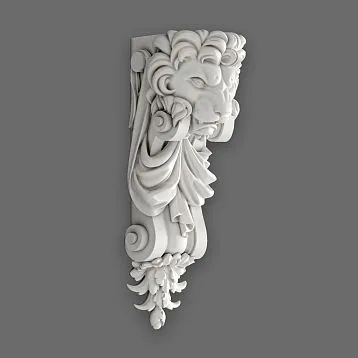
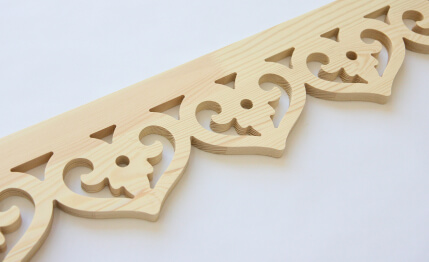
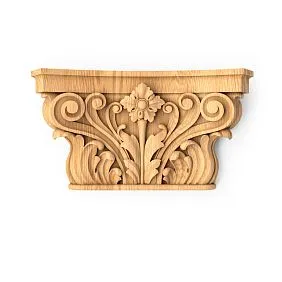
Carved wooden decoration — platbands, keystones, corner overlays, friezes — creates an accent above the window in the spirit of historical interiors.
A keystone is the central decorative element above the window opening, a classic architectural technique. Above a plastic window, a wooden keystone looks unexpected and convincing: it "quotes" the architectural tradition while hiding the technical joint behind it.
Corner overlays made of wooden decor in the corners of the frame platband — another technique that works in classic and neoclassic styles.
Step-by-step strategy for decorating a plastic window with wood
For a cohesive result, consistency is important. Window decoration is not a set of separate purchases, but a system.
Step 1: determine the interior style and the wooden code
First of all, answer the question: what wooden code already exists in the interior?
-
Wood species in furniture (oak, ash, beech, pine, walnut);
-
Coating color (natural, dark, white, gray);
-
Profile of baseboard and door trim;
-
Furniture style (modern, classic, country).
Window design should continue this code, not create a competing one.
Step 2: start with the windowsill
A wooden windowsill is the first thing to do. It is the most noticeable, gives an immediate effect of "warming up" the window area, and serves as the basis for all subsequent decor.
The solid wood windowsill is selected by species and color to match the flooring or the main furniture. An exact match is not necessary — the same tonal range is sufficient.
Step 3: window slopes
After the windowsill — the slopes. This is where empty white planes turn into wooden ones. Wooden slopes made of trim are mounted on the walls of the opening. The species and color are the same as those of the windowsill.
Step 4: trim
wooden casing Around the perimeter — the final chord that closes the wooden frame. It is attached over the slope and creates a clean frame. From the same series as door trims.
Step 5: moldings and cornice
Optionally — wooden cornice above the window and additional Moldings as a second contour of the frame. This is already the highest level — architectural design.
Step 6: decorative accents
At this stage — Decorative Inserts in the corners of the trim, Carved Decor above the window, wooden patterns as inserts into the slopes.
Application scenarios: window area in each room
Window in the living room
The living room is a space that should make an impression. The window here is often the central element of the wall around which the entire composition is built: sofa, carpet, table, floor lamp.
For the living room, a full wooden frame is optimal: a wide wooden windowsill (30–40 cm), wooden slopes, Casings with a molding profile, wooden cornice above the window.
If the living room walls are decorated with wooden panels with molding frames, the window trims and moldings from the same system make the window part of a unified wall ensemble. The wall with a window ceases to be "just a wall with a hole" and becomes an architectural composition.
In a living room without curtains, the wooden frame is especially important. An open window opening with a wooden frame works like a picture in a frame — and it really makes an effect.
Window in the bedroom
The bedroom requires tranquility. Complex profiles and carved decor are not needed here. A wooden windowsill matching the tone of the wooden bed or bedside tables — and that alone is enough for harmony.
Wooden slopes in the bedroom — light wood with oil finish, beech or ash. Wooden molding Along the outer perimeter of the slope — thin, 25–30 mm. Cornice — optional, in the same tone.
Important: in the bedroom, long curtains, and the cornice should be positioned high enough — at least 10–15 cm above the window opening. A wooden cornice at this height visually raises the ceiling and adds verticality to the interior.
Window in the study
The study is a place of concentration. Here, dark oak with a matte lacquer finish, a massive wide windowsill (which will serve as an additional work surface), and strict straight architraves without a rounded profile are appropriate.
Dark wooden framing in the study is a classic. English style, library interior, restrained luxury. Carved decor is appropriate here, but moderate: a small accent above the window or corner overlays on the architrave.
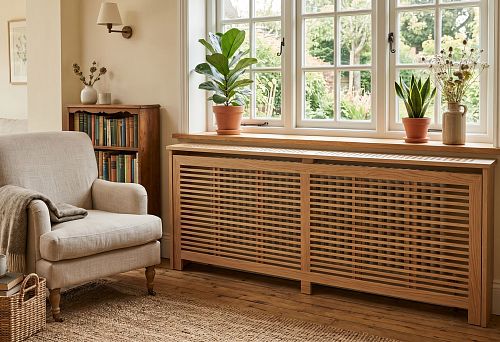
If there is a radiator under the study window, a wooden screen for it made of the same oak with the same lacquer will complete the look: windowsill + slopes + architraves + radiator screen — a unified wooden theme at the window.
Window in the kitchen
The kitchen is an area with high demands for practicality. Wood in the kitchen is possible but requires proper coating.
Wooden windowsill in the kitchen: only with polyurethane lacquer for moisture resistance. Matte — does not retain fingerprints. Dark species (walnut, wenge, dark oak) are more practical than light ones — dirt is less noticeable on them.
Wooden slopes in the kitchen — made of dense milled timber or plywood with wood veneer under lacquer. Do not use oil: the kitchen requires a more protected surface.
Wooden casing in the kitchen — under the same varnish, of the same wood species as the kitchen unit's furniture fronts. This creates an organic connection between the window and the kitchen.
Window in the children's room
In the children's room, safety and ease of cleaning come first. The wooden windowsill is wide (children use it as a table or a place for toys), with rounded edges. The coating is an eco-friendly varnish without toxic components.
Wooden window slopes in the children's room — light wood, with a flat surface without relief (dust accumulates in relief recesses). Architraves are of a simple profile without sharp edges.
Color scheme: natural oak or ash, or a white enamel coating — matching the children's room furniture.
Window in a country house
A country house — maximum freedom for wooden decor. Everything is appropriate here: oak slats under oil, slopes with natural wood texture, wide architraves with a figured profile, a wooden cornice, Carved Decor with plant motifs.
In a country interior, the wooden window design should echo the wooden ceiling beams (if any), the wooden floor, and the furniture — creating a unified organic story of natural materials.
Window without curtains
One of the most interesting situations is when the window remains open, without curtains. In modern minimalism, Scandinavian style, and studios with panoramic windows, curtains are often deliberately omitted.
In this case, the wooden design becomes especially important. An open plastic window without decoration is just a hole in the wall. An open window in a wooden frame is an architectural object.
wooden frame — the ideal solution for a window without curtains. It creates completeness around the opening and makes the window an independent visual element, rather than a background.
How to connect a wooden window with the rest of the interior: the principle of a unified code
This is the main concept. The wooden design of a window does not work in isolation — it works as part of a system.
Window and doors
Do the doors in the room already have wooden architraves? Ensure that the architraves on the window are made of the same material, with the same profile, and the same finish. Then the doors and window form a "related" group of objects — the interior acquires internal logic.
Window and baseboard
Wooden baseboard around the perimeter of the room — a horizontal wooden line at the floor. A wooden cornice above the window — a horizontal wooden line at the ceiling in the window area. Wooden architraves — vertical lines. Together, they create a wooden "frame" in the interior that organizes the space.
Window and furniture
The wood species of the windowsill and slopes should be in the tonal range of the furniture. An exact match is not necessary — tonality is more important: if the furniture is light, the window wood is light. If the furniture is dark, the wooden windowsill should be under stain or dark varnish.
Window and wall panels
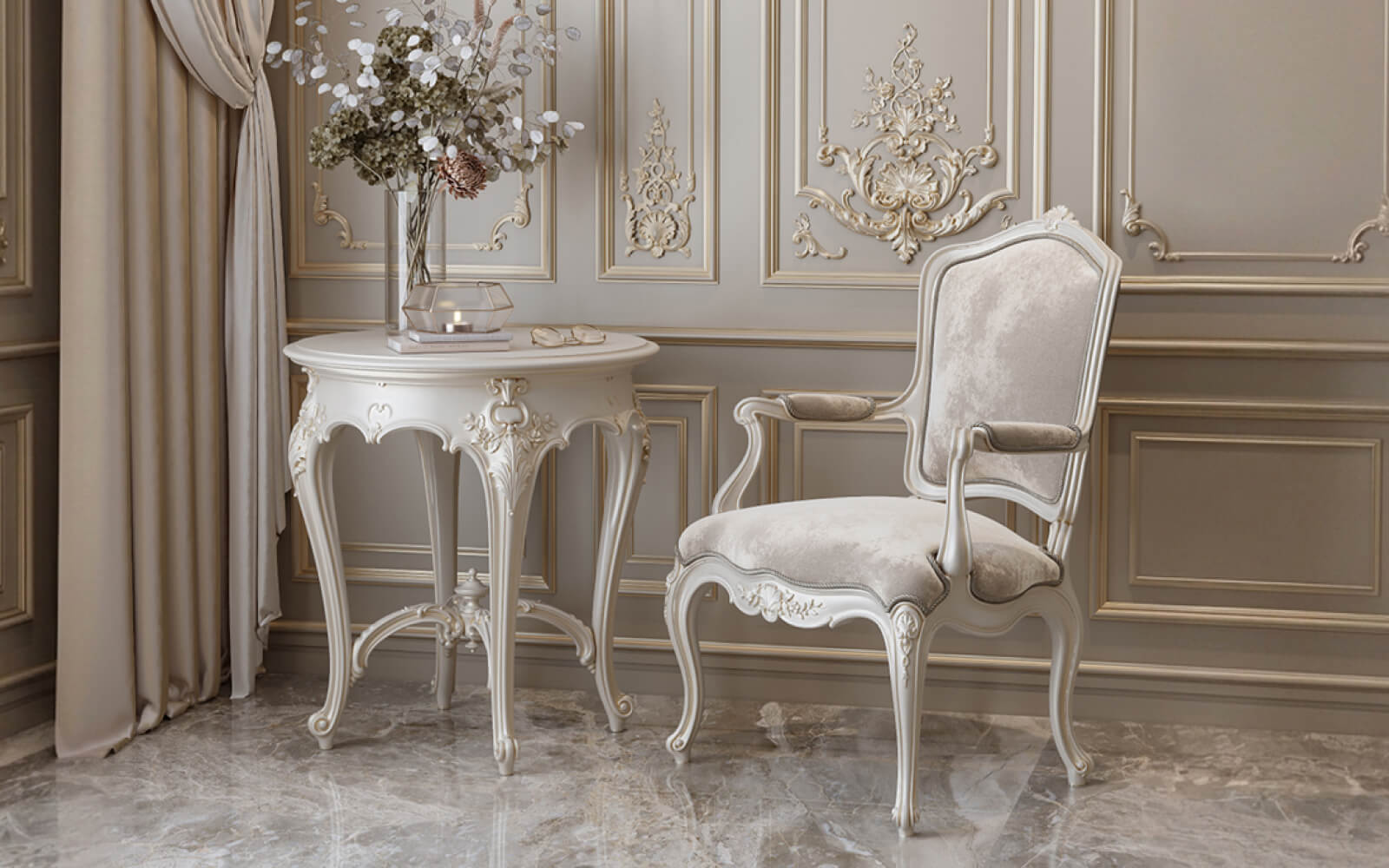
If the walls are finished with wooden panels with molding frames — the slopes and window casings in the same system make the window part of a unified wall solution. This is the highest level of integration: the space looks designed as a whole, rather than assembled from different elements.
Window design by styles: solutions table
| Style | Windowsill | Slopes | Trim | Crown Molding | Decorative element |
|---|---|---|---|---|---|
| Modern / minimalism | Oak under oil, smooth | Smooth panel, light wood | Straight, 40–50 mm | Simple profile or not | Without decor |
| Neoclassical | Beech for white enamel | Panels with molding frames | Profiled, 60 mm | Shaped profile | Corner overlays |
| Classic | Oak for varnish or enamel | Relief panels with moldings | Wide, with frame profile | Cornice with decorative profile | Carved keystone |
| Countryside | Oak / ash for oil | Oak slats with oil finish | Wide, for stain | Beam or classic | Carved ornament |
| Scandinavian | Light ash with oil finish | Smooth panel, white or light gray | Thin, 40 mm, white | Simple or not | Without decor |
| Children's room | Beech with eco-friendly varnish | Smooth panels, light | Without sharp edges, 40–50 mm | Simple or not | Without decor |
Technical nuances of installing wooden elements
How to attach trim to a window
Wooden trim is attached to the slope or to the wall around the opening. Attachment methods:
-
Finish nails with countersinking the head — a classic. Small holes after installation are puttied and painted over. Suitable for permanent installation.
-
Construction adhesive (liquid nails) — for lightweight trim without mechanical fastening. The trim is glued to the wall. Suitable for smooth surfaces.
-
Combination of glue and nails — the most reliable.
Important: corner joints of trim are made at a 45° angle (miter cut). Joints are cleaned before installation: edges are cut precisely to avoid gaps.
How to attach wooden slopes
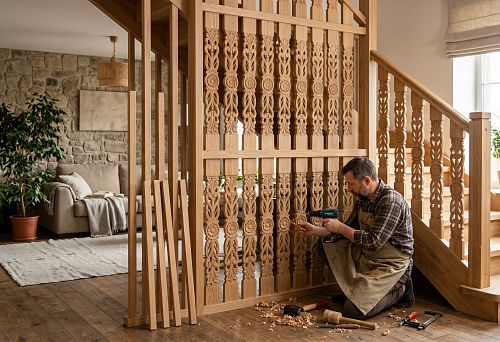
Wooden slopes are attached to the walls of the opening through a wooden lathing or directly with construction adhesive. The wall of the opening must be leveled beforehand.
Wooden trim for slopes, it is attached horizontally or vertically — depending on the design solution and the width of the slope.
Joints of wood with plastic
This is the main technical task. Wooden elements (platbands, slopes) come into contact with the plastic frame at several points. The joint needs to be:
-
be left small (1–2 mm) — wood changes size with changes in humidity and temperature, the gap compensates for this movement;
-
be filled with elastic sealant matching the wood color or white — for visual cleanliness;
-
not be sealed tightly — so the wood can "breathe".
Coatings and care
Wooden window trim elements are subject to temperature fluctuations (near the window — contrast of heat and cold) and sometimes moisture (condensation, open window in rain). The coating should be:
-
for the windowsill: polyurethane varnish or hard oil with wax;
-
for slopes: polyurethane varnish or acrylic enamel;
-
for platbands and moldings: varnish or enamel depending on the style.
The tree by the window needs to be inspected annually: refresh the coating at the first signs of dullness, avoid getting wet — especially on the windowsill in the area of the open window.
Mistakes when decorating a plastic window with wood
These are not theoretical warnings — these are real mistakes that occur during DIY decoration.
Too massive frame in a small room
Wide architraves 80–100 mm with a relief profile in a 12 m² room press on the space. In small rooms — thin profile 40–50 mm, without complex relief.
Opening of sashes is not taken into account
The wooden slope is located too close to the plastic window frame — and the sash hits the wood when opening. Before installation, check the opening angle of all sashes and leave a gap.
Wooden architrave blocks the window handle
Especially often on side architraves: a wide wooden profile is installed so that it interferes with reaching the handle or completely blocks it. The width and placement of architraves should be calculated taking into account the location of the handle.
Mismatch with style and other elements
A dark oak frame with carved ornament in a light apartment with white furniture — a conflict of materials and moods. Or vice versa: simple flat wooden slopes in a classic interior with stucco — not enough for style. The style of wooden decoration is a continuation of the interior style.
Painting white without preliminary preparation
A wooden casing for white enamel requires careful surface preparation: sanding, priming, first coat of paint, re-sanding, finish coat. Without this, the surface becomes rough with visible fibers — unsightly.
Slopes are finished, windowsill is original plastic
Wooden slopes and casings, and a plastic construction windowsill — this is a dissonance. A wooden windowsill should come as a set with wooden slopes.
Forget about the radiator under the window
If there is a radiator under the window, its design should be coordinated with the wooden window frame. A wooden screen for the radiator made of the same oak with the same coating completes the look and makes the window area a single architectural element.
Not protecting the wood in the kitchen
Oil on the kitchen windowsill becomes damp and dull with regular contact with water. In the kitchen — only moisture-resistant varnish, no exceptions.
What to buy for wooden window decoration
Final list of elements:
-
Wooden trim — for slopes and slatted frames;
-
Wooden casing — for framed window openings;
-
Wooden molding — for additional decorative contours;
-
Wooden moldings — full range of profiles;
-
wooden cornice — above the window as a top finish;
-
wooden frame — for a decorative portal around the window;
-
wooden frames — full range;
-
Carved wooden decoration — for keystone and corner accents;
-
wooden decorative elements — overlays for corners and central accents;
-
Wooden baseboard — for the bottom horizontal, matching the window design;
-
Wooden items — a complete catalog for selecting additional elements;
-
wooden patterns — for inspiration and selecting ornamental elements.
FAQ: answers to popular questions about decorating a plastic window with wood
Can I decorate a plastic window with wooden trim without replacing the frame?
Yes, that's exactly how it works. wooden casing attaches to the wall around the window opening from the inside — it does not touch the plastic frame and does not compromise its structure. The frame remains plastic, but the entire window area visually takes on a wooden character.
How to make a plastic window look more expensive without large expenses?
Start with a wooden windowsill — it's the most noticeable element and gives the greatest visual effect for reasonable money. The next step is Casings around the perimeter of the opening. Just these two elements are enough to radically change the appearance of the window area.
Can wooden moldings be used around a window in a modern apartment?
Yes. In modern interiors, thin Moldings with a simple straight profile are used — they create a neat wooden outline without excess relief. Finish: in the color of the wall or natural oak with oil.
What is better — wooden slopes or just painting?
Painting slopes is cheaper and easier to execute, but wooden slopes made of trim or wooden panels give a fundamentally different result: volume, warmth, texture, connection with other wooden elements. If the interior has wooden furniture or baseboards, wooden slopes are definitely more organic.
Is a wooden cornice needed if there are curtains?
A cornice above the window can be both decorative and functional — holding the curtains. wooden cornice above a plastic window creates the top completion of the wooden framing and allows hanging curtains organically, without a metal profile.
Is carved decor suitable for a modern apartment?
It depends on the scale and nature of the decor. A small accent — corner overlays on carved wood the corners of the casing — is appropriate even in a modern interior. Large ornamental relief is only for classic or country homes.
How to coordinate wooden window trim with doors?
Choose window casings from the same series as door casings. The same profile, the same wood species, the same finish. Then the window will "enter into a dialogue" with the doors, and the interior will gain architectural integrity.
Is a special coating needed for wooden elements near the window?
Near the window, there are temperature fluctuations and possible moisture when opening. For the windowsill and slopes, use moisture-resistant polyurethane varnish. For casings and cornices in a living room, use regular furniture varnish or acrylic enamel. In the kitchen, only moisture-resistant coatings.
About the company STAVROS
A plastic window is a reality in most modern apartments. But it is not a death sentence for the interior. A wooden windowsill, slopes made of natural millwork, Casings matching the doors, Cornice above the window, a wooden frame — and the window area transforms from technical to architectural. From accidental to planned. From cold to warm.
STAVROS is a St. Petersburg-based manufacturer of wooden decor since 2002. Over this time, the company has restored interiors of the Hermitage, the Konstantinovsky and Alexander Palaces — and this experience is reflected in every product in the catalog. The quality of detailing, precision of profiles, choice of wood species, durability of coatings — all of this is not marketing, but practice honed on the country's finest interiors.
The STAVROS assortment includes — Wooden trim for slopes and trims, Moldings for decorative contours, Solid wood casings for window frames, Wooden cornices for top finishes, wooden frames for decorative portals, Carved Decor for accents, Wooden baseboard for matching the floor. All — from solid oak and beech, with professional processing and the option to choose a coating.
Production is in St. Petersburg. Showrooms are in Moscow and St. Petersburg. Delivery across all of Russia. Minimum order — from one item.
When your plastic window stops standing out from the interior and becomes part of it — behind this will be wood from STAVROS and your decision to make the space cohesive.