










































































Article Contents:
- What is a wooden decorative corner and how it differs from a construction one
- Where to use a wooden decorative corner: complete scenario map
- External wall corners in hallway and entryway
- Door portals and openings
- Fireplace area
- Decorative niches and built-in shelves
- Wall Panels
- Furniture facades and cabinets
- Library and study
- Portal system: how elements work together
- Fireplace portal: where the corner takes on a special role
- How to combine a corner with decorative elements of a wall panel
- What furniture is most often decorated with a decorative corner
- Width of corner shelves
- Profile: smooth or embossed
- Room scale as a guide
- Oak
- Oak
- Array as a fundamental position
- Finishing: what you need to know before installation
- Corner + molding
- Corner + carved molding
- Corner + baguette
- Corner + overlays + rosettes
- Corner + capitals + brackets
- Classicism and Baroque
- Neoclassicism
- Scandinavian and modern style
- Rustic and Provence
- Office and Library
- Purchasing without precise measurements
- Wall or panel finish thickness not accounted for
- Profile too wide for a small space
- No allowance for trimming calculated
- Mixing different wood species or shades
- Installation without surface preparation
- Lack of finishing coating
- Incorrect cutting angle
- Hallway in classic style
- Office with fireplace portal
- Bookshelf in the library
- What is a wooden decorative corner for?
- How is a wooden decorative corner different from a construction metal one?
- What shelf width to choose?
- Oak or beech for the corner?
- How to install a wooden decorative corner?
- Do I need to coat the corner after installation?
- What to buy together with a wooden decorative corner?
- Can a wooden corner be used in furniture restoration?
- How to calculate the required number of corners?
- Can a wooden corner be combined with other finishing materials — plaster, tiles, stone?

A corner is where two planes meet. It sounds like a technical definition, but in an interior, it's different. A corner is what catches the eye first when entering a room, what the gaze stumbles upon, what wears out fastest in high-traffic areas. And yet, the corner is most often left unattended: it gets painted over, filled in, left as is — and then people wonder why expensive finishes look unfinished.
If you are looking for where to buy a wooden decorative corner — it means you already understand that the corner deserves better treatment. Not a metal construction strip, not a plastic profile with a wood imitation, but a real wooden element that both protects the edge and makes an interior statement.
This is what the entire article is about. How a wooden decorative corner works in different spaces, how to choose it, what to combine it with, and why it is part of a well-thought-out finishing system rather than a random trim piece.


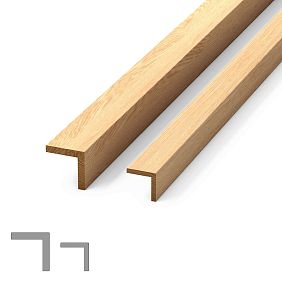
What is a wooden decorative corner and how is it different from a construction corner
Let's start with a distinction that is important to understand from the very beginning. When people say "corner" in a construction context, they mean a metal or aluminum profile that reinforces the corner of plaster. This is a technical element that is hidden under the finish.
A wooden decorative corner is a fundamentally different thing. It is not hidden. It remains visible. Its purpose is not to reinforce plaster, but to cover the visible edge of wood or other finishing so that the transition looks neat, complete, and stylistically appropriate. And in more complex interiors, it is also decoratively significant.
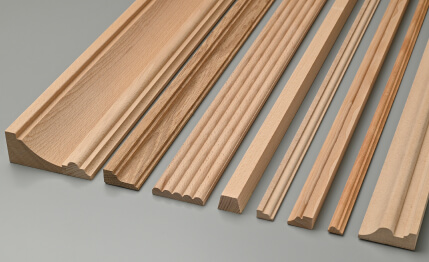
Wooden trim — this is a broad category that includes long wooden elements of various profiles. A decorative corner is one of the varieties of this category: an element with an angular cross-section that covers the outer edge.
What is important to understand about a decorative wooden corner:
- It is made from natural wood — beech, oak, pine, or other solid wood
- It has an angular cross-section: two shelves at a right angle that cover the outer corner from both sides
- Its front surface can be smooth or have a relief profile
- It is sold in linear meters and cut to the required size
- It is mounted with glue and, if necessary, additionally secured with finishing nails.
This simple description hides a huge potential for application — from protecting a regular wall corner in a hallway to decorating a decorative portal in a classic study.




Where to use a wooden decorative corner: a complete map of scenarios
Before moving on to choosing a specific profile and width, it is important to understand in which situations a decorative wooden corner is the right solution. There are many more of them than it seems at first glance.
Our factory also produces:

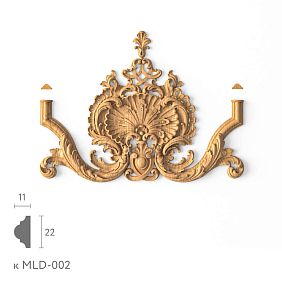
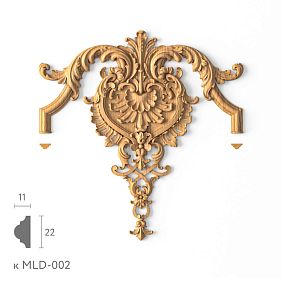
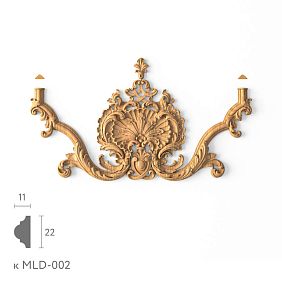
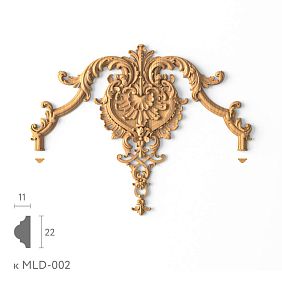


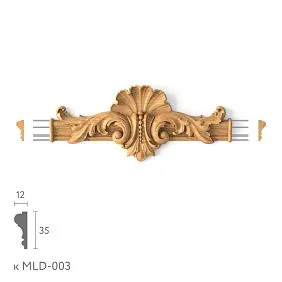
External corners of walls in the hallway and entryway
The entryway is the most vulnerable area in the house in terms of mechanical damage. Furniture is moved here, people walk with bags and suitcases, and wall corners endure dozens of accidental impacts per year. A wooden decorative corner on an external wall corner is both protection and aesthetics. Wood withstands impacts much better than a plastered corner and looks dignified at the same time.
In a classic or neoclassical style entryway, a wooden corner becomes part of the overall wood theme: it matches the baseboard, complements the trim, and echoes the wooden details of the furniture.
Get Consultation
Door portals and openings
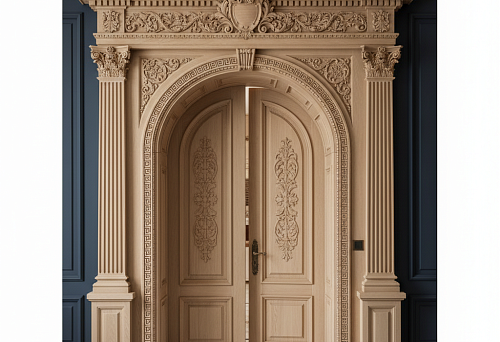
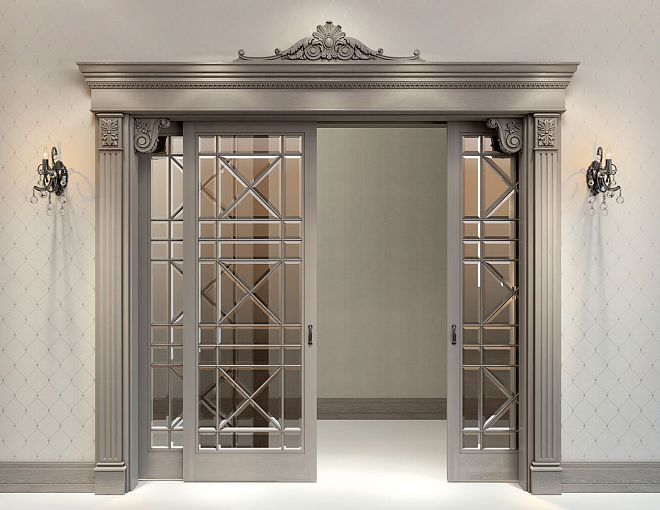
A door opening is an external corner, and from both sides at once. The edges of the slopes require neat finishing, and this is where a wooden decorative corner works especially expressively. It covers the end of the slope, creates a clear transition line, and becomes part of the portal design.
In the system with carved wooden molding и wooden cornice The decorative corner piece completes the portal frame. The molding runs along the perimeter of the opening, the corner piece covers its ends and outer edges — and the entire structure gains a finished look.
Fireplace Area
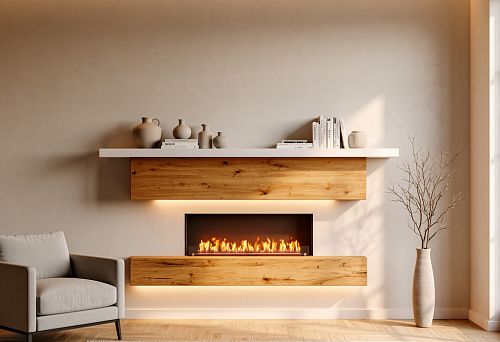
A fireplace is a voluminous object with many outer edges. The side surfaces of the fireplace body, the edges of the shelf, the transition from the body to the wall — all these elements need neat finishing. The wooden decorative corner piece here performs several functions: it covers technical joints, emphasizes the volume of the fireplace body, and creates a unified wooden language with the rest of the trim.
Decorative niches and built-in shelves
A built-in niche in the wall has several outer corners around its perimeter. When the niche is painted or wallpapered, its edges need finishing. The wooden corner piece here works as a neat frame: it outlines the niche, giving it clarity and decorative weight.
Wall panels
Wooden or MDF panels on walls have outer edges where they end: on the sides, top, and in corners. The wooden decorative corner piece covers these edges, creating a neat transition from the panel to the wall. Without the corner piece, the panel edge is an unfinished edge. With the corner piece, it becomes a finished architectural detail.
Furniture facades and bodies
A chest of drawers, cabinet, shelving unit, sideboard — any piece of case furniture has outer corners. The wooden decorative corner piece on the side edges of the furniture creates a finish that both protects the edge and gives the furniture a more expensive, 'carpentry' character.
Library and study
In a library with wooden shelves and panels, external corners are present everywhere: the ends of shelves, the edges of side sections, the edges of decorative niches. Uniformly finishing all these edges with a decorative corner piece made from the same type of wood creates the feeling of a carefully designed interior.
External wall corner: why it shouldn't be left to chance
Let's focus on this scenario in more detail — because it's the most common and yet the most underestimated.
In most apartments and houses, external wall corners are plastered and painted. Technically, this is fine. Aesthetically, it's sparse. Especially in interiors where there is wood: wooden floors, wooden doors, wooden furniture. Against such a backdrop, a bare painted wall corner looks like an unresolved issue.
A wooden decorative corner piece elegantly resolves this issue. It is installed on the external corner, covers the edge on both sides, and creates a clear wooden line where there was previously just painted plaster.
This is especially important in:
Hallways and entryways with heavy traffic. A corner in a hallway is the first victim of mechanical impact. A wooden corner piece absorbs impacts and still looks respectable even after several years of use.
Transitional zones between rooms. Where there is no door frame but there is an architectural opening — the corner remains exposed. A decorative wooden corner piece frames it as if the architect intended it all along.
Areas with wooden wall panels. When the panels end and transition to an open wall — their ends need finishing. The corner piece covers this end and creates a clean transition.
Around niches and built-in elements. A TV niche, fireplace, built-in shelf — any object recessed into or protruding from the wall has external corners that need to be finished.
Portal and opening: how a wooden corner works in a system with baguette and moldings
Now let's move on to the application that provides the greatest decorative effect. A door or fireplace portal is an architectural frame around an opening. And for this frame to look complete, you need to design not only the front side of the trim, but also its ends.
This is where a decorative wooden corner becomes especially important. It covers the outer edge of the portal — the line that is visible when viewed from the side or in an enfilade. Without this detail, even beautiful moldings on the front side of the portal will look unfinished: the end remains exposed, the technical cut is visible.
Portal system: how elements work together
A full wooden portal is built from several elements:
-
wooden carved trim — forms the vertical posts and horizontal frieze of the portal. This is the front side of the trim.
-
Wooden Picture Frame — creates an inner frame directly at the edge of the opening. A thinner element that works as a second trim line.
-
Decorative wooden corner — covers the outer edges of the portal, the ends of the posts and the horizontal frieze. Creates the completion of the system.
-
wooden capitals — crown the vertical posts at the top point, creating a transition from vertical to horizontal.
-
Wooden sockets — accent elements at key points: corners of the frieze, central point of the horizontal element.
When all these parts are assembled together, the portal ceases to be just a frame around the door. It becomes an architectural object—as independent and significant as the door itself.
Fireplace portal: where the corner piece takes on a special role
In a fireplace portal, the outer edges are more visible than in a door portal: the fireplace stands in the middle of the wall, and all its ends are open to view. A wooden decorative corner piece on the side edges of the fireplace surround creates the feeling of a three-dimensional architectural body, rather than just applied decoration.
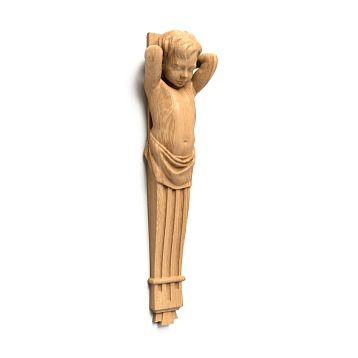
paired with with wooden bracketsthat support the mantelpiece, and with carved molding around the perimeter of the portal—the decorative corner piece covers the system, giving it completeness.
Wall panel: how to finish the outer edge without disrupting the composition
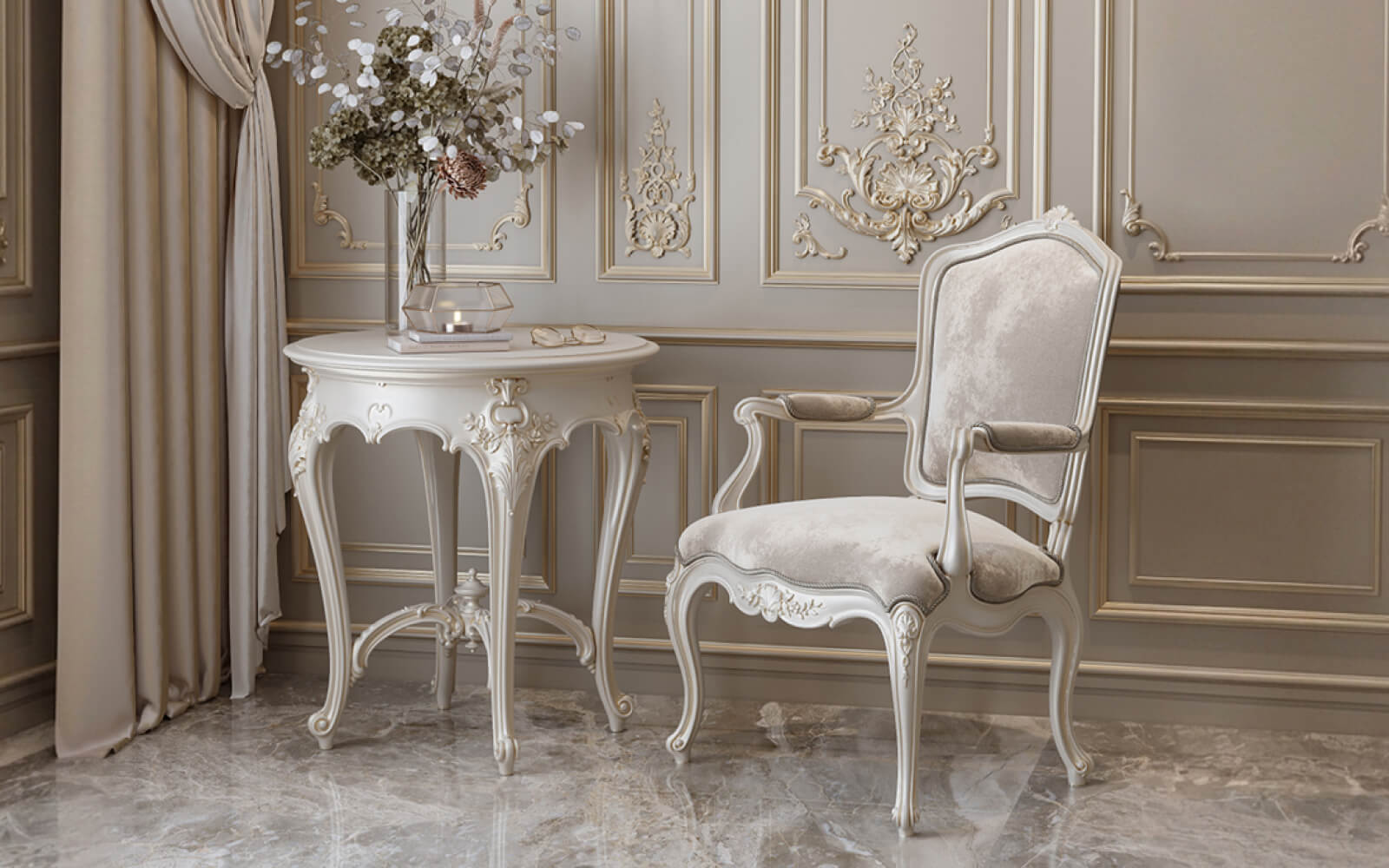
Wooden wall panels are one of the most challenging scenarios in terms of finishing edges. Let's consider a typical situation: a room with wooden lower panels on three walls. The fourth wall has a window, with no panels there. In the corners where the panels meet, the situation is relatively simple: internal corners are covered with a batten or special profile. But where the panel ends on an open side—its edge is visible, and this edge needs to be finished.
Here, the wooden decorative corner piece performs a strictly defined task: it covers the edge of the panel, creating a neat transition from the wooden surface to the open wall. The width of the corner piece's flanges is selected so that one flange overlaps the panel's edge, while the other smoothly rests against the wall.
How to combine the corner piece with decorative elements of the wall panel
A wooden wall panel often contains not only the panel itself but also a decorative frame system on top of it. Such a system may include:
- Decorative wooden inlays — central accents within the frames
- Carved molding — frame lines along the perimeter of each section
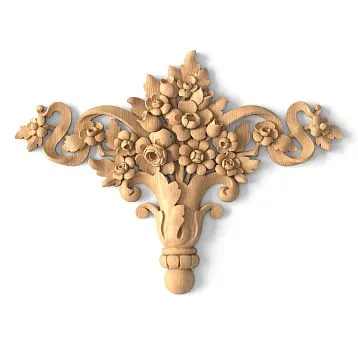
- Wooden sockets — corner accent nodes
The decorative corner in this system has its own clear place: it frames the outer edges of the entire structure. The logic is this: inside the panel — richness of decor, on the outer ends — a strict, neat corner that says "everything is finished here."
An important rule: the corner must be made of the same wood species and have the same finish as the rest of the panel system. Different wood shades or different coatings on one panel are a visual mistake that everyone notices.
Furniture facade and body: when a wooden corner is needed not for the wall, but for furniture
Furniture is also a system of outer edges. A chest of drawers stands in the room, and its side surfaces are visible. A bedside table is pushed out into the space, and all its corners are exposed. A sideboard with a protruding cornice has several outer edges that need finishing.
A wooden decorative corner on furniture edges is not just edge protection. It is a way to give furniture a "carpenter's" character: a feeling that every detail is thought out, every end is intentionally covered, not accidentally.
This is especially important when working with old furniture that is being restored or updated. If the facades have already been updated with overlays and frame moldings, but the side edges remain bare — the entire restoration looks unfinished. A wooden corner on the side ends closes the last question.
Decorative wooden inlays in combination with a decorative corner create a system for furniture facades: overlays provide a central accent on the doors, the corner covers the outer edges of the body. Together — this is a comprehensive transformation of furniture without replacing it.
What furniture is most often decorated with a decorative corner
- Chests of drawers with rectangular side walls
- Nightstands with open side edges
- Buffets and sideboards with a protruding lower body
- Built-in shelves with visible side ends
- Open shelving units with unfinished outer edges
- Antique furniture where the original corner profiles are lost
How to choose the width and profile of a wooden decorative corner
This is a practical question that needs to be resolved before purchase. The width and profile of the corner are not just dimensions. It is a decision that determines how noticeable the element will be and how organically it will fit into the context.
Width of the corner shelves
The corner has two shelves — two rectangular projections that cover the adjacent surfaces of the external corner. The width of each shelf is selected based on the thickness of the finish and the desired visual prominence.
| Application | Recommended shelf width |
|---|---|
| Furniture end (thin edge) | 10–20 mm |
| Wall panel end (thin) | 15–25 mm |
| External wall corner in hallway | 25–40 mm |
| Decorative panel end (medium) | 30–50 mm |
| Portal post (medium portal) | 40–60 mm |
| Fireplace surround | 50–80 mm |
| Massive decorative portal | 60–100 mm |
Profile: smooth or textured
A smooth corner is a clean, strict line without ornament. It suits modern classic, neoclassical with moderate decor, and Scandinavian style. Its purpose is to create a clear edge without drawing attention to itself.
A corner with a relief profile is an element that itself serves as decor. A small ornament on the front surface: flutes, pearl beads, a soft plant motif. Such a corner is appropriate in classic, baroque, or Provencal interiors, where every detail must have a decorative character.
When choosing a profile, it is important that the ornament of the corner matches the ornament of the molding, baguette, and other wooden elements in the space. If the molding has acanthus, a corner with geometry will conflict. Unity of the ornamental language is a mandatory condition.
Room scale as a guide
Small room (hallway, dressing room, small bedroom) — thin corner, shelf width up to 30 mm, smooth or with minimal profile. A wide corner in a small room creates a feeling of pressure.
Spacious room (living room, dining room, study with high ceilings) — wider corner, 40–80 mm, with possible relief profile. A small corner in a large space gets lost and looks random.
Material: oak, beech, solid wood, and the issue of finishing
The choice of material for a decorative wooden corner is not only about aesthetics but also practicality. The durability, behavior during finishing, and visual result depend on the type of wood the corner is made from.
Beech
A dense, fine-grained species with a neutral fiber pattern. Beech accepts paint and enamel evenly — without protruding resin spots, without an active pattern under the coating. This is the optimal material for corners that will be painted with white, gray, cream, or any other colored enamel.
If the interior is done in a light color scheme with painted wooden elements, beech is the first choice.
Oak
A heavier, denser species with a pronounced fiber pattern. Under tinting, oil, or clear varnish, oak reveals its natural beauty. Dark lines on light fiber, depth of texture — this is what makes an oak corner a self-sufficient decorative element even without additional ornament.
For a room with dark wood paneling, for a fireplace area with oak panels, for a library in dark tones — oak is unrivaled.
Solid wood as a fundamental choice
Solid Wood Items — this is a category where the material is the main argument. A solid wood corner does not delaminate, does not deform as critically with changes in humidity as glued blanks, and holds its shape for many years.
This is especially important for a decorative corner: the element is on the outer edge, which is exposed to mechanical impact. Solid wood withstands this better than any other option.
Finish coating: what you need to know before installation
A wooden decorative corner without a finish coating is a temporary solution. Exposed wood in living areas quickly gets dirty, absorbs dust and moisture, and changes color. The coating must be planned in advance.
Finish options:
- White or colored enamel — for corners made of beech. Applied in two coats with intermediate sanding.
- Clear varnish — for corners made of oak or beech, when you want to preserve the natural color of the wood.
- Stain or tinting — to change the shade of the wood while preserving the texture. Applied before varnishing.
- Wood oil is a natural coating that penetrates the fiber structure and creates a matte surface. Requires periodic renewal.
An important nuance: if the corner is mounted as part of a system with moldings, baguettes, and overlays — all elements must have the same finish. Different finishes in one composition are a violation of visual integrity that catches the eye.
How to combine a wooden decorative corner with moldings, baguettes, and overlays
This is a central question for those who are creating not just a separate detail, but an interior system. The decorative corner does not work alone — it is part of the wooden decorative architecture of the room.
Here is how this system is built:
Corner + molding
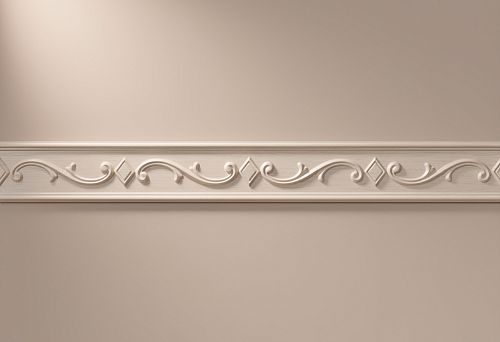
Wooden trim forms lines: frames on walls, door and window casings, decorative transitions. The corner completes these lines where they end on the outer edge. The molding builds the structure, the corner closes its ends.
For example: a wall panel with frame molding around the perimeter ends at an open wall. The molding runs along the front surface to the edge. The decorative corner covers this edge and creates a clean transition line.
Corner + carved molding
wooden carved trim adds ornament to the system. When carved molding runs around the perimeter of a portal and ends at the outer edge — a corner with a matching profile or a smooth corner closes this end. The ornament on the corner should be consonant with the ornament of the molding: if they are from the same stylistic family — the system looks well-thought-out.
Corner + baguette
Wooden Picture Frame creates frames: around mirrors, panels, decorative niches. When such a frame is located on a protruding surface or at an external corner, the decorative corner covers the edge along which the frame ends. The baguette creates the framing, the corner creates the finish.
Corner + overlays + rosettes
Decorative wooden inlays add volumetric accents on flat surfaces. Wooden sockets cover central and corner nodes. The decorative corner completes the outer edges of the entire structure. Three types of elements — each responsible for its own zone: flat surface, nodes, edges.
Corner + capitals + brackets
In portal and fireplace systems, this arsenal is supplemented by wooden capitals — for the tops of vertical posts — and Wooden Brackets to support horizontal elements. The decorative corner in such a system covers the outer edges of the posts — that is, it works where there is no room for an overlay or capital, but the edge remains visible.
A complete system of wooden decor is not a clutter of elements. It is a logical architecture where each item knows its place and performs its function.
Wooden decorative corner in specific interior styles
You can't talk about a corner in isolation from the style. Because it is the style that determines what the profile, width, and wood species should be for a particular space.
Classicism and Baroque
Here, a wide corner with a relief profile is appropriate — an ornament with foliage, volutes, or geometric repetition. Dark oak with varnish or gilded finish. Shelf width from 50 to 100 mm. The corner should be a noticeable and independent element.
Neoclassicism
Moderate width, clear geometric ornament or smooth surface with a thin profile. Beech with white matte enamel. The corner is restrained but precise — it creates an edge without claiming the main role.
Scandinavian and modern style
A smooth corner made of light wood (beech, ash) with clear varnish or oil. Minimal shelf width. The goal is to create a clean line that is barely noticeable but holds everything together.
Rustic and Provence
A wooden corner with pronounced texture, possibly with a soft floral ornament. In an 'aged' white color or warm varnish. Slight unevenness in texture — as a sign of handwork — will be a plus here, not a flaw.
Study and library
The most 'masculine' scenario. A wide corner made of dark oak with stain or tinting. A powerful profile. Monumentality is the goal, not an accident. Here, the corner should look as if it has always been part of the architecture, not added later.
Mistakes when buying and installing a wooden decorative corner
An honest conversation about what goes wrong — and how to avoid it.
Buying without precise measurements
The first and most common mistake. The corner is bought "approximately the right size" — and as a result, it is either too short or has the wrong shelf width. Before buying, you need to know: the height or length of the corner, the thickness of the finish on both sides, the required width of each shelf.
The thickness of the wall or panel finish is not taken into account
If the wall is finished with plaster, decorative stone, or paneling, this changes the effective surface thickness. The corner must be selected taking this thickness into account: its shelves should overlap the finish and fit tightly to the base.
Profile too wide for a small space
A wide corner in a narrow hallway or small room creates a feeling of crampedness. The scale should match the scale of the space.
No allowance for trimming calculated
The corner is cut to the required height or length. Each cut removes a few millimeters. Add 10–15% to the required footage for trimming and possible defects.
Mixing different wood species or shades
An oak corner next to a beech flooring under different finishes creates a visual conflict. All wooden elements in one area should be made of the same species or at least have an identical finish.
Installation without surface preparation
The wooden corner is attached with glue (liquid nails) and, if necessary, secured with finishing nails. The surface must be clean, dry, and degreased before installation. Mounting on a wet or dirty surface leads to poor adhesion and subsequent peeling.
Lack of finishing coating
An uncoated wooden corner is an unprotected surface that quickly loses its appearance. The coating should be planned before installation, not after. In some cases, it is easier to apply the first layer of enamel or varnish before installation and the final layer after.
Incorrect cut angle
If the corner is joined with another element (trim, molding, frame), a precise cut angle is required. A sloppy joint is immediately visible and ruins the impression of the entire structure.
What to buy together with a wooden decorative corner: a systematic approach
The corner is good on its own. But in a system, it works much more effectively. Here is what makes sense to consider along with it when placing an order.
Wooden molding — for creating lines, frames, and borders on the same surfaces. The corner piece will cover the edges, the molding will build the main structure.
Carved wooden molding — if you need not just a wooden profile, but an ornamental line with relief. It pairs with the corner piece in classic and neoclassical projects.
Wooden picture frame molding — for frames around mirrors, panels, decorative niches. Often works together with a corner piece, which covers the outer ends of the frame structure.
Decorative wooden overlays — for central and accent elements on the same surfaces that the corner piece frames along the edges.
Wooden rosettes — for corner and central ornamental nodes. They complement the system where the corner piece and molding create a linear structure.
Wooden capitals — for finishing vertical posts in portals and decorative structures.
Wooden brackets — for supporting horizontal elements: shelves, mantelpieces, consoles.
Glue and fastening materials — liquid nails, finishing nails, glue gun.
Finish coating — primer, enamel, varnish, oil, stain. Buy with a reserve.
Carved wooden decoration — this is a section where most of the system elements are brought together. Solid wood decorative elements — for extended selection in the massive wood category.
Wooden decorative corner in specific rooms: how it looks in practice
Several real-life scenarios — to turn abstract recommendations into clear images.
Classic style hallway
The walls are finished with decorative plaster. The lower part — wooden panels up to a height of 1.2 meters. The external corner at the entrance to the living room — without a frame, just an architectural opening. On this corner, a wooden decorative corner made of beech with shelf width of 35 mm is installed, under white enamel — to match the panels. Along the wall, there is molding indicating the upper border of the panels. Everything in one material, one coating, one ornamental language.
Result: the corner, which was previously just painted plaster, became part of the hallway's wooden architectural system.
Study with a fireplace portal
Fireplace portal made of solid oak. Vertical posts from carved molding. Horizontal architrave. Fireplace shelf on brackets. On the side faces of the portal — a wooden decorative corner made of oak with shelf width of 60 mm, under the same tint as the other elements. At the corner points of the upper part — capitals.
Result: a fireplace area with finished ends. From any viewpoint — a complete architectural structure, not a set of parts.
Bookshelf in the library
Open bookcase made of beech panels. The side edges are raw panel ends. A wooden decorative corner with a shelf width of 20 mm is installed on these edges under clear varnish. The horizontal shelves along the front are finished with a thin decorative profile. The top cornice is made of carved molding.
Result: a bookcase with neat closed ends looks like handmade furniture. The wooden corner took its place and made the library complete.
Where to buy a wooden decorative corner and how not to make a mistake with the choice
A direct and honest answer: look for a wooden corner in the category of wooden moldings and decorative elements made of solid wood. Make sure that:
- The product is made of natural solid wood, not MDF with film
- The shelf width matches your application scenario
- The wood species matches the rest of the wooden trim
- The profile (smooth or with ornament) matches the style of the room
- The supplier offers related elements: moldings, baguettes, overlays, rosettes
Wooden trim и Carved wooden decoration — two sections that cover most elements of the wooden finishing system. This is where you should start your search if you need not only a corner but also a complete system for an interior project.
FAQ: answers to the most frequent questions about wooden decorative corner profiles
What is a wooden decorative corner profile used for?
For finishing and protecting external wall corners, ends of wall panels, edges of portals, fireplace structures, furniture edges, and decorative niches. It serves both a protective and decorative function.
How is a wooden decorative corner profile different from a construction metal one?
A metal construction corner profile is a technical element that is hidden under the finish. A wooden decorative corner profile is a visible element: it neatly covers the edge and is part of the interior system.
What shelf width should I choose?
Depends on the application. For furniture ends — 10–25 mm. For wall panels — 25–50 mm. For portals and fireplace zones — 50–100 mm. The main principle: the width should cover the entire thickness of the finish and match the scale of the room.
Oak or beech for the corner profile?
For white or colored enamel — beech. For tinting, varnish, or oil with a natural grain — oak. Both materials are durable, but oak is heavier and more expensive.
How to install a wooden decorative corner profile?
Use construction adhesive (liquid nails) with possible additional fixation using finishing nails at hidden points. The surface before installation must be clean, dry, and degreased.
Does the corner piece need to be coated after installation?
Yes, it is mandatory. Without coating, the wood quickly gets dirty and loses its appearance. The coating option — enamel, varnish, oil, or stain — is chosen depending on the wood species and interior style.
What should I buy together with a wooden decorative corner piece?
Wooden moldings, carved moldings, baguettes, decorative overlays, rosettes, capitals, brackets. All these elements form a system where the corner piece covers the edges, while the other elements build lines, accents, and nodes.
Can a wooden corner piece be used in furniture restoration?
Yes. If the side edges of the furniture are damaged or have lost their original profile, a wooden decorative corner piece allows restoring a neat finish of the outer edges without replacing the entire body.
How to calculate the required amount of corner piece?
Measure the height or length of all external corners that need to be finished. Add up the results. Add 10–15% extra for cutting and waste. This is the required length.
Can a wooden corner piece be combined with other finishing materials — plaster, tiles, stone?
Yes. A wooden corner piece works well as a transition between wood trim and other materials. It creates a clear boundary that looks intentional and well-thought-out.
Conclusion: the corner as an architectural node, not a technical joint
A small detail is not an insignificant detail. In architecture and interior design, it is precisely the small elements that determine whether a space will look finished or unfinished. A wooden decorative corner piece is one such element.
It doesn't take up much space. It doesn't shout about itself. But without it, the edge remains bare, the end grain exposed, the transition random. With it, everything falls into place. Every corner gets its solution. Every edge gets its completion. The interior becomes cohesive.
This is the work of a true detail. Quiet, precise, irreplaceable.
STAVROS: a system of wooden decor for those who take interior design seriously
STAVROS is a manufacturer of carved wooden decor and solid wood products. Moldings, carved moldings, baguettes, overlays, rosettes, capitals, brackets, decorative elements — all are made from natural wood with attention to every profile, every ornament, and every detail.
STAVROS understands that wooden decor only works as a system. That is why in the STAVROS catalog you can select not just one corner piece, but a whole set: from wooden moldings for wall panels to carved decor for portals and capitals for classic openings. Each element is designed to work together with others — and create an interior where every edge is thought out.