

































































Article Contents:
- Short wooden baguette 300 mm — not just a sample
- How to calculate carved molding for six separate facades
- How much does it cost to buy six short K-049 pieces instead of one long strip
- If there are seven or eight drawers: when a mixed baguette order is more advantageous
- Backing, delivery, and cutting: the full price of a small order
- How to order unpainted wooden baguette to match existing facades
- Request for K-049: two lengths in the catalog, one clear specification
- Wooden baguette K-049 for six drawers: short strips can be more cost-effective
- Questions before purchasing a wooden baguette
- Can a short plank be installed after a test paint-out?
- What to do if one of the six strips turned out shorter?
- Do all six pieces need the same wave start?
- Can I order 300 mm and get exactly 300 mm after finishing?
- How will the order change if a seventh strip of a different length is needed?
- Is it mandatory to keep the long remainder?
- Can different sanding finishes be mixed and get a uniform look after painting?
- What to do if delivery completely changes the advantage of a mixed set?

The dresser has six small drawers. Each needs a separate decorative strip, and the pattern is already chosen — wavy K-049. It remains to decide what to pay for: six short blanks or one two-meter plank that the craftsman will divide into parts.
For six finished strips of 250 mm, the short configuration is cheaper in material in the calculation under consideration. For example, beech with "Standard" sanding will cost 2100 ₽ for six blanks of 300 mm versus 2360 ₽ for one 2000 mm long piece. Prices correspond to the trade table as of September 5, 2026. The difference is 260 ₽, excluding packaging, delivery, and labor.1
But this solution only works with sufficient allowance and a suitable wave position. The seventh strip changes the cost-effective configuration, and the eighth requires checking a mixed order. Before you buy wooden baguette K-049, compile a list of finished parts. It will allow comparing the price of the same result, not a random number of meters.
Wooden baguette K-049 for drawers: what exactly the buyer orders
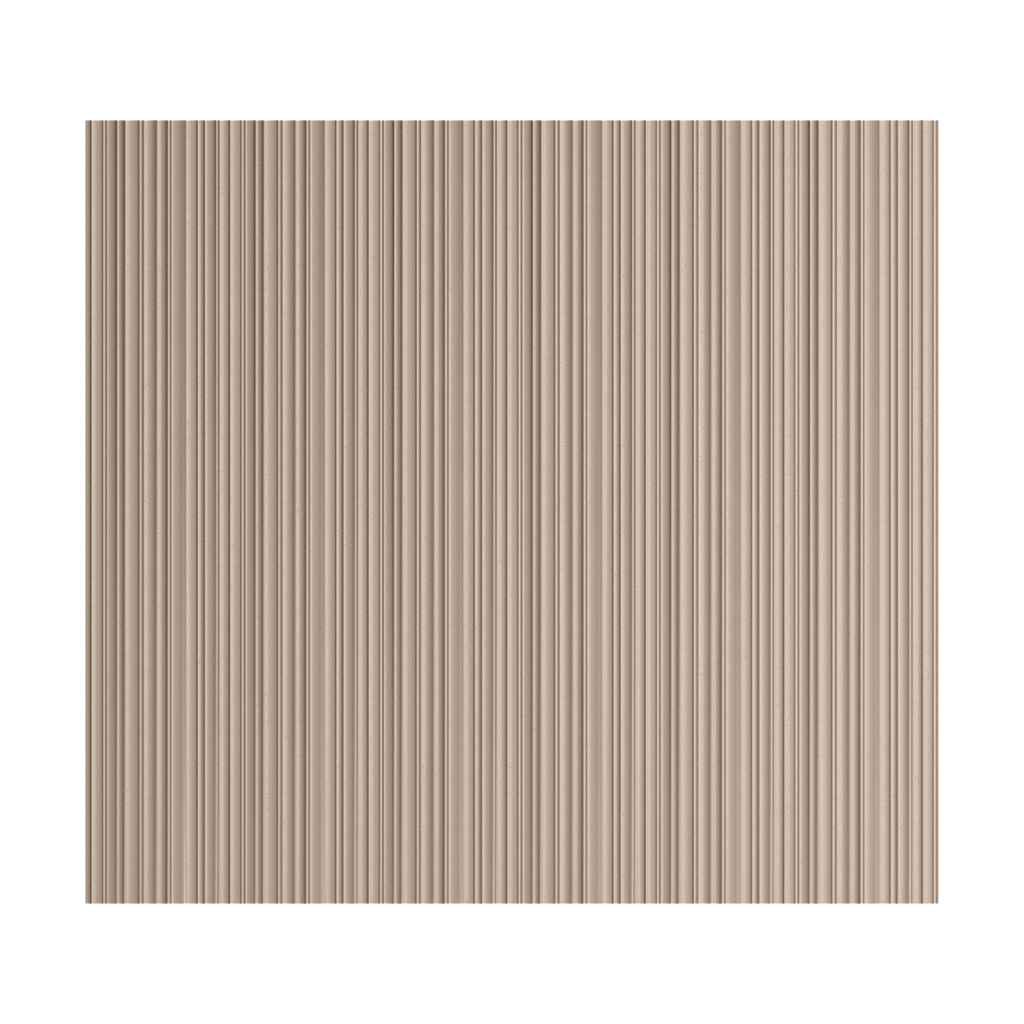
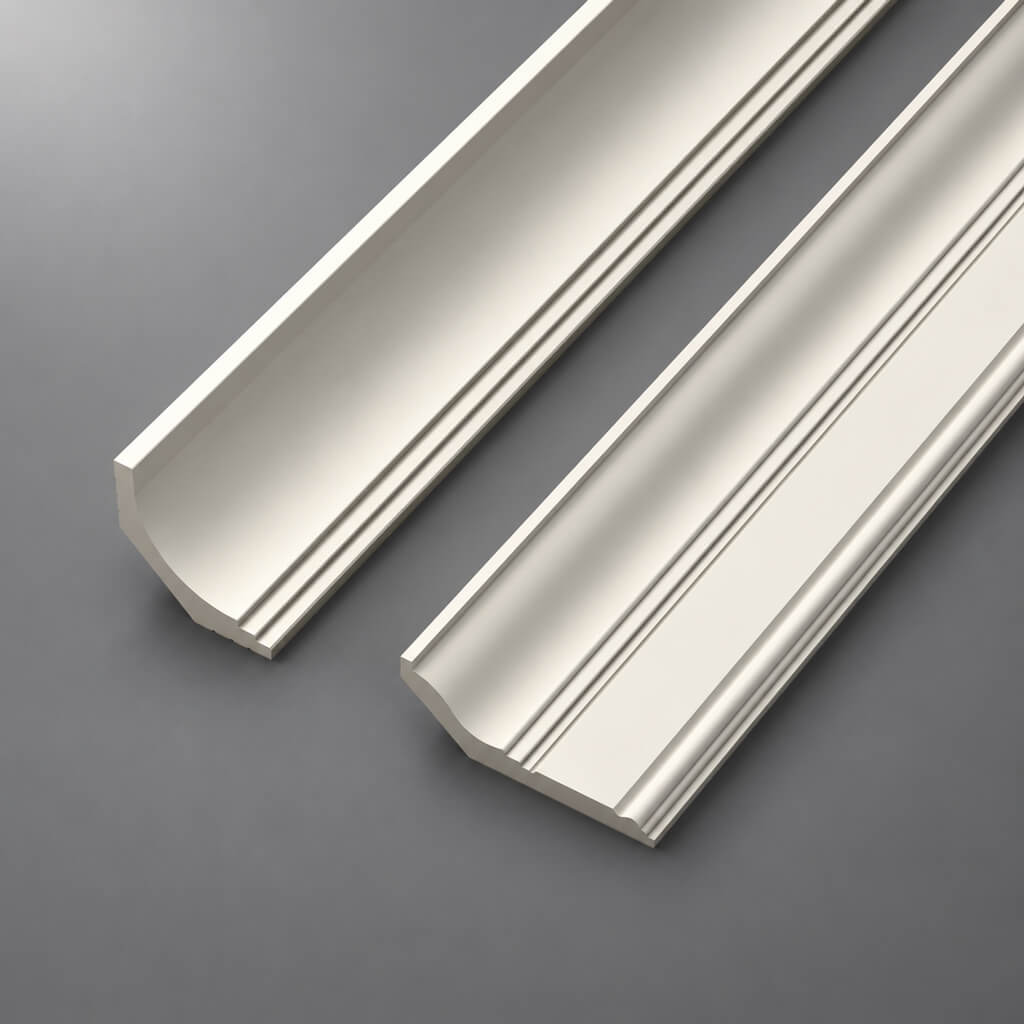
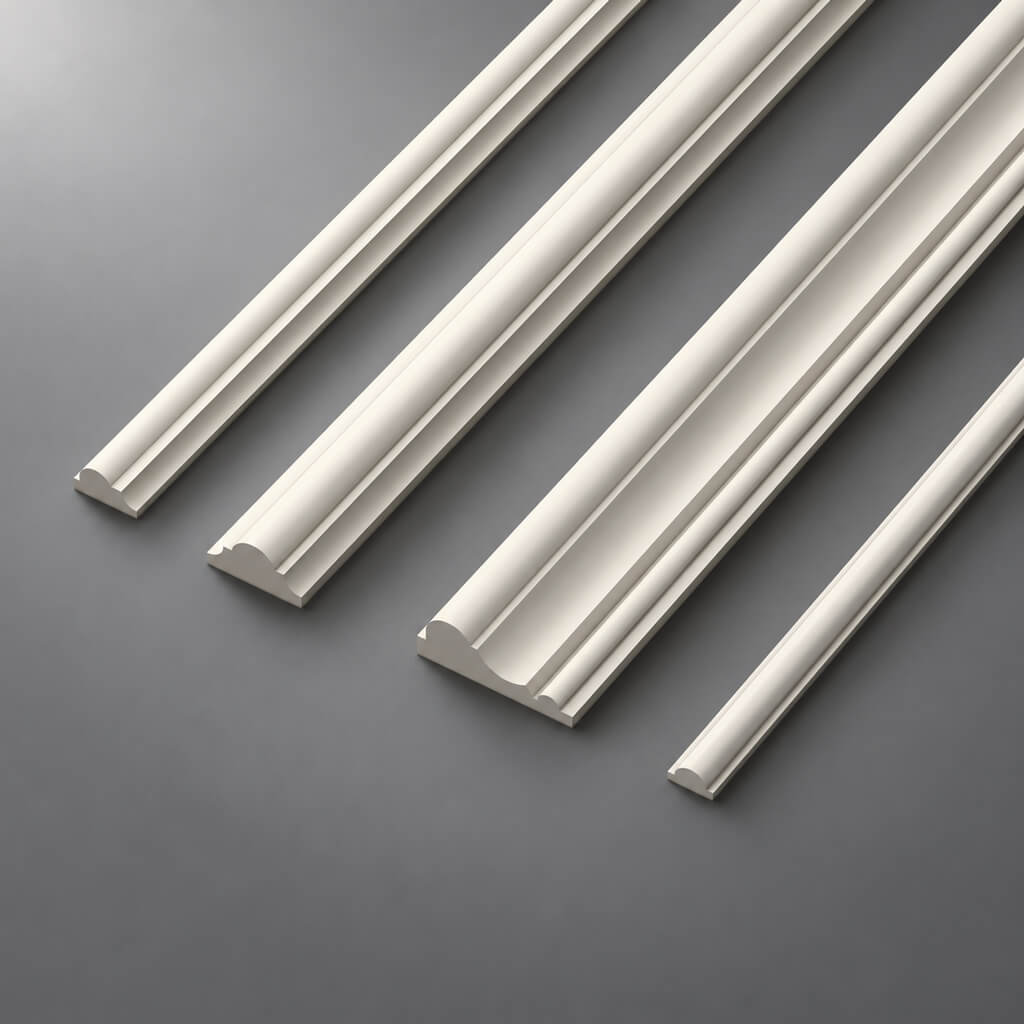
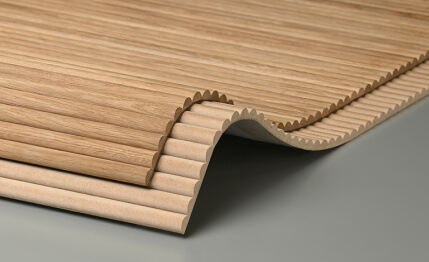
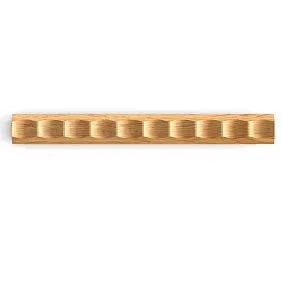
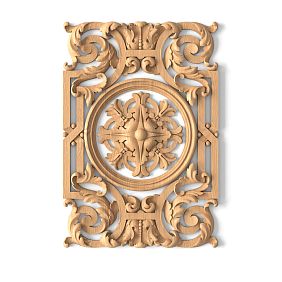
The K-049 card specifies a cross-section of 15 × 7 mm, lengths of 300 and 2000 mm, beech and oak, and "Standard" and "Prestige" sanding finishes. The manufacturer describes the wavy profile as furniture and interior decor.1
A factory blank is a whole strip from the selected product line. A finished part is a segment after agreed trimming. Installed decor is that part with the required coating, attached to the facade. Purchasing the first does not mean that the price includes the next two stages.
In our project, the strips are independent, without connections between drawers. This is significant: a continuous band across the entire dresser would require a different bill of materials and different cutting layout. Here, each facade gets its own segment.
First, mark the position of the strip next to the handle. Check finger grip, the movement of the hanging handle, drawer opening, and the distance to the adjacent facade. It is convenient to apply a paper strip of the intended size, and check the protrusion above the plane with a separate mock-up. Paper will show the composition, but not the thickness of the future decor.
With symmetrical placement, the side margin is calculated from the width of the specific facade. For example, on a conditional facade 410 mm wide, a 250 mm strip will leave (410 − 250) ÷ 2 = 80 mm on each side. But this is only horizontal alignment. If the handle is on a different axis or its hanging part overlaps the strip, equal margins do not eliminate the conflict. The sketch needs both a height mark and a check of handle movement. The 410 mm size is given to demonstrate measurement, not as a requirement for the dresser.
Do not use K-049 instead of a handle. In this purchase, it decorates the facade, not serves as an element to pull the drawer. If the decor falls into the constant grip zone, change its placement before determining the final length.




A short wooden baguette of 300 mm is not just a sample
A short blank can be considered for the main finish when it yields one complete strip. Length, preparation of both ends, and pattern position are checked. The inscription "300 mm" by itself does not promise a part of the same finished length after processing.
For our project, a strip length of 250 mm leaves a difference of 50 mm relative to the short blank. This difference is spent on specific operations; it cannot simultaneously be declared as allowance for ends, cutting, and wave matching. Below, each component is calculated separately.
A test sample and a blank for installation are also not always the same item. A sample with several incompatible coatings, a damaged edge, or an unsuccessful color is not included in the six finished strips without verification. If the test consumes the entire strip, it is a separate order item.
When a short run doesn't fit the fitting, the solution is to recalculate a long blank or Buy wooden picture frame molding another suitable size after revising the project. Joining several short pieces within one visible strip just for the sake of price is not worth it: additional ends, joints, and work on pattern matching will appear.
Short configuration is also unsuitable if the craftsman hasn't confirmed the size yet. The buyer may rely on the drawer width, although the strip should end before the handle or decorative protrusion. First, approve the placement, then pay for factory lengths.
Our factory also produces:


How to calculate carved molding for six separate facades
Let's take a training project: six strips with a finished length of 250 mm. This is an example condition, not a standard furniture drawer size. For clarity, the facades are arranged in two columns of three. Their actual width, height, and offsets are not assigned in the calculation.
| Detail | Place on the dresser | Finished length | What to record on the sketch |
|---|---|---|---|
| D1 | Top left drawer | 250 мм | Height of the strip and start of the wave |
| D2 | Top right drawer | 250 мм | Alignment with D1 |
| D3 | Middle left drawer | 250 мм | Position relative to handle |
| D4 | Middle right drawer | 250 мм | Alignment with D3 |
| D5 | Bottom left drawer | 250 мм | Height of the strip and start of the wave |
| D6 | Bottom right drawer | 250 мм | Alignment with D5 |
Numbering is needed after cutting as well. The craftsman will be able to maintain the approved order of parts, rather than having to choose anew which end to place on the left. The direction of the pattern is marked on the sketch and in an agreed manner on the workpieces themselves, without damaging the face surface.
For checking the yield, we accept calculated assumptions: 10 mm of total losses for preparing the ends of each initial workpiece and 3 mm for separating each finished part. Ten millimeters apply to the entire factory plank, not to each segment. Within this conditional value, the operations for preparing the initial ends are already accounted for.
Additional length for choosing the wave position will be denoted as R. This is the total reserve on one initial workpiece. It is not a pattern step and has no set value until the pattern is checked. The total requirement for n parts:
L = n × (250 + 3) + 10 + R.
First, set R = 0 to see the geometric boundary of the model.
| Source length | Finished strips | Required by model | Remainder or shortfall |
|---|---|---|---|
| 300 мм | 1 | 263 мм | 37 mm remains |
| 2000 мм | 6 | 1528 мм | 472 mm remains |
| 2000 мм | 7 | 1781 мм | 219 mm remains |
| 2000 мм | 8 | 2034 мм | 34 mm short |
Eight strips do not fit: the equality 8 × 250 = 2000 mm leaves nothing for processing. Even before checking the wave, such an order already fails the selected model.
For a short workpiece, the additional reserve R can occupy no more than 37 mm under the other accepted conditions. For seven strips on a long one — no more than 219 mm in total. If the actual pattern matching requires more, the corresponding part yield must be reduced. You cannot take the nominal capacity of seven and keep it after increasing losses.
Let's check the sensitivity of the calculation. Suppose the master, when marking a specific short workpiece, determines an additional loss of 40 mm for the desired pattern ending. Then 263 + 40 = 303 mm is required: the 300 mm plank is already too small. These 40 mm are a conditional fitting result, not a declared step of wave K-049. Reducing the finished strip by the missing 3 mm without agreement is not allowed: the facade list will be violated. First, the layout on the long workpiece or the pattern position is revised, then the price of acceptable sets is compared again.
The remaining 37 or 219 mm is not yet a promised usable remainder. It can split into several pieces during pattern matching. Six short remainders also cannot be arithmetically added to obtain one whole spare strip from them.
Before purchasing, the master checks the model on the actual tool, the condition of the ends, and the agreed ornament placement. If the technology requires additional finishing of each fresh cut, it is included in the length consumption separately, not left outside the calculation.
Get Consultation
How much does it cost to buy six short K-049 pieces instead of one long plank?
You need to compare identical versions. Replacing oak with beech or "Prestige" with "Standard" while changing the length at the same time will not show what exactly you managed to save on.
The K-049 trading table as of September 5, 2026 gives the following prices for whole blanks. The cost of six short pieces and the difference are calculated by multiplication and subtraction.1
| Execution | One 300 mm | Six of 300 mm each | One 2000 mm | Difference in favor of short pieces |
|---|---|---|---|---|
| Beech, "Standard" | 350 ₽ | 2100 ₽ | 2360 ₽ | 260 ₽ |
| Beech, "Prestige" | 420 ₽ | 2520 ₽ | 2840 ₽ | 320 ₽ |
| Oak, "Standard" | 410 ₽ | 2460 ₽ | 2770 ₽ | 310 ₽ |
| Oak, "Prestige" | 480 ₽ | 2880 ₽ | 3230 ₽ | 350 ₽ |
In the short set, the buyer pays for 1800 mm of source material, in the long set — 2000 mm. The same finished length is installed on the furniture: 6 × 250 = 1500 mm. Unused length by itself does not improve the result.
Searching for "buy wooden baguette by the meter" may create a different expectation: paying for exactly one and a half meters. For this card, we are talking about whole blanks of available lengths. You cannot multiply the price of a conventional linear meter by 1.5 and consider the resulting number to be the cost of the order.
The price per finished strip also depends on the yield. For beech "Standard", six short ones give 350 ₽ of material per strip. One long one, divided only into six, — about 393.33 ₽. This is a calculation of the purchase cost per finished part, not an additional seller's fee.
With a long strip, there remains the possibility of getting a seventh segment within the accepted model. Therefore, a buyer who really needs a reserve should compare seven usable parts. You cannot attribute the same spare strip to the short set without an additional blank.
If there are seven or eight boxes: when a mixed baguette order is more advantageous
We will keep the finished length of 250 mm and the same assumptions. Only the number of finished strips changes. For beech with "Standard" sanding, we get:
| Finished strips | Only 300 mm blanks | Only 2000 mm blanks | Minimum cost of items in the model |
|---|---|---|---|
| 6 | 2100 ₽ | 2360 ₽ | Six short ones — 2100 ₽ |
| 7 | 2450 ₽ | 2360 ₽ | One long one — 2360 ₽ |
| 8 | 2800 ₽ | 4720 ₽ | One long and one short — 2710 ₽ |
With seven strips, the long plank is cheaper by 90 ₽. With eight, you have to compare three configurations, not two. Seven pieces are obtained from 2000 mm, the eighth from 300 mm. You can buy two long ones, but just for eight strips, this is not the minimum material cost in our calculation.
The mixed set contains two factory blanks with a total length of 2300 mm and yields eight parts with a total length of 2000 mm. The remaining 300 mm are distributed between losses and remnants of two different strips. They do not automatically turn into another finished strip.
For other finishes, the logic remains the same. Eight strips from a mixed set cost in material 3260 ₽ for beech "Prestige", 3180 ₽ for oak "Standard", and 3710 ₽ for oak "Prestige". Compared to eight short ones, the savings are 100, 100, and 130 ₽, respectively.
There is also a practical reason to count six boxes as seven parts: one full spare strip is needed. In this case, seven usable segments are compared, and the spare one gets the same finish. It should not be simultaneously assigned as a consumable sample for testing: after an unsuccessful test cut, the reserve function may disappear.
Separately check the preliminary sample. If a full 250 mm segment is needed for testing and it cannot be installed after the test, six decorative strips mean seven manufactured parts. In the adopted model, one long blank is sufficient for them, but a seventh will be required for the six short ones. This can change the initial choice without adding a new box. When a small suitable offcut is enough for the test cut, there is no need to count an additional strip — the sample size is determined by the executor, not by a universal percentage of reserve.
If the pieces are not identical, this table no longer determines the purchase. A new cutting map with actual lengths is needed. The mixed order is the result of a check, not a universal recommendation for any dresser.
Substrate, delivery, and cutting: full price of a small order
The description of K-049 mentions adding a pine substrate at a cost of 390 ₽ for orders up to 105 pieces. This is a protective packaging component, not delivery or a decorative detail for the facade.1
Do not multiply 390 ₽ by each strip. However, for a mixed order, clarify the number of packaging units and the composition of the line in the invoice: the general phrase on the card is not enough to independently assign packaging to each possible configuration.
Below is a comparison of two options for eight strips of beech "Standard", if each invoice confirms one identical packaging line of 390 ₽.
| Expense item | Eight short ones | One long and one short |
|---|---|---|
| Products | 2800 ₽ | 2710 ₽ |
| Substrate per accepted condition | 390 ₽ | 390 ₽ |
| Known subtotal | 3190 ₽ | 3100 ₽ |
| Delivery | Per shipping calculation | Per shipping calculation |
| Cutting and edge preparation | Per the master's assignment | Per the master's assignment |
| Coating and installation | Per the agreed estimate | Per the agreed estimate |
Identical packaging cost does not eliminate the 90 ₽ difference: it is added to both amounts. The decision changes if other costs differ. When delivery and processing of a mixed set together cost more than 90 ₽ extra, all short ones become cheaper in total. With a difference of exactly 90 ₽, the options are equal in price.
A long load cannot be declared more expensive in advance: a calculation based on packaging dimensions, weight, and address is required. The seller also uses these parameters when determining delivery.2 Request comparable offers before payment, having studied payment and delivery terms for wooden baguette.
Per the published FAQ, STAVROS does not provide a sawing or cutting-to-size service.2 Consequently, the line "get eight strips of 250 mm" refers to the task for your own master, not automatically to the store order.
The full cost of rework consists of products, packaging per invoice, delivery, necessary cutting, finishing, and installation. If a consumable sample is purchased separately, its cost and possible additional shipping are also included in the estimate. An unknown amount here means "need to get a quote," not zero.
How to order an unpainted wooden baguette for existing facades
Choose one finish for the entire visible series. In the request, specify the wood species, sanding, and glue joint quality separately. The latter cannot be replaced with the word "beech" or "oak": the material and the preparation for coating are different characteristics of the order.
At STAVROS, "Standard" means processing with machine sanding, while "Prestige" additionally includes detailed hand sanding. "Under enamel" and "under tinting" refer to the grade of the blank's glue joint; they do not mean applied paint or finished tinting. For translucent finishes, the manufacturer provides for matching lamellas by color and texture but allows natural variations.3
Before choosing, it is useful compare sanding and wood veneer splicing grade, then hand over a sample of the existing facade to the finisher. A photo is suitable for discussing the concept, but it is better to agree on color and gloss using a physical sample next to the dresser.
Do not choose more expensive sanding just by its name. For six short beech planks, the surcharge for "Prestige" is 2520 − 2100 = 420 ₽. Compare it with the master's quote for preparing the "Standard." The cost of subsequent work is not derived from the price of the planks: it must be requested for a specific coating.
Before processing the entire batch, agree on how visible ends and the contact surface will be finished. Attach a test piece after trimming: a sample of a long piece does not show how well the wave ends on the finished 250 mm.
The installation compound is chosen based on the actual substrate and condition of the old coating. Official tips for finishing and installing wooden decor distinguish between unpainted and painted surfaces.4 This is not a reason to assign one adhesive to any old facade. The contractor must check compatibility, preparation, and instructions of the chosen compound, after which it is possible Buy materials for installing a wooden baguette according to the agreed list.
Request for K-049: two lengths in the catalog, one clear specification
The seller needs factory item numbers, the craftsman needs finished parts. To ensure these documents don't contradict each other, attach the D1–D6 list to the request and specify the chosen procurement option separately.
For the main example, the text might look like this:
Please calculate order K-049: beech, sanding "Standard", regluing under an agreed opaque coating, cross-section 15 × 7 mm. Blanks 300 mm — 6 pieces; 2000 mm — 0 pieces. We plan to make six separate strips with a finished length of 250 mm; cutting and finishing are done by our craftsman. Please confirm execution, cost of the backing and number of packages, readiness time, delivery to [address] to recipient [name]. Additional consumable sample: [needed / not needed].
For a mixed set of eight strips, two quantity lines will be different: 300 mm — one piece, 2000 mm — one piece. Do not simply write "eight K-049": that quantity refers to the cutting result, not to the purchased planks.
Before cutting, check the article number, lengths, wood species, sanding, preparation, and number of blanks. Inspect the grain and ends, and record any noticeable damage. If something does not match the order, resolve the issue before irreversible processing, not after painting the entire batch.
Agree on who receives the package: the buyer or the workshop. If the cargo first arrives home and then goes to the finisher, the second transport should not be lost in the budget. Give both specifications to the recipient so that one long plank is not mistaken for a short delivery of seven parts. Photos of the packaging and laid-out blanks will help match the actual delivery with the product lines before starting work.
The craftsman is also given the position of the strips on the facades, selected endings, grain sequence, coating sample, and agreed mounting scheme. The seller confirms the goods and delivery; the contractor confirms the output of parts and work on the furniture. The installation date is set considering both stages.
For the schedule, it is enough to record the dates of goods readiness, workshop receipt, finish sample approval, and installation. Confirm them with the respective contractors. Delivery time does not replace finishing time, and an agreed color does not mean the coating has reached the required readiness for installation. If one stage is postponed, update the overall schedule, not promising to finish the dresser on the previous day just because the blanks are already paid for.
Do not pay for a set blindly if the finished length is not approved, the allowance for grain is unknown, or the total budget exceeds the allowable amount. Sometimes it is better to change the placement of the strips or leave the facades without additional decor. In other cases, it is enough to choose one proven set rather than buying short and long configurations simultaneously "just in case".
Before payment, re-check current prices and availability of the selected options. Choose K-049 lengths and calculate the order.
Questions before purchasing a wooden baguette
Can a short strip be installed after a trial stain?
Yes, if the result is accepted, the finish matches the other parts, and the remaining length is sufficient for the agreed trimming. If different compounds were tested on the sample or the ends were damaged, its suitability is assessed separately. The mere fact of purchasing a seventh strip does not mean there is a usable reserve.
What to do if one of the six strips turned out shorter?
Do not reduce the others automatically. First, check whether the composition allows the new length on all drawers. If the agreed size cannot be changed, a replacement part is needed. The possibility of obtaining it from the remainder is checked against a solid available section with allowances, not by the sum of all offcuts.
Do all six parts need the same wave start?
This is a condition of a specific composition, not a confirmed delivery parameter. For paired boxes, identical endings can be provided in the specification. Then the master checks the layout before serial cutting. The card does not confirm that any six factory-cut pieces are already matched in this way.
Can I order 300 mm and receive exactly 300 mm after finishing?
You should not assume this without confirmation. In our model, even with zero allowance for the pattern, from 300 mm a maximum of 287 mm of finished length remains: 300 − 10 − 3. This is a calculated limit of accepted losses, not a production tolerance of STAVROS.
How will the order change if a seventh strip of a different length is needed?
A separate line in the specification is made for it. A long plank is checked against the sum of specific parts, cuts, and pattern allowance. A table of identical 250 mm pieces does not answer this case. One non-standard size can change both the yield and the advantageous combination of lengths.
Is it necessary to keep the long remainder?
Only if it has a clear purpose. Note the actual length, finish, and coating condition to later assess replacement options. Do not reduce today's estimate by a conditional "remainder cost" until its use is defined: the money for the whole blank has already been spent.
Can different sanding finishes be mixed and still get a uniform appearance after painting?
This is possible only as an agreed task for the finisher, not a promised result of a mixed purchase. Before comparing costs, you need to add finishing work for each group. For a small visible series, it is easier to request a single finish; random differences in preparation should not be detectable after the topcoat is applied.
What to do if delivery completely changes the advantage of a mixed set?
Choose the configuration with the lower total cost when the quality of the result is the same. If delivery times, labor, and packaging also differ, compare them together. The minimum 2710 ₽ for material for eight strips does not obligate you to order a long shipment when eight short ones are more cost-effective considering other expenses.