Article Contents:
- Where and how wooden wall moldings are used
- Living room: moldings as an architectural gesture
- Bedroom: moldings behind the headboard
- Hallway: first impressions are made with moldings
- Study: business seriousness through details
- Doorways and wall piers
- Furniture facades and cabinets
- Types of wooden wall moldings: complete typology
- By cross-sectional profile
- By width
- By purpose
- By finish
- How to choose a molding profile: detailed analysis
- Molding for a classic interior
- Molding for neoclassical style
- Molding for modern classic
- Molding for a country house
- Molding for a wooden baseboard
- How to choose size and proportions: the mathematics of beauty
- Molding width relative to ceiling height
- Frame size relative to the wall
- Distance from the floor
- Accounting for furniture when arranging frames
- Symmetry and Rhythm
- Wooden or polyurethane moldings: an honest comparison
- Wooden moldings for furniture: from walls to facades
- Molding on cabinet facades
- Molding on kitchen facades
- Molding on doors and panels
- What to pair with wooden moldings: a decor system
- Moldings and wooden baseboards
- Moldings and wooden architraves
- Moldings and wooden cornices
- Moldings and frames for mirrors and paintings
- Moldings and classic furniture
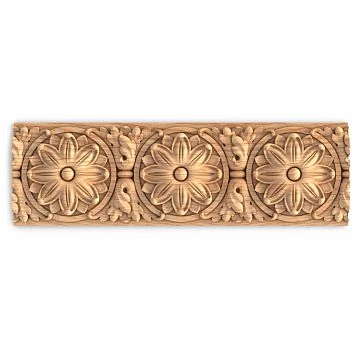
- Moldings and carved decor
- Mistakes when choosing wooden moldings: what you need to know in advance
- Mistake 1: Too thin molding for a large wall
- Mistake 2: Frames without considering furniture
- Mistake 3: Inconsistent profile with baseboard
- Mistake 4: Mixing different materials without logic
- Mistake 5: Painting not thought through
- Mistake 6: Too active profile in a small room
- Mistake 7: Incorrect calculation of linear meters
- Mistake 8: Internal corners without miter cutting
- How to Buy Wooden Wall Moldings: Practical Steps
- Step 1: Determine Application Areas
- Step 2: Choose Style and Profile
- Step 3: Calculate Frame Dimensions
- Step 4: Order with Extra
- Step 5: Choose Finish
- FAQ: Answers to Key Questions About Wooden Wall Moldings
- Which Moldings to Choose for Walls?
- Can Wooden Moldings Be Used on Walls?
- What's Better: Wooden or Polyurethane Moldings?
- Can you paint wooden moldings?
- Where to buy wooden moldings for walls?
- How to calculate the number of moldings for frames?
- How to combine wooden moldings with furniture?
- About the Company STAVROS
There are details that are invisible — until they appear. A wall without molding is just a plane. A wall with properly selected wooden moldings is an architecturally organized surface that holds the space, sets the rhythm, and gives the interior that very "finished look" that is impossible to describe but instantly felt upon entering the room.
Wooden wall moldings — this is not a whim or a tribute to fashion. It is a constructive decorative element that works in conjunction with baseboards, architraves, doors, furniture, and the overall interior style. Choosing it correctly means making the entire space cohesive. Making a mistake means getting a "foreign detail" in a carefully thought-out room.
This article covers everything you need to know to choose and buy wooden moldings for walls wisely: profile, size, proportions, style, combinations, and specific application scenarios.
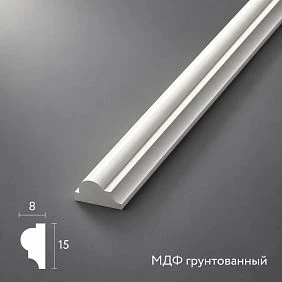

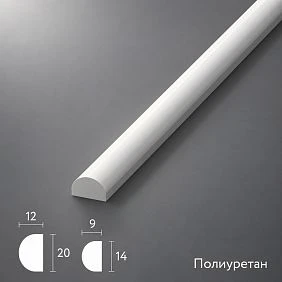

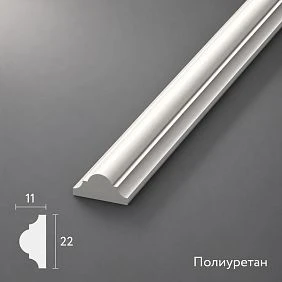
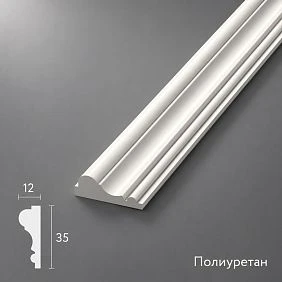
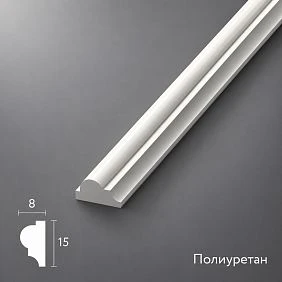
Where and how wooden moldings for walls are used
The first question that arises when entering the catalog is: where exactly are they needed? The answer is broader than it seems.




Living room: moldings as an architectural gesture
The living room is the main room of the house, and this is where wooden molding on the wall works most convincingly. Typical scenarios:
The wall behind the sofa is an accent wall where moldings create one or more decorative frames. The sofa "fits" into this frame as a furniture piece within an architectural context.
TV area — moldings organize the space around the television: vertical and horizontal lines create a "niche effect" without actual wall recess.
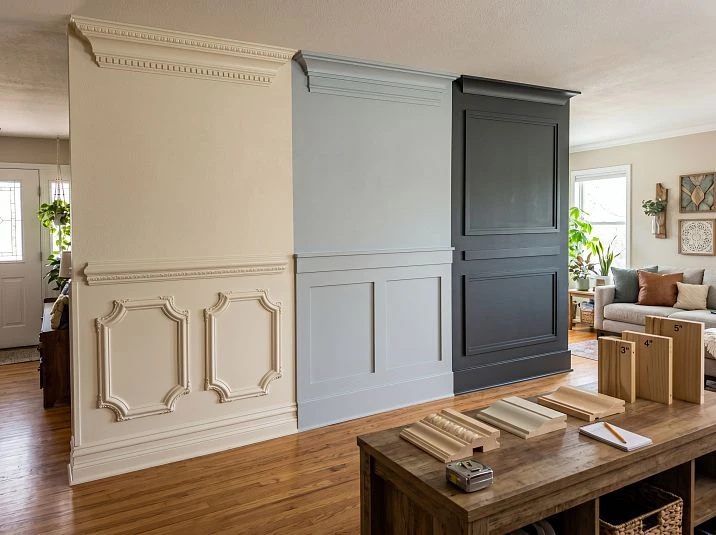
Full perimeter of walls — a horizontal molding belt at a height of 80–90 cm from the floor divides the wall into a "paneled" lower part and an upper part. This technique is a direct inheritance from classical architecture, where the wall was always divided into a base, main section, and cornice.
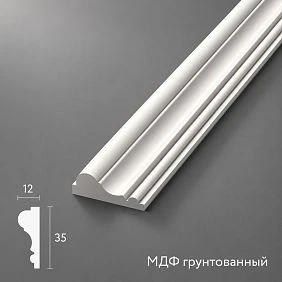
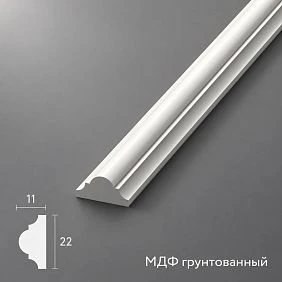
Our factory also produces:


Bedroom: moldings behind the headboard
The wall behind the bed is the second most important accent in the bedroom after the bed itself. A molding frame around the headboard is a technique that "architecturally frames" the bed, turning it into a central interior element without additional wallpaper or paint.
In the bedroom, thinner, more delicate profiles are appropriate — a wide decorative belt would be excessive here.
Get Consultation
Hallway: first impressions are created by molding
The hallway is a small space where molding works powerfully. Vertical molding panels "stretch" the ceiling. A horizontal belt at the level of the coat rack creates a "lower" zone. All together — an organized, classic space that sets the tone for the entire apartment.
Study: business seriousness through details
In the study, moldings create a "library" or "office" effect. Dark tones, rich profiles — all of this forms an atmosphere of concentration and solidity.
Doorways and piers
Wooden casings — relatives of molding — frame the doorway. But moldings on the wall next to the door continue the decorative system of the architrave, creating a unified architectural language: door + molding frame + wall panels.
Furniture Facades and Cabinets
Wooden molding is not just a wall element. It is widely used for decorating furniture: cabinet fronts, dressers, kitchen unit doors, nightstands. This is a direct path to a unified visual language of furniture and walls.
What types of wooden moldings for walls exist: a complete typology
Understanding the types of moldings means learning to read the catalog. Not just flipping through, but understanding what lies behind each profile.
By cross-sectional profile
Smooth (rectangular) molding — a simple batten with straight edges. No shaped elements. This is a minimalist option: creates a clear line, doesn't "shout," works in modern and neoclassical interiors.
Molding with a chamfer — a beveled edge on one or both sides. Adds lightness and graphic quality to the profile. Looks good on walls with neutral tones — the chamfer creates a play of shadow.
Molding with a groove (recess) — a semicircular or concave recess in the center or along the edge of the profile. This is one of the basic classic profiles: recognizable, versatile, works well as a dividing element.
Molding with an ovolo or bead — a convex semicircular relief. It looks more voluminous and feels "softer." Suitable for classic and neoclassical styles.
Figural profile — a complex cross-section with several grooves, protrusions, and chamfers. This is a "rich" option: expressive, detailed, suitable for classic interiors with high ceilings.
By width
-
Narrow molding (15–30 mm) — a thin dividing line. For modern classics, for narrow wall sections with small frames, and for furniture frame decorations.
-
Medium molding (30–60 mm) — a universal format. It reads well on the wall, creating an expressive line without dominating.
-
Wide molding (60–120 mm and more) — a decorative band that is itself a design element. For spacious rooms with high ceilings.
By purpose
Moldings for frames — create rectangular "frames" on the wall. This is the most popular application scenario for wooden molding on walls.
Moldings for panels — wider profiles that form "wall panels" — vertical wall sections, each framed by molding.
furniture moldings — thinner, more precise, designed for use on furniture facades. Can also be used on walls as a thin, delicate decorative element.
Wooden trim — a general name for linear profile products, including moldings, baseboards, architraves, and cornices. Linear products are sold by the meter and ordered to specific lengths.
By finish
Molding without coating (for painting) — a sanded surface ready for paint, enamel, or primer before painting.
Varnished molding — a transparent coating that reveals the wood texture.
Molding for stain or tinting — the desired shade is applied while preserving the visible texture.
Oil-finished molding — a matte natural surface that maintains the wood's living appearance.
How to choose a molding profile: a detailed breakdown
Choosing a profile is choosing the 'voice' of the molding in the interior. The same size but a different profile yields a fundamentally different result.
Molding for a classic interior
Classic requires a profile with decorative complexity: multiple levels, clear relief, expressive shadow on the side edges. A wide molding with an ovolo, fillet, and straight shoulder is the 'language' of classical architecture. It assumes a high ceiling (from 3 m), corresponding furniture, and overall decorative richness.
Classic Furniture with wooden details, carved legs, and profiled frames — the context in which a wide figured molding on the wall looks organic, not alien.
Molding for neoclassicism
Neoclassical is classic with breathing room. The profile exists, but it is calmer: one chamfer, a slight ovolo, no excessive detailing. Width is medium. The distance between moldings is greater than in rich classic.
For neoclassical, a smooth molding with a single chamfer works perfectly: it creates a line without declaring itself too loudly.
Molding for modern classic
Modern classic is the most popular style today, and moldings are used here deliberately and precisely. Typically: one horizontal belt or frames on an accent wall. The profile is simple, with a chamfer or rectangular cross-section. The color is white, matching the walls, or in a contrasting tone.
Molding for a country house
In a country house with wooden beams, warm tones, and natural textures, wooden molding is more appropriate than any polyurethane. There is no need to paint it white: molding in a natural tone, coated with varnish or oil, becomes part of the house's "wooden world."
A good system: Wooden baseboard at the bottom + wall molding + wooden cornice at the top — the entire perimeter of the room in one material and tone.
Molding to match a wooden baseboard
If the baseboard is already chosen, the molding should "speak" to it. This means: similar width, coordinated profile, identical or close tone. A thin molding next to a massive 120 mm baseboard looks weak. Conversely, a wide molding belt with a modest baseboard creates an imbalance.
Rule: if the baseboard is expressive, the molding is slightly more modest. If the baseboard is thin, the molding can be a bit more active, but not overpowering.
How to choose size and proportions: the mathematics of beauty
Molding size is a matter of proportion. And there are specific guidelines that allow you not to rely solely on intuition.
Molding width relative to ceiling height
Rough rule: molding width (in mm) ≈ 1–2% of ceiling height in mm.
-
Ceiling 2500 mm → molding 25–50 mm
-
Ceiling 2700 mm → molding 27–54 mm
-
Ceiling 3000 mm → molding 30–60 mm
-
Ceiling 3500 mm → molding 35–70 mm and above
This is a guideline, not a rule. But it helps quickly filter out clearly disproportionate options.
Frame size relative to the wall
When creating frames from moldings, the proportions of the frame should match the proportions of the wall or a specific partition.
A typical mistake: the frame is too small for the wall — it looks "lost." The other extreme: the frame takes up almost the entire wall, leaving no breathing room — the space "shrinks."
A good rule: the distance from the molding to the edge of the wall (from the ceiling, floor, or corner) should be at least the width of the molding itself multiplied by 2–3.
Distance from the floor
The horizontal belt of a divider molding on the wall is most often placed:
-
At a height of 80–100 cm — classic division into a "panel" lower zone and an upper zone
-
At a height of 120–140 cm — a higher "panel," suitable for rooms with high ceilings
-
At a height of one-third from the ceiling (e.g., 60 cm from the ceiling with a 3 m ceiling) — an upper dividing belt
Accounting for furniture when arranging frames
Frames on the wall do not exist in a vacuum — they should "see" the furniture and account for it. A frame behind a sofa should be positioned so that the sofa fits organically under it, rather than covering the lower third of the frame.
Practical tip: draw the wall to scale (at least roughly) with furniture and sketch the moldings on top — proportions become immediately clear.
Symmetry and Rhythm
Moldings on a wall work rhythmically: one frame is good, three identical frames with equal spacing are organized. Random placement of frames of different sizes is chaos.
On a wall with a window or door opening, symmetry is built around the opening: equal frames on both sides create a "balanced" wall.
Wooden or polyurethane moldings: an honest comparison
Almost everyone asks this question. And the correct answer is not "one is better than the other," but "each for its own purpose."
| Characteristic | Wooden Molding | Polyurethane Molding |
|---|---|---|
| Weight | Heavier | Lighter |
| Strength | High | Medium |
| Installation | Glue + nails/screws | Glue |
| Painting | Any wood paints | Water-based, acrylic paints |
| Staining | Stain, oil, varnish — any shade | Limited |
| Wood texture | Natural, living | Imitation |
| Repairability | Can be sanded and restored | More difficult |
| Combination with furniture | Ideally | Requires deliberate choice |
| Application on facades | Limited | Special facade versions |
| Feeling of 'naturalness' | Maximum | Decorative |
Wooden molding excels where naturalness, tactility, and unity with wooden interior elements are important. If the room has wooden parquet, wooden doors, wooden furniture — solid wood moldings create an organic, cohesive interior.
Polyurethane molding excels where ease of installation is important and the walls will be completely repainted white or a neutral color. It is a working tool for rooms with drywall walls and without wooden elements.
Mixing wood and polyurethane is possible — but deliberately. If wooden baseboards and trims are already installed, white polyurethane molding can be appropriate provided it "blends" into the wall color. But if the molding is tinted or lacquered — it is not advisable to place polyurethane next to it: the difference in surface and texture will be obvious.
Wooden moldings for furniture: from walls to facades
furniture moldings — is a continuation of the wall molding theme on another surface. The same principle: a profile strip creates a decorative line, organizes the surface, adds depth.
Molding on cabinet facades
The flat facade of a sliding wardrobe or built-in closet can be transformed into a classic "framed" facade by gluing moldings around the perimeter of each section. This works without replacing the doors themselves — only molding, glue, and paint.
An important condition: the molding must be made of the same material and in the same tone as the decor in the rest of the room. Otherwise, it will result in an inconsistent element.
Molding on kitchen facades
Furniture Decoration from Wood — overlay elements and moldings — allows you to update a kitchen set without completely replacing the facades. Molding around the perimeter of the door turns a "plain" facade into a classic "framed" look.
Molding on doors and panels
Wooden molding on a door leaf is a classic technique that makes a smooth door look "paneled" without production costs. The same door, but with moldings in the form of rectangular frames — a completely different decorative image.
This is an important argument for a unified interior: walls with molding frames + doors with molding panels = architectural consistency.
What to combine wooden moldings with: a decor system
Wooden molding on the wall is just one element of the system. A well-designed interior is created through the consistency of all decorative details.
Moldings and wooden baseboards
Wooden baseboard — the "lower" horizontal line of the room. The molding on the wall is the "middle". The cornice at the top is the "upper". All three in the same material, tone, and stylistic key — a classic three-level system that organizes the space vertically.
Tonal coordination: if the baseboard is dark walnut — the moldings should be in the same range. A contrasting white molding with a dark baseboard is a choice, but a deliberate one, not accidental.
Moldings and wooden architraves
Wooden casings on the doors should belong to the same decorative system as the moldings on the walls. The profile of the architrave is a "relative" of the molding profile: similar cross-sectional elements, close scale.
That is why Wooden trim from one collection — moldings, baseboards, architraves, cornices — creates an interior without "random details".
Moldings and wooden cornices
wooden cornice at the junction of the wall and ceiling — the "upper voice" of the decorative system. It should be more expressive than the molding on the wall, but belong to the same stylistic language: if the moldings have a light ovolo — the cornice has a more pronounced but similar profile.
Moldings and frames for mirrors and paintings
Wooden frames for mirrors and paintings are the same moldings, only assembled into a closed rectangle. When Wooden moldings on the wall and the mirror frames belong to the same profile — the effect of a "unified space" arises: the wall and the mirror become part of one architectural system.
Moldings and classic furniture
Classic Furniture with wooden details, carved elements, and profiled frames — the best context for wooden moldings on walls. Here, molding is not just a 'decoration,' but an extension of the furniture's decorative language onto the wall plane.
Moldings and carved decor
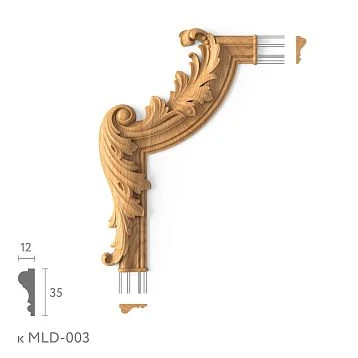
Furniture Decoration from Wood — applied carved elements — can be used in the corners of molding frames as 'rosettes': small ornamental accents that enliven the geometry of rectangular frames and add decorative richness.
Mistakes when choosing wooden moldings: what you need to know in advance
Experience is a good teacher, but an expensive one. It's better to know typical mistakes in advance and not pay for rework.
Mistake 1: Too thin molding for a large wall
In a large living room with high ceilings, a narrow 20 mm molding gets lost — it's simply 'invisible' from a distance of 4–5 meters. The scale of the molding should match the scale of the space.
Mistake 2: Frames without considering furniture
A molding frame half hidden by the back of a sofa is money down the drain. Before installing molding, draw a wall plan with furniture to scale.
Mistake 3: Inconsistent profile with baseboard
A figured molding with several grooves next to a flat rectangular baseboard creates visual dissonance. Profiles should 'talk' to each other.
Mistake 4: Mixing different materials without logic
Wood molding + polyurethane casing + MDF baseboard — three different surfaces, three different 'voices'. This only works if all three are the same color (white) and not visible next to each other. If all three are tinted or natural, the mixing is obvious and unattractive.
Mistake 5: Painting not thought through
The molding is installed, but the finish is not coordinated with the walls. White molding on a white wall — relief is only visible with side lighting. Tinted molding on a white wall — expressive contrast. Molding in the color of the walls — a delicate, 'invisible' line.
Each of these options has a right to exist — but it should be a choice, not an accident.
Mistake 6: Too active a profile in a small room
In a small room (12–16 m²), a wide figured molding on the walls will overload the space. For small rooms — thin, calm profiles, a minimum number of frames.
Mistake 7: Incorrect calculation of linear meters
Molding is a linear material. Its quantity is calculated in meters. When calculating, it is necessary to consider:
-
Perimeter of all straight sections
-
Corner trimming (approximately 10% allowance)
-
Additional allowance for defects (5%)
-
Corner caps or precise 45° miter cuts
Running short by one or two meters at the end of installation is a common and frustrating situation.
Mistake 8: Internal corners without miter cuts
For internal corners, the molding needs to be cut at 45° (butt joint or with a corner cap). Without precise cutting, joints separate, and gaps look unsightly.
How to buy wooden wall moldings: practical steps
Step 1: Determine application areas
Specify: wall behind the sofa, hallway perimeter, frames in the bedroom, cabinet fronts. This will determine how many linear meters are needed and which types of moldings.
Step 2: Choose a style and profile
Look at existing elements: baseboard, trim, doors, furniture. The molding should be from the same family.
Step 3: Calculate frame dimensions
Draw a wall plan with furniture. Determine the placement and size of frames. Calculate linear meters (perimeter of each frame × number of frames + 10% for trimming).
Step 4: Order with a margin
Add 15% to the calculated length — this is insurance against cutting errors and losses from miter cuts.
Step 5: Choose the finish
Decide before ordering: for painting (white or neutral — paint later), for staining (tone is set after delivery), for varnishing (natural tone is fixed immediately).
FAQ: answers to key questions about wooden wall moldings
Which moldings to choose for walls?
Choose based on ceiling height (the higher the ceiling, the wider the permissible molding), interior style (classic — shaped profile, neoclassical — calm profile, modern classic — simple bevel), as well as considering the baseboard, trim, and furniture. See Wooden moldings.
Can wooden moldings be used on walls?
Yes, wooden molding is one of the best options for walls in interiors with natural materials. It is attached with glue and nails, accepts any coating well, and blends organically with wooden baseboards, trim, and furniture.
Which is better: wooden or polyurethane moldings?
Wooden ones are preferable where there are other wooden elements — baseboards, doors, furniture. Polyurethane ones are preferable where the walls will be completely white and installation is done once, without repairs. More details in the catalog wooden products.
Can wooden moldings be painted?
Yes, with any wood paints: enamel, acrylic paint, as well as stain, varnish, oil. Before painting — wood primer.
Where to buy wooden moldings for walls?
In the Stavros catalog — Moldings, Trim, Baseboards, Casings — a complete system of wooden moldings with Contact us to confirm shipping to your destination.
How to calculate the number of moldings for frames?
Calculate the perimeter of each frame (sum of four sides), multiply by the number of frames, add 15% margin. For a frame 80×120 cm, the perimeter = 400 cm = 4 linear meters.
How to combine wooden moldings with furniture?
Moldings should belong to the same style system as the furniture: the molding profile "rhymes" with the profile of furniture frames and facades. Especially organic — wooden moldings next to classic furniture with wooden details.
About the company STAVROS
Molding is a detail. But the right detail makes the interior. That is why it is important that the molding is chosen in a system: together with the baseboard, trim, cornice, furniture — and together with the space you are creating.
STAVROS offers a full range wooden trim и of solid wood for walls, ceilings, doors and furniture: Moldings, Baseboards, Casings, Crown Molding, furniture moldings и decor for furniture.
Choose a system — not a detail. Buy at STAVROS.