








































































Article Contents:
- What is a wooden pilaster and how it differs from a column
- Pilaster and column: what's the difference
- Pilaster and capital: what is the connection
- Where wooden pilasters are used: a complete application map
- Door and arch portals
- Fireplace areas and fireplace portals
- Cabinets, libraries, and sideboards
- Walls: rhythm and symmetry
- Halls and entrance areas
- Cabinets and library walls
- Kitchen groups
- Country houses and mansions
- How a pilaster differs from a capital: the definitive answer
- Architectural order: base, shaft, capital
- How to choose the size of a wooden pilaster
- Height of pilaster
- Width of pilaster
- Thickness (depth of projection)
- Fluting: smooth or grooved surface
- Pilaster for a door portal: how to design the entrance
- Basic portal design scheme
- Proportions
- Portal with pilasters in the living room
- Portal with pilasters in the study
- Interior doorway without a door
- Pilaster for furniture: how furniture becomes architecture
- Bookcase cabinet
- Sideboard: a solemn vertical
- Display case with glass doors
- Classic style kitchen
- Dresser in a classic interior
- Pilaster for wall and fireplace area: rhythm of space
- Pilasters on a long wall
- Symmetry of the fireplace area
- TV zone accentuation
- Pilaster niche
- How to choose the style of a wooden pilaster
- Classicism and neoclassicism
- Baroque and Empire
- Russian classical style
- Country and study interior
- Modern classicism
- Material and finish of a wooden pilaster
- Wood species
- Finish: choosing by task
- Tip for coordinating the finish
- Installation of a wooden pilaster: basic rules
- Surface Preparation
- Wall mounting
- Marking and symmetry
- Joints and final finishing
- Mistakes when choosing and installing wooden pilasters
- Where to buy a wooden pilaster
- FAQ: Answers to Popular Questions
- About the manufacturer
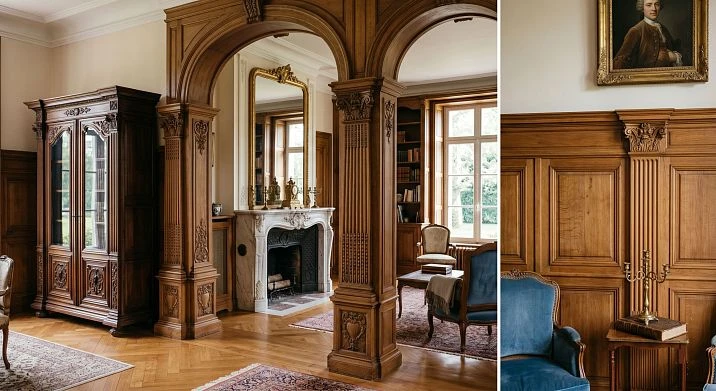
Verticality is the architectural language of order. Where a clear vertical detail appears, the space instantly gains structure: it becomes rhythmic, weighty, meaningful. This is what makes wooden pilaster — it introduces a vertical order into the interior, which without it remains just a set of furniture and painted walls.
The pilaster is one of the oldest architectural elements, having survived millennia and still remaining relevant today. It was used in ancient porticos, Renaissance palaces, Baroque churches, and Russian estates. Today, a decorative wooden pilaster is a tool used by designers of classical, neoclassical, and country interiors. And not only them: the pilaster fits organically into modern classic, Provence style, study interiors, and the design of furniture walls and libraries.
But how to choose correctly? What size do you need for your portal? How to connect the pilaster with capital and the cornice? When does the pilaster work on the wall, and when on furniture? This article answers comprehensively.


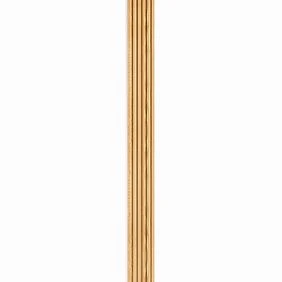
What is a wooden pilaster and how is it different from a column
Let's start with a precise definition, because confusion between a pilaster, a column, and a capital is common.
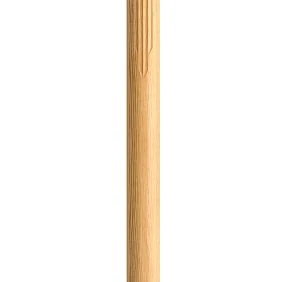
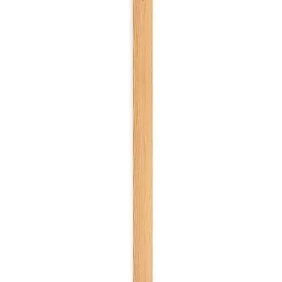
A pilaster is a vertical decorative element with a flat or semi-volumetric cross-section that is attached to a wall, furniture, or portal. Unlike a column, a pilaster does not stand alone in space — it is part of the plane, protruding from it by a small depth: typically from 20 to 80 mm.
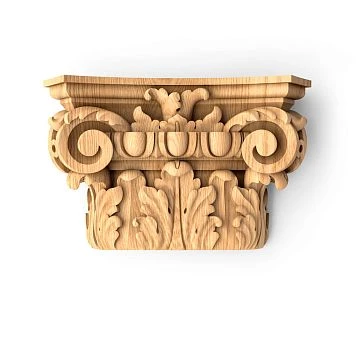
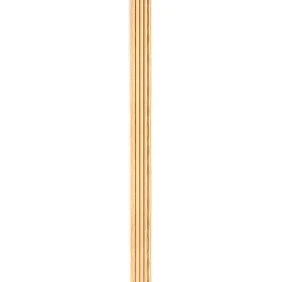
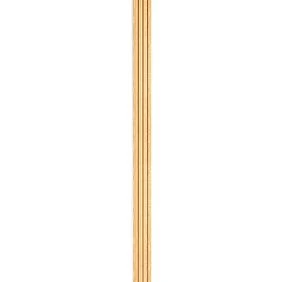
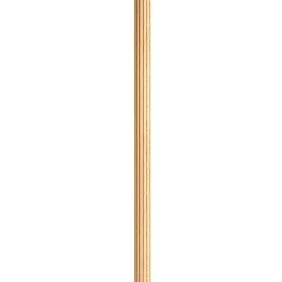
Visually, a pilaster imitates a column: it has a body (shaft), which can be smooth, fluted (with vertical grooves), or carved. At the top, the pilaster ends with wooden capital — a decorative top element of the Ionic, Corinthian, Doric, or custom order. At the bottom — a base that visually "roots" the vertical.




Pilaster and column: what's the difference
| Parameter | Pilaster | Column |
|---|---|---|
| Cross-section shape | Flat, rectangular | Round or polygonal |
| Location | Flush against a wall or furniture | Freestanding or semi-detached |
| Projection depth | 20–80 mm | Full diameter |
| Load-bearing function | No | Can be decorative or structural |
| Application | Walls, portals, furniture | Halls, lobbies, portals, partitions |
In practice: if you want to decorate a doorway, cabinet, or wall with vertical decorative accents — choose a wooden pilaster. If you need a freestanding decorative element — a column.
Our factory also produces:
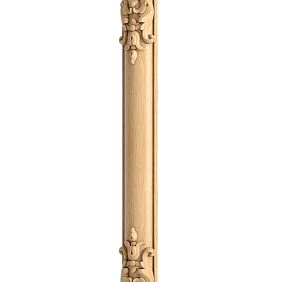
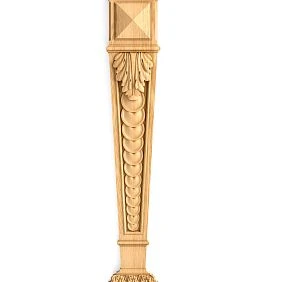
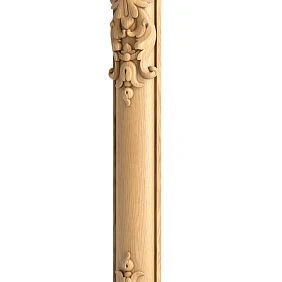
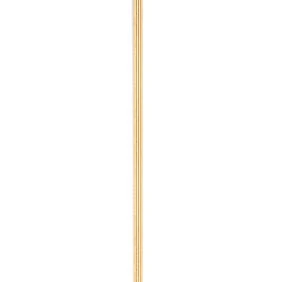
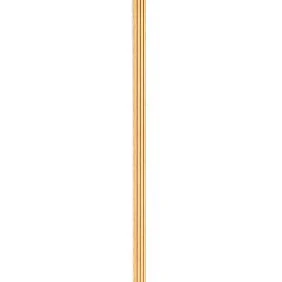
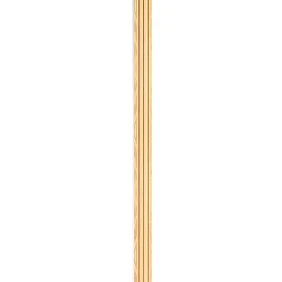
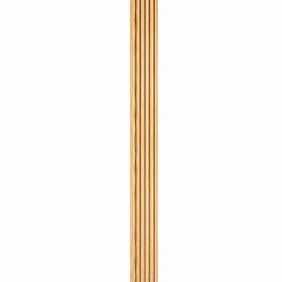
Pilaster and capital: what's the connection
wooden capital — is the top finish of a pilaster or column. A capital by itself without a pilaster is a decorative element placed above a doorway or at the top of furniture. A pilaster without a capital is an unfinished vertical element.
Complete system: base + pilaster shaft + capital — this is a classic architectural order in miniature. It is this system that creates the feeling of a genuine classical interior.
Get Consultation
Where wooden pilasters are used: a complete map of applications
decorative pilaster is versatile in application. Let's examine each scenario in detail.
Door and arch portals
This is the main and most expressive application. Pilasters on both sides of a doorway turn an ordinary doorway into an architectural portal. Two symmetrical pilasters + a horizontal lintel on top + capitals form a classic frame that has been used in interior architecture for centuries.
For portals, pilasters with a height from 2000 to 2700 mm are chosen — depending on the height of the opening and ceiling. The width of a pilaster for a portal is 80–150 mm. The depth of the projection is 30–60 mm.
Fireplace zones and fireplace portals
A fireplace is the center of gravity in a classic interior. Pilasters on both sides of the fireplace opening create a monumental frame: symmetrical, solemn, architectural. Together with a horizontal shelf-cornice, capitals и carved decoration the pilasters form a complete fireplace portal.
A pilaster for a fireplace portal is a serious investment in the visual center of the room. It is always justified when there is a fireplace.
Cabinets, libraries, and sideboards
A pilaster for furniture is a technique that turns an ordinary cabinet into architectural furniture. Corner pilasters on a large bookcase cabinet, side pilasters on a sideboard, vertical accents on kitchen furniture — all this makes furniture look like a built-in part of the interior, rather than a freestanding item.
pilasters and columns for furniture — smaller sizes than for walls: height 800–2000 mm, width 40–100 mm. Projection depth 15–40 mm.
Walls: rhythm and symmetry
In a large living room, study, or hall, pilasters on the walls create an architectural rhythm. They divide a long wall into equal sections, set a vertical rhythm, and create a sense of order. The technique is especially effective: pilasters + molding frames between them + decorative panels.
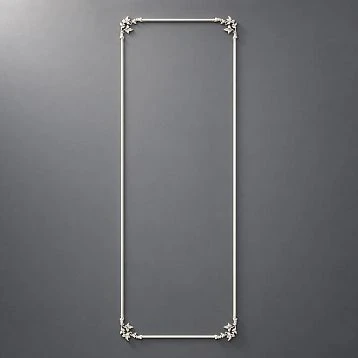
Wooden moldings in horizontal bands between pilasters — this is a classic wall division system used in palace interiors and Russian estates.
Halls and formal areas
The hall is the first thing a guest sees. Pilasters in the hall create a formal character right at the entrance. Two pilasters on either side of the doorway from the hall to the living room — this is a gesture that says: people with taste live here.
Studies and library walls
A study with bookshelves between pilasters is a classic of European interior design. Pilasters separate book sections, provide vertical rhythm, and create an impression of solidity. Dark oak or beech pilasters in a study are a serious and dignified choice.
Kitchen groups
In a classic or neoclassical kitchen, pilasters are used on corner elements, on hood casings, and on transitions between sections. This is a detail that makes the kitchen resemble a furniture set rather than a collection of individual cabinets.
Country houses and mansions
In a country house with high ceilings and open floor plans, a pilaster is a completely appropriate element. Especially in wooden houses, where Wooden trimpilasters and wooden details create a unified architectural environment.
How a pilaster differs from a capital: the definitive answer
This question is asked often — and it requires a clear answer.
A pilaster is a vertical shaft. It has length, width, and depth. Its purpose is to create a vertical architectural line: to mark a boundary, highlight a zone, set a rhythm.
A capital is the top finish. It does not have length — only height, width, and depth. Its purpose is to beautifully complete the vertical from above, creating a transition from the shaft to the horizontal plane of the lintel or cornice.
Together they form a complete element. Separately, they are incomplete. Wooden capitals и Wooden pilasters is always a system that is selected and installed together.
Architectural order: base, shaft, capital
A proper pilaster consists of three parts:
-
Base — the lower element on which the shaft rests. It can be a simple flat thickening or a profiled decorative element.
-
The shaft is the main vertical part. Smooth, fluted, or carved.
-
The capital is the top finish. Doric (strict), Ionic (with volutes), or Corinthian (with acanthus leaves) order.
For a classic interior, all three parts are mandatory. For furniture applications, often shaft + capital without a separate base.
How to choose the size of a wooden pilaster
Size is a key parameter. An incorrect pilaster size results in either an unnoticeable detail or an overloaded space.
Pilaster height
For walls and portals, the pilaster height is tied to the room height:
| Ceiling Height | Recommended pilaster height |
|---|---|
| Up to 2700 mm | 2000–2400 mm |
| 2700–3000 mm | 2200–2700 mm |
| 3000–3500 mm | 2700–3200 mm |
| Above 3500 mm | Individually, considering proportions |
The pilaster should not reach the ceiling directly — there must be a gap or transition element between the capital and the ceiling cornice. The pilaster should not be too short — it loses architectural credibility.
Pilaster width
The width of the pilaster is determined by the scale of the portal or wall. General rule: pilaster width = 1/10 — 1/12 of its height. For a pilaster 2400 mm high — width 200–240 mm. For a furniture pilaster 1200 mm high — width 100–120 mm.
For a door portal, the width of the pilaster also depends on the width of the opening: the pilaster should not occupy more than 15–20% of the opening width on each side.
Thickness (depth of projection)
For wall pilasters — 30–60 mm. This is enough to create an expressive shadow and volume, and not too much to interfere with passage through the portal.
For furniture pilasters — 15–30 mm. A delicate projection that adds volume without weighing down the furniture.
Fluting: smooth or ribbed surface
Smooth pilaster — a strict, laconic choice. For neoclassicism, modern classicism, office interior.
Fluted (with vertical grooves) — a classic form. Fluting creates a play of light and shadow, making the pilaster more expressive and voluminous with a flat cross-section.
Carved — for baroque and luxurious interiors. Carving on the shaft combined with carved wooden decor creates a decorative ensemble of the highest level.
Pilaster for a door portal: how to design the entrance
A door portal with pilasters is the most expressive use of this element in an apartment or house. Let's consider how to properly build the system.
Basic portal design scheme
Two verticals + a horizontal on top. Two pilasters on the sides of the opening + a horizontal cornice lintel on top — this is a classic portal triptych. Add Wooden capitals on the upper ends of the pilasters — and you get a full-fledged architectural portal.
Proportions
Portal pilasters should be proportional to the opening: too narrow pilasters will get lost next to a wide door. Too wide ones will visually narrow the passage.
Rule: pilaster width = 10–15% of opening width. For a 900 mm opening — pilaster 90–135 mm wide. For a 1200 mm opening (double door) — pilaster 120–180 mm wide.
Portal with pilasters in the living room
Entering the living room through a portal with pilasters is a spatial accent that marks the transition from one zone to another. Here, pilasters work not only decoratively: they set the hierarchy of space, saying "this is where the main room begins."
For the living room — pilasters with fluting or soft carved decor. An Ionic order capital — delicate and elegant. In a tint matching the doors and wooden trim the entire room.
Portal with pilasters in the study
The study is a space of concentration and authority. A portal with dark oak pilasters and a strict Doric capital creates exactly this feeling. No lightness — weight, solidity, character.
Interior opening without a door
A decorative opening without a door leaf is also an excellent scenario for pilasters. Two verticals define the opening as an architectural object, giving it form and significance. Especially suitable in open-plan layouts where zoning is needed without partitions.
Pilaster for furniture: how furniture turns into architecture
Furniture with pilasters is a separate big topic. And if you have never thought about it, after this section you will start.
Bookcase
A classic bookcase is not just a set of shelves. It is architectural furniture with a vertical structure. Pilasters between sections divide the cabinet into equal parts, create rhythm, and give the library a monumental character.
The height of furniture pilasters = the height of the cabinet or the height of the body without the cornice. Width — 60–120 mm. Together with capitals on the upper ends and moldings around the perimeter of the sections — the cabinet looks like a built-in architectural element.
Sideboard: solemn vertical
A sideboard with side pilasters is a piece of furniture that claims the status of a work of applied art. Corner pilasters on the sideboard set its architectural character, separate the lower and upper parts, and create a frame for the central door.
paired with carved wooden decor — with decorative rosettes and overlays — the pilaster on the sideboard makes it comparable to antique examples.
Display cabinet with glass doors
A showcase with pilasters on the sides acquires a museum-like character. The pilasters frame the glass doors, create a vertical accent, and give the piece a sense of solemnity. This is especially appropriate for displaying collections, porcelain, and books.
Classic style kitchen
Corner pilasters in the kitchen — on corner cabinets, on the range hood body, on transition elements — is a technique that creates the feel of handcrafted furniture. Pilaster for furniture in the kitchen it is small — 40–80 mm wide and 700–900 mm high for wall cabinets, 800–900 mm for base cabinets.
Chest of drawers in a classic interior
A chest of drawers with corner pilasters is a technique of antique furniture. The pilasters anchor the corners of the body, create a vertical frame for the drawers, and make the chest an architectural piece, not just a box with drawers.
Pilaster for the wall and fireplace area: rhythm of space
Wall pilasters are a more complex and bold technique. It requires an understanding of scale and proportions. But if everything is calculated correctly — the result is stunning.
Pilasters on a long wall
A long wall without division is visually boring and architecturally poor. Evenly spaced pilasters make it lively: they create a vertical rhythm, divide the wall into sections, each of which can accommodate decor, paintings, mirrors, or shelves.
Spacing of pilasters on the wall: from 800 to 1500 mm between verticals — depending on the wall length and room height. The ratio of pilaster height to distance between them is 3:1 (at a height of 2400 mm, the distance between pilasters is 800 mm).
Symmetry of the fireplace area
A fireplace in a classic interior requires symmetry. Two pilasters on either side of the fireplace create an architectural frame for the fireplace area. Add a horizontal shelf-cornice between the pilasters and a fireplace mirror on top — and the fireplace wall becomes an independent architectural object.
The pilaster for the fireplace should be proportionate to the height of the firebox and fireplace portal: typically 1500–2200 mm in height, 100–160 mm in width.
Highlighting the TV Zone
Two verticals on the sides of the TV panel — this is an architectural framing of the media zone. A technique that turns a familiar technological niche into part of the wall's architectural composition. The pilasters here can be more laconic — without fluting, without carving, just a clear vertical element in tone with the rest of the decor.
Niche with pilasters
A decorative niche, framed by two pilasters on the sides and a horizontal lintel on top, turns into a real architectural arcade. Inside the niche — shelves, decorative items, lighting. Outside — a ceremonial wooden frame.
How to choose the style of a wooden pilaster
The style determines the character of the ornament, the shape of the capital, and the overall character of the pilaster.
Classicism and neoclassicism
Strict proportions, minimal carving, fluting or smooth surface. Doric or Ionic capital. Toning — light beech, natural oak, or white enamel. This is the most versatile style for modern classic interiors.
Baroque and Empire
Heavier proportions, abundant carving, Corinthian capital with acanthus leaves. Carved wooden decoration Along the pilaster shaft — leaves, garlands, ornamental bands. Tinting is dark or gilded.
Russian Classical Style
Pilasters of moderate proportions with fluting, Ionic capital, tinted to resemble white enamel or light cream. Used in halls, living rooms, and formal rooms of country houses.
Country House and Study Interior
Smooth or slightly fluted pilasters of dark oak with a Doric capital. Strictness without pomposity. Ideal for studies, libraries, hunting rooms, and home offices in country houses.
Modern classic
Laconic pilasters without a capital or with a very restrained geometric capital. Smooth, with minimal projection, matching the walls or slightly contrasting. This is a technique where the pilaster works as an architectural line, not as a historical quote.
Material and Finish of a Wooden Pilaster
Wood species
Oak. A premium wood for serious interiors. An oak pilaster under clear varnish is an item where the value of the material is visible. Dense, strong, durable. For studies, libraries, fireplace areas.
Beech. Dense, uniform structure. Holds shape and carving well. A beech pilaster is for classical interiors where clarity of detail is important. Accepts any finish well.
Pine. Light, affordable, paints well. A pine pilaster for painting with white enamel is a popular choice for classical and neoclassical furniture and interiors in a light color scheme.
Glued laminated timber. For large pilasters of great height, glued wooden material is used — it does not warp when drying and does not crack over time.
Coating: selection by task
No coating (for painting). Sanded surface. The most popular option for furniture and interiors for painting. The pilaster is painted together with the furniture or wall — it looks like part of it.
Clear varnish. For oak and beech pilasters with expressive texture. Preserves the natural color and pattern of the wood.
Stain + varnish. Tinting to the desired color while preserving the texture. A pine pilaster tinted to dark walnut is visually indistinguishable from oak. An economical option with good results.
White enamel. For light classic interiors, Provence, Russian classic style. A white pilaster with soft shadows from fluting is delicate and exquisite.
Dark enamel. Anthracite, black, dark gray — for modern classic and art deco. A dark pilaster on a light wall is a strong architectural contrast.
Advice on coordinating the coating
Pilasters, Capitals, Moldings и Wooden trim in one interior must be kept in a single tint. This is a rule without exceptions. A mismatch in the shades of wooden elements destroys the ensemble.
Installation of a wooden pilaster: basic rules
Surface preparation
The wall or furniture surface must be level, dry, and free of dust. If the wall is plastered, ensure the plaster is completely dry and has no voids.
Wall mounting
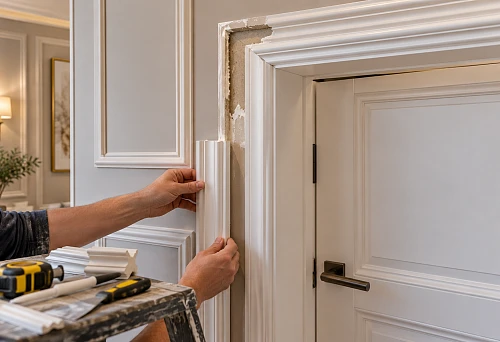
The main method for wall pilasters is construction adhesive + dowels/screws through the pilaster body. Fasteners are installed at intervals of 400–500 mm in height. Holes for screws are filled with putty and painted over.
For lightweight furniture pilasters, construction adhesive is sufficient. For large elements weighing more than 3–5 kg, mechanical fastening is mandatory.
Marking and symmetry
First of all, find the vertical axis. The pilaster must be perfectly vertical: check with a level. For paired pilasters, mark both positions simultaneously using a tape measure and laser level. Symmetry in paired installation is not just aesthetics, it is a technical requirement.
Joints and finishing
After installation, the joints between the pilaster and the wall are sealed with acrylic sealant or putty. This prevents the formation of gaps during wood shrinkage. The sealant is applied in a thin layer, smoothed with a finger or spatula, and painted over after drying.
Mistakes in choosing and installing wooden pilasters
Let's look at mistakes that cost a lot — both literally and figuratively.
Buying a pilaster without considering the room height. A pilaster 2700 mm high in a room with a 2700 mm ceiling is a visual dead end: there is no space for the capital and a gap under the ceiling. Always leave 100–200 mm from the top end of the pilaster to the ceiling cornice.
Do not connect a pilaster to a capital and base. A pilaster without top and bottom finishing is an incomplete element. The system is always: base + shaft + Capital.
Do not place an overly massive detail on a narrow wall. A pilaster 200 mm wide on a 600 mm wall is overload. On a narrow wall, a delicate pilaster of 60–80 mm is needed.
Do not mix different carving styles. A Doric pilaster next to a Baroque cornice is a stylistic conflict. All interior elements should be from the same order or the same style direction.
Do not choose a pilaster separately from the furniture. A pilaster on a cabinet must account for the cabinet's height, body width, and facade character. A pilaster chosen "just because it's beautiful" without fitting it to the furniture may not work.
Do not ignore the portal width. Too wide pilasters visually and functionally narrow the doorway. Always check proportions: pilaster width vs opening width.
Do not overlook the color finish. A pilaster in a tone different from other wooden elements creates visual dissonance. Uniform tinting of all wooden parts is the first rule.
Do not forget about symmetry. Two pilasters installed "approximately symmetrically" is worse than one. Either perfect symmetry with marking, or a single pilaster as an accent.
Where to buy a wooden pilaster
Buy a wooden pilaster it is important from a manufacturer that provides precise product parameters: height, width, depth, wood species, finish, as well as compatible Wooden capitals and system elements.
In the Stavros catalog — Wooden pilasters and columns with a complete system of coordinated elements: Capitals, Carved Decor, Wooden moldings и Wooden trim. All elements are from a unified system of material and style. Full catalog wooden products for interiors — to form a complete classical ensemble.
FAQ: Answers to popular questions
What is a pilaster?
A decorative vertical element with a flat or semi-volumetric cross-section, which is attached to a wall, furniture, or portal. It imitates a column, creating architectural rhythm and vertical structure in the interior.
How does a pilaster differ from a column?
A column is round in cross-section and stands alone. A pilaster is flat or semi-volumetric and is attached to a surface. A column occupies space; a pilaster decorates a plane.
How is a pilaster different from a capital?
A pilaster is a vertical shaft. A capital is the top finish of a pilaster. They work in a system: shaft + capital = complete element.
Where are wooden pilasters used?
Door and arch portals, fireplace areas, walls, bookcase cabinets, sideboards, display cabinets, kitchens, halls, studies, country houses.
Is a pilaster suitable for furniture?
Yes. Pilasters on cabinets, sideboards, libraries, display cabinets, and kitchens turn furniture into architectural pieces, giving it a classic character.
Can pilasters be used to design a door portal?
Yes, this is a classic application. Two pilasters on the sides of the opening + a horizontal lintel + capitals = a full door portal.
How to choose the size of a pilaster?
Height = from ceiling minus 150–200 mm. Width = height / 10–12. For a portal, width = 10–15% of the opening width. For furniture, height = height of the body.
Can a wooden pilaster be painted?
Yes. An unpainted pilaster can be painted any color. Preferably, it should be in a unified tint with the other wooden interior elements.
Which pilasters are suitable for a classic interior?
Fluted or smooth with Doric, Ionic or Corinthian capitals. Toning — natural wood, white enamel or dark walnut.
Where to buy a wooden pilaster?
In the STAVROS catalog: Wooden pilasters and columns with compatible capitals and a wooden decor system with Contact us to confirm shipping to your destination.
About the manufacturer
STAVROS — a Russian manufacturer of wooden interior, furniture and finishing products. The company's catalog includes Wooden pilasters and columns, Wooden capitals, Carved Decor, Moldings и Wooden trim — everything for creating a complete classical interior. If you are looking for a wooden pilaster for a portal, wall or furniture — in the catalog STAVROS you will find the right size, style and finish with the quality guarantee of natural wood.