
























Article Contents:
- What is a wooden stair post: an irreplaceable role
- Structural role of the post
- Decorative role of the post
- Where stair posts are installed
- How a post fundamentally differs from a baluster
- Cross-section and size
- Load and strength
- Decor and Style
- Where carved wooden posts are used: application scenarios
- Grand staircase in a country house
- Double-height balustrade
- Porch and terrace of a country house
- Swivel post on intermediate landing
- Hall and classic interior
- How to choose the size of a stair post: proportions decide everything
- Post cross-section
- Post height
- How hall scale influences post selection
- Carved or smooth post: how to decide on style
- Carved post: when it is appropriate
- Smooth or strict post: modern solutions
- Turned post: the middle ground between two extremes
- How to combine a post with balusters: system unity
- Stylistic Unity
- Proportional Relationship
- Wood species and tone
- How to combine a post with a handrail: structure and aesthetics
- Handrail profile and post scale
- Handrail and post connection joint
- Is a finial on a post necessary: the final accent
- When a finial is mandatory
- Style of finial and post
- Attaching a Finial
- Stair post material: which wood species to choose
- Beech — reliable all-rounder
- Oak — status and durability
- Pine — for painting and country houses
- Larch — for outdoor use
- Wooden post coating: what protects and decorates
- Varnish — for indoor use
- Oil — for natural appearance
- Enamel — for classics and painting
- Tinting and stain
- Coating for outdoor use
- Stair post installation: key principles
- Post attachment to the base
- Attaching the handrail to the post
- Installation procedure for stair railing
- Mistakes in choosing and installing a stair post
- Post, balusters, handrail, finial: how to assemble a staircase into a system
- Logic of system selection
- Everything from one source
- Wooden carved decor as an extension of the system
- Where to buy a carved wooden stair post
- FAQ: Answers to Popular Questions
- About the manufacturer
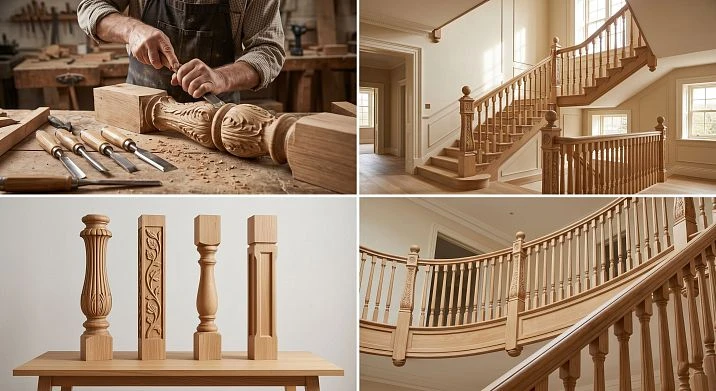
A staircase begins with a post. Not with the first step, not with the handrail — precisely with the post. It is the first railing element that catches the eye when entering the hall. It sets the scale, style, and decorative 'tone' of the entire structure. A well-chosen post makes the staircase an architectural event. An incorrectly chosen one turns it into a set of disparate parts.
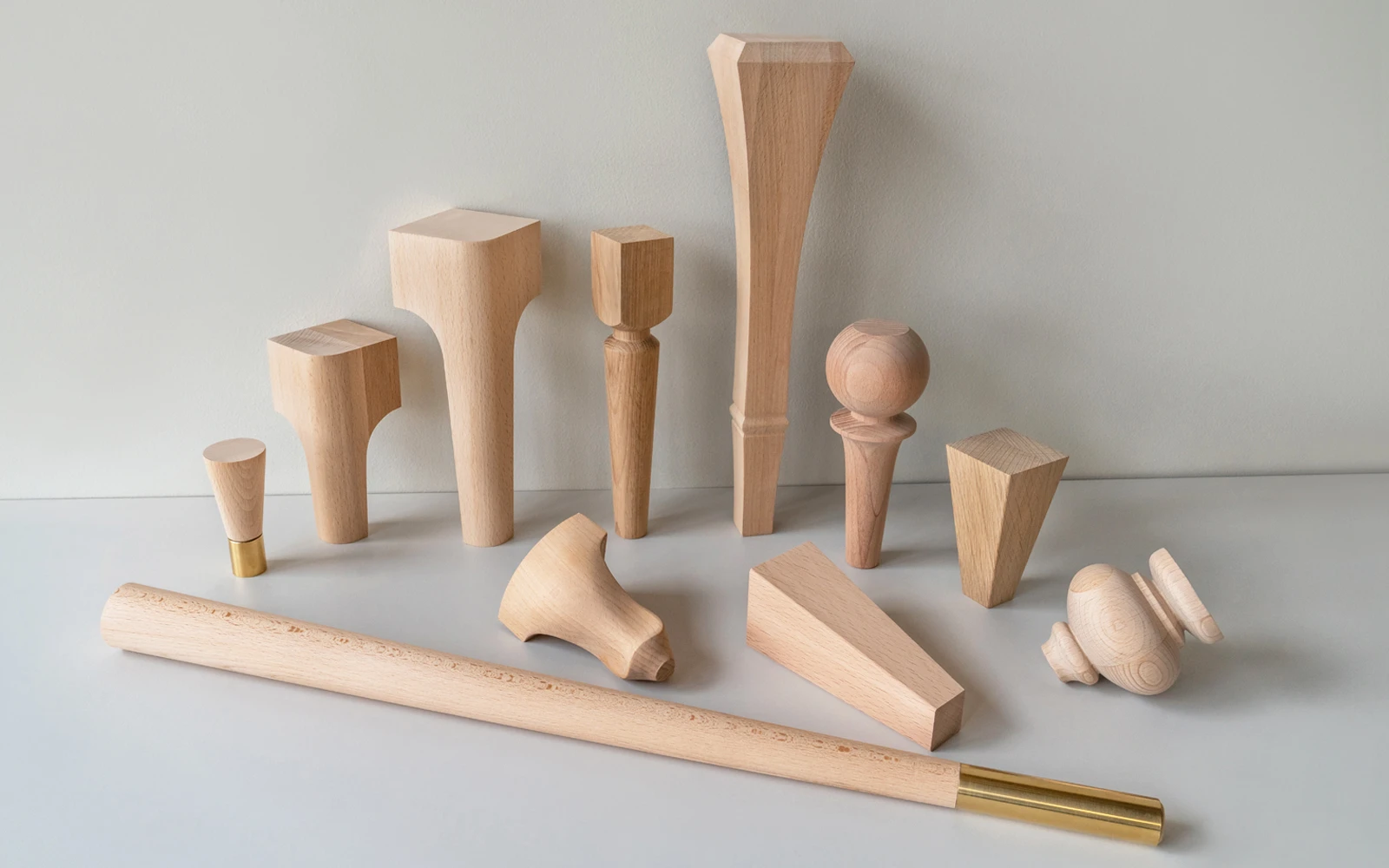
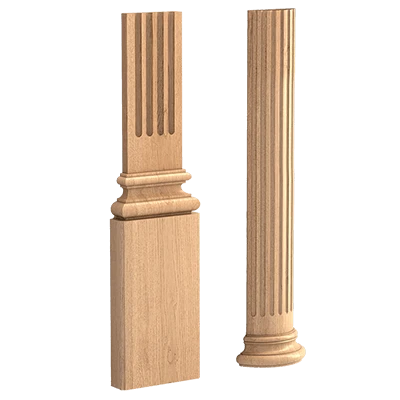
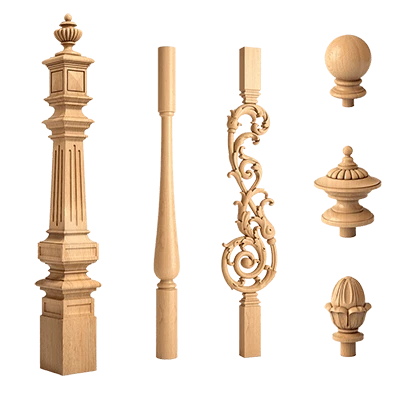
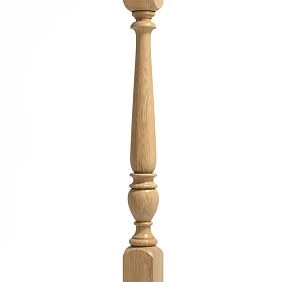
carved wooden balusters for staircases — is not an auxiliary part or a background for balusters. It is a key structural and decorative element that bears the load of the handrail, secures the baluster system, marks the beginning and end of a flight, decorates the turn, and creates a vertical accent in the space of the hall or living room.
This article is a serious discussion about stair newel posts: what they are, how they differ from balusters, how to choose the right size and shape, how to coordinate them with handrails, balusters, and finials, which material and finish to prefer. And — importantly — how to avoid mistakes that will be visible every day.
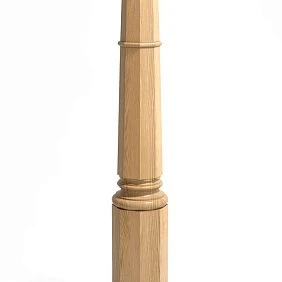
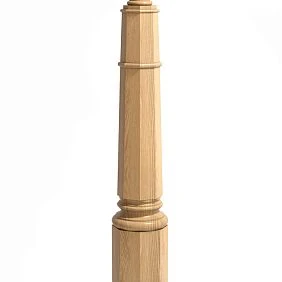
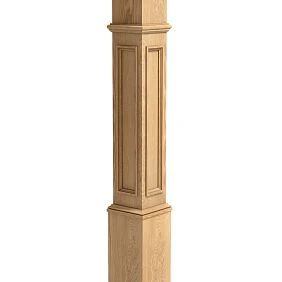
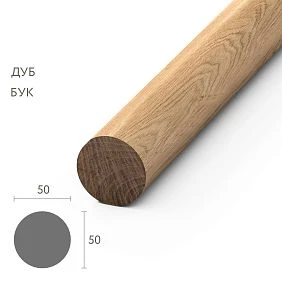
What is a wooden stair newel post: an irreplaceable role
Before discussing selection, you need to understand what exactly we are working with. Because the concept of a "newel post" is often confused with a "baluster" — and that is a fundamental mistake.
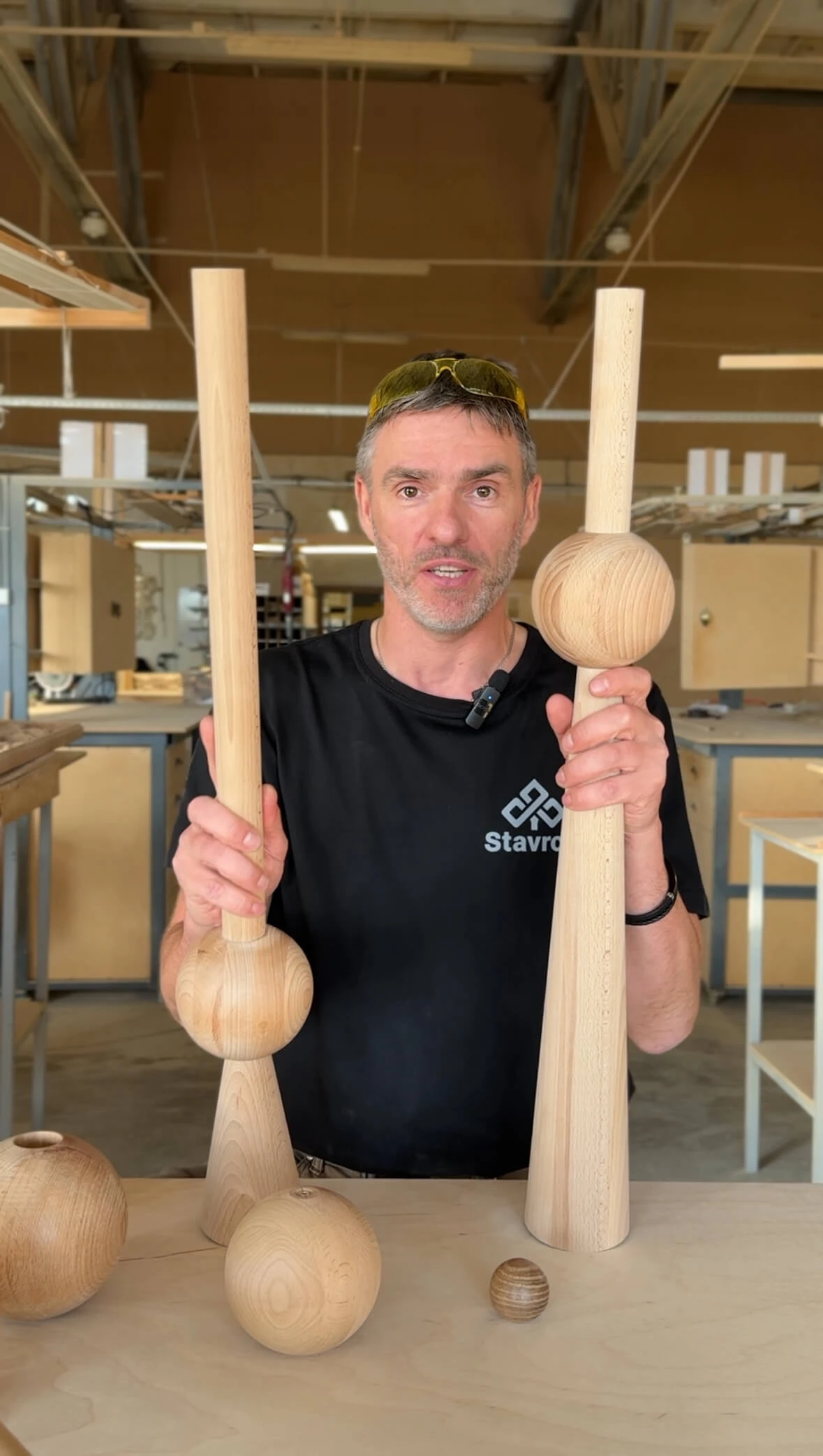
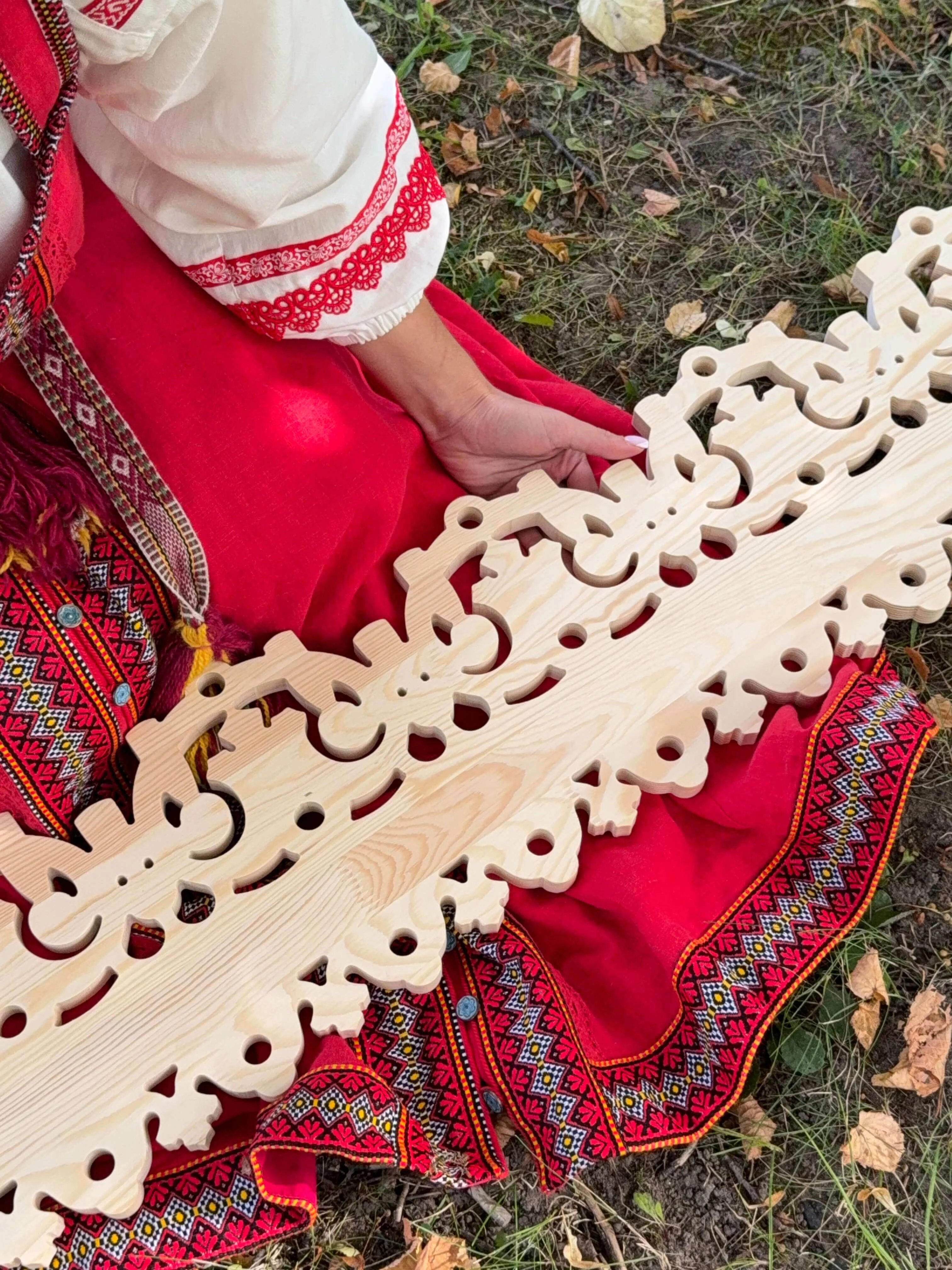
The structural role of the newel post
A stair newel post is a vertical support post that:
-
takes the load from the handrail at attachment points;
-
holds the baluster system as the starting and ending element;
-
defines the turning points of the handrail (on landings, when changing the direction of the flight);
-
ensures the rigidity of the entire railing system.
If balusters create rhythm and a visual "grid" for the railing, then the newel post is the anchor point. It bears 3–5 times more load than a standard baluster, and that is why it is made from a larger cross-section of solid wood.
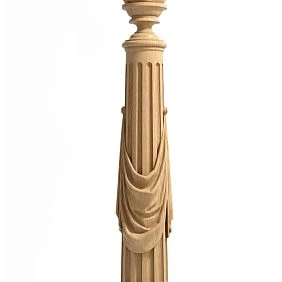
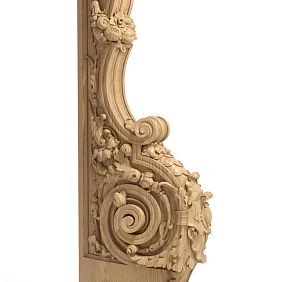
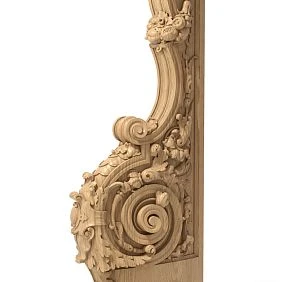
Our factory also produces:
Decorative role of the post
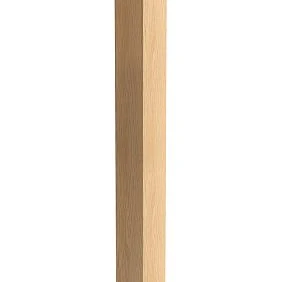
Wooden stair post It is visible first and foremost: it stands in an open space, it is larger than all other fencing elements, and the gaze is drawn to it when entering the room. Therefore, its shape, proportions, and decor are the face of the staircase.
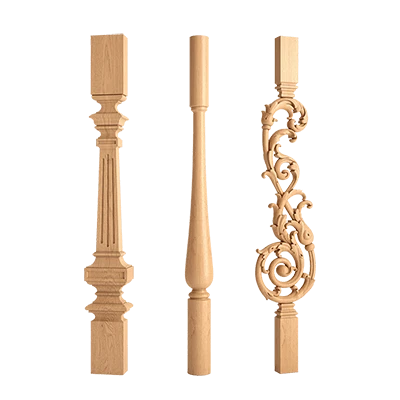
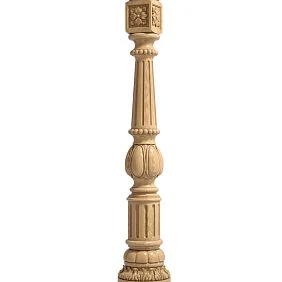
A carved post with a profiled body and finial is a statement of classic taste. A smooth square post with strict proportions is a declaration of modern minimalism. A post with a moderately complex turned profile is a compromise that works in most wooden interiors.
Get Consultation
Where staircase posts are installed
Posts are not placed everywhere—only at key points:
-
Start of the flight—the bottom post at the first step. This is the "welcoming" post, the most noticeable.
-
End of the flight—the top post on the second-floor landing.
-
Stair turns—on intermediate landings, where the direction changes.
-
Balustrade of the second light—every 2–3 meters in the horizontal railing.
-
Porch and terrace—starting and ending supports of the outdoor railing.
How is a pillar fundamentally different from a baluster
This question arises for everyone who is assembling a staircase for the first time. The difference is in size, function, and decor.
Cross-section and size
Balusters for staircase — vertical posts with a cross-section of 40×40 or 50×50 mm (for turned ones) or a thickness of 20–35 mm (for flat ones). Height — 800–1000 mm.
A staircase pillar is a completely different scale: cross-section 80×80, 100×100, or 100×120 mm. Height — from 900 to 1200 mm or more, depending on the railing. This is 2–3 times larger than a baluster — and this is not an aesthetic choice, but a structural necessity.
Load and strength
A baluster only bears distributed load between attachment points. A pillar bears concentrated load from the handrail, lateral loads under support, and a bending moment at the base. This requires a massive solid cross-section element made of solid wood or glued strong timber.
Decor and style
Balusters go in a row and create a repeating rhythm — their decor should be restrained so as not to 'overload' perception. A pillar is a single accent element: its decor can be richer, more detailed, more expressive.
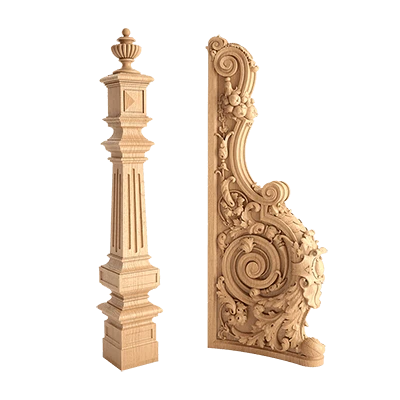
carved post for the staircase with a profiled body, decorative waists, and carved decor — it is the 'soloist' of the railing system. The balusters next to it are the 'chorus'.
Where carved wooden pillars are used: application scenarios
The stair post is used more broadly than just the "start and end of a flight." Let's break down all scenarios.
Grand staircase in a country house
The main staircase of a country house or estate is the most critical application. The lower post of the flight stands in the hall in a prominent place. The gaze from the entrance area is drawn to it. Here, a carved post made of oak or beech under varnish with a finial is an architectural accent that sets the tone for the entire interior.
Second-light balustrade
A double-height space — an open area above the first floor — is enclosed by a balustrade. Along a long balustrade, posts are installed every 1.5–2 m: they divide it into spans and bear the load of the horizontal handrail. For a double-height balustrade, the posts must be stable and visually rhythmic.
Porch and terrace of a country house
The porch railing is the first thing visible from outside the house. Carved posts at the entrance to the porch are a traditional element of Russian wooden architecture. They are consistent with carved wooden decor the trim, cornices, and bargeboards.
For outdoor use — the right choice of material and mandatory protective treatment. More on this below.
Turn post on an intermediate landing
On a turning staircase with an intermediate landing, a post is installed at the turning point. This is a special element: handrails come to it from two sides at different angles. The post here is the "nodal" point of the entire structure, and its fastening must be especially reliable.
Hall and classic interior
In the hall of a city apartment or classic townhouse, a wooden staircase with carved posts is a status element. Here, a carved post with a rich profile and wooden finial — a sign of traditional taste.
How to choose the size of a stair post: proportions decide everything
The size of the post is not just 'take a bigger one'. It's a matter of proportions of the entire staircase system.
Post cross-section
The cross-section of the post depends on:
-
Cross-section of balusters: the post should be 1.5–2.5 times larger in cross-section than a standard baluster. Balusters 40×40 mm → post 80×80 or 100×100 mm. Balusters 50×50 mm → post 100×100 or 100×120 mm.
-
Scale of the staircase: a wide grand staircase with a flight width of 1200+ mm requires a post of 120×120 mm or larger. A narrow domestic one (700–900 mm) — 80×80 or 90×90 mm.
-
Thickness of the handrail: a massive handrail 70×50 mm on a thin post 60×60 mm is a disproportion. The handrail should 'rest' on the post, not 'hover' over it.
Post height
The post height is determined by the railing height plus the seating portion for attachment to the staircase structure.
Standard: railing height 900–1000 mm (regulatory minimum) + 150–200 mm seating portion at the bottom = total post height 1050–1200 mm.
For a second-floor balustrade with a regulatory height of 1100 mm — total post height 1250–1300 mm.
For a porch — railing height at least 900–1100 mm, post 1050–1300 mm.
How hall scale affects post selection
A high hall ceiling — large open space — allows and even requires a large post. A 80×80 mm post in a hall with a 5 m ceiling will look "thin" and insubstantial.
A low ceiling (2.4–2.7 m) — on the contrary, restricts: a massive 150×150 mm post in a small space will create a feeling of crampedness.
Proportionality rule: post height (from floor to finial) — 35–45% of ceiling height. This ensures visual balance.
Carved or smooth post: how to decide on style
This is a question that concerns every buyer. The answer depends on the interior and how you want the staircase to look.
Carved post: when it is appropriate
Carved wooden post for a staircase with profiled decor — a choice for:
Classic interiors. If the house has stucco, cornices, classic moldings on the walls — a wooden staircase should match this level of decorativeness. A carved post with turned constrictions and decorative belts is an organic part of a classic ensemble.
Country houses in Russian style. Carving on porch and staircase posts is a traditional technique of wooden architecture. It echoes carved window frames, cornice boards, gazebo decor — and creates a unified decorative image of the house.
Grand foyers. Where the staircase is an event, not just a transition between floors. Here, a carved post justifies the 'status' of the space.
Country, Provence, neoclassicism. Styles where decorative detailing is part of the concept. Carved posts with balusters in the same style + a profiled handrail = a complete look.
Smooth or strict post: modern solutions
A square post with a clear cross-section, without carving, with chamfers or without any decor — for:
Scandinavian minimalism. Clean forms, natural wood, no ornaments. A smooth post of light oak or beech under oil — an ideal detail.
Modern neoclassical interior. There is enough decor in other elements: on the walls, in the furniture. The stair post can be restrained.
Loft and industrial style. A rectangular post with a brutal texture of dark wood under oil — paired with metal balusters or railings.
Turned post: the middle ground between two extremes
A turned (lathe-turned) post — with a voluminous figured profile: waists, bulges, decorative bands — without complex carving. This is "neutral classic": decorative enough for a traditional interior, restrained enough not to "shout."
A turned post is the most versatile choice for a wooden staircase in a country house without a strict style reference.
How to combine a post with balusters: system unity
The post and balusters work as a pair. Their mismatch is the most common mistake when assembling a staircase.
Stylistic unity
The decorative style of the post and balusters must match. A turned post with a classic profile + turned balusters with a similar profile rhythm — a unified ensemble. A carved post with baroque ornament + smooth straight balusters — a stylistic break.
For a carved post — carved or turned balusters. For a smooth post — straight or tapered ones.
staircase components made of wood — posts, balusters, handrails, finials — should be selected as a system, not as a random set.
Proportional relationship
The post should be noticeably larger than the balusters — this is a rule of proportion, not taste. If the post "dissolves" in size among the row of balusters, the system loses visual hierarchy. The eye should unmistakably read: here is a post, here are balusters, here is a handrail.
Ratio: post cross-section = 1.8–2.5 × baluster cross-section. This creates the correct hierarchy.
Wood species and tone
The post, balusters, and handrail should be from the same wood species. This is a fundamental requirement. A dark oak post + light beech balusters is a break in material unity that is immediately obvious.
Only deliberate mixing is permissible: for example, a dark walnut post as an accent against a background of beech balusters under white enamel. But this is a design decision, not a coincidence.
How to combine a post with a handrail: structure and aesthetics
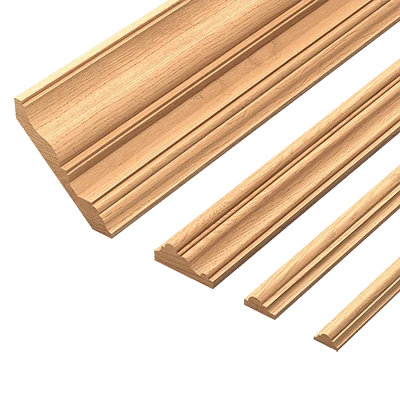
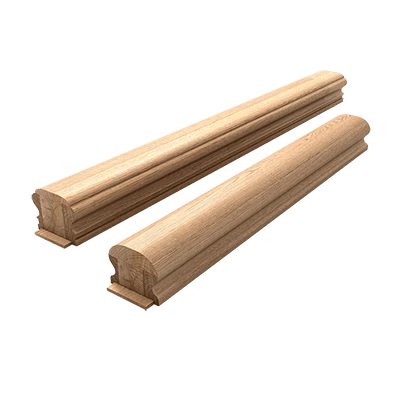
the handrails for the staircase The handrail and the post are a structural pair: the handrail rests on the post on both sides at the start and end points of the flight.
Handrail profile and post scale
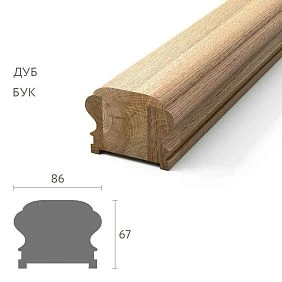
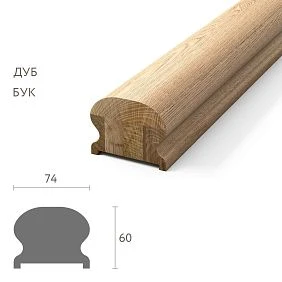
A massive handrail (70×50 mm, profiled) requires a proportionate post: a post 100×100 mm or larger. A thin handrail (50×40 mm) allows a post 80×80 mm.
A handrail that is visually "larger" than the post creates the feeling that the handrail is hanging in the air rather than resting on it. A handrail proportionate to the post is the correct proportion.
Handrail and post connection joint
At the point where the handrail meets the post, a wooden connection is made — either a notch or fastening via a metal connector. This area should be:
-
Clean: without gaps, burrs, or unevenness.
-
Consistent in profile: the handrail fits into the post flush or with a decorative pad.
-
Concealed: the fastening metal must be hidden inside.
If the handrail profile and post shape are not coordinated, the connection becomes "crooked" and cannot be hidden. This is another argument in favor of purchasing all wooden staircase components from the same system.
Is a post finial needed: the final accent
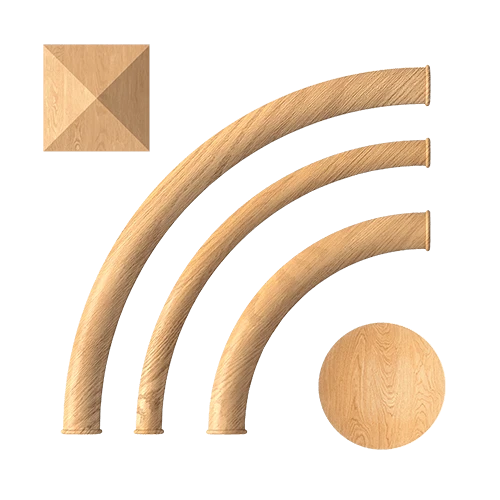
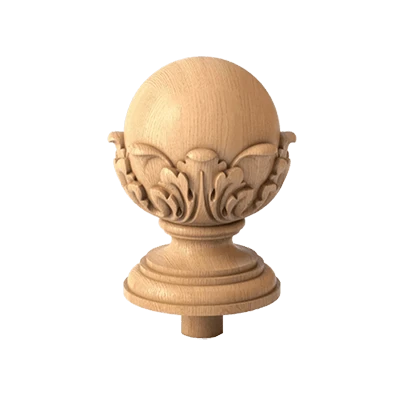
Wooden finial — is a decorative element installed on the top end of the post. A sphere, pyramid, cone, or figured ornament — depending on the style.
When a finial is mandatory
For a grand staircase, hall, or country house — the finial completes the post and creates a "point" in the vertical composition. Without a finial, the post looks "cut off" — like an unfinished sentence.
The finial is especially important for the lower post at the start of a flight: it is the most visible element of the staircase, standing in the open space of the hall. A spherical or shaped finial creates a strong visual accent.
Style of the finial and post
The finial should match the style of the post:
-
Carved post with a classic profile → shaped or complex turned finial.
-
Turned post → spherical or simple conical finial.
-
Smooth square post → minimalist pyramidal or spherical finial of small diameter.
A finial that is "richer" than the post looks absurd. A finial "more modest" than the post is acceptable but less expressive.
Finial Attachment
The finial is attached to the top end of the post via a metal tenon or screws. Important: the finial and post must be made of the same wood species — otherwise, the difference in wood tone is immediately noticeable.
Stair post material: which wood species to choose
Beech — a reliable all-rounder
Beech is a dense (700–730 kg/cu m), hard wood with a smooth, fine-textured surface. A beech post is characterized by stable dimensions during use and excellent acceptance of any coating: varnish, stain, enamel, tinting.
Turning beech yields a sharp profile: all decorative grooves and bands come out crisp, without blurred edges. This is important for a carved post — complex ornamentation on beech looks expressive and detailed.
For interior stairs, halls, and balustrades — beech is optimal in terms of price/quality/appearance ratio.
Oak — prestige and durability
An oak stair post makes a statement. High hardness (900 on the Brinell scale), expressive coarse texture, natural warm tone. Under oil or clear varnish, oak looks expensive and "alive."
For grand staircases, large halls, prestigious country houses — oak is preferred. Yes, it is more expensive than beech — but when the post serves for decades and is the centerpiece of the interior, there is no point in skimping on it.
Pine — for painting and cottages
Pine is a soft, easy-to-work, affordable wood. For a stair post in a country wooden house under paint (enamel, antiseptic + varnish) — a reasonable choice. The softness of pine is not critical in this case: the post does not bear impact loads but works in bending and compression.
For outdoor use (porch, terrace) — pine needs proper treatment: antiseptic + several layers of weather-resistant coating.
Larch — for outdoor use
For outdoor posts — porches, terraces — larch surpasses pine in moisture resistance. The resinous structure of larch makes it naturally resistant to rot. A larch post on a porch, with proper care, lasts 15–20 years.
Coating for a wooden post: what protects and decorates
Varnish — for indoor spaces
Transparent or tinted parquet or furniture varnish is a classic choice for an interior post. It forms a protective film, is easy to clean, and durable when applied correctly. Glossy varnish emphasizes the wood grain, while matte varnish "softens" the appearance.
For a carved oak post under clear varnish — this is the standard and most expressive solution.
Oil — for natural appearance
Oil (or oil-wax) penetrates the wood structure without forming a surface film. It creates a matte, natural look: the wood "breathes," the grain is well-defined, and the surface feels warm to the touch.
Requires periodic renewal. For an oak post indoors — oil gives the most "premium" natural appearance.
Enamel — for classic style and painting
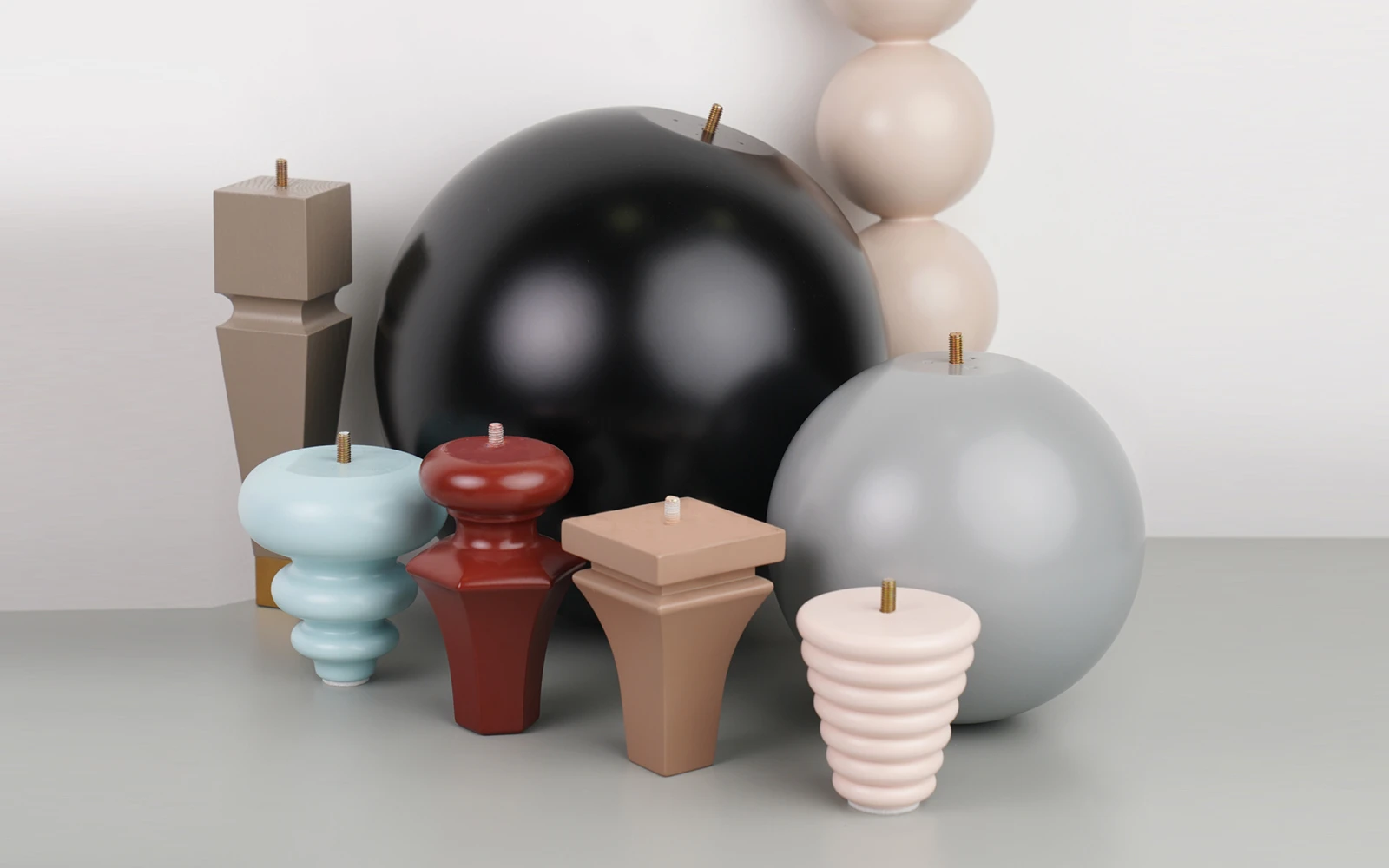
White or colored enamel on the post — for interiors where wood is painted to match the color of furniture or walls. Classic, Provence, modern neoclassical. Enamel hides the texture but preserves the shape and carving — the same carving under white enamel looks like stucco.
For painting — a post without coating, prepared for finishing. The surface is primed, sanded between enamel coats (2–3 coats).
Toning and stain
Stain allows changing the wood tone: giving beech the color of oak, walnut, cherry, wenge. After staining — varnish (mandatory, otherwise the stain will wear off). This is a budget-friendly way to get an "expensive" look for the post without using costly wood species.
Coating for exterior use
For porch and terrace posts — a weather-resistant system is mandatory:
-
Antiseptic impregnation (all surfaces and ends).
-
Topcoat: exterior-grade oil (best type, requires annual renewal) or alkyd varnish for exterior use (more durable).
-
Special attention — to the bottom end of the post and the attachment area to the base: moisture accumulates there.
Staircase post installation: key principles
Attaching the post to the base
The post is attached to the step, stringer, or floor using metal fasteners:
-
A special bolt-stud is screwed into the lower end of the post through a threaded bushing; the bolt is fastened to the step from below or through a mounting plate from above.
-
A flange base plate is a metal plate with a threaded stud, fastened to the step or floor with screws; the stud is screwed into the lower end of the post.
-
Anchor fastening — for concrete bases.
The most vulnerable part of the installation is the base of the post. This is where the maximum bending moment occurs under lateral load. The fastening must be reliable: an unstable post compromises the safety of the entire railing.
Attaching the handrail to the post
The handrail is attached to the post via:
-
A metal connector with a wooden plug (concealed fastening).
-
A bolted connection through the side surface of the post (with subsequent plugging).
-
Inserting the handrail into a groove in the post body (joinery connection — the most aesthetic).
Important: the handrail must come to the post strictly horizontally (for a balustrade) or at the angle of the flight (for an inclined section). Misalignment of the joint is a gross error that is always visible.
Installation order of stair railing
Correct installation order:
-
Install the posts first.
-
Then the balusters between the posts.
-
Then the handrail on top of the balusters and posts.
-
Finally, the finials on the posts.
If you start with the handrail, you won't be able to align the posts correctly.
Mistakes when choosing and installing a stair post
Let's analyze each mistake specifically.
Choosing a post without considering the railing height. A post that is too short will result in a handrail below the standard. Too tall, and the handrail won't reach the top. First, calculate the railing height, then choose the post.
Not matching the post style with the balusters. A carved post and straight smooth balusters create a stylistic mismatch. Choose balusters and posts from the same system.
Choosing a post that is too thin for a massive staircase. A 70×70 mm post on a wide 1200 mm staircase looks visually unstable. Installing a support that gets lost under a massive handrail is both a construction and aesthetic mistake.
Forgetting about the finial. A post without a finial is an unfinished structure. This is especially noticeable for the bottom post at the start of the flight.
Mixing different wood shades. Different batches of the same species can vary in tone. Purchase posts, balusters, and handrails simultaneously from a single source to ensure tone consistency.
Not accounting for the staircase turn. At the turn, the post bears load from two sides simultaneously. Standard fastening may not be sufficient; reinforced fasteners are needed.
Buying a post without understanding the fastening. Different posts require different types of fastening bolts (M8, M10, M12) and different seating depths. Incompatibility means rework is necessary.
Not applying coating before installation. After installation, the bottom end and fastening area are inaccessible for treatment. Apply antiseptic and the first coat of finish before installation to all surfaces.
Post, balusters, handrail, finial: how to assemble a staircase into a system
A beautiful wooden staircase is not a random set of elements. It is a well-thought-out system where every detail is chosen in accordance with the others.
System selection logic
Start by defining the style: what interior, what house, what proportions. Then choose the post: shape, size, material. For the post — balusters: the same wood species, consistent style. For the balusters — handrail: proportionate in mass, same wood species. For the post — finial: same wood, consistent shape.
This logic — from the "anchor" to details — yields the best result. When balusters are chosen first and then a post is sought for them, mismatches often occur.
All from one source
staircase components made of wood — posts, Balusters for staircase, handrails, Newel posts — ideally are purchased from a single catalog of one manufacturer. This guarantees: same wood species, same tone, consistent sizes, compatible profiles.
Buying "piecemeal" from different suppliers risks mismatches that only become apparent during installation.
Wood carved decor as an extension of the system
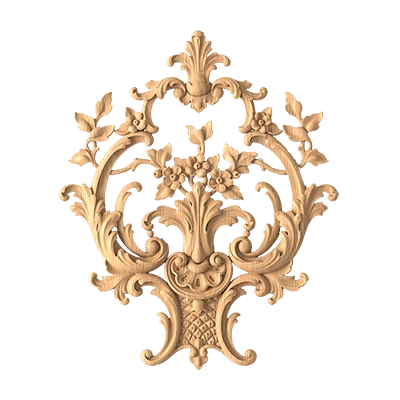
If the staircase in a country house has wooden facade elements — Carved wooden decoration on walls, trim, and cornices should echo the decor of the staircase posts. This makes the entire house a unified decorative statement, not a collection of random ornaments.
Wooden products for interior — from stair components to carved facade decor — they work together if selected in a unified concept.
Where to buy a carved wooden stair post
Carved wooden posts for stairs in the STAVROS catalog — this is a real product with specific characteristics, not an abstract "wooden post." Next to it in the catalog — all wooden stair posts, balusters, handrails и Wooden Caps — a complete system of stair components with Contact us to confirm shipping to your destination.
FAQ: Answers to popular questions
How to choose a wooden stair post?
Determine the railing height, select the cross-section (1.8–2.5 times larger than the baluster), choose the decor style (carved, turned, smooth), coordinate with the handrail and balusters. Buy everything from one catalog.
How is a post different from a baluster?
A post is a larger and stronger support element: it bears the load of the handrail, secures the baluster system, and stands at key points. A baluster is a regular rhythmic element of the railing.
Where are support posts placed on a staircase?
At the beginning and end of each flight, at turns, along the balustrade (every 1.5–2 m), at the start of the porch and terrace.
How to choose a post for a handrail?
From the same wood species, with the same finish. The scale of the post should be proportional to the handrail: a massive handrail requires a large post, a thin one — a smaller one.
How to choose a post for balusters?
Same wood species, consistent decorative style, post cross-section 1.8–2.5 times larger than the baluster cross-section.
Does a post need a decorative top element?
For a grand staircase, hall, country house — yes, a finial is mandatory. It completes the post and creates a visual 'focal point'.
Which is better: a carved or smooth post?
Carved — for classic style, country house, grand hall. Smooth or strict — for modern, Scandinavian, minimalist interiors.
Can a wooden post be painted?
Yes. An unfinished post is for on-site finishing. Primer + enamel (2–3 coats) or stain + varnish. For outdoor use — antiseptic + weather-resistant coating.
What material to choose for a stair post?
For interiors — beech or oak (oak is preferable for a status staircase). For porches and terraces — larch or oak with exterior treatment.
Where to buy a carved wooden stair post?
In the STAVROS catalog: carved wooden balusters from solid wood with a full range of stair components and Contact us to confirm shipping to your destination.
About the manufacturer
STAVROS — a Russian manufacturer of solid wood products for stairs, interiors, and facades. The range includes — Carved wooden posts for stairs, balusters, handrails, Newel posts, Carved Decor and all staircase components made of wood in a unified system. If you are building, renovating, or designing a wooden staircase — STAVROS offers a professional range with delivery across all of Russia.