

























Article Contents:
- When separate legs for a coffee table are needed
- Restoration of an old coffee table
- Custom tabletop manufacturing
- Updating the interior without replacing furniture
- Creating a matching pair set
- How coffee table legs differ from dining table legs
- Difference in height
- Difference in load
- Style difference
- How to choose the height of legs for a coffee table
- Sofa rule
- How to measure the required leg height
- Standard leg heights for a coffee table
- How to choose the shape of legs for a coffee table
- Straight square legs
- Tapered legs
- Turned legs
- Carved legs
- Legs with stretchers (connections between supports)
- Leg shape by interior style
- Legs for a round coffee table: stability and balance
- How many legs are needed for a round table
- Leg offset from the edge of the tabletop
- Visual balance of the round tabletop and legs
- Legs for rectangular and oval coffee table
- Leg placement on a rectangular tabletop
- Walkway clearance
- Heavy tabletop: load margin
- Leg material: beech, oak, solid wood and other species
- Beech — a versatile choice
- Oak — expressiveness and durability
- Pine — for painting and country houses
- Solid wood vs. glued panel
- Coffee table leg coating: what to choose
- Uncoated legs: freedom of choice
- Legs with coating: ready for installation
- Oil and wax — for a natural look
- Enamel — for classic and Provence styles
- Stain and tinting — for imitating wood species
- Coffee table stability: physics you can't ignore
- Support base area
- Leg attachment: reliability above all
- Anti-slip glides
- How to match coffee table legs with your living room interior
- Legs and sofa: tone and shape
- Legs and floor
- Legs and furniture decor
- Mistakes when choosing legs for a coffee table
- How to replace old legs on a coffee table
- Step 1. Remove the old legs
- Step 2. Clean the mounting points
- Step 3. Mark the installation points
- Step 4. Install the fasteners
- Step 5. Screw on the legs
- Individual legs or underframe: which is better for a coffee table
- Where to buy wooden legs for a coffee table
- FAQ: Answers to Popular Questions
- About the manufacturer
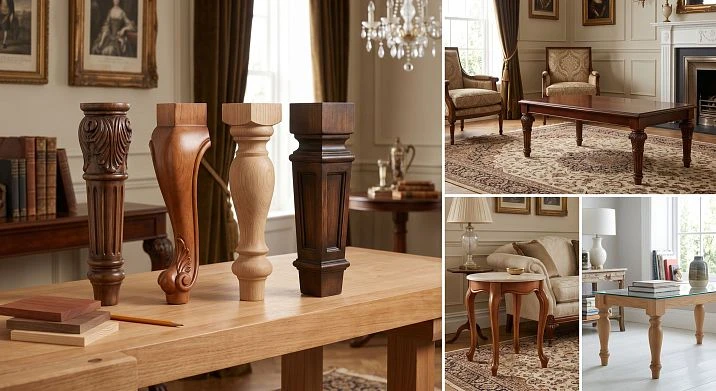
A coffee table is one of those pieces of furniture that goes unnoticed when it's right, but stands out when something is wrong. A table that is too high disrupts the proportions of the sofa. Too heavy supports overload a lightweight tabletop. A mismatch between the color of the legs and the floor makes the table look out of place in the living room. All of this comes down to the choice of legs. Not the tabletop, not the overall form factor, but specifically the supports.
Legs for coffee tables made of wood is a separate market that solves specific tasks: restoring an old table, custom-making a coffee table, updating a living room without completely replacing furniture, or assembling a table yourself from a ready-made tabletop. Each of these scenarios requires a precise choice: in terms of height, shape, material, and finish.
This article is a detailed practical breakdown. Here you will find everything you need for the correct selection of wooden legs for a coffee table: from calculating height to matching with a sofa, from profile shape to finish and installation.
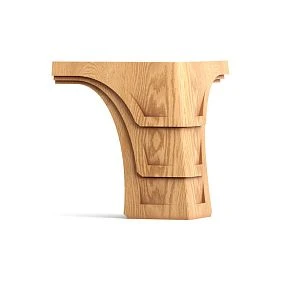
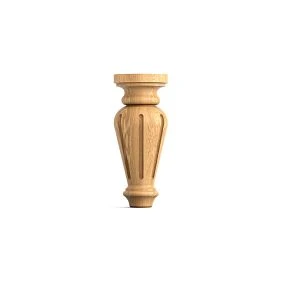
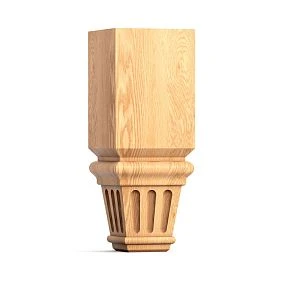
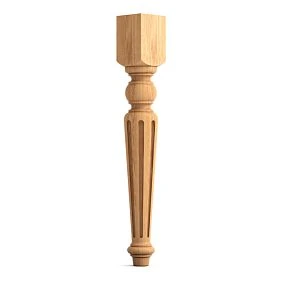
When individual legs for a coffee table are needed
First of all, why look for legs separately? After all, you can buy a ready-made coffee table. The answer is simple: sometimes it's better, more convenient, and more cost-effective.
Restoring an old coffee table
Soviet-era coffee tables and antique coffee tables often have beautiful tabletops made of natural veneer or solid wood, but worn-out supports. The legs have dried out, wobble, or one is broken. It's a shame to throw away the tabletop, and replacing the entire table is impractical.
Replacing the legs is the ideal solution. New wooden supports in the same style and a similar wood species bring the table back to life and often give it a new design meaning: an aged tabletop + neat new legs = a trendy loft or eco-interior.
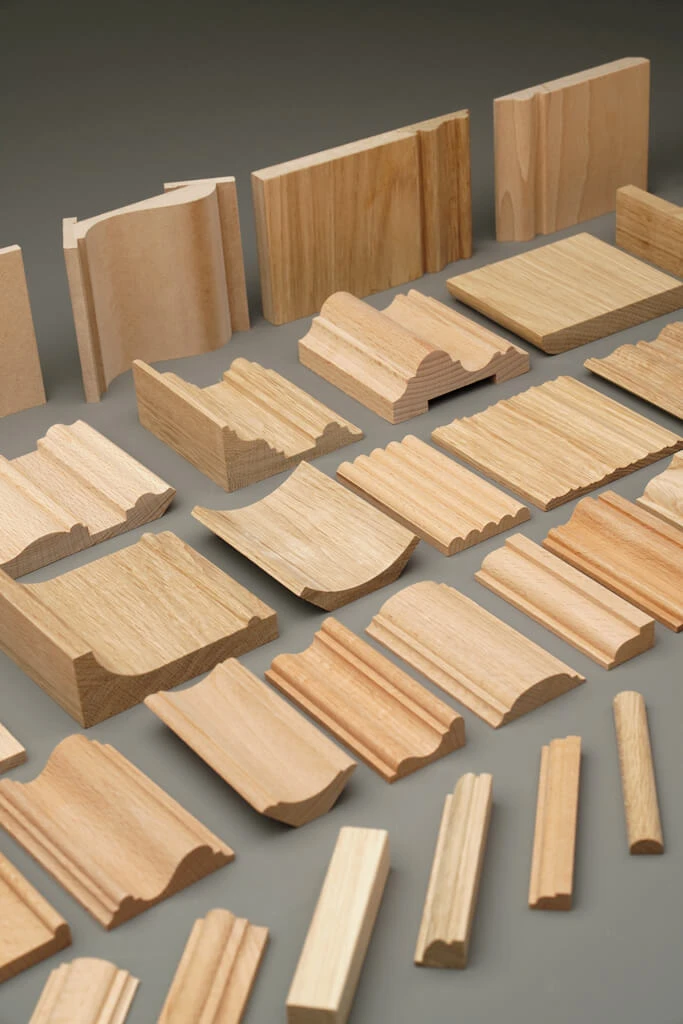
Our factory also produces:

Custom countertop manufacturing
More and more people are ordering custom countertops: from a wood slab, aged oak, or laminated MDF. But buying a standard ready-made table for such a countertop makes no sense — only supports are needed. Separate wooden furniture legs allow you to assemble exactly the table you have in mind.
Get Consultation
Updating the interior without replacing furniture
Replacing the legs on a coffee table is one of the most budget-friendly ways to update your living room. New supports in a different style or color change the entire look of the table. This works well when changing the interior concept: it was country style — now it's Scandinavian minimalism. Painting the legs white and replacing them is cheaper than replacing the sofa.
Creating a matching pair set
In the living room, two identical coffee tables are often needed — symmetrically placed by the sofa. If ready-made tables of the same size are not available, it's easier to make both from identical tabletops and one set of legs.
How coffee table legs differ from dining table legs
This is a fundamental question. Legs for different tables are fundamentally different products.
Difference in height
Dining table — height 720–780 mm. Leg height — 680–730 mm considering tabletop thickness.
Coffee table — height 400–500 mm. Optimal: 400–450 mm relative to a sofa with seat height 420–450 mm. Legs for coffee table — 350–430 mm. This is almost half as low as dining tables.
This height difference also changes the perception of the support. On a low table, the leg is clearly visible from all sides, its form is perceived as a whole. On a dining table, the leg is mainly seen from below or in the lower third. Therefore, for a coffee table, the leg shape has increased decorative significance.
Difference in load
A coffee table carries a small load: books, magazines, a cup, a vase. Maximum — 20–30 kg for the entire structure. A dining table with a large company — 80–150 kg.
Therefore, a coffee table does not need massive supports with a safety margin for a restaurant table. On the contrary — massive legs on a light coffee table look clumsy. A balance is needed: sufficient strength + visual lightness.
Difference in style
A dining table is part of the kitchen or dining room. A coffee table is the center of the living room, it stands between the sofa, armchairs, TV, and floor lamp. It is constantly in view. Its legs determine whether it creates coziness and style or disrupts harmony.
How to choose the leg height for a coffee table
Height is the first and most important parameter.
Sofa rule
The coffee table should be either at the same level as the sofa (seat height) or slightly lower — by 20–50 mm. This is a convenience rule: a person sitting on the sofa should be able to easily reach the table surface and place a cup without risk of spilling.
If the sofa has a seat height of 420 mm — the coffee table height is 400–420 mm. If the sofa is low, with a seat height of 380 mm (a trendy low sofa in Japanese style) — the table is 350–370 mm.
How to measure the required leg height
Leg height = desired table height minus tabletop thickness.
Example: need a table of 420 mm, tabletop 25 mm — leg 395 mm. Rounded to the nearest standard size: 400 mm.
Note: if the leg is installed into a metal threaded insert (mounting bolt from the underside of the tabletop), the bolt seating depth — usually 15–25 mm — is added to the leg height. The final working height is slightly lower than the nominal one. Check this parameter when purchasing.
Standard leg heights for a coffee table
-
150–200 mm — very low table in Japanese style (surface height 170–230 mm). Requires a pouf or cushion instead of a sofa.
-
250–300 mm — low coffee table (height 270–340 mm). For low sofas and poufs.
-
350–400 мм — стандарт для большинства гостиных. Высота стола 370–450 мм. Подходит к большинству диванов.
-
400–450 мм — для более высоких диванов и кресел в классическом стиле.
Как выбрать форму ножки для журнального стола
Форма опоры — это характер всего столика. Именно она определяет стиль: от строгого минимализма до классической роскоши.
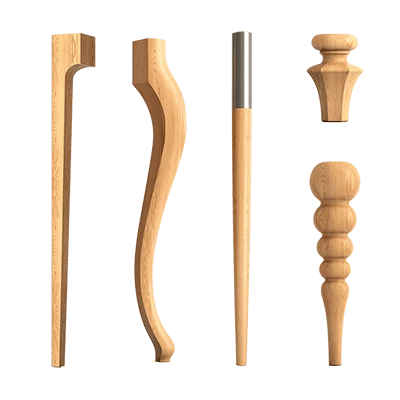
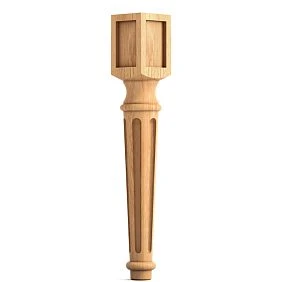
Straight square legs
Квадратное сечение 40×40 или 50×50 мм, прямые. Самый нейтральный тип. Минималистичные, строгие, хорошо работают в скандинавском, японском, современном интерьере. Не перетягивают внимание на себя.
Прямые ножки хороши, когда столешница — выразительная сама по себе: слэб с живым краем, мрамор, состаренный дуб. Здесь ножка — поддержка, а не солист.
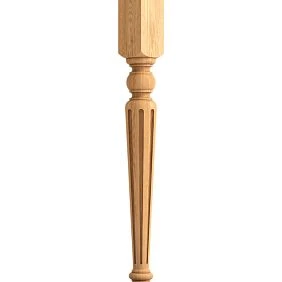
Conical legs
Ножка, которая сужается книзу: широкая у столешницы, тонкая у пола. Это «датский» или «скандинавский» конус — силуэт, характерный для мебели середины XX века и современного нео-мидсенчери.
Конусные ножки создают ощущение лёгкости, визуально «поднимают» стол. Стол на конусных ножках кажется изящнее и динамичнее, чем на прямых того же размера.
Прекрасно смотрятся на овальных и круглых столешницах. Угол конуса — 5–8°, это мягкое сужение, которое читается в профиль.
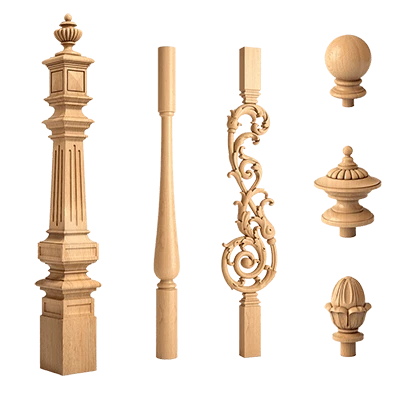
Turned legs
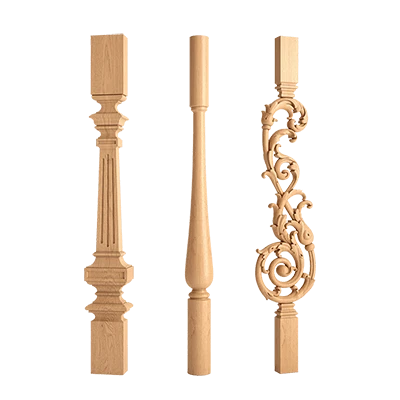
Токарная обработка даёт ножке объёмный силуэт: утяжки, выпуклости, обратные конусы, декоративные вставки. Это классическая, «барочная» или «викторианская» опора — для столиков в классическом, неоклассическом, прованском и кантри-интерьере.
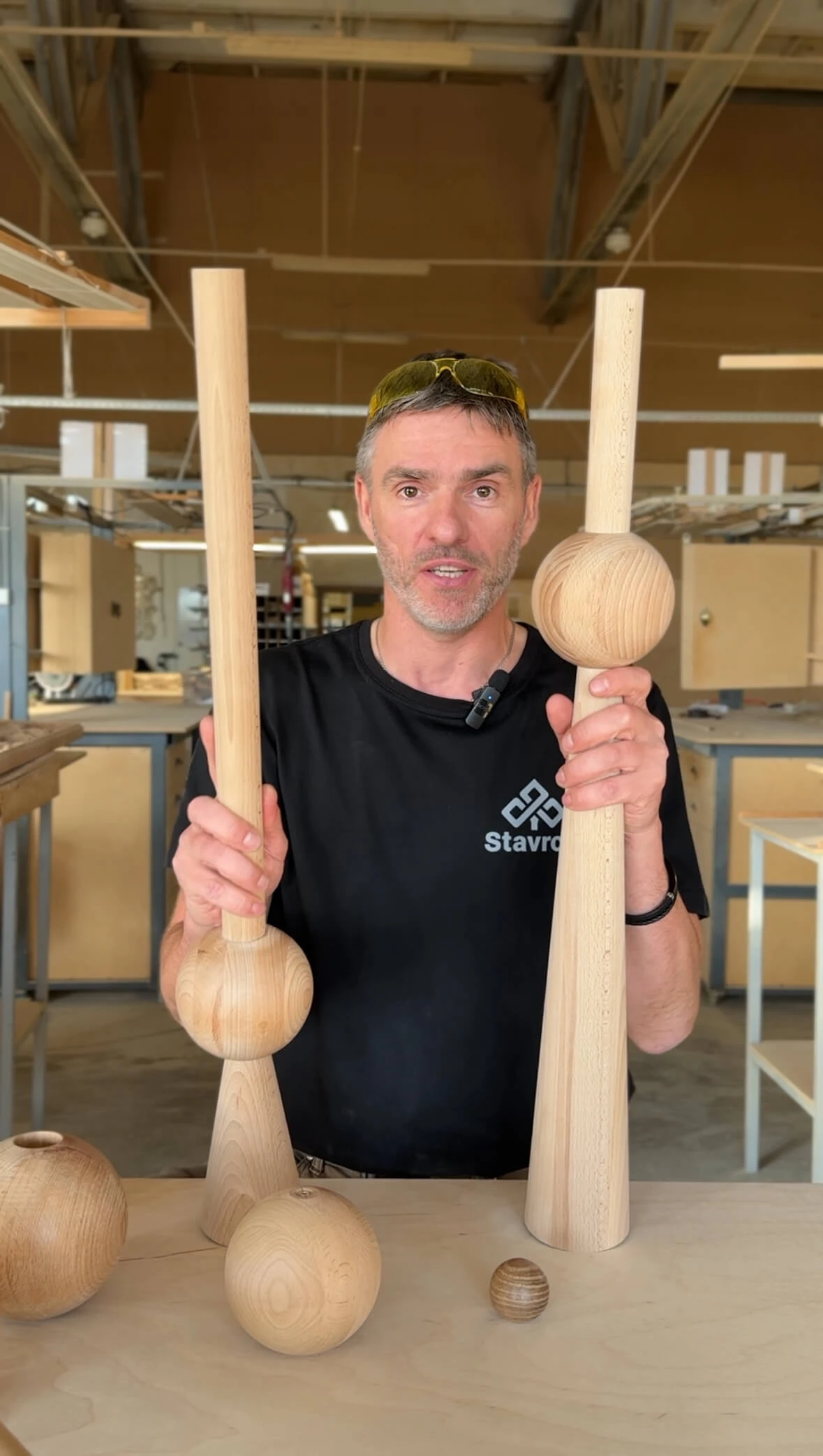
Legs for coffee tables In a turned execution, they are good in living rooms with stucco, with upholstered furniture in fabric, with wooden mirror frames and carved wooden decor on the walls. They create a "warm" classic look.
Carved Legs
Legs with hand or machine carving: leaves, volutes, fluting, reeding. This is the most decorative option. Such legs are for antique restorations, for tables in Empire or Historicist style, for luxurious classic living rooms.
A carved leg is a statement. It cannot be "lost" in the interior: it itself is part of the decor, like a picture frame.
Legs with stretchers (connections between supports)
Stretchers are horizontal crossbars connecting the legs at a height of 100–150 mm from the floor. They add rigidity to the structure and create an additional decorative element. They are often found on classic coffee tables with turned legs.
Visually, stretchers weigh down the bottom of the structure, adding "architecturality." For minimalist interiors, they are unnecessary. For classics, they are an important detail.
Leg shape by interior style
| Interior style | Recommended leg shape |
|---|---|
| Scandinavian, minimalism | Straight or tapered, light wood |
| Classic, neoclassic | Turned or carved, dark lacquer |
| Mid-century, retro | Tapered at an angle, medium tone |
| Country, Provence | Turned or shaped, white enamel |
| Loft, industrial | Straight square, dark stain |
| Eco, organic | Straight or natural shapes, oil |
| Japanese minimalism | Straight low, light oil |
Legs for a round coffee table: stability and balance
A round coffee table is one of the most popular formats. It is softer than a rectangular one, does not "cut" the space with sharp corners, and sits well in the center of a seating area.
How many legs does a round table need
For a round table with a diameter up to 600 mm — three legs (triangular arrangement). Three support points are always stable on any surface — like a stool that doesn't wobble.
For a diameter of 600–900 mm — four legs. Square or diamond arrangement.
For a diameter over 900 mm — four or five legs depending on the weight of the tabletop.
Leg offset from the edge of the tabletop
The closer the legs are to the edge, the more stable the table. But legs right at the edge create a risk of catching your foot when walking past.
Optimal offset: 80–120 mm from the edge of the tabletop to the center of the leg. This ensures good stability without the risk of tripping.
Visual balance of a round tabletop and legs
For a round tabletop, tapered and turned legs work well: their shape echoes the roundness. Straight square legs under a round tabletop create an interesting contrast — a geometric technique suitable for modern interiors.
Legs for rectangular and oval coffee table
A rectangular coffee table is most often placed parallel to the sofa — this is a standard living room layout.
Placement of legs on a rectangular tabletop
For a rectangular tabletop — four legs at the corners, with an indent of 80–150 mm from each edge. The indent depends on the length: the longer the tabletop, the farther from the edges the legs should be to avoid sagging in the center.
For a long rectangular table (1200–1400 mm) — six legs: two at each end and a pair in the center. Or a design with an underframe instead of individual legs.
Walkway space
A coffee table in the living room is surrounded by a sofa, armchairs, and a TV stand. There should be a walkway of at least 350–400 mm between it and the sofa. Long legs extending outward reduce this walkway. Consider this when choosing the mounting: legs should be strictly within the projection of the tabletop, not extending beyond its edges.
Heavy tabletop: load margin
Tabletops made of solid wood, marble, or thick glass with a wooden base can weigh 15–25 kg. For such tabletops, legs with a reliable mounting bolt are needed — not a screw into wood, but a threaded stud into a metal insert glued into the leg body.
Check the maximum load per leg when purchasing: for heavy tabletops — at least 30–40 kg per support.
Leg material: beech, oak, solid wood and other species
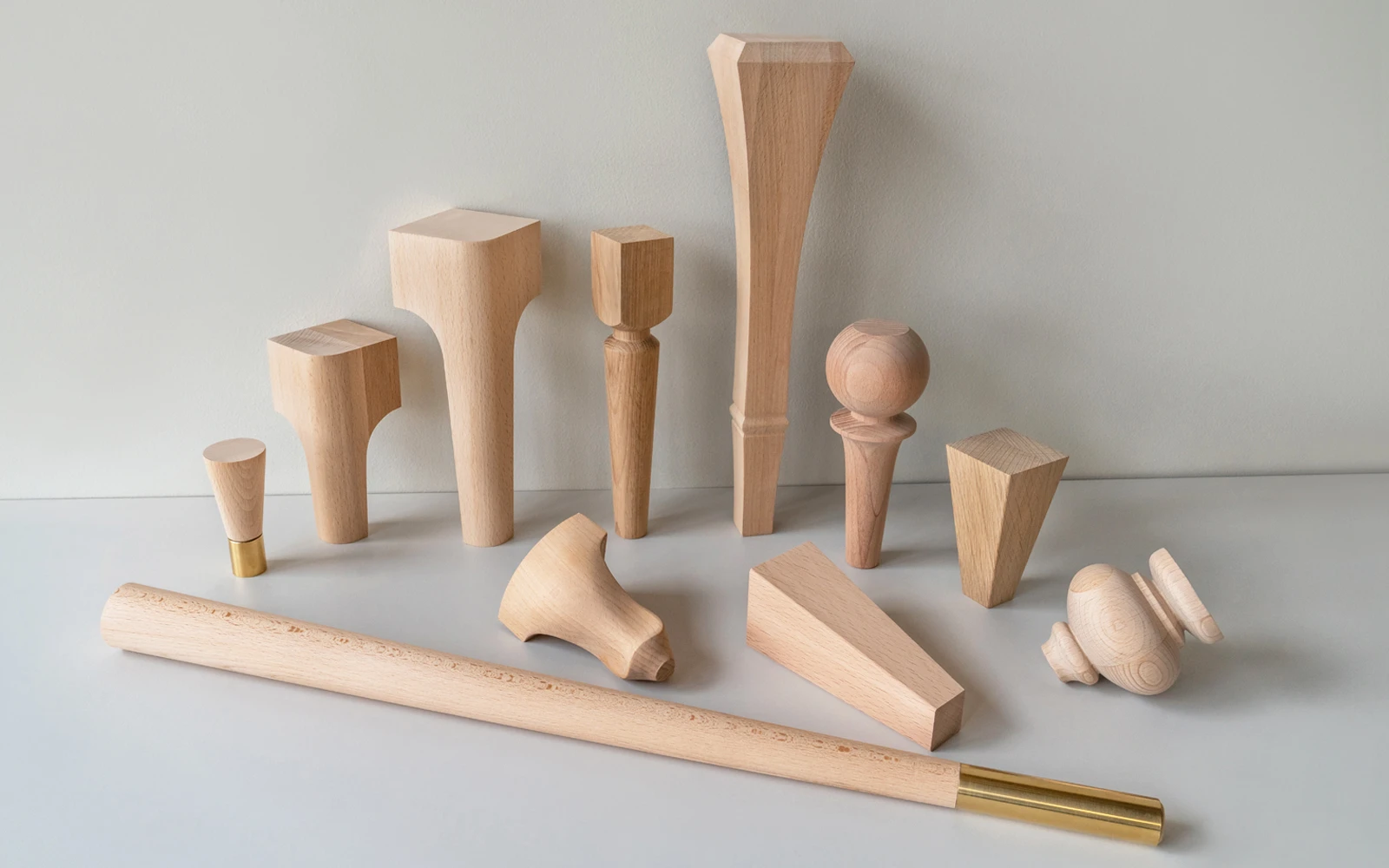
wooden furniture legs are made from different species. The choice of species affects strength, appearance, and processing capabilities.
Beech — a versatile choice
Beech is the most popular species for furniture legs. Dense, hard, fine-textured. It turns well (lathe processing gives a clear profile) and accepts all coatings evenly — from enamel to tinting.
Uncoated beech legs are light beige, almost neutral. Under stain, they imitate any species. Under white enamel, they are a classic of Provence and neoclassicism. Under dark tinting, they have a modern, expensive look.
For a coffee table in a classic or modern interior, beech is the optimal choice in terms of price/quality/versatility ratio.
Oak — expressiveness and durability
Oak is a premium material. Expressive large texture, high hardness (900 on the Brinell scale), durability. An oak leg under oil is a "living" wood with a rich texture that looks expensive.
For a coffee table in a natural eco-interior, in wabi-sabi style, in an interior with wooden beams — oak legs create an organic unity.
The price of oak legs is higher than beech. But if the tabletop is oak, legs from the same species are mandatory.
Pine — for painting and cottages
Pine is a softwood. Pine legs are suitable for painting (under enamel, the pine structure "pulls" the paint with proper priming), for country and budget projects. In an intensively used urban living room, pine is inferior to beech and oak in wear resistance.
If you plan to paint the legs to match the furniture color, pine handles the task with proper surface preparation.
Solid wood vs. glued panel
Uncoated legs Solid wood is the best option for turned and carved shapes: no delamination during turning, stable geometry. Glued panel legs are for straight rectangular or square shapes, more dimensionally stable with humidity changes.
Leg coating for a coffee table: what to choose
Coating is the final decorative and protective solution.
Legs without coating: freedom of choice
Uncoated legs — blanks for independent finishing. This is a professional choice for those who want an exact match to the furniture or interior tone. You decide what the finish will be: oil, wax, stain, enamel, tinting, paint.
Legs without coating are usually supplied sanded to 120–180 grit — ready for the first coat.
Finished legs: ready for installation
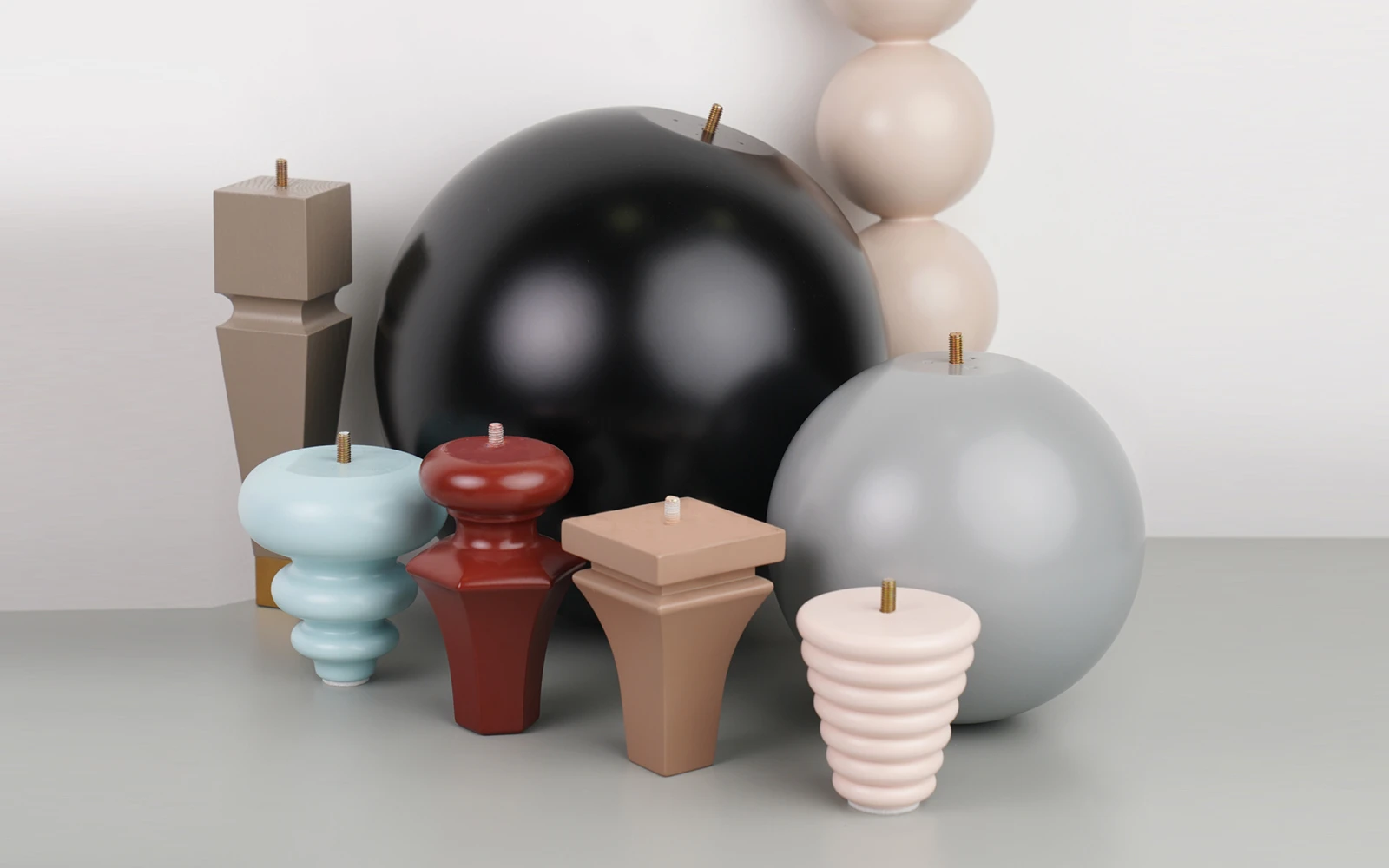
Legs with Finish — lacquered, tinted, or painted, ready for installation without additional processing. Convenient if you need to quickly update a table and don't want to deal with painting.
Important: match the coating tone to the countertop, floor, and furniture — not by screen, but with a real sample.
Oil and wax — for a natural look
Oil or oil-wax creates a matte surface that highlights the wood texture. It does not form a film — no risk of peeling. Requires periodic renewal (every 1–2 years).
For beech and oak legs in a natural interior — an ideal choice. Pleasant to the touch: warm, slightly matte wood.
Enamel — for classic and Provence styles
White, cream, gray enamel on coffee table legs — a classic solution for light interiors, Provence, neoclassicism. The surface under the enamel hides the wood texture, giving an even matte or semi-matte color.
Legs with white enamel + a light oak or marble tabletop — a light, airy look.
Stain and tinting — for imitating wood species
Stain allows you to give beech the color of walnut, cherry, wenge, mocha. This is a budget way to get an "expensive" wood species. Under the stain, varnish is mandatory (2–3 coats).
Tinting in varnish — the same, but the coloring is built into the varnish. One step instead of two.
Coffee table stability: physics you can't ignore
Support base area
Four legs create a rectangular or square "support base." The wider this base, the more stable the table. For a small coffee table 500×500 mm — legs at the corners with minimal indentation. For a long table 1200×600 mm — place the legs as wide as possible along the length.
Leg attachment: reliability above all
Standard furniture leg attachment is a threaded bolt (stud) M8 × 35–50 mm. The bolt is screwed from the bottom of the tabletop through a mounting plate or directly into an insert installed in the upper end of the leg.
Before buying legs, check:
-
Bolt diameter (standard — M8 or M10).
-
Insert depth.
-
Compatibility with your fastening method.
If the attachment is unreliable — the table will wobble, legs will loosen. This is especially critical for tables with a heavy tabletop.
Anti-slip furniture glides
On hard floors (parquet, tiles), the legs of a coffee table can slide and scratch the surface. Rubber or felt glides are an essential installation element. They secure the table in place, protect the floor from scratches, and slightly reduce noise when accidentally moved.
How to combine coffee table legs with the living room interior
Legs and sofa: tone and shape
The sofa is the dominant piece in the living room. The coffee table stands in front of it and is perceived as a pair. The table legs should harmonize with the sofa legs (if they are wooden): the same wood species or the same tone.
A sofa with dark wooden legs + a coffee table with dark legs creates a unified "line" of wooden details. A sofa on high legs + a table on low legs creates a visual conflict.
Legs and floor
Wooden floor is the second reference point. Table legs should not "blend" with the floor: dark legs on dark parquet visually "hide" the supports. This works as a design technique if the goal is to "hide" the legs and make the tabletop "float". If you need to emphasize the legs, create contrast with the floor.
Legs and furniture decor
If there are wooden frames in the living room, Furniture Decoration from Wood on facades, shelves or wooden furniture frames — the legs of the coffee table should be from the same "vocabulary" of forms. Classic turned legs for furniture with moldings. Straight, minimalist legs for furniture without decor.
Mistakes when choosing legs for a coffee table
These mistakes are the most common — and each leads either to rework or dissatisfaction with the result.
Choosing legs without calculating height. The table ends up too high or too low relative to the sofa. Measure the sofa height before choosing the leg.
Not considering the weight of the tabletop. Legs with bolt fastening are designed for a specific load. For a heavy tabletop — legs with a reinforced insert and M10 bolt.
Choosing too massive supports for a small table. Legs 80×80 mm under a 600×600 mm tabletop — disproportion. Visually, the table will look like a "stand for legs" rather than an elegant coffee table.
Forgetting about stability with non-standard leg placement. If the legs are too close to the center — the table will tip over under lateral load.
Not checking the fastening. Different leg manufacturers use different bolt diameters (M6, M8, M10) and different insert depths. Incompatibility = the leg cannot be screwed on.
Choosing the color of the legs without considering the sofa, floor, and furniture. The color should be checked with real samples, not on screen.
Do not consider the tabletop shape. Straight legs under an oval tabletop may look alien. Match the leg shape to the table shape.
Do not buy legs without a load margin. Choose legs with a load margin of 1.5–2 times the calculated load. If the table weighs 10 kg and a load of 10 kg is planned on top, the leg should support 30–40 kg.
How to replace old legs on a coffee table
The process of replacing legs is simple if approached systematically.
Step 1. Remove the old legs
Turn the table upside down. Unscrew the mounting bolts or remove the screws. If the legs are glued on, carefully pry them off with a chisel around the perimeter without damaging the tabletop surface.
Step 2. Clean the mounting areas
Old glue, screw holes, marks — clean with sandpaper. If the holes are loose, fill with epoxy putty and let dry.
Step 3. Mark the installation spots
New legs are installed with an indent of 80–120 mm from the edge. Mark the centers using a ruler and square. Strict symmetry is critical: uneven leg placement is immediately noticeable.
Step 4. Install the mounting elements
If the new legs have bolt-on mounting, screw in the mounting plates or bolts from underneath the tabletop. If the leg is attached directly with a screw, drill a pilot hole to avoid splitting.
Step 5. Screw in the legs
Screw in the legs until the flange fits snugly against the tabletop. Do not overtighten. Install the glides.
Individual legs or an underframe: which is better for a coffee table
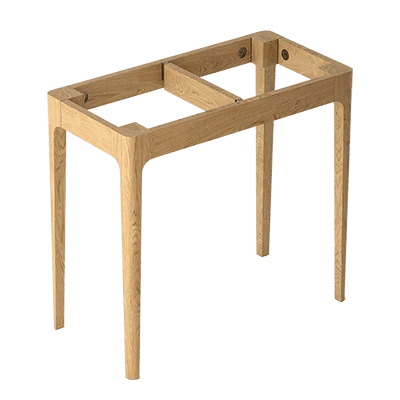
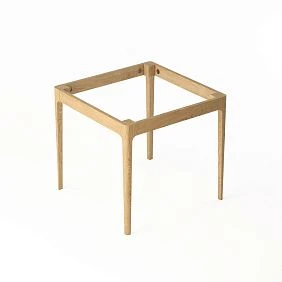
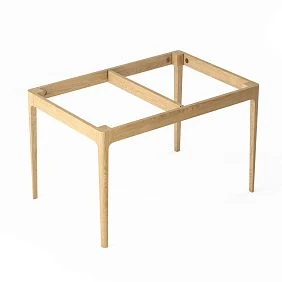
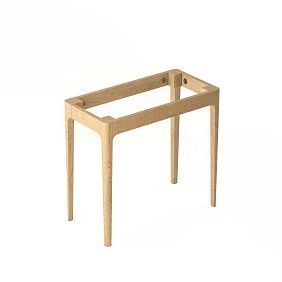
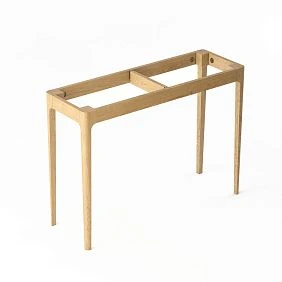
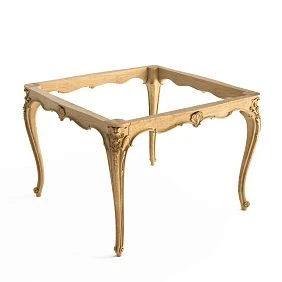
In addition to individual legs, an underframe is used for a coffee table wooden furniture frames — an underframe. This is a frame with built-in legs on which the tabletop is placed.
An underframe is better suited for:
-
Heavy tabletops (marble, slab).
-
Large sizes (length over 1000 mm).
-
Situations where structural rigidity is needed.
Individual legs are better for:
-
Light and medium tabletops.
-
Small round and oval tables.
-
Restoration: underframe is a structural intervention, legs are surgical precision.
Where to buy wooden legs for a coffee table
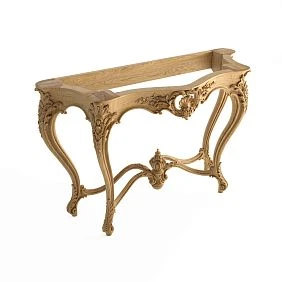
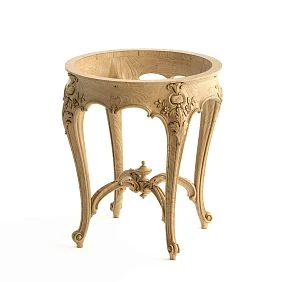
Legs for coffee tables in the STAVROS catalog — this is a specialized section with supports specifically for coffee and side tables: correct height, correct shapes, required mounting type. Next — Uncoated legs for self-processing, Legs with Finish for ready installation, furniture frames и decor for furniture from solid wood. The entire assortment wooden legs for furniture with Contact us to confirm shipping to your destination.
FAQ: Answers to popular questions
How to choose legs for a coffee table?
Determine the required height (sofa minus 0–50 mm), choose a shape to match the interior style, select the wood species and finish. Check the mounting type and maximum load.
What height of legs is needed for a coffee table?
Standard — 350–420 mm finished leg (table height 370–450 mm). For low sofas — 300–350 mm. Measure the sofa seat height and subtract 20–50 mm.
Which legs are suitable for a round table?
Three legs (triangular arrangement) for diameters up to 600 mm, four for larger ones. Indentation from the edge — 80–120 mm. Tapered and turned legs visually echo the roundness of the shape.
What to choose for the living room: straight or turned legs?
Straight — for modern, Scandinavian, minimalist interiors. Turned — for classic, neoclassical, country, Provence. Tapered — for mid-century and organic style.
Can wooden legs be painted?
Yes. Unfinished legs are exactly for this. Primer + enamel (2–3 coats). Test on a sample before applying to all legs.
How to replace old legs on a coffee table?
Remove the old ones, clean the mounting points, mark the centers of the new legs with an indentation of 80–120 mm from the edge, drill pilot holes, install the hardware, screw on the legs.
Which legs are suitable for a heavy tabletop?
Legs with M10 bolt and metal threaded insert in the support body. Load per leg — at least 30–40 kg. For marble or solid oak tabletops — consider an underframe.
How to combine table legs with a sofa and furniture?
The same wood species or tone as the sofa legs. Contrast with the floor — if you want to emphasize the legs. Consistency with furniture shape: classic legs for a classic sofa, straight legs for a modern one.
What is better: individual legs or an underframe for a table?
For small and medium tables (up to 1000 mm) — individual legs are more convenient and lighter. For large or very heavy ones — an underframe provides better rigidity.
Where to buy wooden legs for a coffee table?
In the STAVROS catalog: Legs for coffee tables made of solid wood with Contact us to confirm shipping to your destination.
About the manufacturer
STAVROS — a Russian manufacturer of wooden products for furniture and interiors. The assortment includes — wooden furniture legs of all types: turned, straight, tapered, carved; Uncoated legs for custom finishing, Legs with Finish, furniture frames, decor for furniture и Carved wooden decoration. If you are renovating your living room, restoring a coffee table, or creating a table for a custom project — STAVROS offers a professional range with Contact us to confirm shipping to your destination.