










































































Article Contents:
- What are decorative wall moldings and why are they needed
- Where decorative moldings are used in interior design
- In the living room
- In the bedroom
- In the entryway
- In the Hallway
- In the study
- In the TV area
- On an accent wall
- Which decorative wall moldings to choose: wood or polyurethane
- Wooden decorative wall moldings
- Polyurethane decorative moldings
- Comparison table
- How to choose moldings by interior style
- Decorative moldings for classic interior design
- Decorative moldings for neoclassicism
- Decorative moldings for modern classic style
- Decorative moldings for light interiors
- Decorative moldings for painting
- Decorative moldings for calm modern design
- How to choose decorative moldings by size and shape
- Principle of ceiling height and profile width
- Narrow decorative moldings
- Medium moldings
- Wide decorative moldings
- Smooth vs. relief profile
- How to calculate frame proportions
- How not to overload the interior
- Decorative wall moldings for different rooms
- Decorative wall moldings for the living room
- Decorative moldings for the bedroom
- Decorative moldings for the hallway
- Decorative moldings for the corridor
- Decorative moldings for the apartment
- Decorative moldings for the house
- What to combine decorative wall moldings with: system vs set of details
- With decor for moldings
- With molding
- With pilasters and capitals
- With slatted panels
- With classic furniture
- Decorative moldings and slat panels: two tools — one wall
- When moldings alone are enough
- When it's better to combine moldings and slat panels
- How to design a TV area with moldings and slats
- How to design an entryway
- How to use slats and moldings in one project without overloading
- What to look for when choosing decorative moldings in St. Petersburg
- Material and surface quality
- Exact dimensions before ordering
- Paintability
- Compatibility with other decorative elements
- Interior style and cross-section shape
- Availability and delivery in St. Petersburg
- Why STAVROS is for decorative moldings in St. Petersburg
- Frequently asked questions about decorative wall moldings in St. Petersburg
- Which decorative wall moldings are best to choose?
- Where to buy decorative wall moldings in St. Petersburg?
- What's Better: Wood or Polyurethane?
- Are decorative moldings suitable for apartments?
- Can You Combine Moldings and Slatted Panels?
- Which moldings are better for living rooms or bedrooms?
- Are moldings suitable for painting?
- How to choose the size of decorative molding?
- Conclusion: decorative molding is architecture accessible to everyone

Decorative wall moldings in St. Petersburg are one of the most in-demand requests in the segment of finishing decor. And this is no coincidence: St. Petersburg is a city where classical architectural tradition lives in every house, every courtyard, every grand entrance. Here, wall decor is perceived not as a whim, but as a norm of good taste.
This page is for those who want to understand: which decorative wall moldings to choose, what material, for which room and style, how to combine them with other interior elements, and where to buy them in St. Petersburg.
Go to the catalog:
-
Decorative Wall Moldings— full catalog of profiles
-
Wooden moldings— profiles made of solid oak, beech, ash
-
Decor for Molding— corner elements and overlays
-
Polyurethane moldings— decorative wall and ceiling decor
-
slatted panels for walls— for combined solutions




What are decorative wall moldings and why are they needed
Let's ask the question directly: why hang anything on a smooth wall, just handed over after renovation? Isn't it ready as it is?
Ready — functionally. But not architecturally.
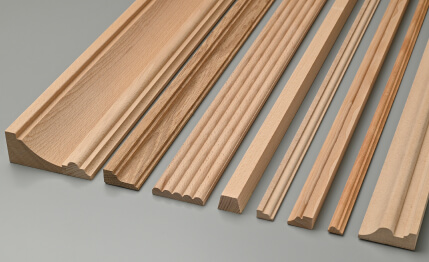
A decorative wall molding is a profiled strip with a specific cross-section that is mounted on a vertical surface. Its purpose is to create relief, define zones, form frames, and add volume to a flat surface. It is a tool used by master decorators of the classicism era — and it hasn't aged a day.
The principle is simple: where there is a protrusion, there is a shadow. Where there is a shadow, there is depth. Decorative moldings on walls create a play of light and shadow that visually enriches the space without a single additional cubic meter of area.
They are widely used:
-
for creating framed panels — rectangular or square inserts on walls;
-
for horizontally dividing a wall into lower and upper zones;
-
for framing doorways and niches;
-
for decorating accent walls in living rooms and bedrooms;
-
for decorative layouts in TV areas;
-
for architectural design of studies and hallways.
Classic and modern, made of wood and polyurethane, smooth and textured —Moldings for wallstoday they are available for any interior scenario.




Where decorative moldings are used in interiors
Let's go room by room — because the tasks of molding differ in different rooms, and this is important.
Our factory also produces:


In the living room
The living room is the formal space of the apartment. Here, decorative wall moldings work to their full potential: frame panels on an accent wall, a horizontal strip at mid-level, decorative framing for the TV zone. In the living room, moldings should be readable from a distance — so the profile is chosen wider, the relief more expressive. Decorative wall moldings in the living room set the tone for the entire space.
Get Consultation
In the bedroom
The bedroom requires delicacy. The accent wall behind the bed headboard is the main place for molding layouts. The profile here is medium or narrow, the pattern is calm, matching the wall color or with minimal contrast. Decorative wall moldings in the bedroom create a sense of coziness and completeness without overwhelming the viewer.
In the hallway
The hallway is the first thing a guest sees and what greets the homeowner after a day away. A horizontal molding at a height of 90–110 cm divides the wall into a functional lower zone and a decorative upper zone. Vertical inserts add rhythm. Often, the hallway is enhanced with a combination:slatted panels for wallspaneling below, a boundary molding in the middle, neutral painting above.
In the corridor
A long corridor is a challenge architects have been battling for centuries. Moldings here work with horizontal rhythm: one profile along the long wall visually expands the space. Vertical inserts with equal spacing create a sense of ensemble. For corridors, narrow and medium profiles are chosen: they do not weigh down an already narrow space.
In the study
The study is a space of status and concentration. Decorative wall moldings in the study contribute to an image of seriousness and tradition. Wooden profiles in the lower third of the walls create a classic paneling effect.pilasters and columnsin the corners and on wall sections complete the architectural image.
In the TV area
A TV hanging on a 'bare' wall without framing is an unfinished solution. A decorative frame made of moldings around the television or an entire wall with slatted panels and a molding border is already a considered design. More on this — in a separate block below.
On an accent wall
One accent wall with large frame molding panels is a powerful technique. It works in any room, any style. The main thing is to correctly select the size of the frames and the molding profile to match the scale of the wall.
Which decorative wall moldings to choose: wood or polyurethane
This question arises for most people. And the correct answer is not 'what is better,' but 'what is right for you.'
Wooden decorative wall moldings
Wooden moldingsare profiles cut from solid oak, beech, ash, linden, pine. A living material with a natural texture, tactile warmth, and that unique visual density that cannot be imitated by synthetics.
Why choose woodenwooden moldingfor walls:
-
natural texture creates a sense of quality even with minimalist application;
-
wood accepts any finish: clear varnish, enamel, wax, tint, stain — for any color scheme;
-
perfectly complements wooden floors, wooden doors, solid wood and veneer furniture;
-
mechanically durable — solid oak or ash profile does not deform, crumble, or lose shape under normal use;
-
ecologically impeccable for living spaces.
Wooden decorative molding is especially appropriate in neoclassical and classical St. Petersburg interiors — where the naturalness of the material becomes part of the concept.
Important note: wood reacts to sharp humidity fluctuations. In normal living conditions, this is not a problem. In high-humidity areas — kitchen near the stove, bathroom — polyurethane is preferable.
Polyurethane decorative moldings
Polyurethane moldings— is a modern synthetic material that allows reproducing complex classical profiles at an affordable price. Lightweight, moisture-resistant, stable.
Advantages of polyurethane decorative moldings:
-
significantly lighter than wooden counterparts of the same dimensions;
-
does not react to moisture and temperature fluctuations;
-
perfectly smooth surface — paint applies evenly, without pores or wood grain texture;
-
allows for complex ornamental relief that would be much more expensive in solid wood;
-
easy to install even on ceilings and in complex areas.
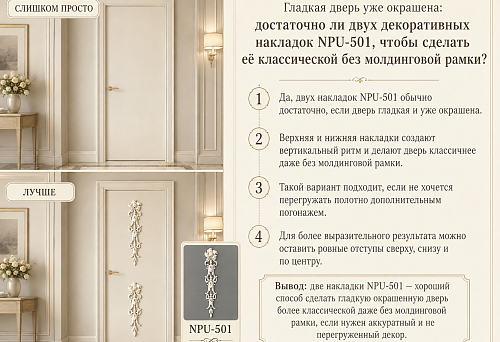
decorative wall moldingPolyurethane elements include overlays, corner pieces, medallions, and ornamental inserts. Combined with wooden profiles on walls, they create a complete classical system.
Read more about the use of stucco decor in the article wall molding in interior.
Comparison table
| Parameter | Wooden Molding | Polyurethane Molding |
|---|---|---|
| Natural texture | Yes | No |
| Complex ornamental relief | Expensive | Affordable |
| Weight | Medium | Lightweight |
| Moisture resistance | Limited | Yes |
| Painted to match wall color | Excellent | Excellent |
| Combination with wooden floor | Ideally | Satisfactory |
| Classic interior | Good | Perfect (for pattern) |
| Modern interior | Ideally | Good |
| Service life | Decades | Long-lasting with proper care |
How to choose moldings according to interior style
Style is not a decorative theme, it is architectural grammar. Molding must fit into it—then it enhances the image. If it doesn't fit—it destroys it.
Decorative moldings for classic interior
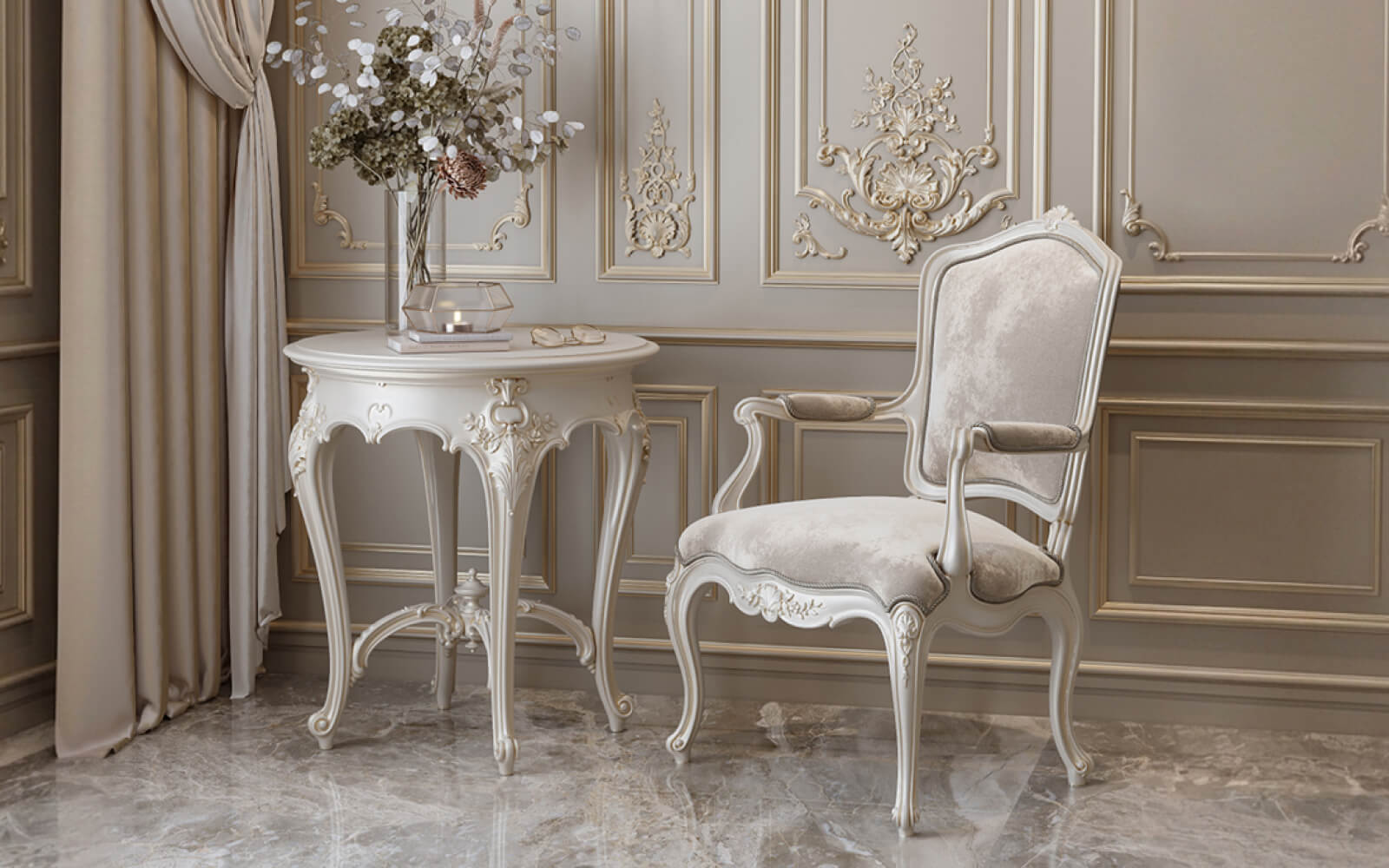
Classic requires relief, hierarchy, and symmetry. Full-height wall frame panels or split into lower and upper fields. Profiles with traditional sections: ovolo, fillet, cyma recta, half-round. Dense but orderly decor.
Relief Decorationon the ceiling cornice echoes the profile of wall moldings.pilasters and columnsin wall spaces create vertical rhythm.Capitalscomplete the pilaster at the top point. Altogether, it's a full-fledged classical wall system, organic for St. Petersburg interiors with high ceilings.
Decorative moldings for neoclassicism
Neoclassicism is classicism that has passed through a modern editor. Moldings here are restrained: a medium profile without overloaded relief, large symmetrical frames, few details. Colors are white, cream, light gray. Wooden moldings under matte enamel are the perfect choice for neoclassical apartments in St. Petersburg.
Decorative moldings for modern classicism
Modern classicism is a free interpretation of tradition. Moldings are used selectively: one accent wall, several large frames, a neutral finish. Narrow or medium profile without ornament.decorative elementsin corner points — laconic, without baroque relief.
Decorative moldings for a light interior
Light interior - white walls, milky or cream tone. White decorative wall moldings matching the surface color create a monochrome relief: the profile is slightly darker than the wall due to shadow but does not contrast in color. The result is volume without 'decorative noise.' This is one of the strongest modern techniques - visible only with proper lighting.
Decorative moldings for painting
Decorative wall moldings for painting are not a separate category but an application technique. The profile is installed before final painting, then joints are puttied, sanded, and painted in a single tone with the wall. The boundary between the wall and molding disappears — only pure architectural relief remains. This requires a smooth surface:Solid Wood Itemsfrom fine-grained rocks or polyurethane profiles with factory primer.
Decorative moldings for a calm contemporary design
Scandinavian style, Japandi, modern minimalism — moldings are possible here, but in moderation. One narrow profile on one wall. Matching the wall color. Without ornament. This is not 'lack of decoration,' but a precise architectural line — a geometric gesture that changes the perception of space.
How to choose decorative moldings by size and shape
The correct molding size is a matter of spatial mathematics and proportions. Making a mistake here means either losing the effect or overloading the wall.
The principle of ceiling height and profile width
Room height is the main guideline:
-
ceilings up to 2.65 m — moldings 15–30 mm wide;
-
ceilings 2.65–2.9 m — 25–50 mm;
-
ceilings 2.9–3.3 m — 40–65 mm;
-
Ceilings from 3.3 m — from 60 mm and above.
This is not dogma, but a starting point. In a specific project, the scale of the pattern, the number of frames, and the distance between profiles are also important.
Narrow decorative moldings
10–25 mm — for small rooms, modern and minimalist interiors, monochrome accents. A narrow profile reads in oblique lighting as an architectural line — delicate, thin, precise.
Medium moldings
25–55 mm — the working range for most St. Petersburg apartments. Readable from a distance, creates confident relief, works in any style with the correct cross-section selection.
Wide decorative moldings
55 mm and above — for high rooms, formal spaces, rich classical decor. In a small apartment, a wide profile creates pressure; in a spacious house with ceilings from 3 m — completeness and solemnity.
Smooth versus relief profile
Smooth profile — straight with minimal bevel or soft transition — is universal. Relief — ogee, cyma, half-round — for classic, neoclassical, art deco. The main rule: a relief profile requires an appropriate stylistic context. Placing an ornamental molding in modern minimalism means breaking the image.
How to calculate frame proportions
Rules for frame layout:
-
Indent from the wall edge to the outer edge of the frame — 8–15% of the wall width;
-
Distance between frames — at least one molding width;
-
Frame height — proportional to the wall (formats 3:4 or close to square);
-
Odd number of frames on a wide wall (1, 3, 5) or even with a central axis (2, 4);
-
Corner points of frames — withdecor for moldingsfor a clean joint.
How to avoid overloading the interior
Overcrowding is the most common mistake. Moldings on all four walls, ceiling molding, slats on the fifth surface — this is not decor, it's chaos. Rule: one accent wall — maximum one decorative technique. The other walls — neutral.
Decorative wall moldings in different rooms
Decorative wall moldings for the living room
The living room is where the interior works at full capacity. An accent wall with large framed panels is a classic technique that works equally well in both classic and contemporary spaces. The profile should be medium or wide (35–65 mm). Decorative wall moldings in the living room are best installed before painting to create a monochrome relief in a single tone.
For living rooms with high ceilings (3 m and above), framed panels are made in two tiers—the lower and upper fields are separated by a horizontal profile. This is a technique from St. Petersburg classical architecture that works flawlessly.
Moldings in the living room pair well with classic furniture—sofas and armchairs with framed fronts echo the framed panels on the walls, creating a unified architectural ensemble.
Decorative moldings for the bedroom
In the bedroom, the main thing is not to overdo it. Use narrow and medium profiles (20–40 mm), an accent wall behind the bed, and moldings in the same color as the wall or with a minimal light contrast. The frame above the headboard should be concise and symmetrical.
For a bedroom in the neoclassical style—wooden profiles with a matte enamel finish on the accent wall behind the bed. The lower section of the wall can be finishedplank panelsin a dark tone with a boundary molding at a height of 90–100 cm. The upper section is neutral, with a molding frame in the center.
Decorative moldings for the hallway
The hallway creates the first impression—and here, decorative moldings do their job instantly. A horizontal profile at a height of 100–120 cm visually structures the space. Vertical inserts at equal intervals create rhythm. For a narrow hallway—only a horizontal strip and monochrome coloring. For a hallway with sufficient width—vertical frames in the lower section.
The combination 'wainscoting at the bottom + molding at the border + painted wall above' is a strong solution for any type of hallway.buy slatted panelsfor the lower zone and to select a border molding to match them, you can find them in the STAVROS catalog.
Decorative moldings for the hallway
A long hallway without decoration reads like a tunnel. Moldings transform it into an enfilade. A horizontal profile along the long walls visually expands the space. Narrow vertical inserts above the horizontal strip create rhythm. All of this is mounted strictly level and according to markings—geometric precision is critical here.
Decorative moldings for the apartment
In an apartment, moldings unify the space into a single stylistic statement. When one profile runs through the hallway, living room, and corridor—the apartment 'reads' as a whole. This doesn't mean identical moldings everywhere: it means a unified stylistic logic with variations by room.
Decorative moldings for the house
In a country house with high ceilings, decorative moldings work especially powerfully. Here, wide profiles, multi-level frame systems, and full-fledged classical wall decorations are possible.Solid Wood Items— oak, ash, walnut — in a house with wooden beams, parquet, and furniture made of natural wood create an absolutely organic look.
What to combine decorative wall moldings with: system versus a set of details
Molding in solitude is good. Molding as part of a well-thought-out decorative system is much more powerful.
With molding decor
Decor for MoldingThese are corner elements, connecting plates, decorative inserts. They solve two problems: technical (a clean joint at the corners of the frame) and decorative (an accent at the corner points of the frame). Ready-made corner elements eliminate the need for precise 45° cutting — and give a perfectly even corner even without professional tools.
Decorative elements can also be used as an independent accent: a rosette in the center of the frame or a medallion at the top point turns a simple rectangular insert into a classic decorative panel.
With plasterwork
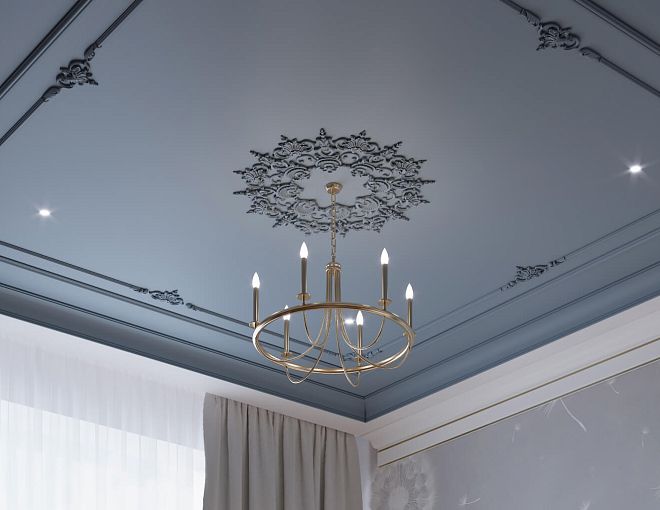
Polyurethane moldingsOn the ceiling plus wooden moldings on the walls—this is a classic vertical decorative system. Ceiling cornice with ornament, rosettes, corner elements—on the ceiling. Frame panels, horizontal profiles—on the walls. Two levels of decor: upper and vertical. They do not compete—they create an ensemble.
About how it workswall molding in interiorand in which styles it is appropriate—a detailed article in the STAVROS materials section.
With pilasters and capitals
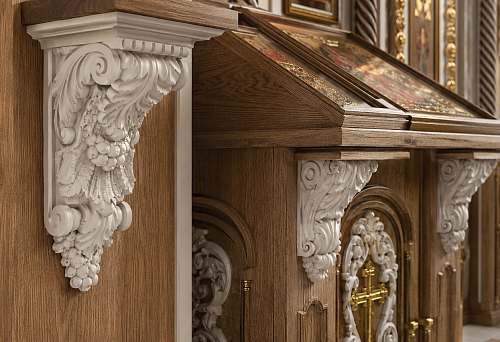
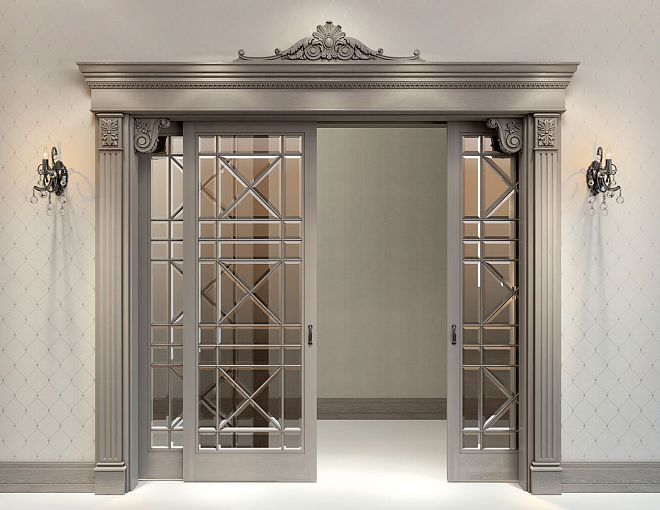
pilasters and columnsare built into the piers between windows and doors, creating a vertical accent.Capitalscomplete the pilaster at the top point. Molding layout between pilasters is a horizontal connecting element. Together they assemble into a full-fledged classic wall system — architectural decor in the spirit of St. Petersburg grand staircases.
This is not only for mansions: a pilaster and capital in the living room of a city apartment with a ceiling of 2.9–3 m look organic and noble.
With slatted panels
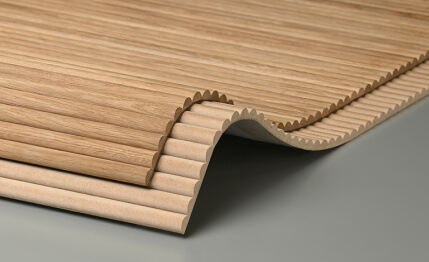
Slatted panels in interior designand moldings are two compatible tools with different textures. The batten creates a vertical texture. The molding creates a horizontal architectural line and frame. The tandem works especially powerfully in the hallway and TV area.
With classic furniture
Classic Furnitureand decorative wall moldings are a dialogue between two languages of the same style. Framed cabinet fronts echo framed wall panels. Wooden profiles on the walls support wooden furniture. Ceiling molding ties everything together into a single image. This is what is called an 'interior with character'.
Decorative moldings and batten panels: two tools — one wall
A separate conversation deserves the combination of moldings and batten panels, because this is one of the most in-demand requests in modern interior design.
When moldings alone are enough
Moldings without battens — the right choice for:
-
classical interiors, where batten would be alien;
-
small spaces, where additional texture would weigh down the space;
-
neutral spaces, where decor should be delicate — only a frame without a textured background.
When it's better to combine moldings and slatted panels
The combination works where a multi-level wall is needed. The logic is:
-
Lower wall zone —slatted panels for walls80–120 cm high;
-
Horizontal molding — the boundary between the lower and upper zones;
-
Upper zone — painted surface with or without molding frames.
A depth effect unattainable with a single element: the slat creates a tactile texture, the molding — an architectural line. Two materials, two textures, one space.
How to design a TV zone with moldings and slats
The best scenario for a TV zone in the living room:
-
slat panels across the entire width of the wall, height — up to 2/3 of the wall;
-
horizontal molding marks the top edge of the slat section;
-
above the molding — neutral painting;
-
TV — in the center of the slatted field, without an extra frame.
It looks modern, architectural, and at the same time simple to implement.
How to decorate an entryway
In the entryway, the scheme is the same:
-
slats on the lower 90–110 cm (wall protection + decor);
-
horizontal molding — the boundary between zones;
-
above the molding — vertical molding inserts with equal spacing or neutral paint.
Result: an entryway with architectural character that forms the right first impression.
How to use slats and moldings in one project without overload
There is one rule: only an accent wall. Slats and moldings — on the main wall (TV zone, wall behind the bed, entryway). The other walls — neutral. Decor on one surface creates a focus. Decor on all four walls creates chaos.
What to look for when choosing decorative moldings in St. Petersburg
Practical checklist before purchase.
Material and surface quality
Specify: is it solid wood, MDF, polyurethane, or veneered profile? For painting in a single color with the wall — a smooth surface without visible wood grain is needed. For a natural look under varnish — solid wood with an open grain.
Exact dimensions before ordering
Measure the perimeter of each wall and each planned frame. Order the profile with a 10–15% surplus for cutting. Clarify the length of standard lengths: if the wall is longer than the standard length — a joint will be needed, and it must be factored into the calculation in advance.
Ability to paint
Ensure the profile is supplied unpainted or in the color you need. For painting in a single tone with the wall — a primed surface and quality enamel are needed. Wooden moldings for open oil or wax finish are a separate story: matching the wood species with the floor and furniture is important.
Compatibility with other decorative elements
Check in advance: do the moldings match withdecor for moldings— corner elements and connectors. Get everything from one supplier to avoid discrepancies in dimensions and finish.
Interior style and profile cross-section
Once again: the profile shape must match the style. A relief bead is for classic and neoclassical. A straight beveled profile is for modern interiors. Ornamental polyurethane decor is for rich classic. Do not break this rule.
Availability and delivery in St. Petersburg
Make sure the required item is in the permanent assortment: large projects often require additional orders. Clarify the packaging conditions for long-length profiles and the possibility of delivery to an address in St. Petersburg.
Why STAVROS — for decorative moldings in St. Petersburg
Choosing a supplier of decorative molding is not only a matter of assortment but also confidence in the result. Solid wood molding must be straight, without hidden defects, with predictable behavior during painting and installation.
STAVROS offers:
-
Wooden moldingsSolid oak, beech, ash, linden — various widths and cross-sections;
-
Moldings for wallsA full catalog including cornices and baseboards for a unified system;
-
Decor for MoldingCorner elements and connecting plates for clean joints;
-
Polyurethane moldings— for ceilings and accent walls;
-
decorative wall molding— overlays, medallions, ornamental inserts;
-
slatted panels for walls— for combined wall solutions;
-
pilasters and columnsandCapitals— for full classic wall systems;
-
Polyurethane Items— the entire range of polyurethane decor.
You can assemble not just molding, but a full-fledged architectural wall decoration: profiles, corner elements, slatted panels, ceiling stucco, pilasters — all in a unified stylistic concept and from a single supplier.
Frequently Asked Questions about Decorative Wall Moldings in St. Petersburg
Which decorative wall moldings are best to choose?
Depends on the style and task. For classic and neoclassical — solid wood moldings with a relief profile or polyurethane decor. For a modern interior — straight wooden profiles for painting. For a monochrome accent — any profile matching the wall color.
Where to buy decorative wall moldings in St. Petersburg?
In the STAVROS catalog:buy decorative wall moldingsfrom solid wood with delivery in St. Petersburg. Full selection of sizes, wood species, and profile sections.
What is better: wood or polyurethane?
For natural texture, warm interior, combination with wooden floors — wood. For complex ornamental relief, easy installation, wet areas — polyurethane. The best combination for a classic interior: wooden moldings on walls +Polyurethane moldingson the ceiling.
Are decorative moldings suitable for an apartment?
Absolutely. Moldings for apartments are one of the most affordable ways to make an interior visually richer. For standard ceilings — profiles 25–45 mm. For an accent wall — frame layout. For a monochrome effect — matching the wall color.
Can molding and slatted panels be combined?
Yes, and it's one of the best modern solutions. Battens in the lower wall zone, molding — a horizontal border, neutral painting above. Works especially well in hallways and TV areas.Slatted panels in interior design— detailed article on application options.
Which moldings are better for living rooms or bedrooms?
For the living room — medium and wide profiles (35–65 mm), frame panels on an accent wall. For the bedroom — narrow and medium (20–40 mm), accent behind the bed, matching the wall color or with a slight contrast.
Are moldings suitable for painting?
Yes. Wooden moldings accept any paint with proper surface preparation: primer, sanding, topcoat enamel. Polyurethane ones — the surface is already smooth, painting is even easier. Install before painting the wall — and fill the joints together with the wall. Then the molding and the wall will merge into a single monochrome relief.
How to choose the size of decorative molding?
Guideline — ceiling height: up to 2.65 m — profile 15–30 mm; 2.65–2.9 m — 25–50 mm; from 2.9 m — from 40 mm. Specify for the specific project: scale of the pattern, number of frames, distance between profiles.
Conclusion: decorative molding is architecture accessible to everyone
Decorative wall moldings are not a luxury or an excess. This is a tool that architects and decorators have used for centuries — and which remains relevant precisely because it meets a deep human need for an orderly, beautiful, 'living' space.
To buy decorative wall moldings in St. Petersburg means adding to the interior that very architectural detail which is unnoticeable individually but fundamental in the ensemble. It is what turns an apartment into a home, and a home into a reflection of personality.
Company STAVROS — manufacturer and supplier of wooden decor and products made from natural wood in St. Petersburg. Full range of decorative wall moldings, slatted panels, polyurethane stucco, pilasters, capitals, and related interior decor. Consultation for selection according to your project, delivery in St. Petersburg.
Go to the catalog:
-
Decorative Wall Moldings— full selection
-
Wooden moldings— solid wood profiles
-
Decor for Molding— corner elements
-
Polyurethane moldings— for walls and ceilings
-
decorative wall molding— overlays and stucco decor
-
slatted panels for walls— buy slat panels
-
Solid Wood Items— full catalog of wooden decor
STAVROS — decorative wall moldings in St. Petersburg: selection, quality, style.