






























































Article Contents:
- Storage bench: what box is needed before buying wooden legs
- Wooden legs MN-192: when to choose 150 mm and when 240 mm
- Comparing two projects at the same seat height
- When a taller support is justified
- Which MN-192 to choose for a deep box — 150 or 240 mm?
- Will the storage space increase after replacing the legs on a finished banquette?
- Can the supports be attached directly to the bottom of the box?
- How do FUR-001 and FUR-012 differ in terms of future repairs?
- Do I need to add separate dowels to the mounting kit?
- Are four legs enough for a long banquette?
- Are MN-192 supplied painted?
- What costs are not included in the price of four legs?

For a new storage ottoman where you need to keep blankets or pillows, short legs may prove more useful than tall ones. With the same overall seat height and all other conditions being equal, MN-192 legs at 150 mm leave 90 mm more space under the designed box than the 240 mm option. But this advantage only appears when the box construction can still be modified. Replacing the supports on a finished box will not make it more spacious.
Therefore, you should choose in the sequence "contents → box → overall height → legs → mounting → order." First, determine what should fit inside and how it will be used, then coordinate the dimensions with the furniture maker. MN-192 is a separate wooden furniture leg: the box, flip-up lid, and upholstered seat are not included in its package.

Storage ottoman: what box is needed before buying wooden legs
Start with the items, not with a photo of furniture you like. Fold the blanket the way you plan to store it daily, add pillows, and measure the resulting stack. Do not compress the textiles deliberately for a favorable result. If the contents have to be packed down every time, in practice the box will prove inconvenient even with a formally sufficient volume.
Record the length, width, and height of the stack, as well as the method of removal. Two small blankets can be taken out one at a time. A large pillow needs to be pulled out through the opening entirely. Therefore, the task should have two results: the useful dimensions of the cavity and the size of the accessible opening when the lid is open. A spacious box with a narrow entrance does not solve the same problem as a freely opening compartment.
The external height of the body is not equal to the internal storage depth. Part of the dimension is taken up by the bottom, its position relative to the lower edge, load-bearing elements, and interior finishing. Areas that must remain free for the movement of the lid mechanism are accounted for separately. They cannot be filled with items to the brim.
A conditional cross-section of the future ottoman from bottom to top looks like this:
Floor → floor protector, if provided → wooden leg → mounting point to the load-bearing base → box with bottom and storage cavity → lid → soft part with upholstery.
This is a description of the design solution, not a drawing of a finished STAVROS product. In a specific construction, load-bearing crossbars may be located within the overall dimensions of the box. The furniture maker should show them in a cross-section so that one dimension is not counted twice and an internal obstacle is not lost behind a beautiful facade.
Before buy wooden legs for furnitureAlso, coordinate and assign the seat. A bench for a short sit while changing shoes and a place where people regularly sit for a long time require different comfort checks. Evaluate the appropriate height with the chosen soft part: measuring to the hard lid does not describe the position of the finished seat.
If items will be stored in a removable organizer, measure it with handles and protruding edges. The internal volume of the container itself does not equal the space it occupies in the bench. Also check whether you can lift the filled organizer through the open opening. A removable container is convenient only when it can be removed without disassembling the lid or partitions.
To assess the scale, it is useful to mark the outer contour of the bench on the floor. Consider the future upholstery, not just the wooden box: its protrusion may reduce the passage. Increasing the body for storage is worth doing after this fitting, otherwise the extra space inside will turn into inconvenience in the room.
As a result, the workshop should receive a clear task: what items fit, what access to them is needed, and what overall height must be maintained. Only after this does it make sense to choose the specific execution of the supports.




Wooden legs MN-192: when to choose 150 mm and when 240 mm
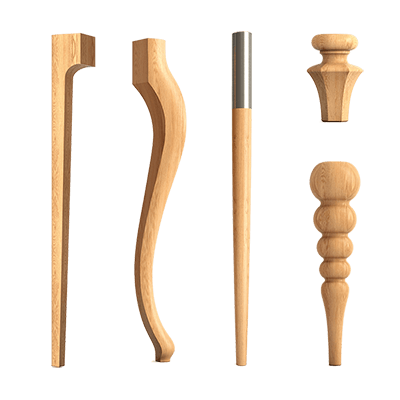
The MN-192 card specifies dimensions of 150 × 60 and 240 × 60 mm in A × B format, wood — beech or oak, sanding — "Prestige". The product is supplied without painting, fasteners are purchased separately. These characteristics allow you to choose the blank, but by themselves do not determine the bench design.
Before buy wooden furniture leg MN-192, check the vertical dimension chain:
Height of the new box = height of the finished seat − height of the leg − height of the lid and soft part assembly − mounting additions.
The formula applies to a scheme where the leg is entirely below the body. If part of the support is recessed into the base, its actual protrusion is used in the calculation. Mounting additions are only those dimensions not yet accounted for: for example, a protruding foot or the external part of the fastening assembly. You cannot add the entire length of the pin: a significant part of it is inside the connection.
Our factory also produces:


Comparing two projects at the same seat height
Let's take a conditional example, not a standard or a ready-made manufacturer's project. The total height of the unloaded seat is 480 mm, the lid together with the soft part takes up 80 mm, and the total mounting additions are 10 mm.
| Example parameter | Legs 150 mm | Legs 240 mm |
|---|---|---|
| Height of finished seat | 480 мм | 480 мм |
| Lid and soft part | 80 мм | 80 мм |
| Mounting allowances | 10 мм | 10 мм |
| Remains for the outer height of the box | 240 мм | 150 мм |
First calculation: 480 − 150 − 80 − 10 = 240 mm. Second: 480 − 240 − 80 − 10 = 150 mm. The difference is 90 mm, but for now this is an additional body size, not a promise of specific capacity.
Assume that in both options the internal structural height losses are 30 mm. Only elements inside the box are considered here, without re-subtracting the lid. Then the free depth will be 210 and 120 mm. For a conventional rectangular cavity with a length of 900 mm and a width of 350 mm, the geometric volume will be 66.15 and 37.8 liters, respectively. The difference is 28.35 liters.
Such an increase is obtained only with the same internal layout and no additional protrusions in the cavity in question. Reinforcement of the base, a different bottom position, or the lid mechanism will change the result. The number of actual cushions needs to be checked by placement, not by converting liters into a promised number of items.
Get Consultation
When a higher support is justified
The 240 mm option makes sense if a small box is sufficient and the project needs a larger clearance under the furniture. But for cleaning, measure the distance to the lowest part of the bench, not just the leg height. A protruding bottom, crossbar, or lower upholstery fabric can reduce the passage for a vacuum cleaner attachment.
You can also calculate it the other way around. If in this same example an internal depth of 200 mm is required, with 30 mm losses you need a box 230 mm high. With 150 mm legs, the total height will be 470 mm; with 240 mm legs, it will be 560 mm. Now the question to the buyer is specific: is such a seating height acceptable, or does the layout need to be changed?
Do not treat the dimensional calculation as permission to manufacture parts without checking deviations. If the required storage fills the entire internal height without any leftover, even a small change in construction or finishing may prevent closing. The allowance is set for real items and the mechanism; a universal number of millimeters here does not replace a trial fit.
The same applies to changing the cushion. In our calculation, increasing the lid assembly and soft part from 80 to 95 mm while keeping the total height will take 15 mm from the box. You cannot simultaneously keep the previous body height, add thickness on top, and continue to consider the bench the same height. Fix which dimension you are willing to sacrifice before sending parts into production.
When replacing legs on a finished bench, a different logic applies. A box 150 mm high will remain the same. If the previous total height was 480 mm, switching from 240 mm supports to 150 mm with unchanged mounting will lower it to 390 mm. There will be no additional space inside. For storage in this case, a new or reworked body is needed.
Furniture support under the box: where the mounting point should be located
A bench has two different tasks: to hold contents and to bear the load from a sitting person. The bottom chosen for blankets is not necessarily intended for attaching legs. An error occurs when a solid lower surface is seen on the drawing and any point on it is automatically considered suitable for a support.
Ask the furniture maker to show the load path: from the lid and support areas of the seat through the load-bearing structure of the body to the leg mounting points. The base plan should indicate mounting locations, their connection to side panels or crosspieces, and access to joints. A beautiful symmetrical arrangement on the outside does not yet confirm the correct functioning of the structure.
In particular, a leg should not be shifted inward just to hide it behind the facade. Such a change affects the position of the supports relative to the seat. It is checked together with the stability of the bench, including when sitting closer to the edge. The allowable offset cannot be determined by a single dimension B from the card.
The load-bearing capacity of a finished bench cannot be obtained by multiplying the total load rating per leg by the number of supports. Such a calculation omits the body, joints, lid behavior, and load distribution. It also says nothing about situations where several people sit asymmetrically. The allowable load is set by the manufacturer of the entire piece of furniture for the agreed-upon design.
For a long bench, the number of legs is also determined by the design, not by the familiar picture with four corner supports. If intermediate support is required, you need to understand which load-bearing element it supports. An additional leg under a weak area of the bottom does not replace a well-thought-out base.
There is also an operational check: the fasteners must not create dangerous protrusions in the textile compartment. The inner lining should be designed to cover the necessary areas but not restrict access to serviceable connections. This may require a removable element provided in advance, rather than cutting the lining after assembly.
What to order for wooden legs: FUR-001 or FUR-012
The FUR-001 and FUR-012 kits share a common part — an M8×60 stud, but have different mating elements. According to the manufacturer's published descriptions, the composition is as follows:
| Set | What's included | What to coordinate with the furniture maker |
|---|---|---|
| FUR-001 | Metric stud/self-tapping screw M8×60 and metal insert M8×13 | Installation of the insert into the intended load-bearing element |
| FUR-012 | Round mounting plate with a diameter of 37 mm with M8 thread and M8×60 stud | Location of the plate and its attachment to the base |
If the design provides for a threaded insert in a suitable base, you can purchase the FUR-001 kit with the M8 insertWhen a scheme with a round plate is selected, one should Order mounting kit FUR-012These are alternatives for alignment, not sequential amplification stages of a single node.
M8 thread matching does not answer all compatibility questions. The base material, available thickness at the mounting location, installation depth, placement of adjacent elements, and the ability to assemble the joint must be checked. For the plate, the attachment to the housing is additionally clarified: its published kit lists the plate and stud, while the mounting parameters to a specific base are determined separately.
For a storage ottoman, it is useful to examine the joint in cross-section. Will it be entirely below the internal cavity? Will a closing part be needed inside? Will the fastener interfere with the partition installation location? The answers affect both the usable size and the assembly sequence.
Do not purchase both kits for each leg without a specific design solution. For four supports, this would give eight studs, although the usual selected scheme provides for four. For the same reason, do not add separate studs to ready-made kits "just in case." First calculate the joints, then check the contents of each order item.
The hole diameter, drilling depth, and tightening method are determined by the craftsman based on the fastener documentation and the base structure. The purpose of preliminary selection is to have a ready solution before manufacturing the box, not to try to adapt randomly purchased hardware to already upholstered furniture.
The box opens, items are removed: we check the ottoman before upholstery
At the mock-up stage, check not only the closed silhouette but also the full usage scenario. The ottoman is placed in the planned location, the lid is opened, contents are stored, an item is retrieved from the bottom, and it is closed again. For geometric fitting, a lightweight mock-up can be used; the operation of the real lid is tested by the craftsman with the intended mechanism and safe retention.
The position near a wall is especially revealing. The lid may look suitable when closed, but when opened, it may hit the wall or adjacent furniture with its upholstery. The required clearance is determined by the actual trajectory, not assigned as a universal offset. If the ottoman must be moved away each time, this should be a conscious operating condition.
Check whether a hand fits in the rear part of the compartment and whether a large cushion can be removed without compression against the mechanism. Contents should not interfere with closing or get into moving joints. Include normal packing in the check, not a specially cleared demonstration box.
The furniture maker needs three coordinated images: a general cross-section of the bench, a plan of the load-bearing base with legs, and the position of the open lid. They should show internal obstructions, access to fasteners, and the boundaries of the upholstered part. A photo of similar furniture does not replace this set.
Before upholstering, also coordinate which operations are performed first. For example, if access to a joint disappears after tightening the lining, the craftsman must plan a different order or a removable cover. You cannot assume that the fabric can be neatly folded back if needed: its actual attachment may not allow it.
It is useful to record acceptance conditions in advance: the insert fits without forced compression, the lid performs its intended movement, items do not touch moving hardware, and fasteners are accessible in the agreed manner. A convenience check is not a strength test. Load tests of finished furniture are performed by the manufacturer according to the accepted method; there is no need to sit on a fragile demonstration mock-up or test it by jumping.
The final check concerns the soft seat. The approved sample must reproduce the future thickness and seating characteristics. Changing the soft part after the box is approved will affect the overall height, even if the legs remain the same. Note changes in one working drawing so that the upholsterer and carpenter do not make different versions of the same bench.
Legs made of beech or oak: we coordinate the finish with the box and upholstery
Tie the choice of wood species to the future appearance of the furniture. For a project with opaque painting, beech can be considered; for a solution with noticeable wood texture, oak. These are selection directions, not a ban on painting oak or tinting beech. The final result is determined by the blank and the agreed coating system.
In STAVROS designations, "under enamel" and "under tinting" refer to the quality of gluing, not to an already applied finish. In the first case, slats are not matched by color and pattern; in the second, such matching is provided, but natural differences are possible. The availability of the required version should be clarified for the selected wood species and size MN-192.
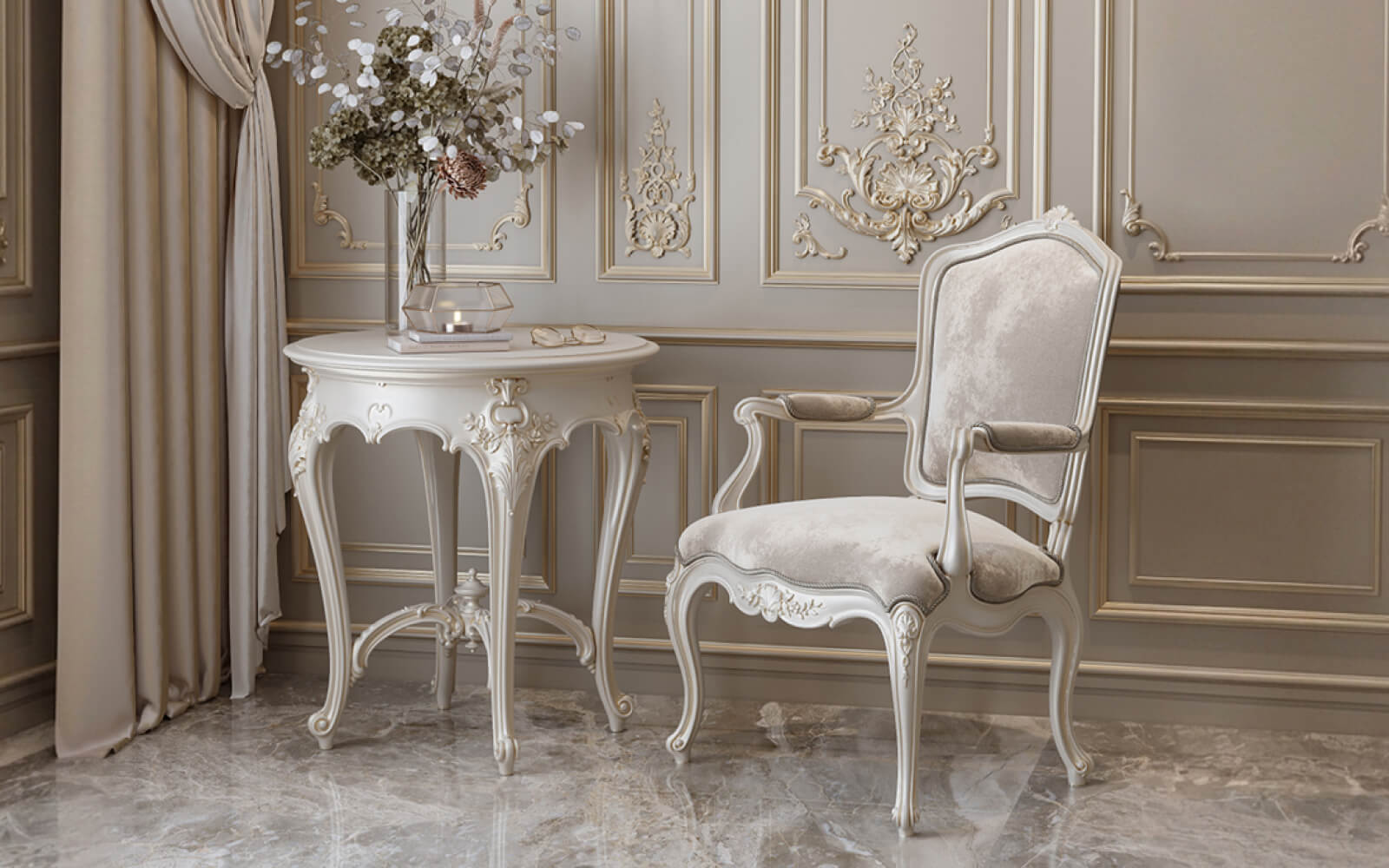
The "Prestige" mark characterizes sanding. It does not mean that the leg is painted in the color shown in the interior photo or has already been coordinated with the fabric. Therefore, when deciding Buy wooden furniture legs separately assign a finishing contractor.
Compare the color sample next to the box material and upholstery sample under the lighting of the future location. Names like "natural oak" or "warm white" are insufficient to replicate the result in different workshops. An approved physical sample with specified color and gloss is more useful, and for transparent finishes, also the acceptable character of the wood grain.
Before painting, coordinate the protection of threads and contact surfaces. The coating must not interfere with standard assembly of the unit. The order of preparation, application, curing, and assembly is determined by the contractor based on selected materials; a universal drying time for any enamel cannot be specified.
If the box and legs are finished by different contractors, provide them with one standard. This makes it easier to avoid a situation where each part was done conscientiously, but the set ended up with an unintended difference in shades.
How much does it cost to buy a set of MN-192 legs for one bench
by according to the prices on the MN-192 card, verified on September 5, 2026, four identical supports cost from 4,760 to 9,640 ₽ depending on height and wood. The quantity of four here is used only as an example for the estimate, not as a recommendation for any bench.
| Size A × B | Material | One leg | Four legs |
|---|---|---|---|
| 150 × 60 mm | Beech | 1 190 ₽ | 4 760 ₽ |
| 150 × 60 mm | Oak | 1 750 ₽ | 7 000 ₽ |
| 240 × 60 mm | Beech | 1 530 ₽ | 6 120 ₽ |
| 240 × 60 mm | Oak | 2 410 ₽ | 9 640 ₽ |
Transitioning from 150 to 240 mm increases the cost of four beech legs by 1,360 ₽, and oak legs by 2,640 ₽. However, a more expensive tall support does not provide more storage at a fixed seat height. Money and layout should be compared separately.
If the furniture maker chose FUR-012, four sets at the price shown during checkout of 152 ₽ will add 608 ₽. For beech legs of 150 mm, the subtotal will be 4,760 + 608 = 5,368 ₽. This does not yet include cabinet manufacturing, finishing, upholstery, and delivery.
Floor glides should also not be added automatically. Before buying the FUR-023 foot, check its compatibility with the leg base and the specific floor. The manufacturer classifies the model as part of the SUPER GLIDE sliding series; it is not a universal anti-slip furniture part intended to remain stationary when seated.
For a bench by the entrance, decide separately whether easy movement is needed. What is convenient during rearrangement may be undesirable when putting on shoes. The glide is chosen based on the required furniture behavior, not just size matching. Do not transfer the promise of protection to any floor surface without checking compatibility with its covering.
It is convenient to break down the full estimate into line items:
| Expense item | How to determine the total |
|---|---|
| Legs MN-192 | Agreed quantity × execution price |
| Attachment to the base | Selected kits and necessary fasteners without duplicates |
| Floor protectors | Only after choosing a floor solution |
| Leg finish | According to the contractor's calculation and approved sample |
| Box and lid | According to the workshop's working design |
| Soft part, upholstery, and opening mechanism | According to the agreed configuration |
| Assembly and delivery | Per the contractors' terms, without recounting included works |
Before payment, check current prices, availability of the full quantity, and payment and delivery terms. The readiness of wooden parts and the readiness of the entire bench are different timelines: after receiving the legs, finishing and assembly may remain.
How to order wooden legs for a storage bench
The order can be placed when the selected height simultaneously aligns with the seating, internal space, and base structure. If blankets do not fit, first change the box or the contents of the task. Do not buy beautiful legs hoping that the carpenter will later find missing centimeters inside.
When the required height cannot be achieved with either of the two options, it is more reasonable to buy legs for a bench another suitable model. For a project without separate painting, look for a ready-made version with a finish, rather than accepting an unpainted MN-192 as a finished colored part.
Pass the completed specification to the manager, and give a copy of it along with the drawings to the furniture maker:
| Position | What to fill in |
|---|---|
| Product | Geometric furniture leg MN-192 |
| Size | 150 × 60 or 240 × 60 mm |
| Wood | Beech / oak: ___ |
| Regluing quality | Agreed available execution: ___ |
| Sanding | «Prestige» |
| Quantity | According to the approved base scheme: ___ pcs. |
| Mounting | Selected set, quantity and additional fasteners: ___ |
| Floor protectors | Article number and quantity / not required: ___ |
| Finishing | Coating, color reference, gloss and executor: ___ |
| Banquette project | Overall height, internal dimensions, base layout, drawing version: ___ |
| Delivery | Recipient, city, address, agreed method: ___ |
Attach a cross-section and plan with installation points to the request. As a separate question, ask to confirm the configuration of legs and fasteners. Leave the strength check of the entire bench, the number of supports, and the box structure to the furniture manufacturer: a components manager does not replace the design of the finished product.
If the order is sent directly to the workshop, assign in advance who checks the completeness and reports discrepancies. Specify the condition in which parts are transferred between contractors: without coating, after trial assembly, or after finishing. Otherwise, one contractor may expect already painted legs, while another may consider their task complete upon delivery of blanks.
Upon receipt, match the article number, dimensions, wood, quantity, and package contents against the specification before starting any irreversible work. Test-fit the approved assembly on the intended base, then hand off parts for finishing using the accepted technique. This will help detect any configuration errors before the finished upholstery covers access to the fasteners.
Select the MN-192 height and approve the order set
Questions before purchasing MN-192 wooden legs
Which MN-192 to choose for a deep box — 150 or 240 mm?
With limited overall height, the starting point is 150 mm. But first, check what internal depth is actually needed: sometimes a large cushion does not fit in width, and increasing the height changes nothing. Choosing a support solves only part of the dimensional task.
Will there be more storage space after replacing the legs on a finished bench?
No, if the body remains the same. Such an update may change the seating position and the clearance above the floor. Increasing storage would require reworking the box itself; this should be assessed separately, including the compatibility of the existing lid and upholstery with the new design.
Can the supports be attached directly to the bottom of the box?
Only if the bottom is specifically designed as a load-bearing element and the assembly is confirmed by the project. The part's name alone doesn't determine this. Ask the manufacturer to specify the purpose of this component, its connection to the body, and the acceptable method for installing the supports before preparing any holes.
How do FUR-001 and FUR-012 differ in terms of future repairs?
Response elements vary: a threaded insert and a mounting plate. For maintenance, not only the type of kit matters, but also access to it. Find out in advance whether the connection can be checked or replaced without removing the entire upholstery, and how the fastening area inside the bench is covered.
Do separate studs need to be added to the fastening kit?
For the standard configuration of the selected FUR-001 or FUR-012, no—the stud is already included. A separate item may be needed for repairs, an agreed reserve, or a different scheme. In your request, specify the purpose of such a purchase so that an extra part does not appear due to double counting.
Are four legs enough for a long bench?
This cannot be determined by length alone. The structure of the load-bearing base, support points, and usage conditions are needed. Inform the workshop whether several people will sit at the same time and where seating is possible. An intermediate support is added at a calculated location, not just at the geometric center of the bottom.
Are MN-192 legs supplied painted?
The standard version of the model in question is unpainted. When agreeing on additional work, ask to separately specify who applies the coating, according to which sample, and whether reassembly is included. The presence of a colored interior image does not by itself change the composition of the order for wooden parts.
What costs are not included in the price of four legs?
The table shows only four wooden supports. When comparing workshop quotes, check whether fastening, floor glides, finishing, the box, the lid, the soft part, the mechanism, assembly, and delivery are included. Compare identical configurations: a low intermediate total does not mean a cheaper finished bench.