










































































Article Contents:
- A supplier database is not just a contact directory
- Why a supplier should not receive a single status for the entire product range
- The core principle of AVL: supplier + scope
- What data to keep after the first order
- APPROVED: what this status should mean
- CONDITIONAL: the most useful intermediate status
- SUSPENDED: temporarily stop releasing new orders
- REJECTED and NOT EVALUATED are not the same thing
- REJECTED
- NOT EVALUATED
- Supplier A — APPROVED
- NOT YET QUALIFIED
- COMMERCIAL SUPPLIER
- PRODUCT MANUFACTURER
- MANUFACTURER SKU
- How is an AVL different from a regular contact database?
- Can a supplier be approved for all wooden trim at once?
- What does CONDITIONAL mean?
- What is SUSPENDED for?
- Do all suppliers need to be re-qualified every year?
- Can one supplier be both PRIMARY and SECOND SOURCE at the same time?
- Why separate Supplier and Manufacturer?
- What should be done if an APPROVED supplier has not been used for a long time?

Over the course of a year, the company furnishes a hotel, a restaurant, an office, several apartments, and a country house. At each new project, the buyer starts the search again:
who will supply the wooden molding?
Although three months ago another employee had already checked Supplier A, ordered samples, verified SKUs, accepted the first batch, and closed a complaint.
There is also the opposite mistake:
we have already bought from them — so the supplier is approved.
But the previous order could have consisted of 20 m of simple skirting board, while the new project requires 600 m of complex oak moulding with repeat batches over eight months. The risks of these purchases are different.
Therefore, a building materials supplier database should store not a list of phone numbers, but corporate knowledge:
SUPPLIER + PRODUCT SCOPE + STATUS + EVIDENCE + PERFORMANCE + REVIEW DATE.
Such a register is often called an Approved Vendor List — AVL, or a register of approved suppliers.
For wooden trim, this logic is especially useful: a supplier may be thoroughly vetted for standard skirting boards, conditionally approved for mouldings, and not assessed at all for large cornices. A single overall company status hides this difference.
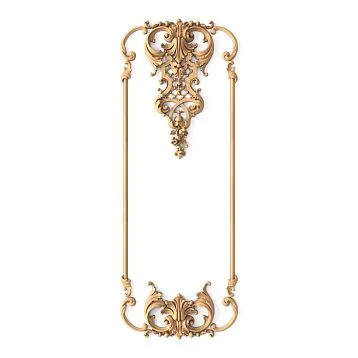
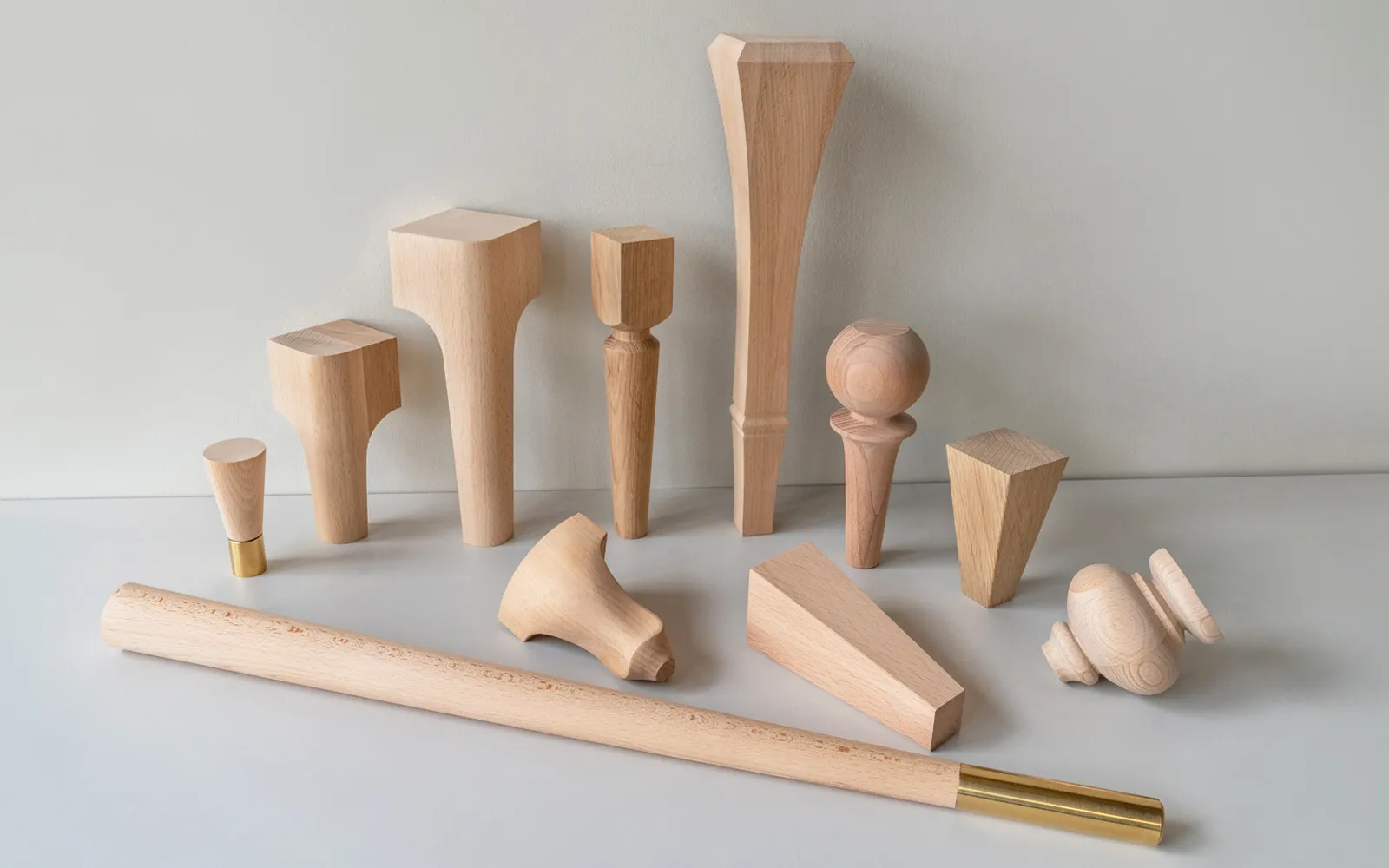
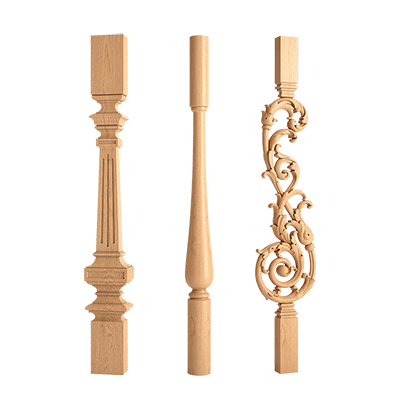
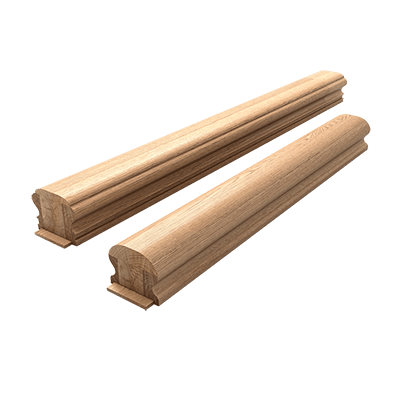
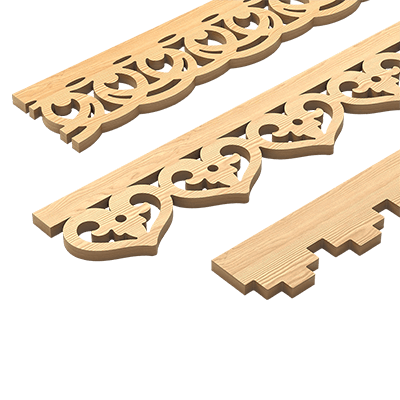
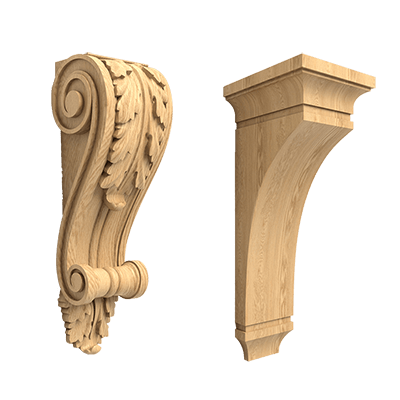
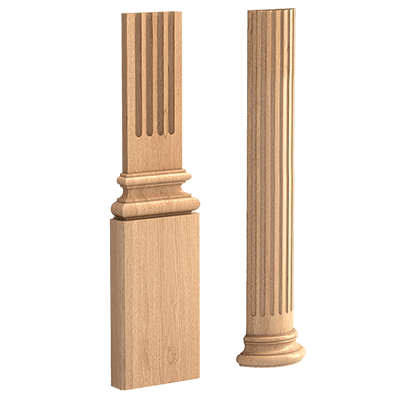
Current product groups can be checked in the section STAVROS wooden molding, and physical reference samples — in the section samples of trim products.


A supplier database is not a contact directory
Bad option:
| Company | Phone | | --- | --- | | Supplier A | ___ | | Supplier B | ___ | | Supplier C | ___ |
This is an address book.
It does not answer the questions:
- what exactly the supplier is able to supply;
- which items have already been checked;
- whether there was a physical sample;
- what volume actually passed through it;
- how deadlines were met;
- whether there were any complaints;
- whether the supplier fulfilled a repeat order;
- when the last verification was performed;
- whether the status is valid today.
A proper AVL should show not just the presence of a company in the database, but the basis for trust for a specific scope.




Why a supplier should not receive a single status for the entire product range
Let's imagine Supplier A.
It has successfully supplied:
PLT-A — a standard oak skirting board.
From this, one cannot automatically conclude:
Supplier A APPROVED FOR ALL WOOD PRODUCTS.
The company has not yet proven that it can just as reliably handle:
- complex relief moulding;
- large cornice;
- painted moulding;
- custom profile;
- multi-stage supply;
- repeat order in six months.
Therefore, instead of one broad status, it is better to use:
APPROVED — standard plinth
CONDITIONAL — complex moulding
NOT EVALUATED — custom profile
This way the buyer sees the actual scope of qualification.
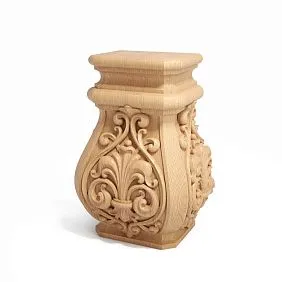
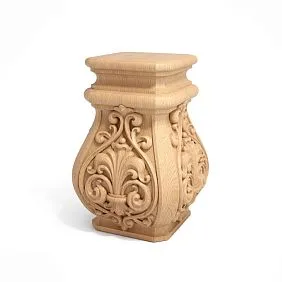
Our factory also produces:






The main principle of AVL: supplier + scope
It is not the company logo that is qualified in general.
What is qualified is the combination:
Supplier A + Standard Wooden Plinth
Or:
Supplier A + MLD-A / Oak / Approved Finish
The same company may have:
| Scope | Status | | --- | --- | | Standard skirting board | APPROVED | | Serial moulding | APPROVED | | Painted moulding | CONDITIONAL | | Custom cornice | NOT EVALUATED |
This is much more precise than the phrase:
the supplier is good.
It is scope that determines how applicable past experience is to a new order.
Get Consultation
What data to keep after the first order
After the deal Material suppliers should leave in the corporate database not only the manager's contact.
It is useful to save:
- official commercial name;
- Vendor ID;
- contacts;
- product manufacturer;
- product group;
- verified SKUs;
- the material;
- length;
- finish;
- link to master sample;
- actual order volume;
- promised lead time;
- actual lead time;
- incoming inspection result;
- claims;
- additional orders;
- final supplier score;
- date of last review.
Then the next buyer does not start from scratch.
They first review the accumulated experience.
APPROVED: what this status should mean
APPROVED is useful only with a clear definition.
For example:
the supplier has passed the company-established verification for the specified scope and can be considered an approved source for the next purchase.
At the same time APPROVED does not mean:
- the lowest price;
- the item is currently in stock;
- the lead time is suitable;
- all products of the company are approved;
- the supplier will never make a mistake.
AVL confirms the qualification.
Commercial terms are still rechecked.
CONDITIONAL: the most useful intermediate status
Without CONDITIONAL the registry often turns into a primitive:
yes / no.
But real procurement is more complex.
For example, a supplier:
- identifies SKU well;
- provides drawings;
- has samples;
- can work with standard skirting;
but has not yet completed a large-scale serial supply of moulding.
Status:
CONDITIONAL — first production batch required
Or:
CONDITIONAL — standard SKU only
shows a limitation without an unjustified full rejection.
SUSPENDED: temporarily do not release new orders
SUSPENDED needed when the issue requires investigation.
For example:
- several serious mispicks;
- recurring labeling error;
- unresolved claim;
- supplier changed the production source;
- a significant SKU repeatability issue has emerged.
This does not necessarily mean a final rejection.
The status says:
do not release new orders for this scope until review.
After corrective action, the supplier can regain qualification.
REJECTED and NOT EVALUATED are not the same
REJECTED
The supplier or a specific scope was checked and did not pass qualification.
NOT EVALUATED
The supplier is known, but a check for this category has not yet been performed.
This is an important distinction.
NOT EVALUATED cannot be interpreted as:
a bad supplier.
But it also cannot be used as an approved source without an additional procedure.
What is sufficient to check for a standard wooden skirting board
For a standard mass-produced skirting board, the scope may include:
- exact SKU;
- manufacturer;
- the material;
- dimensions;
- commercial length;
- packaging;
- marking;
- batch repeatability;
- the ability to reorder.
After a successful delivery and a normal repeat order, the following can be confirmed:
PLINTH / STANDARD SKU — APPROVED.
But this status does not automatically carry over to moldings or custom profiles.
Why moldings are better handled as a separate scope
For a relief molding, the value is higher:
- full cross-section;
- relief depths;
- profile matching;
- angle repeatability;
- physical sample;
- surface quality.
If Supplier A did an excellent job on a baseboard, this does not confirm their ability to deliver a complex MLD-B four months later in the same geometry.
Therefore:
APPROVED FOR PLINTH
is not equal to:
APPROVED FOR MOULDINGS.
If necessary, the AVL can store a list of specific moldings that have already been verified.
For a large cornice, the scope must account for logistics
A supplier may work excellently with small profiles and handle a large long-length cornice poorly.
Additional risks:
- packaging;
- marking of the long-length item;
- loading;
- transportation;
- batch separation;
- damage to external elements.
Therefore, for the cornice, successful logistics experience also becomes part of the evidence.
The status for the skirting board should not automatically cover a large KZ-C.
Approved SKU List within a single supplier
It is useful to see not only the scope, but also specific items.
For example:
Supplier A — APPROVED
- PLT-001;
- PLT-006;
- MLD-059.
NOT YET QUALIFIED
- KZ-010;
- MLD-X custom.
This way, a new buyer immediately understands:
that has already gone through a real project cycle.
But AVL does not need to be turned into a copy of the manufacturer's catalog.
SKUs here are needed as evidence of qualification boundaries.
The registry remains about the supplier, not about a product catalog
The main catalog answers:
what even exists at the manufacturer?
AVL answers:
with which sources can our company already safely work for this group?
These are different systems.
A product nomenclature can contain thousands of SKUs.
AVL should help the buyer quickly select a proven commercial route, not replace the manufacturer's website or the ERP product catalog.
Building materials suppliers: storing the previous price is useful, but not enough
If in the registry construction materials suppliers are compared only by the latest price, the database will quickly become outdated.
The price may change after six months.
History retains its value much longer:
- delivered on time;
- confirmed the exact SKU;
- did not mix up the material;
- labeled it properly;
- closed the additional order;
- quickly resolved the complaint;
- repeated the profile after a few months.
That is, the registry must store performance, not just historical price.
Supplier Evidence Pack: why the supplier received the status
Status APPROVED must have an evidence base.
Not:
the manager liked the company.
But:
- technical card;
- physical sample;
- control batch;
- order;
- acceptance record;
- photos of marking;
- claim and its closure;
- supplier scorecard;
- repeat order.
This can be called a Supplier Evidence Pack.
It is not necessary to assemble a huge archive.
But for each significant qualification it must be clear:
on what basis the status was established.
The Supplier Scorecard should change the AVL
After each substantial project, performance should not live separately from the database.
For example, Supplier A was:
APPROVED.
Then:
- two underdeliveries;
- one serious mis-shipment;
- a recurring labeling issue.
It is not necessary to immediately move it to REJECTED.
Allowed:
APPROVED → CONDITIONAL
and add the condition:
next production batch inspection required.
This way the register reflects the new risk.
Corrective Action allows you to return the status
Suppose the problem was with labeling.
Supplier:
- changed the internal procedure;
- introduced a new label;
- performed a pre-shipment inspection;
- delivered the next batch without errors.
After confirmation:
CONDITIONAL → APPROVED.
This is an important vendor management feature.
The AVL should not turn into a permanent blacklist where one old mistake forever destroys a supplier.
It should reflect the current level of trust.
APPROVED should not mean "approved forever"
Over a year, the following may change:
- product range;
- production;
- raw material supplier;
- contact persons;
- packaging;
- lead times;
- logistics;
- availability of a specific SKU;
- possibility of reordering.
Therefore, the record needs:
REVIEW DATE.
In procurement systems, approved supplier entries often have a separate re-evaluation date specifically to confirm the currency of qualification.
The company determines the frequency itself.
There is no need to assign a universal "once every 6 months" for everyone.
Requalification: when a repeat check is needed outside the calendar
Trigger may appear earlier than the review date.
For example:
- no orders for a long time;
- the manufacturer changed;
- the SKU changed;
- the configuration changed;
- a major claim appeared;
- the lead time changed dramatically;
- the supplier switched to a different commercial channel;
- a new project ten times larger than the previous one.
In that case, the old qualification may be too weak for the new risk.
No need to repeat qualification from scratch every time
if:
- supplier is the same;
- manufacturer is the same;
- SKU is the same;
- material is the same;
- configuration has not changed;
- past deliveries are stable;
the full procedure may be excessive.
Before a new project, it is enough to confirm the critical parameters:
- the item is still in production;
- material is available;
- length is current;
- volume is possible;
- lead time is confirmed;
- contact is valid;
- reference remains the same.
This way AVL truly speeds up procurement rather than creating a new layer of bureaucracy.
The supplier base and second source should be one system
A backup source should not be stored in a separate file.
In AVL it may look like this:
| SKU | Primary | Second Source | | --- | --- | --- | | PLT-A | Supplier A — APPROVED | Supplier B — APPROVED | | MLD-B | Supplier A — APPROVED | Supplier C — CONDITIONAL | | KZ-C | Supplier A — APPROVED | none |
Now the continuity plan becomes part of vendor governance.
The buyer immediately sees:
- where there are two verified routes;
- where backup is still conditional;
- where a single-source risk exists.
Construction materials supplier companies: separate the seller and the manufacturer
У building materials supplier companies the role may be different.
The same product from manufacturer X may be sold through:
- a direct channel;
- a distributor;
- regional partner.
Therefore, in AVL it is useful to separate:
COMMERCIAL SUPPLIER
Who the company actually buys from.
PRODUCT MANUFACTURER
Who manufactures the product.
MANUFACTURER SKU
How the product is identified by the manufacturer.
This is especially important if the commercial channel changes tomorrow.
The technical identity of the product must be preserved.
One brand may have multiple Vendor IDs
If a company operates through different legal entities, branches, or websites, duplicates can easily be created.
For example:
Alfa LLC
Alpha
Alpha
Alpha SPb
Alpha Decor LLC
Before creating a new record, you need:
SUPPLIER DUPLICATE CHECK.
Otherwise, performance gets spread across five cards, and none of them shows the real history.
AVL must have an owner
You don't necessarily need to hire a separate vendor manager.
But there must be a role responsible for:
- statuses;
- review dates;
- closing duplicates;
- evidence;
- scorecards;
- suspended suppliers;
- requalification;
- change history.
Without an owner, within a year the database turns into an archive.
A typical picture:
- 37 suppliers;
- 8 duplicates;
- several companies are no longer operating;
- the "reliable" status was assigned by someone unknown;
- no one controls the review date.
Such an AVL is worse than an ordinary notebook, because it creates a false sense of verification.
Main structure of the Approved Vendor List
Practical format:
| Field | What to store | | --- | --- | | Vendor ID | unique ID | | Supplier | commercial supplier | | Manufacturer | product manufacturer | | Scope | skirting / molding / cornice | | Approved SKU | if applicable | | Status | APPROVED / CONDITIONAL / SUSPENDED | | Evidence | sample / order / inspection | | Last Order | date | | Last Score | result | | Review Date | date | | Owner | responsible person | | Notes | restrictions |
For a real project, you can add:
- region;
- warehouse;
- lead time;
- second-source role;
- last complaint;
- corrective action;
- legal entity.
But the basic version already gives the buyer value.
Operational View: the buyer doesn't need the entire history on one screen
The full AVL can be large.
But before a new order, a short selection is enough for the buyer:
PLT-A → Approved vendors: A, B
MLD-B → Approved vendor: A; Conditional: C
KZ-C → Approved vendor: A; Single source
If a new supplier is not in the approved scope:
Qualification required.
This is much faster than reading the entire archive of past deliveries every time.
How AVL accelerates a new project
Without a database:
find companies → request documents → receive samples → verify → place a test order → evaluate.
With AVL:
check approved vendors → confirm relevance → request current terms → select.
if:
- scope matches;
- SKU unchanged;
- qualification is current;
- performance is normal;
new sourcing is significantly reduced.
But the acceleration comes from accumulated evidence, not from abandoning control.
AVL does not replace a current request for price and lead time
APPROVED does not mean:
- the lowest price;
- item is available today;
- supplier offers the best lead time;
- minimum order is suitable;
- delivery is available on the required date.
Before a new order, the following are still needed:
- current price;
- availability;
- lead time;
- logistics;
- commercial terms.
AVL answers only:
whether this supplier can be considered a previously qualified source for this scope.
How to compare two APPROVED vendors
If PLT-A is approved with Supplier A and Supplier B, a new project can compare them based on current commercial terms.
For example:
| Parameter | A | B | | --- | --- | --- | | Technical status | APPROVED | APPROVED | | Current price | ___ | ___ | | Lead time | 12 d | 18 d | | Qty available | 500 | 900 | | Last score | 91 | 86 | | Last order | 2 months | 8 months | | Review status | current | recheck due |
Now the tender begins not with the question:
who is even capable of delivering?
and with:
which of the already verified sources is best suited for the current order?
When a supplier needs to be moved to SUSPENDED until the next review
It is not necessary to wait for a calendar date.
Signals:
- open critical complaint;
- loss of confirmed product identity;
- manufacturer change without approval;
- serious repeatability issue;
- systematic failure to meet confirmed deadlines;
- unresolved SKU replacements.
SUSPENDED protects the buyer from automatic reordering out of habit.
After the investigation, the status can be changed.
Status history cannot be deleted
Was:
APPROVED
Then:
SUSPENDED
after corrective action:
CONDITIONAL
and then:
APPROVED.
You cannot keep only the last word in the database.
History helps to understand:
- what happened;
- when;
- why the status changed;
- what the supplier fixed;
- how the next batch went.
This is especially useful when a buyer or project manager changes.
Construction suppliers: not all records need to have the same depth
For a C3 item, the following may be sufficient:
- Vendor ID;
- scope;
- one successful delivery;
- status;
- review date.
For a critical individual profile, the evidence will be deeper:
- master sample;
- drawing;
- control batch;
- supplier scorecard;
- second-source status;
- corrective actions;
- review notes.
Construction suppliers should be managed in proportion to risk.
The AVL does not have to be equally complex for every item.
Risk-based review: not all scopes need to be reviewed equally often
A review date is more useful if it takes risk into account rather than being assigned equally to all suppliers.
For C1 items that affect the critical path or must be repeated across multiple sites, the review may include:
- confirmation of the current SKU;
- current manufacturer;
- available length;
- ability to replicate the finish;
- current lead time;
- claims status;
- the ability to reorder;
- availability of a second source.
For C3 items, a lighter check is sufficient.
That is, the AVL can store:
REVIEW LEVEL: FULL / LIGHT / EVENT-DRIVEN
FULL — repeated technical and commercial review.
LIGHT — confirmation of key parameters.
EVENT-DRIVEN — review only on trigger: new complaint, manufacturer change, large project, new SKU.
This way the base doesn't overload procurement with identical procedures for all items.
How to transfer AVL between Excel, ERP, and an internal system
The first versions of the registry are often kept in a spreadsheet.
This is fine if the structure is already disciplined.
At minimum, it's important to keep separate fields rather than one long comment:
- Vendor ID;
- Supplier;
- Manufacturer;
- Scope;
- SKU;
- Status;
- Evidence;
- Last Score;
- Review Date;
- Owner;
- Status History ID.
If the company later moves AVL to ERP or CRM, these fields can be migrated without losing meaning.
Bad source format:
Supplier A — good, we've worked together for a long time, everything seemed fine.
Such a record is almost impossible to automate.
A good format:
V-014 / Supplier A / Standard Plinth / APPROVED / Score 91 / Review 01.03 / Evidence EP-014.
Now data can be filtered, compared, and transferred between systems.
The main rule during migration:
do not lose the history of statuses and evidence.
If only the current status is transferred to the new system APPROVED, the understanding that the supplier was previously SUSPENDED, underwent a corrective action, and only after that had its status restored, will be lost.
Nine mistakes of the supplier database
Mistake 1. Storing only the name and phone number.
This is a contact list, not an AVL.
Error 2. Setting APPROVED without evidence.
The status cannot be verified.
Error 3. Approving a company for the entire product range at once.
Success with skirting boards does not prove competence with complex cornices.
Error 4. Not separating the manufacturer from the seller.
When the channel changes, product identity is lost.
Error 5. Not setting a review date.
Old qualifications live forever.
Error 6. Not changing the status after problems.
The AVL stops reflecting actual performance.
Error 7. Deleting status history.
The corrective action context disappears.
Error 8. Creating duplicates of the same company.
The experience is scattered across multiple cards.
Error 9. Treating APPROVED as a guarantee of price and availability.
Qualification and current commerce are different things.
Final workflow
- Find a potential supplier.
- Conduct qualification.
- Define the exact scope.
- Assign a Vendor ID.
- Lock manufacturer.
- Save approved SKU, if applicable.
- Collect evidence.
- Assign status.
- Place the first order.
- Update supplier score.
- Save claims and corrective actions.
- Change status if necessary.
- Set review date.
- Add second-source role if the supplier is a backup.
- Check relevance before a new project.
- Confirm current price and lead time.
- Conduct requalification for significant changes.
- Keep a history of statuses.
- Delete duplicates only after merging evidence.
- Use the AVL as the first source for the next sourcing.
This is how the supplier base turns from a list of contacts into a working vendor management system: the company does not forget the qualification already completed, but also does not transfer old trust to new goods automatically.
Questions about the supplier registry
How does the AVL differ from a regular contact database?
The AVL stores scope, qualification, status, evidence, performance, and review date, not just the company name and phone number.
Can a supplier be approved for all wooden trim at once?
Only if the company has actually verified the entire such scope. Usually it is safer to separate skirting, moulding, cornice, and individual items.
What does CONDITIONAL mean?
Work can be done under a certain condition: for example, only after a control batch or only for standard SKUs.
What is SUSPENDED for?
To temporarily stop new orders for the problematic scope until an investigation or corrective action.
Do all suppliers need to be requalified annually?
Not necessarily. The review should be proportionate to risk and changes; for a stable item, it is enough to confirm the critical parameters.
Can one supplier be both PRIMARY and SECOND SOURCE at the same time?
For different SKUs — yes. The status must be stored at the supplier + product scope level.
Why separate Supplier and Manufacturer?
Because the same product can be sold through different commercial channels, while technical identity is tied to the manufacturer and SKU.
What should be done if an APPROVED supplier has not been used for a long time?
Check the relevance of the scope, contacts, SKU, lead times, and ability to supply. If there are significant changes, conduct requalification.