























Article Contents:
- Why it's important to look beyond photos before buying balusters
- How to use the wooden balusters catalog
- Filter by product type
- Filter by material
- Filter by style and collection
- Filter by size
- How to work effectively with the online catalog
- Which balusters are most often bought for wooden stairs
- Turned wooden balusters: absolute leaders
- Flat balusters: a choice for a country house and a wooden home
- Carved balusters: for those who want more
- Square balusters: minimalism without compromise
- Photos of balusters in the catalog: what to look at before ordering
- Proportions, not just shape
- Visual density of the row
- Wood grain pattern in photos
- Quality of sanding
- Compatibility with handrail
- Price of wooden balusters: what the cost depends on
- Wood species — the main factor
- Shape and profile complexity
- Processing class
- Size of the item
- Order volume
- Approximate price table
- Wooden balusters: which material to choose
- Oak: the best choice for a permanent home
- Beech: a universal species for finishing
- Pine: an honest choice for a practical project
- For painting — beech, for clear varnish — oak
- What to buy together with balusters: handrails, posts, components
- Support columns
- Handrails and balustrades
- Fasteners
- Complete set in one order
- How to avoid mistakes with quantity: a quick algorithm
- Wooden balusters from the manufacturer: what a proper purchase looks like
- Buy from the manufacturer, not from a reseller
- Order in one batch
- Check the wood moisture content
- Get a free kit calculation
- Errors when choosing balusters from the catalog
- Buy wooden balusters with delivery: regions and terms
- Where to buy balusters for stairs: final block
- About the Company STAVROS
- FAQ: Answers to Popular Questions
- Where to buy wooden balusters for stairs?
- What is better to buy: flat, carved or turned balusters?
- What does the price of balusters depend on?
- Can I buy balusters and handrails together?
- How to choose balusters by photo in the catalog?
- Can I order custom-height wooden balusters?
- How to choose balusters to match the posts?
- Wooden balusters: buy in Moscow or with delivery — which is more profitable?
I opened the catalog — my eyes are overwhelmed. Dozens of models, different profiles, several wood species, two price tags that differ by three times. How to choose? What to look at first? Why does one baluster cost 1,900 rubles and another 7,000, and what is the difference between them?
If you are exactly at this point right now — look Balusters for staircase and trying to understand what exactly your home needs — this article is written for you. Not for professional builders who know everything by heart. For a smart buyer who wants to understand the topic and buy balusters for the staircase consciously — with an understanding of shape, material, size, price, and what else needs to be purchased together.
We will break it all down step by step: from the logic of browsing the catalog to the final checklist before ordering.
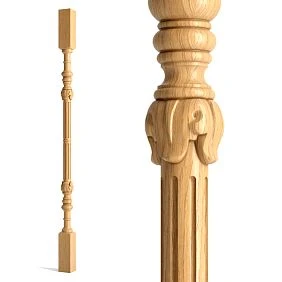
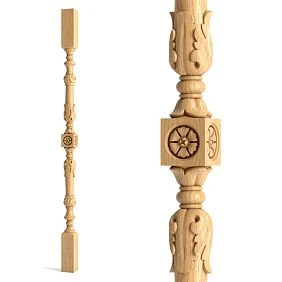
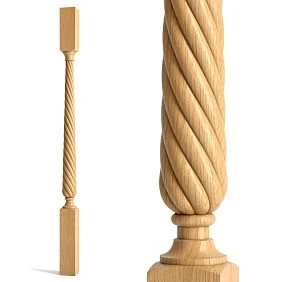
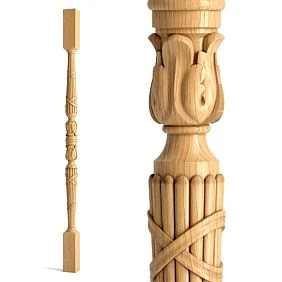
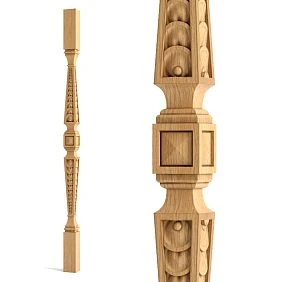
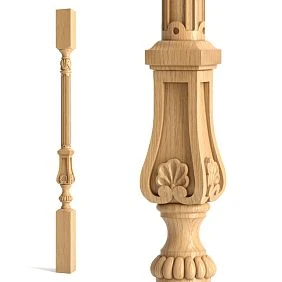
Why it is important to look not only at photos before buying balusters
A photo is the first filter. But far from the only one. This is where most buyers make their first mistake: they choose a baluster because it looks beautiful on the screen — and do not think about how well it fits a specific staircase, a specific handrail, a specific post.
Imagine: you bought an elegant turned baluster with thin necks and vases — it looks great in the photo. But your handrail has a different groove, the post is from a different series, and the style of the house is strict Scandinavian minimalism, where this particular shape looks like a random quote from another era. The result is visual dissonance that cannot be fixed without complete dismantling.
The right choice of a baluster from the catalog is a sequential work with several parameters:
-
Style and shape: matching the interior and architectural character of the staircase
-
Height and diameter: compliance with railing standards and compatibility with the handrail
-
Wood species: hardness, texture, tone, behavior under coating
-
Type of treatment: for which finish coating — varnish, oil, paint, stain
-
System compatibility: handrail + post + baluster — one manufacturer, one series
Only after going through all these points does the catalog photo turn from a beautiful picture into a real selection tool. This is how a professional approach works — and this is what real experience in project work with wooden staircases teaches.
How to use the catalog of wooden balusters
A good catalog is not just a showcase. It is a navigation tool that allows you to filter out from 50–70 models exactly those that suit your task in 10–15 minutes. If the catalog is properly structured, it has several levels of filtering.
Our factory also produces:
Filter by product type
The first step is to choose the type of baluster:
-
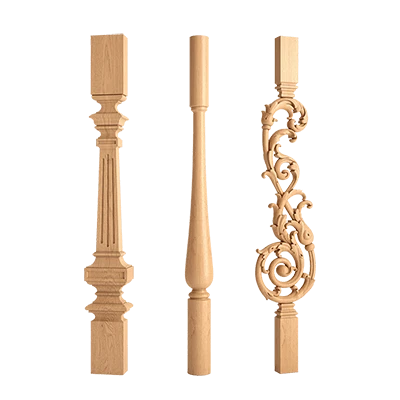
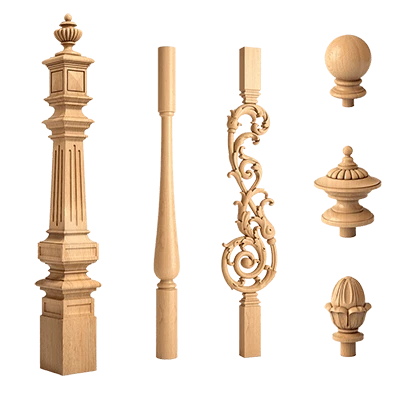
Turned — classic profile with vases and necks, lathe-turned
-
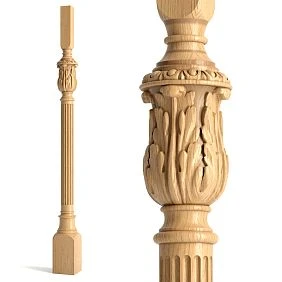
Carved — relief ornament on a turned or flat blank
-
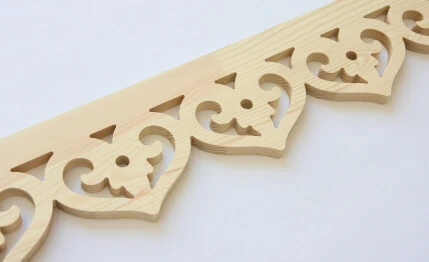
Flat — cut from a board along a shaped contour
-
Square — straight section without rounding
Each type is a fundamentally different aesthetic. Buy carved wooden balusters — means choosing decorative richness. square balusters for stairs — is geometric strictness without ornament. Decide on the type before looking at specific models.
Get Consultation
Filter by material
-
Oak — hard, durable, with expressive texture
-
Beech is dense, uniform, and takes staining and painting well.
-
Pine is affordable, easy to work with, ideal for cottages and country houses.
-
Ash is light, with pronounced grain, popular in Scandinavian interiors.
The choice of material affects both the price and the visual result. Wooden balusters Different wood species with the same shape produce completely different effects: oak looks richer and stricter, pine looks warmer and softer.
Filter by style and collection
Professional catalogs group models by collections: classic, baroque, folk, modern, Scandinavian. This is convenient: you don't need to guess which style a particular shape belongs to — the manufacturer has already done that work.
Filter by size
Standard baluster height is 900–1000 mm total length. Turned diameters: 45, 50, 55, 60, 70 mm. Square cross-sections: 40×40, 50×50, 60×60 mm. Choose the size according to the standards for baluster height for staircases the proportions of your structure.
How to efficiently work with the online catalog
Practical algorithm:
-
Define the style → choose the type (turned/flat/square/carved)
-
Choose the wood species → this is the second filtering level
-
View photos in the catalog → evaluate the shape, proportions, profile density
-
Check the dimensions → height, diameter, compatibility with the handrail
-
Clarify the availability of a post from the same series
-
Request a kit calculation from the manager
This order cuts selection time in half and eliminates errors.
Which balusters are most often bought for a wooden staircase
Let's look at practice, not theory. Which models actually sell most often — and why?
Turned wooden balusters: absolute leaders
wooden balusters for stairs buy in turned form — this is the choice of the majority. Why? Because a turned baluster is a universal shape. It suits a classic home, modern classic, neoclassical, Provence style, and most interiors with wooden details.
A wide range of diameters allows you to choose the proportion for any staircase. A simple turned profile with one or two vases is the most common choice in a classic private home.
Wood species: oak — for long-term results, beech — for tinting and painting, pine — for a dacha and country cottage with a natural style.
Flat balusters: a choice for dacha and wooden house
Buy flat balusters — a logical solution for a house made of timber, a log house, a porch, a terrace. The flat shape with a figured silhouette creates a denser railing and looks organic in wooden architecture of a natural style.
In addition, flat balusters are a popular choice for families with small children: smaller gaps between posts, more reliable railing.
Carved balusters: for those who want more
Buy carved wooden balusters — this is about decorative richness and status. Grand staircases, rich classic interiors, houses with high ceilings and stucco — here a carved baluster is appropriate and necessary.
The turned-carved form is especially popular: a turned profile with applied fluted or floral ornament. It combines the volume of a turned form and the decorativeness of carving.
Square balusters: minimalism without compromise
Modern home, loft, open plan, metal and concrete — this is the territory of square balusters. Section 40×40 or 50×50 mm, dark tint or white paint, clean lines without decor. Buy square balusters for stairs — means betting on geometry as an artistic language.
Photos of balusters in the catalog: what to look at before ordering
Browsing photos in the catalog is a separate skill. Most people look at beauty. Professionals look at something else.
Proportions, not just shape
A baluster must be proportional to the staircase. A thin baluster with a diameter of 45 mm on a wide grand staircase with massive posts 150×150 looks flimsy — like thin legs on a large table. The reverse situation: a massive baluster of 70 mm on a small apartment staircase overloads the space.
Look at the photo in context: how does the baluster relate to the post and handrail next to it? The correct ratio is a post 2–2.5 times more massive than the baluster in cross-section.
Visual density of the row
When balusters stand in a row, their rhythmic density is important. Frequent step + wide profile = 'closed' railing. Rare step + thin profile = airy, light railing. Look at the photo of the row, not a single baluster — this is how it will look in actual installation.
Evaluate: how does the gap between balusters look? Is it too wide? Does the railing seem too solid?
Wood grain pattern in the photo
Pay attention to the texture and wood grain visible in the photo. Oak gives a characteristic moire, large pattern — it is expressive and noticeable. Beech is uniform, almost without texture — ideal for painting. Pine has large resin pockets and pronounced annual rings — this is a warm natural pattern.
If you want the wood to be "readable" — choose oak or ash under a clear varnish. If you want a smooth painted look — beech under white paint.
Sanding quality
A good photo shows the quality of surface treatment. Traces from the lathe, uneven transitions between profile elements, poorly smoothed edges — all this is visible in a proper studio shot. A smooth, uniform surface with soft transitions is a sign of a quality product.
Professional hand sanding in 2–3 passes is the standard for premium class products. Basic machine sanding is for the standard class.
Compatibility with handrail
Please note: is there a photo of the baluster assembled with the handrail in the catalog? This is much more informative than a photo of a single product. It is in the "baluster + handrail + post" combination that harmony or its absence is visible.
If there is no photo of the assembly — ask the manager or look in the section staircase components photos of the installed railing. This gives a real idea of the result.
Price of wooden balusters: what the cost depends on
The price range for wooden balusters is wide — from 1,500 to 8,000+ rubles per piece. This is not an accident or marketing. Behind each price level is a real difference in wood species, shape, processing, and labor intensity.
Wood species is the main factor
Softwood (pine, spruce) is the most affordable. Hardwood (oak, ash) is 1.5–2.5 times more expensive for the same shape. Why?
-
Hardwood is more expensive to purchase
-
It is harder to process — tools wear out faster
-
Waste when turning hardwood is higher
-
The service life of the finished product is several times longer
Buy oak balusters — means paying more today, but getting a fence that won't deform after 5 years and won't require repairs after 10.
Buy oak balusters — an intermediate option: hardness close to oak, price slightly lower. Ideal for tinting.
Shape and profile complexity
A simple turned baluster with two or three elements — minimal labor. A multi-element profile with seven or eight transitions — longer to produce, requires more precise machine setup. The price difference between a simple and complex profile from the same species is 20–40%.
A carved baluster is a separate story. After turning, ornament milling follows — an additional operation that requires time and equipment. That is why Carved wooden balusters on average 50–100% more expensive than a similar turned model of the same species.
Processing class
Standard — machine sanding, surface ready for priming and coating. This is the base class: suitable for projects where several layers of varnish or dense painting are planned.
Premium — hand finish sanding in 2–3 passes, surface ready for clear varnish or oil without additional treatment. Price difference — 15–25%.
Product size
Baluster length 900 mm and 1100 mm from the same material means different workpiece consumption. A longer baluster is more expensive simply because more wood is used.
Diameter also matters: a 45 mm baluster uses less workpiece than a 70 mm one. With a larger diameter, the price is higher.
Order volume
When purchasing a large batch — 40–50 pieces or more — manufacturers usually offer better terms. This is not necessarily a percentage discount: it could be free delivery, production priority, or a fixed unit price below retail.
Approximate price table
| Baluster type | Species | Approximate price |
|---|---|---|
| Turned, simple profile | Spruce | from 1,990 RUB |
| Turned, complex profile | Spruce | from 2,400 RUB |
| Flat | Pine/beech | from 1,500–2,200 RUB |
| Turned, standard | Beech | from 2,800–3,500 RUB |
| Turned | Oak | from 3,500–4,500 rub. |
| Square | Oak | from 2,500–3,500 rub. |
| Carved/turned-carved | Oak/beech | from 5,000–8,000 rub. |
Current balusters for stairs price — in the manufacturer's catalog: the actual cost is displayed there, taking into account the specific model and current availability.
Wooden balusters: which material to choose
The question of material is a question of durability, appearance, and final budget. There are no 'bad' wood species — only incorrect applications. Let's honestly break down each species.
Oak: the best choice for a permanent home
Oak balusters — this is an investment that pays off over 10–20 years of use. Oak's Brinell hardness is 3.7–3.9 units. It practically does not deform with humidity changes in a heated room. Its texture is expressive under a clear finish — the moire pattern adds depth and richness to the appearance.
Oak works well under dark staining — the color becomes noble, almost 'coffee-like'. And under a light oil finish — it looks natural, warm, without artificiality.
The only drawback is the price. But this drawback becomes an argument if you consider not 'how much it costs now', but 'how much replacement will cost in 8 years'.
Beech: a universal wood for finishing
Buy oak balusters — the right choice where appearance matters, not maximum hardness. Beech is uniform, without pronounced texture — it "disappears" under opaque paint and gives all attention to the shape of the baluster. That's why beech is the standard choice for white and painted railings.
For staining, beech behaves predictably: the color lays evenly, without spots or variations. This makes it ideal for balusters that are planned to be stained "like oak", "like walnut", "like wenge".
Important limitation: beech is more hygroscopic than oak. In rooms with unstable humidity or for outdoor use — oak is preferable.
Pine: an honest choice for a practical project
Pine is a soft wood (2.5 on the Brinell scale), but that doesn't mean "fragile". With proper processing and coating, pine balusters last for years. Pine is the best choice for a dacha, for a country house with a natural style, for a porch or terrace.
The characteristic natural pattern of pine with amber resin pockets under an oil coating looks warm and organic. In country and rustic interiors, this type of wood creates the right feel.
Buy wooden balusters Pine is an affordable entry point into the world of wooden railings without sacrificing functionality.
For painting — beech, for clear varnish — oak
This is a practical rule that simplifies the choice. If you know for sure that the railing will be white or painted — take beech: it is cheaper than oak, holds paint well, and does not "show through" the coating. If you want to see the wood texture — take oak or ash under clear oil or varnish.
What to buy together with balusters: handrails, posts, components
This is the most important section for those buying stair railings for the first time. A baluster is just one of five system elements. Without the other four, it just sits in the corner of the warehouse.
Supporting posts
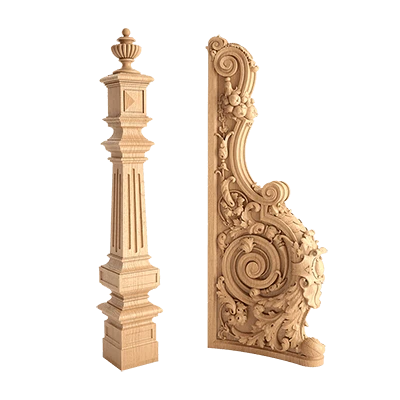
Buy balusters and posts for a wooden staircase must be from the same series. The post is the main railing element by hierarchy: it is larger, more massive, more expressive. Standard sections: 100×100, 120×120, 150×150 mm. Quantity: 2 posts per straight flight, +1–2 for each turn and landing.
carved wooden balusters carved balusters go with carved balusters, turned posts go with turned posts — this is the basic rule of consistency.
Handrails and balustrades
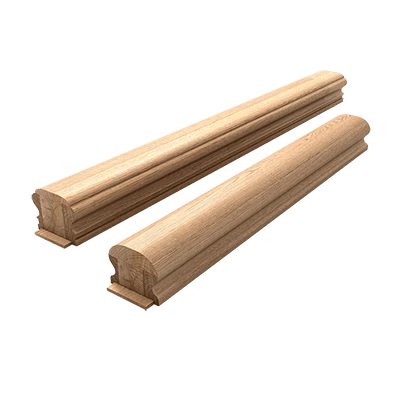
Buy railings and balusters for stairs from one manufacturer — the only way to guarantee profile compatibility. The handrail has a bottom groove into which the top tenon of the baluster fits. Mismatch means either on-site adjustment with a router or replacing the handrail.
The handrail length is calculated using the formula: √(L² + H²) for inclined flights. Add 15% margin to the result. Handrail is sold by linear meters.
Fasteners
M8–M10 studs, nuts, washers, PVA glue or epoxy compound for the tenon. This is an inexpensive item that is often forgotten to be included in the order — and is discovered missing at the most inopportune moment.
how to mount handrails to balusters — a detailed algorithm describing all types of fasteners and installation errors.
Complete set in one order
Buy a staircase railing kit — is always better than collecting piece by piece. One manufacturer, one batch, one invoice, coordinated elements. buy staircase components Systematic means getting a result that doesn't need to be 'tweaked' after installation.
How to avoid mistakes with quantity: a quick algorithm
Calculating the quantity isn't rocket science, but it requires attention. Here's a concise algorithm:
Step 1. Measure the horizontal projection of each flight in millimeters.
Step 2. Choose the installation step: 130–150 mm for families with children, 150–180 mm for adult households.
Step 3. Divide the flight length by the step. For example: 3,600 ÷ 150 = 24 balusters per flight.
Step 4. Add balusters for landings and horizontal railings (balcony, mezzanine) — calculate separately using the same formula.
Step 5. Sum all sections and add a 10% reserve.
Detailed breakdown with examples — in the guide on baluster sizes for stairs.
Wooden balusters from the manufacturer: what a proper purchase looks like
Let's talk about what most people don't know before their first purchase but learn during the process — unfortunately, through mistakes.
Buy from the manufacturer, not from a reseller
A retail building supply store keeps 3–5 models of balusters "that are in stock." A reseller on a marketplace sells what they bought from the manufacturer with a 20–40% markup. The manufacturer offers a full catalog, the possibility of custom orders, a system kit, and a fair price without double margins.
wooden balusters from the manufacturer — this is not just a marketing phrase, but a fundamentally different level of service and capabilities.
Order in one batch
Again, this is fundamental. Wood from different batches of the same item may differ slightly in shade. In a row of installed balusters, this difference is noticeable. Ordering in one batch eliminates the problem completely.
Clarify the wood moisture content
Kiln drying to 8–10% is the standard for indoor spaces. Raw wood (moisture content 18–25%) deforms after installation: balusters warp, tenons loosen, and the coating cracks. Clarify this parameter when placing an order — a conscientious manufacturer answers this question without further clarification.
Get a free kit calculation
A good manufacturer provides a free specification calculation. You need to provide: the length of the flights, the height of the stairs, the number of steps, the presence of landings and horizontal railings. In 15–20 minutes, you receive a ready specification: how many balusters, posts, handrails, and fasteners, with the total amount.
Mistakes when choosing balusters from a catalog
Over years of working with wooden staircases, a consistent list of typical mistakes when choosing from a catalog has emerged. Here they are — without embellishment.
Chose only by photo. A beautiful baluster in a photo — and a baluster suitable for your staircase — are different things. Without considering height, diameter, compatibility with the handrail, and the style of the house, the photo guarantees nothing.
Did not check the height. Ordered a standard baluster of 900 mm, but the railing height should be 1000 mm. As a result, the handrail turned out too low. The standard is at least 900 mm from the stair surface to the top edge of the handrail. More details in the article about height of balusters for staircases.
Did not select posts. Bought balusters, brought in installers — and it turned out that the posts need to be ordered separately, from a different series, from a different manufacturer. A week of waiting, profile mismatch, shade discrepancy. All these problems are solved by pre-selecting posts for wooden staircases from the same series.
Mixed styles. A carved baluster with baroque ornament + a square post in a loft style = visual conflict. If your goal is a beautiful result, all elements should be from the same stylistic system.
Did not account for installation. A flat baluster of non-standard width may not fit a standard handrail — you will have to mill a groove on site. Check compatibility BEFORE purchase, not after. Installation of Wooden Handrails and Balusters — step-by-step instructions with a description of all types of fasteners.
Bought "by eye" without a reserve. Ordered exactly as calculated. During installation, one baluster chipped, another had to be cut — three pieces were missing. Reorder: 5–10 days wait, risk of tone difference. A 10% reserve is mandatory.
Buy wooden balusters with delivery: regions and terms
Buy wooden balusters with delivery across Russia — a standard option for most manufacturers. Long-length cargo (balusters 900–1000 mm) is shipped by transport companies in professional packaging.
Important nuance: when ordering with delivery to a region, the 10% reserve is especially critical. If with pickup you can return to the warehouse for one baluster, with regional delivery this means a reorder, repeated payment for logistics, and additional waiting.
Balusters for stairs with Contact us to confirm shipping to your destination. — from Kaliningrad to Vladivostok. The time depends on the region: Moscow — 1–2 days, Urals — 5–7 days, Siberia and Far East — 7–14 days.
Where to buy balusters for stairs: final block
Let's summarize practically. You know the shape, wood species, size, style, quantity. You know you need to take posts and handrails from the same series. You understand that a 10% reserve is mandatory. Now — the question of "where."
The answer is one: buy balusters You need to go directly to the manufacturer. This eliminates the intermediary markup, guarantees a full range, enables systematic ordering, and provides free calculation of the kit.
For Moscow — pickup or delivery within the city. For St. Petersburg — similarly. For regions — transport companies with professional packaging. balusters to buy in Moscow or Buy balusters in St. Petersburg — equally convenient when working with a manufacturer that has warehouses in both cities.
About the company STAVROS
STAVROS is a Russian manufacturer of wooden products for stairs and interiors. The company's history began in 2002, and during this time STAVROS has implemented thousands of projects — from country stairs to representative objects with grand railings.
Production includes CNC lathes, 3D milling centers, chamber drying of wood to 8–10% moisture, and manual final sanding in 2–3 passes. The geometric accuracy of each product is a result not of manual control, but of a properly configured production process.
The STAVROS catalog features more than 50 models wooden balusters for staircases (turned, carved, flat, square), Posts for staircase, handrails, risers, and fasteners. Wood species: oak, beech, pine, ash. Systematic series with coordinated elements.
Pickup from Moscow and St. Petersburg. Contact us to confirm shipping to your destination. and CIS countries. Kit calculation — free. buy staircase components — in the STAVROS catalog.
FAQ: Answers to popular questions
Where to buy wooden balusters for stairs?
Directly from the manufacturer — in the STAVROS catalog. Full selection by shape, material and size, system kit, free calculation, Contact us to confirm shipping to your destination.
What is better to buy: flat, carved or turned balusters?
For a classic staircase — turned or carved. For modern minimalism — square. For a country house and wooden house — flat. The choice is determined by style, not personal preference based on photos.
What does the price of balusters depend on?
On the type of wood (pine is 2–2.5 times cheaper than oak), complexity of shape, carving, processing class and order volume. For large batches, the unit price decreases.
Can I buy balusters and handrails together?
Yes. STAVROS offers a system order: Handrails and balusters from one series, matched profiles, one batch.
How to choose balusters based on photos in the catalog?
Look not only at the pattern, but also at the proportions, the ratio with the handrail and post, and the visual density of the row. It is best to look for photos of the installed railing — it gives a realistic idea of the result.
Can I order custom-height wooden balusters?
Yes, for orders of 10–15 pieces or more. Please clarify the parameters with the STAVROS manager.
How to choose balusters to match posts?
Buy from the same series from one manufacturer. The style, proportions, and shade will be coordinated. Products from different series risk visual mismatch.
Buy wooden balusters in Moscow or with delivery — which is more cost-effective?
With pickup — no logistics costs, you can inspect the product in person. With delivery — convenience without traveling, suitable for regions. Both options are available at STAVROS.