
























Article Contents:
- How do balusters for balconies and terraces differ from stair balusters
- Operating conditions: outdoors vs. indoors
- Structural requirements for outdoor balusters
- Where wooden balusters are used
- Open balcony
- Terrace and veranda
- Porch and entrance area
- Open staircase outside the house
- Wooden house and cottage
- Which baluster shapes to choose for a balcony and terrace
- Flat balusters: lightness and modernity
- Square and rectangular balusters
- Turned Balusters: Timeless Classic
- Carved balusters: a decorative accent
- How to choose material for wooden balusters outdoors
- Pine: affordability and ease of processing
- Walnut: warm luxury
- Beech: Smoothness and Uniformity
- Ash: resilience and durability
- What to choose for an open terrace or balcony
- What to buy together with balusters: a complete railing set
- Support columns
- Railings and handrails
- Bottom rail (sub-baluster rail)
- Fasteners and accessories
- How to calculate the number of balusters for a balcony and terrace
- Basic calculation formula
- What else to consider
- Railing Height
- Price of balusters for balcony and terrace
- What the price depends on
- Estimated budget for terrace railing
- Mistakes when buying balusters for balcony and terrace
- Mistake 1: buying only balusters
- Error 2: not considering street conditions
- Error 3: not checking the fence height
- Error 4: choosing based on photo without calculation
- Error 5: ignoring fasteners
- How to extend the service life of a wooden fence
- Protective coating: varnish, paint, or oil
- Antiseptic impregnation
- End treatment
- Regular inspection and maintenance
- Installation of wooden fencing for balcony and terrace
- Installation Sequence
- Features of outdoor installation
- Styles and design of wooden fencing for terrace and balcony
- Wooden house in country or rustic style
- Modern country house
- Classic country house
- Terrace in a wooden house: unity of image
- Balusters for a terrace in a wooden house: selection features
- Single wood species
- Single coating tone
- Buy balusters for an open terrace: what is important to check
- Frequently Asked Questions (FAQ)
- Which balusters are best for a balcony?
- Can flat balusters be used on a terrace?
- What to buy together with balusters for a balcony?
- Where to buy balusters for a terrace?
- What is the correct spacing between balusters?
- How long will wooden balusters last outdoors?
- Can balcony balusters be painted?
- Varnished terrace balusters: how to choose?
- Where to buy balusters for balcony and terrace
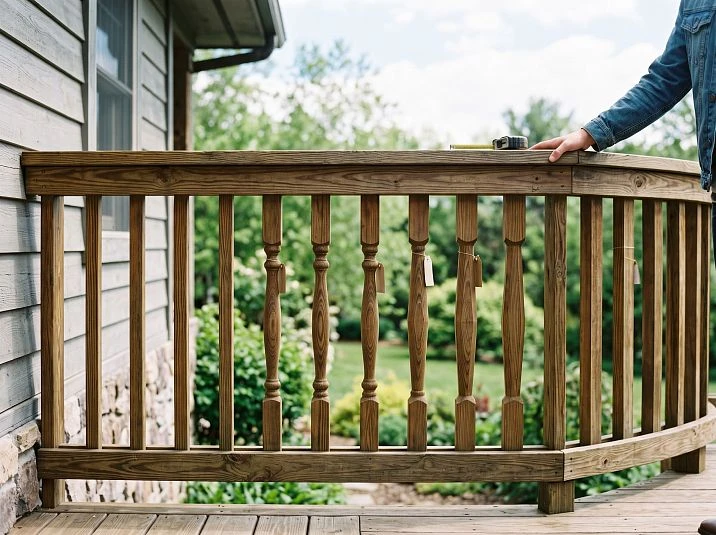
A balcony or terrace without railing is not just an unfinished architectural look. It's a risk, an open space without logic and without protection. But as soon as wooden posts, handrails, and properly selected balusters appear, everything changes. The space gains form, coziness, character. And it is with the choice of balusters that the creation of a real wooden railing for a balcony, terrace, or veranda begins.
This article is for those who want to understand: what shapes are available, what material to choose, what to buy as a set, how to avoid mistakes in calculation, and where Buy wooden balusters directly from the manufacturer.
How balcony and terrace balusters differ from stair balusters
At first glance, it seems a baluster is just a baluster. One shape, one task. But there is a fundamental difference between a stair baluster and one installed on an open balcony or terrace, which cannot be ignored.
Operating conditions: outdoors vs. indoors
Staircase balusters live in warmth, at a constant temperature, without precipitation or UV light. Balusters for balconies and terraces operate in fundamentally different conditions:
-
Temperature fluctuations from −30°C in winter to +40°C in summer
-
Direct UV radiation — fading, cracking, color loss
-
Moisture and precipitation — rain, snow, condensation, fog
-
Mechanical load — support, leaning, wind
-
Biological threats — mold, fungus, insects
This means that for outdoor use, the requirements for wood, protective treatment, and fastening are significantly higher. A baluster that looks great indoors after 10 years will begin to deteriorate on an open terrace without proper impregnation within 2–3 seasons.
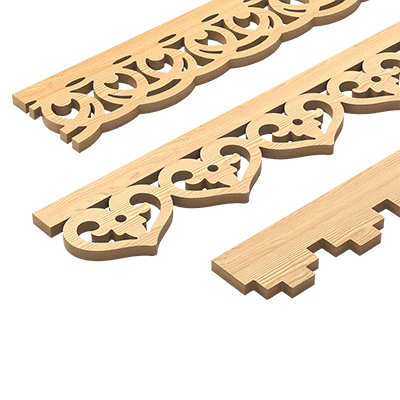
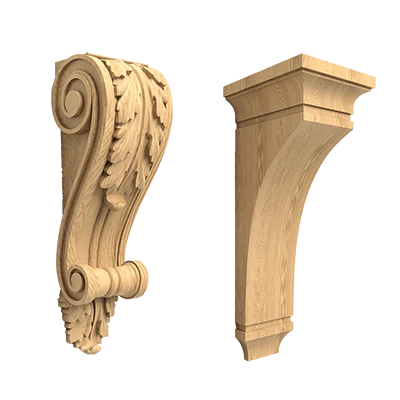
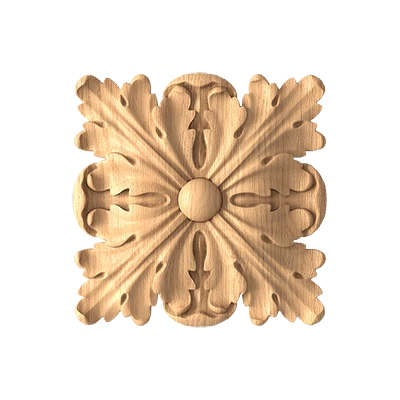
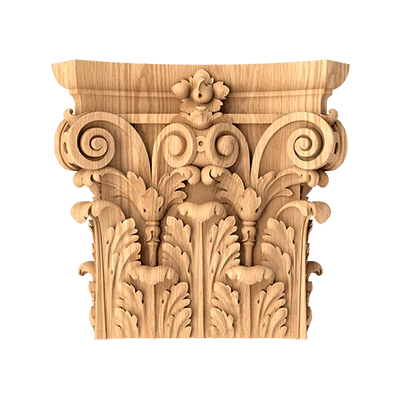
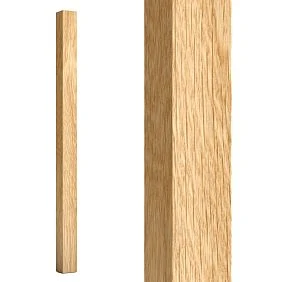
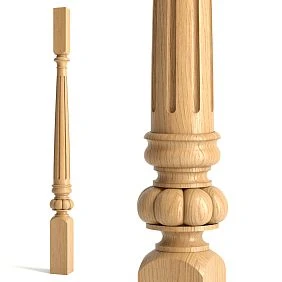
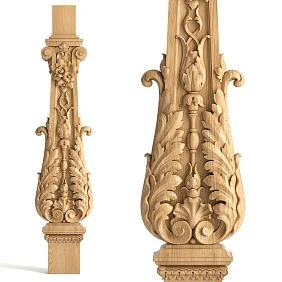
Our factory also produces:
Structural requirements for outdoor balusters
A balcony or terrace railing bears a completely different type of load. A person leaning on the railing creates a horizontal force. In this case, the balusters must withstand not only vertical pressure but also lateral force. That is why for outdoor railings:
-
Thicker cross-sections of balusters are used
-
Reinforce the lower and upper attachment points
-
Use metal fasteners with anti-corrosion coating
-
Add a lower support plank between the posts
These parts seem technical, but they determine the service life of the entire fence.
Get Consultation
Where wooden balusters are used
The scope of application of wooden balusters for outdoor fencing is much wider than many think. This is not only the classic balcony of the second floor of a country house. Let's list the main scenarios.
Open balcony
The most common case. The balcony of an apartment building or a private cottage requires reliable fencing with a height of at least 90–110 cm. Wooden balusters look organic here, especially in houses made of timber, rounded logs, or houses with wooden facade cladding.
Terrace and veranda
A terrace is perhaps the main scenario for using wooden balusters. An open area attached to the house requires fencing around the entire perimeter. It is here that wooden balusters for terrace they fully reveal themselves: they create an aesthetically complete image, form a "frame" of the space, and give it architectural logic.
Porch and entrance area
A high porch is a risk zone. Here, balusters with railings primarily perform a protective function. But this does not mean that aesthetics take a back seat. A beautiful entrance fence is the first thing a guest sees when approaching the house.
Open staircase outside the house
Outdoor staircases — to the gazebo, bathhouse, second floor — require railings on the flight. Here wooden balusters for outdoor railings must withstand both vertical and lateral loads, as well as be resistant to moisture.
Wooden house and dacha
In wooden houses and dacha plots, wooden balusters are an organic part of the overall image. Here, not only strength is important, but also stylistic consistency: log house, timber, hewn wood — all of this sets a certain tone that the railing must follow.
Which shapes of balusters to choose for the balcony and terrace
Choosing a shape is not only a matter of beauty. It is a matter of functionality, house style, installation complexity, and budget.
Flat balusters: lightness and modernity
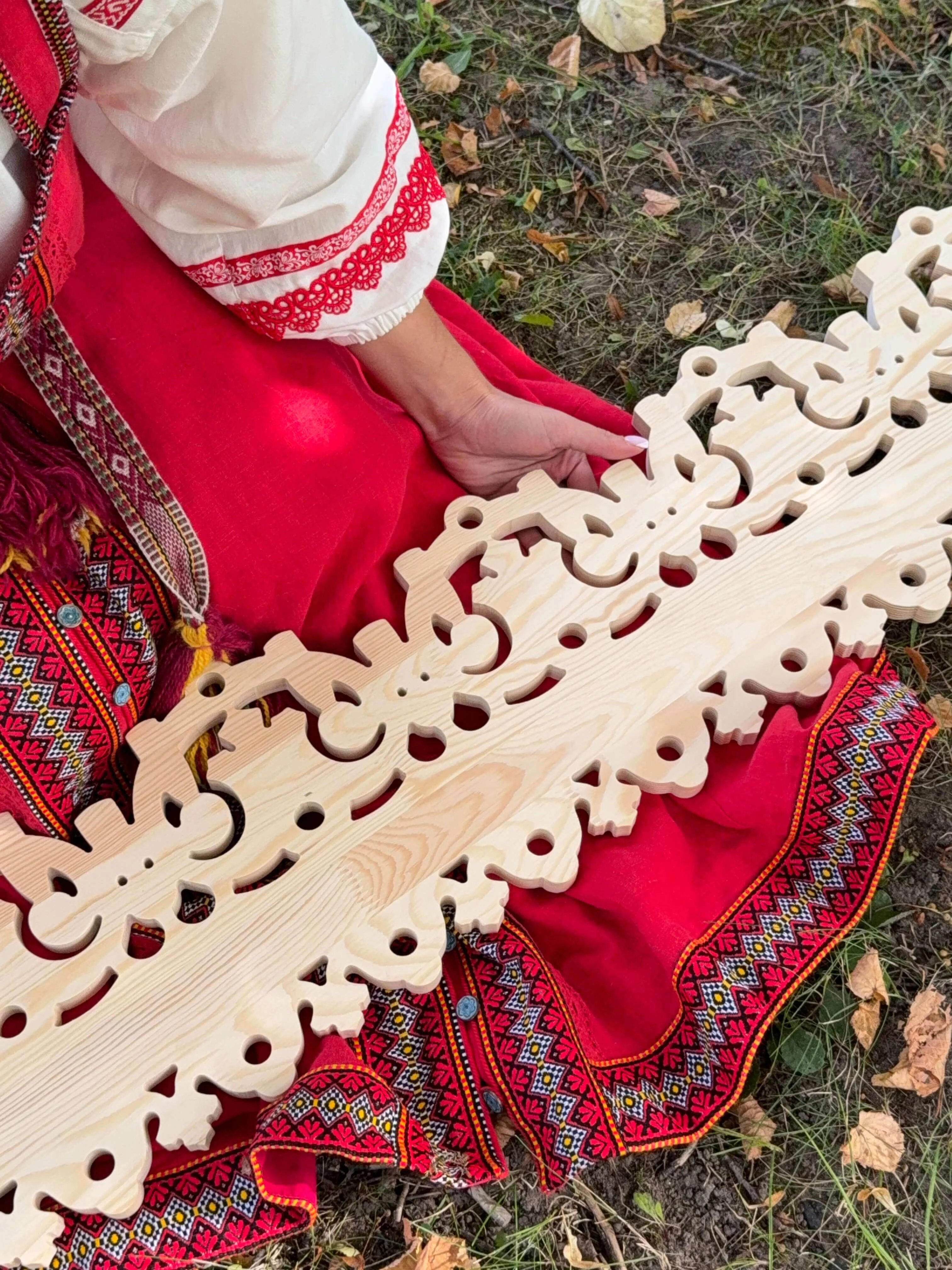
Buy flat balusters many owners of wooden houses and dachas want today. And this is understandable: the flat shape is conciseness, pure geometry, a minimum of excess. Such products fit perfectly into Scandinavian style, country, loft with wooden elements.
A flat baluster for a balcony or terrace has a number of practical advantages:
-
Easier to install — no need to precisely adjust the rotation angle
-
Cheaper to produce — less material and machine time
-
Easier to paint — flat surfaces are faster to coat
-
Creates a smooth railing silhouette
Flat wooden balusters for a terrace or balcony are especially good in modern homes with panoramic glazing, where overloaded decor would be unnecessary.
Also popular Buy flat baluster in a version with a figured cutout — this option adds decorativeness without complicating installation.
Square and rectangular balusters
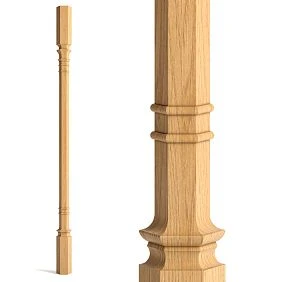
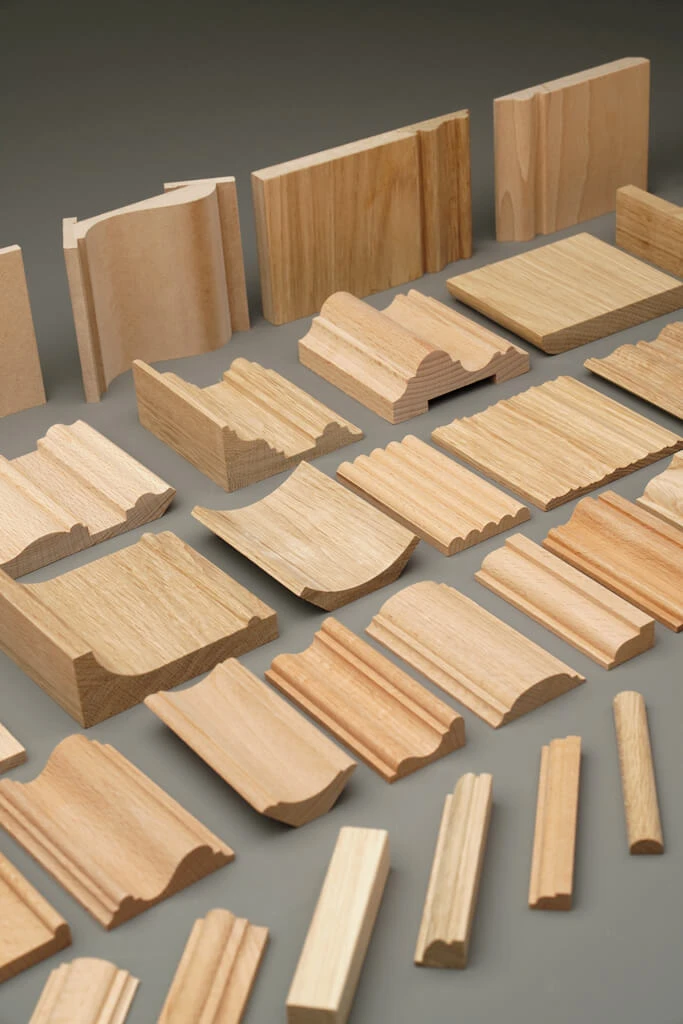
Square or rectangular cross-section — this is strictness, structure, modernity. Such balusters are ideal for terraces in minimalist style, for houses with facades made of fiber cement panels or brick. They create an even, "technological" rhythm of the railing.
The square shape is also convenient during installation: there is no need to orient the product along the axis — any side is the same.
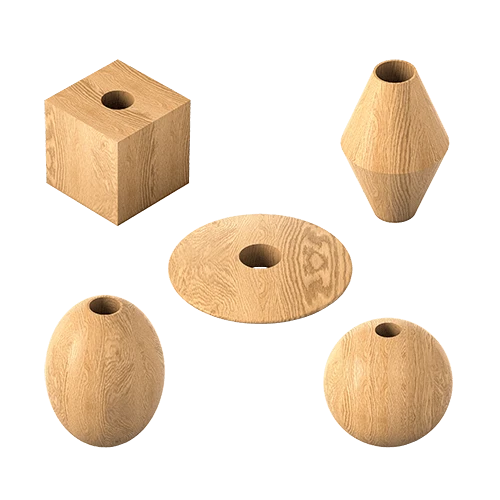
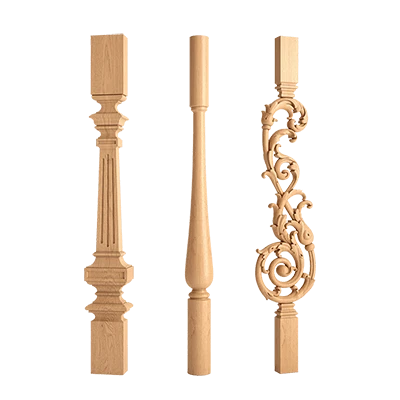
Turned balusters: timeless classic
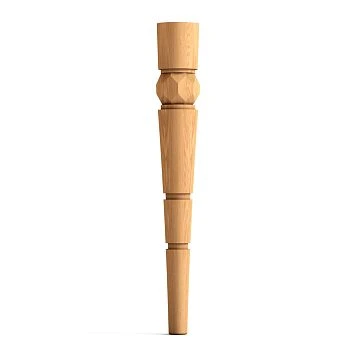
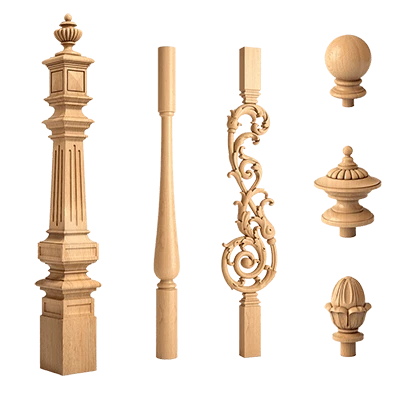
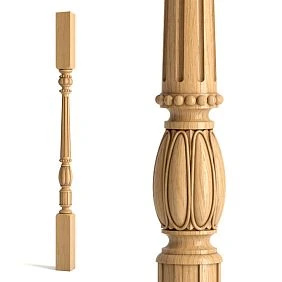
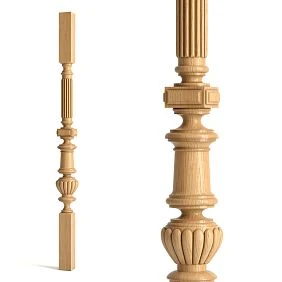
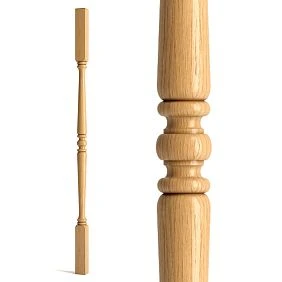
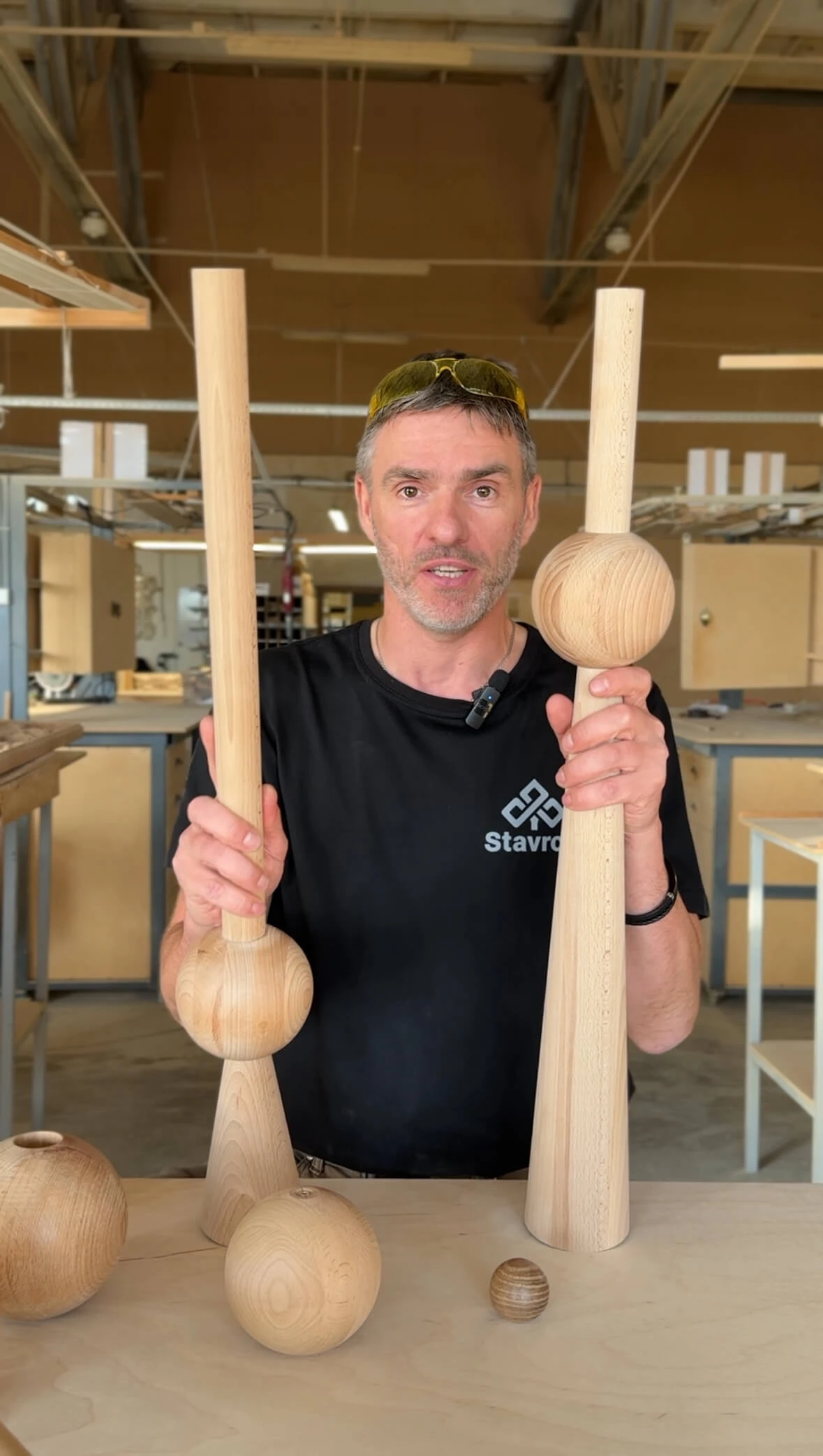
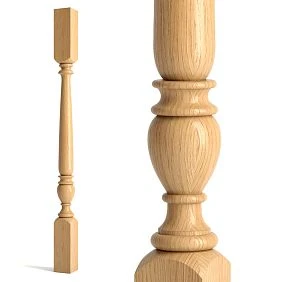
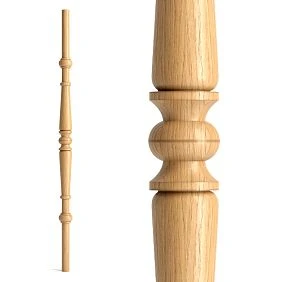
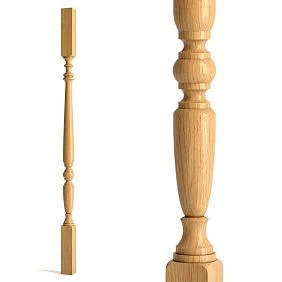
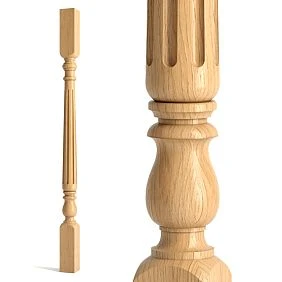
Turned shapes are barrels, vases, spheres, and cylinders strung on a single axis. A classic balustrade look that never gets old for decades. Such balusters are organic in homes with elements of classical architecture, in estate style, and in houses with porticos and columns.
For a terrace or open balcony, turned balusters create a complete, "noble" look. They pair well with turned posts and curved handrails.
Carved balusters: a decorative accent
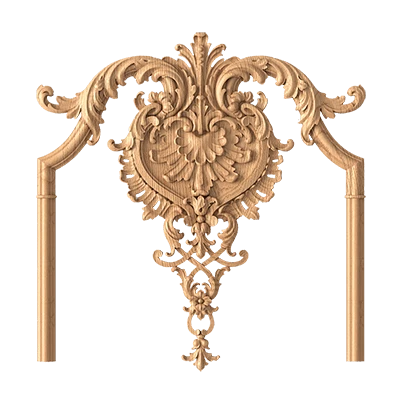
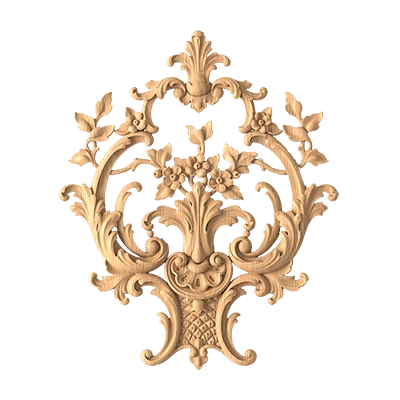
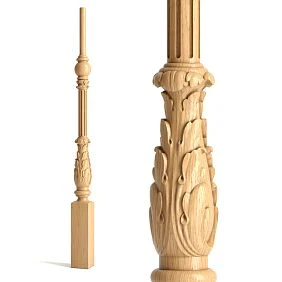
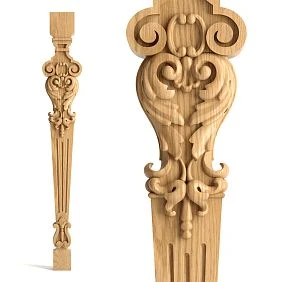
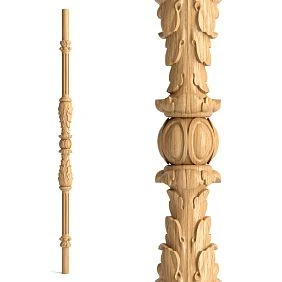
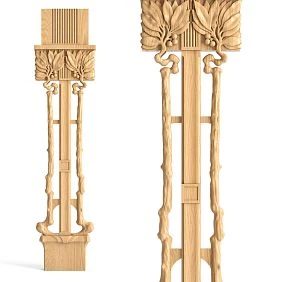
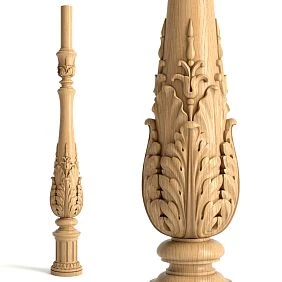
Carved balusters are the highest level of decor. Fluting, acanthus leaves, floral motifs, complex silhouettes — all this turns the railing into a true work of applied art. For a decorative balcony in a classic style or a luxurious terrace of a country house, lacquered carved balusters are the ideal choice.
How to choose material for wooden balusters outdoors
Material is the foundation of durability. Making a mistake here means losing both money and time.
Pine: affordability and ease of processing
Pine balusters are the most common and affordable option. Pine is easy to work with, takes varnish, paint, and impregnation well. For a balcony or terrace, pine balusters are suitable provided they have quality protective treatment. Without it, they will rot within a few seasons.
If you choose pine for outdoor use, be sure to:
-
Treat the ends with sealant
-
Apply antiseptic in 2–3 layers
-
Apply exterior varnish or covering paint
Oak: strength and nobility
Oak balusters for a terrace represent durability and status. Oak is dense, moisture-resistant, with a beautiful texture. It is heavier than pine, which means a higher load on the supporting structure, but also greater resistance to mechanical impact.
Oak balusters look great under clear varnish — the wood texture appears expensive and natural. The service life of an oak railing with proper care is 20–30 years.
Beech: smoothness and uniformity
Beech balusters have a smooth, dense, uniform texture. Beech is slightly more finicky than oak regarding moisture, but with good treatment it serves excellently on terraces and verandas. Turned and carved balusters are often made from beech due to its high density — the products come out crisp, with smooth edges.
Ash: elasticity and durability
Ash is a hard, elastic species with a pronounced texture. It is well-suited for load-bearing railing elements such as posts. Ash balusters look noble, take paint and stains well.
What to choose for an open terrace or balcony
For open outdoor structures, the optimal choice is oak or ash with high-quality exterior impregnation. If the budget is limited — pine with mandatory antiseptic treatment and a final paint and varnish coating for exterior use.
What to buy together with balusters: a complete railing set
One of the most common mistakes is to buy only balusters and then discover that without handrails, posts, and bottom rails, the railing simply cannot be assembled. A wooden railing for a balcony or terrace is a system, and all its parts must be compatible.
Supporting posts
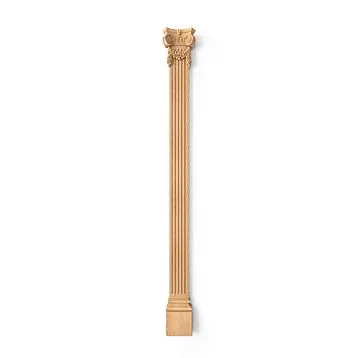
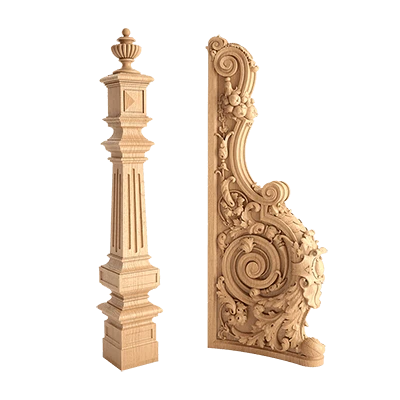
Wooden stair posts This is the load-bearing base of the fence. They are installed at the beginning and end of each span, at corners, and at turning points. The entire structure rests on them: the handrails on top and the bottom rail below.
When choosing posts, it is important to consider:
-
The height of the fence (standard is 900–1100 mm)
-
The cross-section of the post (typically 80×80 or 100×100 mm for a terrace)
-
The method of attachment to the base (anchor bolt, embedded plate, support cup)
The posts should be made of the same type of wood as the balusters — otherwise the fence will look inconsistent.
Railings and handrails
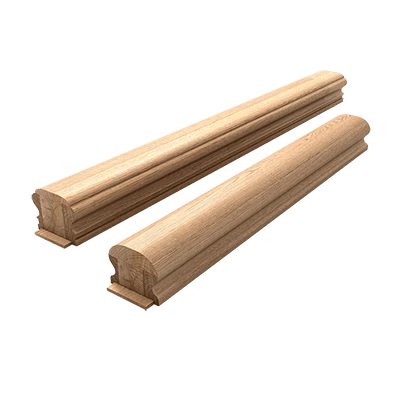
The handrail is the upper part of the fence that bears the main load when leaning. For a balcony and terrace, straight wooden handrails are used, which are placed on the balusters and attached to the support posts.
The thickness of the handrail for outdoor use is at least 40–50 mm. The thicker it is, the more comfortable it is to hold and the lower the risk of deformation from moisture.
Bottom rail (sub-baluster rail)
The bottom rail secures the balusters from below, ensures equal spacing, and adds rigidity to the structure. Without it, the balusters "wander" and become loose over time.
Fasteners and accessories
Staircase Components for Sale This includes not only the balusters and posts themselves. It includes:
-
Anchor bolts for attaching posts to the floor
-
Studs or self-tapping screws for attaching balusters
-
Steel angles and plates for reinforcing connections
-
End caps for posts
-
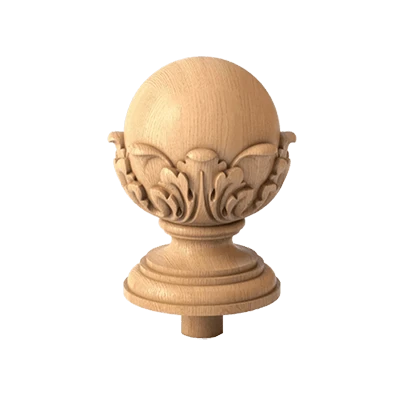
Trims and decorative capitals
All outdoor fasteners must be made of stainless steel or have a zinc coating — otherwise rust will destroy the wood from the inside.
How to calculate the number of balusters for a balcony and terrace
Proper calculation eliminates two unpleasant situations: a shortage of balusters in the middle of installation and overpaying for extra items.
Basic calculation formula
The standard spacing between balusters for outdoor railings is 100–150 mm clear (distance between adjacent balusters). This ensures both safety (a child cannot slip through) and aesthetics.
Formula:
Number of balusters = (Span length — Post width) / (Baluster width + Clear spacing)
Example: span length 3 meters, post width 100 mm, baluster width 40 mm, clear spacing 120 mm.
(3000 − 100) / (40 + 120) = 2900 / 160 ≈ 18 balusters per span.
What else to consider
-
Corners and turns: each turn requires an additional support post and usually 1–2 extra balusters
-
Trimming: allow 5–10% extra per span for on-site cutting
-
Replacement: for large volumes, it is recommended to have a 5% spare in case of damage during installation or delivery
Railing height
According to building codes, the height of a balcony or terrace railing must be at least 900 mm. For high open terraces and the second floor, 1100 mm is recommended. This is important to consider when choosing the height of balusters and posts.
Price of balusters for balcony and terrace
How much does a wooden railing for a balcony or terrace cost? The answer depends on many factors, and it is important to understand them even before going to the store.
What determines the price
Wood species is the main pricing factor. Pine buy balusters It can cost from 1,990 rubles per piece. Oak and beech products are more expensive: from 3,500 to 7,000+ rubles per unit.
Shape and complexity — simple square balusters are cheaper than turned ones, turned ones are cheaper than carved ones with manual routing.
Cross-section and height — the more massive the product, the more material and machine time required for its production.
Degree of processing — the "Standard" category (sanding for final coating) costs less than "Prestige" (additional sanding and higher surface requirements).
Order volume — when buying wholesale from the manufacturer, the price per unit decreases.
Completeness — if buy handrails and balusters as a set, the total cost is often lower than when purchasing separately.
Estimated budget for terrace fencing
For a typical terrace with a fencing perimeter of 12 meters, the estimated budget for balusters, posts, handrails, and fasteners looks approximately like this:
| Element | Quantity | Price per unit | Total |
|---|---|---|---|
| Balusters (pine) | 75 pcs. | from 2,000 RUB | from 150,000 RUB |
| Wooden poles | 8 pcs. | from 13,000 RUB | from 104,000 RUB |
| Handrail (l.m.) | 12 м | from 1,500 RUB/m | from 18,000 RUB |
| Bottom rail | 12 м | from 500 RUB/m | from 6,000 rub. |
| Fasteners and other | — | — | from 5,000 RUB |
These are approximate figures. An accurate calculation is best done with a manager based on the project.
Mistakes when buying balusters for a balcony and terrace
Mistakes here are not trivial. They cost money, nerves, and lost time. Here are the main ones.
Mistake 1: buying only balusters
This is a classic. A person sees beautiful balusters, orders them — and receives a package. Then it turns out: no posts, no handrails, no bottom rail, no fasteners. The result — two or three more separate orders, waiting for delivery, and wasted time.
Solution: order a complete railing kit at once. Make sure all elements are from the same manufacturer and compatible with each other.
Mistake 2: not considering outdoor conditions
Balusters for interiors and balusters for a balcony are different things. If you take a product without specifying its suitability for outdoor use and do not treat it with protective compounds — in a year or two you will see signs of rot, darkening, and cracking.
Mistake 3: not checking the fence height
A railing height of 70 cm on a second-floor balcony is a violation of safety standards. Before ordering, make sure the height of the selected posts and balusters meets regulatory requirements (at least 900 mm for residential buildings).
Mistake 4: choosing based on a photo without calculation
A beautiful photo is not a blueprint. Before buy wooden balusters for balcony, take all measurements: length of runs, height of railing, placement of posts, angles of turns. Only then can you accurately calculate the quantity and avoid shortages.
Mistake 5: ignoring fasteners
Cheap fasteners made of ordinary steel outdoors mean rusty streaks and loose balusters after just the first winter. For outdoor use, only use stainless steel or galvanized fasteners.
How to extend the service life of a wooden railing
Proper care is not a one-time operation, but a regular ritual that extends the life of a wooden railing many times over.
Protective coating: varnish, paint, or oil
Three types of finish coating are used for outdoor wooden balusters and railings:
Varnish for exterior use — creates a film that protects against moisture and UV rays. Clear varnish preserves the wood texture. Requires renewal every 2–3 years.
Opaque paint — completely hides the texture, creates a thick protective film. Lasts longer, easier to renew. Balusters for balcony for painting are a popular choice for dachas and country houses.
Oil and wax — penetrate the wood structure, do not form a film. The wood 'breathes', retains its natural appearance. Require more frequent application — once every year to a year and a half.
Antiseptic impregnation
Before applying the topcoat, the wood must be treated with an antiseptic. This protects against fungus, mold, and blue stain. The antiseptic is applied in 2–3 layers, paying special attention to the ends.
Edge processing
The ends of the balusters are the most vulnerable spot. It is through them that water penetrates the wood the fastest. The ends are treated with a special sealant or an additional layer of varnish/oil.
Regular inspection and maintenance
Annually — before the season — inspect the railing:
-
Check the fasteners for loosening
-
Inspect the coating for cracks and peeling
-
Renew the protective layer in damaged areas
-
Clean the railing from moss, dirt, and water stains
Such care once a year is 2–3 hours of work that extends the service life of the railing for years.
Installation of a wooden railing for a balcony and terrace
Proper installation is half the success. Beautiful balusters that are poorly secured will quickly lose their appearance and become dangerous.
Installation order
Detailed instructions on installation of wooden railings and balusters will help you understand the details step by step. Here is the main logic:
-
Marking: apply the axes of the posts with a pitch corresponding to the length of the span
-
Installing posts: secure with anchor bolts or embedded plates strictly vertically
-
Bottom rail: secure between the posts at the base
-
Installing balusters: insert into the bottom rail and secure to the handrail
-
Handrail: place on top of the balusters, secure to the posts
-
Finishing: wood putty at joints, sanding, applying a protective coating
Features of outdoor installation
When installing outdoors, it is important:
-
Do not attach wood to wood without metal connectors — wood moves with age, and purely wooden connections become loose.
-
Leave expansion gaps when laying handrails — wood expands from moisture.
-
Protect fastening points with caps or decorative covers from water ingress.
Styles and designs of wooden railings for terraces and balconies
A railing is not just a structure. It is an element of the architectural image of the house. And balusters should be chosen as thoughtfully as the facade cladding or roofing.
Wooden house in country or rustic style
For a wooden house made of timber or logs, turned balusters made of pine or oak with a dark walnut or natural oak finish are optimal. Handrails are massive, rounded. Posts are square with a chamfer.
Modern country house
Minimalism, Scandinavian style, light tones — here are good flat wooden balusters to buy combined with square posts and a flat handrail. The finish is white or gray paint, or clear matte varnish.
Classic country house
A representative facade, columns, portico — all of this requires carved balusters with rich decor. The railings are smooth, curved. The posts have capitals and bases. The finish is clear varnish, which reveals the texture of oak or beech.
Terrace in a wooden house: unity of image
The ideal option is when the terrace railing continues the architectural language of the house. If the house is made of dark timber, the railings and balusters are in the same tone. If the facade is light, the railing is light. This creates a sense of integrity that is valued by both architects and the owners themselves.
Balusters for a terrace in a wooden house: selection features
A terrace in a wooden house is a special case. Here it is important that the railing not just stands, but also 'speaks' the same language as the house.
Single wood species
If the house is made of oak, choose oak balusters and posts. If it is made of pine, choose pine. Mixing species creates visual heterogeneity that will eventually stand out.
Single finish tone
The varnish, oil, or paint on the balusters should match or harmonize with the house's finish. If the facade is tinted in a 'walnut' color, the railings are in the same tone. This is a small detail that creates a big impression.
Buy balusters for an open terrace: what to check
Before purchasing, make sure:
-
The products are made of solid wood, not MDF or veneered materials
-
The surface is well sanded — without fuzz or snags
-
The ends are treated or ready for treatment
-
The manufacturer specifies the wood species and moisture content
Frequently Asked Questions (FAQ)
Which balusters are best for a balcony?
For a balcony, wooden balusters made of oak or beech with high-quality antiseptic impregnation and an external paint coating are best. Flat and square shapes have proven themselves well — they are easy to install, easy to paint, and look neat. Turned balusters give a more classic look. The main thing is not to skimp on protective treatment: outdoor conditions are harsh, and without proper coating, even high-quality wood will deteriorate within a few seasons.
Can flat balusters be used on a terrace?
Yes, this is one of the most popular options for terraces, verandas, and wooden fences. Buy flat wooden balusters comes with proper fasteners and a bottom support rail. With good fixation and protective coating, flat balusters serve well on open decks.
What to buy together with balusters for a balcony?
It is optimal to order a complete set at once: balusters, support posts, handrails, bottom support rail, fasteners (stainless steel or galvanized), decorative covers. This ensures compatibility of all elements and eliminates additional orders in the midst of installation.
Where to buy balusters for a terrace?
At STAVROS you can select Buy wooden balusters for terrace in full assortment: pine, oak, beech, ash, turned, flat, carved. Also here — posts, handrails, and all buy components for wooden fencing in one place. Delivery across all of Russia.
What is the correct spacing between balusters?
Standard clear spacing (between adjacent balusters) is 100–150 mm. This is a safe distance through which a child cannot pass, and at the same time provides a sufficiently light visual rhythm.
How long will wooden balusters last outdoors?
With high-quality antiseptic impregnation and proper finishing, from 10 to 30 years depending on the wood species. Oak and ash with good treatment last 20–30 years. Pine with annual maintenance lasts 10–15 years.
Can balcony balusters be painted?
Yes. Painting balcony balusters is a very common practice. Paint creates a denser protective film than varnish and is easier to renew. Before painting, the wood needs to be sanded, treated with an antiseptic, and primed.
Terrace balusters for varnish: how to choose?
Oak and beech with a beautiful, pronounced texture are best for varnish finishing. The varnish must be special — for exterior use, with UV protection. Apply in 2–3 layers with intermediate sanding. Such a railing looks expensive and natural.
Where to buy balusters for balcony and terrace
Here, it's important not just to find a seller, but to find a manufacturer who guarantees material quality, manufacturing precision, and a wide selection.
STAVROS is a manufacturing company that has been operating since 2002 and specializes in the production of wooden components for stairs, balconies, terraces, and verandas. The assortment includes more than 50 models of balusters, more than 40 types of posts, railings, handrails, and everything Staircase Components for Sale in one place.
Advantages of STAVROS:
-
Direct manufacturer — you buy without intermediaries, at factory price
-
Wide assortment — from budget pine balusters to carved oak products of the «Prestige» category
-
Compatibility — all elements (balusters, posts, handrails, planks) are designed as a single system
-
Delivery across all of Russia — Moscow, Saint Petersburg, regions, CIS countries
-
Professional consultation — managers will help with calculation, selection, and configuration
In the STAVROS catalog you can buy balusters for a balcony with delivery — flat, turned, carved, square — made of oak, beech, ash, and pine. Also here — buy wooden terrace posts in dozens of design options: from laconic square to luxurious carved columns.
If you want not just to buy balusters, but to create a complete, beautiful, and durable railing for your balcony, terrace, or veranda — start with the STAVROS catalog. It has everything you need: from the first baluster to the last fastening element.