Article Contents:
- Why you need a display stand for furniture handles
- It's easier for a client to choose a handle in person
- The stand helps show the shape, size, and finish
- Why a photo in a catalog doesn't replace a sample
- Furniture showrooms
- Design studios
- Showrooms of finishing materials
- Custom furniture workshops
- Exhibition and mobile presentations
- Exhibition stand SV-004
- Exhibition stand SV-005
- Stands and samples of furniture handles
- Furniture handles with coating
- Furniture handles without coating
- By task: showroom, exhibition, meeting with client
- By number of samples
- By handle types: push buttons, brackets, surface-mounted, profile
- By furniture style and salon audience
- By convenience of ordering by article numbers
- Table of 'what to buy together'
- Next to facades
- Near the designer table
- In the entrance area
- At the exhibition
- Handles become part of the set
- The risk of random selection is reduced
- It's easier for the manager to sell with a sample rather than words
- Need to arrange a permanent display in a furniture showroom
- Need to show the client real shades and textures
- Need to simplify the selection of handles by article numbers
- Need to expand sales of furniture facades
- Need to prepare the exhibition area
- Need to equip the design studio
- Mistake 1. Buying a stand without understanding the scenario
- Mistake 2. Not training managers to work with samples
- Mistake 3. Placing the stand far from the facades
- Mistake 4. Using the stand as a warehouse
- Mistake 5. Not recording article numbers after selection
- Mistake 6. Showing only finished coatings
- Error 7. Do not update the presentation area
- Where to buy a display stand for STAVROS furniture handles?
- How is a stand better than a regular catalog?
- Who are SV-004 and SV-005 intended for?
- Can the stand be used for selling handles together with facades?
- What to buy together with the stand?
- Which stand to choose for a showroom?
- Is the stand suitable for a design studio?
- Can the stand be used at an exhibition?
- Why are tags with article numbers needed?
- Is it necessary to keep handles without coating nearby?
- Is the stand suitable for a private buyer?
- Where to place the stand in the showroom?
- Can the handle stand be combined with decor samples?
- How does the stand help sales?
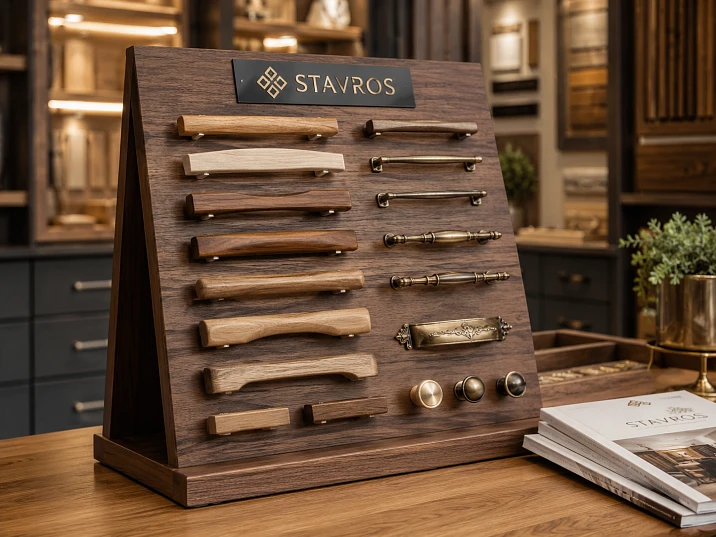
You should buy an exhibition stand not when the showroom simply lacks a beautiful accessory, but when handles need to be sold through live contact: to show the shape, let the client touch the surface, compare the coating, see the scale at arm's length, and quickly move from selecting a sample to ordering by article number. For a furniture showroom, facade salon, design studio, or custom furniture workshop, this is not a decorative trifle but a working sales tool.
A furniture handle in a photo and a furniture handle in hand are perceived differently. On screen, the client sees the color, approximate shape, and overall style. On the stand, they immediately understand how comfortable the handle is, how it lies in the fingers, whether it is too large for the facade, and whether the coating matches the sample of wood, enamel, or veneer. Therefore, an exhibition stand for furniture handles helps not only to beautifully decorate the showroom but also to speed up consultation and reduce the risk of a wrong choice.
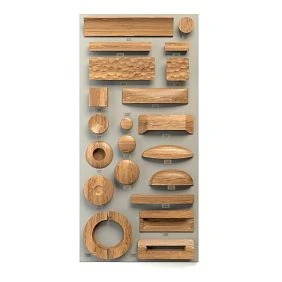
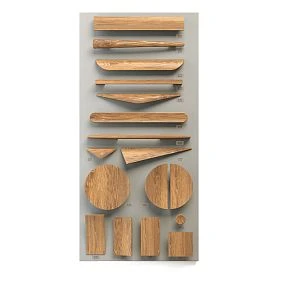
STAVROS offers ready-made stands SV-004 and SV-005 for displaying wooden furniture handles. This is a B2B solution for those who work with clients offline: furniture showrooms, showrooms, designers, architects, specifiers, dealers, carpentry and furniture workshops. Such a stand helps shift the conversation from the abstract "look at the catalog" to practical selection: here is the shape, here is the size, here is the finish, here is the article number, here is the option for the facade.
The main goal of the article is to help choose not just a stand, but a working display. We will analyze who this format suits, how stands differ from a regular catalog, how to use SV-004 and SV-005 in selling handles, which samples to keep nearby, what to buy together, and how not to confuse a stand for handles with samples of other products.
Why you need a display stand for furniture handles
A furniture handle is a small detail, but it is the one that comes into contact with a person every day. The client opens the facade, pulls the drawer, grips the edge, evaluates the comfort and feel of the material. If the handle is uncomfortable or visually doesn't match the furniture, even a good facade starts to be perceived worse.
A display stand solves this problem at the moment of consultation. The client doesn't try to imagine the handle from a photo or choose "by eye." They see a real sample, hold it in their hands, compare several shapes, and understand which option suits their furniture. For the showroom, this means fewer doubts, fewer returns to discussion, and more confidence in the order.




It's easier for the client to choose a handle in person
When a buyer chooses a facade, they usually look at the color, profile, material, and furniture style. The handle seems like the next step, but it is at this step that doubts often begin. In photos, all handles may look neat. In person, one turns out to be too massive, another too thin, a third comfortable only for a large facade, a fourth suits a chest of drawers well but gets lost on a tall cabinet.
The stand removes some of these questions. The client can compare handles side by side, hold them against a facade sample, evaluate proportions, and discuss the choice with a consultant. This is especially important for wooden handles because they have tactility, texture, processing, finish, and volume. They need to be not only seen but also felt.
Our factory also produces:

The stand helps show the shape, size, and finish
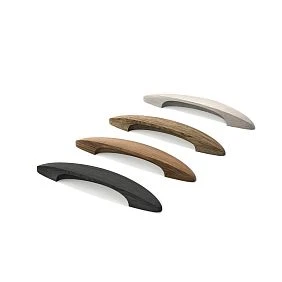
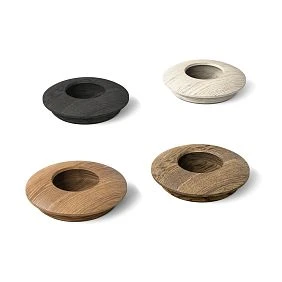
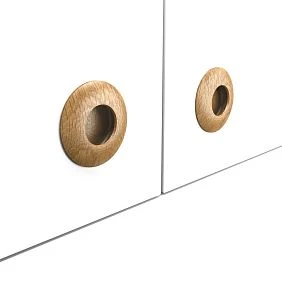
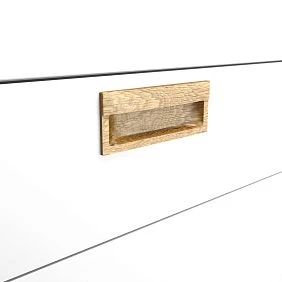
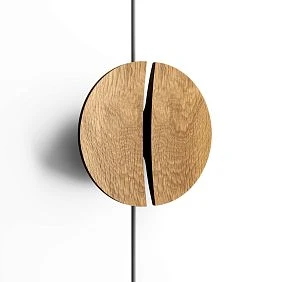
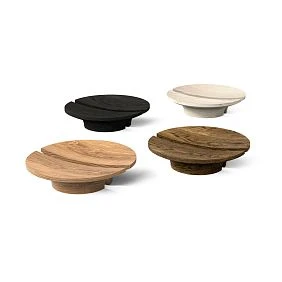
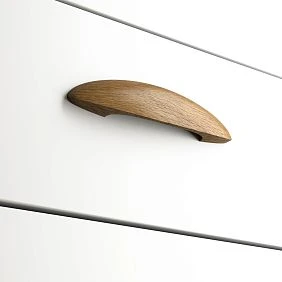
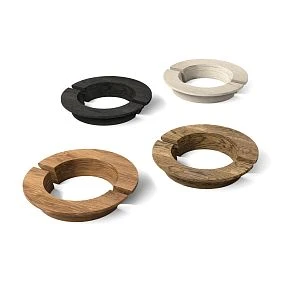
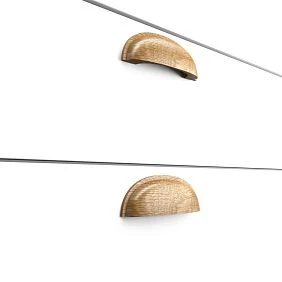
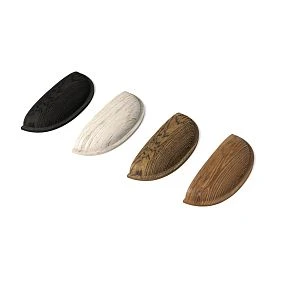
The shape of the handle influences the furniture style. A knob handle can support a calm facade, a bracket handle makes opening familiar and comfortable, a profile handle gives a more modern look, a shell handle adds a soft retro accent, an overlay handle emphasizes decorativeness. On the stand, these differences are read faster than in a catalog.
Size also matters. A long handle on a small facade can look heavy, while a small knob on a wide drawer can seem accidental. A display stand helps show the scale. The client sees not an abstract article, but a real part.
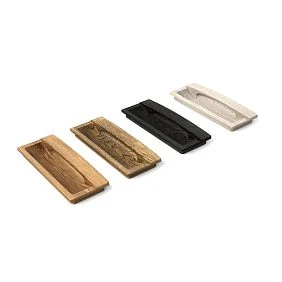
The finish is the third important parameter. The color and wood finish on screen depend on lighting, monitor, and photography. In the showroom, the client sees the sample in the salon's real light. If there are facades, veneer, enamel, solid wood, or decorative molding samples nearby, the selection becomes much more accurate.
Get Consultation
Why a catalog photo does not replace a sample
A catalog is needed. It helps quickly show the assortment, articles, prices, options, and availability. But a catalog does not replace a sample because it does not convey weight, relief, thickness, finger placement, or the real feel of the finish. This is especially important for handles: the client will touch this part every day.
A photo can inspire, but the decision is often made after contact. That is why a showroom with physical samples works better than a stand with printouts. A good display allows the client to first see a group of options, then narrow down the choice, then agree on the article, and only then place an order.
Who is a handle sample stand suitable for
An exhibition stand for handles is primarily needed by those who sell furniture, facades, decor, or components through consultation. If a client comes to the salon, meets with a designer, chooses materials, and discusses future furniture, the stand becomes part of the dialogue. It does not just stand in the room, but helps address the client's questions.
For furniture salons
In a furniture salon, handles are often sold as an additional product. The client comes for a kitchen, wardrobe, chest of drawers, nightstand, or custom furniture. If handles are only shown in a catalog, they are perceived as a secondary line. If handles are on a stand, they become part of the choice.
The stand helps the salesperson quickly offer several options: understated, decorative, modern, classic, for a light facade, for dark wood, for a children's room, for a bedroom, for a kitchen. The client sees that the handle is not random hardware, but a detail that changes the impression of the furniture.
For design studios
It is important for a designer to agree with the client not only on the concept but also on the real details. Handles are often discussed at the end of the project, but they can either ruin or enhance the furniture. A stand in the studio helps show options without a long search for images and links.
It is easier for a client to say "this one is comfortable", "this one is too large", "this one matches the facade" when they hold the handle in their hands. It is easier for a designer to justify the choice: shape, scale, coating, style, combination with the facade and adjacent decor. Therefore, the stand works as a presentation and approval tool.
For showrooms of finishing materials
In a showroom of finishing materials, not only walls and floors are often chosen, but also furniture solutions. If there are facades, panels, moldings, wood samples, or decorative elements nearby, a handle stand helps connect the finishing and furniture into one project.
For example, a client chooses a facade color, then selects a handle, then looks at wood decor. This route increases the depth of consultation. Instead of one item, the salon shows a complete solution.
For custom furniture workshops
A furniture workshop needs a stand for working with real clients. When a client comes to discuss a kitchen, wardrobe, cabinet, or chest of drawers, the craftsman can show not only a sketch but also the details of the future item. The handle becomes part of the solution, not a random purchase after assembly.
For the workshop, this is also a way to speed up approval. If the handles are at hand, there is no need to send dozens of links. The client looks at samples, chooses a shape, the consultant records the article number, and the order moves faster to completion.
For exhibition and mobile presentations
The stand can be used not only in a permanent showroom. It is useful at exhibitions, presentations, meetings with dealers, negotiations with designers, and on-site consultations. In such situations, compactness, portability, and clear organization of samples are especially important.
A client at an exhibition is rarely ready to study a catalog for a long time. They need to quickly see the product, touch it, ask a question, and remember the brand. The stand helps make this meeting tangible: it has real handles, and information plates with article numbers simplify further ordering.
Real STAVROS products for demonstrating handles
In this topic, the main products are stands SV-004 and SV-005. Both are related to the demonstration of furniture handles, both help show samples to the client, and both are suitable for a showroom or exhibition area. The difference between them is revealed through the task, availability, specific product card, and display design. Before ordering, current parameters, availability, and conditions should be checked in the product card.
Exhibition stand SV-004
SV-004 is a stand for demonstrating furniture handles in a salon or at an exhibition. Its size is 730×350×16 mm. The product card states that the stand is made of laminated chipboard and is supplied fully assembled. Each handle has an information plate with an article number, which simplifies selection and ordering. The handle samples are coated with protective oil, which highlights the wood texture and allows them to be shown to the client without additional treatment.
For a showroom, this is a convenient format: the stand does not require assembling an exhibition from scratch, the samples are already organized, and the article information helps not to lose the selected item. If the task is to quickly set up a demonstration area for furniture handles, you can consider buy exhibition stand SV-004 for furniture handles.
SV-004 is useful where you need to compactly show samples and not overload the space. For example, in a furniture salon with a limited consultation area, in a design studio, in a furniture workshop's meeting room, or at an on-site presentation.
Exhibition stand SV-005
SV-005 — another ready-made stand for displaying wooden furniture handles. Its size is also 730×350×16 mm. The card states that the stand is made of durable laminated chipboard, comes fully assembled, has information plates with article numbers, and the samples are coated with protective oil. The description also reveals a demonstration scenario for up to 30 types of handles, the presence of a carrying handle, and legs for stability.
For a permanent exhibition in the showroom, SV-005 is convenient because it allows you to show the client a set of samples in an understandable system. It does not replace the catalog, but makes the catalog alive: the client sees the article number, shape, coating, and can immediately discuss the order. For B2B tasks, you can consider buying the SV-005 display stand for the showroom.
SV-005 is especially appropriate where handles are actively sold together with furniture facades, custom furniture, chests of drawers, cabinets, wardrobes, and kitchens. It helps turn handles from the "last item in the estimate" into a noticeable selection tool.
Stands and samples of furniture handles
If you need not to immediately choose a specific SV-004 or SV-005, but to look at a group of such solutions, it is useful to open stands and samples of furniture handles STAVROS. This helps to compare products of the same logic and understand which solution is better suited for a showroom, salon, or workshop.
This section is especially convenient for a buyer or salon manager: you don't have to search for stands among all handles, but can go directly to samples and demonstration products.
Furniture handles with coating
The stand opens up more when there is a clear assortment of handles nearby. In the section furniture handles with coating you can view ready-made options for a client who needs to see the finished color and finish. This is convenient for showrooms where the buyer chooses a handle to match an already known facade.
Handles with coating are well suited for quick sales: the client sees how the part will look in its finished state. They don't need to separately think about painting or tinting. For a showroom, this lowers the barrier to choice.
Furniture handles without coating
Unpainted handles are needed for a different task: when a furniture workshop, designer, or client wants to perform finishing for a specific interior. Then it is useful to show not only ready-made options, but also explain that the handle can be selected to match the future color, material, and finish.
For such a scenario, furniture handles without coating for finishing. In the showroom, they should be shown to clients who choose custom furniture, want to match the facade tone, work with enamel, oil, varnish, or other finishes.
Specifications table for stands SV-004 and SV-005
| Parameter | SV-004 | SV-005 |
|---|---|---|
| Product type | Display stand for furniture handles | Display stand for furniture handles |
| Main task | Demonstration of handle samples in a showroom or at an exhibition | Demonstration of handle samples in a showroom, salon, or at an exhibition |
| Size | 730×350×16 mm | 730×350×16 mm |
| Stand material | Laminated chipboard | Laminated chipboard |
| Supply | Fully assembled | Fully assembled |
| Handle samples | Already installed on the stand | Already installed on the stand |
| Information plates | There are plates with article numbers | There are plates with article numbers |
| Sample coverage | Protective oil | Protective oil |
| Additional amenities | Compact format for presentation and storage | Handle for carrying and legs for stability are indicated |
| Application scenario | Showroom, exhibition, consultation area | Showroom, salon, exhibition area, presentation |
| Commercial transition | buy exhibition stand SV-004 for furniture handles | buying the SV-005 display stand for the showroom |
This table is not for dry comparison, but for quick selection. If the salon needs to immediately set up a permanent display and work with clients at the consultation counter, both options are suitable as ready-made solutions. If the stand will be frequently moved, you need to separately check the ease of placement, handle, stability, actual installation location, and usage scenario.
How to choose an exhibition stand for a showroom
Choosing a stand doesn't start with size or even price. First, you need to understand how exactly the client selects handles in your showroom. Do they approach the stand on their own? Do they look at handles together with a manager? Do they compare them next to facades? Do they pick up samples? Does the manager take samples to the client? This determines which format will be more convenient.
By task: showroom, exhibition, meeting with a client
For a permanent showroom, presentability and convenient access to samples are important. The stand should be placed where the client will see it, but not where passing people will bump into it. It's better to place the stand near facades, finishing samples, or the consultation area. This way, handles are not separate from the sale but integrated into the overall furniture selection journey.
For an exhibition, compactness and clarity are important. The visitor should quickly understand what is in front of them: wooden furniture handles, different shapes, real samples, order codes. At an exhibition, the consultant has little time, so the stand should work without extra explanations.
For a personal meeting with a client, portability and simple navigation are important. If a designer or craftsman shows handles in an office, on site, or in a meeting room, the stand should be convenient for demonstrating several options without chaos.
By number of samples
The number of samples affects client behavior. If there are too few options, the selection seems poor. If there are too many and they are not grouped, the client gets lost. A good stand shows enough options for the client to see the breadth of the assortment, while maintaining order.
Up to 30 samples is a convenient format for consultation. You can show different shapes: knob handles, pull handles, profile handles, surface-mounted handles, shell handles, inset solutions. But it's important not just to hang everything randomly, but to build logic: classics separately, modern style separately, long handles separately, compact ones separately, finished coatings next to similar tone options.
By handle types: knobs, pulls, surface-mounted, profile
The client often doesn't know the names of handle types. They say: 'small round', 'long', 'one that doesn't stick out', 'handle for a drawer', 'handle for a kitchen', 'retro style handle'. The stand's task is to help the consultant quickly translate the conversation into professional categories.
A button handle is suitable for compact facades, cabinets, chests of drawers, and calm interior solutions. A bracket handle is familiar and convenient for drawers, wardrobes, and kitchen facades. A profile handle fits well in more modern furniture. A shell handle can support retro, classic, country, or soft decorative styles. Overlay and inset handles serve their purposes in terms of installation and appearance.
By furniture style and salon audience
A classic furniture salon and a modern kitchen studio will use the same stand differently. In a classic salon, you need to showcase wood texture, soft forms, decorativeness, and combination with carved decor. In a modern showroom, concise forms, profile handles, clean finishes, and strict geometry are more important.
If the salon's audience is designers and architects, the stand should help quickly find article numbers and discuss project solutions. If the audience is private clients, the stand should be understandable without professional jargon: pick up, touch, compare, choose.
By convenience of ordering by article numbers
Information plates with article numbers are one of the key advantages of the stand. The client selects a handle, the consultant immediately records the article number, and the order is not lost. This is especially important in a salon where several managers work with different clients, and the order goes through estimates, production, warehouse, or delivery.
Without an article number, the choice often turns into a description: 'that handle, third from the right, dark, long, wooden.' This creates a risk of error. The plate translates the choice into an accurate order.
Comparison table: stand, catalog, and individual samples
| Display format | What it gives the client | Strong point | Limitation |
|---|---|---|---|
| Display stand for pens | Live contact with samples, comparison of shapes, article numbers | Helps to quickly select and order | Requires space in the showroom or consultation area |
| Printed catalog | Quick overview of the assortment | Convenient for viewing and handing over to the client | Does not show tactility and real scale |
| Digital catalog | Wide selection on screen | Convenient for remote selection | Color and size depend on the screen |
| Individual samples | Can be attached to the facade | Good for precise coordination | Easy to lose the system and article numbers |
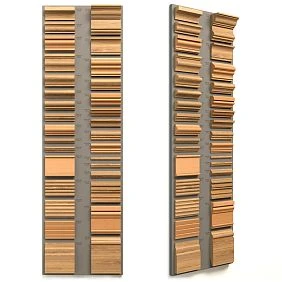
| Stand for moldings | Shows moldings, baseboards, architraves | Useful for other assortment | Does not replace the furniture handle stand |
| Product samples | Help compare materials and decor | Good for project selection | Not always designed as a handle stand |
The best result comes from a combination. The stand sells through contact, the catalog expands the selection, and product samples help coordinate materials and decorative groups. In a showroom, all these tools can work together: the client first sees the stand, then looks at the catalog, then selects a specific item.
Commercial selection block: which stand and kit to choose
| Task | What to offer | Why this works |
|---|---|---|
| Arrange a permanent display in the showroom | SV-004 or SV-005 | A ready-made stand immediately shows samples and items |
| Show the client real shades and textures | Stand with handle samples | The customer sees the coverage and holds the handle in their hands |
| Simplify the selection of handles by article numbers | Stand with information boards | It's easier for the manager to transfer the selection to the order |
| Expand the sale of furniture fronts and decor | Stand + handle catalog | Handles become part of a bundled sale |
| Prepare the exhibition area | Stand, samples, printed materials | The visitor understands the assortment faster |
| Equip a design studio | Stand + product samples | Convenient to coordinate details with the client |
| Support a furniture workshop | Stand + handles with and without coating | You can show finished and design options |
Such a choice helps not to buy a stand as a separate item. It should be integrated into the sales process. If managers don't know where the article number is, how to explain the coating, and how to link the handle to the facade, the stand will just sit there. But if the stand is included in the consultation, it starts working every day.
What to buy together with the stand
The display stand itself already contains handle samples, but you can build a stronger presentation system around it. For a showroom, salon, or studio, it's useful to think not just about the stand, but about a set: stand, handle catalog, product samples, facades, decorative elements, article sheets, printed materials.
If a client is choosing furniture facades, keep a handle catalog near the stand. If a client is selecting handles for finishing, samples of handles without coating are needed. If a client is looking at decorative interiors, it's useful to show not only handles but also samples of wooden decor, moldings, or other products. For this, you can open the section STAVROS product samples.
Table "What to buy together"
| Main product | What to add | Which scenario it suits |
|---|---|---|
| Display stand SV-004 | furniture handles with coating | When a client chooses a ready-made finish and wants to quickly place an order |
| Exhibition stand SV-005 | furniture handles without coating for finishing | When handles are selected to match custom enamel, varnish, oil, or tint |
| Showroom stand | stands and samples of furniture handles STAVROS | When you need to compare display solutions within one group |
| Stand for a furniture studio | STAVROS product samples | When you need to showcase not only handles but also decor, moldings, panels, or other samples |
| Stand for a facade showroom | Handle catalog and article sheets | So the manager can quickly transfer selections to the order |
| Exhibition stand | Printed materials and product cards | So that the visitor can take the information after the presentation |
This set increases the practical value of the stand. The client saw the handle, chose the shape, compared the coating, got the article number and can proceed to order. The manager does not lose the selection, the designer approves the part faster, and the salon gets an additional sale.
How not to confuse a stand for handles with similar products
| Product | What it is | What's the difference |
|---|---|---|
| Display stand for pens | Ready-made solution for displaying furniture handles | Shows handles as a product group, helps to choose and order |
| Product samples | Individual elements for evaluating material, shape and texture | Do not always have a ready-made display system specifically for handles |
| Catalog | Printed or digital selection | Does not provide tactile contact and real scale |
| Stand for moldings | Display of moldings, baseboards, and architraves | Suitable for long profiles, not for handles |
| Stand for polyurethane decor | Display of another product category | Does not replace the furniture fittings stand |
| Set of individual handles | Samples without organized presentation | May lose article numbers and order |
A stand for handles is needed exactly where handles are sold through comparison. It does not completely replace the catalog, but covers what the catalog does not provide: contact, scale, shape, texture, coating feel. It also does not replace stands for long profiles or decor, because each product group has its own demonstration logic.
How to place a stand in a showroom
The stand should be placed where it helps sales, not just decorates the space. The best location is near the consultation area, facade samples, material samples, or the manager's desk. This way, the client can immediately compare the handle with the facade, discuss the article number, and make a decision.
A bad location is a far corner, a walk-through area, or a spot where the stand is blocked by other samples. If the client doesn't see the stand, it doesn't work. If the stand is too far from the facades, the consultation becomes inconvenient. If the samples are not accessible by hand, the main purpose of physical demonstration is lost.
Near facades
The strongest scenario is to place the stand next to the facades. The client chooses the material and immediately selects the handle. This is especially useful for kitchens, cabinets, dressers, and nightstands, where the handle must match the facade in scale and style.
Near the designer's desk
If the consultation takes place at a desk, the stand should be within quick reach. The designer or manager can turn it toward the client, remove a sample, show the article number, and record the choice. This saves time and makes the conversation substantive.
In the entrance area
For a salon where it's important to immediately showcase the assortment, the stand can be placed in the entrance or waiting area. The client hasn't started the consultation yet but already sees the wooden handles, touches them, compares, and asks questions. This helps start the conversation.
At an exhibition
At the exhibition, the stand should be noticeable and understandable. It's best to place short materials next to it: what kind of handles they are, what they are made of, where they are used, how to order. At the exhibition, a person has little time, so the stand should immediately answer the question: "What is this and why should I look at it?"
How the stand helps increase the average check
Handles are often sold as an additional item to furniture, facades, decor, or a project. If the client doesn't see them in person, they may choose the simplest option or postpone the decision. The stand makes handles visible, thus increasing the chance that the client will buy them together with the main order.
Handles become part of the set
When a client chooses a kitchen, dresser, or wardrobe, handles can be offered not as a separate question at the end, but as part of the set. "Here is the facade, here are several handles that match the style, here are the article numbers." This approach looks more professional and helps the client make a decision faster.
The risk of random choice is reduced
If handles are chosen after furniture delivery, they often buy the first suitable solution. This can ruin an expensive facade. The stand helps to choose handles in advance, when it is still possible to coordinate the style, color, size, and quantity.
It's easier for a manager to sell not with words, but with a sample
A good consultation is built not only on description. When a manager says "this handle is more comfortable," the client can check immediately. When a manager says "this coating goes better with a dark facade," the client sees the comparison. The sample strengthens the argument.
Practical selection for different situations
Need to arrange a permanent display in a furniture showroom
Take the ready-made stand SV-004 or SV-005, place it next to the facades, and prepare a short selection logic for managers: handles for kitchens, handles for dressers, handles for cabinets, modern shapes, decorative shapes, handles for finishes. This way the stand will work every day, not just take up space.
You need to show the client real shades and textures.
Use the stand as a point of contact. Let the client hold the handle, apply it to the facade, and look at it under different lighting. If there are material samples nearby, compare them right on the spot. This is more effective than sending a link to a product page.
You need to simplify the selection of handles by article numbers.
Article plates help avoid losing the selection. After the consultation, the manager records a specific position, not a description like "that wooden dark handle." This is especially important for showrooms with a high flow of clients and multiple employees.
You need to expand the sale of furniture facades.
The handle stand works well next to facade samples. It is easier for the client to buy a handle together with a facade when they see the combination. The showroom gets an additional sale, and the client gets a more complete result.
You need to prepare an exhibition area.
For an exhibition, the stand should be part of a compact presentation: handle samples, a short description, article numbers, a catalog, and a manager's contact. Do not overload the stand with extra materials. Its task is to quickly show the product and start a conversation.
You need to equip a design studio.
In a design studio, the stand works as a coordination tool. It can be used in meetings with clients, when selecting furniture, when discussing kitchens, cabinets, nightstands, dressers, and decorative details. If there is STAVROS product samples, the studio can show the client not only the handle but also the overall decorative context.
Mistakes when buying and using the stand
Mistake 1. Buying a stand without understanding the scenario
The stand must answer the question: where will it be placed and who will use it. If the location is not thought through, the stand may end up away from the consultation and not influence sales.
Mistake 2. Not training managers to work with samples
The stand itself does not sell. The manager must be able to explain the shape, size, finish, article number, and application scenario of the handle. Otherwise, the client will just look at the samples and go to the catalog.
Mistake 3. Placing the stand far from the facades
Handles are chosen for furniture. If the stand is separate, it is harder for the client to compare. It is better to keep it near facades, finish samples, or the consultation area.
Mistake 4. Using the stand as a warehouse
If extra cards, random samples, price tags, papers, or other people's goods start being added to the stand, it loses its neatness. The exhibition stand should be a clean display, not a storage place.
Mistake 5. Not recording article numbers after selection
A client may choose a handle, but if the article number is not written down, the order can easily be lost. That's exactly what the signs on the stand are for: to quickly link the choice to the product.
Mistake 6. Showing only finished coatings
In some projects, the client needs handles without coating for individual finishing. If the showroom only shows finished options, it may lose a project order. Therefore, it's useful to also keep a category of handles without coating nearby.
Mistake 7. Not updating the presentation area
The stand should be clean, neat, and up-to-date. If samples are dusty, signs are misaligned, and random materials are lying around, trust in the product drops. In a showroom, even a small display should look well-organized.
Who the exhibition stand for handles is suitable for and who it is not suitable for
The exhibition stand is suitable for those who earn money from consulting, selection, assembly, and sale of furniture solutions. It is not a product for a random purchase of a single handle, but a B2B tool for a salon, showroom, workshop, studio, or exhibition area.
| Suitable | Not suitable |
|---|---|
| For furniture showrooms | For a private customer who needs one handle for replacement |
| For showrooms of facades and finishing materials | For those looking for ready-made furniture |
| Designers and architects | For those who only need a printed catalog |
| For furniture workshops | For those who do not work with clients offline |
| For dealers and assemblers | For those who do not sell handles or furniture components |
| For companies selling custom-made furniture | For those who do not plan to display samples |
For a private customer, a stand is often redundant. It is easier for them to choose a specific handle from a catalog. But for a business, a stand can become a growth point: it helps showcase products, coordinate details, and sell handles as part of a furniture solution.
How to buy a stand at STAVROS and set up a demo area
First, define the task. Do you need a stand for a permanent showroom, mobile presentation, exhibition, facade salon, or design studio? Then choose a specific model: buy exhibition stand SV-004 for furniture handles or buying the SV-005 display stand for the showroom.
If you need to compare demo solutions, open stands and samples of furniture handles STAVROS. If the stand is purchased for a comprehensive showroom, add to the work furniture handles with coating, furniture handles without coating for finishing и STAVROS product samples.
Before ordering, check:
| What to Check | Why |
|---|---|
| Stand size | To understand where it will be placed or stored |
| Usage scenario | Permanent showroom, exhibition, mobile presentation, studio |
| Availability of samples and plates | So that the stand immediately helps to select article numbers |
| Types of handles on the stand | To match the salon's audience |
| Are handles without coating needed | For projects with custom finishing |
| Are additional product samples needed | For comprehensive selection of decor and materials |
| Placement location | The stand should be near the consultation area |
| Work of managers | Employees should use the stand in sales |
FAQ
Where to buy a display stand for STAVROS furniture handles?
In the STAVROS catalog, you can view stands SV-004 and SV-005 for displaying furniture handles. There is also a separate section for stands and samples of furniture handles.
Why is a stand better than a regular catalog?
The stand allows the client to see the shape, size, coating, and texture of the handle in person. The catalog shows the range but does not provide tactile contact or real scale.
Who are SV-004 and SV-005 intended for?
For furniture showrooms, showrooms, design studios, workshops, dealers, assemblers, and exhibition areas where handles need to be shown to clients offline.
Can the stand be used to sell handles together with facades?
Yes. The stand helps offer handles as an additional product when choosing facades, furniture, and decorative elements. This is convenient for custom furniture showrooms.
What should I buy together with the stand?
It is useful to add a handle catalog, handles with coating, handles without coating for finishing, reference materials, and product samples to the stand for a wider selection.
Which stand to choose for a showroom?
Look at the placement location, consultation format, number of samples, ease of access, and sales scenario. SV-004 and SV-005 need to be compared by cards and chosen according to your work format.
Is the stand suitable for a design studio?
Yes. In a design studio, the stand helps coordinate handles with the client, compare shapes, and quickly record article numbers for the project.
Can the stand be used at an exhibition?
Yes. The stand is suitable for displaying handles at exhibitions and presentations because it shows real samples and helps quickly start a conversation with a visitor.
Why are article number plates needed?
They help not to lose the selected handle. The client chooses a sample, the manager records the article number, and the order is transferred to the estimate or request without confusion.
Is it necessary to keep handles without coating nearby?
Yes, if the salon works with individual projects. Handles without coating are needed when the client wants to choose a finish for specific furniture, enamel, varnish, oil, or tinting.
Is the stand suitable for a private buyer?
Usually not. A private buyer who needs one handle for replacement finds it more convenient to choose a specific product. The stand is more suitable for businesses that show samples to clients.
Where to place the stand in the showroom?
Best placed near facades, material samples, or the consultation area. The stand should be accessible to touch and visible to the client while choosing furniture.
Can the handle stand be combined with decor samples?
Yes. For a comprehensive selection, the handle stand can be used together with STAVROS product samples so the client sees not only the hardware but also the decorative context.
How does the stand help sales?
It makes handles a visible part of the order. The client chooses the shape and finish faster, the manager records the article number, and the showroom gets the opportunity to sell handles together with furniture, facades, and decor.
Result: the display stand turns handles from a catalog item into a live sales tool
A display stand for furniture handles is not needed to decorate the showroom, but for clear selection. It helps the client see the handle in person, feel the surface, evaluate the shape, compare sizes, and choose an article without guesswork. For a furniture showroom, design studio, workshop, or exhibition area, this is a working tool that speeds up consultation and makes the sale more precise.
SV-004 and SV-005 are suitable for displaying STAVROS wooden handles in a showroom or at an exhibition. They should be considered together with sections for coated handles, uncoated handles, and product samples. This way, the stand becomes not a separate item but part of a commercial system: facade, handle, decor, article number, order.
With STAVROS, you can choose a stand, compare furniture handle samples, and supplement the display with other product samples. This approach helps businesses showcase products professionally and allows clients to choose not from a photo but based on the actual feel of the shape, material, and coating.