


























Article Contents:
- When you need high wooden furniture legs
- Seven scenarios where leg height makes all the difference
- How high legs differ from regular furniture supports
- Height as an architectural tool
- How to choose the height of the legs
- Height gradation: from utilitarian to decorative
- How to determine the right height for a specific item
- Table: recommended leg heights for different items
- How to choose the shape: round, turned, shaped, carved
- The shape of the leg is a stylistic choice
- Turned round legs
- Cabriole legs
- Straight square legs (tapered legs)
- Carved legs
- Shaped legs with decorative elements
- How the leg style relates to the style of the entire piece of furniture
- Tall legs for a dresser and nightstand
- Dresser: the main candidate for transformation
- What you need to know before replacing the legs on a dresser
- Nightstand: a miniature item with great potential
- High legs for cabinet and sofa
- Cabinet on high legs: not for everyone, but for those in the know
- Sofa: legs as part of upholstered furniture
- Armchairs and ottomans
- Material: why wood is well-suited for furniture legs
- Wood — a material with intelligence
- Beech: the first choice for legs to be painted
- Oak: the choice for clear finish
- Unpainted legs vs. coated legs
- How to match legs with handles and decor
- Parts system: when the leg 'talks' to the handle
- Legs and decorative overlays
- Legs and wooden furniture moldings
- Complete furniture decor system
- Common mistakes when choosing high legs
- Mistake 1: Legs too thin for a heavy body
- Mistake 2: Incorrect final product height
- Mistake 3: Different styles of legs and handles
- Mistake 4: Incorrect number of support points
- Mistake 5: Mismatched fasteners
- Mistake 6: buying without a spare
- Error 7: Ignoring Floor Coverage
- Legs for Painting: Proper Finishing Technology
- How to Achieve the Perfect Color on a Wooden Leg
- Furniture Restoration: High Legs as a Transformation Tool
- Old Dresser + New Legs = New Furniture
- Antique Furniture: Exact Reproduction
- Where to Buy High Wooden Furniture Legs
- Catalog with Full Assortment
- FAQ: Popular Questions About High Wooden Legs
- STAVROS: Wooden Legs, Supports, and Furniture Decor from Solid Wood

Imagine two identical dressers. One stands on low, flat supports — pressed to the floor, heavy, as if rooted into the parquet. The second stands on tall, turned legs of dark wood. Between them — 15 centimeters of height and a chasm in perception. The second looks light, elegant, "breathing." It is tall wooden furniture legs that can completely change the character of an object — without replacing facades, without new handles, without repainting.
This is not a metaphor. This is a practice used daily by designers, restorers, and everyone who understands: a leg is not a technical detail, but an architectural element of furniture. And the choice of tall furniture legs is a task no less responsible than choosing a facade or finish color.
This article provides a complete breakdown: why tall supports are needed, how to choose height and shape, which material suits different items, how to match legs with handles and decor — and what mistakes are most often made when purchasing.


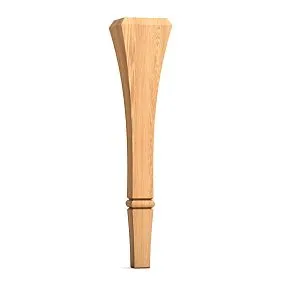


When tall wooden furniture legs are needed
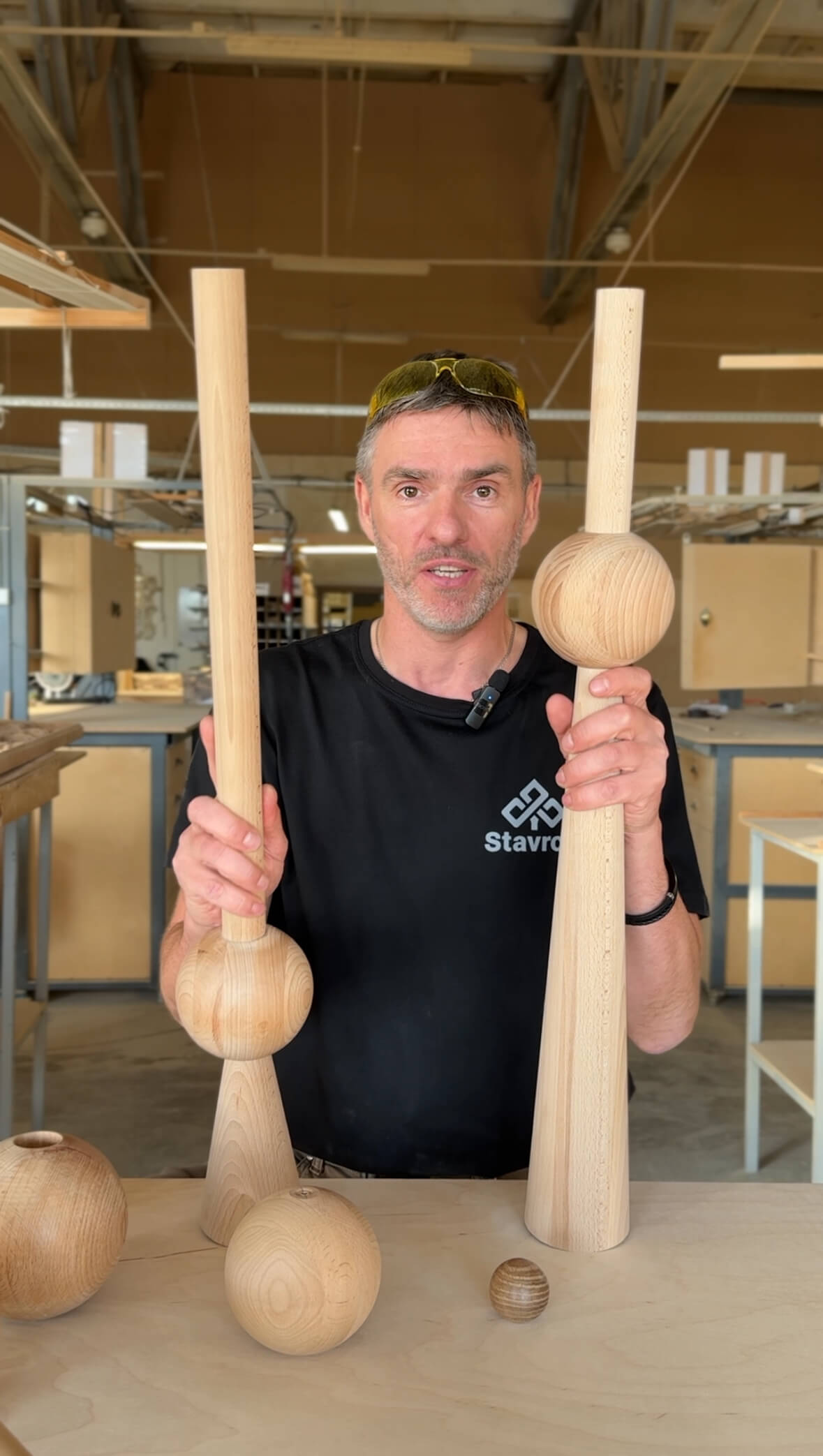
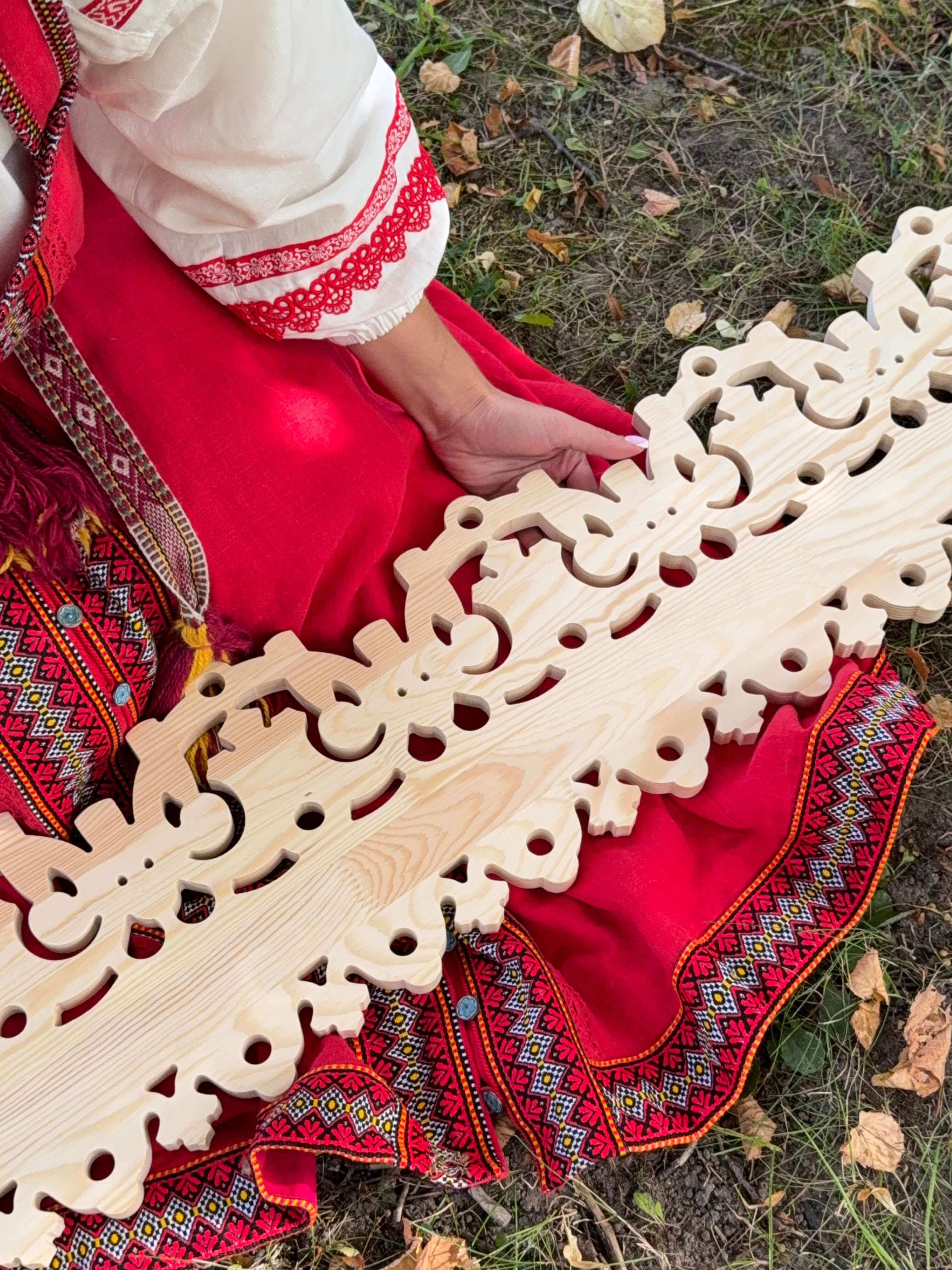
Seven scenarios where support height decides everything
tall wooden legs for furniture is not a universal solution "for everything." Each piece of furniture has its own scenario, its own logic of height, and its own reason why tall supports give the best result.
A dresser in the bedroom or living room. A dresser on tall legs is a classic image, familiar from 18th–19th century interiors. Tall legs lift the heavy body, making its silhouette light and graceful. Practical bonus: space appears under the dresser for vacuum cleaning — which is important in a standard apartment.
A bedside table, TV stand, vanity cabinet. Small cabinets on tall legs are one of the key trends in modern classic interiors. A raised cabinet does not "pull" the space down, preserves a sense of lightness, and visually "frees" the floor.
Cabinet. A cabinet on high legs is a special solution for classic, Provencal, and Scandinavian interiors. High supports make the cabinet "airy," breaking up a monolithic vertical block.
Sofa and armchairs. Upholstered furniture on wooden legs is the standard for a classic sofa. High legs lift the seat cushion, making sitting more comfortable for people with limited mobility, and add elegance to the silhouette.
Console and vanity table. These items inherently require lightness—they "float" above the floor on thin legs. High, graceful supports here are not an exception, but a rule.
Restoration of old furniture. An antique chest of drawers with broken legs, an old sideboard without supports—high wooden legs matching the required wood type and profile fully restore the item's authentic appearance.
Updating modern furniture. Buying a mass-market dresser and placing it on high turned legs is a quick and inexpensive way to give the piece a "classic" character without completely replacing the furniture.
Our factory also produces:


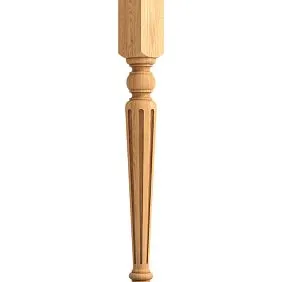
How high legs differ from regular furniture supports
Get Consultation
Height as an architectural tool
It would seem: a leg is a leg. What changes with height? In reality, everything changes.
Silhouette. Furniture on low supports (40–80 mm) looks massive, "grounded." Furniture on high legs (150–250 mm and more) looks light, "floating," with a distinct space between the body and the floor. This is a fundamental difference in perception.
Proportions. High legs change the visual proportions of the body: it appears less heavy, more slender. This is especially noticeable on dressers and cabinets with a wide horizontal body.
Style. Low straight supports represent a modern style, minimalism, and conciseness. High turned or cabriole legs represent classic, retro, Empire, and Provence styles. The height of the leg directly encodes the style of the furniture.
Functionality. High legs open up space under the furniture — for cleaning, air circulation, and light play. Low supports close off this space.
Decorative potential. A high leg is much more visible than a low one: it is in plain sight. This means that the decorative shape of a high leg — turned, carved, cabriole — works as an independent artistic accent.
How to choose the height of legs
Gradation of heights: from utilitarian to decorative
high legs for furniture — is a relative concept. Supports from 100 mm and above are considered "high." But within this range, there are fundamental differences.
40–80 mm — low supports. Utilitarian, stable, with almost no effect on the silhouette. Used where maximum stability and minimal visual accent are important.
80–120 mm — medium supports. A compromise solution: slightly lift the body, creating a feeling of "lifting" off the floor without fundamentally changing the proportions.
120–180 mm — high supports. Already noticeably change the character of the furniture. The body "hovers" above the floor, the silhouette becomes light. For classic chests of drawers, cabinets, and consoles, this is the most common range.
180–250 mm and above — very high legs. Characteristic of dressing tables, consoles, and small cabinets. They turn the furniture into an "architectural object" — the body above the floor is perceived as almost floating.
How to determine the required height for a specific item
For a dresser. The standard height of a classic dresser is 80–90 cm from floor to top surface. If the body height (without legs) is 65 cm, then legs 150–200 mm high will give a final height of 80–85 cm — ideal. Rule: legs should not make the dresser "too tall" for comfortable use of the top surface.
For a bedside table. The height of the table should be at the level of the mattress surface or slightly higher. A standard mattress with base is 55–65 cm from the floor. If the table body is 35 cm, legs should provide 20–30 cm — total 55–65 cm. Select legs considering the actual bed height.
For a sofa. The seat height of a sofa from the floor is 40–50 cm. This means: leg height + seat cushion height = 40–50 cm. With a seat cushion of 25–30 cm — legs need to be 15–25 cm high. If a higher seating position is desired (for elderly people) — legs 20–25 cm.
For a TV stand. The key parameter is the height to the center of the screen. The optimal height of the screen center in a sitting position is 100–110 cm from the floor. If the TV itself starts at 30 cm stand height + screen height, then legs are selected based on the final height.
Table: recommended leg heights for different items
| Item | Recommended leg height | Comment |
|---|---|---|
| Commode | 120–180 mm | Final height 80–90 cm |
| Bedside table | 150–250 mm | At mattress level |
| TV stand | 80–150 mm | Depends on screen height |
| Sofa | 120–200 mm | Seat 40–50 cm from floor |
| Chair | 120–180 mm | Similar to sofa |
| Console | 700–850 mm | Full support up to the tabletop |
| Vanity table | 650–750 mm | Work surface height |
How to choose the shape: round, turned, figured, carved
Leg shape is a stylistic choice
If height is a functional parameter, then shape is an artistic one. It is the shape of the support that determines the stylistic 'coordinate system' in which the furniture exists.
Turned round legs
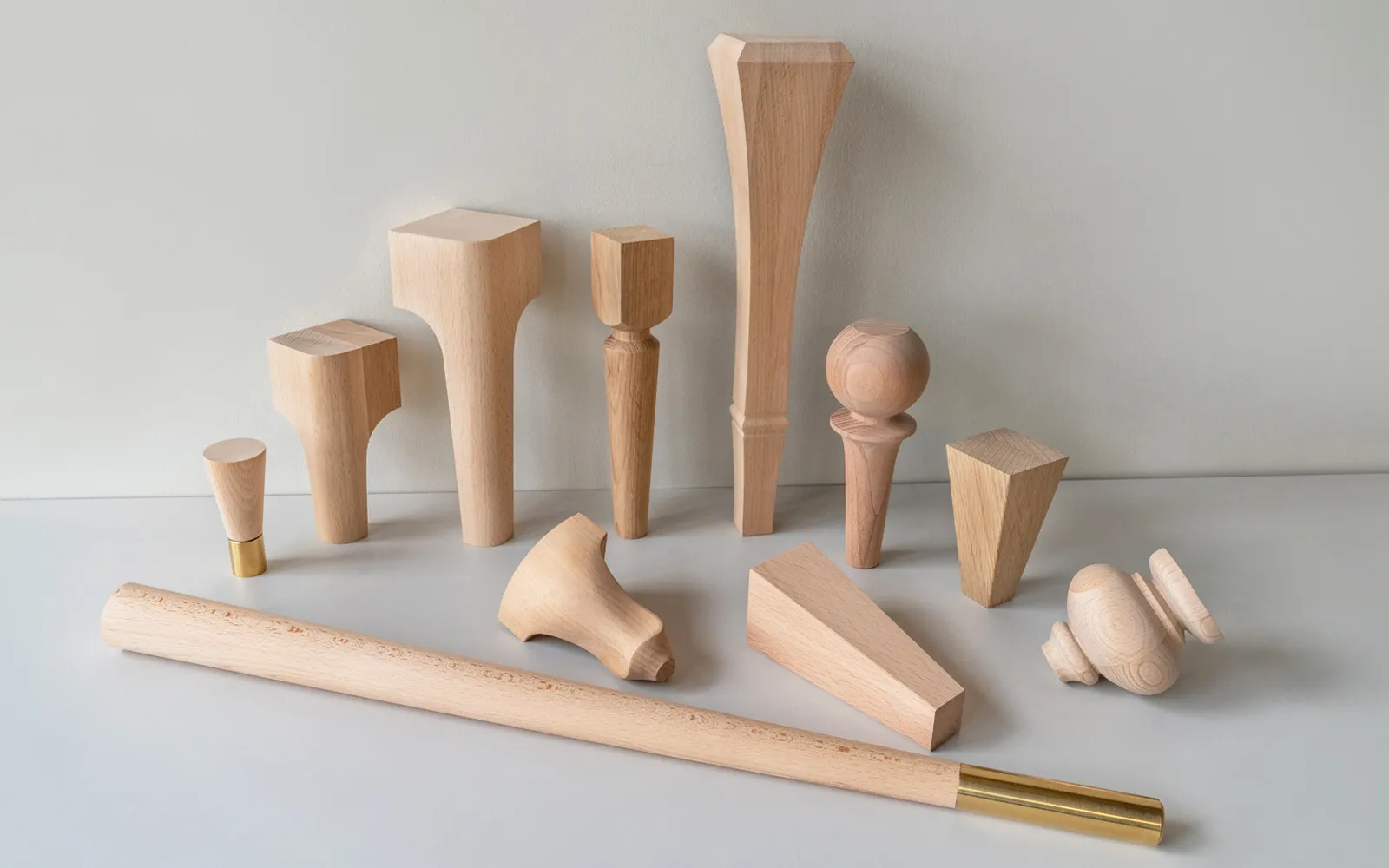
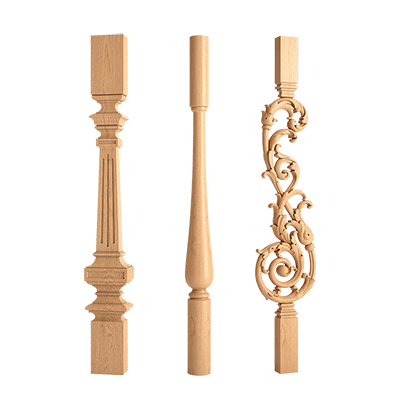
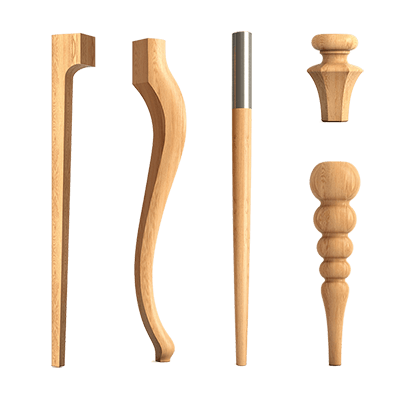
Round furniture leg — the most versatile and common type. Turning creates alternating thickenings and constrictions, characteristic of classic furniture. Cross-section shapes in turned legs:
-
Conical (tapers downward) — restrained classic character.
-
With a vase (widening in the middle) — a Baroque, more decorative type.
-
With an "apple" (spherical widening) — an Empire tradition.
-
Straight cylindrical — a modern interpretation of the classics.
Turned legs — a choice for classic, neoclassical, retro, and Provence interiors. They are versatile, produced in a wide range of heights and diameters, and are well-suited for painting and tinting.
Cabriole legs
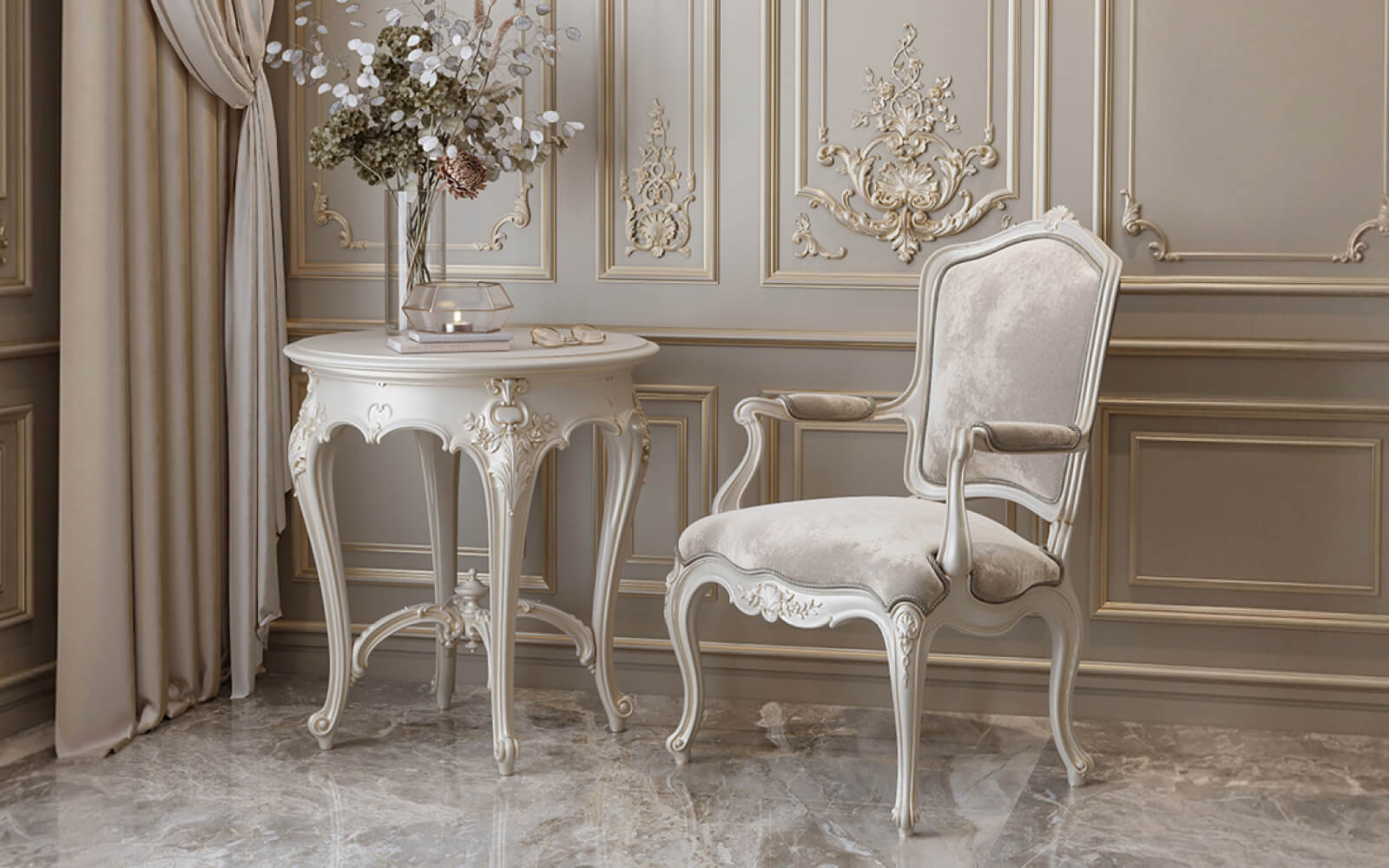
Cabriole — an S-shaped profile: a concave transition from the base to the middle part and a convex curve downward, ending in a "paw" with a ball or scroll. Historically characteristic of furniture in the Louis XV and Chippendale styles.
A cabriole leg is one of the most "telling" stylistic accents in furniture. A single piece with such legs sets the tone for the entire room. This is a form for those who choose rich classics without compromise.
Straight square legs (taper legs)
A straight leg with a square cross-section, tapering downward — characteristic of English classics, the Hepplewhite style, and neoclassicism. Strict, geometric, elegant. Works well in interiors with more restrained decor.
Carved Legs
Carved decorative legs — the highest level of decorative furniture. Hand or milled carving, floral motifs, acanthus leaves, geometric ornaments. Used in expensive classic furniture, in antique restoration, and in custom-made items.
Curved legs with decorative elements
The combination of turned profile with carved inserts is a transitional type between turned and carved legs. Expressive, decorative, versatile for classics of different periods.
How the leg style relates to the style of the entire piece of furniture
| Leg shape | Suitable style |
|---|---|
| Tapered turned | Modern classic, neoclassical |
| Vase-shaped turned | Classic, empire |
| Cabriole | Baroque, Louis XV, Provence |
| Straight square | English classic, strict neoclassicism |
| Carved | Rich classics, antiques |
High legs for a dresser and nightstand
Dresser: the prime candidate for transformation
A dresser is an item that transforms more dramatically from replacing legs than any other. The reason is simple: a dresser has no doors and virtually no 'architecture' beyond the body and drawer fronts. It is the legs that create the dresser's 'posture' — how it stands, how it 'holds' the space around it.
High turned legs 150–200 mm for a classic dresser make it:
-
Visually lighter — the body 'lifts off' the floor.
-
Proportionally slimmer — a wide body no longer appears squat.
-
Stylistically richer — the leg shape defines the character of the entire piece.
Practically, this means: a standard mass-market dresser on high wooden legs with a good profile — and the right decorative elements for furniture on the fronts — becomes a piece with character.
What you need to know before replacing legs on a dresser
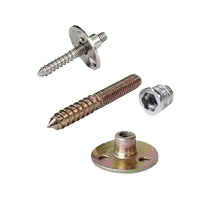
Mounting platform. Legs are attached to the dresser via a metal mounting plate (bar) or threaded screw. Before purchasing legs, check: whether there are mounting elements on the bottom of the body, what the diameter of the mounting hole is, and what the thread pitch is.
Load-bearing capacity. A dresser with contents is a heavy item. For a dresser weighing 40–60 kg with four legs, each leg carries 10–15 kg. Tall wooden legs made of hardwood (beech, oak) with a diameter of 40 mm or more confidently hold such a load.
Number of legs. For a dresser up to 100 cm wide — 4 legs. For a dresser 100–150 cm wide — 4–6 legs (4 corner + 1–2 intermediate). Intermediate legs are installed in the center of the long side.
Nightstand: a miniature item with great potential
Bedside table, TV stand, vanity cabinet — all these small items benefit maximally from tall legs. With a small body, tall supports provide a disproportionately large visual effect: the nightstand transforms from a "box" into an elegant piece of furniture.
For a nightstand with a body height of 35–45 cm — legs 150–250 mm create a final height of 50–70 cm: convenient and visually correct.
Tall legs for a wardrobe and sofa
Wardrobe on tall legs: not for everyone, but for those in the know
A wardrobe is a large, heavy item. Tall legs for a wardrobe are a more critical solution than for a dresser. Several factors are important here.
Load. A large cabinet with contents can weigh 80–150 kg. With four legs, that's 20–40 kg per leg. Legs for a cabinet made of hardwood with a diameter of 50–70 mm and a height of 100–150 mm are the optimal solution. Very tall legs (200 mm+) for a cabinet are undesirable: the center of gravity rises, and stability decreases.
Number of supports. For a cabinet 100–120 cm wide — at least 4 legs. For a cabinet 150–200 cm — 6 legs (4 corner + 2 intermediate). For a large wardrobe — a system of 8 supports is possible.
Style. A classic-style cabinet with turned legs 100–150 mm — an organic and expressive solution. A modern-style cabinet on conical straight legs — Scandinavian aesthetics.
Sofa: legs as part of upholstered furniture
Wooden legs for sofas — a separate story. In upholstered furniture, legs work differently: they are only partially visible (the lower part of the frame is hidden by upholstery), but they determine the sofa's "stance" and its visual character.
High legs for a sofa — from 150 mm — provide:
-
A higher seating position, convenient for elderly people and people with limited joint mobility.
-
Visual lightness of the sofa: the bulky soft body "floats" above the floor.
-
Classic look: it is precisely high turned legs that are characteristic of sofas in the Empire, Louis, and English classic styles.
An important nuance for replacing legs on a sofa. The leg attachment in a sofa is typically via an M8 or M10 bolt screwed in from below through the frame plate. Before purchasing legs, clarify the thread diameter and the length of the bolt entering the leg.
Armchairs and ottomans
Armchairs on high legs are visually "open," light, and elegant. For a classic armchair with a straight back — cabriole legs or turned legs with a vase height of 150–200 mm. For an ottoman — turned conical legs, height 300–450 mm (including the height of the soft part).
Material: why wood is well-suited for furniture legs
Wood is a material with intelligence
Wooden legs — is not the only option for furniture supports. There are metal, plastic, and acrylic legs. But for classic furniture, for items with wooden facades and decor — wood is unrivaled. Why?
Consistency with facades. A wooden leg made from the same species as the furniture facades or handles creates an organic unity. A metal leg in a classic interior is always a "foreign" element requiring a conscious design choice.
Painting and tinting. Wood can be painted any color, tinted to walnut, cherry, oak, wenge. This allows precise matching of the leg to the color of the furniture body — something impossible to achieve with plastic or stainless steel.
Strength with a small cross-section. Hardwood species — beech, oak, ash — with a diameter of 40–50 mm can withstand a load of 30–50 kg per leg. This is sufficient for most furniture applications.
Workability. Wood is easily trimmed to the required height, amenable to final sanding, and accepts any paint and varnish coating.
Warm to the touch and visually. A wooden leg is "warm" — both physically and aesthetically. In a classic interior, this is a valuable quality.
Beech: the first choice for legs to be painted
Beech is the leader among species for furniture legs under enamel or opaque paint. Its fine-grained, uniform structure with no visible pores makes it an ideal surface for any coating. A Brinell hardness of about 3.8 units provides sufficient strength for all types of furniture.
Buy legs for furniture Unpainted beech legs are the right strategy if you want to paint them to match the exact color of your furniture. Take the facade color according to RAL, paint the legs with the same paint, and you get a perfect match.
Oak: the choice for transparent finishing
Oak is a species with a pronounced natural pattern that works beautifully under clear varnish or oil. If the furniture is finished in a "natural wood" style, oak legs with similar treatment will create a cohesive look.
Oak density is about 700–750 kg/m³, with high hardness — it provides maximum durability under intensive use.
Unpainted legs vs. coated legs
Buy furniture legs for a 200-room hotel project — this is not an ordinary deal, but a partnership requiring a special approach. They are available both unpainted and with a ready-made coating — tinted to walnut, wenge, white, or lacquered.
Choose unpainted legs if:
-
You want to paint the legs to match the exact color of your furniture.
-
Planning to apply a special coating (wax, oil).
-
Preparing legs for a specific finish (patina, gilding, imitation of aging).
Legs with coating — choose if:
-
Need a specific standard color (white, walnut, wenge, natural).
-
No opportunity or desire to paint yourself.
-
The coating on the leg matches the furniture finish.
How to combine legs with handles and decor
System of details: when the leg "talks" to the handle
A furniture leg and its handle are two elements that are visible simultaneously. A person opening a dresser drawer sees both the leg and the handle out of the corner of their eye. If they "talk" in the same stylistic key, the interior looks professional. If they conflict, it creates a feeling of random assembly.
Rules for matching legs and handles:
Unified style. Turned classic leg + wooden hook handle with a curved profile — this is one "family" of forms. Cabriole leg + wooden button handle with a rounded shape — similarly. Straight geometric leg + handle with ornamental carving — a style conflict.
Unified material. Wooden legs + wooden handles — a harmonious combination. If the handles are metal (bronze, brass) — the legs can be wooden with metal inserts or accents in the same metal color.
Unified finish color. Legs tinted to dark walnut — handles should be in the same or similar tone. Contrast is acceptable as a conscious design technique but requires confidence in the result.
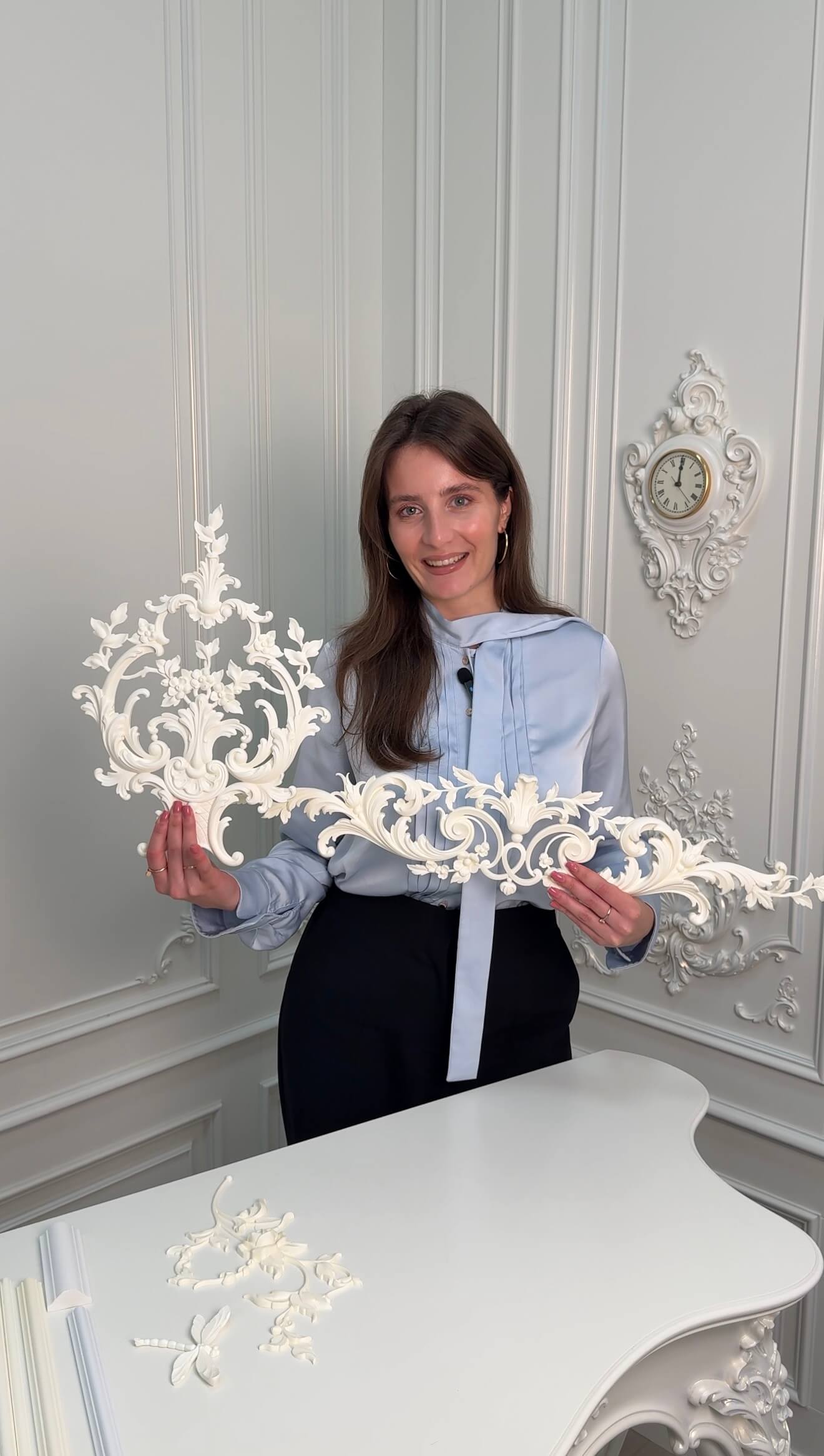
Legs and decorative overlays
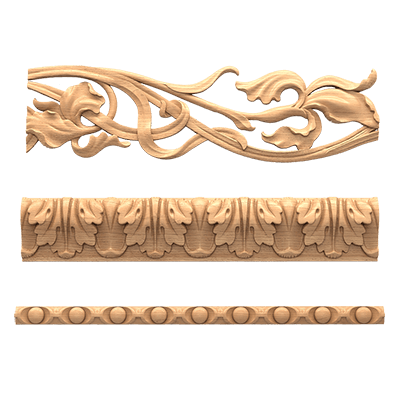
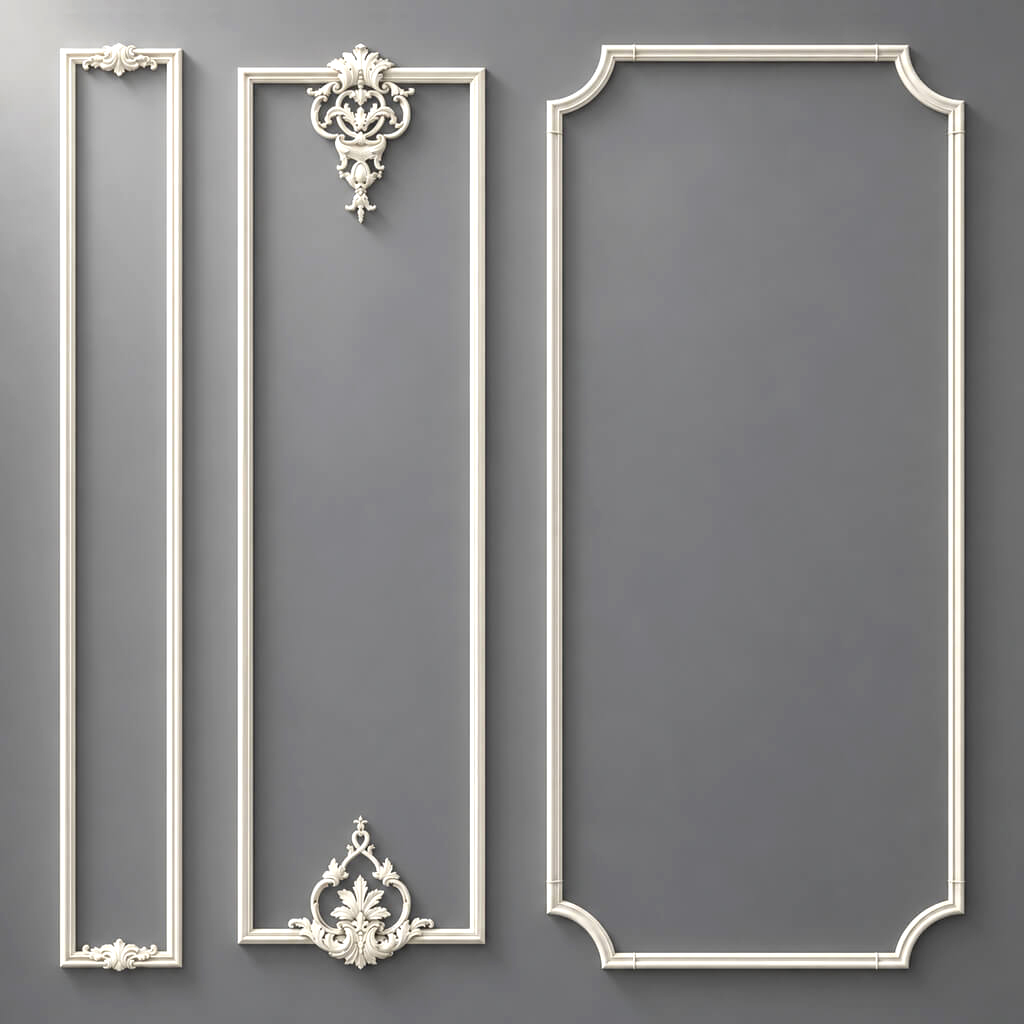
decor for furniture — applied wooden elements on facades — must be coordinated with the legs in two parameters: relief scale and color.
Large decorative cartouche on the facade + thin delicate leg — a scale imbalance. Delicate fine ornament on the facade + massive carved leg — a similar imbalance. The scale of the decor and the scale of the leg should be proportionate.
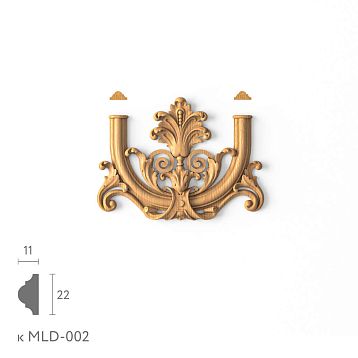
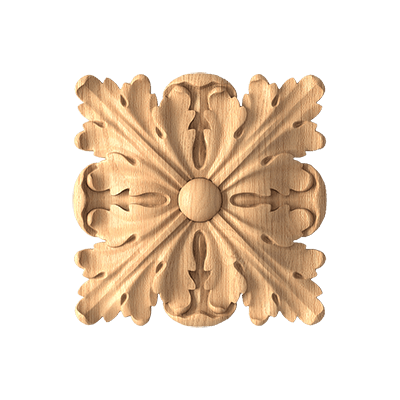
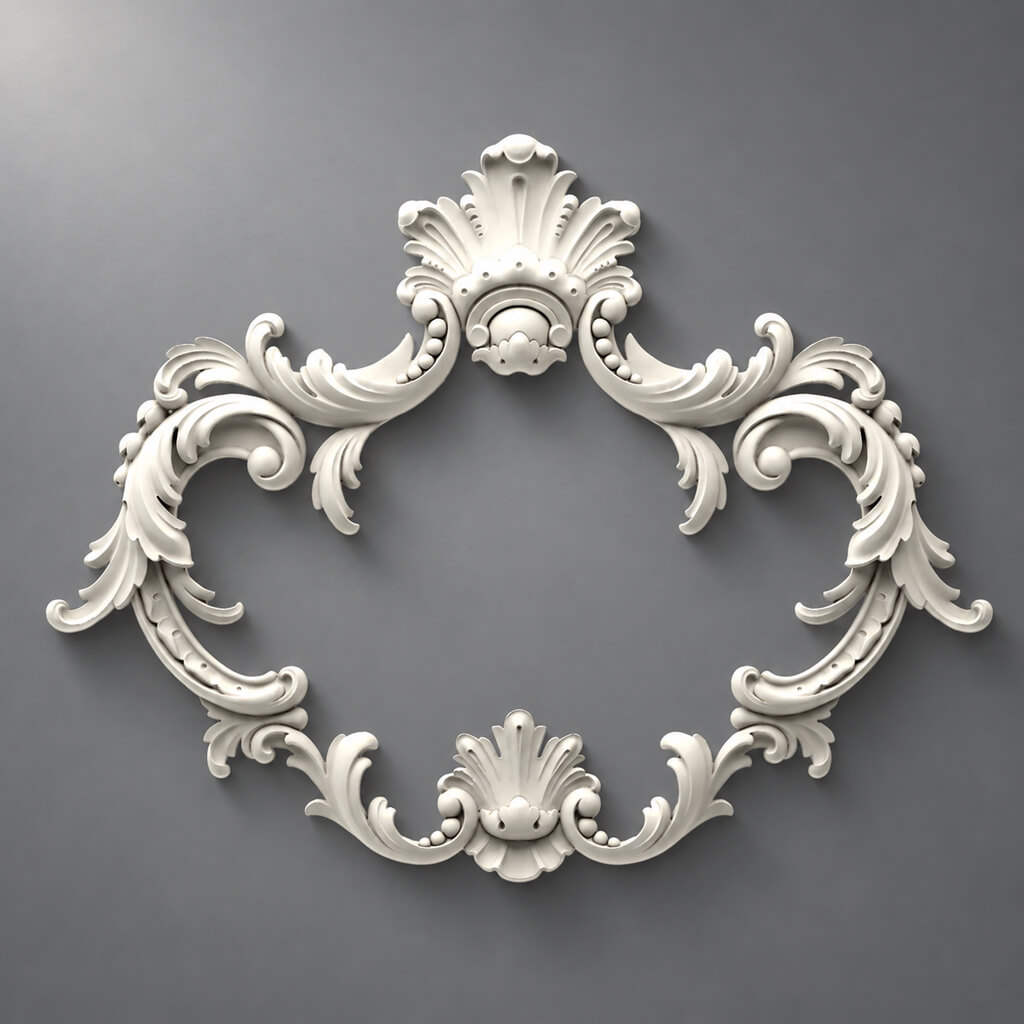
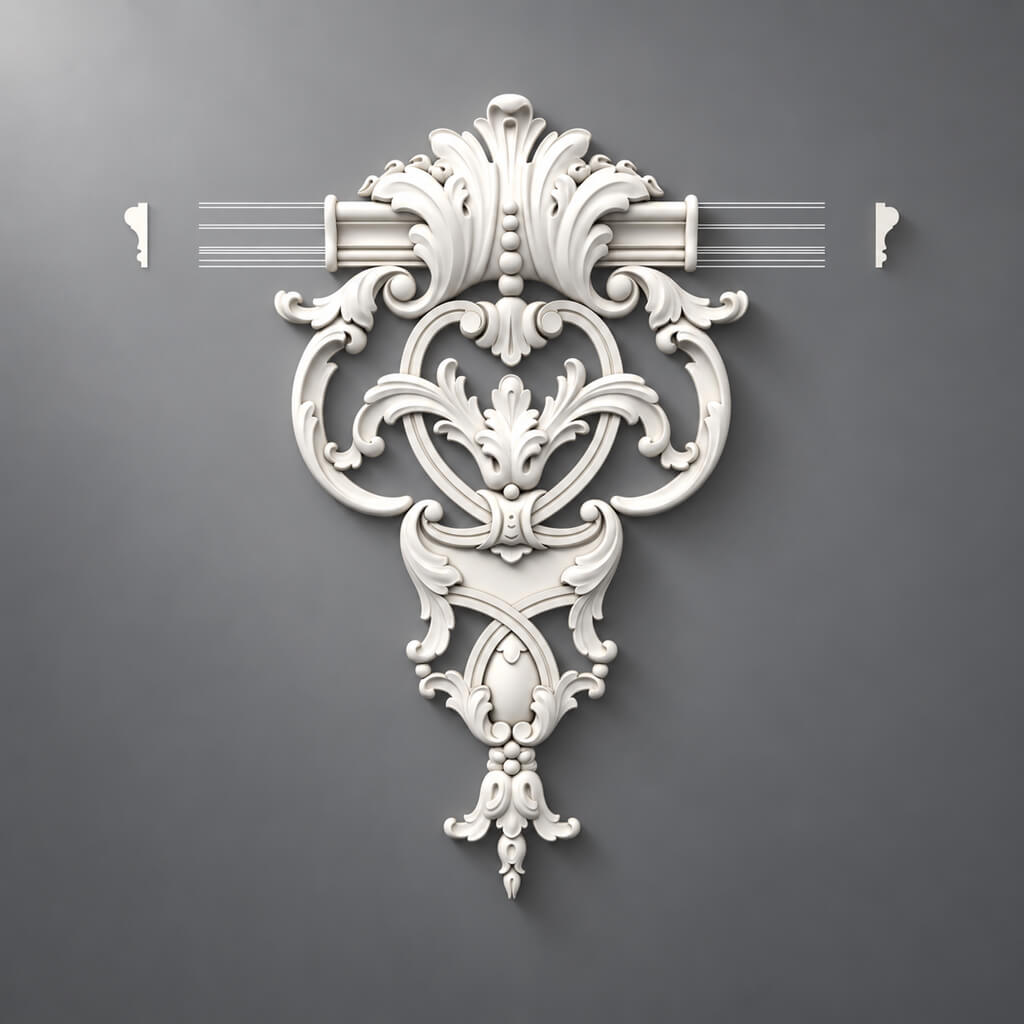
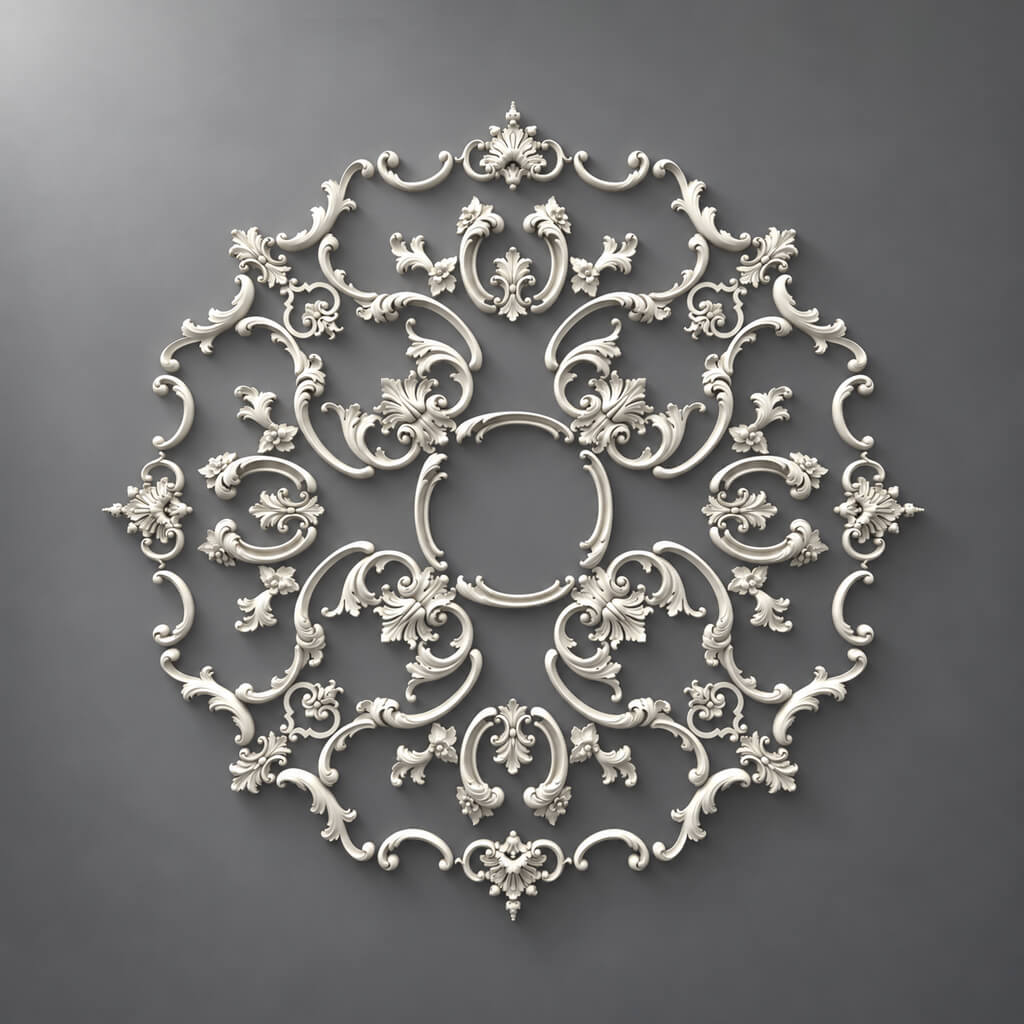
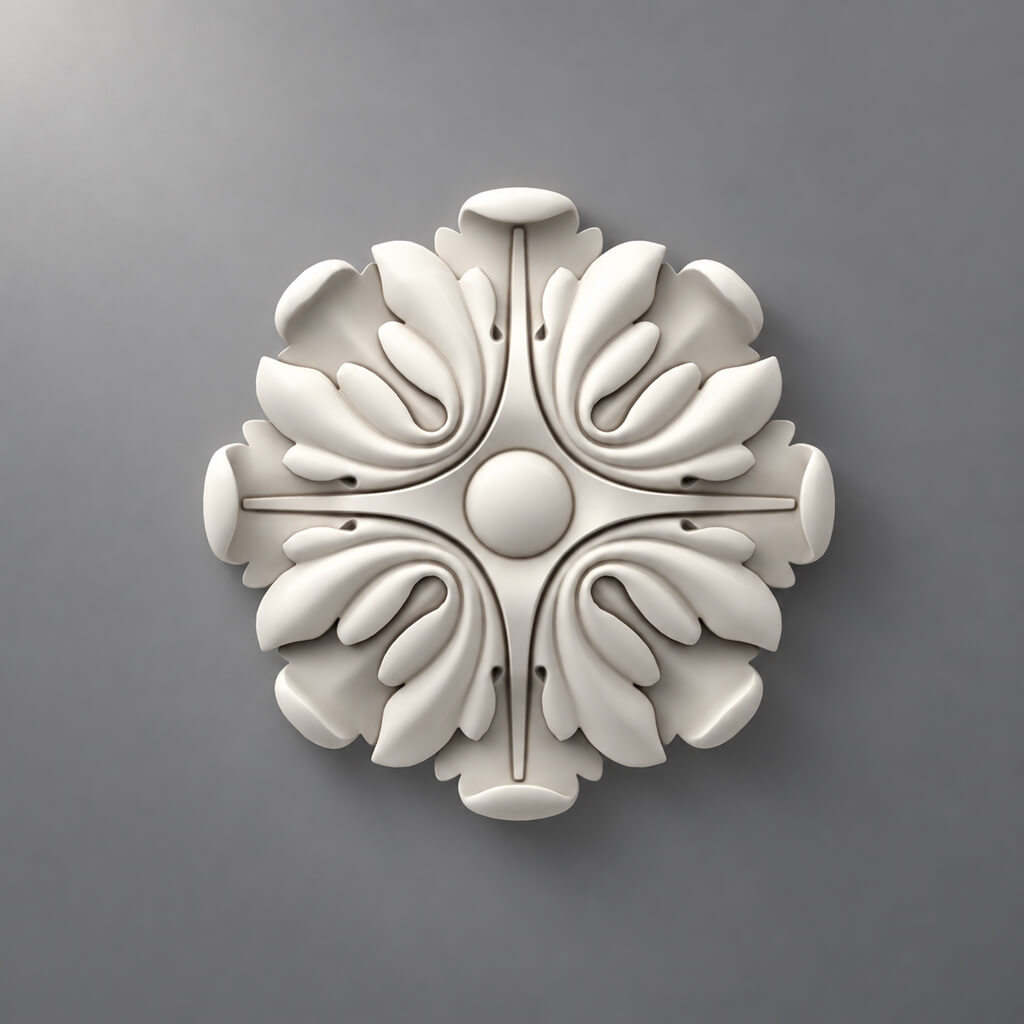
Wooden decoration — overlays, rosettes, cartouches, corner elements — and legs made from the same wood species, painted or tinted in the same color, create a finished, professional look for the furniture.
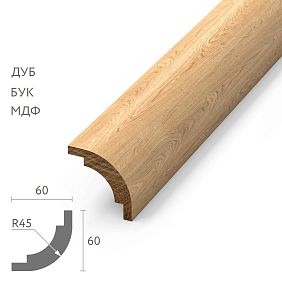
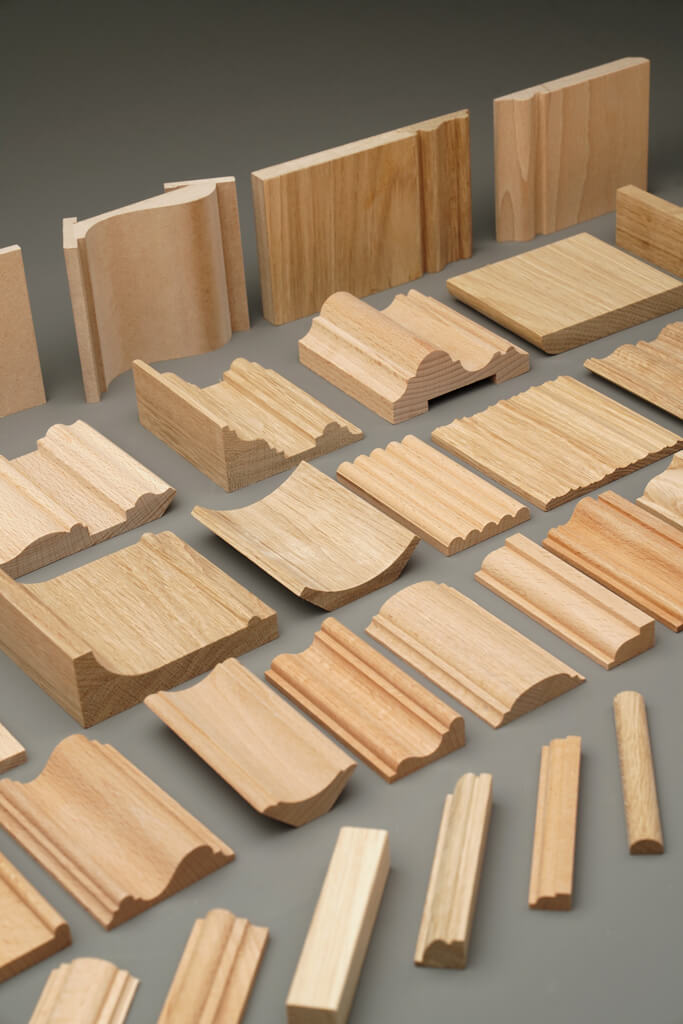
Legs and wooden furniture moldings
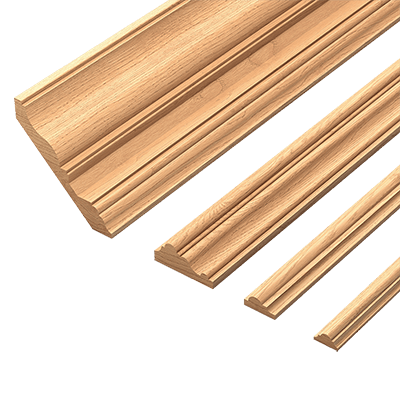
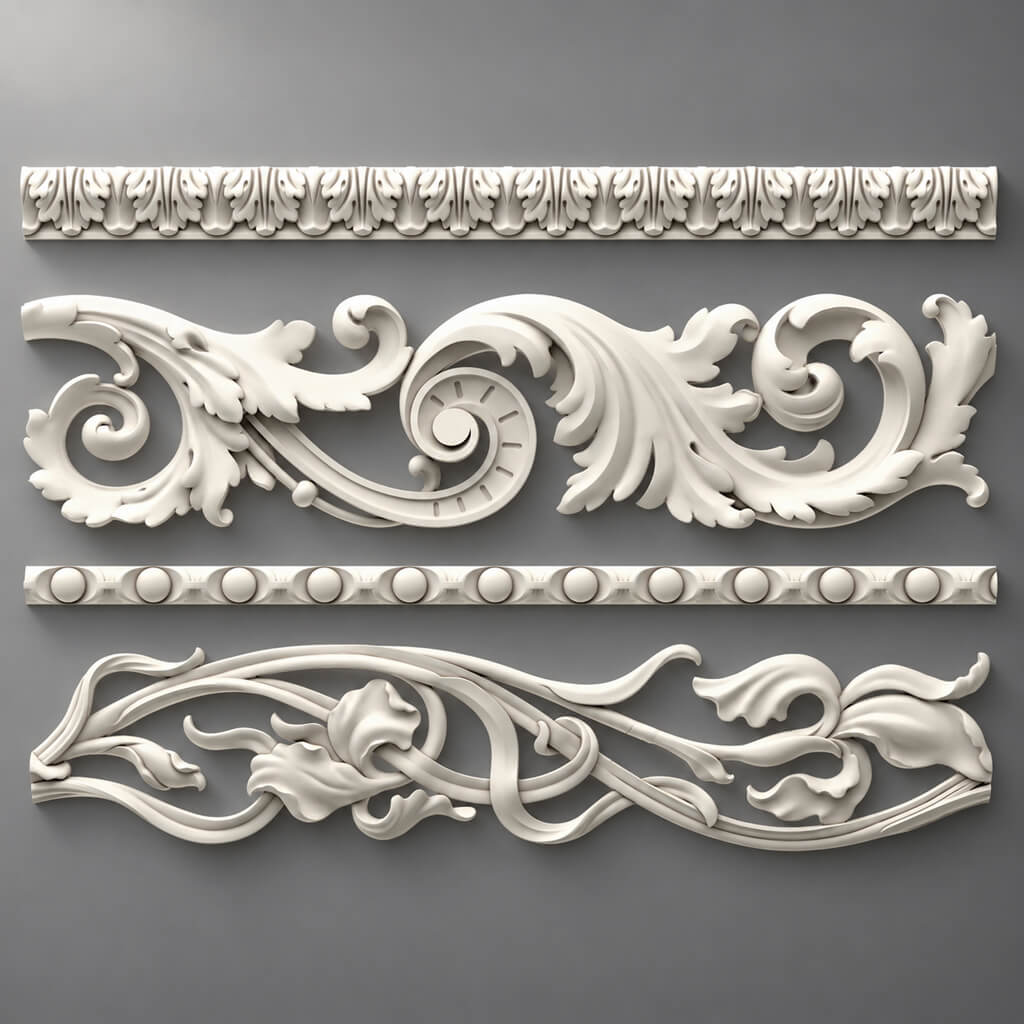
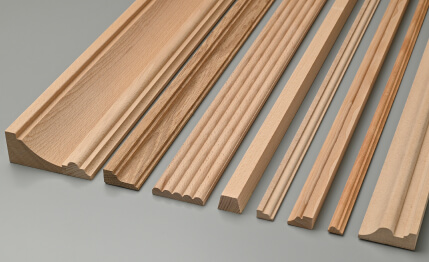
Another element that must be coordinated with the legs — wooden overlays and moldings on the facades. If the dresser facade is decorated with frame overlays with a certain profile height, the leg should be proportionate: a thin overlay — a delicate leg, a wide molding — a more massive support.
Complete system of furniture decor
A professional approach — choose all wooden furniture parts (legs, handles, overlays) from a single catalog from one manufacturer. This guarantees a single wood species, a single processing principle, size compatibility, and style consistency. Full Furniture and Decor made of solid wood — that's exactly the system.
Common mistakes when choosing high legs
Mistake 1: Legs too thin for a heavy body
This is the most critical mistake in terms of safety. A heavy dresser or cabinet on legs with a diameter of 25–30 mm — risk of breakage under lateral load. Rule: the minimum leg diameter at the "waist" (the thinnest part of the profile) — at least 25–28 mm for light furniture, 35–45 mm for medium, 50 mm+ for heavy.
Mistake 2: Incorrect final product height
"I'll buy 200 mm legs — it will look nice." But if the dresser already has a body of 75 cm, 200 mm legs will give a final height of 95 cm — too high for convenient use of the top surface. Always calculate the final height.
Mistake 3: Different styles of legs and handles
A baroque cabriole leg and a strict minimalist metal bracket handle create a visible design conflict. Consistency of details is a fundamental rule of classic interior design.
Error 4: Incorrect number of support points
Four legs under a 160 cm long dresser are not enough. The bottom will sag under load in the center. For furniture longer than 100–120 cm, at least 6 support points are required.
Error 5: Mismatch of fastening elements
You bought legs with M8 thread, but the dresser has M10 fasteners — they don't fit. Always check before ordering: the diameter of the fastener bolt thread and the length of the bolt that goes into the leg.
Error 6: buying without a reserve
Legs rarely break, but it happens. If one leg out of four breaks or is lost, and the manufacturer has discontinued the model, the entire set of four must be replaced. Buying one spare leg as a backup is a reasonable precaution.
Error 7: Ignoring floor covering
Tall wooden legs without protective pads on the ends scratch parquet and laminate flooring with any movement of the furniture. Always install soft pads (felt, rubber) on the bottom ends of the legs.
Legs for painting: technology for proper finishing
How to achieve the perfect color on a wooden leg
buy furniture legs and supports unpainted — correct if you want an exact match with the furniture color. Technology for painting wooden legs:
-
Sanding — with fine-grit sandpaper (180–220 grit) along the grain. Remove all roughness and fuzz.
-
Priming — acrylic primer, one coat. Seals pores, improves paint adhesion.
-
First coat of paint — thin, controlling. After drying — light sanding with a 320 grit sponge.
-
Final coat of paint — without intermediate sanding, finishing.
-
Varnish (optional) — for a glossy or satin finish.
For turned legs with complex profiles, spray paint or an airbrush is most convenient — they evenly cover concave profile areas that a brush cannot reach.
Furniture restoration: high legs as a transformation tool
Old dresser + new legs = new furniture
Restoration of wooden furniture with leg replacement is one of the most effective and economical ways to update an interior. An old Soviet dresser with peeling veneer becomes a modern piece with character if you:
-
Sand and paint in a neutral color (white, gray-beige, taupe).
-
Install high turned legs 150–180 mm.
-
Replace handles with Wooden handles with coating.
-
Add decorative overlays to drawer fronts.
Result: a piece of furniture with zero market value turns into a decorative object with individual character. The cost of transformation — a few legs, a set of handles, paint, and decor. The result — furniture that people want to photograph and replicate.
Antique furniture: precise reproduction
For restoring antique furniture, the task is fundamentally different: not to "make it beautiful," but to reproduce the original form as accurately as possible. Here buy wooden furniture legs you need the widest possible selection of profiles and heights. Ideally, have a sample of the original leg or an exact description of the profile.
Restoration often requires minor adjustments: trimming the leg to height, adjusting the mounting element, replicating the original tint through staining.
Where to buy tall wooden furniture legs
Catalog with full assortment
Choosing buy furniture support from a specialized supplier, you get:
-
Wide selection of shapes and heights — from 80 to 300 mm and above.
-
Different wood species — beech, oak, birch.
-
Unpainted and with ready-made coating.
-
Exact specifications in the card: height, diameter, type of fastener, load capacity.
-
Ability to buy legs in a set with handles and decor from the same material.
Full assortment for comprehensive furniture design:
-
Wooden legs — full catalog of solid wood furniture legs.
-
furniture leg — classic and decorative options.
-
buy furniture legs and supports — unpainted, for painting or tinting.
-
decorative elements for furniture — overlays, applied decor, rosettes, cartouches.
-
Wooden decoration — for facades, drawers, cornices.
-
wooden hook handle — for cabinets and dressers.
-
wooden button handle — for drawers and doors.
FAQ: popular questions about tall wooden legs
What load is permissible on one wooden leg?
Depends on the wood species and diameter. A beech leg with a diameter of 40 mm and a height of 150 mm withstands about 40–50 kg at break. For a standard dresser of 50–60 kg with four legs — a load of 12–15 kg per leg is completely safe.
Can I replace the legs on a sofa myself?
Yes. On most sofas, the legs are attached with an M8 or M10 bolt. Unscrew the old leg, screw in the new one. The only thing you need to check in advance is the diameter and thread pitch of the bolt on your sofa.
What is the difference between a furniture leg and a decorative furniture support?
Functionally — nothing. 'Support' is a broader concept that can include both turned legs and more massive bases. In trade, these terms are often used interchangeably.
Do high legs make furniture less stable?
Slightly. The center of gravity rises a bit, but for standard furniture this is not critical. More important is the placement of the legs: they should be installed at the corners of the body, not shifted toward the center.
How to paint a turned wooden leg without streaks?
Spray paint from a can or with an airbrush gives the most even result. When painting with a brush — thin layers, brush along the axis of the leg, without cross strokes. Priming before painting is mandatory.
Are pads needed on the bottom ends of the legs?
Mandatory for parquet and laminate. Felt pads with a diameter matching the leg are the standard solution. For legs with bolt fasteners on the bottom — rubber pads with a hole for the bolt.
STAVROS: wooden legs, supports, and solid wood furniture decor
A furniture leg is a fulcrum in both the literal and figurative sense. It holds the body, holds the style, holds the image of the entire piece. And when the leg is chosen correctly, it goes unnoticed. The furniture simply looks impeccable.
STAVROS produces and supplies Wooden legs from solid wood — turned, classic, decorative — for chests of drawers, cabinets, sofas, armchairs, wardrobes, and any other furniture. Also here: handles, decorative overlays, moldings, and the full range of wooden furniture decor made from solid wood. Everything from a single source, in a unified system of materials and styles.
STAVROS works with private customers, restorers, designers, and furniture manufacturers across Russia. If you want to transform furniture or create a classic interior with the right details — start with the legs.