








































































Article Contents:
- When grapevine decor is suitable
- For a wine cellar and tasting area
- For a restaurant, cafe, or boutique
- For a kitchen-dining room and private interior
- For a wall panel, portal, or decorative frame
- Carved overlays with vine motif
- Molding and baguette of the "Grape" collection
- Brackets in a unified style
- Decor for moldings and vignettes
- How to combine collection elements
- If you need to decorate a wall
- If you need to assemble a portal or frame
- If you need shelf supports
- If you need an accent central decor
- If a repeating pattern around the perimeter is required
- Define the design area
- Select the central element
- Add linear and frame elements
- Check dimensions and thread direction
- Order extra for trimming and joining
- Table of 'what to buy together'
- Need to design a wine cellar
- Need to design a wine-themed restaurant
- Need to design a wine boutique
- Need to create a home wine zone
- Need to assemble a wall composition
- Need to design a furniture facade
- Need to make a wine-themed shelf
- Beech and oak in decorative interior
- Enamel, tinting, varnish and oil
- Why finishing should be planned before purchase
- Marking
- Surface Preparation
- Maintenance
- Mistake 1. Buying a single element without a composition
- Mistake 2. Mixing different ornaments
- Mistake 3. Not calculating the linear footage
- Mistake 4. Not considering the room scale
- Mistake 5. Confusing overlay and bracket
- Mistake 6. Buying a bracket only for looks
- Mistake 7. Not planning the finishing
- Mistake 8. Not checking the thread direction
- Mistake 9. Not considering the light
- Mistake 10. Making the interior too literal
- Where to buy wooden "Vine" decor?
- Can the "Grape" collection be used for a restaurant?
- What to buy first: overlay, molding, or bracket?
- How to avoid mixing different styles of carved decor?
- Can I assemble a decorative frame with a grape motif?
- Is a vine suitable for a home kitchen?
- Can "Grape" brackets be used as shelf supports?
- What to choose for a wine cellar?
- How to calculate linear footage?
- Should I choose beech or oak for decor?
- Can the collection be used in a wine boutique?
- What to buy together with a carved overlay?
- How is an overlay different from linear molding?
- Can the «Grape» decor be used on furniture?
- What to do if a calmer interior is needed?
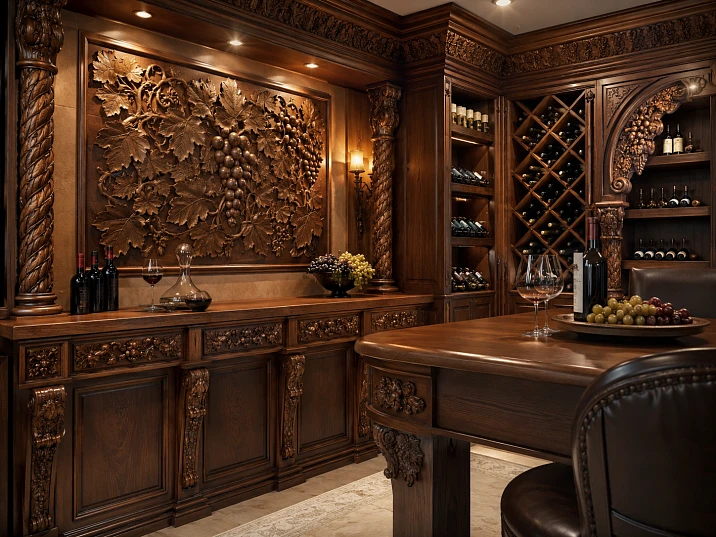
Buying grapevine decor means choosing not just a beautiful carved detail with leaves and clusters, but a whole theme for the interior. Such a motif immediately sets the mood: a wine cellar, a tasting area, a restaurant with a wine list, a gourmet boutique, a private kitchen-dining room, a collector's study, a bar area, or a decorative wall where you need to emphasize the culture of wine, wood, hand finishing, and a warm classic atmosphere.
The mistake begins where grape decor is bought as a single random element. One overlay can be beautiful, but without linear molding, framing, brackets, moldings, and a repeating pattern, it often looks lonely. A thematic interior relies on a connection: a central accent, framing, repetition, supporting details, material, and finish. Therefore, the «Grape» collection by STAVROS is convenient precisely as a system, not as a set of individual decorations.
If you need to design a wine cellar, restaurant, boutique, or wall composition, it's better to think in advance as a set: what will become the main decorative center, how to frame the area, where to place brackets, which elements to repeat around the perimeter, which overlays to use on facades, how to connect the wall, furniture, and shelves. This approach helps avoid mixing different ornaments and turning the interior into a random set of carved details.
The main commercial route starts with the section buy the STAVROS Grape decor collection. It contains elements with a single grapevine motif: overlays, moldings, brackets, decorative elements, and other products that can be used for decorating walls, furniture, portals, niches, shelves, and interior zones.
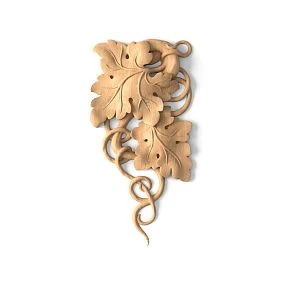
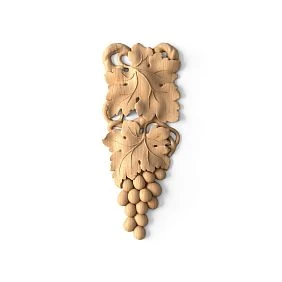
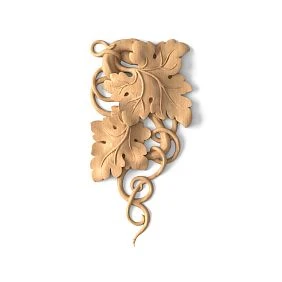
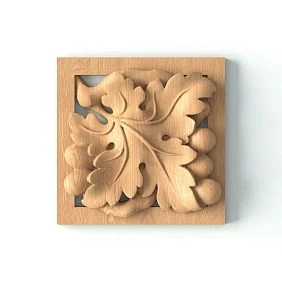
When grapevine decor is suitable
The grapevine is a strong thematic motif. It is not neutral like a smooth molding, nor universal like a simple geometric profile. It has an image: wine, fertility, abundance, classical European decorative tradition, restaurant atmosphere, wine cellar, tasting, warm wood, dim light, shelves with bottles, bar counter, display case, niche, or wall panel.
That is why such decor should be used consciously. It works well where the theme of wine, gastronomy, wood, and hand-carved decor is meaningful. In neutral minimalism, a grape ornament may look too active. In a restaurant, boutique, or wine zone, on the contrary, it helps make the space memorable.




For a wine cellar and tasting area
A wine cellar is rarely built solely as a storage room. Even if temperature, humidity, shelving, and easy access to bottles are important, the visual atmosphere plays a huge role. A person comes to the wine zone not only to get a bottle but also to feel a special space: intimate, warm, cohesive, slightly solemn.
Decor with a vine helps make this atmosphere clear. A carved overlay can become a central accent on a wall or door. The moldings of the "Grape" collection can frame a panel, niche, mirror, wine list, or decorative insert. Brackets can support a shelf where bottles, glasses, accessories, or display items stand.
In such a scenario, it is especially important not to overload the space. The wine theme should be readable but not turn into overly literal decoration. It is better to choose a few repeatable elements from one collection than to mix grapes, laurel, shells, acanthus, geometry, and different historical styles in one room.
Our factory also produces:

For a restaurant, cafe, or boutique
In a restaurant or cafe, decor works not only for beauty but also for commercial impression. The guest remembers the atmosphere, photographs details, and returns to the feeling of the place. If the establishment is associated with wine, gastronomy, cheese, meat, European cuisine, intimate dinners, or tastings, the grapevine can become part of the branded environment.
For a restaurant, not only large central elements are suitable. Sometimes repetition works stronger: frames on walls, decorative molding in the bar area, carved brackets under shelves, overlays on furniture facades, elements for moldings in openings or niches. When the motif is repeated in measured doses, the interior looks well-thought-out.
A wine boutique, gourmet store, or beverage showroom can also use the "Grape" collection. There, it is important not just to decorate the space but to support the product. The carved vine motif helps connect shelves, display cases, the signage area, the consultant's counter, and the decorative wall.
Get Consultation
For a kitchen-dining room and private interior
In a private interior, grape decor is appropriate where the owner truly wants a themed zone. For example, a kitchen-dining room with a wine cabinet, a classic-style dining room, a home bar, an area above a sideboard, a decorative panel in a niche, or a portal around shelves.
In a living space, it is better to be careful with the number of details. A restaurant can handle more saturated decor. A private interior gets tired of overload faster. Therefore, for a home, one central overlay, a couple of brackets, molding around a panel, or a small repeating ornament is often enough.
For a wall panel, portal, or decorative frame
A wall panel is one of the best scenarios for the "Grape" collection. On the wall, you can assemble a composition: a frame from molding, a central overlay, decorative elements for moldings, side accents, repetition in the upper or lower part. Such a composition is immediately perceived as a complete architectural zone.
The portal around a niche, shelves, mirror, entrance to a wine room, or bar area also accepts the grape ornament well. The main thing is to determine the scale in advance. A small overlay on a large wall will get lost. A too large element in a small niche will feel oppressive. Therefore, it is better to start the purchase not with the most beautiful element, but with the overall scheme.
What is included in the STAVROS "Grape" collection
The "Grape" collection is not a single product. It can be assembled into several groups: carved overlays, linear moldings, baguettes, brackets, decor for moldings, frame elements, and additional details. This is what makes the collection convenient for an interior project: you can carry one motif through different zones without having to select each element manually from different styles.
Carved overlays with a vine motif
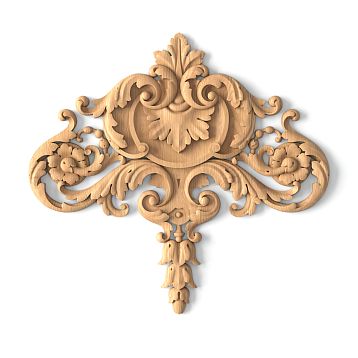
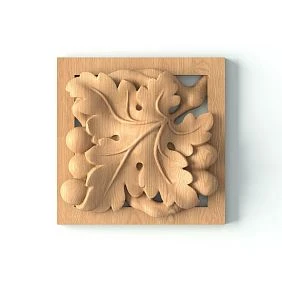
A carved overlay works as an accent. It can be used on a wall panel, furniture facade, portal, decorative insert, bar counter, display case, door, or the central part of a composition. The overlay does not have to be huge. It is important that it is visible and has a clear place.
If the overlay is installed on a facade, you need to consider handles, opening, eye level, proportions of the furniture piece, and future finishing. If on a wall, consider the distance to furniture, lighting, frame size, and adjacent decor. An overlay with a grapevine should be the main or supporting accent, but not a random spot.
To expand the composition, you can look at carved wooden overlays from STAVROS. In this section, there are different shapes, collections, and ornaments, and for the "Grape" theme, it is important to choose elements that do not conflict with the main plasticity of the vine.
Linear moldings and baguettes of the "Grape" collection
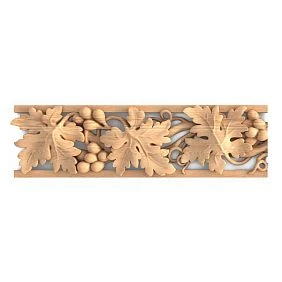
Molding is needed for lines, frames, edging, and repeating patterns. If an overlay is an accent, then molding is the structure. It helps frame a wall panel, mirror, wine list, decorative niche, doorway, furniture facade, or the top of a bar counter.
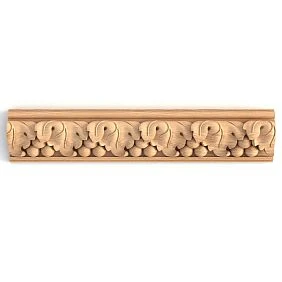
In the collection, you can use wooden molding from the Grape collection. Such molding helps maintain a unified theme and avoid mixing the grape motif with unsuitable profiles. This is especially important for commercial interiors: a restaurant or boutique should look like a well-thought-out space, not a display case with various leftover decor.
Molding is also needed for repeatability. One decorative element can provide an accent. Molding creates rhythm: a line along the wall, a frame around a panel, a portal edging, a horizontal belt, a vertical border, the finish of a shelf or display case.
Brackets in a unified style
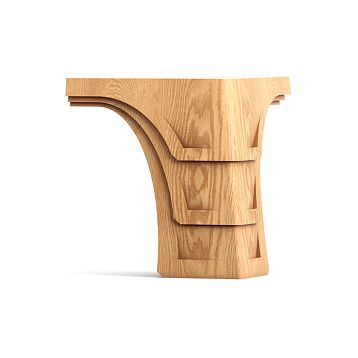
A bracket differs from an overlay in that it can function as a support or as a voluminous decorative protrusion. In a wine area, this is especially useful: shelves for bottles, glasses, accessories, display items, or decorative objects require not only a beautiful facade but also supporting details.
For such tasks, the following are suitable carved brackets from the Grape collection. They help connect the shelf with the overall interior theme. If the room already has overlays and molding with vines, brackets from the same collection make the composition cohesive.
The bracket should be chosen based on the installation location. For a decorative shelf, size, depth, height, base material, and actual load are important. If the shelf bears weight, the bracket cannot be perceived only as decoration. You need to consider the fastening, base, and installation scheme.
Decor for moldings and vignettes
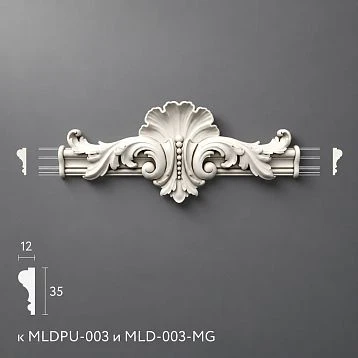
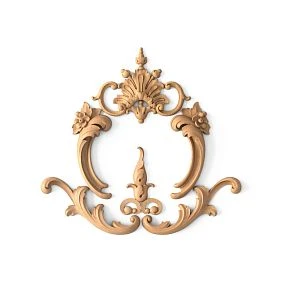
Decor for moldings helps assemble frames, vignettes, corners, center inserts, and transitions. If the linear elements set a straight line, decorative elements help shape complex areas: a corner, center, side accent, finish, joint, or a separate compositional point.
For this scenario, you can use decor for moldings Grape. This section is especially useful when the task is to "assemble a decorative frame," "decorate a wall with a grapevine," "add vignettes," "create a perimeter around a panel," or "complement linear elements."
What to combine with collection elements
The "Grape" collection is best combined with wooden profiles, moldings, linear elements, overlays, brackets, facades, shelves, and wall panels. If you need a straight profile without a pronounced grape ornament, you can additionally look at wooden moldings and linear elements STAVROS.
The main rule is not to mix too many decorative languages. A grapevine already carries a strong image. If you add random baroque shells, geometry, Art Nouveau, and several different floral motifs to it, the interior will lose clarity. It is better to build a composition around one theme and support it with material, color, light, and repetition.
Characteristics and roles of product groups
| Product group | What it is | Where to use | What to check before ordering |
|---|---|---|---|
| Grape collection | General selection of items with grapevine motif | Wine cellars, restaurants, boutiques, tasting areas, private interiors | Required product groups, sizes, material, availability, overall style |
| Carved overlays | Flat or relief accent elements | Wall center, facade, portal, door, decorative insert | Size, shape, pattern direction, material, installation location |
| Molding and baguette | Long profiles and frames | Frames, panels, portals, mirrors, walls, facades | Length, profile, joining, trimming allowance, finishing |
| Carved brackets | Support or decorative elements | Shelves, bar areas, display cases, portals, consoles | Size, depth, base, load, fastening |
| Decor for moldings | Elements for frames, vignettes, and transitions | Corners, centers, joints, decorative inserts | Compatibility with molding, sizes, series, direction |
| General wooden millwork | Straight moldings, cornices, baseboards, and profiles | Addition to thematic elements | Material, profile, length, finish, compatibility |
This table is needed for practical selection. If the buyer just needs a beautiful central piece, they look at overlays. If framing is needed, they look at linear moldings. If a shelf is needed, they look at brackets. If a frame needs to be assembled, they look at linear moldings plus molding decor. If a restaurant or wine boutique is being decorated, it's better to start with the entire collection and assemble several groups of products within one theme.
How to choose elements for a task
The selection starts not with the question 'which element is more beautiful', but with the question 'what exactly needs to be decorated'. A wall, portal, shelf, facade, display case, niche, and bar area require different details. The same overlay can be appropriate on a central panel and superfluous on a small door. The same bracket can decorate a shelf, but cannot replace linear moldings.
If you need to decorate a wall
For a wall, a composition is needed. It is usually built like this: a central zone, a frame, side or top accents, a repeating profile. A carved overlay with a vine can become the central element. The frame can be assembled from linear moldings. Corners and transitions can be supported with molding decor. If there is a shelf nearby, it can be decorated with brackets.
Before purchasing, you need to measure the wall, determine the height of the furniture, the location of lights, sockets, switches, doorways, and baseboards. The vine decor should not interfere with the interior, but work with it. If there is too much carving on the wall, the space will become heavy. If too little, the theme will be lost.
If you need to assemble a portal or frame
A portal around a niche, shelf, door, wine cabinet, or bar area requires linear moldings and decorative elements. An overlay can become a top accent, and linear moldings can become the framing. If a more complex frame is needed, molding decor is added.
In such a scenario, it's important to look not only at the ornament but also at the profile. The molding must connect neatly, corners and joints need to be calculated in advance, and central elements should not conflict with the frame lines. If the frame is to be painted, the material and preparation must also be chosen in advance.
If shelf supports are needed
A shelf in a wine area can be functional or decorative. If bottles, glasses, or heavy items will be placed on it, the bracket cannot be chosen solely based on appearance. The wall base, fasteners, shelf depth, expected load, and number of supports must be considered.
The carved brackets from the "Grape" collection are good because they support the vine theme not flatly but volumetrically. They are visible from below, from the side, in the passage, and under lighting. In a restaurant or boutique, such a detail can become a noticeable part of the space, not just a technical support for the shelf.
If an accent central decor is needed
Central decor is needed when there is an empty plane: the middle of a panel, the area above a counter, a buffet facade, the upper part of a portal, a door leaf, or the end of a display case. A grape overlay works well as a theme sign. It immediately communicates: here is a wine area, gastronomy, wood, a classic decorative motif.
But a central accent requires breathing room. If the overlay is squeezed between overly active molding, handles, frames, shelves, and lighting, it will lose its expressiveness. It's better to leave enough space around it and support the motif with repetition in other places.
If a repeating ornament around the perimeter is required
For the perimeter, not a single decor piece but molding is needed. It creates a line and repetition. This is suitable for wall panels, frames, doors, portals, display cases, facades, and bar areas. Molding helps connect several elements into a unified system.
If repetition is needed throughout the room, it's important not to make a mistake with the quantity. The perimeter must be measured, a reserve added for cutting, and joints, corners, waste, pattern direction, and possible adjustments must be accounted for. In commercial spaces, it's better to include a reserve upfront to avoid stopping installation due to a shortage of one section.
How to calculate the purchase
Calculation is needed not only for the price. It helps avoid stylistic and installation chaos. If you buy a trim first, then a random molding, then another bracket, the composition may not come together. The correct order: zone, center, frame, supporting elements, installation, finishing.
Define the decoration zone
First, you need to decide what exactly is being decorated: the wall behind the bar, a wine niche, a shelf, a portal, a buffet facade, the entrance to a wine cellar, a restaurant area, a boutique display window, or a private dining room. Each zone has its own visibility. What works on a central wall may be unnecessary in a narrow passage.
For a central wall, more expressive elements can be used. For a small niche, it is better to choose a calm set. For a restaurant, it is important to consider the distance from which the guest sees the decor. For a boutique, how the decor looks next to the product and whether it interferes with the display.
Choose the central element
The central element sets the theme. It can be a carved overlay with a vine, a decorative vignette, the top element of a portal, or a large detail in a frame. It is chosen first because the remaining elements must support the scale.
If the central element is large, the moldings should be sufficiently expressive. If the central detail is small, too heavy a frame will overwhelm it. The grape theme loves balance: clusters and leaves should look lively but not overload the surface.
Add moldings and frame elements
After the central element, the frame is chosen. Moldings can go around the panel, along the perimeter of the portal, along the bar area, around a mirror or wine list. Decor for moldings helps cover corners, centers, transitions, and accent points.
Here, it is useful to draw a diagram in advance. Even a simple diagram with dimensions helps to understand how much molding is needed, where the joints will be, which elements repeat, and what to buy additionally.
Check thread size and direction
Carved decor often has a direction. Leaves, clusters, scrolls, branches, and vignettes can look different when rotated. If using elements in pairs, you need to check left and right logic, symmetry, pattern direction, and placement on the plane.
Sizes are also important. Too small decor on a large wall will get lost. Too large on a small facade will look heavy. Therefore, sizes should be checked in product cards before ordering.
Order extra for trimming and joining
Linear molding almost always requires trimming. Waste can occur at joints, corners, abutments, and adjustments. If you order exactly the net size, there may not be enough material. Extra is especially important for commercial projects where installation deadlines and a uniform appearance are critical.
For overlays and brackets, extra is usually calculated differently: by the number of installation points. If brackets come in a pair for a shelf, you need to buy a pair. If decorative elements repeat along a wall, the quantity is calculated according to a diagram, not by eye.
Commercial selection: what to offer for the customer's task
| Buyer's task | What to offer | Why this is suitable |
|---|---|---|
| Design a wine area | "Grape" collection + linear molding | The vine motif connects the wall, furniture, and shelves |
| Make a decorative frame | Linear molding + decor for moldings | You can assemble the framing and design transitions |
| Add a support for the shelf | Carved brackets from the "Grape" collection | The support becomes part of the decorative theme |
| Make a central accent | Carved overlay with a vine | The overlay sets the theme on the wall, portal, or facade |
| Design a restaurant or boutique | Multiple groups of elements in one collection | The space looks cohesive, not random |
| Assemble a project without stylistic inconsistency | Take elements from one STAVROS collection | Ornament, plasticity, and scale are better coordinated |
| Design a wall panel | Linear elements, overlays, decor for moldings | You can create a frame, center, and repeat |
| Design a shelf area | Brackets, moldings, overlays | The shelf looks more like an interior piece than a technical one |
This block helps quickly move from idea to cart. If a buyer says "I want a grapevine on the wall," they need not just one item but a set: an overlay, molding, and possibly decor for moldings. If they say "I want a wine shelf," they need brackets and supporting decor. If they say "we're decorating a restaurant," it's better to look at the entire collection.
What to buy together
The point of the "Grape" collection is the connection. The more thematic the interior, the more important it is not to assemble it from random pieces. If a buyer takes an overlay, they almost always need molding or a frame nearby. If they take brackets, they need a shelf and decorative support. If they take molding, they need elements for moldings, overlays, or a central accent.
Table "What to buy together"
| Main product | What to buy together | Why this is needed |
|---|---|---|
| Carved overlay "Grape" | wooden molding from the Grape collection | To frame the overlay and connect it to the wall or facade |
| Bracket "Grape" | Shelf, molding, decorative overlay | So the support doesn't look like a separate piece |
| Molding "Grape" | decor for moldings Grape | To design corners, centers, and transitions of the frame |
| Decor for moldings | wooden moldings and linear elements STAVROS | To select straight sections, frames, and lines |
| Collection for a restaurant | Several repeatable elements | To create a unified interior, not scattered accents |
| Wall composition | carved wooden overlays from STAVROS | To add central and side decorative accents |
| Shelf zone | carved brackets from the Grape collection | To support the shelf in the same motif as the rest of the decor |
If the task is commercial — a restaurant, boutique, tasting room — it's better to immediately consider not a single detail, but a set for the space. This way you can maintain the style, avoid losing repetition, and not encounter a situation where one area is richly decorated while the neighboring one looks empty.
How not to confuse with similar products
| Element | What it is for | Do not confuse with |
|---|---|---|
| "Grape" overlay | Central or side accent | Linear molding |
| Linear molding / baguette | Frame, line, border | As a separate overlay |
| bracket | Support for a shelf or decorative ledge | Pure flat decor |
| Decor for moldings | Assembling vignettes, frames, and transitions | Regular straight molding |
| Grape collection | Unified set of elements in one style | Random set of different ornaments |
| Wooden molding | Straight profile for a frame or line | Thematic overlay |
| Universal overlay | Decor without mandatory wine theme | Element of the «Grape» collection |
The main mistake is thinking that any plant ornament can replace a grapevine. Plant decor comes in different forms: acanthus, laurel, flowers, branches, garlands. The grapevine has its own image. If the interior is built around a wine theme, it's better to use elements from one collection rather than mixing everything that resembles leaves.
The second mistake is confusing linear molding and overlay. Linear molding creates a line and a frame. Overlay provides an accent. A bracket works in volume and can support a shelf. Decor for moldings helps assemble complex frame units. Each element has its own role.
Practical selection for specific situations
Need to design a wine cellar
For a wine cellar, first determine the main area: entrance, wall behind the tasting table, shelves, niche, door, or central panel. Then choose a central accent and linear molding. If there are shelves, add brackets. If there are frames, add decor for moldings.
In a cellar, it's important to consider humidity, microclimate, base material, and finish. Wooden decor must be prepared for the room's conditions. Before ordering, clarify the material, finish, and operating recommendations.
Need to design a restaurant with a wine theme
A restaurant needs not just one accent, but a repeatable system. For example: linear molding around wall panels, overlays above the bar counter, brackets under decorative shelves, elements for moldings on the portal. This way the motif doesn't look random.
It's important not to overload the hall. Decor should work for the atmosphere but not interfere with guests, furniture, lighting, service, or navigation. It's better to distribute elements across key points: entrance, bar, wine display, private area, central wall.
Need to design a wine boutique
In a boutique, decor should support the product, not compete with it. The grapevine can adorn display cases, shelves, wall panels, the sales counter, or the tasting table. Brackets are especially appropriate in the shelf area if they are visible to the customer.
For a boutique, it's important that the decor doesn't reduce the readability of the assortment. If the wall is occupied by bottles, carved elements are best used as a frame or top accent, rather than as an overly active background.
Need to create a home wine zone
In a private house or apartment, one or two strong solutions are enough. For example, a frame made of molding around a wine cabinet, a carved overlay above a shelf, a pair of brackets under a small shelf, a decorative panel in the dining room. There's no need to turn the entire kitchen into a restaurant decoration.
Need to assemble a wall composition
First, choose the center. Then the frame. Then the supporting elements. If the composition is stretched horizontally, molding and repetition will be more important than a large central detail. If vertical, you can use an overlay at the top or center, and set the boundaries with molding.
Need to design a furniture facade
For a facade, it's better to choose elements that are smaller and neater than for a wall. An overlay with a vine can decorate a sideboard, bar cabinet, display case, chest of drawers, or wine cabinet door. But you need to consider handles, hinges, opening, margins, and facade thickness.
Need to make a shelf with a wine theme
Brackets work well here. They support the shelf and simultaneously continue the decorative theme. If the shelf is functional, be sure to consider the load, fastening, and base. If decorative, you can emphasize the shape and style.
How to work with material and finish
The «Grape» collection is associated with wood, meaning the finish plays a major role. The same motif can look different: under light enamel, under dark tinting, under varnish, in a natural wood palette, in contrast with the background, or in the same color as the wall.
Beech and oak in decorative interiors
Beech is often chosen for dense painting and enamel. It provides a calm base where the relief becomes the main focus. Oak is better revealed where wood texture, tinting, depth, and natural grain are needed. If the interior is built around a wine theme, oak can well support the image of a cellar, barrel, wine cabinet, and warm wood.
But the material should be chosen not based on a general impression, but on the specific project. If all furniture is painted in one color, beech under enamel may be more rational. If wood texture is important, oak will be more expressive. The main thing is not to mix materials randomly in one composition.
Enamel, tinting, varnish, and oil
Enamel helps make the decor part of the architecture: the wall, frame, and overlay can be the same color. This is suitable for restaurants and private interiors where a calm but relief result is needed. Tinting emphasizes the wood and makes the motif warmer. Varnish protects the surface and preserves the appearance of the wood. Oil coatings can provide a more natural feel, but the exact finish always depends on the chosen product and technology.
Before ordering, you need to decide: will the decor be contrasting or the same color as the wall, will the texture be visible, will there be lighting, how actively will people touch the details. For example, a bracket under a shelf may receive more contact than an overlay high on the wall.
Why finish planning should be done before purchase
If you first buy the elements and then decide how to finish them, you may encounter mismatches in material, texture, and color. This is especially critical for large projects. A restaurant or boutique should look cohesive. If one area is tinted, another is painted, and a third is varnished without connection to the first, the interior begins to fall apart.
It is better to create a finish map in advance: which elements will be the same color as the wall, which will be wood-toned, which will be contrasting, which will be in shadow, and which will be under lighting. This will help correctly choose the material and quantity.
Installation, preparation and care
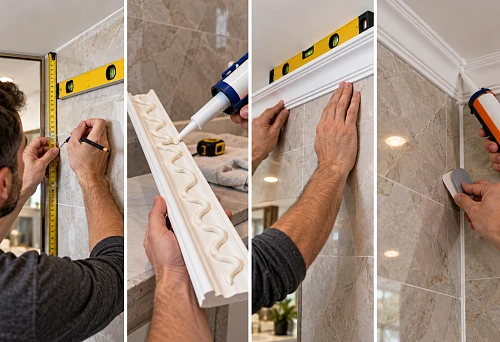
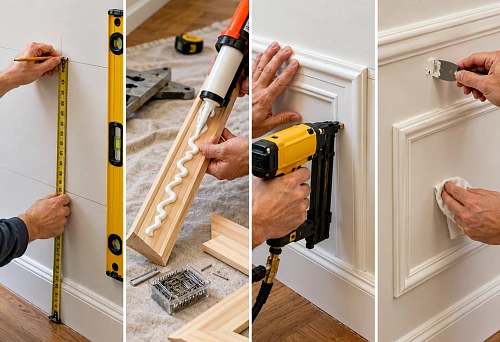
Carved decor requires careful preparation. Before installation, you need to check the base, markings, dimensions, joints, direction of the ornament, and installation order. This is especially important for linear elements and molding decor, where a mistake in one area can throw off the entire frame.
Marking
It is better to do the marking before purchase or immediately after choosing the exact dimensions. For a wall, you can use painter's tape: mark future frames, central elements, shelf heights, and bracket locations. This helps to visualize the scale even before installation.
For facades, it is important to check the margins and opening. For portals, symmetry. For shelves, the distance between brackets and the load. For linear elements, the length of straight sections and allowance for trimming.
Surface preparation
The base must be level and clean. If the decor is mounted on a wall, it is important to consider the wall type, coating, and fastening method. If on furniture, consider the facade material, thickness, finish, and future load. If on a shelf or bracket, consider structural safety.
To keep the decor attractive, it is enough to periodically wipe it with a soft dry or slightly damp cloth. For heavy soiling, use a mild soap solution. Avoid aggressive chemical agents and stiff brushes, which may damage the finish.
Carved decor has a relief, so dust can accumulate on it. Care depends on the final coating, but in most cases it is important to avoid abrasives, stiff brushes, and excessive moisture. In a restaurant or boutique, care must be regular because decorative details affect the overall impression of the space.
Mistakes when choosing 'Grape' decor
Mistake 1. Buying a single element without a composition
One overlay may not convey the theme. It is better to decide in advance what will be nearby: linear elements, a frame, brackets, moldings, a shelf, a facade, or a wall panel.
Mistake 2. Mixing different ornaments
The grapevine already has a strong image. If you add too many other motifs, the interior will lose clarity. It's better to stick with one collection or very carefully select neighboring elements.
Mistake 3. Not counting the amount of linear molding
Linear molding is needed with a reserve. If you buy exactly the clean size, it may not be enough for trimming, joints, and mistakes.
Mistake 4. Not considering the scale of the room
Large decor in a small area feels overwhelming. Small decor on a large wall gets lost. Sizes should be checked against the actual installation location.
Mistake 5. Confusing an overlay and a bracket
An overlay decorates a flat surface. A bracket can support a shelf or work in volume. They do not replace each other.
Mistake 6. Buying a bracket only for its looks
If a bracket is used as a support, you need to consider the load, base, and fastening. Decorative form does not cancel the structural task.
Mistake 7. Not planning the finishing
Material and finish should be chosen before installation. Otherwise, elements may differ in color, texture, and perception.
Mistake 8. Not checking the thread direction
Paired or directional elements may require symmetry. If they are rotated randomly, the composition will look wrong.
Mistake 9. Not considering light
Threading is especially noticeable under side lighting. Good lighting emphasizes the relief. Poor lighting can reveal joints, shadows, and installation errors.
Mistake 10. Making the interior too literal
The wine theme should not turn into a theatrical cellar decoration. It is better to use the vine motif sparingly and connect it with wood, light, furniture, and materials.
Who the "Grape" collection suits and who it does not suit
The collection suits restaurants, cafes, wine boutiques, tasting areas, wine cellars, designers, architects, carpentry workshops, and private clients who want to create an interior with a unified carved motif. It is especially useful where you need to design not just one detail but an entire area: a wall, portal, shelves, furniture, display case, or entrance.
It does not suit those who are looking for ordinary wall decor without a thematic motif, a minimalist smooth profile without carving, or a single universal element without a collection selection. If the interior should be extremely modern and neutral, the grapevine may be too expressive.
| Suitable | Not suitable |
|---|---|
| Wine cellars | Minimalist interiors without carving |
| Restaurants and cafes | For those seeking a neutral smooth profile |
| Wine boutiques | For those who need one random element |
| Tasting areas | Interiors without a wine or gastronomic theme |
| Designers and architects | For those not ready to calculate the composition |
| Carpentry workshops | For those not planning installation and finishing |
| Private wine areas | For those wanting universal decor without a theme |
How to buy 'Grape' decor at STAVROS
Start with the general collection: buy the STAVROS Grape decor collection. This will help you see not just one element, but the whole system. Then choose your task: wall, frame, shelf, portal, facade, restaurant area, boutique, or private interior.
If you need a line and framing, go to wooden molding from the Grape collection. If you need a shelf or decorative support, look at carved brackets from the Grape collection. If you are assembling a frame or vignette, you will need decor for moldings GrapeFor central and side accents, you can look carved wooden overlays from STAVROS, and for straight profiles — wooden moldings and linear elements STAVROS.
Before ordering, check:
| What to check | Why |
| Decoration area | To choose the right product group |
| Element sizes | So the decor is not too large or small |
| Material | To make the finish look cohesive |
| Ornament direction | To make the composition symmetrical |
| Number of repeats | To have enough elements for the entire area |
| Length of the run | To account for trimming and joints |
| Are brackets needed | If there are shelves or protrusions |
| Are elements for moldings needed | If assembling a frame or vignette |
| Future finish | To choose enamel, tinting, varnish, or other finish |
| Mounting base | To ensure the decor is installed securely |
FAQ
Where to buy the wooden "Grapevine" decor?
In the "Grape" collection by STAVROS. It includes carved elements, moldings, brackets, decor for moldings, and other items with a unified grapevine motif.
Can the "Grape" collection be used for a restaurant?
Yes. The grapevine motif is suitable for restaurants, cafes, wine areas, tasting rooms, boutiques, and interiors related to gastronomy and wine.
What to buy first: an overlay, molding, or bracket?
First, determine the decoration area. For a wall or portal, a combination of "central decor + molding" is usually needed. For a shelf, brackets and accompanying decor. For a frame, moldings and elements for moldings.
How to avoid mixing different styles of carved decor?
It's better to take elements within one collection. This way, the ornament, carving plasticity, and scale of details will be coordinated, and the interior won't fall apart into different styles.
Can I assemble a decorative frame with a grape motif?
Yes. For this, use moldings, decor for cornices, and carved overlays from the "Grape" collection. First, calculate the frame size, then select straight sections and accent elements.
Is a grapevine suitable for a home kitchen?
It is suitable if the kitchen or dining room has a classic, warm, wine, or gastronomic character. For a minimalist kitchen, such decor may be too active.
Can I use "Grape" brackets as supports for a shelf?
Yes, if they are suitable in size, installation location, and load. Before ordering, check the base, fastening, and the expected weight of the shelf.
What to choose for a wine cellar?
For a cellar, a set works well: a central overlay, moldings, shelf brackets, and decor for cornices. The quantity depends on the room size and the design area.
How to calculate the molding?
Measure the lengths of all straight sections, add a margin for cutting, joints, and possible adjustments. For complex frames, it is better to make a diagram with dimensions.
Should I choose beech or oak for decor?
Beech is often convenient for dense painting and enamel. Oak is better revealed under tinting and transparent finishes when wood texture is important.
Can the collection be used in a wine boutique?
Yes. In a boutique, the grape theme helps support the assortment and create a more expressive retail environment. The main thing is not to overload the displays and not to interfere with the product.
What to buy together with a carved overlay?
Most often, they buy moldings, elements for trims, adjacent overlays, or brackets if the composition includes a shelf or portal.
How does an overlay differ from molding?
An overlay works as an accent on a plane. Molding creates a line, frame, or border. They can be used together but solve different tasks.
Can the 'Grape' decor be used on furniture?
Yes. Overlays and moldings can be applied to facades, sideboards, display cabinets, bar cabinets, and other furniture if the dimensions and installation are suitable for the structure.
What to do if you need a calmer interior?
Use fewer accent elements and more calm molding. One central vine motif can be expressive enough if supported by color and material.
Conclusion: the grapevine works more powerfully when it is not a single element, but a well-thought-out collection
The "Grapevine" decor is needed where the interior should speak of wine, gastronomy, wood, tradition, and a warm atmosphere. It is especially well-suited for wine cellars, restaurants, boutiques, tasting areas, bar counters, wall panels, portals, and private wine corners.
But it is better not to buy such decor randomly. First, define the zone, then choose the central element, then the molding, brackets, decor for moldings, and supporting overlays. This way, you get not a set of individual decorations, but a cohesive composition.
STAVROS allows you to assemble a themed interior from real elements of one collection: the grape motif can be repeated on a wall, in a frame, on a shelf, in a portal, on a facade, or in a decorative zone. This approach helps the buyer move from the idea of "buying a grapevine for decor" to a clear set of products that can be checked by size, material, finish, and purpose before ordering.