Article Contents:
- Short answer: in a hotel corridor, the NPU-307 makes sense not as a "decoration for each room," but as part of a single repeatable navigation unit
- NPU-307 in a room number unit: role, scale, and limitations
- What exactly the NPU-307 is and why its scale suits a point marker
- Why the NPU-307 here is not a frame around the room number
- Why a slatted background can "swallow up" a small room number plate
- First, design a standard room number unit, not a single door
- Three positions for the NPU-307: above, below, or to the side of the room number
- NPU-307 above the number plate
- NPU-307 below the number
- NPU-307 on the side
- What size of smooth area is needed: you need to calculate not just the NPU-307 separately, but the entire navigation block
- Conditional example: a plate 120 × 80 mm and NPU-307 on the side
- Why the external width of the unit is more important than the size of a single overlay
- 1:1 template — the main tool before serial ordering
- How to combine the floral ornament NPU-307 with modern vertical slats
- NPU-307 Color: Four Operating Scenarios
- How to Standardize a Node on a Floor and Avoid "Floating" Numbers
- The Number of NPU-307 Units Is Calculated by Actually Issued Number Blocks, Not by "the Number of Rooms in the Hotel"
- NPU-307 Installation Is Better Performed on a Smooth Wall Insert Rather Than on a Deep Slat Relief
- Why a Small Overlay Can Be More Practical Than a Large Molding Frame in a Narrow Corridor
- The Room Number Plate and NPU-307 Should Have Different Roles in Perception
- How to work with doors of different widths on the same floor
- Cleaning and operation: the small relief should be accessible, not hidden in a narrow gap
- If the hotel brand changes in a few years
- If different floors have different slat panels
- If on one floor some walls are without slats
- When it is better not to buy NPU-307
- When it is better to choose a larger decorative overlay
- When it is better to use a molding frame
- When it's better to emphasize only with color
- How to evaluate a B2B budget not only by the price of 350 ₽
- How to furnish a property in stages
- How to check that a smooth surface truly helps the room rather than adding extra material
- The size of the smooth insert should remain convenient for repairs
- If the room number plate changes size after the tender
- If room numbers change during reconfiguration
- If the door has an electronic "Do Not Disturb" panel
- Practical algorithm before serial order
- Decision tree
- Can two NPU-307s be used on both sides of a room number plate?
- Is NPU-307 suitable for a very small room number plate?
- What to do if the room number plate has backlighting?
- Can NPU-307 be used next to an electronic or e-ink plate?
- Can NPU-307 be installed only for luxury category rooms?
- If there are 73 standard doors on the floor, do we need to buy 73 plates?
- Is a separate NPU-307 needed near the floor number sign?
- Can the NPU-307 be installed next to a tactile sign?
- What to do if the number plate is mounted on a glass insert?
- Can the NPU-307 be made in a metallic color?
- If the numbers on one side of the corridor are higher due to equipment, should the NPU-307 be raised along with them?
- Can the NPU-307 be used near service rooms for corridor consistency?
- What to do if, after installing the slats, the smooth strip turned out to be narrower than in the project?
- Should the NPU-307 be placed at the same height as all door handles?
- Can the NPU-307 be left white on a colored wall?
- How to understand that the NPU-307 has become redundant after installing all the furniture and lighting?
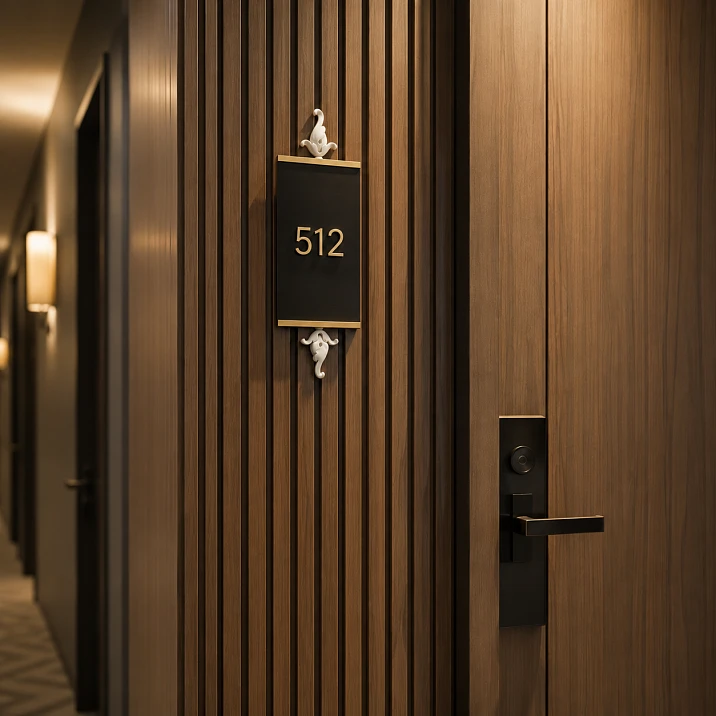
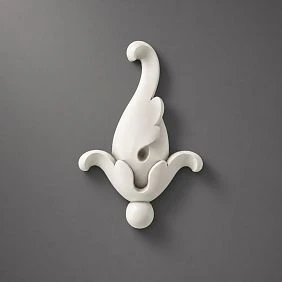
Short answer: in a hotel corridor, NPU-307 makes sense not as a "decoration for every room," but as part of a single repeatable navigation node.
If the room number plate visually gets lost against an active vertical background of slat panels, it is not necessary to build a full molding composition around each door. A lighter scenario is to leave a small smooth area near the door for the number and add one compact decorative marker NPU-307 on a fixed surface next to the plate.
The key word here is identical.
For a hotel, you should not design one composition at door 201, another at 202, and a third at 203. A standardized module works better:
door → smooth navigation area → room number plate → one NPU-307 → slat finish.
According to the current STAVROS product card, NPU-307 measures 35 × 53 × 9 mm, is made of polyurethane, and costs 350 RUB per piece. The manufacturer describes it as a small vertical decorative element and allows its use on walls, doors, and furniture. In the ready-made STAVROS set, this item is used as a small additional element within a larger composition, meaning that in terms of scale it is indeed suitable for the role of a point accent.
But the article does not suggest gluing NPU-307 directly onto an acrylic, metal, glass, or other room number plate. The product card does not confirm compatibility with the material of a specific navigation panel. For a hotel corridor, it is safer and more logical to make NPU-307 a separate detail on a smooth wall area near the room.
For a serial project, the procedure is as follows:
-
choose one position for NPU-307 relative to the room;
-
make a full-size template;
-
test it on one real door;
-
assess the readability of the number from a typical guest route;
-
check that the decor does not interfere with mandatory information, service elements, and door hardware;
-
approve one standard node;
-
only after this count the quantity based on the doors actually being finished.
With this approach, one overlay for 350 ₽ turns not into random "stucco near the number," but into a repeatable detail of the floor's branded design.
Buy stucco decor NPU-307 35 × 53 mm




NPU-307 in the room node: role, scale, and limitations
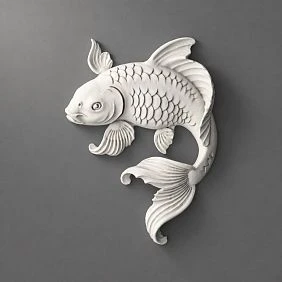
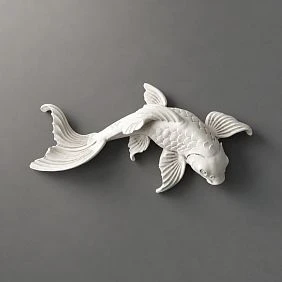
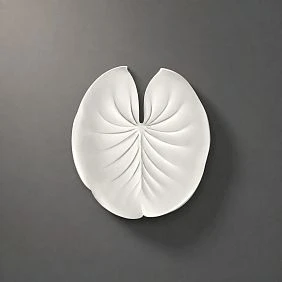
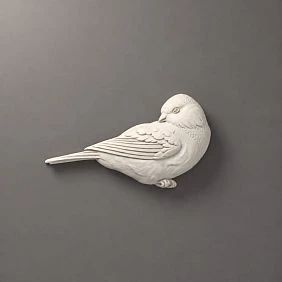
Our factory also produces:
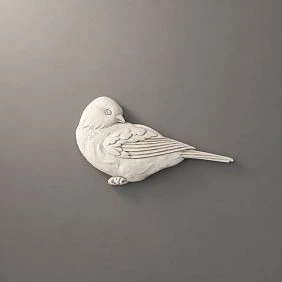
What exactly NPU-307 is and why its scale suits a point marker
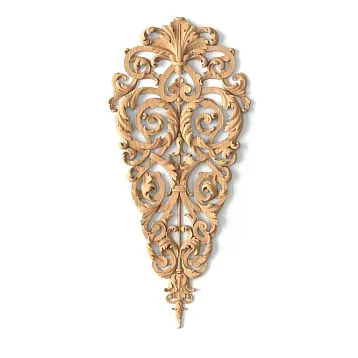
NPU-307 is a small polyurethane stucco decorative element.
Current card data:
| Parameter | NPU-307 |
|---|---|
| Size A × B × C | 35 × 53 × 9 mm |
| Material | Polyurethane |
| Price per 1 pc. | 350 ₽ |
| Drawing | available on the product card |
| 3D model | available on the product card |
| Confirmed application areas | Walls, doors, furniture |
| Role in hotel scenario | separate decorative marker next to the number plate |
The manufacturer describes NPU-307 as a vertical composition. In another official STAVROS material, the third dimension of 9 mm for NPU-307 is directly considered as the protrusion of the decorative element. Therefore, during on-site inspection, one should consider not only the small frontal silhouette of 35 × 53 mm, but also the relief of approximately 9 mm relative to the mounting plane.
At the same time, for a serial template, one cannot mechanically accept "35 mm = horizontal width, 53 mm = height" just by the order A × B × C. The card contains DWG and OBJ, so the final orientation before mass production should be confirmed by the drawing, 3D model, or a real sample.
For the project layout, the following wording is acceptable:
if NPU-307 is used in the vertical orientation shown by the manufacturer, its frontal dimension occupies a compact field of approximately 35 × 53 mm, and the relief protrudes by about 9 mm.
This is sufficient to check the scale near the number plate without substituting a guess for the drawing.
Get Consultation
Why NPU-307 here is not a frame around the number
The size of 35 × 53 mm is too small for the role of a full-fledged framing for most hotel room number plates, and the card itself does not position the product as a special navigation frame.
In this context, NPU-307 works differently.
It can serve as:
-
a small visual marker;
-
an ornamental accent;
-
a repeated "signature" next to the number;
-
a link between classic decor and a modern slat wall.
This is a fundamentally different technique than four moldings around the plate.
If the number plate has its own finished edge, frame, or metal backing, an additional NPU-307 should not duplicate it. It is placed nearby as a separate element.
Why a slat wall can "eat up" a small number plate
A slat wall creates repeating vertical boundaries, light and shadow, and contrast between slats and gaps. Against such a background, a small plate without its own calm field can compete with dozens of adjacent lines.
The problem is especially noticeable if:
-
the plate is close in color to the slats;
-
the number is small;
-
there is no smooth insert between the door and the slat area;
-
lighting runs along the wall and enhances shadows;
-
the plate placement on each door differs slightly;
-
the corridor is long and the guest looks for the number while walking.
The right solution starts not with NPU-307, but with a calm navigation area.
A smooth zone separates functional information from the active rhythm. The NPU-307 already operates within this calm zone as a small, repeatable decorative accent.
If there is no smooth surface and the number must be mounted directly onto deep slats, it is better to first resolve the navigation foundation itself rather than try to compensate for it with a small stucco detail.
How to build one standard unit for the entire hotel corridor
First, design a standard room unit, not a separate door
In a residential interior, it is acceptable to spend a long time searching for a composition at a single door. In a hotel, the solution must be repeated dozens of times, so reproducibility matters more than the effect of one wall.
It is better to describe the standard unit as a set of permanent elements:
-
door opening and casing;
-
smooth navigation field;
-
room number plate;
-
NPU-307;
-
edge of slat panels;
-
a lamp, card reader, or other equipment if it is nearby.
After that, permanent anchors are selected.
For example, a number plate may have a fixed axis relative to the door casing, and the NPU-307 may have a fixed position relative to the plate itself. Then the installer does not "draw nicely" near each door, but transfers one approved module.
Why anchoring to the number plate is usually stronger than anchoring to a random batten.
The spacing of battens may vary near corners, doors, and joints. The last slat near a door is sometimes trimmed, and the starting point of the layout differs across sections.
If the NPU-307 is anchored to the nearest batten each time, the distance from the plate to the number may "drift".
For a navigation node, consistency is more important:
number → decorative marker → identical compositional distance.
The slats remain the background.
When it makes sense to anchor to the door casing.
If all doors and casings are identical, their edge can become a reliable mounting base for the template.
For example, the installation jig rests against the outer edge of the casing and sets:
-
the position of the plate;
-
the axis of NPU-307;
-
top mark;
-
the offset to the slat zone.
This approach is especially convenient if there are dozens of identical doors on the floor.
But it only works after verifying that the actual casings are indeed installed identically. If some doors have extended portals, cabinets nearby, or a different opening, a separate node type is needed for them.
Three positions of NPU-307: above, below, or to the side of the number
One small element can be placed in different ways, but the hotel benefits from choosing one basic scheme.
NPU-307 above the number plate
The upper position makes the overlay look like a small finial.
Advantages:
-
the decor does not compete with the lower handle zone;
-
easy to build a vertical axis;
-
the composition may look more solemn;
-
works well if the plaque is low and wide.
Risks:
-
the knot becomes taller;
-
with a low ceiling or a close wall lamp, it may feel cramped;
-
a small overlay may be perceived as a "crown," which does not suit every style.
NPU-307 under the number
the lower position makes the element a finishing touch.
Advantages:
-
the number remains the first object;
-
the decor can softly "support" the plaque;
-
it is convenient if there is already a light fixture or sensor above.
Risks:
-
the overlay can come close to the door handle, reader, or other equipment;
-
in a long corridor, the lower decor is sometimes more obscured by passing people and luggage.
NPU-307 on the side
the side layout most often better connects the number with the slat background.
Advantages:
-
a small vertical element can serve as a transition from the smooth plaque to the vertical slats;
-
the number and decor remain at the same height;
-
the assembly becomes more compact vertically.
Risks:
-
a sufficiently smooth wall is needed;
-
If placed too close to the first NPU-307 rail, it may lose rhythm;
-
To the left and right of the door, the composition may behave differently.
Do not choose a position based on a single attractive number.
For a hotel, at least four door types need to be checked:
-
a standard room on a straight wall;
-
a room next to a corner;
-
a room next to an elevator lobby or expanded area;
-
a room where additional equipment is nearby.
If one scheme works on only 70% of doors, it is not yet a standard.
It is better to choose a solution that can be repeated on most typical nodes without constant exceptions.
One floor — one logic, but not necessarily one color.
Standardization does not mean absolute uniformity of all floors.
The hotel may use:
-
the same NPU-307;
-
one position relative to the room number;
-
the same mounting template;
but change the color by floor.
For example, the principle itself remains constant, while the color of the smooth insert or decorative marker helps distinguish levels.
This is already part of the brand system, not a property of the NPU-307.
If such color coding is used, the room number must remain readable on its own. The decorative element should not become the sole carrier of navigational meaning.
Geometry of the smooth pad and full-size check
What size smooth pad is needed: you need to consider not just the NPU-307 separately, but the entire navigation unit
The size of the pad itself is known: 35 × 53 × 9 mm. But this is not enough to decide whether the unit fits by the door.
You need to measure:
-
dimensions of the license plate;
-
distance from the plate to the door trim;
-
distance to the first slat;
-
position of the card reader;
-
position of the door peephole, doorbell, or other equipment;
-
free height;
-
actual protrusion of the door trim;
-
relief of the slatted panel.
After that, the rectangle of the entire composition is constructed.
Conditional example: a plate 120 × 80 mm and NPU-307 on the side
Suppose the design plate has dimensions of 120 × 80 mm. This is an example, not a standard for hotel signage.
If NPU-307 is on the right, three values need to be determined:
-
the width of the plate itself;
-
the free space between the plate and the overlay chosen by the designer;
-
the frontal size of NPU-307 in the selected orientation.
Until the actual A/B orientation is confirmed by the drawing or sample, the formula is written without strict axis assignment:
Wnode = Wplate + D + Wdecor.
D is the accepted design interval.
Such a calculation does not require inventing universal 10, 15, or 20 mm. The distance is chosen based on a full-size mockup and kept the same on all doors.
Why the external width of the unit is more important than the size of a single overlay
On an active slat wall, the guest perceives not the NPU-307 separately, but the entire block.
If the block is too narrow:
-
the number remains visually squeezed between the trim and the slats;
-
a small overlay does not manage to "separate" it from the rhythm;
-
the smooth area looks like a technical leftover.
If the block is too wide:
-
a large empty rectangle appears near each door;
-
the repetition of such zones begins to fragment the corridor;
-
the small NPU-307 is already lost not on rails, but on an excessively large smooth plane.
Therefore, the area is designed as a compositional module, not as a minimal piece of wall where a plaque and decor physically fit.
1:1 template — the main tool before serial ordering
For one room, you can look at the visualization for a long time. For 50 rooms, it's cheaper to make one correct full-scale template.
It should include:
-
the outline of the trim;
-
the outline of the number plate;
-
NPU-307 at full scale;
-
the edge of the slat zone;
-
mounting axes;
-
elevation mark;
-
if necessary — card reader or other equipment.
Flat template.
Paper or cardboard is enough to start.
It answers the questions:
-
is the number visible;
-
is there enough space between objects;
-
is the NPU-307 not lost;
-
is the smooth area not too small;
-
does the node not conflict with the first rail.
3D template.
After that, a relief of about 9 mm is needed.
Why:
-
side light enhances the shadow;
-
another protrusion appears next to the trim;
-
in a narrow passage, the volume is perceived more strongly;
-
a small relief on paper may seem unnoticeable, but in reality, it is quite active.
You can make a spacer from cardboard or foam material of approximate thickness and attach it to a flat silhouette.
Real sample.
If the hotel is large, one real NPU-307 for 350 ₽ is a reasonable prototype.
It allows you to check:
-
real drawing;
-
depth;
-
quality of painting;
-
interaction with light;
-
mounting on a selected smooth surface.
After that, the series can already be approved.
The node should be checked from the guest's route, not just standing in front of the door.
The room number is searched for in motion.
Therefore, the mockup should be viewed:
-
from the beginning of the corridor;
-
from a distance of 3–5 doors;
-
when approaching the room;
-
from the opposite side;
-
in the evening under normal lighting.
NPU-307 does not have to be visible before the number.
Its task is to help the number block look finished and distinct from the slat background, not to turn into an independent navigation sign.
If the decorative element catches the eye first and the digits have to be searched for, the hierarchy is broken.
The number must remain the main informational object.
The composition has a simple hierarchy:
-
room number;
-
its background and plate shape;
-
decorative marker;
-
slat wall.
If the order changes, the decor begins to interfere with function.
Therefore, the NPU-307 must not:
-
overlap the digits;
-
encroach on the readable field;
-
resemble a digit or pictogram;
-
compete in contrast with the number;
-
replace mandatory informational labeling.
If the project includes additional navigational, tactile, evacuation, or other mandatory markings, their requirements and design placement take priority. The NPU-307 is placed separately as a decorative element.
Ornament, color, and light: how to avoid overloading a slat corridor
How to combine the floral ornament NPU-307 with modern vertical slats
On the STAVROS NPU-307 card, it is described as a vertical decorative element with a plant-like character. Slat panels, on the contrary, are built on a strict repetition of straight verticals.
Their combination can work precisely on contrast.
Slats set:
-
regularity;
-
geometry;
-
a modern rhythm.
NPU-307 adds:
-
a soft form;
-
a small ornamental accent;
-
handcrafted, almost jewelry-like detailing.
A problem arises if the small classical motif turns out to be the only such element in the entire hotel.
Then, near each door, a decorative detail is repeated that is not stylistically supported:
-
furniture;
-
lighting fixtures;
-
door hardware;
-
stucco molding;
-
other elements of the branded interior.
In this case, NPU-307 may look not like part of the system, but like a "pretty addition" added later.
When the combination looks logical.
The overlay is especially convincing if the project already has:
-
neoclassical doors;
-
soft brass details;
-
moldings in the lobby;
-
floral ornament in the carpet covering;
-
decorative lamps;
-
other small stucco elements.
Then NPU-307 becomes a connecting sign between the corridor and the richer interior of public areas.
When it is better to choose a geometric marker.
If the hotel is built on strict minimalism, straight black profiles, without ornament, a floral overlay may be stylistically random.
Then it is better:
-
leave the room number plate without additional stucco;
-
choose another decorative element of a more geometric nature;
-
enhance the smooth field with color or material.
You don't need to buy NPU-307 just because its compact size is convenient.
Color of NPU-307: four working scenarios
Color changes the visual impact of a small detail more than its size.
In the color of the smooth surface.
The calmest option.
NPU-307 is read through relief and shadow, not through contrast.
Suitable if:
-
the number is already contrast enough;
-
the rails are active;
-
the corridor is narrow;
-
the decor should be secondary.
At the same time, the 9-millimeter protrusion still creates a noticeable shadow under side lighting.
In the color of the door leaf or trim.
This way the plate links the navigation specifically to the door.
Works especially well if the smooth surface is lighter or more neutral.
The risk is the appearance of too many small spots if the doors are contrasting.
In the color of the slats.
NPU-307 becomes a small "fragment" of the slat system on a smooth surface.
This can neatly connect two surfaces.
But if the color of the slats is very dark, the small plate gets strong contrast and may start competing with the numbers.
A small signature contrast.
For example, bronze, warm gray, deep green, or another brand shade.
This is already a strong technique.
It works when the decorative marker is meant to be part of the brand identity.
But the number information should still remain visually prioritized.
Do not color NPU-307 in the same contrast as the digits without a mockup.
If the number digits are, for example, black, and NPU-307 is also black, both objects become equal in strength.
On a small node, a visual "pair of characters" may occur.
The plant element sometimes starts to read almost like an additional sign.
Better to check:
-
a lighter shade;
-
wall color;
-
slat color;
-
a matte or less contrasting finish.
The goal is to emphasize the number, not to make the guest distinguish between two equally strong objects.
The light in the hotel corridor needs to be checked across the entire series of doors.
In a long corridor, the light is rarely uniform.
One door is directly under a light fixture.
Another is between two light sources.
A third is next to a window.
A fourth is at the end of the corridor.
A small NPU-307 with a throw of about 9 mm can produce a soft shadow on one wall and a noticeable dark spot on another.
Therefore, the prototype should be tested not at the most favorable door, but in at least three lighting conditions.
If the decorative pattern only works under ideal frontal light, it is poorly suited for replication.
Slat panels themselves create deep shadows: do not make the NPU-307 compete with them.
If the smooth area is too narrow, the shadow from the first rail may fall directly onto the decorative trim.
As a result, instead of a neat marker, a complex relief appears:
-
rail shadow;
-
NPU-307 shadow;
-
digit contrast;
-
trim shadow.
Increasing the smooth field sometimes improves the composition more than changing the color.
Therefore, during testing, you need to look not only at the distance to the panel edge, but also at the actual light boundary.
Standardization and pilot: how to replicate the node without visual variation
How to standardize the node on the floor and avoid "floating" numbers
After the design is approved, the main risk shifts from aesthetics to installation.
If ten installers each measure with a tape measure "approximately the same" every time, deviations accumulate along a long corridor.
It is better to use a rigid or semi-rigid template.
It can specify:
-
the position of the number plate;
-
the center of the NPU-307;
-
distance to the casing;
-
the top or center mark;
-
overlay orientation;
-
the boundary of the smooth area.
A jig from the trim.
If the doors are standard, the template rests against the same edge of the trim.
Advantage — installation does not depend on the pattern of the slats.
Disadvantage — doors of a different type need to be processed separately.
Jig from the axis of the plate.
First, the number is installed, then the NPU-307 is fixed along its axis.
Advantage — the decorative marker is always linked to the information.
Disadvantage — an error in the plate is transferred to the decor.
General wall layout map.
Suitable for new construction or major renovation.
The following are specified in advance in the project:
-
door axes;
-
smooth inserts;
-
numbers;
-
decorative elements;
-
slat fields.
This is the most systematic option, because the NPU-307 does not have to be adapted to already randomly remaining wall strips.
First one pilot corridor, then the entire facility.
If the hotel has several floors, there is no need to order the entire volume of NPU-307 before the physical prototype.
Rational sequence:
-
approve the node drawing;
-
buy several samples;
-
assemble one real door;
-
look at it during the day and in the evening;
-
check the cleaning;
-
check the operation of the door hardware;
-
assemble 3–5 adjacent doors;
-
evaluate the repetition;
-
only after that release the series.
One door shows the quality of the composition.
Five doors show the quality of the rhythm.
For a hotel, the second test is more important.
Why five identical nodes can look different from one.
Near one door, the small NPU-307 seems delicate.
When the same element repeats every few meters, a horizontal rhythm emerges along the entire corridor.
The guest begins to see not individual overlays, but a sequence:
decor — door — decor — door — decor — door.
If all elements are at the same level, they can create a second visual line above the vertical slats.
This can be a strong signature technique.
But if the ornament is too contrasting, the corridor becomes like a gallery of repeating icons.
Therefore, a series test is mandatory.
Quantity, cost, and operational reserve of NPU-307
The number of NPU-307 is counted by actually issued room blocks, not by the "number of rooms in the hotel"
If each standard room unit has one plate, the basic formula is simple:
Nbase = the number of doors for which this standard unit is approved.
But the list of doors needs to be compiled based on actual conditions.
The hotel may have:
-
numbers;
-
technical rooms;
-
service rooms;
-
conference halls;
-
storage rooms;
-
staircase doors;
-
connected numbers;
-
two-door family blocks.
Not every door must receive NPU-307.
Therefore, the specification should follow the door schedule and design code, not the total number of rooms.
Cost of the series with one NPU-307 per room node.
At the current price of 350 ₽ per piece:
| Doors being finished | NPU-307 | Cost of products |
| 20 | 20 pcs. | 7 000 ₽ |
| 40 | 40 pcs. | 14 000 ₽ |
| 60 | 60 pcs. | 21 000 ₽ |
| 80 | 80 pcs. | 28 000 ₽ |
| 100 | 100 pcs. | 35 000 ₽ |
This is the cost of the plates themselves without installation, paint, surface preparation, and other navigation elements.
The table shows an important B2B effect: even an inexpensive element becomes a separate budget line item when replicated.
Therefore, a standard unit is approved first, then scaled.
The operational spare stock cannot be set as a universal percentage.
For a hotel, it is reasonable to consider several spare NPU-307 units in case of repairs, but the article should not invent mandatory "5%" or "10%."
The size of the reserve depends on:
-
the number of installed elements;
-
the intensity of operation;
-
the risk of impacts from carts and luggage;
-
the complexity of painting;
-
the ability to quickly reorder;
-
whether the interior will be renovated floor by floor.
The correct formula:
Norder = Nbase + Nreserve
where Nreserve is determined by the operational policy of the specific facility.
If the overlays are painted in a complex brand color, a reserve from the same batch and immediately with the same finish can be especially useful.
Installation and operation of NPU-307 in a hotel corridor
It is better to install NPU-307 on a smooth wall insert rather than on a deep relief of slats
The NPU-307 card allows wall use, but this does not mean that any wall section is equally convenient for installation.
If the overlay is placed directly on top of the slats, problems may arise:
-
the rear surface rests only on protruding lamellas;
-
gaps remain between the element and the base;
-
The small ornament visually breaks up against the background of vertical lines;
-
The 9 mm relief combines with the panel relief;
-
Cleaning becomes more difficult;
-
It is harder to repeat the same fit on dozens of doors.
The smooth insert solves two problems at once: it provides a clear mounting surface and creates a visual background for the number.
If the smooth area is already painted.
Before serial installation, the strength of the finishing layer should be checked on one door.
The overlay is glued not to the "wall in general," but to a specific paint, primer, and putty.
If the top layer adheres poorly, the decor may come off along with it.
The practical check includes:
-
absence of peeling;
-
clean surface;
-
absence of dust;
-
flat plane;
-
compatibility of the selected adhesive with polyurethane and the finish coating.
The specific mounting compound is selected according to the adhesive manufacturer's recommendation and the actual substrate.
If the smooth insert is made of MDF or another panel.
Then you need to check separately:
-
finish coating;
-
adhesion;
-
possibility of local replacement of NPU-307;
-
risk of damage to the panel during dismantling.
The mounting method cannot be automatically transferred from plaster to painted MDF.
NPU-307 should not be glued directly to the number plate without confirming the base.
In hotel signage, plates can vary:
-
metal;
-
acrylic;
-
glass;
-
painted panel;
-
composite;
-
wood;
-
multi-layer construction.
The NPU-307 card does not confirm universal compatibility with all these materials.
If the overlay is glued directly to the plate, another problem arises: when replacing the number or rebranding, the decor becomes part of the signage product.
It is much more practical:
-
the number plate remains replaceable;
-
NPU-307 remains on the wall;
-
both elements can be serviced independently.
This is especially important for a hotel, where room numbers, branding, and interior may be updated at different times.
Do not block the door equipment serviced by NPU-307.
Near the room, there may be:
-
card reader;
-
doorbell button;
-
"Do Not Disturb" sign;
-
indicator;
-
electronic panel;
-
service hatch.
The decorative marker must not be positioned so that it:
-
interferes with the hand;
-
covers the fastening;
-
hinders battery replacement;
-
complicates panel removal;
-
makes cleaning difficult.
For each standard door unit, the equipment must be applied to one common template.
If some room numbers use a different access system, a second standard module may be required.
The door handle and luggage trajectory are more important than perfect symmetry.
A hotel corridor is not a static exhibition wall.
It moves on:
-
suitcases;
-
cleaning carts;
-
baby strollers;
-
service equipment.
If the NPU-307 is positioned too low or too close to the edge of the opening, the small relief becomes vulnerable.
Even if it does not protrude significantly, repeated accidental touches increase the risk of damage and touch-ups.
Therefore, the typical position should be checked not only in the photo, but also in real operation:
-
roll a suitcase;
-
open the door to the maximum angle;
-
pass a cleaning cart;
-
check the shoulder and arm area when passing through.
If a decorative element falls into the working trajectory, it is better to change the scheme before the series.
Why a small overlay can be more practical than a large molding frame in a narrow corridor
A full frame around each number requires:
-
more material is used;
-
more seams;
-
more installation operations;
-
more painting;
-
more visual lines.
In a long corridor, dozens of frames can create a sense of fragmentation.
NPU-307 solves a different task: it provides one small repeating sign next to the number.
This can be especially successful if:
-
the slat wall is already active enough;
-
the door itself has a pronounced casing;
-
the room numbers are small;
-
the corridor is narrow;
-
the brand wants to maintain lightness.
But the compactness of the NPU-307 is only useful when it is actually visible on a smooth surface. Against a complex or overly contrasting background, a small element can simply get lost.
Different doors and different sides of the corridor: how to maintain a single design code
The room number plate and the NPU-307 should have different roles in perception
The navigation plate answers the question:
"What number is this?"
NPU-307 answers another:
"How is this typical node designed?"
If these roles are mixed, the decor starts to interfere with the information.
The number should have the strongest contrast.
Even if NPU-307 is painted with an accent, the digits should remain the first object read.
The check is simple:
-
step back to a normal distance;
-
look at the door for 1–2 seconds;
-
ask what you saw first.
If the answer is "ornament" rather than the number, the composition needs to be toned down.
NPU-307 should not depict an arrow or pictogram.
Vertical plant pattern — decorative.
Do not try to use it as:
-
direction indicator;
-
floor symbol;
-
evacuation marker;
-
replacement for tactile information.
For such functions, there are separate navigation elements and design requirements.
NPU-307 remains a decoration.
Do not place the decorative element inside the mandatory information field.
If the number plate contains additional data — pictograms, room category name, tactile block, service information — their space must be preserved.
Decor is placed nearby, not on top.
If navigation project documentation requires a specific zone, its priority is higher than the decorative composition.
How to work with doors of different widths on the same floor
Even in one corridor there may be:
-
standard single rooms;
-
wide family rooms;
-
rooms of higher category;
-
doors to corner rooms;
-
double-leaf openings.
There are two approaches.
One NPU-307 position for all doors.
Suitable if navigation
Cleaning and maintenance: the small relief should be accessible, not hidden in a narrow gap
In a hotel, the decorative element will be regularly cleaned along with the wall and door area.
If NPU-307 is placed too close to:
-
the trim;
-
the number plate;
-
the first slat;
-
the card reader,
a narrow gap forms that is difficult to reach with a cloth.
As a result:
-
dust accumulates;
-
paint gets dirty faster;
-
a cleaner may catch on the relief;
-
the appearance of different doors begins to differ.
It is better to assess surface access on the mockup.
Wipe test.
After installing the volumetric template, try wiping with a regular motion:
-
the wall above it;
-
the wall below it;
-
side areas;
-
space between NPU-307 and the plate.
If simple cleaning requires using a thin tool or constantly touching decor, the node is too cramped.
Replacement of one damaged NPU-307 should be planned before the series.
A repeating module is convenient because a locally damaged element can be replaced.
But only if:
-
NPU-307 is not glued to the plate;
-
the color can be repeated;
-
the mounting layer can be removed without destroying the entire area;
-
there is a clear position template.
For a hotel, it is useful to store:
-
article number;
-
approved color;
-
installation diagram;
-
template;
-
several spare elements, if this is accepted by the maintenance service.
This way, repairs do not turn into a designer reconstruction.
Future navigation changes and edge cases of the finished corridor
If the hotel brand changes in a few years
Navigation is often updated before the corridor's finish itself.
If the NPU-307 is mounted on the wall independently of the sign, there are several options:
-
keep the decorative marker and replace only the numbering system;
-
repaint the NPU-307 along with the new background;
-
remove it and leave a smooth surface;
-
use a new decorative element in the same bindings.
If the overlay was physically part of the plate, updating becomes more difficult.
Therefore, independence of elements is not only an installation aspect, but also the project's lifecycle.
How to count quantities by floors.
For a large hotel, it is more convenient to compile a schedule.
| Floor | Typical numbering nodes | Special nodes | NPU-307 per project |
| 2 | … | … | … |
| 3 | … | … | … |
| 4 | … | … | … |
| 5 | … | … | … |
| TOTAL | … | … | … |
Only doors where the node is approved appear in the NPU-307 column.
After that, an operational reserve is added separately, if it is provided for.
This approach is better than buying "by the number of rooms on the hotel's website."
If different floors have different slat panels
The hotel may use:
-
light oak;
-
dark oak;
-
painted slats;
-
different shades by floor.
The NPU-307 itself can remain the same, but the color and smooth area may change.
Before the series, you need to decide:
-
whether the NPU-307 color is uniform throughout the hotel;
-
does it change with the floor;
-
is one door shade repeated;
-
will the element be contrasting or background.
The quantity does not change, but the finishing specification does.
If on one floor part of the walls are without slats
The new article should not force the use of NPU-307 only where there is a slatted background.
If the branded number unit is approved, it can be repeated on smooth walls as well to maintain identity.
But we need to check whether a small overlay on a calm wall becomes too lonely.
Sometimes on a slatted background it is necessary as a transition, but on a smooth one it is already superfluous.
Then the hotel gets two deliberate types:
-
type A — at the rack wall with NPU-307;
-
type B — on a smooth wall without it.
The main thing is to make it a project rule, not a random installer decision.
If there is already a sconce or decorative lamp nearby.
A small NPU-307 may turn out to be the fourth accent near the door:
-
a plaque;
-
wall sconce;
-
handle;
-
the overlay.
In that case, it may be redundant.
Especially if the sconce has its own decorative metal, ornament, or complex shade.
First, look at the entire vertical door assembly.
If there is already an expressive top detail, NPU-307 at the bottom or side may only overload the composition.
When NPU-307 is not needed and what to replace the small decorative marker with
When it's better not to buy NPU-307
A commercial article should have a negative scenario.
NPU-307 is not needed if:
-
the number plate already has an expressive decorative frame;
-
the smooth area is too small;
-
the slatted wall and door already create a sufficiently rich composition;
-
the small element gets lost even on a full-size layout;
-
the ornament is not supported by the hotel's style;
-
there is a lot of equipment nearby;
-
maintenance and cleaning become more difficult;
-
The decor interferes with the readability of the number plate;
-
Installation requires reworking the existing high-quality navigation.
In such a situation, the absence of the NPU-307 is not a saving "at the expense of aesthetics," but a correct design decision.
When it is better to choose a larger decorative overlay
The compact size of 35 × 53 × 9 mm is an advantage only when the scale is appropriate.
If the number plate is large, for example, it serves as a full-fledged panel with the floor name, pictograms, or other information, the small NPU-307 may disappear.
Then you can consider a more noticeable decorative element from the same category.
Buy decorative polyurethane overlays
When changing the model, you cannot automatically preserve the old spacing.
The new overlay requires a new template:
-
a different size;
-
another flight;
-
another ratio with the number;
-
another visual mass.
When it's better to use a molding frame
Full molding is stronger than NPU-307 if the hotel concept requires:
-
classic panels around each door;
-
pronounced symmetry;
-
a larger architectural system;
-
connection with the moldings of the lobby and rooms.
But that's a different budget and a different amount of installation.
In a long narrow corridor, frames may become too frequent.
NPU-307 is useful precisely as a light alternative: one small ornamental marker instead of four long sides.
When it is better to emphasize only with color
If the task is solely to ensure the number does not get lost on the slats, molding may not be needed at all.
Can create:
-
a smooth contrasting area;
-
a more visible number plate;
-
local lighting;
-
a calm pause in the slat finish.
This solution is especially logical for a minimalist or tech-oriented hotel.
NPU-307 decor makes sense only where the ornamental detail matches the brand interior.
If not only a room block is being designed, but the entire hotel corridor
The website already has general material on stucco decor for hotels and inns. It covers:
-
lobby;
-
reception;
-
numbers;
-
long corridors;
-
moldings;
-
decorative overlays;
-
combination of styles.
It separately reminds that when designing, one must not forget doors and room number plates.
stucco decor for hotel and inn
For a separate room block, the template described here is sufficient. If the lobby, reception, corridors, and rooms are being designed simultaneously, it is more useful to align the small marker NPU-307 with the hotel's overall stucco decor system. Then the color, style, and rhythm near the doors do not diverge from public areas.
Why the room number plate scheme should not be automatically transferred to the elevator hall.
In the elevator hall, apartment numbers, floors, and the movement scheme are often combined into a common navigation block.
The hotel corridor is arranged differently:
-
the signs repeat at each door;
-
a person looks for one specific room number;
-
the interval between nodes is small;
-
the decorative system is replicated dozens of times.
Therefore, the small NPU-307 works not as part of a collective navigation panel, but as a repeatable marker of an individual room number.
Therefore, for the elevator lobby, it is better to design a separate navigation scale, even if the materials and slat background match.
Why the NPU-307 experience within a large composition is useful for a hotel node.
In the ready-made STAVROS CPU-7-1 set, the NPU-307 is used together with larger central, corner, and side elements.
There, it does not play the role of the main decor.
This is a useful scale hint.
In the hotel node, you also don't need to make the NPU-307 "carry" the entire composition. It works alongside a more important object—the room number.
If on the mockup you have to make the overlay bright, contrasting, and surround it with additional details to make it noticeable, the chosen scenario likely already exceeds its natural scale.
Mistakes that are especially costly on a production object
Mistake 1: Approving the composition only on a visualization.
Why it happens: in the render, all doors are perfectly identical, lighting is even, and the slatted background doesn't provide real depth.
Consequence: on the object, the NPU-307 looks either too small or too contrasting.
Check: one full-size physical node.
How to avoid: don't release the series until a full-scale prototype.
Mistake 2: Attaching the decor to the nearest slat.
Why it occurs: the vertical lamella seems like a convenient guide.
Consequence: when the layout of the slats changes, the distance to the number varies from door to door.
Check: compare 5–10 doors according to the project.
How to avoid: tie NPU-307 to the number plate or a standard door axis.
Error 3. Make NPU-307 as contrasting as the digits.
Why it occurs: there is a desire to emphasize a beautiful ornament.
Consequence: the number ceases to be the first object read.
Check: a short test from a distance and in motion.
How to avoid: reduce the contrast of the decorative marker.
Error 4. Glue the overlay directly onto the plate.
Why it occurs: it seems easier to get a single block.
Consequence: replacing navigation requires removing or damaging decor; glue compatibility with the plaque material is not confirmed.
Check: review the lifecycle of the navigation system.
How to avoid: mount NPU-307 on a separate smooth surface.
Error 5. Order quantity based on the total number of rooms.
Why it occurs: the number of rooms is easy to take from the hotel specification.
Consequence: some doors get a different type of node, and some NPU-307 remains extra or, conversely, is not enough for additional rooms.
Check: list of actually issued doors.
How to avoid: count by typical nodes, not by room name.
Error 6. Assign a universal safety margin percentage.
Why it happens: the habit of adding 5–10% to everything.
Consequence: an inexpensive component in a large series results in extra purchasing without a clear reason.
Check: determine the operational risk and replacement policy.
How to avoid: calculate the reserve separately.
Mistake 7. Making too many exceptions.
Why it happens: the installer "adjusts" the position of every inconvenient door.
Consequence: the brand's rhythm falls apart.
Check: count the number of variants after installing the first 10 doors.
How to avoid: pre-approve 2–3 types of joints for all special situations.
Mistake 8. Not checking the cleanup.
Why it occurs: a small overlap seems insignificant.
Consequence: narrow gaps collect dust, and staff regularly catch on the relief.
Check: cleaning test on the prototype.
How to avoid: leave working space around.
B2B configuration: budget, procurement stages, and sample control
How to evaluate a B2B budget not only by the price of 350 ₽
The price of NPU-307 is low, but in a commercial project there are several layers of costs:
-
the products themselves;
-
delivery;
-
the coloring;
-
preparation of smooth areas;
-
installation;
-
templates;
-
possible reserve;
-
local tinting;
-
maintenance.
Therefore, you should not compare:
350 ₽ versus “nothing,”
But:
the cost of one standardized number unit with NPU-307 versus an alternative unit without it.
If NPU-307 allows abandoning the expensive molding frame, the commercial effect can be positive.
If a small part requires specially creating a complex panel, painting it in several stages, and redoing the slat wall, the original price of the product ceases to be the main argument.
How to equip the object in stages
For a large hotel, purchasing in stages is convenient.
Stage 1. Prototype.
Several NPU-307 for testing.
Stage 2. One floor.
Quantity based on actual numbered blocks of the floor plus a conscious operational reserve, if needed.
Stage 3. Repeatable floors.
After installation confirmation, the list can be scaled.
Stage 4. Non-standard areas.
Suites, corner rooms, service doors, and conference rooms are counted separately.
This approach reduces the risk of receiving a large batch before checking the actual light, color, and installation technology.
If all floors are identical, serial purchasing still requires a control color sample.
Even with one NPU-307 model, the final appearance depends on the finish.
If elements are painted on the object, differences in paint batch, gloss level, or preparation may be noticeable.
Useful to store:
-
approved color sample;
-
the preparation method;
-
reference NPU-307;
-
photo of a typical joint;
-
installation template.
This turns the interior solution into a manageable specification.
How to check that a smooth area really helps the number rather than adding extra material
Sometimes the navigation problem is already solved by simply omitting the slats in a small area near the door.
Then NPU-307 may not be necessary.
Therefore, the prototype needs to be tested in three steps:
-
number directly on the slatted background;
-
number on a smooth area without NPU-307;
-
number on a smooth area with NPU-307.
If the second option already fully solves the task, a decorative overlay is needed only if there is a separate stylistic reason.
This is a useful check against over-purchasing.
The size of the smooth insert should remain convenient for repairs
If NPU-307 is installed on a small island of paint between the trim and the slats, damage to this area should be repairable without disassembling a large part of the wall.
Check:
-
is it possible to repaint the insert locally;
-
is it necessary to remove the slats;
-
is it easy to protect the number plate;
-
can the NPU-307 be removed if necessary;
-
is a neat edge of finishes maintained.
For a hotel, maintainability is especially important because an individual door can be damaged significantly earlier than the entire corridor.
If the number plate changes size after the tender
At the concept stage, a conditional room layout is often used, and the real navigation system is chosen later.
This is a dangerous moment.
If the NPU-307 is already tied to a specific plate, changing its size may:
-
reduce the interval;
-
push the decor out to the rails;
-
make the smooth platform too small;
-
change the overall scale.
Therefore, before the final serial order, the following must be confirmed:
-
the actual nameplate;
-
the actual font and numbers;
-
fasteners;
-
the location of NPU-307;
-
the actual rack panel.
A conceptual render is not sufficient.
If room numbers change during reconfiguration
In an operating hotel, rooms are sometimes combined or their functional purpose is changed.
If the number plate is replaceable and the NPU-307 is mounted independently, the interior unit is easier to adapt.
At the same time, the decorative trim should not be rigidly tied to a specific digit.
For example, avoid building a composition where the NPU-307 visually appears as part of the '2' or '7'.
It is better for it to maintain the same position regardless of the number.
If the door has an electronic 'Do Not Disturb' panel
A modern hotel system can combine:
-
room number;
-
call button;
-
'Do Not Disturb' indicator;
-
cleaning status;
-
reader.
Such an electronic unit is quite large by itself.
NPU-307 next to it can only be useful as a very secondary marker.
If a decorative element forces expanding the navigation area, it is better to compare the option without it.
NPU-307 cannot be placed so close that staff or guests constantly touch the relief when pressing buttons.
If the sign already has a decorative floral motif.
Repeating a similar ornament nearby can look either consistent or redundant.
There are two strong scenarios:
Strict sign + decorative NPU-307.
Then the roles are well separated.
Decorative sign + calm wall.
Then an additional overlay is often not needed.
Weak scenario — a complex plate, a complex NPU-307, and active slats simultaneously.
If the slat field is used only between doors.
Such a corridor is especially suitable for a smooth number area.
You can build a repeat:
door → smooth number zone → slats → smooth number zone → door.
NPU-307 then becomes a small repeating connecting element in each smooth zone.
It is important to check whether it starts creating a horizontal "chain" along the entire corridor.
If you like such a chain, you can use it deliberately.
If not, reduce the contrast or abandon the decor.
If the slats reach right up to the trim.
There may not be space for a separate smooth area.
Then there is no need to automatically glue NPU-307 onto the relief.
First, decide how the number plate will be placed in general.
Possible options:
-
a special smooth navigation panel on top of the slat system;
-
a local insert;
-
a number on the door leaf;
-
another placement.
Only after choosing a stable base do they evaluate the NPU-307.
If the number is placed directly on the door.
The NPU-307 card allows door decor, so technically the type of application is familiar to the manufacturer.
But a hotel door is a separate operational object:
-
it moves;
-
has a door closer;
-
is subject to impacts;
-
may have a special coating;
-
refers to a door system with its own requirements.
Therefore, moving the NPU-307 from a fixed wall to the door leaf cannot be done automatically.
This article considers a safer and more replicable scenario — a smooth wall area near the door.
Field navigation test: check the node on a person who does not know the corridor
The designer and installer quickly get used to the location of the numbers. After a few days of work, they already know where each door is, so their own readability assessment becomes less indicative.
Before mass purchasing, it is useful to conduct a simple user test.
Take a person who has not seen the floor before and give them the task of finding a specific number. Do not hint where to look. Observe:
-
from what distance they start reading the numbers;
-
whether they notice the smooth area;
-
whether the repeatable NPU-307 helps to highlight number blocks faster against the background of the slats;
-
does it not mistake the decorative element for part of the digits or a navigation symbol;
-
is it not necessary to approach each door closely;
-
is the scheme equally clear when moving in both directions.
After that, repeat the route on the section where the number plate is designed without NPU-307.
Such a test does not require inventing a standard search time. Its task is to compare two real compositions in the same corridor.
If the participant finds the numbers equally confidently in both variants, the decorative overlay provides no navigational advantage and must be justified only by aesthetics and brand style.
If the smooth field with NPU-307 really helps to notice the repeating number block faster, there is an additional practical reason for replication.
This is especially useful for a hotel: the solution is evaluated not by a large interior shot, but by a real user route. This is how a small SKU is tested as part of the system, not as a separate beautiful detail.
From prototype to specification: final check before ordering
Practical algorithm before serial ordering
For this topic, the main thing is not to write a beautiful description, but to provide a clear sequence of actions.
Step 1. Record standard doors.
Make a list:
-
standard room;
-
corner room;
-
luxury;
-
service door;
-
other special situation.
Determine where the NPU-307 will actually be used.
Step 2. Approve the room number plate.
Need the actual size, material, color, and mounting method.
For now, the plate is provisional, and the position of the decorative marker is also provisional.
Step 3. Determine a smooth area.
Measure its actual boundaries relative to:
-
platband;
-
battens;
-
equipment;
-
the wall corner.
Step 4. Check the orientation of the NPU-307.
Open the drawing, 3D model, or take a real sample.
Do not transfer an unverified assumption about the A/B axes to the serial template.
Step 5. Create a 1:1 mockup.
Check at least three positions:
-
from the top;
-
from below;
-
from the side.
After comparison, choose one base.
Step 6. Add 9 mm thickness.
Look at shadows, cleaning, and protrusion relative to the trim.
Step 7. Check with real light.
In the morning, evening, and in the darkest part of the corridor.
Step 8. Check functional elements.
Reader, bell, signs, door handle, service information.
Step 9. Assemble several doors in a row.
One node shows the composition.
The series shows the rhythm.
Step 10. Approve the editing template.
Fix the axes, margins, and color.
Step 11. Compile the door schedule.
The quantity of NPU-307 is calculated based on the actually designed nodes.
Step 12. Determine the operational reserve.
Not by a "default" percentage, but according to the facility's policy.
Step 13. Issue the specification.
Article number, size, color, quantity, node type, installation diagram.
Step 14. Only now order the series.
After that, you can Order NPU-307 made of polyurethane.
Decision tree
Does the number plate get lost against the slats?
No → additional NPU-307 is not needed just for the sake of having decor.
Yes → continue.
Is there a smooth area or can the project allow creating one?
No → first decide on the navigation foundation.
Yes → continue.
Is NPU-307 visible on the area and does it not compete with the numbers?
No → a different color, a different decor size, or decline.
Yes → continue.
Is the ornament supported by the hotel's style?
No → a more geometric solution or only a smooth area.
Yes → continue.
Can the same node be repeated at most doors?
No → develop 2–3 standard modules or abandon the idea.
Yes → continue.
After a series of several doors, does the rhythm look convincing?
No → adjust the color/position or remove NPU-307.
Yes → you can assemble the floor.
What to put in the order after approval.
For one standard node:
-
NPU-307 — 1 pc.;
-
current price — 350 ₽.
For a series:
Nbase = number of approved numbered nodes.
If the operational service decided to keep a reserve:
Norder = Nbase + Nreserve.
Additionally, the following are calculated separately:
-
navigation plates;
-
smooth insert materials;
-
paint;
-
adhesive/mounting materials;
-
slat panels.
There is no need to combine everything into the "NPU-307 cost."
How to build commercial interlinking without spam.
When the reader has already checked one specific article, the next step may vary.
If NPU-307 fits — product card.
If a different scale is needed — category of overlays.
If the hotel is being furnished entirely — general catalog of polyurethane moldings.
If the corridor is still being designed — catalog of slat panels.
If a general design principle for the hotel is needed — hotel article.
This way the links match the real user journey.
Buy decorative polyurethane overlays
Final recommendation
NPU-307 fits this theme well precisely because of its small scale.
It doesn't have to frame the room number and shouldn't become a second navigation sign.
The correct role is a small repeating decorative marker next to the number plate on a smooth area that separates the information from the active rhythm of the slats.
For a hotel, the main criterion is not "beautiful at one door," but:
-
is the number readable;
-
is the node repeated;
-
is it easy to mount;
-
is it convenient to remove;
-
can the element be replaced;
-
does it not interfere with equipment;
-
does it not conflict with mandatory information;
-
is the budget for the entire series justified.
If these conditions are met, one NPU-307 per standard number block becomes a clear B2B specification.
If a smooth area already solves navigation without it, or the floral ornament does not suit the hotel style, it is better not to buy the overlay just to fill an empty space.
FAQ
Can two NPU-307 units be used on both sides of a number plate?
Such a layout can be considered a separate composition, but it already changes the scale and budget of a typical unit. Two small ornaments make the plate more ceremonial and more strongly resemble a symmetrical decorative panel. For a narrow hotel corridor, this may be excessive. First, compare one marker and a pair on three to five adjacent doors. If two elements do not improve readability and brand rhythm, there is no point in doubling the quantity.
Is NPU-307 suitable for a very small number plate?
Only after a full-size comparison. With a small plate, a decorative element of 35 × 53 × 9 mm can become visually equal to it or even stronger. In this case, it is better to reduce the contrast of NPU-307, increase the calm field, or abandon the molded marker. The number must remain the main informational object.
What to do if the number plate has backlighting?
Check the unit in both on and off states. Local light can produce an unexpectedly strong shadow on the 9-mm relief of NPU-307. The decorative element should not cover the light contour, service access, or be perceived as part of electrical equipment. It is placed on a separate fixed surface.
Can NPU-307 be used next to an electronic or e-ink plate?
Yes, as separate wall decor, if it does not interfere with removal, replacement, charging, cable, or maintenance of the electronic panel. The product card does not confirm the compatibility of NPU-307 mounting with the electronic device housing, so they should not be combined into a single non-separable block.
Can NPU-307 be installed only for luxury category rooms?
Yes, if it is part of a deliberate category system. Then NPU-307 ceases to be a common marker for every room and becomes an additional decorative feature of a specific group. It is important that guests do not rely on this element as the only way to recognize the category or direction.
If there are 73 standard doors on a floor, do you need to buy 73 overlays?
If all 73 doors indeed receive one approved assembly with one NPU-307, the base requirement is 73 pieces. Operational reserve is calculated separately according to facility policy, not automatically included as a percentage. First, check the door schedule: service and non-standard openings may have a different design code.
Is a separate NPU-307 needed near the floor number sign?
Not necessarily. The floor sign belongs to a different navigation scale than the room number. If its design is larger, a small NPU-307 may get lost. It is better to design the floor indicator as a separate type of assembly and only then decide whether it needs the same decorative motif.
Can NPU-307 be installed next to a tactile sign?
The decorative element can only be considered outside the functional field of tactile and other mandatory information. It must not overlap symbols, interfere with touch, or create a false tactile signal. The specific position of mandatory navigation is determined by the project and applicable requirements; the decorative element adapts to them.
What to do if the number plate is mounted on a glass insert?
Do not automatically transfer NPU-307 to glass. The product card confirms decorative use on walls, doors, and furniture, but does not establish a universal scheme for adhesion to any glass navigation panel. It is simpler to keep NPU-307 on a separate smooth wall section or separately confirm the mounting technology for the specific glass.
Can NPU-307 be made in a metallic color?
The polyurethane element can be finished in the chosen interior system if the coating is compatible, but a metallic effect sharply increases the visual prominence of a small detail. Before the series, it is worth painting one sample and checking it next to numbers, door hardware, and rails under real light.
If the numbers on one side of the corridor are higher due to equipment, should NPU-307 be raised along with them?
If the decorative element is part of the number block, it is more logical to keep its connection with the plate rather than artificially maintain one absolute elevation under different functional conditions. But a large number of such exceptions is a signal that a second standard module is needed. Random individual offsets are better avoided.
Can NPU-307 be used near service rooms for corridor consistency?
Yes, if the service doors are part of the same design code and the additional decor does not interfere with their functional marking. But this is not a mandatory continuation. Often guest and service nodes are deliberately differentiated, so NPU-307 should be counted according to the approved list, not for all doors indiscriminately.
What to do if, after installing the slats, the smooth strip turned out to be narrower than in the project?
Do not automatically reduce the distance between the number and NPU-307. First, re-apply the full-size template. If the node becomes cramped, options include removing the decorative marker, choosing a more compact element, or reworking the smooth panel. The navigation function is more important than preserving the original decorative scheme.
Should NPU-307 be placed at the same height as all door handles?
No. The handle belongs to the operational zone, while NPU-307 belongs to the number block. A common horizontal line may coincide by chance, but it is not mandatory. A stronger reference is to the plate and the approved navigation composition.
Can NPU-307 be left white on a colored wall?
Yes, if the contrast matches the design concept and does not make the overlay stronger than the number. A small white detail on a saturated background may appear much larger than in the catalog. One painted or unpainted sample must be checked on a real wall before the serial order.
How to understand that the NPU-307 has become redundant after installing all the furniture and lighting?
Compare two photos of the same door from a normal approach point: with and without the overlay. If the number is found equally well, and the NPU-307 only adds another spot next to the sconce, handle, reader, and slats, the decorative element can be excluded. For a hotel unit, value is created by clarity and repeatability, not by the maximum number of details.