Article Contents:
- Decor without heaviness: what designers keep quiet about
- What does "narrow" molding mean: parameters and real range
- Spaces where narrow molding works best
- Small bedroom: delicacy as a principle
- Narrow hallway: rhythm without burden
- Entryway: first impression and neatness
- Children's room: lightness and coziness
- Small living room: when there is active furniture
- Piers between doors
- Mirror and sconce zone
- When a narrow profile is better than a wide one: clear criteria
- Narrow molding and ceiling height: dependency table
- What to pair narrow moldings with: specific solutions
- Narrow molding + painting in wall color
- Narrow molding + contrasting paint
- Narrow molding + delicate baseboard
- Narrow molding + sconce
- Narrow molding + small decorative element
- Narrow molding + mirror
- Thin profile in different style contexts
- Modern Neoclassicism
- Scandinavian classicism
- Transitional style
- Modern minimalism with details
- Practical scheme: how to arrange narrow frames in a small room
- What to check before buying
- Summary table of solutions for narrow moldings
- Mistakes when choosing a narrow molding
- Too thin molding for a high ceiling
- Small frames with thin molding
- A thin molding next to a wide baseboard or cornice
- Poor joint filling with a thin profile
- Ignoring light sources
- Decorative elements for a system with thin moldings
- Materials for installing thin moldings
- Frequently Asked Questions
- About the Company STAVROS
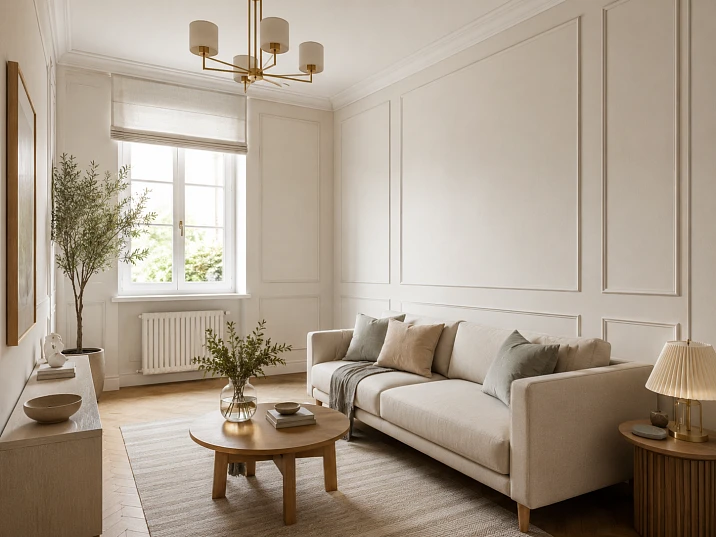
A narrow polyurethane molding is needed where it is important to add rhythm to the wall without weighing down the room: the thin profile frames panels, highlights piers, works neatly with low ceilings, and helps make the interior look more expensive — without excess relief, without pressure, without the feeling that the walls have moved closer. This is not a compromise. This is a conscious choice.

Decor without heaviness: what designers keep quiet about
There is a persistent misconception: the bigger the molding, the more beautiful it is. A wide profile, deep relief, large frames. It looks impressive in photos of grand mansions with four-meter ceilings and twenty-meter enfilades. But in a real apartment, where the living room is twenty square meters and the ceiling is two fifty, this approach yields the exact opposite result.
A wide molding on a standard ceiling visually lowers the ceiling. Massive frames in a small room create the feeling that the walls are literally moving towards you. This is the case where 'more' means 'worse'.
This is exactly where the conversation about begins narrow polyurethane moldings. A thin profile is not a simplified solution for those who cannot afford a wide one. It is a professional choice that an experienced designer makes deliberately: where architectural clarity without visual weight is needed, thin wall moldings work more precisely, elegantly, and convincingly than any wide profile.
Let's talk about exactly how — and for which spaces — this works.




What does "narrow" molding mean: parameters and actual range
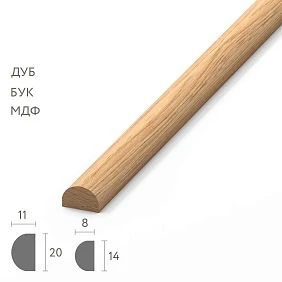
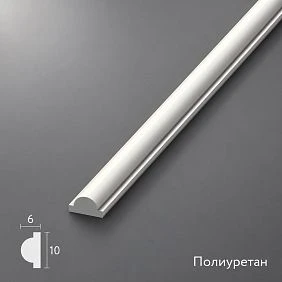
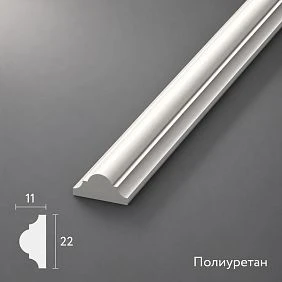
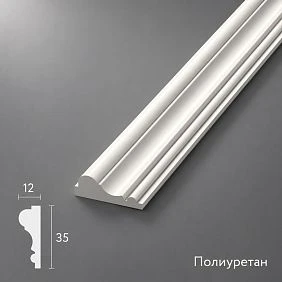
Before moving forward, let's agree on terms. A narrow molding is a profile with a width of 10 to 25–30 millimeters. It is this range that provides a delicate line that reads on the wall as an architectural contour without creating noticeable visual weight.
Within this range, there are nuances:
10–15 mm — an extremely thin profile. Almost a thread-like line. Suitable for the most delicate tasks: thin frames on walls in minimalist interiors, contour elements in children's rooms, neat horizontal bands in narrow hallways.
15–20 mm — the working range for most tasks in small rooms. It reads well on the wall but does not create noticeable relief weight.
20–30 mm — a transition zone between narrow and medium profile. Suitable for standard rooms with a ceiling of 2.6–2.8 meters, where a noticeable frame is needed but without the heaviness of a wide molding.
In addition to width, the second parameter is important — the depth of the relief (the protrusion from the wall). A narrow molding with a small relief depth (5–8 mm) creates a light, almost graphic line. The same width profile with a deeper relief will look heavier — both parameters must be considered together.
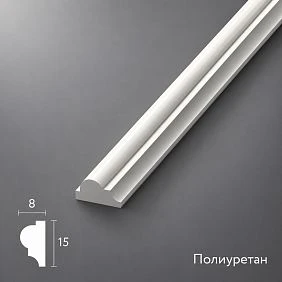
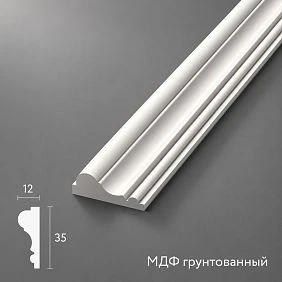
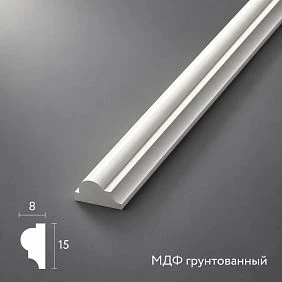
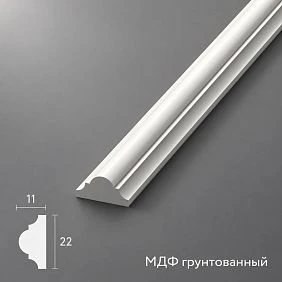
thin polyurethane moldings available in a wide range of profiles and reliefs — precisely to cover all tasks: from delicate frames in small bedrooms to neat horizontal bands in hallways.
Our factory also produces:



Spaces where narrow molding works best
Let's talk about specific zones — not abstractly, but with an understanding of why choosing a thin profile here is the only correct decision.
Get Consultation
Small bedroom: delicacy as a principle
A bedroom of 12–16 square meters with a ceiling height of 2.6 meters is the typical reality for most apartments. In such a space, wide molding will make the walls feel oppressive: frames will look heavy, the distance from the frame to the ceiling will be minimal, and the room itself will seem even smaller.
Narrow polyurethane molding 15–20 mm wide in the same bedroom creates a completely different effect. It adds structure to the walls: thin rectangular frames make the surface meaningful, creating the feeling of an interior where something has been designed. At the same time, the frames don't feel oppressive, the ceiling doesn't 'drop,' and the room doesn't shrink.
Monochrome painting — molding and wall in the same shade — enhances the effect: the thin relief creates a soft architectural play without contrast. This is what is commonly called an 'expensive interior in a small space.'
Narrow hallway: rhythm without burden
A hallway is a space you want to make expressive, but without the risk of making it even narrower. Molding in hallways is a popular solution. But the choice of profile here is critical.
Wide molding in a hallway 120–150 centimeters wide is a categorical no. It visually consumes the already limited space. Polyurethane wall moldings 10–20 mm wide is what you need. A horizontal belt in the middle of the wall made of thin molding divides the corridor into two tiers, adds rhythm, and directs the gaze into the depth.
The scheme works especially well: the lower part of the wall in a slightly darker shade, a thin molding as a dividing belt, the upper part lighter. Without a wide profile. Without pressure. With a sense of well-thought-out space.
Hallway: first impression and neatness
In a standard-sized hallway, narrow polyurethane moldings create that very first, correct impression. One or two vertical frames made of thin profile on the wall near the entrance — a neat architectural gesture that at first glance says: details were considered here.
Important: hallways often have a lot of 'noise' — hangers, mirror, shelves, door. A narrow molding does not add to this noise but structures the wall as a background for all these elements. A wide profile in the same role would create overload.
Children's room: lightness and coziness
A children's room is a space where visual lightness is especially important. Bright colors, active textures, toys, furniture — all of this already creates a rich environment. Adding wide moldings with deep relief to it means overloading an already active space.
thin polyurethane moldings In a children's room — a delicate way to add structure to the walls. Rectangular frames in pastel tones or in the color of the wall create a neat 'frame' for the wall without overloading the space. This works especially well in the bed area: a thin frame above the headboard makes the sleeping area meaningful.
Small living room: when there is active furniture
A living room of 18–22 square meters with a sofa, TV, floor lamp, and curtains is already a saturated space. Adding wide moldings here means competing with the furniture for attention. A wide profile will start to "argue" with the sofa, curtains, and cornice.
A narrow molding in such a living room is a background architectural element. It structures the wall but does not dominate. Thin frames above the sofa or on an accent wall complement the interior rather than fight it for the foreground.
Spaces between doors
A narrow wall section 40–60 centimeters wide between two doorways is another place where a narrow molding shows its full strength. One vertical frame made of a thin profile on this wall section is a neat architectural accent. A wide molding on such a narrow wall section would look absurd: the frame would be wider than the wall section itself.
Mirror and sconce area
A mirror framed with moldings is a classic solution for bathrooms, hallways, and bedrooms. And here again, a narrow profile wins. The mirror itself is an expressive accent. A thin molding creates a clear architectural contour around it without drawing attention to itself.
The same applies to the area with wall sconces. A thin molding forms a "niche" or frame around the light source, making this area accentual without overload.
When a narrow profile is better than a wide one: clear criteria
Understanding the situations is good. But specific criteria for selection are needed. A narrow molding is the right choice in the following cases:
Ceiling lower than 2.7 meters. The lower the ceiling, the thinner the molding should be. With a ceiling of 2.5 meters, the profile width should not exceed 20–25 mm for frames and 15–20 mm for belts.
Room smaller than 20 square meters. In small spaces, every centimeter of the profile "works" on the perception of scale. A narrow molding does not visually reduce the room.
The wall is occupied by furniture. If opposite the molding there is a wardrobe, bed, or sofa, the distance between the profile and the furniture is minimal. A wide molding will create a feeling of crampedness. A thin one will not.
Frames should be light. When the goal is to create thin decorative frames in the style of modern neoclassicism or Scandinavian classicism, a narrow profile is the only correct choice.
The interior already has active details. An ornamental cornice, figured baseboard, textured wallpaper, accent furniture — if any of these are already present, adding a wide molding means creating competition among elements. A narrow molding will fit into the system without disturbing the balance.
The style is calm neoclassicism, Scandinavian classicism, modern transitional style. These directions fundamentally require delicate decor. A wide profile will violate the stylistic logic.
Decor is needed, but there is no desire to do a renovation "in the classic style." A narrow molding is an architectural gesture, not a style statement. It works in neutral interiors without signs of a specific style.
Narrow molding and ceiling height: dependency table
This is perhaps the most practical knowledge — matching the width of the molding to the ceiling height. Use this table as a guide:
| Ceiling Height | Recommended molding width | Comment |
|---|---|---|
| Up to 2.5 m | 10–18 mm | Only the thinnest profiles |
| 2.5–2.7 m | 15–22 mm | Narrow range, without wide frames |
| 2.7–3.0 m | 20–35 mm | Narrow and medium profile |
| 3.0–3.5 m | 30–55 mm | Medium and beginning of wide |
| Above 3.5 m | 50 mm and above | Wide profile is appropriate |
Focus not only on the ceiling height, but also on the wall width: the ratio of the frame height to the profile width should be at least 10:1. That is, with a molding width of 20 mm, the minimum frame height is 200 mm. Otherwise, the frame will look like a flat rectangle, not an architectural element.
What to combine narrow moldings with: specific solutions
A narrow molding works well in systems — in combination with other elements. Let's break down the best combinations.
Narrow molding + painting in the color of the wall
A monochrome scheme — a thin molding and wall in one color. The profile is read only through relief and shadow. Result: an expensive, modern, calm interior. Works with any color, but especially well with warm neutral shades and deep dark tones.
Important nuance: with a monochrome scheme and a thin profile, careful sealing of joints is especially important. The molding line is thin — and any gap will be clearly visible. Acrylic sealant, sanding, primer — mandatory.
Narrow molding + contrasting painting
White thin molding on a richly colored wall is a classic technique of modern neoclassicism. The contrast makes the thin profile highly readable: each line is clear and graphic. This technique works even in small spaces, provided the frames are not too small.
Narrow molding + delicate baseboard
The molding + baseboard system is the architectural minimum of any classically styled interior. For small spaces, it is important that both the molding and baseboard are proportionate: a thin molding with a wide monumental baseboard creates disproportion. The baseboard should be moderate — 60–80 mm, no more.
Narrow molding + sconce
Wall sconces framed in narrow molding are an exquisite solution for bedrooms and living rooms. The thin profile creates a "niche" for the light fixture without overloading. This works especially well symmetrically: two sconces on either side of the bed, each in its own frame of thin molding.
Narrow molding + small decorative element
Decor for Molding — corner accents — also work with a thin profile. A delicate corner element at the intersection of horizontal and vertical molding turns a simple frame into a complete composition. It is important to choose a corner element of small size — proportionate to the thin profile.
Narrow molding + mirror
Thin molding around the perimeter of a mirror creates a clear architectural frame without overloading. This technique works in hallways, bathrooms, and bedrooms. Molding in the wall color — minimalist. White molding on a colored wall — expressive and clear.
Thin profile in different stylistic contexts
A narrow molding is a versatile element that adapts to different styles. But in each — in its own way.
Modern neoclassicism
Calm, restrained neoclassicism is one of the most popular interior styles today. Its principles: clean lines, neutral or saturated colors, minimal ornament, maximum architectural precision. This is where polyurethane wall moldings in the narrow range of 15–25 mm — the ideal solution. A thin fillet or ogee profile with a delicate relief, painted in monochrome — and the wall gains architectural expressiveness without a hint of heavy classicism.
Scandinavian classicism
Scandinavian design values delicacy of details. White walls, light floors, calm furniture — and a thin molding as the only architectural accent. In this style, a narrow white molding on a white wall creates exactly that shadow and relief that makes the interior 'alive' without disturbing the overall purity.
Transitional style
Transitional style — between modernity and classicism. Neutral palette, calm lines, without accents shouting about belonging to a specific era. Narrow wall molding 20–25 mm wide with a soft, gentle profile — an organic detail of the transitional style. It adds architectural quality without conflicting with either modern furniture or classical details.
Modern minimalism with details
In strict minimalism, there are no moldings. But 'minimalism with details' is different: an interior where there are one or two expressive details against a background of clean space. A thin molding here is exactly such a detail. One frame on an accent wall, a strict profile without ornament, monochrome painting — and the wall ceases to be just a plane.
Practical scheme: how to arrange narrow frames in a small room
Let's consider a specific task: a small bedroom, ceiling 2.6 meters, wall behind the bed 3 meters wide. How to make molding frames that will decorate rather than overload?
Step 1: Determining the size of the frames.
With a wall width of 3 meters and a bed width of 1.6 meters, the frame above the bed should be slightly narrower or slightly wider than the bed: 1.5–1.8 meters in width. The height of the frame from the top of the headboard to the ceiling is approximately 60–70 centimeters. Indent from the ceiling — 15–20 centimeters, indent from the headboard — 10–15 centimeters.
Step 2: Choosing the profile.
With a ceiling of 2.6 meters — a narrow molding 15–20 mm wide. A delicate fillet or ogee profile without ornament.
Step 3: Marking.
Laser level. All lines strictly horizontal and vertical. Frame corners strictly 90°.
Step 4: Installation.
Apply glue in a 'snake' pattern to the back side of the molding. Secure with painter's tape. Fill joints with acrylic sealant. Sanding.
Step 5: Painting.
Priming. Two coats of matte paint in the wall color. Result: a thin relief frame that "grows" from the wall — calm, clean, and expensive-looking.
What to check before buying
Before buy polyurethane moldings, go through the following points:
-
Ceiling height — determines the maximum allowable profile width.
-
Wall size — determines the size of the frames and accordingly the "weight" of the molding.
-
Distance to furniture — is there a risk that the frame will be too close to the top of the cabinet or the headboard of the bed?
-
Width of the wall sections — on a narrow section (up to 50 cm), the molding width should not exceed 15–20% of the section width.
-
Relief depth — with side lighting, deep relief creates strong shadows; for a delicate effect, choose profiles with a small depth.
-
Number of corners — cutting each corner wastes some material; a reserve of at least 15%.
-
Color scheme — monochrome or contrast? This determines the requirement for joint finishing quality.
Summary table of solutions for narrow moldings
| Task | What to buy |
|---|---|
| Frames in a small bedroom | narrow polyurethane moldings 15–20 mm |
| Horizontal belt in the hallway | thin profile 10–15 mm without ornament |
| Frame above the headboard | narrow molding + delicate corner decor |
| Mirror or sconce area | Thin molding in wall color |
| Piers between doors | narrow profile + monochrome painting |
| Children's room | thin molding in a pastel shade |
| Calm neoclassicism | narrow fillet profile + matte paint |
| Complete installation kit | moldings, glue, sealant, primer, paint, 15% spare |
Mistakes when choosing a narrow molding
A thin profile seems like a safe bet. But there are pitfalls here too.
Molding too thin for a high ceiling
A profile 10 mm wide with a ceiling of 3 meters and a large wall of 5 meters is too delicate. The frames will be barely visible without special lighting. A narrow molding should correspond to the lower acceptable limit for the given room, not strive for the minimum.
Small frames with thin molding
Small frames (30×40 cm) made of thin molding look like postage stamps on the wall. Frames should be large enough — even with a thin profile. Minimum frame size: the ratio of side to molding width is at least 10:1.
Thin molding next to a wide baseboard or cornice
Disproportion of elements destroys the system. A thin molding of 15 mm next to a wide decorative cornice of 100 mm is a disproportion that reads as a mistake. The entire system must be proportionate.
Poor joint sealing with a thin profile
With a thin profile, joints are especially noticeable — the molding line is thin, and any gap in the corner joint is exposed. Sealing with acrylic sealant, thorough sanding, and priming are mandatory. This is not optional.
Ignoring light sources
With spotlights or side sconces, even a thin molding with a slight relief can cast sharp shadows. Check how the profile looks under the actual room lighting before finalizing the frame height.
Decorative elements for a system with thin moldings
Decor for Molding — corner elements and central accents — works with thin profiles as well. The principle of proportionality is important: the corner decorative element should be small, matching the thin molding. A small "lock" in the corners of the frames turns simple geometry into a complete architectural detail.
Decorative stucco in a system with narrow moldings — these are small overlays, medallions, or rosettes in the center of the frames. Important: the size of the stucco decoration should not exceed 1/3 of the internal size of the frame. Otherwise, the decoration will "overwhelm" the thin molding.
Materials for installing thin moldings
When working with a thin profile, installation nuances are more important than with a wide one. A thin molding is less rigid, therefore:
-
Glue is applied more frequently — every 10–15 cm, rather than 20–25 cm. This ensures even adhesion along the entire length without sagging.
-
Painter's tape — fixation every 10–12 cm, especially on horizontal sections.
-
Sealing joints — a thin strip of acrylic sealant, smoothed exactly flush with the molding surface. Excess is removed immediately.
-
Sanding — more thorough, because the joint of a thin molding is a joint of thin edges that are easily damaged.
Buy polyurethane wall moldings and immediately selecting all necessary consumables means saving time and getting a single installation kit.
What is included in the complete kit for thin moldings:
| Position | What you need |
|---|---|
| thin polyurethane moldings | main profile |
| Mounting adhesive for polyurethane | wall mounting |
| Acrylic sealant | sealing joints |
| Fine sandpaper (180–220) | Sanding |
| Acrylic primer | preparation for painting |
| Matte or semi-matte paint | Finish coating |
| Thin velour roller + brush | Painting tool |
| Decor for Molding | Corner elements optional |
| Molding allowance 15% | For trimming and possible errors |
Frequently asked questions
When are narrow polyurethane moldings needed?
Narrow moldings are the right choice for small rooms, low ceilings (up to 2.7 m), narrow hallways, thin decorative frames, and interiors where there are already active decorative elements. Where a wide profile would weigh down the space, a thin molding adds architecturality without burden.
Which is better — narrow or wide molding?
There is no "better" — there is only what is appropriate. Wide molding is for high ceilings, large walls, and formal spaces. Narrow is for small rooms, standard ceilings, and delicate interiors. The choice is determined by the scale of the room, not personal preference.
Can narrow moldings be used in a living room?
Yes, and it is often the right decision. Especially if the living room is small (up to 25 sq m), already has active furniture or accent elements, or the style requires delicacy — neoclassical, transitional style, Scandinavian classicism.
Can narrow molding be combined with decorative elements?
Yes. Delicate corner elements made of decoration for moldings and small overlays made of decorative molding organically complement the thin profile. Size matters: the decorative element should be proportionate to the thin molding.
How to avoid visible joints with thin molding?
Precise 45° cutting, filling with acrylic sealant, sanding, priming, two coats of paint. With a thin profile, joints require special care — the molding line is thin, and gaps are clearly visible.
What paint color is best for narrow molding?
Monochrome — molding in the wall color — is most advantageous for a thin profile. It creates a soft relief effect. White molding on a colored wall also works but requires sufficient contrast between shades.
What to buy together with narrow moldings?
Mounting adhesive for polyurethane, acrylic sealant, acrylic primer, matte or semi-matte paint, thin velour roller, brush for textured areas. Additionally — Decor for Molding и decorative molding If necessary. Molding stock — at least 15% of the calculated footage.
About the company STAVROS
Subtlety is not simplicity. Choosing the right narrow profile, proportionate to the room, installing it correctly, and creating a flawless monochrome finish is a task that requires precise material and a professional range.
STAVROS is a Russian company specializing in decorative polyurethane products for interiors and facades. Moldings of all sizes — from delicate thin profiles to wide architectural elements, cornices, baseboards, molding decor, decorative stucco — a full range for any task.
In the STAVROS catalog, you will find thin and narrow profiles for small rooms, delicate frames, and calm interiors. All products are made of high-quality polyurethane with precise geometry — this is the basis for neat installation and a flawless finish.
Buy polyurethane moldings, polyurethane wall moldings, Decor for Molding, Decorative stucco and the entire range of polyurethane decor — in the section Buy moldings.