





























Article Contents:
- What exactly counts as turned wood products
- How a turned part differs from a carved and a geometric one
- Turned part
- Carved part
- Geometric milled part
- Oak
- Oak
- Search by appearance only
- Look only at height
- Buy the leg after making the carcass
- Mix turned and carved parts
- Do not fix the material
- Do not preserve the workshop finish

Four identical furniture legs look like a simple task only until the workshop decides to make them itself. You need to select a blank, set up the machine, get the first test piece, adjust the profile, repeat it three more times, sand every surface, and check that the set matches in height and geometry. For a run of hundreds, such preparation may be justified. For four, it is not always.
Therefore, it is useful to consider turned wooden products not as decorative exotica, but as ready-made production components. The workshop buys complex rotationally symmetric geometry, checks the size and material, applies its own finish, and integrates the part into the product.
The working chain turns out to be short:
part in the project → finished catalog → SKU → size → shape → material → quantity → custom finish → installation → repeat order.
This approach is especially interesting for small furniture manufacturers, carpenters, restorers, and makers of small batches. The main question here is not "can we turn a leg ourselves?", but whether it is worth starting a separate turning operation for the quantity that the project actually requires.




What exactly qualifies as turned wood products
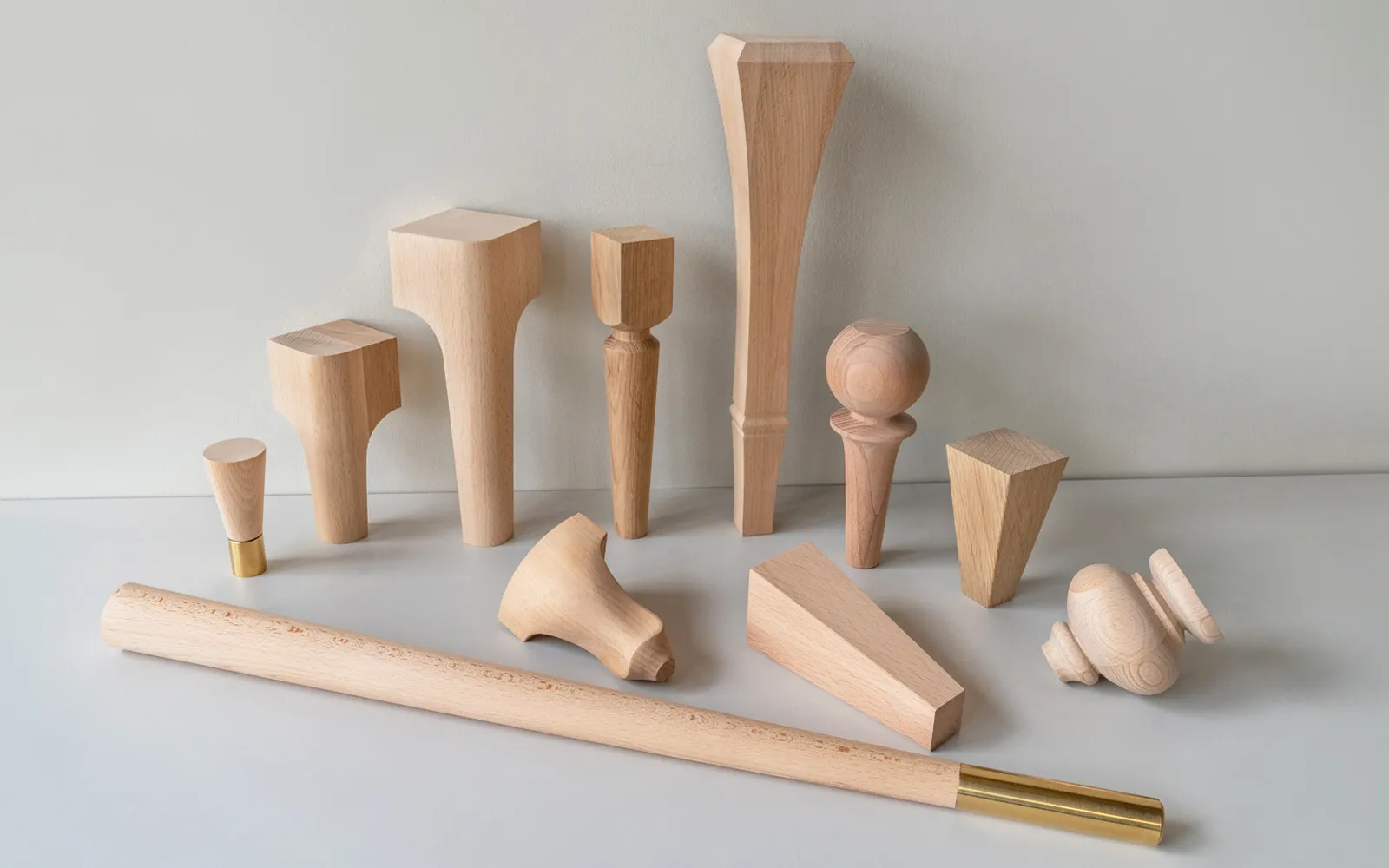
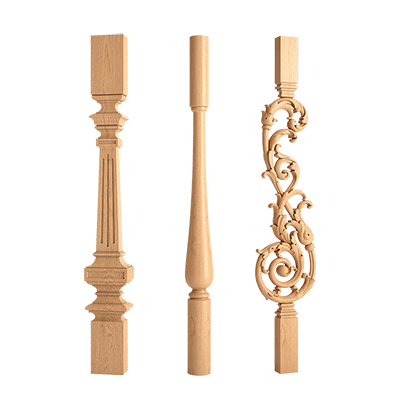
A turned part is formed around an axis of rotation. Therefore, its geometry is naturally built from cylinders, cones, spheres, necks, beads, coves, and smooth transitions between them.
This technology is especially suitable for products whose shape is read by their profile:
- furniture legs;
- the supports;
- posts;
- balusters;
- wooden spheres;
- bushings;
- decorative transitions;
- elements of composite rods and columns;
- small rotationally symmetric blanks.
In a drawing, such an element is often easiest to understand from the longitudinal profile and several diameters. In the finished product, it is the precision of these transitions that creates a recognizable silhouette.
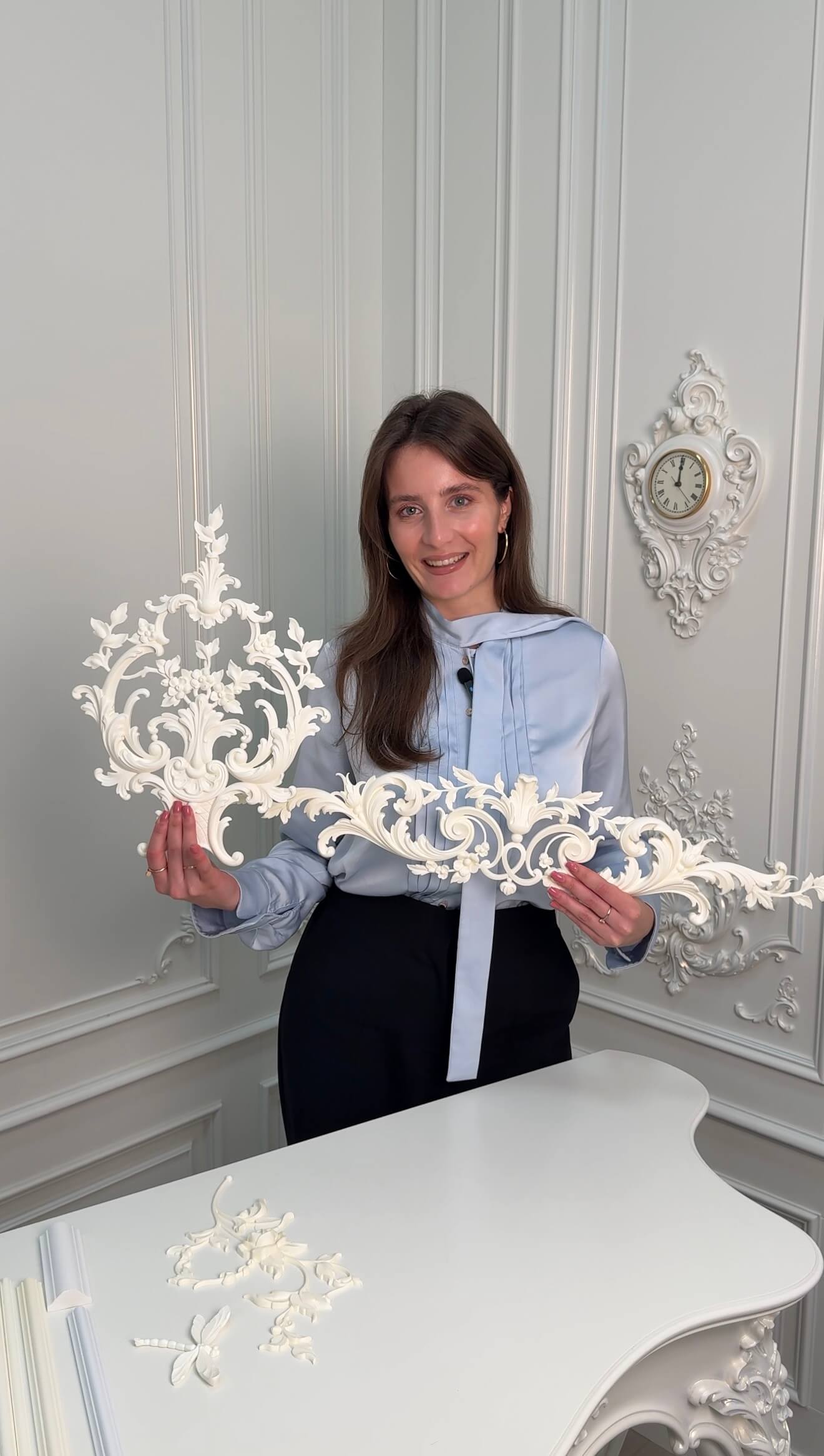
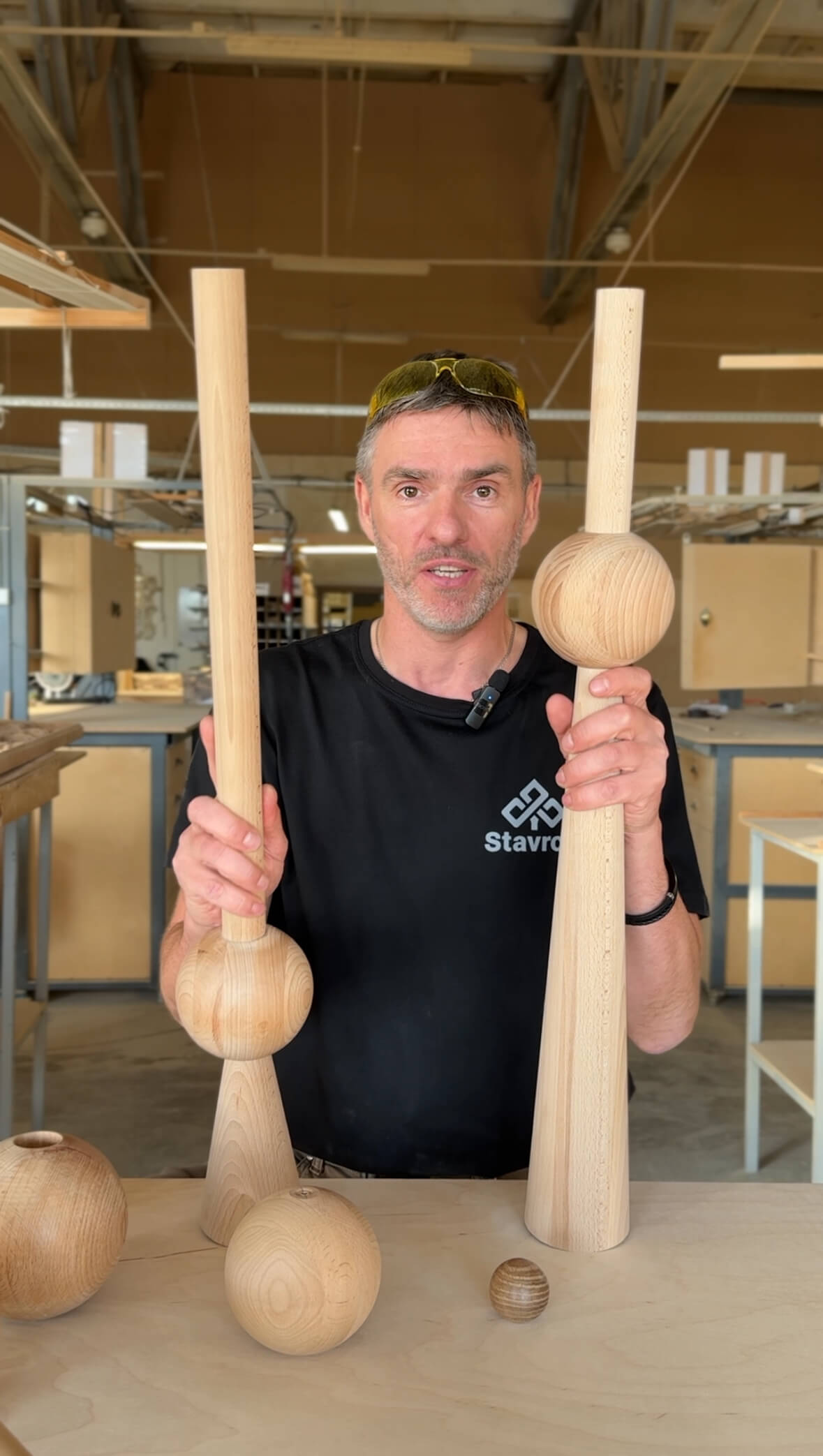
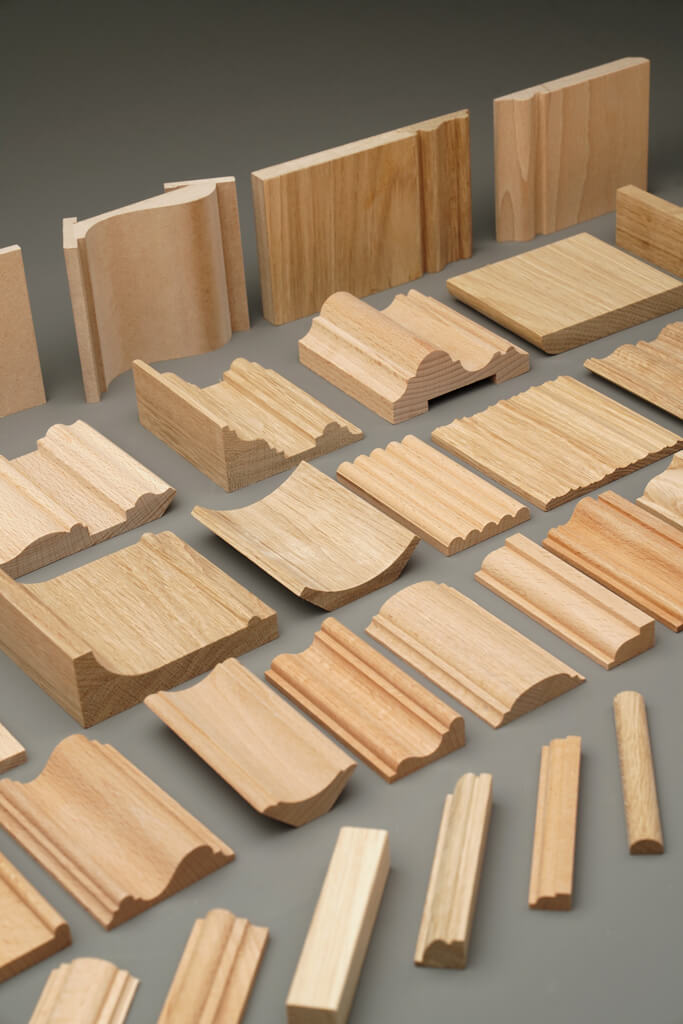
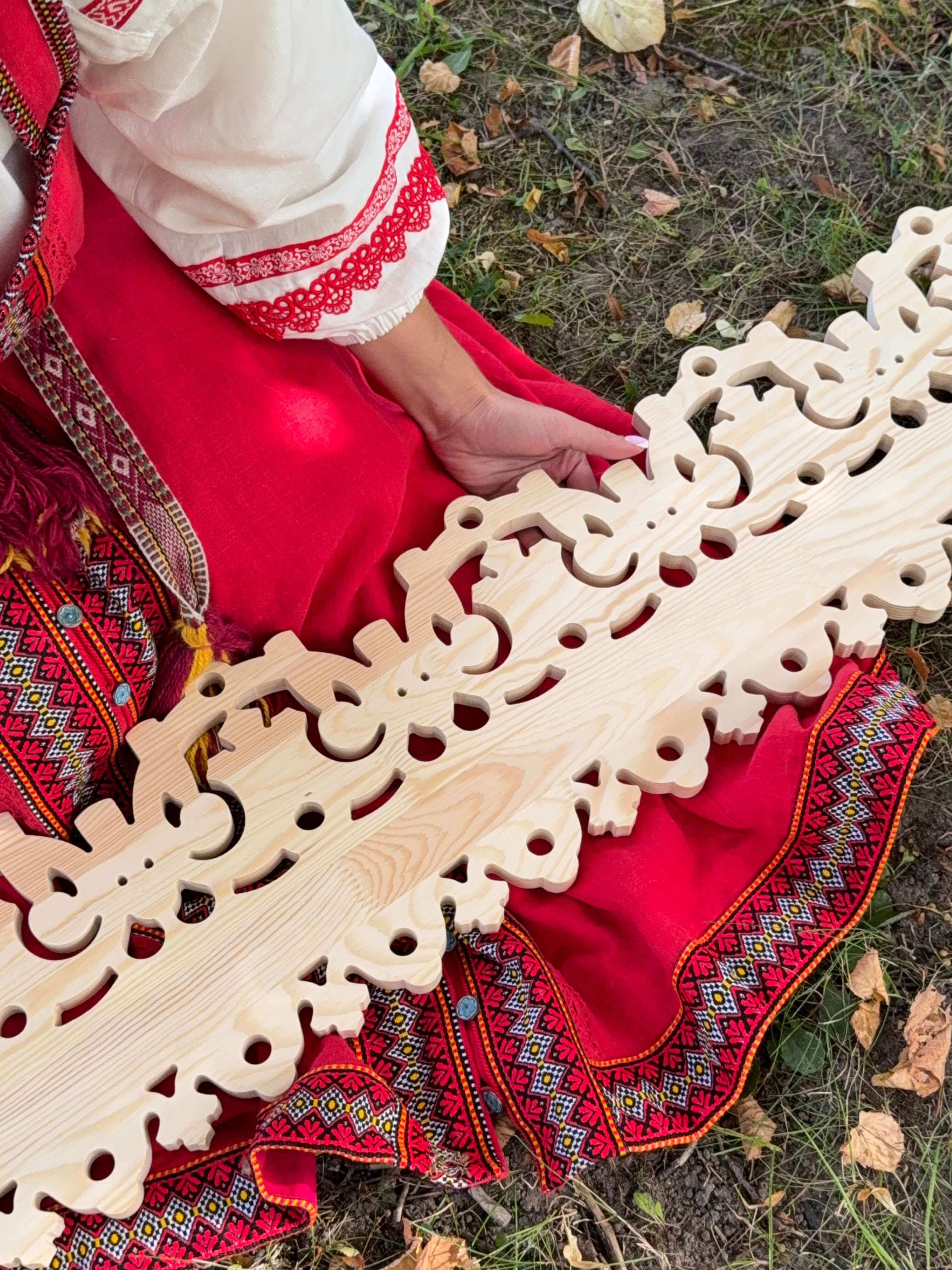
How a turned part differs from a carved and geometric one
For procurement, it is better not to conflate these concepts.
Our factory also produces:




Turned part
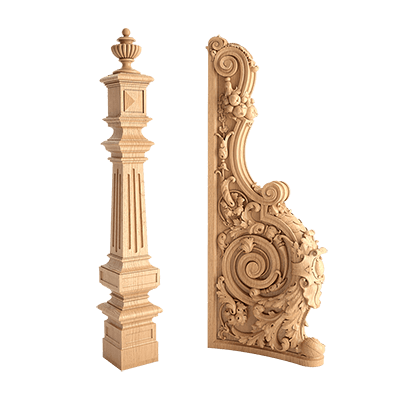
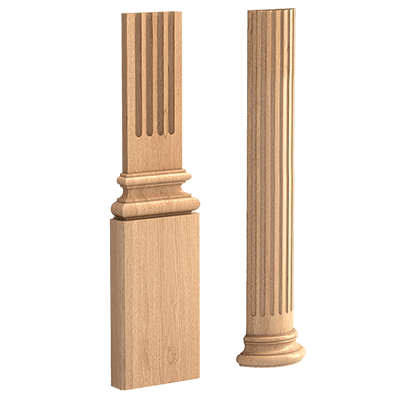
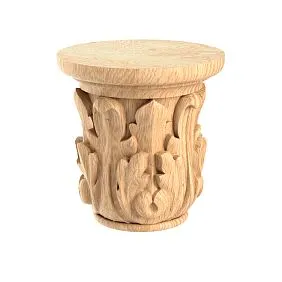
The main geometry is symmetric about the axis of rotation. If you mentally rotate the profile around the central axis, you get the basic shape of the product.
Get Consultation
Carved part
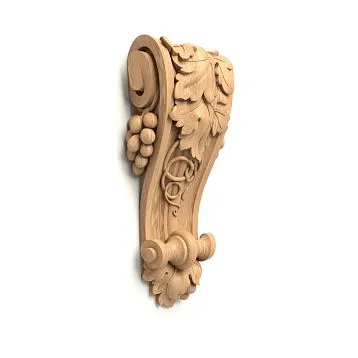
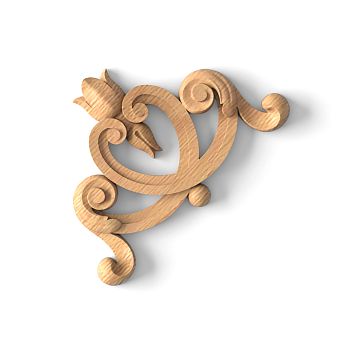
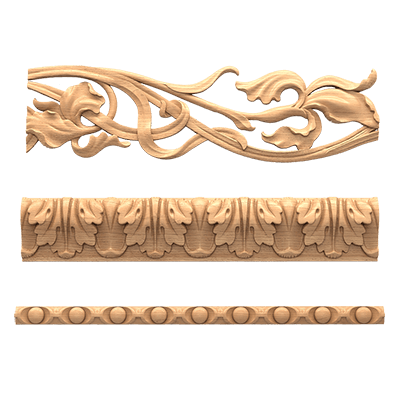
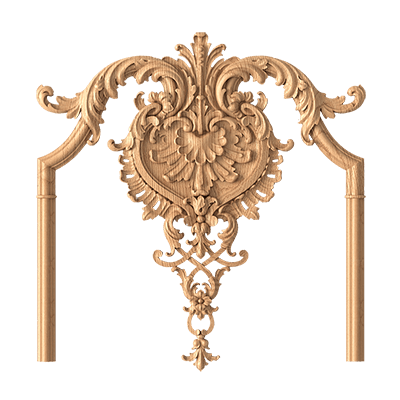
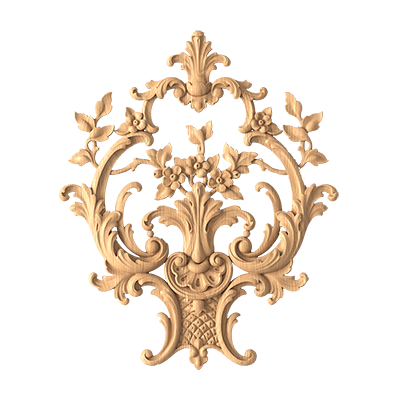
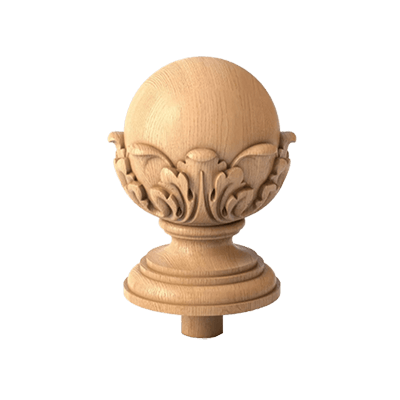
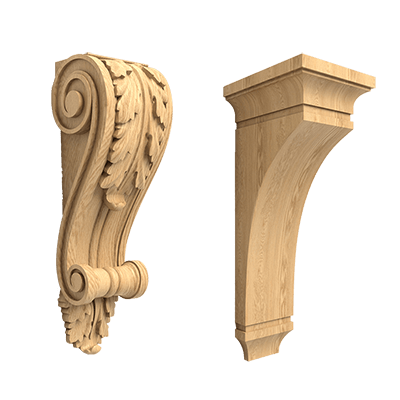
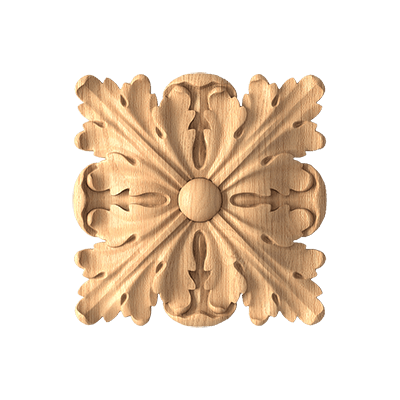
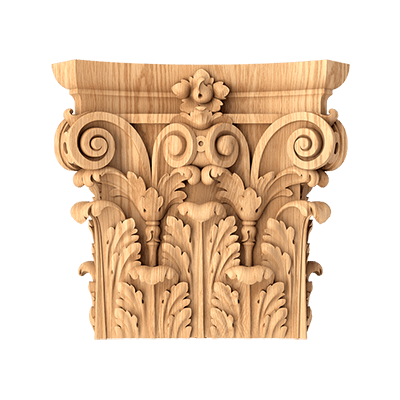
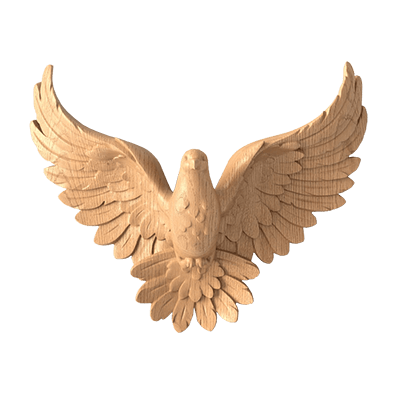
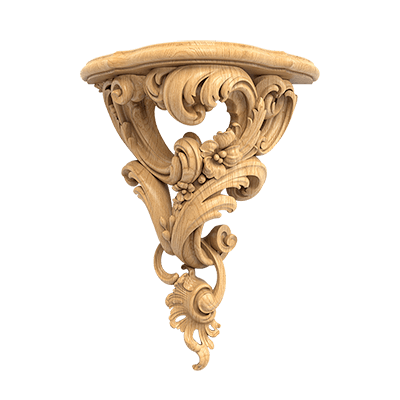
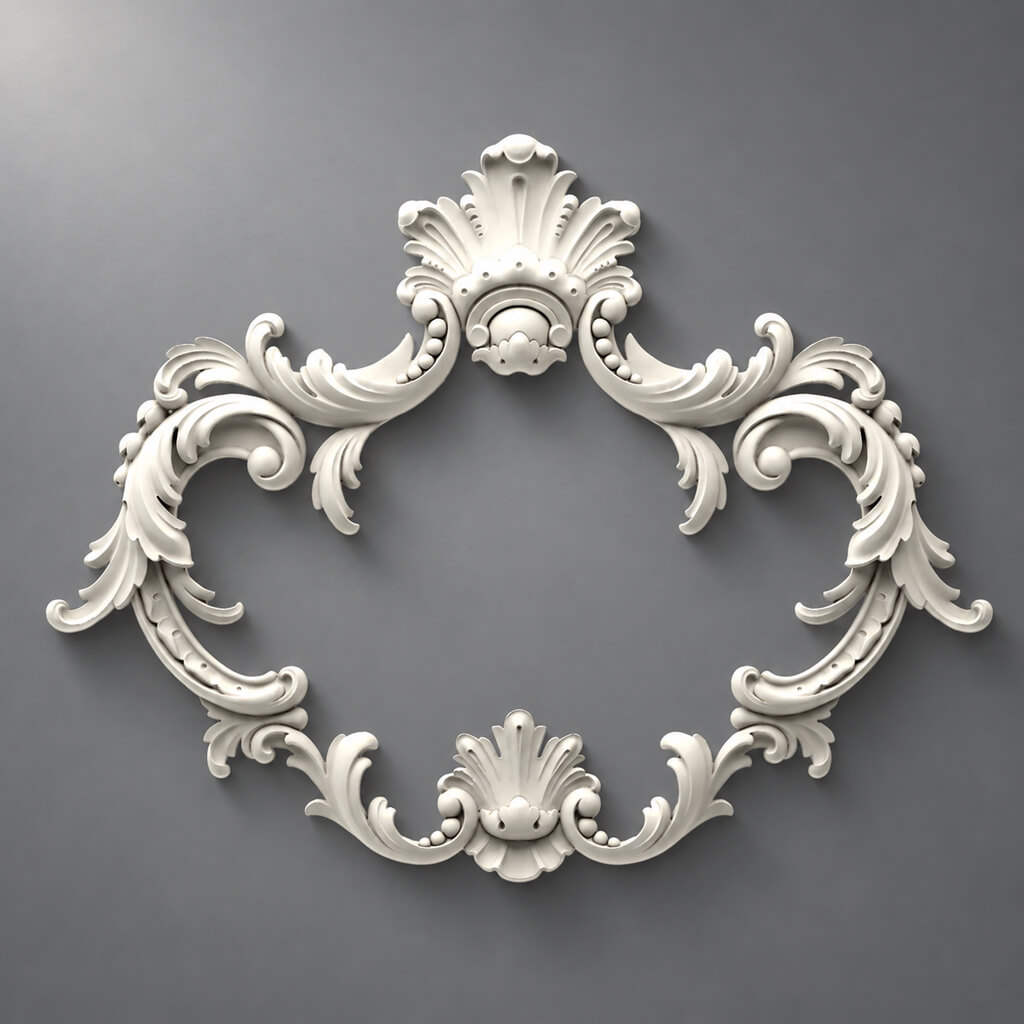
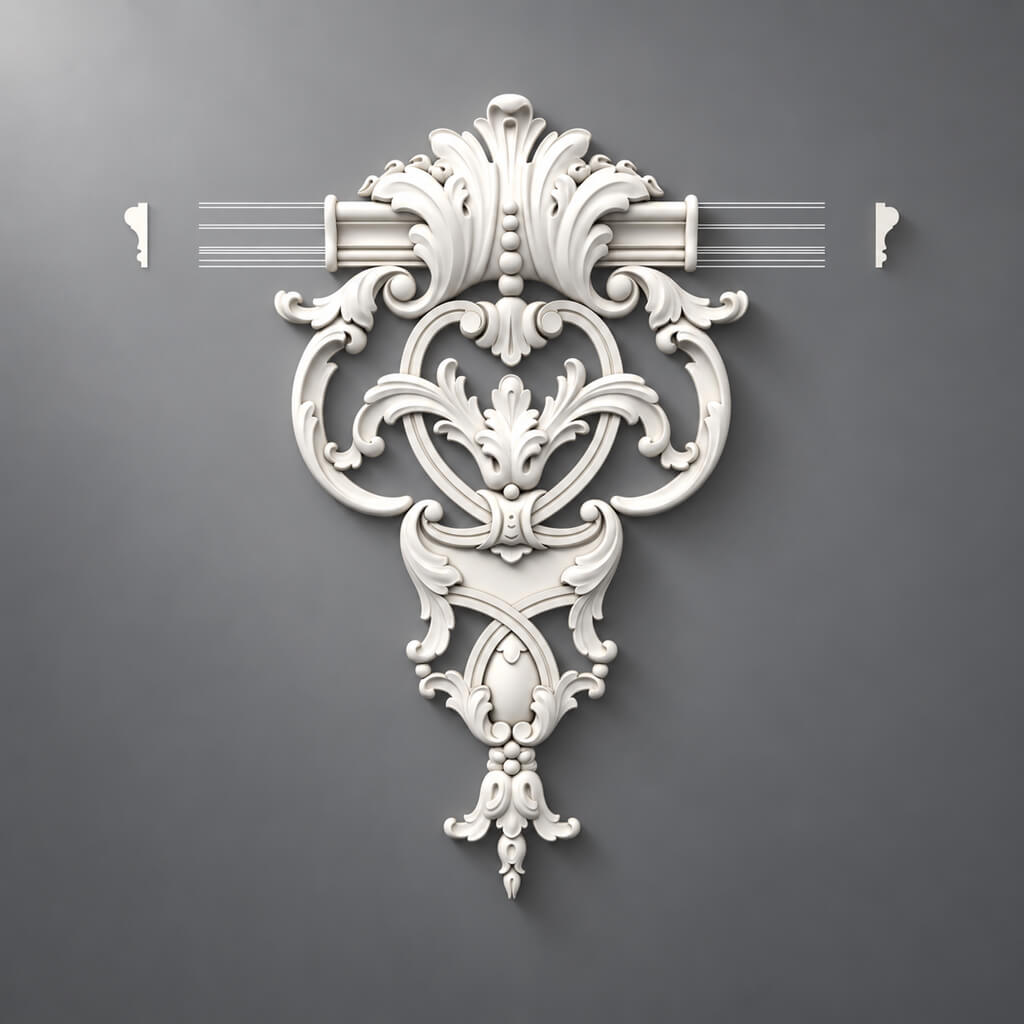
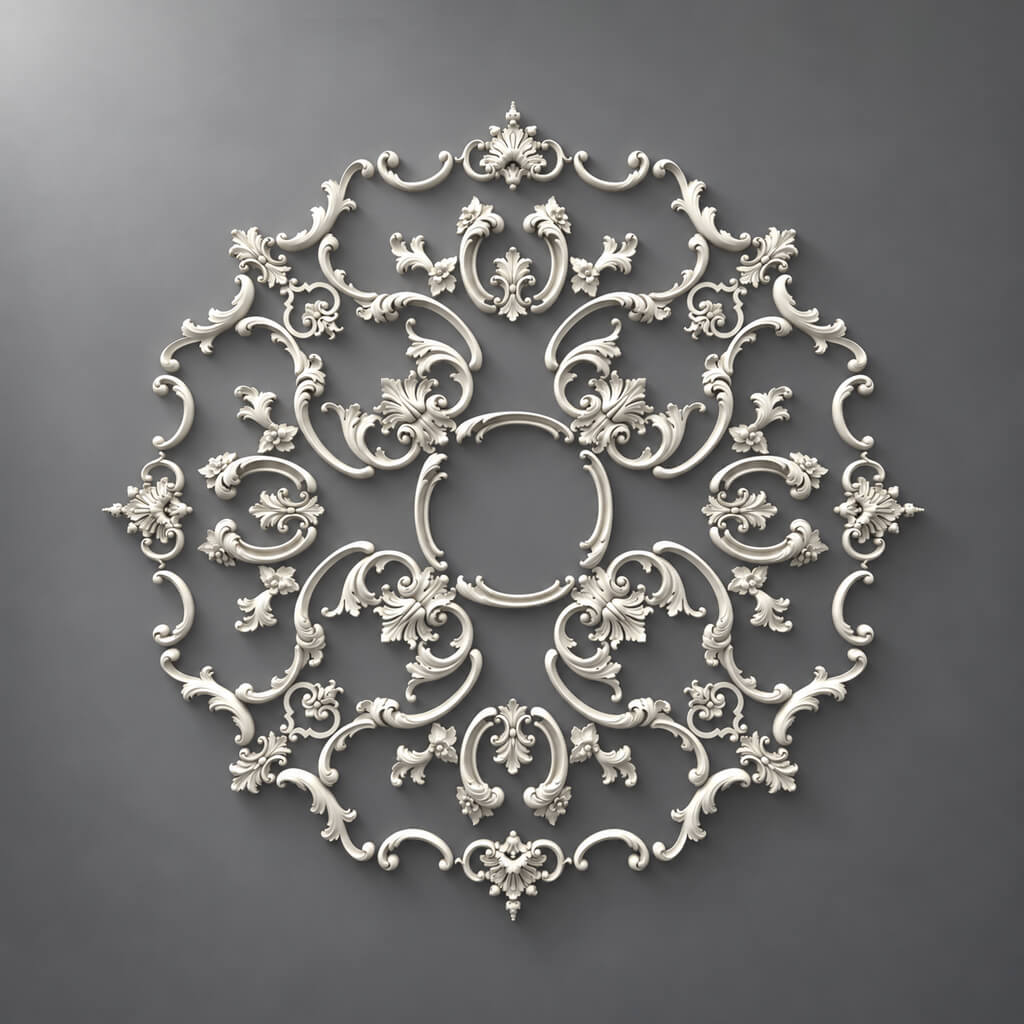
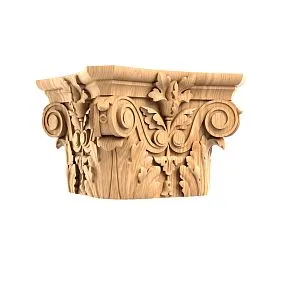
The relief may be asymmetrical: leaves, scrolls, coats of arms, flowers, complex ornament. Here the shape is not built by rotation alone.
Geometric milled part
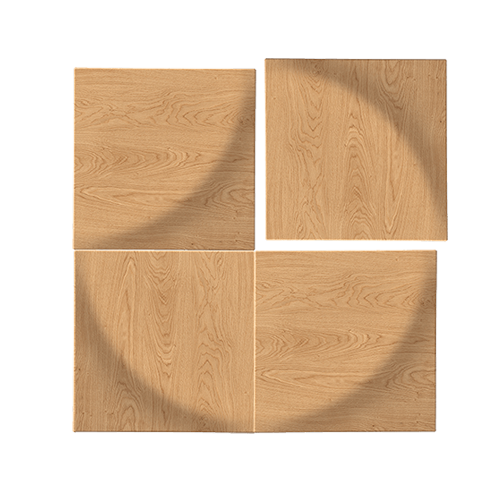
A cube, a polyhedron, a flat overlay, or a complex CNC part can also be decorative wooden elements, but they do not thereby become turned.
The difference matters not for the sake of terminology. These groups differ in production logic, the set of sizes, and the way the shape is repeated.
Why it is not always profitable for a small workshop to turn a part in-house
The price of a blank says almost nothing about the real cost of making your own part.
To obtain a repeatable set, the workshop goes through a chain:
drawing → blank → machine setup → test part → adjustment → batch → sanding → dimensional inspection.
Even if a lathe is already available, the time for preparation remains.
Let's imagine an order for a console with four shaped legs. Only four parts are needed. If a ready-made profile already exists in the catalog and fits in height, mounting diameter, and shape, a separate production run may offer no advantage at all.
Especially if the workshop's task is to make the furniture itself, not to develop its own line of turned parts.
This is the practical meaning of make-or-buy: compare not the price of wood with the price of a ready-made leg, but the entire operation as a whole.
When a ready-made turned product is especially advantageous
A finished part becomes a strong option for small quantities:
- 2 pieces;
- 4 pieces;
- 6–8 pieces;
- a small repeating series;
- a one-off restoration or custom piece.
The smaller the batch, the larger the share of your own time goes into setup.
For four legs, the machine setup is spread across four items.
For four hundred, it is spread across four hundred.
Therefore, the decision must be made not in the abstract, but relative to a specific batch size.
When custom turning can be justified
A ready-made catalog is not universal.
Custom production makes more sense if:
- a unique profile is needed;
- a non-standard height is required;
- a specific diameter is critical;
- the part must replicate a historical sample;
- the geometry is part of your own branded product;
- the series is large enough;
- there is objectively no ready-made equivalent.
That is why a strong strategy begins not with the decision to “buy everything ready-made,” but with checking the catalog.
If a suitable SKU exists — compare it with producing it in-house.
If not — custom remains a normal production option.
Make-or-buy for a joinery workshop
| Factor | Turn in-house | Buy ready-made |
|---|---|---|
| Profile development | Required | profile already exists |
| Machine setup | Required | Not required |
| test part | usually needed | you can check a finished sample/product |
| Repeatability | provided by the workshop | serial SKU |
| Sanding | performed in-house | depends on the configuration |
| Small quantity | preparation is spread across few parts | particularly interesting |
| Non-standard shape | Strong advantage | limited to the catalog |
| Repeat order | an internal production process is needed again | order by saved SKU |
The main question after the table is simple: what is the scarce resource for the workshop — money for a finished part or its own production time?
Turned furniture legs as the primary product scenario
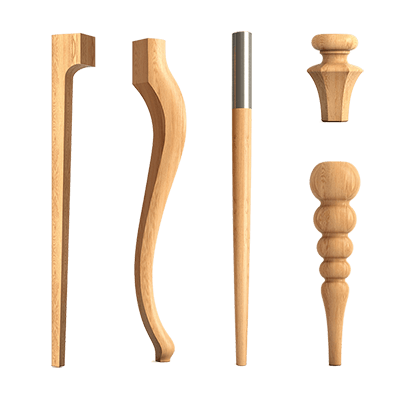
The most straightforward group — Turned legs for furniture.
In the catalog, legs can be viewed not only by shape, but also by purpose: for a sofa, coffee table, dresser, wardrobe, cabinet, console, armchair, bed, table, and other furniture items.
For a workshop, this is more useful than endlessly searching for a “beautiful leg” through photos.
First, the functional scenario is determined.
Then the actual dimensions are checked.
Only after that — the outer profile.
Why you shouldn't choose a furniture leg by height alone
Height is only one parameter.
For a real project, the following are important:
- overall height;
- width of the upper part;
- diameter or width of the base;
- mounting plate;
- transition to the body;
- maximum diameter of the turned profile;
- availability of a fastening solution.
On STAVROS product cards, the dimensions of specific items are defined by parameters A, B, C/D depending on the model. Therefore, in a furniture drawing it is better to keep not a verbal description such as "low shaped leg" but the specific SKU and its actual dimensions.
For example, turned furniture leg MN-097 has its own set of dimensional parameters and material options. It is precisely such values that should determine the body and the mounting assembly, and not the approximate scale in the picture.
Turned legs for the table
A table imposes a different set of design questions on a leg than a sofa or a cabinet.
Need to check:
- height of the finished table;
- countertop thickness;
- position of the stretcher or underframe;
- width of the mounting plate;
- maximum profile diameter;
- free space between the legs;
- number of supports.
A turned leg may look proportionate in a photograph but turn out to be too bulky for a narrow tabletop.
And vice versa: a thin support on a large table is visually lost even before checking the structural design.
Therefore, the query "buy turned wooden table legs" should end not with purchasing the first suitable silhouette, but with checking the actual joint.
Legs for a chest of drawers and cabinet
Here, a set of identical elements is more often required.
Check:
- same height;
- identical geometry;
- position relative to the body;
- offset from the front;
- the clearance above the floor;
- method of fastening.
On a small dresser, even a few millimeters of difference in mounting level is more noticeable than on a large structure.
A ready-made SKU is convenient because four or six parts are ordered as a repeat of one item, rather than as four independent turning jobs.
Legs for sofa and armchair
With upholstered furniture, the emphasis shifts.
More often important are:
- low height;
- the clearance from the floor;
- dimensions of the upper mounting part;
- position relative to the frame;
- visibility of the leg from a normal viewing angle;
- consistency of the set.
A leg may be technically suitable but almost completely hidden under the body. Then a complex turned profile does not add noticeable visual value to the project.
This is a good example of a situation where a simpler element is more rational than a decorative one.
Ready-made turned elements of the "Konstruktor" system
A separate scenario is not a ready-made leg, but assembling your own post from standard modules.
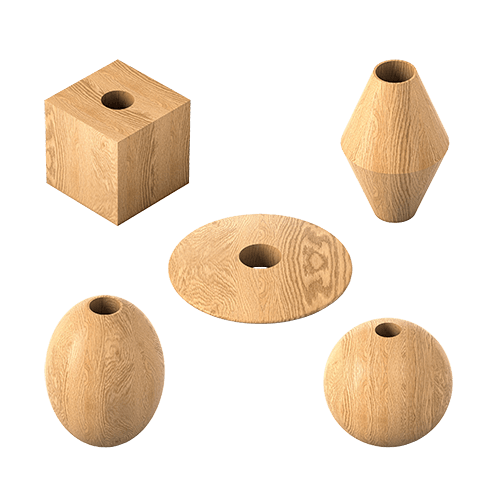
In the section turned wooden products "Konstruktor" elements are assembled that can be used for furniture and interior structures.
The point of such a system is especially interesting for a workshop: the complex shape has already been manufactured, but the final composition remains up to the author of the product.
You can work with:
- spheres;
- discs;
- bushings;
- transitional elements;
- decorative figures;
- composite posts;
- baluster compositions.
This is an intermediate model between "buying a ready-made leg" and "turning the entire part from scratch."
When a composite module is better than a monolithic part
Let's imagine a tall decorative post.
Option 1 — turn it entirely from a single blank.
Option 2 — assemble it:
load-bearing linear stock + several ready-made turned modules.
The second approach offers several practical advantages:
- the sequence of elements can be changed;
- it is easier to replicate the composition;
- it is easier to replace a damaged part;
- it is easier to adjust the height of the system;
- there is no need to create a whole long turned profile each time.
But a new limitation appears — fitting compatibility.
The fitting size is a critical parameter of a modular system
For a decorative module, you need to check more than just the outer diameter.
If the element is placed onto a rod or axle, the following are important:
- inner hole;
- diameter of the load-bearing element;
- seating depth;
- orientation;
- adjacent parts.
The outer shape may fit the project perfectly, but the wrong mounting size makes the module useless.
Therefore, when assembling the "Constructor", the logic should be as follows:
axis/rod → mounting diameter → compatible modules → composition.
Not the other way around.
Balusters as a separate group of turned products
A turned baluster can be used in different systems, and here it is important not to mix furniture and staircase demand.
A furniture baluster or decorative post is an element of furniture or an interior structure.
A stair baluster is part of the railing and must be considered within its structural system.
STAVROS has a separate section wooden balusters and a filter for turned round models.
For a furniture article, it is only important to understand that a visually similar shape does not yet make products interchangeable in purpose.
Beech or oak for a turned part
There is no universal winner here.
Beech
It is logical when the main task is to achieve even wooden geometry for an opaque finish, or when pronounced wood texture is not part of the design.
Oak
It is more interesting when the craftsman wants to preserve the feel of a natural material and use a transparent or semi-transparent finish, tinting, oil, or lacquer.
But the decision must be made based on the specific product and the available finish, not on the general rule “beech for enamel, oak for lacquer.”
The project must specify the material that is actually selected in the product card.
Unpainted turned part as a workshop semi-finished product
This is one of the strongest B2B scenarios.
The workshop purchases complex ready-made geometry, and performs in-house the part of the work that shapes the signature character of the product:
- enamel;
- tinting;
- stain;
- varnish;
- oil;
- patina;
- combination with the rest of the furniture.
This preserves the signature finish, but eliminates the need to spend time on a separate turning operation.
For this, it is convenient to look at unpainted turned legs.
When it is more convenient to apply the finish before assembly
With a complex profile, after installation, part of the surface may become difficult to access.
For example, the upper neck of the leg comes close to the body, and the decorative bead ends up almost flush against the apron.
Therefore, before assembly it is useful to determine:
- which surfaces will remain exposed;
- where the installation zone will be;
- whether a clean end face is needed;
- whether the finish can be applied without problems after installation.
There is no single universal order for all products.
But the finishing order must be part of the workshop's process chart, not decided randomly at the last stage.
The turned part must be included in the furniture drawing before the carcass is produced
Correct sequence:
SKU selection → actual dimensions → furniture drawing → carcass.
Bad:
the carcass is already manufactured → we look for a roughly suitable leg.
In the second case, the craftsman is forced to adapt the product to the finished geometry.
May not match:
- mounting plate;
- height;
- offset from the front;
- maximum diameter;
- fasteners.
Therefore, a finished part saves production time only when its dimensions were known in advance.
Which dimensions to keep in the specification
For a turned part, the minimum is:
- Project Code;
- SKU;
- Manufacturer;
- dimensions A/B/C/D from the card;
- the material;
- quantity;
- application;
- Finish;
- URL.
For example:
| Field | Value |
|---|---|
| Code | LEG-01 |
| Manufacturer | STAVROS |
| SKU | specific |
| Material | beech / oak |
| Size | By card |
| Qty | 4 |
| Furniture Item | TABLE-01 |
| Finish | Project |
| URL | Product |
This way, a repeat order does not depend on the craftsman's memory.
Four legs — one set or four line items
If the SKU is the same, one line is enough:
LEG-01 / Qty = 4
No need to create:
LEG-01-A
LEG-01-B
LEG-01-C
LEG-01-D
if the parts are truly identical.
Separate lines are needed only if there are different versions, orientations, or sizes.
This makes the specification shorter and more precise at the same time.
Why repeatability is especially important for turned parts
On a single leg, a small difference in profile can be almost unnoticeable.
With four standing side by side, the mismatch becomes immediately apparent.
The set must match:
- in height;
- in diameters;
- in the position of the beads and necks;
- in the transitions;
- in the mounting section.
It is repeatability that is one of the main arguments in favor of a serial ready-made SKU for small furniture production.
A workshop buys not just a “shape,” but consistency across several parts.
Single-unit purchases and small batches
A small workshop rarely thinks in batches of a thousand elements.
Real scenarios are simpler:
- four table legs;
- six supports for two cabinets;
- eight parts for a small series;
- one pair of decorative posts;
- several modules for a custom design.
That is why the ability to work with ready-made parts in small quantities fundamentally changes the economics of a project.
No need to upload your own file for a short order.
Small batches and repeat orders
Good scenario:
4 parts now → 8 more in a month.
To keep reorders manageable, the craftsman saves:
- SKU;
- dimensions;
- the material;
- link;
- quantity;
- own finish;
- the furniture item where the part was used.
If a month later you search for "the same round leg as last time," the chance of error is much higher.
SKU turns visual memory into a reproducible purchase.
How to calculate real time savings
You don't have to convert everything into rubles.
You can compare hours.
Conditional example for four identical parts:
In-house production:
- prepare the profile;
- select the blanks;
- set up the machine;
- make a test part;
- adjust;
- turn four items;
- sand;
- check for uniformity.
Finished SKU:
- find a suitable model;
- verify the dimensions;
- order;
- apply your own finish;
- install.
If the first scenario takes up a valuable production day, while the second frees it up for furniture assembly, a finished part can be more profitable even at a higher price per piece.
This is make-or-buy without the illusion that your own free time is truly free.
When a ready-made turned product doesn't fit
There's no need to force the catalog to fit at any cost.
Custom is justified if:
- the diameter doesn't fit;
- the height doesn't fit;
- a special mounting part is needed;
- a historical profile must be reproduced exactly;
- the product replicates an existing sample;
- the finished shape disrupts the furniture's proportions;
- the part is a recognizable element of your own brand.
In that case, a ready-made catalog is useful at least as a reference: it becomes clear exactly what is missing from the standard assortment.
Common mistakes when choosing a ready-made turned part
Looking only at the appearance
You like the shape, but the mounting plate doesn't fit.
Solution: dimensions first, aesthetics second.
Looking only at the height
The maximum diameter conflicts with the body or the stretcher.
Solution: keep all dimensional parameters.
Buy the leg after manufacturing the carcass
Furniture has to be reworked to fit the finished part.
Solution: the SKU must be included in the drawing in advance.
Mixing a turned and a carved part
The result is a different production and visual object.
Solution: correctly determine the product type.
Not specifying the material
A repeat order arrives in a different finish.
Solution: SKU + material in the specification.
Do not save the workshop finish
A month later, it is impossible to replicate the appearance of the first batch.
Solution: your own Finish Code.
How to buy turned wooden products for a furniture workshop
It is best to keep the final order simple:
- determine the function of the part;
- check ready-made turned wooden elements;
- for supports, open wooden furniture legs;
- if necessary, filter Turned legs for furniture;
- check the actual dimensions, material, and mounting part;
- enter the SKU into the furniture drawing;
- determine the quantity;
- lock in your own finish;
- place an order;
- save the SKU for a repeat batch.
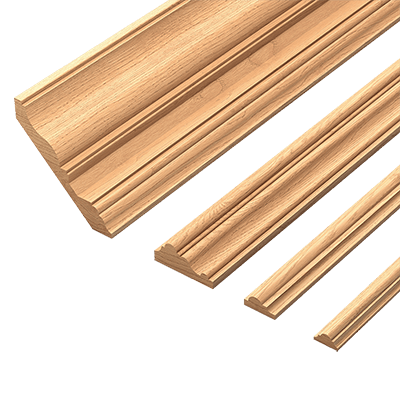
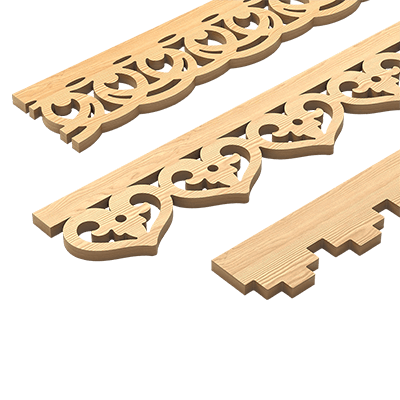
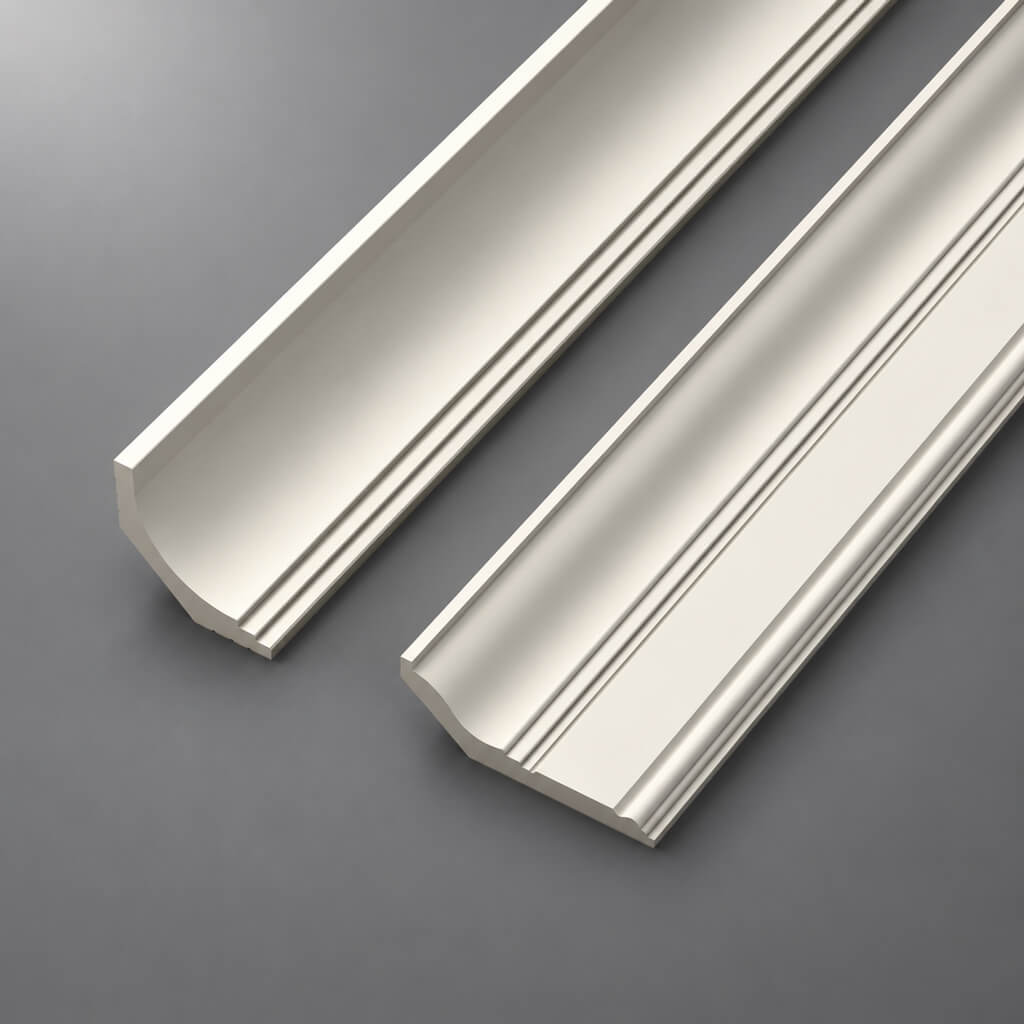
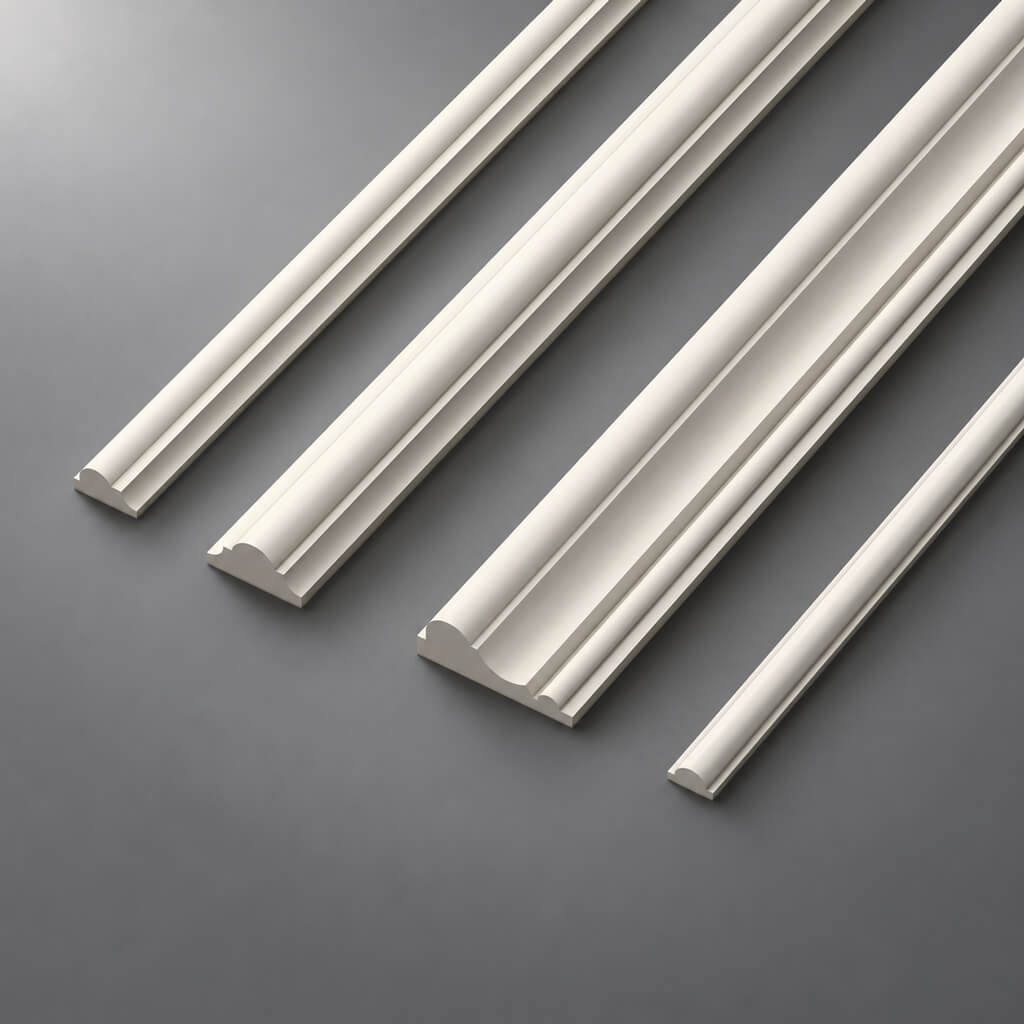
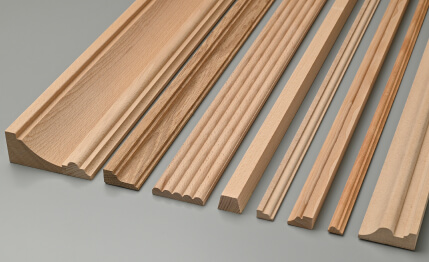
If you need a standard linear element next to turned parts, you can use Wooden trim, and if the task already goes beyond axial geometry, look separately at Carved wooden decoration.
For working dimensions and digital documentation, the section is useful STAVROS product drawings.
The main principle remains production-driven, not decorative:
first compare the cost of your own operation with a ready-made SKU, then choose the actual part by dimensions and material, integrate it into the furniture project, and only after that make the purchase.
With this approach, a small workshop does not abandon its own design. It simply keeps the operations that truly create value and, when needed, sources the repetitive turned geometry ready-made.