Article Contents:
- A single SKU change can have different consequences in different zones
- First, the change proposal gets its own number
- The reason for the change must be recorded separately
- Replacing a wooden baseboard affects more than one procurement line
- Why a new baseboard height may require re-measurement
- Replacing molding is especially risky for frame layouts
- For frame decor, it is useful to compare the finished module rather than SKUs
- A new cornice can change the ceiling assembly
- Project impact matrix
- Procurement impact is checked with a separate matrix
- If the old SKU has not been ordered yet
- If the old SKU has been ordered but not yet produced
- If the old SKU has already been produced or received
- The object impact matrix shows where a change is still applicable
- It is not necessary to change the profile across the entire object
- A split standard must be recorded with separate codes
- Construction goods wholesale: the larger the volume, the more dangerous a one-click change
- A new profile can change the quantity even with the same wall footage
- How to recalculate the quantity after replacing the product length
- The cost of the change is broader than the price of the new SKU
- It is useful to calculate the net cost change
- The change timeline should be calculated as a separate chain
- The timeline should be calculated not from today, but up to the required object date
- The old balance should receive a separate decision
- Which documents may require updating
- The main matrix of change consequences
- Three levels of impact are sufficient
- After analysis, the change receives a decision
- A new revision is issued only after a decision
- Construction materials wholesale: you can't buy new material first and then change the project
- How to detect that the project and procurement have diverged in versions
- What has been installed is not rewritten retroactively
- A rejected change should also be saved
- The change log preserves the history of decisions
- While a change is being reviewed, the procurement item must be put on hold
- Which mistakes are especially dangerous
- Not every change needs to be accepted
- When a change makes sense to approve only partially
- First, we define the boundaries of the change
- A map of affected zones is needed before recalculating procurement
- Already paid-for material requires a separate check
- Already produced material is not the same as free remaining stock
- The decision deadline must also be limited
- Before a decision, it is necessary to determine exactly what is being suspended
- Adjacent items also need to be checked for dependencies
- Checking neighboring SKUs prevents partial project updates
- Before approval, it is useful to run a control installation scenario
- A change must have an owner until it is fully closed
- After approval, implementation verification is required
- Implementation verification must cover the entire chain
- The old version must be explicitly deactivated
- A change is closed not by a new revision, but by the absence of contradictions
- Final algorithm for verifying the consequences of a replacement

A designer proposes replacing molding MLD-A with MLD-B. At first glance, the task seems simple: change the item code in the specification, request a new price, and continue procurement. But on a real project, the same profile may already be at different stages in different zones. In the lobby, it is installed; in the corridor, it is ordered; for the restaurant, it exists only in the design.
That is why, when working with large-scale procurement, you cannot start a change with a new revision of the specification. First, you need to understand the consequences: which zones are affected, what has already been ordered and paid for, what has been produced, what is in stock, which drawings use the old profile, which adjacent elements depend on its dimensions, and how much the change itself will cost.
Correct sequence:
change proposal → impact analysis → decision → new revision → change to the supplier order, if required.
The main goal of the article is to show how to make a decision before the proposed replacement starts spreading through design, procurement, and construction.
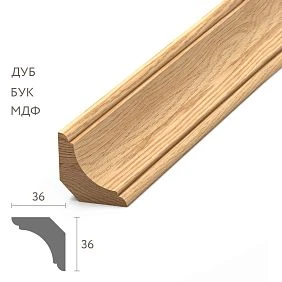
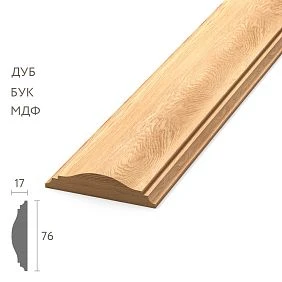
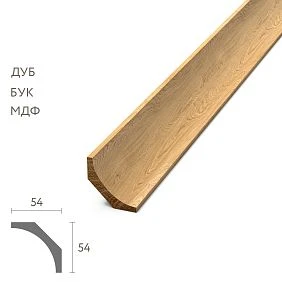
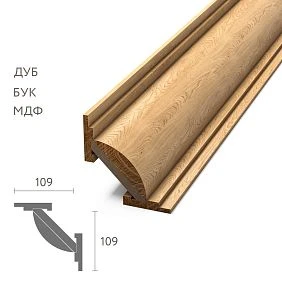
A single item code change can have different consequences in different zones
Suppose project code M-03 corresponds to molding MLD-A.
It is used:
- lobby — 180 m;
- corridors — 260 m;
- restaurant — 95 m.
The designer suggests replacing it with MLD-B.
| Zone | Old SKU | Stage | Can they be changed uniformly? |
|---|---|---|---|
| Lobby | MLD-A | Installed | Only by separate decision |
| Corridor | MLD-A | Ordered | Need to check the order, price, and production |
| Restaurant | MLD-A | Project only | Easier to change |
One replacement has already split into three different scenarios. Therefore, "replace MLD-A with MLD-B across the entire site" is too broad an instruction.




First, the change proposal gets its own number
For example:
CHG-PG-017
And not:
new molding from yesterday's message
The proposal card may contain:
- object;
- change number;
- current SKU;
- proposed SKU;
- reason;
- initiator;
- date;
- affected zones;
- current review status.
From this point on, the change becomes a managed object rather than a conversation in a chat.
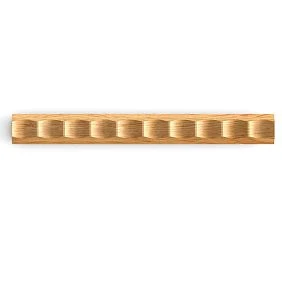
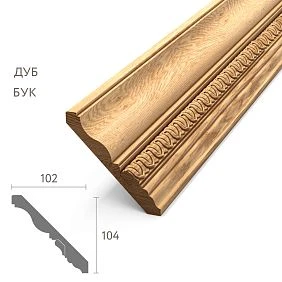
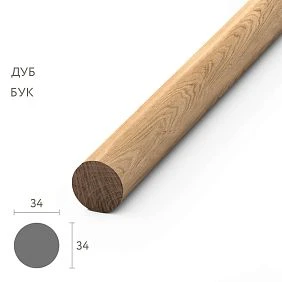
Our factory also produces:
The reason for the change must be recorded separately
The reason affects how the consequences are assessed.
| Reason | What to check with particular attention |
|---|---|
| Design change | Geometry, joints, already completed zones |
| Product unavailability | Timelines, acceptable alternatives, already ordered volume |
| Cost reduction | The full cost of the change, not just the price of the new item |
| Technical conflict | Adjacent elements and drawings |
| Actual site conditions | Measurements, zones, installation readiness |
If the reason is not recorded, in a month the team may no longer understand why the replacement was even proposed.
Get Consultation
Replacing a wooden skirting board affects more than one procurement line
Was:
100 × 15 mm
Suggested:
120 × 18 mm
The difference may seem small, but it needs to be checked:
- Baseboards;
- door assemblies;
- built-in furniture;
- wall panels;
- sockets and technical elements in the lower zone;
- the height of the junction;
- the final linear measurement;
- cutting map;
- design allowance.
That is, changing the product creates a change in the interfaces with adjacent elements.
Why a new skirting board height may require re-measurement
If the new profile is taller, some sections may conflict with already installed furniture or low-lying elements.
If the new profile is thicker, the offset relative to the casing and the wall facade changes.
Therefore, the old quantity cannot be considered automatically valid. Even with the same wall length, the applicability of individual sections changes.
Replacing the molding is especially risky for frame layout
If the new profile differs in width, depth, or relief, the entire wall composition may change.
Need to double-check:
- internal dimensions of the frames;
- external dimensions of the frames;
- distances between frames;
- offsets from doors;
- offsets from corners;
- joints;
- number of whole segments;
- actual consumption.
A new molding may be cheaper, but it may require a complete re-layout.
For frame decor, it is useful to compare not SKUs, but the finished module
Suppose the old frame had an outer size of 1200 × 1800 mm. The new molding is 15 mm wider.
If the outer dimensions must be preserved, the inner field is reduced. If the inner field must be preserved, the outer dimensions are increased.
This means the designer must choose which dimension is the base one. Only after that can consumption be recalculated.
A new curtain rod may change the ceiling assembly
Checked:
- height;
- overhang;
- junction to the ceiling;
- curtain assembly;
- hidden lighting;
- built-in furniture;
- distance to ceiling elements.
Even if the new curtain rod is more readily available and cheaper, its impact on adjacent systems may make the change impractical.
Project impact matrix
| Check | Was | Became | Influence |
|---|---|---|---|
| Width | 40 мм | 55 мм | High |
| Depth | 18 мм | 22 мм | Average |
| Material | Oak | Oak | No |
| Finish | F01 | F01 | Check |
| Drawing | D-17 | New version | Update |
Such a table forces you to evaluate not only the appearance of the profile, but also the actual parameters.
The impact on procurement is checked by a separate matrix
| Check | Condition |
|---|---|
| Has the price request already been sent? | Yes / no |
| Has the price been received? | Yes / no |
| Has the order to the supplier been issued? | Yes / no |
| Has the payment been made? | Yes / no |
| Has production started? | Yes / no |
| Has the goods been shipped? | Yes / no |
| Has the goods been received? | Yes / no |
The further a position has moved along the chain, the more expensive and complex a change may become.
If the old SKU has not yet been ordered
This is the simplest scenario.
You need to:
- check the project impact;
- approve the new profile;
- recalculate the quantity;
- request a new price;
- update the specification;
- issue a new revision.
But even here, the old quantity cannot be automatically transferred to the new profile.
If the old SKU has been ordered but not yet produced
A commercial block of questions arises:
- can an already placed order be changed;
- can an old line be cancelled;
- has the price changed;
- has the completion date changed;
- is a payment adjustment needed;
- is a separate change to the supplier order required.
It is only after the change is approved that a different process begins — the official adjustment of the placed order.
If the old item has already been produced or received
Deleting it from the table is not enough. The fate of the physical material must be decided.
Possible options:
- use it in an already approved zone;
- move it to another suitable zone;
- keep as an operational reserve;
- approve the return if provided for by the terms;
- record separately as the remaining stock of the old standard;
- adopt another agreed decision.
The old material should not disappear from accounting just because the designer selected a new item code.
The impact matrix for the object shows where the change is still applicable
| Zone | Stage | Old profile installed | Old profile in stock | New volume |
|---|---|---|---|---|
| Lobby | Completed | 180 м | 8 м | 0 |
| Corridor | In progress | 80 м | 190 м | Check |
| Restaurant | Not started | 0 | 0 | 95 м |
After such a picture, the discussion becomes concrete: it is clear where the standard can be changed without redoing work already completed.
It is not necessary to change the profile throughout the entire facility
The lobby has already been completed as MLD-A. The restaurant has not yet been started.
The designer can make a decision:
Lobby — existing standard MLD-A
Restaurant — new standard MLD-B
This is an acceptable management decision if it is made consciously and reflected in the documentation.
The problem does not arise because of two standards as such, but when they appear accidentally.
A split standard must be recorded with separate codes
For example:
M-03A — MLD-A — existing zones
M-03B — MLD-B — future zones
Both entries remain in the project history and then transfer to the actual execution statement.
Construction goods wholesale: the larger the volume, the more dangerous a "one-click" change
construction materials wholesale can be purchased in hundreds and thousands of linear meters. Replacing eight strips and replacing 1800 m of profile are decisions of a completely different scale.
Large volume amplifies the consequences:
- incorrect quantity;
- outdated price;
- unnecessary logistics;
- remaining stock of an old SKU;
- repackaging;
- drawing changes;
- installation rework.
Therefore, a large batch requires a more rigorous analysis before approving a replacement.
A new profile can change the quantity even with the same wall footage
Causes:
- different commercial length;
- a different cutting layout;
- different frame width;
- changed number of joints;
- different element orientation;
- unused remnants of the old scheme.
Therefore, the quantity from the old purchase list cannot be automatically transferred to the new SKU.
How to recalculate the quantity after changing the product length
Conditional example:
the project requires 57.6 m of profile.
The old option was supplied in 2.4 m lengths:
57.6 / 2.4 = 24 pieces.
The new option has a length of 2.0 m:
57.6 / 2.0 = 28.8, so at least 29 pieces.
But this is only the arithmetic minimum. The cutting plan may require more if individual parts cannot be made from short offcuts.
The cost of the change is broader than the price of the new SKU
You need to compare:
- the price of the new item;
- the cost of the old item already ordered;
- cost of cancellation or redistribution of the old volume;
- new logistics;
- new samples;
- recalculation;
- project update;
- installation change;
- possible rework of what has already been done.
A cheap new profile can create an expensive replacement.
It is useful to calculate the net change in cost
Conditional example:
| Article | Change in cost |
|---|---|
| Savings on the new profile | −40 000 ₽ |
| Unused old material | +22 000 ₽ |
| New sample and approval | +4 000 ₽ |
| Repeat delivery | +12 000 ₽ |
| Rework of the assembly | +18 000 ₽ |
There are savings on the item, but the overall effect of the change is already different. All figures here are illustrative and only demonstrate the methodology.
The lead time of the change should be calculated as a separate chain
A new item may require:
- technical approval;
- new sample;
- new price request;
- new commercial approval;
- order change;
- production;
- delivery.
If installation starts in five days, even a good change may already be too late.
The timeline should be counted not from today, but back from the required project date
For example:
Material is needed on site: 20.10
New approval will take 4 days, production — 12 days, delivery — 2 days.
The minimum chain is 18 days with no buffer.
If 14 days remain until the required date, the change automatically creates a high schedule risk.
The old remaining stock must receive a separate decision
In the register, it is useful to see:
Remaining quantity of the old SKU: ___
and one of the solutions:
- use;
- keep in reserve;
- move to another zone;
- approve a return;
- put on hold pending a decision;
- another agreed action.
The old material must not simply disappear from the project history.
Which documents may need to be updated
Only actually affected documents are checked:
- main specification;
- working drawings;
- room list;
- quantity calculation;
- price request;
- comparison of commercial offers;
- order to supplier;
- packing instructions;
- procurement register;
- installation documents;
- actual as-built list after completion of the project.
There is no need to update the entire project archive if the change affects only part of the information.
Main impact matrix
| Area | Influence | Action | Responsible | Status |
|---|---|---|---|---|
| Project | High | New drawing | Architect | OPEN |
| Quantity | Average | recalculate | Estimator | OPEN |
| Price request | High | Request again | Buyer | OPEN |
| Supplier order | High | Check change | Buyer | ON HOLD |
| Remainder | Average | Decide the fate of the old SKU | Project manager | OPEN |
| Object | Low | Future zones only | Object | Acceptable |
| Lead time | High | Recalculate schedule | Project manager | Under review |
This matrix shows what must be closed before the final decision.
Three levels of impact are sufficient
Artificial percentages are not needed.
Low impact — a documentary clarification without changing the physical execution.
Medium impact — quantity, cost, logistics, or part of the documentation changes.
High impact — production, an already placed order, installation, completed work, or a critical deadline is affected.
It is important that the level of impact is explained by a specific reason.
After analysis, the change receives a decision
Four outcomes are useful:
- approved — can be implemented;
- approved with conditions — for example, only for future zones;
- revise — the proposal needs to be changed;
- rejected — the consequences outweigh the benefits or violate project constraints.
Only after a decision is made is there a basis to change the specification.
A new revision is issued only after a decision
Correct order:
change request → impact analysis → decision → new revision → change to the supplier order, if required.
If a new revision is issued first and the consequences are assessed afterward, the team will already start working according to a decision that has not yet passed review.
Building materials wholesale: you can't buy new material first and then change the project
Bad scenario:
The new profile is cheaper, I've already ordered it — update the project.
Correct:
proposal → impact check → approval → procurement.
That's exactly how construction supplies wholesale remain part of a managed project process, rather than a set of separate purchases.
How to detect that the project and procurement have already diverged by versions
For example:
Project: revision 8
Procurement: revision 7
Object: revision 6
This is a version mismatch.
Until it is resolved, the next procurement or delivery cannot automatically be considered safe.
What has been installed is not rewritten retroactively
If the lobby has already been completed in MLD-A, the new specification must not pretend that MLD-B was always there.
What remains in the actual history:
Lobby → MLD-A
Future zones:
Restaurant → MLD-B
This way, the real object and the design documentation do not contradict each other.
A rejected change is also worth keeping
For example:
CHG-PG-017 — rejected
Reason:
too much impact on already completed zones and the timeline
In two months, another participant will not propose the same replacement again without understanding the previous review.
The change log preserves the history of decisions
| Change | Old SKU | New SKU | Reason | Solution | Date |
|---|---|---|---|---|---|
| CHG-017 | MLD-A | MLD-B | Unavailability | Approved for future zones | … |
| CHG-018 | PLT-A | PLT-C | Cost | Rejected | … |
While the change is under review, the purchasing item must be put on hold
In the unified procurement registry, item M-03 may receive:
Change under review
and the release of a new order:
Suspended pending decision
After approval, the new revision becomes active. After rejection, the old one remains in effect.
Which errors are especially dangerous
- Change the SKU only in the design table.
- Carry over the old quantity to the new profile without recalculation.
- Ignore material that has already been ordered.
- Ignore installed zones.
- Compare only the price of two SKUs.
- Delete the old revision.
- Release the order before the impact analysis is complete.
- Confusing a proposed change with an approved one.
- Not assigning an owner for each open consequence.
- Not transferring the outcome of the change into the object's as-built documentation.
Not every change needs to be accepted
Sometimes the best result of the analysis is to keep the original profile.
For example, a new option could be:
- 5% cheaper, but requiring expensive rework;
- more affordable, but disrupting the already approved geometry;
- more attractive, but not ready in time for installation;
- more convenient for one area, but creating a second standard across the entire object.
Impact analysis is needed precisely so that the team has the ability to say "no" with justification.
When a change makes sense to approve only partially
A partial solution is useful if:
- old zones are already completed;
- new zones have not yet been purchased;
- the two standards can be clearly separated;
- the actual as-built documentation will preserve the distinction;
- installers and the warehouse will be able to unambiguously distinguish between versions.
Then the change is applied only where it provides benefit without unnecessary rework.
First, we define the boundaries of the change
One of the most important decisions is to determine exactly where the change should apply.
The options can vary:
- across the entire site;
- only in future premises;
- only in one construction phase;
- only for one floor;
- only for volume not yet ordered;
- only after a specific date.
If the boundaries are not recorded, the new revision easily begins to be interpreted too broadly. Then the warehouse changes a batch that has already been prepared, the site changes an assembly that has already been approved, and the purchaser changes lines that were not intended to be affected at all.
A map of affected zones is needed before recalculating procurement
| Zone | Stage | Old SKU | Change is allowed | What is required |
|---|---|---|---|---|
| Lobby | Installed | MLD-A | No, without a separate decision | Keep the actual standard |
| Corridor | Order placed | MLD-A | After inspection | Check the order and production |
| Restaurant | Not ordered | MLD-A | Yes | Recalculate and approve |
This card separates “where a change is even possible” from “where it is merely proposed.”
Already paid-for material requires a separate check
If the old profile has already been paid for, a new purchase may create double financing for the same project need.
You need to determine:
- what volume of the old SKU has already been paid for;
- which one it was produced from;
- which one can be cancelled;
- which one will remain on the project;
- whether an additional payment is required for the new profile;
- whether an overpayment or a credit balance arises on the old line item.
Until then, the cost of the change cannot be considered equal to only the price difference between the two SKUs.
Already produced material is not the same as free stock
If the old profile was manufactured specifically for the project, it cannot automatically be considered an ordinary stock item.
You need to find out:
- whether it can be used in another area;
- whether it can be kept as an operational reserve;
- whether it can be used in another project;
- are there any return restrictions;
- which part has already been marked for specific rooms.
This decision affects both the cost, the logistics, and the actual remaining stock of the project.
The decision deadline must also be limited
A change request cannot remain "under review" indefinitely. The longer it stays open, the more likely the old SKU will continue moving through the procurement chain.
Therefore, it is useful to specify:
Decision required by: 18.09
If no decision is made by this date, the project must know in advance what happens next:
- the old version continues;
- procurement is put on hold;
- only the specific batch is blocked;
- the decision is escalated to the project manager.
Before a decision is made, it is necessary to determine what exactly is being suspended
The entire project must not be stopped unnecessarily.
For example, a change to MLD-A may affect only the restaurant. Then it makes sense to suspend the purchase of MLD-A for the restaurant, but not the skirting boards, cornices, and already approved moldings for other areas.
Field:
SCOPE OF SUSPENSION
helps avoid an excessive reaction to a single local change.
Adjacent items also need to be checked for dependencies
Replacing a molding may affect more than just the molding itself.
The following may be dependent:
- decorative corners;
- Baseboards;
- plinth;
- cornice;
- built-in furniture;
- Panels;
- layout templates;
- painting and finish samples.
Therefore, it is useful to have a related items field in the change card.
Checking neighboring SKUs prevents partial project updates
For example, MLD-A was replaced with the wider MLD-B, but the decorative corner remained calculated for the old width.
In the specification everything looks almost correct, but during installation it turns out that the two elements no longer form a coordinated assembly.
That is exactly why, after replacing one SKU, you need to check not only the documents but also the related products.
Before approval, it is useful to run a control installation scenario
It is not necessary to build a full-scale sample for every change. But for a critical replacement, you can check:
- standard corner;
- the joint with the architrave;
- adjacency to furniture;
- one standard frame;
- one cornice fragment in the assembly.
This is how a geometric conflict is detected before ordering a large batch.
A change must have an owner until it is fully closed
It is not enough to assign a responsible person only for the initial analysis.
A change card must have a single coordinator who will verify that after the decision:
- the specification is updated;
- the drawings are updated;
- procurement has received the new revision;
- the old order has been adjusted;
- the warehouse has received up-to-date instructions;
- the facility no longer uses the old version.
Otherwise, the change may be formally approved but only half-implemented.
After approval, implementation verification is needed
It is useful to distinguish between two states:
CHANGE APPROVED
and:
CHANGE IMPLEMENTED.
The first means that the decision has been made. The second means that all affected documents and participants are already working with the new version.
Implementation verification must cover the entire chain
| Section | What to Check |
|---|---|
| Project | New revision released |
| Procurement | Uses new SKU |
| Supplier | Received correct order |
| Warehouse | Old marking is not used |
| Object | Working documentation is up to date |
| As-built history | Old and new zones are correctly separated |
Only after this can the change be considered fully closed.
The old version must be explicitly deactivated
You cannot simply place the new file next to the old one.
The old revision must receive a clear status:
NOT VALID
Or:
REPLACED BY REVISION 9
This reduces the risk that a warehouse worker, foreman, or purchaser will accidentally continue using the previous version.
A change is closed not by a new revision, but by the absence of contradictions
A new revision by itself does not prove that the process is complete.
Closure occurs when:
- the decision has been made;
- new quantities have been confirmed;
- cost and timelines are clear;
- the fate of the old material is determined;
- documents have been updated;
- participants work from a single version;
- actual zones are not rewritten retroactively.
Final algorithm for verifying the consequences of replacement
- Receive a change proposal.
- Assign it a number.
- Record the old SKU.
- Record the proposed SKU.
- Record the reason.
- Identify all affected zones.
- Check what has already been installed.
- Check warehouse stock.
- Check placed orders.
- Check payment and production.
- Check shipped and received batches.
- Recalculate the quantity.
- Recalculate the cost of the change.
- Recalculate the impact on the timeline.
- Check the drawings.
- Check adjacent assemblies.
- Determine the fate of the old material.
- Form a consequence matrix.
- Obtain the decision.
- Only after approval, issue the new revision.
- If necessary, change the supplier order.
- Update the unified procurement register.
- Preserve the previous history.
- After the project is completed, transfer the total to the actual statement.
Replacing a wooden skirting board, molding, or cornice should be evaluated not as replacing one row in a table, but as changing a system of connections. A single SKU is simultaneously linked to the project, quantity, price, supplier order, warehouse, lead time, installation, and the actual interior.
Therefore, a strong procurement team first determines exactly what will change and how much it will cost the project in the broad sense. Only after that is a decision made as to whether the new profile is truly better than the old one.
Thus, the proposed change does not automatically turn into a new purchase. First, it undergoes an impact review, then receives a decision, and only after that does it become a new effective version.