








































































Article Contents:
- What sourcing mouldings and trim involves
- Start with a brief for each project item
- Separate mandatory requirements from negotiable preferences
- Mouldings, appliqués and rosettes have different selection criteria
- Trim is checked by cross-section, ornament also by repeat
- Product length changes the quantity in the order
- Start by considering standard catalogue products
- Vet the manufacturer and the seller as parties to the supply
- Collect technical data before final approval
- Separate the supplier list and the product candidate list
- The sample must answer the remaining questions
- Check the delivery time against the project schedule
- Discuss the reorder before the first purchase
- The backup alternative undergoes a full check
- Compare the total cost of the set
- How to work with the specification, photo, and drawing
- What to include in the request for a commercial proposal
- The commercial proposal is checked against the selected version
- Save the decision in the specification registry
- Mistakes that turn sourcing into endless correspondence
- When an item is ready for purchase

The specification says "molding, 200 meters." In the visualization, the profile looks suitable, the client has approved the design, and the contractor is awaiting delivery. But this line is not enough for purchasing: the exact cross-section, commercial length, number of pieces, and terms for receiving the entire batch are unknown. A picture found online has not yet become a purchasable item.
Sourcing of interior decor closes exactly this gap. The specifier translates the project requirement into specific products, verifies the supplier, technical data, and delivery feasibility, and coordinates a replacement if necessary. The result is a list that can be used to request comparable offers and place an order without guessing about dimensions and configuration.
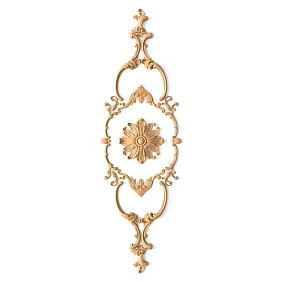

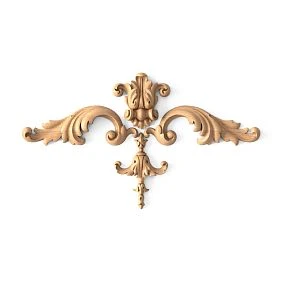
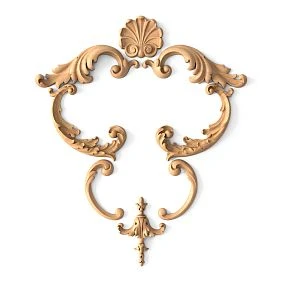
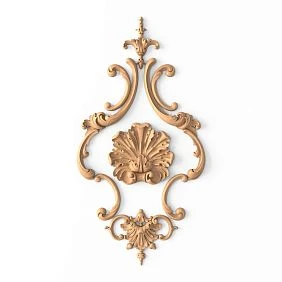
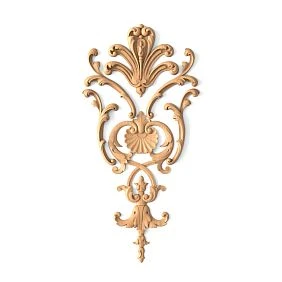
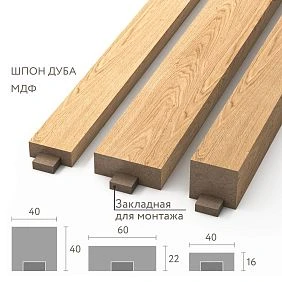
What sourcing of stucco and trim includes
A catalog search produces candidates. Next, you need to determine whether each of them suits the project and whether the required quantity can be obtained by a certain date. These questions are connected: a technically successful profile may require too long a wait, while one available from stock may change the junction with the door casing.
Interior sourcing ends with a verified decision on the product and the supply source. The item has a full SKU, size specification, material, confirmed order terms, and a clear link to the drawings. If an alternative is required, its approval is also part of this work.
For stucco, a sequence of checks is convenient: requirement, category, geometry, documentation, sample, delivery, commercial terms. At the next stage, the confirmed data from the previous one is used. An unknown parameter remains an open question rather than automatically being marked "suitable."
Indicative timelines and budget are clarified at the outset. An early request for general information helps filter out solutions that are unsuitable from the start. The final commercial offer is requested for a specific delivery scope.




Start with a brief for each project item
The phrase "we need a thin classic molding" leaves the supplier with too many options. It specifies neither the maximum projection, nor the length of continuous sections, nor the requirements for joints. The specifier will have to clarify all of this after the first quote, repeating the correspondence.
Write a short brief. For example, for a hypothetical item M-01 it might look like this:
| Field | Original requirement |
|---|---|
| Purpose | Straight wall frames in residential spaces |
| Material | Polyurethane for agreed paint finish |
| Profile Width | From 20 to 25 mm |
| Product projection | No more than 12 mm; the overall installation assembly is checked separately |
| Drawing | Smooth profile without repeating ornament |
| Finish | For straight sections |
| Layout details | Eight segments of 1900 mm and eight of 550 mm |
| Substitution eligibility | After cross-section verification and designer approval |
| Lead time | Delivery date to the site according to the schedule |
Attach a development drawing, the cross-section of the adjacent architrave, and an image of the desired profile character to the task. Specify the decision-maker and the approval deadline. Then the supplier receives the task, and the kit assembler gets a basis for comparing responses.
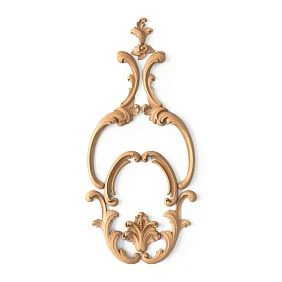
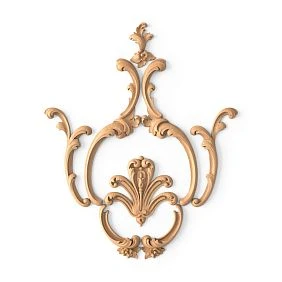
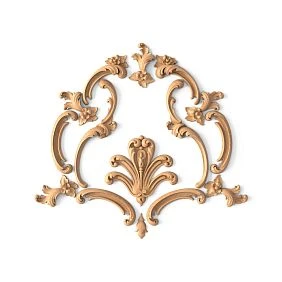
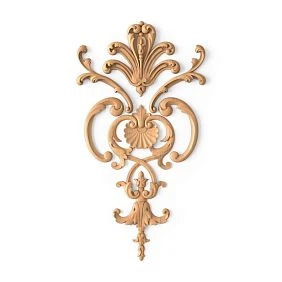
Our factory also produces:


Separate mandatory conditions from preferences under discussion
The maximum projection, the method of junction, the need for a flexible version, and the critical length of a single-piece part may be hard constraints. A minor difference in rounding, collection membership, or the pattern of a small overlay sometimes allows discussion.
However, there is no universal separation. If the customer has approved a specific ornament as the basis of the interior, its pattern becomes mandatory. If a maximum cost has been approved, the budget is also included in the constraints. The conditions are set by the design team, not by the catalog.
It is convenient to write directly in the task: "changing the cross-section requires re-approval of the assembly," "the floral motif may be replaced," "a joint on the 1900 mm section is not allowed." Such a note explains the consequences of replacement better than the general remark "alternatives are possible."
For each item, leave a short list of unanswered questions. For example: is the required finish available, has corner compatibility been confirmed, when is shipment possible. These questions have an owner and a resolution deadline. The mere presence of the product on the website does not close any of them.
Get Consultation
Moulding, overlay and rosette have different selection criteria
Linear profiles are compared by width, projection, cross-section and stock length. Additionally, the version for a straight or curved section is checked. The availability of a flexible version cannot be assumed from a photo or material; the permissible conditions for its use are clarified for each specific product.
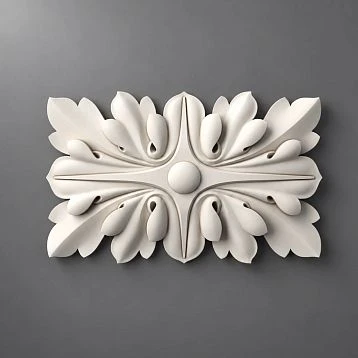
For a single overlay, two dimensions in the plane, the projection, the contour and the orientation are important. A symmetrical composition may require different left and right elements. In the section stucco decoration a similar pattern does not yet mean the same method of joining with the frame.
for ceiling rose the shape, dimensions, centre construction and composition are checked. A complex rosette may be assembled, so a single record of the outer size is not enough. The diameter is used only for a truly round shape.
A cornice requires separate attention to the height along the wall and the projection onto the ceiling. If all categories are reduced to a universal "size" field, some of the necessary parameters will inevitably be lost.
Linear trim is checked by cross-section, and ornament is also checked by repeat
With the same outer dimensions, a profile can hide different geometry. One moulding ends in a narrow step, another in a rounded bead. Next to an architrave or overlay, this difference determines whether the line continues or a noticeable gap appears.
The cross-section shows the mounting surface, the distribution of projections and the boundaries of the product. It is used to check the whole assembly, including the base. For example, the thickness of an additional panel will increase the final projection relative to the wall, although the size of the moulding itself remains the same.
for ornamental trim they add the length of the repeating pattern — the repeat, the direction of the motif and the placement of the cuts. The line "fits by width" does not answer the question of how the leaves or beads will meet in the corner.
Ask for a repeat diagram or clarification from the manufacturer if this parameter affects the layout. Areas with an ornament are calculated taking pattern matching into account. A simple calculation for plain strips does not always carry over to them unchanged.
The product length changes the quantity in the order
Let's return to the conditional item M-01: eight pieces of 1900 mm and eight of 550 mm. Their total length is 19.6 m. But the purchase is determined by how these pieces are placed on whole strips.
With a length of 2600 mm, a pair of 1900 + 550 mm can be placed on one strip. 150 mm remains for the specified process losses and the remainder. If the cutting map confirms that this allowance is sufficient, eight strips will be required — 20.8 m of material up to a separate reserve.
With a length of 2400 mm, such a pair no longer fits. Eight long pieces will take up eight strips, and eight short ones can be placed on two more — four 550 mm segments each. That gives ten strips, or 24 m. This is a calculation for a plain profile with the specified piece lengths and verified allowances.
Therefore Polyurethane trim are compared with reference to the project's cutting plan. A lower price per meter does not guarantee a lower order total. The reserve for damage or subsequent work is assigned separately, without passing off random offcuts as a full-fledged stock.
First consider serial products
A serial item number is usually easier to include in project documentation: it has a specific name, size version and product card. You can consistently check the characteristics, find related elements and request a repeat supply under the same designation.
Start with suitable categories, for example with of polyurethane moldingsthen narrow the selection with mandatory parameters. If the catalog contains a close solution, first assess its impact on the project. A small adjustment to the frame is sometimes more acceptable than developing a new profile.
Serial production, however, does not guarantee constant stock availability or an unchanging assortment. The possibility of reordering still requires clarification.
Custom manufacturing is considered when serial options do not meet essential requirements. For discussion, the cross-section, dimensions, material, quantity, and approval criteria are needed. Production feasibility, preparatory costs, a sample, and lead times are confirmed separately. The wording "make it like in the photo" does not allow obtaining a sufficiently definite quotation.
Verify the manufacturer and the seller as participants in the supply
Sourcing suppliers for interiors involves verifying specific work on the project. Find out who manufactures the product, who issues the quotation, and who answers technical questions. The manufacturer and the seller may be different organizations; for the specifier, it is important to understand the distribution of responsibility.
Queries such as "stucco manufacturer" or "stucco factory" help to start the search. An overview of stucco manufacturers can be used for initial navigation, but information about a specific supply is obtained from the selected counterparty.
Check observable things: whether the item code in the product card matches the manager's response, whether dimensions are provided, whether the material can be clarified, who confirms the quantity and date. For a phased project, add a question about reordering and preserving the selected finish.
A small control inquiry on one complex item is useful. The quality of the response will show whether the supplier is capable of discussing the assembly and constraints, rather than just sending a general price list. For further work, record the contact of the responsible person and the channel for transmitting agreed documents.
Collect the technical data before final approval
The minimum set of information is the item code, size variant, material and a direct link to the product page. For linear products, the commercial length and cross-section are added. If the product is composite, a list of the component parts is required.
В the STAVROS downloads section DWG drawings and three-dimensional models of polyurethane decor are provided. For the selected item, check that a suitable file is available and that it matches the product page. If the data differ, request clarification; you must not independently choose the "more convenient" size from two sources.
The drawing is used for geometry and junctions, the model for scale and composition. Check the file's units of measurement and the required version. Scaling the model to make a nice picture does not change the dimensions of the supplied product.
If the project requires additional information about the material, application or finish, request documents for the specific product. A general brand presentation does not confirm the characteristics of each item. The scope of verification is determined by the project conditions; assembling the same formal package for every case is pointless.
Separate the supplier list from the product candidate list
Three suppliers may each have several suitable profiles. This is a two-level choice: first the terms of working with the company are assessed, then the specific products. If the selection is made within the STAVROS catalogue, the main comparison focuses on item codes and versions.
For our conditional task, let us consider the actual dimensions of two mouldings:
| Candidate | Dimensions, mm | Preliminary result by overall dimensions |
|---|---|---|
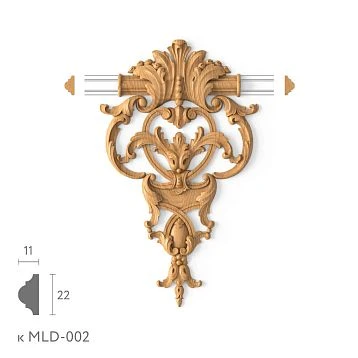
| MLDPU-002 | 22 × 11 × 2600 | Within the specified constraints |
| MLDPU-027, version 20 × 12 | 20 × 12 × 2600 | Within the specified constraints |
| MLDPU-027, version 14 × 9 | 14 × 9 × 2600 | Does not meet the minimum width of 20 mm |
The listed options specify polyurethane in their product cards. The first two rows pass only the preliminary size screening. Cross-section, compatibility, sample, and delivery terms are not confirmed by this comparison. If a size falls exactly on the permissible limit, deviations and the required clearance in the installation assembly are additionally clarified.
The table shows why a single item number is sometimes insufficient: MLDPU-027 is presented in different dimensions. The full designation of the selected version must be retained throughout all correspondence and procurement documentation.
The sample should answer the remaining questions
After technical screening, it is usually sufficient to compare one or two of the most suitable options. Ordering physical samples of all the profiles found is time-inefficient: some of them can already be excluded based on the drawings.
In the section samples and catalogs of polyurethane decor the available formats for reviewing the products are clarified. The possibility of obtaining an individual item, the contents of the set, and the terms of provision are checked in advance.
The sample is used to evaluate the surface, the nature of the texture, and the result of the intended finish. For a complex joint, a trial fragment of the assembly is needed. A comparison in hand will not show how the profile will meet the casing after installation on the panel.
Record exactly what has been agreed: geometry, appearance, coating, or a combination thereof. Sign the sample with the full item number and size, and keep the inspection date. A successful sample confirms the verified properties of a specific item, but does not prove the availability of the entire batch or the supplier's readiness to meet the deadline.
Check the delivery time against the project schedule
The label "in stock" does not indicate whether the item will cover your order or whether it can be shipped by the required method. Confirm the quantity, location, reservation availability, ready-to-ship date, and expected arrival at the project site.
You can use four working statuses for the internal table. These are conventions, not an industry standard.
| Status | Confirmed status | Next action |
|---|---|---|
| P0 | The required quantity is confirmed for shipment | Record the reservation and delivery terms |
| P1 | A transfer or expected delivery with an agreed date is required | Check the time buffer before installation |
| P2 | Production is required; an agreed schedule has been received | Account for preparation, manufacturing, and delivery |
| P3 | Date not confirmed or later than required | Resolve the replacement or schedule change |
The statuses relate only to delivery. P0 does not mean the product has been technically approved. P2 alone does not make the item unsuitable: production may still fit the project calendar.
Work backward from the start date of the relevant work. In addition to transportation, you will need acceptance, possible finishing, and time to resolve any identified non-conformities. The guideline on the website does not replace confirmation for a specific order volume.
Discuss the reorder before the first purchase
In phased renovation, one profile may be needed first in the living room, then in the hallway and bedrooms. The timing of the second delivery becomes part of the decision already when choosing the first. Especially if the molding connects several rooms in one continuous line.
Ask whether the size and finish can be repeated, how a previously ordered item is identified, whether there are quantity restrictions, and what lead times should be allowed for. Clarify the procedure for notification of a change in the item code or discontinuation of the item. Do not turn a preliminary answer into a promise of indefinite availability.
For future matching, save the card of the selected option, the agreed cross-section, the sample, and the delivery information. For painted products or noticeable textures, check separately that subsequent batches match.
The reserve is also related to reordering. One additional full-length strip can cover a damaged long post, whereas several short offcuts cannot. The reserve size is set based on the cutting plan and the criticality of the sections, not as an identical percentage for each item.
The backup alternative undergoes a full verification
Selecting alternatives by specification requires re-matching dimensions, cross-section, length and joints. The wording "a similar profile of the same material" is insufficient if angles, frames and decorative inserts depend on it.
For example, replacing a width of 22 mm with 20 mm while keeping the outer frame size will increase its inner size by 4 mm in each corresponding direction. The change itself is small, but the fit with the overlay may turn out different. A compatible Decor for Molding are checked again.
The alternative must have its own item code, size, quantity calculation and approval status. Availability is clarified separately: a second profile from the same source may depend on the same production timelines and not reduce the wait.
A backup option is especially useful for critical repeat items. For a unique central element, adjusting the schedule sometimes becomes a reasonable solution. Permission for the replacement and its consequences are recorded before placing the order.
Compare the full cost of the set
The price of a strip becomes useful for comparison after technical suitability has been verified. Within the allowable budget, they count the number of whole products, the required angles and overlays, the reserve, packaging, transport and other agreed expenses.
In our example, the 2600 mm option requires eight strips, while the 2400 mm option requires ten. If the strip prices are denoted as P1 and P2, the cost of the main profile will be 8 × P1 and 10 × P2 respectively. Then comparable expenses and a separately calculated reserve are added. The cheapest meter does not determine the winner in advance.
Bring the offers to a single basis: the same finish, volume, trim, set composition, delivery location and method of stating taxes. Otherwise, the difference in totals may be explained by one company including delivery while the other has not yet calculated it.
Check the consequences of a profile change as well: whether new trims will be needed, whether the layout must be revised, and whether additional finishing is required. Sourcing materials for an interior takes into account the cost of implementing the chosen solution, not just the figure next to the product.
How to work with a specification, a photograph, and a drawing
When selecting decor from a specification, the project code becomes the starting unit: M-01, K-01, R-01. Each line is assigned a specific product and finish. If the specification already contains an item number, first determine whether it must be purchased or whether a substitute may be sought.
A photograph provides a less definite brief. It is broken down into element types, proportions are assessed, and requirements are formulated for your own space. Unknown depth or material cannot be carried into the purchasing list as established fact.
A section drawing helps select linear trim more accurately if its scale, units, and origin are clear. A file without dimension markings, or a schematic line on a general elevation, does not replace the technical data of the product.
All three paths lead to the same result: a verified purchasing line. What differs is the amount of preliminary clarification. The less data there is in the source, the earlier the procurement specialist needs to involve the designer in determining permissible changes, so that the supplier does not make design decisions in place of the team.
What to include in a request for a commercial proposal
Once the technical choice is made, prepare a single list. For each item, the supplier needs:
- the project designation, the full item number, and a link to the product page;
- the size variant, material, finish, and surface treatment;
- purchase quantity with unit of measurement;
- separate indication of reserve and kit composition;
- address or agreed delivery terms;
- required date of arrival at the site;
- procedure for proposing and approving analogues;
- questions on packaging, documents and reorder terms.
For a conditional example, after checking the cutting plan, the line may contain: “M-01; MLDPU-002; 22 × 11 × 2600 mm; polyurethane; eight strips per cutting plan and one spare, nine pieces in total”. This is an illustration of the record format, not an approved order for a real site.
The calculated length of 19.6 m can be kept for reference. It is not equal to the nine strips being purchased with a total length of 23.4 m. This difference must be shown explicitly so that the reserve is not added again.
If mouldings need to be purchased according to the specification, attach its current version and ask that the project codes be retained in the response. For alternative offers, allocate separate lines: a replacement must not imperceptibly take the place of the approved product.
The commercial proposal is checked against the selected finish
First match the item codes and sizes, then the quantity, units, and scope of supply. Only after that should you check the total amount. A mistake between the MLDPU-027 variants with widths of 14 and 20 mm cannot be fixed by a favorable price.
Check whether the set has been counted at the same time as the parts included in it, whether the required sides of the overlays are accounted for, and whether the strip length matches the cutting chart. Clarify what exactly the lead time means: manufacturing, readiness for shipment, or arrival on site.
Before placing an order, the chain must match: the approved item in the project, the request line, the quotation line, and the order line. If the supplier has changed the variant or terms, the change is returned for the appropriate review.
Record the validity period of the quotation and the conditions on which the confirmed date depends. Availability information received earlier may need to be updated if the purchasing decision was delayed. The correspondence about the product and the agreed order must describe the same delivery.
Save the decision in the configuration register
The working register links the project, product, and supplier. It is more useful than a folder of scattered links because it shows what has already been decided and which issue is blocking the purchase.
Below is an illustrative example of an intermediate state, without any assertion that the products are actually ready for delivery.
| Project code | Candidate and variant | Source | Decision status |
|---|---|---|---|
| M-01 | MLDPU-002, 22 × 11 × 2600 mm | STAVROS | Dimensions match the specification; other checks are open |
| M-01, possible replacement | MLDPU-027, 20 × 12 × 2600 mm | STAVROS | Cross-section comparison and coordination of related parts required |
| K-01 | Cornice, article not selected | To be confirmed | Permissible overhang not determined |
| P-01 | Ceiling rose, article not selected | To be confirmed | Dimensions and layout verification required |
In the final version, add the purchase quantity, links to supporting materials, offer details, decision date and responsible person. The main option and the approved replacement remain distinguishable.
A snapshot of the table before ordering is saved as the approved revision. Any further change to the profile must update the related documents: the layout, parts list, quantity and supplier offer. Otherwise, different versions of the same decision may reach the construction site and procurement.
Mistakes that turn the search into endless correspondence
Work is most often delayed by gaps in the source data: no maximum protrusion, the length of the continuous section is not determined, and it is unclear who approves the replacement. The manager suggests a product, the designer rejects it, and the specifier starts the search over.
Another source of errors is premature "verified" marks. The item has been found, but the cross-section has not been studied. The sample is appealing, but the required volume has not been confirmed. The price has been obtained, but it was calculated for a different size variant. Each of these situations requires its own next action.
Do not request dozens of samples before technical selection, do not compare the cost of supplies that differ in composition, and do not automatically assign a similar product as a replacement. Pay particular attention to units: linear meters of layout, pieces of strips, and the number of sets describe different quantities.
Before handing over the order, it is useful to check one randomly selected item from drawing to commercial proposal. If the link can only be reconstructed from the words of the order assembler, the documentation is not yet sufficient for the other project participants to work independently.
When an item is ready for purchasing
The search is complete when the product has been approved technically and visually, the quantity has been calculated, the supplier has been identified, the commercial proposal has been checked, and the delivery terms and timelines have been confirmed. Mandatory questions are closed, and permissible substitutions are described separately.
To work with STAVROS, you can use the information for designers and architects, having prepared a list of items and project materials. The more precise the brief, the more substantive the discussion of specific products and completeness.
If you need to buy polyurethane stucco, buy polyurethane moldings, or order trim profiles according to a specification, start with the relevant categories STAVROS catalog. Then run the selected SKUs through the checks required for your project.
Well-executed sourcing of interior decor is evident at the moment the project is handed over to purchasing: the supplier understands the composition of the order, the designer recognizes the approved solution, and the contractor receives the products specified in the working drawings. For this, every beautiful line in the interior must have an exact SKU, quantity, and a confirmed route to the site.