Article Contents:
- What makes up the price of interior decor
- What affects the price of polyurethane stucco
- Parameters affecting the cost
- What to buy with moldings: installation costs
- What affects the price of wooden decor
- Wood species
- Baluster length
- Finish Coating
- Furniture elements: how to calculate the cost
- Furniture Legs and Supports
- Furniture handles
- How to calculate the number of moldings for a specific room
- Step 1: Measuring the perimeter
- Step 2: Subtracting openings
- Step 3: Calculating cornice and baseboard
- Step 4: Calculating molding frames
- Step 5: Separate calculation of piece elements
- Step 6: Final basket for one room (example)
- How to calculate the number of wooden slats
- Vertical slats on the wall
- Horizontal slats on furniture facade
- Budget scenarios: from minimum to premium
- Scenario 1: Minimum set for one wall
- Scenario 2: Complete Living Room Set
- Scenario 3: Furniture Decor Set
- Scenario 4: Set with Wooden Slats
- Scenario 5: Premium Set
- Polyurethane Stucco or Wood Decor: Which is Cheaper and When to Choose What
- When Polyurethane is More Economical
- When Wood is Justifiably More Expensive
- Combined approach
- What You Shouldn't Skimp on When Buying Decor
- Adhesive for polyurethane decor
- Sealant
- Primer
- Material Reserve
- Marking
- Complete table for calculating the interior decor budget
- Mistakes when calculating the decor budget
- Only count the price of moldings
- Forget about corners
- Buy decor without a scheme
- Mix expensive decor with cheap installation
- Don't account for painting
- Count furniture decor separately from interior decor
- How to assemble a decor cart correctly: step-by-step algorithm
- FAQ: questions about the cost and calculation of interior decor
- About the Company STAVROS
Here's an honest conversation that few people have before making a purchase: the cost of interior decor is not the price of a single molding. It's the sum of dozens of items, each of which seems small, but ultimately adds up to a budget that was either planned in advance or becomes an unpleasant surprise.
A person who is looking for how much it costs Polyurethane moldings, has usually already decided to decorate — the living room, bedroom, hallway, cabinets, facades. They want to understand the scale of investment before reaching the checkout. And this is the right approach: the decor cart is assembled not in the store, but at the work desk, with a tape measure and a room layout.
This article is a practical tool for such a calculation. Here we will break down what the final cost consists of polyurethane decor and wooden elements, how to calculate the quantity, what to buy together, and what you absolutely cannot skimp on.
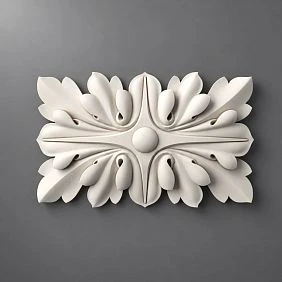
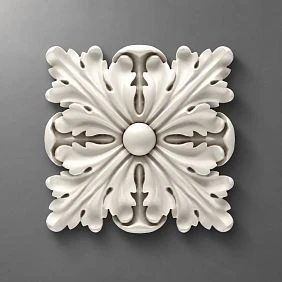
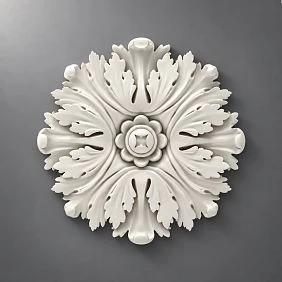
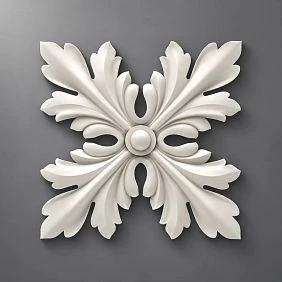
What makes up the cost of interior decor
Most people, when calculating the budget for decor, only count the linear meters of moldings. This is a fundamental mistake. The real cost of decorative finishing consists of seven groups of expenses.
The first group is the main decorative elements:
-
Moldings made of polyurethane — linear profiles;
-
ceiling cornice;
-
baseboard;
-
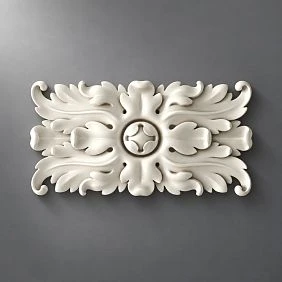
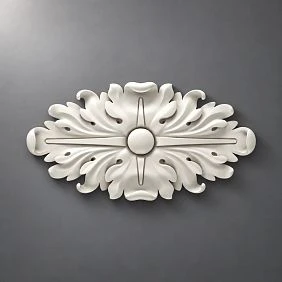
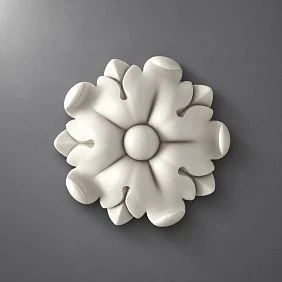
Decorative stucco — overlays, sockets, medallions;
-
Polyurethane wall decor — frame panels;
-
Decor for Molding — inserts in frame intersections.
Second group — wooden decor:
-
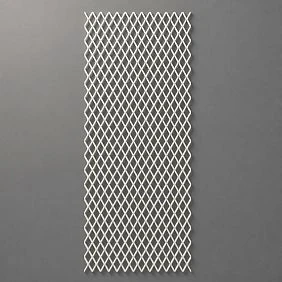
Wooden plank — for walls, ceilings, furniture facades;
-
Wooden decoration — overlays, applied elements;
-
decor for furniture from solid wood — carved and milled overlays.
Third group — furniture elements:
-
Furniture Handles wooden;
-
Polyurethane appliqués for furniture facades.
The fourth group is mounting materials:
-
mounting adhesive for polyurethane;
-
acrylic sealant;
-
adhesive primer;
-
fasteners for wooden elements.
The fifth group is finishing materials:
-
primer-insulator;
-
paint for moldings and facades;
-
varnish or oil for wood.
The sixth group is reserve:
-
10–15% for trimming, breakage, marking errors.
The seventh group is delivery:
-
depends on the region and order volume.
Only by considering all seven groups will you get the real cost of interior decor — without unpleasant "and we didn't account for this."




What affects the price of polyurethane stucco
Polyurethane moldings — the most affordable and technologically advanced type of decor for walls, ceilings, and furniture. But "polyurethane" is a broad category, and the price within it varies significantly.
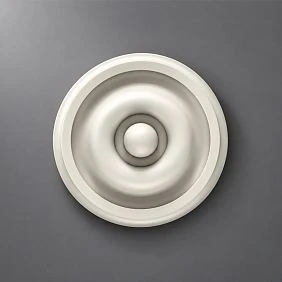
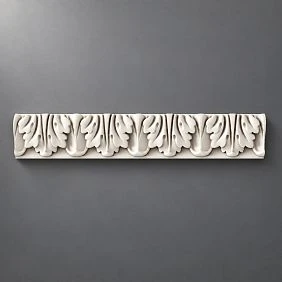
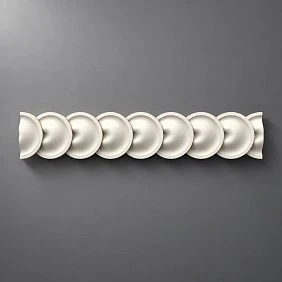
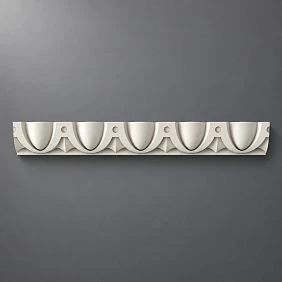
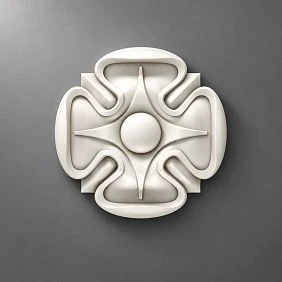
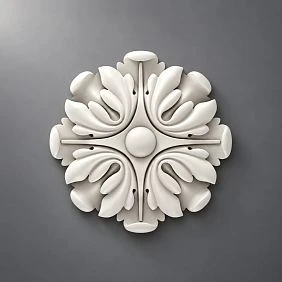
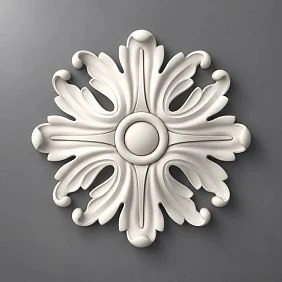
Our factory also produces:
Parameters affecting cost
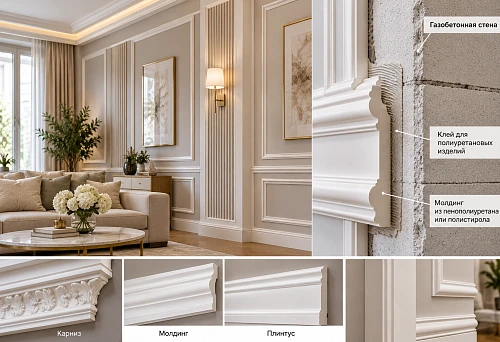
Profile width. A molding 15 mm wide and a molding 80 mm wide are fundamentally different price points. A wide profile requires more material, more complex tooling, and a longer production cycle. For frame panels on walls — molding width 20–35 mm. For cornices — 80–150 mm. For baseboards — 60–100 mm.
Relief height. A flat profile with a chamfer — minimum price. A profile with developed relief — with a heel, fillet, shelf, ornament — is more expensive. This is due to the complexity of the mold and the amount of material.
Presence of ornament. A smooth profile is cheaper than a profile with an ornament. An ornamental molding — a linear stucco element with a repeating pattern along its length — requires more complex technology and costs more.
Plank length. The standard length of a polyurethane molding is 2 m. When calculating, you need to consider that when cutting corners, waste remains from each piece — especially on short sections and in corners.
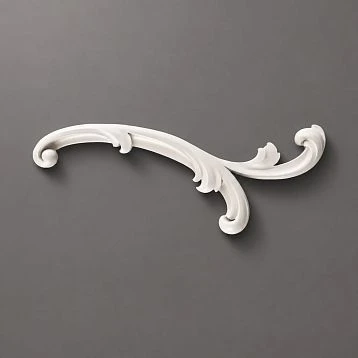
Element type. Decorative stucco — overlays and rosettes — calculated per piece, not in linear meters. Ceiling rosette, corner insert, central medallion — each item separately.
Get Consultation
What to buy with moldings: installation costs
When calculating the cost of polyurethane moldings be sure to add to cart:
-
Construction adhesive — about 1 tube per 5–7 linear meters of profile. More on selection in the article what to glue polyurethane molding with.
-
Acrylic sealant — for sealing joints and junctions. 1 tube per 8–10 linear meters.
-
Adhesion primer — for polyurethane before painting. Consumption based on surface area.
-
Paint — furniture enamel or acrylic paint. Consumption indicated on the can per area.
What affects the price of wooden decor
Wooden decoration — this is a different pricing logic. Here the cost is influenced by wood species, moisture content, profile complexity, and finish.
Tree species
Softwood species (pine, spruce) — most affordable. Suitable for painting, but with open varnish the texture looks less expressive. Birch — mid-price range, good for painting. Beech, ash — more expensive, with more expressive texture, well-suited for tinting. Oak — the most expensive among domestic species, maximum durability and expressiveness.
for furniture decor — beech or ash when stained, and oak when open-pore lacquered.
Rail length
Wooden plank sold by linear meter. Calculation — wall perimeter considering the height of frame placement, plus 10–15% reserve. Wooden molding requires more reserve than polyurethane: wood is heterogeneous in structure, and sometimes you need to select a section without knots or undesirable inclusions.
Finishing coating
Wooden elements require a finish — lacquer, oil, wax, or paint. Each option has its own cost:
-
alkyd or polyurethane lacquer — affordable, durable;
-
wood oil — more expensive than lacquer, but creates a "living" surface, easy to restore;
-
wood paint — requires a primer-sealer and two coats of finish.
The finish adds 15–30% to the cost of the wooden decor itself.
Furniture elements: how to calculate the cost
Furniture legs and supports
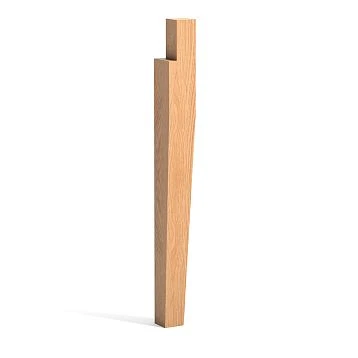
Furniture legs — piece goods. Calculation is simple: number of legs × unit price. But there are details:
-
For a standard sofa — 4–6 legs. For a chest of drawers — 4. For a bed — 4–6 (depending on the design).
-
furniture legs can be of different heights: 30 mm, 50 mm, 80 mm, 100 mm, 150 mm. Height affects the price: taller supports require more material.
-
Wood type: beech, oak, pine. Oak is more expensive, beech is medium, pine is more affordable.
Furniture legs are purchased as a set — 4 pieces of the same model and height. Mixing different batches results in a difference in varnish shade or wood color.
Furniture handles
Furniture Handles wooden ones are piece goods. Calculation: number of fronts and drawers × number of handles for each. Standard: one handle per front. On wide fronts (600 mm and wider), two handles are sometimes installed.
Add fasteners: each handle is attached with a self-tapping screw or bolt. Not all handles come with fasteners — check when purchasing.
How to calculate the number of moldings for a specific room
This is the central practical question. Step-by-step calculation algorithm.
Step 1: Measuring the perimeter
Measure the perimeter of the room along the walls. Example: room 4 × 5 m → perimeter 18 linear m.
Step 2: Subtracting openings
Subtract the width of doorways from the perimeter. Example: two doors of 0.9 m each → 18 − 1.8 = 16.2 linear m of base length.
Step 3: Calculation of cornice and baseboard
The cornice runs along the entire ceiling perimeter: 18 linear m + 10% reserve = 20 linear m. The baseboard runs along the floor perimeter: similarly.
Step 4: Calculation of molding frames
If frame panels are planned on the walls, calculate the perimeter of each frame. For example: 5 frames measuring 600 × 900 mm → perimeter of one frame (0.6 + 0.9) × 2 = 3.0 linear m. 5 frames × 3.0 = 15 linear m. Plus a 15% reserve = 17.25 linear m.
Step 5: Separate calculation of piece elements
Ceiling rosettes, corner inserts, decorative overlays are counted individually. Corner insert — for each internal corner of the frame: 4 corners × 5 frames = 20 pieces.
Step 6: Final basket for one room (example)
| Element | Quantity | Unit of measurement |
|---|---|---|
| Ceiling cornice | 20 | linear m |
| Baseboard | 20 | linear m |
| Molding for frames | 18 | linear m |
| Corner inserts | 20 | pcs. |
| Ceiling rosette | 1 | pcs. |
| Mounting adhesive | 5 | tubes |
| Sealant | 3 | tube |
| Primer | 1 | jar |
| Paint | 2 | jars |
This is a real living room basket for 20 sq. m with frame panels on two long walls.
How to calculate the number of wooden slats
Wooden plank used for vertical and horizontal elements on walls and furniture facades. The calculation depends on the layout scheme.
Vertical slats on the wall
Step between slats: 100–150 mm for a dense rhythm, 200–250 mm for a more airy one. Example: wall 4 m, step 150 mm → 4000 ÷ 150 = 27 slats. Wall height 2.7 m → each slat 2.7 m. Total: 27 × 2.7 = 72.9 linear m + 10% reserve = 80 linear m.
Horizontal slats on furniture facade
For a cabinet with facades 450 × 750 mm with horizontal slats spaced 60 mm apart: 750 ÷ 60 = 12 slats per facade. Length of each slat 450 mm. Total per facade: 12 × 0.45 = 5.4 linear m. For a cabinet with 8 facades: 43.2 linear m + reserve.
Budget scenarios: from minimum to premium
Let's consider five real decorating scenarios with an approximate basket composition.
Scenario 1: Minimum set for one wall
Task: decorate one accent wall in the living room with frame moldings.
Cart contents:
-
Moldings made of polyurethane — 12–15 linear m;
-
corner inserts — 8–12 pcs.;
-
mounting adhesive — 2 tubes;
-
sealant — 1 tube;
-
primer — 0.5 L;
-
paint — 0.5 L.
This is the entry-level decor that provides a noticeable effect with minimal investment.
Scenario 2: Full set for the living room
Task: cornice + baseboard + frame panels on two walls + ceiling rosette.
Cart contents:
-
ceiling cornice — 20 linear m;
-
baseboard — 20 linear m;
-
Moldings made of polyurethane for frames — 18–22 linear m;
-
Decorative stucco — corner inserts, socket — as per calculation;
-
glue, sealant, primer, paint.
Scenario 3: Furniture decor kit
Task: update the dresser — replace legs, add handles, decorate fronts with moldings.
Cart contents:
-
Furniture legs — 4 pcs. of selected height;
-
Furniture Handles — according to the number of drawers;
-
Polyurethane appliqués for fronts;
-
moldings for frame panels — as per facade calculation;
-
glue, primer, paint.
Scenario 4: Kit with wooden slats
Task: decorate a wall in the bedroom with vertical wooden slats.
Cart contents:
-
Wooden plank — according to the calculation of step and wall height;
-
fasteners — self-tapping screws or mounting adhesive;
-
wood primer;
-
varnish or paint;
-
marking tool.
Wooden slats on the wall create a three-dimensional structure that cannot be replicated with polyurethane. This is a different tactile and visual quality — especially when touched and under side lighting.
Scenario 5: Premium Kit
Task: complete decoration of the living room — stucco molding on the ceiling and walls, wooden slats, furniture with new legs and handles.
Cart contents:
-
Polyurethane moldings — cornice, baseboard, molding for frames, rosette, overlays;
-
Wall Decor — frame panels;
-
Decor for Molding — corner and center inserts;
-
Wooden plank — on an accent wall or niche;
-
Wooden decoration — overlay elements for furniture;
-
Furniture legs и Furniture Handles — for updating furniture;
-
a complete set of mounting and finishing materials.
Polyurethane stucco or wooden decor: which is cheaper and when to choose what
This question arises for most people who are assembling a decor basket for the first time. The answer is not straightforward, as each material has its own area of application.
When polyurethane is more economical
For long linear elements — cornice, baseboard, frame moldings — polyurethane decor it is more advantageous than wood. Polyurethane is easier to cut, does not require complex pre-installation treatment, does not deform from humidity, and does not require expensive finishing with varnish or oil.
For decorative elements without tactile contact — overlays, medallions, ceiling rosettes — polyurethane is practically unrivaled in terms of price and result.
When wood is reasonably more expensive
For elements with constant tactile contact — handles, legs, wall slats at hand level — wood creates a qualitatively different sensation. The warm, living surface of wood under your hand is something that polyurethane will never reproduce, no matter how carefully it is painted.
For an open texture — varnish or oil on wood — wooden decor creates a natural expressiveness unattainable for synthetic materials.
Combined approach
The optimal and professional approach: polyurethane for the ceiling, cornices, frame panels on walls; wood for slats, furniture elements, handles, legs, tactile details. This is both economically justified and stylistically correct.
What you should not save on when buying decor
There are several items in the decor basket where saving directly affects the result.
Adhesive for polyurethane decor
Cheap or incompatible glue causes degradation of the adhesive joint after 6–12 months: the molding begins to peel off, especially at corners. Correct installing polyurethane molding starts with choosing the right glue — and this is detailed in the article what to glue polyurethane molding with.
Sealant
Sealant closes the joints between the molding and the wall, between two planks in a corner, at the points where the cornice meets the ceiling. Poor-quality sealant cracks when drying or does not adhere to polyurethane — the joints open up. Use an acrylic sealant compatible with polyurethane.
Primer
Without primer, paint on polyurethane adheres worse and may peel upon mechanical contact. For polyurethane — adhesion primer. For MDF facades with wooden handles — primer-sealer. These are different products and must not be confused.
Material reserve
A 10–15% margin is not a luxury, but insurance. Molding is cut with waste at every corner. Wooden slats are rejected for defects. Overlays may break during installation. Material margin must be included in the budget from the start.
Marking
This is not a product item, but financially significant: careless marking = overspending on rework materials. Invest in time: proper marking with a level, tape measure, and pencil saves money on materials.
Complete interior decor budget calculation table
| Element | Unit of measurement | What affects the price | Stock |
|---|---|---|---|
| PU cornice | linear m | Width, relief height | +10% |
| PU baseboard | linear m | Width, profile | +10% |
| Moldings for frames | linear m | Width, relief, ornament | +15% |
| Decorative overlays | pcs. | Size, relief | +5% |
| Wooden batten | linear m | Wood species, cross-section, length | +15% |
| Furniture decor | pcs. | Wood species, size, finish | +5% |
| Furniture legs | pcs. | Height, wood species, finish | kit |
| Furniture handles | pcs. | Type, length, wood species | +1–2 pcs. |
| Mounting adhesive | tube | Consumption ~1 tube/5–7 linear m | +1 tube |
| Sealant | Tube | Consumption ~1 tube/8–10 linear m | +1 tube |
| Primer | Liter | By surface area | +20% |
| Paint | Liter | By area considering 2 layers | +15% |
Errors when calculating the decor budget
Count only the price of moldings
Moldings account for 40–60% of the final cost of decorative finishing. The rest is installation materials, finish, reserve, delivery. Those who count only moldings get a bill 40–60% higher than expected.
Forget about corners
Each internal corner requires cutting two planks at 45°. Each cut wastes 50–150 mm of material. A 4 × 5 m room = 8 internal corners. 8 corners × 100 mm waste = 800 mm. That's almost one cornice plank. Forgetting about corners = material shortage at the end of installation.
Buying decor without a layout
A molding placement layout is not a design document, but a working tool. Without a layout, you cannot accurately calculate the quantity. Without an accurate quantity, you either have a shortage or overspending.
Mixing expensive decor with cheap installation
Expensive Polyurethane moldings, glued with cheap incompatible adhesive, is money down the drain. The quality of installation materials must match the quality of decorative ones.
Not accounting for painting
Many think decor is "buy and done." But moldings need priming and painting. That's a separate budget: primer + two coats of paint. For a large room, this is a significant expense item.
Counting furniture decor separately from interior decor
Furniture Legs, Handles и decor for furniture should be in the same budget plan as wall and ceiling decor. They affect the overall style of the room and must be stylistically coordinated. A separate calculation creates a risk of uncoordinated purchases.
How to assemble a decor basket correctly: a step-by-step algorithm
Step 1. Draw or photograph all surfaces that need to be decorated: ceiling, walls, furniture.
Step 2. Determine the application zones: where polyurethane, where wood, where furniture elements.
Step 3. Measure all parameters: wall perimeter, section lengths, number of facades, number of corners.
Step 4. Calculate the quantity of each item using the methodology (perimeter + frames + openings + corners) with a margin.
Step 5. Add installation materials to each linear item: glue, sealant, primer.
Step 6. Add finishing materials: insulating primer, paint or varnish.
Step 7. The final list is your basket. Compare with the budget. If necessary, adjust by starting with reducing the number of frames or choosing a narrower profile.
FAQ: questions about the cost and calculation of interior decor
How much does polyurethane molding cost?
Cost moldings from polyurethane depends on the type of element, profile width, relief, and presence of ornament. For an accurate calculation, measure the room perimeter, number of frames, section lengths, and add to the cost of moldings the glue, sealant, primer, and paint.
Which is more expensive: wooden decor or polyurethane molding?
For linear elements (cornice, baseboard, moldings), polyurethane is usually more affordable. Wooden decor justifies its higher price where tactile contact is important: rails, Handles, Legs, overlay elements with open texture.
What to buy together with moldings?
Glue, sealant, primer, paint, spare profile and corner inserts. More details in the article what to glue polyurethane molding with.
How to calculate moldings for a room?
Measure the perimeter, subtract openings, calculate the length of each frame, multiply by the number of frames, add 10–15% spare. Separately calculate the cornice, baseboard, and piece elements.
How not to overpay for interior decor?
Create a diagram before purchasing, calculate the exact quantity, do not buy 'with a large margin' without calculation. Choose polyurethane where wood is excessive, and vice versa. Do not skimp on glue and primer.
What spare moldings should I take?
10% for straight walls without frames, 15% with frame panels, 20% with complex wall configurations or a large number of corners.
Do polyurethane moldings need to be painted?
Yes. For a monolithic result and durability — priming and two coats of paint. More details on the technology in the article installing polyurethane molding.
About the company STAVROS
The entire range for calculating and implementing a budget for interior decor — Polyurethane moldings, Moldings made of polyurethane, Decorative stucco, Wall Decor, Wooden plank, to buy, which will allow you to transform your furniture using carved wooden elements. You can use the C-003-3 decor set to decorate furniture, walls, doors, or any other surface. The C-003-3 decor set is made of oak or beech, known for their strength, durability, and beauty. You can buy the C-003-3 decor set at the Stavros decor store, which specializes in producing and selling decorative elements and hardware for furniture and interiors. At the Stavros decor store, you will find a wide selection of decor sets of various shapes, sizes, and styles. You can choose, Furniture legs и Furniture Handles — is manufactured and supplied by STAVROS.
STAVROS is a Russian manufacturer of natural wood and polyurethane products for architectural and interior decor. Founded in St. Petersburg in 2002. Completed projects: the Hermitage, the Constantine Palace, the Alexander Palace, the Trinity Cathedral. Profile precision, material compatibility, and dimensional stability are the standard developed on restoration projects and applied to every product in the catalog.
Order the entire range for interior decor, get help with quantity calculation and cart assembly — on the STAVROS website. Contact us to confirm shipping to your destination., order from one unit.