Article Contents:
- Product availability and project readiness are different things
- AVAILABLE TODAY
- AVAILABLE FOR PROJECT
- P1 — CRITICAL PROCUREMENT
- P2 — CONTROLLED
- P3 — STANDARD
- 1. Lead Time
- 2. Replaceability
- 3. Volume Risk
- 4. Repeatability
- AVAILABLE
- RESERVED
- ORDERED
- GREEN
- AMBER
- RED
- What matters more: the installation date or the lead time?
- Can the skirting board be ordered later than the moulding?
- What does P1 mean?
- Does "material in stock" mean it can be left for later?
- What should be done if an item is already RED?
- Should sample approval be taken into account?
- What matters more: the SKU cost or the impact on the schedule?
- Should the Latest Order Date be recalculated?

In one project, three items have been approved: P-01 — a standard wooden skirting board, needed on site on November 15; M-03 — a complex moulding, needed on November 20; K-02 — a cornice with an additional finish, needed on November 25.
If you look only at the installation calendar, it seems that P-01 should be ordered first. But the procurement sequence may turn out to be the reverse. For P-01, availability and a short order cycle are confirmed. M-03 requires a sample and confirmation of a large volume. K-02 undergoes an additional finish. Therefore, the actual order may be:
K-02 → M-03 → P-01
although on site the products will be needed in a different sequence.
This is precisely the purpose of the article about the construction materials market: not to guess shortages and prices for the next year, but to learn how to determine which already approved SKU becomes a risk to the project schedule first.
Working system:
SKU → REQUIRED ON SITE → LEAD TIME → FINISH → LOGISTICS → RECEIVING BUFFER → LATEST ORDER DATE → PRIORITY → TRAFFIC LIGHT.
Main principle:
you need to order not “as early as possible,” but no later than the last safe date for a specific item.
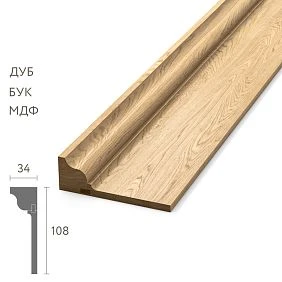
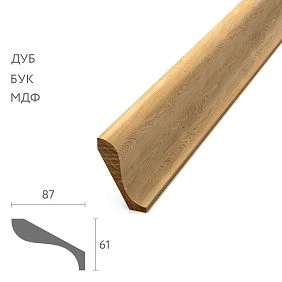
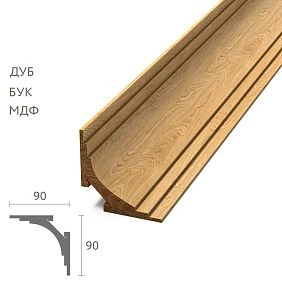
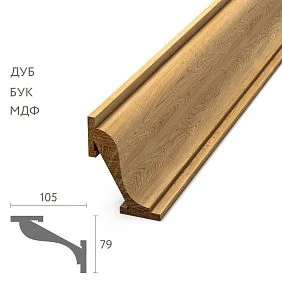
Current skirting boards, mouldings, and cornices can be checked in the section STAVROS wooden molding, where the assortment is divided by product type, material, and availability.
Product availability and readiness for a project are different things
The phrase “the product is available” by itself tells the buyer of a large project almost nothing.
Need to clarify:
- whether the entire required volume is available;
- whether it is in the required material;
- whether it is in the required length;
- whether it is in the required configuration;
- whether the required finish is available;
- whether the same option can be repeated in the next batch;
- when it can actually be handed over to logistics.
Therefore, it is useful to distinguish:




AVAILABLE TODAY
What is available now.
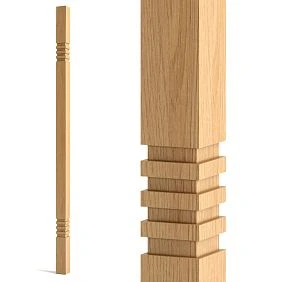
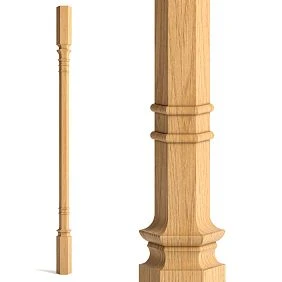
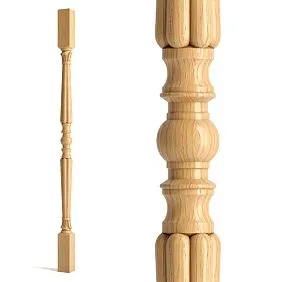
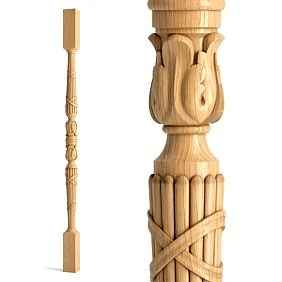
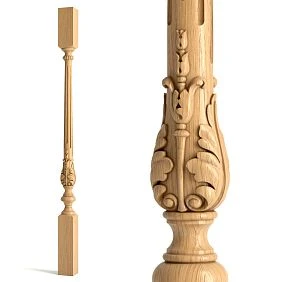
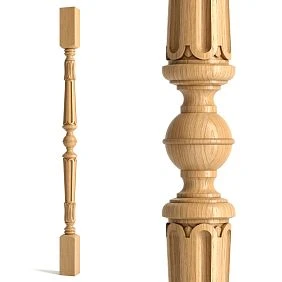
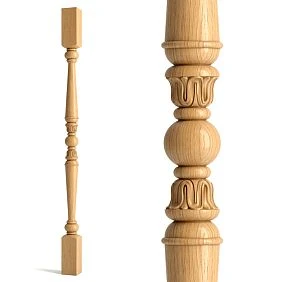
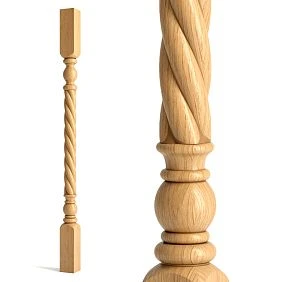
Our factory also produces:
AVAILABLE FOR PROJECT
What has been confirmed specifically for the requirements of a particular project.
These statuses may or may not match.
Get Consultation
Not all specification items have the same procurement risk
For management purposes, it is convenient to introduce three classes.
P1 — CRITICAL PROCUREMENT
Long lead time, complex replacement, high dependency on the sample or finish.
P2 — CONTROLLED
Medium risk: the timeline is manageable but requires regular confirmation.
P3 — STANDARD
A relatively simple repeatable order with a short and clear cycle.
This is not a quality assessment of the product. P1 does not mean "better." P3 does not mean "cheaper." It is only a procurement management priority.
Procurement Lead-Time Matrix
The main project table might look like this:
| Code | SKU | Availability | Production | Finish | Replacement | Need on site | Priority | | --- | --- | --- | --- | --- | --- | --- | --- | | P-01 | PLT-A | being confirmed | short cycle | no | options available | 15.11 | P3 | | M-03 | MLD-B | partial | required | no | difficult | 20.11 | P1 | | K-02 | KZ-C | no | required | yes | difficult | 25.11 | P1 |
Here, the dates and timelines are an example of structure, not universal STAVROS timelines.
The point of the table is different: the installation date does not by itself determine procurement priority.
Why a standard wooden skirting board can sometimes be ordered later than moulding
If the skirting board is a standard series item, the profile is approved, the required material is confirmed, the volume is realistic, a repeat order is possible, and there is no complex finish, its procurement risk may be lower than that of moulding that is installed later.
But this decision is made for a specific SKU. You cannot automatically consider all skirting boards "simple."
When a skirting board becomes P1
Skirting can become critical if the project has a non-standard height, a special wood species, a custom profile, a complex finish, a very large production volume, or multiple phases that require the same version.
For example, one profile must go through three buildings with a four-month interval. Then the risk is not only in the first delivery. Repeatability must be maintained.
Why complex moulding often needs to be released for procurement earlier
A moulding's procurement cycle may include:
sample → profile check → approval → control batch → main volume.
If the profile is architecturally significant, a replacement affects the framing composition, relief depth, light and shadow, wall proportion, corners, and junctions with other elements.
Therefore, a moulding with a later installation date may have an earlier Latest Order Date.
The lower the interchangeability, the higher the supply criticality
Let's imagine two mouldings 40 mm wide.
The first has a simple profile, and similar options are available from several sources. The second has a deep, specific relief.
In terms of dimensions, they are similar. In terms of procurement risk, they are not.
The second should receive higher priority, because after a failure it is harder to replace without changing the interior.
A wooden cornice may have late installation and early ordering
The cornice is installed later than many other elements. But before installation, approval of the ceiling assembly, production, separate finishing, packaging, logistics, acceptance, and distribution by zones may be required.
Therefore:
INSTALLATION SEQUENCE ≠ PROCUREMENT SEQUENCE.
This is one of the main principles of the entire system.
Four factors of procurement priority
1. Lead Time
How much time passes from order approval to the readiness of the required configuration.
2. Replaceability
How easy it is to replace the SKU without changing the architectural solution.
3. Volume Risk
20 m and 2000 m of the same profile are different tasks even with the same production length.
4. Repeatability
Whether the same profile, material, length, and finish need to be obtained several months later.
For a long project, repeatability may be more important than current availability.
Materials in stock: what exactly needs to be confirmed
A materials-in-stock request is useful only after the item has been precisely identified.
Not:
Is MLD-XXX available?
But:
MLD-XXX / oak / length ___ / required volume ___ — what volume is confirmed for our project and by what date?
In the STAVROS catalog, availability is highlighted as a separate filter, but project procurement still needs to confirm the specific volume and configuration.
AVAILABLE, RESERVED, and ORDERED are different statuses
AVAILABLE
Item is available.
RESERVED
The volume is allocated to the project under the agreed procedure.
ORDERED
The official order has been placed.
The mistake is to consider AVAILABLE almost the same as ORDERED. Availability may change before the actual order is placed.
What to check for a made-to-order item
Not just the production time.
Need to clarify:
- when production can actually start;
- for what volume the lead time is confirmed;
- whether a physical sample is needed;
- whether a separate finish is required;
- whether the finish is included in the stated lead time;
- when the batch becomes READY FOR LOGISTICS.
A single phrase like “20 days production” without defining the final status can create an error in the calendar.
Sample Approval is also included in the lead time
If the architectural molding has not yet been physically approved, its procurement cycle does not begin with mass payment.
Before that, there is:
SAMPLE → REVIEW → APPROVAL.
For example:
- sample — 5 days;
- review — 3 days;
- production — 18 days;
- logistics — 4 days;
- buffer — 3 days.
Full management cycle:
5 + 3 + 18 + 4 + 3 = 33 days.
If the buyer only accounts for 18 days of production, the Latest Order Date will be calculated incorrectly.
A finished profile and a ready-to-install profile are different states
An item can be PRODUCED, but not yet FINISH COMPLETE. Then it can be READY, but not yet DELIVERED.
Therefore, it is better to build the procurement calendar from real stages:
PRODUCTION → FINISH → READY → SHIPPED → RECEIVED → AVAILABLE FOR INSTALLATION.
This makes it easier to understand exactly where the risk lies.
Logistics cannot be subtracted from the calendar twice
The supplier says:
ready in 12 days.
The buyer must clarify:
12 days to READY AT FACTORY or to DELIVERED TO SITE?
If the lead time already includes delivery, logistics must not be added again. If it does not, it must be added separately.
Therefore, any lead time must have a defined end point.
Receiving Buffer: material should not arrive on the morning of installation
After delivery, receiving, quantity checks, SKU checks, distribution, internal logistics, and discrepancy resolution may be required.
Therefore, between ARRIVAL и INSTALLATION START a project buffer is useful.
There is no universal number. For a simple batch it can be small. For a critical profile — larger.
How Latest Order Date is calculated
Basic formula:
LATEST ORDER DATE = REQUIRED ON SITE − SAMPLE/APPROVAL − PRODUCTION − FINISH − LOGISTICS − RECEIVING − PROJECT BUFFER.
Example.
Required On Site:
November 20
Confirmed items:
- sample + approval — 8 days;
- production — 18 days;
- finish — 5 days;
- logistics — 4 days;
- receiving — 2 days;
- buffer — 3 days.
Total:
8 + 18 + 5 + 4 + 2 + 3 = 40 days.
November 20 minus 40 days = October 11.
Therefore:
LATEST SAFE ORDER DATE = October 11
This is an example calculation, not a promise of a lead time for a specific item.
Why “order in October” is useless
The phrase “the molding needs to be ordered sometime in October” does not create a checkpoint.
The date October 11 allows a status to be assigned.
GREEN
There is enough time before the deadline.
AMBER
The latest safe date is approaching.
RED
The deadline has already passed.
Now the project knows when to start a risk response instead of waiting for an actual delay.
Traffic Light Register
| SKU | Latest Order Date | Today | Status | | --- | --- | --- | --- | | PLT-A | 01.11 | 15.09 | GREEN | | MLD-B | 20.09 | 15.09 | AMBER | | KZ-C | 10.09 | 15.09 | RED |
The dates are illustrative.
The point is to show the order of attention.
P-01 may be needed on site earlier than KZ-C, but KZ-C is already in RED.
What to do with RED
Red status does not mean "urgently take any alternative."
Working options:
- recheck the actual lead time;
- check the remaining stock;
- change the order of work;
- use a previously created reserve;
- activate the second source;
- officially approve an alternative SKU;
- move a specific zone.
RED means that procurement has left the normal mode and requires a management decision.
The building materials market does not need to be turned into a shortage forecast
This article should remain useful regardless of the season.
Therefore, there is no need to write that a specific species will necessarily be in shortage or that prices will inevitably rise in six months.
The buyer still cannot build a reliable project on such a forecast.
A system that answers every week is far more useful:
which specific SKU will be the first to approach the risk date?
Construction and finishing materials market: the specific SKU matters, not the average situation
Even if the construction and finishing materials market looks calm overall, a specific:
MLD-X / oak / FIN-02 / 1200 m
may have a completely different procurement profile.
Therefore, the general phrase "everything is available now" does not replace checking the SKU, material, length, volume, finish, production slot, and repeatability.
A project purchases not the "market" but a specific specification.
Procurement Risk Register for a large project
| Risk | SKU | Probability | Impact | Action | Owner | | --- | --- | --- | --- | --- | --- | | R01 | MLD-A | MEDIUM | HIGH | earlier release | Buyer | | R02 | KZ-B | HIGH | HIGH | sample + reserve | PM | | R03 | PLT-A | LOW | MEDIUM | monitor | Buyer |
There is no need for pseudo-precise probabilities like 63.4% if such data is not available.
It is enough:
LOW / MEDIUM / HIGH.
One inexpensive molding can end up on the critical path
The cost of an item does not equal its criticality.
For example, without a single molding, you cannot finish the frames, complete the final painting, remove temporary protection, accept the unit, and hand over the space.
Then even a low-cost item gets:
HIGH SCHEDULE IMPACT.
This is one of the reasons why procurement prioritization cannot be based solely on order value.
20 meters and 2,000 meters are different procurement tasks
Even a standard profile can move from P3 to P1 due to volume.
A supplier can quickly fulfill 20 m, but not necessarily 2,000 m in the same configuration and timeframe.
Therefore, Volume Risk assesses the total volume, the size of a single batch, the possibility of partial release, production capacity, warehouse availability, and repeatability.
Repeatability is more important for a multi-phase project
If one SKU is used in cabinet A in October, cabinet B in January, and cabinet C in April, you need to check more than just the current supply.
Question:
will the supplier be able to reproduce the same configuration in a few months?
If the answer is uncertain, the item receives a higher procurement priority.
Sometimes it is more advantageous to lock in a critical standard earlier than to look for a replacement between cabinet runs.
Do not buy everything too early
The Latest Order Date system should not turn into a recommendation to order all trim immediately.
Ordering early also creates risks:
- freezing up money;
- long-term storage;
- project change;
- quantity change;
- premature delivery;
- additional warehouse load.
Therefore, the goal is:
not to buy as early as possible, but to buy no later than the safe date.
When an item can be deliberately left for a later order
A SKU does not need to be expedited if all of the following are true:
- the specification is stable;
- availability is confirmed;
- lead time is short;
- the volume is small;
- alternatives are available;
- installation is still far off;
- Early delivery will create excess storage.
That is, the P3 position is also monitored, but does not take attention away from P1.
How often to review the Latest Order Date
Not all lines require daily monitoring.
For P1 — more often, especially when the project changes, after a new supplier update, and as AMBER approaches.
For P3, periodic confirmation is sufficient.
The main thing is to recalculate the date if at least one condition has changed:
- Required On Site;
- production;
- finish;
- logistics;
- sample approval;
- quantity.
The Latest Order Date is not a static date if the input parameters have changed.
What to do if Required On Site has moved earlier
Suppose that initially MLD-A is needed on November 20.
The project was accelerated.
The new date is November 10.
If the total lead time is 40 days, the new Latest Order Date becomes October 1.
It was October 11.
The project lost 10 days of procurement buffer.
This is exactly why the construction schedule and the procurement register must be linked.
What to do if supplier lead time increases
Required On Site has not changed, but production lead time increased from 18 to 25 days.
The difference:
+7 days.
The Latest Order Date automatically shifts 7 days earlier.
This must be noticed by register.
Otherwise, the buyer will continue to rely on the old date and will only learn about the problem after placing the order.
How to link procurement priority to site queues
On a multi-stage project, a single field Need on site may not be enough.
The same SKU may be required on different dates:
- Building A — November 15;
- Building B — January 20;
- Building C — April 10.
In this case, you cannot store a single shared Latest Order Date for the entire project. It is more useful to split the item into separate procurement releases.
For example:
| SKU | Zone | Required On Site | Latest Order Date | Status | | --- | --- | --- | --- | --- | | MLD-A | Block A | 15.11 | 06.10 | RED | | MLD-A | Block B | 20.01 | 11.12 | GREEN | | MLD-A | Block C | 10.04 | 01.03 | GREEN |
This way the buyer sees that the risk applies not to the entire SKU as a whole, but to a specific queue.
This is especially important if the first batch has already been ordered and the next one has not yet. Status ORDERED for Block A should not create a false impression that the entire annual volume is covered.
How to account for partial batch readiness
The supplier confirms:
out of 1000 m of MLD-A, 620 m are ready.
Readiness percentage:
620 / 1000 × 100% = 62%.
But the procurement conclusion depends on the zones.
If the first queue requires 580 m, the ready volume already allows it to be fully covered and leaves 40 m in reserve.
If the first queue requires 700 m, the same 620 m do not launch the full front.
Therefore, in register it is useful to store not only the readiness percentage, but also:
- Ready Qty;
- Required Qty by Zone;
- Open Qty;
- Next Ready Date.
This translates the general phrase '62% readiness' into a real decision on the installation schedule.
How to account for an alternative SKU in the Lead-Time Matrix
If the primary SKU becomes RED, an alternative can be added to the table.
But the alternative must have its own procurement profile.
Example:
| Parameter | MLD-A | MLD-B Alternative | | --- | --- | --- | | Technical status | APPROVED | PENDING | | Sample | approved | required | | Production | 18 d | 10 d | | Finish | 5 d | 5 d | | Approval | 0 d | 6 d | | Logistics | 4 d | 4 d |
At first glance, MLD-B is faster in production.
But it has an additional approval time.
Therefore, it is necessary to compare the full path to AVAILABLE FOR INSTALLATION, and not just the production days.
That is why "finding an item with a 10-day lead time" does not yet mean saving the schedule.
When to split a large volume into several order releases
Item P1 does not always have to go as a single order for the entire project.
Splitting can be useful if:
- the facility is being delivered in several buildings;
- the final dimensions of the following zones are still being finalized;
- it is too early to store the entire volume;
- the project wants to lock in the first phase and not freeze money on the subsequent ones;
- the supplier is able to confirm production slots by batch.
But splitting has a downside:
- each subsequent batch again falls under supply risk;
- price may change;
- availability may change;
- the number of logistics operations increases;
- repeatability needs to be monitored longer.
Therefore, the decision of "one batch or several" must take into account not only the warehouse, but also continuity.
Latest Order Date and Budget Approval must be linked
Technically, the item is ready for order, but the budget has not yet been approved.
If financial approval takes time, it cannot be considered an external process that does not affect the procurement schedule.
For a critical SKU, it is useful to separate:
LATEST TECHNICAL APPROVAL DATE
и
LATEST ORDER DATE.
If internal budget approval is needed between them, it also takes up space in the calendar.
For example:
- Latest Order Date — October 11;
- budget approval usually takes 3 business days;
- this means the internal package cannot be sent for approval for the first time on October 11.
Otherwise, the formal technical deadline is calculated correctly, but the actual order will still be late due to the internal procedure.
How to assess the time buffer after placing an order
After ORDERED the line does not disappear from the procurement register.
It is useful to keep counting:
SCHEDULE FLOAT = PROMISED ON SITE DATE − REQUIRED ON SITE DATE
If the supplier promises November 15, but the project needs the material by November 20:
Float = 5 days.
If the promised date shifts to November 19:
Float = 1 day.
The status can move from GREEN to AMBER even after the order is placed.
This way, monitoring continues until actual receipt, rather than ending at the moment of payment.
Why P1 needs to be monitored after ORDERED
The order is placed — but risks remain:
- production delay;
- incomplete batch;
- finish delay;
- shipment postponement;
- logistics error;
- damage;
- short delivery.
That's why P1 benefits from a status chain:
ORDERED → IN PRODUCTION → FINISH → READY → SHIPPED → RECEIVED.
The forecast is updated at each transition.
This allows you to see earlier that the Latest Order Date has already passed, the order was placed on time, but now a risk has emerged at the next stage.
What should be in the weekly procurement review
For a large project, a short sample of critical items is sufficient.
At the meeting, they review:
- P1 SKU;
- Required On Site;
- Latest Order Date;
- current status;
- supplier forecast;
- ready quantity;
- open quantity;
- schedule float;
- next action;
- owner.
There is no need to discuss all 150 lines of the specification in the same way.
The goal of the weekly review is to focus attention on those items where the outcome can still be changed before installation stalls.
Final algorithm
- Confirm the approved SKUs.
- Specify Required On Site.
- Check actual availability.
- Obtain production lead time.
- Add sample / approval time.
- Add finish lead time.
- Clarify logistics.
- Add receiving.
- Determine project buffer.
- Calculate Latest Order Date.
- Assess replaceability.
- Assess volume risk.
- Assess repeatability.
- Assign P1 / P2 / P3.
- Set GREEN / AMBER / RED.
- Regularly recheck P1.
- For AMBER, confirm the deadline and alternatives.
- For RED, trigger a risk response.
- Do not change SKU without formal approval.
- Do not buy P3 too early without a reason.
This way, the buyer sees not just a list of "what needs to be purchased," but the actual queue of procurement risks.
Questions on the procurement priority of trim
What matters more: the installation date or the lead time?
Both parameters. The priority is determined by how much time remains between the current date and the Latest Order Date.
Can the skirting board be ordered later than the moulding?
Yes, if the skirting board has a shorter lead time, higher replaceability, and easier repeatability.
What does P1 mean?
This is a critical procurement item that needs to be monitored earlier and more frequently.
Does "material in stock" mean it can be left for later?
No. The volume, configuration, and availability specifically for the project must be confirmed.
What should be done if the item is already RED?
Recheck the lead time, reserve, priority, second source, and possible approved alternative.
Should sample approval be taken into account?
Yes. If a sample is required before the main order, its time is included in the full procurement lead time.
What matters more: SKU cost or impact on the schedule?
For procurement priority, impact on the schedule may matter more than price.
Should the Latest Order Date be recalculated?
Yes, if the installation date, volume, production, finish, logistics, or other input parameters change.