Article Contents:
- What exactly is added to the cart
- Quick breakdown of the product card
- Where the psychological trap occurs
- Why you shouldn't postpone checking until delivery
- Packaging size matrix for the system
- When Component A is sufficient
- When you need set A+B
- To test Pure on your own wood
- To approve a sample with the customer
- To compare sanding
- To test complex relief
- To restore a small area
- To make a decision about a full order
- For a color test
- For a full working surface
- For a decorative element with low load
- For restoring old coating
- Example of calculating a small portion
- Why measuring accuracy matters
- Why component B cannot be added later
- Why mixing in the original container is not allowed
- Simple flat part
- Furniture front
- Wooden handle
- Carved overlay
- Wooden plate
- Scenario 1. Test coating
- Scenario 2. Single countertop
- Scenario 3. Series of facades
- Pure on oak
- Pure on beech
- Pure on end grains
- Pure on threads
- Wooden furniture handles
- Furniture legs
- Trim and moldings
- Carved decoration
- Countertops
- Wooden tableware
- Frames and decorative panels
- Old coating must be removed
- Sanding must be sequential
- Dust must be completely removed
- Edge preparation requires attention
- The quality of the workpiece should be chosen before the oil
- How to choose a sample
- How to sign a sample
- How to evaluate color
- Why a control sample is needed for repeat orders
- Prepare a working portion
- Distribute evenly
- Let the product come into contact with the wood
- Remove all excess
- Check recesses
- Why crumpled fabric is dangerous
- What to prepare in advance
- Need to treat twenty wooden handles
- Need to restore a plate
- Need to coat carved decor
- Need to treat a long wooden molding
- Need to get an absolutely white surface
- Taking the word 2C as a guarantee of two containers
- Not asking about Accelerator B
- Taking Pure as a coating without changing the shade
- Buying volume based on face area
- Mixing components by eye
- Preparing too much mixture at once
- Apply over varnish
- Leave excess
- Use one dirty cloth over the entire area
- Do not check edges
- Process the entire batch without a reference
- Leave the rag crumpled
- Buy a random brush
- Do not check storage conditions of wooden parts
- Step 1. Open the product card for a specific item
- Step 2. Clarify component B
- Step 3. Calculate area
- Step 4. Select tool
- Step 5. Check product preparation
- Step 6. Plan receipt
- What makes up the cost of finishing
- Cost per square meter
- Price of a mistake
- Check the name
- Check integrity
- Verify batch and volume
- Check the tool
- Prepare the work log
- Divide products into batches
- Use a reference sample
- Mark front and hidden areas
- Don't mix preparation
- Plan a reserve based on test results
- Private buyer
- Furniture workshop
- Designer or assembler
- What is included in the Rubio Monocoat Component A Pure card?
- Why is the product called Oil Plus 2C if Component A is sold?
- Is Accelerator B included in the 20 ml?
- Can I use only Component A?
- What is component B for?
- In what proportion are A and B mixed?
- Can the components be mixed by eye?
- Will 20 ml be enough for 1 m²?
- Is 20 ml a full A+B kit?
- Does Pure not change the color of the wood at all?
- Is it necessary to do a test coat?
- Can Rubio Monocoat be applied over varnish?
- What grit is needed before application?
- Can the oil be applied with a brush?
- Will a 50 mm wide brush work?
- Do I need to apply a second coat?
- Can I use Pure for a countertop?
- Is the oil suitable for wooden dishes?
- Can I use Oil Plus 2C outdoors?
- How should I store the remaining Component A?
- What should I do with oil-soaked rags?
- What should I check before ordering a batch?
- Where can I buy Rubio Monocoat Component A Pure?

A customer enters the query "Rubio Monocoat buy", opens the Oil Plus 2C product card, sees the 2C designation, and quite reasonably expects to receive a ready-made two-component system. But the name of the specific STAVROS item has an important clarification: "Component A, Pure". This changes the purchasing logic. Before payment, it is necessary to understand which exact bottle is added to the cart, whether component B is included in the set, whether the selected volume is considered a trial size, and whether it will be enough for the entire surface.
Rubio Monocoat Component A Pure they are bought for protection and finishing of solid wood products, when it is important to preserve the natural perception of the wood, not to cover the grain with a dense enamel, and to obtain a thin coating without a heavy lacquer film. However, the useful result begins not with application. First, the customer must correctly assemble the order: determine the area, check the set contents, choose the tool, prepare a sample, and clarify whether Accelerator B is needed for the required durability and curing speed.
The main mistake occurs not in the workshop, but already in the cart. The bottle of component A is already ordered, the wooden handles or countertop are sanded, the work is planned for the weekend — and only upon unpacking does it become clear that the second component has not been separately confirmed. To prevent this, you need to read not only the large name of the Oil Plus 2C line, but also the exact name of the product item, the volume, and the delivery contents.
What to check before purchasing
the cart contains exactly Component A Pure;
the actual volume matches the task;
the presence of component B is confirmed separately;
the area of all sides and end grains is calculated;
a test coat has been done on wood from the same batch;
tools and a clean lint-free cloth are prepared.
Buy Rubio Monocoat Component A Pure
Go to the section for furniture installation and finishing materials

What exactly is added to the cart
The STAVROS product card calls the item "Rubio Monocoat Oil Plus 2C, Component A, Pure (colorless)". For the buyer, not only the words Rubio Monocoat and Oil Plus 2C are important here. The clarification "Component A" becomes commercially decisive. It shows that the card describes a specific part of the system, not necessarily the full set of two containers.
The name and description of the item indicate a volume of 20 ml. The card states that this amount may be enough to treat an area of up to 1 m². However, there is no separate line clearly confirming the presence of Accelerator B in the package. There is also no standalone related product B next to the oil. Therefore, the safe purchasing action is not to assume the kit based on the word 2C, but to clarify it before payment.




Quick breakdown of the card
| Card field | What the buyer sees | How this affects the order |
|---|---|---|
| Ruler | Oil Plus 2C | Indicates a two-component product system |
| Specific item | Component A | Shows which part of the system is specified in the card |
| Color | Pure | Version without color pigment |
| Volume | 20 ml | Small volume, suitable primarily for testing or a small item |
| Consumption in the card | Up to 1 m² | Requires recalculation based on actual geometry and absorbency |
| Component B | Not specified separately | Its presence cannot be considered confirmed |
| Purpose | Wood finishing | Suitable for interior wood products |
| Tool | Brush or cloth | Tools are purchased separately |
| Package contents | Requires clarification | The package contents must be confirmed before payment |
This is not a defect of the oil itself. The problem only arises when the buyer mixes up the system name and the composition of a specific product item. Oil Plus 2C can exist as a separate component A, a trial volume, or an A+B set. Therefore, the question "what will I receive after ordering" is more important than the general question "is this oil good."
A commercially savvy choice starts with the product card. You need to check the availability of Rubio Monocoat and the current package configuration, then match the volume to the task, and only after that add the tool and other materials.
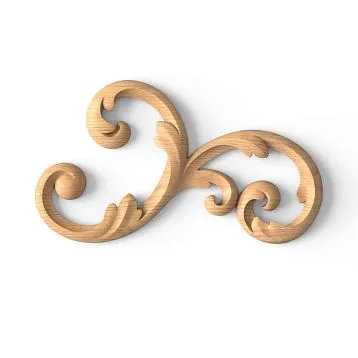
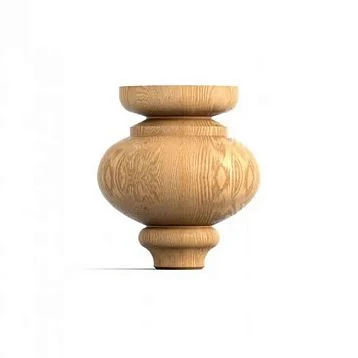
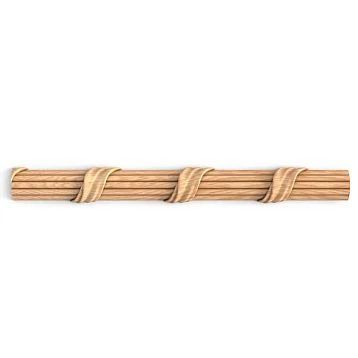
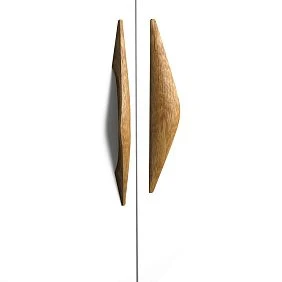
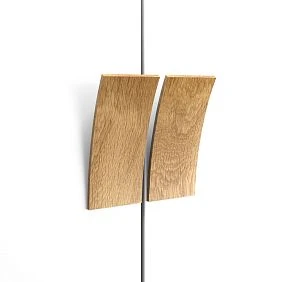
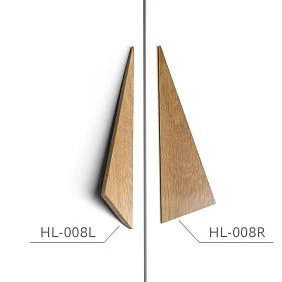
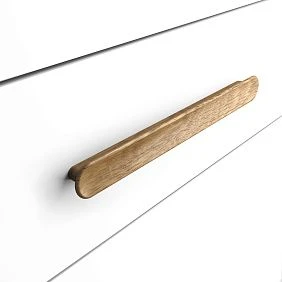
Our factory also produces:
Why the designation 2C does not mean two cans in each card
The abbreviation 2C refers to a two-component system. In it, component A represents the main oil coating, and component B is an accelerator that participates in curing and improves the performance properties of the finished protection. However, the name of the system does not oblige the seller to combine both parts in every possible packaging.
A similar situation occurs constantly in professional paint and varnish materials. One product can be sold:
-
as a separate base;
-
as a separate activator;
-
as a test sample;
-
as a working set;
-
as an increased industrial packaging;
-
as a kit designed for a specific area.
A buyer who focuses only on the word 2C sees the name of the technology. A buyer who reads the entire line sees the product: Component A Pure. To place an order, the second logic is needed.
Get Consultation
Where the psychological trap arises
The number 2 is perceived as a quantity of items. It seems: since it says 2C, the box must contain two containers. In fact, 2C describes the structure of the system. The specific package composition is determined by the words Component A, Component B, or A+B.
Therefore, the correct question to the manager sounds like this:
"The card indicates Rubio Monocoat Oil Plus 2C, Component A, Pure, volume 20 ml. Please confirm whether Accelerator B is included in this product item or purchased separately."
Such a question is short, specific, and eliminates ambiguity. It is more useful than the phrase "is this oil two-component?" because the answer "yes" still won't explain the composition of your package.
Why you shouldn't postpone verification until receipt
If B is needed according to the chosen technology, its absence will stop the work. This is especially unpleasant during finishing:
-
batches of furniture handles;
-
countertops before installation;
-
wooden utensils before handing over to the customer;
-
carved decor, which should already be installed;
-
molding prepared for shipment to the site;
-
series of furniture legs.
The buyer loses not only time. They re-arrange delivery, reschedule assembly, free up the workspace, and risk contaminating the already prepared surface. Therefore, checking the completeness is part of saving, not a formality.
Component A and set A+B: what is the difference for the buyer
The manufacturer's line separates individual packages of component A and ready-made sets A+B. This is visible even in the packaging sizes. Small samples of 6 and 20 ml belong to A Component. The 100 ml volume is also designated as component A. Sets A+B start with a different packaging size — 130 ml — and are then offered in larger volumes.
System packaging size matrix
| Total volume | Package designation | Declared area | What is important to understand |
| 6 ml | Component A, sample | Not fixed as a working set | Suitable for getting acquainted with the color on a small sample |
| 20 ml | Component A, sample | The STAVROS card indicates up to 1 m² | Availability of B needs to be checked separately |
| 100 ml | Component A | About 4 m² | This is A, not a ready-made set based on volume alone |
| 130 ml | Set A+B | About 4 m² | Kit of two components |
| 390 ml | Set A+B | About 14 m² | Working packaging for several items |
| 1.3 L | Set A+B | About 52 m² | For a large project or series |
| 3.5 L | Set A+B | About 140 m² | For a large production volume |
This table is not meant for the buyer to search STAVROS for each specified packaging size. It shows the principle: 20 ml of Component A and 130 ml of A+B are not the same kit in different sizes. You cannot take the consumption of a ready-made set, apply it to a sample, and assume that the second component is automatically present.
When Component A is sufficient
A separate Component A is useful when you need to:
-
see how Pure changes a specific wood species;
-
do a small test application;
-
check absorption;
-
compare surface preparation;
-
choose an application method;
-
evaluate uniformity on carved relief;
-
get a sample for approval with the designer or client.
But even in these scenarios, you need to understand the purpose of the test. If you are only evaluating the shade, component A may be sufficient for a visual sample. If you want to check the final strength and curing speed of the full system, the test must replicate the working configuration, including B.
When you need the A+B set
The set is needed when the buyer plans a full finish and expects the properties of a two-component system. This could be a countertop, a furniture series, stair parts, wooden handles, or tableware. Before ordering, it is necessary to confirm the available configuration at STAVROS or find out how to purchase Accelerator B.
The commercial logic is simple: Rubio Monocoat Oil Plus 2C you should choose not by a familiar brand, but by the full task. For a color sample, one order composition is needed; for a working finish, another.
Why buy Component A Pure
After clarifications about the configuration, a reverse question may arise: if Component A is not equal to the full set, why buy this item at all? The answer depends on the project stage.
To test Pure on your own wood
A photo in the catalog does not show how the oil will look on your oak, beech, ash, or another species. Even two boards of the same type differ in tone, porosity, cut, and grain. A small test volume allows you to see the result on the real material before processing the finished product.
To match the sample with the customer
In furniture production, a dispute about color after finishing is costly. The customer expected "almost untreated oak" but received a richer warm shade. The craftsman considered the result natural, the customer found it too dark. One test sample resolves this conflict before purchasing the main batch of oil.
To compare sanding
Pure is sensitive to preparation. Different grits and dust removal quality change absorption and visual perception. On test pieces, you can compare two sanding options and choose the one that gives an even result.
To check complex relief
Carved decor, turned furniture legs, and profiled moldings have recesses, end grains, and cross-grain sections. A rectangular sample does not always show how the product will behave on a complex shape. A small volume allows for a real test on a similar fragment.
To restore a small area
Sometimes the task is limited to a small wooden handle, a local test, or a test element. In that case, large packaging may be excessive. But even with local repairs, you need to check compatibility with the old finish and understand whether the original system can be reproduced.
To make a decision about a full order
A sample is not the final step, but a means of selection. The buyer tests Pure, approves the result, calculates the area, and then places a working set. This route is especially rational for an expensive countertop, a series of facades, or a large amount of carved decor.
To understand, which wooden products Rubio Monocoat is suitable for, it is useful to first determine the material, previous coating, and operating conditions. A general overview helps choose the application area, and this article helps correctly assemble the configuration of a specific order.
Is component B needed
Component B cannot be described only as a product that "slightly accelerates drying." Its role is broader. It accelerates curing, increases strength and durability of protection. To obtain the characteristics of a full two-component system, the manufacturer recommends using Accelerator B.
This means that the answer to the question "can only A be used" depends on what result the customer expects.
For color testing
If the goal is to see how Pure affects the shade, A alone can be used as a test material. But such a sample should not automatically be considered proof of the final durability of a two-component coating.
For a full-fledged work surface
Countertops, steps, furniture facades, handles, and other elements experience friction, contact with moisture, touch, and temperature changes. Here, the customer relies not only on appearance but also on protection. Therefore, the configuration with B must be confirmed before starting work.
For a decorative element with low load
Even if a carved overlay is hardly subject to wear, the decision about the coating composition should be made consciously. You should not independently declare B optional just because the part hangs on the wall. The finishing system should be uniform for the entire project.
For restoring an old coating
During repair, it is important to understand what the product was previously treated with. If the original coating included A+B, attempting to reproduce it with only component A may result in different curing times and different performance properties.
That is why the buyer should not guess but ask three questions:
-
Is B included in the selected package?
-
Can B be purchased separately?
-
Which kit is recommended for the actual area and purpose of the product?
Ratio 3:1: why components cannot be mixed by eye
For the Oil Plus 2C system, a ratio of three parts of component A to one part of component B is used. The components are mixed thoroughly, usually for one to two minutes. In a commercial article, this is important not as abstract technology, but as part of the order calculation.
If the customer only has A, it is impossible to obtain a 3:1 mixture without B. If B is purchased but its volume does not match the amount of A, part of the product will remain unused, or there will be a temptation to change the ratio. Both scenarios show why completeness should be checked in advance.
Example calculation for a small portion
For 40 ml of the finished mixture at a 3:1 ratio, you will need:
-
30 ml of component A;
-
10 ml of component B.
For 20 ml of the finished mixture:
-
15 ml of A;
-
5 ml of B.
These examples explain the arithmetic but are not a recommendation to mix the entire available volume. The customer prepares as much product as they can apply evenly within a single working session. The shelf life of the mixture after combining components should be checked against the current technical instructions.
Why measuring accuracy matters
The phrase "roughly three to one" does not mean free mixing. In a small portion, an error of a few milliliters significantly changes the ratio of components. Therefore, a clean measuring container and a clear scale are necessary.
Why you cannot add B later
Mixing must be uniform. You cannot apply component A and then try to distribute B over the surface as a separate layer. The components are combined before application.
Why you cannot mix in the original jar
If the buyer uses only part of the volume, mixing in the main container makes it impossible to keep the rest of A separate. The working portion is prepared in a clean, separate container.
How to calculate how much Rubio Monocoat to buy
Consumption cannot be calculated only by the front side of the product. In a real order, there are edges, back surfaces, legs, chamfers, grooves, carved relief, and a test sample. In addition, absorption depends on the wood species and preparation.
Simple flat part
For a rectangular tabletop, calculate:
-
the top surface;
-
the bottom plane, if it is being processed;
-
two long end faces;
-
two short end faces;
-
holes and cutouts;
-
test sample.
For example, a tabletop 1200 × 600 × 30 mm has a top area of 0.72 m² and the same bottom side. The end faces add about 0.108 m² more. The total geometric area when processing all sides is approximately 1.548 m². A technological allowance is added to it according to the selected technology and actual absorbency.
Furniture facade
For a facade, both sides and four edges are taken into account. For a series of ten facades, you cannot just multiply the front area by ten. The inner sides are often also visible when opened and require consistent finishing.
Wooden handle
The handle area is small, but the geometry is complex. The round surface, end faces, and holes increase the actual consumption relative to the flat projection. For a series of twenty or forty handles, a small error scales up.
Carved overlay
For carved decor, the area cannot be determined by a rectangle A × B. The relief has side surfaces, recesses, and undercuts. A test on one part or a similar sample is needed. Therefore, it is more advantageous for the buyer to order a trial volume, check consumption, and only then scale the result.
Wooden plate
For a plate, the front surface, back side, rim, edge, and recess are counted. Simple multiplication of diameter by diameter does not work here. For a small product, it is more convenient to perform a trial application and measure actual consumption.
As a practical example, you can look at the wooden plate KU-001 with oil finish. Its shape shows why the area of a wooden item is not equal to the area of a circle based on the outer diameter.
Three order calculation scenarios
Scenario 1. Trial coating
The buyer wants to test Pure on an oak board from the same batch as the future tabletop. The sample is small, so 20 ml of Component A may be enough to evaluate the shade and absorption. But if it is necessary to test the full system, Component B is separately confirmed.
What to buy:
-
trial volume of Component A Pure;
-
component B, if a full system is being tested;
-
a small brush or suitable applicator;
-
a lint-free cloth;
-
a measuring container.
Scenario 2. One countertop
The countertop has two surfaces and four edges. After calculation, the area is larger than the front rectangle. If the working kit is calculated for 4 m², the buyer should check whether this area refers to set A+B and whether the required packaging is included in the assortment.
What to buy:
-
working volume A+B;
-
tool;
-
cleaning materials;
-
additional volume for a sample, if the color has not yet been approved.
Scenario 3. Series of facades
For a series, the area of both sides of each facade, end panels, a test element, and production allowance are added together. Carved or profiled parts are accounted for separately. Buying one small bottle "to start with" can lead to batch differences and work stoppage.
What to buy:
-
the full calculated volume of one system;
-
a sample for approval;
-
identical tools for the workers;
-
measuring containers;
-
materials for removing excess;
-
separate batch labeling.
Pure does not mean that the wood color will not change at all
The name Pure is often translated as "colorless," leading to the overly direct conclusion that after treatment, the wood will remain exactly as it was before the oil. This is a wrong expectation.
Pure does not contain color pigment, but the oil interacts with the wood and saturates its tone. The grain becomes deeper, the contrast of pores may increase, and the overall shade may become warmer or darker. The result depends on the species, sanding, and original color.
Pure on oak
Oak has a noticeable porous structure. The oil emphasizes the grain, makes it more expressive, and usually enhances the natural warmth. On light oak, the effect may seem more saturated than the customer expected from a photo of an untreated board.
Pure on beech
Beech appears calmer and more uniform, but it also changes tone. In some areas, differences in absorption may appear. Quality preparation and removal of excess are especially important.
Pure on end grains
The end grain absorbs more actively than the longitudinal surface. Without a preliminary test, it may become noticeably darker. On a handle, plate, or countertop, end grains occupy a small area but greatly affect the overall appearance.
Pure on carving
Recesses and cross-grain sections may look more saturated. If the oil is applied excessively and poorly removed, the relief loses its cleanliness: dark accumulations remain in the recesses.
Before the main work, a test application on a scrap of the same species and the same batch is necessary. It is also useful to study STAVROS recommendations for preserving wood texture, to compare oil with varnish, wax, and other finishing methods.
For which products is Rubio Monocoat Pure suitable
Wooden furniture handles
Handles constantly come into contact with hands. The coating should preserve the tactile feel of the wood and not hide its shape. Pure is suitable when you need to highlight oak or another expressive wood species without color tinting.
For a series of handles, it is important to process a test sample. Small parts have end grains, holes, and mounting areas. Not the entire surface should automatically be coated uniformly: mounting points are checked according to the project.
Furniture legs
Turned and carved legs consist of many transitions. Oil emphasizes the volume but requires careful removal of excess in grooves. For a batch of legs, a single standard sample is needed so that one support does not differ from another in saturation.
Moldings and trim
A long piece shows any unevenness. When processing several meters of molding, it is important to maintain the same application method and not leave transitions. All segments should preferably be prepared with the same grit.
Carved decor
Oil preserves the readability of the pattern if applied thinly. Excess in deep areas makes the relief look dirty and uneven. Before processing an expensive overlay, it is better to test the material on a small fragment or a less visible part.
Countertops
A countertop requires a full working system and precise area calculation. Component B is especially important if the buyer expects increased coating durability. The bottom, edges, holes, and cutouts must be taken into account.
Wooden tableware
For dishes, confirmed system suitability, proper preparation, and subsequent care are important. In the article about restoring the oil coating of wooden dishes it is shown why you cannot take random technical oil just because it says "for wood."
Frames and decorative panels
On large surfaces, Pure emphasizes the wood grain pattern. But the color of adjacent lamellas may differ more after oiling. The sample should be evaluated not only in the workshop but also under the lighting of the future room.
Interior oil and exterior tasks are not the same thing
Oil Plus 2C is intended for finishing interior wooden surfaces. This means that the article and product card cannot be optimized for queries like "terrace oil," "exterior facade oil," or "UV-protected outdoor oil" without separate confirmation by technical documentation.
It is important for the buyer to distinguish:
-
the countertop indoors from the outdoor table;
-
the interior decorative panel from the facade cladding;
-
the furniture handle from the exterior door component;
-
the interior staircase from the open porch;
-
the plate from the garden furniture.
Even if oil protects wood from moisture, it does not make it a universal exterior coating. Outdoors, ultraviolet radiation, precipitation, frost, temperature fluctuations, and biological loads act. For these, a separate system is chosen.
If the task involves protecting wood from moisture, it is useful to first study recommendations for impregnating wooden products, and then check whether the specific product is suitable for your conditions.
Surface preparation determines the result more than the amount of oil
Quality oil does not fix poorly prepared wood. If traces of old varnish, grease, polishing paste, or varying grit remain on the surface, Pure will reveal the unevenness.
Old coating must be removed
Oil Plus 2C must work with open wood. Varnish, enamel, or other film-forming coatings prevent even contact. You cannot simply wipe old varnished surfaces with oil and expect a new uniform layer.
Sanding must be sequential
For furniture, stairs, and countertops, working preparation usually ends with grit around 100–150. Too coarse sanding leaves a visible pattern, too fine can reduce absorption and change color. Most importantly, use the same technique on all parts of the batch.
Dust must be removed completely
Dust fills pores and mixes with oil. On light wood, it creates cloudy areas; on relief, it accumulates in recesses. After dust removal, the surface must be completely dry.
End grain preparation requires attention
End grains absorb more actively. They cannot be left rougher than the main surface, otherwise they will become darker. But excessive polishing of the end grain creates different absorption. The solution is tested on a sample.
The quality of the workpiece must be chosen before oiling
When ordering STAVROS products, it is useful to choose wood preparation before oil. If a transparent or semi-transparent finish is planned, the material and surface quality must match this task. Oil does not hide contrasting lamellas and defects the way an opaque enamel does.
Test coating: a small detail that protects a large order
A test coating is needed not only for the designer. It is a technical sample on which the following are checked:
-
Pure shade;
-
uniformity of absorption;
-
surface preparation;
-
consumption;
-
tool;
-
method of removing excess;
-
working time;
-
result on the end grain;
-
behavior of component A;
-
performance of mixture A+B;
-
appearance after full curing.
How to choose a sample
The best option is a scrap piece from the same batch of wood. If not available, use an inconspicuous area of the item, but only when it is safe for the finished piece. A sample from a different species or batch does not provide an accurate prediction.
How to label the sample
On the back side, indicate:
-
wood species;
-
batch number;
-
sanding grit;
-
application date;
-
Component A or A+B;
-
proportion;
-
tool;
-
number of minutes before removing excess;
-
drying conditions.
How to evaluate color
Do not make a decision immediately after application. At first, the surface looks more moist and saturated. The sample is evaluated after the full technological cycle, under daylight and artificial lighting.
Why a control sample is needed when reordering
A new batch of wood may differ. Even if the same Pure is used, the color does not have to match exactly. For furniture that complements an existing set, a new test coat is mandatory.
How to apply oil without a thick sticky layer
Oil Plus 2C works in a thin layer. The buyer does not get additional protection if they leave more product on the surface. The excess does not bond with the wood and may remain sticky, collect dust, or form stains.
Prepare a working portion
If A+B is used, measure the components in a 3:1 ratio and mix. Prepare an amount corresponding to one working session.
Distribute evenly
Apply the oil in a controlled manner. On flat surfaces, an applicator or suitable brush is convenient; on profiles, use a tool that passes through the relief without excessive accumulation of the compound.
You can buy a flat brush 50 mm for applying oil, if the width and shape of the product match such a tool. For fine carving, one wide brush may not be enough.
Allow the product to come into contact with the wood
The compound requires a short reaction time. Do not wipe it off immediately at the moment of application, but also do not leave a thick layer for long. Work in small areas to be able to control the surface.
Remove all excess
After application, the oil is carefully removed with a lint-free cloth. The surface should look even and dry to the touch, without shiny puddles.
Check recesses
In threads and profiles, excess remains longer. These areas are inspected under side light. If a wet accumulation is visible in the groove, it is removed with a clean cloth or a suitable tool.
To choose a tool that matches the shape of the item, you can read, how to choose a brush for oil and wooden decor.
Safety of oiled rags
This block must not be hidden at the end in small print. Cloth with oil requires safe handling. After work, it is immersed in water and disposed of according to the instructions of the material used. Do not leave crumpled oiled rags on the workbench, in a bucket of sawdust, or near a heat source.
Why crumpled cloth is dangerous
Oxidation processes are accompanied by heat release. In a dense wad, heat dissipates worse. Therefore, used wipes must not be piled up.
What to prepare in advance
Before opening the bottle, the following must be nearby:
-
a metal or other suitable container;
-
water;
-
clean wipes;
-
a place for temporary safe storage;
-
gloves;
-
the product instructions.
Safety is part of the order package. Buying oil without preparing the workspace makes even a small test inconvenient and risky.
What to buy together with Rubio Monocoat Component A Pure
A good commercial order consists not of a random set of consumables, but of elements of a single technology. The buyer needs the material, the tool, clean cloth, a container, and, if necessary, component B. On the STAVROS website, you can select part of this kit in one section.
| What to add | Why is this needed | When it matters most | Where to go |
| Flat brush 50 mm | Evenly distribute the compound on flat and profiled surfaces | Moldings, panels, wide parts | Buy a flat brush 50 mm |
| Finishing materials | Assemble the tool and auxiliary items | Any independent project | Materials for furniture assembly and finishing |
| Guide to choosing a brush | Check that the tool matches the shape | Carving, moldings, edges | How to choose a brush for oil |
| Quality information | Choose wood for transparent finish | Oak and beech products | Choose wood preparation |
| Finishing tips | Coordinate preparation and application | Independent work | STAVROS recommendations for finishing wood products |
| Storage rules | Don't ruin wooden products before finishing | Batch of decor or moldings | Storage rules for solid wood products |
| Trial product | Check Pure on a real form | Dishes, handles, decor | Wooden plate KU-001 |
| Order fulfillment conditions | Plan material delivery | Remote site or workshop | Payment and product delivery |
Accelerator B is not in the table because a separate confirmed card for B is absent in the prepared internal scheme. This is an important commercial signal: the customer should clarify with the manager the possibility of purchasing B, rather than following a made-up link.
Separate component or ready-made kit
| Criterion | Component A Pure | Full set A+B |
| Color sample | Suitable for preliminary assessment | Also suitable |
| Full system durability check | Insufficient without B | Suitable |
| Accelerated curing | Does not fulfill role B | Ensured with proper mixing |
| Ratio calculation | Not achieved without the second component | Components are calculated as a set |
| Risk of error in the cart | Higher if the buyer only looks at 2C | Lower when the configuration is explicitly specified |
| Suitable task | Sample, small test, introduction to Pure | Working finish |
| What to clarify | Availability of B and volume assignment | Total volume, area, and application conditions |
The buyer does not need to choose between them on a "which is better" basis. These are different stages and tasks. Component A Pure is beneficial as an entry point and trial material. A+B is beneficial when the solution is approved and a full working system is required.
Rubio Monocoat, varnish, wax, or enamel
The article should not turn into a general overview of coatings, but it is useful for the buyer to understand when Rubio fits the task and when it is better to choose a different path.
| Finish | What happens to the texture | Surface character | When to choose |
| Rubio Monocoat Pure |
Pattern
Need to process twenty wooden handlesFirst, treat one handle. Check the ends, holes, uniformity on the bend, and the time for removing excess. Then calculate the actual consumption on the sample and multiply by the number of items. Order the entire working batch of one product to avoid mixing packaging sizes in the middle of the series. Need to restore a plateMake sure the original coating is compatible with Rubio Monocoat and the surface is properly prepared. Do not use random oil. Study the example of restoring an oil coating on wooden dishes and clarify the full system configuration. Need to cover carved decorTry on one piece or a process sample. Use a tool that reaches into recesses and thoroughly remove excess. The area based on the overall rectangle underestimates the actual consumption. Need to treat a long wooden moldingPrepare all sections equally. Work in a continuous pattern to avoid transitions. A 50 mm brush may be convenient on a wide profile, but for deep carving an additional tool is needed. Need to achieve an absolutely white surfacePure is not suitable. It is an oil without color pigment, not a white enamel. For a covering result, choose an appropriate finishing system and a substrate for enamel. Who this product item is suitable forRubio Monocoat Component A Pure is worth considering:
When this item may not be suitableIt is better to choose a different configuration or a different coating if:
An honest assessment of suitability increases the likelihood of a successful purchase. It is better to choose a different material before payment than to try to fix an unsuitable coating on a finished product. Mistakes when buying Rubio MonocoatInterpreting the word 2C as a guarantee of two containersThe system name and configuration are different things. Read the clarification for Component A. Do not ask about Accelerator BIf B is needed for a fully functional system, its absence will stop the project. Accept Pure as coverage without changing the shadeOil saturates the wood. Without a test, expectations may not match the result. Buy volume based on face areaEdges, bottom, holes, and relief also consume material. Mix components by eyeThe 3:1 ratio requires measurement. Prepare too much mixture at onceThe working portion is calculated based on the actual application time. The current usable life of the mixture is checked in the instructions. Apply over varnishThe oil must work with prepared wood. A film of old coating prevents an even result. Leave excessA thick layer provides no additional benefit and may remain sticky. Use one dirty cloth over the entire areaA cloth saturated with oil stops effectively removing excess and smears the product. Do not check the edgesThe edge often darkens more than the main surface. Process the entire batch without a reference sampleThe first part should become a control sample. Otherwise, differences will be detected after processing the batch. Leaving rags crumpledUsed fabrics require safe handling and immersion in water. Buying a random brushA tool that is too stiff or sheds makes application difficult. Choosing a brush for oil and wooden decor is best done before starting work. Not checking storage conditions of wooden partsIf the product was stored improperly, humidity and surface condition may change. Before finishing, study Storage rules for solid wood products. How to buy Rubio Monocoat on STAVROS without configuration errorsStep 1. Open the card of a specific itemGo to the card and buy Rubio Monocoat Component A Pure only after checking the name and volume. Do not replace the word Component A with an assumption about the A+B set. Step 2. Clarify component BAsk the manager a direct question about the package contents and availability of Accelerator B. Ask them to recommend a kit for your area and product type. Step 3. Calculate the areaAdd up all sides, ends, relief elements, and a test sample. For a series, create a table for each part type. Step 4. Choose the toolIn the section of materials for furniture installation and finishing you can view the brush and related products. Do not add glue or other material automatically: each product must match its purpose. Step 5. Check product preparationIf STAVROS wooden elements are also purchased, choose in advance a variant that matches the visible texture. Oil does not hide the contrast of the wood. Step 6. Plan deliveryCurrent options for order processing and delivery are collected on the page payment and delivery STAVROS. For an urgent project, keep in mind that reordering missing B will create a separate delivery.
Request template for manager
Such a request saves correspondence. The manager immediately understands that the buyer is asking not about the general properties of the brand, but about the composition of a specific product item. How to evaluate the cost: the price of a bottle and the cost of the finished result are not the same thingA buyer often compares coatings by the price of one package. This approach is convenient, but says almost nothing about the real cost of the project. A small bottle may seem affordable, but it is not enough for the working area. A large kit looks more expensive, but is designed for a larger number of items and already contains the necessary components. Therefore, you should compare not the price on the shelf, but the cost of the fully treated surface. What the cost of finishing consists of
If 20 ml are purchased for testing and help avoid a wrong shade on an expensive countertop, the sample is economically justified. If the same small volume is purchased as the only material for a series of facades, the order is assembled incorrectly, even if the item's price seems attractive. Cost per square meterFor a correct comparison, divide the cost of the full working set by the actual area that was successfully treated in compliance with the technology. The denominator should not include only the face area of the product. Treated back sides, edges, and relief must be taken into account. Such a calculation is especially useful for a workshop. After the first test project, it gets its own consumption benchmark for a specific wood species and with its own preparation. The next order becomes more accurate, and the reserve is no longer assigned randomly. Cost of a mistakeThe most expensive situation is not the high price of the oil, but reworking finished wood. Removing an unsuccessful coating, re-sanding, loss of part thickness, a new test application, and postponing installation can cost more than the original material. Therefore, it is beneficial for the buyer to invest in a control sample and a full set. Before payment, it is useful to check the price of Rubio Monocoat and the name of the specific item, and then evaluate it together with component B, the tool, and the project area. Order check before starting workThe received bottle should not be opened immediately. First, the buyer verifies the product against the order. Such acceptance takes a few minutes and protects against a situation where an error is discovered after the packaging is broken or application has begun. Check the nameThe following must match on the item:
If an A+B set was expected, but only A is indicated on the packaging, work is stopped until clarification. You cannot assume that the second component is hidden inside an opaque box or will be delivered later. Check the integrityInspect the lid, body, label, and signs of leakage. Do not use material from damaged packaging without agreement with the seller. Record the condition with a photo before opening. Check the batch and volumeFor a large project, it is advisable to obtain the entire working volume in one coordinated purchase. When oil is purchased in parts, mark the packaging and perform a control sample when changing batches. Check the toolThe brush should be clean, without loose bristles and traces of previous coating. If the tool is purchased together with the oil, open the section on materials for furniture finishing and assemble the kit before starting to sand the finished product. Prepare a work logFor a single handle, a log is not needed. For a series of facades, legs, or decorative elements, it is useful. Record the date, mixture, proportion, area, consumption, application time, and result. Such a record turns successful experience into reproducible technology. How to organize finishing of a series of identical partsA series requires a different approach than a single item. You cannot apply oil to forty handles as spontaneously as to one test sample. The buyer needs to plan in advance the working batches, drying area, marking, and color control. Divide the products into batchesThe batch size depends on the master's speed and the complexity of the shape. All parts in one group must be processed within a time that allows the composition to be evenly distributed and excess removed. A batch that is too large creates rush, too small increases the number of mixings. Use the reference sampleThe first approved sample is kept nearby but not reused as a working part. It is needed for comparing shade, gloss, and relief cleanliness. If the next batch differs noticeably, work is stopped and the cause is sought. Mark the face and hidden zonesHandles, legs, and overlays may have mounting surfaces that cannot be coated uncontrollably. Before application, indicate which zones remain clean, which must look the same, and where a technological trace is acceptable. Do not mix preparationIf half of the parts are sanded with one grit and the other half with another, Pure may reveal the difference. The entire series must go through the same processing sequence. Information on how to choose the quality of wood preparation, is especially important when ordering solid wood for a transparent coating. Plan a reserve based on test resultsA universal reserve percentage without knowing the geometry is of little use. First measure the actual consumption on one or several parts, then multiply it by the quantity and add a reserve justified by the workshop's technology. Commercial route for three types of buyersPrivate buyerHe needs a clear and safe kit without unnecessary professional packaging. The rational route: a trial Component A Pure, clarification of B, a small brush, cloth, a sample from the same wood, and one working package after the test. Do not buy a large volume until the color is verified. Furniture workshopThe workshop values repeatability and the price of the finished area. It creates a sample, approves the process card, calculates the series, and orders the full volume in one batch. Additionally, the tool, the time for removing excess, and the procedure for treating edges are fixed. Designer or specifierHis task is to agree on the appearance and pass an unambiguous specification to production. It is not enough to write "Rubio Pure" in it. You need to specify Component A or A+B, area, sample, wood species, preparation, and the requirement to confirm B. Such a document eliminates different interpretations between the client, supplier, and workshop. What questions to ask before a repeat purchaseEven if the first project was completed successfully, a repeat order should not be placed automatically. Clarify:
A repeat order becomes simple only after such verification. Otherwise, a familiar name creates a false sense of security, while the project actually differs in wood, geometry, or configuration. FAQ: Answers to buyer questionsWhat is included in the Rubio Monocoat Component A Pure card?The card name specifies component A, color Pure, and volume 20 ml. Component B is not separately confirmed in the name or configuration, so its presence needs to be clarified before payment. Why is the product called Oil Plus 2C if Component A is sold?Oil Plus 2C is the name of a two-component system. Specific components may be sold separately or as part of an A+B set. Look at the full name on the packaging. Does Accelerator B come in the 20 ml?The STAVROS card does not contain a separate unambiguous indication that B is included. The buyer should request confirmation of the configuration from the manager. Can only Component A be used?For a color test, Component A allows evaluating Pure on wood. For the properties of the full two-component system, it is recommended to use B. The decision depends on the task and the current instructions. What is component B for?It accelerates curing and increases the strength and durability of the protective system. It cannot be considered merely an optional drying accelerator. In what proportion are A and B mixed?A ratio of three parts A to one part B is used. The components are thoroughly mixed before application. Can the components be mixed by eye?No. On a small volume, the error is especially noticeable. Use a measuring container and follow the ratio. Is 20 ml enough for 1 m²?The STAVROS card indicates an area of up to 1 m², but the actual consumption depends on the wood, sanding, and geometry. End grains and carved relief increase the actual usage. Is 20 ml a full A+B kit?In the manufacturer's line, 20 ml refers to a sample of Component A, while A+B kits have other packaging sizes. For a specific STAVROS delivery, please request confirmation. Does Pure not change the wood color at all?Pure does not contain color pigment, but the oil saturates the wood. It may become warmer or darker, and the grain may become more contrasting. Do I need to do a test application?Yes. Especially for oak, beech, carved decor, countertops, and series of identical parts. The test shows color, consumption, and uniformity. Can Rubio Monocoat be applied over varnish?No, if the old varnish remains as a film between the oil and the wood. The surface must be prepared down to bare wood according to the technology. What grit is needed before application?For furniture, stairs, and countertops, sanding is usually finished in the range of approximately 100–150. The exact preparation must be uniform across the entire piece. Can the oil be applied with a brush?Yes. The brush must match the composition and geometry of the piece. After spreading, excess is still thoroughly removed with a lint-free cloth. Will a 50 mm wide brush work?It is convenient for flat surfaces, moldings, and medium-sized parts. For fine carving, a narrower additional tool may be needed. Do I need to apply a second coat?Oil Plus 2C is designed for single-coat application. A thick or additional coat does not replace proper preparation and removal of excess. Can Pure be used for a countertop?Yes, if the item is indoors, the surface is properly prepared, and the full recommended system is used. Both sides and edges need to be calculated. Is the oil suitable for wooden kitchenware?The system has applications for wooden items that come into contact with food, provided requirements and current documentation are followed. For restoration, first determine the original coating. Can Oil Plus 2C be used outdoors?This is a product for interior wooden surfaces. For terraces, facades, and outdoor furniture, choose a specialized exterior system. How should the remaining Component A be stored?Store according to the current manufacturer's instructions, in tightly closed original packaging and suitable conditions. Do not mix remaining A with B in advance. What to do with oil-soaked rags?After work, immerse the fabric in water and dispose of it in a safe manner. Do not leave it crumpled at the workplace. What to check before ordering a batch?Area, wood species, preparation, Pure color, availability of B, packaging, tools, test sample, and lead times. For a series, compile a specification sheet. Where to buy Rubio Monocoat Component A Pure?The product is presented in the STAVROS catalog in the section for installation and finishing materials. Before payment, check the current price, availability, and card contents. Conclusion: the customer needs not just a bottle, but a complete working scenarioRubio Monocoat Component A Pure is purchased for the natural look of wood, thin protection, and the ability to first test the result on a small sample. But the word 2C in the line name should not distract from the specific composition of the cart. If the card specifies Component A, the presence of Accelerator B cannot be considered confirmed without separate clarification. A correct order is built sequentially: determine the product, calculate the area of all surfaces, choose Pure, make a test application, confirm component B, select packaging and tools. This approach helps avoid work stoppages, repeat deliveries, and differences between coating batches. STAVROS combines in one catalog the oil itself, brushes, finishing materials, wooden products, and useful recommendations for preparing the wood surface. The customer can start with a trial size of Rubio Monocoat, test Pure on their own wood, and then move on to the working set. The key is to buy not by one big word on the label, but by the exact name of the product, the area, and the expected result. Buy Rubio Monocoat Component A Pure Open the STAVROS catalog of installation and finishing materials |