



























Article Contents:
- The post in a wooden fence: a role that is underestimated
- Constructive role
- Decorative role
- Where carved wooden posts are used
- Staircase in the house: support points of the flight
- Porch: posts of the entrance group
- Gazebo: roof supports and decorative posts
- Terrace: perimeter fencing and canopy posts
- Open veranda
- Decorative fencing of the site
- How a post differs from a baluster: the fundamental difference
- Difference in cross-section
- Difference in role
- Difference in installation
- Why buy as a set
- Carved wooden post 2.5 meters: when it's the right choice
- Porch with canopy 2.2–2.4 meters high
- Terrace railing with partial canopy
- Decorative posts for wooden gates
- Support posts for a small gazebo
- Parameters of a 2.5-meter post
- Carved wooden pillars 3 meters: scale and monumentality
- Gazebo with a high ridge
- Front porch with a high canopy
- Open gallery or veranda around the perimeter of the house
- High decorative supports of the entrance arch
- Pillar parameters 3 meters
- How to choose the shape of a carved pillar: from classics to strict geometry
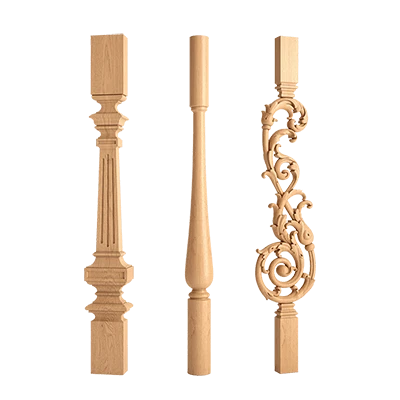
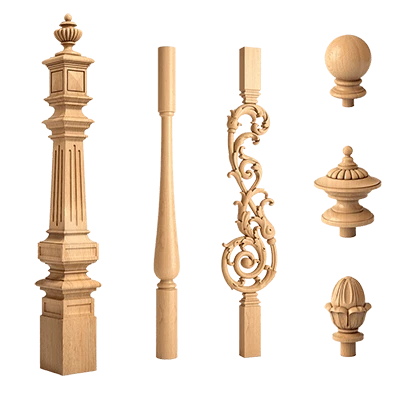
- Classic turning-carved shape
- Square prism with carved belts
- Round column with capital
- Pilasters and Half Columns
- How to choose balusters for carved posts: five rules of coordination
- Rule one: single wood species
- Rule two: carving scale
- Rule three: height matches the working area
- Rule four: uniform finish coating
- Rule five: single delivery
- What to buy with posts: complete list of accessories
- Balusters
- Handrails and balustrades
- Post Caps
- Base plates and anchor assemblies
- Brackets and braces
- Fasteners
- Material of carved posts: oak, beech or pine
- Oak for street poles
- Beech for interior and semi-protected structures
- Pine for temporary and budget structures
- Comparison of wood species for carved posts
- Price of carved wooden posts 2.5 and 3 meters: what shapes the cost
- Main pricing factors
- Estimated prices (2026)
- Installation of carved wooden posts: technical requirements
- Base and anchor assembly
- Verticality
- Moisture Protection
- Fastening balusters and handrail to the post
- Mistakes when buying carved wooden posts
- Mistake one: buying posts without balusters from a single source
- Mistake two: not checking the height for the project
- Mistake three: ignoring base plates
- Mistake four: using different post styles for the same structure
- Mistake five: not considering weight and transportation
- Mistake six: choosing intricate carving for an open street without a canopy
- Mistake seven: buying posts without a finial
- Where to buy carved wooden posts 2.5 and 3 meters
- STAVROS: carved posts, balusters, and a complete set for wooden fencing
- Frequently Asked Questions
- Where to buy carved wooden posts 2.5 and 3 meters high?
- How is a post different from a baluster in a wooden fence?
- Which posts to choose for a porch with a canopy?
- Can I buy posts and balusters as a set?
- Which posts are better for a gazebo: 2.5 or 3 meters?
- Is a finial needed on a wooden post?
- Which wood species is best to buy carved posts for a porch?
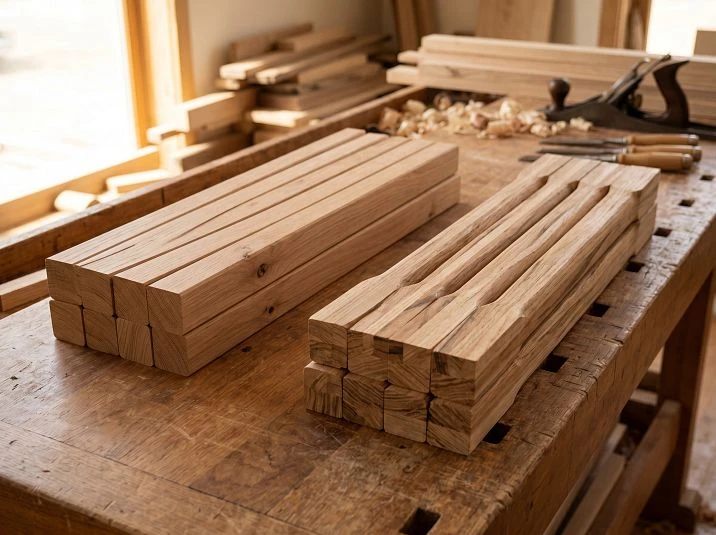
A post is not just a support. It is the point where the fence begins. It is the accent that sets the scale of the entire entrance group, gazebo, or staircase. When the post is carved, when it is made of dense solid wood, when its height is chosen precisely for the project — it transforms from a technical element into an architectural gesture.
Buy carved wooden posts — a task that those who understand set for themselves: in a wooden fence, on a porch, in a gazebo, or on a terrace, it is the posts that carry the entire visual weight of the structure. Balusters create rhythm, railings unify, and posts hold it all together. Physically and figuratively.
This article is a detailed breakdown of how to choose a carved wooden post 2.5 or 3 meters high for a specific task, how to combine it with balusters and railings, and where to buy a set without mistakes.
A post in a wooden fence: an underestimated role
Before discussing dimensions and carving patterns, it's important to understand what exactly the post does in the structure. This role is dual, and both sides are equally important.
Constructive Role
The post takes on loads that a baluster cannot bear: the vertical weight of the handrail, horizontal pressure from people on the railing, lateral loads at turns of the flight. At the beginning and end of a staircase, at corner points of a terrace railing, on the posts of a gazebo canopy — the post works as a load-bearing element.
The size of the post is not a decorative choice. Cross-sections of 100×100, 120×120, or 150×150 mm, heights of 2,500 or 3,000 mm — these are structural parameters determined by the load and height of the structure.
Our factory also produces:
Decorative role
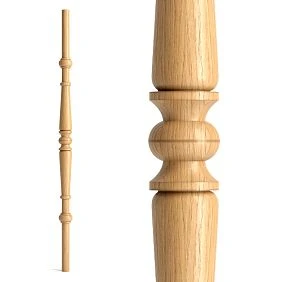
A carved wooden post is the dominant element of the fence. The eye always goes first to the post, then moves along the balusters. The scale of the carving, the shape of the post body, the presence or absence of a finial — all of this sets the tone for the entire wooden structure.
A correctly chosen carved post makes a simple fence look rich. An incorrect one makes an expensive fence look eclectic.
Get Consultation
Where carved wooden posts are used
The question is not idle: posts 2.5 and 3 meters high are elements with a specific scope of application. Let's list the main scenarios.
Staircase in a house: support points of the flight
For an internal staircase, carved posts are installed at the beginning and end of each flight, on intermediate landings, at turns. The height of a staircase post ranges from 900 mm (working height of the railing) to 1,200–1,500 mm, if the post also serves a decorative function.
Pillars 2.5 and 3 meters for an internal staircase are no longer a flight railing, but decorative vertical supports for a double-height space, partition posts at the mezzanine level, or load-bearing elements of the second floor structure.
Porch: entrance group pillars
A porch with wooden carved pillars 2.5 meters high is a powerful architectural statement. The pillars support the canopy over the porch, frame the entrance, and create a grand feel. Buy carved pillars for the porch means choosing an element that will be visible to everyone approaching the house.
Gazebo: roof supports and decorative posts
A wooden gazebo without carved pillars is just a canopy on supports. With carved pillars, it becomes an architectural feature in the garden. Carved wooden pillars for a gazebo 2.5–3 meters high support the roof and simultaneously define the appearance of the entire structure.
For a gazebo, 3-meter pillars are used more often than 2.5-meter ones: the roof requires height clearance so that people inside feel comfortable, not like they are 'under a ceiling'.
Terrace: perimeter fencing and canopy posts
On an open terrace, 2.5-meter-high posts often combine the function of fencing and load-bearing supports for a pergola or canopy over the relaxation area. Buy carved porch columns — for comprehensive arrangement of the open space near the house.
Open veranda
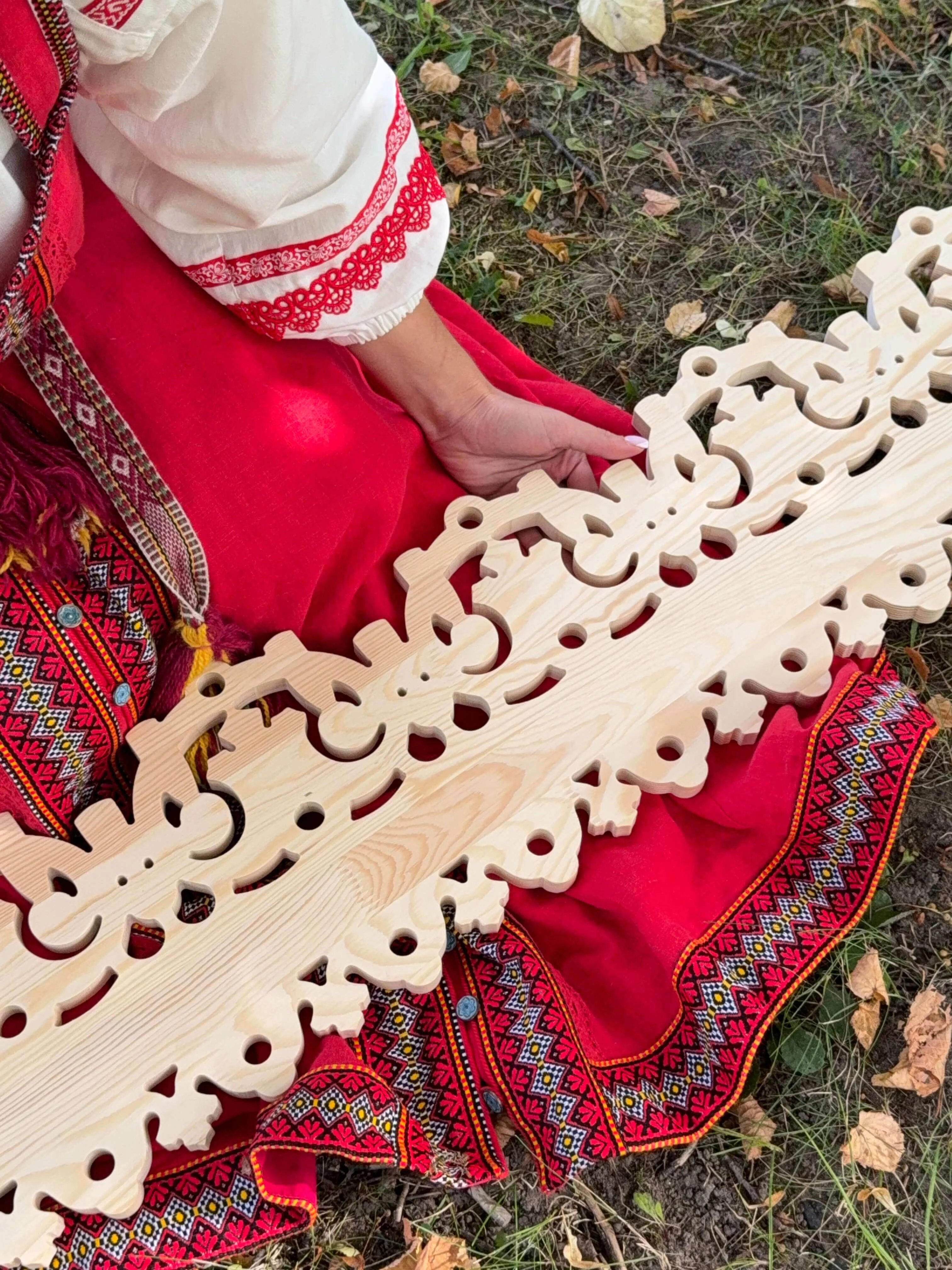
Veranda columns are one of the oldest traditions in wooden country construction. Carved supports with cut-out elements under the veranda roof are an image of Russian dacha architecture from the late 19th to early 20th century. And an image that lives on to this day.
Decorative fencing for the property
Wooden carved columns as accent elements for fence sections, gates, and entrance arches. Height of 2.5–3 meters for the entrance group — proportionate to the driveway and creates the correct scale.
How a column differs from a baluster: the fundamental difference
This question is not rhetorical. Many people get confused, thinking that a column is just a large baluster. This is not the case.
Difference in cross-section
A baluster is a thin vertical element: diameter or cross-section of 40–70 mm. A column is a massive support: cross-section of 100×100, 120×120, or 150×150 mm. A difference of 3–4 times in each dimension means a difference of 9–16 times in cross-sectional area. These are different load-bearing capacities.
Difference in role
A baluster is a filling element. It stands in a row, creates rhythm, and closes the gaps of the railing. A post is a support and framing element. It stands at key points of the structure — beginning, end, turn, corner.
Difference in installation
A baluster is attached to the bottom rail and handrail — a relatively simple installation with low fastening force. A post is embedded into the base with anchor bolts, sometimes with an additional metal base plate — this is a load-bearing unit requiring calculation and reliable fasteners.
Why buy as a set
Buy balusters and posts for a wooden staircase from one manufacturer — this guarantees three things: compatible dimensions (height, handrail groove, tenon diameter), one wood species of the same tone, a unified carving and decor style.
Carved wooden post 2.5 meters: when it's the right choice
A height of 2,500 mm is not a random size. It corresponds to specific construction tasks.
Porch with a canopy 2.2–2.4 meters high
The standard height of a canopy over a porch is 2.2–2.5 meters from the floor to the lower edge of the roof. A 2.5-meter post with an embedment of 150–200 mm into the base and a finial of 150–200 mm on top fits perfectly into this structure.
Terrace railing with a partial canopy
A 2.5-meter pillar serves simultaneously as a support for the floor beam and as a decorative vertical accent. The working height of the pillar above the floor: 2,300–2,350 mm. This is sufficient for comfortable passage under the canopy.
Decorative posts for wooden gates
For gates 3–4 meters wide, 2.5-meter pillars create the correct height-to-width ratio. The gates do not look "squat" nor disproportionately tall.
Load-bearing supports for a small gazebo
A gazebo with a diameter of 3–4 meters or a square 3×3 meters with 2.5-meter pillars creates a cozy, human-scaled space. The ridge height above the working height of the pillar is 400–600 mm, resulting in a total roof height of about 3 meters at the ridge.
Parameters of a 2.5-meter pillar
| Parameter | Value |
|---|---|
| Total length | 2,500 mm |
| Working height (above base) | 2,200–2,350 mm |
| Embedment/fastening | 150–300 mm |
| Typical cross-section | 100×100, 120×120 mm |
| Threaded zone | Upper third, lower belt, finial |
Carved wooden posts 3 meters: scale and monumentality
Three meters is a different scale. A post of this height creates a completely different sense of space.
Gazebo with a high ridge
Buy wooden carved posts 3 meters for a large gazebo (4×4 meters and larger) — a standard solution. The working height of the post above the floor of 2.7–2.8 meters creates a spacious interior that is comfortable even with a large number of guests.
Front porch with a high canopy
A porch in the style of a Russian estate or classical country architecture: wide steps, massive columns, a high canopy. Here, 3-meter columns are the only proportionate solution. They create a sense of grandeur and solemnity for the entrance group.
Open gallery or veranda around the perimeter of the house
A long veranda gallery with numerous columns — an image derived from southern wooden architecture. 3-meter columns with carved brackets under the roof and balusters for the railing below form a complete architectural composition.
High decorative supports for the entrance arch
For arched gates or decorative entrance groups with a roof height of 2.5–2.8 meters, 3-meter columns provide the correct proportion. Such an arch is perceived as a full-fledged architectural object, not a temporary structure.
Parameters of a 3-meter column
| Parameter | Value |
|---|---|
| Total length | 3,000 mm |
| Working height (above base) | 2,700–2,850 mm |
| Embedment/fastening | 150–300 mm |
| Typical cross-section | 120×120, 150×150 mm |
| Threaded zone | Upper zone, middle belt, finial |
How to Choose the Shape of a Carved Post: From Classics to Strict Geometry
The shape of a carved post is the language of your project. And this language must be understood by the entire structure: the fence, the house facade, and the garden space around it.
Classic Turned-Carved Shape
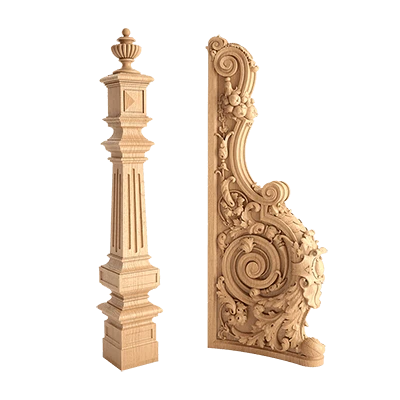
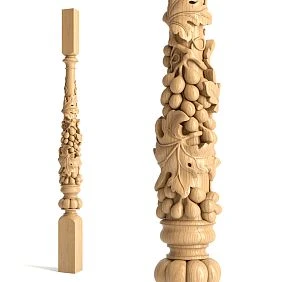
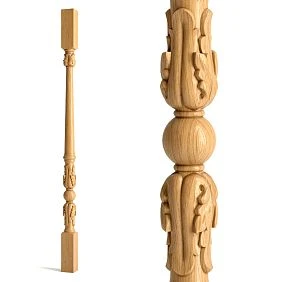
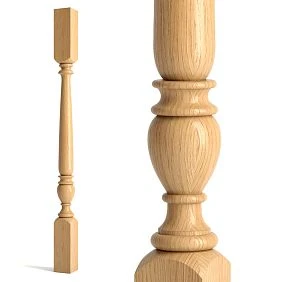
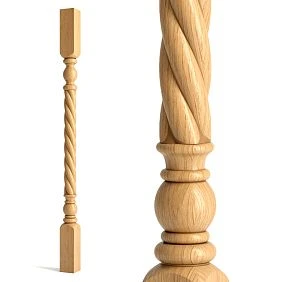
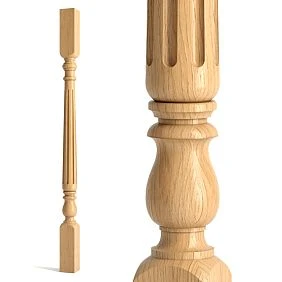
The post body is profiled, with alternating thickenings, narrowings, and bands. The upper zone is decorated with carved elements: leaves, diamonds, running ornament. The top is pyramidal or with carved decor. The lower band is a profiled transition to the base.
This is the visually 'richest' option. Suitable for houses with saw-cut facade decor, classic wooden estates, and gazebos in the Russian style.
Square Prism with Carved Bands
The post body is square in cross-section, without turning. Decor is concentrated in separate zones: carved bands at transitions, ornamental inserts, profiled edges. More austere, monumental, and concise.
Suitable for houses with clear facade geometry, for a modern interpretation of classics, for timber and frame houses with clean lines.
Round Column with Capital
The post body is cylindrical or with entasis (a characteristic thickening in the middle part, as in ancient columns). The capital is carved, with decorative elements. The base is profiled.
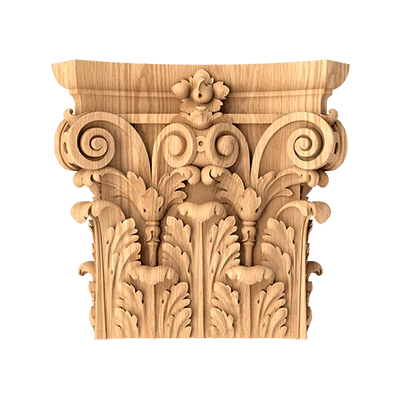
Such wooden carved columns supports pillars — this is already classic architecture in wood. For houses with a portico, for ceremonial gazebos, for representative entrance groups.
Pilasters and half-columns
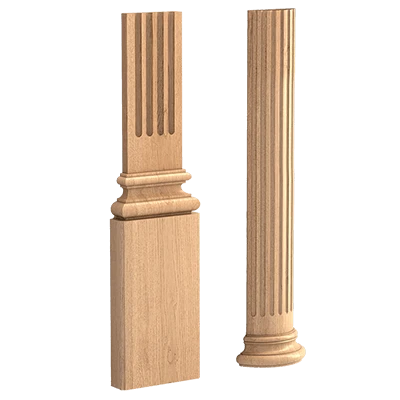
For wall-mounted applications — when the pillar adjoins the wall and is visible only from one side — pilasters are used: flat decorative supports with profiled rods and carved decor. Wooden columns carved pillars and pilasters in the STAVROS catalog — for cases when a flat decorative element is needed instead of a round one.
How to match balusters to carved pillars: five rules of coordination
Here — the most common area of mistakes. Pillars and balusters are bought from different places, from different batches, and then it turns out they don't 'talk' to each other.
Rule one: single wood species
Different species under the same varnish — different tones. Oak is warmer and yellower. Beech is cooler and grayer. Pine — with yellowness and resin. In a photo, the difference may not be striking, but in sunlight on a real porch — the difference is obvious.
Solution: balusters for staircase to buy from the same species as the pillars, from the same manufacturer.
Rule two: scale of carving
A fine, delicate ornament on a baluster next to a large, deep carving on a post is a dissonance. The scale of the decor should be comparable: if the post has large relief elements, the baluster should also have an expressive pattern, even if on a different scale.
Buy carved wooden balusters in coordination with the posts — a task that the STAVROS catalog will help with.
Rule three: height corresponds to the working area
A 2.5-meter post — a baluster for a railing 900–1,000 mm high. A 3-meter post in a gazebo — a baluster in the same range if there is a railing. If the gazebo has no railing, balusters are not needed, but the proportions of the post decor should be designed for the space without infill.
Rule four: uniform finish coating
The decision on the finish coating is made for the entire structure at once. You cannot paint the posts in one tone and the balusters in another. For painting — one enamel, one base. For clear varnish — one impregnation.
Rule five: single delivery
Buy balusters and posts for a wooden staircase — as a single order. This is not just convenience: it is a guarantee of one tone, one moisture content, one batch. With separate orders, the risk of mismatch increases manifold.
What to buy together with the posts: complete kit list
Balusters
Vertical infill elements of the fence between posts. For carved posts — carved or turned balusters in a matching pattern. The quantity is calculated based on the fence length and installation spacing.
Buy wooden balusters in the same style as the carved posts — for a solid fence without eclecticism.
Handrails and balustrades
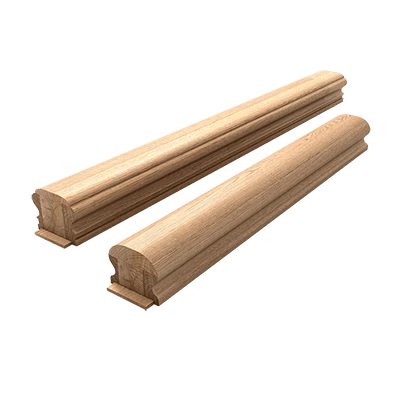
Horizontal rail connecting the posts above the balusters. The handrail profile should match the style of the posts: for classic carved posts — a handrail with profiled edges or a rounded cross-section.
buy balusters and handrails in a single order together with the posts — the right strategy to avoid groove incompatibilities.
Post finials
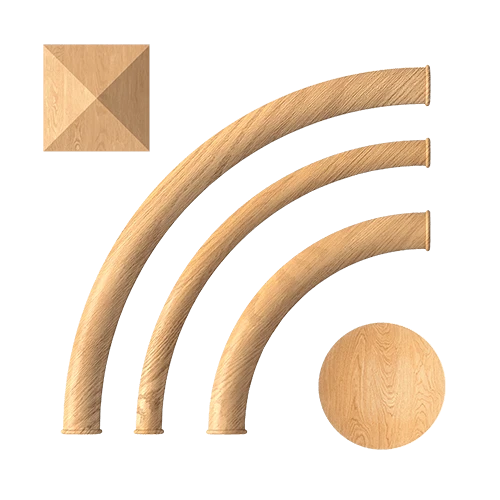
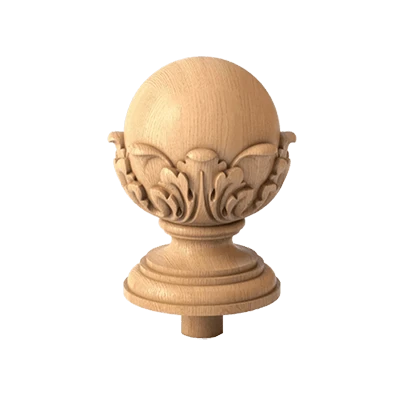
Decorative caps for the top end of the post. Function — protects the end from water and adds decoration. Shapes: pyramidal, spherical, with carved ornament. For outdoor posts, a cap is mandatory — an unprotected end absorbs moisture first.
Base plates and anchor assemblies
Metal bases into which the bottom tenon of the post is inserted. They isolate the wood from direct contact with the concrete base or terrace decking. For posts of 2.5 and 3 meters — a mandatory element of the fastening assembly.
Brackets and braces
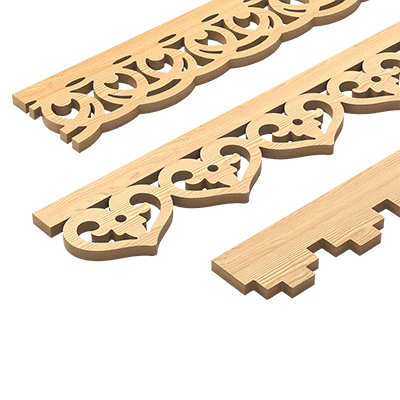
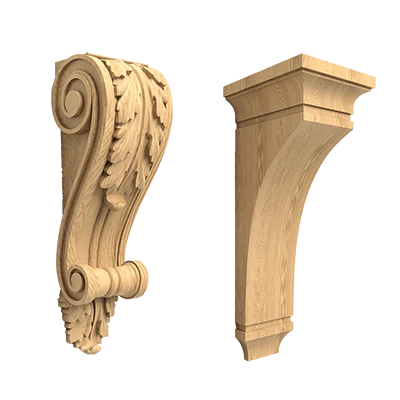
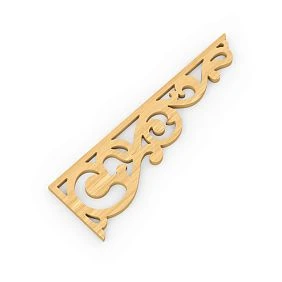
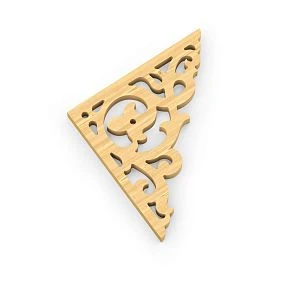
Decorative corner elements between the top of the post and the roof support beam. In wooden decor — cut-out brackets with ornament. They provide structural stability and decorative completeness simultaneously.
Fasteners
For oak posts — stainless steel fasteners (A2/A4). For other wood species — galvanized. Anchor bolts M12–M16 for attaching base plates to the foundation. Studs M10 for mounting the handrail.
Staircase Components for Sale — full range of accompanying elements in one catalog.
Material of carved posts: oak, beech or pine
Oak for outdoor posts
For porch, gazebo, and open terrace posts — oak is optimal due to natural moisture resistance. High density of 720–800 kg/m³ ensures load-bearing capacity, natural tannins provide anti-biological protection. Carving on oak maintains its contour for years without blurring of the relief.
Feature: oak + wet steel fasteners = black spots. Only stainless steel or galvanized fasteners.
Beech for interior and semi-protected structures
For internal stairs, glazed verandas, gazebos with roofing — beech provides sufficient strength and is significantly more affordable. Its uniform structure accepts any coating: white enamel, any shade of stain, or varnish.
Pine for temporary and budget structures
Pine is a soft wood, vulnerable to mechanical damage and moisture. For permanent decorative outdoor posts — not the best choice. Exception: posts under a closed canopy with regular coating renewal.
Comparison of wood species for carved posts
| Parameter | Oak | Beech | Pine |
|---|---|---|---|
| Density (kg/m³) | 720–800 | 680–720 | 480–540 |
| Natural moisture resistance | High | Medium | Low |
| Carving quality | Excellent | Good | Average |
| Outdoor durability | 30–50 years | 15–25 years | 8–12 years |
| Price | High | Medium | Low |
Price of carved wooden posts 2.5 and 3 meters: what shapes the cost
Main price factors
Wood species — an oak post is 1.5–2.5 times more expensive than beech, a beech post is 1.5–2 times more expensive than pine for the same dimensions.
Height and cross-section — the cubic volume of material directly determines the price. A post 150×150×3,000 mm consumes approximately 1.7 times more cubic volume than 100×100×2,500 mm.
Complexity of carving — a decorative post with hand carving along the entire height costs 2–3 times more than a post with turned belts. This is not a markup — it is the volume of manual labor.
Surface condition — a post sanded "ready for coating" is more expensive than one "to size" without finishing. But high-quality sanding saves time during installation.
Order volume — two posts and twenty posts have different prices per piece. A volume discount is real from any manufacturer.
Approximate prices (2026)
| Species | Section | Height | Thread | Price per piece |
|---|---|---|---|---|
| Beech | 100×100 mm | 2,500 mm | Belts | 4,500–7,000 RUB |
| Beech | 120×120 mm | 2,500 mm | Ornament | 7,000–11,000 RUB |
| Oak | 100×100 mm | 2,500 mm | Belts | 8,000–12,000 RUB |
| Beech | 120×120 mm | 3,000 mm | Ornament | 9,000–14,000 RUB |
| Oak | 120×120 mm | 3,000 mm | Ornament | 14,000–22,000 RUB |
| Oak | 150×150 mm | 3,000 mm | Complete | 20,000–32,000 RUB |
For a porch with two oak pillars 120×120×2,500 mm with ornamental carving: 16,000–24,000 RUB. For a gazebo with six 3-meter pillars: from 54,000 to 130,000 RUB depending on wood type and complexity.
Installation of carved wooden pillars: technical requirements
Base and anchor assembly
A pillar 2.5–3 meters under load is not an element that is "simply placed" on the surface. The base must:
-
Withstand vertical load from the roof or handrail
-
Resist horizontal lateral forces
-
Eliminate direct contact of wood with a wet base
Typical solution: a metal footplate (anchor embedment) is grouted into a concrete base or fastened with anchor bolts to a wooden deck. The lower tenon of the pillar fits into the footplate and is secured with a bolt.
Verticality
Checked in two ways: with a plumb line from two adjacent sides or with a laser level. Deviation from vertical — no more than 2 mm per 1,000 mm of height. For a 3-meter post — no more than 6 mm over the entire height.
Protection from moisture
For outdoor posts:
-
Top cap — mandatory, fixed with glue and stainless steel fasteners
-
Bottom end — treated with antiseptic twice before installation in the base plate
-
Metal elements of the base plate — galvanized steel or stainless steel
Fastening of balusters and handrail to the post
The handrail enters the groove in the post body with an end tenon to a depth of 40–60 mm, fixed with a dowel and glue. Bolted connection from the outside — acceptable, but less neat: the nut and washer are visible on the front plane.
Mistakes when buying carved wooden posts
Mistake one: buying posts without balusters from one source
Result — different tones, different decorative patterns, different feel of the wood. On the finished structure, this is noticeable and can only be fixed by repainting. Rule: buy balusters from the same manufacturer as the pillars.
Mistake two: not checking the height for the project
"A 2.5-meter post" sounds specific. But the working height above the base is 2,200–2,350 mm (minus the mounting assembly at the bottom and the finial at the top). If the design requires a working height of 2,500 mm, a 3-meter post is needed. Rule: always calculate the working height, not the total length of the post.
Mistake three: ignoring base plates
"We'll install it directly on the deck and nail it down." For a gazebo or porch in a climate with frost and precipitation, this leads to rot at the bottom end within 3–5 years. Rule: a metal base plate is mandatory for any outdoor post.
Mistake four: using different pillar styles for the same structure
Four gazebo pillars — two with classic carving, two with geometric bands "because they were in stock." On the finished project, the rhythm is disrupted and there's a feeling of incompleteness. Rule: all pillars of the same structure — one model, one batch.
Mistake five: not considering weight and transportation
An oak post 150×150×3,000 mm weighs 100–110 kg. This isn't something "two people can carry." Installation requires at least three workers or a special device. Rule: plan the logistics of delivery and installation in advance.
Mistake six: choosing complex carving for an open street without a canopy
Deep carving with fine details on an outdoor post creates spots for water, dirt, and leaves to accumulate. It is difficult to clean, and the coating in the recesses is inconvenient to renew. Rule: for fully open structures, use a more relief but less detailed ornament.
Mistake seven: buying posts without a cap
The end of a post without a cap is the first place where rain hits. After 2–3 years without a cap, the end cracks and begins to rot. Rule: a cap is a mandatory part of an outdoor post, purchased in one order.
Where to buy carved wooden posts 2.5 and 3 meters
The market for wooden posts is specific: non-standard sizes and complex carvings are not produced everywhere. A hardware store will offer standard smooth posts — and that's it. For carved products, you need a specialized manufacturer.
What to pay attention to:
-
Availability of carved models in a permanent assortment, not just "to order"
-
Height selection: 2,500 mm and 3,000 mm — both sizes should be available
-
Compatible balusters and handrails: so the entire set comes from one source
-
Wood species with moisture content indication: not just "oak", but "oak, kiln-dried, 8–12%"
-
Possibility of a complete order: posts + balusters + handrails + fasteners
Buy carved wooden pillars in the catalog with real photos, exact dimensions, and wood species indicated.
Wooden stair posts — a full range of support elements for stairs and railings.
Buy wooden balusters in a style and wood species matching the pillars — in the same catalog.
STAVROS: carved pillars, balusters, and a complete set for wooden fencing
STAVROS is a Russian manufacturer of solid hardwood products for stairs, railings, porches, and garden structures. The range includes carved wooden pillars of several models, 2.5 and 3 meters high, made of beech and oak, kiln-dried.
What STAVROS offers for the purposes of this article:
-
Buy carved wooden posts — several models with ornamental carving, in stock at the warehouse
-
Buy carved wooden pillars models L-003L — for stairs, porches, and entrance groups
-
Carved wooden pillars for a gazebo models L-003R — for gazebos, terraces, and open areas
-
Wooden columns carved pillars — columns and pilasters for decorative use in interiors and exteriors
-
balusters for staircase to buy — in compatible styles and sizes, from the same wood species
-
Staircase Components for Sale — complete set: posts, balusters, handrails, fasteners in one order
Warehouse in stock. Delivery across all of Russia. Consultation on selection and calculation for a specific project.
STAVROS — this is when a wooden railing turns out exactly as you envisioned it.
Frequently asked questions
Where to buy carved wooden posts 2.5 and 3 meters high?
In the STAVROS catalog — several models of carved wooden posts made of beech and oak, 2,500 mm and 3,000 mm high, with constant warehouse availability and delivery across all of Russia.
How is a post different from a baluster in a wooden railing?
A post is a load-bearing support element with a cross-section of 100×100 mm or more, installed at key points of the railing. A baluster is a thinner filling element (diameter 40–70 mm) standing in a row between posts. These are different structural roles with different installation requirements.
Which posts to choose for a porch with a canopy?
For a standard porch with a canopy 2.2–2.4 meters high — posts 2,500 mm high with a cross-section of 100×100 or 120×120 mm. For a front porch with a high canopy — posts 3,000 mm, cross-section 120×120 or 150×150 mm.
Can I buy posts and balusters as a set?
Yes, and this is the recommended approach. In the STAVROS catalog, posts and balusters are selected in matching styles and sizes, from the same wood species. The entire set is ordered as one order.
Which posts are better for a gazebo: 2.5 or 3 meters?
For a small gazebo (3×3 meters), 2.5-meter posts are sufficient. For a large gazebo (4×4 meters and larger) with comfortable interior space, 3-meter posts will create the right proportions.
Is a finial necessary on a wooden post?
For outdoor use, absolutely. The finial protects the top end of the post from direct water exposure. Without a finial, the end absorbs moisture, cracks during frost, and begins to deteriorate after 2–3 seasons.
Which wood species is best for buying carved posts for a porch?
Oak is the optimal choice for an open porch: natural moisture resistance, high density, expressive texture under a clear coating. Beech is suitable for a porch with a canopy or a glazed veranda. Pine is only for temporary or budget structures with regular maintenance.