








































































Article Contents:
- What is a furniture glide and why this small detail matters
- What tasks do furniture leg glides solve
- Eliminate slight wobbling
- Compensate for local floor unevenness
- Protect parquet and laminate
- Reduce noise
- Protect the leg end
- Furniture wobbles after rearrangement
- Need to level a long console or cabinet
- Furniture stands on tiles
- Need to adjust one leg
- D25 with M6 threaded insert
- D32 with M8 bushing
- Need to protect the parquet
- Chairs are often moved
- Need to cover the end of a wooden support
- d24 FUR-027
- d28 FUR-028
- Measure the actual installation location
- Leave material around the mount
- Check old holes
- Parquet and engineered wood
- Laminate
- Tile and stone
- Carpet
- Chairs and stools
- Dining and work tables
- Chests and Dressers
- Consoles
- Bulky furniture
- Furniture wobbles after rearrangement
- Marks appeared on the parquet
- Chair moves noisily
- The cabinet has thin legs
- Massive supports
- Old furniture is being restored
- Furniture is assembled from scratch
- Find the center
- Prepare the hole
- Do not overtighten
- Check all supports
- Adjustable support pad and plastic overlay
- Felt support pad and self-adhesive overlay
- Support pad and mounting plate
- Thrust bearing and plug
- Purchase by photo only
- Choosing the largest diameter
- Ignoring the mounting
- Installation without marking
- Replacing one part without checking the others
- Attempting to fix a loose frame
- Lack of felt maintenance
- Furniture wobbles when pressed
- Furniture stands level but leaves marks
- Chair both makes noise and wobbles
- Cabinet stands with noticeable tilt
- There is already old hardware under the leg
- Stability check
- Floor checkRe-inspection
- Re-inspection
- "Any soft glide will level the furniture"
- "The largest diameter is always more reliable"
- "Felt doesn't need cleaning"
- "The adjustable support foot will correct any misalignment"
- "You can install different models if the height seems the same"
- Kitchen and dining room
- Living Room
- Bedroom
- Entry Hall
- Office
- Furniture continues to wobble
- Felt pad wears out quickly
- Screw has loosened
- Adjustable mechanism rotates with the threaded insert
- Support foot is visible from the side
- Which furniture glides are better: adjustable or felt?
- Which glides should I choose for parquet flooring?
- What is the difference between D25 and D32?
- What is the difference between d24 and d28?
- Can a felt glide be installed on a wooden leg?
- Are felt models self-adhesive?
- Do I need to install glides on all legs?
- Can an adjustable glide be replaced with a felt one?
- How to know which diameter to buy?
- Can I use an old hole?
- Will felt help if the table wobbles?
- How often should felt glides be replaced?
- Can I mix d24 and d28 on the same chair?
- What should I check before ordering?
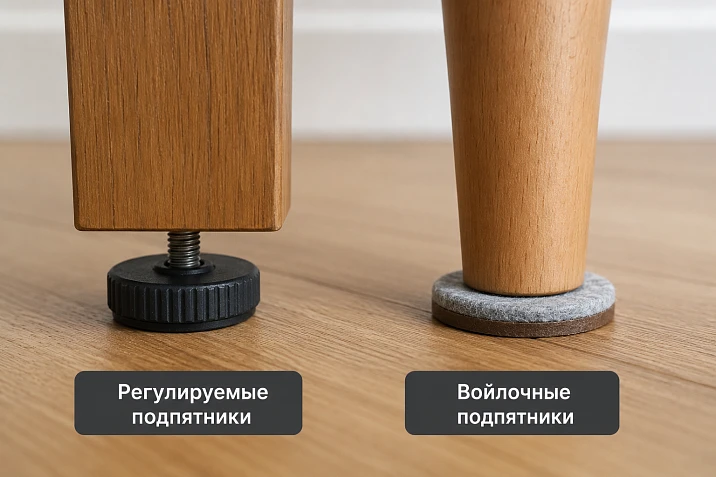
Furniture can be sturdy, neatly assembled, and visually level, but still wobble slightly, move noisily across the floor, or leave marks on sensitive surfaces. The cause is often at the lowest point of the structure — where the furniture leg contacts the floor. Glides are used for this area: adjustable ones help level furniture stably, while felt ones create soft contact and reduce the risk of scratches.
Buyers who want to buy adjustable furniture glides, usually solve one of three problems: compensate for a slight floor unevenness, eliminate wobbling of a table, cabinet, or console, or adjust the position of a single support. Felt models are chosen for a different reason — to protect parquet, engineered wood, or laminate, reduce noise when moving chairs, and separate the hard end of a wooden leg from the flooring.
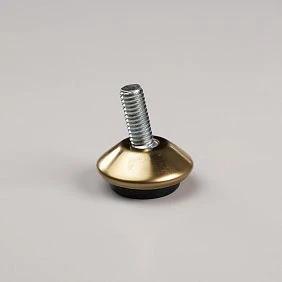
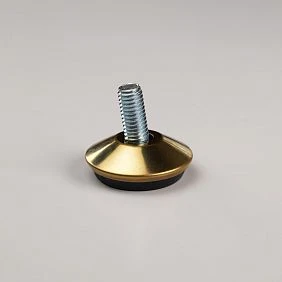
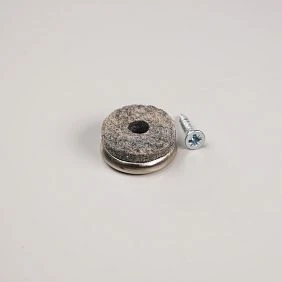
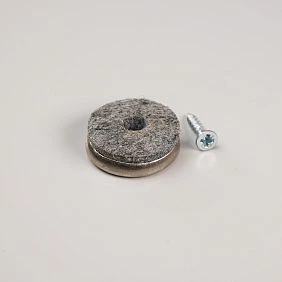
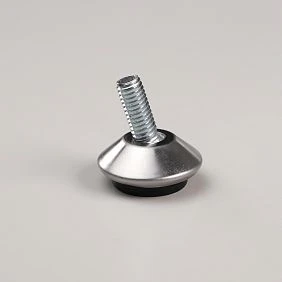
These two types of glides cannot be considered interchangeable. Adjustable models FUR-029 and FUR-030 are equipped with a ball joint and come with M6 and M8 threaded inserts. Felt glides FUR-027 and FUR-028 are attached with a screw and differ in the diameter of the contact part — d24 and d28. If their purpose is confused, the furniture will continue to wobble or the floor will remain insufficiently protected.
In the STAVROS catalog you can buy glides and hardware for furniture legscompare sizes and go to the card of a specific model. But before ordering, you need to identify the main problem, measure the bottom end of the leg, and check which attachment method is suitable for your furniture.

What is a furniture glider and why this small part is important
A furniture glider is a small support part installed at the bottom of a leg. It transfers part of the furniture's weight to the floor. The glider affects the stability of the item, the nature of contact with the flooring, noise when moving, and the condition of the bottom end of the support.
When a wooden leg directly contacts the floor, its end bears friction, dirt, and local load. On parquet or laminate, the risk of damage increases if sand or small hard debris gets under the support. When moving furniture, such a particle acts as an abrasive. A felt surface creates a soft intermediate layer, although it itself requires periodic cleaning.
An adjustable glider works differently. It helps change the position of an individual support point. If one leg is slightly higher than the others due to a local floor unevenness, adjustment allows for a more stable position of the body without cardboard spacers or random shims.
A glider does not fix a split leg, does not eliminate body misalignment, does not replace a mounting plate, and does not compensate for a large construction slope. First, check the condition of the furniture, the strength of the joints, and the geometry of the supports. Only then choose the bottom hardware.




What tasks do gliders for furniture legs solve
Our factory also produces:
Eliminate slight wobbling
If a table or cabinet reacts to a light touch, one of the legs may not have full contact with the floor. The cause may be a slight floor unevenness, a difference in leg height, or assembly inaccuracy. An adjustable glider allows you to correct exactly the problematic point.
Before installation, you need to ensure that the leg is not loose in its upper attachment. If it moves relative to the body, the glider will not eliminate the source of the problem. First, restore the main joint, then level the furniture.
Get Consultation
Compensate for local floor unevenness
Even a visually flat surface may have slight deviations. They are barely noticeable when walking but become apparent under furniture with four separate legs. Long consoles, dining tables, and tall cabinets are particularly sensitive.
An adjustable support allows you to fine-tune one or more contact points. This involves precise adjustment, not an attempt to lift the furniture to a significant height. If the slope is visible to the naked eye, the base and overall safety of the structure must be assessed.
Protect parquet and laminate
Sensitive flooring does not tolerate constant friction from hard legs. Marks appear especially quickly under chairs, armchairs, and small tables that are regularly moved. A felt glider creates a soft layer between the furniture and the floor.
The protective effect is only maintained if the felt is in good condition. If a hard particle gets embedded in the surface, it can itself scratch the flooring. Therefore, soft gliders should be cleaned and replaced as they wear out.
Reduce noise
A hard leg can knock and squeak with every movement. A felt pad softens the contact and reduces sharp sounds. This is useful for kitchens, dining rooms, offices, hotel rooms, cafes, or meeting rooms.
If the squeak originates inside the frame, for example at the joint between the leg and the apron, felt will not fix the problem. The glider only works at the point of contact with the floor.
Protect the leg end
The lower part of the support is exposed to dirt, friction, and accidental contact with moisture during cleaning. The foot pad separates the wood from the floor and absorbs some of the daily wear. It does not make the wood waterproof, but creates a more controlled contact.
Features of four STAVROS models
| Model | Type | Size | Mounting | Main task |
|---|---|---|---|---|
| Adjustable support foot D25 FUR-029 | Adjustable, with ball joint | D25 | M6 insert nut | Adjusting a compact furniture support |
| Buy adjustable foot pad D32 FUR-030 | Adjustable, with ball joint | D32 | M8 insert nut | Adjusting a larger support |
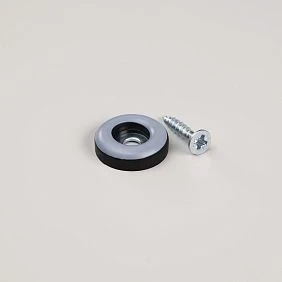
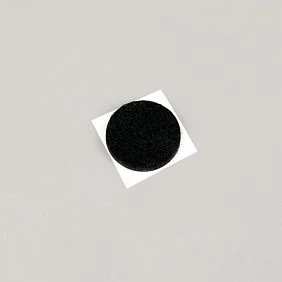
| Felt foot pad d24 with self-tapping screw | Protective felt | d24 | Self-tapping screw | Floor protection for small end |
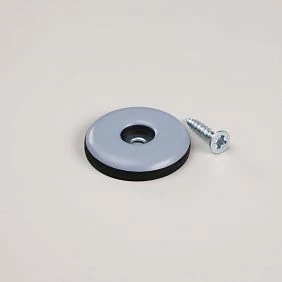
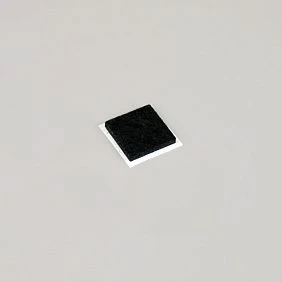
| Buy felt glider d28 | Protective felt | d28 | Self-tapping screw | Enlarged soft pad |
The table shows the main points, but the final choice depends on the size of the end, the available space for fastening, and the condition of the wood. Do not choose the diameter based on the principle "the bigger, the better." A part that is too wide will protrude beyond the edge, and a fastening that is too large may leave insufficient material around the mounting point.
Adjustable and felt gliders: the main difference
| Criterion | Adjustable | Felt |
|---|---|---|
| Main function | Adjusting the support position | Soft contact and floor protection |
| Mounting | Futorka M6 or M8 | Self-tapping screw |
| When to choose | Furniture wobbles or stands on a slight slope | Furniture is often moved on a sensitive floor |
| What to check | Leg size, futorka slot, axis | End diameter, center, wood condition |
The main difference can be stated simply: an adjustable glider works with the position of the furniture, while a felt one works with the nature of the contact between the furniture and the floor. If the furniture stands still and wobbles, stability becomes the priority. If a chair is moved daily on parquet, a soft support is more important.
When to choose an adjustable glider
Furniture wobbles after being moved
If an item was stable in one part of the room and started moving in another, a local floor unevenness is likely. An adjustable model helps to set a single support without random shims. Adjustment is done at the permanent installation location, because it may change at another point on the floor.
Need to level a long console or cabinet
The longer the body, the more noticeable a small difference between supports. A console may have a level tabletop and functional legs, but one corner still reacts to pressure. An adjustable foot allows you to correct a specific point without changing the furniture's appearance.
Furniture stands on tiles
On tiles, differences often appear near seams. For stationary furniture, an adjustable support is convenient because it allows for fuller contact without visible padding. On glossy surfaces, cleanliness must be maintained under each support.
Need to adjust one leg
Sometimes the issue appears only at one point. Adjustment is done gradually, and after each change, opposite corners are checked. The goal is to achieve even support, not to screw the mechanism to the maximum.
Ball joint: why it is needed
FUR-029 and FUR-030 use a ball joint. It allows the bottom plate to slightly change position relative to the mounting axis and better adapt to a small local slope of the surface.
The joint cannot compensate for any angle. If the leg is installed with a strong deviation or the end is damaged, first address the main cause. When choosing, also consider the overall dimensions of the part: on a carved or tapered support, the bottom plate may be significantly smaller than the main thickness of the leg.
Threaded insert M6 or M8
The threaded insert creates a threaded seat in the wooden support. FUR-029 uses an M6 insert, FUR-030 uses M8. The difference affects requirements for leg diameter and the amount of wood around the fastening.
A large ferrule cannot be installed in a too thin leg or near the edge. Be especially careful when working with supports that have cracks, chips, and old holes. When replacing an existing glider, the new fastener must be compatible with the prepared location.
In new furniture, it is better to make a decision before the final finishing of the legs. Then you can accurately mark the center and prepare identical mounting locations on all supports.
D25 or D32: how to choose an adjustable model
The choice between D25 and D32 starts with measuring the bottom end. The glider should not protrude beyond the edge, and sufficient wood mass must be preserved around the ferrule.
D25 with M6 ferrule
Adjustable support foot D25 FUR-029 considered for more compact supports if the end geometry allows installing the plate and M6 ferrule. The smaller diameter helps maintain neatness on a relatively thin leg.
D32 with M8 ferrule
Buy adjustable foot pad D32 FUR-030 reasonable for larger supports where the increased plate matches the scale of the leg and there is enough material for M8.
A larger size should not be chosen just for a feeling of strength. On a thin leg, the plate may protrude, and a large mounting location may weaken the end.
When to choose a felt glider
Need to protect the parquet
Parquet, engineered wood, and laminate are damaged by constant friction from hard legs. The felt surface reduces contact hardness. However, it must remain clean: sand stuck in the felt can also leave marks.
Chairs are often moved
For a chair, floor protection and quiet movement are important. All legs must have identical glides. If one pad is more worn, the contact height changes and the chair may start to wobble.
Need to cover the end of a wooden support
The felt pad absorbs some surface wear. Models FUR-027 and FUR-028 are attached with a self-tapping screw and are not self-adhesive. For installation, you need to accurately find the center of the end and check the condition of the wood.
d24 or d28: how to choose a felt model
The difference between d24 and d28 lies in the diameter of the contact part. The glide must fit completely under the leg and not protrude beyond the edge.
d24 FUR-027
Felt foot pad d24 with self-tapping screw suitable for a smaller contact area when d28 no longer fits neatly.
d28 FUR-028
Buy felt glider d28 worth it for a wider end if the larger pad is completely hidden under the leg.
Quick selection by task
| Task | Type | Models |
|---|---|---|
| Furniture wobbles | Adjustable | FUR-029 or FUR-030 |
| There is a slight floor unevenness | Adjustable | D25/M6 or D32/M8 |
| Need to protect the parquet | Felt | FUR-027 or FUR-028 |
| Chair is moved frequently | Felt | d24 or d28 |
How to measure the leg end
You need to measure not the widest part of the leg, but the bottom platform to which the glider will be attached. For turned and carved supports, the difference between the main thickness and the end can be significant.
Measure the actual installation location
For a round leg, determine the diameter; for a square one, the width and length. If the platform is shaped, focus on the minimum size within which the glider fits completely.
Leave material around the fastening
The screw or threaded insert should not be located close to the edge. The smaller the wood reserve, the higher the risk of chipping. A universal value cannot be given: it depends on the shape, condition, and material of the specific leg.
Check old holes
Old furniture may have traces of nails, screws, and previous hardware. A new fastening cannot be installed blindly in a weakened spot. Sometimes the end is first restored.
Selection based on flooring
Parquet and engineered wood flooring
For frequently moved furniture, soft contact becomes a priority. If the item wobbles, first address the stability issue. Felt does not replace adjustment.
Laminate
Laminate is sensitive to small hard debris. Felt models are useful for chairs and light tables, but they need regular inspection. For heavy stationary furniture on a small unevenness, an adjustable support is more important.
Tile and stone
On tile and stone, an adjustable foot helps level furniture if the unevenness is small. On a polished surface, clean contact remains mandatory.
Carpet
On soft carpet, a felt pad works differently than on a hard floor, and a small support may sink deeper into the pile. Here, the entire system is evaluated: furniture weight, contact area, and carpet density.
Selection by furniture type
Chairs and stools
They are moved most often, so floor protection and uniform condition of all feet come to the forefront. For wooden legs, choose d24 or d28 according to the end size.
Dining and work tables
Even a slight wobble interferes with work and dining. If the cause is an uneven floor, adjustable models help level the legs. For a long tabletop, adjustment is done gradually, checking opposite corners.
Cabinets and chests of drawers
The wobble is especially noticeable when opening drawers. First, check the top attachment of the legs and the rigidity of the body, then use adjustment.
Consoles
Narrow furniture is sensitive to unevenness near the wall. After rearranging or cleaning, stability is checked again, as the adjustment is tied to a specific point on the floor.
Massive furniture
For heavy items, you cannot choose a glider solely by diameter. You need to consider the support structure and the expected load. Unconfirmed load values must not be invented — they should be clarified before ordering.
Practical selection for specific situations
Furniture wobbles after being moved
Check the connections and find a leg without full contact. For a compact support, consider FUR-029; for a larger one, FUR-030, but only after measuring the end.
There are marks on the parquet
Clean the floor and the bottom of the legs, then choose d24 or d28. After installation, regularly check the felt for sand and wear.
The chair moves noisily
If the sound comes specifically from contact with the floor, a felt model will help make the movement quieter. All four elements must be identical.
The pedestal has thin legs
Don't choose a model based solely on small diameter. Even M6 or a self-tapping screw requires sufficient wood volume. For a very thin end, a different solution will be needed.
The supports are massive
For adjustment, consider D32; for soft contact, d28. But size doesn't replace functional choice: first determine the task.
Old furniture is being restored
After removing the old hardware, inspect the holes and cracks. Sometimes a new part fits immediately, sometimes the end needs to be restored.
Furniture is assembled from scratch
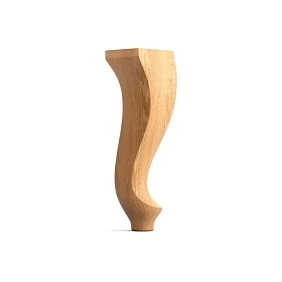
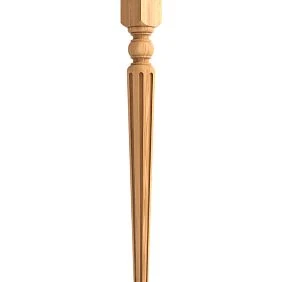
Choose the glides before final installation. This allows you to prepare the appropriate end and uniformly prepare all holes. For the project, you can pre-select Wooden furniture legs made of solid wood.
How to install a glide without skewing
Find the center
On a round leg, the center is determined by diameters; on a square one, by diagonals. For a shaped support, focus on the actual contact area.
Prepare the hole
For a screw in hardwood, a thin pilot hole is useful. For an adjustable model, prepare a place for an M6 or M8 threaded insert. Misalignment of the insert will cause the foot to be tilted.
Do not overtighten
Excessive force can damage the wood and strip the threads. The fastening must be secure, but should not compensate for inaccurate preparation with force.
Check all supports
After installation, place the furniture in its permanent location and check each corner. Make adjustments in small steps. The felt pads should all contact the floor evenly.
How not to confuse a glider with similar hardware
Adjustable foot and plastic cap
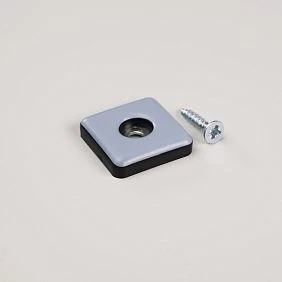
The plastic cap creates a contact surface but does not allow changing the support position. If the furniture wobbles, identical rigid caps do not always solve the problem.
Felt foot and self-adhesive cap
FUR-027 and FUR-028 are attached with a screw. They are not self-adhesive and require a wooden base, precise marking, and tools.
Foot cap and mounting plate
The foot cap is located at the bottom of the leg. The mounting plate connects the upper part of the support to the body. These parts work in different assemblies and do not replace each other.
Foot cap and plug
The plug covers the technological hole but is not designed to bear load or contact the floor.
What to buy together
When assembling new furniture, the foot cap is part of the system: body, top mount, leg, and bottom support. For the project, you can look at Wooden furniture legs made of solid wood, then determine their attachment method and select the bottom hardware.
For one piece of furniture, it is better to buy an identical set of foot caps. Mixing different types and heights can create a new misalignment. Even if the problem is noticeable on only one leg, the condition of the others should be checked.
| What to add | Why | What to Check |
|---|---|---|
| Wooden furniture legs made of solid wood | For new furniture or replacement of supports | End size and compatibility |
| Mounting plates | Leg attachment to body | Geometry and fasteners |
| Studs and mounting kits | Forming the connection | Thread and seat |
| Set of support pads | Same height for all supports | One type and size |
Who these support pads are for
They are suitable for owners of furniture with wooden legs, furniture makers, restorers, and those who assemble furniture from individual elements. Adjustable models are useful for stationary tables, cabinets, and consoles, while felt ones are for chairs, armchairs, and light items on sensitive floors.
Additional checking is needed for hollow metal supports, very thin legs, split ends, furniture with non-standard built-in adjustment, and cases where a large floor height difference needs to be compensated.
Selection Errors
Purchase by photo only
It is difficult to estimate the diameter and mounting size from the image. Measurements are needed before ordering.
Choosing the largest diameter
A large pad may protrude beyond the edge and require an excessively large mounting space.
Ignoring the mounting
Felt models are attached with a self-tapping screw, adjustable ones via a threaded bushing. Expecting self-adhesive installation will lead to errors.
Installation without marking
Shifting towards the edge increases the risk of chipping and worsens the appearance.
Replacing one part without checking the others
A new foot may differ in height from worn ones. It is better to evaluate the entire set.
Attempting to fix a wobbly frame
If the leg moves in the upper joint, first restore the fastening.
Lack of felt care
The soft pad collects dust and sand. Without cleaning, it loses its protective effect.
Post-installation care
The felt surface is regularly inspected and cleaned. If heavily worn, it is replaced before the fastener touches the floor. Adjustable glides are checked after moving furniture, because the adjustment is related to a specific area of the flooring.
If the part starts to rotate, shift, or wobble, temporarily stop using the furniture and check the end. Heavy furniture should not be dragged sharply across the floor: lateral force increases the load on the fastening.
How to buy glides on STAVROS
Start with the section where you can buy furniture glides. Determine the main task, measure the end, and check the fastening.
For adjustment, compare Adjustable support foot D25 FUR-029 и adjustable glide D32 FUR-030. For floor protection — Felt foot pad d24 with self-tapping screw и felt glider d28.
Before ordering, check the number of legs, the condition of each support, and the presence of old holes. For new furniture, pre-select the legs, top mount, and bottom glider as a single system.
Why you shouldn't choose a glider as a universal small part
The small size of the part often creates a false impression that serious inspection is not required. The buyer sees a round element, compares the outer diameter, and assumes that any size-appropriate option can be installed on the leg. But the glider works in the area through which the furniture transfers load to the floor. An error in fastening, misalignment relative to the center, or insufficient wood stock around the hole can damage the end and impair stability.
For an adjustable model, you need to consider both the platform diameter and the threaded connection. D25 is associated with an M6 insert nut, and D32 with M8. For felt models, it's important not only how wide the soft circle is, but also where the screw will go. If the end is shaped, oval, beveled, or already has a hole, simply comparing numbers is not enough.
The glider also changes the overall height of the support point. When different parts are installed on one piece of furniture, even a small discrepancy can lead to new wobbling. Therefore, it's better to start the selection not with one damaged leg, but by inspecting the entire set. Compare all four points, their height, condition, and method of attachment.
Conscious selection is especially important for solid wood furniture. A wooden leg allows for reliable installation of an insert nut or screw, but the wood requires precise marking. An error near the edge can lead to chipping, and re-screwing into a stripped hole can weaken the fastening. A small part requires the same care as other furniture fittings.
How to identify the main problem before purchase
The furniture wobbles when pressure is applied
Place the item in its intended permanent location and press on the corners one by one. If movement occurs diagonally, one of the supports may not be fully touching the floor. Then check if the legs themselves are moving relative to the body. If the top mount is intact and there is a small gap, consider adjustable models.
The furniture stands level but leaves marks
If the body is stable and the problem only occurs when moving, adjustment is not a priority. Inspect the ends, clean the floor, and choose a felt pad of the right size. It's important to understand that felt reduces the risk of scratches but does not eliminate the need for cleaning. Sand under a soft support remains a hard abrasive.
The chair is both noisy and wobbly
Here, you can't immediately decide that felt is needed. First, determine the source of the wobble: uneven leg lengths, a loose frame, damaged old glides, or an uneven floor. After restoring stability, you can choose a soft bottom pad. If you put new felt elements on a faulty chair, the problem will persist.
The cabinet stands with a noticeable tilt
Adjustable glides are designed for precise local correction. A noticeable tilt may be due to a large floor unevenness, body deformation, or assembly error. In such a situation, you cannot simply extend one support further. It is necessary to assess the entire structure, as excessive adjustment can worsen stability.
There is already old hardware under the leg
Remove the old part and determine how it was attached. If there is a threaded insert in the end, you need to know its size. If a screw or nail remains, check the hole. The new model should not be installed over an unknown fastener. Sometimes the old mounting spot can be used, but only with precise compatibility.
Choosing the quantity: one part or a full set
When one glide is broken, buying a single part seems economical and logical. But the decision depends on the condition of the other supports. On a chair or table that has been used for several years, the old soft pads may have worn down and become lower. The new part will differ in height and contact density, causing the furniture to rest unevenly.
For felt glides, a complete replacement is especially convenient. All pads receive the same diameter, the same degree of wear, and the same method of attachment. In the future, they are easier to check and replace. If one element is accidentally damaged while the others are almost new and fully match the selected model, only that one can be replaced, but the actual height should be compared beforehand.
For adjustable models, the situation is slightly different. Working mechanisms do not necessarily need to be replaced without reason. However, when installing a new glide, it is necessary to ensure it is the same model and has the same adjustment range as the others. Mixing D25 and D32 on one product without a design calculation is not recommended.
When manufacturing furniture from scratch, the quantity is counted by the number of supports. For four legs, four identical glides will be required. If the structure has a central additional support, it cannot be ignored: it must also correctly bear the load and match the overall height. The decision regarding the central leg is made at the design stage.
How a glide affects furniture height
Any bottom part adds a certain height between the end of the leg and the floor. Even if the change seems small, it is important for furniture with a specified seating. For a chair, the seat height changes; for a table, the position of the tabletop; for a cabinet, the gap above the floor. When replacing old hardware with new, you need to compare not only the diameter but also the final position of the support.
If identical glides are installed on all legs, the furniture rises evenly. This usually does not create a tilt, but may affect alignment with adjacent items. For example, the height of a chair should remain comfortable relative to the table. In new furniture, this parameter is considered in advance, not after the legs are made.
Adjustable models allow for correcting individual points, but they cannot be used as a way to significantly increase the overall height of the furniture. The further the mechanism is extended from its compact position, the more carefully stability and appearance need to be assessed. The main task is precise adjustment, not turning the glide into a leg extender.
During restoration, it is important to consider the old height. If the previous hardware was recessed into the end of the leg and the new one is installed differently, the final size will change. Before installation, it is useful to assemble a test unit on one support and check if it matches the others.
Glides and new wooden legs
When furniture is assembled from individual parts, it is better to select the bottom hardware simultaneously with the supports. In the section, you can choose Wooden furniture legs made of solid woodthen measure their bottom platform and determine which glider matches the project.
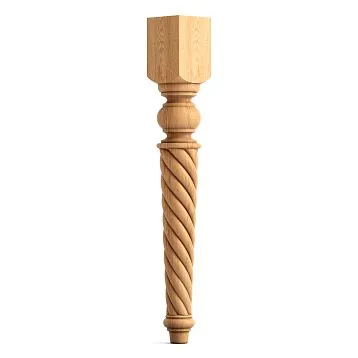
The external shape of a leg does not always indicate the size of its end. A massive turned support can noticeably taper downward. Conversely, a minimalist square leg may have a wide, flat platform. Therefore, you cannot choose a glider based on a photo of the product. The dimensions of the bottom part are needed.
For new furniture, it is also important to coordinate the top and bottom fastening. The mounting plate, stud, or other connecting unit secures the leg to the body. The glider works at the floor. If the top part is installed with a tilt, the bottom adjustment should not be used to mask this error.
Planning before finishing simplifies the work. The center of the end can be marked precisely, holes prepared on a machine or using a guide jig, and then painting or other finishing can be done without accidentally damaging the surface. After finishing is complete, the gliders are installed carefully, without scratching the legs.
Features of selection for old furniture
Old furniture requires a more careful inspection than new furniture. The ends may have been in contact with the floor for many years, absorbing dirt and receiving minor damage. Cracks or a broken hole are sometimes hidden under the old glider. Before purchasing a new model, it is useful to remove the old hardware and assess the actual condition.
If the old screw held poorly, installing thicker fasteners without repair does not always help. It can widen the damage and split the edge. The hole is restored using a suitable method, after which the center is re-marked. The repair technology depends on the condition and design of the leg.
If there is an old threaded insert, the thread needs to be identified. If it is intact and matches the new adjustable model, replacement can be simple. If the size differs, do not force an incompatible element in. The damaged bushing is removed and the seat is restored.
Restoration also requires respect for the appearance. The glider should not protrude noticeably and disrupt the proportions of a carved support. For a thin classic leg, a more compact model often looks neater, but its fastening must still be structurally permissible.
Gliders for furniture in commercial spaces
In restaurants, cafes, hotels, salons, or meeting rooms, furniture is used more intensively than at home. Chairs are moved dozens of times a day, tables are rearranged during cleaning, and more abrasive dust gets on the floor. Therefore, felt glides require regular maintenance.
It is useful to include inspection of the bottom hardware in the planned furniture check. An employee can quickly identify worn felt, a loose screw, or a wobbling support before noticeable floor damage occurs. Replacing them as a set on several identical chairs simplifies maintenance.
For stationary consoles, racks, and cabinets, stability is important. If the furniture is moved after renovation or a hall rearrangement, adjustable supports are set up anew. It cannot be assumed that the previous position will remain on a different tile area.
A commercial interior also imposes requirements on appearance. A protruding glide is noticeable to a visitor, especially on furniture with an open base. Therefore, the diameter is chosen not only for function but also for how neatly the pad is hidden under the end.
How to check the result after installation
Stability check
Place the furniture in its permanent location and press on the corners one by one. The body should not noticeably move diagonally. If movement persists, do not rush to continue adjustment: recheck the top connections and the floor condition.
Floor checkRe-inspection
After a few days, check the glides again. The screw should not loosen, the insert should not shift, and the felt should not deform. Early detection of a problem allows it to be fixed before the end is damaged.
Myths about furniture glides
"Any soft glide will level furniture"
A soft pad may compress slightly, but it is not designed to precisely compensate for height differences. If furniture wobbles, an adjustable support or fixing the structural cause is required.
"The largest diameter is always more reliable"
Reliability depends not only on contact area. The size of the end, the location of the fastener, and the condition of the wood are important. A model that is too large can damage a thin leg.
"Felt doesn't need cleaning"
Soft material collects dust and sand. Without maintenance, it can itself become a source of scratches. Inspection is especially important in hallways, kitchens, and commercial spaces.
"An adjustable glide will fix any misalignment"
It is designed for minor deviations. Severe cabinet misalignment, loose legs, and a large floor slope require a separate solution.
"You can install different models if the height seems the same"
Different designs differ not only in visible height but also in behavior under load. It is better to use a matched set on one item.
Detailed selection guide for the buyer
Step one — formulate the task. If the furniture wobbles, look at adjustable models. If the coating scratches or the furniture moves noisily, study felt ones. When combining problems, first ensure stability.
Step two — inspect the furniture. Check the attachment of legs to the body, cracks, chips, and old holes. Do not install new hardware in a damaged spot without repair.
Step three — measure the end. You need the size of the bottom platform, not the wide part of the leg. The foot pad must fit within the end with clearance around the attachment.
Step four — choose the type of attachment. For FUR-029, a fit for M6 is required; for FUR-030, for M8. FUR-027 and FUR-028 are attached with a self-tapping screw.
Step five — determine the quantity. Check all supports. For a new product, order identical glides matching the number of legs. For repairs, compare the condition of the old set.
Step six — open the product card. Verify the specifications right before ordering. Do not rely solely on the name and photo.
Step seven — prepare for installation. Mark the center, choose the right tool, and do not try to force the mount.
Step eight — check the result. After installation, place the furniture in its permanent location, assess stability, and recheck after a few days.
What to tell the manager for complex selection
If the leg is non-standard, it is helpful to prepare accurate data in advance. Specify whether adjustment or floor protection is needed, what material the support is made of, and the size of its bottom end. For a shaped leg, it is best to describe the minimum platform width.
Report old holes, installed bushings, and damage. If the previous thread is known, this is important information. Do not hide cracks and chips: they affect the possibility of installation.
For new furniture, specify the number of legs and the intended floor covering. If the item will be moved frequently, this also affects the choice. For a stationary cabinet and a dining chair with the same end, different solutions may be required.
The more accurate the initial data, the lower the risk of ordering an unsuitable model. A photo can supplement dimensions but does not replace them. A shot of the end next to a ruler and a separate frame of the entire leg are especially useful.
Additional comparison table by scenarios
| Scenario | What is more important | Preliminary selection | Mandatory check |
|---|---|---|---|
| Console wobbles against the wall | Durability | FUR-029 or FUR-030 | End size and fastening condition |
| Chairs are moved across parquet | Soft contact | FUR-027 or FUR-028 | End diameter and felt cleanliness |
| Pedestal stands on tile joint | Precise adjustment | Adjustable type | Height difference |
| Restoration of an old chair | End condition | After inspection | Old holes and cracks |
| New solid wood furniture | Set compatibility | As per project | Legs, top and bottom mounting |
Pre-order checklist
- Main task identified: floor adjustment or protection.
- Leg attachment to the body checked.
- The bottom end of each support measured.
- Cracks, chips, and old holes inspected.
- Suitable mounting type selected: M6, M8, or self-tapping screw.
- Number of glides calculated for the entire item.
- Checked that the platform will not protrude beyond the edge.
- Floor covering and frequency of furniture movement have been taken into account.
- Specifications have been verified against the specific model card.
- Tools and precise markings have been prepared.
If at least one point remains unclear, it is better not to drill the end in advance. First, clarify the parameters. Fixing an incorrectly chosen diameter before installation is easier than restoring a damaged wooden leg.
Selection for different rooms and operating modes
Kitchen and dining room
In the kitchen and dining room, chairs are moved especially often. Crumbs, sand, and small debris fall on the floor, so felt pads need regular cleaning. If the covering is sensitive, d24 or d28 is chosen based on the leg end and installed as a matching set. The dining table usually stands still; if it wobbles, adjustable models are evaluated separately for it.
You should not choose the same type of glider for the table and chairs just because they are part of the same set. Their operating modes are different. The table requires stability, while the chairs require soft and quiet movement. The external unity of the furniture does not negate the differences in the lower fittings.
Living room
In the living room, several scenarios occur simultaneously: a stationary console against the wall, a coffee table that is periodically moved, a media cabinet, and an armchair. For the console, precise installation is important; for the lightweight table, the nature of contact with the floor matters. Before purchasing, separate items by usage mode rather than trying to choose one model for the entire room.
If the flooring continues without thresholds between the living room and the adjacent area, furniture may move across sections with varying evenness. An adjustable table set in one place is rechecked after rearrangement. Felt glides are inspected after moving through an area where sand may have gotten on the floor.
Bedroom
In the bedroom, silence is valued. Felt glides are useful for a chair at a dressing table, a bench, or a small bedside table if they are moved. A nightstand that stands permanently should primarily maintain stability. If it wobbles when opening a drawer, first check the leg fastening and only then choose an adjustable support.
For a bed or other massive furniture, the same solutions as for a light chair cannot be automatically used. Weight, construction, and load distribution differ. Confirmed cards provide dimensions and type of fastening, but the permissible load should be clarified separately if it is critical for the project.
Hallway
The hallway is an area with an increased amount of sand. Felt glides get dirty faster here. If a console or bench is moved regularly, the soft pads are inspected more often. Felt itself does not guarantee protection when solid particles have gotten into it.
On tiles at the entrance, there may be seams and local unevenness. A stationary console can be leveled with adjustable glides if the deviation is small. After adjustment, it is important to ensure that the furniture does not wobble and all pads have contact with the floor.
Cabinet
A desk should remain motionless during writing and computer work. Even a slight wobble quickly becomes annoying. For a desk, consider adjustable models if the cause is related to the floor. For a guest chair or a small armchair on parquet, felt pads are more often useful.
Thus, in one room, both types of glides can be used simultaneously. This is not a contradiction: each model solves its own task on a separate piece of furniture.
How to prepare furniture for installation
Before work, the furniture is emptied of its contents. Drawers are removed, removable shelves are taken out, and the item is positioned so that it cannot fall. A heavy cabinet cannot be held with one hand while drilling. Safe fixation is more important than installation speed.
The lower part of the leg is cleaned of dust and old glue. If the previous glide was nailed or screwed, the fastener is carefully removed without loosening the hole. After removal, assess whether a flat surface remains and whether there is a hidden crack.
For marking, use a thin pencil or an awl, but the mark should not be deep. On a finished leg, protect the surface from accidental scratches. If the furniture is new and not yet painted, the mounting spot can be prepared in advance, and final installation can be done after finishing.
When working with multiple legs, a template is useful. It helps position the holes identically. However, the template must match the actual end of each support. On handmade or restored furniture, legs may vary slightly, so always check the center individually before drilling.
Why the pilot hole requires precision
A pilot hole helps guide the screw and reduces the risk of splitting, especially in dense wood. But a hole that is too wide reduces holding power, while one that is too narrow does not relieve stress. Choose the diameter based on the fastener and material, not by eye.
Depth also matters. A hole that is too shallow does not fulfill its purpose; one that is too deep can weaken a thin leg or break into a cavity if the structure is complex. It is convenient to mark the required depth on the drill bit with a stop.
The hole should go along the axis of the leg. A tilted screw shifts the glider, and a skewed threaded insert makes adjustment inconvenient. For precise work, use a guide tool or a drill press if possible.
After drilling, remove the chips and inspect the edge again. If a crack appears, stop the installation. Attempting to hide the damage with a glider will lead to further splitting.
How to assess compatibility without installation
Before drilling, perform a dry fit. Place the plate against the end and check if it fits entirely within its boundaries. Ensure the mounting center lands in a solid part of the wood, not in an old hole or close to the edge.
For an adjustable model, compare the position of the threaded insert and the thickness of the support. For a felt one, check the screw path. Do not screw the part in "for a test" if unsure: repeated removal already alters the hole.
Fitting is performed on each leg if the furniture is old or handmade. The ends may differ by a few millimeters. A model that fits one support should fit the others.
If the platform protrudes, transitioning to a smaller diameter is only possible if a suitable mount is retained. You cannot choose d24 instead of d28 if the main task requires adjustment: these numbers refer to different product types. First preserve the function, then select the size within the required group.
Diagnosing problems after installation
Furniture continues to wobble
Check if all legs touch the floor, if the top mount is loose, or if one glider is installed at an angle. For adjustable models, perform fine-tuning in small steps. If the height difference is too large, a different structural measure is needed.
Felt pad wears out quickly
The cause may be frequent movement, dirty floor, uneven load, or furniture misalignment. Do not just replace the felt: check why one leg wears out faster than the others.
Screw is loose
Do not continue use. A loose fastener enlarges the hole. Remove the glider, assess the wood, and restore the mounting point. Screwing in a larger screw without analysis may split the end.
Adjustable mechanism rotates together with the threaded insert
This indicates a problem with the mounting point. The threaded insert must be securely fastened in the leg. The mechanism is removed and the connection is checked. Attempting to hold the bushing with pliers while the furniture is installed can damage the finish and threads.
The foot pad is visible from the side
Perhaps the diameter chosen is too large or the part is offset from the center. If the fastening has already been done, replacement is planned after assessing the hole. The new model must maintain reliability and cover traces of the previous installation.
How to combine adjustment and floor protection
A situation where furniture both wobbles and stands on a sensitive surface requires a sequential approach. First, eliminate the wobbling. While the body is unstable, the load on the lower pads is distributed unevenly, and soft elements wear out faster.
After adjustment, evaluate the contact of the selected model with the floor. You cannot automatically add a self-adhesive pad to an adjustable foot pad: it may change the geometry of the platform, detach, or disrupt the hinge operation. Any combined solution must be structurally compatible.
For furniture that is not moved, the risk of scratches is usually associated with dirt under the support, not with constant friction. Floor cleanliness and careful installation may be more important than an additional soft layer. For a chair, on the contrary, movement occurs daily, so a felt pad has obvious benefits.
When there is no ready solution for both tasks, priority is determined by safety. Furniture stability is more important than ease of movement. After that, floor protection is selected considering the specific leg design.
Savings without loss of selection quality
A rational purchase begins not with choosing the cheapest part, but with preventing rework. An unsuitable foot pad may require restoration of the end, new marking, and a repeat order. Accurate measurements are cheaper than correcting a mistake.
It is not necessary to buy a larger model "with a reserve." A diameter reserve does not mean a reliability reserve. Sometimes the compact FUR-029 fits the leg better than the FUR-030. Similarly, d24 may be more appropriate than d28 for a small end.
When replacing felt glides as a set, the initial purchase is larger than replacing a single part, but the result is more predictable. All legs receive the same height and degree of wear. This reduces the likelihood of repeated wobbling.
For a new project, comprehensive selection saves time. First, choose the legs, then the top mounting and glides. Attempting to select the bottom hardware after full assembly often limits the available options.
Additional questions before the final decision
Will the furniture stand in one place or be regularly moved? What covering is under the legs? Are there children or pets that could cause lateral load on the item? How easy is it to access the glides after installation?
The answers help determine not only the model but also the maintenance regime. A chair in the dining room is inspected more often than a console in the bedroom. Furniture in a cafe requires scheduled checks, while a home cabinet needs inspection after rearrangement.
It is also important to understand who will perform the installation. Installing a threaded insert requires precision. If you lack the proper tools and experience, it is better to entrust the work to a professional. The cost of professional installation may be lower than the cost of restoring a split leg.
Finally, evaluate the appearance. Even a technically suitable plate should not disrupt the proportions of the support. A well-chosen glide is almost invisible and is perceived as a natural part of the furniture.
Final check before placing the order
Before putting the glides in the cart, once again match the function and model. For adjustment, consider FUR-029 and FUR-030; for soft contact, FUR-027 and FUR-028. Do not choose d28 just because it is larger than d24 if the furniture actually requires an adjustable support. Similarly, D32 does not replace a felt pad for a chair that is moved daily on parquet.
Check the number of legs and the condition of each one. For furniture with four supports, inspect all four ends, even if the problem is only noticeable on one corner. Compare the old hardware, measure the platforms, and record the dimensions. This simple procedure protects against the situation where, after receiving the order, it turns out that one leg differs from the others.
Separately assess access to the installation site. Some cabinets and consoles can be safely turned over, while others require an assistant and a soft pad. If the furniture is heavy, do not try to hold it while drilling. Prepare the workspace in advance to avoid damaging the body, finish, and floor.
After selection, open the specific model's card and double-check the diameter and fastening. For an adjustable support, the M6 or M8 threaded insert is important; for a felt one, the self-tapping screw and the size of the contact part matter. If the end characteristics do not allow you to confidently choose an option, clarify compatibility before purchase.
Why the correct glider extends ease of use
The benefit of a glider is evident not only at the moment of installation. A stable table does not require constant shims, a cabinet does not wobble when a drawer is opened, and a chair moves across the floor without a harsh sound. These are small improvements that daily affect the convenience of using the furniture.
A correctly installed part also simplifies maintenance. The adjustable mechanism can be checked after rearrangement, and the felt pad can be cleaned or replaced when worn. A random shim under the leg does not provide such control: it shifts, gets wet, and loses its shape.
An informed choice is especially important for furniture that is meant to last a long time. When the diameter matches the end, the fastening is centered, and all supports work uniformly, the load is distributed more predictably. A glider does not replace a quality construction, but helps maintain its proper operation in real room conditions.
Short commercial conclusion for four models
FUR-029 is chosen when a compact adjustable support D25 with an M6 threaded insert is needed. FUR-030 is suitable for a larger end and uses an M8 threaded insert. FUR-027 creates a felt pad d24, and FUR-028 creates d28. In all cases, the decision is made after measuring the leg, checking the wood, and determining the main task.
Buying a suitable set is more advantageous than randomly replacing with an unsuitable part. The correct glider does not protrude beyond the edge, is installed centrally, and matches the furniture's usage mode. Before ordering, open the model's card, verify the parameters, and ensure that the chosen fastening can be safely installed in the specific end.
FAQ
Which furniture glides are better: adjustable or felt?
Adjustable ones help stabilize furniture, felt ones protect the floor and reduce noise. The choice depends on the task.
Which furniture glides to choose for parquet?
For frequently moved furniture, felt ones are usually chosen. If the furniture wobbles, stability is addressed first.
What is the difference between D25 and D32?
The platform diameter and the threaded insert: D25 comes with M6, D32 with M8.
What is the difference between d24 and d28?
The diameter of the felt contact part. The choice depends on the leg end.
Can a felt glide be installed on a wooden leg?
Yes, FUR-027 and FUR-028 are attached with a self-tapping screw to a wooden support.
Are felt models self-adhesive?
No. They are attached with a self-tapping screw.
Do I need to install glides on all legs?
It's better to use identical parts on all supports of one item.
Can I replace an adjustable glide with a felt one?
Only if adjustment is no longer needed. These models serve different functions.
How do I know which diameter to buy?
Measure the bottom end and check that the pad fits completely under the leg.
Can I use the old hole?
Only if it is compatible and not damaged.
Will felt help if the table wobbles?
It is not designed for precise adjustment. For wobbling, consider an adjustable model.
How often should felt glides be replaced?
When there is noticeable wear, deformation, or dirt that cannot be removed.
Can d24 and d28 be mixed on the same chair?
Without precise calculation, it is not recommended. It is better to use a matching set.
What should be checked before ordering?
The task, end size, support material, wood condition, attachment method, and number of legs.
Conclusion
For leveling furniture and compensating for minor floor unevenness, choose an adjustable glide. For protecting parquet, laminate, and quiet movement, choose a felt glide. If both tasks are present, first ensure stability, then assess floor protection.
FUR-029 D25 with M6 insert is suitable for a more compact adjustable support, FUR-030 D32 with M8 for a larger one. Among felt models, FUR-027 has d24, and FUR-028 has d28. Before purchasing, measure the end and check the wood condition.
In the STAVROS catalog you can buy glides and hardware for furniture legs, open the product pages of specific models and assemble a compatible set without random shims or unsuitable fasteners.