











































































Article Contents:
- What's behind the query: why Yekaterinburg is searching for slatted panels
- Why slatted panels became the first choice
- Why molding is returning to the agenda
- What's important to consider when buying: seven parameters that decide everything
- First parameter: room and its conditions
- Second parameter: ceiling height
- Third parameter: interior style
- Fourth parameter: lighting
- Parameter five: base material
- Parameter six: system budget, not item budget
- Parameter seven: manufacturer and quality guarantee
- Which panels are suitable for walls, ceilings, and zoning
- Wall slatted panels: main category
- Ceiling slatted panels
- Slatted panels for zoning
- Which polyurethane elements are needed for a finished interior
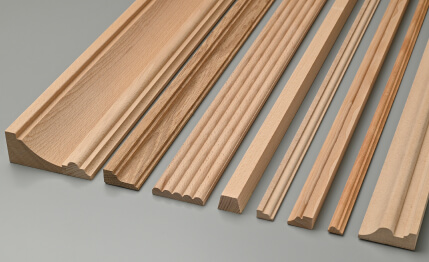
- Ceiling cornice: first and mandatory element
- Baseboard: lower boundary of the system
- Molding belts: horizontal wall structure
- Molding frames: framing of slatted field
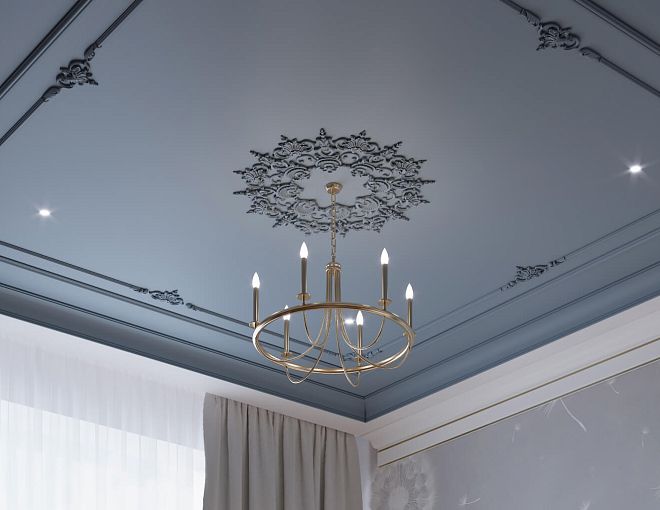
- Ceiling Rosettes
- Polyurethane beams
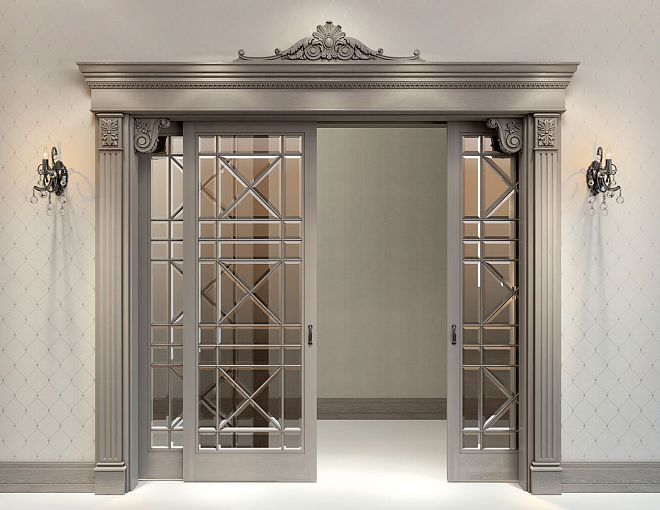
- Facade elements: architraves, pilasters, cornices
- How to combine slatted rhythm and stucco decor: practical formulas
- Formula for modern interior
- Formula for modern classic
- Formula for neoclassicism
- Formula for country / rustic / Provence
- What to look at besides price: quality selection criteria
- Geometric precision of slats
- Uniformity of coverage
- Accuracy of polyurethane product profile
- Color stability in the batch
- Errors when choosing materials online
- First error: choosing by photo without considering scale
- Second error: purchasing without calculating quantity
- Third error: ignoring technical specifications
- Fourth error: purchasing without checking installation method
- Fifth error: choosing a cornice without mentally joining with slats
- Sixth error: refusing samples
- Delivery to Yekaterinburg: logistics and practical tips
- About the Company STAVROS
- FAQ: Answers to Popular Questions

Yekaterinburg is a city with a fast pace of life and high standards. A lot is being built here, renovations are actively underway, and the requirements for interior quality have long gone beyond 'painting the walls and laying laminate flooring.' The person who today is looking for whereto buy slatted panels in Yekaterinburg, is a person with a specific task and conscious taste. They have seen good interiors, understand the difference between 'just a renovation' and 'architectural finishing,' and want a result that will last not for a season, but for years. This article is written precisely for such people — a detailed, honest, and practical discussion on how to choose slatted panels and polyurethane moldings for a modern interior without random decisions, overpayments, and disappointments.


What's behind the query: why Yekaterinburg is searching for slatted panels
The search query 'slatted wall panels Yekaterinburg' is not just a regional query. It's a symptom that the market for interior materials in the city has grown to a level where local buyers don't just want 'something for the wall,' but a specific product with specific characteristics.




Why slatted panels have become the first choice
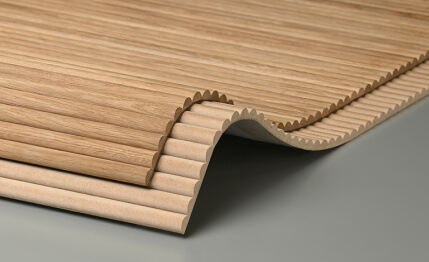
The answer is simple: they provide maximum visual impact for moderate investment. An accent wall with wooden slats is three to four hours of work and material that is easy to transport and install. At the same time, the result is comparable to solutions that previously required expensive designer work: stone cladding, wall painting, decorative plaster with complex textures.
Moreover, wooden texture is a universal 'reconciler' in any style. It's hard to make it look out of place. Scandinavian interior, modern classic, loft, minimalism — wooden slats find their place everywhere. This is a material with the broadest stylistic compatibility.
Our factory also produces:


Why moldings are returning to the agenda
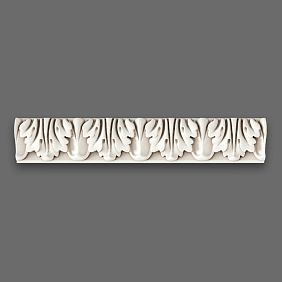
Parallel to slatted panels, interest in decorative moldings is growing in Yekaterinburg — and this is logical. When walls are decorated with wooden slats, they require architectural completion: an upper and lower border, a frame, a structure.polyurethane moldings buybecomes the next step after slatted panels — logical, necessary, and accessible.
Polyurethane molded decor has changed perceptions of molding as such. It is no longer heavy plaster constructions that are difficult to install and easy to damage. It is a lightweight, moisture-resistant, precisely molded material that can be cut with a saw, glued with mounting adhesive, and painted with acrylic paint. Molding has become accessible — and therefore has returned to mass demand.
Get Consultation
What is important to consider when purchasing: seven parameters that decide everything
Before moving on to specific solutions — let's formulate an evaluation system. Choosing panels and decor based on the principle 'liked it in the picture' — is a path to disappointment. Choosing based on a system — is a path to results.
First parameter: the room and its conditions
Each room imposes its own requirements on the material. Living room — standard conditions, any material. Kitchen — moderate humidity, requires a varnish or oil finish with increased durability. Bathroom — high humidity, only moisture-resistant MDF (HDF) or special series. Children's room — requirement for formaldehyde emission class: E0 or at least E1. Hallway — high mechanical traffic, needs a hardwood species or a varnished finish.
Second parameter: ceiling height
Ceiling height determines the scale of the entire decorative system. With a 2.5 m ceiling — narrow slats (40–60 mm), delicate cornice (50–70 mm). With a 2.7 m ceiling — slats 60–80 mm, cornice 70–90 mm. With a 3 m ceiling and above — wide slats (80–120 mm), developed cornice profiles (90–140 mm). Mismatch of scales is the most common mistake that ruins a good idea.
Third parameter: interior style
Slatted panels work in all styles — but differently. Minimalism → rectangular slats, monochrome, minimal gap. Scandinavian style → light wood, oil finish, neutral tone. Modern classic → oak oil + white moldings. Neoclassical → slats with a chamfer or milled profile + developed molding systems. Loft → dark slats, brushed texture, rectangular cornice.
Parameter four: lighting
This is a parameter often overlooked when purchasing materials. And in vain: wooden slats without thoughtful lighting are a flat, boring wall. With side lighting or backlighting behind the slats — it becomes a lively, three-dimensional, expressive texture. When buying panels, immediately plan for side light sources (sconces, spotlights, LED strip behind the cornice).
Parameter five: base material
The wall on which slatted panels are mounted is either a ready base for the frame or a leveled surface for direct mounting. Brick walls, partitions made of aerated concrete, drywall partitions — all require a frame. A level plastered wall with a deviation of up to 3–5 mm — direct mounting of lightweight MDF panels is possible. This affects the cost and labor intensity of installation.
Parameter six: system budget, not item price
A mistake is to choose only the price per linear meter of the slat. A slatted panel is a system: slats + underlay/frame + fasteners + cornice + baseboard + lighting + installation. The correct approach: calculate the full cost of the turnkey system and base decisions on that.
Parameter seven: manufacturer and quality guarantee
When buying online, this parameter is critical. A manufacturer that specifies precise characteristics (wood species, coating, moisture resistance, emission class) and provides a warranty is a reliable choice. An anonymous supplier without indicating the material's origin is a risk.
Which panels are suitable for walls, ceilings, and zoning
Wall slatted panels: the main category
Buy wall slat panels in Yekaterinburg— this query covers the greatest variety of solutions. Let's consider the key options by purpose.
Accent wall in the living room. The most popular scenario. Vertical slats 60–80 mm made of oak with oil finish — on the wall behind the sofa or on the end wall with the TV. Slat length: full height from floor to ceiling. Gap: 10–14 mm. A dark-toned backing (soft gray, anthracite, black) behind the slats creates a depth effect. This combination is one of the most in-demand and aesthetically convincing.
Headboard wall in the bedroom. Slats 40–60 mm, neutral warm tone (whitewashed oak, natural ash, light beech). Vertical orientation. Lighting: LED strip in a cornice box for soft night lighting.
Corridor and hallway. Narrow slats 30–50 mm in a warm neutral tone covering the full wall height — visually raise a low corridor ceiling and create the first impression of the apartment. The vertical rhythm of the slats directs the gaze upward and along the corridor, visually lengthening and 'opening up' the tight space.
Study. Slats 60–80 mm in a dark tone (wenge, dark walnut, graphite) on one or two walls. Create an environment of concentration and business seriousness without aggression.
Children's room. Slats 40–60 mm in a pastel tone (mint, powder pink, soft blue) — when painting MDF slats to the desired shade according to the RAL catalog. Or a natural light tone of birch, alder for a 'natural' children's room.
Ceiling slat panels
A ceiling made of slat panels is a niche but very expressive solution. A wooden slat ceiling:
-
Visually 'brings down' a too-high ceiling, making the space cozier.
-
Creates an architectural accent in the dining table or bed area.
-
When combined with built-in lighting between the slats, it creates uniform soft illumination.
For the ceiling, lighter slats are used (thin MDF 9–12 mm or lightweight wooden slats up to 16 mm) on a metal suspended frame. Installation is horizontal, with a 10–15 mm gap; the backing behind the slats is dark to create a depth effect.
Slatted panels for zoning
In open-plan layouts, a slatted partition is an architectural solution that divides space without compromising light and air. A double-sided slatted partition (slats visible from both sides) between the living room and kitchen, or between the work area and living area, is one of the most designer solutions in modern apartments.
For the partition, slats with the same front surface on both sides are chosen, mounted on a double-sided metal frame. Slat width for the partition: 50–80 mm, gap: 15–25 mm (to allow light to pass through the partition).
Which polyurethane elements are needed for a finished interior
A slatted panel without stucco decoration is beautiful but incomplete. It is the polyurethane decor that transforms a set of slats into an architectural system. Let's break down what exactly is needed in each case.
Ceiling cornice: the first and mandatory element
Technically, the cornice closes the compensation gap between the top edge of the slatted panel and the ceiling. Aesthetically, it creates the upper architectural boundary, completing the wall system.
Buy Polyurethane Molded Decoration— means first of all choosing a cornice. Selection parameters:
-
Profile width: from 50 mm (for reflective minimalism) to 180 mm (for developed classical architecture).
-
Profile shape: rectangular (modern), with a round (classical), with a fillet and a belt (neoclassical).
-
Rod length: standard 2000 mm. Joining rods — at a 45° angle in a miter box or a straight joint with subsequent puttying and painting.
-
Base color: white (ready for painting in any shade).
Baseboard: the lower boundary of the system
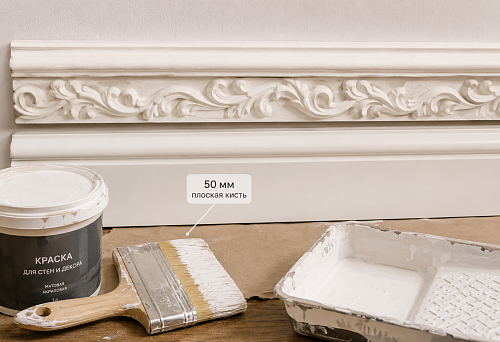
Polyurethane floor baseboard completes the system from below and covers the lower technical gap of the slatted panel. Baseboard height for slatted systems: 60–100 mm. The profile is coordinated with the cornice profile: if the cornice is rectilinear — the baseboard is also rectilinear. If the cornice has a round — the baseboard has a fillet.
Belt moldings: horizontal wall structure
Horizontal belt molding is installed at a height of 1.0–1.2 m, dividing the wall into lower and upper registers. In the lower — slatted field. In the upper — neutral surface (plaster, wallpaper, paint). This is the classic scheme of a 'two-level' wall, which makes even a modest room architecturally developed.
Molding frames: framing the slatted field
Molding frame — four stretch moldings forming a rectangle around the slatted field. It transforms the slatted panel into an architectural 'picture object' with its own border and identity. For molding frames, 30–60 mm belt moldings are suitable — not too wide to avoid dominating the slats.
Ceiling Rosettes
Rosette is installed on the ceiling around the chandelier mounting point. In a living room with a slatted accent wall, the rosette creates a second architectural accent — on the ceiling, in the sofa or dining area. Diameter for a standard apartment: 200–350 mm. Profile — coordinated with the cornice style.
Polyurethane beams
Ceiling beams — for kitchens in country style, living rooms in rustic style, terraces, country houses. They imitate load-bearing floor beams, creating the atmosphere of a 'live' wooden house. Hollow inside (U-shaped cross-section) — lightweight and easy to install. Standard cross-sections: 80×80, 100×100, 120×80, 160×120 mm.
Facade elements: architraves, pilasters, cornices
For the facade of a country house — 60–120 mm window and door architraves made of weather-resistant polyurethane. Pilasters on the facade corners. Roof overhang cornice. Decorative brackets under beams. Dividing molding between floors. All this creates the architectural appearance of the house, distinguishing it from faceless boxes.
How to combine slatted rhythm and stucco decor: practical formulas
This is the main question of a buyer who has already understood that both slats and decor are needed. How exactly to combine them?
Formula for modern interior
Slats: MDF or oak oil, width 50–70 mm, vertical, neutral color (white, light gray, warm beige).
Cornice: 60–80 mm, straight-line profile without relief, white.
Baseboard: 60–70 mm, straight, white.
Additionally: LED backlighting behind the cornice.
Result: a clean, fresh, modern interior with wooden warmth and architectural completeness.
Formula for modern classic
Battens: oak oiled 60–80 mm, medium warm tone, vertical.
Cornice: 80–100 mm with a round molding, white.
Baseboard: 80–90 mm with a torus molding, white.
Molding frame: 40 mm band around the batten field.
Rosette: 280–320 mm for a chandelier (in the dining area or living room).
Result: an interior with architectural character, warm and substantial.
Formula for Neoclassicism
Wall paneling: oak with bevel 70–90 mm or slats with milled profile, white enamel or dark walnut color.
Cornice: 100–130 mm with developed profile (ogee + shelf + cyma reversa).
Horizontal belt course: 50 mm at a height of 1.1–1.2 m.
Baseboard: 90–110 mm.
Rosette: 300–400 mm.
Result: a room with full architectural development — not just an apartment, but a space with history and dignity.
Formula for Country / Rustic / Provence
Wall paneling: solid wood with knots, aged or stained finish, horizontal orientation or narrow vertical up to 1.2 m height.
Beams: 3–5 beams on the ceiling (120×80 mm), dark tone like stained oak.
Cornice: matching the beams or terracotta.
Baseboard: 80–100 mm, matching the cornice.
Result: the atmosphere of a country house in any urban space.
What to look for besides price: quality criteria for selection
Price is an important parameter. But it should never be the only one. Slatted panels and molded decor are materials meant to last for years. Saving on quality here means redoing the work in 2–3 years. We'll tell you what to pay attention to.
Geometric accuracy of slats
When purchasing slatted panels, check the geometry: width, thickness, and straightness should be consistent within one batch. A 1–2 mm deviation in width between different slats from the same batch is a visible defect in the finished wall: an uneven gap ruins the entire visual effect.
A quality manufacturer specifies tolerances in the specification: ±0.3–0.5 mm for width and thickness. This is an indicator of production culture.
Coating uniformity
The varnish or oil coating on the slat should be uniform: without gaps, drips, or bubbles. The ends of the slats must have a sealed coating (otherwise, the end absorbs moisture faster than the front surface, and the slat deforms). Check when purchasing online: request samples or photos of the end cut.
Profile accuracy of polyurethane products
A polyurethane cornice or molding must have a precise profile without waves, jagged edges, or deformations on the back (mounting) surface. The back surface must be flat—otherwise, the cornice does not adhere evenly to the wall, and a gap forms after installation.
A quality polyurethane cornice does not deform when lightly pressed in the middle of the strip—it is sufficiently rigid. A too soft, flexible cornice is a sign of either insufficient material density or a thin wall. Such a cornice will develop a wave after installation.
Color consistency within a batch
When purchasing several packages of the same article, all units should be the same color. Wood, of course, is never identical in tone (and that is its value). But when purchasing painted MDF slats, the difference in tone between batches from different production dates can be noticeable. Take all required items from the same batch.
Mistakes when choosing materials online
Online purchase of finishing materials is convenient — but has specific risks. Let's name the main ones.
First mistake: choosing based on a photo without considering scale
A photo in a catalog always shows the material in 'ideal' conditions: proper lighting, correct scale, professional photography. A 30 mm wide batten looks the same as an 80 mm batten in a photo — just proportionally different. Order samples or clarify actual dimensions before placing an order.
Second mistake: buying without calculating the quantity
Cutting waste, defects, compensation gaps — all of this consumes material. Standard margin: +10% of the calculated quantity for battens, +15% for moldings (angled cuts result in greater waste). Buying the shortfall from another batch risks a color mismatch.
Third mistake: ignoring technical specifications
'Oak batten panel' — this could be solid wood, veneer on MDF, or PVC film with an oak wood imitation. Three fundamentally different products with one commercial name. Always clarify: base material, coating type, moisture resistance, emission class.
Fourth mistake: buying without checking the installation method
Some batten panels are installed on a frame (requiring additional materials and labor), others — directly with adhesive or adhesive + mechanical methods on a flat wall. The difference in the final finishing cost is 20–40%. Clarify the installation method before purchase.
Fifth mistake: choosing a cornice without mentally matching it with the battens
The cornice is not chosen separately from the slats, but as part of a system. If you buy a cornice before finalizing the slat selection, there is a high risk of mismatched scales or styles. Choose the system as a whole: slats + cornice + baseboard + molding elements—as a single set.
Mistake six: skipping samples
Most quality manufacturers provide material samples. Do not neglect this opportunity. A sample under the actual lighting conditions of your space is the best decision-making tool. What looks 'warm' on a monitor may turn out to be cool-gray in a specific room.
Delivery to Yekaterinburg: logistics and practical tips
The delivery question when buying panels and decor online is no less important than the selection question.
Packaging: slat panels must be packed in protective film with spacers between the slats. Ends must be sealed. During transport without packaging, edge chips are inevitable.
Shipping unit: slat length of 2400–3000 mm requires an appropriate transport unit. For delivery to Yekaterinburg from Moscow or a regional warehouse—use transport companies (SDEK, Delovye Linii) with cargo departments that accept oversized freight.
Receiving: when accepting the shipment, check each item for order conformity, presence of coating defects, and chips. Claims are accepted at the time of receipt, not after installation.
Acclimatization: before installation—48–72 hours in a room with normal temperature and humidity. Especially important in winter: slats brought in from the cold, if installed immediately, will undergo thermal expansion and deformation.
About the company STAVROS
When residents of Yekaterinburg search for whereslatted wall panels Yekaterinburgbuy with quality guarantee and full assortment — STAVROS selection fully meets this request. STAVROS is a full-cycle Russian manufacturer: from raw material to finish coating. Slatted panels made of solid wood and MDF in width range 25–150 mm, all popular wood species and tones, all coating types — oil, wax, varnish, enamel. Each batch undergoes geometry and coating quality control.
Buy Molded Decorationpolyurethane from STAVROS means getting a complete set for any interior: cornices, moldings, baseboards, rosettes, beams, overlay decorative elements, facade decor. Over 200 profiles for all styles — from strict rectilinear minimalism to rich classical architecture.
Delivery to Yekaterinburg and all cities of the Ural region — through reliable transport partners with professional packaging and cargo insurance. STAVROS specialists consult on selection: will tell which slats and which decor suit your specific room, calculate material quantity, help form a set. Because selling material is one thing. Helping create an interior is another. And STAVROS can do both.
FAQ: Answers to popular questions
Can slatted panels be ordered for delivery to Yekaterinburg online?
Yes. Manufacturers and suppliers of slatted panels deliver throughout Russia via transport companies. Long cargo (slats 2400–3000 mm) is accepted by SDEK Cargo, Business Lines, PEK and other carriers. Delivery cost depends on volume and weight. For large orders (from 30–50 sq.m.), logistics costs are offset by the wholesale material price.
Which wood is best for slatted panels in a Yekaterinburg apartment?
For standard apartment conditions (humidity 40–60%, temperature 18–24°C) — oak with oil or ash. Oak — hard, durable, with expressive texture. Ash — slightly lighter, with a calmer pattern, takes coloring well. MDF with varnish coating — when a specific RAL color is needed and with a limited budget.
Is special glue needed for installing polyurethane cornices?
Acrylic mounting adhesive (like 'liquid nails' on acrylic base) — optimal choice. Applied in a zigzag on the back surface of the cornice, left open for 2–3 minutes, cornice pressed and fixed with painter's tape for 4–6 hours. For cornices wider than 100 mm — additional fixation with hidden finish nails.
Can slatted panels be installed over old wallpaper?
Not recommended. Wallpaper is an unstable base: it can peel under the load of panels, especially with frame mounting. Wallpaper should be removed, and the base should be primed. For direct adhesive mounting of lightweight MDF panels, the base must be stable, i.e., plaster or putty, not wallpaper.
How to choose the width of slats for a corridor with a 2.4 m ceiling?
For a 2.4 m ceiling — slats 30–50 mm in a neutral warm tone, vertical orientation. Cornice — no more than 60 mm. Wide slats and a large cornice with such a ceiling will create a feeling of pressure. The goal is to emphasize the vertical, not to clutter it.
How much does a full set for an accent wall 3×2.5 m in a living room cost?
Approximate composition: oak oil slats 60 mm (about 42 pieces of 2.5 m) + MDF substrate + frame made of profiles + 3 m cornice + 3 m skirting board + mounting adhesive + fasteners. Excluding installation cost — from 15,000 to 45,000 rubles depending on wood species and manufacturer. With installation — add 5,000–15,000 rubles depending on complexity.