Article Contents:
- When a custom part is truly needed
- When a custom part is not needed
- Which parts are worth having made to drawing
- When a non-standard part is better replaced with a standard one
- When a custom part truly creates value
- Drawing
- Sketch
- Physical sample
- Manufacturing a furniture part from a physical sample
- What to measure on a sample
- Old sample wear cannot be copied automatically
- Production by drawing vs. production by sample: when to choose which
- Do not use only a cumulative dimension chain
- Datum surface: where the part is actually measured from
- Dimension chain: when a sum is acceptable and when direct control is needed
- Left, right, and mirrored parts cannot be stored as a single line
- Do not require the same precision for the entire part
- A critical dimension is better controlled with a separate measurement
- Solid wood
- MDF
- Why the same geometry cannot be automatically transferred between MDF and solid wood
- A part for enamel coating must be designed as a separate technological scenario
- RAL or NCS do not replace a physical color sample
- Sanding quality must be described in terms of the subsequent finish
- Materials for furniture manufacturing: they must be selected according to the part's technology
- Who purchases material for a custom part
- Material does not replace the technical specification
- CNC, turning, and hand finishing: technology is determined by geometry
- Tooling: a separate investment in a production part
- A prototype must be tested on the actual product
- A prototype must verify not only the shape but also the production process
- Photo documentation of the prototype complements but does not replace the drawing
- Change request: what happens if you change one dimension
- PDF, DWG, and 3D must all refer to the same REV
- When a new REV is needed and when a new Part ID is needed
- Before a serial order, technical data must be frozen
- Custom furniture component production begins with controlled documentation
- Batch size must be stated in the first RFQ
- What quality control checks before moving to serial
- How to calculate the cost of an error before serial production
- Commercial request for a custom part: a ready-made template
- "Quality hardware" must be described by measurable attributes
- What STAVROS already provides to the manufacturer as project infrastructure
- How to submit a request for a custom STAVROS part
- When one custom part is no longer enough
- A control template speeds up acceptance
- Do not mix different revisions of the same part
- How to mark a custom furniture part
- Packaging is part of a serial delivery
- How to establish accountability at the "part → furniture" boundary
- What a mature master-card for a custom part looks like
- How to prepare a repeat series a year later
- What to provide for a non-standard profile
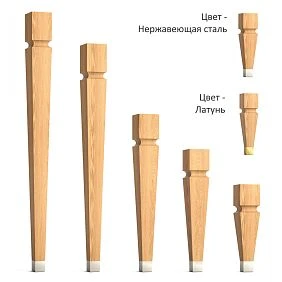
- Non-standard furniture leg: height is only one parameter
- Height changes must be tested on real furniture
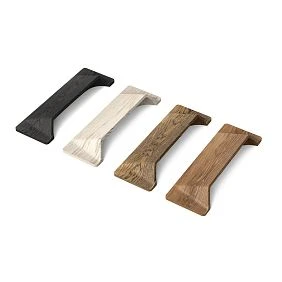
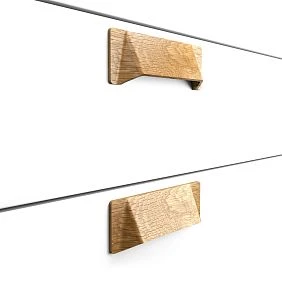
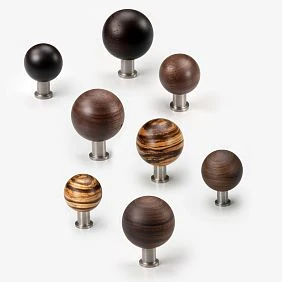
- Non-standard furniture handle: first confirm production feasibility
- Decorative part by drawing: the shape must be separated from the installation location
- Furniture frames and bases: when a non-standard part becomes an assembly
- Scenario 1. A custom leg for a new collection
- Scenario 2. Replicating a historical furniture molding
- Scenario 3. MDF profile for a branded enamel finish
- Mistake: no stable Part ID
- Mistake: critical dimensions are derived from a chain
- Mistake: material is specified with the word "wood"
- Error: color specified as RAL only
- Mistake: the sample is copied along with its wear
- Mistake: a large batch is ordered right away
- Mistake: a dimension is changed without a new REV
- Error: packaging is checked after the first complaint
- When production from a drawing should not be started
- Can a furniture part be made from a drawing?
- What should a furniture part drawing include?
- Can a part be made from a sample?
- How does a prototype differ from a production part?
- Why is a reference sample needed?
- Which material should be chosen for a furniture part?
- Can a custom furniture leg be made?
- Can I order a custom furniture molding?
- How to calculate the batch size for furniture parts?
- What to send to the supplier for a quote?
- How to place a repeat order?
- Can I order a custom handle?
- If one part is used in several furniture models at once
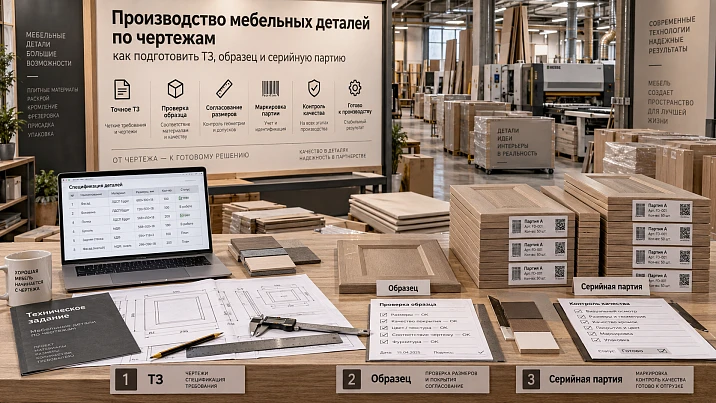
The phrase "make the same leg, only 20 mm taller" is not a complete technical specification. For a single prototype, this is sometimes enough as a starting point. For a batch of 500 or 5000 parts, you need a fixed drawing, material, critical dimensions, mating surfaces, finish, an approved sample, and a revision number. Otherwise, the first batch, the repeat order, and the actual furniture start to differ from each other.
The production of furniture parts from drawings begins not with the machine, but with the normalization of the source data. The working chain looks like this: idea / sample → Part ID → working drawing → material → critical dimensions → tolerances → finish → prototype → approved sample → pilot lot → serial lot → incoming inspection → repeat order.
This article is dedicated to one custom component: a furniture leg, support, molding, linear profile, MDF part, or a separate decorative element. This is a different intent from contract furniture manufacturing, where many external components are managed at once. Here, the goal is to turn one custom part into a repeatable serial product.
STAVROS confirms the possibility of custom manufacturing for certain product groups, including mouldings to drawings and dimensions; the website also describes custom furniture parts and supports. However, the feasibility of manufacturing a specific item, the material, tooling, minimum order quantity and lead time must be confirmed separately before placing an order.
When a custom part is genuinely needed
A standard catalogue part is advantageous because its geometry is already defined, a drawing exists, the material is clear, and reordering is tied to a single SKU. Custom development is needed when an existing SKU does not solve the product task.
Typical reasons:
- a different leg height is needed;
- a custom moulding cross-section is required;
- the profile must match the architecture of a new furniture collection;
- a historical or existing sample needs to be replicated;
- the standard profile does not match in radius or depth;
- the part must have non-standard holes or a mounting surface;
- a special length is required;
- a serial product must differ from solutions available on the market.
But a custom part is not always justified. If a catalog SKU fits in geometry, material, and style, developing your own equivalent may only increase the cost of production preparation and the launch timeline. First, it is worth checking the STAVROS catalog, and moving to custom development only when the standard assortment does not cover the technical task.




When a custom part is not needed
It is not worth developing your own profile just for a difference of a few millimeters if that difference does not affect the furniture. The same applies to a leg that can be replaced with a ready-made model without changing the overall height, mounting, or design. Development must solve a measurable problem.
Our factory also produces:
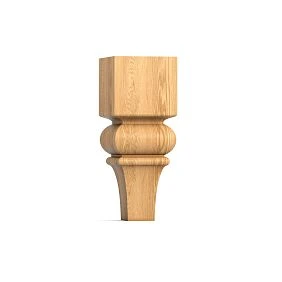
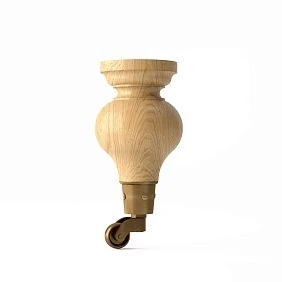
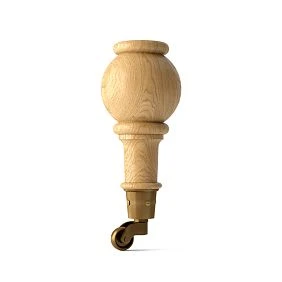
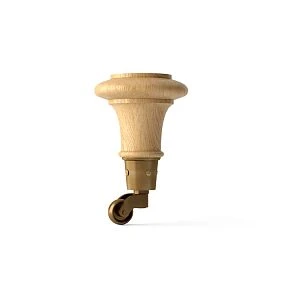
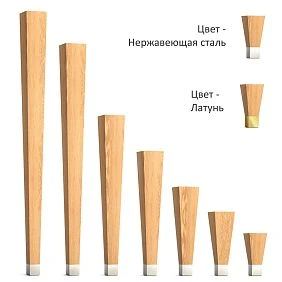
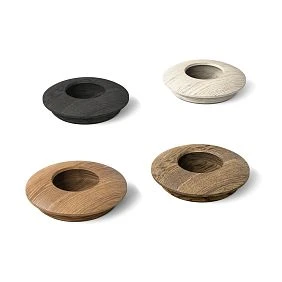
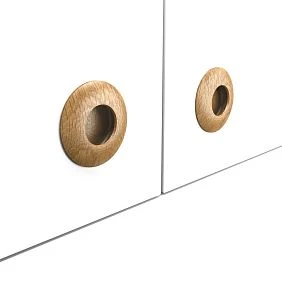
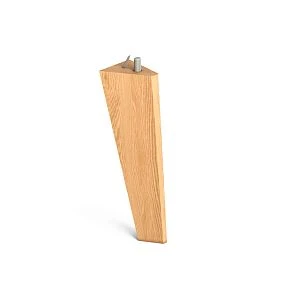
Which parts are rational to send for manufacturing according to a drawing
One cannot promise “manufacturing of any furniture parts” without verifying the production technology. For STAVROS, the actually confirmed scope is closer to furniture trim, parts made of MDF and wood, furniture legs and supports, as well as individual decorative items.
Realistic scenarios:
- custom furniture molding;
- cornice for a furniture series;
- MDF profile for painting;
- part made of beech or oak solid wood;
- furniture leg with modified geometry;
- support according to your own sketch;
- replication of an existing decorative profile;
- local decorative part based on a physical sample;
- an element for which a series of identical repeatable items is needed.
For furniture moulding, you can use the section profiles made of wood and MDF as a starting point: first check the standard catalog, then articulate exactly what is missing from the existing range.
For non-standard legs and supports, the starting point is the section of furniture legs and supports. It helps to understand which parameters are already used in standard product cards: height, cross-section, material, sanding, finish, and fastening.
Get Consultation
When a non-standard part is better replaced with a standard one
Custom production should not be a goal in itself. A catalog SKU is more rational if:
- it fulfills the function without modifying the furniture;
- the difference of the custom version is unnoticeable to the buyer;
- the batch is too small for dedicated tooling;
- the launch deadline is critical;
- a non-standard part creates unnecessary service risk;
- online, furniture needs to be replicated quickly across multiple platforms.
If a standard profile solves 95% of the task, it is sometimes more cost-effective to change the facade or layout by a few millimeters than to launch a separate production run.
When a custom part truly creates value
Custom geometry is justified if it:
- forms a recognizable language for the collection;
- solves non-standard installation;
- replicates a historical profile;
- aligns furniture with architectural decor;
- helps avoid complex assembly from multiple standard parts;
- provides the required size that is not available in the catalog;
- is repeated in a significant print run.
In this case, preparing the drawing and the reference sample becomes an investment in a serial product rather than a one-off expensive customization.
Input data: drawing, sketch, or physical sample
One of the main sources of errors is treating these three sources as equivalent. They convey different amounts of information.
| Source | What it conveys well | What is missing | What to do next |
|---|---|---|---|
| Working drawing | Dimensions, sections, holes, datums | May not show the texture and actual finish | Check material, finish, REV |
| Sketch | The idea, proportions, visual appearance | No complete production geometry | Convert into a working drawing |
| Physical sample | The actual shape, surface, scale | No source geometry or tolerances | Measure, build a model, approve |
| Photo | A visual reference | Almost no exact dimensions | Use only as a reference |
Drawing
The best source of production dimensions if it is up to date and contains clear datums. But even a good drawing does not automatically determine the material, color, and surface requirements unless they are specified separately.
Sketch
Suitable for initiating engineering development. It can show the shape of a leg, the profile of a cornice, or a decorative idea, but it should not immediately go into serial production.
Physical sample
Good for copying a complex shape, a historical profile, or an existing part. But a worn sample cannot be considered an unconditional "truth" — first you need to decide whether the original geometry or the current condition of the part is being copied.
Production of a furniture part from a physical sample
Manufacturing furniture parts from a sample is a separate production scenario. The sample shows the actual shape, but it is not a finished drawing.
Workflow:
sample → measurement → drawing → digital model → prototype → comparison → approval.
Bad chain:
sample → immediately 500 units.
Even if the manufacturer can accurately reproduce the shape, you first need to determine which part of the geometry is by design and which appeared due to wear, repair, or deformation.
What to measure on the sample
- overall dimensions;
- characteristic cross-sections;
- radii;
- depth of the relief;
- position of holes;
- the seating part;
- symmetry;
- the thickness of individual sections;
- the geometry of the mounting plane.
If the sample is complex, some dimensions are reconstructed via a 3D model and control sections. But the final geometry must still receive a Part ID and a revision.
Wear on the old sample cannot be copied automatically
An old furniture leg or molding could have been in use for decades. Edges wear down, holes become enlarged, the surface deforms, and repair layers alter the relief.
Before copying, you need to decide:
Are we reproducing the original intended shape or the current physical condition?
If the task is restoration, sometimes it is precisely the traces of the old geometry that matter as a reference. If the goal is new serial furniture, it is more often necessary to restore the logically original profile rather than reproduce random wear.
The decision is fixed before creating the prototype. Otherwise, the client may compare the new part with the old one and consider correctly restored geometry an "error."
Production by drawing vs. production by sample: when to choose which
| Situation | Best source | Why |
|---|---|---|
| New part | Drawing / CAD | Geometry created from scratch |
| Copy of an existing part | Sample + drawing | Need to measure the actual shape |
| Historical profile | Sample + photo + reconstructed section | Wear must be separated from the original shape |
| Simple geometric leg | Sketch + dimensions | The idea is easy to translate into a working drawing |
| Complex serial part | Full technical documentation | Batch repeatability is required |
Furniture parts made to customer drawings are easier to control if the drawing already contains critical dimensions and material. Manufacturing furniture parts from a sample requires an additional reverse engineering step — measuring and reconstructing the geometry.
Working drawing: geometry, datums, and dimension chains
For production, the drawing must allow the geometry to be unambiguously reconstructed without verbal explanation from the author. The minimum set depends on the part, but basically includes:
- general view;
- overall dimensions;
- sections;
- profile;
- diameters;
- radii;
- grooves;
- holes and their coordinates;
- mounting surfaces;
- critical dimensions;
- the material;
- orientation;
- Part ID;
- revision number.
For a long molding, the general view may be simple, but the cross-section becomes the main document. For a furniture leg, on the other hand, you need the height, characteristic diameters, transition points, and mounting area. For an MDF part, the overall dimensions, machining profile, and surface requirements are important.
Do not give dimensions only as a single chain
If the dimension from the lower base of the part to the center of the hole is critical, it is better to specify it directly. Do not make production derive the mounting dimension by adding five other values. Any chain of dimensional tolerances increases the risk of accumulated error.
Bad option:
20 + 45 + 12 + 38 + 15 = hole coordinateStronger:
DATUM A → HOLE CENTER = 130.00The critical mounting value should be visible immediately.
Base surface: where the part is actually measured from
A working drawing must have a datum — a base from which critical dimensions are measured. Without it, two technologists can read the drawing equally correctly and get different results.
For example, for a leg:
DATUM A = bottom support plane
A → overall height
A → center of the mounting hole
A → start of the decorative section
For a molding, the datum may be the rear mounting plane. For a profile that fits into a groove, it is the mating surface. For a cornice, it is the bottom plane or a specific mounting face.
A datum is especially needed where part of the geometry is decorative and part is mounting-critical. A decorative curve may have slight manufacturing variation, but the seating surface must retain its specified function.
Dimension chain: when the sum is acceptable and when direct control is needed
Not all dimensions need to be duplicated. But if the final value determines installation, it is better to control it directly.
Suppose the center of the hole is derived from four segments:
A = 40
B = 25
C = 55
D = 10
Total = 130
If each section has its own permissible deviation, the final coordinate may also change. Therefore, the assembly-critical dimension 130 is better specified as a separate CTQ from the datum. Auxiliary segments remain for geometry, while the functional dimension is controlled directly.
This approach is especially useful for mounting holes, the overall height of the support, the center of the slot, and the profile that must mate with an adjacent part.
Left, right, and mirrored parts must not be stored as a single line item
An asymmetric overlay, support, or decorative part may have a left and right version. If the warehouse sees one common code, mixing them up is almost inevitable.
Stronger:
DECOR-118-L
DECOR-118-R
Or:
PART-118 / HAND=L
PART-118 / HAND=R
The drawing also indicates whether the right-hand version is a mirror image or has separate geometry. This is important for manufacturing furniture components from drawings: the manufacturer should not have to guess whether mirroring of the CAD model is allowed.
Tolerances and critical CTQ parameters
The requirement to "make everything as precise as possible" is not a good technical specification. Production must understand which dimensions affect assembly and which relate to decorative trim.
Conventionally, dimensions can be divided into three groups:
| Group | Example | What will happen if there is a deviation |
|---|---|---|
| Assembly-critical | Fit, hole, slot, overall support height | The part won't fit or will change the furniture geometry |
| Jointing | Molding cross-section, junction of two profiles | A step, gap, or misalignment will appear |
| Decorative | Part of the relief, smooth radius, surface pattern | Appearance may change without loss of function |
Specific numerical tolerances should not be invented in the article. They are agreed upon by the technologist and the manufacturer based on the material, machine, processing method, and function of the part. The main thing is that the drawing should show which dimensions are critical.
Do not require the same precision for the entire part
If a furniture leg requires a precise fit dimension, this does not mean that every decorative line on its surface must be controlled in the same way. Excessive tolerance can increase production costs without real benefit to the furniture.
A critical dimension is best controlled by a separate measurement
In a production batch, not all parameters have the same priority. For one part, the main risk is overall height; for another, it is the mounting hole; for a third, it is the profile cross-section.
It is useful to create a CTQ list — critical to quality:
| CTQ | Why it's critical | How to check |
|---|---|---|
| Overall leg height | Changes furniture height | Direct measurement from datum |
| Hole coordinate | Affects installation | Gauge / measurement |
| Molding cross-section | Determines the joint and appearance | Template / profile control |
| Mounting plane | Affects the fit | Flatness / inspection stand |
| Finish | Visible part of the furniture | Comparison with approved sample |
This way incoming inspection stops measuring "a little bit of everything" and focuses on parameters that can halt assembly or change the product.
Material and finish are part of the technical specification
The entry "wood" is insufficient. Even if the geometry is the same, beech, oak, and MDF may require different process routes and produce different visual results.
The technical specification must define:
- the specific material;
- whether material substitution is allowed;
- whether the natural texture is visible;
- whether the part will be painted;
- who performs the finishing;
- whether color matching to another part is required;
- which surfaces are considered face surfaces.
For custom furniture mouldings, STAVROS works with products made of wood and MDF. It is convenient to use these as two different scenarios rather than as interchangeable bases.
Solid wood
It is rational when the natural wood texture is part of the product, the part must have a three-dimensional profile, or the appearance is tied to the wood species.
MDF (740–760 kg/m³, emission class E1/E0) provides ideal geometry, uniformity, and better base for enamel: high adhesion, smooth surface, absence of knots and cracks.
Suitable for painted profiles and parts where uniform geometry and subsequent finishing are important. The detailed technology is best covered in a separate article about MDF furniture parts, so as not to turn the current article into an overview of panel materials.
Why the same geometry cannot be automatically transferred between MDF and solid wood
Even if the 3D model looks identical, the material affects the manufacturing technology, sanding, edge processing, and finishing. Therefore, changing the material requires separate approval.
Check:
- whether the same profile can be reproduced;
- whether the minimum thickness of the section changes;
- how the surface will look after processing;
- whether different preparation for enamel is needed;
- whether the weight of the part changes;
- whether the fastening method is retained.
If the client first approved an oak part and then decided to switch to MDF for enamel coating, this is a new version of the product, not just a new material in the specification line.
A part for enamel coating must be designed as a separate technological scenario
The phrase "we'll make the part and then paint it somehow" often creates a problem after production. If the product is to be enamel-coated, this must be specified before launch.
The technical specification records:
- the material;
- requirements for sanding quality;
- which surfaces will be visible;
- who applies the primer and topcoat;
- which color is approved;
- whether a physical color sample is needed;
- whether adjacent parts must match in finish.
Standard STAVROS cards sometimes include separate "enamel-look" variants. For a custom part, this characteristic must be confirmed in the specification rather than carried over automatically from the catalog item.
RAL or NCS do not replace a physical color sample
A color code is needed as a digital specification. But actual perception depends on the material, primer, number of coats, gloss level, and lighting. Therefore, in a high-stakes furniture series, the color code and the physical sample serve different functions.
The code says:
FINISH = RAL/NCS ___
The reference color sample shows:
- the actual shade on the selected material;
- gloss level;
- surface quality;
- combination with adjacent MDF, wood, or metal.
If a custom part must match a painted facade from another manufacturer, it is better to compare actual samples side by side.
The quality of sanding should be described through the subsequent finish
The requirement to “sand very well” is too subjective. It is better to explain what happens to the part next.
For example:
- the part remains under a clear coating;
- the part is going under enamel;
- the part is tinted;
- part of the surface is hidden by installation;
- the carved relief remains visible.
Then the manufacturer understands which areas are the face and where surface preparation is especially critical.
For a custom project, it is useful to attach an approved sample of the surface. A photo does not show the microrelief and tactile feel.
Materials for furniture manufacturing: you need to choose based on the part's technology
The queries "materials for furniture manufacturing" and "materials for furniture" are needed in this article only as a supporting layer. The user has already come not for an overview of all materials, but with a specific non-standard part.
For such a part, the material is chosen by function:
| Task | Candidate | What to Check |
|---|---|---|
| Profile to be painted | MDF | Cross-section, surface quality, finish |
| Leg with natural texture | Oak / beech | Geometry, sanding, coating |
| Carved decorative element | Solid wood | Species, relief, face zones |
| Molding for enamel | MDF / other agreed execution | Profile, length, preparation for painting |
| Historical profile | Material per project | Compliance with sample and technology |
You cannot first develop the geometry “in a vacuum” and choose the material afterward. The thickness of thin sections, the shape of the relief, and the finish may depend on the material.
Who purchases material for a custom part
In a B2B project, it is important to decide in advance who is responsible for the raw materials. Sometimes the material is purchased by the part manufacturer itself, sometimes the customer supplies their own blank or requires a specific supplier. This affects the price, timeline, and responsibility for the result.
| Scenario | Pros | What needs to be coordinated |
|---|---|---|
| Material is purchased by the part manufacturer | One party responsible for raw materials and processing | Species/grade, quality, price, availability |
| Material is supplied by the customer | Full control over a specific batch of raw material | Acceptance, stock, waste, responsibility for defects |
| Material is purchased from an approved supplier | Repeatable specification | Material code, lead times, minimum batch |
A request to "buy material for furniture" by itself does not solve the problem of a non-standard part. In the technical package, the material must exist as a specific specification, not as a commercial category. If the material is supplied by the customer, it is necessary to separately determine how much raw material is transferred to the prototype, pilot, and series, and who bears the risk of technological waste.
This is especially important for solid wood. The blank may have natural variability, so requirements for the face surface, permissible wood characteristics, and tone matching are best agreed upon before launch. For MDF, the specific grade and subsequent finishing must be defined.
Material does not replace the technical specification
Even a correctly chosen material does not compensate for undefined geometry. Queries like "furniture materials" and "materials for furniture manufacturing" are useful only after the purpose of the part, its cross-section, fit, and finish are clear.
Working sequence: function → geometry → material → manufacturability → finish → prototype. For a custom product, the material is a parameter of the technical specification, not a standalone answer to a production task.
DFM: manufacturability check before prototype
Before the prototype, it is useful to perform design for manufacturing — a check of how well the geometry suits the chosen technology. This does not mean simplifying the part to a primitive shape. The goal is to identify in advance the areas where serial production will become unstable or unjustifiably expensive.
Checked:
- sections that are too thin;
- deep narrow grooves;
- abrupt transitions;
- internal radii;
- tool access;
- possibility of sanding;
- fixturing the part during machining;
- fiber orientation for the solid wood;
- areas that need painting or tinting;
- control of critical dimensions.
If the technologist proposes changing the radius or increasing a small cross-section, it is important to understand the reason. The change must either improve production stability or reduce the risk of defects. It is not introduced unnoticed — after approval, a new revision is issued.
CNC, turning, and hand finishing: the technology is determined by the geometry
Non-standard furniture parts may require different processes. A profile molding, a turned leg, and a carved overlay are not produced in a single operation.
Depending on the shape, the following are used:
- Milling;
- turning;
- CNC machining;
- Carving;
- Cutting;
- sanding;
- assembly of several blanks;
- painting or tinting;
- hand finishing of individual areas.
The customer does not have to dictate the machine. But they must describe the functional result: dimensions, surface, fit, finish, and batch size. The manufacturer then selects the process route capable of meeting these requirements.
Tooling: a separate investment in a serial part
A custom profile or complex shape sometimes requires special tooling, a template, a fixture, or a program. For a small batch, this preparation can noticeably affect the cost.
Therefore, in the RFQ it is useful to ask separately:
- whether special tooling is needed;
- whether it is a one-time cost;
- who owns it;
- whether it can be used for a repeat batch;
- whether the tooling needs to be stored between orders;
- what happens if the part REV changes.
If a new revision changes the profile so much that the old tooling no longer fits, this must be visible in the change request. Otherwise, the commercial impact of the change will be assessed too late.
Prototype: checking the part on real furniture
Before serial production, one or several first physical parts should be manufactured. A prototype is needed not to demonstrate an "approximate appearance," but to verify that the technical documentation actually leads to the desired result.
Check:
- overall geometry;
- mounting dimensions;
- compatibility with furniture;
- scale of the decorative profile;
- the material;
- surface quality;
- fasteners;
- finish;
- packaging, if the part is fragile or long.
If the prototype is not installed on real furniture, some errors will remain hidden. The dimension may match on the drawing but conflict with an adjacent part, fastener, or installation tool.
The prototype must be tested on the real product
The furniture leg is installed on the actual carcass or on a precise test stand with the same fastening interface. Overall height, stability, visual scale, and access to the fasteners are checked.
The molding is placed against the real facade. Check:
- field width;
- the joint in the corner;
- the position of the handle;
- profile-to-facade size ratio;
- finish after painting.
For a long profile, a prototype may be shortened only when the cross-section is the main object of verification. If the overall length or straightness of a large part is critical, a sample is needed that allows this specific risk to be checked.
A prototype should verify not only the shape but also the production process
A successful prototype can be made by hand with a large amount of finishing work and still turn out to be unsuitable for series production. Therefore, after the geometry is approved, it is worth asking separately: can this part be reproduced with the same quality in a production batch?
During validation, the following are assessed:
- how much hand finishing was required;
- which operations are stable;
- where variations appear;
- how long the cycle takes;
- which defects occur most often;
- what needs to be changed before the pilot lot.
If the first part was produced only after several unique manual adjustments, this is a signal to refine the design or process before mass production.
Photo documentation of the prototype complements but does not replace the drawing
After the prototype is approved, it is useful to take a standard set of photos: front, profile, back side, mounting area, close-up of the surface, and a photo of the part on actual furniture. These images help the warehouse, quality, and purchasing teams quickly identify the physical object.
But a photo is not a source of dimensions. In a repeat order, the technical basis remains the Part ID, REV, material, finish, and approved sample. A photo is a visual check, not a replacement for working documentation.
Golden sample: the physical reference of the batch
After approval, the prototype receives the status of APPROVED or GOLDEN SAMPLE. From that moment on, it becomes the physical reference for first and repeat batches.
The reference needs to be linked to:
- Part ID;
- Drawing REV;
- the material;
- finish;
- approval date;
- supplier;
- photographs;
- if necessary — comments on acceptable visual variability.
A golden sample must not be consumed in production. If the reference is a painted leg, it is stored separately from the batch. If it is a short profile sample, the profile and revision markings are preserved on it.
Revision and master file management
File leg_final_new_last.pdf is not a change management system. Every non-standard part needs a stable Part ID and revision number.
For example:
PART-042 / REV 01
PART-042 / REV 02
PART-042 / REV 03
Every change to geometry, material, mounting interface, or critical finish creates a new version. Old files are not deleted — they are moved to archived status.
Only one RELEASED revision must be active in production at a time. If a prototype is made according to REV 02, but the buyer sent REV 01 to the supplier, this is already a system error, not a part quality issue.
Change request: what happens if one dimension is changed
Even a small change can affect the furniture. Therefore, after a part is approved, dimensions are not edited silently.
| Change request field | What to fix |
|---|---|
| Part ID | Which part is changing |
| Old REV | Current version |
| Parameter | Which size / material / finish changes |
| Old → New | Old and new value |
| Reason | Construction, design, price, production |
| Impact | Installation, furniture, hardware, packaging |
| Effective lot | Effective from batch |
| approval | Responsible persons |
If a leg becomes 20 mm taller, the overall height of the furniture changes. If a hole shifts, a new installation template is needed. If a molding becomes wider, the margins on the facade change. Therefore, a "small" change can have a large downstream effect.
PDF, DWG, and 3D must refer to the same REV
In a real project, a single part often exists in several formats at once: a PDF drawing for approval, a DWG for the process engineer, a 3D model for the design engineer, and a STEP/other exchange file for production. If these files are updated independently, a dangerous hidden conflict arises.
For example:
PART-042_REV03.pdf
PART-042_REV02.dwg
PART-042_final.step
Such a package cannot be considered ready for production. Before RFQ, all files must have an unambiguous link to a single revision.
Working structure:
PART-042/
  REV03/
    PART-042_REV03.pdf
    PART-042_REV03.dwg
    PART-042_REV03.step
    FINISH_REV03.pdf
    APPROVED_SAMPLE.jpg
Even if the supplier needs only one format, it is still useful to keep an internal master package. This is especially important when furniture parts made to the customer's drawings are repeated several months later: the purchaser must send the same technical entity, not a random file from an old email thread.
When a new REV is needed, and when a new Part ID is needed
Not every change should be issued as a new part, but endlessly increasing revisions of a single Part ID is also dangerous.
A new REV is appropriate if the function and identity of the part remain the same, but the following changes:
- single size;
- hole coordinate;
- radius;
- minor manufacturing refinement;
- finish clarification;
- marking.
A new Part ID makes more sense if:
- the parts must exist simultaneously in production;
- one version does not replace the other;
- different sizes go into different furniture models;
- the material changed and this became a separate commercial configuration;
- a left and right variant appeared;
- the part received a different mounting interface.
For example, a 720 mm leg and a 760 mm leg for two different tables are more likely two positions rather than a REV of one part. But if 720 mm was a mistake and now the entire series switches to 725 mm, that is a revision change.
A freeze of technical data is needed before a serial order
While the designer, design engineer, and process engineer continue to change the shape, the commercial RFQ may be preliminary. But before launching pilot or serial, a freeze point is needed — technical locking of the current version.
The freeze-package includes:
- Part ID;
- Released REV;
- the material;
- finish;
- current PDF/DWG/3D;
- CTQ-list;
- approved sample;
- marking;
- packaging requirements;
- batch volume.
After the freeze, any change goes through a change request. This protects the supplier from working toward a moving target, and the customer from a batch manufactured from an intermediate file.
Custom furniture component production begins with controlled documentation
Custom furniture component production becomes serial not at the moment when many identical items have been manufactured. It becomes serial when the next batch can be reproduced from the documents without repeated "verbal explanation."
Signs of a mature item:
- unambiguous Part ID;
- Released drawing;
- the specific material;
- approved finish;
- CTQ;
- golden sample;
- stable marking;
- lot history;
- a clear repeat-order package.
This is exactly the level needed by a factory that requires not a one-off carpentry service, but serial manufacturing of furniture parts for its own collection.
From prototype to pilot lot and serial production
After the prototype, you don't necessarily have to place the full annual volume right away. A more reliable approach:
prototype → pilot lot → validation → serial lot.
A pilot lot tests not just a single part, but the repeatability of the process.
It is used to evaluate:
- stability of geometry between units;
- marking;
- packaging;
- incoming inspection;
- assembly onto real furniture;
- finish behavior across the batch;
- logistics;
- ease of sorting and kitting.
The size of the pilot lot is chosen based on risks. It may differ for a simple profile and for a complex carved leg. There is no universal number without knowing the product.
The batch size must be stated in the very first RFQ
The same part for 10, 500, and 10,000 units represents different production challenges. Tooling, packaging method, production schedule, and setup economics can all depend on volume.
In the first request, it is useful to specify three values right away:
PROTOTYPE QTY
FIRST SERIAL LOT
ANNUAL / PROJECT FORECAST
For example:
Prototype: 2 pcs
Pilot: 30 pcs
First serial lot: 500 pcs
Annual forecast: 4 × 500 pcs
This is not a promise of future volume, but production context. The supplier understands that the part is being designed not for two samples, but for a repeatable series.
What quality control checks before moving to serial
Before counting a custom part as serial, it is useful to complete the release checklist.
| Check | Status | |
|---|---|---|
| Part ID assigned | OK / HOLD | |
| Drawing REV issued | OK / HOLD | |
| Material confirmed | OK / HOLD | |
| CTQ dimensions defined | OK / HOLD | |
| Prototype tested on furniture | OK / HOLD | |
| Approved sample saved | OK / HOLD | |
| Finish approved | OK / HOLD | |
| Pilot lot accepted | OK / HOLD | |
| Packaging verified | OK / HOLD | |
| Marking approved | OK / HOLD | |
| RFQ refers to the current REV | OK / HOLD |
| Stage | Example of an error | What has to be redone |
|---|---|---|
| Drawing | Incorrect height | File and approval |
| Prototype | Unsuitable radius | Single sample |
| Pilot lot | Hole is inconvenient for installation | Small batch |
| Serial lot | Incorrect profile | Hundreds of parts |
| Finished furniture | Incompatible fit | Furniture, logistics, service |
That is why prototype and pilot are not "extra stages", but a way to move error detection into a cheaper part of the process.
Commercial request for a custom part: ready-made template
Below is a compact format that can be used before sending to the manager.
PROJECT:
CUSTOMER:
PART ID:
DRAWING:
REV:
SOURCE: drawing / sketch / physical sample
APPLICATION:
MATERIAL:
FINISH:
CTQ DIMENSIONS:
PROTOTYPE QTY:
PILOT QTY:
SERIAL LOT:
ANNUAL FORECAST:
NEED DATE:
DELIVERY CITY:
APPROVED SAMPLE REQUIRED: yes/no
COMMENTS:
If the source is a physical sample, add photos from several sides and indicate whether the original can be temporarily provided for measurement. If the source is a sketch, separately note which dimensions are already final and which should be proposed by the technician.
Supplier and B2B infrastructure STAVROS
Searching for the phrase "furniture hardware manufacturer" often leads to general ratings and catalogs. For a custom part, something else matters more: whether the supplier can support engineering documentation and reproduce the product in six months or a year.
Before placing an order, it is useful to check:
- which materials are actually processed;
- whether there is engineering work on custom drawings;
- whether a prototype can be approved;
- what data is needed for the RFQ;
- how custom items are labeled;
- can Part ID and REV be stored in the order;
- how a repeat batch is confirmed;
- are there drawings and 3D for the standard range;
- whether a physical sample can be obtained;
- how the finish and color are agreed.
Three entry points are useful for STAVROS: page for manufacturers, catalogs, DWG and 3D и Product samples. They do not replace the approval of a custom project, but they provide a working infrastructure for a B2B request.
“Quality hardware” should be described by measurable attributes
The word “quality” is too subjective for a technical specification. For a custom part, quality is better broken down into verifiable attributes.
| Sign | How it is checked |
|---|---|
| Geometry | Control dimensions per drawing |
| Installation | Installation on a real assembly / test rig |
| Material | Compliance with the approved specification |
| Surface | Comparison with approved sample |
| Finish | Color, gloss, visual uniformity against the reference sample |
| Repeatability | Comparison of units within the batch |
| Labeling | Part ID / REV / LOT |
| Packaging | No damage after transportation |
This is how the request “quality furniture hardware” translates from advertising language into production control.
What STAVROS already provides to the manufacturer as project infrastructure
For a custom part, it is not only the ability to produce the shape that matters, but also the information infrastructure around it. STAVROS offers dedicated B2B sections, technical files, and samples.
Useful entry points:
- for furniture manufacturers — B2B communication and terms of cooperation;
- catalogs, DWG and 3D — technical materials for standard groups;
- Product samples — physical verification of profiles and materials;
- main catalog — check whether a suitable SKU already exists.
The standard range should be reviewed before developing a custom solution: sometimes the task can be solved with an existing part or a minor furniture adaptation.
How to submit a request for a non-standard STAVROS part
A strong request should not consist of a single image. Provide a package that allows for a quick assessment of technical feasibility and commercial volume.
Minimum composition:
- drawing, sketch, or photos of the sample;
- description of application;
- Part ID;
- the material;
- critical dimensions;
- finish;
- prototype quantity;
- pilot quantity;
- production run quantity;
- repeat order forecast;
- the required date;
- delivery city.
Manufacturability, minimum volume, tooling requirements, price and lead time are confirmed for each specific part. This matters more than a universal promise to "make anything from a drawing".
When a single custom part is no longer enough
If a project includes not just one custom part, but dozens of handles, legs, overlays, profiles and other external components, managing an individual Part ID is no longer enough. A unified system for BOM, suppliers, samples, batches and warehouse statuses is needed.
There is a separate article on the website for this task about the standardization of components in contract furniture manufacturing. Here, the process remains at the level of a single custom part from drawing to repeat order.
Incoming inspection, marking and packaging
The first production batch should not go straight to assembly. Before being handed over to the workshop, incoming inspection is performed according to a clear plan.
Minimum:
- Part ID;
- REV;
- the material;
- quantity;
- critical dimensions;
- mounting surfaces;
- holes and slots;
- surface;
- finish;
- marking;
- packaging damage.
Not every dimension necessarily needs to be measured on every part. The sampling plan depends on the batch size, the criticality of the parameter, and the customer's internal quality system. But documentary identity must always be verified.
A control template speeds up acceptance
If a part is serial and assembly-critical, part of the inspection can be moved to a simple control template. For example, for a leg — the mounting plate and holes; for a long profile — a cross-section gauge. The template does not replace measurement, but it helps quickly rule out an obvious nonconformity.
Do not mix different revisions of the same part
REV 02 and REV 03 may look almost identical but have a different hole or length. Therefore, the warehouse must treat them as different components.
Correct:
PART-042 / REV02 / LOT-07
PART-042 / REV03 / LOT-01
Incorrect:
new leg — total remaining 480 pcs.
If a new revision is introduced starting from a specific production lot, the remaining stock of the old version is moved to a separate status: service, rework, archive, or another one accepted in the company.
How to label a non-standard furniture part
Labeling is needed not only by the supplier. It links the physical part to the customer's documentation.
Working scheme:
CUSTOMER / PART-ID / REV / MATERIAL / FINISH / LOT / QTY
For a small part, the labeling may be on the packaging rather than on the item itself. For long linear stock — on the bundle and, if necessary, on individual packs.
Example:
BRAND-X / LEG-042 / REV03 / OAK / RAW / LOT-2026-09 / QTY-100
If a part has two mirrored versions, L/R is added. If multiple lengths — SIZE. If multiple colors — FINISH CODE.
Packaging is part of the serial delivery
Identical geometry has no value if half of the parts arrive with chips. Therefore, packaging must be considered part of the production project.
This is especially important for:
- painted surfaces;
- long linear moldings;
- carved decor;
- thin protruding elements;
- glossy surfaces;
- parts with sharp profiled edges.
The pilot lot is checked for:
- how many parts are in the box;
- whether there are dividers;
- whether the parts shift during transport;
- whether the packaging presses on protruding decor;
- whether the labeling is preserved;
- whether it is convenient for the warehouse to recount the batch.
If the packaging changes in a serial order, this should also be agreed upon — especially for intercity delivery.
How to establish responsibility at the boundary "part → furniture"
The supplier of a non-standard part is responsible for ensuring that their item conforms to the agreed drawing and reference sample within the agreed scope of work. The furniture factory is responsible for how this part is integrated into the final structure, unless otherwise agreed separately.
Therefore, it is useful to distinguish in the project:
- PART DRAWING — the geometry of the manufactured part;
- INSTALLATION DRAWING — its position on the furniture;
- ASSEMBLY RESPONSIBILITY — who is responsible for fasteners and installation;
- FINISH RESPONSIBILITY — who applies the final coating;
- INCOMING QC — who accepts the batch;
- FINAL QC — who inspects the finished furniture.
This reduces the risk of a dispute when the part itself matches the drawing but does not fit the furniture due to an error in the installation specification. For complex assemblies, it is better to check the prototype together with the furniture manufacturer before placing a serial order.
Repeat order and part master-card
A year later, the buyer must provide the supplier not with a photo of the previous part, but with a stable identifier.
Repeat RFQ:
PART ID: LEG-042
REV: 03
MATERIAL: OAK
FINISH: RAW
PREVIOUS LOT: 2026-09
QTY: 800
NEED DATE: ...
If necessary, an approved sample reference and the current drawing are attached. The price and lead time are requested anew, but the technical configuration is not rebuilt from scratch.
This is exactly what distinguishes serial production of furniture parts from one-off joinery work: the product exists as a managed specification, not as the memory of two people.
What a mature master-card for a non-standard part looks like
| Field | Example content |
|---|---|
| Part ID | LEG-042 |
| Status | APPROVED |
| Drawing | LEG-042 REV03 |
| Material | OAK |
| Finish | RAW / FINISH-01 |
| Critical dimensions | CTQ list |
| Approved sample | SAMPLE-042-03 |
| Pilot lot | LOT-P01 |
| Supplier | STAVROS / another supplier |
| Used in models | TABLE-A / CONSOLE-B |
| Last accepted lot | LOT-07 |
| Alternative | No / approved equivalent |
Such a card allows the designer, buyer, and quality team to talk about the same physical item without ambiguity.
How to prepare a repeat run a year later
Before reordering, you can't just open the old PO and click "repeat." A short audit is needed.
- Check the current REV.
- Verify the last accepted lot.
- Check whether the material has changed.
- Check the condition of the approved sample.
- Ensure there are no open claims left.
- Confirm the current price and lead time.
- Confirm the new volume.
- Send the same technical package to the supplier.
If the part has not changed, the new order must technically reproduce the previously approved configuration. If it has changed, a new Part ID or REV applies.
Examples of non-standard furniture parts
STAVROS explicitly states the possibility of manufacturing furniture moulding to individual drawings and dimensions. This is one of the most straightforward scenarios for a B2B order.
A custom profile is justified if:
- the standard moulding does not match the furniture collection;
- a historical profile needs to be reproduced;
- precise alignment with another profile is required;
- the furniture series must have its own recognizable cornice;
- the standard profile is too wide, narrow, or deep;
- a special length is needed according to the production map.
Before development, it is useful to study standard moulding. If a close SKU already exists, it is sometimes more rational to adapt the furniture to it than to create new tooling.
What to provide for a custom profile
- 1:1 section;
- total length;
- the material;
- the mounting plane;
- front side;
- finish;
- prototype quantity;
- production run;
- annual forecast;
- examples of joints if the profile connects with other elements.
A detailed selection of standard and custom moulding is best supplemented with a separate article about furniture mouldings for manufacturers.
Non-standard furniture leg: height is only one parameter
The request “make a leg 20 mm taller” sounds simple, but changing the height can affect the proportions of the entire form. A turned or carved leg has several characteristic diameters, transitions, and decorative zones.
To place an order, you need to determine:
- overall height;
- maximum cross-section;
- cross-section of the mounting zone;
- geometry of the lower support;
- the placement of decorative transitions;
- fasteners;
- the material;
- finish;
- acceptable wood orientation, if this is critical;
- quantity.
Category furniture legs and supports STAVROS useful as a reference for existing typologies. If custom geometry is required, it must be agreed separately.
Height changes should be tested on real furniture
If the leg becomes taller, the height of the table, cabinet, console, or seating position changes. Therefore, the prototype is installed on the actual body or an exact stand. Only after that can the shape be approved.
Non-standard furniture handle: first confirm production feasibility
STAVROS has a large serial category wooden furniture handles. For a custom handle, you cannot automatically promise to manufacture any shape just because standard handles are produced serially.
Correct B2B approach:
- first check the catalog;
- determine why the standard model is not suitable;
- prepare a drawing or sample;
- specify the size and mounting geometry;
- provide the material and finish;
- specify the prototype and production volume;
- obtain separate confirmation of manufacturing feasibility.
If a custom project is not confirmed, it is better to choose the nearest standard SKU and adapt the furniture around it. This reduces the risk of launching non-standard tooling for a minor difference.
Decorative part according to the drawing: the shape must be separated from the installation location
For a decorative overlay or carved element, the drawing of the part itself is only half the task. The furniture manufacturer also needs to check how the part works on the facade.
It is useful to provide two files:
- PART DRAWING — the geometry of the overlay itself;
- INSTALLATION DRAWING — coordinates and orientation on the furniture.
This way the supplier understands what needs to be manufactured, and the furniture factory understands where to install it.
If a standard solution is sufficient, it is worth first checking catalog of decorative inlays. Custom development is justified when the brand ornament or geometry is truly unique.
Furniture frames and bases: when a non-standard part becomes an assembly
Sometimes the client starts with a single part, but during the process it turns out that the geometry of the entire assembly is critical. For example, a non-standard leg is connected to the apron, and the base is connected to the mounting surfaces of the tabletop.
In that case, it is more rational to consider not a single leg, but an assembly unit. As a reference, there is a category furniture frames and underframes.
Moving to an assembly is justified if:
- several parts must reliably join;
- fastening depends on relative position;
- one component cannot be inspected without the adjacent one;
- production responsibility for assembly must be in one place.
But this is already a more complex project, so the RFQ must clearly state whether it concerns a separate part or an assembly unit.
Practical scenarios of custom manufacturing
Scenario 1. A custom leg for a new collection
A furniture factory is designing a console. Catalog legs do not fit in height and proportions. The source is the designer's sketch and the furniture 3D model.
The correct sequence is:
- assign a Part ID;
- choose the material;
- create the base surface and height;
- define the mounting area;
- prepare a drawing;
- manufacture a prototype;
- install it on the actual console;
- adjust the proportions;
- approve REV;
- order pilot lot;
- after validation, move to series.
If the height changes by 10–20 mm after the prototype, this is a new REV. You cannot simply write to the supplier "make it a bit shorter" without updating the document.
Scenario 2. Replicating a historical furniture molding
There is an old fragment of the profile, but no drawing. First, it is cleaned of obvious repair layers, measured, and converted into a cross-section. After approval, a short prototype is produced and applied to the actual furniture.
The main problem here is deciding what counts as the original geometry. A chip or worn edge should not automatically go into the new series.
Scenario 3. MDF profile for branded enamel
The factory needs a repeating profile for dozens of cabinets. The geometry is simple, but matching the painted facades is critical.
Then the technical specification must contain not only the cross-section, but also:
- the material;
- surface quality;
- who primes and paints;
- color code;
- approved color sample;
- packaging requirements;
- serial volume.
This is a good example where the manufacturing of furniture components from drawings is virtually impossible to separate from the finishing standard.
Typical mistakes and situations when it is too early to launch a series
Mistake: no stable Part ID
Cause: the part is named by meaning — "leg of the new collection." Consequence: different versions get mixed up. Prevention: Part ID + REV.
Mistake: critical dimensions are derived from a chain
Cause: the drawing looks neat. Consequence: accumulation of tolerances affects assembly. Prevention: direct dimension from datum.
Mistake: the material is specified with the word "wood"
Cause: the customer considers the wood species secondary. Consequence: different appearance and technology. Prevention: specify the exact material in the technical specification.
Error: color specified only by RAL
Cause: the code seems exhaustive. Consequence: the actual finish does not match the adjacent furniture. Prevention: physical sample.
Error: the sample is copied along with the wear
Cause: the old part is considered the original geometry. Consequence: the series reproduces random defects. Prevention: agree on the restoration intent.
Error: a large batch is ordered immediately
Cause: it seems more cost-effective. Consequence: one error scales across the entire series. Prevention: prototype → pilot lot.
Error: size is changed without a new REV
Cause: the change seems minor. Consequence: the warehouse and the drawing diverge. Prevention: change request.
Error: packaging is checked after the first complaint
Reason: packaging is treated as logistics, not part of the product. Consequence: damage during delivery. Prevention: validation on pilot.
When production from a drawing is better not to start
A custom part is not advisable if:
- a suitable standard SKU already exists;
- the difference does not affect the function and look of the furniture;
- there is no forecast repeat volume;
- the project timeline does not allow for a prototype;
- the client is not ready to lock in the material and finish;
- the geometry is still changing every week;
- critical dimensions cannot be determined;
- No one is responsible for approving the sample.
In this situation, it is better to stabilize the design or use a ready-made catalog item.
FAQ: furniture parts from drawings and samples
Can a furniture part be manufactured from a drawing?
For certain furniture parts and moldings, STAVROS indicates the possibility of custom manufacturing from drawings and dimensions. The specific feasibility, material, volume, tooling, and lead time must be agreed upon per project.
What should a furniture part drawing include?
Dimensions, cross-sections, holes, radii, grooves, bases, critical dimensions, material, Part ID, and REV number. If there is a finish, it is better to list it in a separate specification.
Can a part be manufactured from a sample?
Yes, if the manufacturer confirms this scenario for the specific item. The correct process is: measure the sample, create a drawing or digital model, produce a prototype, compare, and only then start the production run.
How does a prototype differ from a production part?
A prototype verifies the geometry and the concept. A production part must be reproducible in a batch, have stable marking, packaging, quality control, and a repeatable technology.
Why is a reference sample needed?
It captures the actual geometry, surface, and finish against which subsequent batches are compared. The drawing and the physical sample complement each other.
Which material should be chosen for a furniture part?
The material is chosen based on function, processing technology, and finish. MDF may be convenient for a profile to be painted; beech or oak for a visible natural part. The specific execution is confirmed by the manufacturer.
Is it possible to manufacture a custom furniture leg?
STAVROS publishes materials about legs based on a photo, sketch, and sample, but the specific model must undergo technical approval. Height, cross-sections, fastening, material, and batch size are required.
Is it possible to order a custom furniture molding?
Yes, STAVROS indicates the manufacture of linear moldings according to individual drawings and dimensions. First, it is worth checking the standard catalog and only then starting a custom cross-section.
How to calculate the batch size of furniture parts?
Specify prototype quantity, pilot lot, first production batch, and repeat order forecast. Such a forecast helps the manufacturer assess tooling and preparation.
What should be sent to the supplier for a quote?
Part ID, current drawing, REV, material, finish, prototype and series volume, need date, and delivery city. When working from a sample — the sample itself or photos and a description.
How do you place a repeat order?
Provide the same Part ID, REV, material, finish, approved sample reference, previous lot, and the new quantity. Do not reconstruct the configuration from a photo of a previous batch.
Can a custom handle be ordered?
First, the standard catalog needs to be checked, and then the manager must confirm whether a specific custom shape can be manufactured. For a handle, the mounting geometry, size, material, and order quantity are critical.
If one part is used in several furniture models at once
After a non-standard item is approved, it is useful to maintain an applicability list: in which tables, consoles, cabinets, or nightstands this Part ID is allowed. Then a REV change can be assessed before release: whether it affects one model or the entire collection at once. This is especially useful when manufacturing furniture components from drawings turns from a one-off project into a shared library of branded parts. Each new change request gets a clear impact list, and procurement can combine the total volume of several models into one RFQ.
Final scheme: from idea to repeatable series
- Check whether a suitable catalog SKU exists.
- Assign Part ID.
- Select the source: drawing, sketch, or sample.
- Define the datum and critical dimensions.
- Choose the material.
- Determine the finish.
- Approve DFM.
- Issue Drawing REV 01.
- Manufacture the prototype.
- Test it on real furniture.
- Adjust the geometry if necessary.
- Approve the golden sample.
- Lock in the new RELEASED revision.
- Order the pilot lot.
- Check repeatability, marking, and packaging.
- Create serial RFQ.
- Accept the serial batch according to CTQ and approved sample.
- Store REV and LOT separately.
- Repeat the order by Part ID, not by photo.
This is how furniture part production from drawings stops being a one-off request to “make something similar.” A non-standard part gains a technical identity, a physical reference, and a clear reorder route. This is exactly what a furniture factory needs when a prototype must turn into hundreds of identical components.