Article Contents:
- Natural wood: what exactly needs to be agreed on before purchasing
- Natural wood is variable — and this must be taken into account before purchasing
- What exactly the customer means by “the same material”
- Grade, quality of processing, and finish — three different criteria
- Which moulding surfaces should be considered face surfaces
- Which natural characteristics need to be discussed in advance
- When a natural characteristic becomes a problem for a specific project
- Visual categories of the object help avoid demanding maximum selection everywhere
- Why zoning is more rational than demanding “only the very best”
- A long visible wall requires matching adjacent parts, not evaluating each one separately
- A physical sample is more reliable than the verbal description “premium”
- A single perfect sample is sometimes not enough
- Why a phone photo should not be the only reference
- A transparent finish makes the natural grain part of the design
- Opaque coating reduces the significance of the pattern but does not remove the quality requirements
- Oak and beech cannot be assessed on a single visual scale
- How to agree on knots without an invented universal standard
- How to work with sapwood and transitions of the heartwood zone
- Grain direction affects how parts sit next to each other
- End grain has its own pattern and requires a separate solution
- A trial batch helps verify not only the color but the entire visual model
- Changing visual criteria after the trial batch is a change to the order
- How to distinguish a natural characteristic from a manufacturing defect or damage
- Why sorting only on site is an expensive model
- Marking of visual categories should be simple
- How to avoid sending visually selected parts to inconspicuous rooms
- How to agree on a visual range for multiple buildings and phases
- A repeat order should not promise identical natural texture
- How visual selection relates to operational reserve
- Offers from different suppliers should be compared using the same specification
- How to document visual requirements in a specification without subjective wording
- Who should approve the visual reference sample
- How to inspect a large batch during acceptance
- Practical example: oak skirting board for a hotel
- Practical example: moulding for clear finish on a long wall
- Practical example: trim under covering enamel
- 12 typical customer mistakes when approving appearance
- Checklist before a wholesale order
- When strict visual selection is not needed at all
- How to create a brief for the supplier without the words "beautiful" and "premium"
- How to compare a manufacturer, dealer, and supplier with the same visual brief
- How to account for visual selection in wholesale purchasing and the project schedule
- Why buying at the lowest price can lead to expensive sorting after delivery
- How to accept a batch against a reference sample without a subjective dispute
- What to do if part of a batch falls outside the agreed visual range
- How to preserve the criteria for a repeat order several months later
- What to give the building materials supplier before production

A large project ordered wooden skirting boards, mouldings, architraves, cornices and battens from a single species. The product codes matched, the dimensions were correct, and the full quantity was accepted. But after opening the batch, the customer begins dividing the items into “beautiful” and “not beautiful”: one plank has a calm grain pattern, another shows more pronounced annual rings, a third has a small natural area of a different tone, and a fourth has a different character of fibres.
Technically, the items may correspond to the ordered species and geometry, but the parties have no common answer to the question: what appearance was considered agreed before production? If this is not defined in advance, a dispute after delivery almost inevitably becomes subjective.
Therefore Wholesale building material suppliers and the customer must agree, before launching a large batch, not only on the model, dimensions and quantity, but also on visual criteria. For natural wood, the wording “we want everything uniform and beautiful” is too vague. Clear rules are needed: which surfaces are considered face surfaces, which natural characteristics are acceptable, where a calmer texture is required, how to match a long wall, whether separate selection is needed for feature areas, and which sample confirms the expectation.
SPECIES → FACE SURFACES → FINISH TYPE → ACCEPTABLE NATURAL CHARACTERISTICS → VISUAL ZONE CATEGORIES → REFERENCE / RANGE OF REFERENCES → MATCHING RULES → TRIAL BATCH IF NECESSARY → MAIN DELIVERY
The main rule: natural wood does not have to look like printed decor with a repeating pattern, but this does not remove the project’s right to define a clear visual range in advance.

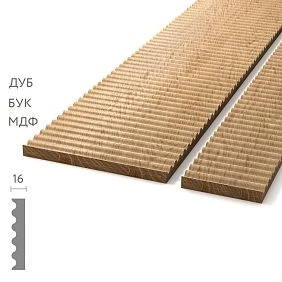
Natural wood: what exactly needs to be agreed upon before purchase




Natural wood is variable — and this must be taken into account before purchase
The same species does not mean the same pattern on every plank
Wood is formed in a living tree. Its appearance depends on the location of the section in the trunk, the direction of the cut, growth rings, grain, heartwood and sapwood zones, local natural characteristics, and subsequent finishing. Therefore, two parts made of the same species can differ noticeably in texture, even if both are properly dried, precisely milled, and sanded.
Variability is especially noticeable under a clear finish
If oak is coated with clear lacquer, oil, or a semi-transparent stain, the natural pattern remains part of the finished interior. Expressive rays, growth rings, and texture transitions become visible design material. For beech, the pattern is usually calmer and more uniform, but it is still natural wood, not a solid-color film.
Opaque paint changes the visual objective
Under dense enamel, the natural pattern may be much less visible or almost disappear. Then the following come to the fore:
- quality of mechanical processing;
- geometry;
- surface preparation;
- cleanliness of the relief;
- absence of damage;
- quality of priming and painting, if finishing is included in the supply.
Therefore, one cannot apply a single visual criterion to an oak cornice for a clear finish and a beech skirting board for a white opaque enamel.
The same article number means geometric identity, not a copied texture
Repeatability of the article number means that the customer receives the same profile and the agreed material finish. But with natural solid wood, the wood grain does not become a digital print. This is exactly the difference that must be explained to the customer before approving the sample.
Our factory also produces:





What exactly the customer means by “the same material”
Different concepts are being mixed in the conversation
The phrase “everything needs to be the same” can mean completely different requirements:
| What the customer says | What this may mean in practice |
|---|---|
| “Same material” | One wood species |
| “Same planks” | Single profile and cross-section |
| “Same color” | Matched finish / tone |
| “Same pattern” | Narrower visual texture range |
| “No knots” | Special requirement for the face surface |
| “Premium” | An undefined word that needs to be clarified |
Species, profile, finish, and visual category are different levels
For example, two skirting boards may share the same product code, the same oak, the same length, and the same lacquer, yet differ in the character of the grain pattern. If the project wants to further limit this variability, that is a separate requirement, not an automatically implied property of the product code.
Before ordering, a subjective preference needs to be broken down into criteria
It is not necessary to turn natural wood into a table of dozens of millimeters. But it must be clear what exactly matters: the presence or absence of certain natural characteristics on the face side, the character of the texture, the permissible contrast between adjacent parts, the finish, the area of application, and the reference sample.
Get Consultation
Grade, quality of processing, and finish are three different criteria
Grade should not become a universal word for all quality
In professional woodworking, there are lumber grading systems, but they are created for specific types of raw material and trade purposes. They cannot be automatically transferred to finished decorative trim and used to assume that the single word "grade" fully describes the face appearance of the product on a specific project.
In project procurement, it is more convenient to separate three layers.
1. Source material and natural characteristics
These include:
- wood species;
- fiber pattern;
- annual rings;
- sapwood and heartwood zones;
- knots, if present in the given finish;
- other natural characteristics of wood.
2. Quality of mechanical processing
This is no longer the “character of the wood,” but the result of production:
- accuracy of the cross-section;
- quality of milling;
- the quality of sanding;
- absence of rough tear-outs;
- the integrity of the relief;
- quality of the ends with the specified processing.
3. Quality of the final finish
If the product is supplied with a ready-made coating, the following are assessed separately:
- uniformity of the finish;
- compliance with the agreed tone;
- absence of mechanical damage to the coating;
- cleanliness of the surface;
- the agreed degree of texture visibility.
One layer cannot compensate for another
A beautiful natural pattern does not justify poor milling. A perfectly processed profile does not mean that the customer is obliged to accept any visual character of the material if a specific range was agreed before production. Finishing also must not be used as a way to hide unagreed processing quality.
Face surfaces and natural characteristics of wood
Which surfaces of the moulding should be considered face surfaces
For a skirting board, the face surface may not only be the front
On a tall relief skirting board, after installation, the main frontal surface, the top edge, part of the profiled relief, and the open end at the termination points are visible. If the project requires enhanced visual selection, it is necessary to understand which of these surfaces it applies to.
On a cornice, several planes are read simultaneously
A ceiling cornice is visible from below and from the side. On complex relief, different areas catch light at different angles, so the natural pattern and finish are perceived differently than on a flat strip.
For a casing, the front and end terminations are important
Especially if the casing ends at the floor or skirting board without an additional overlay. The end-grain structure of wood visually differs from the longitudinal one, and this is a normal property of the material. An open end requires a separate finishing logic.
A hidden back surface may have different requirements
If, after installation, the side is fully facing the wall and does not participate in the visible interior, requiring the same visual selection from it as from the face surface is often economically pointless. But geometry, integrity, and suitability for installation remain important.
Which natural characteristics should be discussed in advance
Knots
A knot is a natural result of branch growth. In different species, blanks, and product types, occurrence and acceptability vary. It is impossible to universally declare any knot a defect, but it also cannot be considered automatically acceptable for any premium face surface.
If the project imposes special requirements, the following must be agreed upon:
- whether knots are acceptable on the face side;
- whether their visual prominence matters;
- whether requirements differ by zone;
- how the project treats knots on the side or hidden side.
Sapwood and the distinction of wood zones
Sapwood is a natural, younger zone of wood that in many species may differ in color from the heartwood. In professional wood trading, sapwood itself is not always treated as a defect: its acceptability depends on the species, standard, and purpose.
For an interior project, the question is framed differently: is such a visual transition acceptable on a specific face surface? If not, this must be specified before production.
Grain direction and pattern
A straight-grained piece and a piece with a more active pattern can be equally high quality, but they look different side by side. This is especially noticeable with a clear finish.
Natural color variability
Even within a single species, the shade can vary. This topic overlaps with color variation, but here the shade is considered only as one element of overall visual sorting alongside pattern, grain, and natural characteristics.
Mineral and other natural features
Different species may have their own characteristic inclusions and color streaks. Criteria for one species cannot be applied to another. If a specific visual feature is critical for the project, it is included in the reference range or as a separate requirement.
When a natural feature becomes a problem for a specific project
In a rustic interior, expressiveness can be an advantage
An active pattern, contrasting grain, and pronounced naturalness can align with the architectural concept. In that case, overly strict sorting toward absolute uniformity may even worsen the character of the material.
A representative office may require a calmer line
If a skirting board under clear lacquer runs along a long wall next to expensive furniture, the client may want a visually calm adjacency of details. This does not mean "wood without nature." It means that the acceptable texture range needs to be shown and agreed upon.
The problem becomes a mismatch with the agreed expectation
The same knot or contrasting area cannot be assessed outside of context. If the reference sample and specification allow such a character, it is part of the natural material. If the project has predetermined a stricter face range, the batch must be assembled according to that condition.
Visual categories of the object and assembly of long walls
Visual categories of the object help avoid requiring maximum selection everywhere
When working through construction materials suppliers It is useful for the client to link appearance requirements to the actual visibility of the area. On a large object, equally strict selection for a formal lobby and a hidden wall in a service room rarely makes practical sense.
Conventional category A — formal areas
For example, the main hall, reception, restaurant, meeting room, executive office, long feature gallery. Here, a narrower visual range and rules for assembling adjacent details can be agreed upon in advance.
Category B — main operational premises
Room inventory, offices, corridors, and living rooms can use a standard agreed range of natural wood without individual selection of each plank.
Category C — secondary and hidden areas
Utility rooms, hidden areas behind permanent furniture, and technical zones may not require enhanced visual selection if the product meets technical requirements.
Category names are conventional
A project may use "Front / Standard / Hidden," "A / B / C," or its own designations. The main thing is to link the category to clear rules, rather than creating beautiful letters without substance.
Why zoning is more rational than the requirement for "only the very best"
The narrowest possible selection across the entire project can increase labor intensity
If the client requires that hundreds of meters of natural oak have the lowest possible visual variability regardless of installation location, the supplier has to spend longer sorting and assembling the material. Under very strict requirements, the available volume of suitable raw material narrows.
A strict visual criterion must have real benefit
There is no point in using the most uniform pieces behind a solid built-in wardrobe if they are far more useful on the central wall of a lobby. Planning zones helps direct the resource to where it is actually visible.
This does not mean sending the "bad" pieces to service areas
All products must meet technical requirements. It is only about distribution within the acceptable agreed range: calmer elements go to key visual zones, more expressive ones go where such naturalness is acceptable or less critical.
A long visible wall requires matching adjacent pieces rather than evaluating each one separately
Three good planks can look bad next to each other
Let's imagine a wall made of three sequentially installed oak skirting boards. The first has a calm pattern, the second has very active rays and contrasting rings, the third is calm again. Each piece is high quality, but the overall line may look random.
For a single wall, visual compatibility matters
With a transparent finish, it is useful to determine in advance whether adjacent elements need to be matched so that texture transitions are less abrupt. This is not a "one-to-one" selection, but a meaningful sequence.
On short sections, requirements can be simpler
If the skirting board is interrupted by doors every 1.5–2 m, differences between individual sections are perceived more weakly than on a continuous 12 m wall. Therefore, matching rules can be tied to the architecture.
The belonging of sets must be preserved
If six planks are selected for a single feature wall, this relationship must be noted on the packaging or internal inventory sheet. Otherwise, after delivery, the warehouse will distribute them across different floors, and the purpose of the preliminary selection will be lost.
Physical reference sample and acceptable variation range
A physical sample is more reliable than a verbal description of "premium"
The word "premium" does not define a visual range
One customer understands "premium" as the absence of noticeable knots. Another — as the calmest possible oak grain. A third — as perfect sanding for enamel. A fourth — as selection by shade. Until the word is translated into specific attributes, it helps neither purchasing, nor production, nor quality control.
A physical sample shows the scale and the actual surface
The sample shows:
- profile size;
- nature of the relief;
- wood texture;
- reaction to the selected finish;
- prominence of the pores;
- color under specific lighting;
- Quality of sanding.
That is why for a large order, a sample is more useful than a long text description like “calm oak, without sharp transitions.”
The sample must be labeled
Minimum:
| Field | What to fix |
|---|---|
| Article number | exact profile code |
| Species | For example, oak / beech |
| Finishing | Lacquer, oil, tint, enamel, or no finish |
| Object | Project name |
| Purpose | Entrance area reference / standard reference |
| Date | When approved |
| Approved by | Responsible party |
The reference sample must be kept until the project is completed
If the object is delivered in phases, a follow-up order may come up six months later. Without a physical sample, a new manager will have to reconstruct the criteria from photographs and verbal comments. A saved reference sample makes a repeat order much clearer.
A single perfect sample is sometimes not enough
A perfect sample can create unrealistic expectations
If you pick one exceptionally even and calm fragment from a large natural batch and show it to the client as "this is how the wood will look," they may expect hundreds of meters to visually repeat that one piece.
For natural wood, this is a risky approval model.
It is more reliable to show the acceptable range
You can agree on three conditional points:
- a calm acceptable option;
- a typical option;
- the most expressive, yet still acceptable option.
This way, the client sees not just a single photo of the ideal, but a real corridor of variability.
The range must not turn into a chaotic assortment
All samples must belong to the same species, the same declared finish, and a comparable profile. If one sample is unfinished, the second is tinted, and the third is lacquered, the client is comparing different states and does not get a clear reference standard.
For the front-of-house area, the range can be narrower
For the main hall, the project may approve a stricter texture corridor than for the guest room stock. This is a normal architectural task if it is fixed before production and is clear to the supplier.
Why a phone photo should not be the only reference standard
The camera and screen change perception
A photo is affected by:
- white balance;
- exposure;
- automatic camera processing;
- screen brightness;
- device color profile;
- lighting at the time of shooting.
The same oak on two phones can look different.
A photo is convenient for communication, but not always for the final dispute
A photograph helps quickly show which detail is being discussed. But if the project has strict requirements for a transparent finish and natural grain, a physical sample or a set of samples provides a more reliable basis.
It is useful to view a critical sample under the actual lighting of the site
The warm light of a restaurant, cool office fixtures, daylight by a stained-glass window, and side lighting reveal texture in different ways. For the key wall of a lobby, it is useful to evaluate the sample where it will actually be located.
How finish and species change the criteria for visual selection
A transparent finish makes the natural grain part of the design
Under lacquer and oil, the structure remains visible
Oak under a clear finish reveals its growth rings, rays, and pores. Tinting can make them more contrasting. That is why the visual range of the original wood becomes an important part of the final interior.
An untreated blank does not always show the final result
After applying oil, stain, or lacquer:
- the shade changes;
- part of the pattern becomes more contrasting;
- the pores read differently;
- the depth of the texture is enhanced;
- differences between adjacent parts may become more noticeable.
If a clear finish is critical, it is best to approve a sample in a state as close to the final one as possible.
A trial finish is needed on the actual species
You cannot reliably judge an oak batch by a painted beech sample or vice versa. The species affects the grain pattern and the reaction to the finishing product.
Opaque paint reduces the importance of the grain pattern, but does not remove the quality requirements
Under enamel, the emphasis shifts
If the texture is almost completely hidden by a dense opaque paint, strict sorting by grain direction may be of little use. What matters more instead:
- evenness of the substrate;
- the quality of sanding;
- absence of coarse processing defects;
- cleanliness of the relief;
- geometry;
- end condition;
- quality of preparation for the finish.
There is no need to pay for a visual criterion that the paint will then completely hide
If the project requires a white opaque skirting board and the wood grain should not be visible, maximum selection by oak grain may not make sense. It may be more rational to choose a species and surface quality that are better suited to an opaque finish.
But a knot or a local feature can affect more than just the color
If a natural feature affects the stability of the surface, the texture after finishing, or requires additional preparation, it should be evaluated as a technological factor, not just as a pattern.
Oak and beech cannot be evaluated on a single visual scale
Oak is inherently more expressive
Oak is characterized by a pronounced growth ring pattern, vessel structure, and rays. Under a transparent finish, this expressiveness is often an advantage, which is precisely why oak is chosen.
Beech is usually perceived as calmer
Beech wood has a more uniform, fine-pored structure and is often chosen where a neutral pattern or opaque paint is needed.
Comparing “which is more beautiful” is pointless
Different species have different visual purposes. You cannot apply a single scale of “the less pattern, the higher the grade” to any natural moulding. In an oak interior, an active texture may be desirable, while in a project for enamel, it does not play a major role.
Criteria are agreed upon for a specific species and finish
If a project switches from oak to beech or vice versa, the old appearance reference is no longer a complete basis.
Knots, sapwood, grain, and end grain: how to agree without invented standards
How to agree on knots without an invented universal standard
Start with function and surface
What matters to the customer is not an abstract “are there knots or not,” but:
- whether the surface is visible after installation;
- whether the finish is transparent;
- whether it is a feature area;
- whether the part is repeated dozens of times;
- whether the specific characteristic affects processing or only appearance.
The wording "no knots at all" can be both too strict and too vague at the same time
On the one hand, it demands absolute cleanliness. On the other, it doesn't specify whether the requirement applies to hidden surfaces, end faces, and barely visible areas. It's better to define a specific face area and show acceptable samples.
A dry, stable natural feature and mechanical damage are not the same thing
It's important to distinguish a natural characteristic of the material from a tear-out, chip, crack after machining, or coating damage. These categories cannot be lumped together under the word "knot" or "defect."
How to handle sapwood and transitions of the heartwood zone
Sapwood by itself should not automatically be called a defect
In the professional classification of different species, sapwood may be viewed differently. For some wood types, color selection genuinely has separate commercial significance. For interior trim, the main thing is to determine in advance whether such a zone is acceptable on the face surface of a specific project.
Under a clear finish, the transition is more noticeable
If the project wants a calm natural oak without noticeable light transitions on the main wall, this needs to be locked in through samples and grading rules before the batch.
In a hidden or painted area, the same criterion may be irrelevant
If the surface is covered with a hiding enamel or is located behind a permanent structure, the visual value of strict sapwood selection may be minimal.
The direction of the grain affects how adjacent parts relate to each other
One board may look calm, another — dynamic
The difference is related to the cut and the structure of the specific wood section. With a clear finish, adjacent parts may be perceived as different in character, even though they belong to the same species.
For one long composition, an adjacency rule can be introduced
For example, do not place elements with extreme visual activity next to each other if the project requires a calm line. This is already a selection rule, not the grade of each individual board.
Orientation after cutting must also be taken into account
The installer may turn the board the other way or mix up the sequence. If the batch was specially matched for the wall, it is useful to mark the order or at least the destination zone.
The end cut has its own pattern and requires a separate solution
The longitudinal texture and the end grain differ visually
At the open end of the profile, the cross-grain structure becomes visible. Even a perfect face surface does not make the end visually identical to the front.
Finishing is important for the open end
Depending on the profile and the project, the following may be required:
- careful sanding;
- Painting;
- toning;
- returning the profile to the wall;
- another end design.
The requirement of “the same color” on the end must be checked separately
The end surface absorbs finishing materials differently than the longitudinal surface. Therefore, with clear or semi-transparent finishing, it is better to evaluate the final appearance on a sample.
Trial batch and changes to criteria after approval
A trial batch helps verify not only the color but the entire visual model
For large wholesale purchase of building materials it makes sense to first confirm a limited volume if the requirements for natural wood are unusually strict.
What to check on a trial batch
- the actual range of texture;
- the behavior of the selected finish;
- surface quality;
- the visual compatibility of adjacent parts;
- the clarity of the selection categories;
- assembly by zones.
The trial batch must be representative
If only a few exceptional details are shown to the customer, control loses its meaning. The trial volume must reflect the real expected range of the main supply.
After the trial batch, the requirements are fixed
If the customer confirms that such a range is suitable, it becomes the basis for the main order. It is not acceptable, after manufacturing a large batch, to suddenly switch to a stricter criterion without formalizing a change of requirements.
Changing visual criteria after the trial batch is a change of order
New aesthetics may be feasible, but they are not free in terms of time
The customer may look at the trial oak and decide: “we want only a calmer grain pattern.” This is a legitimate request, but it must be assessed as a new condition.
Checked:
- availability of the required raw materials;
- volume of the future batch;
- labor intensity of selection;
- impact on the timeline;
- impact on cost;
- ability to save the criterion in a repeat order.
You cannot change the rules after production and consider the old batch automatically non-compliant
If the originally agreed range was met, and after delivery the customer wanted a narrower one, this is already a change of requirement, not proof of a defect in the existing batch.
Natural characteristic, defect, and late sorting on site
How to distinguish a natural characteristic from a manufacturing defect or damage
This is one of the main sources of disputes
The customer sees an unusual area and calls it a defect. The supplier responds that it is natural wood. Both parties may be talking about different categories.
Convenient to separate:
| Category | Examples | How to assess |
|---|---|---|
| Natural characteristic | Pattern, change in grain direction, natural color transition | By the agreed visual range |
| Raw material characteristic with a separate requirement | Knot, sapwood and other visible areas | According to the specification and samples of the specific species |
| Manufacturing processing defect | Rough tear-out, poor milling, insufficient sanding | As a manufacturing quality issue |
| Damage | Chip after impact, scratch, coating damage | As a separate nonconformity or logistics event |
Natural origin does not justify a mechanical defect
The phrase "it's wood, after all" should not be used to explain a rough scratch, a tear-out in the relief, or damage to the finished coating. Conversely, natural texture variation should not automatically be considered a defect if it falls within the agreed range.
In a disputed situation, we first determine the category
Before discussing a replacement, we need to answer: are we looking at a natural pattern, a characteristic of a specific species, a processing defect, or damage after production? Only after that does the dispute become substantive.
Why sorting only on site is an expensive model
Late sorting turns a construction site into a technical selection department
If the criteria are not defined in advance, the customer receives a large batch and only after delivery starts sorting it:
- “for the lobby”;
- “for the rooms”;
- “doesn’t fit here”;
- “to the warehouse”;
- “needs to be replaced”.
This creates additional work that could have been included in the kitting before shipment.
There is a risk of an unjustified reorder
If out of 500 planks the customer subjectively rejected 70 without an agreed criterion, they may order another 70. After re-inspection, it will turn out that a significant portion of the original items are technically and visually suitable for other zones.
The warehouse loses the original logic of the batch
After chaotic sorting across several rooms, it becomes harder to understand which elements belong to which visual set, where the original packaging is, and which sample was used for the decision.
Маркировка, распределение по зонам и эксплуатационный резерв
Marking of visual categories should be simple
There is no need to create a new SKU for each visual group
The same item code can remain a single product position. A visual category is an additional designation within a specific project.
For example:
- FEATURE ZONE;
- MAIN PREMISES;
- SECONDARY AREAS.
Marking must preserve the original product identity
Correct:
MLD-A / oak / 2400 / FEATURE ZONE / hallway.
Bad:
Beautiful moldings.
A category must not imply “better / worse” without explanation
This is an internal distribution by visual task. Even a secondary category must meet the technical requirements of the order.
How not to send visually selected parts to inconspicuous rooms
The problem appears after general acceptance
At the factory or supplier, calm oak planks were selected for the main hallway. At the site, the packages were accepted as general MLD-A and distributed across floors without regard to purpose. The parts best according to the criterion chosen by the project went behind furniture and into service areas.
The distribution list must outlast logistics
| Group | Article | Quantity | Purpose |
|---|---|---|---|
| VK-01 | MLD-A | 24 | Main hall, wall 1 |
| VK-02 | MLD-A | 18 | Main hall, wall 2 |
| ST-01 | MLD-A | 120 | Room number inventory |
After partial unpacking, the link must be preserved
If four planks were taken from group VK-01, the remaining twenty should not dissolve into the general remainder. Otherwise, it will be harder to match the continuation of the wall later.
Phases, multiple buildings, and repeat orders
How to coordinate the visual range for multiple buildings and phases
A single project can be built over years
The first building is being furnished now, the second in four months, and the third in a year. Natural wood does not guarantee that the next batch will be visually identical to the first in every detail.
The physical reference sample becomes a binding document
After the first batch, it is stored in a secure place together with:
- SKU;
- the wood species;
- the finish;
- the date;
- a description of the visual category;
- a photograph for easy reference.
A repeat order begins with checking the reference sample, not memory
A new manager or architect may interpret the words "calm oak" differently. A physical sample reduces subjectivity.
If it is impossible to fully replicate the old range, this is discussed before production
The supplier must report what the currently available material looks like, and the customer must decide whether the new range is acceptable. It is better to agree on a new series of samples than to get a surprise after delivery.
A repeat order should not promise an identical natural texture
The article number can be repeated, the natural pattern cannot
A repeat order ensures the same model, species and agreed technology, but the natural pattern of each new piece remains unique.
A realistic goal is to repeat the agreed visual character
For example, a project needs oak with a transparent finish and moderately pronounced texture for a guest room inventory. A repeat batch should aim for the same agreed range, but not copy the pattern of the old planks.
We formulate requirements for repairing a single piece with particular care
Two years later, one plank is replaced with a new one. Even with the same species and finish, the adjacency may differ. For spot replacement, it is useful to have a service reserve from the original batch.
How visual selection relates to the service reserve
The reserve must correspond to the areas it serves
If a formal lobby is assembled from a specially selected group, random planks of the standard category may be a poor match for future local repairs.
Part of the reserve can be allocated to the front-of-house area
For example:
- 4 planks — lobby reserve;
- 8 — general operational reserve for the room stock;
- short usable offcuts — for local repairs.
The reserve must not be used for regular installation
If specially selected pieces are used on another floor due to a local shortage, after handover the lobby is left without a visually compatible replacement. Therefore the reserve status is recorded as carefully as the category itself.
How to compare suppliers and evaluate the cost of visual selection
Offers from different suppliers should be compared using the same specification
When Wholesale building material suppliers they offer natural moulding, comparing a single price per metre says little about comparable
It is impossible to guarantee an endless supply of natural wood with the same pattern. The stricter the criterion, the more important it is to verify real feasibility in advance.
The cost of selection must be clear before the contract
There is no need to invent a universal percentage for the price increase. It depends on the species, volume, strictness of requirements, available raw material, and the assembly scheme. But if additional selection affects the price, this must be known before order confirmation.
The strictness of requirements must be proportional to the visual value of the area
It makes sense to reserve the most expensive selection for places where the viewer actually sees a long continuous line, a transparent finish, and close proximity of parts.
Specification, the person responsible for the reference sample, and transferring requirements to the supplier
How to document visual requirements in a specification without subjective words
Poor wording
- “only beautiful wood”;
- “premium quality”;
- “perfect texture”;
- “without visual defects”;
- “as uniform as possible”.
Working structure
For example:
Species: oak.
Profile: according to the article and drawing.
Finish: transparent according to the approved final sample.
Face surfaces: front and visible top edge.
Front-of-house area: selection within the approved range of reference samples.
Guest room stock: standard agreed range of natural wood.
Special characteristics: according to the agreed samples and comments on the category.
A specification does not have to describe every millimeter of the wood
Its purpose is to make the expectation reproducible. If a criterion is easier to show with three physical samples, it is better to refer to them than to write a dozen vague sentences.
Who should approve the visual reference
The purchaser should not independently define the architectural notion of “beautiful”
Their task is to obtain an agreed requirement and ensure it is included in the order.
The following may participate in the approval
- architect;
- designer;
- customer;
- technical client;
- general contractor;
- quality service.
It is not necessary to assemble a committee of all participants. There needs to be a predetermined party whose decision is truly final.
After approval, the criterion should not change because of a random employee at receiving inspection
If a warehouse worker or a new foreman personally prefers a different character of oak, that is not a reason to reject a batch that conforms to the approved reference.
Batch acceptance against the reference sample and handling deviations
How to control a large batch during acceptance
We do not evaluate every plank as a work of art without reason
If the batch was assembled by categories and reference samples, acceptance must confirm compliance with this system:
- whether the item codes are correct;
- whether the marking of visual groups is preserved;
- whether the overall range matches the approved samples;
- whether there are manufacturing defects or damage;
- whether different categories are mixed.
Presentation sets can be checked more thoroughly
If 30 elements are specifically selected for the main hall, it makes sense to check this particular set more carefully than the usual general stock of numbered rooms.
Disputed details are separated but not mixed with actual defects
If the issue concerns only compliance with the visual range, the group receives the corresponding status. If a chip or coating damage is found, that is a different type of problem.
Practical scenarios: hotel, transparent finish and covering enamel
Practical example: oak skirting board for a hotel
Task
One SKU is used in the main hall, corridors and 100 rooms.
Irrational strategy
Require equally strict manual selection of each plank throughout the entire property, without distinguishing the visibility of zones.
Working strategy
The project defines:
- hallway — a premium category with an agreed narrow visual range;
- corridors — a standard range with soft matching for long walls;
- rooms — a standard range of natural oak;
- hidden areas — without additional visual selection beyond technical requirements.
What procurement gets
Not a subjective comment like “the most beautiful for the hallway,” but a clear batch distribution plan.
Practical example: molding for a clear finish on a long wall
Risk
Each plank matches the species and quality, but the character of the texture changes very contrastingly from one to the next.
Solution before production
Agree on the sample range and the requirement to group elements of the same long wall into visually compatible groups.
On-site decision
Keep the group marking, do not mix it with the general remainder, lay out the sequence before cutting, and check the overall appearance.
Practical example: linear trim under covering enamel
Risk of a different type
The customer spends resources on strict pattern selection that is almost unreadable after dense painting, but does not sufficiently control sanding and surface preparation.
Correct priority
For such a batch, more attention is paid to geometry, cleanliness of milling, sanding, and the quality of the base for painting. The natural pattern remains a characteristic of the wood, but ceases to be the main visual criterion.
12 typical customer mistakes when approving appearance
- Demanding “perfect wood” without clarification. The parties have no common criterion.
- Choose based on a single photo. The camera and screen distort the color and scale of the pattern.
- Approve one exceptional sample. It may not show the real range of a natural batch.
- Confuse a natural characteristic with a processing defect. The dispute is about different categories.
- Do not define the face surfaces. The supplier does not understand where enhanced visual inspection is needed.
- Apply the same criteria to the hallway and hidden areas. Order picking becomes more complicated with no practical benefit.
- Approve an unfinished blank for a transparent finished coating. After finishing, the pattern is perceived differently.
- Change the criteria after manufacturing. The approved batch is evaluated by new rules.
- Start sorting only after delivery. The site takes on extra work and the risk of a reorder.
- Do not keep the reference sample for the next queue. A repeat order is based on memory.
- Compare suppliers only by price per meter. Visual selection conditions may differ.
- Expect an identical natural pattern from hundreds of meters of solid wood. Natural wood is variable by its very nature.
Checklist before the wholesale order
| Question | What should be recorded |
|---|---|
| Has the species been approved? | Oak, beech, or another option |
| Have the profile and product code been approved? | One technical model |
| Has the finish been determined? | Transparent, tinted, opaque, etc. |
| Are the face surfaces specified? | Front, edge, end, etc. |
| Have natural characteristics been discussed? | Knots, sapwood, pattern definition |
| Are zones divided by visual significance? | Feature / standard / concealed |
| Is there a reference sample? | Physical sample or sample range |
| Does the reference sample show the final finish? | Especially important for transparent finishing |
| Is the assembly order defined? | For long feature walls and repeating zones |
| Is there a person responsible for approval? | One final side |
| Will the reference sample be kept? | For queues and reorders |
| Are suppliers compared based on identical specifications? | Price is compared when the proposal content is identical |
When strict selection is not needed: errors and final control before ordering
When strict visual selection is not needed at all
With opaque coating, the pattern may cease to be the main criterion
If the wooden profile is fully coated with opaque enamel and the project does not want to preserve the natural texture, additional manual selection by growth ring pattern may not provide noticeable benefit. In such a situation building materials supplier must first of all ensure the correct species, profile, geometry, processing, and surface preparation for the finish.
In hidden areas, visual selection is sometimes excessive
Behind permanent built-in furniture, in a closed niche or technical zone, there is no point in reserving the calmest-patterned planks if they will not be visible and fully meet the technical requirements.
Rationalization must not turn into a reduction in quality
Waiving enhanced visual selection does not mean that damage, poor processing or incorrect geometry are allowed. Only the aesthetic criterion of the face pattern changes.
A criterion is needed where it affects the result
If the natural texture is part of the architectural idea, selection is justified. If it is completely hidden by the finish or the area itself is invisible, resources are better directed to processing quality and completeness.
How to create a specification for the supplier without the words "beautiful" and "premium"
When Building materials suppliers wholesale work with a large project, the technical specification must be specific enough that it can be repeated several months later.
Minimum specification structure
| Block | What to specify |
|---|---|
| Product | SKU, profile, species, length, quantity |
| Finish | Unfinished / clear / tinted / opaque |
| Face surfaces | Which sides are visually assessed |
| Natural characteristics | What is acceptable within the agreed range |
| Zone categories | Front / standard / concealed |
| Kitting | Is compatibility of adjacent parts required |
| Reference | Code or description of the approved sample |
| Reserve | Is a separate visually compatible reserve needed |
There is no need to describe the nature of wood with a hundred prohibitions
The more verbal criteria there are, the higher the risk of contradictions. If a requirement can be shown more reliably with a set of physical samples, it is better to use samples as part of the specification.
The requirement must be achievable for the declared volume
Before confirming 1000–2000 meters with narrow visual selection building materials supplier wholesale must assess the real availability of raw materials and the labor intensity of matching. It is impossible to promise a huge volume based on a criterion that has been confirmed only on a few random planks.
How to compare a manufacturer, dealer, and supplier with the same visual task
The procurement channel does not cancel unified requirements
building materials wholesale from the manufacturer may be purchased directly, through a kit assembler, or through a trading company. In any case, the technical specification for appearance must be transmitted without loss of meaning.
The intermediary should not develop its own interpretation of the grade
If the customer has agreed with the manufacturer on a specific oak range, the dealer must not replace it with the wording "premium grade" in their invoice. Otherwise, in a dispute, the parties will refer to different criteria.
for building materials wholesale from the manufacturer a direct link to the sample is important
The manufacturer can control selection at the raw material, processing, and assembly stages. This does not mean that any direct order is automatically better, but it makes it easier to link the visual requirement to the actual production process.
We compare based on the same scope of service
If one participant offers a standard assortment without selection, while another offers a trial batch, samples, zone-based marking, and matching of adjacent parts, the prices reflect a different scope of work.
How to account for visual selection in wholesale purchasing and the project schedule
For large wholesale purchases of building materials additional visual control should appear in the schedule before production, not before loading.
Stage 1. The architect sets the requirement
The species, finish, zones, and overall visual character are determined.
Stage 2. The supplier shows the actual range
Not just one perfect piece, but representative samples.
Stage 3. The customer approves
The reference sample and distribution rules are fixed.
Stage 4. A trial or main batch is assembled
If the volume is very large or the criterion is unusual, a limited trial batch may go first.
Stage 5. The batch is labeled by purpose
Feature walls, standard rooms, and reserve are not mixed.
Stage 6. The site accepts by the same criterion
You cannot approve one thing and accept by another.
Why buying at the lowest price can lead to expensive sorting after delivery
wholesale purchase of building materials becomes expensive not only because of the invoice price. Labor costs after delivery matter.
Additional hidden costs
- manual re-sorting of hundreds of planks;
- temporary warehouse for different groups;
- re-labeling;
- reordering the missing “suitable” category;
- return or relocation of disputed material;
- installation crew downtime;
- inefficient leftovers.
Example
The project ordered 800 planks without a predefined visual range. After delivery, the customer decided that only 620 were suitable for visible areas. The remaining 180 are physically sound but do not match a preference that emerged after the fact. If they cannot be used in other rooms, the project has effectively created a 22.5% disputed reserve on its own.
This is not universal statistics, but an example of how a subjective late criterion can turn suitable material into an economic problem.
Pre-selection is cheaper than chaotic late sorting, if it is truly needed
But selection should not be assigned automatically either. First, the project determines where the visual criterion affects the interior, and only then includes it in the order.
How to accept a batch against a reference sample without subjective dispute
Acceptance does not begin with the inspector's personal taste
First, the following are retrieved:
- specification;
- physical reference sample or range;
- rules for visual categories;
- set list;
- finish requirements.
We assess manufacturing quality separately
Even if the pattern matches the reference, an item with a rough chip or processing defect is not considered suitable just because the texture is correct.
We do not conflate "don't like" with "doesn't match"
The first phrase expresses a personal preference. The second requires showing how a specific part falls outside the agreed range or has a technical defect.
We photograph the disputed group next to the reference
A photograph does not replace the reference itself, but it documents the specific issue well and helps the supplier understand exactly what raised the doubt.
What to do if part of the batch falls outside the agreed visual range
We do not automatically declare the entire batch problematic
First we determine the scale: how many items are in question, which areas they were meant to serve, and whether they are linked by common packaging or a production group.
Checking the possibility of redistribution
If a part is not suitable for the feature wall but falls within the standard agreed range for the room inventory, it can be used there — if this is provided for by the project rules.
If the product genuinely does not match the order, we issue a separate resolution
Replacement, additional selection, or another agreed option is possible. The specific commercial procedure depends on the contract and should not be invented universally in the article.
How to preserve the criteria for a repeat delivery several months later
The physical reference sample must not lie unsigned in the office
It is linked to a specific order and stored in a secure place.
The repeat batch is verified before launch
The supplier shows the current material or confirms that it can work within the previous range. If not, the parties update the reference sample before production.
An old photo can help find the reference sample, but cannot replace it
Especially when it comes to subtle differences in texture and tint.
What to communicate to the building materials supplier before production
For a large batch materials in bulk should not be specified as the line “oak skirting board — 800 m” without visual context, if it is truly important to the project.
We provide
- exact article number;
- breed;
- dimensions and volume;
- finish;
- list of face surfaces;
- zone categories;
- approved reference sample or range;
- rules for matching adjacent parts;
- separate reserve for critical areas if necessary.
for supply of construction materials criteria must reach shipment without distortion
If a visually selected batch for the lobby is mixed in the warehouse with the regular stock, a correctly executed production selection will lose its meaning. Therefore, the designation is preserved in the labeling and documents.
When purchasing construction materials wholesale visual criteria are also useful to check for feasibility in full scope. A requirement that is easy to meet on twenty samples may prove too narrow for thousands of linear meters. Therefore, before the contract, the customer must understand not only the desired appearance, but also which volume belongs to the premium category, which to the standard one, whether a visually compatible reserve is needed, and whether redistribution within the agreed range is allowed. This turns an aesthetic wish into a real procurement model, rather than a requirement that is first tested only after manufacturing.
Practical algorithm for agreeing on grade and appearance
1. SELECT SPECIES AND PROFILE
↓
2. DETERMINE FINISH
↓
3. ASSIGN FACE SURFACES
↓
4. DETERMINE IMPORTANT NATURAL CHARACTERISTICS
↓
5. DIVIDE THE OBJECT INTO VISUAL CATEGORIES
↓
6. AGREE ON A PHYSICAL REFERENCE SAMPLE OR RANGE
↓
7. IF NECESSARY, CHECK A TRIAL BATCH
↓
8. ESTABLISH KITTING RULES
↓
9. TRANSFER THE REQUIREMENTS TO THE MAIN ORDER
↓
10. MARK THE VISUAL GROUPS
↓
11. ACCEPT THE BATCH BY THE SAME CRITERION
↓
12. KEEP THE REFERENCE SAMPLE FOR THE NEXT BATCH
Conclusion: natural wood requires expectations agreed in advance
When purchasing wooden moulding in large quantities, it is not enough to check only the SKU, species, dimensions and quantity. Natural wood has inherent visual variability, and this is often the source of conflict after delivery if the customer did not explain before production what appearance the project requires.
In project work, grade should be understood not as one abstract word, but as a system of agreed requirements: which surfaces are face surfaces, which natural characteristics are acceptable, what the final finish looks like, how uniform the front area should be, and how adjacent elements are matched along a long wall.
A physical sample or range of samples is far more useful than the words "premium," "perfect wood," and "no visual defects." It helps the customer see the real texture and at the same time protects the supplier from criteria changing after production.
It is especially important not to confuse natural characteristics with processing defects and damage. Natural grain, fiber variation, or color variability belong to the nature of the material; a rough chip, tear-out, scratch, or damaged coating belong to other control categories.
If the project is large, it makes sense to divide requirements by visual importance: keep stricter selection for main lobbies and long feature walls, use a standard agreed range for primary rooms, and avoid overloading hidden areas with unnecessary selection. This makes the project both aesthetically manageable and economically rational.
That is why wholesale building material suppliers should receive appearance criteria before the main batch is launched. Then acceptance is built not around the subjective question "is this plank beautiful or not," but around a clear answer: does the product match the pre-agreed range for the specific project?