Article Contents:
- From a branch message to an official internal request
- An internal request and a supplier order are different documents
- Why the supplier does not need dozens of internal requests
- A decentralized request does not mean a decentralized external order
- What counts as an official branch request
- Why email and messengers do not replace a register
- Accurate product identity is required before searching for duplicates
- One approved network SKU must have the same name in all branches
- MLD-050 shows the same issue on the molding
- Material suppliers receive only items with a confirmed configuration
- If the branch does not know the exact SKU
- Every request needs a number and a transparent status
- A possible duplicate does not mean delete
- How to search for duplicates of internal requests
- Scenario: the manager and the contractor report the same need
- Scenario: same quantity, but different zones
- Scenario: the first request is already included in the order
- A building materials supplier must not receive two external orders for the same requirement
- Model 1. Centralized procurement only
- Model 2. Controlled local procurement
- The worst model — both at the same time without a shared registry
- Before confirming a request, the branch's actual stock on hand is checked
- Available stock and operational reserve are not the same thing
- Another branch's reserve is not part of the network's shared available pool
- Building material suppliers: only fully identical confirmed items are consolidated
- After consolidation, branch ownership does not disappear
- Not all identical items must necessarily be consolidated
- The request quantity must be justified by actual whole products
- Why the branch must attach the origin of the quantity
- Molding requires a particularly clear layout
- The branch reserve must not be hidden inside the main request
- The required date must be specific, not “urgent”
- Three levels of urgency are enough for most processes
- Many urgent requests are a sign of an internal problem
- Changing a request before and after placing an external order are different procedures
- If the order has not yet been sent to the supplier
- If the external order has already been placed
- Why you cannot silently correct the internal table
- A cancelled request is not deleted from the register
- Cancellation after delivery is no longer a request cancellation
- Local branch purchase must be visible to the center before the general order
- A local purchase does not grant the right to change the approved item
- If the branch purchased the wrong item
- Multiple legal entities can use one registry but different contracts
- Why this is still useful
- Unverified requests are not included in the total procurement result
- Why “adding just in case” destroys the meaning of verification
- The central consolidation table must preserve the local structure
- A partial delivery must close specific internal requests
- Why you can't lose distribution after merging
- An urgent request goes through the same checks, only faster
- Message 1 — manager
- Message 2 — contractor
- Message 3 — designer
- Message 4 — procurement officer
- Step 1. Create a single verification card
- Step 2. Check the remaining stock
- Step 3. Check open purchases
- Step 4. Confirm the result
- If several branches regularly make the same mistake, the problem may be in the methodology
- Monthly metrics help identify the weak point in the process
- Many duplicates are a signal not only of the buyer's attentiveness
- Many urgent requests are also a signal
- After closing the request, we save the plan and actual
- History should not automatically become a new standard
- How to distinguish a new need from a repeat message on an existing request
- The old request number should be visible to the branch
- A forwarded email does not create a new request
- A single request can have multiple calculation sources
- If the sources contradict each other
- The project version must be part of the request's origin
- A new version does not always mean an additional quantity
- A regular request cycle reduces the number of chaotic urgent requests
- A future need may arise before the purchase date
- A branch request must have a single owner, even if there are multiple sources
- The central purchaser should not invent the branch's need on their own
- How to handle requests for operational repairs of an existing branch
- Why service repairs should not be mixed with initial outfitting
- How to handle an erroneous request for a similar but unapproved profile
- Request checklist before the "CONFIRMED" status
- When a complex internal registry is not needed
- When automation is already justified
- The branch forecast and the confirmed request should be kept separate
- A forecast is useful to the supplier as a guideline, but not as a commitment
- Different required dates can make a single combined order unprofitable
- If a branch does not maintain accurate inventory, its stock balance cannot be subtracted using the old table
- For a critical request, only the required SKU can be checked
- A partially closed request must retain the remaining demand
- An emergency purchase via the second channel requires blocking the central order
- The second seller does not cancel the requirement for the exact SKU
- The supplier must receive one current revision of the external order
- Internal changes and external revisions are not the same thing
- A practical weekly cycle for a network of ten branches
- Monday–Tuesday: registration
- Wednesday: verification
- Thursday: consolidation
- Friday: external order and communication
- Next week: incoming delivery
- Control before releasing an external order
- When branch requests should not be combined into a single order
- Technical consolidation and commercial combination are different decisions
- Who should see the request registry
- Status transparency reduces the number of "urgent" repeats
- Final check of the link between an internal request and an external order
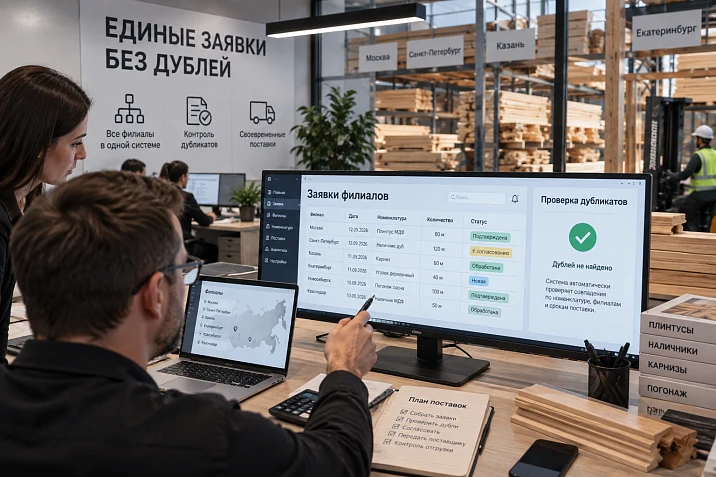
A restaurant chain uses a single approved oak skirting board, PLT-006. Central procurement receives four messages about restaurant No. 17. The manager writes: "we urgently need 40 meters of skirting board." The contractor sends a table: "PLT-006 — 18 planks." The designer reminds them that PLT-006 must be included in the hall. The branch supply officer separately asks to "order more skirting board because the current amount won't be enough."
If these messages are added together as four independent needs, the chain will order the same material twice or three times. If, on the contrary, it is decided that all of this is one duplicate without verification, a real second zone may be under-ordered. Central procurement must first establish: which branch, SKU, material, length, quantity, room, date, and reason each source is talking about.
Therefore materials supplier must receive an already cleaned external order. It should not have to figure out whether the manager's 24 planks are included in the contractor's calculation, whether the designer accounted for the same zone, and whether the branch bought part of the volume independently. This is the buyer's internal task.
BRANCH MESSAGE / REQUEST → REGISTRATION → SKU IDENTIFICATION → QUANTITY CHECK → STOCK AND RESERVE CHECK → SEARCH FOR A POSSIBLE DUPLICATE → CONFIRMATION → CONSOLIDATION OF IDENTICAL ITEMS → EXTERNAL ORDER TO SUPPLIER → DISTRIBUTION BY BRANCH
Main principle: only confirmed requests go into the general order. A messenger message, a contractor's email, or a designer's line item is a source of demand, but not yet a ready order to the supplier.
From a branch message to an official internal request




An internal request and an order to the supplier are different documents
A branch request answers the question: what does the company's internal department need. An order to the supplier answers a different question: what the company actually purchases after checking all internal needs.
| Document | What it contains | Who works with it |
|---|---|---|
| Internal request | Branch, SKU, material, length, quantity, zone, date, reason | Branch and central purchasing |
| Request registry | All requests, their statuses, duplicates, changes, and confirmations | Central purchasing |
| External order | Confirmed items, quantities, addresses or breakdown, deadlines | Buyer and supplier |
There must always be a check between the first and third documents. Otherwise, the network turns the supplier into a dispatcher for its own internal organization.
Our factory also produces:






Why a supplier doesn't need dozens of internal requests
If twenty branches send their letters directly to the supplier while central procurement simultaneously forms a consolidated order, no one sees the overall demand. The same PLT-006 may appear in three channels: a local order, a consolidated order, and an urgent supplementary order.
The supplier needs a clear external document: the exact SKU, material, length, quantity, address or distribution across addresses, and the required deadlines.
Get Consultation
A decentralized request does not mean a decentralized external order
Branches can measure premises independently, calculate demand, and initiate a request. But the right to place an external order may belong only to central procurement. Another model is also possible — local buyers have the right to purchase themselves, but then the system must see such purchases before forming a consolidated order.
What is dangerous is not decentralization itself, but the simultaneous existence of two models without common control.
What counts as an official branch request
The phrase "we need more baseboards" is not a request. For central procurement to verify demand, the record must have a minimum set of fields.
| Field | Example | Why |
|---|---|---|
| Request number | ZF-2026-0017 | Link between all changes and decisions |
| Branch / site | Restaurant 17 | Who owns the requirement |
| Responsible person | Manager / contractor | Who to ask for clarification |
| Article number | PLT-006 | Exact product identity |
| Material | Oak | Do not mix finishes |
| commercial length | 2400 мм | Convert the calculation into actual products |
| Quantity | 24 pcs. | Procurement requirement |
| Zone | Main hall | Duplicate and calculation origin check |
| Required date | 10.10 | Priority and consolidation possibility |
| Reason | Initial furnishing | Distinguish a new requirement from repair and reorder |
The reason for the request is especially useful. The same PLT-006 may be requested for initial furnishing, hall expansion, replacement of damaged items, warranty repair, or replenishment of the operational reserve. The quantity is the same, but the management meaning is different.
Why email and messenger do not replace a registry
An email or message is great for initiating a requirement. But in correspondence it is difficult to see:
- whether someone submitted the same request yesterday;
- what the request status is now;
- whether it was already included in the general order;
- whether the quantity has changed;
- whether the need was closed by a local purchase;
- who cancelled the old version.
Therefore, the email is registered as a request and receives a number. From then on, it is the registry line that is managed, not the chain of messages.
Product identity of the request: SKU, material, length
Exact product identity is mandatory before searching for duplicates
Comparing requests by the words “oak skirting board” is pointless. In the catalog, the same profile can have several materials and product lengths.
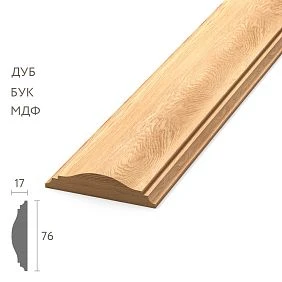
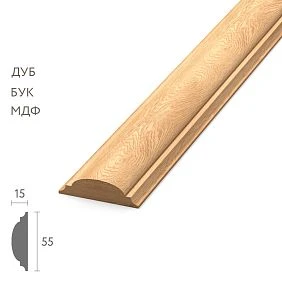
For example, the current product card PLT-006 shows different versions: MDF and moisture-resistant MDF have a size of 100×16×2600 mm, beech and oak — 100×15×2400 mm. Therefore, the request must specify not only the model, but also the material and length.
Working line:
PLT-006 / oak / 100×15×2400 / 24 pcs.
Non-working:
tall oak skirting board — 50 m.
A single approved network SKU must be named identically across all branches
If restaurant 17 writes “large skirting board,” restaurant 22 writes “PLT6,” and the contractor for restaurant 35 writes “wooden skirting board 100,” the duplicate search algorithm starts to depend on human memory.
You can use the network’s internal code, for example PL-01, but the original SKU PLT-006 must be retained alongside it. Then central procurement understands that the local designations refer to the same approved product.
MLD-050 shows the same problem with moulding
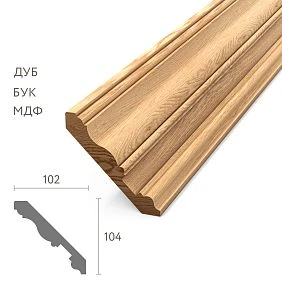
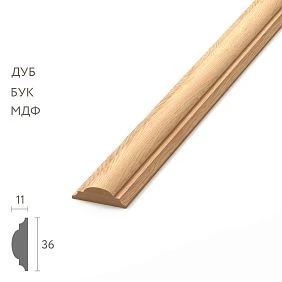
У MLD-050 there are versions made of MDF with a length of 2600 mm and made of beech/oak with a length of 2400 mm. The entry “MLD-050 — 30 pcs.” is still not sufficient for safely consolidating requests.
Material suppliers receive only items with a confirmed configuration
When Material suppliers receive an external order from the network; it must not contain lines such as “skirting board like in the previous restaurant” or “large oak moulding.” Central procurement must pass on the exact identifier and parameters of the supplied configuration.
This is especially important for a network: one error in a local name in a consolidated order is scaled across several locations at once.
If the branch does not know the exact SKU
The request is not deleted. It is assigned the status NEEDS CLARIFICATION. The buyer pulls up the project standard, the old specification, the as-built list, or the product card and restores the exact line item.
Uncertainty must not be turned into “we’ll find something similar from a supplier.”
Request number, status, and owner
Every request needs a number and a transparent status
Number, for example REQ-2026-0017, links the original calculation, clarifications, duplicate check, quantity change, external order, delivery, and closure.
For most networks, simple Russian statuses are sufficient.
| Condition | What does it mean |
|---|---|
| new | Request registered |
| Checking | Procurement checks the item, quantity, stock, and history |
| Requires clarification | Insufficient data |
| POSSIBLE DUPLICATE | There is a similar request, verification needed |
| Confirmed | The requirement is recognized as independent and correct |
| INCLUDED IN ORDER | The quantity has already been placed in an external order |
| PARTIALLY CLOSED | Part of the requirement has been supplied or closed |
| CLOSED | Requirement fully fulfilled |
| CANCELLED | Material no longer needed |
| CLOSED BY LOCAL PURCHASE | The branch has already purchased the required quantity on its own |
Possible duplicate — does not mean delete
Two requests:
Restaurant 17 / PLT-006 / oak / 2400 / 24 pcs.
Restaurant 17 / PLT-006 / oak / 2400 / 24 pcs.
may be a single repeat. But they may relate to the hall and separate private rooms. Therefore, the system first marks it as a "POSSIBLE DUPLICATE", and the purchaser verifies the origin of the quantity and the zone.
How to find duplicates and not delete a real second requirement
How to find duplicate internal requests
A duplicate is not determined by a single quantity match. Central procurement compares several fields.
| Field | What it shows |
|---|---|
| Branch | Whether it is the same network location |
| Article number | Whether it is the same item |
| Material and length | Whether the physical configuration is the same |
| Quantity | How similar the requests are |
| Zone | Whether it is the same work area |
| Required date | Whether it is the same installation need |
| Reason | Initial purchase, reorder, repair, or another task |
| Source | Who created the request |
Scenario: the manager and the contractor report the same need
The restaurant manager requests 24 PLT-006. The next day, the contractor sends an estimate for the same 24 PLT-006 for the same hall and the same date. There is a high probability of a duplicate. The purchaser contacts the responsible parties and leaves one confirmed need.
Scenario: same quantity, but different zones
The manager requests 24 PLT-006 for the hall, while the contractor requests 24 for the offices. These are two separate needs. A matching quantity does not make them a duplicate.
Scenario: the first request is already included in the order
The branch resends the same 24 planks because it does not see the status of the old request. The new line cannot be summed. First, the link is shown: the old request ЗФ-2026-0017 is already included in order ЗП-041.
A building materials supplier should not receive two external orders for one need
If building materials supplier simultaneously receives an order from the branch and from central procurement, they see two formally correct documents. They are not obliged to guess that this is the same need.
Therefore, the company must establish a rule: who has the right to place external orders.
Model 1. Centralized procurement only
Branches create internal requests. After review, the central team places the order with the supplier.
Advantage: maximum protection against duplicates and the ability to consolidate volumes.
Limitation: urgent local matters require a separate expedited route.
Model 2. Controlled local procurement
Some branches may purchase independently, but they are required to register the intent or the fact of purchase in a shared registry. Central procurement sees that the need is already being fulfilled locally.
Advantage: high speed. Limitation: registration discipline is required.
The worst model — both at once without a shared registry
A branch purchases locally, while the central team continues to treat the request as open and includes it in the general order. A week later, two identical shipments arrive.
Check of stock, reserve, goods in transit, and internal transfers
Before confirming the request, the actual branch stock is checked
Restaurant 17 requests 10 more PLT-006. The local warehouse has 8 whole free bars of the same configuration.
If they are indeed free and suitable, the additional requirement may be:
10 − 8 = 2 pcs.
But this arithmetic works only after checking the stock status.
Free stock and operational reserve are not the same thing
A branch may have 8 PLT-006, but they are recorded as an operational reserve after project handover. Then procurement should not automatically subtract all eight from the new construction requirement.
| Remainder | Can it be automatically credited to a new request? |
|---|---|
| Free warehouse | Yes, after checking the condition |
| Installation reserve of the current queue | Only according to project rules |
| operational reserve | No without a separate decision |
| Quarantine / disputed material | No |
| Material in an open order | Count as future availability, but not as physical stock |
Another branch's reserve is not a shared free pool of the network
If restaurant 22 is experiencing a shortage and restaurant 17 holds eight service strips, you cannot simply consider them available for transfer. You need to check the purpose, whether the transfer is permissible, and the consequences for the donor branch.
How to consolidate confirmed items and preserve branch ownership
Building material suppliers: only fully identical confirmed items are merged
When building material suppliers receive a consolidated network order; within a single line, only items with the same physical configuration can be merged.
For example:
| Branch | Article | Material | Length | Confirmed |
|---|---|---|---|---|
| Restaurant 17 | PLT-006 | Oak | 2400 | 24 |
| Restaurant 22 | PLT-006 | Oak | 2400 | 18 |
| Restaurant 35 | PLT-006 | Oak | 2400 | 20 |
Total procurement volume:
24 + 18 + 20 = 62 pcs.
But if Restaurant 35 requested PLT-006 made of MDF with a length of 2600 mm, its line is not merged with oak just because of the shared model code.
After merging, branch ownership does not disappear
An external order may contain:
PLT-006 / oak / 2400 / 62 pcs.
The internal record continues to store:
- restaurant 17 — 24;
- restaurant 22 — 18;
- restaurant 35 — 20.
This is exactly the distribution that will be needed for delivery, reservation, partial delivery, and modification of a single local request.
Not all identical items necessarily need to be combined
Even physically identical goods can be left in separate orders if the deadlines differ significantly, legal entities pay independently, one requirement is critically urgent, or part of the order is already in production.
Consolidation is a procurement tool, not an end in itself.
Request quantity: whole items, cutting and reserve
The request quantity must be justified by actual whole items
The branch often thinks in meters: “we need about 50 meters of skirting board.” Central purchasing needs actual product units.
If PLT-006 in oak with a length of 2400 mm is used, the clean conversion of 50 m looks like this:
50 / 2.4 = 20.83 → minimum 21 whole planks before accounting for cutting and reserve.
But the mathematical 21 planks do not guarantee sufficiency. The actual segments, angles, joints, and leftovers need to be checked.
Why the branch must attach the origin of the quantity
A request for “24 pcs.” is stronger if it includes a calculation: rooms, walls, frames, or a cutting plan. The central buyer understands that the number came from the project, not “estimated with extra margin.”
Molding requires a particularly clear layout
For example:
MLD-050 / oak / hall / frames 1–8 / 34 pcs.
If the contractor later sends another 34 MLD-050 without a zone, the buyer immediately sees a potential duplicate and asks the right question.
Branch reserve should not be hidden inside the main request
If each branch adds its own 10–15% "just in case," after consolidation the network may end up with a large excess stock.
It is better to separate:
| Line | What does it mean |
|---|---|
| Base requirement | Quantity required by calculation |
| installation reserve | Installation risk allowance per the adopted methodology |
| operational reserve | Future service fund after handover |
Central procurement sees which volume is mandatory and which is reserve. This is especially important if the network already has stock of the same SKU at other locations.
Requirement date, urgency, and regular cycle
The required date must be specific, not "urgent"
Request:
needed urgently.
does not allow comparing two branches.
Working wording:
the material must be available to the branch by October 18.
After that, procurement understands which requests can be consolidated into a single order and which require a separate route.
Three levels of urgency are sufficient for most processes
| Level | Meaning |
|---|---|
| CRITICAL | Without the material, the nearest work or opening stops |
| PLANNED | Material is needed by the confirmed date |
| FUTURE NEED | Quantity is known, no need to purchase now |
The word "urgent" itself does not grant priority. Criticality is confirmed by the impact on operations and the required date.
Many urgent requests are a signal of an internal problem
If every month half of the branches mark "CRITICAL", procurement should analyze the reasons: late measurement, incorrect reserve, overspending, approval delay, or lack of planning.
Simply expediting the supplier every time is not a solution to an internal process.
Changes, cancellations, local and emergency purchases
Changing a request before and after placing an external order are different procedures
Restaurant 35 confirmed 30 PLT-006. After consolidating requests, the total network volume was 72. A day later, the branch reports: part of the area has been cancelled, now only 20 are needed.
Everything then depends on the status of the external order.
If the order has not yet been sent to the supplier
The change is relatively simple:
- the local request changes from 30 to 20;
- the history of the previous quantity is preserved;
- the total volume is recalculated from 72 to 62;
- the final procurement table is updated;
- the request again receives the status “CONFIRMED”.
It is important not to simply overwrite 30 with 20. A month later, someone will ask why the early calculation had 72, but the order ended up with 62. The change history answers this question.
If the external order has already been placed
A local adjustment no longer means an automatic change with the supplier. It is necessary to check:
- whether the order has been accepted for processing;
- whether the quantity can be reduced;
- whether part of the goods has not yet been produced;
- whether there is another branch that will take the freed-up volume;
- whether the 10 extra strips will become free stock or a reserve.
That is, after placing an external order, the request changes not only its own quantity but also creates a separate procurement action.
Why the internal table cannot be silently corrected
If the external order still contains 72, while the internal table already shows 62, then after delivery ten items appear as an unexplained surplus. The system must see the difference between “current branch demand” and “already placed quantity.”
| Indicator | Before change | After change |
|---|---|---|
| Confirmed requirement | 72 | 62 |
| External order | 72 | 72 until supplier confirms the change |
| Potential surplus | 0 | 10 |
A cancelled request is not deleted from the register
If a branch declined the material, the line cannot simply be erased. The status changes to CANCELLED.
Preserved:
- original number;
- who cancelled it;
- date;
- reason;
- whether the request was already included in an external order;
- what was done with the quantity already ordered.
A deleted line destroys the explanation of why the total order changed.
Cancellation after delivery is no longer a request cancellation
If the goods have already arrived, the branch cannot simply "cancel" the need. Another solution arises: redistribute to another location, leave as free stock, move to reserve, return to the supplier if permitted, or use in the future.
The request history remains closed by the actual delivery, while the movement of goods is handled by a separate process.
A branch's local purchase must be visible to the center before the general order
Restaurant 17 submitted a request for 12 MLD-050. A day later, the manager decided not to wait for the central procurement and bought the same 12 from a local seller.
If the central team doesn't find out about this, it will include the request in the general order, and the chain will receive double the volume.
Therefore, the registry must support the following status:
CLOSED BY LOCAL PURCHASE.
At the same time, the following are preserved:
- exact item;
- quantity;
- purchase date;
- purchase channel;
- link to the original request.
A local purchase does not grant the right to change the approved item
If the network uses PLT-006 in oak, a standalone branch should not replace it with a similar skirting board just because it is available in a nearby store. Local freedom may concern the purchasing channel, but not the technical configuration if the network standard has already been approved.
If the branch purchased the wrong item
The original request is not considered closed automatically. A decision must be made as to whether the actual substitution is acceptable. If not, the central requirement remains open, and the local erroneous purchase is tracked separately.
Different legal entities and partial closure of requests
Multiple legal entities may use one registry but different contracts
The network may include branches registered under different legal entities. This does not prevent centralized verification of technical requirements and duplicates.
You can have:
- a unified technical nomenclature;
- a unified request registry;
- general verification of stock and duplicates;
- separate commercial orders and invoices.
A single demand registry does not have to mean one contract or one payer.
| Level | Can they be combined? |
|---|---|
| Technical product standard | Yes |
| Duplicate check | Yes |
| Overall demand forecast | Yes |
| Commercial contract | not required |
| Invoice / payer | Can be separate |
Why this is still useful
Even if the supplier issues three separate invoices, the central team knows in advance that the branches are technically requesting the same product, not three similar profiles.
Unverified requests are not included in the total procurement total
Let's assume for PLT-006:
- confirmed — 62 pcs.;
- under review — 10 pcs.;
- possible duplicate — 24 pcs.
The external order should not automatically amount to 96. The base confirmed volume is 62.
The remaining lines are either under review or remain outside the order until a decision is made.
Why "let's add it just in case" destroys the meaning of verification
If unverified lines are still included in the total volume, the registry turns into a decorative table. Central procurement must be able to tell the branch: "the request is registered, but has not yet been confirmed and is not included in the order."
The central consolidation table must preserve the local structure
Example of confirmed requests:
| Article | Restaurant 17 | Restaurant 22 | Restaurant 35 | Total confirmed |
|---|---|---|---|---|
| PLT-006 / oak / 2400 | 24 | 18 | 20 | 62 |
| MLD-050 / oak / 2400 | 16 | 0 | 32 | 48 |
| KZ-A / oak / 2400 | 0 | 12 | 8 | 20 |
Stored separately:
- unconfirmed requests;
- cancelled;
- locally closed;
- reserve;
- open questions.
The common column is needed for procurement. Local columns are needed for distribution and control after delivery.
A partial delivery must close specific internal requests
The network ordered 62 PLT-006. The supplier is ready to ship 40 first.
You cannot simply mark: “40 of 62 received.” You need to decide which internal needs these 40 cover.
For example:
| Branch | Request | Required | Will receive in the first batch | Condition |
|---|---|---|---|---|
| Restaurant 17 | ZF-0017 | 24 | 24 | CLOSED |
| Restaurant 22 | ZF-0022 | 18 | 16 | PARTIALLY CLOSED |
| Restaurant 35 | ZF-0035 | 20 | 0 | INCLUDED IN ORDER |
Priority is determined by the required date and the impact on work, not by who writes louder in the chat.
Why distribution must not be lost after consolidation
Otherwise, the first 40 may go to one branch, while another with an earlier date is left without material.
An urgent request goes through the same checks, only faster
If restaurant installation stops without MLD-050, the request follows an expedited route but does not bypass the main checks.
REGISTRATION → EXACT SKU → LOCAL STOCK CHECK → RESERVE CHECK → OPEN ORDERS CHECK → DUPLICATE SEARCH → CRITICALITY CONFIRMATION → SELECTION OF FULFILLMENT METHOD
The fulfillment method may vary:
- free local stock;
- permitted transfer between branches;
- part of an already opened order;
- new urgent order;
- change in the sequence of work.
Urgency does not turn an unverified request into a correct one.
Practical example: four restaurant messages turn into one request
Let's examine the initial scenario in detail.
Message 1 — manager
Writes:
We urgently need about 40 m of oak skirting board for the hall.
This is a demand signal, but the item and quantity are not yet precise enough.
Message 2 — contractor
Sends:
PLT-006 / oak / 2400 / 18 pcs. / hall.
18 planks yield 43.2 linear m before cutting allowance. In meaning, this is very similar to the manager's message.
Message 3 — designer
Reminds:
PLT-006 should be in the main hall according to the chain standard.
This is not a separate quantity request. This is a confirmation of the design decision.
Message 4 — procurement officer
Writes:
Order more PLT-006, the current stock is insufficient.
We need to find out whether it relies on the same contractor calculation.
Step 1. Create one test card
Central purchasing registers:
ZF-2026-0017 / restaurant 17 / PLT-006 / oak / 2400 / hall / under review.
All four messages are linked as sources rather than creating four requests.
Step 2. Check the stock
At the branch, 4 whole PLT-006 units of free stock were found.
The cutting contractor needs 18. So the new additional requirement is:
18 − 4 = 14 pcs.
If four items are actually suitable and are not an operational reserve.
Step 3. Check open purchases
It turns out that a week ago, under another request for this branch, 6 PLT-006 were already ordered; they have not yet arrived, but are assigned to another room. They cannot be automatically counted toward the hall until the possibility of redistribution has been checked.
Step 4. Confirm the result
After checking the zones, it turns out that all six ordered strips are fully needed by the office. This means the hall's request is confirmed for 14 new items.
Four messages turned not into four orders, but into one verified requirement.
If several branches regularly make the same mistake, the problem may be in the methodology
Suppose three restaurants each time underestimate MLD-050 by about several strips. There is no need to immediately introduce a universal additional percentage across the entire chain.
First, the following are compared:
- type of premises;
- calculation method;
- cutting map;
- number of corners and frames;
- actual losses during installation;
- who performed the calculation;
- whether there were late project changes.
If the cause is truly common, the methodology is adjusted. If each project has its own cause, a single markup coefficient will only create excess.
Monthly metrics help identify the weak point in the process
It is useful to look not only at the purchase amount, but also at the quality of internal requests.
| Indicator | What it shows |
|---|---|
| Number of requests | Volume of internal flow |
| Possible duplicates | How well branches see already created needs |
| Cancellations | Planning stability |
| Critical requests | Share of purchases that arrive too late |
| Incorrect SKU / material | Quality of product identification |
| Closed by existing stock | How well the network uses already purchased inventory |
| Local purchases outside the process | Risk of duplicate purchases |
Many duplicates are a signal not only of the buyer's attentiveness
If many repeat requests are discovered every month, the problem may be that branches:
- cannot see the status of their previous requests;
- do not know the request number;
- the manager and the contractor work independently;
- the registry is unavailable to the local team;
- there is no rule on who creates the official request.
Many urgent requests are also a signal
The reasons may be internal: a late measurement, an incorrect reserve, overspending, uncoordinated changes, or a delay in internal approval. Analyzing the cause is more useful than constantly asking the supplier to "speed it up once more."
After closing the request, we save the plan and the actual
The request should not disappear after delivery. For the following branches, the history is valuable:
- initial demand;
- confirmed quantity;
- what was included in the external order;
- how much was actually delivered;
- how much was used;
- what remainder was left;
- whether there were additional orders.
This way, the next restaurant gets not an abstract “we usually take 24,” but the real experience of a similar location.
History should not automatically become a new standard
If restaurant 17 used 24 PLT-006, this does not mean that restaurant 35 should order the same 24. The area, geometry, cutting layout, and floor plan may differ. History helps verify that the calculation is reasonable, but it does not replace a new calculation.
How to distinguish a new need from a repeat message on an existing request
In a real network, employees rarely phrase a request the same way. The manager writes: “we’re short on skirting for the hall.” The contractor sends an exact calculation. A day later, the technical director forwards the same question to central procurement with the comment “please do not delay.” If each channel automatically creates a new request, the system multiplies not the goods, but the needs.
Therefore, before creating a new line, it is useful to ask three questions.
- Is there already an open request from this branch for the same SKU?
- Does the zone or calculation source match?
- Is the new message a change to an existing request or a separate new need?
| New message | What to Check | Result |
|---|---|---|
| “Need 24 PLT-006 for the hall” | Is there already 24 PLT-006 for this hall | POSSIBLE DUPLICATE |
| "Add 8 more PLT-006 to the cabinet" | Is this a different zone? | New requirement |
| "The old request needs 28, not 24" | Link to request number | Modification of existing |
| "Where is our baseboard? Work is at a standstill" | Is there already a confirmed request | Status inquiry, not a new requirement |
The old request number must be visible to the branch
If a branch cannot see its own requests, it will create new ones simply because it does not know whether the previous request arrived. It is useful to return the number and status to the initiator:
ZF-2026-0017 / PLT-006 / 24 pcs. / INCLUDED IN ORDER.
Then the next question is "what is the status of ZF-2026-0017?" rather than "order 24 more."
A forwarded email does not create a new request
If a manager simply forwarded a contractor's email to procurement, there are now two sources of communication, but the need remains one. A new participant or comment is added to the register, but not a new quantity line.
One request can have multiple calculation sources
For a complex branch, the quantity is often confirmed by several participants. The designer determines the SKU, the contractor counts the battens, the manager confirms the opening date, and the local supply specialist shows the remaining stock.
Instead of four requests, you can have one:
| Field | Source | Value |
|---|---|---|
| Article number | Project / chain standard | PLT-006 |
| Material | Project | Oak |
| Quantity | contractor | 18 pcs. |
| Free remaining stock | Local warehouse | 4 pcs. |
| Required date | Manager | 10.10 |
The final confirmed new requirement is 14 pcs., and the origin of each parameter is clear.
If the sources contradict each other
The contractor counts 18 planks, the manager requests 24, and the project specification after the latest revision shows 20. You cannot average the quantity or choose the maximum "just to be safe."
The request is moved to the NEEDS CLARIFICATION state. First, the current project version and calculation method are established. Only then is the quantity confirmed.
The project version must be part of the request's origin
One of the causes of duplicate orders is not a repeated message, but an old calculation. The branch first requested material according to project version 03, then the designer released version 04, and the contractor sent the old table again.
If the version is not recorded anywhere, two different lines look like two real requirements.
Useful to store:
- project version number or date;
- calculation date;
- who confirmed its relevance;
- link to the previous request if the new version replaces the old one.
A new version does not always mean an additional quantity
There were 24 PLT-006, now there are 28. The additional requirement may be +4, not 28, if the previous 24 are already included in the order and remain
A regular request cycle reduces the number of chaotic urgent inquiries
For a network with a constant flow, a rhythm can be established, for example:
requests by Tuesday → review on Wednesday → generate the planned order on Thursday.
This is not a universal standard. A company chooses the frequency based on its project speed and production timelines.
The purpose of the cycle:
- branches know the deadline for planned inclusion;
- procurement has time to check for duplicates;
- similar items are consolidated;
- the urgent procedure remains for genuine exceptions.
A future need may arise before the purchase date
The branch knows that in two months it will need 40 MLD-050. It is not necessary to place an order right away, but it is useful to register the line as a FUTURE NEED.
Central procurement receives the forecast and can assess the upcoming network volume without mixing it with an already confirmed purchase.
A branch request must have a single owner, even if there are multiple sources
A request may have a designer, a contractor, and a manager, but one person must be responsible for confirmation on the branch side.
Otherwise, when the question is “is it 24 or 28?”, each participant thinks that someone else made the final decision.
The request owner confirms:
- the current zone;
- the required date;
- that old versions are cancelled;
- that the quantity matches the current project;
- that local purchases have been reported to the center.
The central purchaser must not independently invent the branch's requirement
They verify and clean the data, but if the quantity is disputed, they return the request to the responsible person for clarification rather than choosing the number themselves.
How to handle requests for operational repairs of an existing branch
Such requests look similar to construction additional orders, but have a different source and priority.
For example:
Restaurant 17 / PLT-006 / oak / 2400 / 2 pcs. / repair after mechanical damage / date 05.10.
Before a new purchase, the branch's operational reserve is checked first.
If there are two suitable strips in reserve, the request can be closed by issuing from the service stock, with a subsequent decision on its replenishment. It is not necessary to buy two new ones immediately.
Why service repair should not be mixed with initial equipment
The history of reserve consumption and the causes of damage is useful for operations. If such two strips are simply added to the construction order of a new branch, the reason for the need will disappear.
How to handle an erroneous request for a similar but unapproved profile
The branch sent "MLD-050", but a different item is approved in the standard for its zone. Central procurement should not silently replace the line with the correct product and send the order.
Need to clarify:
- this is a simple input error;
- the branch actually wants to change the technical solution;
- whether an outdated version of the project is being used;
- the contractor mixed up similar profiles.
After confirmation, either the request is corrected while preserving the history, or a separate approval for the product change is initiated.
Final check before releasing the external order
Request checklist before the “CONFIRMED” status
| Check | Result |
|---|---|
| Branch specified | Yes / no |
| Responsible person identified | Yes / no |
| SKU confirmed | Yes / no |
| Material confirmed | Yes / no |
| trade length specified | Yes / no |
| Quantity has a calculation source | Yes / no |
| Application area specified | Yes / no |
| Required date confirmed | Yes / no |
| Available stock checked | Yes / no |
| Reservation checked | Yes / no |
| Open orders verified | Yes / no |
| Possible duplicate excluded | Yes / no |
| Local purchase does not cover the need | Yes / no |
Only after critical lines are closed does the request enter the confirmed procurement volume.
When an internal registry is not needed in a complex form
If a company has two locations and one responsible person personally oversees five requests per month, a cumbersome system may be excessive.
A table with:
- request number;
- branch;
- SKU;
- quantity;
- the date;
- status;
- link to an external order.
The complexity of the system should grow with the number of branches, sources, and overlapping needs.
When automation is already justified
If dozens of branches submit requests weekly, there are local purchases, several legal entities, stock at locations, and regular duplicates, a manual spreadsheet starts to require too much control. Then it is useful to automate registration, searching for similar rows, and statuses — but the verification logic remains the same.
Forecasts and process quality analysis
A branch forecast and a confirmed request should live separately
The network may know in advance that in two months five new restaurants will open and approximately 150 PLT-006 strips will be needed. Such a forecast is useful for planning, but it should not automatically turn into an external order.
It is useful to separate two levels:
| Level | What does it mean | Can we buy? |
|---|---|---|
| FORECAST | Expected future volume without full confirmation | No automatic |
| CONFIRMED REQUEST | SKU, quantity, stock, date, and duplicate verified | Yes |
If you mix forecast and request, the network starts purchasing material for projects that may still change their layout, date, or quantity.
A forecast is useful to the supplier as a guideline, but not as a commitment
Central purchasing can discuss future volume with the manufacturer to estimate workload and lead times. But the documents must make it clear what is a forecast and what is a real order. Otherwise, a preliminary figure turns into a commercial commitment without internal confirmation.
Different required dates can make one combined order unprofitable
Three branches request the same PLT-006:
- restaurant 17 — 24 pcs. by October 5;
- restaurant 22 — 18 pcs. by October 18;
- restaurant 35 — 20 pcs. by December 20.
Technically, 62 can be combined. But if for the December batch the material has to be stored for two months or we have to wait for it and delay the October branches, one combined order may not be the best solution.
Therefore, after the technical consolidation, a second question arises: which requests are profitable and safe to combine by timing.
| Position | Date | Possible solution |
|---|---|---|
| 17 + 22 | October 5–18 | One close procurement cycle |
| 35 | December 20 | Separate future order or production reservation |
Consolidating the same SKU is useful for demand control, but commercially it can be placed as several orders.
If a branch does not maintain accurate inventory, its stock balance cannot be subtracted using the old table
The restaurant reports that according to its records, it has eight PLT-006 remaining. The last inventory count was three months ago, and there have been several repairs during that time. Central purchasing should not automatically consider these eight as available.
Stock status:
REQUIRES PHYSICAL CONFIRMATION.
Until confirmation, there are two scenarios:
- the branch recounts the specific SKU;
- central purchasing temporarily treats the stock as unreliable and separately records the risk of over-purchasing.
It is better to honestly see “stock unknown” than to deduct eight nonexistent rails and derail the opening.
For a critical request, only the required SKU can be checked
It is not necessary to conduct a full inventory of the entire branch. If MLD-050 is urgently needed, it is enough to physically confirm MLD-050, its reserve, and related open orders.
A partially fulfilled request must retain the remaining demand
The branch needs 30 MLD-050. 8 were fulfilled from free stock, and the supplier shipped 12 in the first batch. Remaining:
30 − 8 − 12 = 10 pcs.
Instead of creating a new reorder for “10 more,” it is more useful to keep the original request:
| Request | Confirmed | Fulfilled from stock | Delivered | Remaining | Condition |
|---|---|---|---|---|---|
| ZF-0041 | 30 | 8 | 12 | 10 | PARTIALLY CLOSED |
Then the next 10 relate to the same requirement rather than appearing as a new independent request.
An emergency purchase through a second channel requires blocking the central order
Sometimes the material is needed tomorrow, but the main supplier cannot make it in time. The branch receives permission to buy six PLT-006 from another seller.
Before purchasing, the following must appear in the register:
ZF-0052 / 6 pcs. / emergency closure via local channel / exclude from central order.
If you buy first and then inform the center, the risk of double purchasing is at its highest.
A second seller does not waive the exact SKU requirement
Local urgency does not make a similar profile acceptable. Manufacturer, item number, material, length, and finish are checked. If there is no exact match, it is already a technical substitution requiring a separate decision.
The supplier must receive one current version of the external order
If branch requests changed all day, you cannot send the supplier four emails:
- in the morning — 62 PLT-006;
- after lunch — add 8;
- in the evening — remove 10;
- later — restaurant 22 bought locally.
An external order must have a managed revision. For example:
ЗП-041 / revision 03 / PLT-006 oak 2400 — 54 pcs.
A new revision does not erase the history of the old one, but it is clear to the supplier which version is current.
Internal changes and external revisions are not the same thing
Ten local clarifications can be processed within the registry and sent to the supplier as one new revision. Not every internal message should become a new external letter.
A practical weekly cycle for a network of ten branches
Suppose ten restaurants submit requests weekly. The company uses a planned cycle until Thursday and a separate path for critical cases.
Monday–Tuesday: registration
Branches create requests with a number, SKU, quantity, date, and reason. New lines receive the status "NEW".
Wednesday: verification
Central purchasing:
- verifies the exact item;
- checks available stock;
- checks open orders;
- finds possible duplicates;
- returns incomplete requests for clarification.
Thursday: consolidation
Confirmed identical items are grouped into purchasing groups by dates and terms. Belonging to each branch is preserved.
Friday: external order and communication
The external order receives a number. Each request is set to "INCLUDED IN ORDER" with a reference to this number.
Next week: incoming stock
In case of partial delivery, specific quantities are allocated among requests by priority and required date.
This example is not a mandatory calendar. It shows how to separate registration, verification, and the actual purchase so that they do not happen simultaneously in the same chat.
Pre-release check of the external order
Before sending to the supplier, a final short check is useful:
| Question | Why |
|---|---|
| Does the order contain only confirmed requests? | Prevents purchasing unverified volumes |
| Are all identical SKUs truly identical in material and length? | Does not mix variants |
| Are local purchases excluded? | Duplicate protection |
| Open orders taken into account? | Do not order what has already been purchased |
| Changes after consolidation processed? | Do not send an outdated version |
| Distribution by branches saved? | Needed for supply and acceptance |
| Are the dates compatible with the selected procurement scheme? | Do not delay a critical branch for the sake of future volume |
Only after this point does the register of branch requests become an external commercial document.
When branch requests should not be combined into a single order
Centralization is not always beneficial. Consolidating requirements into a single register is needed in almost every case, but physically combining the purchase should only be done when it genuinely improves lead times, logistics, or price.
A separate order may be more sensible if:
- one branch opens significantly earlier than the others;
- the item is needed for emergency repairs at an existing location;
- different legal entities are required to purchase independently;
- one batch has already gone into production;
- the branches have different confirmed finishes or other significant specifications;
- combining creates prolonged intermediate storage with no economic rationale.
The main value of a shared register is preserved even with separate orders: the company still sees that these are two real requirements, not a duplicate.
Technical consolidation and commercial consolidation are different solutions
You can see that restaurant 17 and restaurant 22 are requesting the same PLT-006 in oak, but placing two orders due to different dates or payers. The registry must support exactly this logic: a single technical identification without mandatory consolidation of commercial documents.
Who should see the request registry
Not everyone needs full access. But participants should see enough information to avoid creating duplicates.
| Role | What is useful to see |
|---|---|
| Branch | Their own requests, numbers, and statuses |
| contractor | Requests and clarifications related to their calculation |
| Central purchasing | All branches, duplicates, stock, and external orders |
| Warehouse / logistics | Confirmed allocations after delivery |
| Manager | Summary metrics, urgency and deviations |
If a branch can see at least the number and status of its request, repeat messages already become fewer. It does not need access to the entire commercial information of the network.
Status transparency reduces the number of "urgent" repeats
When an employee sees ZF-0017 / INCLUDED IN ORDER / expected delivery 08.10, they are more likely to ask about the timing than to create a new request for the same quantity. This is a simple organizational measure that works better than endless manual deduplication.
Final verification of the link between the internal request and the external order
After sending the order to the supplier, each included internal request must contain a link to a specific external document and the placed quantity. This is not a formality: if a week later the branch asks about the timing, the purchaser immediately sees which order contains their requirement and what quantity was actually placed.
If one internal request is split between two external orders, both links are stored separately. If the external order was changed, the request must retain the current placed quantity and the history of the previous one. Such a link prevents the already purchased quantity from being re-included in the next procurement cycle and completes the chain from the local requirement to the actual purchase.
20 typical mistakes when collecting branch requests
- Treating a messenger message as a ready order. Identification and verification are missing.
- Not assigning a number to the request. It is impossible to link the change, order, and delivery.
- Not specifying the branch. The need loses its owner.
- Using a free-form product name. Duplicates become invisible.
- Not saving the manufacturer's SKU. Identical products look different.
- Not specifying the material. Oak, beech, and MDF get mixed up.
- Requesting only meters. The actual number of whole items is not visible.
- Not specifying the required date. It is impossible to prioritize and consolidate requests.
- Treating all requests as "urgent". Priority stops working.
- Sum similar requests without verification. A duplicate order occurs.
- Delete a possible duplicate immediately. The second real zone may be lost.
- Do not check branch stock. You buy what is already in the warehouse.
- Use the operational reserve as free stock. The commissioned point is left without a service reserve.
- Allow the branch and the center to buy the same item at the same time. A double delivery occurs.
- Do not take the local purchase into account. The central request remains a false positive.
- Merge different variants of the same SKU. The wrong item ends up in the combined order.
- After consolidation, erase branch ownership. It becomes impossible to distribute the delivery correctly.
- Change the request after the order is placed as an ordinary number. The internal register diverges from the external order.
- Delete canceled lines. The history of the purchasing decision disappears.
- Do not analyze recurring urgent requests. An internal problem is masked by accelerated logistics.
Final algorithm: from branch demand to a clean order to the supplier
1. THE BRANCH IDENTIFIED THE DEMAND
↓
2. AN INTERNAL REQUEST WAS CREATED
↓
3. BRANCH, SKU, MATERIAL, LENGTH, QUANTITY, ZONE, AND DATE SPECIFIED
↓
4. REQUEST NUMBER ASSIGNED
↓
5. LOCAL STOCK CHECKED
↓
6. RESERVES AND OPEN ORDERS CHECKED
↓
7. POSSIBLE DUPLICATES FOUND
↓
8. IF NECESSARY, THE REQUEST WAS CLARIFIED
↓
9. REQUEST CONFIRMED
↓
10. IDENTICAL CONFIRMED ITEMS CONSOLIDATED
↓
11. DISTRIBUTION PER BRANCH PRESERVED
↓
12. DETERMINED: ONE COMMON ORDER OR SEVERAL SEPARATE ONES
↓
13. EXTERNAL ORDER SENT TO SUPPLIER
↓
14. EACH INTERNAL REQUEST IS LINKED TO THE EXTERNAL ORDER
↓
15. AFTER DELIVERY, THE QUANTITY IS DISTRIBUTED ACROSS BRANCHES
↓
16. PLANNED AND ACTUAL DEMAND RECONCILED
Conclusion: first clear internal demand, then contact the supplier
A network can use a single standard for wooden trim and still regularly buy excess if branch internal requests are collected without a common system. One manager, contractor, designer, and local procurement specialist can describe the same need in different words and on different days.
Therefore, central procurement should work not with a stream of messages, but with a register of requests. Each request receives a number, exact SKU, material, commercial length, quantity, zone, date, and reason. After that, the local stock, reserve, already placed purchases, and possible duplicates are checked.
Only confirmed requests go into the procurement total. Identical items from different branches can be consolidated into a single order, but the internal ownership of each part is preserved. If a branch changes the quantity, cancels the request, or closes it with a local purchase, the history is not deleted.
This way, central procurement resolves the main question before contacting the supplier: is this truly a new need or just another message about something already requested. The supplier receives a clean external order, and the network does not buy the same skirting board, moulding, or cornice twice because of its own internal communication.