


























Article Contents:
- What is a table base and how it differs from legs
- Table base as a structural unit
- Why a table base is stiffer than just legs
- Types of Table Base Constructions
- Where wooden table bases are used
- Dining table in the dining room and kitchen-living room
- Country house and cottage
- Office and Library
- Console and coffee table
- Restaurant and public spaces
- How to choose the size of the table base
- Table base height
- Table base length and width
- Distance to tabletop edge and seating comfort
- Chair height and clearance under the tabletop
- Table base for a dining table: main selection scenario
- How many people sit at the table
- Kitchen-living room: zoning through the table
- Dining room in a country house
- Table base for round and rectangular tabletops
- Round tabletop
- Rectangular tabletop
- Oval tabletop
- Material: why solid wood is better
- Array of wood: beech and oak
- MDF with coating
- Metal
- Combined bases
- Wooden underframe coating: varnish, tinting, enamel
- Clear varnish
- Stain and Tinting
- White and colored enamel
- No coating — for self-treatment
- How to choose the style of a wooden underframe
- Classic and neoclassic
- Modern classicism
- Rustic style and country house
- Minimalism and Loft
- Scandinavian Style
- How to combine the underframe with the tabletop and interior
- Material-based combination
- Style combination with furniture legs
- Combination with flooring
- Combination with wooden interior items
- Care for a wooden underframe
- Mistakes when choosing a wooden table base
- Where to buy a wooden table base for a table
- FAQ: Answers to Popular Questions
- About the manufacturer
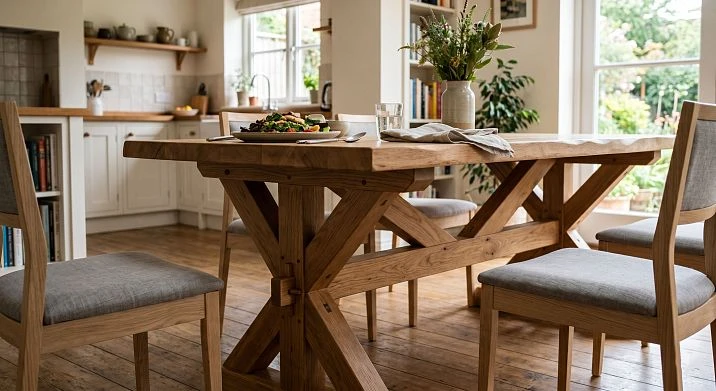
A table is not just a tabletop. It is a system. And the part that is not visible at first glance, but which decides everything — stability, seating comfort, the character of the interior — is called the table base. It holds the tabletop, bears the load, sets the height, and determines whether the table will look like furniture or like architecture.
Buy table base — this query appears in people in two cases: when they want to make a table for their own tabletop — a slab, a massive board, a stone or glass slab — or when standard tables do not suit them either in size or style. In both cases, choosing a table base is not a simple task of "buying four legs." It is a choice of the structural and aesthetic foundation for one of the main items in the home.
This article is a detailed and honest analysis of how to choose a wooden table base: by size, shape, construction, material, style, and purpose. Read carefully — there are no general words here, only practice.

What is a table base and how it differs from legs
Before choosing, you need to understand what exactly you are choosing. The term "table base" in the market of furniture components appears in different meanings, and confusion here is costly.
Table base as a structural unit
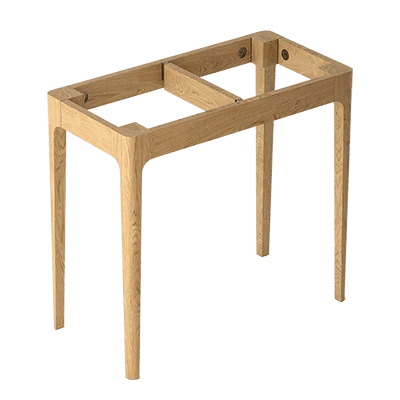
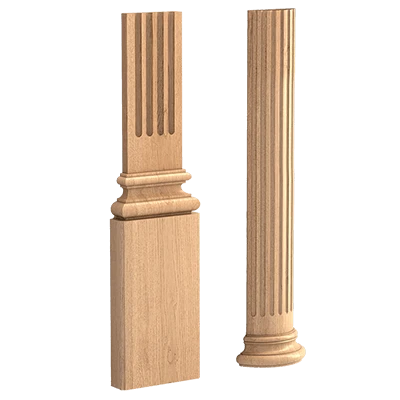
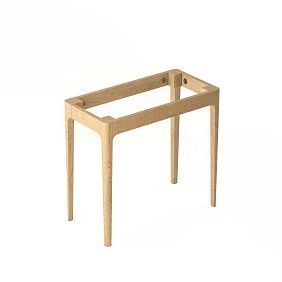
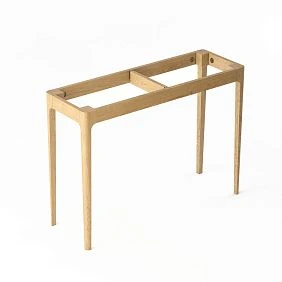
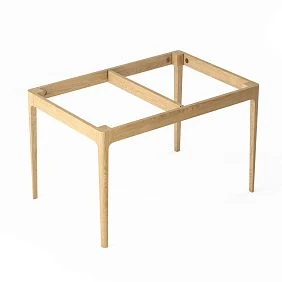
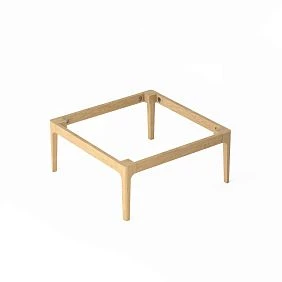
A table base is an assembled or ready-to-assemble frame for a tabletop. In its minimal version, it is a frame of four aprons (horizontal crossbars) and four legs. In a more developed version, it is a base with additional ties, decorative details, shaped supports, or a central post.
Key difference from a set of individual legs: made in the same manner. For protection and maintenance, use natural oils and waxes. — this is a ready-made structure with specified dimensions, rigidity, and a method of attachment to the tabletop. You do not assemble the table from individual parts — you install the tabletop on a finished base.
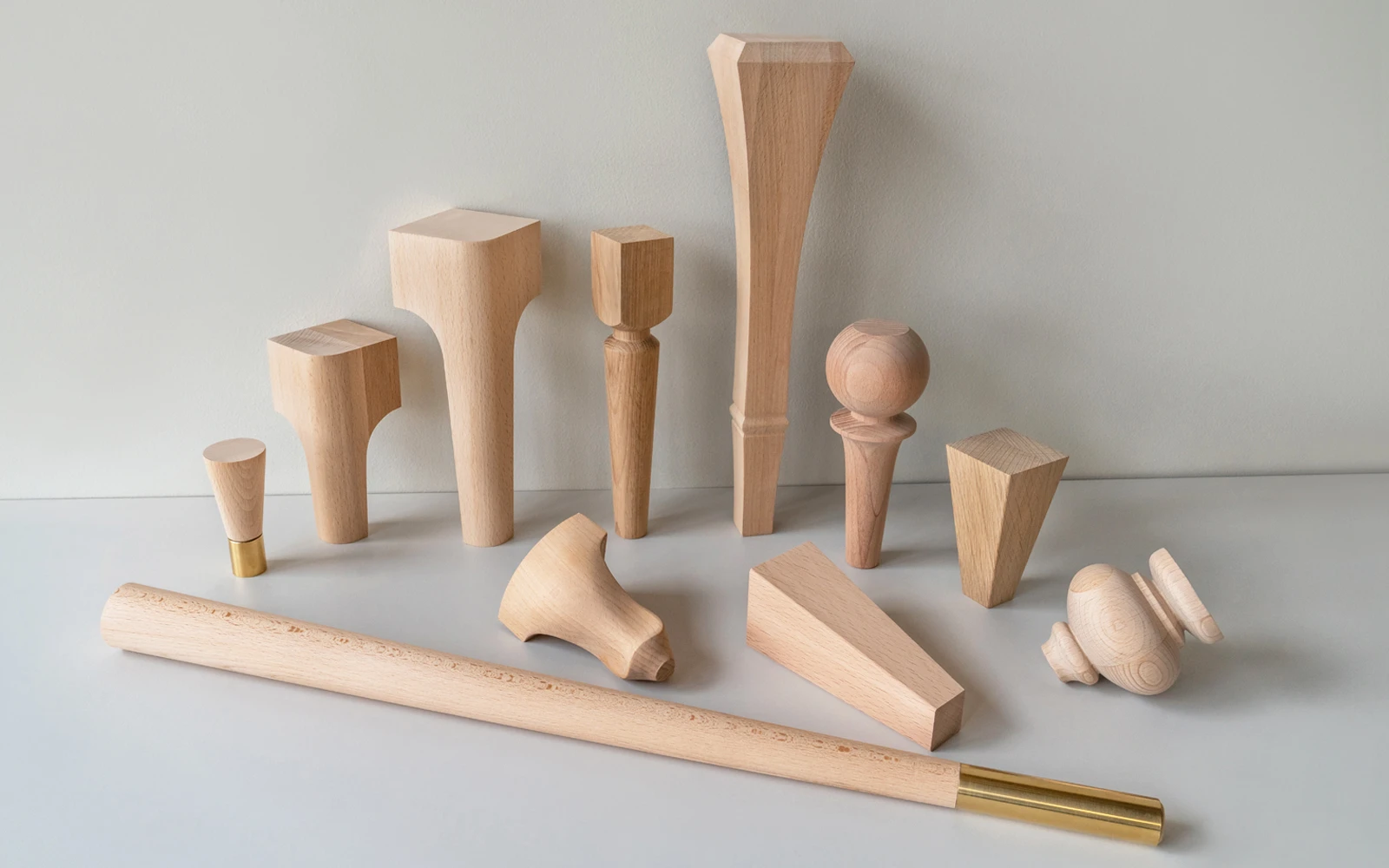
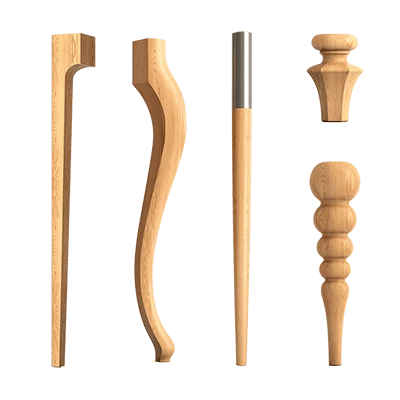
wooden furniture legs — these are separate elements that are attached directly to the tabletop. The underframe is a system with stretchers that connect the legs to each other and provide spatial rigidity to the structure.
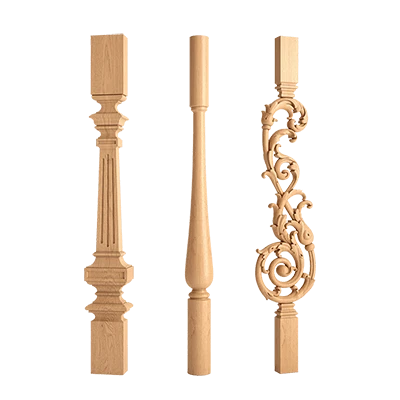
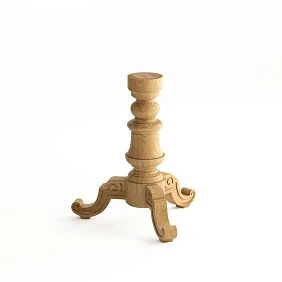
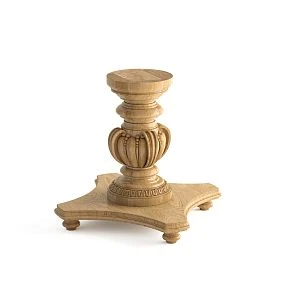
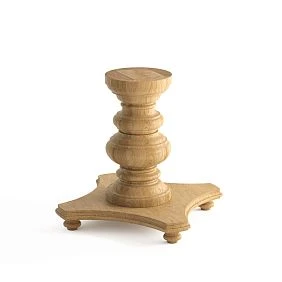
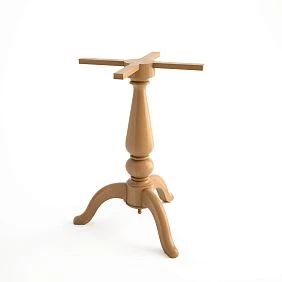
Our factory also produces:

Why an underframe is stiffer than just legs
Four separate legs screwed into the tabletop — a structure with minimal lateral rigidity. Under lateral load (someone leans on it, moves the table), the legs "wander." An underframe with stretchers is a rigid frame that works as a single structural unit. Deformation is eliminated.
This is fundamentally important for dining tables: heavy dishes are placed on them, people lean on them with their hands, children climb under the table — the loads are very diverse. Stability must be absolute.
Get Consultation
Types of Table Base Constructions
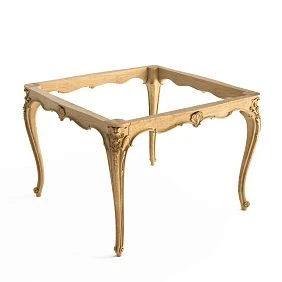
Frame underframe — four legs + four stretchers. A classic. Suitable for rectangular and square tabletops. Maximum rigidity, proven over centuries.
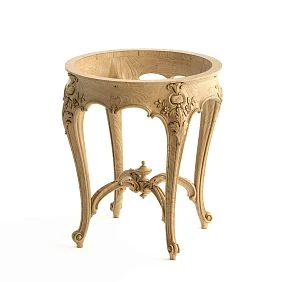
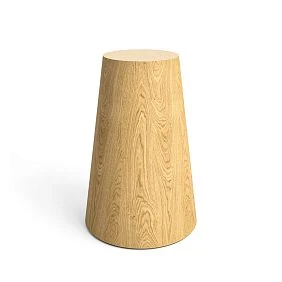
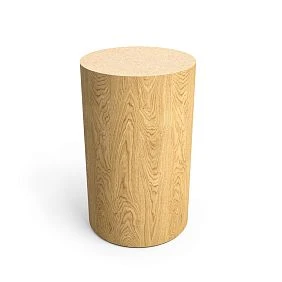
Underframe with a central post — one or two central vertical supports instead of four corner legs. Suitable for round tabletops, provides legroom around the entire perimeter.
Underframe with a crosspiece — an X- or +-shaped base at the floor with one or two central posts. A monumental and expressive structure.
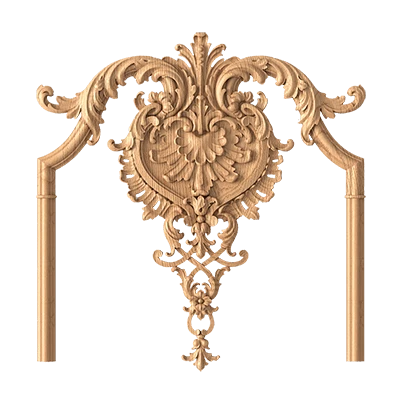
Underframe with a decorative arch — two side support posts connected by a crossbar at the top. Characteristic of classic and neoclassical tables.
Where wooden underframes are used
The scope of application of the table base is much wider than just a "kitchen table."
Dining table in the dining room and kitchen-living room
The main and most sought-after scenario. Base for Dining Tables under a tabletop made of solid wood, stone, glass, or ceramic — it is a ready-made structural base for a family table. The size of the table base determines seating capacity, leg comfort, and stability under intensive use.
Country house and cottage
In a country house, the table is the center of life. Large dinners, guests, holidays. A wooden base under an oak or pine tabletop is an organic part of the interior. Here, not only stability but also style matters: a solid wood table base with shaped legs or decorative elements sets the character of the entire dining area.
Office and library
A desk on a wooden table base is not just a work surface; it is a furniture statement. A dark oak table base under a thick oak tabletop is monumental. These are the tables that stand in memorable offices.
Console and coffee table
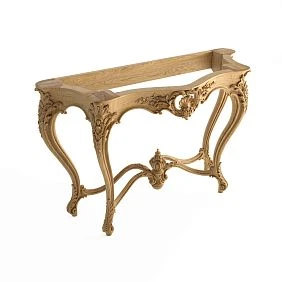
A console against the wall is often built on a table base with two side supports or a central arch. A coffee table is built on a low table base with shortened legs. In both cases, the table base is the foundation of the structure.
Restaurant and public spaces
In restaurants and cafes, wooden table bases are a standard solution for custom assembly of tables for any shape and size of tabletop. Strength, the ability to paint in corporate colors, durability — all in favor of solid wood.
How to choose the size of the underframe
Size is not just numbers. An incorrect underframe size means either an uncomfortable seating position, an unattractive tabletop overhang, or structural instability.
Underframe height
The standard height of a dining table is 74–76 cm. The tabletop typically has a thickness of 25–50 mm. Therefore, the underframe height (from the floor to the top edge of the aprons) should be:
-
For a 25 mm tabletop: 74 − 2.5 = 71.5 cm
-
For a 40 mm tabletop: 74 − 4.0 = 70 cm
-
For a 50 mm tabletop: 74 − 5.0 = 69 cm
The standard underframe height for a dining table is 70–72 cm from the floor to the top edge of the aprons. This will ensure a final table height of 74–76 cm.
For a bar table — underframe height 88–92 cm (final table height 90–95 cm). For a coffee table — 38–42 cm.
Length and width of the underframe
The underframe should be 10–15 cm shorter and narrower than the tabletop on each side. This ensures proper overhang — the tabletop extends 5–7 cm beyond the edge of the underframe on each long side, creating seating comfort.
Specific parameters:
| Tabletop size | Recommended underframe size (LxW) |
|---|---|
| 120 × 80 cm | 100–105 × 60–65 cm |
| 140 × 80 cm | 118–122 × 60–65 cm |
| 160 × 90 cm | 138–142 × 68–72 cm |
| 180 × 90 cm | 158–162 × 68–72 cm |
| 200 × 100 cm | 176–180 × 78–82 cm |
| Round Ø 100 cm | Central post Ø 20–25 cm |
| Round Ø 130 cm | Cross-shaped base 80–90 cm |
Distance to tabletop edge and seating comfort
Underframe aprons should not interfere with legs. Minimum distance from the inner surface of the apron to the tabletop edge (legroom) is 20–22 cm. With a narrower distance, the seated person will hit their knees against the apron.
This means: with a tabletop width of 80 cm, the underframe width should not exceed 80 − (20 × 2) = 40 cm, preferably 36–38 cm. This does not mean the underframe itself should be narrow — it means the inner space under the tabletop should be free.
Chair height and clearance under the tabletop
The standard chair seat height is 44–48 cm. The distance from the seat to the underside of the tabletop should be at least 25–27 cm. Total: the table height should be at least 44 + 25 = 69 cm. The standard of 74–76 cm with margin covers this requirement for most people.
If there are tall adults in the family — choose a higher underframe: final table height 77–80 cm. For children, conversely, consider lowering it to 70–72 cm.
Underframe for a dining table: main selection scenario
The dining table is the heart of the dining area. People eat, talk, and celebrate around it. Choosing an underframe here is not a technical question. It is a choice of the entire space's character.
How many people sit at the table
This is the first question. From it — the size:
-
2–4 people: tabletop 120 × 80 cm, underframe 100 × 60 cm
-
4–6 people: tabletop 140–160 × 80–90 cm, underframe 118–140 × 60–70 cm
-
6–8 people: tabletop 180–200 × 90–100 cm, underframe 160–180 × 70–80 cm
-
More than 8 people: tabletop from 220 cm, underframe from 200 cm or two separate bases
Kitchen-living room: zoning through the table
In a kitchen-living room, the dining table is the boundary of zones. Its underframe should be expressive on both sides: both from the kitchen side and from the living room side. A frame underframe with decorative legs works better in this case than a closed pedestal.
For a kitchen-living room of 30–40 m², the optimal table length is 160–180 cm. Wooden table base in a classic or neoclassical style with shaped legs — the right choice that unites the zones into a single ensemble.
Dining room in a country house
Here the scale is different. A country dining room is spaciousness, high ceilings, wooden elements everywhere. The table should be substantial. Buy a pedestal made of oak for a table 200–240 cm long, on which you can put anything without worrying about stability — that is exactly the scenario.
In a country house, it is acceptable and even correct to choose a more massive table base: thick legs, wide aprons, pronounced relief. Lightness and elegance would be out of place here.
Table base for round and rectangular tabletop
The shape of the tabletop is a fundamental selection parameter. Different types of bases are needed for round and rectangular ones.
Round tabletop
A round tabletop requires central stability. If you place a rectangular frame base under it, there will be two "weak" directions: the tabletop will overhang the edges of the frame diagonally.
Correct options for a round tabletop:
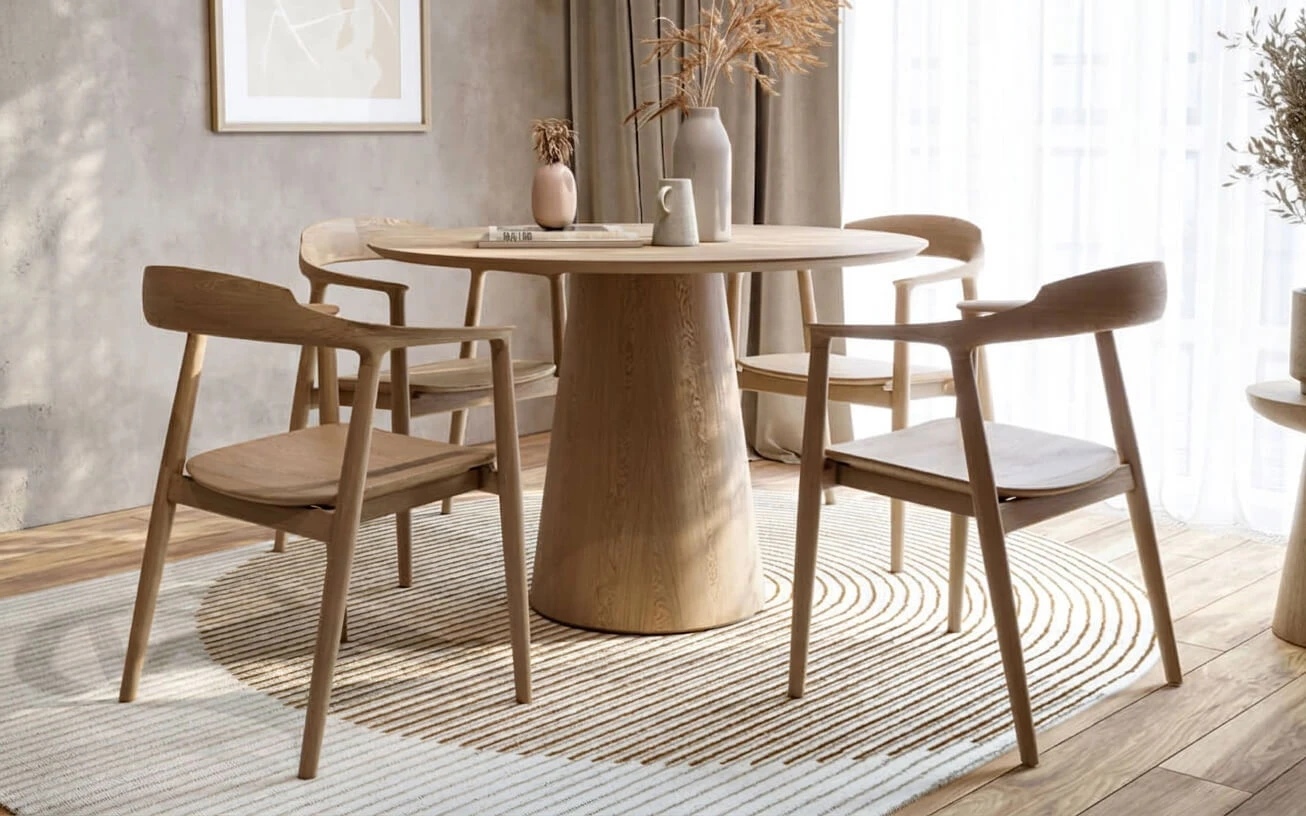
Central pedestal. One massive vertical support, from which supporting "feet" spread out at the floor. A classic. Provides maximum leg comfort — you can sit freely under the table from any side.
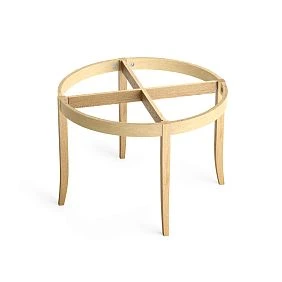
Cross-shaped base. Four "rays" at the floor converging to a central pedestal. More stable than a single pedestal with feet. For tabletops with a diameter of 100 cm or more.
Square frame base for a small round tabletop. If the tabletop diameter is 80 cm and the base frame is 60 × 60 cm, the overhang is uniform, and the structure is stable.
Rectangular tabletop
A rectangular tabletop is for a frame base. It's simple here: the length and width of the frame should match the size of the tabletop, taking into account the overhang.
One subtlety: with a long table (from 160 cm), four legs at the corners of the frame may not provide sufficient rigidity along the long axis. In this case, intermediate aprons or cross ties are added along the length of the frame. This reinforcement of the structure is fundamentally important for tables 200 cm long or more.
Oval tabletop
An oval tabletop is a compromise between a rectangle and a circle. Both frame bases (if the oval is not too wide) and central pedestals are suitable for it. The key condition: the overhang on the short ends should not exceed 15–18 cm — otherwise the tabletop will "nod."
Material: why solid wood is better
Wooden table frame competes with metal, MDF, and combined bases. Let's break it down honestly.
Solid wood: beech and oak
Beech is the most common material for table bases. A dense, evenly textured wood that is easy to work with, holds carving, does not crack, and is easy to paint and tint. Beech is strong and durable. It withstands significant loads — a stone or wood tabletop weighing 30–50 kg will not cause it any issues.
Oak is heavier and harder. A pronounced beautiful texture, the material's quality is visible to the naked eye. An oak base under an oak tabletop is a monolith. Recommended for study and country tables where visual weight and architectural character are important.
Pine and spruce — for rustic interiors, country dining rooms, summer houses. Softer than beech and oak, but with proper coating they last a long time.
MDF with coating
MDF base — cheaper, but significantly weaker. The angle between the leg and the apron in an MDF structure is a potential point of failure: under lateral load, MDF delaminates. For a dining table, where loads are constant and varied, MDF is a weak choice.
Metal
A metal base is strong, but visually and tactilely cold. In a wooden interior, a metal base is a stylistic mistake, unless it is a deliberate contrast (loft, industrial style). For a classic dining room, kitchen-living room, or study — only wood.
Combined bases
Metal frame + wooden legs. Used when special strength of the central frame is needed with decorative wooden legs. This is a compromise that works in certain interiors. For a pure wooden ensemble, a solid wooden underframe is better.
Wooden underframe coating: varnish, tinting, enamel
The coating determines the appearance and durability. Let's break down the options.
Clear varnish
Preserves the natural color and texture of the wood. For oak, this is the best choice: the texture comes out in full force. Matte varnish is for classic and rustic styles. Semi-gloss is for more elegant interiors. Varnish protects the surface from moisture, scratches, and mechanical damage.
Stain and tinting
Change the color without hiding the texture. Dark stain for walnut or wenge is for office and formal tables. Light tinting is for Scandinavian and Provence interiors. Tinting allows you to precisely match the underframe color to the tabletop, doors, and wooden moldings in the interior.
White and colored enamel
A popular choice for neoclassical and Provence kitchens. A white underframe under a white or marble tabletop is light, airy, and elegant. Important: a beech underframe under enamel takes paint perfectly — the surface is uniform, without knots.
Without coating — for self-processing
Countertop substructure without factory coating allows you to paint it yourself to an exact color — matching an RAL code, door color, or a specific wood shade.
How to choose the style of a wooden table base
The style of the table base is the style of the entire table. And the table is the central piece of the dining area. Therefore, choosing the base style matters for the whole interior.
Classicism and neoclassicism
Curved turned legs, decorative aprons with soft relief, possibly carved decor on the frame sides. This is a table base with character. It is a furniture piece in its own right. wooden furniture frames in a classic style — the right choice for a living-dining room with wooden doors, moldings, and parquet.
Modern classic
Straight legs with a slight taper, smooth aprons without ornamentation, clear frame geometry. This table base fits in a wide range of interiors: from strict neoclassicism to modern kitchens with wooden accents.
Rustic style and country house
Massive block legs, wide aprons, possibly visible wood texture with minimal processing. The roughness here is organic. The finish is natural varnish or oil. Such a table base 'lives' for decades and only gets better.
Minimalism and loft
Straight legs without taper, thin metal aprons or a solid wooden frame without decor. If it's wood — then expressive oak texture without ornamentation. If metal + wood — contrast of materials.
Scandinavian style
Thin tapered legs, a light frame, light finish. The table base 'does not intrude' — it only supports the tabletop, not drawing attention to itself.
How to combine the table base with the tabletop and interior
A table is a system of two parts: a tabletop and a base. They must work together.
Combination by material
The ideal option: a base and tabletop made of the same wood species with the same finish. An oak base and an oak tabletop create a monolithic table, a single piece.
An alternative: contrast. A dark beech base stained in wenge and a light ash tabletop. This is a deliberate design technique.
Style matching with legs of furniture pieces
If there is other wooden furniture in the interior — chairs, a sideboard, a console — their legs and details should belong to the same style register as the base. The same taper of legs, the same type of tinting, the same profile of aprons — these are details that make the furniture ensemble cohesive.
Combination with floor
Dark parquet — dark base. Light oak floor — light or natural base. Contrast between the floor and base is acceptable but requires a deliberate design intention.
Matching with wooden interior items
In an interior with wooden doors, baseboards, architraves, and decor, the base should continue this wooden theme. One species or one tinting — and the table fits organically into the space, rather than 'standing apart'.
Care of the wooden base
A wooden base is a durable item. A few rules will extend its life.
Wet cleaning. Regular wiping with a slightly damp cloth. No harsh detergents — they damage the lacquer coating.
Water protection. Wet cleaning agents should not accumulate under the table — especially in the area where the legs contact the floor. Using special felt pads protects both the legs and the floor.
Coating renewal. The lacquer coating on the legs and aprons may need renewal after 5–10 years — this is normal. Unlike MDF, a wooden base allows sanding and recoating.
Tightening connections. After a year or two of use, check and, if necessary, tighten the bolted connections of the base and the fasteners to the tabletop. Wood "settles," and connections may loosen slightly.
Mistakes when choosing a wooden base
Let's look at typical miscalculations — some of them are only discovered after installation.
Buying a base without the tabletop size. The most common mistake. The base is chosen by photo without comparing it to the actual tabletop dimensions. The result is either too small an overhang or an overloaded frame.
Not considering the weight of the tabletop. A lightweight base under a heavy stone tabletop weighing 60–80 kg risks joint deformation. For heavy tabletops, choose a base made of hardwoods with metal ties in the joints.
Choosing a too narrow underframe. A narrow underframe leaves minimal overhang on the short ends. This is unstable: when pressing on the edge, the tabletop "nods."
Forgetting about legroom comfort. The underframe aprons are too high — legs hit them. The distance from the seat to the lower surface of the apron should be at least 20–22 cm.
Not considering chair height. You chose chairs with a seat height of 50 cm, but a table height of 74 cm — uncomfortable. Coordinate the table height and chair height at the underframe selection stage.
Mixing different wood shades. Dark oak underframe + light pine tabletop + wenge chairs = visual chaos. The tone must be coordinated.
Choosing an underframe only by photo. It's hard to assess real weight, joint quality, and geometry accuracy from a photo. Request exact dimensions and material specifications.
Not checking the attachment to the tabletop. The method of attaching the underframe to the tabletop is a fundamental issue. Standard: bolts or screws through the upper shelves of the aprons into the tabletop. Ensure the attachment method matches your tabletop material: for stone — different fasteners than for wood.
Where to buy a wooden table underframe
When choosing a supplier, three things matter: precise size ranges, indication of wood species, and real product photos, not renders.
Buy a pedestal made of solid wood for a dining, kitchen, writing, or coffee table can be found in the STAVROS catalog. Here are wooden bases for various tabletop formats with exact dimensions and construction type.
Nearby in the catalog — wooden furniture frames of other types, as well as wooden table legs — if you need individual support elements rather than a solid base. Full range of wooden furniture legs allows you to assemble any combination of supports and frames.
All products are made from stabilized solid wood. Full catalog wooden products for interiors — from underframes to moldings and millwork.
FAQ: Answers to popular questions
How to choose an underframe for a table?
Determine the size of the tabletop, the number of seats, the height of the chair, and the interior style. The underframe should be 10–15 cm shorter and narrower than the tabletop, and its height should correspond to the final table height of 74–76 cm.
How is an underframe different from legs?
Legs are individual support elements. An underframe is a ready-made frame with aprons that ensures rigidity and stability of the structure without assembling from separate parts.
Which underframe should I choose for a dining table?
For a table for 4–6 people — a frame underframe for a tabletop 140–160 × 80–90 cm. Material — beech or oak. Style — according to the interior. Height — 70–72 cm.
Is a wooden underframe suitable for a heavy tabletop?
Yes, with the right choice of wood species and construction. For stone tabletops weighing 50–80 kg — oak or beech with metal ties in corner joints.
How to calculate the size of the underframe?
Length of underframe = tabletop length minus 20–30 cm. Width of underframe = tabletop width minus 16–20 cm. Height = desired table height minus tabletop thickness.
Which underframe to choose for a round tabletop?
A central post with support legs or a cross-shaped base. For small round tabletops up to 80–90 cm in diameter — a square frame underframe 60 × 60 cm.
Can a wooden underframe be painted?
Yes. A wooden underframe without coating is primed and painted in any color. Beech accepts enamel perfectly.
How to match the underframe with the tabletop?
Same wood species and same finish — a monolithic table. Contrasting tones are a designer technique. The main thing: coordinate in style and tone with the rest of the furniture.
What is more important: the shape or the stability of the underframe?
Both parameters are equally important. Stability is a structural task, shape is an aesthetic one. A proper underframe solves both.
Where to buy a wooden table underframe?
In the STAVROS catalog: Base for Dining Tables made of solid wood in several styles and sizes with Contact us to confirm shipping to your destination.
About the manufacturer
STAVROS is a Russian manufacturer of wooden products for furniture and interiors. The company's catalog includes wooden bases, furniture frames, furniture legs and a full range wooden products for interior design. If you need a wooden base for a dining, kitchen, or office table — in the catalog STAVROS you will find the right size, design, and finish.