Article Contents:
- First — about the problem itself. Why a furniture foot is needed at all
- Specific scenarios where a furniture foot is necessary
- Furniture foot, leg, support — what's the difference and why it's important not to confuse them
- What types of furniture feet exist — a complete classification
- Adjustable Glide
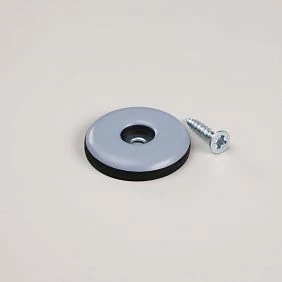
- Plastic furniture foot (non-adjustable)
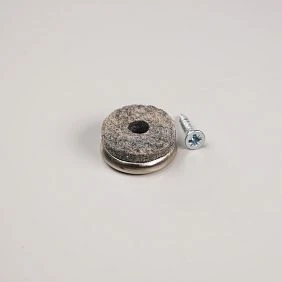
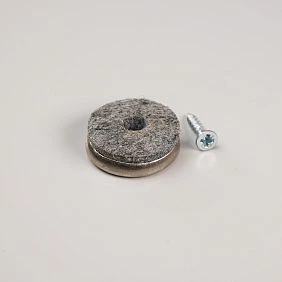
- Felt furniture foot
- Rubber furniture foot
- Adjustable furniture foot — when you can't do without it
- Where to install the adjustable foot
- Chair foot — a separate story about daily use
- What a felt chair foot does
- How long does a felt foot last
- Floor type and choosing a chair foot
- Cabinet foot — stability and leveling as priority
- Kitchen foot — adjustment plus moisture resistance
- How adjustable feet are installed in the kitchen
- Dresser and nightstand foot — stability without slipping
- Table foot — floor protection and stability at the same time
- How to choose a furniture glider based on floor type
- Parquet
- Laminate
- Ceramic tile
- Vinyl flooring
- Self-leveling floor and epoxy coating
- Furniture glider parameters: what to check when choosing
- Diameter
- Height
- Mounting type
- Load capacity
- Mistakes when choosing a furniture glider — a list that saves money and nerves
- What to check before buying a furniture glider — final checklist
- Furniture glider in the furniture fitting system — not a detail, but a solution
- FAQ — answers to popular questions about furniture gliders
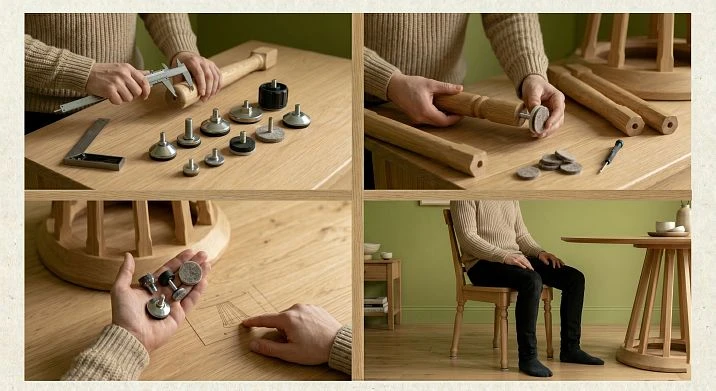
There are details that are not visible — but they determine whether furniture will stand level, creak or stay silent, scratch the floor or glide silently. A furniture glider is one of them. Small. Inexpensive. Almost invisible. But without it, an expensive cabinet wobbles, parquet gets scratched, and kitchen modules drift apart along the facade within six months after installation.
Furniture glider — it's not just a plastic washer under a leg. It's a functional part that solves a specific task: levels, protects, stabilizes. And you need to choose it as consciously as any other piece of furniture.
View furniture glides and fittings in the Stavros catalog.

First — about the problem itself. Why a glide is needed at all
Let's be honest: most people think about a glide not when assembling furniture, but later. When the cabinet starts to wobble. When stripes appear on the parquet from chair legs. When the kitchen set is uneven and the fronts don't align. When the dresser slides on the laminate at the slightest touch.
All these situations are the result of one thing: the lower part of the furniture was not properly equipped. And the solution is in the right furniture glide.




Specific scenarios where a glide is necessary
The cabinet stands unevenly. The floor in the apartment is not a perfect plane. A difference of 3–5 mm over a length of two meters is a common situation. Without adjustment, one corner of the cabinet hangs in the air, and the cabinet itself deviates from the vertical.
The dresser wobbles. Same story as with the cabinet: uneven floor, one of the four legs does not touch the surface — the whole structure "wanders" at any touch.
The table wobbles. This is especially noticeable at the dining table: any pressure on the edge — and the surface goes down.
The chair scratches the floor. Hard chair legs on parquet or laminate cause streaks and dents. Every movement of the chair leaves a mark.
Furniture needs to be slightly raised. Sometimes you need to gain 10–15 mm in height: for a stationary air conditioner, for cleaning under a cabinet, for leveling a countertop.
The bottom part of wooden furniture touches a wet floor. This is especially relevant for bathrooms, hallways, kitchens — where the floor is periodically wet.
Furniture is moved often. A light table, nightstand, coffee table — if they are regularly shifted, the bottom part of the legs wears out quickly.
In all these cases, the right furniture glider solves the problem quickly, inexpensively, and without remodeling the furniture.
Our factory also produces:
Furniture glider, leg, support — what's the difference and why it's important not to confuse them
Three words are often used as synonyms — and this leads to mistakes when ordering.
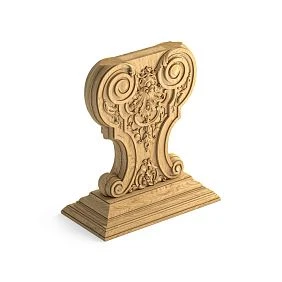
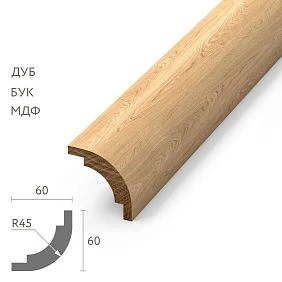
A furniture leg is a load-bearing vertical element of furniture. It holds the weight of the structure, is visible in the space, and is part of the design. wooden furniture legs — these are full-fledged products: turned, carved, tapered, straight. They are selected to match the style of the furniture and interior.
A furniture support is a broader concept. It may include a leg, but also metal and plastic stands for frame furniture. furniture legs — from decorative to purely technical.
A foot cap is a small element installed at the bottom end of a leg or at the lower part of the body. Its task: to protect the contact point of the furniture with the floor. It is not an independent load-bearing support — it complements the leg or body from below.
Confusion arises when a person searches for a "foot cap" but means a full-fledged leg — or vice versa. Therefore: if you need to add a leg to furniture — look at Wooden legs for table or chair legs. If you need to equip an existing leg from below — that is a foot cap.
Get Consultation
What types of foot caps exist — complete classification
The market offers several basic types. Each solves its own task. Confusing them means either not solving the problem or creating a new one.
Adjustable foot
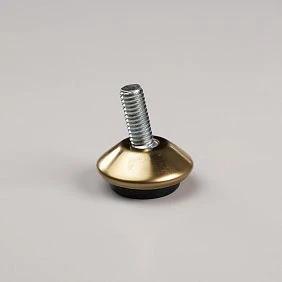
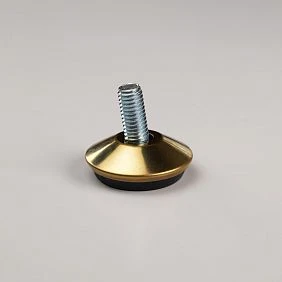
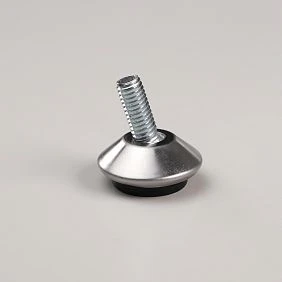
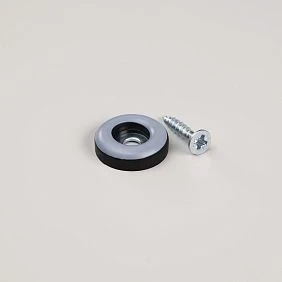
The most functional type. Design: a metal or plastic threaded stud screws into the body of the leg or furniture body, with a plastic or metal support pad at the bottom. By rotating the stud, you adjust the height of the support.
adjustable foot allows compensating for floor unevenness of up to 10–20 mm — depends on the specific model. For kitchen cabinets, this is the installation standard: all lower modules are set to a single horizon precisely through adjustable foot caps.
Where to apply:
-
kitchen cabinets and base modules;
-
cabinetry against the wall;
-
sliding wardrobes;
-
any furniture on uneven floors;
-
furniture that needs to be set strictly level.
Support base diameter adjustable foot FUR-019 series: 25 mm. Adjustment height: up to 15 mm. Material: ABS plastic + threaded metal part.
Plastic foot (non-adjustable)
Rigid plastic cap that fits over the end of a leg or inserts into a tubular leg. Protects the bottom end from direct contact with the floor, prevents chipping and wear.
For wooden legs — screwed or driven into the end. For tubular metal legs — plug-in cap. For plywood or MDF body — can be attached with a self-tapping screw.
Where to apply:
-
cabinets with straight wooden legs;
-
chests of drawers;
-
nightstands;
-
tables on hard flooring;
-
furniture that is rarely moved.
Advantage: cheap, reliable, durable. Plastic does not wear out with stationary furniture. Disadvantage: no adjustment — and if the floor is uneven, this won't help.
Felt (felt) foot pad
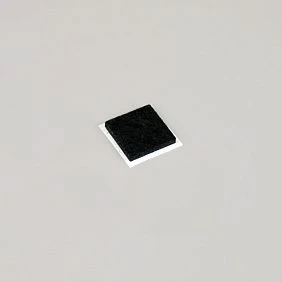
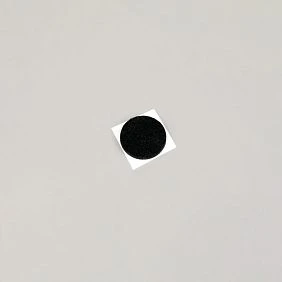
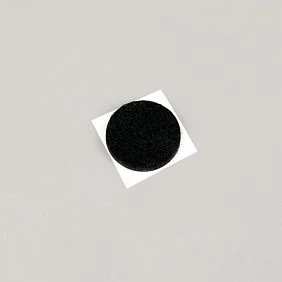
Soft pad made of felt or felt — glued or slipped onto the bottom end of the leg. Function: soft contact with the floor, protection from scratches, noise dampening when moving.
Felt foot pad 24 mm in diameter — for standard chair legs or a small table. Felt glider 28 mm in diameter — for wider legs.
Felt is a natural material. It glides softly on parquet and laminate without leaving marks. When moving a chair, it dampens sound: no unpleasant scraping.
Where to apply:
-
chairs on parquet, laminate, ceramic;
-
dining chairs;
-
bar stools;
-
light tables that are frequently moved;
-
wooden legs of any furniture in children's rooms.
Important: felt gliders are not for heavy case furniture. A cabinet weighing 80 kg on felt gliders? The felt will compress after a few months, and the furniture will sag unevenly.
Rubber furniture foot
Rubber is elastic, non-slip, and moisture-resistant. This foot secures furniture in place, preventing it from sliding. It works well on tiles: the rubber grips the surface without slipping.
For kitchens, bathrooms, hallways — where the floor is periodically wet — a rubber foot is preferable to felt: it does not absorb moisture, does not rot, and does not mat down.
Where to apply:
-
furniture on tiles;
-
kitchen chairs and stools;
-
hallway cabinets;
-
any furniture that must remain stationary.
Adjustable furniture foot — when you can't do without it
Let's examine this type in more detail, because it is the one that most often saves the day when installing furniture.
Why is the floor uneven? Because the screed is a living material: it settles and deforms with temperature and humidity changes. A difference of 3–7 mm per square meter is standard for most apartments and houses. Over the length of a kitchen unit of 3–4 meters, the total difference can reach 10–20 mm.
If you install a kitchen module without adjustment, one corner hangs in the air. The facades diverge: an uneven gap appears between the doors. The countertop sits crooked. This is noticeable to the eye and irritating every day.
Adjustable furniture foot solves this problem precisely: by screwing in or out the support element, you adjust the height of each furniture corner independently. Set the horizon level and lock it. Kitchen installation without adjustable feet is a 'hit-or-miss' job.
Where to install the adjustable foot
Kitchen lower modules. Standard installation: 4–6 adjustable feet under each module (at corners and center for wide units). Adjustment height is covered by a baseboard.
Wardrobes. A tall wardrobe touching the ceiling must be aligned vertically. Adjustable feet provide this leveling.
Cabinetry near uneven walls. When furniture is placed flush against a wall and the floor and wall are not strictly perpendicular, adjustment compensates for geometric mismatches.
Chests of drawers and cabinets. If a cabinet wobbles, one leg does not touch the floor. The adjustable foot levels it: all four support points touch the floor evenly.
Shelving units and shelf systems. A shelf on an uneven floor without adjustment deforms under load. Shelves go out of level.
A foot for a chair is a separate story about daily use
A chair is the most "mobile" piece of furniture in the house. It is moved every time it is used: pulled away from the table, pushed back, turned. Each movement involves contact of the legs with the floor.
A hard wooden leg without a floor protector on parquet is like an abrasive on the surface. Scratches appear quickly, especially on soft woods (ash, pine). On varnished parquet, marks are visible within a month.
What a felt floor protector for a chair does
Felt (or wool felt) is soft, glides smoothly, and does not scratch. When the chair moves, the leg slides across the floor, and the felt absorbs all the friction. The floor remains clean.
Felt floor protector with a diameter of 24 mm — for standard round chair legs. Felt floor protector with a diameter of 28 mm — for wider legs. Shape: round, square — depends on the leg's cross-section.
How long does a felt floor protector last
With intensive use (a dining chair moved 3–4 times a day), a felt floor protector lasts 6–18 months. It is a consumable item. The price of one set is low. It is easy to replace: remove the old one (if self-adhesive, peel it off), wipe the surface, and stick on a new one.
Rule: if a chair is moved very often and the felt wears out quickly, try the option with a plastic sliding glider: harder, but more wear-resistant.
Floor type and chair glider selection
| Floor type | Best chair glider |
|---|---|
| Hardwood parquet | Felt / felt |
| Softwood parquet | Soft felt / felt |
| Laminate | Felt / felt |
| Ceramic tile | Rubber or felt |
| Linoleum | Felt or plastic |
| Carpet | Plastic or without glides |
| Natural stone | Felt (soft) or rubber |
Glides for cabinet — stability and leveling as priority
A cabinet is large, heavy, and stationary. It is not moved daily, the floor underneath does not get scratched. But stability and leveling are critically important: a cabinet that is out of vertical alignment creates constant stress on the body, door hinges experience uneven forces, and shelves deform.
For a cabinet you need:
Adjustable glides — if the floor is uneven. They screw into the lower part of the body (through pre-drilled holes or into a plate). Adjustment height: 0–15 mm.
Rigid plastic glides — if the floor is level and only protection of the lower end of the body from direct contact with the floor is needed (especially important in damp rooms).
Load on the support pad. A cabinet weighing 60–120 kg, 4 support points — load per point 15–30 kg. A felt support pad under such load is inappropriate: it will compress, causing uneven settling. Hard plastic or metal with a plastic overlay is needed.
Support pad for the kitchen — adjustability plus moisture resistance
The kitchen is a special place for furniture fittings. It is humid here. The floor is washed regularly here. The cabinet set stands against the wall and on the floor here. Each module must be strictly level here, otherwise the fronts cannot be aligned.
For kitchen furniture — only adjustable shims with a plastic or metal base. Felt in the kitchen is the wrong choice: it absorbs moisture, swells, rots.
How adjustable support pads are installed in the kitchen
For each lower module: 4 support pads at the corners. If the module width exceeds 800 mm — 6-point mounting is possible.
Procedure:
-
Pre-install all modules.
-
Place a long spirit level along all modules.
-
Adjust each support pad until the entire countertop plane is level.
-
Close the gap at the bottom with a baseboard.
Result: perfect level, fronts aligned, countertop without tilt.
Furniture foot for dresser and cabinet — stability without slipping
A dresser is medium-heavy furniture (30–60 kg) that is moved rarely but periodically (cleaning, rearrangement). The task of the furniture foot here: prevent the dresser from sliding on laminate during accidental bumps, level it horizontally, protect the floor.
Best option for a dresser: adjustable furniture foot with rubber pad — levels and locks in place. Or rigid plastic with a textured bottom surface — non-slip, protects the floor.
For a dresser on parquet: felt is not optimal — under 40+ kg weight it will compress within a year. Better plastic with felt bottom pad: rigid base, soft contact with the floor.
Furniture foot for a table — floor protection and stability at the same time
A dining or work table is an intermediate case: it is not moved as often as a chair, but not as stationary as a cabinet. Load on legs: 15–30 kg per point for a table weighing 30–40 kg.
for wooden table legs — the furniture foot should:
-
protect the bottom end of the leg from wear;
-
do not scratch the floor during accidental shifts;
-
prevent the table from sliding when leaning on it with hands.
Optimal choice: a plastic foot cap with a felt bottom surface — rigid, but with soft contact. Or rubber — if the table must stand still.
If the table wobbles and the cause is an uneven floor: an adjustable foot cap on the legs. For wooden table legs — screws into the bottom end via threads.
How to choose a foot cap based on floor type
The floor is the counterpart of the foot cap. The type of flooring determines which material for the bottom surface of the foot cap to choose.
Parquet
Parquet is an expensive, sensitive flooring. Scratches on it are a tragedy because they are immediately visible and not always repairable by sanding.
For chairs — felt or wool felt: soft contact without scratches. For cabinets and heavy furniture — plastic with a felt pad. No metal pads on parquet!
Many laminate manufacturers produce matching accessories — baseboards, corners, and caps — in tones of their collections. This is convenient — you buy everything in one place, with guaranteed decor consistency.
Laminate is stronger than parquet, but the top decorative layer still scratches under hard contact. It is especially sensitive to point loads: a thin leg without a floor protector leaves a dent on laminate.
For chairs — felt. For heavy furniture — plastic (distributes load due to larger support area of the floor protector).
Ceramic tile
Tile is hard and scratch-resistant. Here the main problem is not scratches, but slipping: smooth tile + smooth legs = furniture "slides."
For tile — rubber floor protector: rubber "grips" tile without slipping. Felt on tile slips.
Linoleum
A soft covering that compresses under point load. A thin leg without a floor protector — over time, it presses through the linoleum all the way to the floor.
For linoleum — a floor protector with a wide support base: distributes load, prevents dents.
Self-leveling floor and epoxy coating
Hard, relatively durable coating. Rubber or plastic floor protector. Felt — possible for light furniture.
Floor protector parameters: what to check when choosing
It's not enough to choose "plastic" or "felt" — you need to match the size and type of attachment.
Diameter
The glider must match the diameter of the leg. Too small — it doesn't cover the end of the leg, doesn't perform its function. Too large — it protrudes beyond the edges of the leg, looks untidy and catches on the floor covering.
Standard diameters: 16, 19, 22, 24, 25, 28, 30, 35 mm. Felt glider 24 mm и 28 мм — for the most common diameters of chair and light table legs.
Height
Important for adjustable gliders: adjustment range 0–15 mm. If the floor height difference is more than 15 mm — a model with an increased range or a combined solution is needed.
For non-adjustable ones: the height of the glider affects the final height of the furniture. Keep this in mind if the furniture is next to another piece — and they should be at the same level.
Type of mounting
-
Self-adhesive — sticks to the bottom end of the leg. Simple and quick. For felt pads.
-
Drive-in insert — inserts into the end of a tubular leg. Reliable, for metal legs.
-
Threaded stud — screws into the body of a wooden leg. For adjustable glides.
-
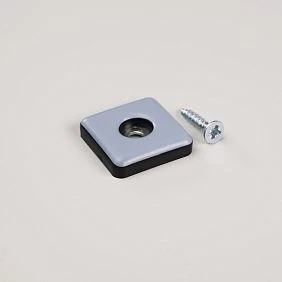
Self-tapping screw — attaches to the surface of the cabinet body. For glides in the form of flat pads on the bottom of the cabinet.
Load-Bearing Capacity
Specified in kilograms per glide. For heavy cabinets: at least 30–40 kg per point. Felt glide — load up to 10–15 kg per point (for lightweight furniture). Plastic adjustable glide — 30–50 kg.
Mistakes when choosing furniture glides — a list that saves money and nerves
Grabbing the first one you see without measuring the diameter. The most common mistake. Legs of different chairs have different diameters. Buying a felt glide "by eye" — you risk getting the wrong size.
Putting felt under a heavy cabinet. Felt is not designed for a constant load of 20–30 kg. It will compress, the cabinet will sag unevenly — and you'll be back to the original problem.
Ignoring adjustability on uneven floors. A regular non-adjustable glide does not solve the problem of uneven floors — it simply lifts the furniture to a fixed height. An adjustable one is needed.
Sticking felt pads on a dirty surface. The adhesive does not hold on a dusty or greasy leg end. Result: the glide falls off within a week. The surface before sticking — degrease and dry.
Choosing only by price. The cheapest plastic is brittle, cracks under load. A high-quality glide made of ABS plastic will last for years.
Not checking compatibility with the floor covering. A rubber glide on parquet — may leave a dark rubber mark. Felt on tile — slips and does not hold the furniture.
Install too few glides. For a large cabinet body, 4 glides at the corners is the minimum. For modules 1200 mm or longer, you need 6: 4 corner + 2 center.
Do not replace worn ones. Felt glides wear down and compact over time. Worn felt no longer protects: the hard leg end touches the floor again. Check once a year.
What to check before buying a glide — final checklist
Before ordering furniture glides answer these questions:
-
What furniture? Cabinet, chair, table, dresser, kitchen module.
-
What weight? Light (up to 20 kg) — felt; medium (20–60 kg) — plastic or adjustable; heavy (60+ kg) — rigid adjustable.
-
What floor type? Parquet/laminate — felt or plastic with felt; tile — rubber; linoleum — wide plastic.
-
Is height adjustment needed? If the floor is uneven or you need precise leveling — only adjustable.
-
What leg diameter? Measure before ordering.
-
Mounting type? Wooden leg, tubular metal, or flat body.
-
Will the furniture move? If often — felt or plastic; if stationary — rubber.
-
How many support points? Count all, including central ones for long bodies.
-
Damp environment? Kitchen, bathroom, hallway — only moisture-resistant materials, no felt.
-
Is aesthetics needed? If legs are visible — choose a neat glider that doesn't clash with the design.
A glider in the furniture fitting system is not a detail, but a solution
It's interesting to see how people's attitude towards small furniture fittings changes as they gain experience. At first — "it'll do." Then — the floor creaks every time a chair is moved. Or a cabinet that hasn't closed properly for two years.
furniture foot — this is not an "extra detail." It's part of the system that makes furniture function properly.
And all Furniture hardware — hinges, handles, guides, fasteners, gliders — this is the assembly level that determines the service life of each item. Good wooden chair leg With a felt glider, it will last ten years without replacement. The same leg without a glider will leave a mark on the parquet floor within the first season.
FAQ — answers to popular questions about furniture gliders
What is a furniture glider for?
Protects the floor from scratches and dents, stabilizes furniture, compensates for uneven floors (in adjustable versions), prevents slipping, and reduces wear on the lower part of the legs. View all options — furniture gliders in the catalog.
Which is better — adjustable or regular glider?
If the floor is level and only protection is needed — regular plastic or felt. If the floor has unevenness or the furniture needs to be set strictly level — adjustable foot mandatory.
Which glider to choose for a chair?
Felt glider 24 mm or felt 28 mm — depending on the leg diameter. For parquet and laminate — felt or wool felt. For tiles — rubber.
Can a felt furniture glide be used for a cabinet?
No, if the cabinet is heavy. Felt will compress under a weight of 20+ kg per point. For a cabinet — a hard plastic or adjustable glide.
Will a glide help if the cabinet is wobbling?
Yes, if the cause is an uneven floor or height difference. Install adjustable shims and level all four support points.
How often should felt glides on chairs be replaced?
With daily use — once every 6–18 months. Check: if the felt is worn down to the base — replace immediately, otherwise the leg will scratch the floor again.
Can a felt glide be glued directly onto the leg?
Yes, if the furniture glide has a self-adhesive base. The surface of the leg must first be cleaned of dust and degreased.
What size furniture glide is needed for a standard dining chair?
Most often, the diameter of a dining chair leg is 22–30 mm. Felt glides with a diameter of 24 mm or 28 mm are suitable.
A small detail that is often overlooked when assembling furniture — and then regretted not installing right away. Furniture glider — is an investment in parquet flooring, in a level cabinet, in silence when moving a chair. And the cost of this investment is pennies compared to restoring parquet or redoing a kitchen set.
STAVROS offers a full range furniture hardware: adjustable shims, felt и felt furniture glides, Wooden furniture legs for tables, chairs, and case furniture. All — in stock at warehouses in St. Petersburg and Moscow, with Contact us to confirm shipping to your destination. STAVROS — because details matter.