Article Contents:
- What exactly does the price of an MDF skirting board mean
- Confirmed parameters of the STAVROS category that affect the calculation
- Why the price needs to be converted to a linear meter
- Basic formula
- Why a cheap plank sometimes costs more
- When a taller option saves money
- Profile verification before purchase
- Find the net length
- Add a reasonable margin
- Check the cutting, not just the division
- Convert the quantity into money
- Fastening and consumables
- Cutting and fitting
- Packaging and delivery
- Need to replace old skirting board without full wall renovation
- Need a calm modern interior
- Need an expressive classic bottom line
- Skirting board is chosen for hallway or corridor
- Skirting board needed for commercial space
- Compare only the price of one plank
- Count only the total perimeter
- Automatically add ten percent
- Choose height only from a photo
- Do not clarify the surface condition
- Buy the mounting before choosing the profile
- Do not account for delivery of long-length items
- Mix materials and finishes in one estimate
- How to find out the price of MDF skirting board per linear meter?
- Why can't you compare skirting boards only by the price of one piece?
- How much extra should you add to the footage?
- Do you need to subtract door openings?
- Which is more expensive: high or low skirting board?
- Is painting included in the cost of the skirting board?
- Why does a complex profile increase the cost of installation?
- How to calculate the cost of baseboard for an apartment?
- Can the footage be calculated based on the apartment area?
- Is it more profitable to buy a ready-made white baseboard or one for painting?
- What to check before ordering in the product card?
- How does delivery affect the price per linear meter?
- Do I need to buy one spare plank?
- How to know if the chosen height is not too large?
- What data to write down from the product card

MDF skirting board: price — this is not a single number that can be mechanically multiplied by the perimeter of the room. The final cost depends on the length of a specific plank, the height and thickness of the profile, surface preparation, chosen finish, number of cuts, allowance, packaging, and delivery. Therefore, two seemingly similar offers may differ noticeably in the price per piece, but turn out to be almost identical in cost per linear meter and in the total budget after installation.
It is useful for the buyer to divide the calculation into three levels. First, determine the price of the skirting board itself per linear meter. Then, understand how many planks are actually needed, taking into account doorways, corners, and cutting. After that, add the expenses without which the purchase does not turn into a finished result: fastening, preparation for painting, final coating, labor, packaging, and transportation of long-length products. This approach protects against two extremes — choosing solely based on the minimum price of one plank and overpaying for parameters that do not provide benefits specifically in your interior.
In the STAVROS catalog you can view MDF skirting board and current prices, sort offers by cost and filter products by size, material, collection, and availability. The article will help you read this data as an estimate: compare options in the same unit of measurement, evaluate the impact of height and profile, calculate for a room or apartment, and understand in advance what lines the order will consist of.
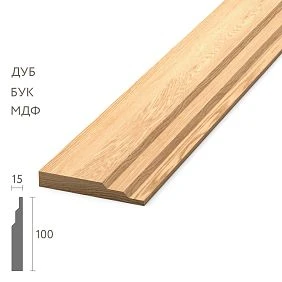
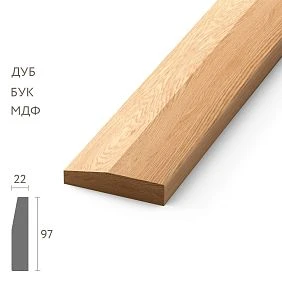
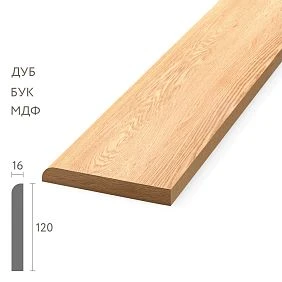
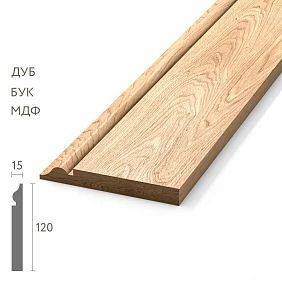
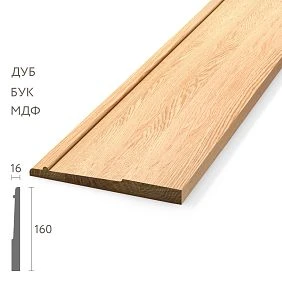
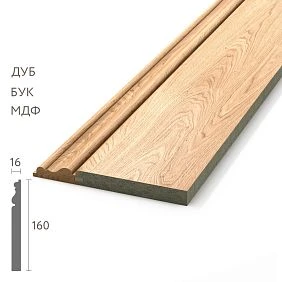
What exactly does the price of MDF skirting board mean
In discussions about cost, four different values are often mixed. The first is the price of one plank. The second is the cost per linear meter. The third is the total cost of material for the room. The fourth is the full budget of the completed "wall-floor" assembly, which includes related materials and labor. Until these values are separated, comparison can easily become erroneous.
The price per plank is convenient for the store and warehouse because the product is shipped as whole items. For the buyer, the linear meter is more important: it allows comparing planks of different lengths. A room requires not a conditional six or eight pieces, but a specific total length. However, the price per meter alone is also insufficient. With a large number of short sections and corners, part of the length will go into scraps, meaning the actual cost per installed meter will be higher than the calculated one.
The total budget shows the real cost of the solution. A skirting board for enamel may seem advantageous in terms of cost per meter, but it will require primer, interlayer treatment, paint, and labor. A finished finish is usually more expensive upfront but reduces the number of operations. A high profile may cost more but can cover a mark from old finishing or a wider technological gap. A rational choice is determined not by the lowest line in the catalog, but by how much money is needed for the desired result.
| Indicator | What it shows | What to use it for |
|---|---|---|
| Price per plank | How much a single product of the selected length and finish costs | For forming an order and understanding the total based on the number of pieces |
| Price per linear meter | Cost per meter of profile after dividing the plank price by its length | For a fair comparison of products of different lengths |
| Cost of material per room | Price of all whole planks considering cutting and allowance | For preliminary room budget |
| Total purchase cost | Material, finish, fasteners, consumables, packaging, delivery, and labor | For comparing complete scenarios, not individual price tags |




Confirmed STAVROS category parameters that affect the calculation
For a product group, not only photos and profile names matter. The category page includes filters that help translate a design solution into measurable parameters. You can filter by width, height, and length of the product, material, collection, availability, and price. This is especially useful when preparing a quote: first, project constraints are set, then only compatible options are compared.
| Parameter | How it affects the cost | What to check before ordering |
|---|---|---|
| Product type | Baseboard, casing, and universal profile may have different geometry and purpose | Is a profile specifically needed for floor abutment |
| Material | The category includes MDF options and products also available in solid wood | Which material is selected in a specific row of the card |
| Size A, width | Profile thickness and overhang affect material consumption and complexity of abutments | Does the profile interfere with door trims and furniture |
| Size C, height | A high baseboard usually contains more material and has a stronger impact on the interior | Is the height sufficient to cover the gap and finishing marks |
| Size L, length | Length determines the price per linear meter and the number of joints | How the planks will be cut along the walls of the room |
| Collection and profile | A more complex relief can increase the labor intensity of production and finishing | Does the pattern match the style of doors, walls, and furniture |
| Availability | Availability affects lead times and sometimes logistics | Current status for the required material and size |
| Price | The cost is displayed for a specific configuration | Whether the material, length, and preparation quality are mixed up |
Before calculation, open MDF baseboard category, select the appropriate sizes and carefully check which configuration the price refers to. The same model name does not always mean the same cost: within the product card, the material, length, availability status, and surface preparation may differ. The estimate should be based on the selected line, not on the minimum "from" price.
Our factory also produces:


Why the price needs to be converted to linear meter
A linear meter is a unit of length without considering width and height. For baseboards, it is convenient because the main order volume is determined by the length of the walls. If one plank is 2.4 m long and another is 2.6 m long, you cannot compare only the price per piece: the more expensive plank may have a lower cost per meter and reduce the number of joints.
Get Consultation
Basic formula
Price per linear meter = price of one plank ÷ plank length in meters.
Suppose a plank 2.4 m long costs 2400 rubles. The price per linear meter is 1000 rubles. Another plank 2.6 m long costs 2535 rubles. At first glance, it is 135 rubles more expensive, but its linear meter costs 975 rubles. If about twenty meters are needed for the room, the difference becomes noticeable. Additionally, the longer plank may offer another advantage — fewer connections on long walls.
It is useful to calculate with at least ruble precision, and round the total only after determining the number of whole planks. You cannot multiply the room's length by the price per meter and consider the task solved: delivery is in whole pieces. If 18.3 m is needed and the plank length is 2.6 m, mathematically it results in 7.04 pieces, but you will have to buy at least eight. Moreover, with unfavorable cutting, a ninth may be needed.
Why a cheap plank sometimes ends up costing more
A short plank may have an attractive price tag, but on long walls it may require more connections. Each joint is time for cutting, fitting, and finishing. If the profile is complex, pattern misalignment becomes more noticeable. Therefore, saving on a piece can turn into additional installation costs and a higher waste percentage.
There is also the opposite situation. The longest plank is not always more advantageous for a small room with many short partitions. When walls are broken up by doors, niches, and built-in furniture, long leftovers may not find use. Here, the maximum size is not important, but rather the cutting map. It is useful to write down the length of each section in advance and try to lay them out across planks, like parts on a sheet of material.
| Option | Plank price | Length | Price per 1 m | Comment |
|---|---|---|---|---|
| Conventional profile A | 2400 ₽ | 2.4 m | 1000 ₽/m | Lower price per piece, but more joints on a long wall |
| Conventional profile B | 2535 ₽ | 2.6 m | 975 ₽/m | Higher price per piece, but cheaper per meter and fewer connections |
| Conventional profile C | 1980 ₽ | 2.0 m | 990 ₽/m | May be convenient for short partitions |
The numbers in the example are conditional and show the methodology. Actual prices, lengths, and available configurations must be checked in the selected STAVROS category card before placing an order.
What makes up the total cost of an MDF baseboard
The material price is only the central line of the estimate. Depending on the project, it is supplemented by base preparation, priming and painting, adhesive or other fixing method, sealing of joints, joint treatment, tools, workmanship, packaging, and delivery. The earlier these costs appear in the calculation, the less likely the final amount will be a surprise.
It is especially important to separate mandatory and situational expenses. Mandatory ones include the planks themselves and the chosen fixing method. Finishing is mandatory if a profile without a ready finish is purchased. Cutting is always needed but paid for differently: included in the installer's work, done independently, or requires tool rental. Delivery depends on the length of the products, address, and order volume. Wall leveling is not needed for every project, but with noticeable waves, a neat fit cannot be achieved without it.
| Budget line | When it occurs | How to control |
|---|---|---|
| Baseboard | Always | Calculate by whole planks after the cutting map |
| Reserve | Almost always | Assign by room complexity, not automatically |
| Mounting | Always | Select based on wall base and profile structure |
| Preparation for finishing | For unpainted product | Clarify surface condition in the card |
| Primer and paint | For paint-ready option | Calculate profile area and number of layers |
| Joints and connections | At corners and joints | Include sealant or repair compound consumption |
| Installation | When hiring a master | Compare price per meter and surcharges for corners |
| Packaging and delivery | When transporting the order | Clarify separately considering length and address |
| Wall correction | On uneven base | Evaluate before ordering to choose installation method |
How baseboard height affects price and room perception
Height is one of the most noticeable parameters. It determines how much of the wall the profile will occupy, how expressive the transition to the floor will be, and whether the product can cover old marks, installation gaps, or uneven edges of the finish. Increasing height usually raises the cost because the cross-section and surface area increase, but a direct proportion is not always the case: much depends on the profile, material, and preparation.
A low baseboard is chosen when a calm border without architectural emphasis is needed, furniture stands close to the wall, and door trims are narrow. Medium height suits most living rooms: it is noticeable but does not compete with doors and wall panels. A high profile works as part of the architecture, especially in rooms with high ceilings, large door portals, and developed wall finishes. However, its purchase is justified only when the scale is supported by other elements.
Buyers often search for prices for heights of 60, 80, 100, and 120 mm. These values are convenient to use as benchmarks when comparing, but the actual size range should be checked in the catalog. Do not transfer the usual designation from a search query to a specific model: a profile about 100 mm high may have a different thickness, relief, and length, so its price per meter will differ.
When a taller option saves money
A high baseboard sometimes allows you to avoid local repairs to the lower part of the wall. If after dismantling the old profile there remains a strip of glue, chips, or an unpainted area, a new element of greater height can cover the defects. But the decision is made after measuring: the baseboard must cover the problem area with a margin and not conflict with sockets, trims, radiators, and furniture.
The savings disappear if the height is chosen without considering door frames. When the top line of the baseboard cuts into a narrow trim or ends above its decorative base, the joint looks random and requires additional adjustment. Before ordering, it is useful to make a simple wall section with dimensions of the floor, baseboard, and trim. Such a sketch prevents expensive rework better than the abstract rule "the higher, the more impressive."
| Height guideline | Buyer's task | Impact on budget |
|---|---|---|
| Restrained height | Close the technological joint without strong emphasis | Usually less material and simpler junctions |
| Medium height | Balance practicality and a noticeable line around the perimeter | Rational base for most rooms |
| High profile | Support large doors, panels, and high ceiling | Higher material cost and finishing area |
| Very high architectural profile | Make the lower part of the wall a separate element | Requires particularly precise alignment and installation |
How profile shape affects price
Two baseboards of the same height can cost differently due to cross-section shape. A straight minimalist profile is easier to perceive, easier to clean, and usually requires less attention during painting. Classic relief with curves, shelves, and transitions creates more complex chiaroscuro but increases surface area and places higher demands on finish quality.
Profile price is not only about material quantity. The more small transitions, the more noticeable defects at joints and corners. For a neat result, precise cutting, line matching, and careful joint treatment are needed. If installation is paid separately, complex relief can increase labor costs even with a similar price per linear meter.
Choose the profile together with door trims and wall decor. A straight baseboard complements minimalist doors and flat facades well. A profiled option is appropriate next to classic trims, panels, and moldings. Random mixing of shapes often looks more expensive in the estimate but weaker in result: money is spent on relief that is not connected to the interior.
Profile check before purchase
- Compare the height and thickness of the baseboard with the lower part of the door trim.
- Check that the profile overhang does not block the opening of doors, furniture fronts, and floor hatches.
- See how easy it will be to make internal and external corners.
- Assess whether the relief requires particularly careful painting with a brush or spray.
- Match the shape with other lines in the room: doors, cornices, wall frames.
- Clarify the exact dimensions of the selected configuration, rather than relying on the photograph.
Ready-made baseboard or MDF for painting: which is more profitable
The answer depends on what is considered profit. A ready-made coating reduces the number of operations on site and makes the final cost more predictable. A baseboard for painting gives freedom of color and the ability to connect it with the wall, doors, or furniture, but requires preparation, materials, space for drying, and careful work. When doing it yourself, savings are possible if the tools are already available and the technology is familiar. When ordering a painter, labor is added to the material cost.
A profile for enamel is useful when an exact color according to the project is needed. It can be made to match the wall, create a contrasting line, or repeat the shade of door blocks. But the same color name does not guarantee the same result on different substrates and with different painting systems. For a cohesive interior, it is advisable to finish the baseboard, doors, and architraves with compatible materials and a coordinated method.
Before purchasing, clarify the condition of the supplied surface: whether additional sanding is required, which primer is compatible with the substrate, whether painting is included in the price, and who is responsible for the finish. If finishing is done after installation, the risk of staining the wall and floor increases. If before installation, you need to plan for processing the ends and repairing joints after installation.
| Scenario | Advantages | Additional costs | Who it suits |
|---|---|---|---|
| Ready-made finish | Faster installation, clearer appearance | Careful transportation and repair of possible joints | For those who want to reduce painting work |
| Painted to match wall color | Single plane and calm bottom line | Primer, paint, preparation and floor protection | For modern interiors and complex wall colors |
| For painting to match the doors | Coherent joinery composition | Exact match of the finishing system | For classic and transitional interiors |
| Contrast painting | Expressive architectural frame | High requirements for line evenness | Rooms with thoughtful graphics |
How to calculate the cost of baseboard for one room
The calculation starts not with the price, but with a plan. Measure the length of each wall section where the baseboard will actually be installed. Do not limit yourself to the perimeter formula of a rectangle if the room has niches, bay windows, columns, doorways, or built-in furniture. A separate list of sections helps later to create a cutting map and see in advance where short remnants will appear.
Find the net length
For a simple room 5 m long and 4 m wide, the geometric perimeter is 18 m. If one doorway 0.9 m wide remains without baseboard, the net length will be 17.1 m. But this is not yet the amount of material. You need to understand how 17.1 m is distributed along the walls and what segments can be obtained from one plank.
The doorway is subtracted only where the baseboard actually ends at the architraves. In a wide passage without a door block, the bottom line may continue. Behind built-in furniture, the decision depends on the project: sometimes the profile is not needed, and sometimes it is retained so that the finish remains complete after a possible rearrangement.
Add a reasonable margin
The margin compensates for cutting errors, defects at the ends, complex corners, and the inability to use all remnants. For a simple room with straight walls and straightforward cutting, a moderate reserve is sufficient. In a room with many short sections, external corners, and a complex profile, the margin is increased. A universal percentage without a cutting map is less accurate than a calculation for each wall.
For a preliminary estimate, multiply the net length by 1.08–1.12. In our conditional example, 17.1 m with a 10% margin becomes 18.81 m. But you need to buy whole planks. With a length of 2.6 m, the mathematical minimum is 7.24 pieces, i.e., eight planks. Their total length is 20.8 m. The actual margin relative to the net perimeter will be more than ten percent because rounding is done to a whole product.
Check the cutting layout, not just the division
Suppose the room has walls of 5 m, 5 m, 4 m, and 4 m, and a door 0.9 m wide is located on one short wall. For each five-meter wall, it is convenient to use two planks of 2.6 m with a small remainder. For the four-meter wall, two planks are also needed, but the remainder from one pair can be tried near the door. This layout shows why simply dividing the total length does not always give the optimal answer.
Corner cuts additionally consume length. On a profiled baseboard, the end is cut not at the visible wall point but considering the joint geometry. Therefore, a small technological allowance is left on each section. The cutting plan should account for the profile direction and the possibility of flipping: not every remainder fits the next segment.
Convert the quantity into money
Once the quantity is determined, the material cost is calculated simply: the number of whole planks is multiplied by the cost of one piece. Then, the equivalent price per linear meter is separately derived, and other budget lines are added. This sequence prevents accidentally buying a fractional number of products and maintains transparency of the estimate.
| Stage of conditional calculation | Value | Comment |
|---|---|---|
| Room perimeter | 18 м | Room 5 × 4 m |
| Doorway | −0.9 m | Section without baseboard |
| Net length | 17.1 m | Calculation basis |
| Preliminary stock | 10% | For estimation before cutting |
| Calculated length | 18.81 m | Not equal to purchase volume |
| Plank length | 2.6 m | Conditional example |
| Minimum whole planks | 8 pcs. | 20.8 m of material |
| Material summary | 8 × plank price | Finishing and installation are added to the total |
How to calculate baseboard for an apartment, not just one room
The apartment is calculated by rooms, but it's useful to optimize the purchase together. Leftover pieces that don't fit a long living room wall can completely cover a short wall in the hallway. So first make a list of all sections, then combine them into a single cutting plan. This approach often reduces waste compared to buying separately for each room.
Not all openings need to be automatically subtracted. At doors, the baseboard usually ends at the trim, but in a wide opening without a door frame, it may continue. Behind a built-in wardrobe, the profile is sometimes not installed if the furniture is designed flush and covers the joint. For a kitchen set, the solution depends on the design of the plinth and side panels. Behind freestanding furniture, the baseboard is usually kept so the finish remains complete when rearranging.
Hallways and entryways have more corners and short sections than bedrooms. They increase waste even with a small area. A large rectangular living room, on the other hand, may require many meters but can be cut efficiently. Therefore, the cost of baseboard for an apartment cannot be accurately derived from the floor area alone. The relationship between square meters of floor and wall length depends too much on the layout.
| Room | What to measure separately | Typical budget risk |
|---|---|---|
| Living room | Long walls, portals, panoramic windows | Noticeable joints when planks are too short |
| Bedroom | Niches, wardrobe space, door frame | Excess material behind built-in furniture |
| Hallway | Many corners and short walls | Increased waste percentage |
| Kitchen | Headset zones, pencil cases, individual walls | Conflict with furniture baseboard |
| Office | Shelving, built-in systems, doors | Incorrect solution for areas behind furniture |
| Commercial space | Columns, display cases, passages, service areas | More external corners and repair requirements |
After taking measurements, compile a general list of segments from longest to shortest. First, allocate long pieces, then fill in the short ones with leftovers. This logic works especially well when there is a single profile throughout the entire apartment. If different heights or colors are used in rooms, leftovers between groups are no longer interchangeable, and the allowance is calculated separately.
How to compare prices for baseboards of different lengths
Comparison starts with a single table. For each option, write down the price per plank, length, cost per meter, number of planks according to your cutting layout, and the total material cost. Then add finishing and installation. Often the winner changes in the last column: an option with a favorable meter may require more complex joints, while a more expensive profile can reduce preparatory work.
It is necessary to compare identical configurations. MDF cannot be compared to oak based solely on the minimum price in one listing. A profile for enamel and a fully finished product are also at different stages of readiness. If one option is available from stock and another is made to order, differences in timing and logistics appear in the project, although they are not always reflected in the product price.
| Criterion | Option 1 | Option 2 | What determines the choice |
|---|---|---|---|
| Price per piece | Below | Higher | Is not a sufficient criterion |
| Plank length | In short | Longer | Number of joints and waste |
| Price per linear meter | May be higher | May be lower | Honest material comparison |
| Profile | Simple | Relief | Style and labor intensity of finishing |
| Surface condition | Requires preparation | Closer to finish | Costs after purchase |
| Number of planks | Larger | Smaller | Actual order amount |
| Installation | Simpler | More difficult | Cost of work and risk of errors |
Price of tall, wide, and white MDF baseboard
Queries "buy tall MDF baseboard", "buy wide MDF baseboard", and "buy white floor MDF baseboard" describe different needs, although they may overlap in one product. Height sets the architectural scale. Width or thickness determines the projection from the wall and the ability to cover the gap. White color refers to the finish. For a correct comparison, the request needs to be broken down into these parameters.
A tall profile is usually more expensive than a low one not only because of the material. It has a larger surface to paint, wall irregularities are more noticeable, and requirements for the joint with the architrave are higher. A wide projection helps cover a significant gap between the wall and the flooring, but may interfere with furniture and doors. A white option seems universal, however, the shade of white should be coordinated with the walls and joinery: cool and warm white next to each other can look like a mistake.
In the estimate for a white baseboard, they clarify whether the final painting is included in the price or if it refers to preparation for enamel. If the product is supplied for painting, the cost of color appears as a separate line. For a small volume, painting work can sometimes be disproportionately expensive due to the minimum order, preparation of the space and equipment. For a large volume, the price per meter becomes more even.
MDF baseboard for painting: material price and result price
A profile for painting is bought for controlled color and a cohesive interior. It can
Fastening and consumables
The estimate includes the chosen fixing method, joint materials, and floor protection. The exact set cannot be determined solely by the name "MDF skirting board": it depends on the profile and wall construction. Before purchasing, it is useful to show the installer a drawing or dimensions of the product to avoid discovering on site that the fasteners protrude, the glue is unsuitable, or the top edge requires a different solution.
Cutting and fitting
High-quality mitering reduces material waste and makes corners neater. For a one-time DIY installation, tool rental or making test cuts may be necessary. A mistake on a high-relief profile is more costly than on a low straight one: the damaged piece is long, and a small leftover cannot always be used. Therefore, saving on tools sometimes increases the consumption of planks.
Packaging and delivery
Skirting boards are long-length products. The cost of transportation depends not only on weight but also on package length, address, and carrier rules. When comparing offers, it is useful to request the total amount to the site rather than focusing on the product price without logistics. For a large order, delivery is distributed over more meters; for a few planks, its share in the price per meter can be significant.
What to buy together with MDF baseboard
The purchase set is determined not by the advertised list but by the actual technology of the site. The profile itself is rarely the only line item. Materials for fixing, joint treatment, and chosen finish are needed. At the same time, consumables should not be purchased in advance based only on a general name: first, clarify the wall base, the condition of the skirting board surface, and the installation method.
If the product is to be painted, the set is discussed with the painter before ordering. Primer and paint must work as a single system, and a test coat helps check the shade next to walls and doors. If installation is done by a contractor, it is useful to agree in advance whether the price includes mitering corners, repairing joints, floor protection, and cleaning. This way, the same work is not paid for twice and does not remain without a responsible party.
| What to add to the purchase | Why this is needed | What to pay attention to |
|---|---|---|
| MDF skirting board of the required profile | To close the wall-floor joint and set the overall line of the room | Height, thickness, length, material, profile, and surface condition |
| Suitable mounting | Securely fix the profile | Wall type, baseboard design, and possibility of dismantling |
| Material for joints | Make connections and top abutment neat | Compatibility with final paint |
| Primer and paint | Get the desired color and protect the surface | Only for the paint-ready option, after system approval |
| Covering materials | Protect the floor, walls, and furniture | Especially important when painting after installation |
| Spare plank | Compensate for cutting error or future local repair | Does not replace a full cutting plan |
How not to confuse MDF skirting board with similar products
Linear products can be used in multiple roles, and individual profiles may look similar to architraves, moldings, or cornices. The buyer should pay attention not only to the photo but also to the purpose, dimensions, and shape of the back side. The skirting board must work correctly at the bottom wall junction, account for the floor gap, and provide a clear joint at the door architrave.
Molding usually serves a decorative purpose on the wall plane and is not always designed for contact with the floor or covering the technological gap. Architrave frames a door or window opening; its proportions and back part are subordinated to a different task. A universal profile may be suitable for several scenarios, but this should be confirmed by the product card specifications, not by assumption based on shape.
Do not confuse MDF and solid wood in the same model. Different materials may be available in the card, and the price 'from' often refers to a specific version. Before adding to cart, check the selected line: material, length, dimensions, and stock status. This check takes a minute but prevents errors in the entire order.
Practical selection for different buyer tasks
Need to replace old skirting board without full wall renovation
First, measure the height of the trace left after dismantling and the maximum width of the floor gap. The new profile must cover both areas, but not be so large as to conflict with architraves and furniture. In this scenario, the price of a high skirting board may be justified by savings on local wall restoration. However, serious unevenness cannot be hidden by height alone: the top edge will still show the wave of the base.
A calm, modern interior is needed
Laconic profiles without overly complex relief are suitable. The cost should be compared not by the minimum height, but by the whole package: plank length, number of joints, painting to match the wall, and installation. A straight profile is usually easier to join and repair, so the total budget may be lower even with a similar material price.
An expressive classic bottom line is needed
Here, height, developed profile, and coordination with door architraves are important. The skirting board should not exist separately from the rest of the joinery composition. The estimate should account for more complex corners, additional painting area, and higher fitting requirements. It is better to save on accurate quantity calculation rather than simplifying the key profile if it sets the character of the entire room.
The skirting board is chosen for the hallway or corridor
These areas have many doors, short walls, and external corners. The main risk is waste and cutting complexity. Before purchasing, a detailed itemized list should be made, rather than applying a single percentage margin. The surface should be easy to maintain, and the top joint must be done neatly to prevent dust accumulation.
The skirting board is needed for a commercial space
Not only the appearance and price per meter are important, but also the possibility of local repair. In high-traffic areas, the lower part of the wall receives more accidental impacts. It should be decided in advance whether the paint can be restored on site, whether a spare plank will remain, and how easily the finish can be reproduced. A single order for the entire project helps maintain a consistent profile and reduces the risk of color variation between batches.
How the skirting board works in different rooms
In the living room, long walls make joints particularly noticeable. Here, a sufficient plank length and a pre-planned arrangement of connections are useful: it is better to move them away from the most visible areas. The height can match door portals and wall frames, but should correspond to the scale of the furniture.
In the bedroom, the baseboard is often partially covered by the bed, nightstands, and wardrobe, but you should not skimp on random sections. Visible and hidden areas should form a single contour. If the wardrobe is built-in, the decision about the baseboard behind it is made together with the furniture makers before ordering, so as not to pay for material that will later have to be dismantled.
In the kitchen, it is necessary to coordinate the floor baseboard with the cabinet plinth. The same height is not required, but the lines should not accidentally collide. Near freestanding refrigerators, tall cabinets, and passages, check the profile overhang. The material and finish are selected considering the cleaning regime, without attributing properties to ordinary MDF that are not present in the specific product card.
In a children's room, smooth joints, repairable finish, and the absence of sharp accidental protrusions in traffic areas are important. In a study, the baseboard is coordinated with built-in shelving and cable routes. In a showroom, salon, or restaurant, it becomes part of the overall architecture and should look consistent across all halls, including transitions and door units.
Mistakes that increase the purchase cost
Comparing only the price of one plank
Without converting to linear meter, it is impossible to understand which option is actually cheaper. Different lengths make the price per piece incomparable. Moreover, a short plank increases the number of joints and installation time.
Counting only the total perimeter
The total footage does not show cutting. Two rooms with the same perimeter may require a different number of planks due to doors, niches, and corners. A list of individual sections is more accurate than any universal coefficient.
Automatically adding ten percent
The percentage margin is convenient for rough estimation but does not replace layout planning. In a simple room it may be excessive, while in a hallway with many short walls it may be insufficient. First plan the cuts, then decide on the reserve.
Choosing height based only on a photo
In a large image, the profile is perceived separately from the room. In reality, it meets door trims, sockets, furniture, and radiators. Before ordering, you need to check the dimensions on the wall, at least using a paper strip or marking with painter's tape.
Not clarifying the surface condition
The phrase 'for painting' does not explain the full scope of preparation. The buyer needs to understand whether additional sanding and priming will be required, who performs the finishing, and how the joints will be repaired. Without this, the material estimate is not linked to the cost of the result.
Buying fasteners before choosing the profile
The fixing method depends on the wall and the product design. Universal purchase of consumables often ends up with a repeat purchase. First choose the profile and study its parameters, then coordinate the installation.
Not accounting for delivery of long-length goods
Several slats may have a low cost but occupy a long cargo space. Logistics should be calculated before payment, especially when ordering to another city. The final price at the site is more important than the cart total without transportation.
Mixing materials and finishes in one estimate
If the model is available in MDF and array, the minimum price may not refer to the option chosen by the designer. The calculation includes the full configuration: material, size, length, preparation, and availability.
Who MDF baseboard suits, and when it's better to consider another option
MDF is suitable for buyers who need precise profile geometry, the ability to get a painted architectural line, and to match the baseboard with doors or walls. It is especially appropriate in residential and commercial interiors where color, height, and joints are planned in advance, and installation is done on a prepared base.
This choice requires care at the design stage. If the walls are very uneven and there are no plans to fix them, a rigid, flat plank will highlight defects. If the room has a special humidity regime, you cannot buy a product based only on the general name of the material: you need to check the specific execution and permissible conditions of use.
Another option should be considered when a built-in cable channel, a special hidden mounting system, frequent dismantling, or properties not confirmed by the selected profile's card are required. An honest decision sometimes is not to find the cheapest MDF baseboard, but to choose a product that truly matches the assembly and does not require rework.
How to buy MDF baseboard without overpaying
Savings start not with finding the lowest price, but with precisely defining the task. Determine the minimum height that covers the gap and traces of old finishing. Check the maximum thickness allowed near doors and furniture. Decide whether a complex profile is needed or a simple shape is sufficient. After that, only suitable options will remain in the comparison, and a lower price will not be achieved at the expense of unsuitable parameters.
The next step is a cutting map. It helps to buy not a conditional footage with a large margin, but a justified number of whole planks. For an apartment, it is useful to combine leftovers between rooms with the same profile. If the renovation is done in stages, it is better to decide in advance whether the same baseboard will be used in all rooms. Late additional purchases create a risk of differences in availability and finish.
The third point of savings is comparing the total budget. A version for painting should not automatically be considered cheap, and a finished one expensive. Add primer, paint, labor, covering materials, and joint repair. Sometimes a higher price for a prepared product pays off by reducing operations. In another project, self-painting truly becomes a rational solution.
Finally, do not increase the height and complexity of the profile "just in case." Each additional parameter should solve a specific task: cover a wall area, support doors, match the scale of the room, or provide the desired character. Conscious limitation usually saves more than searching for a random discount.
How to order MDF skirting board on STAVROS
Start with the section where you can buy MDF skirting board and compare available offers. Use filters by size, material, collection, and availability, then open the card of the suitable profile. Inside, you need to check the specific configuration because the price may depend on the material, length, and surface preparation.
Before placing an order, prepare the net length, list of sections, and estimated number of planks. Check the height and projection near architraves, furniture, radiators, and doors. If the profile will be painted, determine the contractor and material system in advance. For delivery to another city, clarify the cost of transporting long-length orders and the requirements for accepting packaging.
When the project is complex, it is useful to provide the manager with a floor plan, wall dimensions, and the chosen finishing scenario. Such a conversation is more specific than a request to "calculate skirting for an apartment": the specialist sees the lengths, number of corners, and product configuration. As a result, the buyer receives not an abstract number of meters, but an order tied to the actual layout.
Frequently asked questions about the price and calculation of MDF skirting boards
How to find out the price of MDF skirting board per linear meter?
Divide the cost of one plank by its length in meters. For example, for a 2.4 m plank, the price per meter equals the price per piece divided by 2.4. Take the current values from the selected configuration in the card.
Why can't skirting boards be compared only by the price per piece?
Planks can have different lengths, materials, and preparation. A more expensive piece sometimes gives a more favorable linear meter and fewer joints. The comparison should consider the entire set of parameters.
How much extra should be added to the length?
For a preliminary estimate, a moderate percentage is often used, but it is more accurate to create a cutting map. The more short walls, niches, and external corners, the higher the likelihood of waste.
Should door openings be subtracted?
Yes, if the baseboard ends at the trim and does not pass through the opening. In a passage without a door frame, the line may continue, so the decision depends on the project.
Which is more expensive: a high or low baseboard?
A high profile usually requires more material and has a larger finishing area, but the final cost also depends on length, shape, and execution. Specific items should be compared by price per meter and total budget.
Does the cost of the baseboard include painting?
This cannot be determined by the category name. You need to check the card of the selected finish: the condition of the surface upon delivery and whether the finish is included. If not, painting is calculated separately.
Why does a complex profile increase installation costs?
On a relief, mismatched lines are more noticeable, corner joints and final finishing are more difficult. The craftsman spends more time on precise fitting and repairing joints.
How to calculate the cost of baseboards for an apartment?
Measure each section by room, exclude areas without baseboard, combine segments into a general cutting map, and determine the number of whole planks. Then add finishing, fastening, and delivery.
Can the footage be calculated based on the apartment area?
Only very approximately. The same area can have different layouts and perimeters. For an order, you need actual wall lengths, doorways, niches, and sections of built-in furniture.
Is a ready-made white baseboard or a paintable option more advantageous?
The ready-made option reduces work, while the paintable one allows for a more precise color match. The advantage is determined after adding the cost of primer, paint, labor, and local joint repair.
What should be checked before ordering in the product card?
Material, height, thickness, length, profile, surface condition, availability, and price of the selected configuration. Do not rely only on the model name and the minimum price "from".
How does delivery affect the price per linear meter?
For a small order, the transportation share can be noticeable because long planks require appropriate packaging and cargo space. Compare the total amount to the site.
Is it necessary to buy one spare plank?
It depends on the cutting pattern and future maintainability. A spare plank is useful for complex profiles or large areas, but its purchase should be deliberate, not a substitute for precise calculation.
How can you tell if the chosen height is not too large?
Compare it with the door casing, furniture height, and room scale. Make markings on the wall or apply a strip of paper of the desired size. The actual outline shows proportions better than a photo.
The price per meter becomes clear when the entire project is clear
MDF baseboard cannot be evaluated by a single number. The plank price is needed for ordering, the price per linear meter for comparison, the cutting map for determining quantity, and the full budget for deciding which option is truly cost-effective. Height, profile, and finish affect not only the appearance but also the number of operations after purchase.
Before ordering, measure the walls in sections, coordinate nodes at doors and furniture, convert prices to linear meters, and compare identical configurations. Then add fastening, painting, installation, and delivery. Such a calculation allows you to avoid both excess stock and false savings on an unsuitable profile.
At STAVROS you can select MDF baseboard by price, size, and profile, check current options and proceed to calculate a specific order. The more accurate the initial dimensions and finishing requirements, the faster an idea turns into a clear estimate and a completed line around the interior perimeter.
How to create a working estimate and not miss important expenses
A convenient estimate should be understandable not only to the author of the calculation but also to the designer, installer, client, and manager. For each item, indicate the profile name, material, exact dimensions, plank length, quantity, price per piece, and total for the material. Reserve, finishing, fastening, installation, and delivery are listed as separate lines. When everything is combined into one amount without breakdown, it is impossible to understand where the discrepancy arose and what can be changed without compromising the result.
It is useful to keep two versions of the calculation. The first shows the minimum sufficient configuration: the selected profile, a justified number of planks, and mandatory consumables. The second reflects a comfortable scenario with a spare plank, professional finishing, and installation. The difference between them helps make an informed decision. The buyer sees what they are paying extra for, rather than perceiving the total as an inexplicable price increase.
When comparing several profiles, do not change all conditions at once. First, compare two options of the same height, then separately evaluate the impact of a more complex relief or a different length. If you simultaneously change the material, height, profile, and finish, it is impossible to understand which parameter caused the main difference. Sequential comparison makes the choice faster and reduces the risk of overpaying for a characteristic that is not needed for the project.
What data to record from the card
- the exact name of the selected profile and its purpose;
- the material of the exact configuration that is added to the order;
- dimensions A, C, and L or other designations indicated in the card;
- the price of the selected version, not the minimum cost of the model;
- the availability status and possible lead time for assembly;
- the surface condition and requirements for subsequent finishing;
- the number of planks according to the cutting map;
- contact details and the price check date, if the estimate is not agreed upon immediately.
The check date is needed because the assortment, availability, and cost may change. In the article itself, it is reasonable not to fix a quickly outdated price list, but to direct the buyer to the current category. In the project estimate, on the contrary, a specific price is fixed at the time of approval so that all participants work with the same version of the data.
MDF skirting board: price in Moscow and delivery cost
The query 'MDF skirting board price Moscow' usually means not only interest in the product, but also a desire to understand the final amount with delivery in the city. For long-length products, the distance, method of transportation, and packaging size are significant. Therefore, comparing Moscow offers only by the price per linear meter is not enough: you need to add delivery to the site or pickup point, possible unloading, and lifting conditions.
When ordering several planks, logistics can make up a noticeable portion of the budget. When furnishing an apartment or commercial facility, delivery is distributed over a large footage and has less impact on the cost per installed meter. Sometimes it is more profitable to combine skirting boards for several rooms into one order than to order per room, but only if the sizes and profile are already finally agreed upon.
Before payment, clarify how the products are packaged, who checks the integrity upon receipt, and what to do if damage is found. Long profiles require careful handling: they cannot be carried by supporting only one end, or stored with a strong bend. The cost of re-delivery and waiting for replacement can negate the small savings on the initial tariff.
Price from the manufacturer: what is really worth comparing
The phrase 'MDF skirting board from the manufacturer price' is often perceived as a promise of the minimum cost. In practice, the advantage of direct selection lies primarily in access to accurate characteristics, clear configuration, and order coordination. It is important for the buyer to see what material the profile is made of, what sizes are available, and in what condition the surface is supplied. Without this data, even a low price does not help estimate future costs.
Compare not the loudness of the wording, but the completeness of the offer. Are the exact dimensions specified? Can you see a drawing or cross-section shape? Is it clear what material the price refers to? Is there information about availability? Can you get advice on selecting the quantity? The fewer unknowns remain before payment, the lower the risk of repurchase and rework.
A rational purchase does not always mean the cheapest profile. Sometimes a more expensive option better matches the length of the walls, produces less waste, and is easier to join with architraves. In another case, a basic straight skirting board completely solves the task, while a complex relief only increases finishing work. The manufacturer's category is convenient because it allows you to compare parameters within the same logic and move from a general request to a specific configuration.
Final calculation check before payment
Before placing an order, it is useful to review the estimate once more, not by prices, but by the logic of the project. Verify that each wall section is accounted for once, door openings are deducted only where the profile is actually interrupted, and built-in furniture zones are coordinated with the furniture makers. Check that remnants from long walls can be used on short partitions and that the direction of the relief allows such transfer.
Then compare the number of planks with the selected length. If the calculation was made for a 2.6 m product, but a different configuration ended up in the cart, the cutting map will have to be recalculated. Separately, ensure that the price refers to MDF and not to another material of the same model. For a profile intended for painting, the contractor, finishing system, and painting moment must be determined — before or after installation.
The final check concerns the site. Is there space for safe storage of long planks? Will they fit through the elevator, stairwell, and door openings? Are wet processes that could affect the material and finish completed? Who receives the delivery and inspects the packaging? These questions seem organizational, but they are what separate the catalog price from the real cost of a neatly installed baseboard.
After such a check, you can return to the category, select the exact configuration, and place the order. The calculation becomes not an approximate figure 'per meter', but a clear purchase plan where each plank has a purpose, and additional costs are linked to the result in advance.