








































Article Contents:
- Ceiling Skirting in Moscow: Which Option to Choose for Your Interior
- What Ceiling Skirting Can You Buy in Moscow
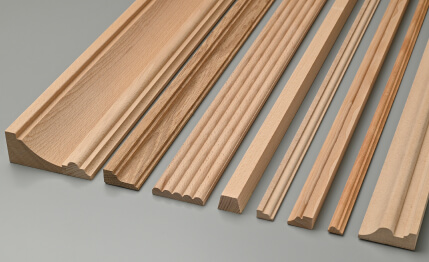
- Wooden ceiling skirting boards
- Paintable MDF skirting boards
- Polyurethane Ceiling Profiles
- Polystyrene Ceiling Cornices and Skirting
- How to choose ceiling skirting by material
- When wood is better
- When MDF is more convenient
- When is polyurethane best
- When polystyrene is more cost-effective
- How to choose a ceiling skirting board by width and profile
- Narrow profile for low ceilings
- Medium universal profile
- Wide skirting board for high ceilings
- Smooth profile
- Decorative profile
- How to Choose Ceiling Skirting by Room Type
- living room
- for the bedroom
- For Kitchen
- For the hallway
- For apartments in new buildings
- For Country Houses
- Ceiling skirting for stretch ceilings and regular ceilings
- What to choose for a stretch ceiling
- What to choose for a painted ceiling
- What to choose for high ceilings
- What to choose for low ceilings
- What to combine ceiling skirting with in interior design
- Wall moldings
- Wooden cornices
- Slatted panels
- Polyurethane moldings
- Floor skirting in a unified interior system
- Where to buy ceiling skirting in Moscow
- Three Key Questions When Choosing a Supplier
- Delivery in Moscow
- Selection by Style and Ceiling Type
- Catalog for quick navigation
- Common Mistakes When Choosing Ceiling Skirting
- Too Narrow Profile for a High Room
- Random material selection
- Conflict with doors, door frames, and cornices
- Too complex a profile for a simple interior
- Ignoring the connection with wall decor
- Frequently Asked Questions
- Conclusion

Buying a ceiling skirting board in Moscow is a decision made last, when the budget is almost exhausted and you finally want to breathe a sigh of relief. But it is this decision that determines the final appearance of the space. The right ceiling skirting board for Moscow is not just an architectural detail. It is the point at which the interior is either completed or remains unfinished.
This article is strictly practical: which ceiling skirting board to choose for a specific interior, material, style, and room. Without lyrical digressions, with specific recommendations and links to a real catalog.




Ceiling skirting board in Moscow: which option to choose for your interior
Purchaseceiling skirting boards— is not a search for the 'most beautiful' in the catalog. It is a systematic task with three key parameters.
Parameter one: ceiling height. This is a hard constraint, not a recommendation. A wide ornamental cornice in a room with a 2.5 m ceiling creates a sense of overhang and narrows the space. A narrow cove molding with a 4 m ceiling gets lost—it simply doesn't hold the space. The width of the profile is dictated by the ceiling height, and this rule has no exceptions.
Parameter two: ceiling type. A stretch ceiling—special installation conditions. Painted drywall—different ones. A wooden ceiling in a country house—yet others. The material and method of attaching the baseboard change depending on what exactly the craftsman is working with.
Parameter three: interior style. Classic, Scandinavian minimalism, neoclassical, loft, Provence—each style has its own requirements for the profile, width, and material of the ceiling baseboard.
Ceiling baseboards in Moscow—it's a market with dozens of materials and hundreds of profiles. But the real choice is always between four options: wood, MDF, polyurethane, polystyrene. And each of them is correct—in its own context.




What ceiling baseboards can you buy in Moscow
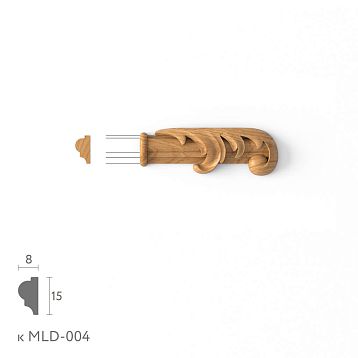
Our factory also produces:


Wooden ceiling skirting boards
Wood on the ceiling is a statement. Not just a finishing element, but a material choice that says: naturalness is valued here, and the interior is built on it.
Wooden ceiling skirting boardIt possesses several properties unattainable in polymers: the living texture of the grain, a warm shade that changes depending on the lighting angle, the tactile density of the surface. Wood ages with dignity—it darkens, gains richness, and fits organically into an interior that also accumulates history.
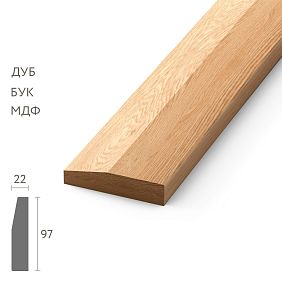
Solid wood skirting boards and battensThey are made from oak, beech, ash, pine. Oak is the densest and most durable, with an expressive grain pattern. Beech is uniform, takes staining perfectly. Pine is lightweight and affordable, with a characteristic resinous texture.
Buying a wooden ceiling baseboard is the right choice when:
-
Parquet, engineered board, or wooden ceiling beams require a system made of the same material.
-
Classic, neoclassical, or 'warm' interior — with a predominance of natural surfaces
-
Tinting needed while preserving visible texture: oil, wax, clear stain
-
Space — a country wooden house with exposed structures
-
Long-term project: the wooden profile is not replaced — it is sanded and renewed
Important: buying a solid wood ceiling skirting board means considering installation. Wood is heavier than polystyrene. It holds worse on liquid nails alone. A combination of construction adhesive and finishing nails is recommended — especially on drywall.
Get Consultation
Baseboard — it is a modest detail, often unnoticed, but plays a critical role in creating the completeness of the interior.
MDF is the same as wood, just without natural randomness. A pressed board with a uniform, dense structure, no knots, no pores, no tonal variation. It is this predictability that makes MDF profile an ideal base for acrylic painting.
Buying a white MDF ceiling skirting board is a solution for monochrome interiors, where a white ceiling, white walls, and white skirting board form a single, clean field. In Scandinavian and minimalist apartments, the white MDF skirting board 'dissolves' at the junction, not attracting attention — and this is exactly the result needed.
When to buy an MDF ceiling skirting board:
-
Painting in an exact color (NCS, RAL, Pantone) — a textureless surface reproduces the color honestly
-
Scandinavian or contemporary style — white or monochrome system
-
Dry room: bedroom, living room, study
-
Clear, smooth geometry with no hint of natural texture
-
Large footage — MDF is cheaper than solid wood with the same profile
MDF is a non-moisture-resistant material. Not suitable for kitchens with steam, hallways with condensation, or bathrooms — absolutely not.
Polyurethane ceiling profiles
Polyurethane — architectural decor in an affordable version. This material allows reproduction of rich classical profiles with ornamentation, acanthus, egg-and-dart molding, or Greek meander — without the budget for handcrafted plaster molding and without waiting for a master plasterer.
polyurethane decorForms with high detail: complex relief is reproduced accurately, repeated serially, and does not lose shape. At the same time, the weight of the polyurethane profile is minimal. A wide decorative cornice of 150 mm easily holds with adhesive without additional fasteners.
Buying polyurethane ceiling skirting — the right choice for:
-
Classical and neoclassical interiors with high ceilings (from 3 m)
-
Rich decorative programs: ornamental cornices, rosettes, corner blocks
-
Kitchens and rooms with high humidity — polyurethane is moisture-resistant
-
Large areas with high ceilings — profile width from 100 to 200 mm
-
DIY installation — lightweight, special adhesive, no assistant needed
Polystyrene ceiling cornices and skirting boards
Polystyrene is the most common material for ceiling skirting in Moscow residential construction. Lightweight, easy to work with, widely available in any heights and profiles.Polystyrene ceiling skirting boards— a choice that covers most needs for standard apartments.
Ceiling cornice made of polystyrene— profiles from 40 to 170 mm and above, primed surface for acrylic paint, smooth and textured options. Cuts with a regular hacksaw or utility knife. Adheres with special adhesive or liquid nails in one go without an assistant.
More about choosingpolystyrene ceiling skirting— in a material that covers aesthetics, installation, and service life.
Polystyrene is for:
-
standard apartments with ceilings 2.5–3 m
-
Large square footage on a limited budget
-
White color scheme interiors — Scandinavian, modern, neutral
-
Quick installation without professional skills
-
Rooms with moderate humidity — kitchen is acceptable with good ventilation
How to choose a ceiling skirting board by material
When wood is better
Wood — when the interior speaks the language of natural materials. Oak parquet, wooden doors, wooden beams or wall paneling — and ceiling skirting made of the same wood completes the system. One material from top to bottom: the space feels cohesive.
It makes sense to buy wooden ceiling skirting if:
-
The room is dry: country house, living room, study, bedroom
-
Tinting should preserve the texture — no substitute can provide this
-
The interior is 'authentic' — not wood-like, but made of wood
-
The project is designed for 20–30 years without fundamental renovation
When MDF is more convenient
Buy Ceiling SkirtingMDF is reasonable when the only requirement is a perfect surface for painting. Exact color without texture. Scandinavian white monochrome. Modern minimalism with geometrically precise lines.
MDF is not suitable for wet areas. But in a dry living room or bedroom, it is one of the best options for painting: the surface accepts acrylic enamel evenly, the color reproduces accurately, without adjustments for texture.
When polyurethane is better
It's worth buying a polyurethane ceiling skirting when you need a rich, relief profile — and the budget doesn't allow for hand-molded plaster. Or when the room is damp: polyurethane does not deform from steam and condensation.
For apartments with ceilings from 3 m and classic interiors — a polyurethane cornice 120–180 mm wide with an ornament. This is the case when the material works for the architectural scale of the space.
When polystyrene is more advantageous
Polystyrene is a practical choice for most situations: a standard Moscow apartment, moderate budget, neutral interior, large area. Buying an expensive polyurethane profile for a 14 m² room with a 2.7 m ceiling is excessive. Buying a ceiling skirting made of polystyrene is rational.
How to choose a ceiling skirting board by width and profile
Narrow profile for low ceilings
Up to 50 mm. The only correct choice for rooms with ceilings up to 2.5 m. A narrow profile closes the joint and fades into the background — exactly what is needed in small spaces where every centimeter of height counts.
Buy a narrow white ceiling skirting — for Khrushchyovkas, compact apartments, small bedrooms. A smooth profile in the color of the ceiling: it is present, but does not announce itself.
Specifically: 30–40 mm for a ceiling of 2.4–2.5 m. 45–55 mm for a ceiling of 2.5–2.7 m.
Medium universal profile
60–100 mm. The range that works for most Moscow apartments with ceilings of 2.7–3 m. Wide enough to be read as a decorative element. Modest enough not to loom.
This is the best-selling format of ceiling skirting in Moscow — and not by chance. It is stylistically neutral: works in Scandinavian, modern, neoclassical interiors depending on the choice of profile (smooth or figured) and material.
Wide skirting board for high ceilings
From 100 mm.Buy wide ceiling skirting board— for apartments with ceilings from 3 m, for mansions, apartments, historical buildings.
A wide profile creates a horizontal belt at the base of the ceiling, which structures the vertical space. With a 3.5 m ceiling, a 150 mm profile is a large-scale architectural solution, not just a 'wide molding'. It sets the visual height from which the ceiling begins and creates a sense of a well-arranged, lived-in space.
Smooth profile
Triangular molding or quarter-round without relief. A universal tool — equally appropriate in Scandinavian minimalism and moderate neoclassicism when executed in white.
Buy smooth ceiling skirting for painting — for those who want to close the seam without decorative pretensions. The smooth surface is easy to paint, easy to clean, and does not collect dust in relief grooves.
Decorative Profile
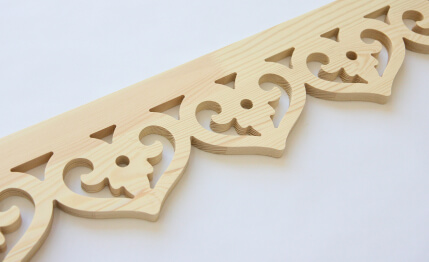
Figurative skirting with a ledge, a round, an ornamental belt. This is a decorative detail with its own character that changes the architectural tone of the space.
Decorative profile requires a system: moldings on walls, door trims, floor skirting of the corresponding level. Without this system, a rich ceiling cornice looks like random luxury in a poorly thought-out interior.
Comparison table:
| Profile width | Ceiling Height | Style | Material |
|---|---|---|---|
| 30–50 mm | up to 2.6 m | Modern, Scandinavian | MDF, polystyrene |
| 60–80 mm | 2.6–3 m | Any neutral | MDF, polystyrene, wood |
| 80–120 mm | 3–3.5 m | Neoclassical, classic | Polyurethane, wood |
| 120–200 mm | from 3.5 m | Classic, historical | Polyurethane, wood |
How to choose ceiling skirting for a room
For the living room
The living room is the main hall. Here, the ceiling cornice carries a decorative load, not just a technical one. It is visible from multiple angles, under different lighting, and at different times of day.
For a living room with a ceiling height of 2.7–3 m, use a medium profile of 80–100 mm. Smooth white for Scandinavian and contemporary styles. Stepped profile for neoclassical. Ornamental polyurethane for classic. Wooden to match the parquet for a 'warm' natural interior.
Buy a ceiling cornice for the living room as part of a system with the floor skirting:baseboardfrom the same collection completes the vertical wall system—from floor to ceiling.
For the bedroom
The bedroom is a space of tranquility. An elaborate, ornate cornice is inappropriate here: it creates a sense of decorative overload, not coziness.
For the bedroom, use a 50–70 mm profile, smooth, white or matching the wall color. Material: MDF for painting or polystyrene. If the bedroom has a wooden floor and wooden doors, a wooden ceiling cornice in a light tint will provide the desired warmth.
For Kitchen
The kitchen is an area with constant steam, grease, and wet cleaning. MDF in the kitchen will swell. Untreated wood will too. Polystyrene and polyurethane are the correct choices.
For the kitchen, use a smooth polystyrene or polyurethane profile, 50–70 mm. The smooth surface is easy to clean. Moisture resistance of the material is a mandatory requirement, not an option.
For the hallway
The hallway is compact, with intensive cleaning and variable humidity. Use a narrow or medium profile (40–60 mm), moisture-resistant, smooth. Installation must be reliable: in the hallway, the cornice endures mechanical stress during cleaning.
For an apartment in a new building
A standard Moscow new-build apartment with a ceiling height of 2.7–3 m, light neutral walls, and finished decoration—a universal scheme: polystyrene 60–80 mm, smooth or with one step, in white or for painting. Purchasing as part of a system with floor skirting from the same collection—and the apartment looks complete, not 'hastily done'.
For a country house
A country house is a special context. Exposed beams, timber, natural plank—a wooden ceiling skirting made of solid oak or pine. A polymer profile next to an exposed wooden structure is a material dissonance that all guests notice.
For a wooden house—solid wood millwork—matching or contrasting with the structural wood. Profile height—from 80 to 120 mm depending on ceiling height.
Ceiling skirting board for a stretch ceiling and a regular ceiling
Ceiling type is not just a decorative issue. It is a technical parameter that affects installation, material choice, and possible profile width.
What to choose for a stretch ceiling
Stretch ceiling—a PVC or fabric membrane stretched between wall profiles. The joint between the membrane and the wall is where the skirting is installed.
A crucial point: for a stretch ceiling, choose a lightweight profile. Polystyrene or polyurethane—ideal. Wooden—with additional fasteners, only on a level base.
When buying a ceiling skirting for a stretch ceiling, plan accordingly: the profile is installed before stretching the membrane or specially selected for mounting over the batten. Check with the installer: sometimes the skirting is placed after stretching—then minimal load on the wall is important.
Optimal choice: smooth polystyrene profile 50–80 mm. Lightweight, installed with adhesive without loading the membrane, easily painted any color.
What to choose for a painted ceiling
Painted drywall ceiling—a classic of Moscow renovation. Here, the skirting works on a clean painted surface, where any unevenness of the adhesive seam and any deviation from a straight line is visible.
For a painted ceiling—MDF for painting to match the ceiling (the seam 'dissolves'), or a wooden contrast profile (dark wood on a white ceiling). Installation must be precise: the adhesive under the profile—even, without voids.
What to choose for high ceilings
A ceiling height of 3.2 m requires a wide profile—this is not a decorative solution, but an architectural one. A narrow cornice on a high ceiling fails to anchor the space: it disappears within the vertical scale.
For high ceilings —Polystyrene CorniceA width of 100 mm or more, or a polyurethane ornamental cornice of 140–200 mm. A wide horizontal band at the base of the ceiling structures the space, adds architectural weight, and sets the scale.
What to choose for low ceilings
A ceiling of 2.4–2.6 m calls for a minimalist approach. A narrow, smooth profile of 30–50 mm. White—to match the ceiling. No reliefs, no ledges, no shaped sections.
A key technique for low ceilings: a skirting board in the color of the ceiling 'raises' the visual height. A dark skirting board on a light ceiling, conversely, lowers it. Choose white or neutral.
What to combine ceiling skirting with in interior design
The ceiling skirting board is the first element of the wooden system. The second is everything that creates a unified whole with it.
Wall moldings
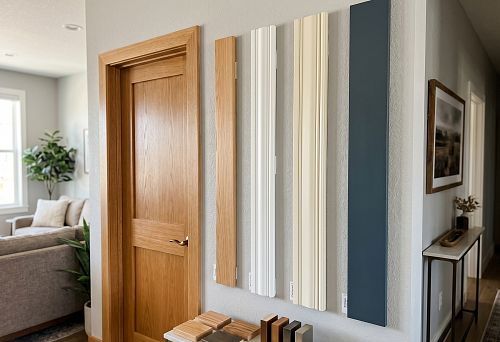
Wood and MDF moldings and cornices—horizontal and vertical frame profiles that create decorative panels on the walls. Together with the ceiling skirting board, they form an architectural system: the skirting board finishes the ceiling, the moldings frame the walls, and the baseboard finishes the lower part.
Three levels of decor—three encircling elements. The wall becomes not just a 'painted surface,' but an architecturally designed plane with rhythm and structure. This is precisely what distinguishes an interior with a design concept from a random assortment of furniture.
are decorative elements that cover the joints between walls and ceilings, creating smooth lines and visually increasing the height of the room. They give the interior a finished and special charm, making it more refined and expressive.
If the ceiling skirting board is wooden, then a curtain rod made of the same material is a mandatory element of the system. A wooden curtain rod next to a wooden ceiling profile—a unified horizontal line at the base of the window and at the base of the ceiling.
Wooden trim—in a unified line—skirting board, curtain rod, moldings—creates that integrity which cannot be 'added' after the renovation is complete.
Rack panels
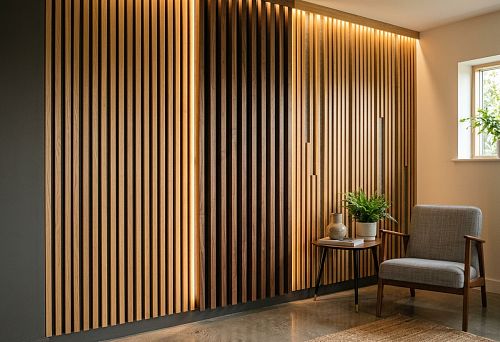
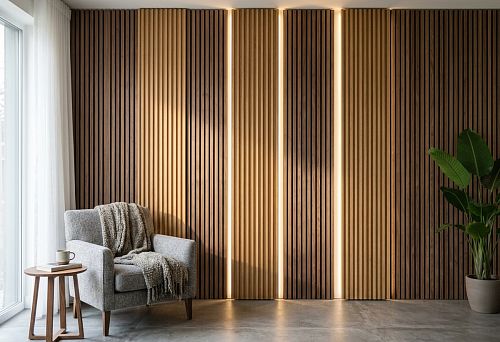
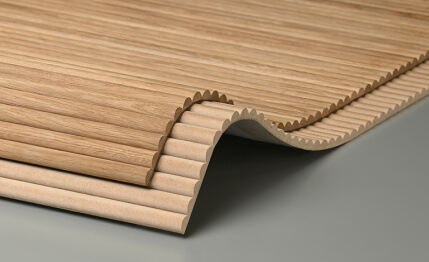
Slatted panels made of natural wood—vertical wooden profiles fixed to the wall. They create a textured pattern that combines organically and unintentionally with the wooden ceiling skirting board.
Wooden ceiling skirting + slatted wall panels + wooden floor skirting = a closed natural system. Walls are framed with slats, the ceiling is finished with wood, the floor holds the same material from below. In such an interior, wood is not an 'accent' but a linguistic environment.
Polyurethane Moldings
Polyurethane Decor— corner blocks, rosettes, central medallions, brackets — elements that complement the ceiling cornice in classic and neoclassical interiors.
A corner block at the junction of two cornice profiles is not just a beautiful detail. It is a professional solution for a complex corner without a 45° miter cut. A ceiling medallion under the chandelier is the architectural center of the room. Together with a wide ornamental cornice, they transform an apartment into a space with historical character.
Floor baseboard in a unified interior system
Ceiling and floor skirting are two horizontal elements that hold the vertical surface of the wall. When they are made of the same material and from the same line, the wall is perceived as architecturally complete. When they are different, there is a feeling that the top and bottom were done at different times by different people.
baseboardfrom the same series as the ceiling one — is not perfectionism. It is the minimum condition for a unified interior.
Where to buy ceiling skirting in Moscow
Three key questions when choosing a supplier
Is there a real warehouse? Ceiling skirting is a long-length item. Most online listings exist 'on order,' which during renovation means delays of weeks. Moreover, a batch 'on order' may differ in shade from the sample — and this will be discovered only after installation. Clarify: is the item in stock or on order?
Are samples available? The tinting of wood and the shade of 'white' MDF look different on screen than under daylight in your apartment. The ability to order a sample and hold it against the ceiling and walls is not a service option but a quality standard.
Unified line or assembled? Ceiling skirting, floor skirting, moldings, architraves — from one manufacturer or from different sources? A unified line guarantees compatibility of profiles and shades.
Delivery in Moscow
Buying ceiling skirting in Moscow with delivery to an address is a standard service if the item is in stock. Long-length trim is transported in protective packaging that prevents breakage and surface damage. Delivery time within Moscow is 1–3 business days.
Selection by style and ceiling
If you're unsure about the width or material — consult for advice. Prepare:
-
Photo of the room in daylight
-
Ceiling height
-
Ceiling type (stretch / painted drywall / concrete)
-
Flooring and door materials
-
Interior style
It takes 15 minutes — and you'll get a specific recommendation, not a set of options.
Catalog for quick navigation
Common mistakes when choosing ceiling skirting
Too narrow a profile for a high room
A 3.5 m ceiling with a 40 mm cornice is perhaps the most common mistake in expensive Moscow apartments with high ceilings. A thin horizontal line at the base of a high ceiling visually 'doesn't hold': the space seems unfinished, the ceiling appears to float without a frame.
The rule of proportion: the width of the baseboard is proportional to the height of the ceiling. For a 3.5 m ceiling — from 120 mm. For a 4 m ceiling — from 150 mm. This is not an aesthetic whim, but a matter of architectural proportions.
Random choice of material
MDF in the hallway — and within six months, the swollen bottom edge. Polystyrene molding in a classic interior — and a feeling of mismatch that's impossible to explain to guests, but everyone senses it. Material is chosen based on operating conditions and style — not on the principle of 'what was left over after the renovation.'
Conflict with doors, door frames, and cornices
Three different shades of 'white' in one room: a white MDF baseboard at the ceiling, a milky door frame, and a cream curtain cornice — these are three different whites that create an unpleasant dissonance. In a white monochrome interior, all elements should be from the same system and the same manufacturer.
Too complex a profile for a simple interior
A rich Baroque cornice with ornament in an apartment with laminate flooring, plastic doors, and IKEA furniture — it's like wearing a carnival costume to a business meeting. The level of ceiling baseboard decoration should match the level of the entire interior. When one element 'shouts' and the others are silent — the result is worse than if the ceiling baseboard had been modest.
Ignoring the connection with wall decor
A ceiling baseboard without matching moldings, cornices, and floor baseboards from a unified line is an answer to the question 'how to cover the seam,' but not an answer to 'how to create an interior.' If the goal is a space with character, not just a finished renovation — buy a system, not a separate part.
Frequently asked questions
Which ceiling skirting board is best to buy in Moscow?
Depends on the task. Polystyrene — for most standard apartments: affordable, practical, wide range of profiles. MDF — for a white monochrome system for painting to an exact color. Polyurethane — for rich decor and high ceilings. Wood — for a natural interior with parquet or wooden structures.
What width of ceiling skirting board to choose?
Formula: 1/40–1/50 of the ceiling height. For a 2.7 m ceiling — 55–70 mm. For a 3 m ceiling — 60–75 mm. For a 3.5 m ceiling — 85–90 mm. For a 4 m ceiling — 100 mm and above.
Ceiling skirting board for a stretch ceiling — what to choose?
Light profile: polystyrene or polyurethane. Mounted to the wall below the mounting profile of the stretch ceiling. Width — moderate, adhesive — without load on the stretch ceiling fabric.
Can I install a ceiling skirting board myself?
Polystyrene and polyurethane — yes. Cut with a saw, glued with special adhesive or liquid nails. Wooden profile — with an assistant: need to hold the plank until the adhesive sets. Plaster — only professionals.
What to use to paint an MDF ceiling skirting board?
Acrylic primer (2 coats with full drying of each) → acrylic paint (2 coats with a thin velour roller). Without primer — uneven absorption of paint and streaks after a year.
How to calculate the amount of ceiling skirting board needed?
Perimeter of the room (sum of all walls) plus 10–15% for trimming. For corner joints — either cutting at 45°, or polyurethane decorative corner blocks (simpler and neater).
White ceiling skirting board — to match the walls or the ceiling?
For low ceilings — match the ceiling: the joint 'dissolves,' the ceiling visually rises. For high ceilings — you can match the walls: it creates a clear horizontal belt. For a contrasting accent — wooden on a white ceiling.
How to choose a ceiling skirting board for a classic interior?
Polyurethane or wooden profile from 100 mm with a figured cross-section. Included — corner blocks, wall moldings, decorative elements from the same line. Ceiling height — from 3 m.
Ceiling skirting board and ceiling cornice — what's the difference?
Skirting board — a profile that covers the joint between the ceiling and wall. Cornice — a wide decorative belt with a protrusion that can hide lighting. In classic style, both are used: cornice as a decorative element, skirting board as a technical one.
How to attach a wooden ceiling skirting board?
Construction adhesive for wood + finishing nails into the wall at an angle. On drywall — anchors into the drywall frame profile. Only on adhesive without anchors, a wooden profile holds worse than polyurethane — due to greater weight.
Conclusion
Ceiling skirting board in Moscow — the choice that literally completes the renovation. The last horizontal line before the room can be called finished. And that's exactly why there's no place for random decisions here.
Working selection scheme:
-
Ceiling height → profile width
-
Room type → material (dry = wood or MDF; wet = polyurethane or polystyrene)
-
Interior style → profile type (smooth, figured, ornamental)
-
System → unified line with skirting board, moldings, architraves
Go to the catalog and select:
STAVROS company is a Russian manufacturer of interior decor made from natural wood, MDF, and polyurethane. The STAVROS range includes ceiling skirting boards and cornices made of oak and beech, the HI WOOD line made of high-density polystyrene (40–170 mm), polyurethane decorative profiles for ceilings and walls, moldings, paneling, floor millwork — a complete wooden system for any interior.
STAVROS works with private clients, designers, architects, and construction companies. Delivery in Moscow from stock — 1–3 business days in protective packaging for long-length millwork. Free consultation on selecting skirting boards based on ceiling height, room type, and interior style.
Buy ceiling skirting board in Moscow with quality guarantee, real warehouse, and professional system selection — STAVROS.