Article Contents:
- Handing over a warehouse is not a routine inventory count
- First, we set the handover checkpoint
- Why a date without a time is not enough
- Why codes must not be renamed on the day of handover
- When the sectional method is not suitable
- Why there should be only one "current table"
- Step 1. Close all movements by 18:00
- Step 2. Count the central warehouse by SKUs and statuses
- Step 3. Confirm distributed material
- Step 4. Check open purchases
- Step 5. Generate a balance for each SKU
- Step 6. Do not close the MLD-B discrepancy with an artificial adjustment
- Step 7. Hand over quarantine and disputed MLD-C physically
- Step 8. Verify immediate needs before signing the handover
- Step 9. The new responsible person receives not a "warehouse figure" but a set of states
- Step 10. A week later, verify the quality of the handover
- The first rule after the handover — do not mix confirmed and unconfirmed
- The second rule — an open order is closed only by actual acceptance
- The third rule — a discrepancy does not dissolve after a period change
- How to tell a month later that the handover process was high-quality

The project has been running for four months already. The central warehouse holds full-length skirting boards, moldings and cornices, several packs are in quarantine, part of the material has been issued to the second and third floors, a separate installation reserve is assigned to the current phase, the operational reserve must remain untouched after handover, and usable offcuts are distributed across different zones. In parallel, a reorder has already been placed with the supplier and has not yet arrived.
The storekeeper or site foreman who managed all this movement from the start of the project is leaving. The new person in charge receives a table that says: “PLT-A — 168 pcs.” But this single number does not explain where the 168 items are physically located, how many of them are full-length, how many have already been issued to the floors, what belongs to the reserve, which packs are on hold, and how many have already been ordered but are still in transit.
A week later, the new employee sees only 40 planks in the central warehouse and decides that there is not enough material. He places a new reorder. It then turns out that another 56 planks were on the floors, 12 were in the operational reserve, and 24 were already on their way from the supplier. The error did not arise from incorrect storage. It arose at the moment responsibility was handed over.
Therefore wholesale building materials warehouse when the person in charge changes, you cannot hand over with the words “everything is in the table.” You need a fixed point in time, a short pause in movement, a physical reconciliation by SKU and storage locations, handover of all restrictions and open purchases, and every unresolved discrepancy must get its own owner.
OLD PERSON IN CHARGE → CONTROL POINT → MOVEMENT PAUSE → BOOK BALANCE → PHYSICAL RECOUNT → MATERIAL ON FLOORS → QUARANTINE → RESERVES → OPEN ORDERS → DISCREPANCIES → HANDOVER REGISTER → NEW PERSON IN CHARGE
Main principle: the documentary balance does not equal the physical balance accepted by the new person in charge.
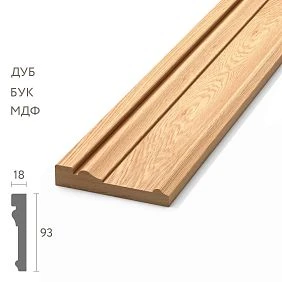
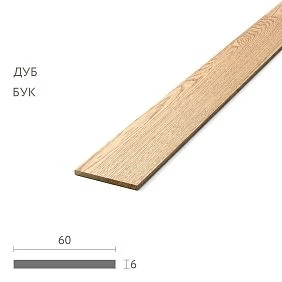
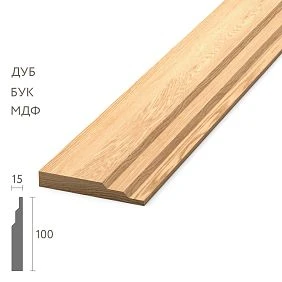
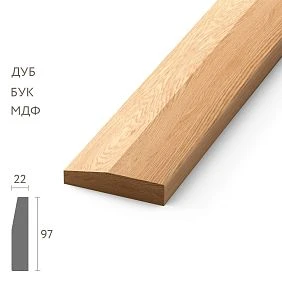

Warehouse handover is not a regular inventory count
An interim inventory count answers the question: does the accounting match reality? A handover of responsibility answers a broader question: what exactly is the new person taking under their management at a specific point in time.
Beyond physical goods, you need to hand over material already issued to floors, room kits, installation reserve, operational reserve, usable offcuts, quarantine items, unidentified products, open claims, expected replacements, and supplier orders that have not yet arrived.
A regular recount can end with the phrase “two MLD-A are missing.” A handover cannot. You need to determine who will continue searching for those two planks after the change of responsible person, what deadline is set, and whether the handover can be considered complete without them being found.




First, we set the handover checkpoint
The handover must have an exact date and time. For example: September 18, 18:00 — warehouse handover checkpoint. All operations before this moment belong to the old responsible person’s period. All operations after belong to the new one’s.
Without such a point, a gray gap appears: one crew took material in the morning but recorded it in the evening; a return from the floor physically arrived at the warehouse but has not yet been entered; a supplier’s vehicle was unloaded during the recount; a pack was moved from quarantine to the regular zone, but the status was not updated.
The checkpoint separates two histories. It does not have to coincide with the end of the workday, but it must be known to all participants in advance.
Our factory also produces:







Why a date without a time is insufficient
At an active site, several issues and returns can occur in a single day. The entry “handed over on September 18” does not make it clear whether movements at 14:00 and 17:30 should be included. An exact time removes the ambiguity.
Get Consultation
It is better to pause movement during the recount
If the warehouse is being counted at the same time, an installer is taking eight planks, another crew is returning three, and the supplier's vehicle is bringing a new batch, it is almost impossible to get a reliable result.
A short controlled pause is needed. This does not necessarily mean stopping the site for a whole day. For a prepared warehouse, a coordinated window is enough, during which regular issues are not performed, returns are not accepted without separate recording, bundles are not moved between floors, and a new delivery is either received before the control point or after it.
If installation cannot be stopped even briefly, the warehouse can be counted by zones with each zone closed sequentially. But then the boundary of time and completeness must be defined separately for each area.
What to close before the control point
| Movement type | What to Check | Why |
|---|---|---|
| Issuance | All actually issued planks are entered | Otherwise the warehouse will show a false negative |
| Return | Returned material is accepted and marked | Otherwise it exists physically but is missing from the records |
| Transfer | Floor or zone change reflected | Otherwise the material will be searched in the wrong place |
| Receipt | Last delivery closed as actual | Otherwise the order may be repeated |
| quarantine | Reason and quantity are up to date | Material cannot be considered free |
| Write-off | Damaged items separated and documented | Defects cannot be transferred as available stock |
The main rule: no "we took it yesterday, we'll record it later." Everything that happened before the checkpoint must be recorded or explicitly documented as an open exception.
Material on the floors still belongs to the project
The most common mistake of a new responsible person is to look only at the central warehouse.
For example, the records for PLT-A show 96 pcs. 40 were found in the central warehouse. At first glance, the shortage is 56. But on the second floor there are 32 planks, and on the third floor — 24. The material is not lost. It is distributed across the site.
PLT-A → CENTRAL WAREHOUSE / FLOOR 2 / FLOOR 3 / ROOM SET / QUARANTINE / INSTALLATION RESERVE / OPERATIONAL RESERVE / IN TRANSIT FROM SUPPLIER
Therefore, the total project stock must be represented as a combination of SKU, location, and status.
Location codes simplify handover
| Code | Zone |
|---|---|
| WH | Central warehouse |
| E02 | Second floor |
| E03 | Third floor |
| K201 | Room 201 set |
| QUAR | Quarantine / on hold |
| MR | installation reserve |
| ER | operational reserve |
Entry PLT-A / E02 / 32 pcs. / crew A more useful than the phrase “the baseboard is somewhere on the second floor.”
Why codes cannot be renamed on handover day
Old statements and documents refer to existing designations. If a new storekeeper immediately turns “E02-KAR” into “Zone 7,” the history breaks. The new system can be introduced later through a mapping table.
We count wooden baseboards in whole units
For transferring responsibility Wooden baseboard it is better to count in actual product units.
Not “approximately 280 meters,” but: PLT-A / oak / commercial length to order / 116 whole planks. Linear meters can remain a reference value, but the new responsible person accepts a specific number of items.
After several floors, the warehouse already has a mix of whole planks and usable offcuts. The meters may add up, but the number of whole items suitable for long walls will be different.
We do not store usable offcuts together with whole planks
The warehouse has 20 whole PLT-A and 17 usable PLT-A offcuts. The entry “PLT-A — 37 pcs.” is incorrect.
| Article | Category | Quantity | Additional parameter |
|---|---|---|---|
| PLT-A | Whole products | 20 | commercial length |
| PLT-A | Usable offcuts | 17 | Actual length of each or of a group |
A 600 mm offcut is not equal to a whole plank just because both are counted as one piece.
Wholesale building materials depot: we transfer reserves separately
If wholesale building materials warehouse serves an existing facility; the new responsible person must separately accept the installation and operational reserves.
| Fund | Purpose | Can it be issued to current installation? |
|---|---|---|
| installation reserve | Risks of current work and local rework | According to project rules |
| operational reserve | Repair after facility handover | Not without a separate decision |
Physically, both funds may be stored in the same room. Managerially, these are different balances. The previous responsible person could have temporarily used part of the installation reserve or moved the operational stock to another area, so the old figure must be confirmed physically.
The operational reserve is not free stock
If the new foreman sees 12 PLT-A on the shelf and does not know their status, he may issue them to the crew. Physically, the planks were there. Managerially, the operational reserve is gone.
The entry must be explicit: PLT-A / ER / 12 pcs. / DO NOT ISSUE WITHOUT APPROVAL.
We recount similar moldings separately
Wooden moldings they may look similar, especially if the packaging is opened and remnants of several SKUs are lying nearby.
The entry “moldings — approximately 80 pcs.” is not acceptable for handover. Exact lines by SKU, materials, lengths, and condition are required.
If the SKU cannot be identified with confidence, the material is not mixed with the confirmed stock.
There are few cornices — so they are easier to check piece by piece
wooden cornice it is often present in smaller quantities than skirting or molding. A low quantity does not mean low importance.
One missing cornice can block the completion of a noticeable area. Therefore, during handover, it is useful to check small groups of cornices piece by piece and link them to the installation zone.
We physically recount opened packages
When wholesale building materials depots they work with long-length goods, the degree of trust in sealed marked packaging versus an opened pack differs.
Unopened pack: MLD-A / 12 pcs. / marking intact. Opened: MLD-A / 10 pcs. per old record. The second requires a physical recount.
Sealed packages: when marking is sufficient
If the packaging is intact, the identifier is unambiguous, and the internal quantity is confirmed by the packaging system, the recount can be simplified. But if in doubt, the group receives the status "CHECK".
Reasons for checking: broken film, damaged label, signs of prior opening, discrepancy with the old inventory sheet, mixing of similar SKUs.
Stock reliability status
| Status | Meaning |
|---|---|
| Confirmed | Physically recounted and identified |
| FULL PACKAGE / MARKING CONFIRMED | Quantity accepted based on unambiguous packaging |
| Check | There is doubt about quantity or identification |
| NOT IDENTIFIED | The item code cannot be determined with certainty |
This way, the new responsible person sees not only the number but also the quality of the evidence behind it.
Unidentified material is not considered free stock
Bad line: other moldings — 7 pcs.. It helps neither procurement nor installation.
Unidentified items are moved to a separate zone and checked against profile, cross-section, material, length, drawings, samples, supply history, and remaining markings.
Until identified, they are not considered available for the installation queue and do not reduce the calculated shortage.
Construction material warehouses: quarantine is handed over as strictly as free stock
If building material depots contain suspended items; the new responsible person must physically see each such group and understand the reason for the restriction.
For example: MLD-A / 6 pcs. / QUARANTINE / packaging damage / inspection not completed.
The actual quantity, location, reason for suspension, photos or report, next action, and the person responsible for the decision are handed over. Otherwise, within a week the pack will stop being distinguishable from ordinary material and will accidentally go into installation.
We hand over not only the goods, but also the open issues
Open issues may include a claim for the batch, a shortfall of two cornices, an expected replacement of damaged items, inspection of an unknown molding, an unclosed return from the crew, a decision on the quarantine pack, and reconciliation of installation reserve consumption.
PHYSICAL STOCK + ALLOCATED MATERIAL + RESERVES + QUARANTINE + OPEN PURCHASES + CLAIMS + DISCREPANCIES + UNCLOSED ACTIONS
The new responsible person must receive not only the remaining stock but also the open history of that stock.
Open supplier orders are included in the handover
At the site, there are physically no 24 PLT-A and 10 KZ-B, but they have already been ordered and confirmed by the supplier. If the new employee sees only the physical warehouse, they will conclude that this is a shortage.
| Order | Article | Quantity | Status | Lead Time | Purpose |
|---|---|---|---|---|---|
| ЗП-038 | PLT-A | 24 | In production | 25.09 | Floor 3 |
| ЗП-039 | KZ-B | 10 | Preparing for shipment | 27.09 | Lobby |
This is goods that do not yet exist physically but can no longer be considered an open procurement need.
Why it is especially easy to place a double reorder when changing personnel
The classic scenario looks like this. The new employee sees: KZ-B in stock = 0. He doesn't know that PO-039 / KZ-B × 10 / confirmed / in transit, and orders ten more. A week later, twenty arrive at the site.
That is why physical stock and open purchases must be transmitted as a single event. A separate purchaser's registry without a link to the warehouse does not protect against duplicate purchases.
Separate real shortage from the already purchased volume
| Category | Meaning | Need to buy? |
|---|---|---|
| Real shortage | Demand not covered by stock, allocation, and open orders | Yes, after verification |
| Open order | Item has already been ordered but not yet received | No |
| In transit | Item has been shipped but not yet arrived | No |
| quarantine | Physically available but not yet usable | Resolve the status first |
Absence on the shelf is not sufficient grounds for a new order.
What to communicate for each open order
Minimum set: order number, supplier, SKU, material and finish, quantity, current status, confirmed lead time, supplier contact, zone assignment, and action upon arrival.
If the order is related to a warranty replacement, this must be visible separately. A replacement should not look like a regular commercial reorder.
Warehouse and purchasing are two sides of the same handover
Even if the new storekeeper is only responsible for physical material, the result of the handover must be visible to the purchaser. And vice versa: if the purchaser changes, they must know the actual state of the warehouse.
Otherwise, the warehouse sees the balance, procurement sees the demand, but the numbers do not match.
A good handover connects:
physical warehouse → allocation → open purchases → remaining demand.
Project balance after handover
| Article | Warehouse | On floors | Installation reserve | Operational reserve | Quarantine | Open order |
|---|---|---|---|---|---|---|
| PLT-A | 122 | 42 | 8 | 12 | 4 | 24 |
| MLD-A | 61 | 25 | 6 | 10 | 0 | 0 |
| KZ-A | 22 | 8 | 2 | 2 | 2 | 0 |
This line is far more useful than a single total figure of “balance 188.”
What to do with a detected discrepancy
According to MLD-A records, there should be 48. Physically and by distribution, 46 were found.
You cannot close the transfer with the phrase “two are missing, we'll find them later.”
A separate discrepancy is created: RSH-01 / MLD-A / −2 pcs.. Then the latest issues, floors, room sets, returns, quarantine, damaged material, errors in the old ledger, and open deliveries are checked.
If it cannot be found immediately, the discrepancy is handed over to the new responsible person as an open action.
The previous responsible person must not correct the number just for a nice match
Records show 48. Physically, 46 were found.
A bad solution: change 48 to 46 in the table and announce that everything matches. The history disappears, and the cause remains unknown.
More correctly: ACCOUNTING 48 / ACTUAL 46 / DISCREPANCY −2. After investigation, the system is adjusted indicating the reason.
Every discrepancy must have an owner
| Code | Article | Discrepancy | Reason | Who investigates | Lead Time |
|---|---|---|---|---|---|
| DSC-01 | MLD-A | −2 | Not established | New responsible person + floor foreman | 20.09 |
| DSC-02 | PLT-B | +1 | Return not closed | Storekeeper | 19.09 |
Without an owner, a discrepancy turns into a permanent “we’ll sort it out later.”
What exactly the new responsible person takes over
The legal form depends on company rules. But operationally, the new person must confirm that as of the specified date and time they accepted physically verified balances, distribution by floors and sets, reserves, quarantine, unidentified material, open purchases, claims, discrepancies, open actions, and the storage code system.
A signature under a table with a single total figure without these statuses is insufficient for actually continuing the work.
Photos do not replace the handover register
A photograph is useful, but it does not confirm the quantity inside closed packs, the exact SKU of similar profiles, goods on floors, open orders, reserve, the reason for quarantine, and the expected replacement.
Therefore, a photo is evidence of the condition of a specific zone or package, not an independent inventory.
Where photo documentation is especially useful
Photos should be linked to register lines for the operational reserve zone, quarantine packs, large curtain rods, damaged packaging, unidentified material, expensive small SKUs, and open claims.
The photo must contain context: labeling, group number, or line code.
The first day of a new responsible person: do not restructure the system immediately
A new employee often wants to "tidy things up" and create their own zones, codes, and tables. Doing this on the first day is dangerous.
First, you need to open the accepted handover register, check open actions, close critical discrepancies, check upcoming deliveries, make sure the reserve and quarantine are physically secured, and continue operations using the existing codes.
Only after stabilization can the system be improved.
Why warehouse zones cannot be renamed without a mapping table
Old documentation refers to E02-KAR. The new storekeeper renamed it to ZONE-7. Now, with the old complaint, no one understands where the material is located.
| Old code | New code | Transition date |
|---|---|---|
| E02-KAR | ZONE-7 | 25.09 |
| SKL-MR | RESERVE-MONT | 25.09 |
The history remains readable.
Construction material databases: structure of the transfer registry
If construction material databases work with a large number of items and several responsible persons, so it is convenient to divide the registry into five blocks.
| Block | What it contains |
|---|---|
| 1. Physical warehouse | Whole items, offcuts, opened packages |
| 2. Distribution | Floors, sets, crews |
| 3. Restricted funds | Quarantine, installation and operational reserve |
| 4. Open purchases | Supplier orders, replacements, deliveries in transit |
| 5. Exceptions | Discrepancies, unidentified items, open actions |
This keeps the handover compact while preserving important dependencies.
What the final register by SKU looks like
| Article | Accounting | Warehouse | On floors | Installation reserve | Operational reserve | Quarantine | Discrepancy |
|---|---|---|---|---|---|---|---|
| PLT-A | 180 | 114 | 42 | 8 | 12 | 4 | 0 |
| MLD-A | 96 | 55 | 25 | 6 | 10 | 0 | 0 |
| KZ-A | 34 | 20 | 8 | 2 | 2 | 2 | 0 |
| MLD-B | 48 | 31 | 12 | 0 | 4 | 0 | 1 |
The last line is not closed with the words “we’ll find it later.” It gets its own discrepancy code.
How to confirm material on floors
The phrase “32 planks on the second floor” must have physical confirmation. It is not necessary to recount every room again if there is an up-to-date issue sheet and a person responsible on the floor. But the handover must verify the reliability of this data.
Confirmation options: piece-by-piece recount of a large remaining quantity, handover sheet to the crew, marked room set, confirmation by the area foreman, and selective physical verification.
If the figure exists only in the old table and no one on the floor confirms it, it gets the status “VERIFY.”
Material held by installers also requires a status
Material already issued to the crew is not always physically located in one zone. Some may have been unpacked, some may have been distributed across rooms.
It is necessary to define the boundary of responsibility: what is still considered a distributed project asset, what has already been written off to installation, what should be returned after the zone is closed, and who is responsible for the remainder held by the crew.
Room kits are handed over separately
For example, for rooms 201–205, five kits have been pre-assembled. Physically they are no longer on the common shelf, but they have not yet been installed.
Useful entry:
K201–K205 / PLT-A 25 pcs. / MLD-A 20 pcs. / status ASSEMBLED / not opened.
Thus, the new responsible person will not break up sets to compensate for a general warehouse shortage without a separate decision.
The installed material is no longer a warehouse stock balance
If the issue in the old table is not yet closed, a false impression may arise that the material must be returned.
Before handover, it is important to close out the actually installed quantity and separate it from the unused remainder, usable offcuts, and material awaiting installation.
What to do if the previous responsible person has already left
The ideal process is carried out by two people. But sometimes an employee leaves suddenly.
Then a recovery handover is performed:
- establish a control point "as of now";
- pause movement during the check;
- assemble the latest available accounting version;
- physically recount the warehouse;
- confirm the distribution by floors;
- collect open purchases from email and documents;
- flag all unclear lines as exceptions;
- do not correct history without evidence.
In such a scenario, the reliability status is especially important: some data may be confirmed, while some may be reconstructed from indirect sources.
If the warehouse keeper and the purchaser change at the same time
The risk of double reordering and loss of history is higher. It is better to split the handover into two streams.
| Physical stream | Purchasing stream |
|---|---|
| Stock, zones, reserves, quarantine | Open orders, claims, confirmed dates |
| Material on floors | Expected replacements |
| Usable offcuts | Open commercial issues |
| Discrepancies | Demand not yet ordered |
After that, both flows are consolidated by item number.
Available stock must be calculated separately from physical stock
Physically existing material is not always available.
For example, there are 100 PLT-A: 20 — operational reserve, 10 — quarantine, 30 — assigned to floor 2. Available for distribution is not 100, but 40.
Working formula:
physical balance − reserved − quarantine − already allocated = available balance.
Open supplier orders are not added to the available physical balance until they are received, but they are taken into account when assessing future coverage.
When a handover can be considered complete
It is not necessary to wait until absolutely all minor discrepancies are closed. But critical exceptions must have an owner and a plan.
A handover is operationally complete if:
- the checkpoint is recorded;
- the main warehouse zones have been recounted;
- the material on the floors is confirmed;
- reserves are separated;
- quarantine transferred with reasons;
- open purchases transferred;
- unidentified material flagged;
- every discrepancy has an owner;
- the new responsible person understands the immediate next steps.
The phrase "everything matches" is desirable, but it must not be achieved by hiding discrepancies.
If the site cannot be stopped even for an hour: handover by sections
At some sites, the warehouse operates continuously: in the morning, crews receive material; during the day, returns come in; in the evening, a new delivery arrives. A full pause is impossible. In that case, the handover is carried out by sections rather than as a single general inventory count.
First, a zone is selected, for example the central rack with PLT-A and MLD-A. While it is being recounted, movement within that zone is prohibited. After reconciliation, the section receives the status "TRANSFERRED" and an exact time. Then the team moves on to the next zone.
| Section | Start time | Closing time | Status |
|---|---|---|---|
| Baseboards | 14:00 | 14:35 | TRANSFERRED |
| Moldings | 14:35 | 15:20 | TRANSFERRED |
| Cornices | 15:20 | 15:40 | TRANSFERRED |
| quarantine | 15:40 | 16:00 | TRANSFERRED |
After a section is closed, any movements already belong to the new responsible person. This approach requires discipline, but it allows the entire site to keep running.
The danger of sectional handover is moving material between an already closed and a not yet closed zone. Therefore, during the procedure, you cannot "temporarily place" a pack on the neighboring rack. Any such movement gets a separate record.
When the sectional method is not suitable
If the warehouse is heavily mixed, SKUs are located in several random places, and the movement history is unreliable, sectional handover will only create false precision. First, the material needs to be gathered by SKUs and statuses, and then the handover should be recorded.
A delivery arrived exactly at the moment of handover: how not to lose the boundary
A new vehicle may arrive at the same hour when the old and new responsible persons are counting the warehouse. If it is accepted "in between," it is unclear whether the batch belongs to the old or the new period.
The best option is to decide on one of the two scenarios in advance.
Scenario A: accept before the checkpoint. The delivery is fully unloaded, checked, entered into the records, assigned a location, and only after that does the warehouse handover begin.
Scenario B: accept after the checkpoint. The handover is closed based on the current state. The new machine becomes the first operation of the new responsible person.
An intermediate scenario is permissible only with a separate record: who physically accepted, how many places were unloaded, what has already been recounted, and at what point responsibility transferred.
| Event | Time | Responsible period |
|---|---|---|
| Start of unloading | 17:10 | Old |
| Acceptance completed | 17:45 | Old |
| Handover checkpoint | 18:00 | Boundary |
| First issue after handover | 18:20 | New |
Such a chronology is needed not for the sake of bureaucracy. It allows you to understand who should investigate a shortage of a new batch discovered the next day.
Returns from crews on the day of handover
Another complex scenario is when a crew returns leftover materials from a floor during inventory. A single cart may contain whole items, short offcuts, and unidentified planks without packaging.
You can't just put everything in the warehouse and "sort it out" later. The return is processed as a separate inbound operation.
The following are minimally recorded:
- which floor or room the material came from;
- which crew returned it;
- article number;
- whole items;
- usable offcuts;
- damaged material;
- unidentified items;
- return time.
If the return occurred before the checkpoint, it is closed by the previous responsible person. If after, by the new one. If it happens during a recount of a specific zone, the return is placed in a separate temporary zone "NOT ACCOUNTED" and is included only after the current section is completed.
It is especially important not to stack returned short offcuts together with the general pile of whole planks. Otherwise, the next recount will again produce a nice but useless number of pieces.
We hand over digital access along with the physical warehouse
A modern warehouse exists not only physically. Part of the history is stored in spreadsheets, a cloud folder, email, the procurement system, photos, and correspondence with suppliers. If the new person in charge receives only the warehouse key, the handover is incomplete.
Access must be verified to:
- the current master spreadsheet;
- the archive of previous versions;
- the log of issuances and returns;
- open supplier orders;
- photos of quarantine and claims;
- supplier contacts;
- the as-built documentation folder;
- the list of reserves.
At the same time, old data cannot be deleted or overwritten immediately. At the moment of handover, it is useful to keep an immutable snapshot: a file or export with the date and time. It shows what information the new responsible person received at the start.
Why there should be only one "current table"
If the old warehouse keeper has "final.xlsx", the foreman has "final2.xlsx", and the purchaser has their own copy, the new employee does not know which file to consider the source. Before handover, one working version is designated, and the rest are either archived or marked as outdated.
Handover of an open claim: the item may physically be present and at the same time be considered a problem
For example, there are six MLD-A units in the warehouse. Formally, they are present. But a claim has already been opened for them: the packaging is damaged, some profiles are being checked, and the supplier promised to respond in two days.
If the new responsible person sees only the physical stock, these six may end up in the available pool.
For each open claim, the following are handed over:
| Field | Content |
|---|---|
| Code | RKL-03 |
| Article number | MLD-A |
| Quantity | 6 |
| Physical zone | KAR-02 |
| Reason | Packaging damage |
| What has been done | Photos sent to supplier |
| Next action | Await decision |
| Who is handling it | Buyer |
Then a change of warehouse operator does not reset the claim process.
The expected replacement should not look like a new free order
If the supplier replaces two damaged planks, an additional quantity appears in open orders. But this is not a regular reorder and not a new project volume.
The line should show:
MLD-A / 2 pcs. / replacement under RKL-03 / does not increase project demand.
After arrival, the two new planks close the reclamation. If they are simply added to the total receipt, the system may decide that the free warehouse has grown by two extra units.
How to transfer an installation reserve that has already been partially used
At the start of the project, 20 PLT-A were reserved. By the time the responsible person changed, eight had been used for rework. Physically, 12 remained.
You need to transfer not the original figure of 20 and not just the remaining 12. You need the history:
| Indicator | Quantity |
|---|---|
| Initial installation reserve | 20 |
| Used | 8 |
| Actual remaining balance | 12 |
| Need to restore? | Per project decision |
If the project is still ongoing, the new responsible person must know whether the remaining reserve is sufficient for the next phases.
How to transfer an operational reserve already prepared for handover
The operational reserve is often already separated, marked, and should go to the owner after the facility is completed. It must not be mixed with the current installation warehouse at the time of transfer.
Useful line:
PLT-A / ER / 12 pcs. / oak / finish F01 / facility A / hand over to operations after completion.
If the reserve is stored in another room, the new responsible person must physically see this area or obtain confirmation from another designated custodian.
How to hand over useful offcuts without false precision
Offcuts vary. A single 1450 mm piece may be practically full-fledged material for a short wall, while ten fragments of 150–250 mm may have no useful purpose.
Therefore, there is no point in counting every short offcut as a separate valuable unit.
A reasonable system:
- long useful lengths — individually or in groups by length;
- medium ones — by ranges;
- unusable ones — write-off or a separate waste category;
- everything only by exact SKU and material.
| Article | Length category | Quantity | Purpose |
|---|---|---|---|
| PLT-A | 1200–1800 mm | 5 | Short walls |
| PLT-A | 600–1199 mm | 8 | Piers |
| PLT-A | Less than 600 mm | 12 | Check usefulness |
The handover must give the new employee the ability to use the remnants, not just know that “there are a lot of offcuts.”
How to record exceptions if the cause has not yet been determined
Sometimes there is no time for a full investigation before the employee leaves. This is not a reason to either delay the handover indefinitely or hide the discrepancy.
Each unresolved exception must contain:
- the fact;
- what has already been checked;
- which versions are excluded;
- what else needs to be checked;
- who continues the investigation;
- deadline.
For example:
RSH-04 / KZ-A / −1 / warehouse checked, floor 2 checked, returns not checked / owner: new storekeeper / deadline: 20.09.
This way the investigation continues from a clear point rather than starting over.
<Transfer of material responsibility across multiple warehouses of a site
A large site may have a central warehouse, a temporary warehouse in the parking area, a finishing materials warehouse, and floor buffers. They cannot be transferred as a single total figure.
A tree of locations is created:
PROJECT → CENTRAL WAREHOUSE / FINISHED GOODS WAREHOUSE / PARKING / FLOOR BUFFERS / QUARANTINE / OPERATIONAL RESERVE
Each point has a responsible person, a code, and its own moment of physical confirmation. After that, the data is consolidated into the overall project balance.
If part of the warehouse is managed by a third-party contractor
For example, the general contractor stores the main moldings, while the installation company stores the second-floor kit. The new responsible person cannot accept only their central warehouse and consider the project handed over.
Confirmation of the third-party zone is required:
- who is responsible;
- what has been issued;
- how much remains;
- what has already been installed;
- what is subject to return;
- what open issues exist.
Otherwise, the distributed material turns into "missing" again.
How to prepare the handover in advance so you don't have to count inventory at night
A few days before the responsible person leaves, you can reduce the amount of manual work:
- close out old returns;
- group identical SKUs into clear zones;
- update labeling;
- separate whole items from offcuts;
- check the operational reserve;
- update open orders;
- set aside a quarantine area;
- make a list of disputed lines.
Then the handover day is dedicated to confirming the facts, rather than trying to reconstruct four months of history in a few hours.
Minimum handover document set
For a practical B2B handover, a compact package is useful:
| Document | Purpose |
|---|---|
| Physical stock register | What has been received at the warehouse |
| Distribution register | What is on floors and in sets |
| Reserves and quarantine register | What is physically available but restricted |
| Open orders register | What has already been purchased and has not yet arrived |
| Discrepancy register | What didn't match |
| List of open actions | Who must do what after handover |
This is enough for a controlled continuation of work. There is no need to create dozens of forms if they don't help make a decision.
Practical example: how to hand over an operating warehouse at a hotel property
Let's consider not an abstract recount, but a full handover. The property is finishing the third month of finishing works. The central warehouse serves three floors and the lobby. The outgoing responsible person leaves on September 18. The new one arrives at the property on the same day. The checkpoint is scheduled for 18:00.
In the accounting table, before the handover begins, the following is recorded:
| Article | Book balance | Comment from the outgoing responsible person |
|---|---|---|
| PLT-A | 180 | Part on floors |
| MLD-A | 96 | Main room molding |
| MLD-B | 48 | Lobby |
| KZ-A | 34 | Cornice |
| PLT-C | 20 | operational reserve |
| MLD-C | 12 | Disputed part |
If you simply sign off on this table, a new employee will get six numbers and almost no understanding of the real situation.
Step 1. Close movements before 18:00
First, it turns out that in the morning the second-floor crew took 12 PLT-A, but the issue was not entered. On the third floor, 6 MLD-A remained from a set that the installers were going to return. During the day, 4 KZ-A arrived from the supplier under a separate additional order; receiving was completed, but the quantity in the general table has not yet been updated.
Before the physical recount, these events must either be entered or recorded as separate open movements. Otherwise, the handover already starts from a false baseline.
After closing the operations, the accounting picture changes. This is an important point: the checkpoint records not the old table "as it was yesterday," but the state that is current immediately before the handover.
Step 2. Count the central warehouse by SKUs and statuses
At the central warehouse, the following was actually found:
| Article | Whole products | Useful offcuts | Special status |
|---|---|---|---|
| PLT-A | 114 | 9 | 4 pcs. in quarantine separately |
| MLD-A | 55 | 7 | — |
| MLD-B | 31 | 3 | — |
| KZ-A | 20 | 0 | 2 pcs. in quarantine |
| PLT-C | 20 | 0 | operational reserve |
| MLD-C | 8 | 2 | 4 pcs. not confirmed by status |
It is already clear that "physically in stock" cannot be expressed in a single column. The four PLT-A in quarantine exist, but are not free material. PLT-C fully exists physically, but is reserved for operations and should not reduce the current installation shortage.
Step 3. Confirm the distributed material
On the second floor, according to the inventory sheet, there should be 32 PLT-A and 14 MLD-A. The physical check shows 30 PLT-A: two more strips were already installed in the morning, but the crew did not close out the operation. For MLD-A, all 14 are in the marked set.
On the third floor, 24 PLT-A and 11 MLD-A are listed. In fact, 24 PLT-A are confirmed, and 17 MLD-A were found: one set was returned from the room but not processed. This explains part of the discrepancy between the central warehouse and the old table.
The lobby contains 12 MLD-B and 8 KZ-A. All items are confirmed.
After this, the distributed material stops being "somewhere on the floors" and turns into confirmed lines by zone.
Step 4. Check open purchases
From the buyer's email, it becomes clear that for PLT-A an order has already been placed for 24 planks for the third floor. For KZ-A, a replacement warranty order for two planks is open. For MLD-C, there are no open orders.
| Article | Open order | Type | Purpose |
|---|---|---|---|
| PLT-A | 24 | Reorder | Floor 3 |
| KZ-A | 2 | Replacement under a warranty claim | Lobby |
| MLD-C | 0 | — | — |
If the new responsible person does not see these lines, they may reorder PLT-A and count the KZ-A replacement as additional free volume.
Step 5. Form the balance for each SKU
Now we can put together the overall picture.
| Article | Central warehouse | Allocated | Reserve | Quarantine | Open order | Exception |
|---|---|---|---|---|---|---|
| PLT-A | 114 | 54 | 8 installation | 4 | 24 | 0 |
| MLD-A | 55 | 31 | 10 operational | 0 | 0 | 0 |
| MLD-B | 31 | 12 | 4 operational | 0 | 0 | 1 pc. |
| KZ-A | 20 | 8 | 2 installation | 2 | 2 replacement | 0 |
| PLT-C | 0 available | 0 | 20 operational | 0 | 0 | 0 |
| MLD-C | 8 | 0 | 0 | 4 to check | 0 | 0 |
Here the difference between physical quantity and available quantity is especially noticeable. There are 20 PLT-C units, but the available balance is zero. Four MLD-C units are also physically on site, but cannot be considered available until they are checked.
Step 6. We do not close the MLD-B discrepancy with an artificial adjustment
According to the records, there should be 48 MLD-B. Confirmed: 31 in the warehouse, 12 in the lobby, and 4 in the operational reserve. Total: 47. One plank is missing.
The former person responsible recalls that one plank may have been given to the furniture makers for fitting. But there is no confirmation.
The wrong solution is to change the record from 48 to 47. The right one is to open:
RSH-05 / MLD-B / −1 / check transfer to furniture makers / owner: new responsible person + furniture coordinator / deadline 20.09.
This way the new team gets an honest picture: almost the entire warehouse is confirmed, one item requires investigation.
Step 7. Physically hand over the quarantine and disputed MLD-C
Two KZ-A in quarantine have damaged packaging. Four MLD-C cannot be reliably identified due to missing labeling. They are not in the common area, but on a separate rack.
The new responsible person receives photos, line numbers, reasons for the restriction, and next actions. They understand that these items physically exist but are not part of the free stock.
Step 8. Check upcoming needs before signing off the handover
The next day, installers are planning floor 2. In three days — the lobby. Therefore, before completing the handover, it is necessary to check whether any of the open discrepancies are critical items for the nearest queue.
PLT-A and MLD-A for floor 2 are confirmed. KZ-A for the lobby is also covered by current stock, and the two replacement strips are not needed for the nearest front. MLD-B with a discrepancy of −1 belongs to the final lobby zone and is needed only in two weeks. This means the handover can be completed if the discrepancy remains open with an owner and deadline.
Step 9. The new responsible person accepts not a “warehouse number” but a set of states
The final handover looks not like “376 units total” but like a manageable set:
- confirmed free stock;
- confirmed material by floors;
- installation reserve;
- operational reserve;
- quarantine;
- unidentified material;
- two open orders;
- one warranty replacement;
- one unresolved discrepancy.
This is the real state of the project at the point of handover of responsibility.
Step 10. In a week, we check the quality of the handover
Within five business days, the new employee must answer, without a repeated full inventory:
- how much PLT-A is free;
- how much is already assigned to floors;
- which operational reserve is untouchable;
- what is in quarantine;
- which orders are on the way;
- which discrepancy is not yet closed.
If answering requires recalculating the warehouse again, the handover was not complete enough. If the information comes from the register and is confirmed by the physical state, the process worked.
What should change in daily work after the handover
A good handover does not end with signing the register. Its result should be noticeable in normal work as early as the next day. The new responsible person should not have to guess again where the material is, ask each crew about old issues, or reconstruct supplier orders from correspondence.
After the handover, the daily cycle looks simpler:
- in the morning, open the list of current balances and open actions;
- check expected deliveries for the day;
- issue material only from confirmed and free groups;
- link returns immediately to the item code and zone;
- do not touch quarantine and reserve without a separate decision;
- at the end of the day, close new movements and update open exceptions.
If a new employee has to turn to the former storekeeper every time, the handover has effectively not taken place. The former responsible person can help clarify a specific history, but the working system must continue without their constant involvement.
The first rule after handover is not to mix confirmed and unconfirmed
During the first week, it is especially dangerous to "temporarily" put together a confirmed PLT-A and four planks with unknown status. The new employee does not yet know all the visual differences and can easily lose the boundary.
Therefore, separate zones are maintained:
- free confirmed material;
- reserved;
- quarantine;
- unidentified;
- returns pending inspection.
The second rule — an open order is closed only by actual receipt
The status "ordered" should not automatically turn into "in stock" when the planned date arrives. Until the goods are physically received, they remain an open order or material in transit.
This protects against the opposite mistake: a new employee considers future goods already available and promises them to installers before actual arrival.
The third rule — a discrepancy does not dissolve after the period changes
If RSKh-05 is not closed on the day of handover, it remains active until a result is reached. After the bar is found or the cause is established, the following is recorded in the line:
- what happened;
- where the material was found or where the error came from;
- whether accounting needs adjustment;
- who confirmed the closure;
- closing date.
This way, the exception becomes part of the history rather than disappearing after a new reporting period.
How to tell a month later that the handover process was high-quality
There are several practical signs:
| Sign | What it shows |
|---|---|
| No repeat orders for already purchased goods | Open orders were handed over correctly |
| The operational reserve was preserved | Fund statuses are clear |
| Quarantine batches were not accidentally sent to installation | Restrictions were physically handed over |
| Discrepancies are closed with reasons | History is not lost |
| New deliveries are easily linked to orders | Purchasing and warehouse are synchronized |
| No new full inventory is required | The handover register proved sufficient |
If a month later the warehouse is again working off a single figure of “approximately this much,” then the handover was formal. But if the new responsible person manages stock by SKU, zones, and statuses, knows future receipts, and sees all restrictions, the goal has been achieved.
That is why changing the responsible person is not an HR event, but a short, managed project within procurement. Its task is to preserve the continuity of the material history.
What to do if the new responsible person is not ready to accept part of the remaining stock
Sometimes the physical count is complete, but the new employee does not agree to accept certain lines as reliable. For example, a closed pack has a damaged label, the quantity on the floor is confirmed only by an old ledger, and there is an unresolved discrepancy for one SKU.
There is no need to choose between two extremes: forcing a signature on everything as is or completely stopping the handover. Disputed lines can be transferred with a separate status.
| Line | Actual | Transfer status | Next action |
|---|---|---|---|
| MLD-A | 61 pcs. physically confirmed | ACCEPTED | Normal operation |
| KZ-B | Pack closed, label damaged | ACCEPTED WITH VERIFICATION | Identify before issue |
| MLD-C | Accounting 12, found 11 | OPEN DISCREPANCY | Investigation for RSKh-07 |
Thus the confirmed part of the stock transfers to the new responsible person without delay, while disputed items remain visible. The main thing is not to turn doubt into a silent “well, let it stay at 12 for now.”
If the dispute concerns a critical material for the upcoming installation queue, it must be prioritized and closed before issuance. If it concerns a late operational reserve or several unidentified offcuts, the handover can be completed with an open action.
The new responsible person accepts not the obligation to agree with any old figure, but the obligation to continue management from an honestly recorded state. That is why the status “accepted with verification” or a separate discrepancy is more useful than a formal match.
18 mistakes when changing the responsible person
- Hand over only Excel. The document does not prove the physical condition.
- Do not establish a control point. It is impossible to separate periods of responsibility.
- Count the stock during active issuance. The figures change during inventory.
- Failing to account for material on floors. A false shortage arises.
- Mixing whole items and offcuts. Installation planning becomes incorrect.
- Not separating the installation reserve. The reserve dissolves into free stock.
- Issuing the operational reserve as regular stock. After handover, there is no repair stock.
- Mixing up similar SKUs. A new employee gets a false completeness picture.
- Not recounting opened packages. Old figures are accepted without evidence.
- Not handing over quarantine. Disputed material goes into installation.
- Handing over quarantine without a reason. The new responsible person does not know the next action.
- Not handing over open orders to the supplier. A double reorder occurs.
- Correcting the accounting figure without documenting a discrepancy. The history of the reason is lost.
- Not assigning an owner to a discrepancy. It remains forever.
- Renaming zones immediately after handover. Old documents lose traceability.
- Losing an open claim or an expected replacement. The problem surfaces too late.
- Immediately restructuring the accounting format. While putting things in order, the context of the old system disappears.
- Considering the handover complete without open actions. The new person receives the numbers but not the process.
Final warehouse handover algorithm
DATE AND TIME → CLOSE UNRECORDED MOVEMENTS → MOVEMENT PAUSE → BOOK BALANCE → PHYSICAL RECOUNT → FLOORS AND KITS → RESERVES → QUARANTINE → OPEN ORDERS → DISCREPANCIES → ACTION OWNERS → HANDOVER REGISTER → NEW RESPONSIBLE PERSON → RESUMPTION OF OPERATIONS
Control before resuming operations: the new responsible person must be able to quickly show the available balance for key SKUs, the location of distributed material, the untouchable reserve, quarantine, open deliveries, and all unresolved discrepancies. If answering requires calling the crews again, searching through old messages, or recounting the main zones, the handover has not yet provided sufficient operational transparency.
Conclusion: what is handed over is not a spreadsheet, but the state of the project at a specific moment
Changing a storekeeper, foreman, or materials coordinator in the middle of an active project is a separate risk for inventory accounting. Even a good warehouse with clear zones and inventory sheets can lose controllability if the new person receives only the old file without a physical reconciliation and with unresolved history.
The main task of the handover is to draw a time boundary. Before the control point, one person is responsible; after it, another. At this boundary, the accounting balance, physical warehouse stock, materials on floors, room kits, reserves, quarantine, usable offcuts, open purchases, and all exceptions are recorded.
It is especially important not to confuse absence from the central warehouse with a real shortage. The material may already be distributed across floors, held in an installation reserve, or included in a confirmed order to a supplier. If this data is not handed over, the new employee starts ordering goods that have already been purchased again.
An unresolved discrepancy also should not disappear when the person changes. If the records show 48 MLD-A but 46 are found, the correct entry is “records 48 / actual 46 / discrepancy −2,” not a quiet correction of the spreadsheet. After that, the discrepancy gets an owner and is investigated.
This way the warehouse continues to operate without a break in history. The new responsible person knows not only how much is on the shelf, but also where the project material is located, what has already been ordered, what is prohibited from being issued, which reserve must not be touched, and which issues need to be closed first.