Article Contents:
- What is a stair post finial: precise definition
- Functions of a finial: not just beauty
- Where wooden finials are used: all application scenarios
- Staircase posts
- Balustrades on terraces and verandas
- Support posts in hallways and double-height spaces
- Entrance areas and gates
- Decorative partitions and posts
- How a finial differs from a capital and other top elements
- Finial and capital: different objects with different tasks
- Finial and simply a "beveled end"
- Finial and ball for a post
- How to choose the shape of a finial: from a ball to a carved owl
- Ball
- Cone or pyramid
- Carved finial with ornament
- Thematic finial: figures and sculptural forms
- Classic turned finial
- How to choose the size of a finial: proportions that determine the look
- Column section matching
- Finial height
- Ceiling height and staircase scale
- Material: oak, beech, and solid wood for column finial
- Oak
- Oak
- Birch and Ash
- Important rule: single wood type
- How to match finial with balusters and handrail: a system, not a set of parts
- Matching with balusters
- Matching with handrail
- Matching with column
- Coating shade
- Finial for a country house: when a post becomes an accent
- Staircase as a focal point
- House made of logs or timber
- House in classic style
- Modern-style house with classical elements
- Wooden finial coating: how to properly treat the surface
- Toning + varnish
- Uncoated (ready for painting)
- Oil or Wax
- Combined coating
- Attaching the finial to the post: techniques you need to know
- Tenon and mortise
- Bolt fastening
- Adhesive Mounting
- Practical Tips
- Mistakes when choosing a finial for a stair post
- Where to buy a finial for a stair post: assortment and related categories
- FAQ: Answers to Popular Questions
- About the manufacturer
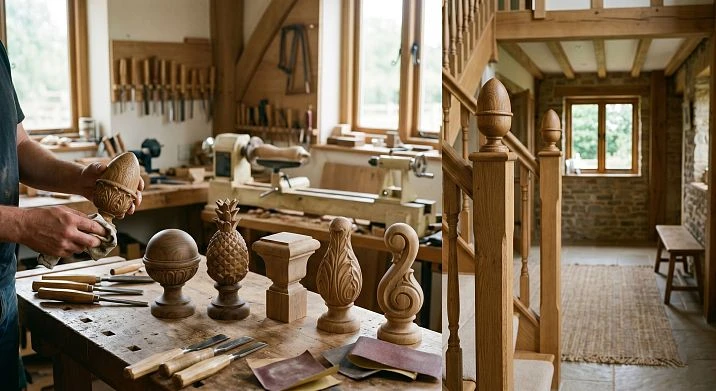
A staircase in a house is not just a transition between floors. It is an architectural statement. It greets guests in the hall, opens up to the view from the living room, and unfolds in full force when seen from a double-height space. And if balusters create rhythm, the handrail creates a line, and the post creates a vertical accent, then it is the finial that puts the finishing touch. The final stroke. The top element that visually completes the staircase and turns a technical node into a decorative dominant.
Finial for a stair post is a wooden decorative element that is installed on top of a support post or newel. It does not bear structural load, but it carries semantic load: it is what closes the vertical, gives the staircase completeness, and communicates the style of the house more precisely than any other detail.
This article is a detailed breakdown: what a finial is, how it is chosen, how it is coordinated with balusters and handrails, what shapes exist, and what mistakes are important to avoid. If you are building, renovating, or designing a staircase in a country house, apartment, or hall — read carefully.
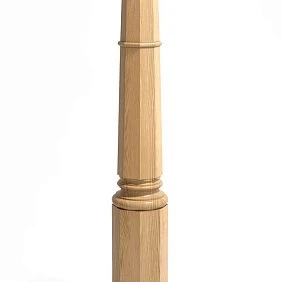
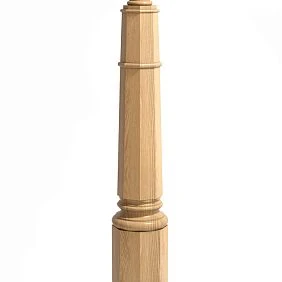
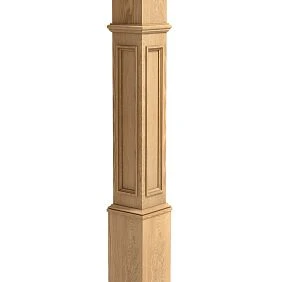
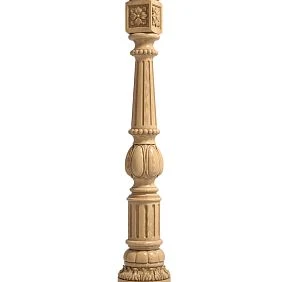
What is a finial for a stair post: precise definition
Let's start with clarity. Wooden finial is a decorative element that is attached on top of a vertical support post of a staircase, balustrade, or decorative stand. Essentially, it is the "cap" of the post, its top accent.
A finial differs from a simple rounding or chamfer. It is an independent part — turned, carved, or sculptural — that has its own shape, volume, and decorative character. It is mounted on a tenon or bolt: the finial sits tightly on the post and is fixed from above, giving the vertical visual completeness.




Finial functions: not just beauty
It would seem — why? The staircase works without it. But this is where the difference between a staircase as a structure and a staircase as an interior element becomes apparent.
Visual focal point. An open end of a post without a finial is an incompleteness that is noticed. The eye looks for the top element and does not find it. The finial closes this "hole" in perception.
Scale and proportions. A properly chosen finial works as a visual completion of the vertical — it emphasizes the height of the post, enhances its "grandeur."
End protection. The end of a post is the most vulnerable spot for mechanical damage. The finial protects it from chips and impacts.
Style and character. A ball-shaped finial conveys one mood. A carved owl-shaped finial conveys a completely different one. It is this element that allows you to "read" the style of the entire staircase at first glance.
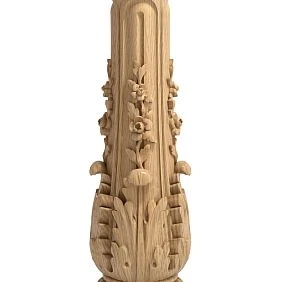
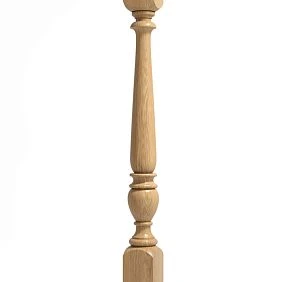
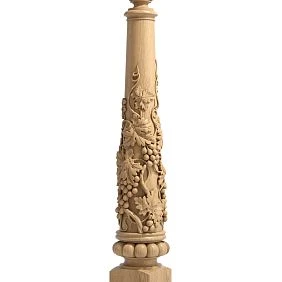
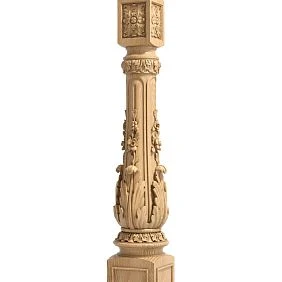
Our factory also produces:
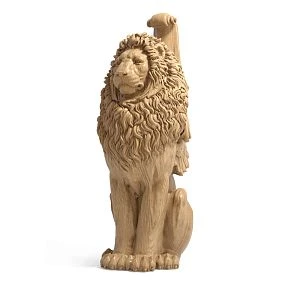
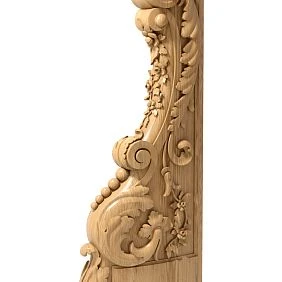
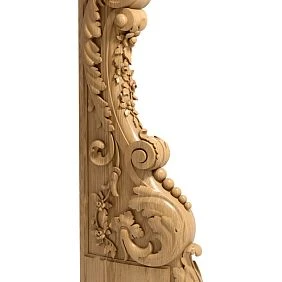
Where wooden finials are used: all application scenarios
Staircase finial — is not the only area of application. Let's examine all cases where this element works.
Get Consultation
Staircase posts
The most obvious application. The support post at the start of the staircase (lower, at the first step) is the main point where the staircase "begins" in terms of perception. A finial here is a mandatory element. It is the first thing to catch the eye.
The upper post (at the second-floor landing) also requires a finial — symmetry in a classic interior is essential. Two posts without finials and two with finials give the staircase a completely different visual weight.
Balustrades on terraces and verandas
On open verandas of a country house, the balustrade is not only a railing but also a decorative element of the facade. Finial for a balustrade works here the same as on an interior staircase: it completes the vertical line, giving the railing a finished silhouette.
Feature of open spaces: the finial on the balustrade is visible from the street, from below, and from the side simultaneously. Therefore, the shape must be expressive from all viewpoints — a sphere, cone, or sculptural figure.
Support posts in the hall and double-height space
In homes with open-plan layouts and double-height spaces, decorative posts or pillars often stand as visual accents that "hold" the space. A finial on such a post transforms it from an architectural column into a decorative object that can be admired.
Entrance areas and gates
On a country estate, wooden posts of gates, wickets, and gazebos can also be topped with finials. This ties the architecture of the house to the exterior and creates a unified stylistic language.
Decorative partitions and posts
In interior wooden partitions — slatted or with vertical posts — finials can be used as top accents on each post. This creates a rhythmic ornamental row along the upper edge of the partition.
How a finial differs from a capital and other top elements
Confusion between a finial, a capital, and simply the "top part of a post" is a common problem. Let's break down the differences.
Finial and capital: different objects with different purposes
A capital is the upper structural part of a column or pilaster that transitions into the entablature (horizontal part). It is an element of the classical architectural order system: Ionic capital with volutes, Doric with an abacus, Corinthian with acanthus leaves.
A finial is a finishing decorative element on top of a vertical post that does not bear structural load of the support system. The finial "sits" on the post, rather than transitioning into a horizontal element.
In short: a capital is an architectural detail of the classical order system, a finial is a decorative "cap" for a stair or decorative post.
Finial and simply "beveled end"
Some posts end simply with a chamfer or a beveled cut — this is not a finial. A finial is an additional element that is attached on top and has its own shape and volume. This is a fundamental difference.
Finial and ball for a post
A ball on a post is also a finial, one of its most common types. A wooden ball placed on top of a post is a classic solution that works in any style: from strict classic to rustic and country.
How to choose the shape of a finial: from a ball to a carved owl
The shape of the finial is a choice of style and mood. Let's break down the main options.
Ball
A spherical finial is the most versatile shape. Perfectly symmetrical volume, equally expressive from any angle. The ball is not tied to a specific style: it is appropriate in classic, country, Scandinavian, rustic, and modern interpretations of classic.
The size of the ball ranges from 60 to 120 mm in diameter, depending on the cross-section of the post. Proportion: the diameter of the ball is usually equal to the width of the post or slightly larger — this creates the feeling of a "cap" rather than a dot.
An oak ball with a tint to match parquet or doors is a foolproof option for most interiors.
Cone or pyramid
A pointed finial — a cone or a four-sided pyramid — is a sharper, more directional solution. It gives the vertical a sense of upward aspiration. It works well on tall posts and in interiors with high ceilings.
A Gothic finial is an elongated pyramid with ornamental facets. It is recognizable and works in interiors with references to medieval architecture or English style.
Carved finial with ornament
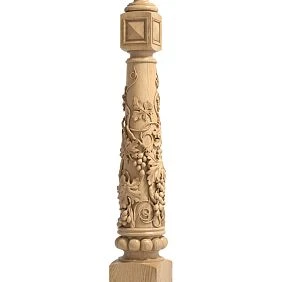
Carved wooden finial — is a sculptural volume with an ornamental surface: leaves, scrolls, twists, braids, scales, relief bands. This is a high level of furniture decoration that turns the finial into a work of art.
A carved finial is chosen for interiors with a high level of finishing: classic, baroque, neo-renaissance, empire. Here, the finial must be consistent in carving style with stair balusters и stair handrails — the unified plasticity of the entire railing.
Thematic finial: figures and sculptural forms
A thematic finial is a decorative sculptural form: an owl, a pine cone, an acorn, an eagle, a lion, a flower. This is the most personal choice of all.
For example, carved finial "owl" — this is a thematic symbol of wisdom, often chosen for studies, libraries, country houses. An owl as the top accent on a stair post is a memorable detail that speaks more about the homeowner than all the rest of the decor.
A pinecone or acorn is a traditional form for a country, hunting, or rustic interior. It references nature, the forest, life outside the city — and looks organic in a timber or log house.
Classic turned finial
A turned finial is a profile created on a lathe: a sequence of spheres, cylinders, cones, and discs of different diameters. It is not a sculpture, but also not just a ball — it is an element with its own rhythm and plasticity.
A turned finial is universal for a classic interior and pairs well with turned balusters — they "speak" the same language.
How to choose the size of a finial: proportions that determine the look
The size of the finial is perhaps the most critical parameter after the shape. An incorrect size ruins the entire impression.
Matching the post cross-section
The main rule: the finial should not be significantly narrower or wider than the post.
Too small a finial (smaller than the post cross-section) — it gets lost, is not read as a completion, and looks like a forgotten detail. The post visually breaks off.
Too large a finial (much larger than the post cross-section) — it overhangs the post, disrupts proportions, and looks heavy and accidental.
Correct ratio: finial diameter or width = 100–130% of the post width. A slight "overhang" beyond the post outline is normal and visually correct: the finial should protrude slightly to be noticeable.
Finial height
The finial height relates to its width and the post height. For a standard post 900–1100 mm high:
-
Compact finial: height 80–120 mm. For light staircases and thin posts.
-
Medium finial: height 150–200 mm. Universal format.
-
Large finial: height 250–350 mm. For monumental posts and grand staircases with high ceilings.
Ceiling height and staircase scale
A large finial in a house with a 2.5 m ceiling will look overloaded. A small finial in a house with a double-height ceiling of 6 m will get lost. The scale of the finial should match the scale of the space.
Practical rule: the higher the ceiling and the more impressive the staircase, the more expressive and larger the finial can be.
Material: oak, beech, and solid wood for the post finial
The finial material is not just about the wood species. It's about durability, workability, color, and texture. And this is where it's crucial to make the right choice.
Oak
Oak is the "gold standard" for wooden finials and all staircase components high-end ones. It is a hard, dense wood with a pronounced texture — large fibers, a characteristic annual ring pattern, and a warm golden-brown hue.
Oak stains and varnishes well. Staining in honey, walnut, dark walnut, mocha colors — all of this is flawlessly achieved on oak. Bog oak (very dark, almost black) is a separate aesthetic for modern interiors with dark wood.
Oak finials are chosen for classic interiors, for homes with oak parquet and oak doors, for high-end staircases. It is an element that mirrors other wooden details in the house.
Beech
Beech is denser and heavier than oak, with a uniform, fine-pored structure. Beech's texture is less expressive than oak's — this makes it an ideal material for fine carving and turned details with a sharp relief. The ornament on beech turns out sharper and cleaner.
Beech takes paint well: white, gray, and pastel enamels lay on it more evenly than on oak. If you need a finial for painting, beech is the optimal choice.
A beech finial is somewhat cheaper than an oak one, but is practically not inferior in mechanical properties and durability.
Birch and Ash
Birch is an affordable, easy-to-work material. It is used less often for finials, but is quite suitable for simple shapes (sphere, cone) and for painting.
Ash is a light, durable wood with expressive grain. A good choice for a modern interpretation of classics: a light ash finial in a Scandinavian interior looks exquisite.
Important rule: single wood
The finial, newel post, balusters, and handrail should be made from the same type of wood — or at least from species that give the same shade after tinting. Mismatched species mean different grain patterns and different behavior when applying the coating. As a result, one element will look darker, another lighter, and the entire staircase will lose its unity.
How to combine the finial with balusters and handrail: a system, not a set of parts
This is perhaps the most subtle aspect of choosing a finial. A staircase is a system. Each element communicates with the others. And the finial in this system is the top note, which should sound in unison, not discordantly.
Matching with balusters
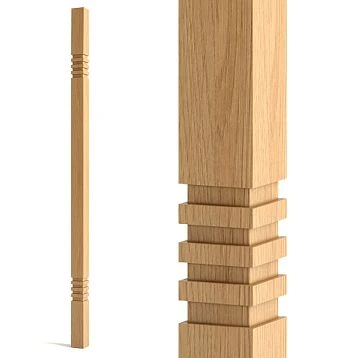
Balusters for staircase set the rhythm and plasticity of the railing. If the balusters are turned — with alternating spheres, discs, and cylinders — the finial should also be turned. Using a flat minimalist finial with classic turned balusters is a style conflict that will be immediately visible.
If the balusters are carved — with ornamental belts or relief decor — the finial should carry similar carving or at least a coordinated ornamental pattern.
If the balusters are simple, rectangular, minimalist — the finial can be a sphere or a concise turned profile. Nothing more.
Alignment with handrail
Stair Handrail — this is the horizontal line that connects all verticals. Its profile, color, and material determine the character of the entire staircase. The finial should be in the same wood and the same tone as the handrail — or the difference in tone should be intentional (e.g., handrail darker, finials lighter, as a contrast).
Coordination with the newel post
The finial should be made of the same wood as the newel post — this is an axiom. If the newel post is oak, the finial is also oak. If the newel post is beech, the finial is beech. Using different wood species on adjacent elements means creating a random, disjointed look.
Coating tone
The tinting of all staircase railing elements — balusters, handrail, newel posts, finials — should be from the same batch of stain or done simultaneously. Even a slight discrepancy in tone creates visual unease.
Finial for a country house: when the newel post becomes an accent
A country house is a special case. Here the staircase is most often open: it is visible from the hall, from the living room, often from the street through panoramic glazing. In a country house, the staircase is not a utilitarian element but an architectural center of the interior.
The staircase as a focal point
In a grand double-height hall, the staircase and its posts are the first thing a guest sees. In such a setting, the finial is the final touch that either completes the look or leaves a sense of incompleteness.
For a country house with high ceilings, choose large, expressive finials: sculptural forms, carved decor, thematic figures. Here, scale works in your favor.
A house made of logs or timber
In a house made of logs or timber, the staircase is most often also wooden—made of solid wood with a rugged character. The finial here should be warm and 'natural': a pinecone, an acorn, an acorn-shaped form, a rustic ball with a deliberately pronounced texture. A polished smooth finial would look out of place in such a context.
A house in a classic style
In a classic country house—with white or cream walls, parquet flooring, stucco molding—the finial should be classic: turned or carved, in a warm wood tone, consistent with the carved wooden decor interior. These could be turned spheres with decorative bands or a carved finial with a floral pattern.
A house in a modern style with classic elements
Neoclassicism and modern classicism are a popular trend in country house construction. Here, the finial can be laconic: a large oak ball with matte varnish, a conical finial with minimal ornamentation. The form reads as classic, but without Baroque excess.
Covering a wooden finial: how to properly treat the surface
Finial coating is both protection and aesthetics. The choice of coating should be coordinated with the coating of the post, balusters, and handrail.
Tinting + varnish
The most popular solution. Stain gives the desired wood shade, varnish (matte or semi-matte) fixes it and protects the surface. This option allows you to match the color of the finial with the color of the parquet, doors, and cabinet furniture.
Matte varnish — for modern and neoclassical interpretations. Semi-gloss — for a more elegant classic look. Glossy — for formal interiors with a "ceremonial" staircase.
Uncoated (for painting)
Uncoated finials — for those who want to paint the staircase a specific color. White finials on white posts — this is Provence or neoclassical in a light palette. Gray, anthracite — modern style. Black — a contrasting accent.
Priming is mandatory before painting. For oak — a special primer that neutralizes tannins (otherwise yellowness will appear under white paint).
Oil or wax
Oil coating — for those who value maximum naturalness of wood. Oil penetrates the pores, emphasizes the texture, and gives a matte surface. This is a choice for rustic or Scandinavian interiors. Requires periodic renewal.
Combined coating
The finial is dark tinted, the posts are lighter. Or vice versa: the finials are white, the posts are dark. The contrast between the finial and the post is a deliberate design technique that works provided the overall fence is consistent.
Attaching the finial to the post: a technique you need to know
A finial that wobbles or falls off with a casual touch is not a finial, but a problem. Proper attachment is fundamentally important.
Tenon and mortise
The classic method. A hole (mortise) is drilled or carved in the lower part of the finial, and a pin or tenon is made in the upper part of the post. The finial is placed onto the tenon and, if necessary, fixed with glue (PVA or wood glue).
Important: the tenon must match the diameter of the mortise exactly. Any play will lead to wobbling.
Bolt fastening
A metal threaded bolt is screwed into the post. The finial has a corresponding threaded hole or a screw-in nut. The finial is screwed onto the bolt. This is a detachable, strong, and precise fastening.
Used in cases where the finial needs to be removable (e.g., for refinishing or replacement).
Adhesive mounting
Used for lightweight, small finials. The contact surface is coated with glue, the finial is pressed on and held until polymerization. Reliable, but non-detachable.
Practical Tips
Before installation, always check the horizontality of the top end of the post. If the end is uneven, the finial will sit crooked. Level the end cut with a plane or sander.
After fastening, apply a final coating to the seam between the finial and the post with tint or mastic. A visible seam disrupts the impression of a single element.
Mistakes when choosing a finial for a stair post
These mistakes occur regularly—and most are discovered only after installation.
Buying a finial without measuring the post. A finial chosen "by eye" is one that either won't fit on the post or won't look as intended. Always measure the post's cross-section and check the finial's dimensions in the specifications.
Not considering the style of the balusters. A minimalist finial with classic carved balusters is a conflict that cannot be fixed without replacing one of the elements.
Choosing a shape that is too large for a light staircase. A large sculptural finial on thin posts of a wooden staircase in a small house creates visual overload. The scale of the finial should match the scale of the staircase.
Mixing different wood species. A beech finial on oak posts leads to differences in texture and color after tinting. Use the same wood species for all railing elements.
Not planning the coating in advance. A finial without coating, while the entire staircase is already coated with dark varnish, means you'll have to paint it on site, which is always more difficult and risky than treating it before installation.
Forgetting about fastening. A finial attached with glue without a tenon may come loose over time. Ensure a reliable fastening method at the selection stage.
Buying one finial without a pair. If the staircase has two support posts — lower and upper — finials are needed for both. One finial and one open end — asymmetry that catches the eye.
Not considering visibility from the hall and living room. A finial is an element that is often visible from a distance. A shape and size that look beautiful up close may not be readable from 4–5 meters away. Check how the finial looks from a distance — from the perspective of a person standing in the doorway or at the entrance.
Where to buy a finial for a stair post: assortment and related categories
Wooden Caps — is a specialized product that should be purchased from a manufacturer or supplier with a full range of staircase components. It is important that coordinated balusters, handrails, and fittings are available alongside the finials — otherwise, system consistency cannot be ensured.
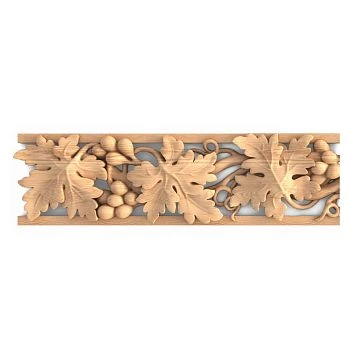
In the Stavros catalog — Wooden Caps of various shapes, including carved finial "owl" made of oak or beech, turned and sculptural forms. Nearby — Balusters for staircase, the handrails for the staircase, components for wooden staircases и Carved wooden decoration — everything for creating a complete and stylistically unified staircase.
FAQ: Answers to popular questions
What is a finial for a stair post?
This is a decorative wooden element that is mounted on top of a support post of a staircase or balustrade. It visually completes the vertical line, gives the staircase a finished look, and is part of a unified stylistic railing system.
Where are wooden finials used?
On stair posts, balustrades, support posts, decorative partitions, gate and gazebo posts, in halls and spaces with double-height ceilings.
How to choose the size of a finial?
The diameter or width of the finial should be equal to or slightly larger (up to 130%) than the width of the post. The height should be proportional to the height of the post and the scale of the space.
What is the difference between a finial and a capital?
A capital is an architectural element of the order system that transitions into a horizontal entablature. A finial is a decorative "cap" on a stair post without a structural load-bearing function.
How to match a finial to balusters?
The shape and style of the finial should match the character of the balusters. Turned balusters — turned finial. Carved balusters — carved finial. Straight balusters — simple finial.
Can I order a finial made of oak or beech?
Yes. Finials made of oak and beech are standard materials. Oak has a more expressive texture, beech allows for clearer carving and takes paint better.
Is a carved finial suitable for a country house?
Yes. For a country house with high ceilings and an open hall, a carved finial is an excellent choice: it is expressive from a distance and gives the staircase a "custom" character.
Can a wooden finial be painted?
Yes. Uncoated finials are specifically designed for self-painting: primer + enamel or stain + varnish. Beech particularly accepts enamels well.
How is the finial attached to the post?
Tenon and mortise (classic), bolt fastening (detachable), adhesive fastening (for lightweight shapes). A tenon + glue is recommended for reliable and immovable fixation.
Where to buy a finial for a stair post?
In the STAVROS catalog: Wooden Caps with Contact us to confirm shipping to your destination., in an agreed assortment with balusters and handrails.
About the manufacturer
STAVROS is a Russian manufacturer of wooden products for stairs, interiors, and furniture. The catalog includes wooden finials for stair posts, including carved finial "owl" made of oak or beech, Balusters for staircase, the handrails for the staircase, components for wooden staircases и Carved wooden decorationEverything for creating a complete, beautiful, and stylistically unified wooden staircase — on the website STAVROS.