

























Article Contents:
- What is a molding tip
- Why an open molding end looks unfinished
- How a tip differs from a corner element
- When a tip is needed and when a miter cut is enough
- What the L index means
- What the R index means
- Why you cannot install a left element instead of a right one
- How to calculate the number of tips for one frame
- Check series: MLD-001, MLD-003, MLD-004
- Compare profile width and height
- Consider relief and ornament
- Check material: beech, oak, for enamel
- Furniture fronts
- Door panels
- Wall Panels
- Decorative frames around mirror
- Classic furniture compositions
- Need to design a short furniture frame
- Need to complete a decorative vertical on the door
- Need to assemble a frame on the wall panel
- Need to make an expressive frame with MLD-004
- Need to select decor for moldings for the workshop project
- First the diagram, then the purchase
- Check the joint with the straight molding
- Material and finish must be common
- Don't leave the selection of the right side for later
- Buying a tip as a corner piece
- Not checking left and right sides
- Choosing a tip for the wrong series
- Choosing Only by Photo
- Not considering the finish
- Buying tips without a straight molding
- What is a molding tip for?
- How does a left tip differ from a right one?
- Can I install a tip without a molding?
- How do I know which molding a tip fits?
- How many tips are needed for one furniture frame?
- How is a tip different from a corner element?
- Can a carved tip be painted with enamel?
- Which material should I choose: beech or oak?
- What should I buy together with a tip for molding?
- Where can I buy STAVROS carved tips?
- Can I use a tip for a wall panel?
- What if I need the right side, but the diagram only has a left card?
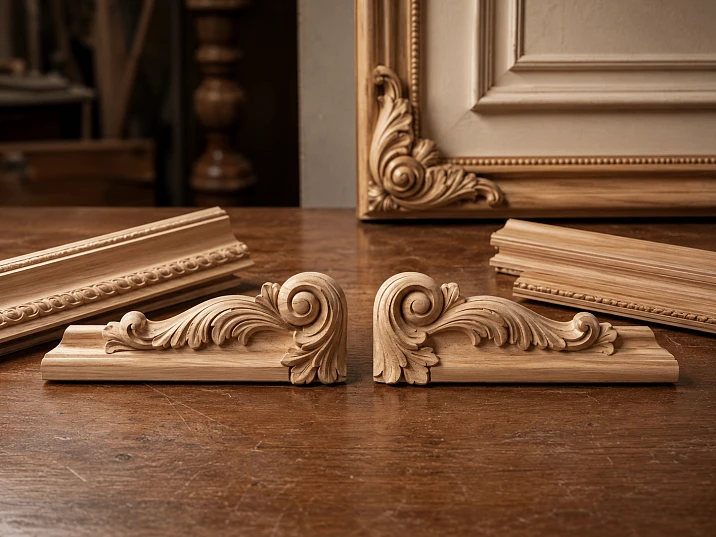
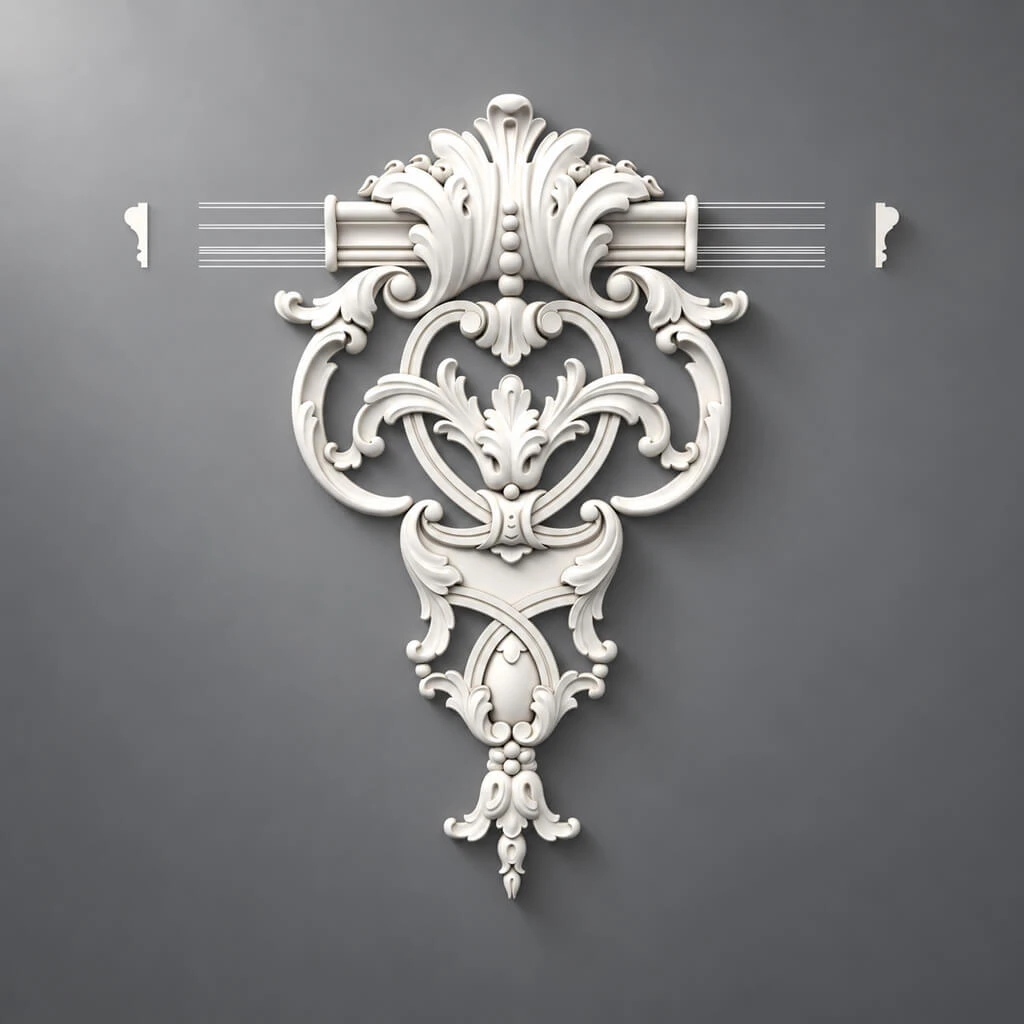
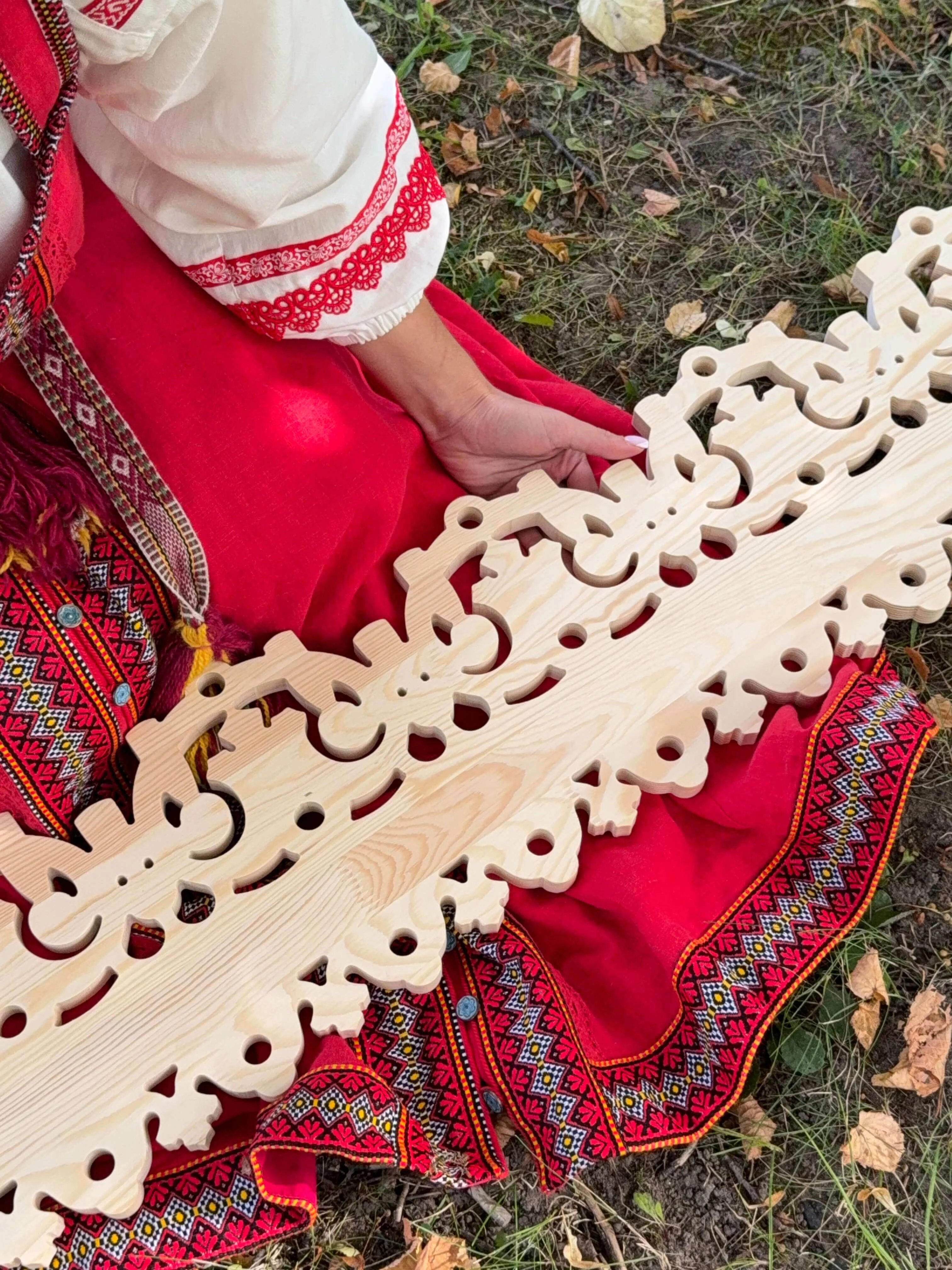
A molding tip is needed where the decorative line does not close into a corner but ends at an open end. This is a common task in furniture frames, door panels, wall panels, decorative inserts, and classic facades: the molding has already been selected, the pattern fits, the profile looks beautiful, but the edge of the line remains unfinished. If you simply cut the profile, the frame may look like an unfinished detail. A carved tip closes the end, completes the ornament, and makes the line neat.
This topic differs from corner elements. A corner piece helps assemble a right angle of the frame. A tip works differently: it completes the left or right edge of the molding. Therefore, when purchasing, it is important not to confuse the purpose of the part, the installation side, and compatibility with a specific molding series. A left element cannot be automatically replaced by a right one, and a tip for MLD-001 should not be matched to MLD-003 or MLD-004 just by photo.
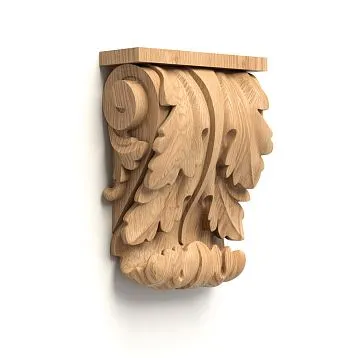
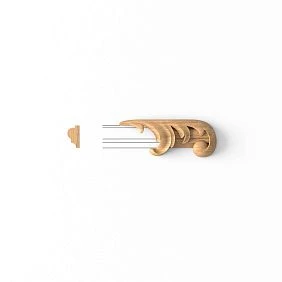
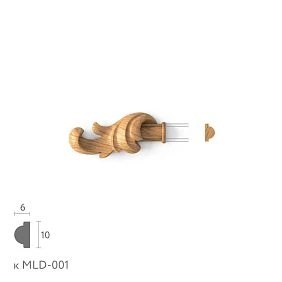
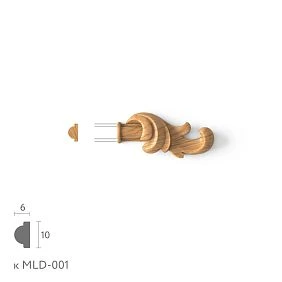
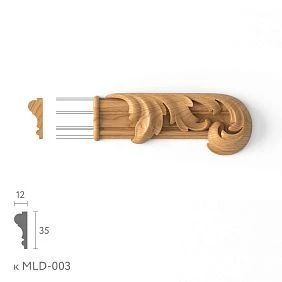
On STAVROS, you can select carved elements to complete molding lines: buy carved tip for molding N-438.1L to MLD-001, view carved tip N-402.1L for MLD-004, choose carved tip N-364.1L for MLD-003, and also open the general section Decor for STAVROS moldings.
Let's break down what a carved molding tip is, how a left element differs from a right one, how to select a part for MLD-001, MLD-003, or MLD-004, where to use such elements, what to order together with the tip, and what mistakes most often ruin a furniture frame.
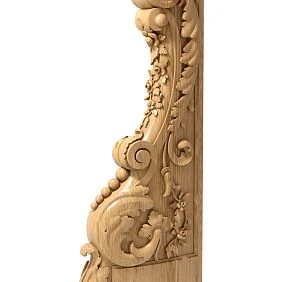
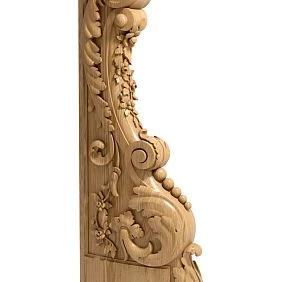
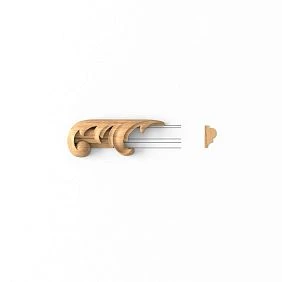
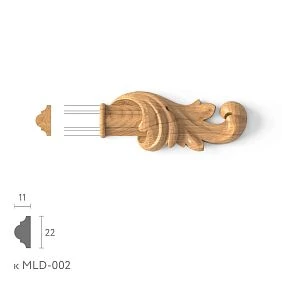
What is a molding tip
A molding tip is a decorative element that finishes the open end of a linear profile. It is needed not for forming a corner, but for a neat end. If the molding runs along a facade, door, panel, or mirror area and does not close into a rectangle, its end should look deliberate. A carved tip helps make this edge part of the composition, rather than a random cut.
In furniture decor, the end is especially noticeable. On the facade of a chest of drawers, nightstand, cabinet, or door, a person sees the frame up close. If the profile breaks off without finishing, the eye immediately catches that spot. The tip covers the problem: it continues the decorative logic of the molding, emphasizes the direction of the line, and helps create a neat edge without complex manual cutting.
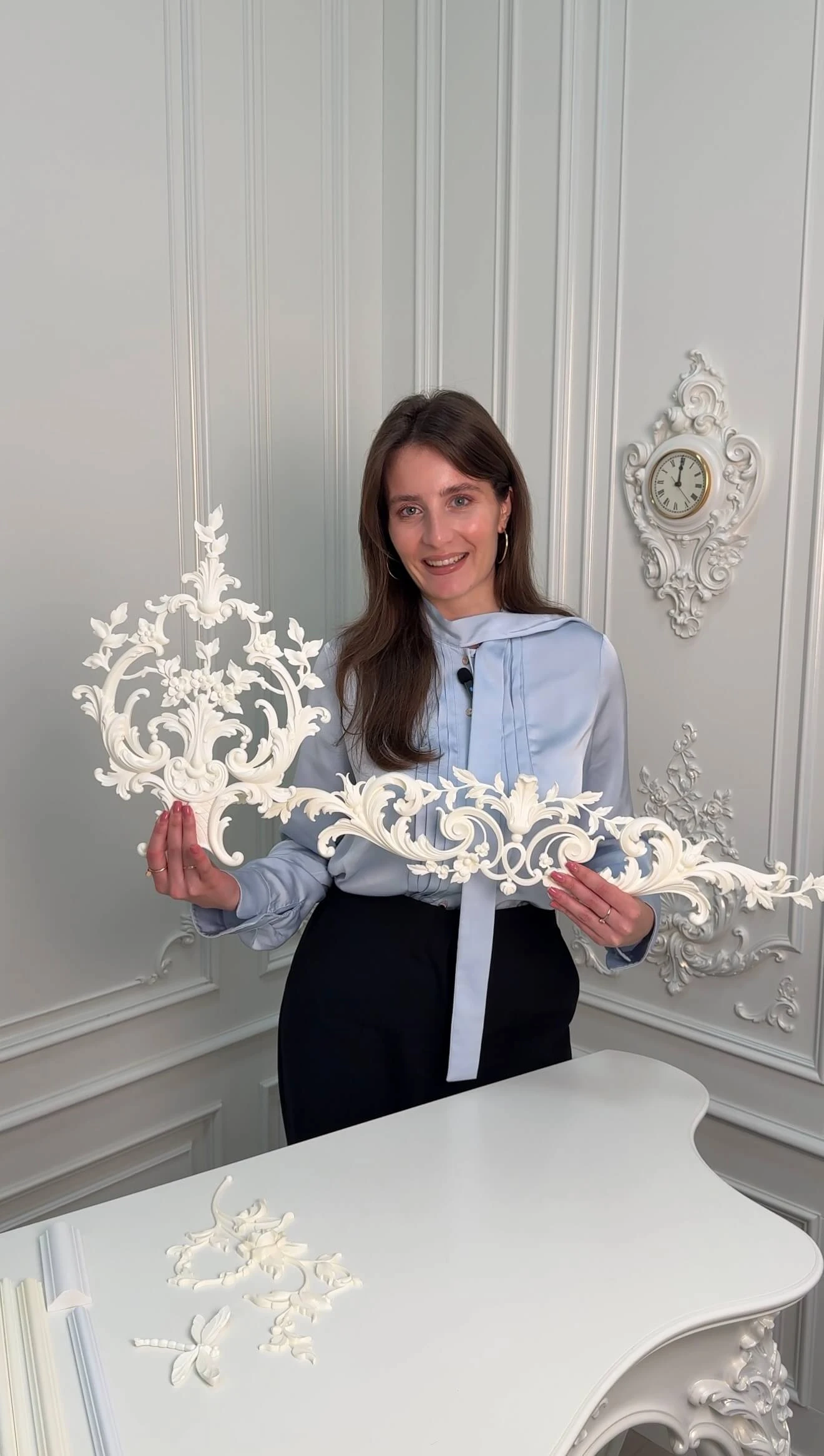
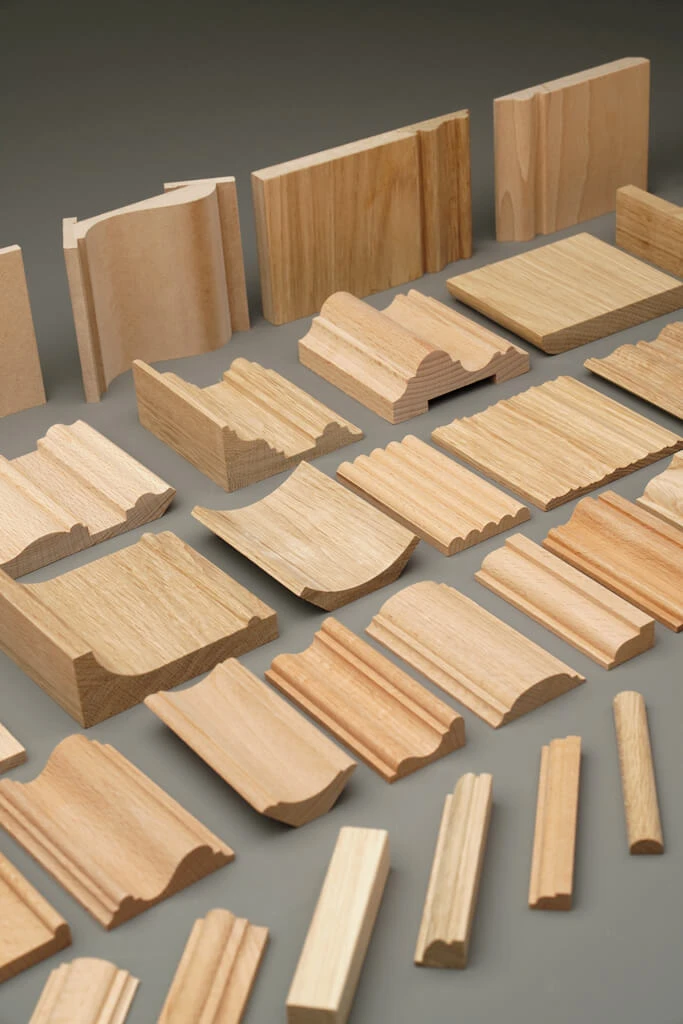
Why an open molding end looks unfinished
A molding is a linear profile. Its beauty is built on a repeating relief, shadow, shape, and direction. When the profile is simply cut off, the pattern ends abruptly. In some modern projects, such an end can be hidden or minimally processed, but in classic furniture, carved facades, and decorative frames, an open edge often looks weak.
The problem is especially noticeable on furniture with symmetry. For example, on a cabinet door, there are two vertical decorative lines, each ending at the top or bottom insert. If one edge is neatly finished and the other is simply cut off, the entire frame looks uneven in quality. Tips help make the edge intentional: the line starts and ends equally neatly.
Our factory also produces:
How a tip differs from a corner element
A corner element is needed when the frame turns 90 degrees. It replaces a complex miter cut, covers the joint of two moldings, and helps achieve a beautiful corner. A tip works not at a turn, but at the end of a line. It covers the left or right end and is not intended for assembling a frame corner.
This difference is important when ordering. If a buyer is looking for a "corner piece" but actually needs to finish a short section of molding on a facade, they might buy the wrong product. Conversely, if a closed frame with corners is needed, tips alone will not be enough. Therefore, first, you need to understand the geometry of the frame: does the line end or turn.
Get Consultation
When a tip is needed and when a cut is enough
A tip is needed when the end of the molding remains visible and should look decorative. This includes furniture facades, vertical inserts on doors, open frames, decorative strips on panels, finishes near a mirror, or transitions to another part. In such cases, a carved end piece looks neater than a simple cut.
A cut may be sufficient if the end is hidden by an adjacent part, goes into a joint, is covered by another element, or is located where it is not visible. But if the edge is on the front surface, especially in a classic frame, it is better to look for tips for the appropriate molding series in advance.
| Parameter | What does it mean | What to check before ordering |
|---|---|---|
| Element type | Carved tip for finishing the molding. | An end is needed, not a frame corner. |
| Side | Left or right element for the edge of the molding. | Which edge of the frame needs to be covered and whether a paired element is needed. |
| Compatibility | The end cap is selected for a specific molding series. | MLD-001, MLD-003, MLD-004, or another series. |
| Material and finish | The part must match the molding and the surface. | Relevant material, option for enamel or finish in the product card. |
| Where to look | Decor for STAVROS moldings | Compare the left, right, and compatible element for the required molding. |
Left and right tip: what's the difference
A carved tip has a side. This is not a formality in the name, but an important part of selection. The left and right elements mirror different edges of the molding. If you mix up the side, the ornament may look against the direction, the edge won't match the pattern, and the furniture frame will lose its neatness.
In STAVROS product cards, the side is often reflected in the product index. For example, L indicates the left element. For a full symmetrical line, both left and right tips may be needed. If a customer orders only one edge, one side is sufficient. If both ends need to be covered, it's important to calculate the set in advance.
What does the index L mean
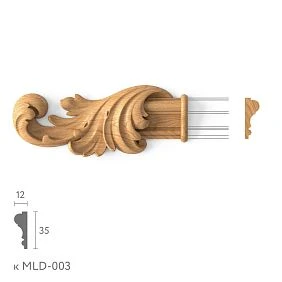
The index L usually denotes the left element. In the product scheme, there are positions N-438.1L, N-402.1L, N-364.1L. These are left tips that match the corresponding moldings: MLD-001, MLD-004, MLD-003. This index helps avoid confusion about the side when ordering and immediately indicates that the part is not universal for both edges.
Before purchasing, you need to imagine the molding in its actual position on the facade or panel. The left edge for a horizontal line and the left edge for a vertical line may be perceived differently if you look at the part separately. It's better to draw a diagram of the frame and mark where exactly the L-element will be placed.
What does the index R mean
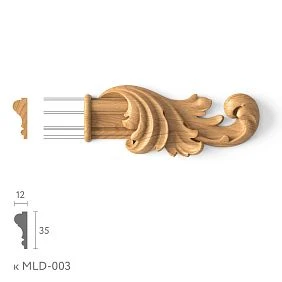
The index R usually denotes the right element. In the SEO scheme, paired variants N-438.1R, N-402.1R, N-364.1R are mentioned, but separate URLs for right product cards are not provided in the current scheme. Therefore, for right tips, it's better to use the general section Decor for STAVROS moldings and check the presence of the required side in the catalog.
The right tip is needed where the molding line ends on the opposite side. It must match the profile, height, width, relief, and ornament of the molding. You cannot take a left element and turn it any way: the pattern may not match, and the end will look incorrect.
Why you cannot install a left element instead of a right one
A carved tip is not always symmetrical enough to freely replace the left and right sides. Even if the shape seems similar, the relief and direction of the ornament may be designed for a specific edge. With incorrect installation, the molding ceases to look like a finished system: the line ends unnaturally, the pattern breaks, and the detail looks out of place.
The error is especially noticeable on furniture where two ends are located next to each other in the same frame. For example, on a facade there is a horizontal section of molding that ends on the left and right. If both edges are covered with the same side, symmetry is disrupted. Therefore, when ordering, it is important to count not only the number of tips but also their direction.
How to count the number of tips for one frame
The quantity depends on the shape of the frame. If the molding runs as a single decorative line and ends on both sides, left and right tips are needed. If the facade has four independent lines, the quantity increases. If the frame is closed with corner elements, tips may not be needed because the ends go into the corners.
The simplest way is to draw a diagram. Mark each open end of the molding. Then label where a left element is needed and where a right one is needed. After that, select the series: for MLD-001 — its own tips, for MLD-003 — its own, for MLD-004 — its own. Such a calculation helps avoid a situation where the molding has already been purchased, but the required side is missing.
How to choose a tip for a molding
A tip cannot be chosen separately from the molding. It must match in series, width, height, profile, relief, and decorative character. If the tip is beautiful on its own but does not fit the selected profile, the edge will look like a random detail. Therefore, proper selection starts with the molding.
Check the series: MLD-001, MLD-003, MLD-004
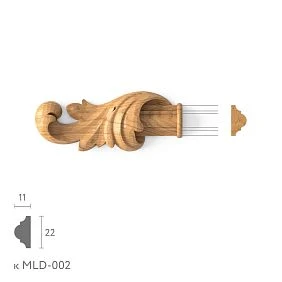
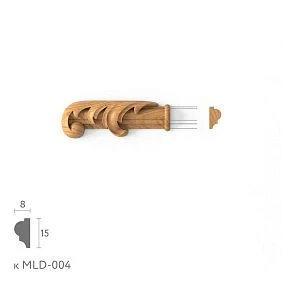
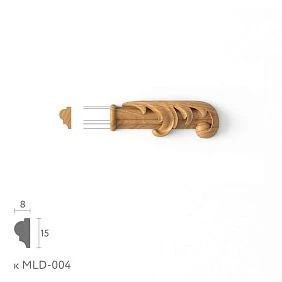
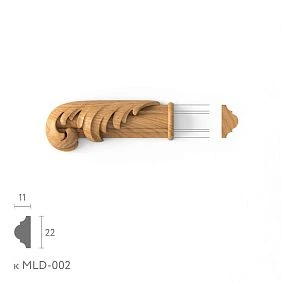
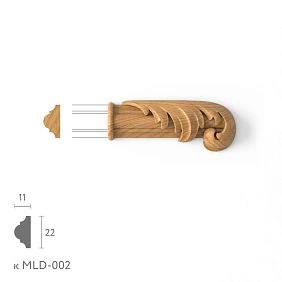
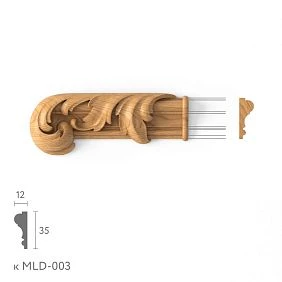
The scheme has three confirmed pairings. For MLD-001, a tip is provided buy carved tip for molding N-438.1L. For MLD-004 — carved tip N-402.1L for MLD-004. For MLD-003 — carved tip N-364.1L for MLD-003.
These pairings are more important than visual similarity. Even if two moldings look similar in photos, the profile may differ in height, width, and relief. The tip must continue exactly the molding it was designed for.
Compare the width and height of the profile
The tip must match the linear part in fit. If it is wider or narrower, the end will look untidy. If the height does not match, a step will appear. For a furniture frame, such details are immediately noticeable because it is on the front side of the facade.
Before ordering, you need to open the molding card and the end cap card, then compare the dimensions. If the exact parameters in the card require clarification, it is better to do this before purchase. Parts for enamel should be checked especially carefully: after painting, shape mismatches do not disappear, and sometimes become even more noticeable.
Consider relief and ornament
The molding can be smooth, softly profiled, or expressively carved. The tip should support this character. If the profile is calm, an overly active carved end will conflict with it. If the molding is rich, a simple edge may look weak.
The ornament should also go in the right direction. This is especially important for left and right elements. The tip does not just close the end, but completes the pattern. Therefore, it should be viewed as part of a single line, not as a separate beautiful fragment.
Check the material: beech, oak, for enamel
The material affects the finish and final look of the frame. If the molding and tip differ in material or preparation for finishing, a difference may appear after painting, tinting, or coating. The selection scheme indicates that beech, oak, and the enamel-ready option need to be checked, but the actual data depends on the specific product card.
For a furniture frame, it is better to select the molding and tips in the same logic: one material, one future finish, one decorative character. If the frame will be painted with enamel, it is important to check that all elements are suitable for the chosen finishing method. If a natural texture is planned, matching the material and shade is especially important.
Which STAVROS tips to use
The choice can be simplified: go by the molding series and the task. For a compact furniture frame using MLD-001, look at N-438.1L and the paired right element. For a more expressive frame with MLD-004 — N-402.1L and the corresponding right side. For a large decorative line with MLD-003 — N-364.1L and the paired right element.
| Task | What to look at | What to Check |
|---|---|---|
| Compact furniture frame | buy carved tip for molding N-438.1L to MLD-001 and the paired right element. | Side, series MLD-001, dimensions, and finish. |
| More expressive frame | carved tip N-402.1L for MLD-004 and the right element. | Matching profile, relief, and ornament direction. |
| Large decorative line | carved tip N-364.1L for MLD-003 and the right element. | Frame scale, installation location, profile width and height. |
| Selection of the entire system | Decor for STAVROS moldings. | Left and right elements, compatible series, availability, and product cards. |
Where to use molding tips
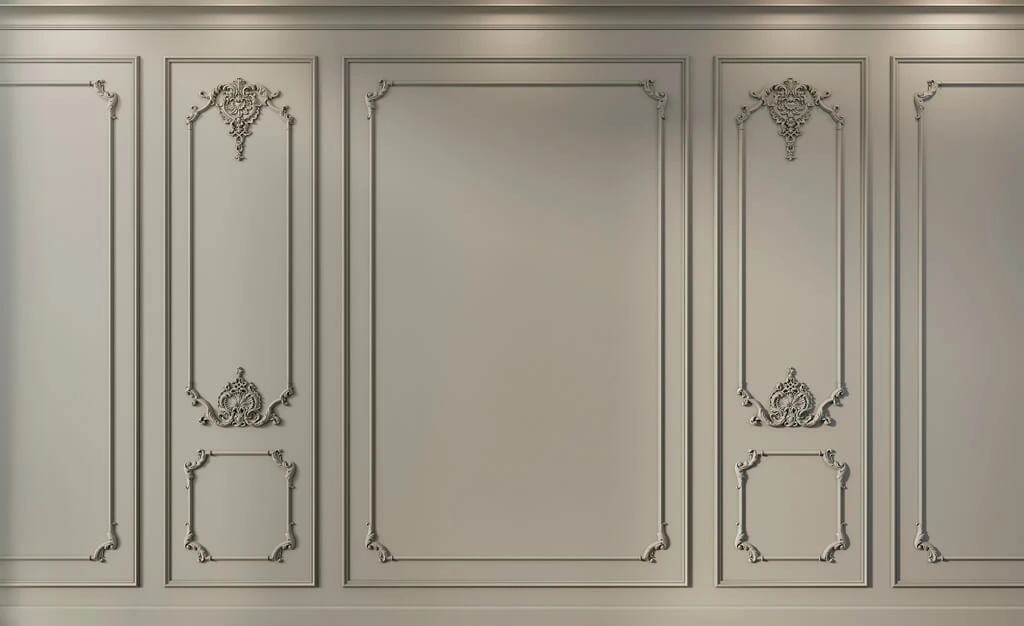
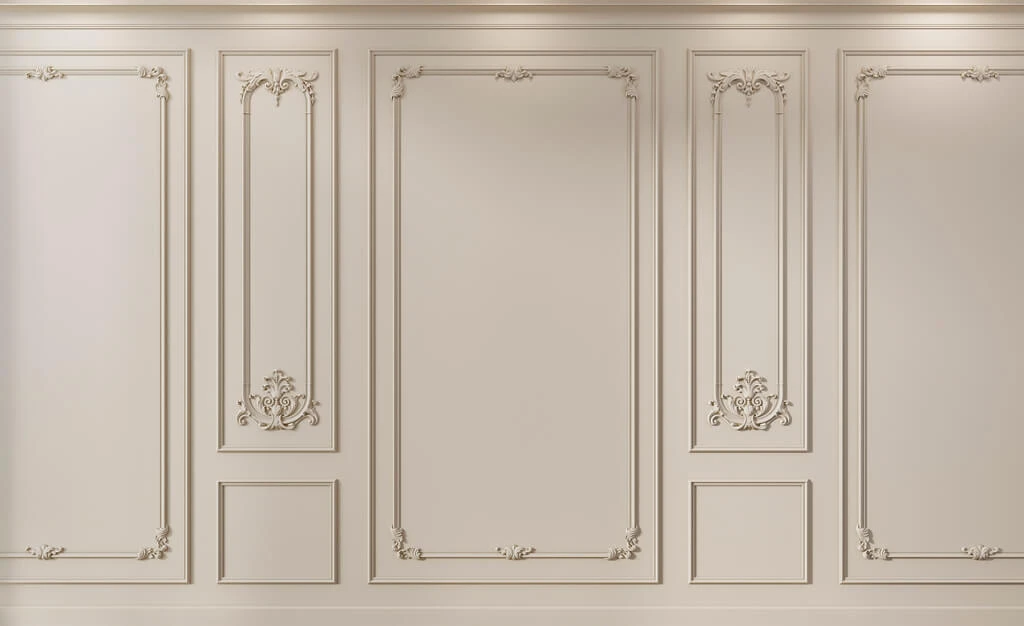
Tips are especially useful where the decorative line has a visible end. This applies not only to furniture fronts. Such elements can be used on door panels, wall panels, mirror frames, classic furniture compositions, and custom decorative inserts. The main task is always the same: to finish the molding beautifully and avoid leaving a sharp cut on the visible surface.
Furniture facades
On a furniture front, a tip helps to finish a short frame, a vertical decorative line, a top insert, or a side detail. For example, on a chest of drawers or a sideboard, the molding may not run along the full perimeter but only as a decorative strip. In that case, the open edges require a neat finish.
For furniture, it is especially important not to overload the front. If the molding is thin and subtle, the tip should be proportionate. If the frame is large and carved, the finish can be more expressive. Before ordering, it is worth checking that the tips do not interfere with handles, panels, hinges, or the opening of doors.
Door panels
On doors, moldings are often used to create frames, vertical lines, and decorative panels. If the line does not close into a rectangle but ends in a visible area, the tip helps to finish the edge. This is especially noticeable on classic doors, where every detail must be symmetrical.
In the door area, it is important to consider the installation height. A tip placed too close to the edge of the panel or to another detail may look cramped. It is better to mark out the entire frame in advance and understand where the molding ends.
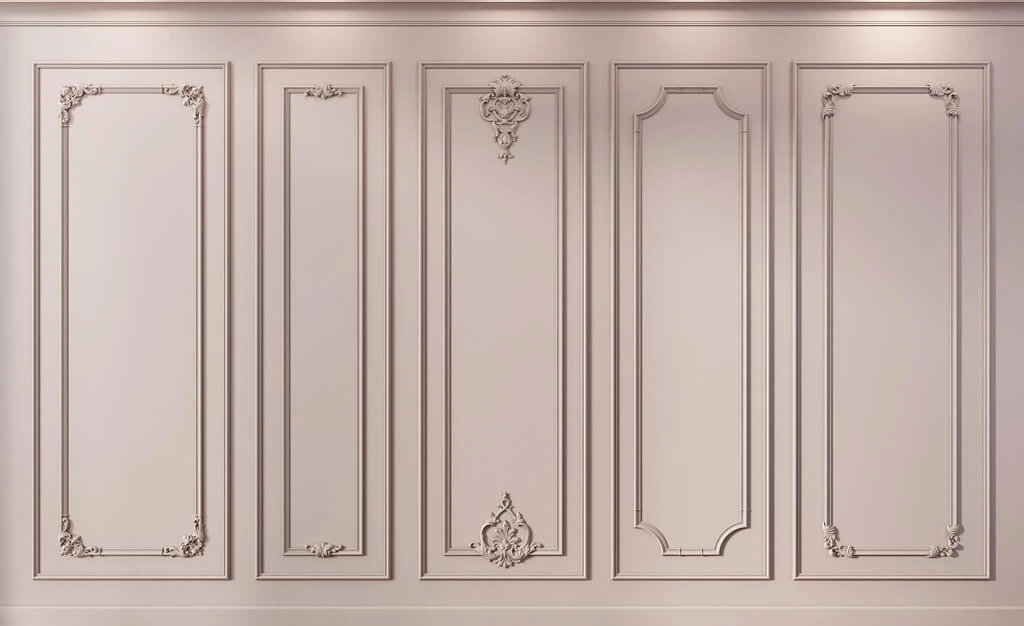
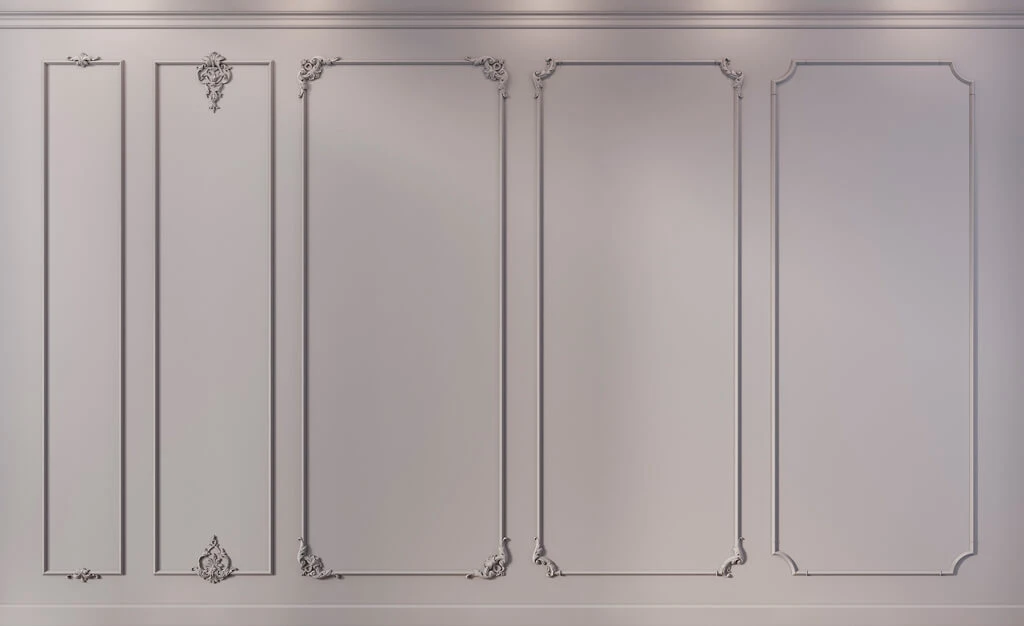
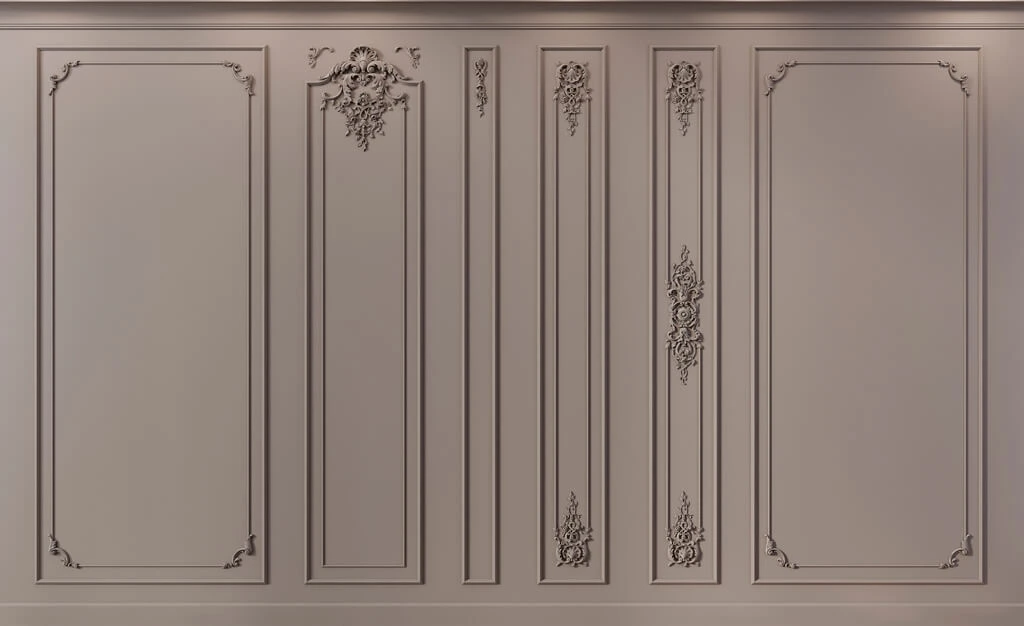
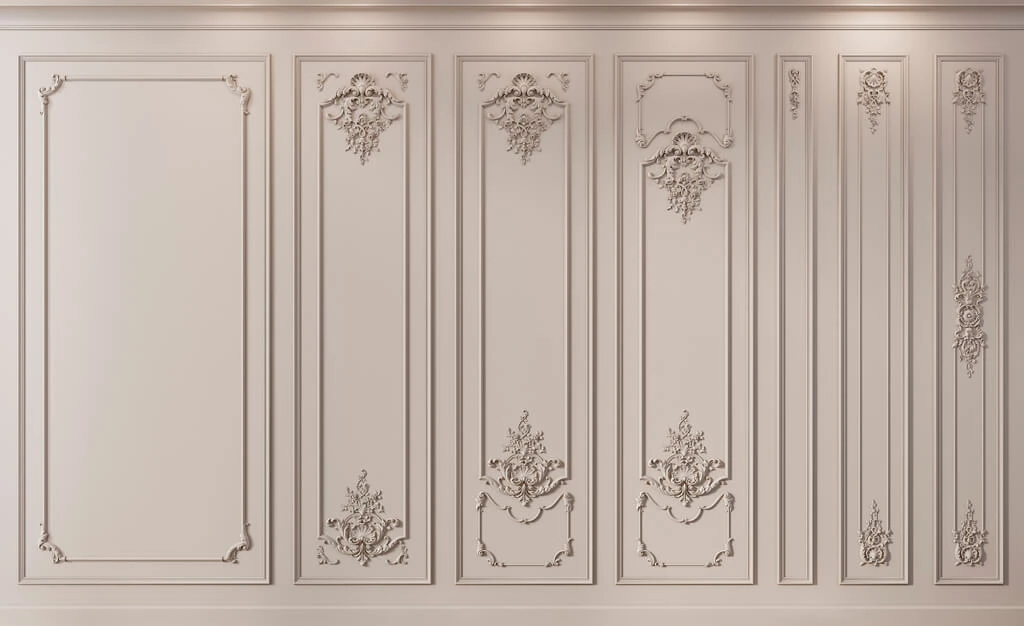
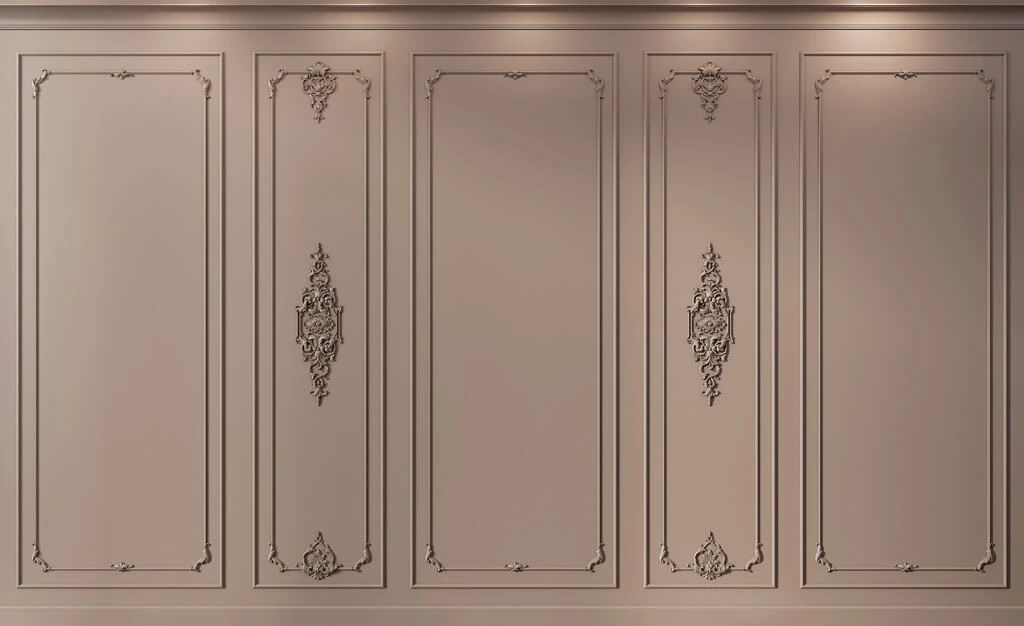
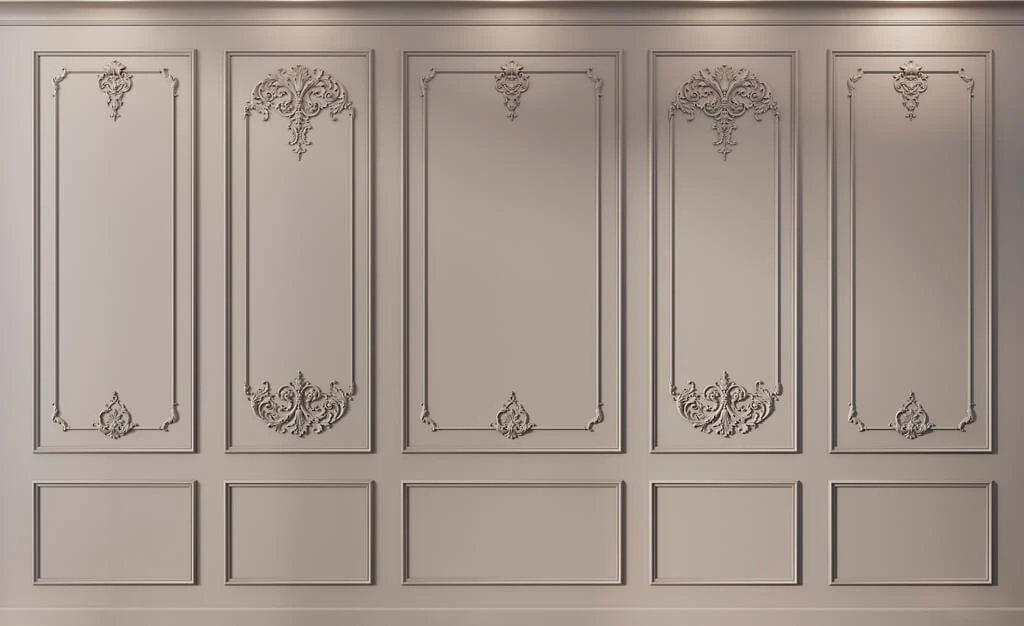
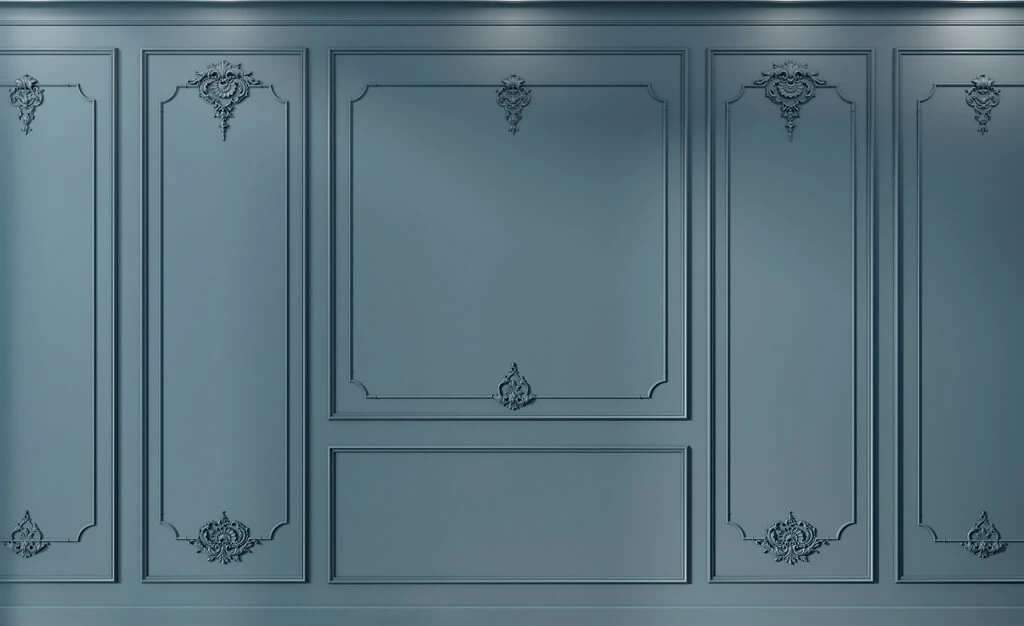
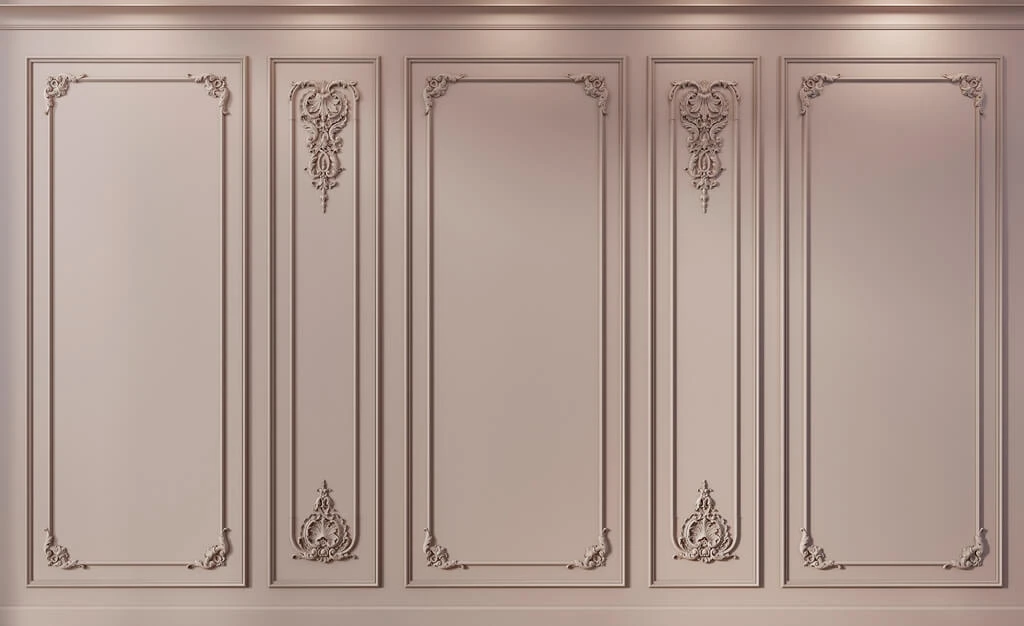
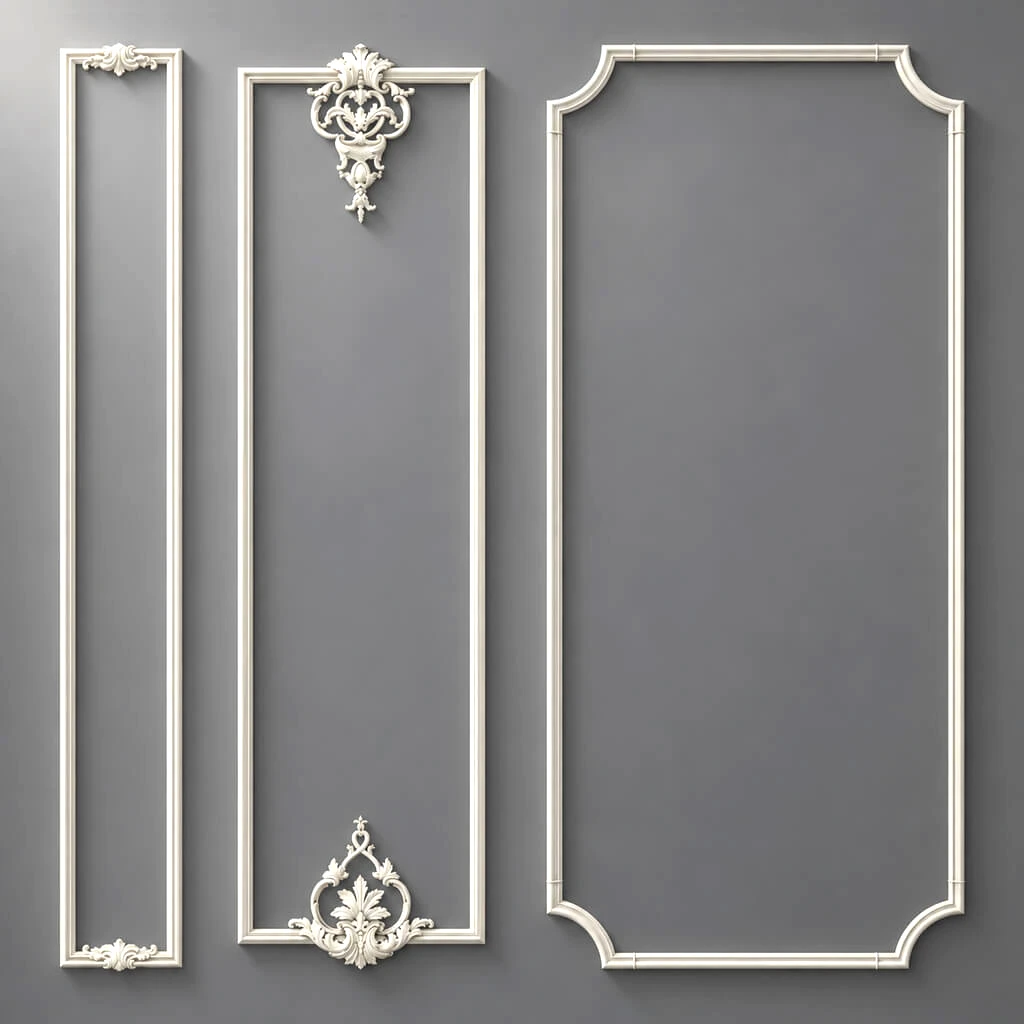
Wall panels
On wall panels, molding can form decorative lines, frames, vertical inserts, and borders. A tip is needed if the profile ends openly, for example, near a niche, furniture, mirror, doorway, or other decorative area.
On the wall, the viewing distance is especially important. If the panel is seen from afar, the end element should read as part of the overall line. If a person approaches closely, the joint, relief, and neatness of the connection matter.
Decorative frames around a mirror
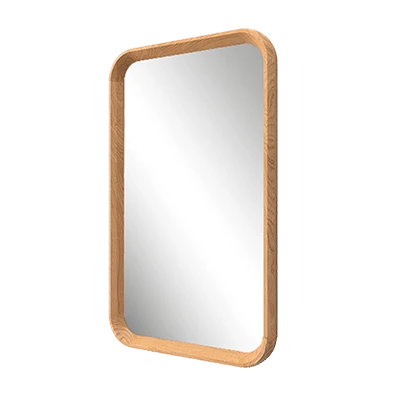
The mirror area may include molding as part of the frame or as additional decorative lines around the border. If the profile does not form a closed corner, a tip helps to finish it smoothly. This is especially useful in classic interiors, hallways, bedrooms, dressing rooms, and salons.
For a mirror, it is important not to conflict with the frame. If the mirror is already framed with a baguette or strong decor, the tips should support it, not create a second competing frame.
Classic furniture compositions
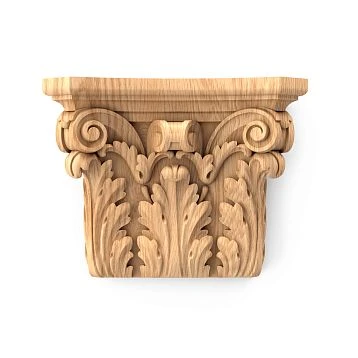
In classic furniture, moldings often work together with overlays, rosettes, pilasters, capitals, and other carved decor. The tip in such a system may seem like a small detail, but it is what makes the edge neat. Without it, even an expensive profile can look cut off.
In a complex composition, it's better to count all the details at once: straight molding, left tip, right tip, corner elements if necessary, central overlays, and trim. That way, the purchase doesn't break down into random orders.
What to buy together with a molding finial
A finial is almost never bought without a molding. It is designed for a specific profile series and only works in conjunction with a linear piece. Therefore, you first need to understand which molding is used, and then select the left and right end pieces. If the frame is closed, corners may be needed. If the composition is complex, overlays and other decorative elements may appear nearby.
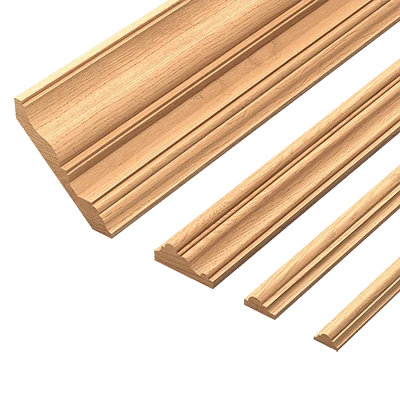
To select a straight profile, you can look at STAVROS wooden moldings. For choosing ends, right and left pieces, as well as other details for profiles, the section is convenient Decor for STAVROS moldings.
| What to add to the purchase | Why this is needed | What to pay attention to |
|---|---|---|
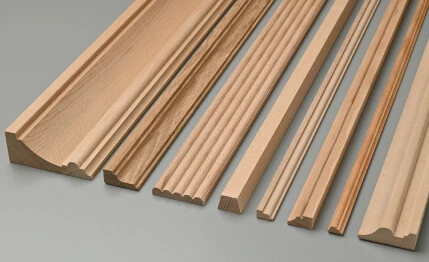
| STAVROS wooden moldings | The main linear piece of the frame to which the tip is matched. | Profile series: MLD-001, MLD-003, MLD-004, or another. |
| Left tip | Closes the left open end of the molding. | Index L, compatibility with the series, and installation location on the diagram. |
| Right tip | Closes the right open end of the molding. | Index R and the presence of a paired element in the required series. |
| Corner elements | Needed if the frame does not end but turns into a corner. | Do not confuse the corner with the end cap. |
| Finishing materials | Needed if the frame will be painted, tinted, or coated with enamel. | All elements must be compatible in material and preparation. |
How not to confuse the end cap with similar elements
In molding decor, there are many small details, and the buyer easily confuses them. In a photo, a cap, corner, connector, and overlay may appear to be elements of the same group, but in an actual frame, they work differently. An error leads to the required assembly not being completed: the end is not closed, the corner is not formed, the line does not join.
| Element | Main task | Typical mistake |
|---|---|---|
| Tip | Closes the end of the molding. | Trying to use it instead of a corner. |
| Corner element | Forms a frame corner. | Buying a corner when you need to close an open edge. |
| Connecting element | Joins sections of molding in a straight line. | Expect it to finish the end decoratively. |
| Overlay | Works as an independent decorative accent. | Use instead of a profile-compatible part. |
| Molding | Main linear frame part. | Leave its end open on the front surface. |
Practical selection for different situations
Need to create a short furniture frame
A short frame on the facade of a chest of drawers, cabinet, or wardrobe often does not close into a full rectangle. In this case, the ends of the molding are especially visible. Here, left and right end caps from the same profile series are needed. For MLD-001, you can start with a card buy carved tip for molding N-438.1L and then select the matching side.
Before ordering, measure the frame length, space for end caps, and distance to handles. On small furniture, even a few extra millimeters can make the composition feel cramped.
Need to complete the decorative vertical on the door
On a door panel, vertical molding can end at the top and bottom. If the ends are exposed, they need to be neatly closed. End caps will help make the top and bottom of the decorative line finished, but you need to correctly determine the sides and direction of the pattern.
For a door, it is especially important that both sides look the same. If there are several identical lines on one panel, it is better to count the end caps for the entire set at once, rather than buying them later.
You need to assemble a frame on the wall panel
A wall panel is often larger in scale than a furniture door. A more expressive profile and a corresponding tip may be required here. If MLD-003 is used, it's worth looking carved tip N-364.1L for MLD-003 and clarifying the paired elements.
Readability from a distance is important on the wall. A tip that is too small can get lost, while one that is too large can look heavy. Therefore, compare not only product photos but also the dimensions in the product card.
You need to make an expressive frame with MLD-004
If MLD-004 is chosen, the tips must be selected specifically for this series. For such a scenario, the scheme includes carved tip N-402.1L for MLD-004. It helps to close the left end and maintain the decorative logic of the profile.
The right element needs to be found in the general decor system for moldings so that the set is paired. If only the left side is ordered, the frame may remain unfinished.
You need to select decor for moldings for the workshop project
For the workshop, it is important not only to choose a beautiful detail but also not to stop assembly due to missing elements. For a series of facades, doors, or panels, it is better to prepare a specification in advance: molding, left tip, right tip, corners if necessary, finishing materials. General section Decor for STAVROS moldings helps to assemble such a system.
Installation, finishing, and preparation of the frame
The tip may seem like a small detail, but it requires precise preparation. If the molding is cut unevenly, if the end does not match the tip, if the elements differ in material or finish, the finished frame will look untidy. Therefore, before installation, you need to check the series, size, side, and future treatment.
First the diagram, then the purchase
Do not start by buying one tip you like. First, draw the frame: where the molding runs, where it ends, where it turns, where corners are needed, where left and right ends are needed. After that, it will become clear how many elements need to be ordered.
Check the joint with the straight molding
The end element must match the profile. If the molding and tip belong to different series, the joint may not align in height, width, or relief. Therefore, the pairings "for MLD-001", "for MLD-003", "for MLD-004" should be taken as an important instruction, not as a minor note.
Material and finish must be common
If the frame is painted with enamel, all elements must be compatible with the chosen finish. If a natural wood texture is used, it is even more important to select the material and shade. Current options for material and finish are best checked in product cards or clarified with a STAVROS manager.
Do not leave the selection of the right side for later
If the frame requires left and right tips, it's better to order a set right away. Otherwise, you may end up with the molding and the left piece on hand, but missing the right side. Use the general section to check paired parts. Decor for STAVROS moldings.
Mistakes when choosing a molding tip
Buying a tip as a corner piece
A tip does not form a corner. It covers the end. If you need a closed frame where the molding turns 90 degrees, look for corner elements. If the line ends openly, you need a tip. This difference saves money and time on exchanges.
Not checking left and right sides
The most common mistake is ordering only the left piece or mixing up the side. One line often requires L and R. For multiple lines, the quantity increases. Before purchasing, be sure to draw a diagram and mark each open end.
Matching the tip to the wrong series
N-438.1L is designed for MLD-001, N-402.1L for MLD-004, N-364.1L for MLD-003. If you install a piece for a different profile, the joint may not match. This is immediately visible in a decorative frame.
Choosing only by photo
It's hard to judge scale, relief depth, and precise fit from a photo. A tip may seem suitable but turn out too large or too small on the actual facade. Before ordering, check the dimensions in the product card.
Not considering the finish
If the molding and tip will be painted, after finishing, joints, material mismatches, and different profiles may become more noticeable. It is better to select elements from the same series in advance and check the material.
Buying tips without straight molding
The tip does not work on its own. It completes a linear part. So if a straight molding has not been selected yet, first look STAVROS wooden moldingsand then select the end pieces.
Who carved molding tips are suitable for
Carved tips are suitable for furniture makers, carpenters, designers, owners of classic interiors, and customers who assemble decorative frames from wooden moldings. They are especially useful for facades, doors, panels, mirror areas, and furniture where the end of the profile remains visible.
Such elements should be considered if a neat, finished line without a rough cut is needed. They help make a furniture frame more professional, especially when the molding is not used along the full perimeter but as an open decorative line.
A tip may be unnecessary if the molding is fully closed through corners, its end is hidden by another part, or the project is done in a minimalist logic where the open edge is finished differently. In such cases, you should not buy an extra element but choose the right way to finish the profile.
How to buy a molding tip on STAVROS
It is best to start the purchase with the molding series. If MLD-001 is used, check buy carved tip for molding N-438.1L and the paired right element in the catalog. If MLD-004 is needed, look at carved tip N-402.1L for MLD-004If the project is based on MLD-003, open carved tip N-364.1L for MLD-003.
For a general selection, open Decor for STAVROS moldings. It's more convenient to check the entire system there: left and right elements, compatibility with series, availability of required positions, and adjacent decor. If a straight profile hasn't been chosen yet, start with the card STAVROS wooden moldings.
Before ordering, check the side, molding series, dimensions, material, future finish, and number of elements. If the frame is complex, it's better to make a diagram in advance and clarify compatibility with a STAVROS manager. This way, the purchase will not be a set of individual parts, but a ready-made kit for a neat furniture or interior frame.
FAQ
What is a molding tip for?
The tip covers the open end of the molding and completes the decorative line. It is needed where the profile does not go into a corner and is not hidden by another part.
How does a left tip differ from a right one?
Left and right tips cover different sides of the molding. They may differ in the direction of the ornament and the shape of the finish. The left element cannot be automatically used instead of the right one.
Can a tip be installed without a molding?
No, the tip works as a part for the molding. By itself, it does not replace a linear profile and does not form a frame.
How to know which molding the tip fits?
You need to look at the series in the product card. For example, N-438.1L is linked to MLD-001, N-402.1L to MLD-004, N-364.1L to MLD-003.
How many tips are needed for one furniture frame?
If the molding has two open ends, usually left and right tips are needed. If there are several such lines, the quantity is counted for each open edge.
How is a tip different from a corner element?
A tip finishes the end of the molding. A corner element forms a frame turn and connects two lines at an angle.
Can a carved tip be painted with enamel?
The possibility of finishing should be checked in the specific product card. If the frame will be painted, it is better to select the molding and tip in the same material and finishing logic.
Which material to choose: beech or oak?
The material should be checked in the product card. Beech is often considered for painting and enamel, oak for expressive wood texture, but the availability of a specific option depends on the product.
What should be bought together with a tip for molding?
You need a straight molding of the corresponding series, a paired left or right tip, and for a closed frame — corner elements. Also, materials for installation and finishing should be considered in advance.
Where to buy carved STAVROS tips?
Carved tips can be viewed in the cards of specific models and in the decor section for STAVROS moldings. It's best to start choosing with the molding series and the frame layout.
Can a tip be used for a wall panel?
Yes, if the molding on the wall panel has an open end and the selected tip is compatible with the profile. It's important to consider the panel scale and viewing distance.
What to do if the right side is needed, but only the left card is available in the scheme?
You need to open the general decor section for moldings and check the paired right element for the same series. Do not replace the right side with a left element without checking compatibility.
Result: the tip completes the molding where a corner is not needed
A molding tip is a small but important detail for a neat furniture frame. It covers the open end of the profile, helps maintain the decorative logic of the line, and saves the facade, door, or panel from feeling like an unfinished cut. It should not be confused with a corner element: the corner forms the turn of the frame, while the tip finishes the edge.
The main thing when choosing is the molding series, side, dimensions, relief, material, and future finish. For MLD-001 you can buy carved tip for molding N-438.1L, for MLD-004 look carved tip N-402.1L for MLD-004, for MLD-003 — carved tip N-364.1L for MLD-003. To select the right sides and the whole system, it is convenient to open Decor for STAVROS moldings.
If a straight profile has not been selected yet, first look at STAVROS wooden moldings, then calculate the number of open ends and only after that select the left and right tips. This route helps to assemble the frame as a finished decorative system, rather than looking for missing elements after installation.