




























































Article Contents:
- What is a custom wood project
- Why not everything needs to be made from scratch
- What to buy for a custom project
- Decorative appliqués
- Wooden rosettes
- Capitals
- Brackets
- Pilasters and Columns
- Wooden frame
- Handrails
- Project style
- Scale of the room or furniture
- Material and finish
- Depth of carving and protrusion
- Compatibility with other parts
- Need to design a furniture facade
- Need to assemble a portal
- Need to design a mirror or panel
- Need to make a decorative shelf
- Need to finish a stand or vertical
- Buying elements without an overall scheme
- Mixing different carving styles
- Not considering the scale
- Overloading the facade
- Don't plan finishing
- Buy one part when you need a pair or set
- Don't account for depth and protrusion
- What to buy for a custom wooden project?
- Why you don't have to make decor from scratch?
- Which elements are suitable for furniture?
- What to choose for a portal?
- How not to overload a custom project?
- What is better to choose: overlays, rosettes, pilasters or capitals?
- Are ready-made elements suitable for designers and craftsmen?
- Can wooden decor be used in a modern interior?
- How to check if an element will fit in size?
- What to buy together with wooden overlays?
- How to choose a wooden baguette for an author's project?
- When are wooden finials needed?
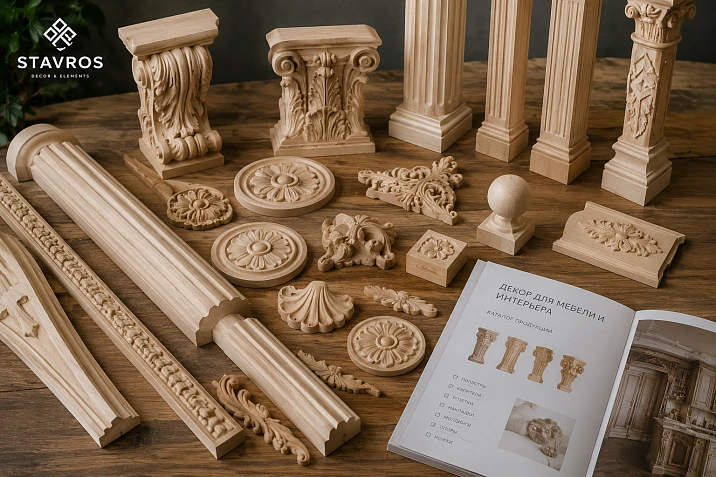
When you need to buy decorative wooden elements for an author's project, it is important not to start with a chaotic selection of "beautiful details." First, you need to understand the task: what exactly is being created — a furniture facade, a portal, a mirror, a shelf, a wall composition, a decorative stand, a classic panel, an interior zone, or a set for a private house, restaurant, office, or salon. This determines which elements will be needed: overlays, rosettes, capitals, brackets, baguettes, pilasters, columns, finials, or other carved details.
An author's project made of wood does not mean that every detail must be hand-carved from scratch. Often, a strong result is assembled differently: a designer, carpenter, or homeowner selects ready-made carved elements, matches them by style, size, material, and finish, and then assembles them into a complete composition. This approach saves time, reduces the risk of errors, and helps achieve a neater result than randomly buying disparate decor.
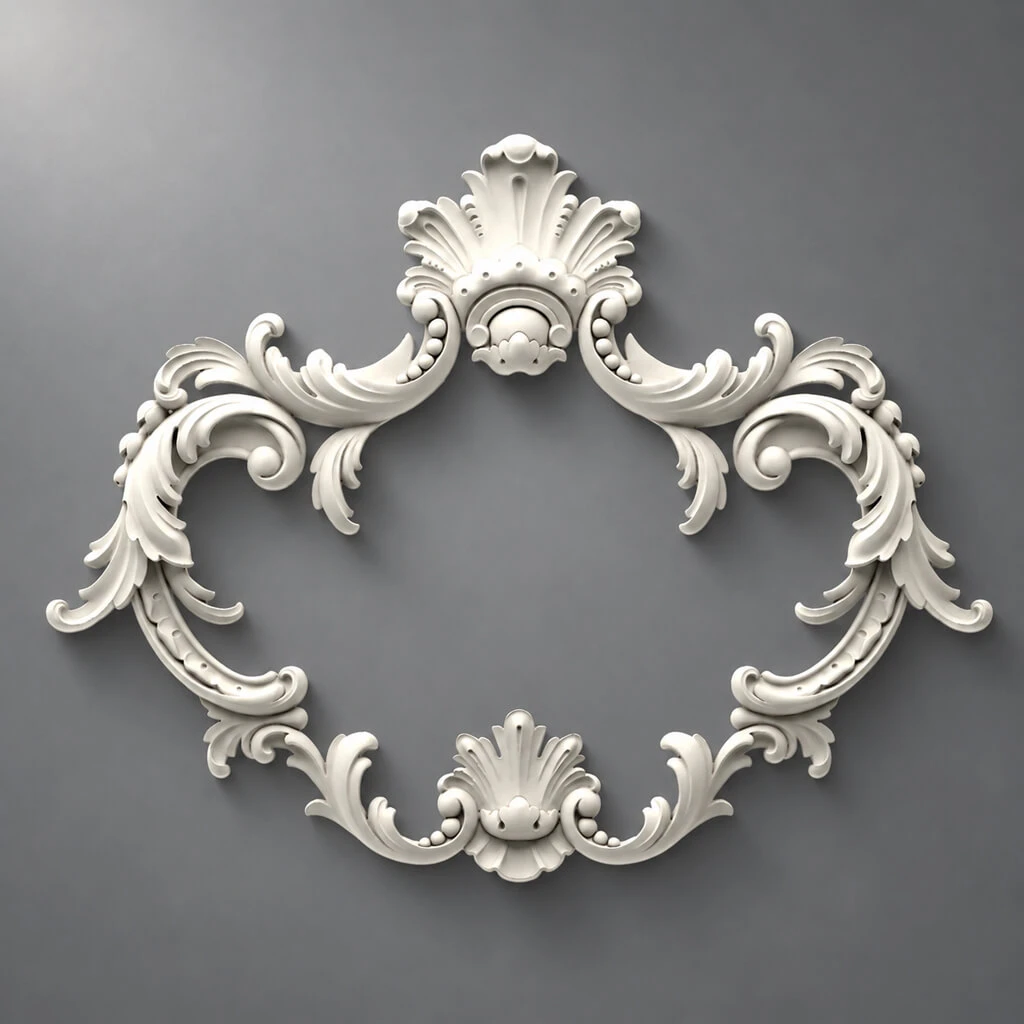
You can choose on STAVROS Carved wood decor STAVROS for furniture, portals, walls, mirrors, shelves, column zones, and classic interiors. In the catalog, it's convenient to view not just one element, but the entire set: Decorative wooden inlays for facades, wooden rosettes for decor for central accents, wooden capitals for vertical compositions, Decorative wooden brackets for shelves and consoles, wooden pilasters and columns for portals, Wooden Picture Frame for frames and trims, as well as Wooden Caps for finishing vertical details.
This article helps you understand what to buy for a custom wood project, how to assemble a set rather than a random collection of decorations, why ready-made elements are more convenient than carving from scratch, which details suit furniture, portals, and interiors, how to avoid overloading the project, and what to check before ordering from STAVROS.
What is a custom wood project
An author's wooden project is a furniture or interior piece where details are selected for a specific idea, size, style, and task. It could be a chest of drawers with carved overlays, a portal with pilasters and capitals, a mirror in a wooden frame, a decorative shelf on brackets, a wall composition with rosettes and frames, a classic furniture facade, a reception area, a restaurant interior, or an office with wooden decor.
In such a project, not just one beautiful element matters, but the entire system. The overlay must match the facade. The rosette must match the center of the composition. The capital must match the pilaster or column. The frame must match the molding, mirror, or panel. The bracket must match the shelf and load. The finial must match the vertical post. If elements are purchased without an overall logic, the project looks random: each detail is beautiful on its own, but together they clash in scale, carving, depth, and style.
Ready-made wooden decorative elements for furniture and interiors help assemble an author's project faster and more accurately. The buyer does not need to redevelop every carved shape, search for a craftsman for all the small details, and risk mismatched ornaments. They can choose ready-made products, compare them in the catalog, check dimensions in the cards, and assemble a set for a specific task.
This approach is especially useful for designers, carpentry workshops, furniture manufacturers, owners of country houses, restaurants, hotels, salons, and private clients. An author's project does not become less individual because it uses ready-made elements. Individuality appears in how these details are selected, arranged, finished, and connected to each other.
Why not everything needs to be made from scratch
In an author's project, there is often a desire to make every detail by hand: carve overlays, turn columns, invent capitals, fit brackets, find molding, assemble finials and decorative inserts. This path is possible, but it requires time, skills, equipment, and extensive experience. A mistake in one detail can ruin the entire project: the ornament doesn't match, the carving depth turns out different, the shape doesn't fit the scale, the material behaves differently during finishing.
Ready-made elements solve this problem. The carving is already done. The shape is clear from the card. Categories help select adjacent details. You can compare overlays, rosettes, capitals, brackets, pilasters, molding, and finials in advance, and then assemble a set for the project. The craftsman or designer focuses not on making every little thing, but on composition, proportions, finishing, installation, and the final look.
This is especially important where symmetry is needed. If a facade has two identical overlays, they must be identical. If a portal is framed with two pilasters, they must match in height and style. If a mirror is framed with molding, the profile must be even along the entire contour. If a shelf is held by two brackets, they must be a pair. Ready-made elements help maintain this precision.
Another advantage is the ability to assemble the project gradually. First, choose the main section Carved wood decor STAVROS, then determine the central element, then select verticals, frames, corners, support, finishes, and trim. This way, the project does not fall apart into random purchases.
| What is needed in the project | What the finished element provides | What error it helps avoid |
|---|---|---|
| Carved accent on the facade | A ready-made overlay or rosette with a clear shape. | Random hand carving that didn't match the scale. |
| Vertical composition | Pilaster, column, capital, or finial. | Inconsistent height, weak symmetry, unfinished top. |
| Frame for a mirror or panel | Wooden baguette and adjacent carved decor. | Mismatch in profile, thickness, and decorative line. |
| Support for a shelf or console | Paired brackets with decorative shape. | Weak visual support, random metal holders. |
| Post termination | Wooden finial. | Cut vertical without termination. |
Our factory also produces:
What to buy for a custom project
To assemble a custom wood project, first break it down into functions. Where will the center be? Where are the verticals? Where are the frames? Where is the support? Where are the corners? Where are the terminations? After that, it becomes clear which categories to look at. This approach helps you buy decorative wood furniture elements not based on 'liked it,' but for a specific role.
Get Consultation
Decorative inlays
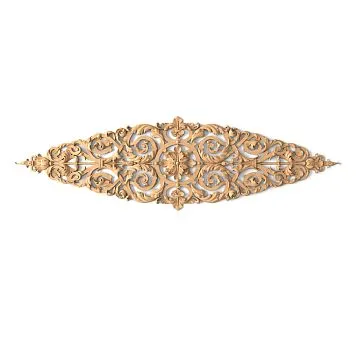
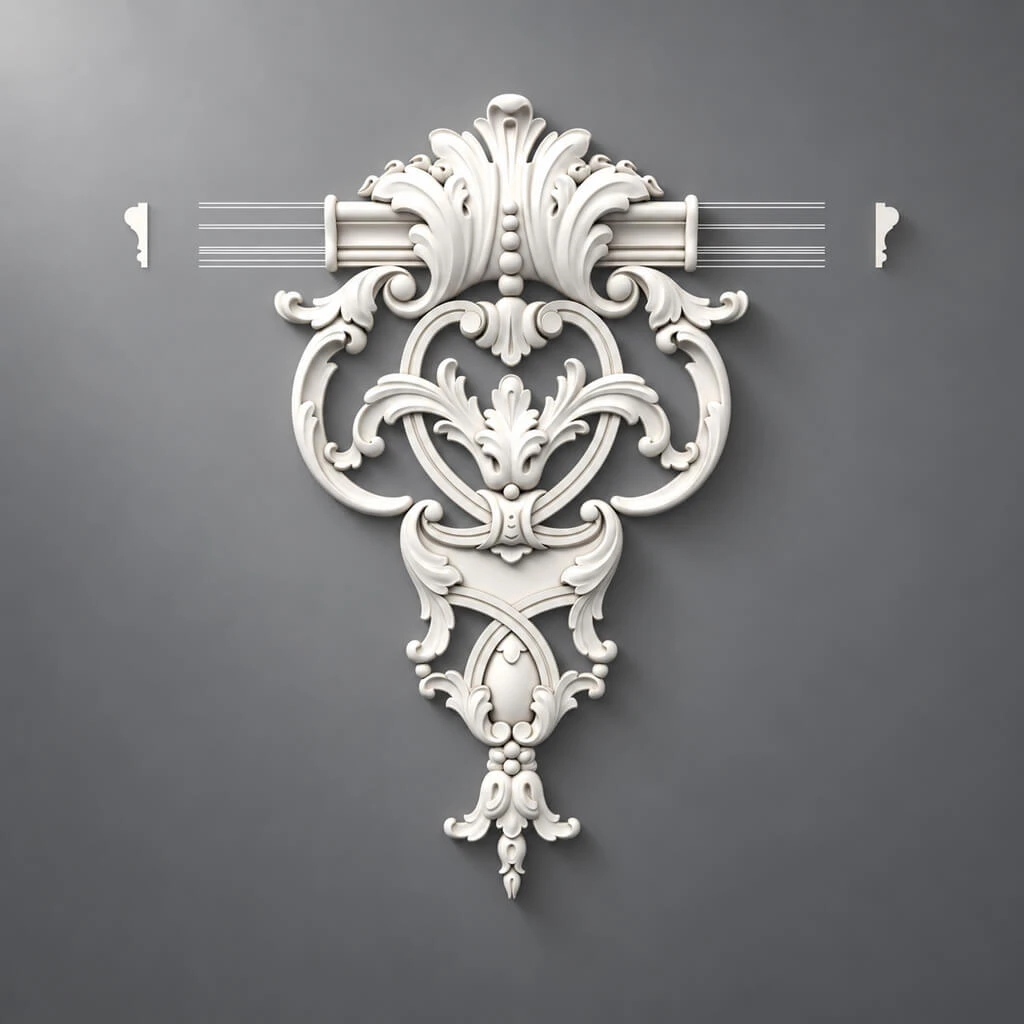
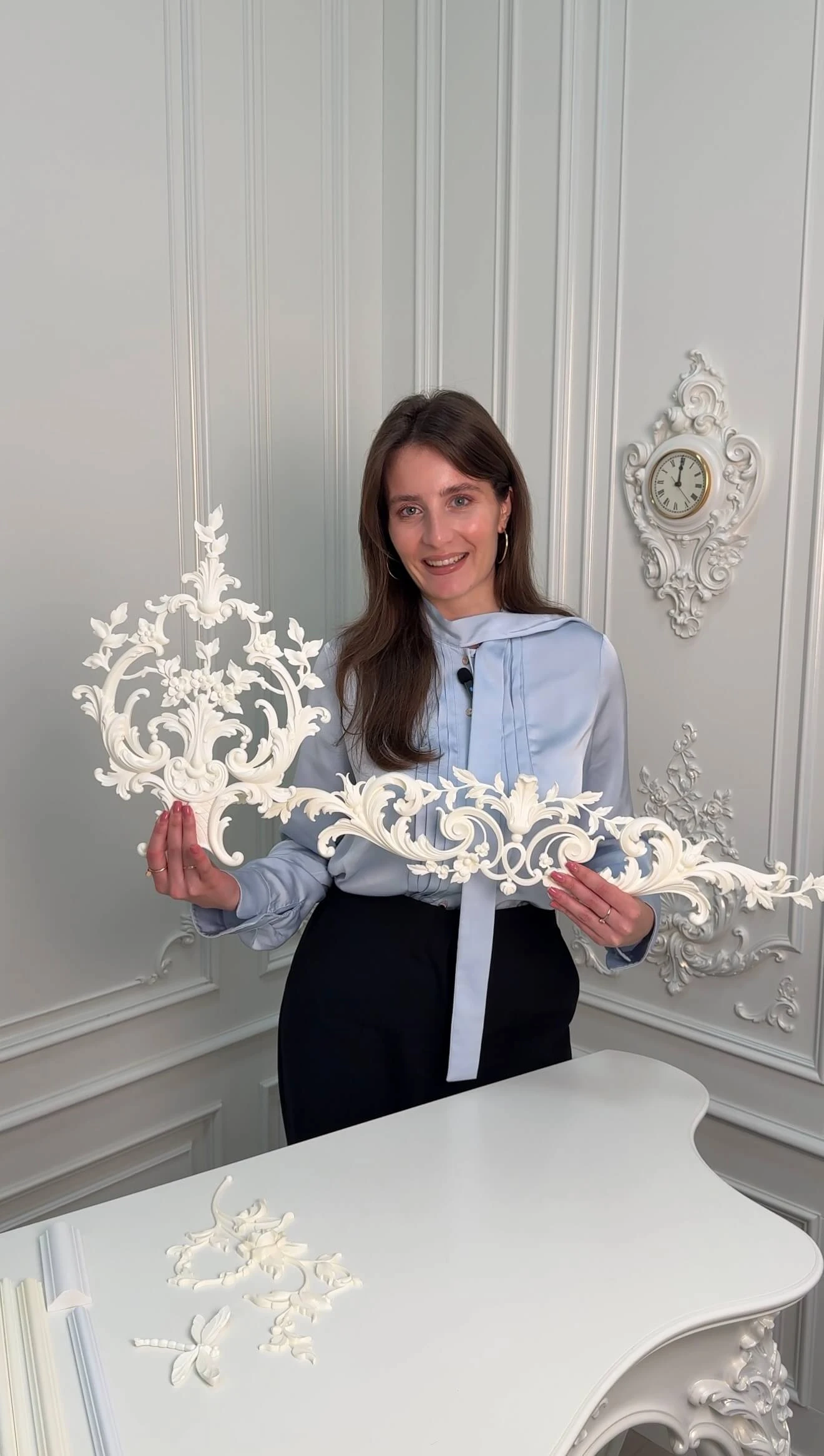
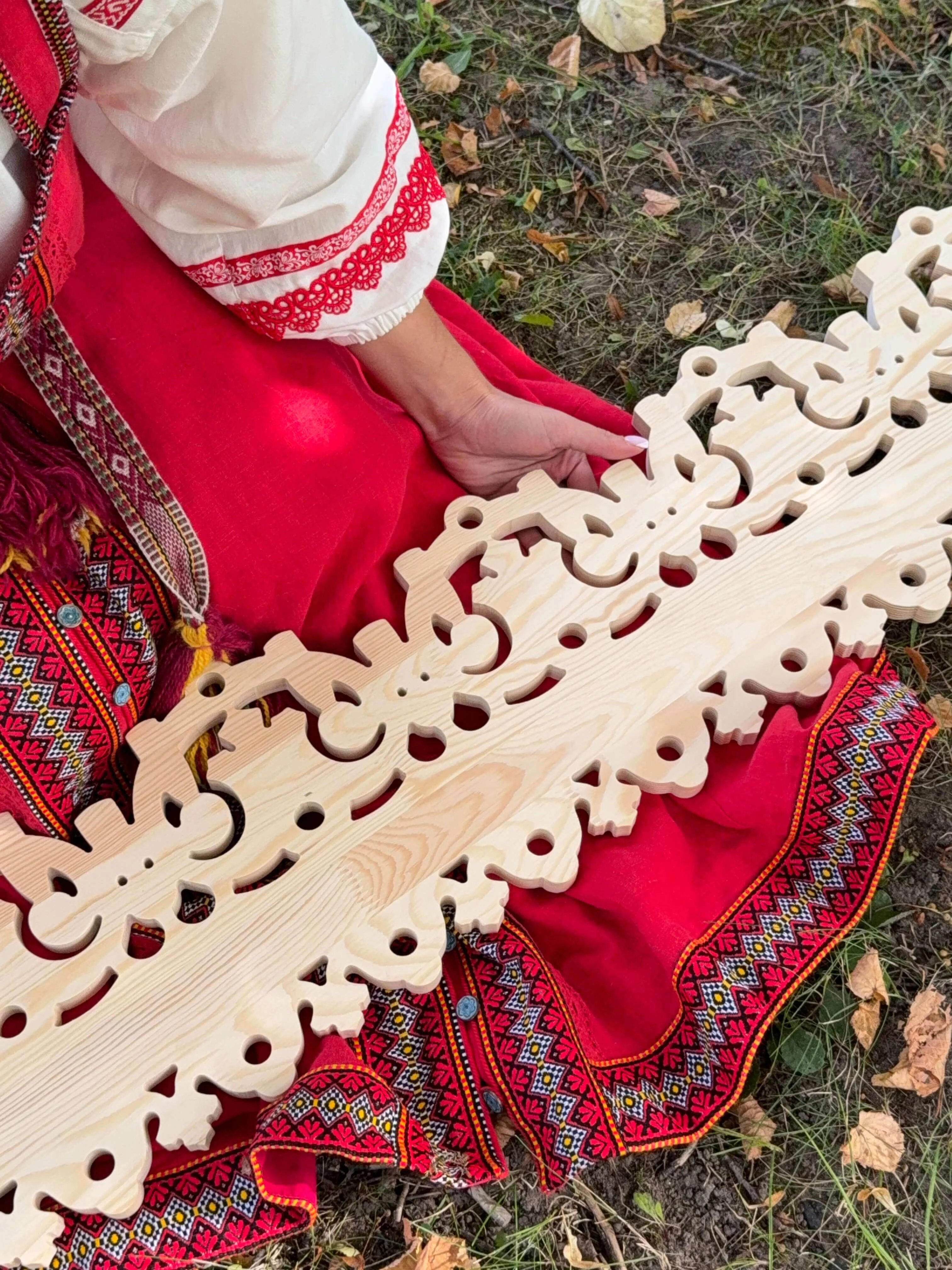
Decorative wooden inlays suitable for furniture fronts, side panels, door zones, panels, raised panels, central areas, and accent spots. This is one of the most flexible types of wooden decor: the overlay can be used as a standalone accent or as part of a complex composition.
On furniture, the overlay helps cover an empty area of the front, add relief, support a classic style, and connect the central part with side elements. In an interior, it can work on panels, portals, doors, wall zones, or decorative inserts. The main thing is not to choose the overlay separately from the surface. You need to understand in advance where it will be placed, what size the front can handle, and whether the pattern will clash with handles, moldings, rosettes, or baguettes.
If the task is to "buy decorative wooden elements for furniture," overlays often become the first item to browse. They provide a noticeable effect without completely rebuilding the furniture and are well-suited for custom fronts, sideboards, dressers, kitchen modules, and decorative panels.
Wooden rosettes
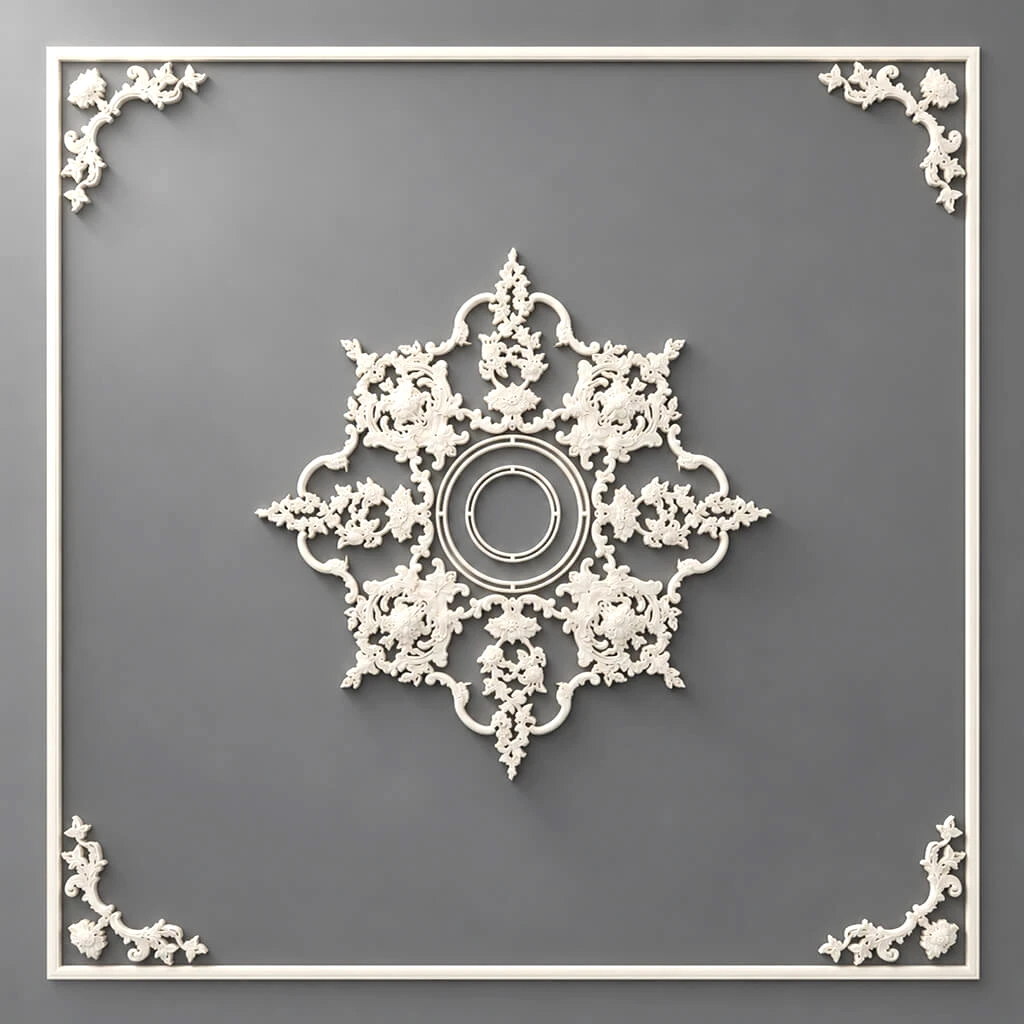
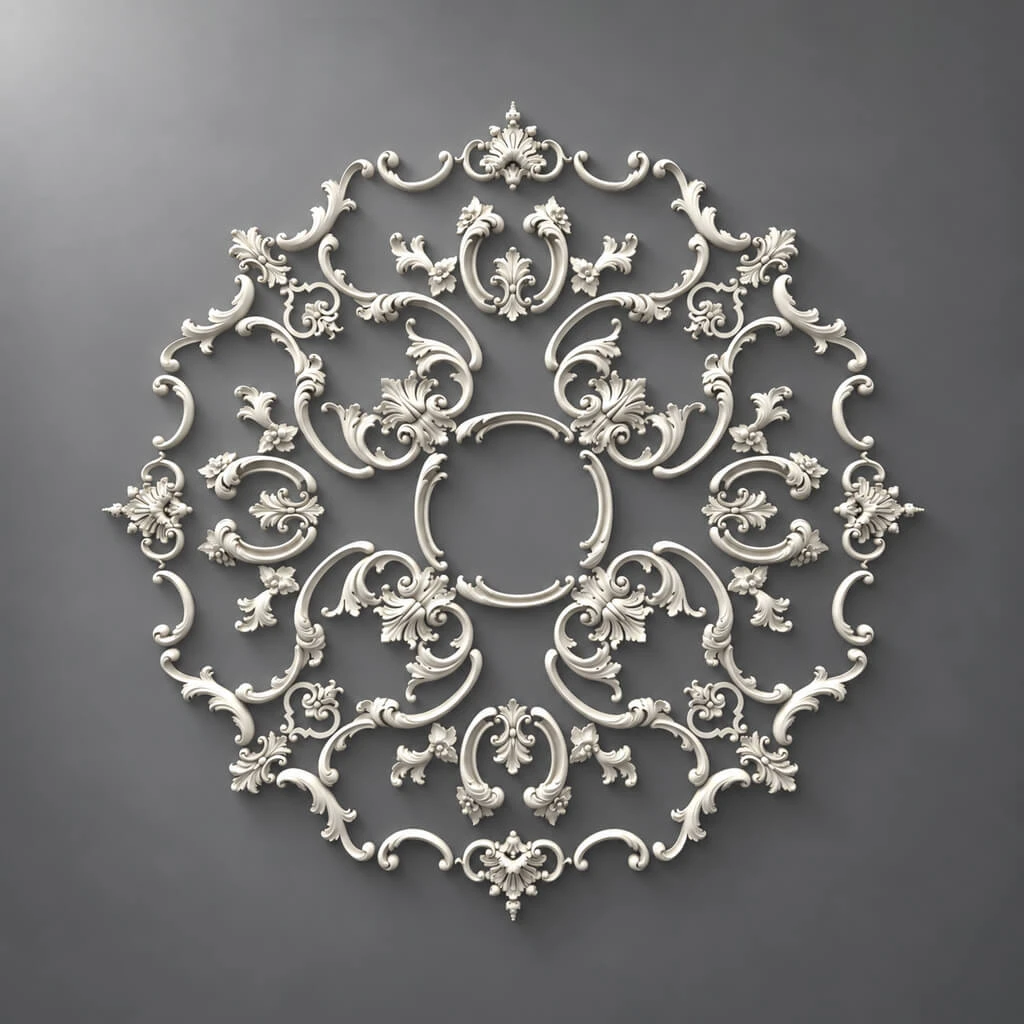
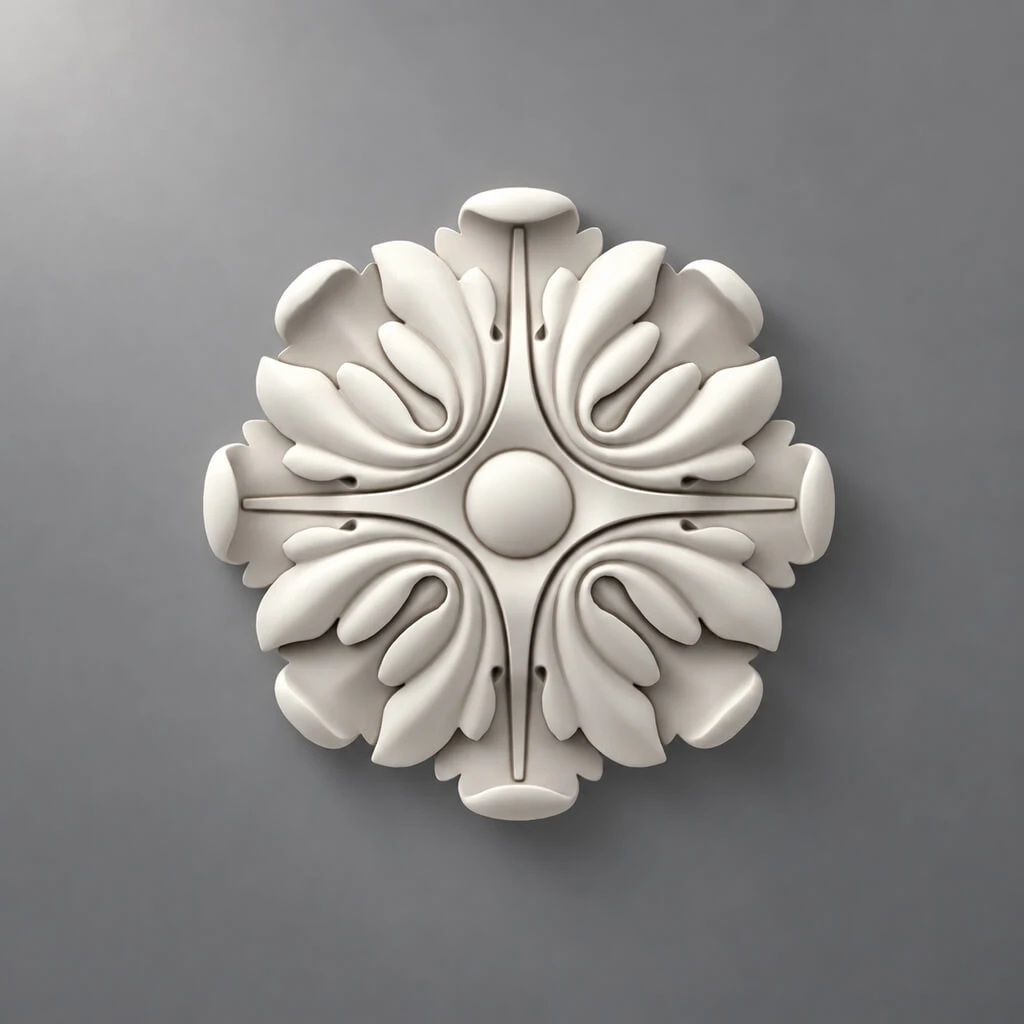
wooden rosettes for decor are needed where a central accent, symmetry, or a finished compositional point is required. A rosette can be placed in the center of a furniture front, at the corner of a frame, in a portal, on a wall panel, near a mirror, or in a decorative zone.
A rosette is especially useful when a project lacks a center. For example, a large panel looks empty, a front appears flat, a portal needs a decorative point, or a mirror frame requires corner or central reinforcement. In such cases, the rosette helps focus the eye and make the composition clearer.
But it's easy to overuse a rosette. If the project already has a lot of carving, large capitals, complex overlays, and active baguettes, an additional central element can overload the surface. Therefore, it's better to use a rosette as a main accent or as a repeating symmetrical detail, rather than as a random decoration.
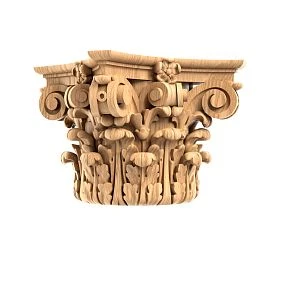
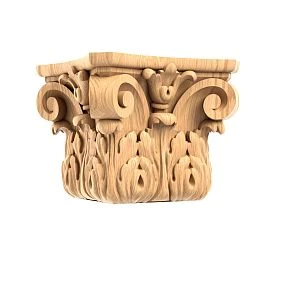
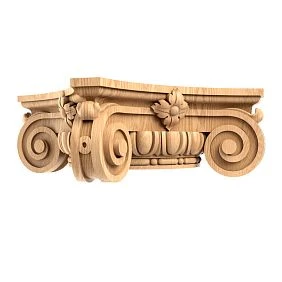
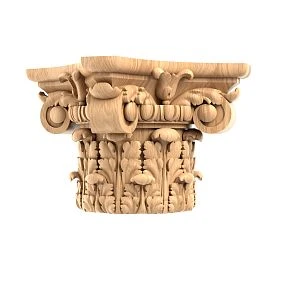
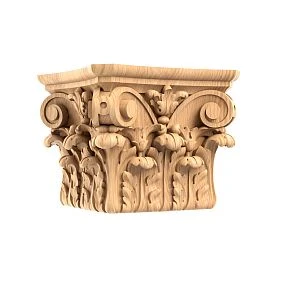
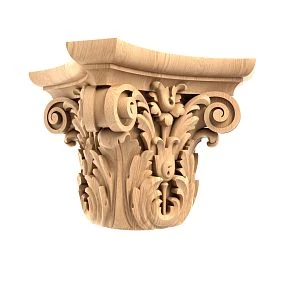
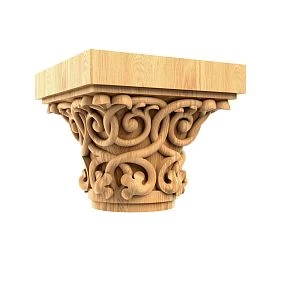
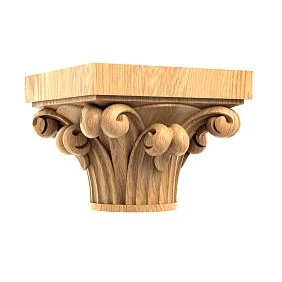
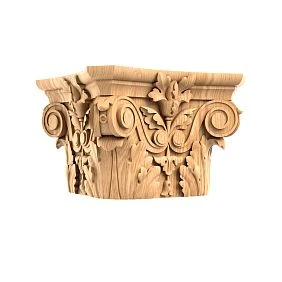
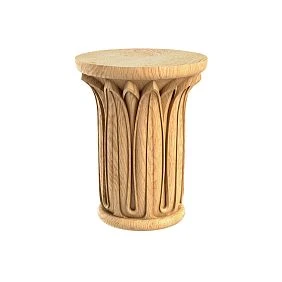
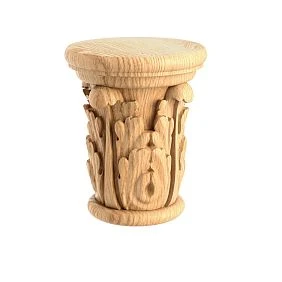
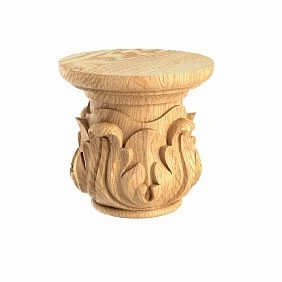
Capitals
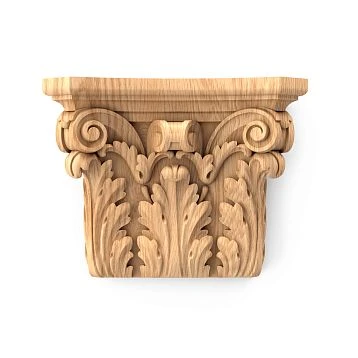
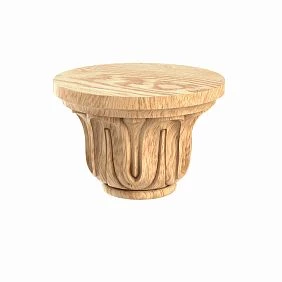
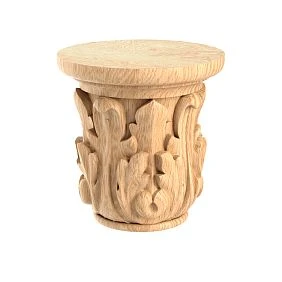
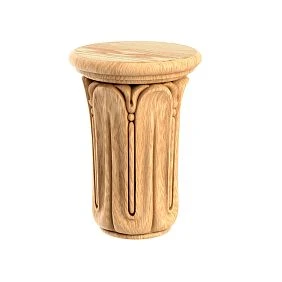
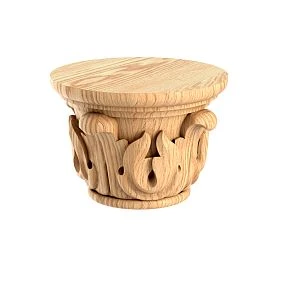
wooden capitals are needed for columns, pilasters, portals, and vertical classical compositions. The capital completes the top of the vertical element and makes the component architecturally clear. Without it, a pilaster or column can sometimes look like just a decorative strip placed there.
In a custom project, the capital helps show that the vertical element is not accidental. It has a base, a body, and a top finish. This is important for door portals, fireplace zones, furniture posts, library cabinets, classic kitchens, decorative openings, and wall compositions.
The capital should be selected based on width, carving style, height, and scale. If it is too large, the top of the composition will become heavy. If too small, the vertical will lose expressiveness. The capital should complete the pilaster or column, not compete with it.
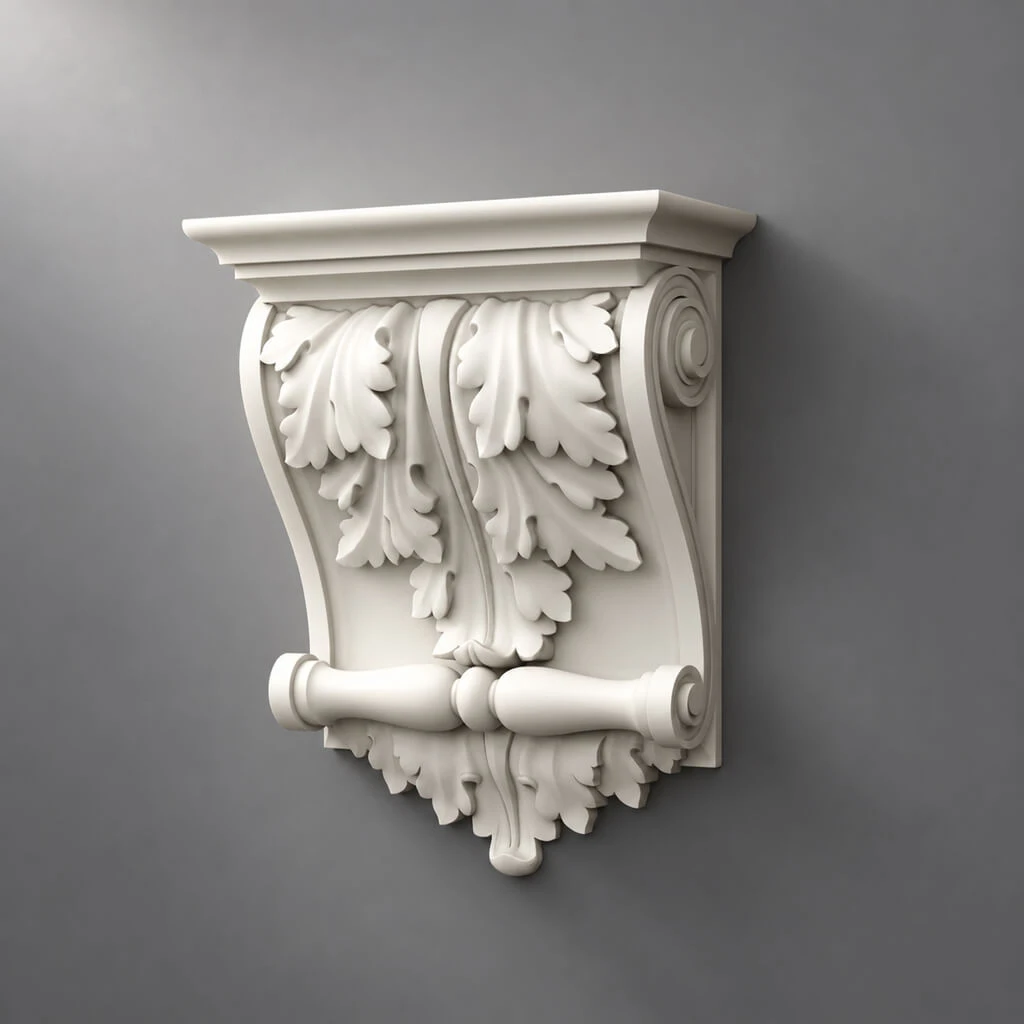
Brackets
Decorative wooden brackets They are used for shelves, consoles, portals, decorative support, and accent elements. They are especially important where a detail should not only decorate but also visually explain why a shelf, ledge, or top part is held in that particular way.
In a custom project, a bracket can become a paired element under a shelf, decorative support for a portal, side reinforcement of a console, part of a furniture stand, or an accent in a classic zone. It works best when chosen not separately, but together with the shelf, molding, overlays, and the overall furniture line.
Brackets are often bought in pairs. A single piece may only be suitable for a narrow task, but for a shelf, console, or portal, symmetry is almost always important. Therefore, before ordering, you need to know the quantity, installation location, and size of the support area.
Pilasters and columns
wooden pilasters and columns They are needed for vertical division, portals, furniture, and interior zones. They create the architecture of the project: set the height, highlight side parts, frame an opening, enhance symmetry, and connect the top with the bottom.
A pilaster usually works on a plane: furniture facade, side panel, wall panel, portal, niche. A column is perceived as more voluminous and stronger. It is chosen where the vertical should be an independent accent. For a custom project, it is important to decide in advance what is needed: a light vertical division or a noticeable columnar form.
Pilasters and columns almost always require adjacent details: capitals, bases, moldings, overlays, finials, or trim. If you only buy the verticals, the composition may remain unfinished.
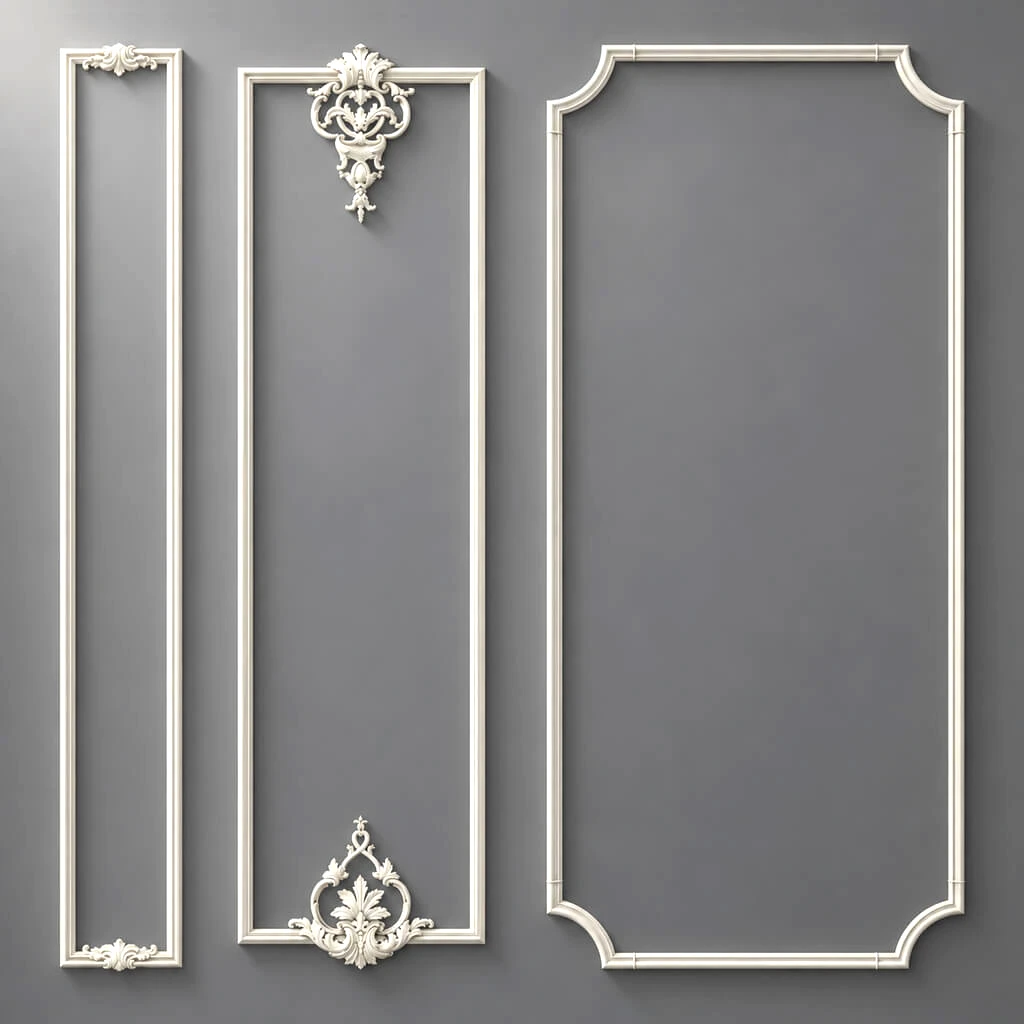
Wooden baguette
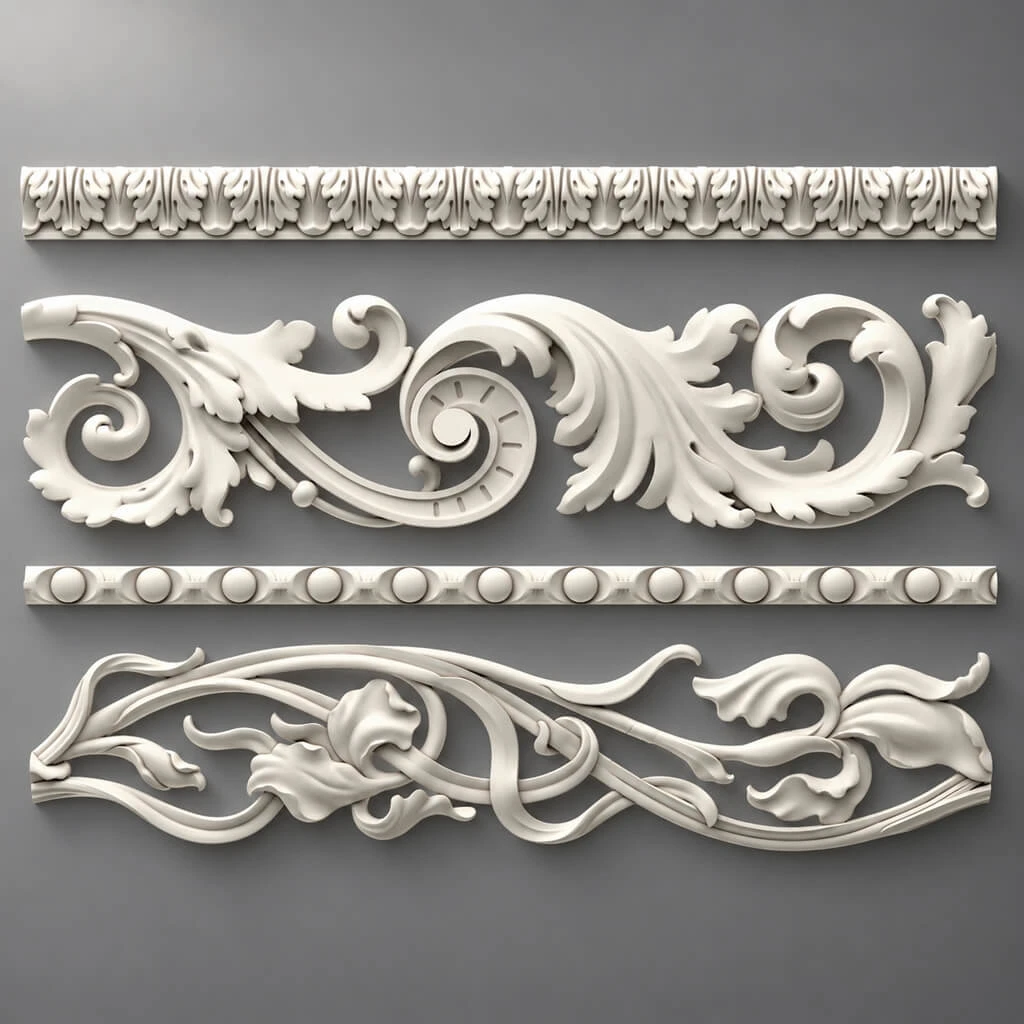
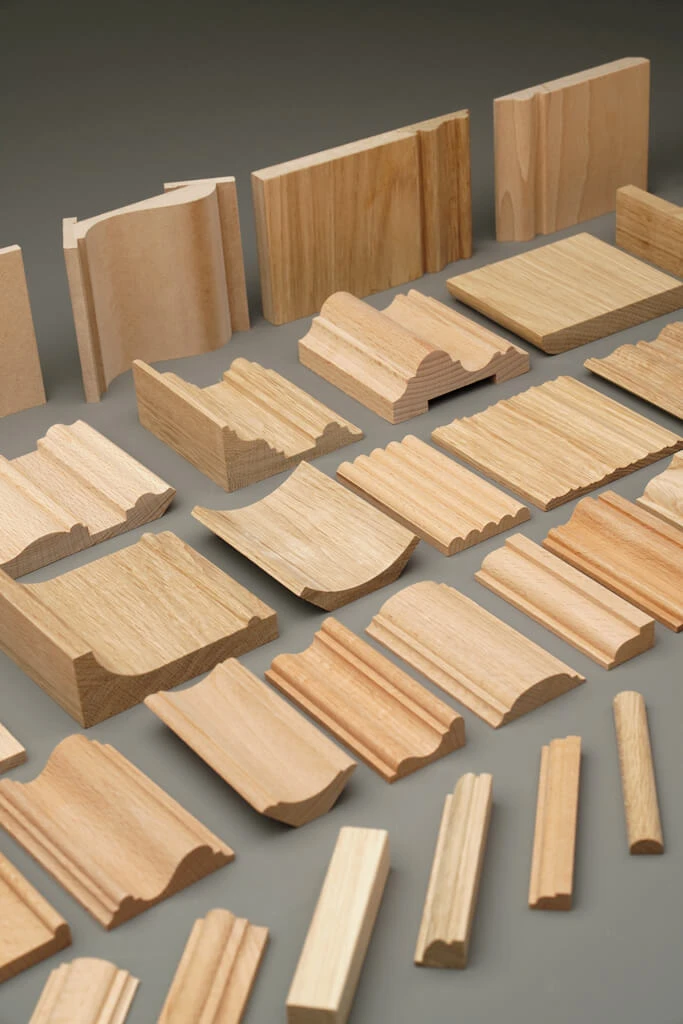
Wooden Picture Frame It is needed for frames, mirrors, panels, decorative contours, and borders. It helps turn a plane into a finished frame: a mirror gets a border, a panel gets a contour, a facade gets architecture, a wall area gets a finished edge.
In a custom project, molding often works as a connecting element. An overlay provides an accent, a rosette provides a center, a pilaster provides a vertical, and molding assembles the contour. Without molding, individual carved elements may hang on the surface as decorations without a common frame.
When choosing molding, it is important to look at the profile, width, depth, and adjacent elements. Too thin molding will get lost next to large pilasters. Too massive will overload a mirror or panel. It should support the composition, not argue with the main decor.
Handrail caps
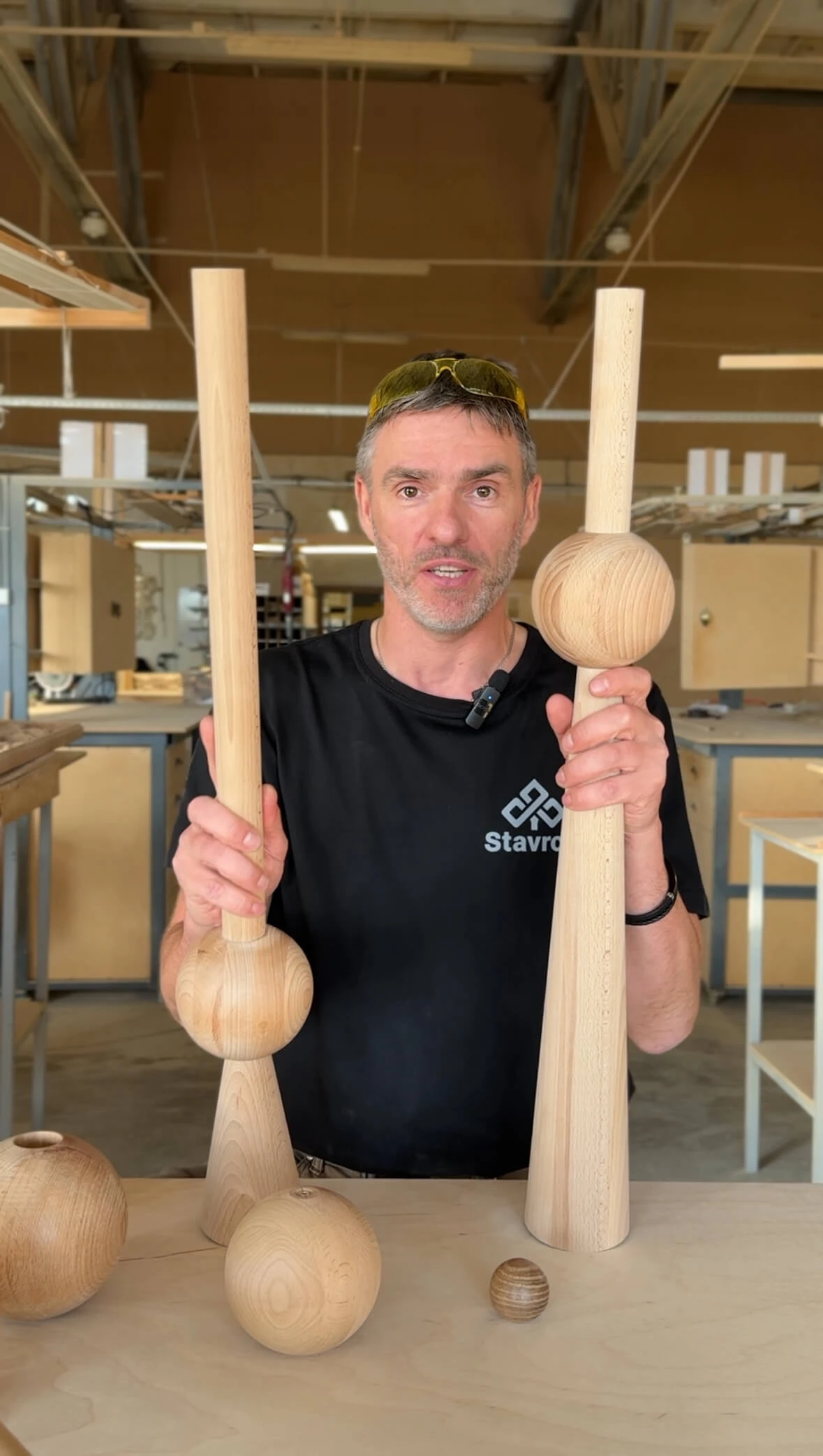
Wooden Caps used to complete vertical elements, pillars, decorative posts, and interior accents. They are needed where a vertical line should not end abruptly. The finial puts a finishing touch on the composition and makes the top look finished.
In custom projects, finials can be used on posts, decorative columns, stair area elements, portal details, furniture verticals, and interior compositions. They are especially noticeable at eye level or above, so the shape must match the overall style.
A finial should not be placed where the vertical line needs to be as strict and unobtrusive as possible. But if the project is classic, decorative, or formal, such a detail helps make the composition complete.
How to choose elements for the project
The choice begins not with a catalog, but with the role of each element. You need to understand what the detail does: creates a center, frames a corner, supports a shelf, defines a vertical, completes a post, frames a mirror, or decorates a facade. When the role is clear, choosing the product is easier.
Project style
Classic, neoclassical, Empire, Provence, cabinet style, restaurant interior, and modern decorative eclecticism require different amounts of carving. In a classic project, you can use capitals, pilasters, rosettes, and baguettes. In a more restrained interior, it is better to leave one main accent and not overload the surface.
If the style is calm, start with a frame, baguette, or moderate overlay. If the style is formal, you can add pilasters, capitals, and rosettes. For a commercial interior, it is important that the decor looks good both up close and from a distance.
Scale of the room or furniture
The size of the element should match the surface. A large overlay on a small facade looks heavy. A small rosette on a large panel gets lost. A narrow baguette around a large mirror may look weak. A tall pilaster in a low portal overloads the opening.
Before ordering, you need to measure the surface and imagine the element not separately, but in context. It is better to mark the location of each detail on a drawing or photo in advance. This helps to understand how much decor is really needed.
Material and Finish
Wood is chosen for its naturalness, texture, finishing options, and visual value. In a custom project, the material is especially important because decorative elements are often in plain sight. They can be painted, tinted, oiled, stained, patinated, or given another finish, if this is confirmed for the specific product.
Do not assume in advance that every element is available in the desired wood species or finish. Current parameters should be checked in the product card or clarified with a STAVROS manager. This is especially important if the set is assembled from different categories: overlays, capitals, moldings, pilasters, and rosettes.
Depth of Carving and Projection
Depth affects shadow and visual impact. Deep carving looks more expressive but requires space and light. A flat detail is calmer and better suited for furniture where handles, doors, drawers, or other protruding elements are nearby.
On facades and high-traffic areas, it is especially important to check the projection. The decor should not interfere with opening doors, movement near furniture, installation of hardware, or cleaning. In wall compositions, depth works through light: side lighting can greatly enhance the relief.
Compatibility with Other Details
A custom project is rarely built on a single detail. An overlay must match a rosette. A capital must match a pilaster. A molding must match a frame. A bracket must match a shelf. A finial must match a post. If each category is chosen separately, inconsistency may arise.
A good approach is to choose a main element and select the others around it. For example, for a portal, the main element could be a pilaster. For a mirror, a molding. For a facade, an overlay or rosette. For a shelf, a bracket. Then the project has a center, and the other details do not compete with it.
How to assemble a set, not a collection of random parts
A set starts with hierarchy. The project must have a main accent and supporting elements. If everything is main, the composition becomes noisy. If all elements are too small, the project does not look custom. You need to decide what will be the center, what will be the frame, what will be the vertical, what will be the support, and what will be the completion.
| Project objective | What to choose | How to use without overloading |
|---|---|---|
| Central accent | Socket or large overlay. | Leave enough free space around. |
| Vertical composition | Pilaster, column, capital. | Support top and bottom, do not leave the vertical cut off. |
| Framing | Molding, trim, frame elements. | Match the profile width to the size of the mirror, panel, or facade. |
| Support for a shelf or console | Bracket. | Use in pairs if symmetry is needed. |
| Post termination | Finial. | Match the scale to the vertical element. |
| Furniture front | Overlays, rosettes, frames, handles. | Do not place too many different ornaments on one plane. |
A set does not have to be complex. Sometimes a baguette and a couple of overlays are enough for an author's project. Sometimes pilasters, capitals, rosettes, brackets, and finials are needed. The difference is not in quantity, but in matching the task. A good set helps furniture or an interior look cohesive, rather than showing off everything you liked in the catalog.
Why wood is better than imitation in an author's project
Wood is chosen not only for its appearance. In an author's project, it provides a material that can be integrated into furniture logic: finished, tinted, combined with solid wood, used next to wooden facades, baguettes, pilasters, and capitals. Imitation may look acceptable from a distance, but up close it often loses in texture, depth, and the feel of a real product.
Natural wood texture is especially important for furniture and interior zones that people approach closely. A dresser facade, mirror, shelf, portal, decorative panel, cabinet furniture, restaurant counter — all these elements are viewed from a short distance. There, the material can no longer be hidden behind the overall picture.
Wooden decor is also convenient for finishing. It can be matched to furniture, flooring, doors, panels, countertops, or the overall color of the project, if the chosen finish is suitable for the specific product. It is important not to invent parameters in advance, but to check the product card. But the principle itself remains strong: wood is easier to connect with other wooden interiors than a random plastic imitation.
In an author's project, this is especially noticeable. The decor does not just cover an empty space. It shows the level of work, the neatness of details, the thoughtfulness of the composition, and the quality of the choice. Therefore, buyers, designers, and craftsmen often choose ready-made carved wooden elements instead of cheap analogs without clear material and characteristics.
Practical selection for different projects
Need to design a furniture facade
For a facade, first choose the main accent: an overlay, rosette, or frame. If the facade is wide, you can use symmetry: two overlays on the edges, a rosette in the center, a baguette along the contour. If the facade is small, it's better not to overload it with several types of carving.
For such a task, the following are suitable Decorative wooden inlays и wooden rosettes for decor. Before ordering, you need to check the facade size, relief depth, handle placement, and future finish.
You need to assemble a portal
A portal requires an architectural scheme: side verticals, top completion, sometimes a central accent and a bottom base. For such a task, the following are well suited wooden pilasters and columns, wooden capitals, baguette and rosettes.
The main thing is not to start with small decor. First, determine the height and width of the portal, then choose the verticals, then the top, then additional accents. If you do it the other way around, you can buy a beautiful rosette but not understand where it fits.
You need to design a mirror or panel
For a mirror and panel, the contour is important. Here, the first element often becomes Wooden Picture FrameIt sets the frame, and then you can add sockets or overlays at the corners if the project requires a more decorative character.
If the mirror is large, the baguette should not be too thin. If the mirror is small, a massive frame may look heavy. Rosettes and overlays should be used sparingly: they should emphasize the frame, not turn it into an overloaded decorative surface.
Need to make a decorative shelf
In an author's project, a shelf can be more than just a horizontal board. It can be supported by wooden brackets, complemented with baguette, overlays, or small carved accents. Here Decorative wooden brackets help visually explain the support and make the shelf part of the interior.
For a shelf, a pair of brackets and their correspondence to the width of the shelf itself are important. Too small brackets will look weak, too large ones will overload the wall. If the shelf is used in a commercial interior, durability and installation need to be considered especially carefully.
Need to complete the post or vertical
If the project includes a decorative post, column, or vertical element, the top should not end abruptly. For this, use Wooden Caps. They put the finishing touch and make the vertical complete.
The finial should be chosen according to scale. If it is too small, the top will be lost. If too large, the vertical will become heavy. It should support the shape of the post, not compete with it.
What to buy together
In an author's project, it's better to think in terms of a set from the start. Buying a single part is only correct when the project has already been calculated and the other elements are available. If the project is being built from scratch, it's worth choosing the main category and related items in advance.
| What to add to the purchase | Why this is needed | For which scenario |
|---|---|---|
| Carved wood decor STAVROS | View the entire group of decorative elements and assemble a set. | Any custom wood project. |
| Decorative wooden inlays | Add relief to the facade, side, panel, or portal. | Furniture, doors, panels, facades. |
| wooden rosettes for decor | Create a central accent or support symmetry. | Facades, frames, portals, wall compositions. |
| wooden capitals | Finish the top of a column, pilaster, or portal. | Vertical classical compositions. |
| Decorative wooden brackets | Support a shelf, console, or top element. | Shelves, consoles, portals, decorative zones. |
| wooden pilasters and columns | Assemble a vertical, portal, or architectural frame. | Portals, furniture, walls, classic interiors. |
| Wooden Picture Frame | Frame a mirror, panel, or decorative outline. | Mirrors, panels, furniture inserts, frames. |
| Wooden Caps | Finish the top of a stand, pillar, or vertical element. | Stands, portals, decorative verticals. |
How not to confuse decorative elements with each other
The catalog of wooden decor has many products similar in style, but they solve different tasks. A mistake occurs when a buyer looks for "something carved" and chooses an element without understanding its role. An overlay does not replace a pilaster. A rosette does not replace a baguette. A capital is not needed without a vertical. A bracket should not be used as a simple overlay. A finial only works where there is a stand or vertical finish.
| Element | Main role | Typical mistake |
|---|---|---|
| Overlay | Local relief on the facade, panel or portal. | Trying to replace full vertical architecture with it. |
| Rosette | Central or corner accent. | Placing too many sockets without a compositional role. |
| Capital | Upper finish of a pilaster or column. | Buying without understanding which vertical it fits. |
| bracket | Support for a shelf, console or decorative ledge. | Using as a regular decoration without considering load and pairing. |
| Pilaster or column | Vertical division and architecture. | Placing a single vertical without top, bottom, and adjacent parts. |
| Molding | Frame, outline, border. | Choosing a profile that is too thin or too massive. |
| Finial | Completion of a vertical element. | Buying without a stand, pillar, or clear installation location. |
Mistakes when choosing decor for a custom project
Buying elements without an overall scheme
The most common mistake is to open a catalog, select a few beautiful parts, and only then try to figure out how to use them. This leads to extra rosettes, overly large overlays, unsuitable capitals, and baguettes of a different scale. First, you need a scheme: surface, center, edges, verticals, frames, support, and completions.
Mixing different carving styles
Different ornaments may look beautiful individually but clash together. If the overlay is strict, the rosette is baroque, the capital is massive, and the baguette is very simple, the project loses its integrity. It's better to choose one decorative language and stick to it in every category.
Don't ignore scale
Scale decides almost everything. A small element gets lost on a large wall. A large one overloads a furniture facade. The bracket must match the shelf. The capital — the pilaster. The finial — the post. Before ordering, compare sizes not in your head, but on a drawing or real surface.
Overloading the facade
It's easy to put too much decor on a furniture facade: an overlay, rosette, frame, molding, carved handle, corner elements. Sometimes one main accent and a calm frame work better. This is especially important for small chests, cabinets, kitchen fronts, and furniture in private interiors.
Don't plan the finish
Wooden elements need to be linked to the future finish in advance. Whether it will be painting, tinting, oil, stain, patina, or natural texture — this affects the choice of material and adjacent parts. Current finish options should be clarified in product cards or with a STAVROS manager.
Buying one piece when a pair or set is needed
Brackets are often needed in pairs. Pilasters for a portal — also. Rosettes can work symmetrically. Molding almost always requires perimeter calculation. If you buy one piece without understanding the set, the project may stall halfway.
Don't account for depth and protrusion
Deep carving plays beautifully in light but can interfere on furniture. A protruding bracket must be appropriate under a shelf. A voluminous column requires space. Before ordering, you need to understand how the piece will work in real space, not just in a photo.
Who is this approach suitable for
Ready-made decorative wooden elements are suitable for designers, carpenters, furniture workshops, decorators, owners of country houses, restaurants, hotels, salons, and private clients who want to assemble a custom project without making every detail from scratch. This is a good option when you need expressive furniture, a portal, a mirror, a shelf, a wall composition, a classic facade, or an interior zone with a wooden character.
This approach is especially useful if the project needs to be beautiful but manageable. Ready-made elements help to understand the shape, size, category, purpose, and neighboring products in advance. The buyer can assemble a set, compare options, and avoid random selection.
It may not be suitable for those looking for a completely minimalist interior without visible decor, plastic imitation, cheap random fittings, ready-made furniture entirely, or a one-time solution without material and finish selection. A custom wooden project requires attention to detail. If there is no such task, carved decor may be unnecessary.
How to buy decorative wooden elements at STAVROS
Start with the main task. If you need to buy decorative wooden elements for furniture, first determine the surface: facade, side panel, portal, panel, mirror, or shelf. Then choose the main element: overlay, rosette, pilaster, baguette, bracket, capital, or finial. After that, select the neighboring details.
For general selection, open Carved wood decor STAVROS. For facades and furniture surfaces, look at Decorative wooden inlays. For central accents — wooden rosettes for decor. For vertical compositions — wooden pilasters and columns и wooden capitalsFor shelves and consoles — Decorative wooden bracketsFor frames and mirrors — Wooden Picture FrameFor finishing posts — Wooden Caps.
Before ordering, check dimensions, material, thread depth, purpose, compatibility with other elements, and future finishing. If the project is complex, it is better to clarify the parameters with a STAVROS manager in advance. This way, the purchase will be tied to the actual composition, not just a single beautiful detail.
FAQ
What to buy for a custom wood project?
For a custom project, you can buy overlays, rosettes, capitals, brackets, pilasters, columns, baguettes, finials, and other ready-made decorative elements. The choice depends on the task: furniture, portal, mirror, shelf, wall area, or vertical composition.
Why is it not necessary to make decor from scratch?
Ready-made elements allow you to assemble a project faster, maintain neat carving, simplify the selection of symmetrical parts, and reduce the risk of errors in manual production.
Which elements are suitable for furniture?
For furniture, decorative overlays, rosettes, baguettes, pilasters, capitals, and other carved details are most often used. They help to design facades, side panels, central parts, and frames.
What to choose for a portal?
For a portal, pilasters or columns, capitals, baguettes, rosettes, and overlays are usually considered. First, choose the verticals, then the top finish and additional accents.
How not to overload an author's project?
Choose one main accent and select the remaining elements as support. Do not mix too many ornaments, watch the scale, and leave free spaces between details.
What is better to choose: overlays, rosettes, pilasters, or capitals?
Overlays are suitable for facades and panels, rosettes for central accents, pilasters for verticals, capitals for the top finish of columns and pilasters. These elements do not replace each other but solve different tasks.
Are ready-made elements suitable for designers and craftsmen?
Yes. Ready-made decorative elements are convenient for designers, carpenters, and furniture workshops because they help assemble a project faster, agree on the appearance, and avoid making each detail by hand.
Can wooden decor be used in a modern interior?
Yes, if you choose restrained forms and do not overload the space. In a modern interior, wooden decor is best used sparingly: as a frame, accent, shelf, portal, or a single expressive detail.
How to check if an element fits in size?
You need to measure the surface, mark the installation location, and compare the dimensions of the element with the facade, wall, mirror, portal, or shelf. It is important to consider not only the width and height, but also the depth of the relief.
What to buy together with wooden overlays?
You can select sockets, baguettes, capitals, pilasters, or other carved decor for the overlays, depending on the project. For a facade, a frame and a central accent are often needed; for a portal, verticals and a top finish are required.
How to choose a wooden baguette for a custom project?
The baguette is chosen based on the frame size, profile depth, style, and adjacent elements. It should support the mirror, panel, or facade, not conflict with overlays, sockets, or pilasters.
When are wooden finials needed?
Finials are needed to complete vertical elements: posts, pillars, decorative verticals, portals, and accent zones. They help make the top of the composition finished.
Result: a custom project is easier to assemble from ready-made wooden elements
A custom wooden project does not have to start with handcrafting every detail. Often, a different approach works better: choose ready-made carved elements, define their roles, assemble a set, check dimensions and finish, and then mount them into a unified furniture or interior composition.
Overlays help to design facades. Rosettes create central accents. Capitals complete verticals. Brackets support shelves and consoles. Pilasters and columns assemble the architecture. Bagette frames panels and frames. Finials put a point on posts and vertical elements. Together, these details allow you to make the project expressive but not random.
You can choose on STAVROS Carved wood decor STAVROS, choose Decorative wooden inlays, wooden rosettes for decor, wooden capitals, Decorative wooden brackets, wooden pilasters and columns, Wooden Picture Frame и Wooden Caps. This approach helps to buy decorative wooden elements consciously and assemble an author's project without random details.