





























Article Contents:
- What are wooden pilasters and why are they needed
- Where to use wooden pilasters
- For furniture
- For portals
- For interior
- For commercial projects
- Straight pilasters
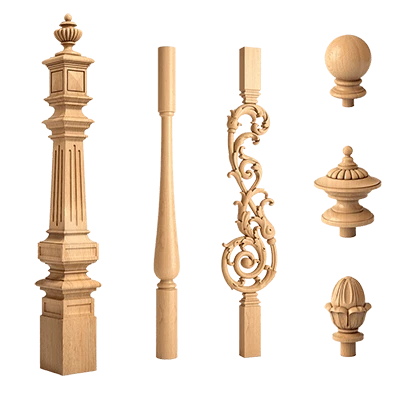
- Carved pilasters
- Twisted columns and half-columns
- By height
- By width
- By depth
- By Carving Style
- By purpose
- When to choose beech
- When to choose oak
- How material affects finishing
- Need to finish the sides of the furniture
- Need to assemble a classic furniture front
- Need to design a portal
- Need to decorate a wall or niche
- Need to design a commercial space
- The base must be ready
- First the diagram, then the order
- The finish must be common for the set
- Joints cannot be left for later
- Choosing only by carving
- Buying a pilaster without a capital and base
- Confusing a pilaster with an overlay
- Not considering the depth
- Mixing different carving styles
- Not checking the material and finish
- Where to buy wooden pilasters?
- Can pilasters be used for furniture?
- How does a pilaster differ from a column?
- What to buy together with a pilaster?
- How to choose a capital for a pilaster?
- Which wood is better — beech or oak?
- Can pilasters be used in a modern interior?
- How to understand if you need a pilaster or a carved overlay?
- Can a portal be decorated with wooden pilasters?
- Are pilasters suitable for a commercial interior?
- What to check before ordering a pilaster?
- Can I buy only one pilaster?
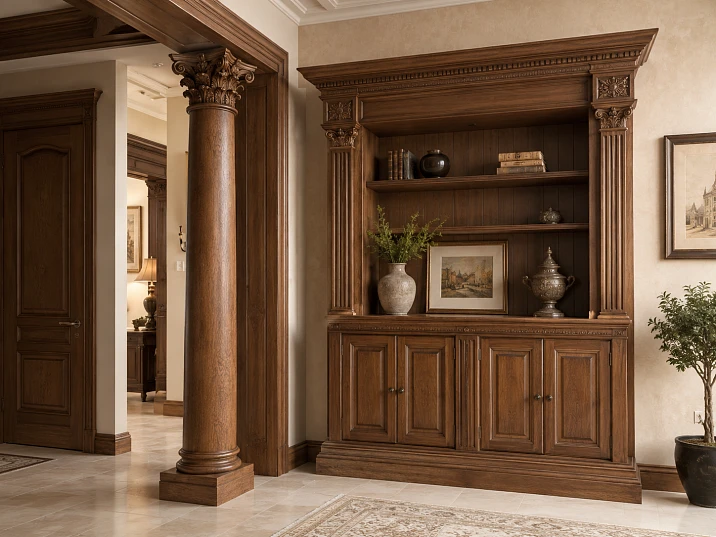
When you need to buy wooden pilasters for furniture or interior, it's important to look not only at the beautiful carving. A pilaster works as a vertical architectural element: it sets the height, emphasizes symmetry, frames the sides of furniture, enhances the image of a portal, helps assemble a classic facade, and connects individual decorative details into a single composition. If chosen randomly, the furniture may look overloaded, the portal heavy, and the wall like a set of unrelated parts.
Wooden pilasters differ from moldings, overlays, and regular trim by creating vertical divisions. They can resemble a column, but often work on a plane: along the edges of a furniture facade, next to a door or fireplace portal, in a wall composition, near a mirror, in a niche, on a classic cabinet, sideboard, chest, or kitchen module. Therefore, the choice begins not with the question "which carving is prettier," but with the task: what needs to be designed, what scale the project can handle, and what elements will be needed alongside the pilaster.
If you want to select ready-made wooden elements for classic furniture, a portal, or an interior zone, you can start with the section buy wooden pilasters STAVROS. For furniture projects, it's worth separately looking at wooden pilasters and columns for furniture, and to complete the composition, evaluate capitals, bases, overlays, and adjacent carved decor in advance.
A pilaster is rarely bought entirely alone. In a classic project, a capital, base, carved overlays, baguette, furniture trim, decorative columns, or half-columns appear nearby. Therefore, the article is structured as a practical route: what a pilaster is, where to use it, which options to consider, how to choose size, material, and style, what to add to the purchase, and how not to confuse a pilaster with a column, capital, or regular overlay.
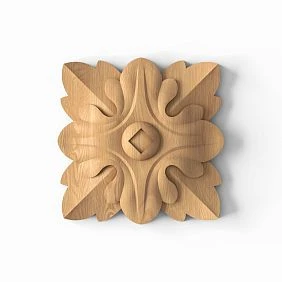
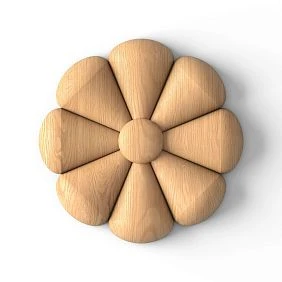
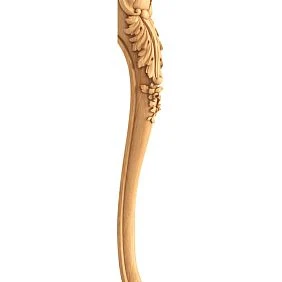
What are wooden pilasters and why are they needed
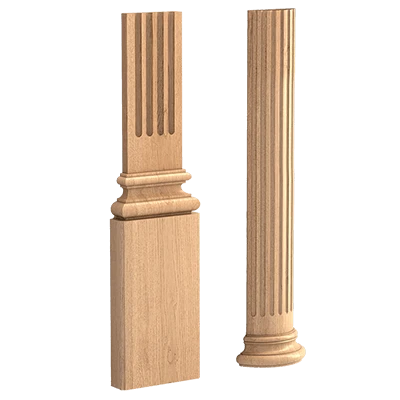
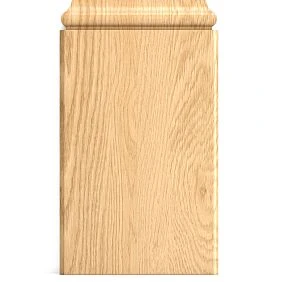
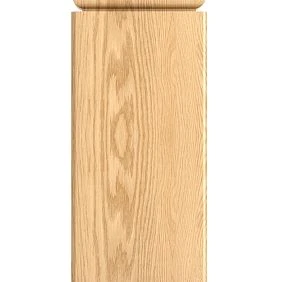
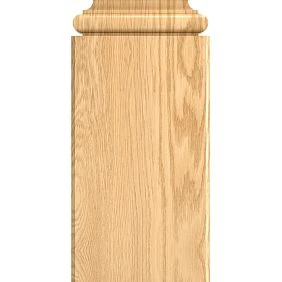
A pilaster is a vertical decorative element that visually resembles a column, but often works not as a separate load-bearing structure, but as an overlay or built-in part of furniture, a wall, a portal, or an interior composition. In furniture, a pilaster can frame the side posts of a facade, highlight the central part of a sideboard, frame a display case, add a classic rhythm to a kitchen set, or finish a chest along the edges. In the interior, it helps to design a doorway, fireplace area, wall panel, niche, or decorative portal.
The main role of a pilaster is to create a vertical line. Molding usually leads a line horizontally or along a frame, an overlay provides a local accent, a capital completes the top part, a base forms the bottom, and the pilaster assembles the entire height. Thanks to this, furniture or a wall ceases to look flat. Architectural logic emerges: bottom, vertical post, top finish, adjacent decorative details.
A wooden pilaster is especially valuable in projects where natural material and the ability to assemble a set with other wood products are important. It works well in classic, neoclassical, Empire, cabinet interiors, restaurants, hotels, country houses, and representative spaces. But this does not mean that a pilaster should be placed everywhere. Such an element requires scale, proper surroundings, and an understanding of what exactly it should emphasize.
| Selection parameter | What it means for the buyer | What to check before ordering |
|---|---|---|
| Purpose | A pilaster can work on furniture, a portal, a wall, or in an interior composition. | Where the element will be placed: facade, side panel, opening, niche, portal, or wall. |
| Scale | A pilaster that is too large overloads the furniture, one that is too small gets lost. | Height, width, depth, and proportions relative to the entire composition. |
| Carving style | The carving sets the character: calm classic, rich decor, strict vertical. | Whether the pattern matches the facades, doors, capitals, and overlays. |
| Material | Wood affects the texture, finish, and overall level of the project. | The actual wood species, finish, and parameters in the product card. |
| kit | A pilaster often requires a capital, base, overlays, or adjacent decor. | What needs to be purchased together so the composition doesn't look unfinished. |
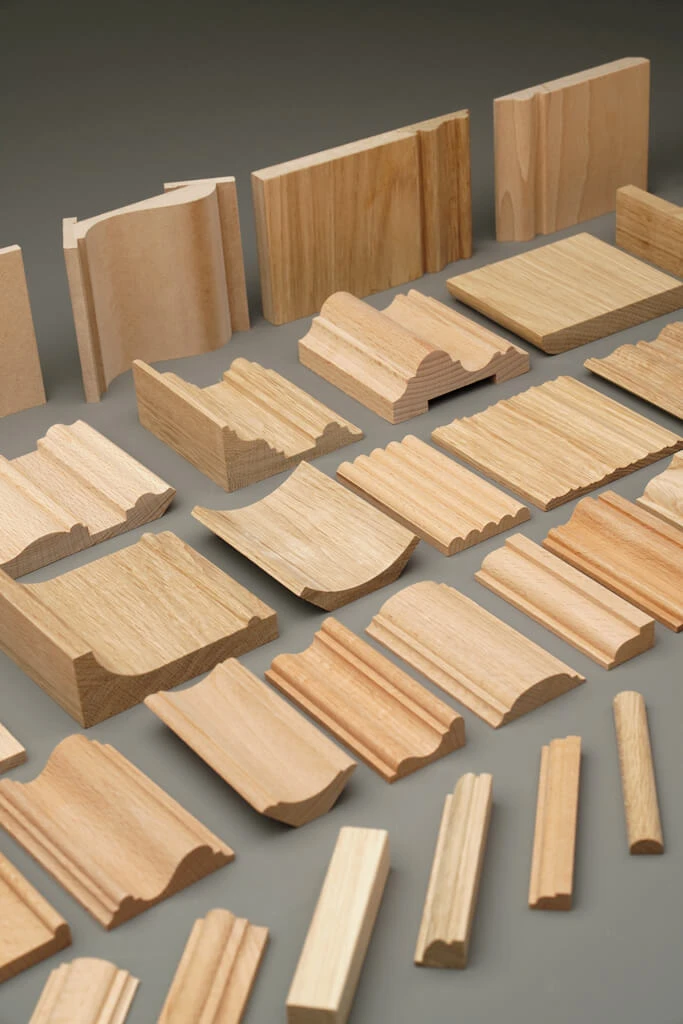
Where to use wooden pilasters
Wooden pilasters shine where you need not just to add decoration, but to build vertical architecture. They are purchased for furniture, portals, wall areas, niches, doorways, mirrors, fireplace groups, and commercial interiors. In each scenario, the pilaster has a different task: sometimes it emphasizes the facade, sometimes it assembles a portal, sometimes it divides a wall into parts, and sometimes it helps give the interior a prestigious classical character.
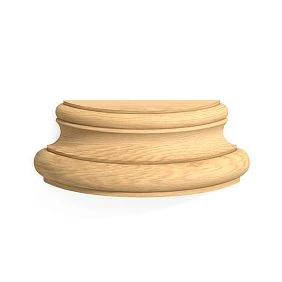
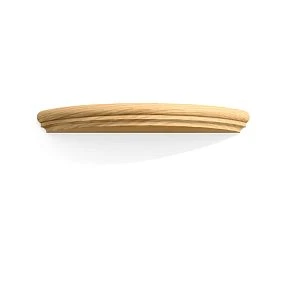
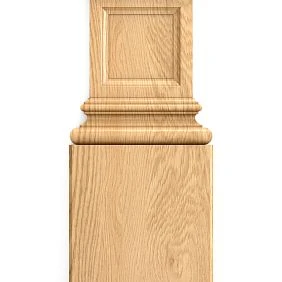
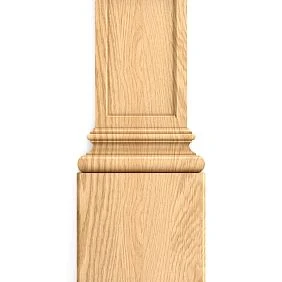
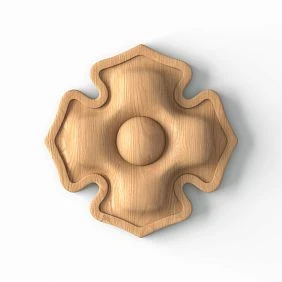
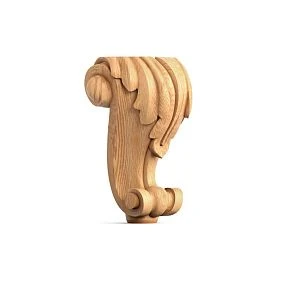
Our factory also produces:
For furniture
Wooden pilasters for furniture are used on dressers, cabinets, sideboards, kitchens, wardrobes, display cases, furniture portals, and decorative side panels. They help design the facade so that the furniture doesn't look like a flat box, but an object with architecture. Pilasters can be placed on the edges, highlight the central part, frame a display case, or support the upper cornice.
In furniture tasks, scale is especially important. If the pilaster is too wide for the facade, it will steal all the attention. If it's too narrow, the classical effect will be weak. Therefore, before ordering, you need to measure the facade, assess the height of the product, and understand how the pilaster will relate to the base, upper cornice, handles, and overlays.
For such projects, it's convenient to look at wooden pilasters and columns for furniture. This section helps start the selection with a furniture scenario, rather than a general decorative search.
Get Consultation
For portals
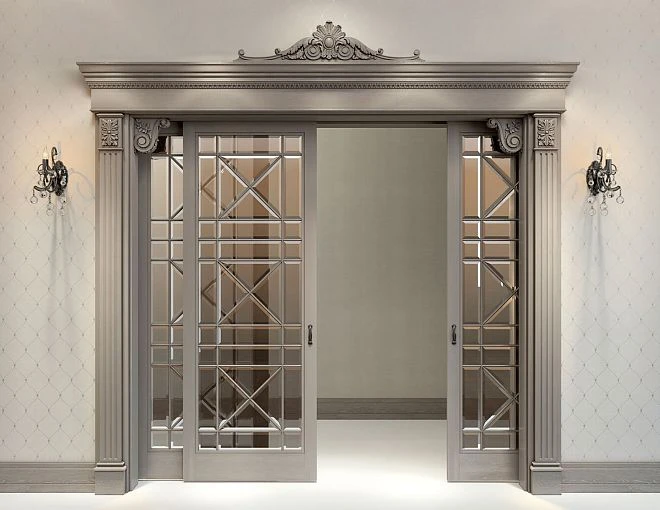
A portal requires vertical supports and a top finish. This could be a door portal, fireplace area, decorative passage, framing an opening between rooms, or a wall niche. Here, pilasters act as side architectural posts. They create the feel of an assembled frame and help connect the lower part, the vertical, and the top element.
If the portal is made in a classic style, the pilaster should almost always be considered together with the capital and base. Without the top and bottom finish, the vertical detail may look incomplete. Therefore, when choosing a portal, not only the posts themselves but also the adjacent decor are thought out in advance.
For interiors
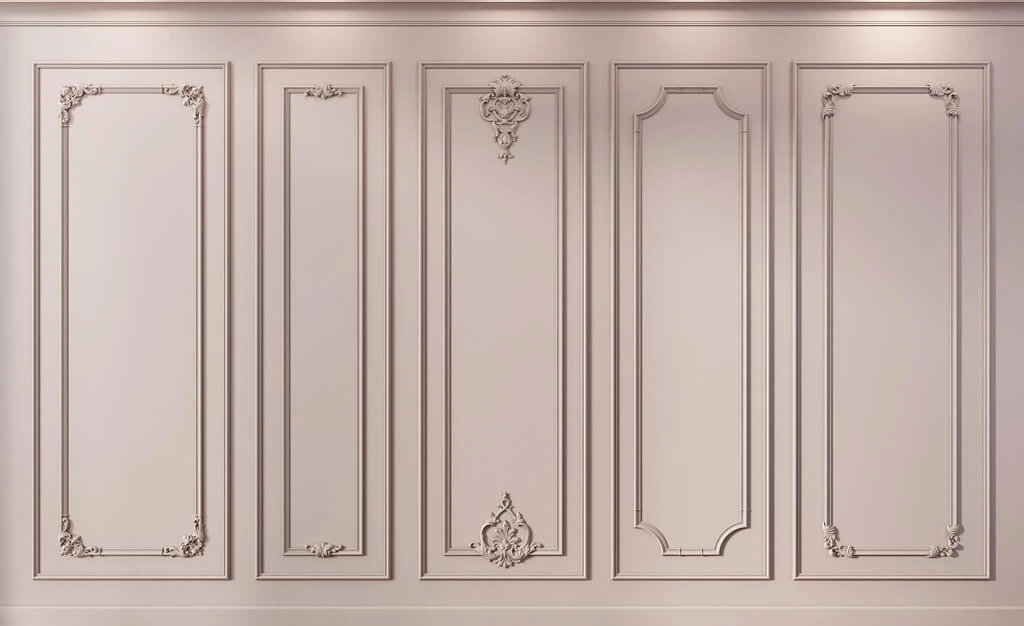
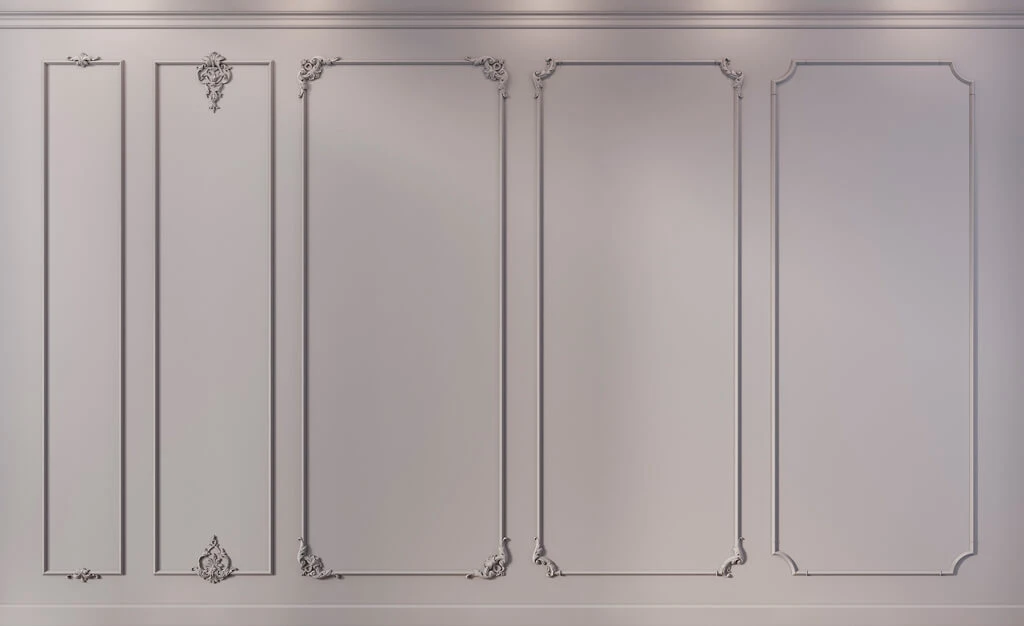
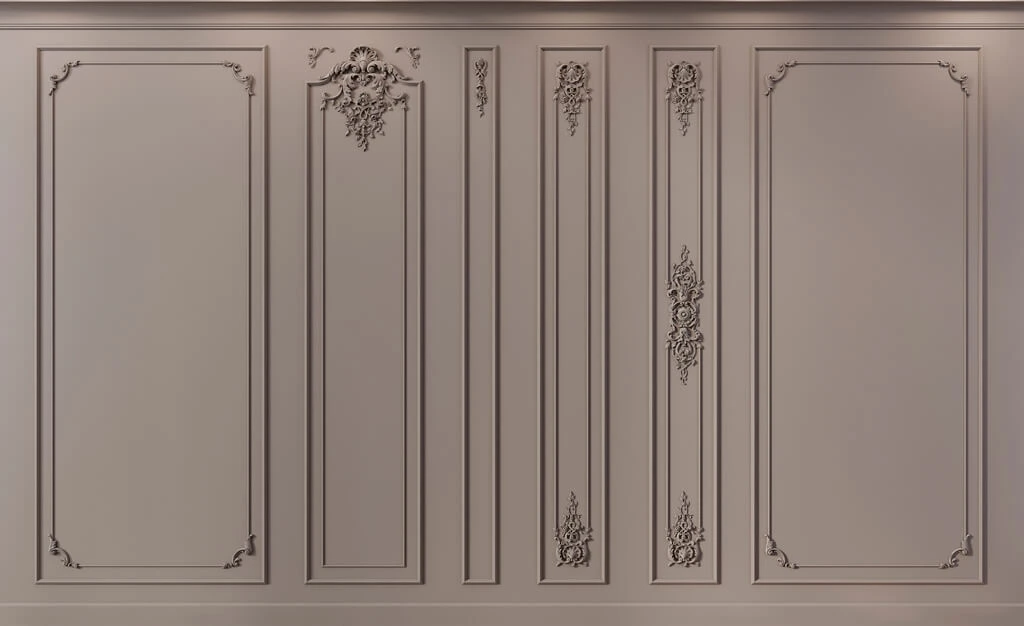
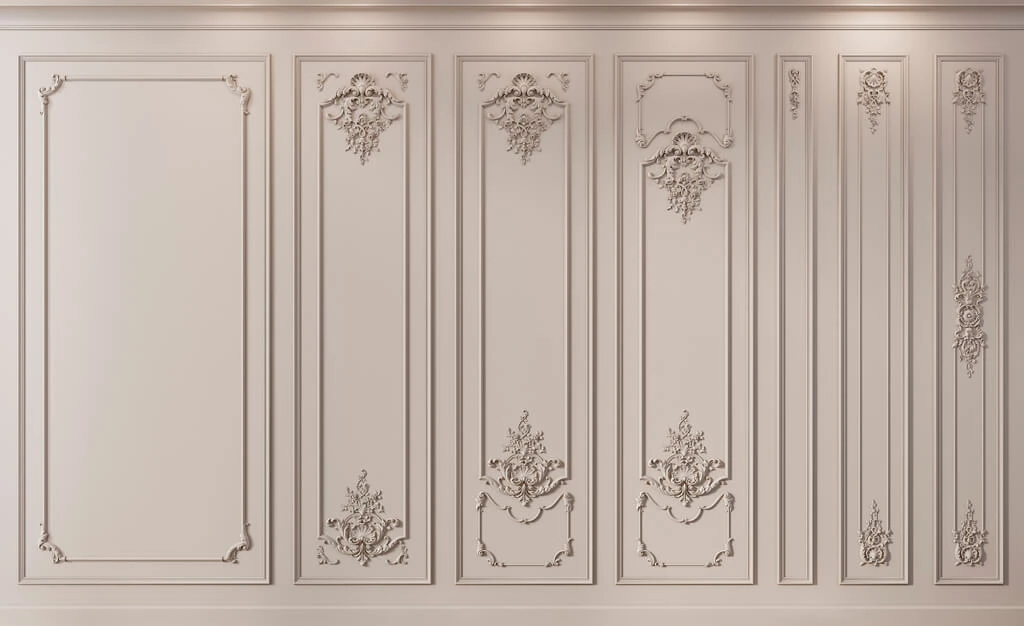
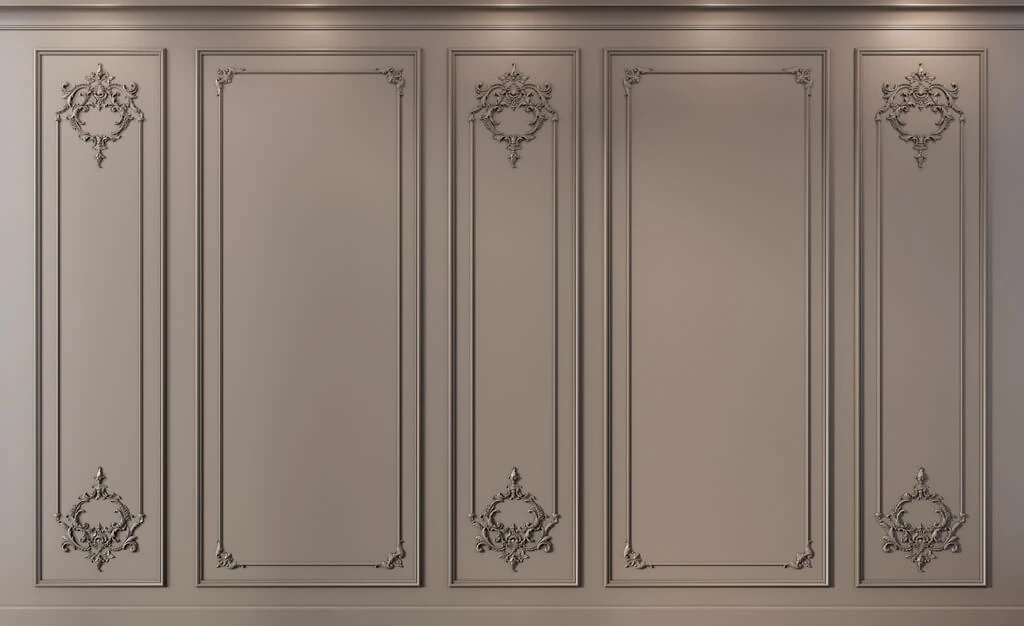
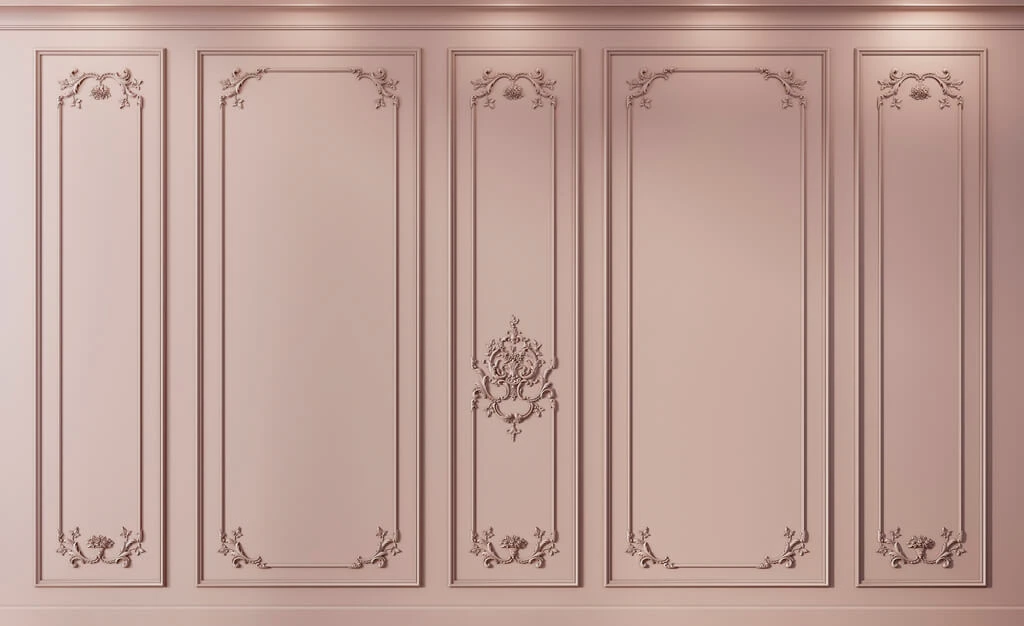
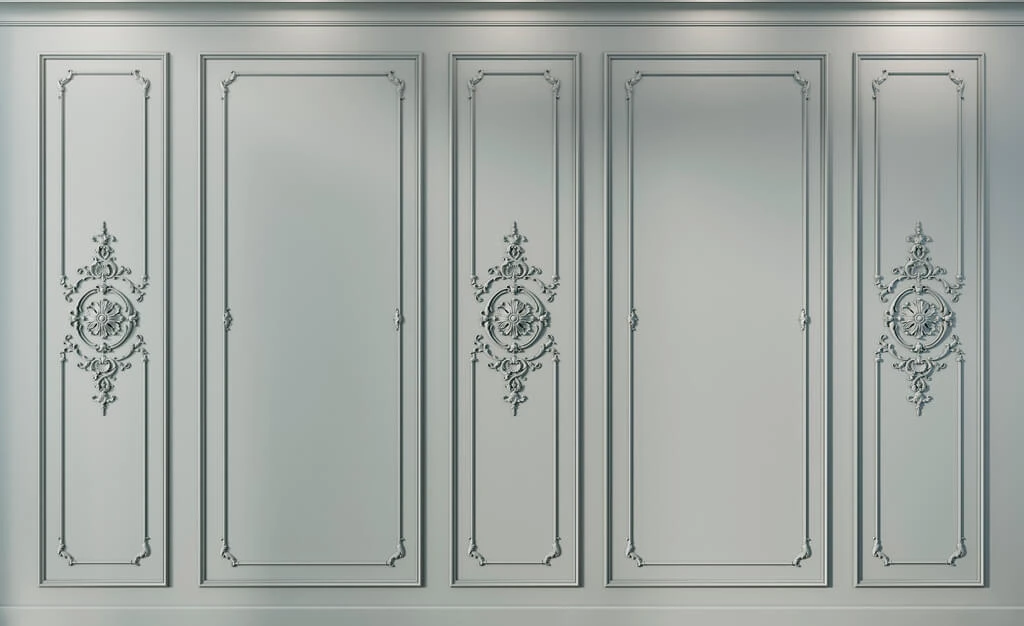
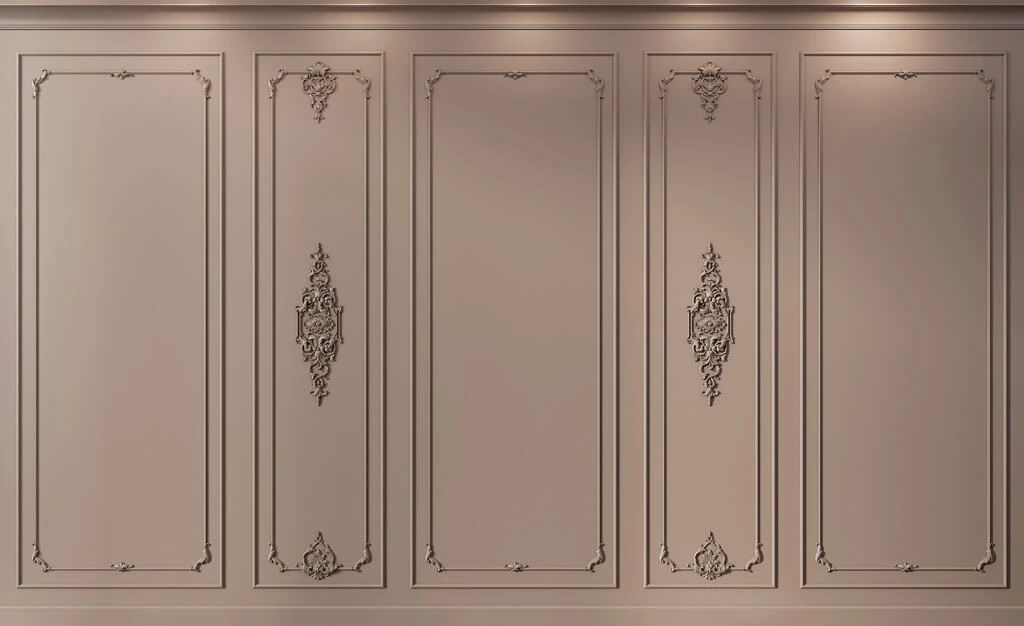
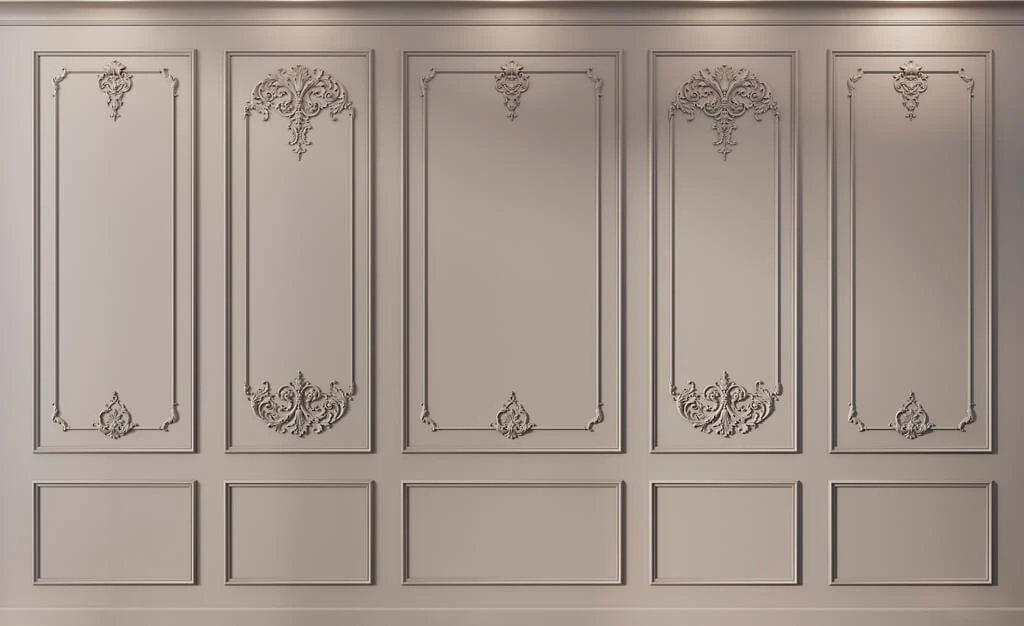
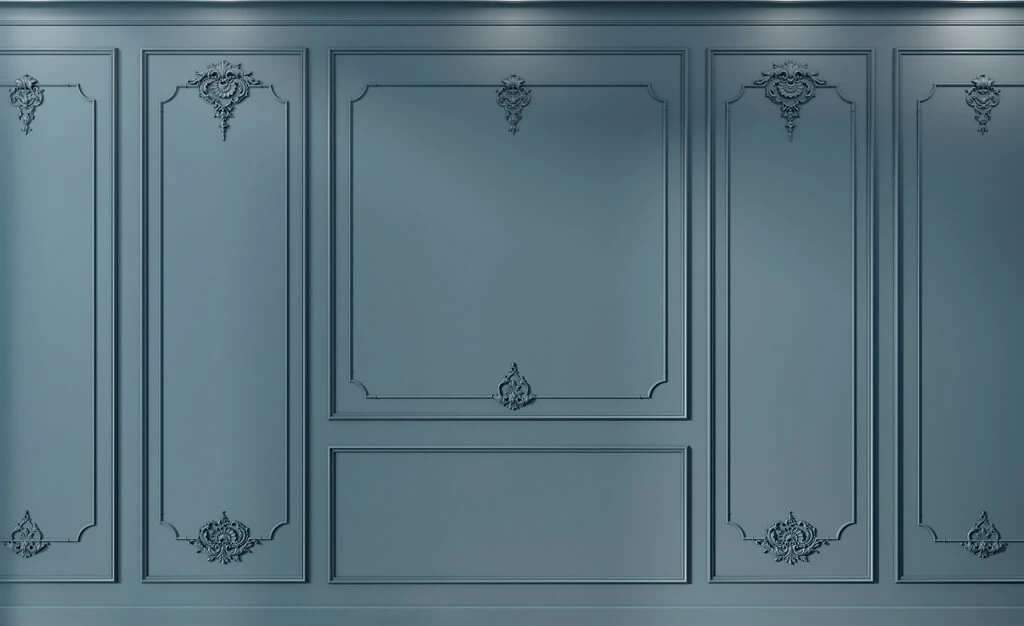
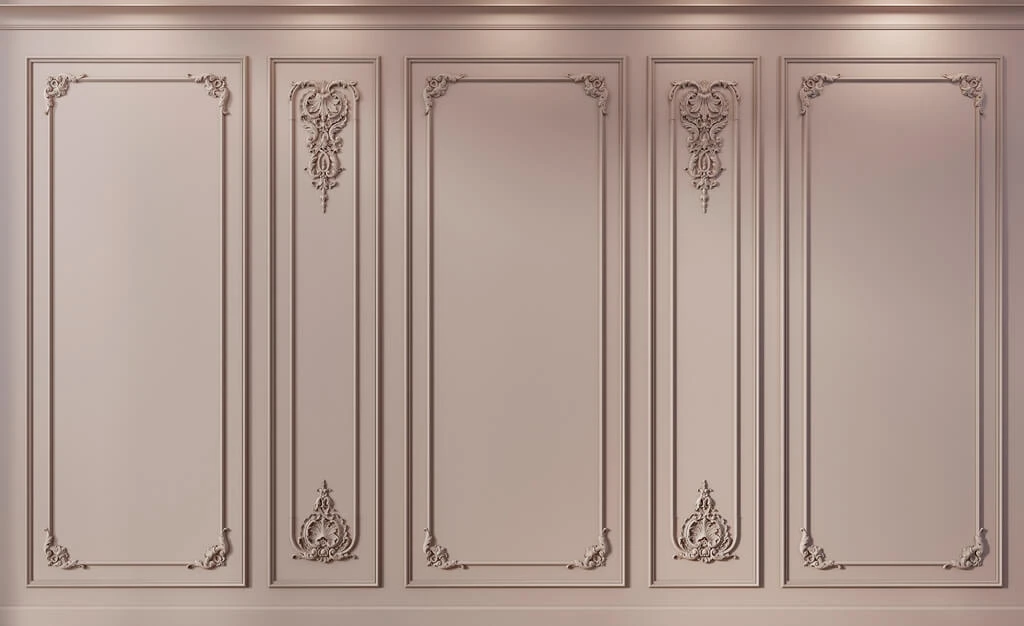
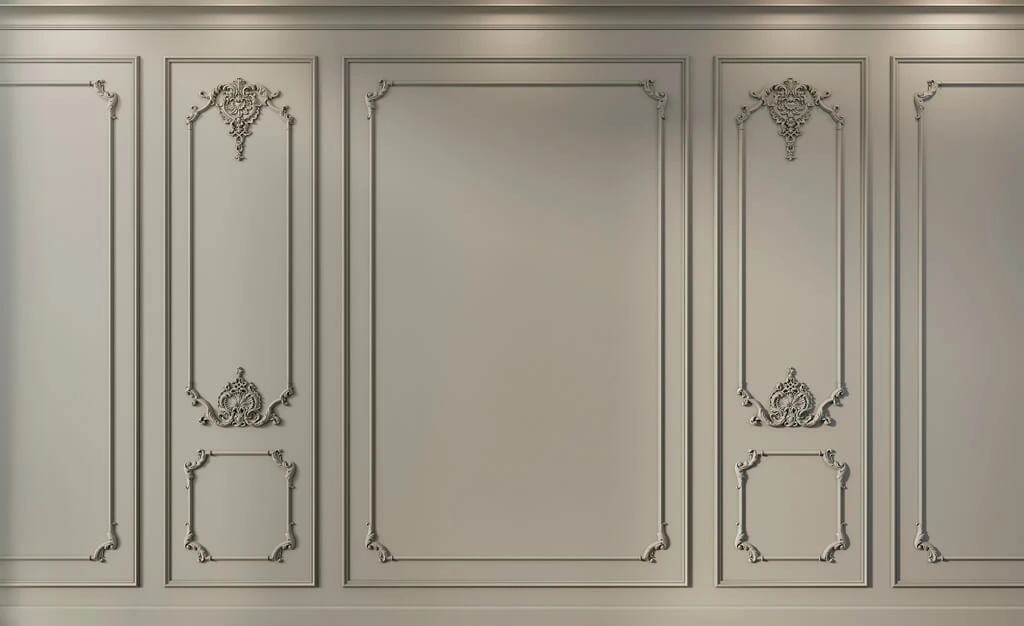
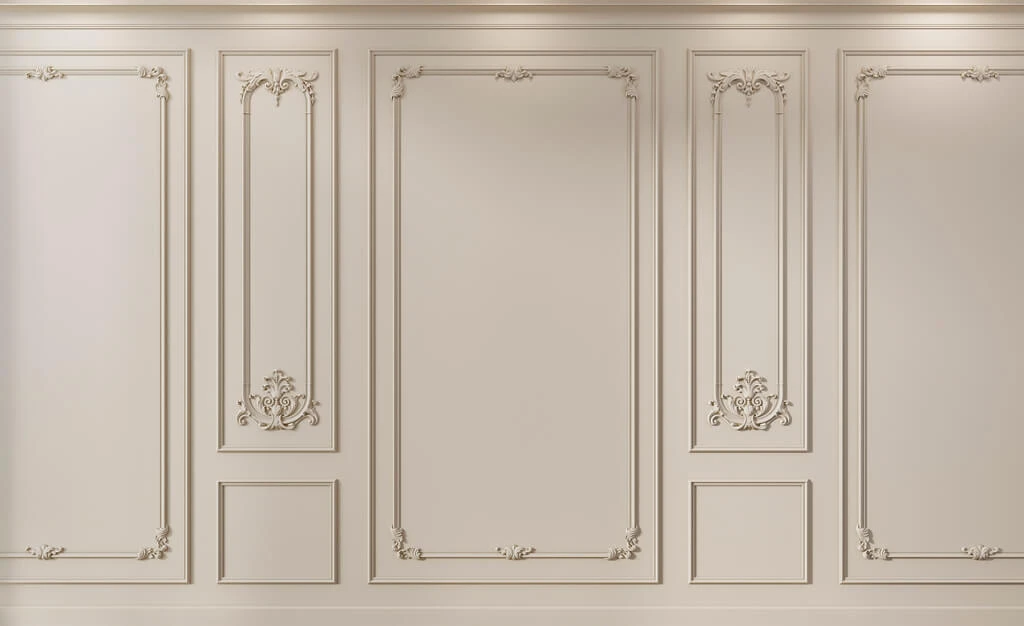
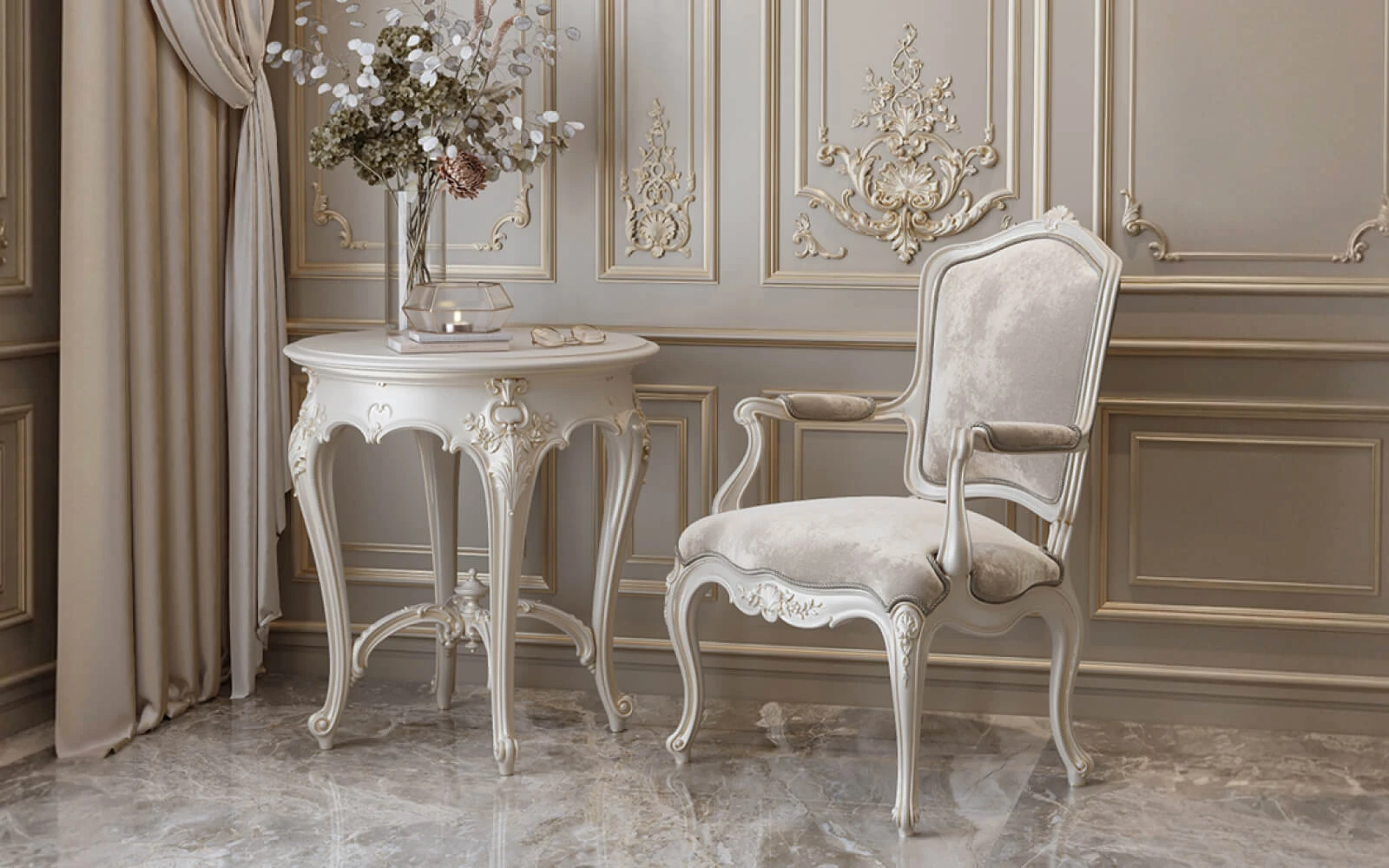
In interiors, pilasters help decorate walls, niches, mirror areas, library cabinets, studies, living rooms, halls, and stair spaces. They can visually divide a large plane, highlight the central part of a wall, frame a mirror, or emphasize symmetry.
Pilasters look especially expressive where there are other wooden elements nearby: panels, baguettes, moldings, carved overlays, cornices, solid wood furniture. Then the vertical does not seem random. It becomes part of the overall wooden architecture of the space.
For commercial projects
In restaurants, hotels, offices, salons, and representative spaces, pilasters help create a sense of an expensive, cohesive interior. They work well in reception areas, executive offices, wine rooms, classic restaurants, boutiques, hotel lobbies, or meeting rooms.
For a commercial project, it is especially important not to overload the space. Using too much carving can make the interior feel heavy. Choosing too simple details can lose the desired status. Pilasters help find a balance if they are selected according to scale, material, and adjacent elements.
Which pilasters can be purchased
Pilasters differ in shape, degree of relief, carving, scale, and purpose. Some are suitable for strict furniture facades, others for rich classic portals, and others for decorative verticals in interiors. It is important for the buyer not to choose the "most beautiful" model separately from the project, but to understand which shape will handle the specific task.
| Element type | When to choose | What to Check |
|---|---|---|
| Straight pilasters | For strict furniture facades, portals, and calm classics. | Proportions, height, width, and connection with the upper cornice. |
| Carved pilasters | For classics, Empire, Baroque, palace furniture, and expressive portals. | Whether the carving overloads the facade and whether the pattern matches the adjacent decor. |
| Columns and half-columns | For portals, accent zones, niches, and volumetric verticals. | Depth, installation location, and visual load on the interior. |
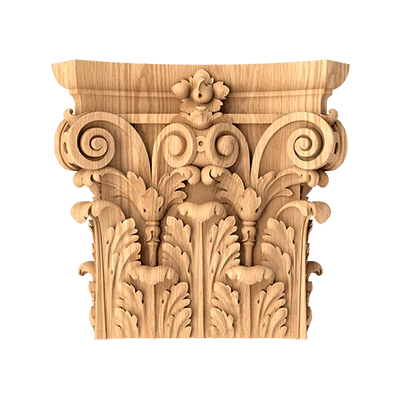
| Capitals | For the top finishing of pilasters and columns. | Width, carving style, and compatibility with the selected pilaster. |
| Bases | For the lower completion of a vertical composition. | The height of the base, the junction with furniture, floor, or plinth. |
Straight pilasters
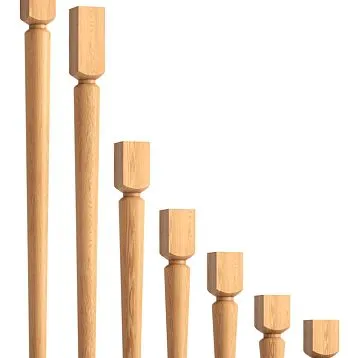
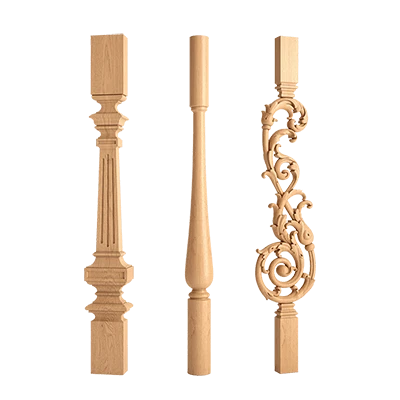
Straight pilasters are suitable where an architectural vertical is needed without excessive decorativeness. They can be used on furniture side panels, in strict portals, on cabinet facades, in wall compositions, and classic interiors where proportions are important but complex carved patterns are not required.
This option works well in neoclassicism and calm classicism. A straight pilaster sets the structure but does not compete with other details. If there is already an expressive cornice, carved overlays, or rich hardware nearby, a more restrained vertical may be more appropriate than complex carving.
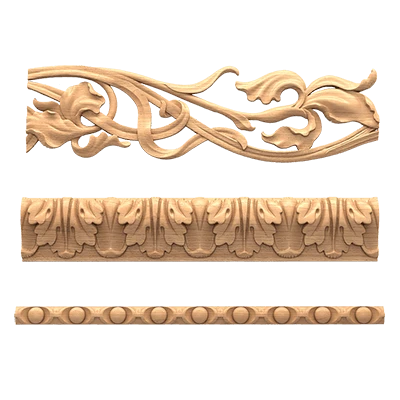
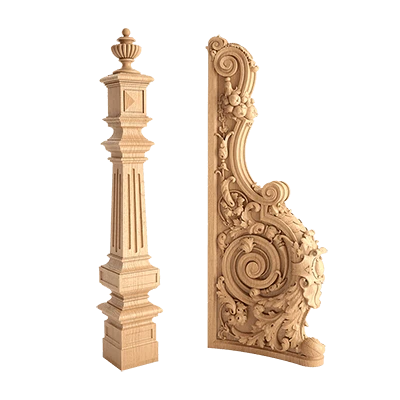
Carved pilasters
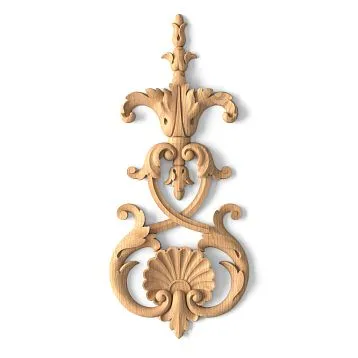
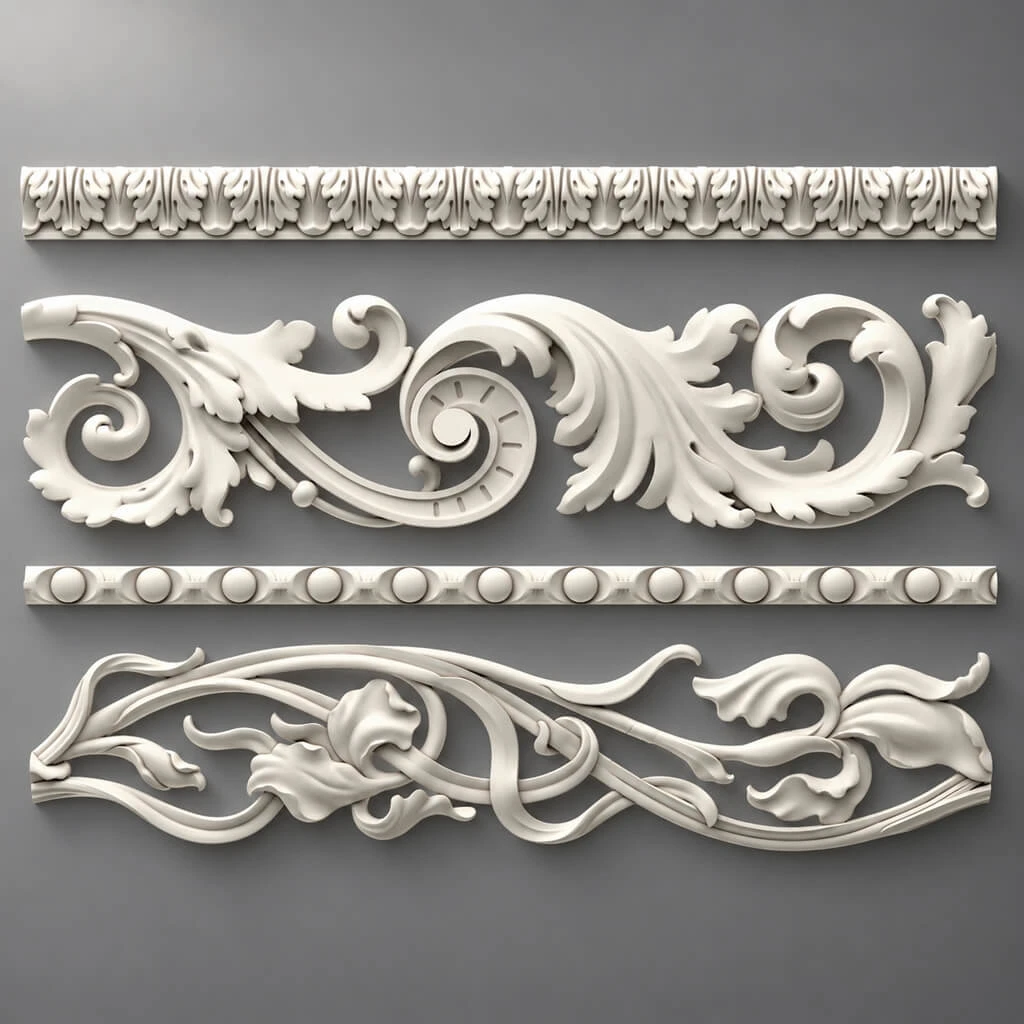
Carved pilasters are chosen for furniture and interiors where decor should be noticeable. They are suitable for sideboards, classic kitchens, fireplace portals, restaurant halls, studies, display cases, decorative facades, and rich wall compositions. Carving adds depth, a handcrafted feel, and visual complexity.
However, carving requires moderation. If the furniture is small, an overly active pilaster can overload the facade. If the portal is narrow, a large carved element can make the passage feel heavy. Therefore, it is better to choose a carved option after evaluating the entire composition, rather than separately from the project.
Twisted columns and half-columns
Twisted columns and half-columns create a stronger decorative effect. They are suitable for accent zones, portals, island compositions, niches, display cases, and interiors where the vertical should be noticeable. Such an element attracts attention faster than a flat pilaster.
That is why twisted and voluminous shapes require caution. They are best used where the interior can handle decorative richness. In a small room or on a small facade, they may look too active.
How to choose wooden pilasters
Choosing a pilaster starts with the project. First, you need to understand where it will be placed: on furniture, in a portal, on a wall, in a niche, near a mirror, or in a commercial interior. Then evaluate the height, width, depth, carving style, material, future finish, and completeness. The pilaster should not just look good in a photo but match the actual installation location.
By height
Height determines how much the pilaster will participate in the composition. On furniture, it should match the facade, not break the line, and not interfere with the upper cornice or base. In a portal, the pilaster height should correspond to the opening height. On a wall, it should support the vertical but not look like a random overlay.
Before ordering, you need to measure the installation location and understand whether the pilaster will work alone or together with a capital and base. If the top and bottom finishes add height, this must be considered in advance.
By width
Width affects the visual strength of the element. A narrow pilaster looks lighter and is suitable for neat furniture facades. A wide one is more noticeable but requires more space. If you place a wide pilaster on a small facade, it may take up too much area and disrupt proportions.
On portals, the width should be compared to the opening width. Too thin side posts will look weak, too massive ones will weigh down the passage. In classic design, not only the beauty of the detail matters but also proportionality.
By depth
Depth determines how much the pilaster protrudes from the plane. On furniture, this affects convenience, joints, and proximity to handles. On a wall, it affects shadow and expressiveness. In a portal, it affects the sense of volume. A flat pilaster looks calmer, while a semi-voluminous or columnar shape changes the space more dramatically.
Depth is especially important to check where there is a passage, furniture doors, drawers, or work surfaces nearby. The decor should not interfere with using the furniture.
By carving style
The carving style should match the overall architecture of the project. If the furniture is calm, a pilaster with very rich ornamentation may look out of place. If the interior is grand and rich, a too simple vertical may get lost. A good choice is one where the pilaster enhances the style, rather than trying to replace all the decor.
The carving should be compared with capitals, overlays, baguettes, cornices, and handles. If each element speaks its own decorative language, the facade looks random. For a unified project, it is worth looking in advance at carved wooden decor for furniture and interiors.
By purpose
Wooden pilasters for furniture differ in application logic from interior columns and portal elements. On furniture, scale, depth, and compatibility with the facade are important. In the interior, height, connection with the wall, and composition with other elements matter. In a portal, the top, bottom, symmetry, and overall width of the opening are key.
If the task is specifically furniture-related, it is better to start with the section wooden pilasters and columns for furniture. If the project is broader and includes walls, portals, column zones, and decorative compositions, it is useful to look at the general section buy wooden pilasters STAVROS.
Beech or oak — what to choose
The material affects the appearance, finish, and feel of the product. In wooden decor, beech and oak are often compared. Beech is usually perceived as calmer and is well suited for painting, enamel, and light solutions. Oak is chosen when an expressive texture, natural character, tinting, oil, or a more prestigious wood surface is needed. But before ordering, you should always check the material of the specific item: do not automatically assume that any model is available in the desired wood species.
When to choose beech
Beech is worth considering when the pilaster will be painted, coated with enamel, or used in a calmer interior. It works well for furniture projects where form is more important than an active wood grain. For example, a classic kitchen for painting, a light sideboard, a neoclassical cabinet, a portal in a milky or gray shade.
If the goal is to achieve a smooth finished surface without making the wood grain the main accent, beech can be a rational choice. It helps emphasize form and carving without overloading the piece with texture.
When to choose oak
Oak is best revealed where the wood should be visible. It is appropriate in studies, libraries, classic living rooms, wooden portals, furniture with natural finishes, country houses, and interiors where texture matters on its own. Under tinting or oil, oak provides a more expressive grain.
If there is already an oak floor, doors, panels, or furniture nearby, oak pilasters can better connect decorative details with the overall atmosphere. But it is important not to mix different wood shades without checking: even natural materials can clash with each other.
How material affects finishing
If the pilaster is painted with a dense enamel, the active wood grain may recede into the background. In this case, the relief, precision of form, and quality of surface preparation are more important. If the finish is transparent or semi-transparent, the wood species becomes much more noticeable: the grain, shade, and structure participate in the design.
Before ordering, it is better to check the current material and finish options in the product card or clarify with a STAVROS manager. This is especially important if pilasters are purchased together with capitals, bases, and overlays: all elements must match not only in form but also in material.
What to buy together with pilasters
A pilaster rarely looks complete without adjacent details. For a furniture facade, a capital, base, carved overlay, molding, or decorative frame may be needed. For a portal — columns, capitals, a top element, baguette, and carved details. For a wall composition — moldings, overlays, decorative elements, and overall carved decor.
The main mistake is to buy one beautiful vertical element and then try to match everything else to it. It's better to think in terms of a set from the start. This makes it easier to avoid mismatches in scale, carving style, material, and finish.
| Task | What to add | Why this is needed |
|---|---|---|
| Pilaster for furniture | wooden capitals for pilasters, base, Carved decorative inserts for furniture. | Assemble a facade with top, bottom, and central decorative accents. |
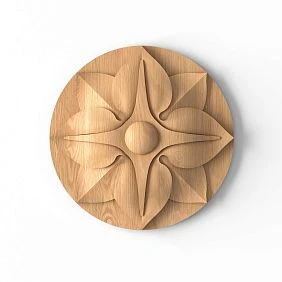
| Portal | Columns, capitals, moldings, rosettes, top decorative part. | Make the opening architecturally complete, not just decorated on the sides. |
| Wall composition | Moldings, baguette, decorative elements, carved wooden decor for furniture and interiors. | Connect verticals with frames, panels, and adjacent decorative zones. |
| Classic furniture facade | Handles, overlays, carved moldings, capitals, bases. | Make the furniture solid, rather than assembled from unrelated parts. |
| Interior zone | Columns, half-columns, wooden capitals for pilasters, general carved decor. | Support the vertical and complete the composition from top and bottom. |
How not to confuse pilasters with similar products
In classic wooden decor, there are many similar elements. A buyer may search for a pilaster, but actually need a capital, column, overlay, base, or molding. A mistake in the name leads to an incorrect purchase: instead of a vertical division of the facade, the person gets local decor; instead of a top finish, a separate stand; instead of a voluminous column, a flat pilaster.
| Product | What's the difference | When needed |
|---|---|---|
| Pilaster | Vertical decorative element, often flat or semi-voluminous. | When you need to design a facade, side panel, portal, or wall vertical. |
| Column | A more voluminous standalone vertical element. | When a strong volumetric vertical is needed, rather than applied decor. |
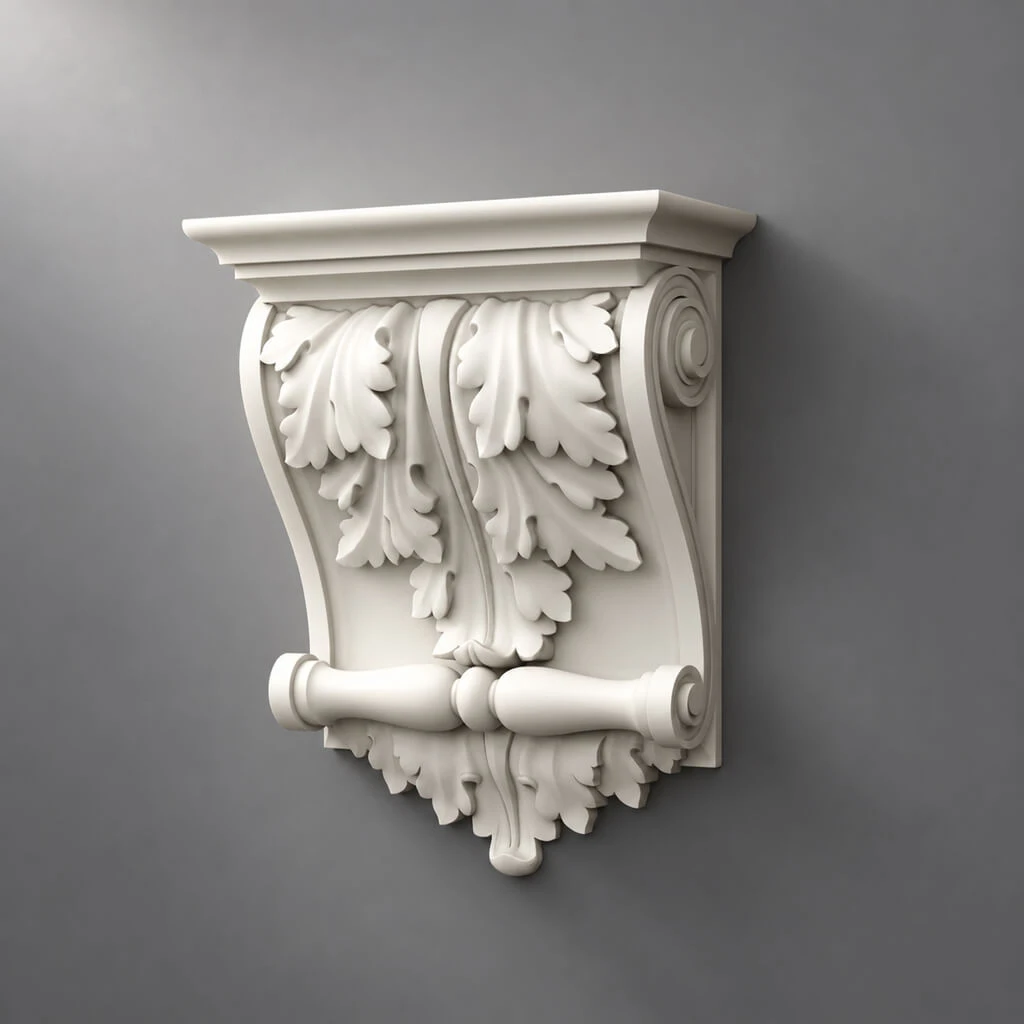
| Capital | The upper decorative part of a pilaster or column. | When you need to finish the vertical from above. |
| Base | The lower support or decorative part. | When you need to design the bottom of a post, portal, or furniture vertical. |
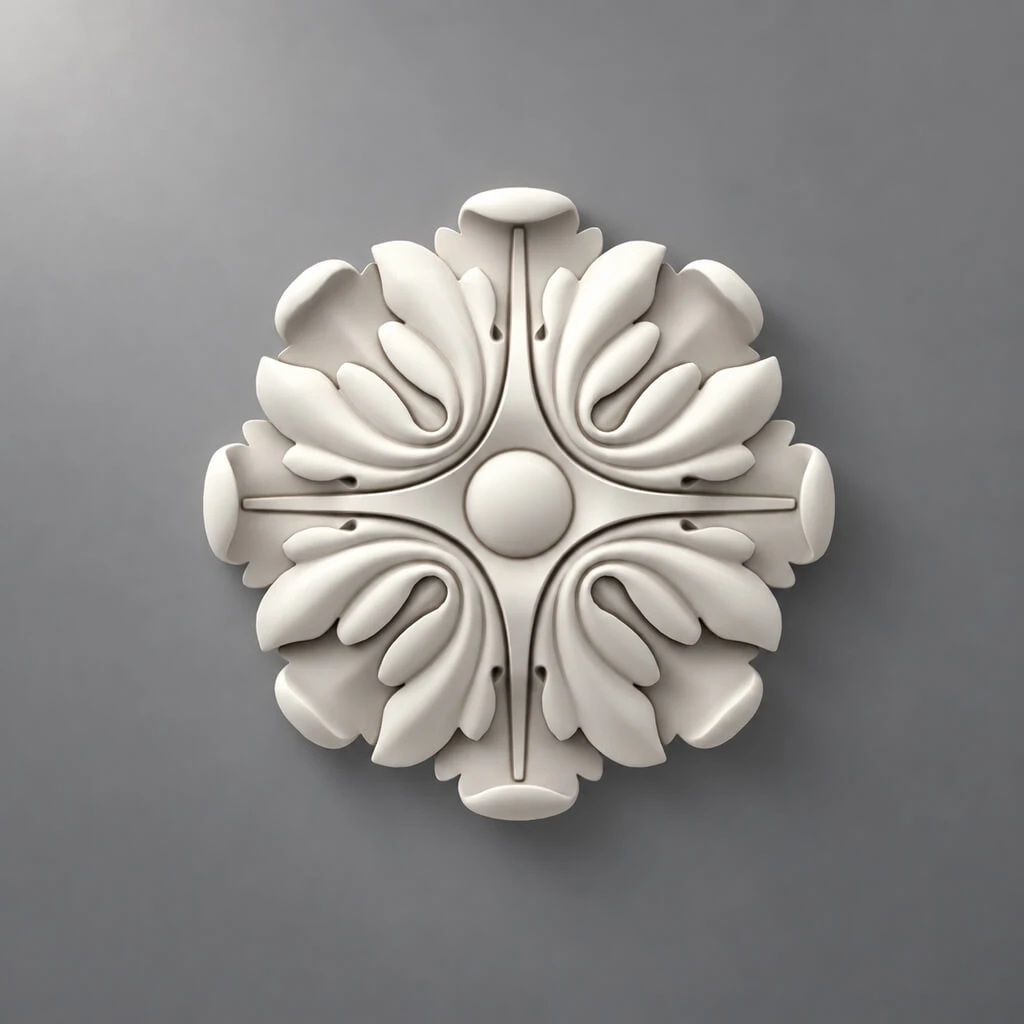
| Overlay | A separate carved element without the function of vertical division. | When a local accent is needed on the facade, wall, or furniture. |
| Molding | A linear profile, not a vertical architectural element. | When a frame, border, or horizontal line is needed. |
Practical selection for different situations
Need to decorate the sides of furniture
For furniture sides, pilasters are chosen that do not interfere with opening doors and drawers. Width, depth, and position relative to the facades are important. If the pilaster protrudes too much, it may hinder use. If it is too narrow, the side will remain visually empty.
In such a project, it is useful to immediately look not only at the pilaster but also at Carved decorative inserts for furniture. Overlays can support the central part of the facade while pilasters frame the edges.
Need to assemble a classic furniture facade
A classic facade requires symmetry. Pilasters can be placed at the edges or divide the facade into sections. It is important that they match the top cornice, base, handles, and central decorative elements. If the facade is large, one pair of pilasters may be insufficient. If the facade is small, extra verticals will overload the furniture.
Before ordering, you need to draw a simple diagram of the facade: where the doors will be, where the drawers are, where the handles are, where the top decor is, where the bottom is. Then it will become clear whether two pilasters, four, or lighter overlays are needed.
Need to decorate a portal
A portal requires verticals, a top, and a bottom. A pilaster without a capital and base may look cut off. Therefore, for a portal, they select in advance wooden capitals for pilasters and the lower elements. If the portal is tall, it's important that the vertical doesn't appear too thin. If the opening is narrow, overly large elements can eat up the space.
For door and fireplace portals, symmetry is especially important. The left and right sides must match in height, width, and style. Discrepancy immediately catches the eye.
Need to decorate a wall or niche
On a wall, a pilaster helps create architectural rhythm. It can highlight a niche, frame a mirror, design a central panel, or divide a wide wall into several parts. But walls require precision: overly active decor can turn the interior into a theatrical set.
For a wall composition, it's better to combine pilasters with moldings, baguettes, and other carved decor. Then the vertical doesn't hang separately but works together with frames and planes.
Need to design a commercial space
In a restaurant, hotel, office, or salon, pilasters help create a prestigious backdrop. They can be used at the entrance area, near mirrors, in decorative portals, at the reception desk, or in the waiting area. In a commercial project, it's especially important to consider distance: the detail should look good both up close and from several meters away.
Before ordering, it's worth checking how the pilaster will interact with lighting. Carving and profile depth create shadows, and side lighting can make it more noticeable. This can be a strong technique if planned in advance.
Installation, preparation, and finishing: what to consider in advance
A pilaster is a decorative element, but it cannot be chosen separately from installation. You need to understand the base, method of attachment, future finishing, adjacent details, and assembly order. In a furniture project, a pilaster can be attached to a facade or side panel. In an interior, it can be attached to a wall, panel, portal, or other prepared surface. The specific method depends on the product and project, so installation details are best clarified in advance.
The base must be ready
If the surface is uneven, the pilaster may sit with a gap or be misaligned. On furniture, this is especially noticeable: the vertical immediately reveals the error. On a wall, unevenness will also be visible, especially with side lighting. Therefore, before purchasing, you need to assess the base and understand whether it needs to be leveled.
First the diagram, then the order
Buying pilasters without a diagram is risky. You need to understand in advance where the top, bottom, capital, base, adjacent overlays, handles, moldings, and cornice will be. Even a simple sketch on paper helps avoid mistakes. For furniture, it is useful to know the dimensions of the facades, the height of the plinth, the location of handles, and the opening direction.
The finish must be common for the set
If pilasters, capitals, and overlays are purchased separately, the finish needs to be planned together. Different wood shades, different levels of gloss, or different preparation for painting can ruin the integrity. It is better to decide in advance whether it will be enamel, tinting, oil, stain, or another finish confirmed for the selected products.
Joints cannot be left for later
The pilaster connects to the top and bottom elements, furniture facade, wall, or portal. The joints must look neat. If the capital is wider or narrower than the pilaster, if the base does not match in scale, if the adjacent molding does not fit, the composition will look uncertain.
Mistakes when buying wooden pilasters
Choosing only by carving
Beautiful carving won't save the wrong scale. A pilaster must match in height, width, depth, and style. If it's too large, the furniture will look heavy. If it's too small, the decorative meaning will be lost.
Buying a pilaster without a capital and base
A capital and base are not always necessary, but in a classic project they are often needed. If the vertical element starts and ends abruptly, it may look unfinished. Therefore, even before ordering, you should decide whether a set is needed.
Confusing a pilaster with an overlay
An overlay provides a local accent, while a pilaster builds a vertical line. If you need to decorate the center of a facade, an overlay may suffice. If you need to design a side post or portal, a pilaster or column is required.
Not considering depth
Depth is especially important on furniture. Protruding decor can interfere with handles, doors, drawers, and adjacent parts. In an interior, depth affects shadow and visual activity. It must be checked before purchase.
Mixing different carving styles
The pilaster, capital, overlay, and cornice should speak the same language. If one detail is strict, another is baroque, and a third is geometric, the facade will look random. It's better to select elements within a single decorative logic.
Not checking the material and finish
The wood varies depending on the species and finish. If pilasters are purchased together with other decor, the material and finish must match. Current information should be viewed in product cards or clarified with a STAVROS manager.
Who are wooden pilasters suitable for
Wooden pilasters are suitable for designers, furniture makers, carpenters, owners of classic interiors, restaurants, hotels, offices, and projects where you need to decorate furniture, a portal, a wall area, or a decorative vertical. They are especially useful when a regular molding is no longer enough, but a full volumetric column is too strong for the task.
Pilasters are worth considering for those who want to make furniture or an interior more architectural: add a vertical, assemble a facade, emphasize symmetry, design side panels, create a portal, or combine several carved elements into one set.
Such decor may not suit those looking for a minimalist hidden design, plastic imitation, complete ready-made furniture, polyurethane decor, or a maximally neutral modern finish without classic details. A pilaster requires space and stylistic support. If the interior is very minimalist, it is better to choose a calmer wooden decor or limit yourself to linear elements.
How to buy wooden pilasters on STAVROS
It is best to start the purchase with the task. If you need to decorate furniture, open wooden pilasters and columns for furniture. If the project is broader and includes portals, interior zones, column compositions, or classic decor, start with the section buy wooden pilasters STAVROS.
After selecting the main vertical, you need to think about the set. For the top finish, look at wooden capitals for pilasters. For furniture facades and central decorative accents, suitable are Carved decorative inserts for furnitureIf you need to assemble a larger project, it is useful to open carved wooden decor for furniture and interiors and compare adjacent elements.
Before ordering, check the dimensions, material, purpose, depth, carving style, compatibility with the capital and base, as well as the future finish. If the project is complex, it is better to clarify the details with a STAVROS manager in advance. This way, the pilaster will not be a random beautiful detail, but part of a well-thought-out furniture or interior composition.
FAQ
Where to buy wooden pilasters?
Wooden pilasters can be selected in the STAVROS section with pilasters and columns. For furniture projects, it is worth additionally looking at the section of wooden pilasters and columns for furniture.
Can pilasters be used for furniture?
Yes. Pilasters are used on facades, side panels, sideboards, chests of drawers, cabinets, kitchens, display cases, and classic case goods. They help to shape verticals and make furniture more architectural.
How is a pilaster different from a column?
A pilaster more often works as a decorative vertical on a plane or facade. A column is perceived as a more voluminous independent vertical element.
What to buy together with a pilaster?
Most often, a pilaster is paired with a capital, base, carved overlays, baguette, moldings, and adjacent carved decor. The set depends on whether it is used for furniture, a portal, or a wall composition.
How to choose a capital for a pilaster?
You need to compare the width, height, carving style, and scale. The capital should complete the pilaster from above, not look like a separate random detail.
Which wood is better — beech or oak?
Beech is often chosen for painting, enamel, and a smoother surface. Oak is better revealed with tinting, oil, and natural finishes. The exact material should be checked in the product card of the selected item.
Can pilasters be used in a modern interior?
Yes, if you choose a restrained form and do not overload the space with carving. In a very minimalist interior, a pilaster may look unnecessary, but in soft neoclassicism, it is appropriate.
How to understand whether you need a pilaster or a carved overlay?
If you need to design a vertical, side, or portal, you need a pilaster. If a local decorative accent on a facade or wall is required, an overlay will suffice.
Can a portal be decorated with wooden pilasters?
Yes. Pilasters work well for door, fireplace, and decorative portals. But it's better to select capitals, bases, and the top element right away so the portal looks complete.
Are pilasters suitable for commercial interiors?
Yes. They are used in restaurants, hotels, offices, salons, lobbies, and representative spaces where classic wooden decor and expressive vertical lines are needed.
What should be checked before ordering a pilaster?
You need to check the height, width, depth, material, carving style, compatibility with the capital and base, installation location, future finishing, and adjacent decorative elements.
Can I buy just one pilaster?
Yes, if it's needed as a single decorative element. But for furniture, a portal, or a symmetrical wall composition, pilasters are often bought as a pair or in a set with other details.
Bottom line: a pilaster is needed where decor should become architecture
Wooden pilasters help to design furniture and interiors not just with decoration, but with vertical architecture. They set proportions, emphasize symmetry, assemble portals, decorate facades, support the classic style, and connect capitals, bases, overlays, and moldings into a single composition.
Pilasters should be purchased thoughtfully: first define the task, then choose the scale, material, carving style, installation location, and set. For furniture, depth and compatibility with the facade are important. For a portal, the top and bottom finishes matter. For a wall, rhythm and connection with adjacent decor are key. For a commercial interior, expressiveness without overload is essential.
On STAVROS you can buy wooden pilasters STAVROS, select wooden pilasters and columns for furniture, supplement them through wooden capitals for pilasters, choose Carved decorative inserts for furniture and assemble a broader project through carved wooden decor for furniture and interiors. This approach helps not to search for random details, but to assemble a complete wooden composition for furniture, a portal, or a classic interior.