Article Contents:
- The wall as a blank canvas: why wallpaper is just the beginning
- Why wallpaper and moldings should be chosen together
- Two fundamentally different approaches to a wall with wallpaper and moldings
- Approach 1: Moldings over wallpaper
- Approach 2: Wallpaper inside molding frames
- Application scenarios: where and how the wallpaper + moldings combination works
- Scenario 1: Accent wall behind the sofa — one large frame
- Scenario 2: Symmetrical frames by the bed in the bedroom
- Scenario 3: Vertical panels in the hallway
- Scenario 4: Gallery wall in the dining area
- Scenario 5: Study — classic wallpaper panels
- Which moldings to choose for different types of wallpaper
- Solid color wallpaper
- Wallpaper with large patterns
- Fabric Wallpapers
- Photo wallpapers and panels
- Dark wallpaper
- Classic damask patterned wallpaper
- How to design wallpaper frames: a practical algorithm
- Step 1: Define the area
- Step 2: Account for wallpaper pattern repeat
- Step 3: Determine the frame size
- Step 4: Determine the profile width
- Step 5: Calculate the footage
- How to properly install moldings next to wallpaper
- Option A: Molding over wallpaper
- Option B: Wallpaper inside the molding frame
- Corner joints
- Molding color: how to avoid mistakes when combining with wallpaper
- White molding: a universal classic
- Molding in the color of the wallpaper background — monochrome
- Molding in the color of the furniture
- Molding in gold or bronze
- Decorative elements within frames: when molding is not enough
- Corner decorations
- Central decorations
- Decorative overlays inside the frame
- Practical examples: specific walls with wallpaper and moldings
- Living room 20 sq m, wall behind the sofa 3.5 × 2.7 m
- Bedroom 15 sq m, accent wall behind the bed 2.8 × 2.6 m
- Room 12 sq m, long wall 3.2 × 2.7 m
- What to check before buying: a checklist
- Full set for a wall with wallpaper and moldings
- Combining wallpaper with other decorative elements
- Molding and baseboard
- Molding and cornice
- Molding and doors
- Frequently Asked Questions
- About the Company STAVROS
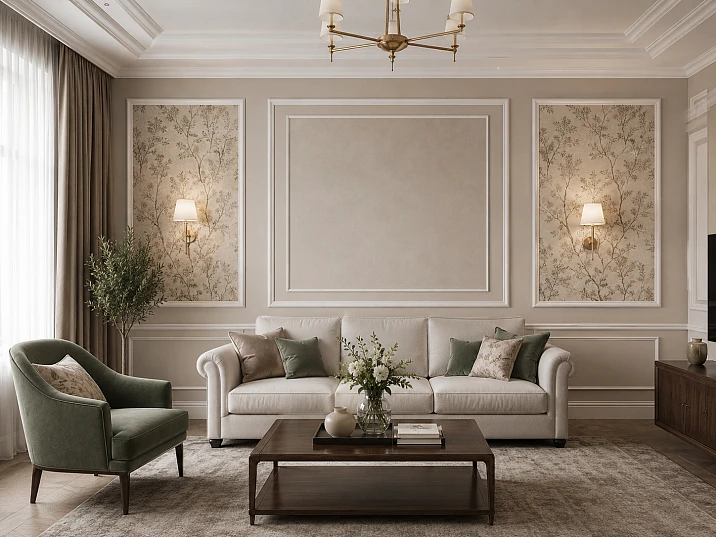
Polyurethane moldings turn wallpaper from simple finishing into a decorative composition: the profile assembles frames, highlights panels, emphasizes the pattern, and helps the wall look more expensive without complex wall panels. If you have already chosen wallpaper and feel that something is missing — most likely, this is exactly what is missing.
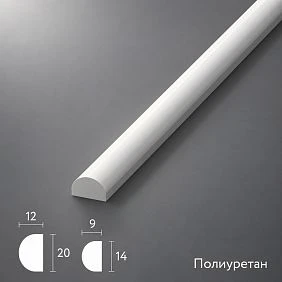
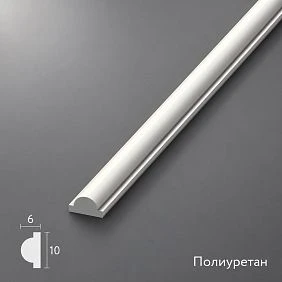
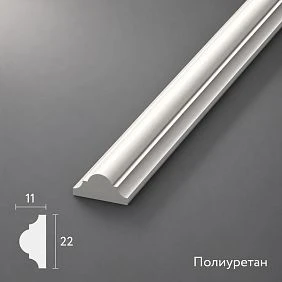
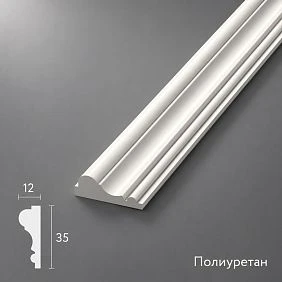
The wall as a blank canvas: why wallpaper is just the beginning
Here is a situation you might know well. You chose beautiful wallpaper. Maybe expensive — with a fine texture, an exquisite pattern, or a rich dark background. You hung it. You look — and something is off. The wall just looks... papered. There is no depth, no architecture, no feeling of a well-thought-out interior that was in the catalog.
What is the difference between "just wallpaper" and "a wall that works"? In the frame. In the structure. In the fact that the wallpaper is placed in a context — a profile that defines its place on the wall, limits it, highlights it, makes it part of a decorative system.
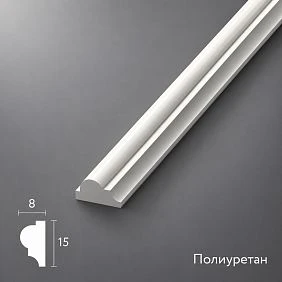
This is exactly what they do Polyurethane moldings for wallsThey add architectural context to the wallpaper. They turn a flat papered wall into a decorative composition with depth, symmetry, and character.
And this is not a theoretical discussion — it's a specific purchasing task: choose wallpaper, select molding, buy glue and paint, install, and get the result. Let's break it down step by step.




Why wallpaper and moldings should be chosen together
Many people make the mistake: first buy wallpaper, then think about moldings. In practice, this leads to mismatch — either the molding "argues" with the wallpaper pattern, or the chosen frame size doesn't fit the repeat, or the profile color doesn't match the background color.
The correct logic is the opposite: first decide how the wall will be arranged (frames, panels, inserts), then choose wallpaper for that scheme, and simultaneously — the molding.
Three questions to ask before purchasing:
-
How will the wall be arranged? Entirely in wallpaper with molding frames on top — or wallpaper only inside the frames, and the rest painted?
-
What is the role of the wallpaper? Is it the main character (accent insert) or a background for the molding structure?
-
What style? Classic with a relief profile and patterned wallpaper — or modern neoclassical with smooth molding and solid-color wallpaper?
The answers to these three questions determine everything else.
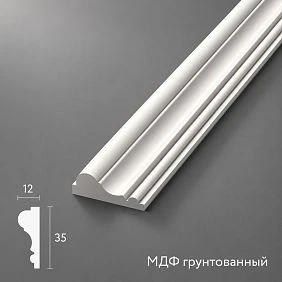
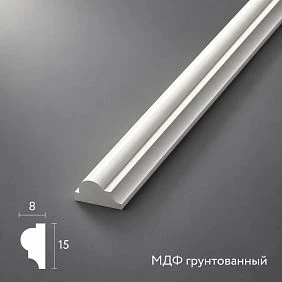
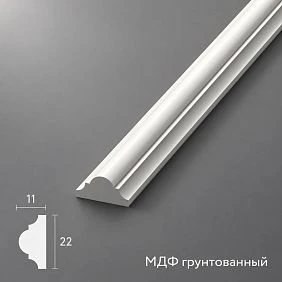
Our factory also produces:



Two fundamentally different approaches to a wall with wallpaper and moldings
Before choosing a profile, you need to decide on the basic concept of the wall. There are two of them, and they are radically different.
Get Consultation
Approach 1: Moldings over wallpaper
The entire wall is completely covered with wallpaper. Molding frames are mounted on top of the finished wallpaper surface. The molding is painted in a color that contrasts with the wallpaper background or matches it.
Pros: easier to execute — no need to precisely align the frame boundaries with the edges of the wallpaper. The molding hides all inaccuracies.
Cons: the molding is glued onto the wallpaper, which requires reliable wallpaper glue and good surface adhesion. On textured and textile wallpapers, gaps may appear between the back edge of the molding and the wall.
Approach 2: Wallpaper inside molding frames
The base wall is paint or neutral solid wallpaper. Inside the molding frames are decorative wallpapers that are glued exactly to the size of the frame.
Pros: maximum effect — the contrast between the frame, the wall background, and the wallpaper insert creates a rich, multi-layered composition. The profile is mounted on a reliable painted or plastered base.
Cons: requires precise marking and careful installation. The wallpaper seams must align with the edges of the frame.
for buy polyurethane moldings For the second approach, it is important to first finish the wall surface, then install the profile, and only then glue the wallpaper inside the frames.
Application scenarios: where and how the wallpaper + moldings combination works
Scenario 1: Accent wall behind the sofa — one large frame
The wall behind the sofa in the living room is the most noticeable surface in the room. One large molding frame on this wall, inside of which are expensive accent wallpaper with texture or pattern, outside is neutral paint. The molding — white or matching the paint color — forms a clear boundary between the two zones.
Frame size: 60–70% of the wall width and 55–65% of its height. The frame does not reach the ceiling or the baseboard — it "hangs" in the wall space like a painting, only instead of a painting, it is an architectural element.
This is the most striking and commercially sought-after scenario for combining wallpaper and moldings. The result is a wall that is impossible to ignore.
Scenario 2: Symmetrical frames by the bed in the bedroom
On both sides of the bed — two symmetrical vertical frames. Inside each — accent wallpaper. Above the bed — a horizontal frame with wallpaper or paint. Three frames form a single ceiling-wall system.
Decor for Molding in the corners of the frames adds a classic touch without overload. In a modern interior — corner elements are omitted, the profile remains with clean 45° joints.
Scenario 3: Vertical panels in the hallway
An entryway with several narrow vertical frames is a classic gallery solution. Each frame contains a narrow vertical panel of wallpaper or a single sheet of photowallpaper with an architectural motif. Between the frames is a painted wall.
This solution works especially well in entryways with ceilings from 2.7 meters: vertical frames with wallpaper visually elongate the space and add dynamism.
Scenario 4: Gallery wall in the dining area
In the dining area of an open-plan layout, a wall with several horizontal frames above the dining table. Inside the frames is wallpaper with a botanical pattern, which looks like a series of posters without glass. Outside is neutral paint.
This is a 'living gallery' without frames or paintings — only wallpaper and moldings.
Scenario 5: Study — classic wallpaper panels
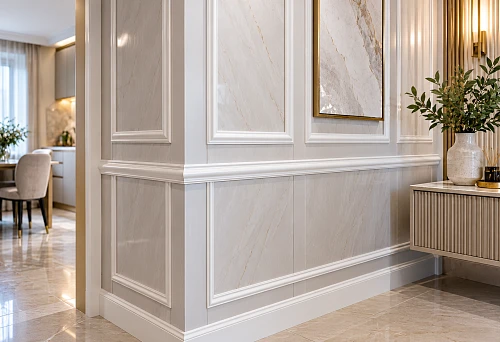
The lower third of the wall in the study is covered with expensive solid-color wallpaper in a dark tone. The upper border is a horizontal molding belt. Above is a painted wall in a lighter tone. Vertical moldings in the lower zone divide it into 'panels'.
The result is a study with the look of a classic English library. At the same time, the entire 'expensive' appearance is created by wallpaper + polyurethane moldings, which are significantly more economical than real wooden panels.
Which moldings to choose for different types of wallpaper
This is a practically important part — because the type of wallpaper directly determines which profile will be suitable.
Solid color wallpaper
Solid color wallpaper is the most versatile background. It works with any profile. If the wallpaper is in a neutral tone (beige, gray, white) — you can use a molding with moderate relief (cove, ogee, torus) of medium size (25–40 mm). If the wallpaper is in a saturated color — it's better to choose a calmer profile so as not to compete with the color.
Wallpaper with a large pattern
Wallpaper with a large ornament, floral pattern, geometric design — this is already an active surface. The molding should not compete with it. Choose a simple, geometrically clean profile without complex relief (flat chamfer, thin torus). Width — moderate (20–30 mm).
Here, the molding is a frame for the picture. It should not be more interesting than the picture itself.
Textile wallpaper
Jacquard, linen, silk, non-woven with a textured relief — expensive and visually rich. Here, the molding should be "worthy" of the wallpaper: a medium or wide profile with moderate classic relief, painted white or gold. A smooth cheap profile next to textile wallpaper will look out of place.
Photo wallpaper and panels
If a photo wallpaper or art panel is placed in a frame — the molding should be a frame, not a competitor. A clean, straight profile of medium width (25–35 mm) in white or a neutral color. No complex relief.
Dark wallpaper
A dark background — blue, emerald, graphite, black — is already a bold choice in itself. Molding on dark wallpaper: either white (classic contrast), or in the color of the wallpaper or a close shade (delicate relief in a single color field). A contrasting white molding on dark wallpaper is the most striking option: it creates the clearest decorative graphics.
Classic damask patterned wallpaper
Classic ornament requires classic molding — with fillet, ogee, torus. Medium or wide profile. White or cream molding on wallpaper with gold pattern is a classic combination that has worked for centuries.
| Wallpaper type | Profile | Width | Molding color |
|---|---|---|---|
| Solid colors | Any moderate | 25–40 mm | Same color or contrasting |
| Large pattern | Smooth, simple | 20–30 mm | In the color of the wallpaper background |
| Textile | Classic, moderate relief | 30–45 mm | White, cream |
| Photo wallpaper / panel | Straight, clean | 25–35 mm | White, neutral |
| Dark wallpaper | Any | 25–40 mm | White or matching color |
| Classic pattern | Cove molding, ogee | 30–50 mm | White, cream |
How to design wallpaper frames: a practical algorithm
Frame design is a key step that most people skip and get unexpected results during installation.
Step 1: Define the area
The entire wall or a specific section? If the wall is 4 meters — frames across the full width or only in the central zone? Write down the dimensions of the area.
Step 2: Account for wallpaper repeat
If the wallpaper has a pattern, the pattern has a repeat (repeating element). The frame size must account for the repeat: the pattern inside the frame should look complete, not "cut off" at the edges. This means the width and height of the frame are multiples of the repeat.
For solid-color wallpapers, this restriction does not apply.
Step 3: Determine the frame size
The frame should occupy 50–75% of the area of the zone where it is placed. Indentations from the edges of the zone (corner, baseboard, ceiling) should be equal on all sides. Equal indentations are the basis of visual balance.
Step 4: Determine the profile width
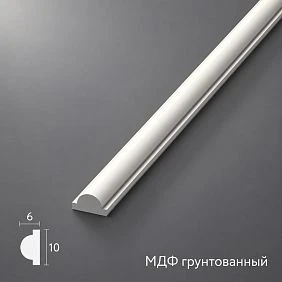
Profile made of polyurethane wall moldings should be proportionate to the frame size. Large frame (more than 1 m per side) — profile from 30 mm. Small frame (up to 60 cm) — profile 20–25 mm.
Step 5: Calculate the footage
Perimeter of one frame = (width + height) × 2. For multiple frames — total perimeter × 1.15 (allowance).
How to properly install moldings next to wallpaper
Installing moldings on or near wallpaper has its own specifics that cannot be ignored.
Option A: Molding over wallpaper
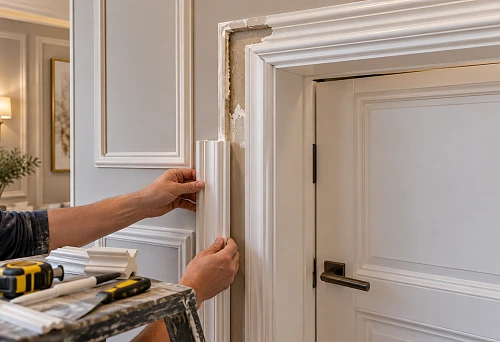
The wallpaper must be firmly glued, without bubbles or peeling. Molding glue is applied to the back edge of the profile and pressed against the wallpaper. Masking tape secures the profile until the glue is completely dry.
Important: do not use too liquid glue — it can seep under the wallpaper and cause it to peel off. Medium-viscosity polyurethane mounting glue is the optimal choice.
Option B: Wallpaper inside a molding frame
Stages:
-
Installing the molding frame on a painted or plastered wall;
-
Sealing joints, sanding, painting the profile;
-
Gluing wallpaper inside the frame along a pre-marked contour;
-
Trimming the wallpaper exactly along the inner edge of the profile — the wallpaper goes under the molding by 5–8 mm.
Precision of trimming wallpaper along the molding is critical. Any gap or overlap will be noticeable.
Corner joints
Corner joints of the molding at 45° are sealed with acrylic sealant, sanded, and painted. The molding and wallpaper meet at the inner corner point of the frame — this point must be flawless.
Full technique for working with joints — in the article about installing polyurethane moldings.
Molding color: how to avoid mistakes when combining with wallpaper
Molding color is a separate story that requires attention. Because it is the color that determines how the profile will "sound" in combination with specific wallpaper.
White molding: a universal classic
White molding works with any wallpaper of any color. It is clean, neutral, and creates the clearest possible frame. The only nuance: on very light (almost white) wallpaper, white molding gets lost — either a subtle contrast in molding color or a more pronounced relief is needed.
Molding in the color of the wallpaper background — monochrome
The profile is painted exactly in the color of the wallpaper background. The frame "dissolves" into the wall and is only readable in relief — a play of shadows. This is a delicate way to add structure without overloading the wall with additional color.
It works especially well with textured solid-color wallpaper: the molding and wallpaper form a single surface with a relief profile as an accent.
Molding in the color of the furniture
If the room has white doors, white frames, or white furniture — white molding ties the wall decor to the furniture line. This is a technique of "binding" the space through a repeating color.
Similarly: if the molding is painted the same color as the baseboard, they form a unified system.
Gold or bronze molding
Metallic painting of molding is a classic technique for formal interiors. Gold molding next to wallpaper with a dark background or classic ornament is baroque luxury in a modern interpretation.
For this option Decorative stucco at the corner and center points of the frame further enhances the effect.
Decorative elements within frames: when molding is scarce
Molding itself is a frame. But the frame can be more or less complex depending on the task and style.
Corner decors
Decor for Molding in the form of corner overlays are installed in the four corners of the frame. They mask corner joints, add a classic touch, and make the frame more "jewel-like." This is one of the most economical ways to elevate the decor.
Central decors
A decorative element in the center of the horizontal or vertical side of the frame — a "lock," as in an architectural arch — adds an architectural accent to the frame. Used in classic interiors, neoclassicism, art deco.
Decorative overlays inside the frame
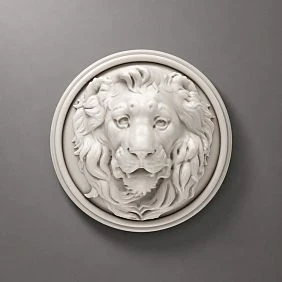
Polyurethane wall decor — small overlay elements (rosettes, medallions, ornamental inserts) — can be placed directly on the wallpaper inside the frame. This creates layering: wallpaper — frame — decorative element.
Practical examples: specific walls with wallpaper and moldings
Living room 20 sq. m, wall behind the sofa 3.5 × 2.7 m
Wallpaper: solid, dark blue color, textured non-woven.
Moldings: white profile 35 mm with a fillet. One large frame 2.2 × 1.8 m in the center of the wall.
Decor: Decor for Molding in the four corners of the frame.
Result: a white frame on a dark blue background — maximum contrast. The wall looks like an expensive interior element. The sofa is "inscribed" into the architectural zone.
Bedroom 15 sq m, accent wall behind the bed 2.8 × 2.6 m
Wallpaper: wallpaper with a small botanical pattern on a cream background — only inside the frames.
Wall background: warm white paint.
Moldings: Buy polyurethane wall moldings — profile 28 mm, tone-on-tone with the wall paint (white).
Layout: three vertical frames — a wide central one (60 × 180 cm) and two narrower side ones (40 × 180 cm). All three — from the baseboard to the ceiling.
Result: the patterned wallpaper reads as three architectural panels; the molding in the wall color does not distract but creates a clear structure.
Study 12 sq m, long wall 3.2 × 2.7 m
Wallpaper: dark green solid — only in the lower zone (up to the belt molding at a height of 95 cm).
Moldings: horizontal belt (profile 30 mm) at a height of 95 cm + vertical profiles (18 mm) in the lower zone with a spacing of 55 cm.
Background: upper part of the wall — light gray paint.
Moldings in color: belt and verticals — white.
Result: classic English «panels» on a budget. The study looks strict and expensive.
What to check before buying: checklist
-
Is the scheme determined: molding over wallpaper or wallpaper inside frames?
-
Is the width of the wall and frame zones measured?
-
Is the wallpaper pattern repeat for frames with a pattern accounted for?
-
Is the profile type chosen proportionate to the frame and wallpaper type?
-
Is the molding color determined and paint purchased?
-
Is the total perimeter of frames calculated + 15% margin?
-
Are the locations of switches, sconces, and outlets accounted for?
-
Corners selected decorations for moldings (if needed)?
-
Is there acrylic sealant for joints?
Full set for wall with wallpaper and moldings
| Position | Purpose |
|---|---|
| Moldings made of polyurethane | main profile for frames |
| Mounting adhesive for polyurethane | mounting to wall or wallpaper |
| Painter's tape | fixation while drying |
| White acrylic sealant | sealing corner joints |
| Fine sandpaper 180–220 | sanding joints |
| Acrylic primer | preparation for painting |
| Paint in selected color | finish coating of molding |
| Decor for Molding | corner and center decorative elements |
| Polyurethane wall decor | overlay decors inside frames |
| Decorative stucco | accent elements for classic schemes |
| Wallpaper of the required length | Finishing inside frames or wall background |
| Molding allowance 15% | Trimming, installation errors |
Combining wallpaper with other decorative elements
A wall with frames and wallpaper is part of a broader decorative system. It should be connected to other elements of the room.
Molding and baseboard
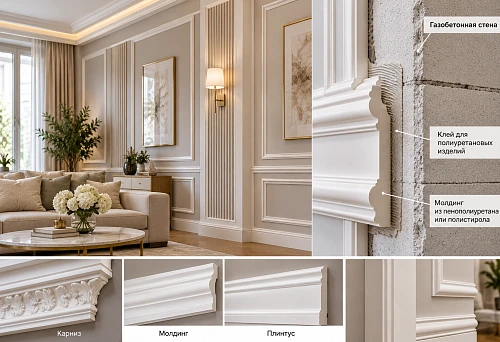
The frame molding and baseboard should be proportionate. The baseboard is the lower boundary of the wall area, the molding is its structural element. The same profile of the baseboard and frame molding creates integrity.
Molding and cornice
Ceiling molding Or the cornice along the upper edge of the wall 'accepts' the frames from below. If the cornice and frame molding are painted the same color, they form a unified decorative system.
Molding and doors
The color of the frame molding and the color of the door trims can match — this is a strong technique for connecting the wall with door openings. Or they can intentionally contrast — this is also a working scheme.
Frequently asked questions
Can moldings be glued over wallpaper?
Yes, it is possible — if the wallpaper is securely glued, without bubbles, and the surface is sufficiently flat. Polyurethane mounting adhesive is applied to the back edge of the profile and pressed against the wallpaper with tape for fixation. Textured and textile wallpapers are more difficult: there may be gaps between the profile and the surface.
Which moldings to choose for wallpaper with a large pattern?
A simple, geometrically clean profile without ornamentation (flat bevel or thin edge), width 20–28 mm, color matching the wallpaper background. The molding here is a frame, not a competitor.
How to make a panel from wallpaper and moldings?
Determine the size of the insert, mark the area on the wall, install the molding frame, paint, glue the wallpaper exactly inside the frame with a 5–8 mm overlap under the profile. Trim along the inner edge of the molding.
What to buy for a wall with wallpaper and moldings?
Moldings made of polyurethane the required profile and size, mounting adhesive, painter's tape, white acrylic sealant, primer, paint in the chosen color, 15% extra. Additionally — Decor for Molding for corner elements.
Which glue to use for moldings on wallpaper?
Medium-viscosity polyurethane mounting adhesive. Not liquid (will seep under the wallpaper), not too thick (hard to apply). Liquid nails compatible with polyurethane are an alternative.
Do I need to prime and paint the molding before installation?
No. The polyurethane molding is installed, then the joints are sealed with sealant and sanded, then the entire profile is primed and painted in its installed position.
Can moldings be combined with photo wallpapers?
Yes. A frame of molding around the perimeter of the photo wallpaper is a classic way to turn photo wallpaper from a "sticker" into a "painting." A neutral molding, white or matching the wall color, suits any photo wallpaper design.
About the company STAVROS
A wall is not just a surface to be covered with wallpaper. It is a space for an architectural statement. Molding frames on wallpaper are not an expensive renovation or a complex technology. It is the right choice of profile, proper marking, and careful installation. The result is an interior where wallpaper becomes part of a well-thought-out decorative system.
STAVROS is a Russian company specializing in decorative polyurethane products: moldings of all formats, molding decor, wall decor, decorative stucco, and ceiling elements. The catalog includes profiles for any style and any task, from delicate frames for minimalist wallpaper to classic systems with ornamental decor.
STAVROS offers a full range for the "wallpaper + moldings" project, from the first profile to the last decorative element.
In the STAVROS catalog: Buy polyurethane moldings, Decor for Molding, Wall Decor, Decorative stucco and the entire assortment in the section Buy moldings.