





































































Article Contents:
- What are corner elements for moldings
- When ready-made corners are needed instead of regular miter cuts
- What types of STAVROS corner elements are available
- Compact corners for lightweight frames
- Medium corner elements for universal compositions
- Large corners for architectural frames
- Ornamental corners with floral decor
- Where to use corner elements
- On the wall
- On the door
- On the furniture facade
- On a Wall Panel
- On the portal
- How to choose a corner element
- How to assemble a set before purchase
- Mistakes when choosing corner elements
- FAQ: Answers to Popular Questions
- About the company
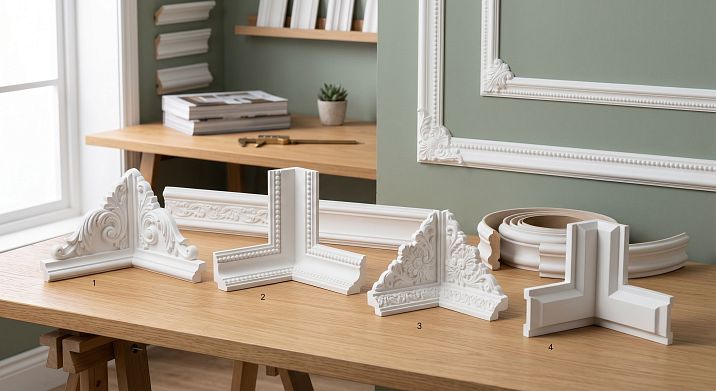
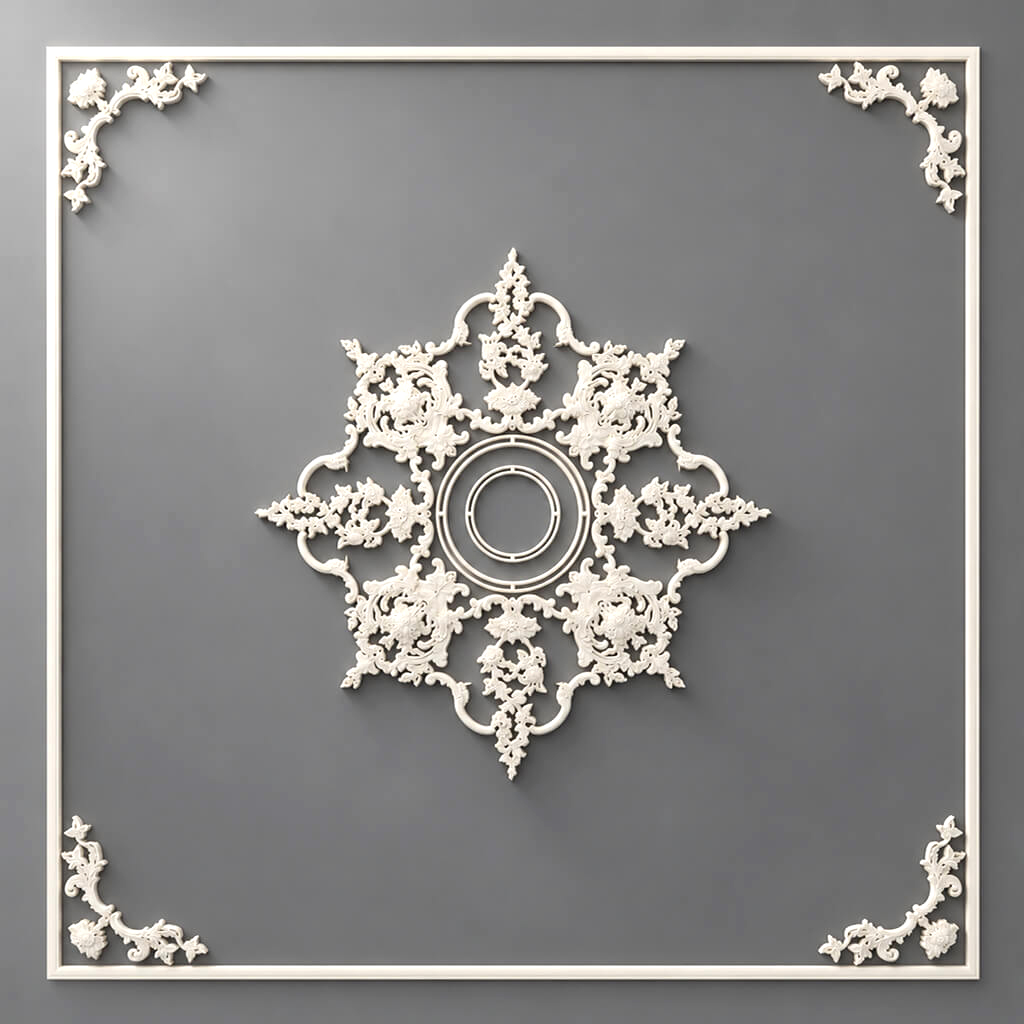
Corner elements for polyurethane moldings are ready-made decorative details that decorate the joints of molding strips in the corners of a frame on a wall, door, panel or furniture facade. The finished corner covers the connection of profiles, eliminates the need for complex miter cuts and makes the frame architecturally complete. To Decor for Molding look solid and expensive, corner elements are chosen together with moldings — by size, relief thickness, ornament style, installation location and future painting.





What are corner elements for moldings
A frame made of moldings is four planks that form a rectangular or square contour. In each of the four corners, the planks are joined. Without a special decorative element, this connection requires an accurate miter cut at 45°: any deviation by a tenth of a degree results in a noticeable gap or overlap.
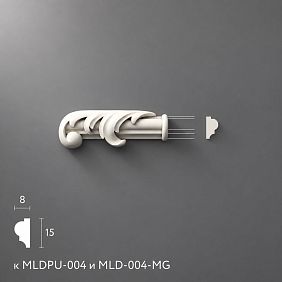
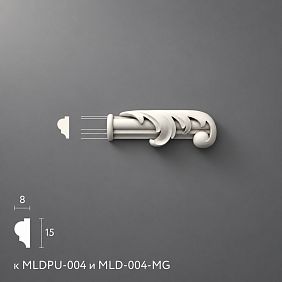
A corner element for molding is a ready-made overlay that mounts directly over the joint. It covers the corner connection, adds relief decor, and creates a visual focal point in each corner of the frame. The technical joint turns into a decorative accent.
These elements are made of polyurethane: a lightweight, moisture-resistant material that perfectly reproduces fine relief, is easy to paint, and adheres with acrylic glue without complex tools. When painted in the color of the wall or moldings, the corner element becomes an organic part of a unified decorative surface — the decor speaks through relief, not through material contrast.




When ready-made corners are needed instead of regular miter cuts of molding
Miter cutting molding at 45° is a tool operation that requires precise equipment, experience, and accuracy. Even a small error results in an unsightly joint, especially noticeable under oblique lighting. A ready-made corner element eliminates this problem: moldings are brought to the corner butt-to-butt or with a slight overlap, and the corner overlay covers the entire connection.
Ready-made corners are needed in the following cases:
-
when you want a decorative frame with accent corners rather than "empty" ones;
-
when precise miter cutting is difficult due to uneven walls or non-standard room corners;
-
when the frame is large and the corners should carry decorative weight;
-
when you need to quickly assemble symmetrical decor without lengthy marking and adjustment;
-
when the interior is classic, neoclassical, or executed in modern classic style;
-
when you need to design a door leaf, door portal, wall panel, or furniture facade;
-
when the frame corner should become a decorative accent, not just a connection point.
Our factory also produces:
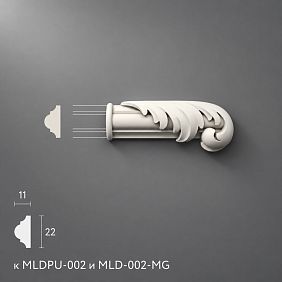
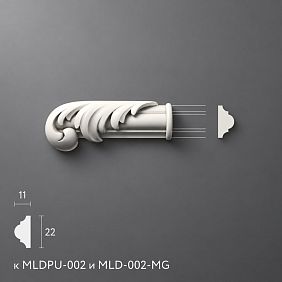
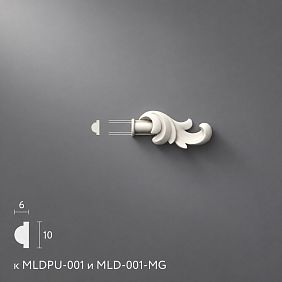
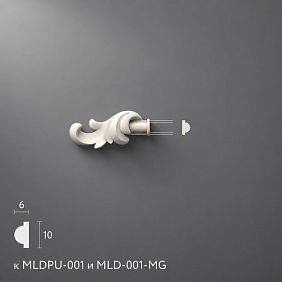


What types of STAVROS corner elements are there
Get Consultation
Compact corners for lightweight frames
Corner element MLDPU-004U — a compact polyurethane corner measuring 135×135×10 mm. This is the smallest of the three standard corner elements in the series: it is neat, delicate, and does not overload the frame. It is used where a light, unobtrusive frame without architectural heaviness is needed — in small rooms, on furniture facades, on door leaves in a light neoclassical style.
The size 135×135 mm means the corner occupies 135 mm on each side of the frame. It is important to check this before purchase: if the side or top molding strips are short, a large corner element will consume a significant portion of the length.
Medium corner elements for universal compositions
Corner element MLDPU-002U — 172×172×13 mm. This is a universal medium format: noticeable enough on the wall to serve as a decorative accent, yet compact enough not to overload a medium-scale frame. The 13 mm relief provides expressive shadow play with side and decorative lighting.
MLDPU-002U is a good choice for wall frames in the living room, bedroom, and hallway, for medium-sized door portals, and for decorative wall panels in neoclassical style.
Large corners for architectural frames
Corner element MLDPU-003U — 218×218×15 mm. This is a representative format for large wall frames, fireplace and door portals, large decorative panels, and accent walls in spacious rooms. The 218×218 mm size creates a noticeable corner accent even when viewed from a distance of 3–4 meters.
With ceilings below 2.7 m, this corner element should be used carefully: in a small room, it can take up a significant part of the frame field and create a feeling of overload.
Ornamental corners with floral decor
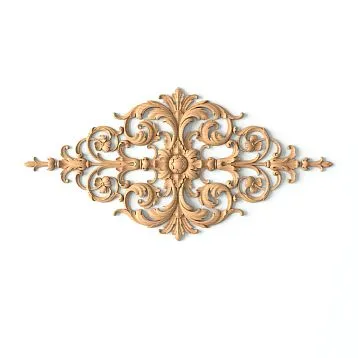
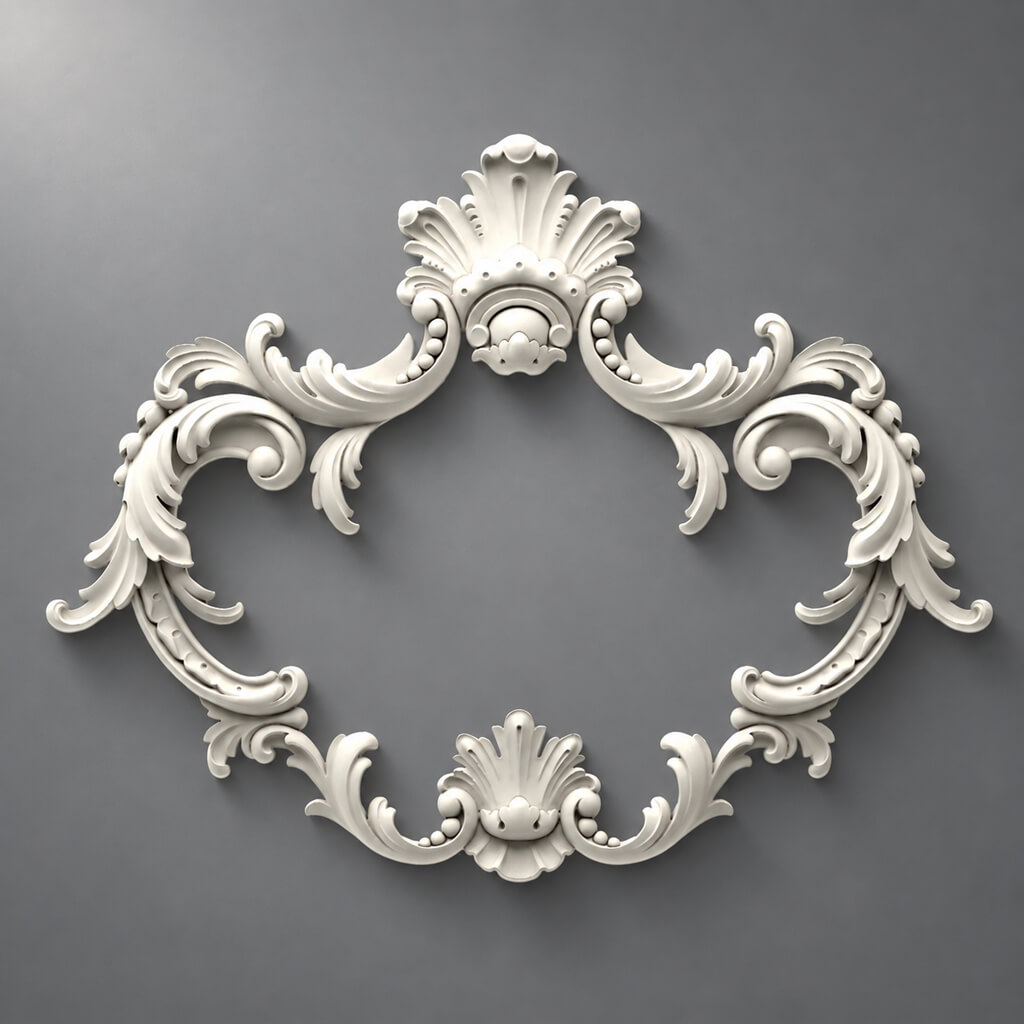
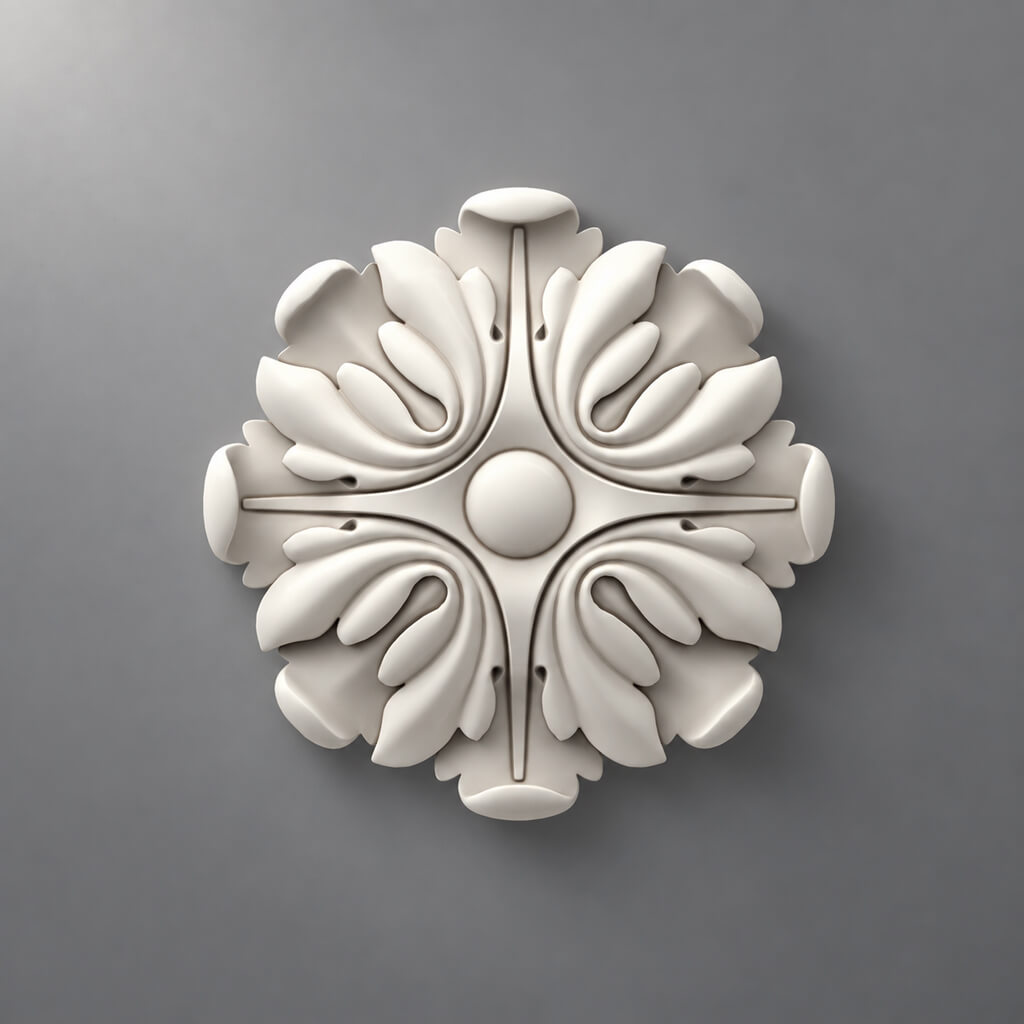
Corner molding NPU-500 — 209×209×18 mm with floral ornament, acanthus leaves, and volutes. This is no longer a technical corner element, but a decorative accent with a developed classical ornament. The 18 mm relief is deep, with volumetric detailing and a rich play of shadows.
NPU-500 is suitable for classical interiors where the corner of the frame should be an independent ornamental statement: a neoclassical living room, a grand hall, a study with high ceilings, a representative door or fireplace portal.
Where to use corner elements
On the wall
Wall decorative frames are the primary application for corner elements. Frames behind the sofa in the living room, at the head of the bed in the bedroom, in the dining area, hallway, corridor, or study — everywhere, corner elements transform the geometric contour of moldings into a complete ornamental system.
This is especially important in interiors with uniform wall and decor painting: when the molding, corners, and wall are painted the same color, differences in relief create an effect of architectural depth that cannot be achieved with flat painting.
On the door
A door leaf with molding frames is a classic decorative technique. Corner elements on the door leaf cover the joints of molding strips and add architectural completion to each frame. For doors, compact or medium corner elements are chosen — MLDPU-004U or MLDPU-002U — proportionate to the dimensions of the door leaf.
For a door portal — the framing of the opening — the scale of corner elements can be larger: MLDPU-003U or NPU-500 create a prestigious architectural portal.
On the furniture facade
Corner elements MLDPU-004U and MLDPU-002U are suitable for furniture facades: cabinets, dressers, display cases, sideboards, and decorative panels. An important rule: the corner element should not occupy more than 30–35% of the facade height — otherwise, the corners visually "eat up" the entire field and the frame loses proportion.
On a wall panel
Wall decorative panels made of moldings are vertical or horizontal fields divided by molding profiles. Corner elements in each frame complete the system: each panel cell becomes a self-sufficient decorative element.
On the portal
A fireplace, door, or mirror portal is the most representative application of corner elements. Here, large MLDPU-003U or ornamental NPU-500 are used: at the junction points of the horizontal lintel with the vertical posts, they create decorative accents that organize the entire portal into an architectural system.
How to choose a corner element
| Task | What to choose |
|---|---|
| Light neoclassical frame | compact MLDPU-004U (135 mm) |
| Medium wall frame | universal MLDPU-002U (172 mm) |
| Large accent wall | large MLDPU-003U (218 mm) |
| Classic interior with ornament | NPU-500 (209 mm, floral decor) |
| Modern Classic | MLDPU-004U or MLDPU-002U for painting |
| Door portal | MLDPU-003U or NPU-500 + moldings + overlay |
| Furniture front | MLDPU-004U, proportionate to the facade |
| Large decorative panel | large corners + side and central elements |
| Asymmetrical corners or portal | MLDPU-2U-2.1L — left corner element |
How to assemble a kit before purchase
The correct assembly sequence of the kit is the key to a result without rework.
Step 1. Determine the location: wall, door, portal, panel, or furniture facade.
Step 2. Determine the frame size — the width and height of the field you want to frame.
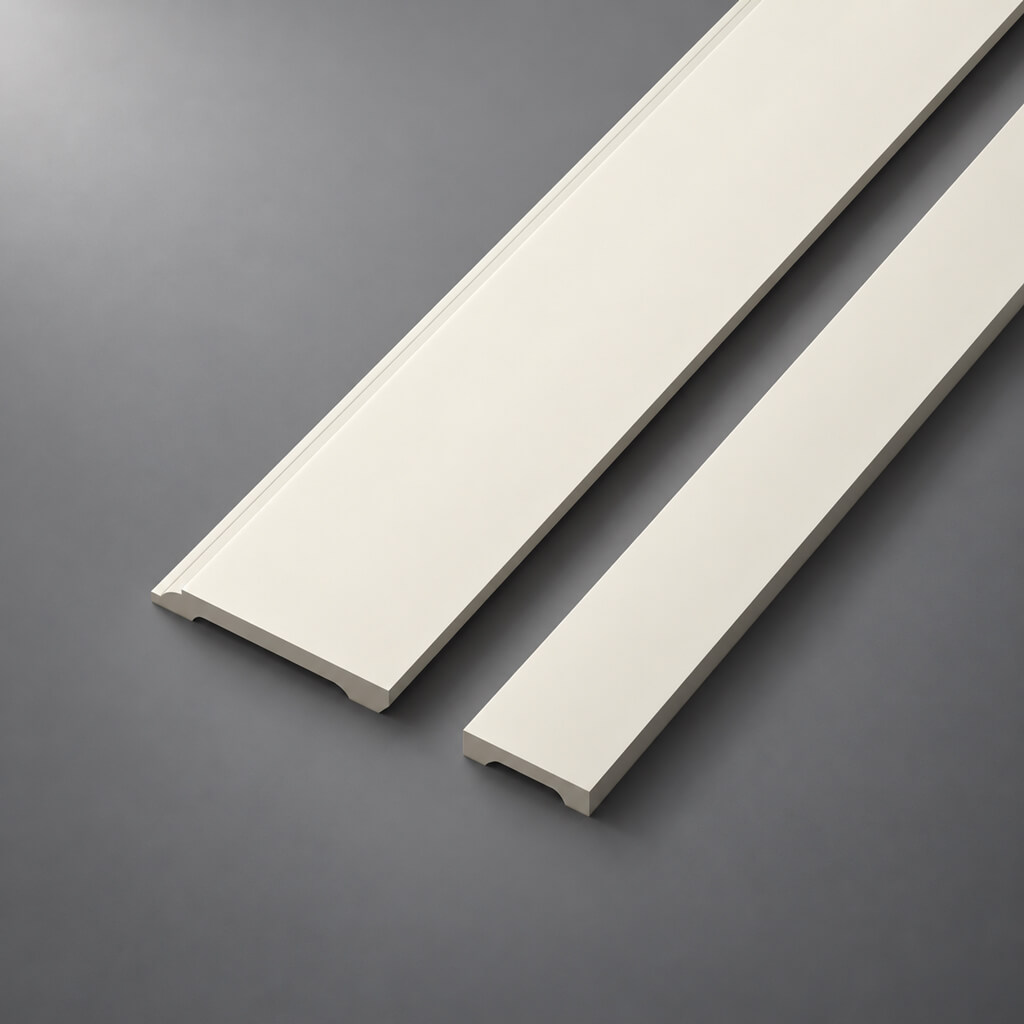
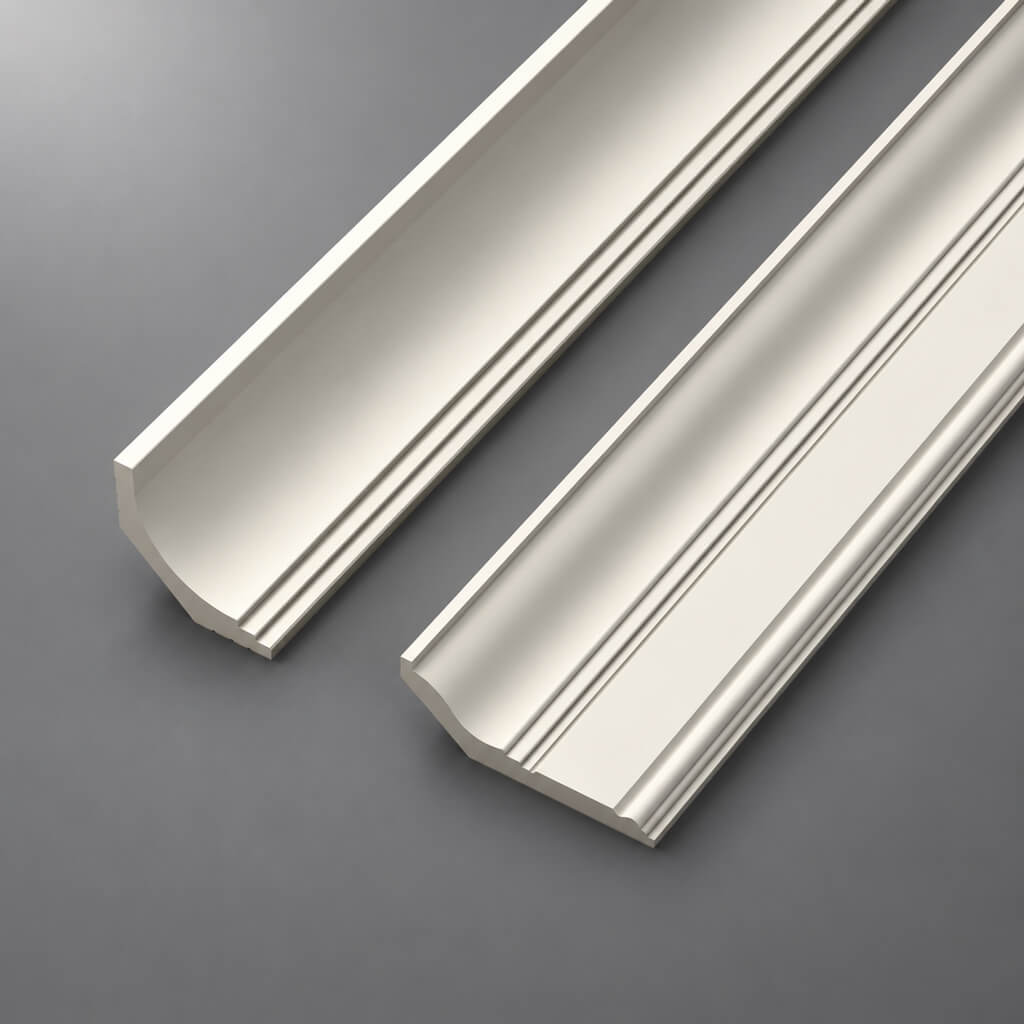
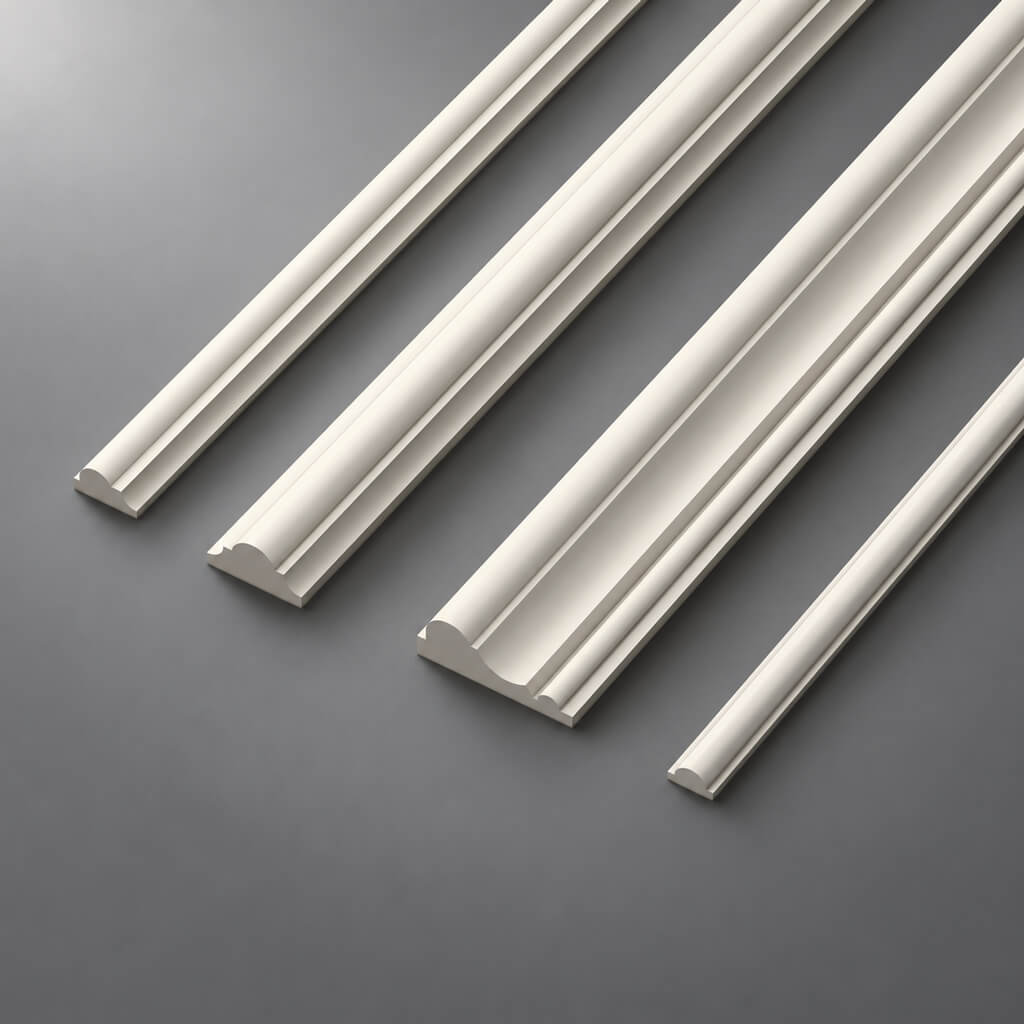
Step 3. Select Polyurethane molding the desired profile, style and width.
Step 4. Check if there is a compatible corner piece for this molding. Some corner pieces are designed for a specific profile — the size must match.
Step 5. Decide whether you need four identical corners (universal piece) or a left and right pair. For most symmetrical frames, universal square corners like MLDPU-004U, MLDPU-002U or MLDPU-003U are suitable. For asymmetrical portals or non-standard constructions, clarify the orientation.
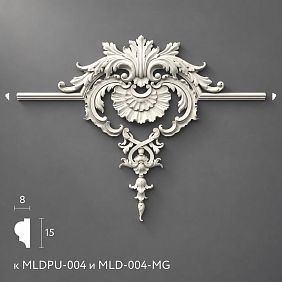
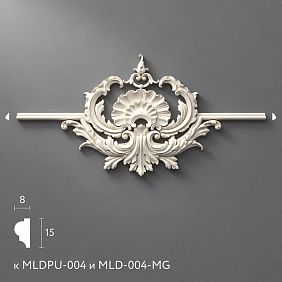
Step 6. Select a center molding overlay if the frame is large and the lower or upper horizontal part needs an ornamental accent. Center overlays PU overlays и Decor for Molding choose from the same series as the corner pieces.
Step 7. Calculate the length of moldings along the frame perimeter — horizontal and vertical planks separately. Remember: corner pieces take up space on each side. Subtract the width of two corner pieces from the length of each plank (e.g., 2×135 mm for MLDPU-004U).
Step 8. Add 10–15% allowance for trimming the molding.
Step 9. Consider painting. All frame elements — molding, corners, overlays — are painted in a single color. Paint before or after installation?
Step 10. Order moldings, corner pieces, overlays and glue at the same time — in one batch.
Errors when choosing corner elements
They buy corners before choosing the molding. The corner element must be compatible with the molding profile. Buying corners without molding risks size and style mismatch.
They don't check physical dimensions. A 218×218 mm corner element will take up 218 mm on each side of the frame. If the horizontal plank is 600 mm, only 164 mm remains for the visible molding section. Check before purchasing.
They take a large corner for a thin frame. NPU-500 (209 mm) on a 500 mm wide frame — the corners will occupy the entire visible field. The corner scale must match the frame scale.
They use a small corner on a large wall. MLDPU-004U (135 mm) on a large accent wall in a spacious living room will visually get lost. For a large format — a large corner.
They don't account for relief thickness. On furniture facades, the relief of the corner element should not interfere with hinges, handles, and other hardware parts. Check the gaps.
They buy 2 corners instead of 4. One frame requires four corner elements. For double framing — eight. A counting error guarantees a material shortage.
They don't check orientation. Most standard square corner elements are universal: they are symmetrical and fit any corner. But some asymmetrical elements, like MLDPU-2U-2.1L, have a specific orientation — left or right. Clarify before purchasing.
They mix different ornament styles. A smooth minimalist molding + NPU-500 with acanthus — a stylistic conflict. All frame elements must belong to the same ornamental language.
They install without a preliminary layout. Always dry-fit all elements — moldings and corners — before applying glue. This is the only way to ensure correct placement and symmetry.
They do not order a reserve of molding for trimming. Even if the molding is not cut at 45° when using corner elements, it is still trimmed to length. A reserve of 10–15% is mandatory.
FAQ: Answers to popular questions
What is a corner element for molding?
This is a ready-made decorative polyurethane overlay that is mounted in the corner of a molding frame. It covers the joint of the profiles and adds a relief ornamental accent.
Why are ready-made corners for molding frames needed?
They eliminate complex cutting, make the joint decorative, create architectural completeness of the frame, and allow quick assembly of a professional decorative system.
Is it possible to do without corner elements?
Yes — if the moldings are cut perfectly accurately. But even with precise cutting, a frame with corner elements looks richer and more expensive: the corners add a relief accent that is absent with a clean joint.
How to choose the size of a corner element?
The main principle: the corner element should not occupy more than 40–45% of the length of each molding strip. Subtract 2× the size of the corner from the length of the strip — the remaining visible section of the molding should be proportionate to the entire frame.
What is better: cutting the molding or a ready-made corner?
A ready-made corner is more practical, faster to install, and richer in decoration. Miter cutting is justified only where a minimalist joint is more important than an ornamental accent — for example, in a modern interior with a very thin profile.
Are corner elements suitable for doors?
Yes. MLDPU-004U and MLDPU-002U look organic on door panels. For door portals — MLDPU-003U or NPU-500.
Can corners be used on furniture facades?
Yes. MLDPU-004U is the most suitable size for furniture. It is important to check that the relief does not interfere with hardware and hinges.
Can polyurethane corners be painted?
Yes. Polyurethane accepts acrylic and alkyd paint well. Painting in the color of the molding and wall creates a single monolithic system.
How to glue a corner element to the wall?
Acrylic construction adhesive or glue for polyurethane products. Apply glue to the back of the element, press it to the wall, and hold for 2–3 minutes. After drying, fill the gaps with putty and paint.
Where to buy corner elements for polyurethane moldings?
In the STAVROS catalog: Decor for Molding — corner elements MLDPU-004U, MLDPU-002U, MLDPU-003U, NPU-500 и MLDPU-2U-2.1L — a complete selection for any format and style.
About the Company
STAVROS — Russian manufacturer and supplier polyurethane molding decoration: corner elements, moldings, PU overlays, decorative inserts, central overlays, and everything needed for assembling decorative frames on walls, doors, portals, and furniture facades. If you need corner elements for polyurethane moldings — choose from the catalog STAVROS and order the entire set at once: moldings, corners, overlays, and glue in one shipment.