Article Contents:
- Why use wall molding in living room at all: the logic of decoration
- Where wall moldings are used in living rooms
- Molding on main living room wall
- Molding for TV zone in living room
- Molding in sofa area: accent wall behind
- Wall moldings for painting
- Wall moldings with wallpaper
- Moldings for decorative panels in living room
- What types of wall moldings for living rooms exist: typology
- Wooden moldings for living room
- Solid wood moldings: a separate conversation
- Polyurethane moldings for living room
- Smooth moldings for living room
- Relief moldings for living room
- Narrow and wide profiles: a matter of scale
- How to choose a molding for the living room according to interior style
- Molding for classic living room
- Molding for neoclassical living room
- Molding for modern living room
- Molding for a light living room
- Molding for a dark living room
- Molding for an accent wall in the living room
- How to choose molding for the living room by material
- Wood: naturalness and material honesty
- Polyurethane: practicality without sacrificing aesthetics
- What is better for walls to be painted in the living room
- What is better for walls with decorative panels
- Interior solutions with moldings in the living room
- Decorative frames on walls: geometry as decor
- Symmetrical panel compositions
- Accent wall behind the sofa: the focal point of the entire space
- TV zone design with moldings
- What to combine moldings with in a living room interior
- Moldings and cornices: the upper finishing
- Moldings and baseboards: the lower base
- Moldings and slatted panels
- Moldings and stucco
- Moldings and polyurethane decor
- Moldings with painted walls and wallpaper
- What to consider before buying wall moldings for a living room in St. Petersburg
- Room size: scale above all
- Ceiling Height: Vertical Scale
- Interior Style: Sequence is Mandatory
- Wall Finish Type: Compatibility
- Availability of Matching Decor in the Same Style
- Where to Buy Wall Molding for Living Room in St. Petersburg
- How to Choose a Profile to Match the Living Room Interior
- Why It's Convenient to Buy Moldings and Decor in One Place
- How to Assemble a Unified Decorative Solution for the Living Room
- FAQ: Popular Questions About Wall Moldings for Living Room
- Which Moldings Are Better for Living Room: Wooden or Polyurethane?
- Can wide molding be used in a small living room?
- Is molding suitable for a living room combined with a kitchen?
- How to properly install molding on a wall?
- Can molding be repainted after installation?
- Where to buy wall molding for a living room in St. Petersburg with delivery?
- How to calculate the required amount of molding for a living room?
- Conclusion: molding in the living room is a solution that works for years

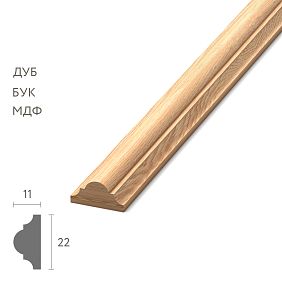
Wall molding for the living room in St. Petersburg is a query driven by a specific need: to make the interior more expressive, visually richer, and more structured. And this task is solved bySolid wood wall moldingsandPolyurethane moldings for the living roomfrom the STAVROS catalog—with delivery across St. Petersburg and a full set of accompanying decor.



Why have wall molding in the living room at all: the logic of decor
Ask yourself: what makes a living room wall interesting? Not wallpaper, not paint, not even a painting. What makes it interesting is structure. Dividing into panels, highlighting zones, creating frames—everything that turns a flat surface into an architecturally meaningful plane. That's exactly whatMoldings for walls.
Wall molding for the living room is a decorative profile made of wood or polyurethane that is mounted directly on the vertical surface. It does not bear structural load—its role is purely decorative. But it is this 'purely decorative' solution that can elevate the level of the interior like no other finish.
What exactly do moldings provide for the living room?
-
Visual scale. Frames on walls create the illusion of paneling, characteristic of classic interiors in expensive mansions. Even in a standard St. Petersburg apartment, a wall with moldings looks like a historical space—deliberate and substantial.
-
Zoning. A horizontal profile in the middle of the wall divides the space by height, creating a paneled lower zone. This is one of the simplest techniques for visually structuring a living room.
-
Accent. Molding on one wall of the living room—an accent wall without extra cost. Profile frames, decorative panels, symmetrical compositions—all of this highlights the surface without resorting to expensive materials.
-
Expensiveness. This is a fact with a rational explanation: moldings create volume and shadow. Shadow is depth. Depth is the feeling of richness and thoughtfulness in an interior. The brain literally reads a textured surface as more valuable than a smooth one.




Where in the living room are wall moldings used
Our factory also produces:
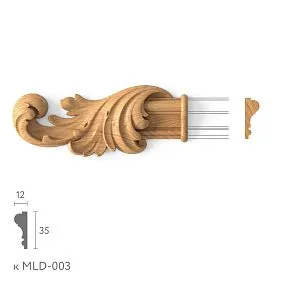
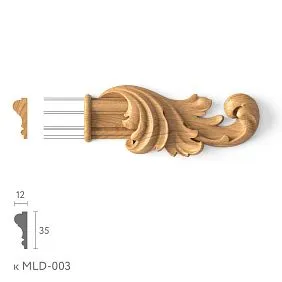
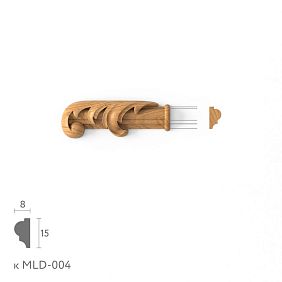
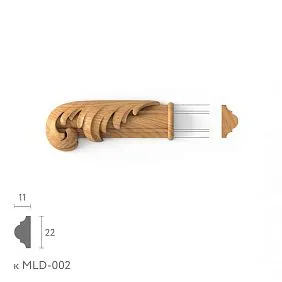
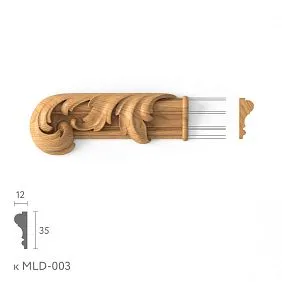
Molding on the main wall of the living room
The main wall is the one you see first upon entering. Usually, it's the wall opposite the door or the one along which the main furniture is placed. It becomes the primary canvas for decorative moldings. Here, frames work well—symmetrical rectangular fields that mirror each other with equal spacing. The profile is painted to match the wall color or slightly lighter. The result is a surface you don't want to cover with furniture.
Get Consultation
Molding for the TV zone in the living room
The TV zone is the most challenging area in a modern living room. Technology looks out of place on any beautiful wall if it's not integrated into a decorative frame. Molding for the wall with a TV solves this elegantly: profiles create an architectural context around the TV panel, transforming the device from a 'black rectangle on the wall' into an element of the interior composition. The scheme: vertical profiles on the sides of the TV like columns, a horizontal molding on top like a lintel. The entire structure is painted in a uniform color—and the TV zone becomes an architectural element, not just a technical area.
Molding in the sofa zone: an accent wall behind
The wall behind the sofa is the second most significant decorative object in the living room. It's the backdrop for the entire furniture group, the background for photos, and the main design element when viewed from the hallway. Decorative molding for the wall behind the sofa works in several formats:
-
a single large frame spanning the full width of the wall behind the sofa;
-
a series of vertical frames with equal spacing;
-
a horizontal panel zone in the lower part + molding frames in the upper part;
-
accent painting of the field inside the frame in a darker shade.
Moldings on a wall for painting
Walls prepared for painting are the perfect base for moldings. A smooth painted surface + a relief profile = a play of volume and shadow.Wall moldings for paintingPolyurethane moldings are mounted directly on the painted wall and painted along with it in the same shade. The monochrome result is sophisticated and modern.
Moldings on a wall with wallpaper
Moldings work perfectly on wallpaper as well — especially on plain background ones. In this case, the profile is mounted over the wallpaper, creating a framed geometry on a textured field. Important: the molding should be slightly lighter or darker than the wallpaper so that the frame stands out against the texture. For patterned wallpaper, moldings work as an accent, highlighting a zone.
Moldings for decorative panels in the living room
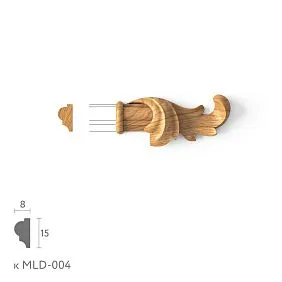
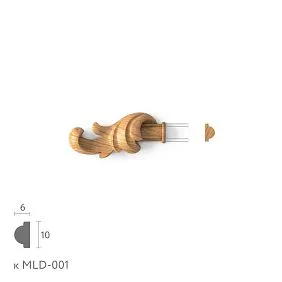
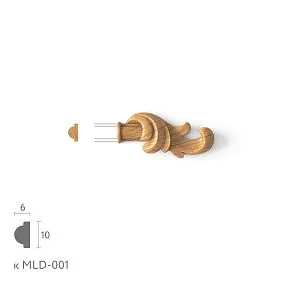
Decorative panels made from moldings are a separate scenario. These are frames inside which the surface is treated differently: different paint, different wallpaper, decorative plaster, or even fabric. The molding here is the border between two finishing zones.Decor for MoldingCorner inserts at the joints of the profile make these frames complete and neat.
What types of wall moldings for the living room exist: typology
Wooden moldings for the living room
Wooden wall moldingsSolid wood moldings are a premium tool for interior decor. Natural wood under a layer of paint carries a vitality that no synthetic material can reproduce. The edges of the cross-section remain sharp even after several repaints. The surface after sanding and enameling looks like genuine carpentry work.
Wooden molding for the living room is chosen when:
-
the interior is executed in natural materials and requires unity;
-
nearby — wooden parquet, wooden doors, solid wood cornices;
-
the result must be absolutely impeccable, without compromises.
Wooden profiles require proper preparation for painting: sanding with 120–180 grit, priming, and if necessary — knot filling. However, the result justifies the effort: the relief on wooden molding under enamel looks exactly like the walls of St. Petersburg mansions did two centuries ago.
Solid wood moldings: a separate conversation
Profiles made from solid wood are the highest category of wall molding. No glued layers, no veneers. Homogeneous structure throughout the entire cross-section. Solid wood moldings allow for the most precise profile milling: edges become absolutely sharp, ornament — extremely clear. After painting, such a profile looks as if cast — its geometry is read so correctly.
Polyurethane moldings for the living room
Polyurethane wall moldings— the most in-demand format for modern living room interiors. A lightweight, stable material that does not react to humidity changes, which is installed in minutes and accepts any paint without special preparation.
Why polyurethane became the favorite for wall moldings in the living room:
Geometric precision. Polyurethane is produced by casting in a mold—each profile exactly replicates the shape of the previous one. Frames made from such moldings always turn out perfectly correct.
Rich relief. Complex ornamentation—egg-and-dart, acanthus, floral motifs, interlacing—is available in polyurethane without manual carving.Polyurethane Itemsallow for creating rich decorative programs for the living room on a reasonable budget.
Easy installation. Cuts with a utility knife at any angle. Adheres with liquid nails. Does not require acclimatization.
Stability. Does not deform with changes in temperature and humidity. Especially important for St. Petersburg.
Smooth moldings for the living room
Smooth profile—a basic type. Rectangular, trapezoidal, or stepped cross-section without ornamentation. Works through form, not through pattern. For modern interiors, neoclassicism, minimalism with classical references—smooth molding is the primary tool. In monochrome painting, it creates volume through shadows, which are read most clearly with side lighting.
Relief moldings for the living room
Relief profile carries ornamental patterns: floral, geometric, mixed. After painting, the relief manifests as a play of shadows in the recesses and light lines on the protrusions. For classic and Baroque living rooms—relief molding is essential. For modern interiors with historical accents—used in measured doses, as one ornamental line on a neutral background.
Narrow and wide profiles: a question of scale
The choice between narrow and wide molding is not a matter of taste, but a matter of proportion.
| Profile width | Ceiling Height | Application |
|---|---|---|
| 1–3 cm | 2.5–3 m | Delicate frames, modern interior |
| 3–6 cm | 2.7–3.5 m | Classical frames, neoclassicism |
| 6–10 cm | 3.5 m and above | Large decor, classic, baroque |
| More than 10 cm | From 4 m | Ceremonial spaces, portals |
How to choose molding for a living room based on interior style
Molding for a classic living room
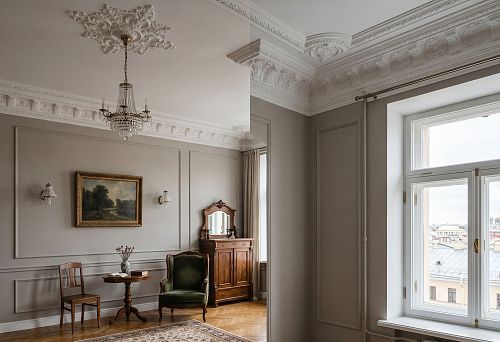
A classic living room is built according to the laws of order architecture: baseboard - wall - cornice. Moldings in a classic interior create framed panels on the walls, repeating the logic of architectural portals. The profile has several cross-sectional levels and is moderately embossed. The corner joints of the frames are finished viamolding decorative elements.
Placement of frames in a classic living room: symmetrical, with equal intervals, with identical indents from the floor and ceiling. The height of the frames is approximately 2/3 of the wall height. The lower third is either a decorative panel or a solid-color field.
Molding for a classic living room should be purchased in wood or high-quality polyurethane with relief. White or ivory are classic colors for the finish coating.
Molding for a neoclassical living room
Neoclassicism is the same classicism, but without opulence. A smooth profile of medium width. Frames on the walls are restrained, with moderate indents. Moldings in the color of the wall or one tone lighter. Sometimes - a thin relief, but without Baroque richness. In a neoclassical living room, molding is the structure of the space, not its decoration.
Molding for a modern living room
Modern interior has embraced moldings - precisely as a tool for creating depth on flat walls. A narrow, smooth profile in the color of the wall: the frames are visible only through shadows, but this is what creates a sense of thoughtfulness and class. For a modern living room, decorative molding should be purchased in a laconic geometric version - without ornaments, with clear edges.
Molding for a light-colored living room
A light-colored living room with moldings is the absolute classic of a white interior. White molding on a white wall, milky on cream - volume is revealed through nuances of shadows. With proper lighting (directional spotlights, side lighting), the edges of the profile cast thin shadows, creating a pattern that changes throughout the day. This is a living, breathing space.
Molding for a dark living room
Dark walls with moldings are one of the most expressive interior techniques. Anthracite, deep blue, dark green—on these backgrounds, white or light gray moldings read with maximum clarity. The relief of the profile against a dark background becomes especially expressive: light frame lines are perceived as graphics on a dark canvas.
Molding for an accent wall in the living room
An accent wall is a wall that stands out from the others. Moldings create emphasis through framed geometry: one wall gets decorative frames, while the other three remain neutral. Inside the frames on the accent wall, you can apply a different paint tone, different wallpaper, or decorative plaster. Here, molding is the boundary between two decorative solutions.
How to choose molding for the living room by material
Wood: naturalness and honesty of the material
Wooden molding for the living room is the choice of those who value naturalness. Beneath the layer of enamel lies the living structure of wood, which reveals itself in tactile sensations, in sound, and in how the profile reacts to spot lighting. Alongside wooden parquet, wooden doors, and solid wood furniture, wooden molding creates a unity that cannot be imitated.
For a living room with natural materials, buying wooden wall moldings is not just an aesthetic decision; it's a principle of consistency. When every element in the interior speaks the same language, the space becomes cohesive.
Polyurethane: practicality without compromising aesthetics
Polyurethane ItemsPolyurethane molding for the living room is a practical, reliable, and aesthetically convincing choice. Polyurethane molding for the living room does not warp from central heating (dry air in winter), does not crack with temperature changes, and is easy to paint and repaint.
For a living room with decorative panels and frames, polyurethane is especially convenient: the precision of profile reproduction in a series means all frames will be absolutely identical. This is critical for symmetrical classical compositions.
What is better for walls to be painted in the living room
For walls to be painted, polyurethane. It does not require sanding or additional priming of the molding surface before painting. One coat of primer on the polyurethane surface + two coats of acrylic paint, and the profile is painted perfectly. The edges remain sharp, the color is even.
Wood for painting in the living room is also possible but requires more time for preparation. With proper preparation, the result is even more expressive: the edges of the wooden profile under enamel create very clean and precise geometry.
What is better for walls with decorative panels
For decorative panels in the living room, both materials are good but in different situations. If panels are created in a single tone with the rest of the wall, polyurethane is optimal for speed and simplicity. If panels involve a complex pattern in a frame, a polyurethane profile with relief. If the interior requires naturalness, wooden molding around veneered or wooden inserts.
Interior solutions with moldings in the living room
Decorative frames on walls: geometry as decor
Frames are the most classic and most universal technique. Rectangular closed frames are assembled from moldings on the wall surface. The arrangement is symmetrical, with equal intervals between frames and identical offsets from corners and baseboards. Inside the frame, the surface can be in the same tone as outside or in a different one, depending on the intended effect.
Frame arrangement scheme:
-
Determine the height of the lower panel zone (typically 80–100 cm from the floor) — the bottom line of the frames.
-
Leave a 15–20 cm gap from the cornice — the top line.
-
Divide the remaining wall width into equal fields, taking into account the gaps between frames.
-
Mark the wall, install the moldings, and finish the corners throughDecor for Molding.
Symmetrical panel compositions
A classic living room implies symmetry. Four frames on a 4 m wide wall, two frames on a 2 m wide wall, one central frame on the accent wall behind the sofa — this is a rhythmically precise system that creates a sense of an expensive interior.
Accent wall behind the sofa: the focal point of the entire space
The wall behind the sofa is the backdrop for the entire furniture group. One large frame spanning the full width of the area behind the sofa, a slightly darker tone inside the frame, molding matching the main wall color — and the wall transforms into an architectural backdrop. Paired with side lighting (wall sconces on either side of the sofa), this technique creates a striking interior effect without a single superfluous element.
Decorating the TV zone with moldings
Vertical profiles on either side of the TV zone as posts, a horizontal molding above the TV panel — this forms a ready-made architectural frame for the equipment. Painting it to match the wall color turns this structure into a monolithic volume. The TV zone ceases to be a 'place for equipment' and becomes a stylistically designed part of the wall.
What to pair moldings with in a living room interior
Moldings and cornices: the upper finishing
The ceiling cornice and wall moldings are part of a single decorative program. They should match stylistically: a relief cornice with relief wall moldings, a smooth cornice with smooth profiles. Proportionally, the width of the cornice should be greater than the width of the wall molding: the cornice crowns, the molding frames the field.
Moldings and baseboards: the lower foundation
The baseboard is the lower finishing of the wall. In stylistic unity with moldings, it creates a frame for the entire space: above — the cornice, below — the baseboard, on the wall field — decorative moldings. All three elements should be from the same stylistic series.
Moldings and slatted panels
Rafter panels— wooden slats for walls with vertical rhythm. Paired with a horizontal molding, this is one of the most modern and beautiful ways to decorate a living room wall. Scheme: the lower part of the wall — slatted panels, the boundary — a horizontal molding, the upper part — a painted surface with decorative frames. Three tools, one space, a full-fledged interior result.
Moldings and stucco
Decorative plasterwork on the ceiling — ceiling rosettes, cornices with ornament, medallions for the chandelier — paired with wall moldings creates a complete classical decorative program for the living room. It is important to maintain a unified style: Baroque plasterwork with Baroque moldings, Classical plasterwork — with classical profiles.
Moldings and polyurethane decor
Polyurethane Items— rosettes, medallions, overlays, decorative plaques — complement the linear molding with volumetric accents. A central overlay inside a frame, corner rosettes at profile joints, a medallion in the center of an accent wall — these elements create the feeling of handcrafted plasterwork at minimal cost.
Moldings with painted walls and wallpaper
On a painted wall—a monochrome or two-tone solution. On wallpaper—a profile slightly lighter or darker than the background so the frame stands out against the textured background. On patterned wallpaper—molding in a neutral tone creates structure without competing with the wallpaper's ornament.
What to consider before buying wall molding for a living room in St. Petersburg
Room size: scale comes first
In a small living room (up to 18 sq.m.), wide, embossed molding overloads the wall. A narrow, smooth profile—1.5–3 cm—creates frames without heaviness. In a spacious living room (from 25 sq.m.), a narrow profile gets lost. Here, molding from 4 cm and higher is needed.
Ceiling height: vertical scale
Ceiling 2.5 m—narrow profile, frames without a lower panel zone or with a very low lower zone (60 cm from the floor). Ceiling 2.7–3 m—standard scheme: lower panel zone 80–100 cm, frames of medium proportions. Ceiling above 3.5 m—classic scheme with two rows of frames or one row with a wide profile.
Interior style: consistency is essential
Molding should belong to the same stylistic family as the entire living room interior. Smooth profile in a modern living room. Moderately embossed—in neoclassical. Richly embossed—in classic and baroque. A mistake in molding style creates a stylistic conflict that everyone notices—even without realizing the reason.
Wall finish type: compatibility
On smooth paint—any molding. On textured plaster—check adhesive compatibility with the rough surface. On wallpaper—installation is possible but requires reliable adhesive and additional fixation at frame corners. On wooden panels—wooden molding, only wood to wood.
Availability of matching decorative elements in the same style
Before purchasing molding, make sure: does the same catalog have corner trims for this profile? A cornice of the same style? A baseboard of compatible proportions? Buying everything in one place isn't just convenient—it's insurance against stylistic mistakes.
Where to buy wall molding for the living room in St. Petersburg
How to choose a profile to match the living room interior
Начните с задачи: рамки на стене, зонирование, акцентная стена, ТВ-зона. Определите стиль: классика, неоклассика, современный. Выберите материал: дерево или полиуретан. Рассчитайте пропорции: ширина профиля, масштаб рамок, отступы. Проверьте наличие сопутствующих элементов: угловой декор, карниз, плинтус.
Why it's convenient to buy moldings and decor in one place
One catalog—one stylistic logic. One supplier—one delivery across St. Petersburg. One consultant—one competent recommendation on element compatibility. When molding, cornice, baseboard, and decorative elements come from one source—they're guaranteed to form a unified decorative system.
How to assemble a unified decorative solution for the living room
Complete decorative set for the living room:
-
Solid wood wall moldingsorPolyurethane moldings— the foundation of frame geometry.
-
Decor for Molding— corner inserts and transition elements for profile joints.
-
Rafter panels— for the lower panel zone of the wall.
-
Polyurethane Items— molded rosettes, medallions, three-dimensional overlays for enriching decor.
All this is available in the STAVROS catalog with delivery in St. Petersburg.
FAQ: Popular questions about wall moldings for the living room
Which moldings are better for the living room: wooden or polyurethane?
Both options give excellent results — with the right choice. For a natural interior with wooden elements — solid wood molding. For a living room with chipboard furniture or MDF doors, for a kitchen-living room — polyurethane. For a classic living room with rich ornamentation — polyurethane provides relief of any complexity at a reasonable cost.
Can wide molding be used in a small living room?
No — it will overload the space. In a small living room (up to 16 sq.m.), a narrow profile of 1.5–2.5 cm is the optimal choice. Thin frames will create wall structure without absorbing visual space. In a narrow living room, vertical elements are preferable, which visually stretch the space upward.
Is molding suitable for a living room combined with a kitchen?
Yes. In an open-plan kitchen-living room, moldings help visually separate zones. The wall behind the sofa is the main decorative object. Paintable wall moldings for the living room-kitchen are preferable to wooden ones: moisture resistance, ease of cleaning.
How to properly install moldings on a wall?
Mark the layout of the profiles on the wall. Cut the moldings at a 45° angle for corner joints. Apply liquid nails to the back of the profile. Press against the wall, secure until set. Seal the joints with acrylic sealant. Prime, apply the final paint coating. Install into the corner joints of the framesmolding decorative elements.
Can moldings be repainted after installation?
Yes — and repeatedly. Polyurethane moldings withstand 3–4 repaints without losing geometry. Wooden ones — multiple times, provided they are lightly sanded before each repaint. When repainting, use painter's tape to protect the boundaries of the molding and the wall.
Where to buy wall molding for the living room in St. Petersburg with delivery?
In the STAVROS catalog:Wooden moldings, polyurethane wall moldings for the living room, Decor for MoldingandRafter panels— all with delivery in St. Petersburg.
How to calculate the required amount of molding for a living room?
Measure the perimeter of each frame (sum of all sides). Multiply by the number of frames. Add the length of all horizontal and vertical separate profiles. Sum it up — and add 20% for waste when cutting at an angle. Order with a small surplus.
Conclusion: molding in the living room is a solution that works for years
Decorative wall molding for the living room is not a seasonal trend, not a designer's whim. It is a tool that has been used for three centuries in a row—and precisely because it works. It creates scale, sets rhythm, shapes space without reconstruction and without unnecessary costs. One profile in the right place changes the entire picture of the room.
In Saint Petersburg—a city where architectural decor is embedded in the cultural code—moldings in the living room are perceived as an organic part of the environment, not as imposed fashion. Here it works especially precisely.
STAVROS—a catalog with the full range for living room wall decor.Solid wood wall moldingsandPolyurethane moldings, Decor for Molding, Rafter panelsand the entire rangepolyurethane products—in stock, with delivery across Saint Petersburg. Here you can not just buy molding for the living room—here you can assemble a complete decorative solution that will turn an ordinary wall into an expressive interior object.