


























Article Contents:
- Why You Need Wallpaper Molding for Walls: The Essence of the Technique
- Where Wallpaper Molding for Walls is Used
- Living Room: Maximum Potential
- Bedroom: accent behind the headboard
- Entryway: First Impression
- TV Zone: Frame for the Main Accent
- Decorative frames on the wall
- Zoning Wallpaper and Paint
- Which Moldings are Suitable for Wallpaper on Walls: Material Comparison
- Wooden Molding for Walls with Wallpaper
- MDF Molding for Painting
- Polyurethane molding for decorative wall finishing
- Material Comparison Table
- How to choose molding for the type of wallpaper
- For solid-color wallpapers
- For textured wallpapers
- For accent wallpapers with patterns
- For combining wallpaper and paint
- For classic wall panels
- Sizes and shapes: how to avoid mistakes with proportions
- Narrow molding (up to 3 cm)
- Medium profile (3–7 cm)
- Wide profile (from 7 cm)
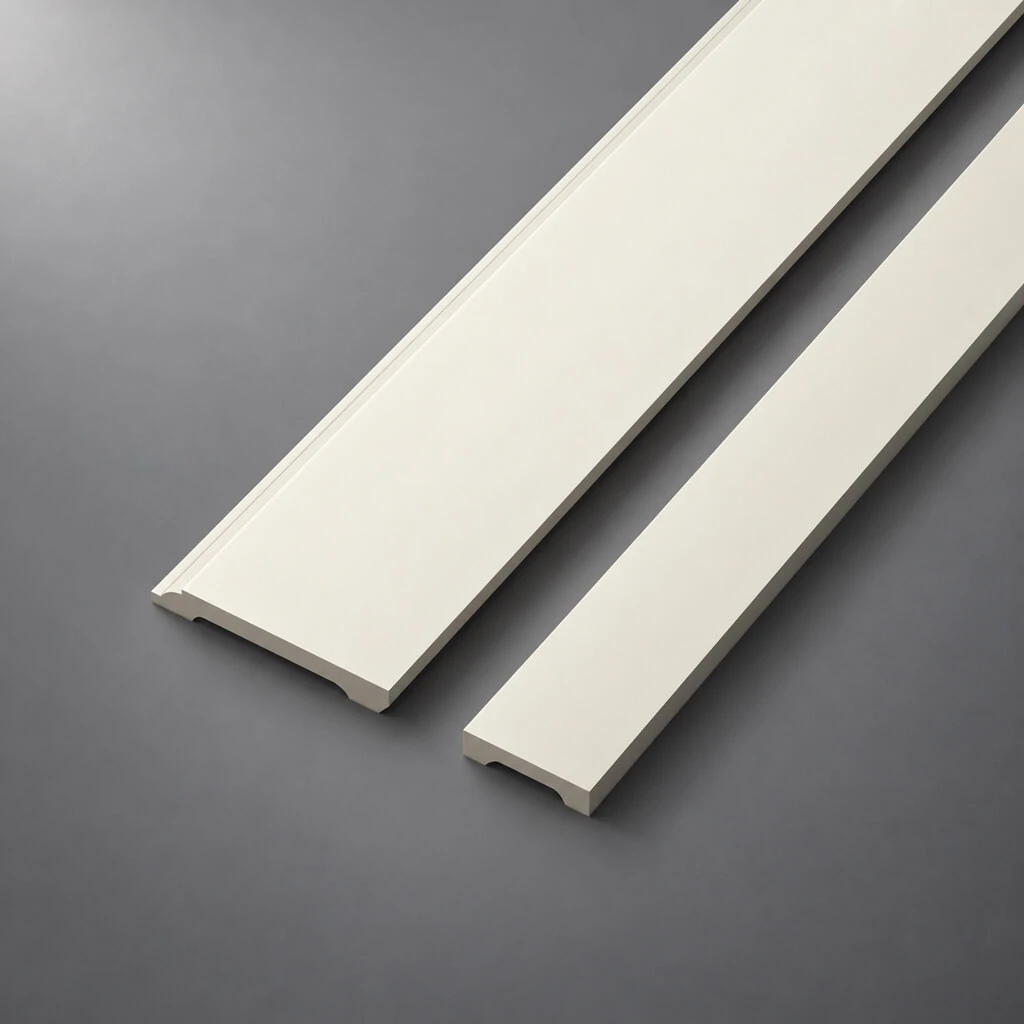
- Smooth profile
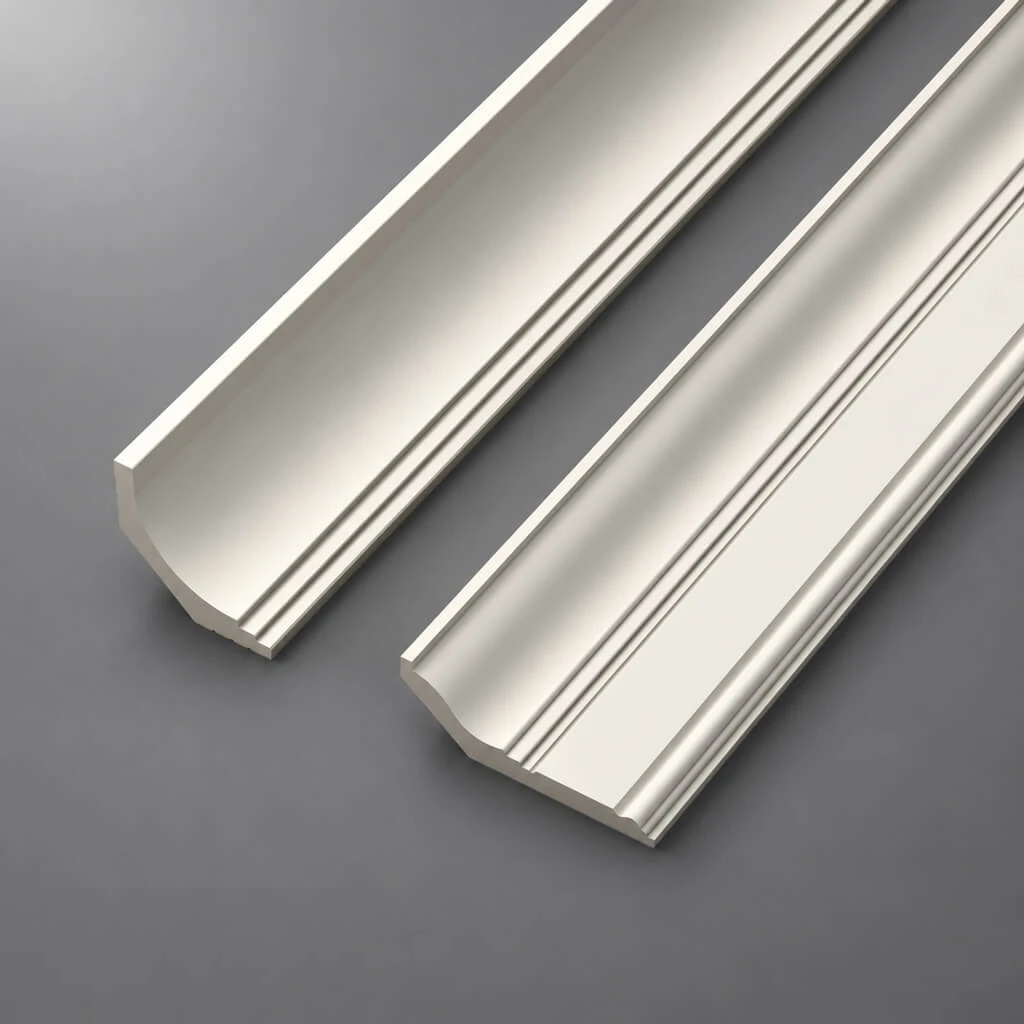
- Relief profile
- Proportions relative to the wall and combination with baseboard
- What is better for interior in Saint Petersburg: wood, MDF, or polyurethane
- What to combine wall moldings with wallpaper
- With wooden slats and slat panels
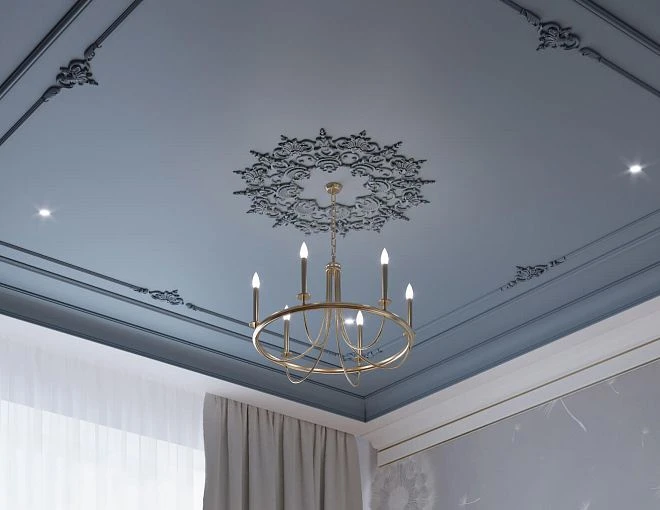
- With ceiling cornices
- With floor skirting board
- With decorative elements and inserts
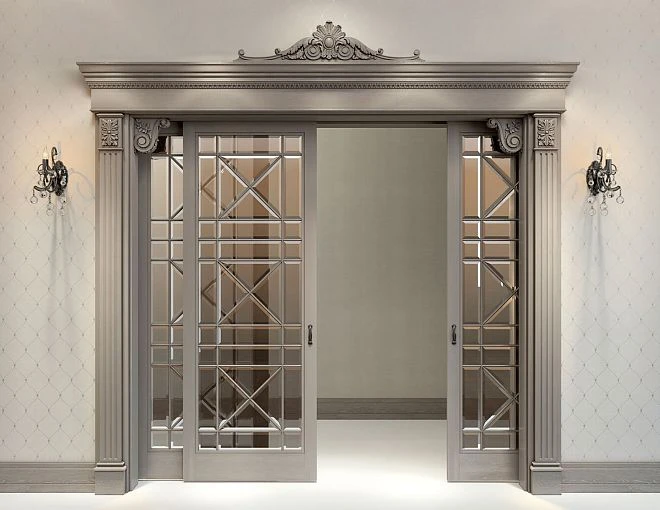
- With door and wall compositions
- Molding products as a system
- How to install molding on a wall with wallpaper: what is important to consider when ordering
- Glue before or after wallpapering?
- Can molding be attached over wallpaper?
- How to prepare the wall
- How to finish joints and corners
- Is painting needed after installation
- Common mistakes when choosing wallpaper molding
- Too narrow profile in a large room
- Incompatibility with baseboard and cornice
- Wrong material for the task
- Weak geometry of frame composition
- Overloading the wall with decor
- How much does wallpaper molding for walls cost in St. Petersburg
- Where to buy wallpaper molding for walls in St. Petersburg
- FAQ: Answers to common questions about wallpaper molding for walls
- Which molding is best for wallpaper on the wall?
- Can molding be glued over wallpaper?
- What to choose: wood, MDF, or polyurethane?
- Which molding is suitable for a classic interior?
- How does molding differ from picture rail?
- Can molding be combined with slats?
- Is molding suitable for a small room?
- Where to buy molding for wallpaper in Saint Petersburg?
- Conclusion: a systemic solution for walls with wallpaper
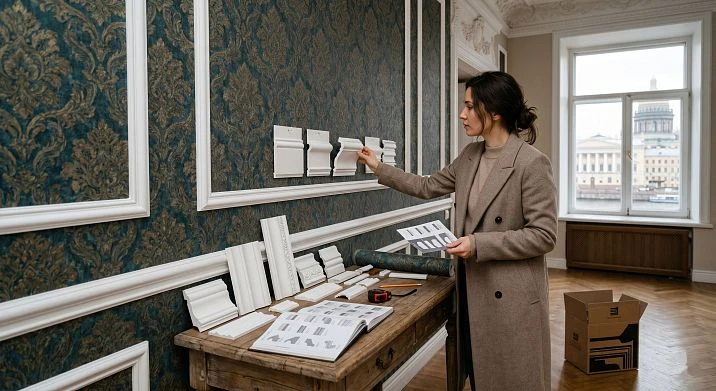
There are things in an interior that aren't immediately noticeable—but without which something is clearly off. Molding for wallpaper on the wall in Saint Petersburg is precisely one of those things. When it's present, the wall looks finished, cohesive, and architecturally meaningful. When it's absent, even expensive wallpaper appears like a randomly glued fragment, lacking a frame and context. That's why decorative wall molding isn't just an embellishment on top of the interior, but its structural element.
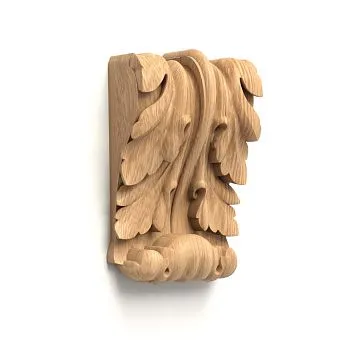
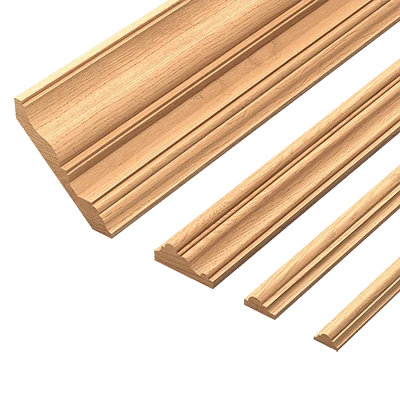
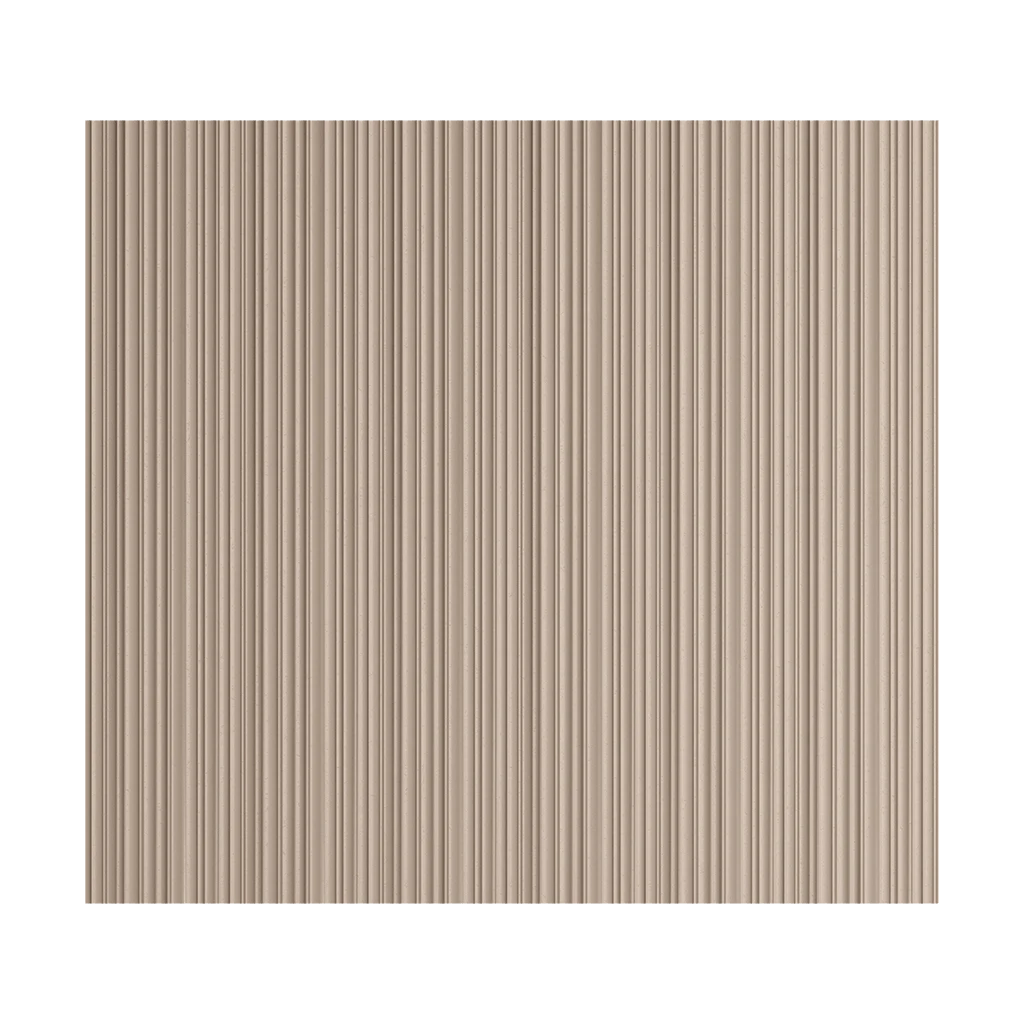
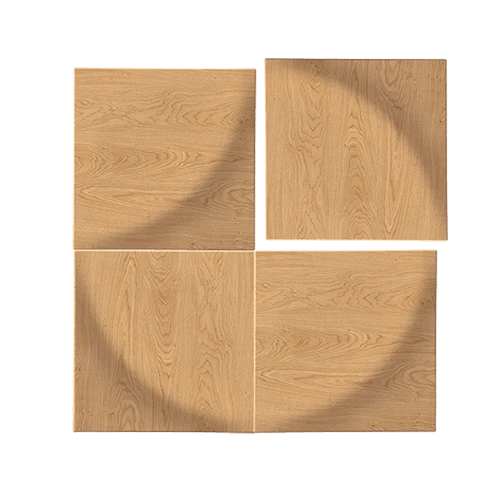
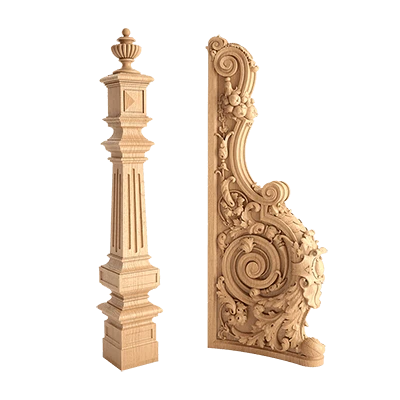
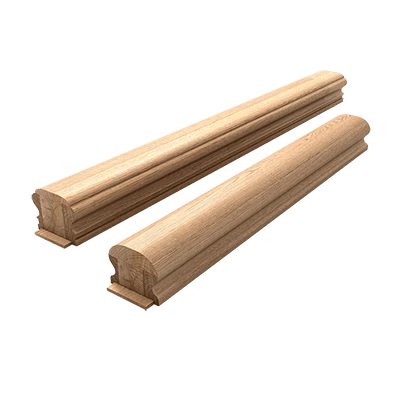
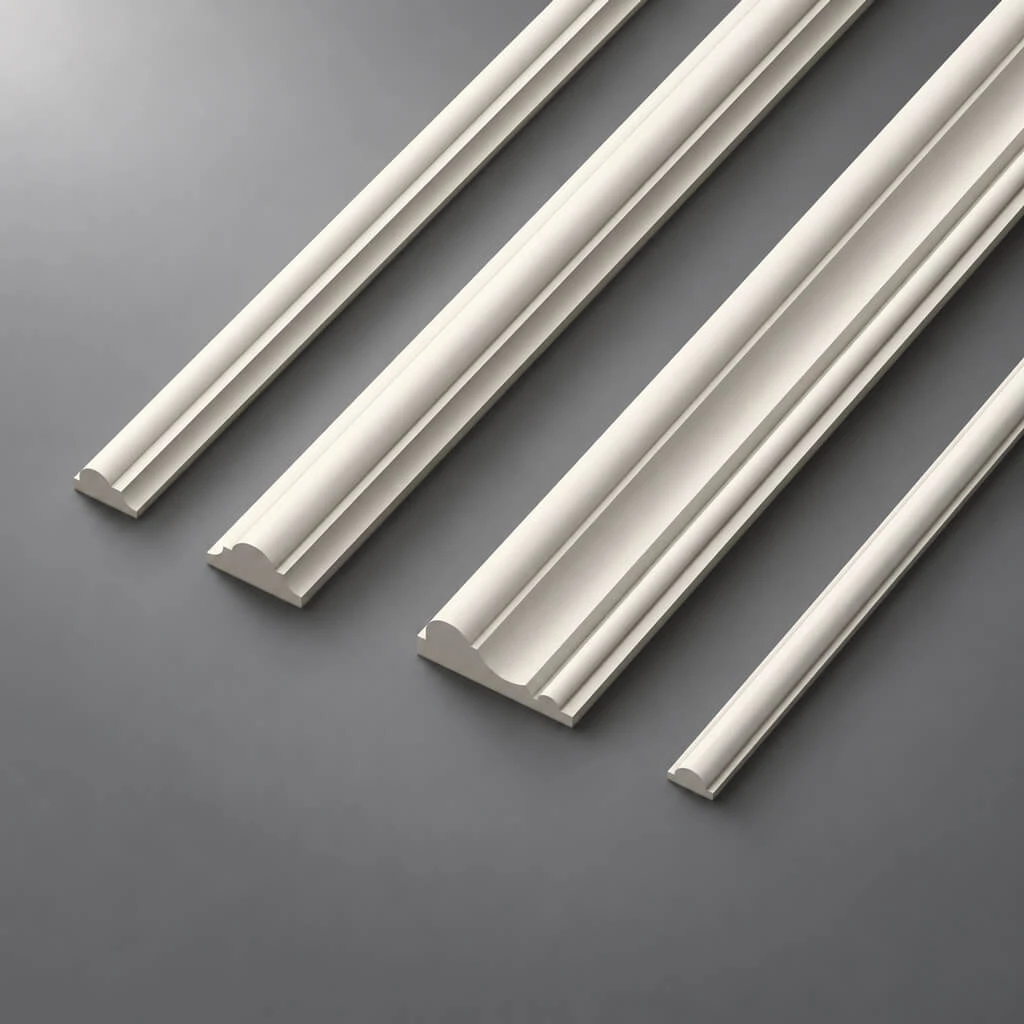
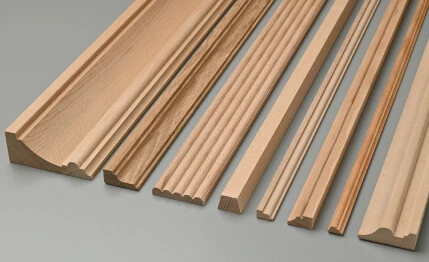
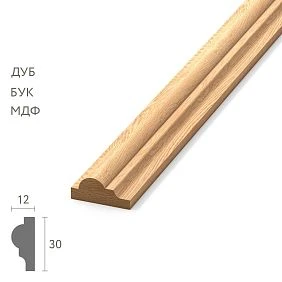
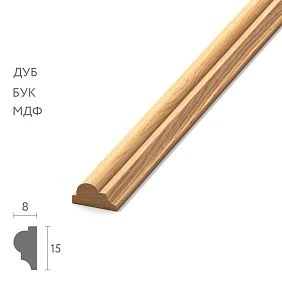
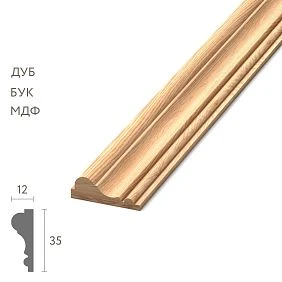
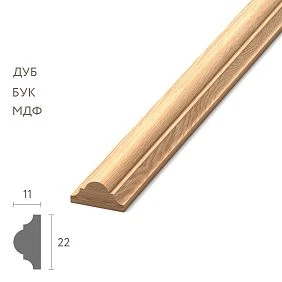
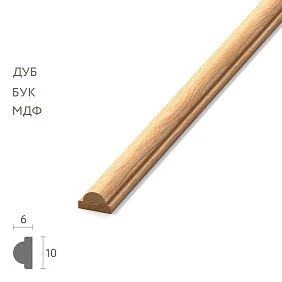
The STAVROS catalog featuresMoldings from solid woodandMoldings made of polyurethanefor wall decoration with wallpaper, decorative panels, accent zones, and interior compositions. Here you'll also findmolding decorative elements, slatted panels, and everything needed to create a cohesive interior solution. All with delivery in St. Petersburg.
Why you need wall molding for wallpaper: the essence of the technique
A wall with wallpaper is already a solution. But molding turns that solution into design. A decorative profile creates a frame around the wallpaper panel, divides surfaces, defines zone boundaries, and visually structures the space. This is exactly how classic English interiors, St. Petersburg architectural tradition, and neoclassical apartments work—anywhere a wall is perceived not as a background but as an architectural element.
Four practical tasks that wall molding solves for wall decoration:
-
Frame for a wallpaper insert. Molding outlines a fragment of the wall with decorative wallpaper, turning it into a full-fledged panel. The rest of the surface can be plain—and this only enhances the effect.
-
Zoning with 'wallpaper + paint'. A horizontal profile creates a clear dividing line between the painted lower part of the wall and the wallpaper above. Without molding, this boundary looks sloppy.
-
Framing an accent wall. In a living room, bedroom, or hallway, molding turns an accent wall with bold wallpaper into a finished architectural detail.
-
Creating rhythm. Vertical moldings on walls with plain wallpaper set a rhythm—like columns in an enfilade. This is a principle from classical architecture that works in modern apartments as well.
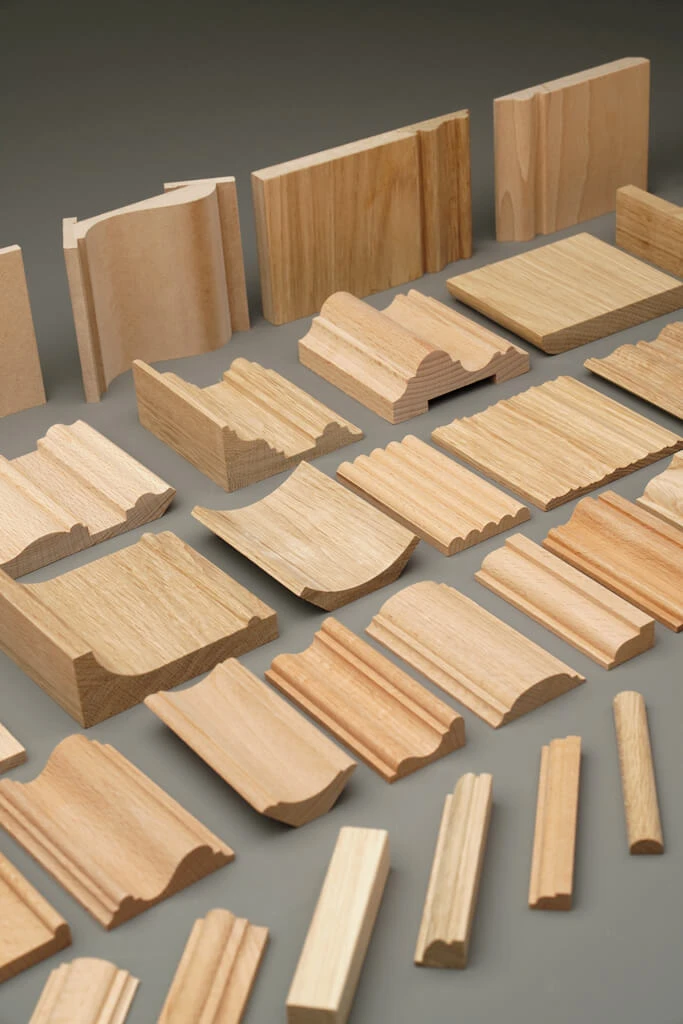
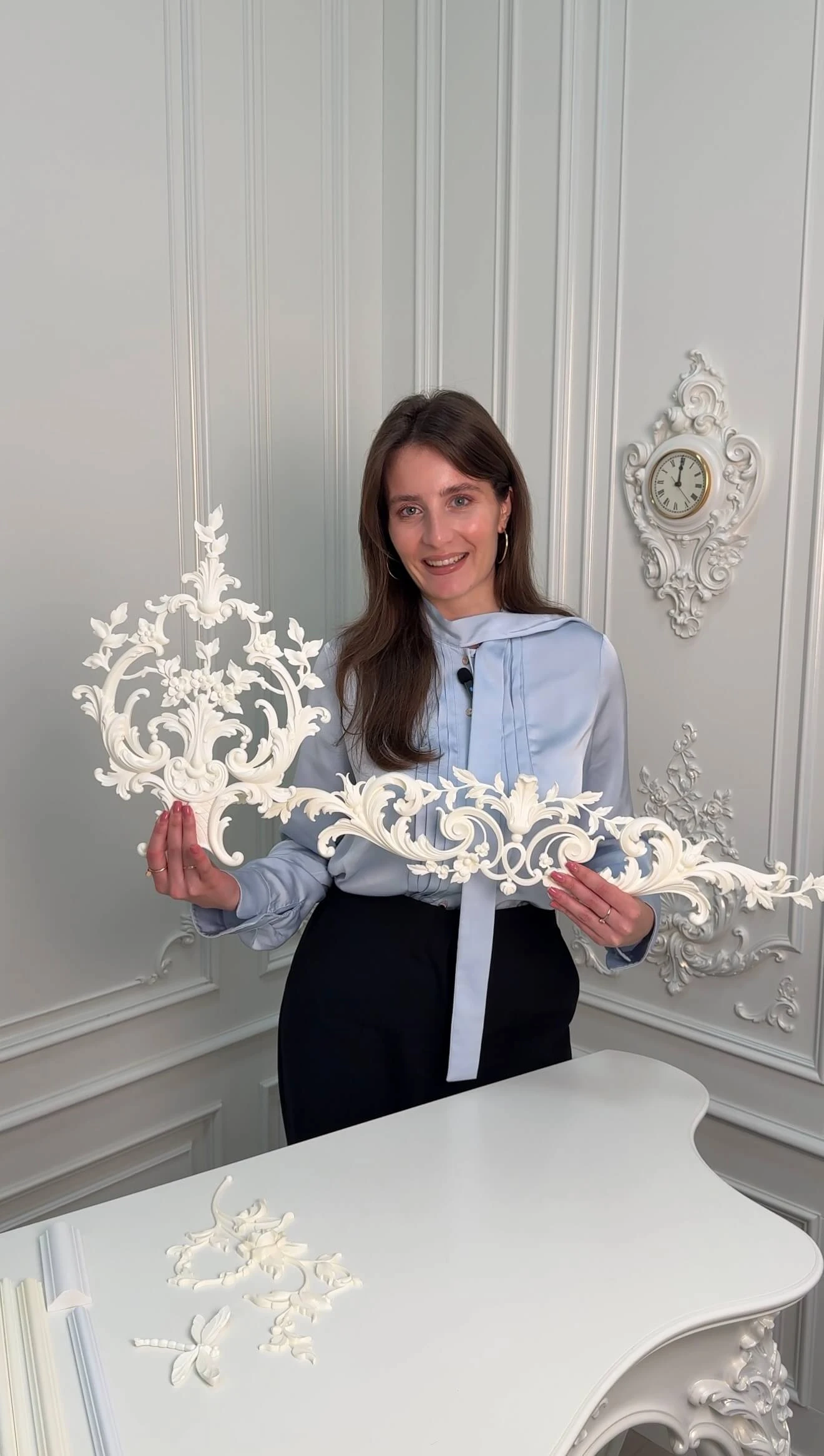
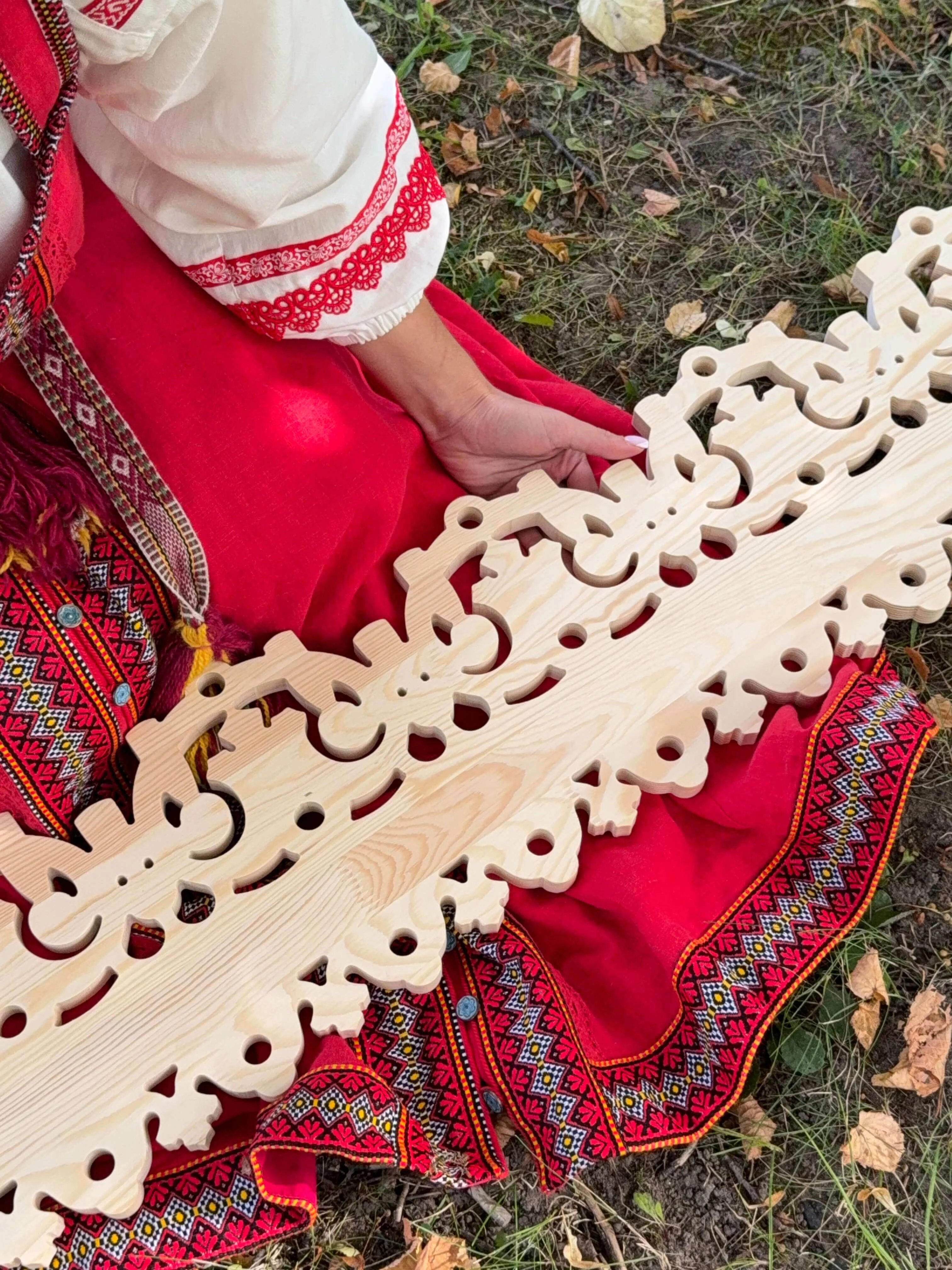

Where is molding for wallpaper on walls used?
Our factory also produces:
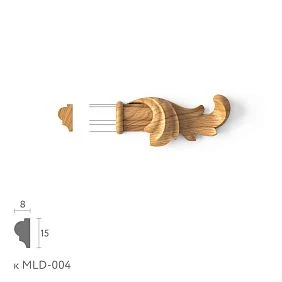
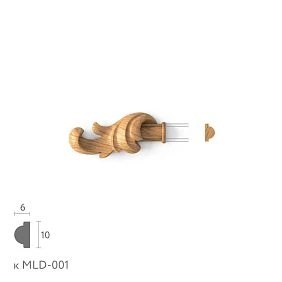
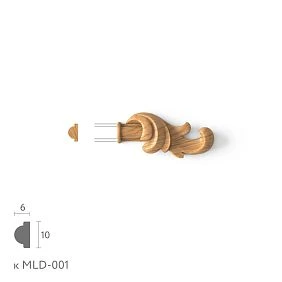
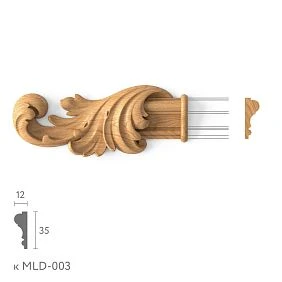
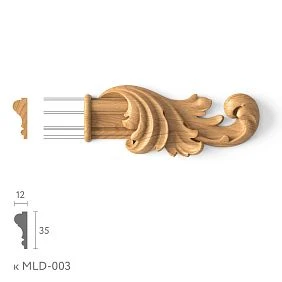
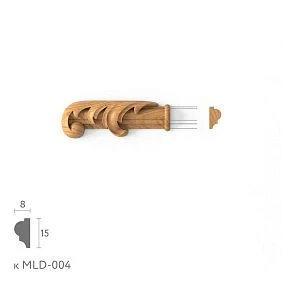
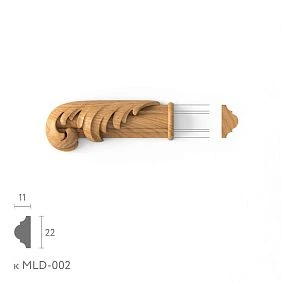
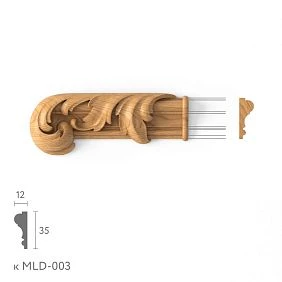
Living room: maximum potential
The living room is a space where molding reveals its full potential. This is where framed panels with wallpaper inside, horizontal profiles at windowsill level, and vertical lines dividing the wall into sections are appropriate. Decorative molding for wallpaper in the living room creates a sense of architectural depth—the kind that previously required hiring a plasterer.
When buying wall molding in St. Petersburg for a living room, it's worth choosing a profile with extra width: in spacious rooms with high ceilings, an expressive size is needed; otherwise, the profile will simply get lost against the wallpaper backdrop.
Get Consultation
Bedroom: accent behind the headboard
In the bedroom, molding works in a targeted way. The wall behind the bed with wallpaper framed by profiles is a classic and fail-safe technique. Such a composition replaces a headboard, creates an architectural background, and adds intimacy to the room. Wooden wall molding in the bedroom is especially good: the natural texture echoes the wood of the furniture and floor.
Entryway: first impression
The hallway sets the tone for the entire apartment—and here, molding for wall decoration in St. Petersburg plays exactly that role. A narrow or medium profile creates geometry in the corridor, making it more formal and impressive. The combination of wallpaper and molding in the hallway is always a signal: people with taste live here.
TV zone: a frame for the main accent
A TV wall with wallpaper and moldings is one of the most popular decorative techniques in modern St. Petersburg apartments. The profile creates a frame around the screen area, highlights it from the overall wall context, and turns a technical element (the TV panel) into part of a deliberate composition. It's important that the molding is proportionate: not too narrow to get lost, nor too wide to overload.
Decorative frames on the wall
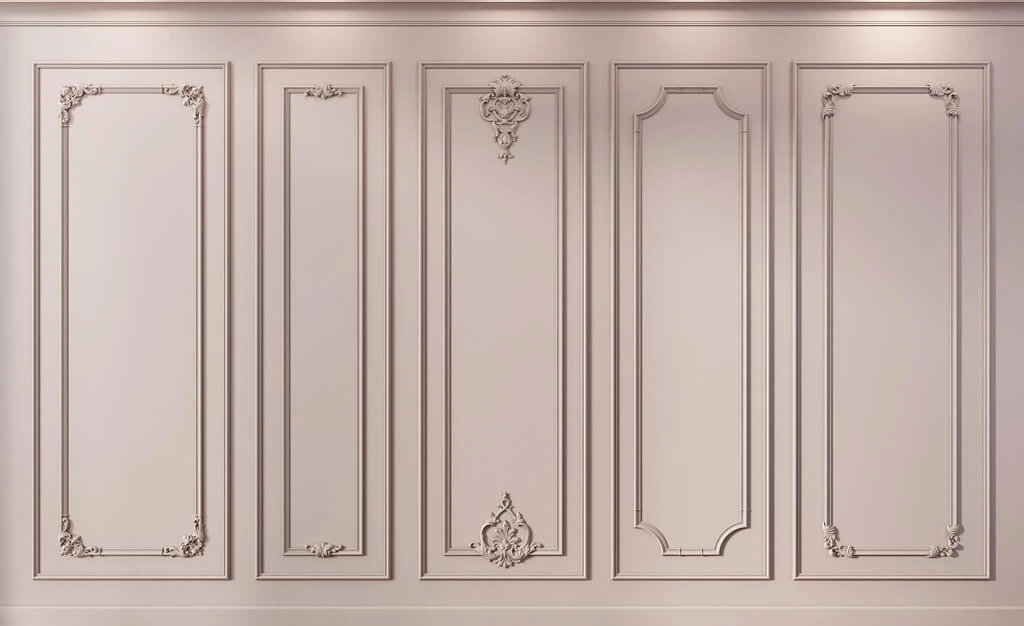
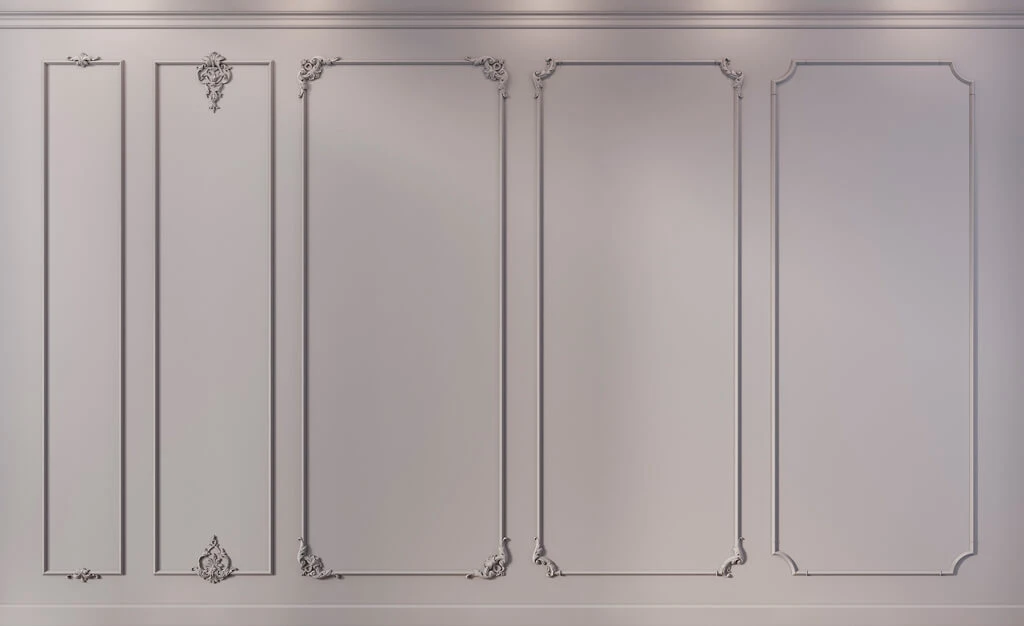
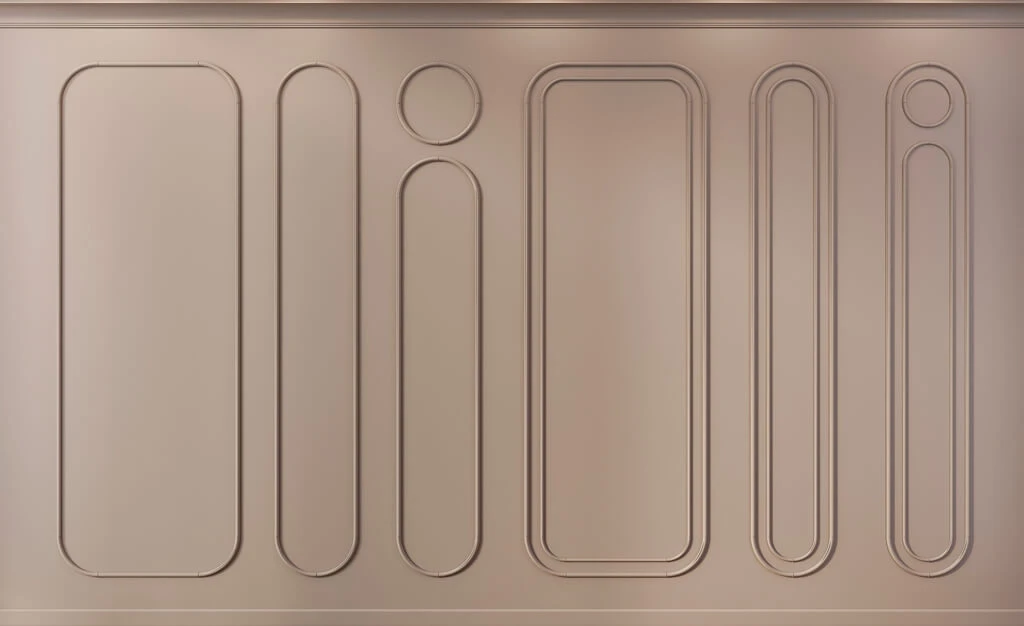
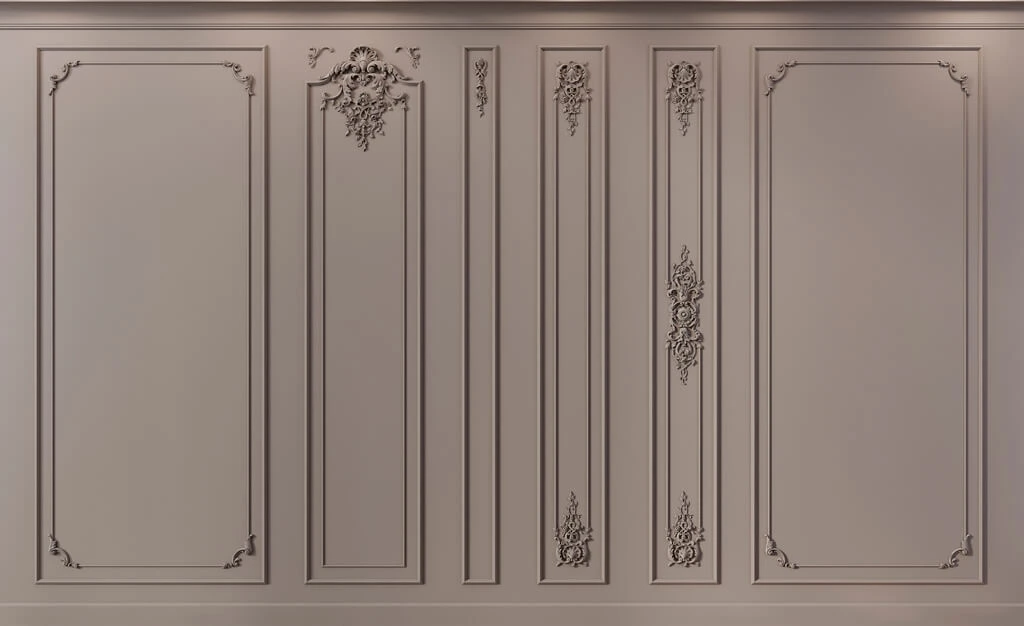
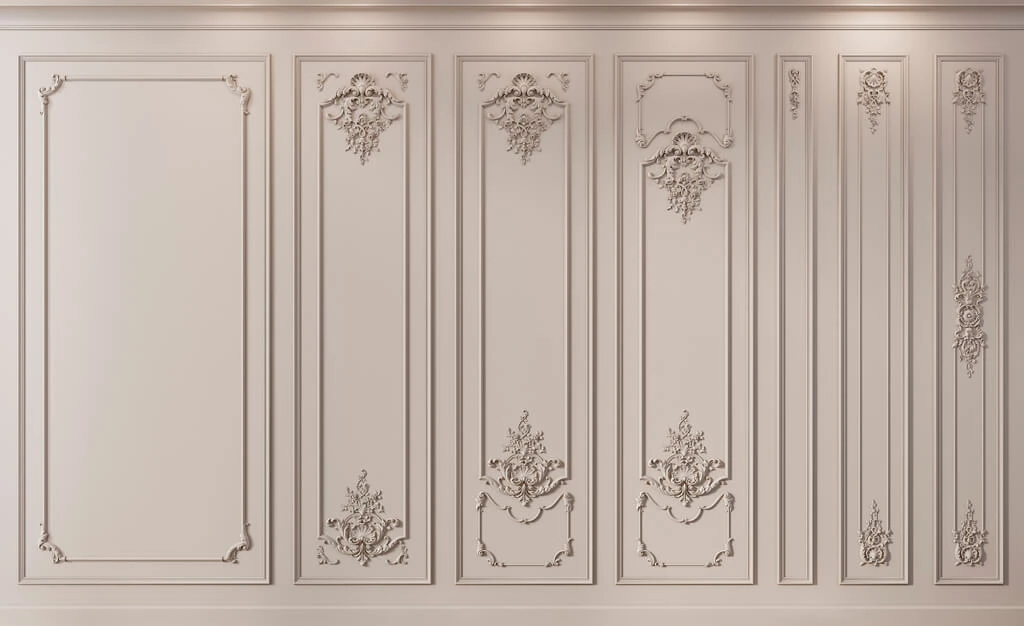
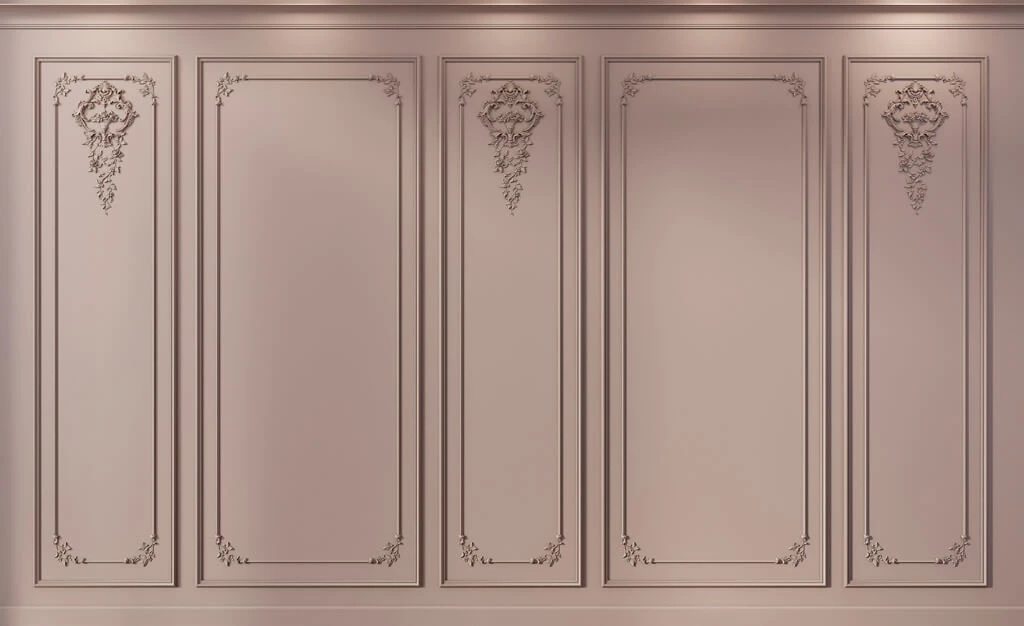
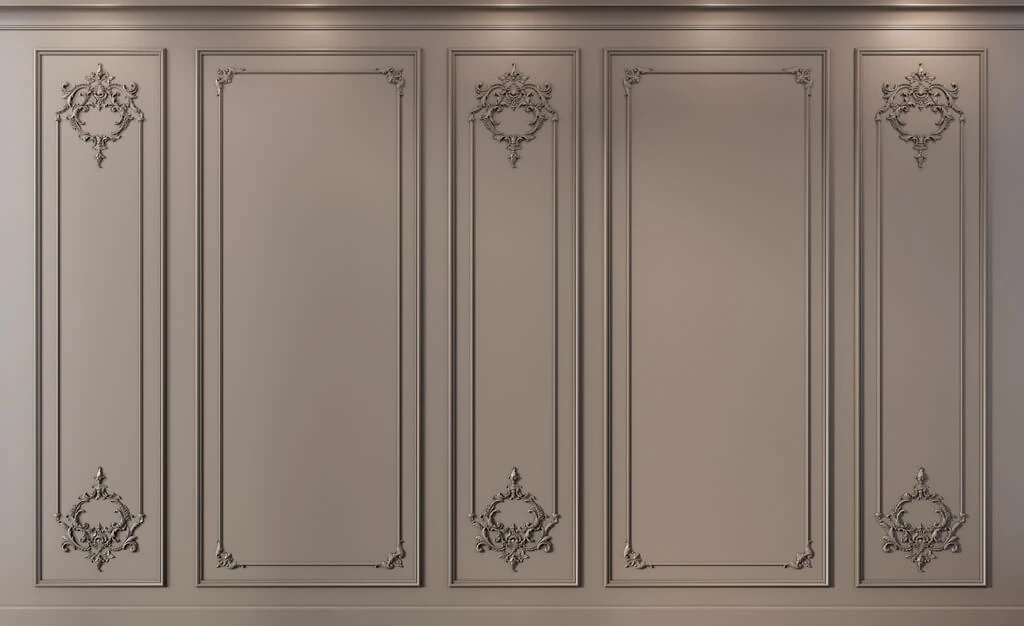
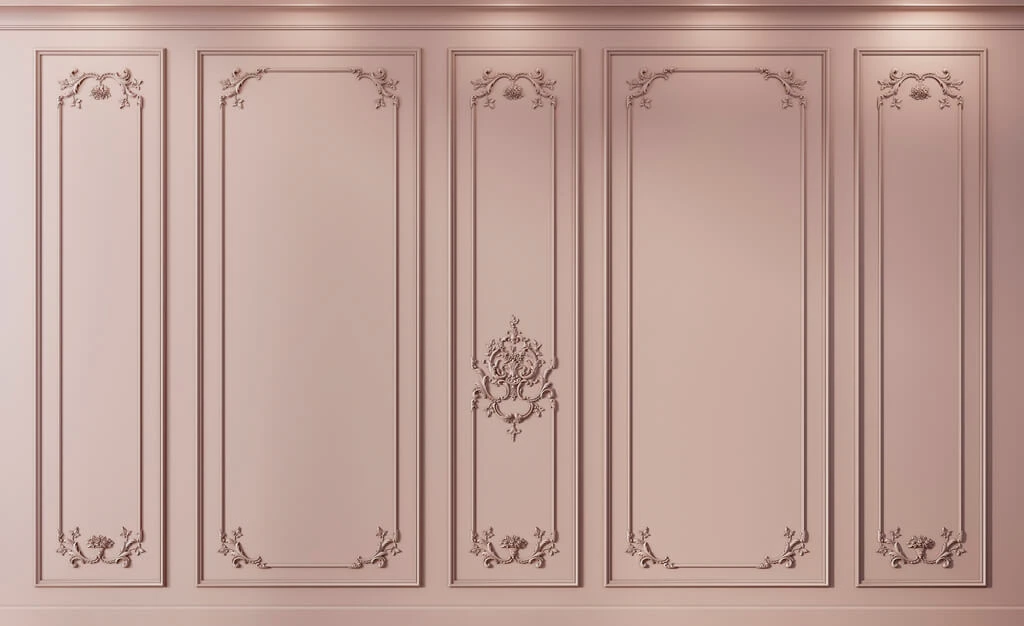
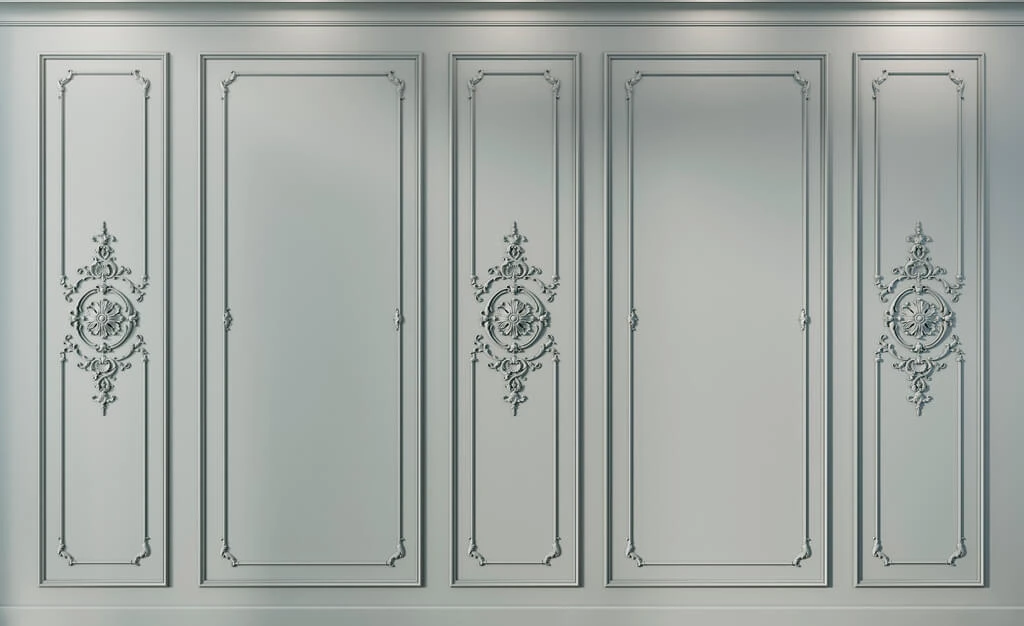
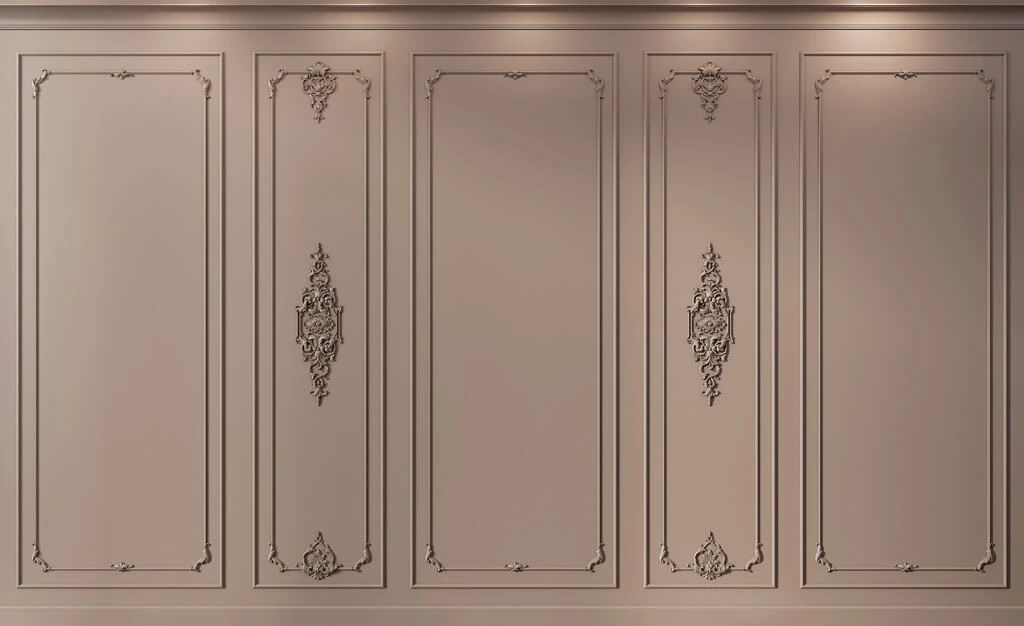
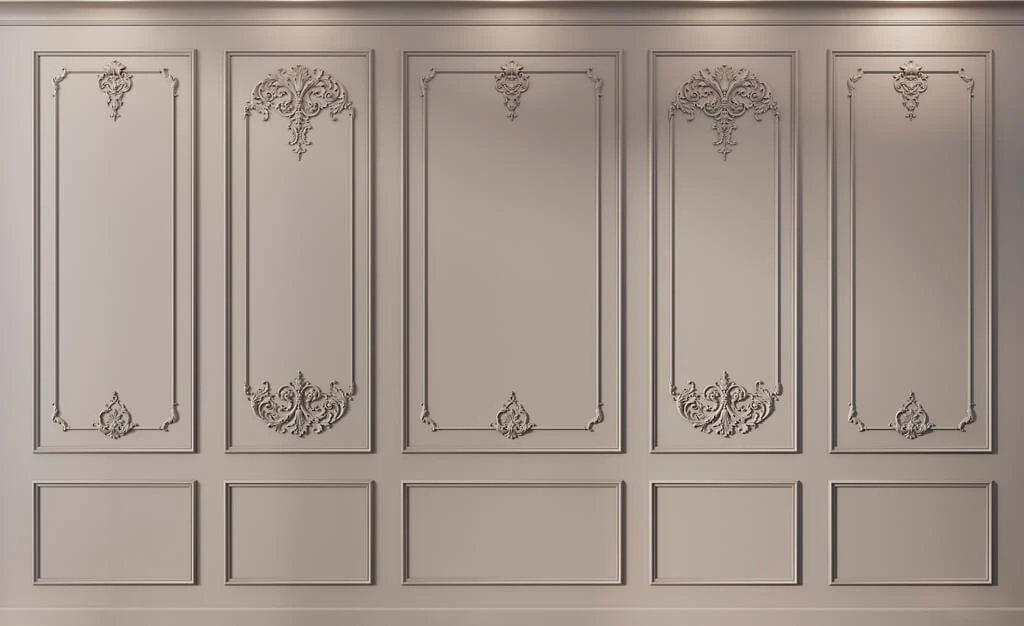
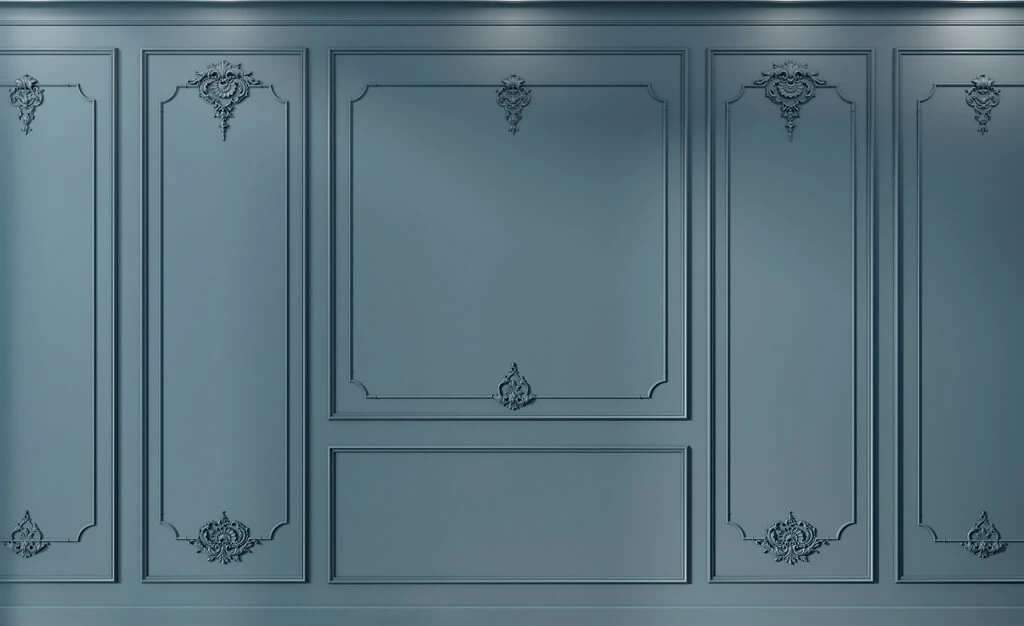
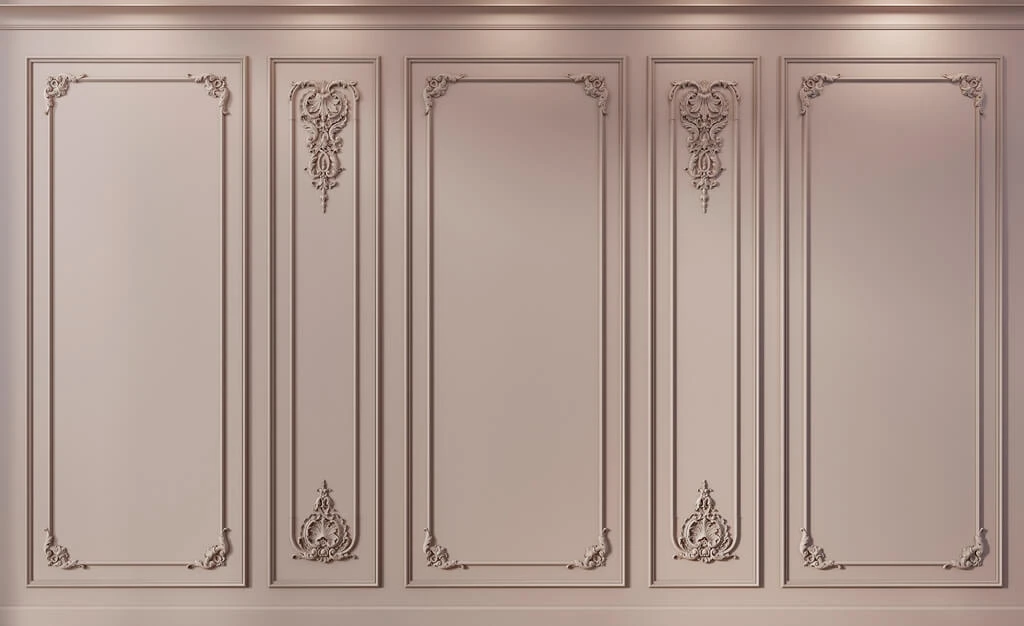
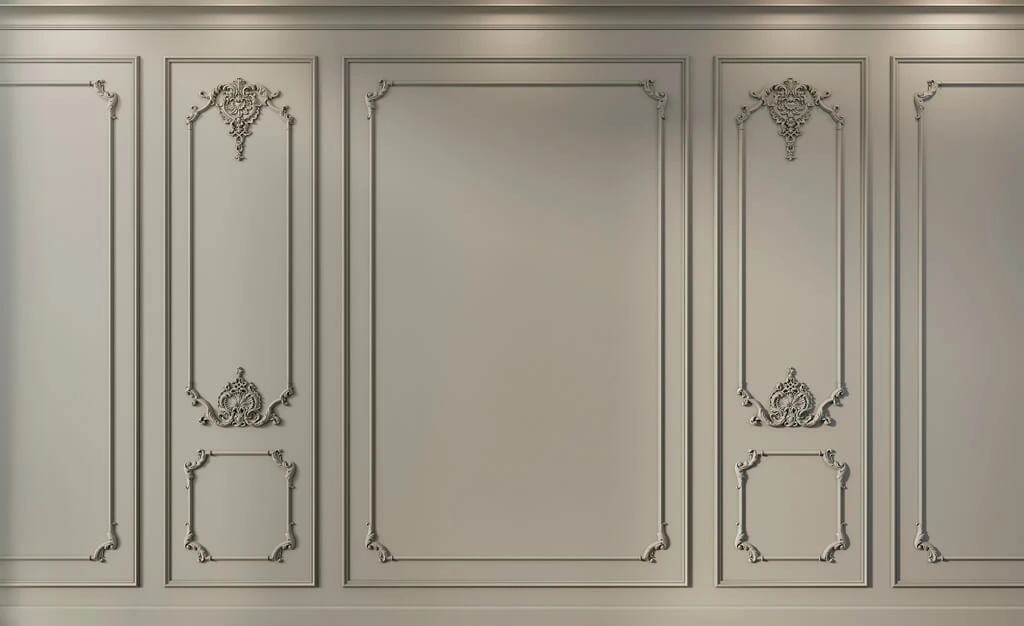
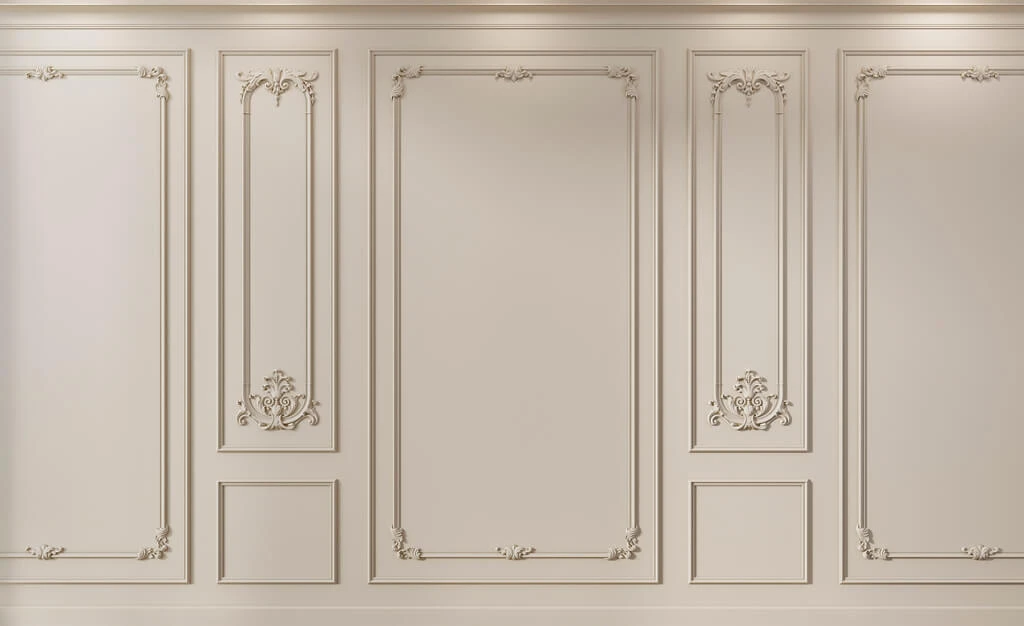
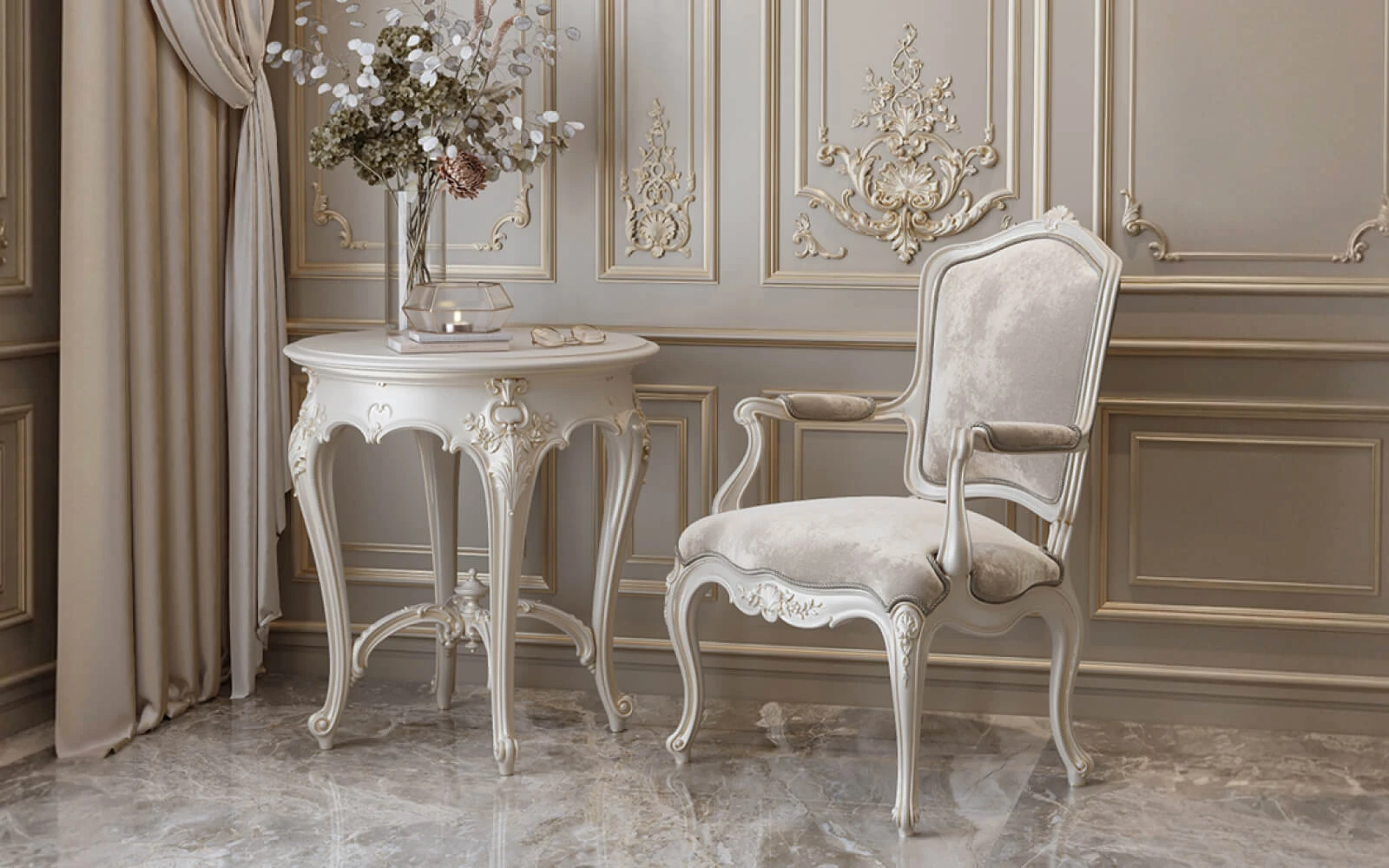
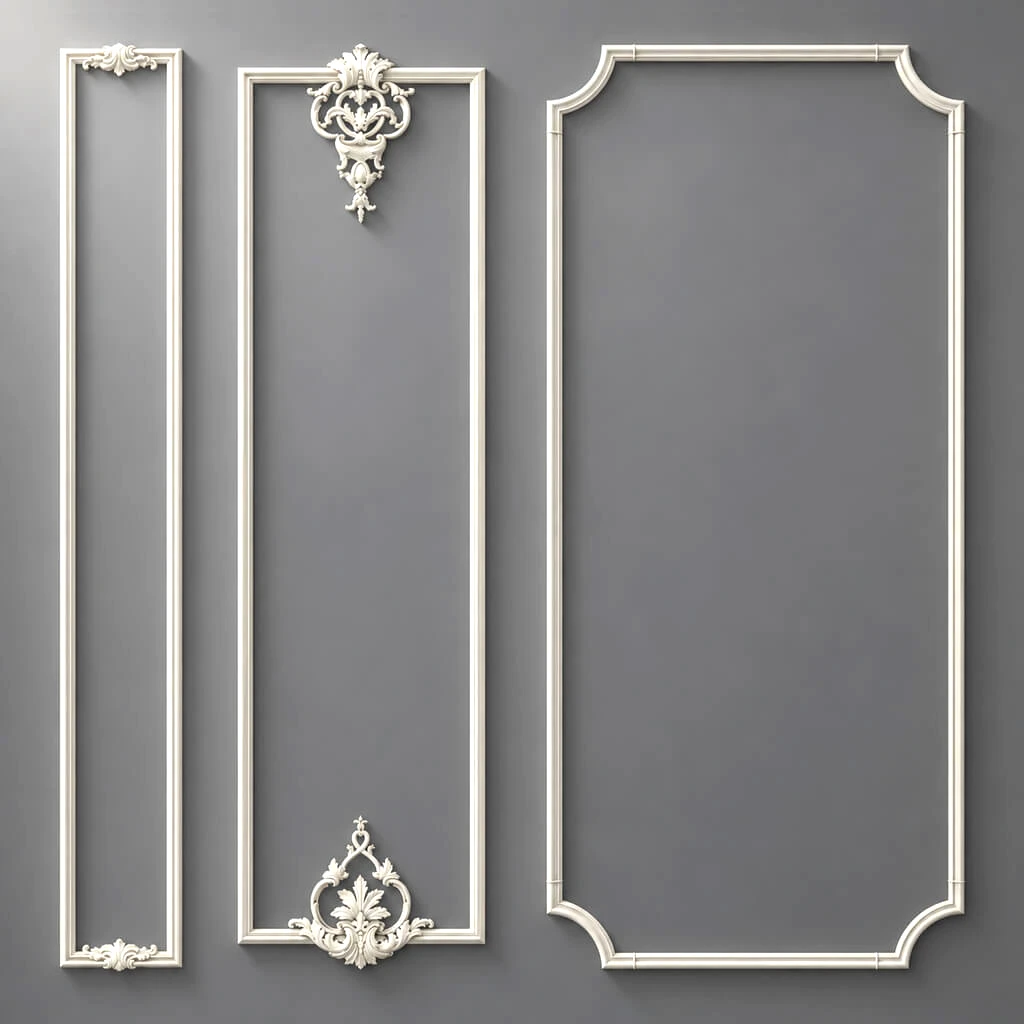
Frames made of molding on a wallpapered wall are a separate decorative genre. Geometric rectangles and squares, arranged in a rhythmic row, create the effect of wall paneling—but without the actual panels. Inside the frames—wallpaper; outside—paint or another shade of wallpaper. The result is an architectural wall indistinguishable from a designer object.
Zoning with wallpaper and paint
Horizontal molding at the junction of wallpaper and a painted surface solves a problem encountered in every renovation: how to make this border look beautiful. The profile covers the seam, aligns the line, and turns a functional solution into a decorative one. Without it, any 'wallpaper + paint' border looks unfinished.
Which moldings are suitable for wallpaper on the wall: a comparison of materials
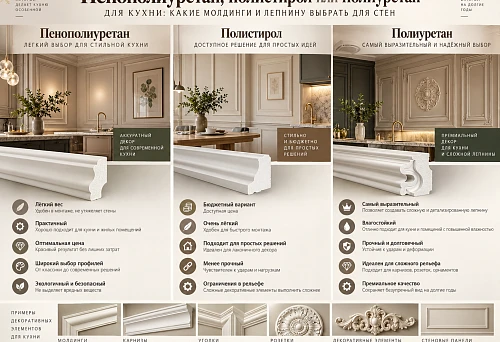
Choosing a material is not just a matter of aesthetics. It is a decision that determines durability, installation complexity, paintability, and the final look of the interior. Three main materials — each with its own logic of application.
Wooden molding for a wall with wallpaper
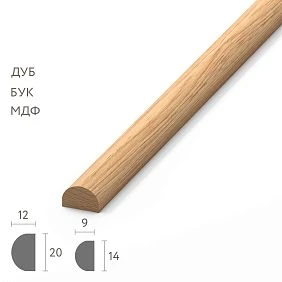
Wooden wall moldings— it's a natural texture, a living pattern, a feel of material that cannot be imitated. Wooden molding for walls works where tactility and 'warmth' of the interior are important: neoclassical, modern classic, Scandinavian style, eco-minimalism.
Buying wooden molding for a wall means getting a product that only improves with time. Wood can be tinted, varnished, stained, painted — the material accepts any finish. Solid wood molding looks especially organic in combination with wallpapers imitating natural textures: linen, cotton, jute, paper.
Important to consider: wooden profile requires a stable microclimate. In rooms with humidity fluctuations (kitchen, bathroom), moisture-resistant materials are preferable.
MDF molding for painting
MDF is the choice of those who value perfect geometry and a clean line. MDF molding has a strictly even surface that perfectly accepts primer and paint. That is why it is chosen for interiors in modern classic and total-white styles: a snow-white profile on light wallpaper creates relief without color contrast.
MDF cuts easily, joins well, and does not require sanding before painting. For framed panels on walls — it is one of the most convenient options: clear corners without gaps, perfect straight lines. The cost of MDF molding is generally lower than wooden, making it an optimal choice for large areas.
Polyurethane molding for decorative wall finishing
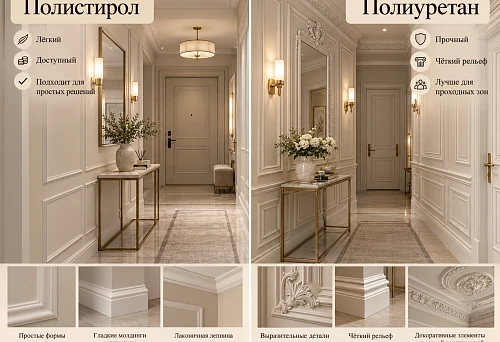
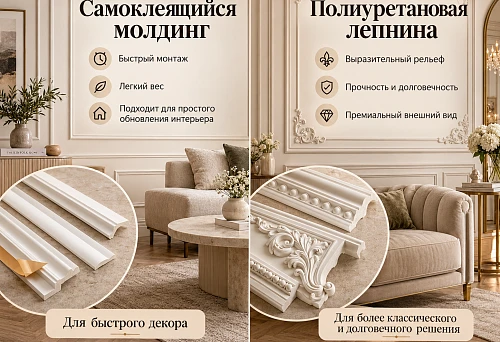
Moldings made of polyurethane— it's relief without weight, classic without complex installation. Polyurethane profile is lightweight, moisture-resistant, and holds its shape well even with temperature fluctuations. Its main advantage is the richness of sections: from a strict geometric profile to an elaborate classic cornice with multiple levels.
Polyurethane molding for decorative wall finishing is especially good where expressive relief for painting is needed. After applying paint, the profile looks like stucco decoration—with play of shadows and architectural depth. It's worth buying polyurethane molding for walls with wallpaper when the goal is to create a classic or neoclassical interior without a large budget for wood.
Material comparison table
| Parameter | Wood (solid wood) | MDF | Polyurethane |
|---|---|---|---|
| Texture | Natural, living | Smooth, for painting | Relief, imitation of stucco |
| Moisture resistance | Requires treatment | Medium | High |
| Installation | Precise, with acclimatization | Simple, with glue | Very simple |
| Painting | Tinting, varnish, paint | Any paint | Any paint, including gold |
| Application | Neoclassical, eco, Scandinavian | Modern classic, minimalism | Classical, Empire, Neoclassical |
| Price | High | Medium | Medium |
| Durability | Decades | High | High |
How to choose molding for wallpaper type
Molding and wallpaper are a dialogue between two surfaces. For this dialogue to be harmonious, one must understand the logic of their interaction.
For solid-color wallpaper
Solid-color wallpaper is the best backdrop for molding with pronounced relief. Here, the profile achieves maximum 'legibility': shadows emphasize its shape, and the uniform background does not compete with the decor. Wall molding for solid-color wallpaper can be chosen in any style—from strict rectangular to elaborate classical.
For textured wallpaper
Textured wallpaper (imitating plaster, linen, concrete) already carries its own texture. Here, the molding should be more restrained: a smooth profile or one with minimal relief. The goal is to frame, not overpower. Wooden wall molding for textured wallpaper is precisely that balance between naturalness and geometry that is needed.
For accent wallpaper with a pattern
Accent wallpaper—bright, with ornamentation or a large print—is itself a decorative element. Molding here is needed as a frame that contains the 'story' within. The main thing is not to choose a profile with competing relief. Smooth wooden wall molding will create a neutral frame that highlights the wallpaper rather than overpowering it.
For combining wallpaper and paint
This is perhaps the most in-demand case. Horizontal molding at the junction of two finishes is a classic solution: the lower third of the wall in one color or texture, the upper third in another. The profile conceals the seam and transforms a functional solution into a design technique. A wooden wall border is the most organic choice in this scenario.
For classic wall panels
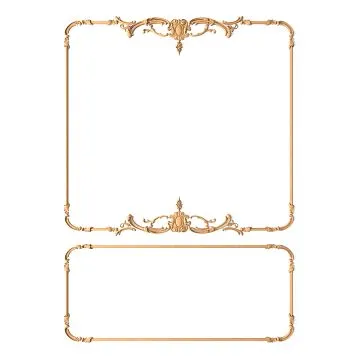
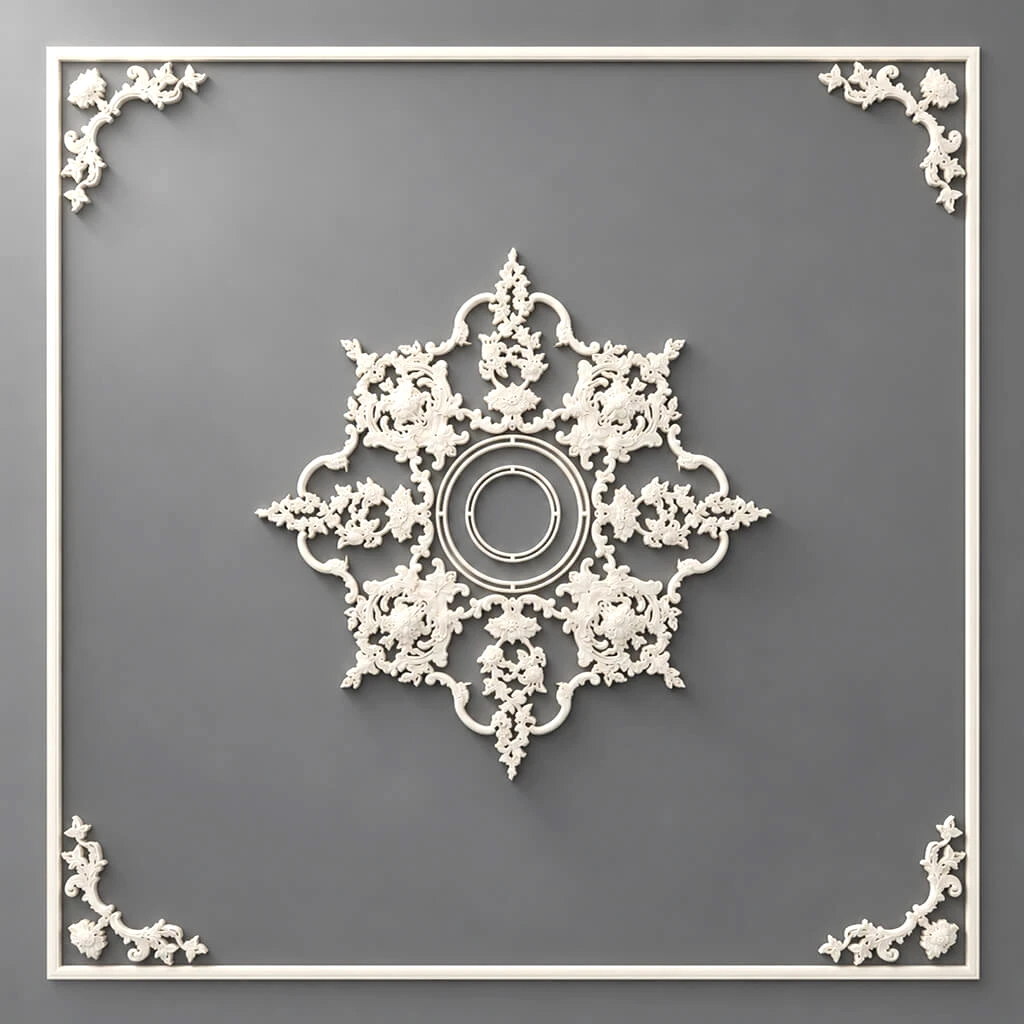
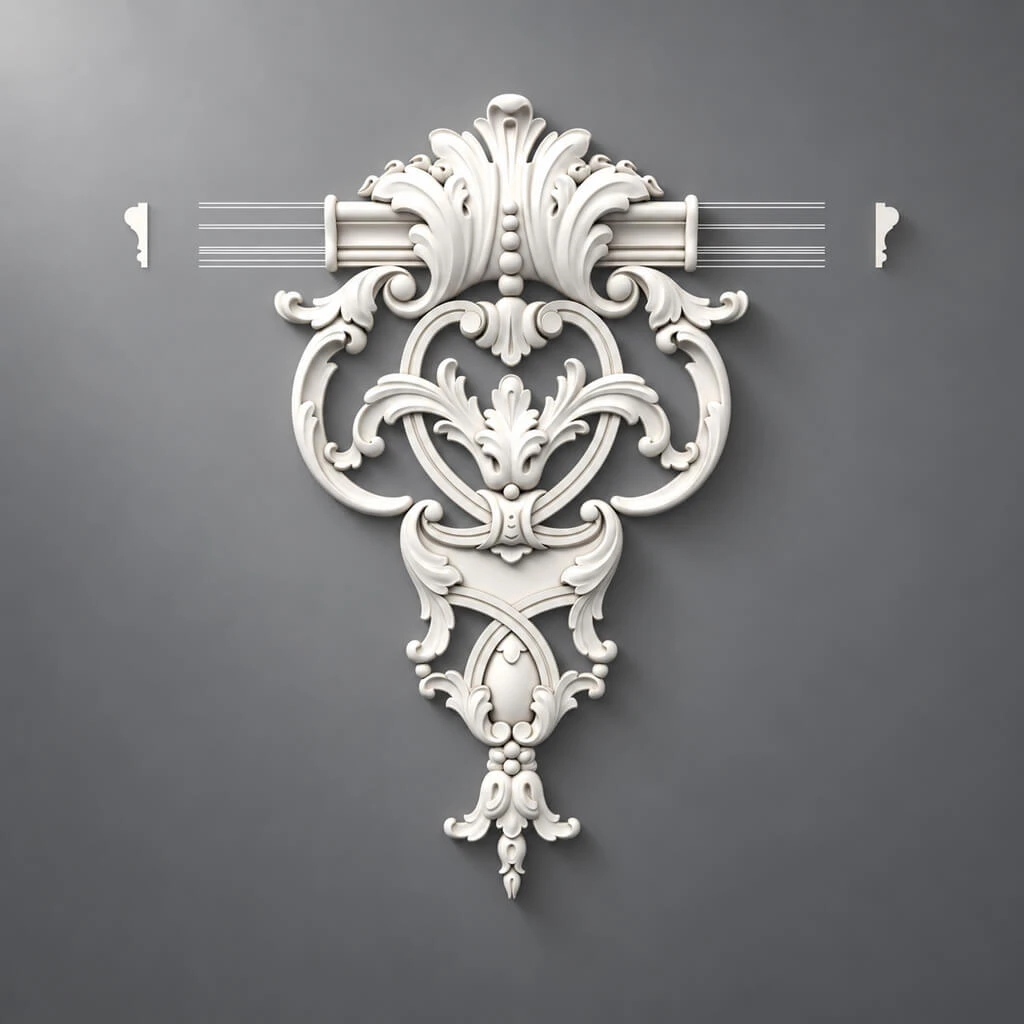
Frame panels with wallpaper inside are a separate decorative system. Here, the molding acts as the outer contour of the frame.molding decorative elements— corner overlays, rosettes, inserts — complement the frame, giving it a classic completeness. Such a system requires a profile with a smooth rectangular or shaped cross-section and clean joints at the corners.
Dimensions and shape: how not to make mistakes with proportions
Incorrect molding size is one of the most common mistakes in interior design. A profile that is too narrow gets lost on a wallpaper wall. One that is too wide feels oppressive and overwhelming.
Narrow molding (up to 3 cm)
For small rooms, corridors, and hallways. Creates a light accent without visual load. Good for thin frames on accent walls — especially in modern interiors with a minimalist aesthetic.
Medium profile (3–7 cm)
A universal size for most living spaces. Suitable for framed panels, horizontal zoning, framing a TV area. In rooms with ceilings 2.7–3 m high, this is the primary working format.
Wide profile (from 7 cm)
For rooms with high ceilings — from 3 m and above. Creates a pronounced architectural note. In low rooms, wide molding reduces the sense of height — use with caution.
Smooth profile
For minimalist, Scandinavian, and modern interiors. It reads through geometry and shadow, not relief. Works well with monochrome or neutral wallpapers.
Relief profile
For classic, neoclassical, and Empire styles. Multi-level cross-section provides rich shadow play. The more complex the profile — the higher the room ceilings should be.
Proportions relative to the wall and combination with the baseboard
The rule is simple: the wall molding should be visually 'coordinated' with the floor baseboard and ceiling cornice. If the baseboard is wide and relief — the molding should be proportionate. If the baseboard is narrow and modern — the molding should also be restrained. Inconsistent sizes disrupt the sense of system.Solid wood products for interiorsIn the STAVROS catalog, they are selected precisely with this logic in mind: moldings, baseboards, cornices, and battens form a unified system of profiles.
What is better for an interior in St. Petersburg: wood, MDF, or polyurethane
This question arises for everyone who seriously approaches the choice of decorative wall molding. The specific answer depends on three parameters: interior style, room conditions, budget.
For classic and premium segments — wood. If you are creating an interior with natural materials, parquet, wooden doors, and solid wood furniture — only wooden molding will create a unified material language. Wooden moldings can be purchased in St. Petersburg in the STAVROS catalog — here you will find products made from quality solid wood with various profiles and the possibility of painting.
For even coloring and a laconic interior — MDF. Total white, Scandinavian simplicity, modern classic — in these styles, MDF is unrivaled. Perfect geometry, smooth surface, stable dimensions.
For decorative solutions and quick installation — polyurethane. If you need rich relief, an expressive cornice profile, or classic decor with minimal labor — polyurethane wall molding is optimal. Lightweight, moisture-resistant, ready for painting without complex preparation.
For those who can't decide: in modern interiors, wooden moldings on horizontal bands are often combined with polyurethane cornice elements near the ceiling. This creates a textural dialogue between materials — and works brilliantly.
What to combine wall moldings with on wallpaper
Molding is part of a system. It doesn't work in isolation: its strength is revealed in the context of other decorative and architectural elements of the interior.
With wooden slats and slatted panels
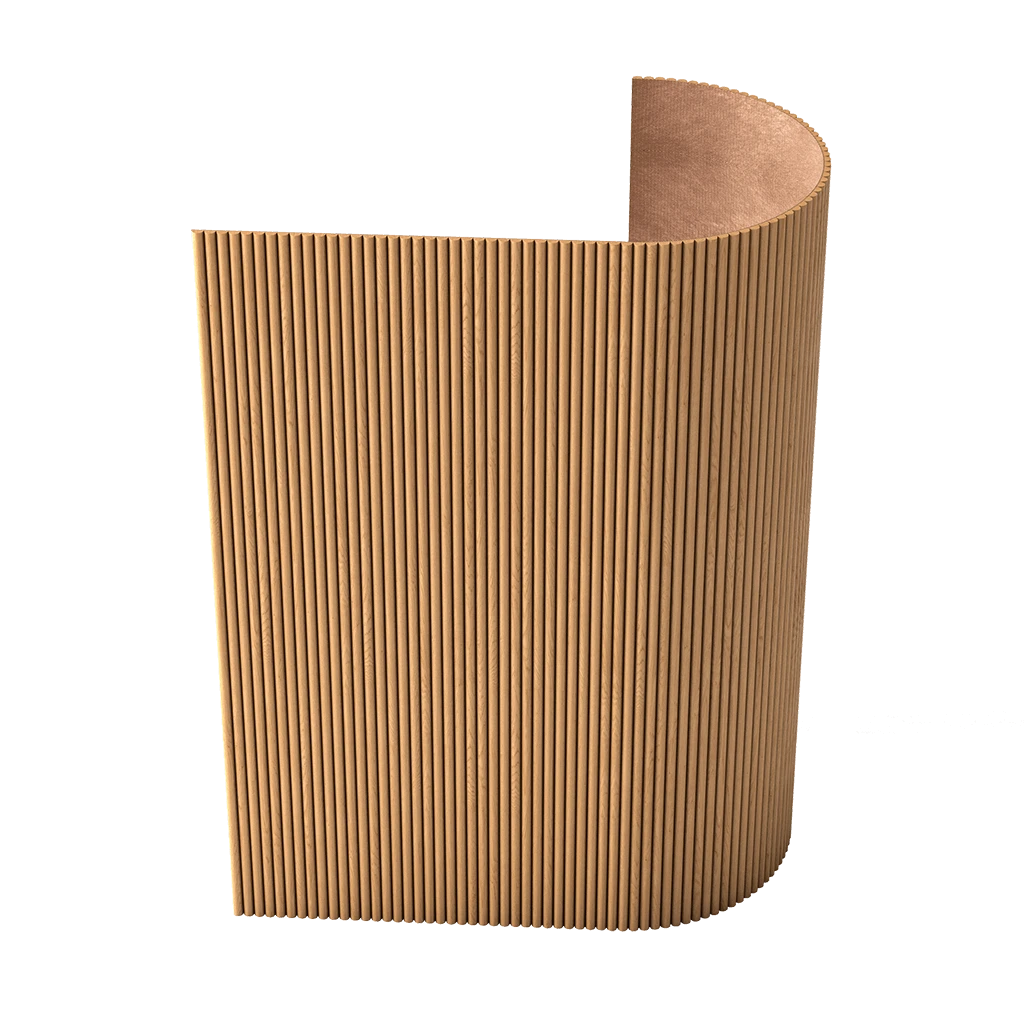
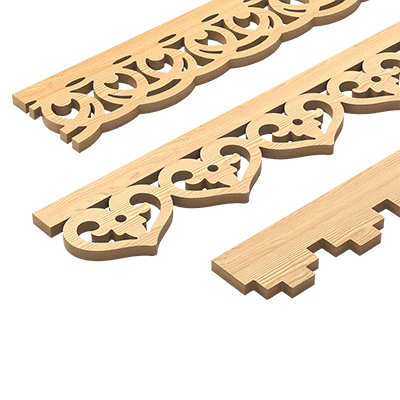
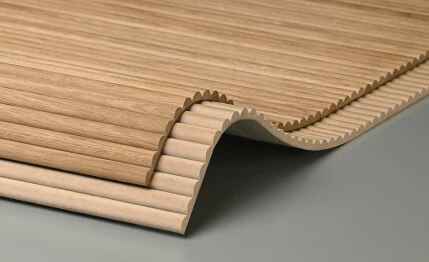
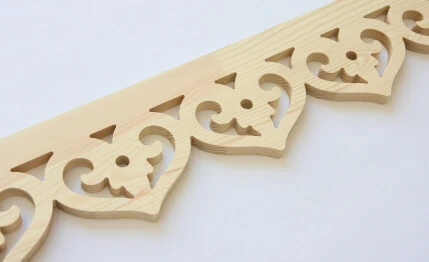
Molding in framingof slatted panels— this combination is currently at its peak in St. Petersburg interiors. Slatted panels occupy the lower or side part of the wall, molding frames the transition zone, and wallpaper completes the upper part. Wooden slats for decorative wall finishing in combination with profiles create a cohesive architectural scene — without unnecessary words.
With ceiling cornices
Cornice molding at the ceiling and wall profile with wallpaper should belong to the same stylistic and dimensional system. If the cornice is expressive — the wall molding can be more modest, and vice versa. Wooden elements for finishing in this context form a unified whole.
With floor skirting board
Baseboard — the lower point of the vertical decorative system. When wall molding and floor baseboard belong to the same line — the room is perceived as a single design object. Mismatched profiles, on the contrary, destroy the sense of completeness.
With decorative elements and inserts
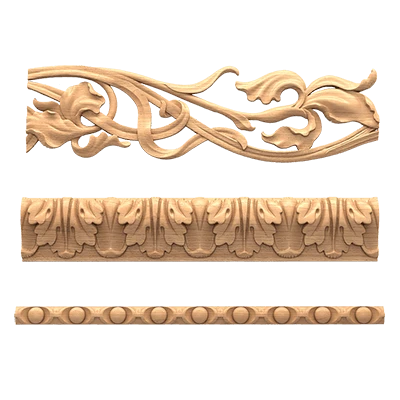
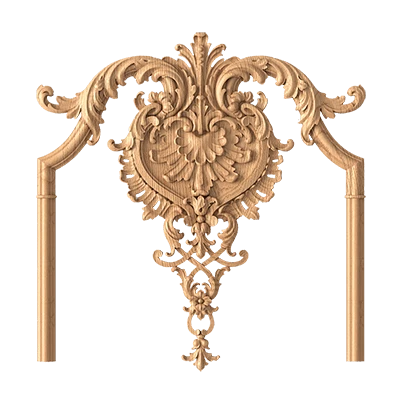
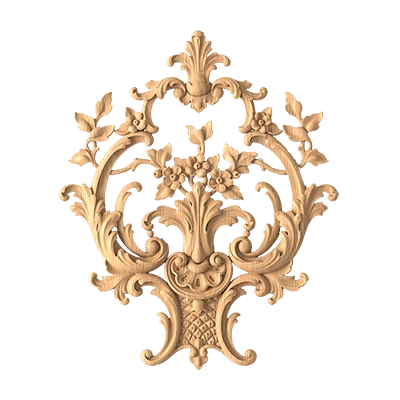
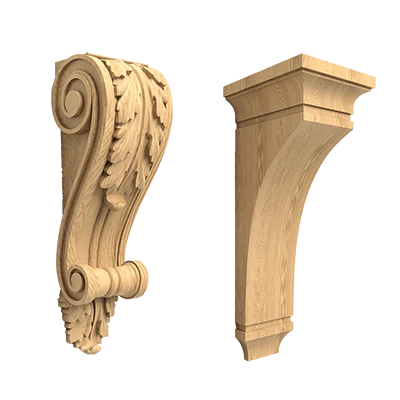
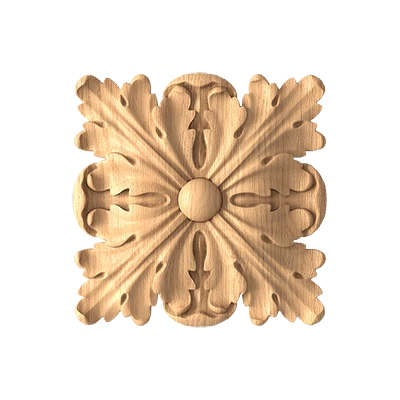
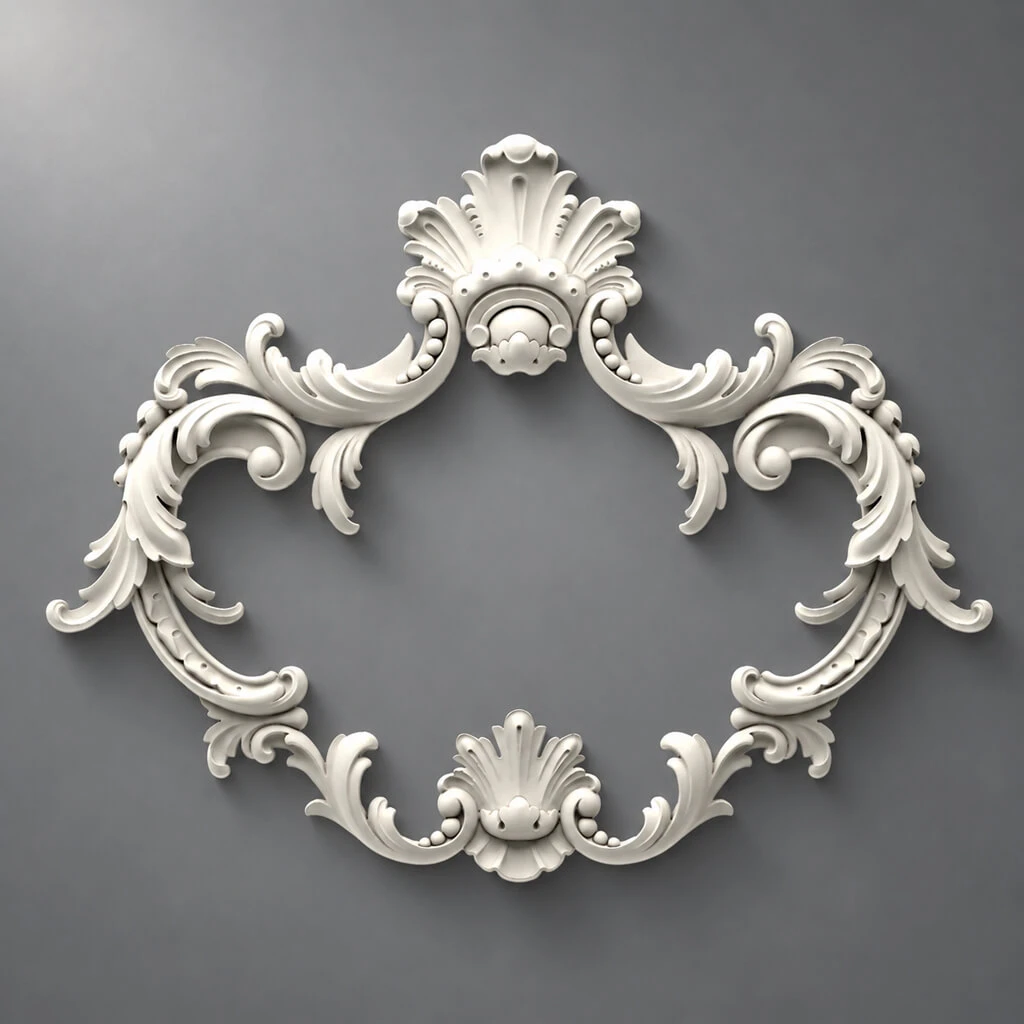
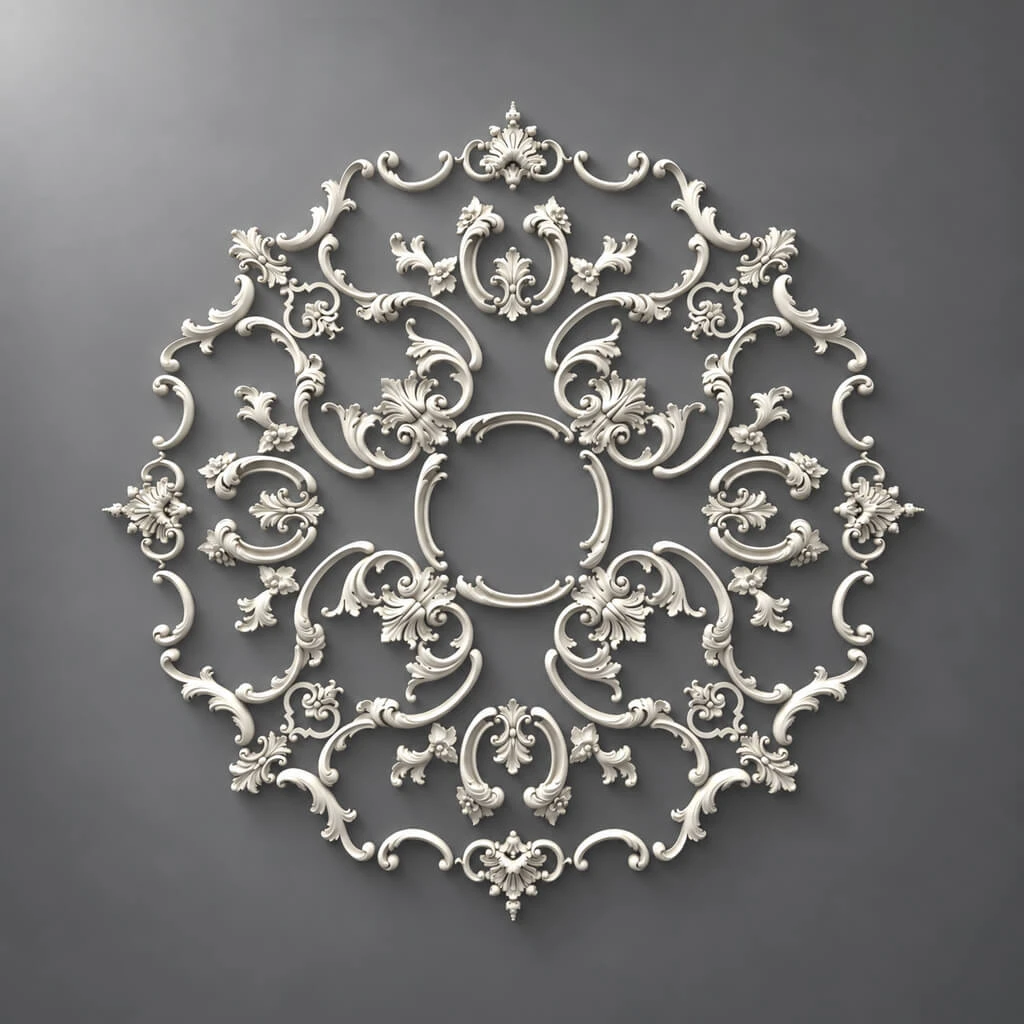
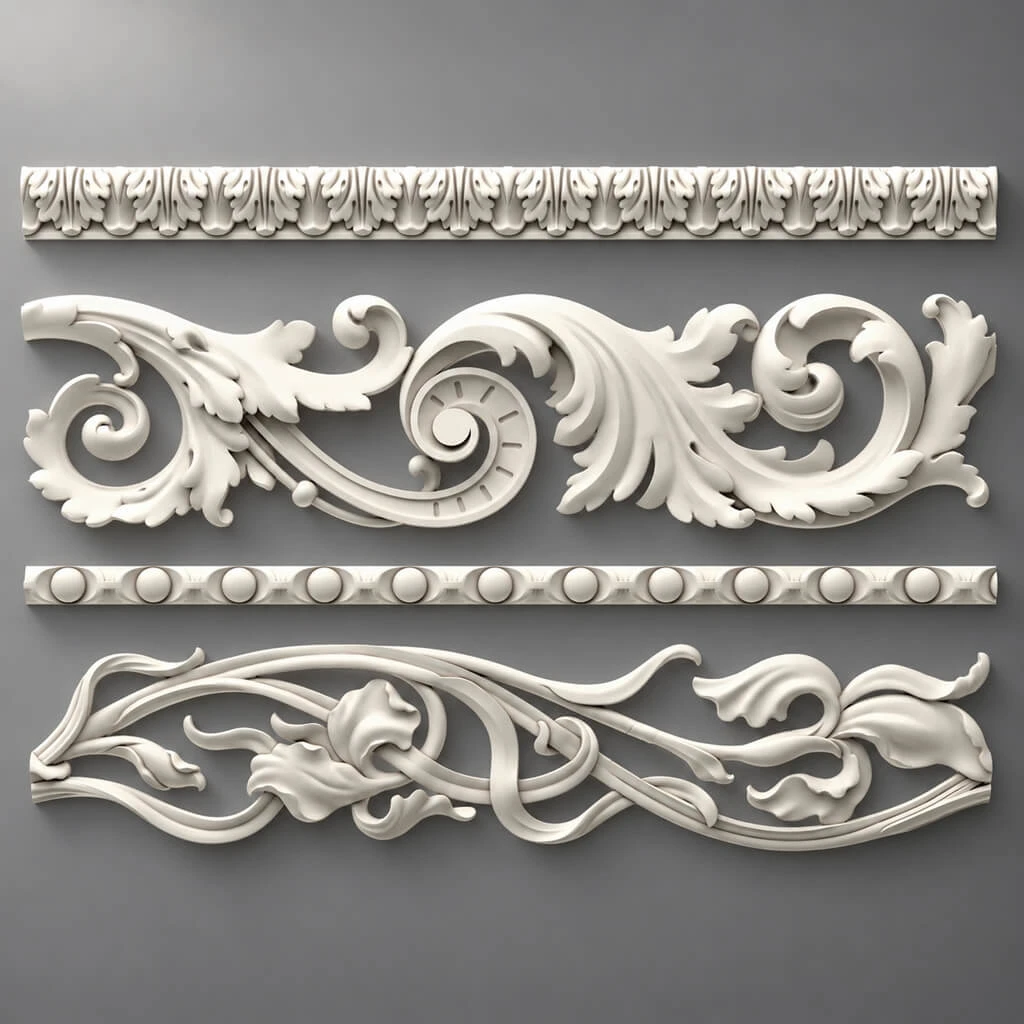
Corner pieces, rosettes, decorative inserts for moldings — these are the details that transform a simple profile into a complex architectural frame.Decor for MoldingIn the STAVROS catalog, these are precisely the elements that give a profile frame a finished classical look.
With door and wall compositions
A wall molding with wallpaper next to a doorway should visually 'converse' with the casing. If the casings are wooden — a solid wood molding will create unity. If the casings are MDF for painting — an MDF molding will continue this language.
Molding products as a system
Wooden millwork is not just moldings. It includes baseboards, cornices, battens, casings, thresholds — everything that forms the horizontal and vertical lines of an interior. When all the millwork belongs to one system made from one material — the space acquires that architectural coherence which distinguishes professional design from a random set of solutions. To buy wooden millwork in St. Petersburg and assemble a complete system from it — this is exactly whatSolid Wood Items STAVROS.
How to install molding on a wall with wallpaper: what is important to consider when ordering
The question of installation arises for everyone who buys molding to decorate walls with wallpaper. Let's examine the key aspects — not as a DIY instruction, but as practical knowledge that influences the choice and order.
Glue before or after wallpapering?
A fundamentally important question. Solid wood molding is recommended to be glued after wallpapering — it's easier to fit the joints and cover the edges of the wallpaper with the profile. Polyurethane and MDF moldings are more often installed before wallpapering — then the wallpaper is brought right up to the profile.
In most cases for framed panels, moldings are mounted on the finished wall, after which wallpaper is pasted inside the frame. This gives perfect edges—without visible transitions.
Can moldings be attached over wallpaper?
Yes, provided the wallpaper is applied evenly, without bubbles, and fits tightly to the wall. Liquid nails or special polymer adhesive securely fix the profile even over paper and vinyl wallpaper. For non-woven wallpaper—adhesion should be checked in advance.
How to prepare the wall
The wall must be leveled, primed, and dry. For wooden molding, it is important to let it acclimate in the room for 24–48 hours—otherwise, after installation, the profile may slightly change geometry due to humidity differences.
How to finish joints and corners
Molding joints in corners are the most vulnerable spot. For right angles, the profile is cut at 45° using a miter box. For non-standard angles, special corner trims from the assortment are useddecoration for moldings. This significantly simplifies installation and guarantees a neat result.
Is painting needed after installation?
Wooden molding—staining or varnish as desired. MDF—mandatory priming and painting. Polyurethane—primer + paint or supplied pre-painted white. When used in framed panels with wallpaper inside, the molding is most often painted to match the surrounding wall color—this creates a monochrome volume.
Common mistakes when choosing molding for wallpaper
Good news: most mistakes when choosing molding for walls with wallpaper can be easily prevented in advance. Here are the most common ones.
Too narrow a profile in a large room
In a living room with high ceilings and wide walls, molding 1.5 cm wide will be unnoticeable. It will get lost against textured wallpaper and won't create any architectural accent. The scale of the molding should match the scale of the room.
Incompatibility with baseboard and cornice
Relief classic molding on the wall paired with a flat minimalist baseboard is a visual conflict. All profiles in the room should belong to the same style and have proportionate volume.
Wrong material for the task
Wooden molding in a kitchen without special treatment will become greasy and lose its appearance in a couple of years. Polyurethane in a room with regular mechanical impact may deform. Choose the material considering the operating conditions.
Weak geometry of the frame composition
Frames made of molding on a wall with wallpaper should be leveled — both horizontally and vertically. Random tilts ruin the entire effect. Use a laser level — it's essential.
Overloading the wall with decor
Moldings + battens + stucco + decorative inserts on one wall — this is no longer architecture, but chaos. Each decorative element should play its own role. If a wall with wallpaper is already active — the molding should be a restrained frame, not an additional source of noise.
How much does molding for wallpaper on a wall cost in Saint Petersburg?
The price of wall molding depends on several factors — and understanding these factors will help plan the budget correctly.
Material. Solid wood moldings are the most expensive option. MDF — mid-price range. Polyurethane — affordable cost with a rich selection of profiles.
Profile length. Moldings are sold in linear meters. The larger the wall area — the greater the volume needed. For framed panels, the consumption is lower than for continuous perimeter installation.
Profile and relief. A complex relief profile with multiple levels will cost more than a simple rectangular one — both in wood and polyurethane.
Finish. Molding for tinting or varnish — base cost. Molding with factory painting — more expensive. White polyurethane molding is most often sold already primed — this saves time and money.
Installation. If you order professional installation, this is a separate expense item. However, polyurethane and MDF moldings are quite simple for self-installation — with a miter box, level, and suitable adhesive.
Associated decor. Corner overlays, decorative inserts — they are small in cost but complete the frame correctly. Include them in the budget in advance.
The cost of decorative wall profile is ultimately determined not only by the price per linear meter but also by the value of the result. Properly selected wall molding in Saint Petersburg — is an investment that pays off with the beauty of the interior for years to come.
Where to buy wallpaper molding for walls in Saint Petersburg
Buying molding for walls with wallpaper in St. Petersburg is a task that requires not just finding a profile of the right size, but also ensuring it fits into the overall interior system. That's why it's important to choose where the assortment is not a random set of items, but a thoughtfully curated collection.
Assortment by materials. The STAVROS catalog featuresWooden wall moldingsandMoldings made of polyurethane— both directions in full, with different profiles and sizes.
Profiles for different styles. Strict geometric profiles for minimalism, relief cornice moldings for classic style, thin frame profiles for modern neoclassicism — the selection covers the entire spectrum of interior solutions.
Related elements in one place. Next to the molding, you can chooseslatted panels for wall decoration, Decor for Molding, baseboards, cornices, and otherSolid wood products for interiors— they all belong to the same system.
Delivery in Saint Petersburg. Moldings require careful transportation. Delivery within the city allows you to receive profiles without deformations or chips — ready for installation.
FAQ: Answers to Common Questions About Wallpaper Molding
Which molding is best for wallpaper on the wall?
It depends on the style and task. For a natural, warm interior — solid wood molding. For a smooth white finish ready for painting — MDF. For classic relief without much weight — polyurethane. In all cases, it's important that the profile size matches the ceiling height and room area.
Can molding be glued over wallpaper?
Yes, it can — provided the surface is even and the wallpaper is firmly adhered. For installation over wallpaper, liquid nails and polymer adhesive are suitable. Wood molding holds securely on wallpaper if the surface is pre-degreased in the bonding area.
What to choose: wood, MDF, or polyurethane?
If priority is naturalness and a premium look: wood. If perfect geometry and a budget solution for painting are needed: MDF. If relief, moisture resistance, and easy installation are important: polyurethane. These materials can also be combined in one interior.
Which molding is suitable for a classic interior?
Relief polyurethane profile with a developed cross-section or solid wood molding stained to resemble dark walnut — both options are organic for classic style. Complementdecorative elements for moldings — with corner overlays and rosettes — for a full-fledged frame composition.
What is the difference between molding and picture rail?
Essentially, almost nothing: these are different names for decorative trim. Wooden picture rail for walls and molding are synonyms in the context of interior design. Sometimes 'picture rail' implies a thinner and narrower profile, while 'molding' implies a wider one. But in everyday and professional use, these terms are interchangeable.
Can molding be combined with slats?
An excellent combination. Wooden slats for decorative wall finishing occupy their own zone—the lower part of the wall or an accent fragment—while molding serves as a frame or horizontal divider. This is a lively, modern technique that is currently actively used in St. Petersburg interiors.
Is molding suitable for a small room?
Yes, with the correct size selection. In a small room, use narrow profiles—up to 3 cm. Vertical moldings visually elongate the height, horizontal ones widen it. Framed panels on an accent wall in a small room create a sense of depth and architectural thoughtfulness.
Where to buy wallpaper molding in St. Petersburg?
In the STAVROS catalog —Moldings from solid woodandMoldings made of polyurethane with delivery in St. Petersburg. Nearby—Rafter panels, Decor for Molding and the full range of solid wood interior products.
Conclusion: a systematic solution for walls with wallpaper
Wallpaper molding for the wall is not an addition to the interior, but its structure. It is the profile that sets the frame, makes the wall readable, creates that very 'finished' look that distinguishes a well-thought-out renovation from simply painted walls. Wood, MDF, or polyurethane—each material has its place in the interior system. The main thing is to choose the right one.
Start with the task: wallpaper frame, zoning, accent wall, TV area, or classic paneling. Then choose the material—considering style, room, and usage conditions. And complete the selection by matching the molding with complementary elements—strips, decor, cornices, baseboards—from one system.
STAVROS offers everything needed for this:solid wood wall moldings, polyurethane moldings for classic finishes, Decor for Molding and the full range of solid wood interior products. Buy wallpaper molding for walls in St. Petersburg—here, with city delivery, without compromising on quality.