Article Contents:
- What a furniture maker actually buys under the word “blank”
- Five levels of readiness of a wooden part
- Quick selection matrix
- Where a rough blank is truly convenient
- What the low price of a rough part hides
- What needs to be clarified with the supplier
- When a planed blank is especially rational
- Linear profile as a separate type of semi-finished product
- Unpainted furniture leg: a high degree of readiness without finishing
- Why this is especially noticeable in small batches
- Unpainted furniture handle: a small part with high readiness
- A solid wood “construction kit”: a workshop can start without a block
- KON-010: when an already matched component system is purchased
- Check with a simple question
- A conditional example for four parts
- Comparison of three options for one part
- The cost of changeover in a small batch
- Don't forget about the internal movement of the part
- Why you need to calculate exactly the same final stage
- The cost of occupied equipment
- When in-house manufacturing is more profitable
- When a purchased part frees up a bottleneck
- Batch size changes the economics
- Four parts
- Twenty parts
- Four hundred parts
- Planing and sanding are different stages
- First
- Second
- Oak
- Oak
- How to compare two supplier offers
- What to do if the supplier cannot accurately describe the surface condition
- Why the single word "blank" is not enough in a specification
- How to account for defects
- A conditional example with defects
- Repeat order and reproducibility
- But the article number does not override the production archive
- First batch map
- The first batch as a reference
- When a rough blank is reasonable
- Another good scenario is a family of different sizes
- When a planed blank is reasonable
- When a formed semi-finished product is reasonable
- When a part ready for finishing is reasonable
- When a component with a ready-made coating is rational
- 1. Identify the final part
- 2. List the operations the workshop can perform
- 3. Mark the bottlenecks
- 4. Specify the quantity
- 5. Determine the required procurement stage
- 6. Compare offers by the same final state
- Need one part for a repair
- Need a large batch of simple parts
- Need a complex shape, but a unique length
- Requires an exact color match with all the furniture
- Treating any unpainted part as raw
- Treating planing as final preparation
- Comparing only the purchase price
- Not accounting for machine setup
- Not accounting for defects
- Not recording the readiness stage in the specification
- Switch suppliers based on a single price
- Order a batch without a sample part
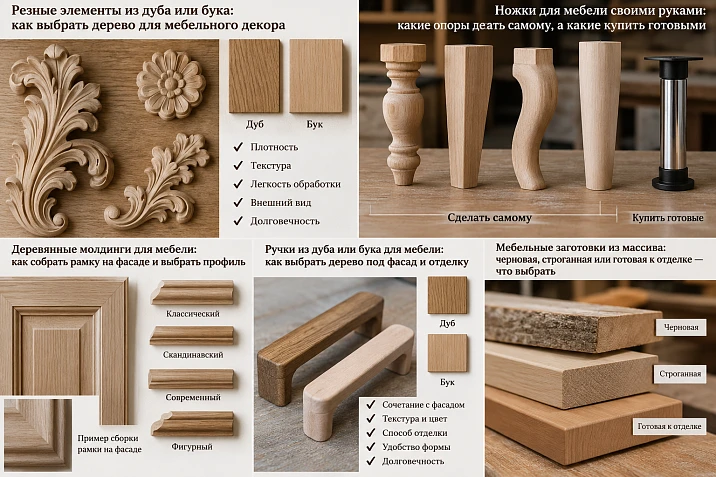
Two wooden parts may both be called "blanks," yet they leave the workshop with a completely different amount of work. In one case, it's a timber billet with allowance that still needs to be sized, planed, milled, drilled, and sanded. In the other, it's an already formed furniture leg without a finish, where the complex geometry is done and only finishing and assembly remain for the craftsman.
Therefore, when purchasing, it's more useful to ask not "is this a blank or a finished part?" but "which operations have already been performed and what will remain for us to do?"
For a furniture workshop, the degree of readiness can be represented as a sequence:
rough blank → planed blank → formed semi-finished product → part ready for finishing → fully finished component.
The further to the right a part is in this chain, the more work has already been done by the supplier. But this does not mean that the most finished option is always more advantageous. The decision depends on quantity, equipment, complexity of shape, workshop workload, required finishing, and the ability to reorder the same item.
The main task is to compare not the price of a piece of wood and the price of a finished part, but the cost of the part in the state in which it can actually be installed in furniture.


What a furniture maker actually buys under the word "blank"
The term "furniture blank" is too broad to base a purchasing decision on it alone.
It may refer to:
- timber with allowance;
- a board already brought to a certain thickness;
- a planed element;
- profiled moulding;
- a turned part;
- a carved semi-finished product;
- a formed handle without coating;
- a finished furniture leg without finishing;
- fully painted component.
The difference between them is not verbal. It determines which machines, tools, working time, and consumables will be needed after the part arrives at the workshop.
Therefore, in a request to a supplier or in your own specification, a single line is not enough:
wooden blank — 20 pcs.
At minimum, you need to specify:
- part type;
- actual size;
- the material;
- allowance, if any;
- which surfaces have been processed;
- whether the profile has been formed;
- whether turning or carving has been performed;
- has sanding been completed;
- is drilling required;
- is the surface ready for finishing;
- is there a permanent SKU.
After such a record, it becomes clear what exactly the workshop is buying: raw material for further processing or a component that is already near the end of the production chain.




Five levels of readiness of a wooden part
It is most convenient to compare offers on a single scale.
| Level | Condition of the part | What usually remains with the workshop |
|---|---|---|
| 1 | Rough blank | bring to size, process the geometry, sand, make holes and finish |
| 2 | Planed blank | form the profile or part, refine the dimensions, sand, drill, finish |
| 3 | Formed semi-finished product | trim, drill or assemble, prepare the surface, finish |
| 4 | Part ready for finishing | apply the selected finishing system and install |
| 5 | Fully finished component | inspect, install, assemble if necessary |
This scale is not a state standard. It is a workshop's working method for comparing purchased items by the actual volume of remaining operations.
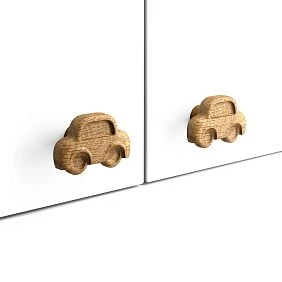
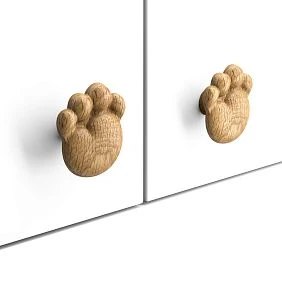
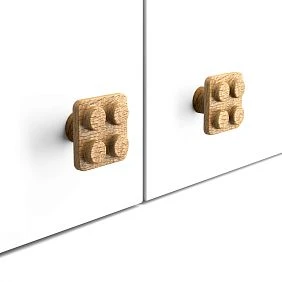
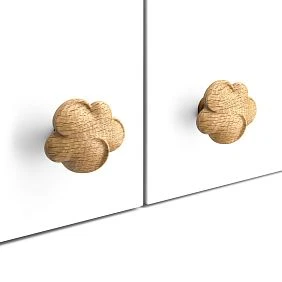
Our factory also produces:
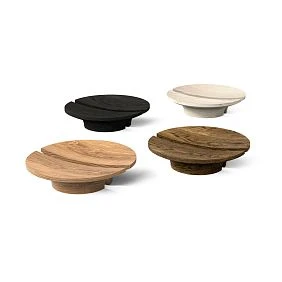
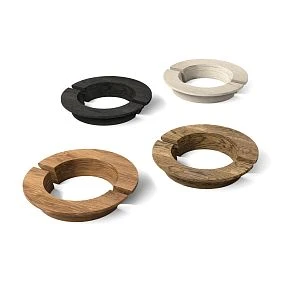
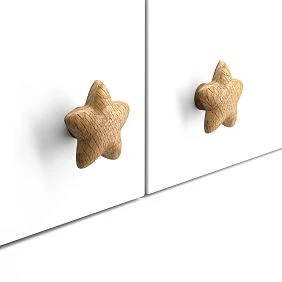
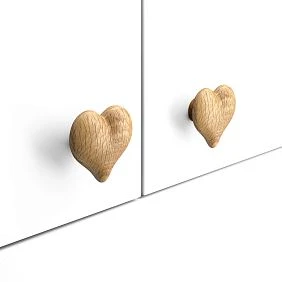
Quick selection matrix
If you reduce the decision to a production task, the picture becomes simple.
| Situation | What most often makes sense to check first |
|---|---|
| Unique size, simple shape, large batch | rough or planed blank |
| Own profile, but you don't want to prepare the raw material | planed blank |
| Complex turning or carving, small series | Formed semi-finished product |
| The geometry works, but you need your own color | part ready for finishing |
| Color and geometry already match | Fully finished component |
This is not a universal rule. The matrix only shows at which stage it makes sense to start comparing offers.
For example, a workshop may turn legs perfectly well itself, but this month the turning area is busy with a serial order. Then even a familiar part is temporarily more profitable to buy pre-formed. In another month, with the machine free, the decision will change.
That is why the degree of readiness is not a permanent characteristic of a "good" or "bad" production method. It is a parameter of a specific order.
It is especially useful when calculating "make in-house or buy."
For example, an unpainted turned furniture leg and a planed rectangular beam are both wooden parts without a finish coating. But in terms of readiness, they are far apart.
The beam only provides material.
The leg already provides a finished shape.
Get Consultation
Rough furniture blank: a low purchase price says nothing about the economics
A rough blank is justified when the workshop deliberately buys material with a margin for further processing.
After delivery, you may need:
- calibration;
- surface planing;
- planing;
- trimming;
- Cutting;
- Milling;
- turning;
- drilling;
- sanding;
- preparation for finishing;
- the finishing itself.
That is, you are not buying a finished furniture part, but the beginning of the technological chain.
Where a rough blank is truly convenient
It is rational if:
- the size is non-standard;
- the profile is simple;
- you need your own unique drawing;
- the equipment is already available;
- the workshop can quickly repeat this operation;
- the volume is large enough for the machine setup to be spread across a series;
- the material is needed as a universal base for several products.
For example, a simple square leg with minimal processing can indeed be made by a small workshop on its own without unnecessary complexity.
A completely different situation is four complex turned supports for a single table. Here, setting up a separate operation can take more time than the series itself.
What a low price for a rough part hides
The purchase price does not include:
- machine time;
- worker time;
- tool changes;
- test machining;
- sanding;
- defects;
- waste;
- re-setup;
- dimensional inspection.
Therefore, comparing only two prices is almost always incomplete.
A rough blank can be the cheapest at the input and the most expensive after being brought to a finished state.
Planed furniture blank: the geometry is established, but the work is far from finished
A planed part can easily be mistaken for an almost finished one.
The surfaces are already even, the size is clearer, and the material looks neat. But planing is primarily responsible for the geometry of the reference faces. It does not automatically mean that the part:
- has its final profile;
- is ready for painting;
- has undergone final sanding;
- has holes;
- has been cut to the installation size;
- fully matches the furniture drawing.
This is an important distinction.
A craftsman can buy a planed strip of good size and still spend considerable time forming the required profile.
What to clarify with the supplier
The word “planed” is too short. Better to ask:
- what is the actual size;
- what is the tolerance;
- is there an allowance for further processing;
- are all sides processed;
- is calibration required;
- what sanding has been performed;
- is the surface ready for the selected finish.
If the supplier confirms only planing, the part cannot be considered ready for enamel.
When a planed blank is especially practical
It is convenient when the workshop wants to keep the shaping of the part in-house but does not want to spend time on the initial preparation of the material.
For example, the shop performs the following itself:
- milling;
- drilling;
- cutouts;
- joints;
- shaped processing,
but prefers to receive material that is already flat and brought to a clear cross-section.
This is an intermediate model: part of the initial processing is outsourced to the supplier, while the key geometry remains within the workshop.
Shaped semi-finished product: when complex geometry has already been purchased
The next level is noticeably more interesting for a small workshop.
A shaped semi-finished product may already have:
- turned profile;
- thread;
- shaped cross-section;
- finished shaped geometry;
- some of the holes;
- mounting elements;
- individual parts for assembly.
The main advantage here is not the coating. There may be none at all.
The craftsman buys already completed complex mechanical work.
This is especially useful when in-house production would require:
- a lathe;
- complex milling;
- separate tooling;
- test parts;
- re-setup;
- significant manual labor.
The formed semi-finished product shortens the technological chain without the need to buy a fully finished component.
Linear profile as a separate type of semi-finished product
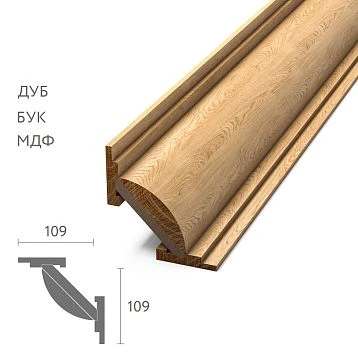
STAVROS trim products clearly demonstrate this level of readiness.
The geometry of the molding or other profile is already formed.
The workshop is left with:
- length selection;
- Cutting;
- crosscut;
- jointing;
- finishing;
- Installation.
That is, such a profile cannot be called either a raw blank or a fully finished part.
This is a semi-finished product of a high degree of readiness: the complex cross-section has already been made, but the specific furniture part has not yet been cut.
Finished geometry without coating: almost the end of machining
For a furniture maker, this is one of the most useful classes of purchased products.
The part already has:
- final shape;
- dimensions;
- profile;
- recognizable item code;
- repeatable geometry.
There is no coating in this case.
The workshop gets the opportunity to include the component in its own finishing system.
For example:
finished leg → inspection → test paint → painting together with the furniture → installation.
In this case, the absence of paint does not mean that the part is at the beginning of production.
On the contrary, the main mechanical work has already been completed.
Unpainted furniture leg: a high degree of readiness without finishing
In the unpainted furniture legs there are already formed supports with specific article numbers and dimensions.
By purchasing such a part, the workshop can avoid doing the following on its own:
- turning a complex profile;
- threading, if provided by the model;
- basic geometry formation;
- repetition of four or dozens of identical parts.
The project tasks remain:
- check a specific dimension;
- agree on the mounting;
- prepare the selected finishing system;
- apply the coating;
- install the part.
This is a fundamentally different amount of labor than when buying timber for a furniture leg.
Why this is especially noticeable in a small batch
Let's imagine 8 tables with 4 legs each.
You will need 32 identical supports.
If the profile is complex, in-house production requires not only 32 processing cycles, but also:
- creating a sample;
- checking the template;
- controlling repeatability;
- intermediate sanding;
- correcting defects.
With a ready-made serial product, the workshop buys repeatability along with the geometry.
And it only handles its own finishing and assembly tasks.
Unpainted furniture handle: a small part with high readiness
The same rule applies to handles.
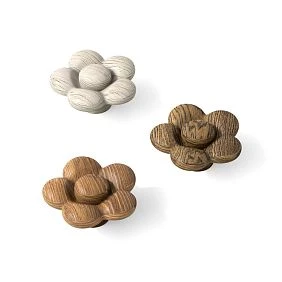
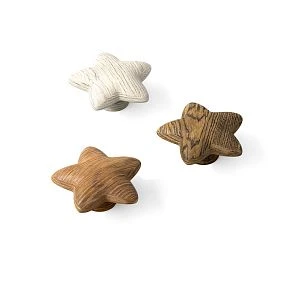
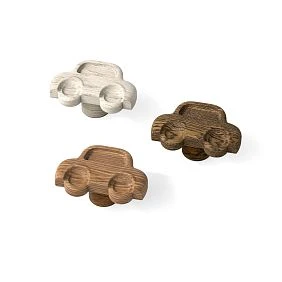
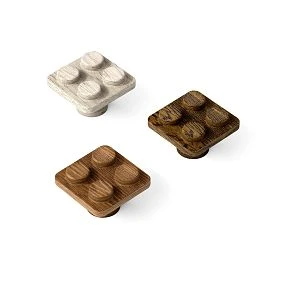
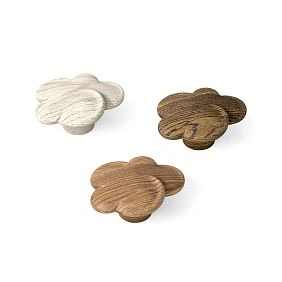
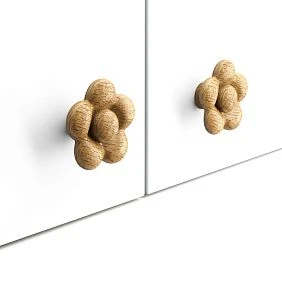
In the section unfinished wooden furniture handles pre-formed products of various types are presented.
The absence of a finish here does not mean that the craftsman received a shapeless blank.
The shape of the handle is already defined.
The dimensions are already set.
Complex machining has been completed.
Further operations may be limited to:
- checking the fit;
- test finishing;
- painting or tinting;
- installation.
For a small workshop, this is a very illustrative example:
mechanical readiness and surface readiness are different things.
A part can be almost mechanically complete, but not yet have a finish coating.
A solid wood "construction kit": a workshop doesn't have to start with a block
Section wooden construction set shows another intermediate model.
A craftsman can assemble their own product not from rectangular raw material, but from already formed wooden parts.
This changes the very approach to production.
Instead of:
block → shaping each figure → drilling → selection → assembly
It turns out:
ready-made shaped parts → composition selection → assembly → finishing.
This approach is especially interesting for:
- furniture legs;
- posts;
- decorative supports;
- interior verticals;
- custom pieces.
The workshop preserves freedom of composition, but does not manufacture every complex shape from scratch.
KON-010: when a pre-selected component system is purchased
Furniture leg set KON-010 — a clear example of a high degree of readiness without final assembly and finishing.
The current product page lists a size of 730 × 120 × 34 mm. The set is available in beech and oak and consists of a wooden axle and several pre-made geometric shapes.
It is supplied unassembled.
This is an important example for understanding the word “blank.”
The craftsman does not receive a finished painted leg.
But he also does not start with a block of wood.
Part of the complex work has already been shifted to the supplier:
- the shapes are formed;
- the axle is ready;
- the composition is selected;
- the dimensions of the parts are known.
The workshop is left with:
- composition check;
- assembly;
- gluing;
- adjustment of the composition if necessary;
- finishing;
- Installation.
That is, the economic value lies not only in the wood. It lies in the geometry that has already been executed.
A part ready for finishing: where the practical boundary lies
The phrase "ready for finishing" is useful only when the workshop understands what is meant by it.
For one production facility, it is sufficient that:
- the shape is final;
- the size is final;
- the holes are made;
- the surface is sanded.
For another, additional proprietary preparation is still performed before enameling.
Therefore, it is more correct not to trust the name of the stage, but to list the remaining operations.
Conventionally, a part can be considered ready for finishing if, after receiving it, there is no need to re-form the geometry.
That is, there is no need to:
- plane to size;
- mill the main profile;
- turn;
- cut out the main ornament;
- change the overall dimensions.
Operations related to a specific project are acceptable:
- light finishing;
- drilling for your own fasteners;
- final surface preparation;
- soil;
- Tinting;
- oil;
- varnish;
- enamel.
But if the craftsman spends hours more shaping the basic geometry after purchase, it is more of a semi-finished product of the previous level.
Check with a simple question
To avoid arguing about terms, ask the question:
can you, after receiving the part, proceed directly to surface preparation and finishing without changing its shape?
If yes, this is indeed a high degree of readiness.
If not, you are still dealing with a semi-finished product that requires machining.
A fully finished component: fewer operations, but less freedom
At the highest level of readiness, the part already has:
- final geometry;
- finish coating;
- the required size;
- readiness for installation or assembly.
For the workshop, the chain becomes short:
receive → check → install.
This is convenient if:
- the factory color is suitable;
- no unified painting with a custom front is required;
- deadline matters more than your own finish;
- no in-house painting area;
- the project is a one-off;
- a repeated finishing operation adds no value.
But a fully finished part reduces freedom.
If the customer requires an exact match to their own enamel, stain, or patina, an unfinished product may be more technologically convenient.
Therefore, a higher degree of readiness does not always mean a more suitable option.
How to calculate the real cost: labor, equipment, and batch size
You need to compare cost not at the input, but after all necessary operations.
A convenient formula:
cost of a finished part = procurement + machine time + manual labor + consumables + defect losses + finishing + assembly operations.
For in-house production, equipment setup should also be taken into account.
For example, a single part may require only 8 minutes of actual machining, but before a batch you need to:
- set up the machine;
- install the tool;
- make a test pass;
- check the dimension;
- prepare the template.
For 4 parts, these setup operations are distributed very poorly.
For 400, it is completely different.
A hypothetical example for four parts
Suppose a rough blank costs conditionally 600 rubles.
After that, the workshop spends on one part:
- 25 minutes of machine time;
- 20 minutes of manual processing;
- sanding material;
- finish;
- time for inspection.
A purchased pre-formed part costs conditionally 1600 rubles, but requires only finishing and assembly.
One cannot conclude that the first is cheaper by 1000 rubles.
It is necessary to convert one's own operations into money.
If an hour of machine and craftsman work together costs the production conditionally 1800 rubles, 45 minutes already yield:
1800 × 0.75 = 1350 rubles
even before consumables, defects, and finishing.
Then:
600 + 1350 = 1950 rubles
versus the conditional 1600 for a formed component before the same subsequent operations.
The figures here are approximate, not STAVROS prices. Their purpose is to show the calculation method.
Comparison of three options for one part
Suppose a workshop needs 12 decorative supports of the same shape. Three paths are being considered.
Rough blank. The purchase is the cheapest, but calibration, profile forming, drilling, sanding, and finishing are required.
Formed semi-finished product. The price is higher, but only project-specific drilling, minor surface touch-up, and finishing remain.
Part ready for finishing. The most expensive at the input of these three, but mechanical operations are almost absent.
A proper comparison table doesn't look like this:
| Option | Purchase price |
|---|---|
| Rough | Below |
| Assembled | Higher |
| Ready for finishing | even higher |
But like this:
| Option | Purchase | Preparation and machines | Handwork | Defect risk | Total before finishing |
|---|---|---|---|---|---|
| Rough | Amount A | Amount B | Amount C | Amount D | A + B + C + D |
| Assembled | Amount E | Amount F | Amount G | Amount H | E + F + G + H |
| Ready for finishing | sum A | Minimally | Minimally | Below | Total |
Only the last column answers the economic question.
Setup cost in a small batch
For a short order, setup time easily ends up costing more than the machining itself.
Let's imagine that a milling section spends:
- 35 minutes on preparing the program and tooling;
- 15 minutes on a test part and adjustments;
- 6 minutes for each production part.
For four items, the total time is:
35 + 15 + 4 × 6 = 74 minutes.
On average, one finished part requires 18.5 minutes of equipment time.
For forty items:
35 + 15 + 40 × 6 = 290 minutes.
For one — already 7.25 minutes.
The operation is the same. The economics are different.
That is exactly why a workshop can profitably buy the same profile ready-made for one-off orders and make it in-house for a stable series.
Don't forget about the internal movement of the part
Every additional operation means more than just minutes at the machine.
The part needs to be:
- accept;
- laid out;
- transfer to the section;
- return after processing;
- mark;
- check;
- send onward.
In a small workshop, these transfers are often performed by the same person who does the main work. If the workpiece passes through four extra sections, the actual time turns out to be higher than the pure machine time.
A formed part reduces not only processing but also the number of such transfers.
If, after calculation, the rough version remains cheaper, the workshop receives honest confirmation of its own manufacturing. If not, the high price of a finished part stops seeming like an overpayment.
Why you need to calculate exactly the same final stage
Cannot compare:
- rough beam;
- and a leg ready for finishing
as if these were two products of the same tier.
First, bring the calculations for both branches to the same point.
For example:
ready for painting
or
ready for installation.
Only after that does the comparison become fair.
Cost of occupied equipment
The workshop has bottlenecks.
A lathe, a machining center, or a highly qualified specialist may be occupied with the main product.
If, for the sake of four decorative legs, more profitable work has to be taken off the equipment, the cost cannot be calculated based only on electricity and wages for 40 minutes.
There is also the cost of lost production capacity.
This is especially noticeable in small workshops, where one machine performs several functions.
When in-house manufacturing is more profitable
It can be advantageous if:
- the machine is available;
- the profile is simple;
- the program already exists;
- the same element is used constantly;
- the batch is large;
- raw materials are purchased at a favorable price;
- waste can be used in other products.
When a purchased part relieves a bottleneck
Buying a preformed component is especially rational if:
- the operation is rare;
- a complex shape is required;
- the batch is small;
- setup takes a lot of time;
- the equipment is loaded;
- there is no dedicated specialist;
- there is a high risk of ruining several test blanks.
In this case, the workshop is not just buying a part.
It is buying free time for its production.
Batch size changes the economics
One of the main factors is the batch size.
Four parts
For a single table, setting up a separate turning run may not be practical.
Setup, a test sample, and inspection take up a significant portion of the total time.
Twenty parts
The decision is no longer so obvious.
If the geometry is used frequently, in-house production may begin to pay back the setup.
Four hundred parts
Here you need to calculate again.
For a large batch:
- the setup is spread across hundreds of items;
- it makes sense to use special tooling;
- the operation itself becomes more stable;
- the purchase price of the finished component is multiplied by a large quantity.
Therefore, you cannot write a rule:
finished parts are always more cost-effective.
And you cannot write the opposite.
The economically reasonable boundary depends on the quantity and on which operations a specific workshop can actually perform.
Allowance, planing, and sanding: where material preparation ends
If a part is not purchased at its final size, you need to understand what allowance has been left.
Without this, you can't plan properly:
- planing;
- calibration;
- cross-cutting;
- geometry correction;
- subsequent cutting.
For example, a project requires a part 40 × 40 × 700 mm.
Buying a blank exactly 40 × 40 × 700 mm makes sense only if the supplier already guarantees the final geometry.
Rough material requires machining allowances.
But the specific value cannot be assigned universally: it depends on the initial condition of the wood, the quality of the material, and the future processing.
Therefore, in the procurement documentation it is useful to specify not only the required final size, but also:
blank size → finished part size.
This way, the procurement department does not confuse raw material with already calibrated semi-finished product.
Planining and sanding are different stages
These operations are often confused.
Planining primarily forms the surface geometry.
Sanding prepares its quality for subsequent operations and finishing.
A flat planed surface may retain tool marks that are unacceptable under a certain coating.
Therefore the phrase:
planed part
is not equal to:
part is ready for enamel.
Before purchasing, clarify:
- whether additional sanding is required;
- to what state the surface has been finished;
- whether there are processing defects;
- whether the grain needs to be raised;
- whether final preparation is carried out in your workshop.
This way you can calculate the actual working time in advance.
The absence of a coating says nothing about mechanical readiness
This is one of the most important conclusions for a buyer.
Let's compare two unfinished parts.
First
Rough blank.
They need:
- dimensions;
- shape;
- holes;
- sanding;
- finishing.
Second
Finished furniture handle without coating.
The shape is already there.
The dimensions are already determined.
Complex machining has been completed.
Finishing and installation remain.
Both parts are unpainted.
But the amount of work after purchase is incomparable.
Therefore, in the specification, the "without coating" field must exist separately from the "degree of mechanical readiness" field.
Oak or beech: readiness first, then species
The species matters, but it shouldn't overshadow the main question of the article.
A rough oak blank and a beech part ready for finishing are at different stages of production.
First, the workshop decides which condition it needs to buy.
Then it chooses the material.
Beech
Often convenient in projects with:
- opaque enamel;
- a uniform furniture finish;
- parts where the natural texture is not the main effect.
Oak
Especially interesting when the wood remains visible:
- under oil;
- varnish;
- stain;
- tinting.
But both oak and beech can exist at different levels of readiness:
- rough blank;
- planed;
- shaped;
- ready for finishing;
- fully finished.
Material and level of readiness are different characteristics.
What to ask the supplier before ordering
Instead of the general question "Is the blank ready?", ask specific ones.
- What is the actual size?
- Is this the final size or is there an allowance?
- Has planing been done?
- Has the final profile been formed?
- Has turning or carving been done?
- Are there any holes?
- Does the part need to be trimmed?
- Has sanding been done?
- Is the surface ready directly for the chosen finish?
- What material?
- Is there a permanent article number?
- Can the same version be reordered?
- How is the product supplied — assembled or in separate parts?
- What operations does the manufacturer recommend performing after purchase?
After these questions, it becomes much easier to compare two offers with different prices.
How to compare two supplier offers
Let supplier A offer the part cheaper and call it planed.
Supplier B asks for more but reports that the profile is finally formed, sanding has been completed, and the part is ready for your finishing system.
You should compare not the invoice lines, but the remaining route.
For each sentence, create a table:
| Check | Supplier A | Supplier B |
|---|---|---|
| Final size | Yes / no | Yes / no |
| Profile formed | Yes / no | Yes / no |
| Sanding completed | Yes / no | Yes / no |
| Drilling required | Yes / no | Yes / no |
| Additional milling required | Yes / no | Yes / no |
| Can be sent straight to finishing | Yes / no | Yes / no |
| There is a duplicate SKU | Yes / no | Yes / no |
After that, each remaining operation is assigned its own workshop cost.
This is how the concepts of "more expensive" and "cheaper" become production-related, not just purchasing-related.
What to do if the supplier cannot accurately describe the surface condition
For the first purchase, order the minimum possible quantity or a sample.
Test it in your process:
- how many minutes the finishing took;
- what sanding was required;
- whether hidden defects were found;
- whether primer, oil, or stain could have been applied right away.
Record the resulting time in the part card.
On the next order, the workshop will already have its own standard, not just the supplier's description.
How to record the readiness level in the specification without foreign abbreviations
For a Russian-speaking workshop, it is not necessary to use English-language designations.
You can use a simple scale:
- ROUGH;
- planed;
- shaped;
- READY FOR FINISHING;
- COATED.
Example string:
KNIFE-01 | STAVROS | item code | beech | READY FOR FINISHING | 4 pcs.
For in-house manufacturing:
ZAG-01 | oak | ROUGH | final size 40 × 40 × 700 mm | 4 pcs.
For moulding:
MOL-01 | item code | beech | FORMED | cutting and finishing in the workshop
For the construction kit:
OP-01 | KON-010 | beech | FORMED PARTS | assembly and finishing in the workshop
Such a system immediately shows the technologist how many operations remain.
Why the single word “blank” is not enough in a specification
The procurement officer sees the line wooden blank and can order material of the correct species, but at the wrong stage of readiness.
For example, instead of a fully formed unfinished leg, a regular planed timber will arrive.
Formally, it is the same wood.
In fact, the production route is completely different.
Therefore, the degree of readiness should be a separate field, not part of a free-text comment.
Time, defects, and repeatability: what to add to the purchase price
It is convenient to create a simple production map.
| Operation | Rough | Planed | Formed | Ready for finishing |
|---|---|---|---|---|
| Calibration | Yes | sometimes | No | No |
| Profile forming | Yes | Yes | No | No |
| Turning or threading | If necessary | If necessary | No | No |
| Trimming | Yes | Yes | sometimes | sometimes |
| Drilling | Yes | Yes | Possible | Possible |
| Sanding | Yes | Yes | Possible | minimum or per technology |
| Finishing | Yes | Yes | Yes | Yes |
| Installation | Yes | Yes | Yes | Yes |
After that, a separate time standard is set for each operation.
For example:
- calibration — 6 minutes;
- milling — 12 minutes;
- drilling — 3 minutes;
- sanding — 10 minutes;
- inspection — 2 minutes.
For a single part, the difference seems small.
For 20 parts:
33 minutes × 20 = 660 minutes, that is, 11 hours.
If a pre-formed semi-finished product eliminates these five operations, it frees up almost a day and a half of one person's working time or the equivalent machine time.
That is why the price difference between the two stages of readiness should be compared with the actual time they save.
How to account for defects
The more operations remain in the workshop, the more stages at which a part can be ruined.
A rough blank can be lost during:
- calibration;
- milling;
- turning;
- drilling;
- sanding;
- finish.
A part ready for finishing — mainly during:
- additional preparation;
- painting;
- during installation.
This does not mean that a purchased pre-formed part is never defective.
But the risk structure is different.
When calculating a batch, it is useful to separate:
incoming supply defect
и
defect from in-house processing.
If the rough blank is cheap, but the workshop consistently loses part of the batch on a complex profile, this should be factored into the economics of in-house production.
A conditional example with defects
Suppose a workshop needs 20 identical shaped parts.
With in-house processing of rough blanks, you actually have to start 22, because on average two go to trial runs and possible errors.
If one rough blank conditionally costs 500 rubles, the raw material alone already equals:
22 × 500 = 11,000 rubles.
When buying pre-formed parts, you can order 20 plus a reasonable reserve, but your own machining risk is already substantially lower.
This does not mean that a purchased part is always cheaper.
But the calculation becomes more honest.
Repeat order and reproducibility
Six months later, the customer may request another identical dresser or table.
If a stable serial SKU was used in the project, repetition is easier:
SKU → size → material → quantity → finish.
For custom manufacturing, you need to restore:
- drawing;
- the program;
- the tooling;
- the settings;
- template;
- the material;
- the processing sequence.
If the production of this part is rare, some of the knowledge has to be essentially reassembled from scratch.
That is why the value of the SKU is especially high
But the SKU does not replace the production archive
You cannot store only a link to the website.
Save:
- name;
- article number;
- size;
- the material;
- the surface condition;
- verification date;
- your own finish map;
- installation method.
This way, a repeat order does not depend on the memory of a specific craftsman.
First batch map
For a new SKU, it is useful to save a short record after the order is completed:
- how many parts arrived;
- how many were accepted without rework;
- how many required additional sanding;
- how much time was spent preparing one part;
- what finish was used;
- whether any defects occurred;
- how much time the assembly took.
This turns the first order into your own production statistics.
When the same element is needed again six months later, the workshop already knows its real degree of readiness, not the advertised one.
If a new batch starts requiring significantly more processing, it is immediately visible when compared with the previous card.
Incoming inspection: what to check when the part has already arrived
The degree of readiness must be confirmed not only in the order, but also upon acceptance.
For a rough or planed blank, check:
- actual cross-section;
- length;
- allowance;
- straightness;
- the surface condition;
- presence of defects affecting further processing.
For a formed semi-finished product:
- article number;
- size;
- repeatability of shape;
- quality of the profile or thread;
- locations of future fastening;
- amount of additional sanding.
For a part ready for finishing:
- whether there are any mechanical defects;
- whether the surface is sufficiently prepared for your coating system;
- does the material match;
- whether the parts in the batch are identical;
- whether any unexpected reworking of the geometry is required.
If, after acceptance, it turns out that a batch "ready for finishing" requires serious milling or lengthy reworking, the actual degree of readiness is lower than what was assumed in the calculation.
This needs to be recorded. Otherwise, the economic error will be repeated on the next order.
The first batch as a reference
For a new supplier or a new item, it is useful to keep one approved part as a sample.
It answers practical questions better than correspondence:
- what the sanding was like;
- where the edges were run;
- what size was considered acceptable;
- how much preparation was required before finishing.
When reordering, a new batch can be compared against this reference before going into production.
How to choose the right degree of readiness for your workshop
After calculating the operations, the decision can be reduced to a simple fork: the more unique machining work a workshop wants to keep in-house, the earlier it enters the process chain. The more important speed, repeatability, and offloading equipment are, the more logical it is to buy a more finished component.
At the same time, the right stage depends not on the prestige of the workshop, but on the specific order: quantity, part complexity, machine load, and finishing requirements.
When a rough blank is rational
The rough state has its own strong scenarios.
Choose it if:
- non-standard geometry is needed;
- the size is not available among ready-made products;
- the profile is simple;
- the workshop regularly performs such processing;
- the machines are not a bottleneck;
- the batch is large;
- raw materials are purchased at a good price;
- the leftovers can be used further;
- maximum freedom in sizes is needed.
For example, simple bars for your own serial furniture often make no sense to buy as expensive formed components.
The workshop already knows how to make them quickly within its own technological chain.
Another good scenario is a family of different sizes
If the workshop makes 10 different sizes of similar parts from the same rough blank, a universal base may be more cost-effective than ten separate purchased SKUs.
Then the flexibility of the material has value in itself.
When a planed blank is reasonable
A planed semi-finished product is useful when the craftsman wants to retain control over the shape but does not want to deal with the initial preparation of the material.
Typical scenario:
got an even cross-section → formed your own profile → drilled → sanded → finished.
This may be more convenient than a rough part if:
- the geometry of the material is important;
- in-house milling is set up;
- the planing area is loaded;
- you don't want to keep additional equipment;
- supplier dimensions are fairly stable.
But the savings need to be calculated.
If a planed blank is only slightly more expensive than a rough one, but removes a significant block of primary processing, the difference can quickly pay for itself.
When a pre-shaped semi-finished product is justified
A pre-shaped semi-finished product is especially useful where the main value of the part is complex geometry.
For example:
- turned profile;
- carved relief;
- shaped cross-section;
- complex decorative shape;
- a set of ready-made elements for subsequent assembly.
In this case, the workshop keeps for itself:
- fitting to the project;
- Cutting;
- drilling, if needed;
- finish;
- Installation.
But it does not spend resources on the most complex operation.
For small-scale production, this is often more convenient than buying either raw materials or a fully finished product.
When a part ready for finishing is rational
This option is especially strong if:
- the shape is complex;
- precise repeatability is needed;
- the batch is small;
- the deadline is limited;
- a suitable serial item is available;
- own equipment is occupied;
- the finishing must still be done together with the furniture.
Examples:
- turned legs;
- carved details;
- furniture handles;
- decorative shaped elements;
- kit components.
The workshop buys a complex shape but keeps the color and overall look of the furniture.
For custom production, this is often a convenient balance between a finished product and own work.
When a component with a ready-made finish is reasonable
It is worth buying a component with a ready-made finish if:
- the factory color is suitable;
- a match with your own enamel is not required;
- there is no point in refinishing the product;
- the painting area is absent or overloaded;
- deadlines matter;
- the part can be installed immediately.
Then the workshop's own added value lies not in processing this part, but in designing and assembling the furniture.
But if the entire item is painted in a custom color, a fully ready factory finish may, on the contrary, create an extra operation — it has to be matched or redone.
How to make a decision ten minutes before requesting a price
You can use a short sequence.
1. Define the final part
Not "a wooden leg", but a specific size and shape.
2. List the operations the workshop can perform
For example:
- Cutting;
- planing;
- Milling;
- turning;
- drilling;
- sanding;
- finishing.
3. Identify bottlenecks
Which machine or specialist is currently overloaded?
4. Specify the quantity
4, 20, and 400 parts are different solutions.
5. Determine the required procurement stage
Rough, planed, shaped, ready for finishing, or coated.
6. Compare offers based on the same final state
Not the price of the blank versus the price of the leg.
But the cost of both options up to readiness for installation.
After that, the request to the supplier becomes specific.
Edge cases: when the usual logic stops working
One part is needed for a repair
Starting custom turning or threading for a single replacement is often impractical. If a suitable standard SKU exists, a high degree of readiness is almost always worth checking first.
But if the repair requires an exact replica of the old part, a ready-made catalog may not match the profile. Then custom manufacturing becomes the only correct option.
A large batch of simple parts is needed
Here the situation is the opposite. Buying hundreds of fully finished simple blanks may be pointless if the workshop quickly makes them itself in a busy production-line operation.
The simpler the shape and the larger the quantity, the stronger the argument in favor of an earlier stage of the blank.
A complex shape is needed, but with a unique length
Sometimes it is convenient to buy a pre-formed long profile and cut it yourself for a specific piece of furniture.
This is a compromise:
complex geometry from the supplier + custom cutting in the workshop.
Linear mouldings often work according to this model.
An exact color match with the entire furniture piece is required
A fully finished component with a factory coating may be less convenient than an unpainted part with a high level of mechanical readiness.
The workshop receives the shape but keeps its own finish.
This is a good example of why “more finished” does not always mean “better for the project.”
Common mistakes when buying furniture blanks
Consider any unpainted part as raw
Consequence: a high degree of mechanical readiness is not taken into account when comparing prices.
How to avoid: evaluate the shape and coating separately.
Consider planing as final preparation
Consequence: sanding is not included in the production schedule.
How to avoid: clarify the actual condition of the surface.
Compare only the purchase price
Consequence: a cheap blank turns out to be expensive after processing.
How to avoid: account for all operations up to the finished part.
Do not take machine setup into account
Consequence: a small batch seems profitable for in-house production.
How to avoid: allocate preparation time across the actual number of parts.
Not accounting for defects
Consequence: in-house processing looks artificially cheap.
How to avoid: account for the workshop's actual losses.
Not specifying the readiness stage in the specification
Consequence: procurement buys a different type of semi-finished product.
How to avoid: use clear Russian readiness designations.
Changing suppliers based on price alone
Consequence: the part arrives at a different processing stage.
How to avoid: compare the list of operations already completed.
Ordering a batch without a sample piece
This is especially risky for complex profiles or custom finishes.
Consequence: after receiving the entire batch, it turns out that the surface requires more preparation than planned.
How to avoid: first check one sample or a small trial shipment.
Where to find ready-made STAVROS wooden components
For a general selection, it is convenient to use the section of wood and MDF products.
If you need a set of pre-formed parts for your own composition — wooden construction set.
For furniture:
- from STAVROS open boundless possibilities for designers, furniture makers, and anyone striving to create unique high-quality furniture.;
- unpainted furniture handles;
- moldings and other linear trim;
- Furniture leg set KON-010.
But you shouldn't just look for a "ready-made wooden part."
First, determine how much processing you want to keep in-house.
If a workshop is strong in finishing but doesn't want to spend time on complex turning, it needs a shaped part without a finish.
If a shop can quickly mill its own profiles but doesn't want to handle initial planing, a planed blank is more interesting.
If you need a unique size and a large batch, the rough state may be the most rational.
But if you need four identical complex parts by the nearest deadline, a ready-to-finish serial component often solves more problems than it creates.
The main principle of purchasing is this:
buy not the name of the stage, but the required amount of work already completed.
Then "rough," "planed," "semi-finished," and "ready for finishing" stop being vague words. They become clear points on the production route — with specific operations, time, equipment, and real cost for the workshop.