






























Article Contents:
- What is Furniture Hardware
- Types of Furniture Hardware: A Complete Overview
- Furniture Hinges
- Drawer guides
- Furniture handles
- Fastening Hardware
- Lifting and Sliding Mechanisms
- Furniture Legs and Supports
- How to Choose Furniture Hardware: A Practical Guide
- By Load and Operating Conditions
- By Product Material
- By furniture type
- Furniture hardware for different types of furniture
- Kitchen furniture hardware
- Cabinet hardware
- Case furniture hardware
- Hardware for solid wood furniture
- Why hardware quality determines furniture lifespan
- Furniture hardware wholesale: when it's profitable
- Furniture hardware: current trends
- Furniture hardware installation: what's important to know
- Hinges
- Guides
- Fasteners
- Legs and glides
- Materials for furniture installation and finishing
- Buying furniture hardware: what to look for
- FAQ: answers to popular questions about furniture hardware
- Which furniture hardware is better — European or Chinese?
- How much does furniture hardware cost?
- Where to buy furniture hardware with Contact us to confirm shipping to your destination.?
- What types of furniture hardware are there?
- How to choose hinges for a wardrobe?
- Can hardware be installed independently?
- What is the difference between a furniture connector and a confirmat screw?
- Are adjustable legs needed for a kitchen set?
- STAVROS — your partner in the world of furniture fittings
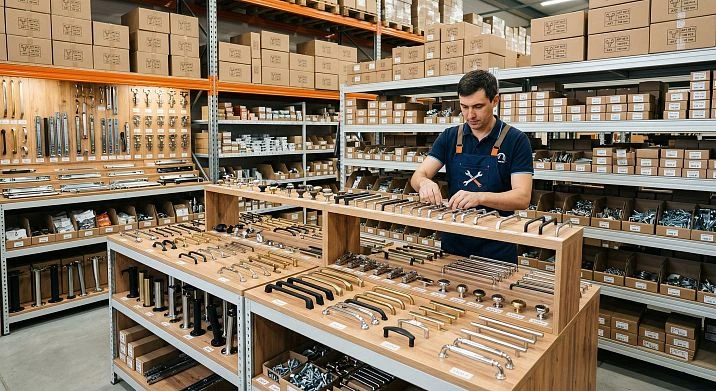
Every time you smoothly slide out a kitchen cabinet drawer, silently close a wardrobe door, or conveniently pull on a dresser handle — you feel the result of properly chosen fittings. Not the facade, not the finish, not the wood species, but precisely it — a small, inconspicuous, yet absolutely indispensable detail — determines whether the furniture will delight you for ten years or start creaking and falling apart in six months.Furniture hardware— is not just metal hinges and plastic caps. It's an engineering system, thought out down to the millimeter.
What is furniture hardware
To put it precisely and without unnecessary words: furniture hardware is the totality of all auxiliary elements, parts, and mechanisms that ensure the assembly, functioning, fastening, and aesthetics of furniture products. This is a broad category of goods, encompassing hundreds of items — from the simplest confirmat to a complex lifting system with a gas shock absorber.
The term 'furniture hardware' came into Russian from the German Furnitur — 'equipment, set'. And this is a very accurate definition: hardware equips furniture with life. Without it, the most beautiful facade is just a board. With it — a functional interior item, convenient and durable.
It is important to understand:Furniture hardwareis divided into functional and decorative. Functional is responsible for the operation of mechanisms — hinges, slides, gas lifts, fasteners. Decorative shapes the visual image — handles, overlays, caps, decorative inserts. A competent approach involves working with both types simultaneously: then the furniture both serves flawlessly and looks worthy.
The furniture hardware market in Russia is developing rapidly. Demand is growing for high-quality European mechanisms, for solid wood products, for eco-friendly solutions. Buyers are increasingly less likely to choose 'cheap and cheerful' — they understand that good hardware pays off with years of trouble-free service.
Types of furniture hardware: a complete overview
Variety of types is perhaps the main feature of this category. It's easy for a person encountering the selection of furniture components for the first time to get confused. Let's sort everything out systematically and without unnecessary fluff.
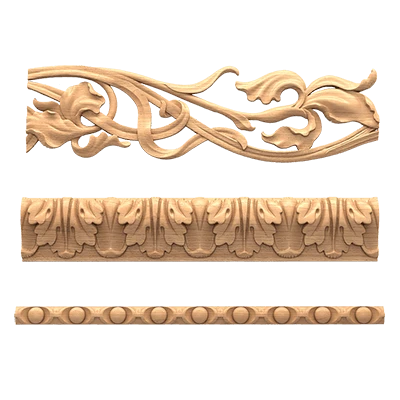
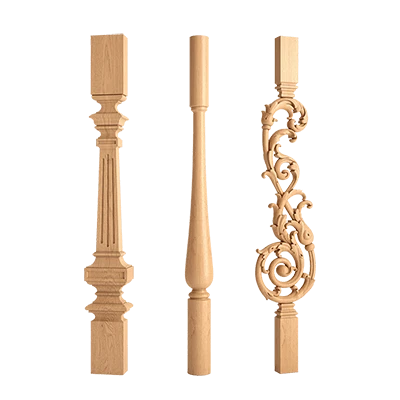
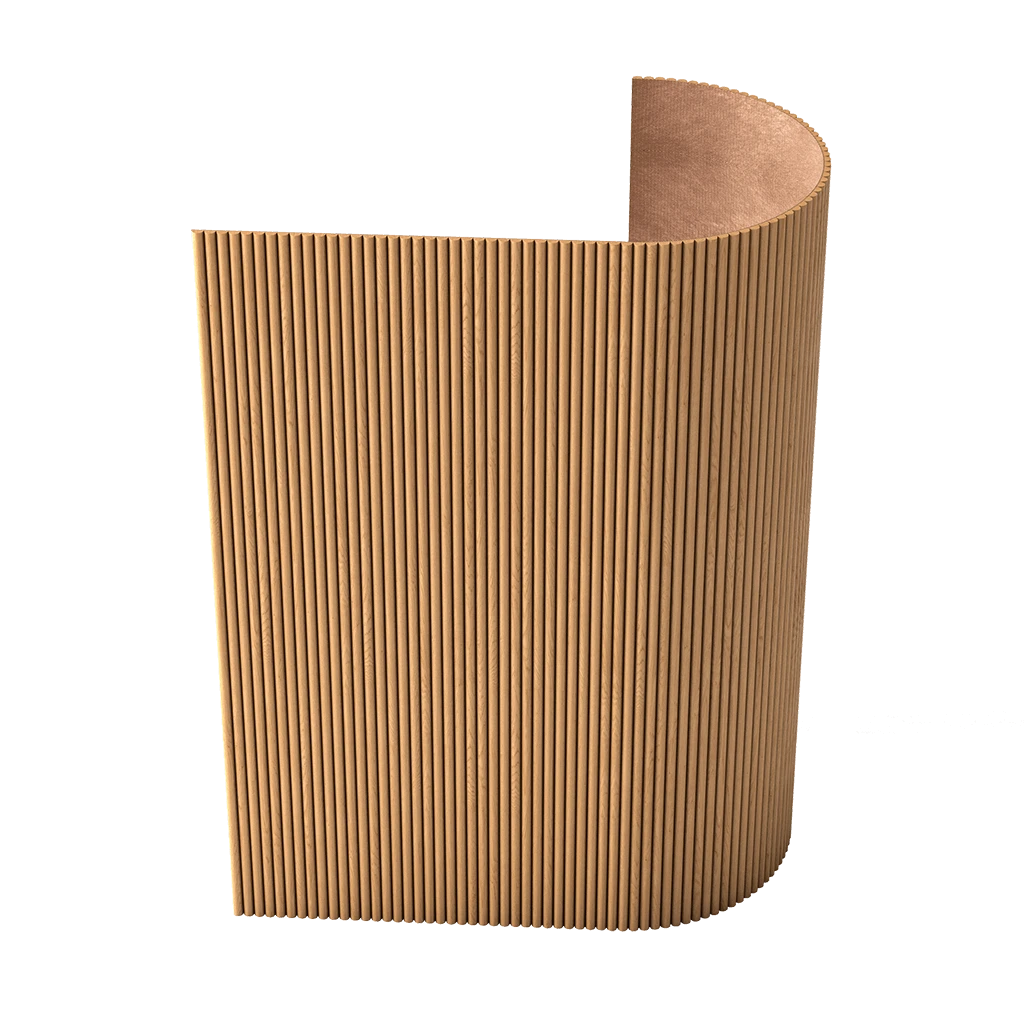
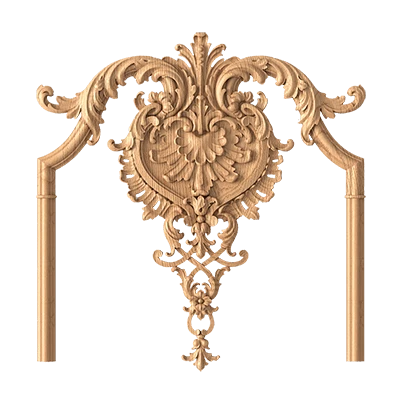
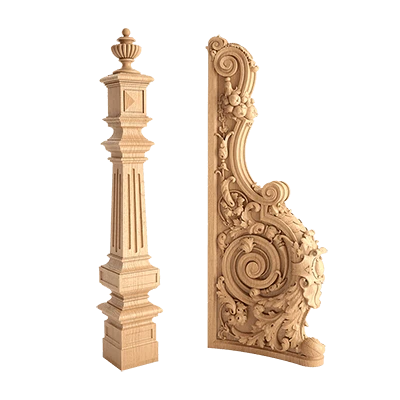
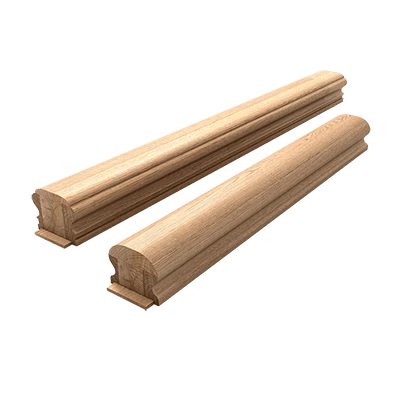
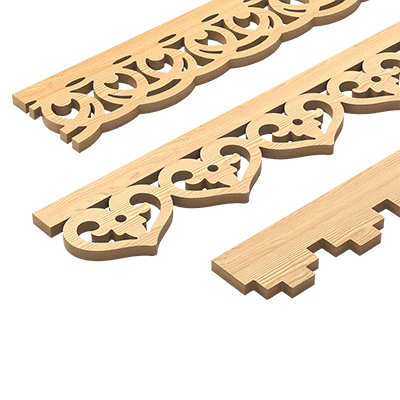
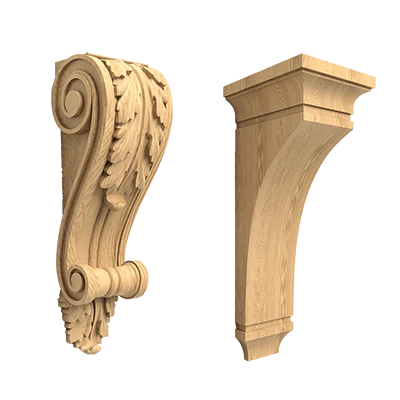
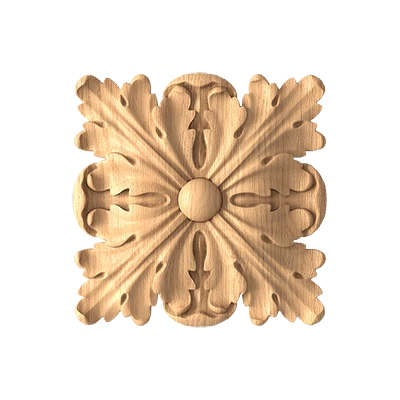
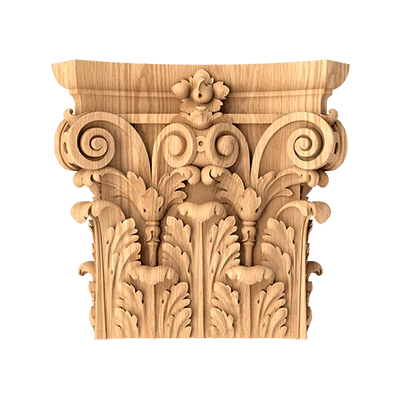
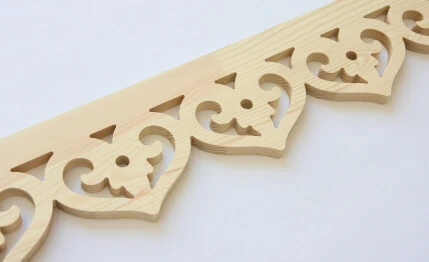
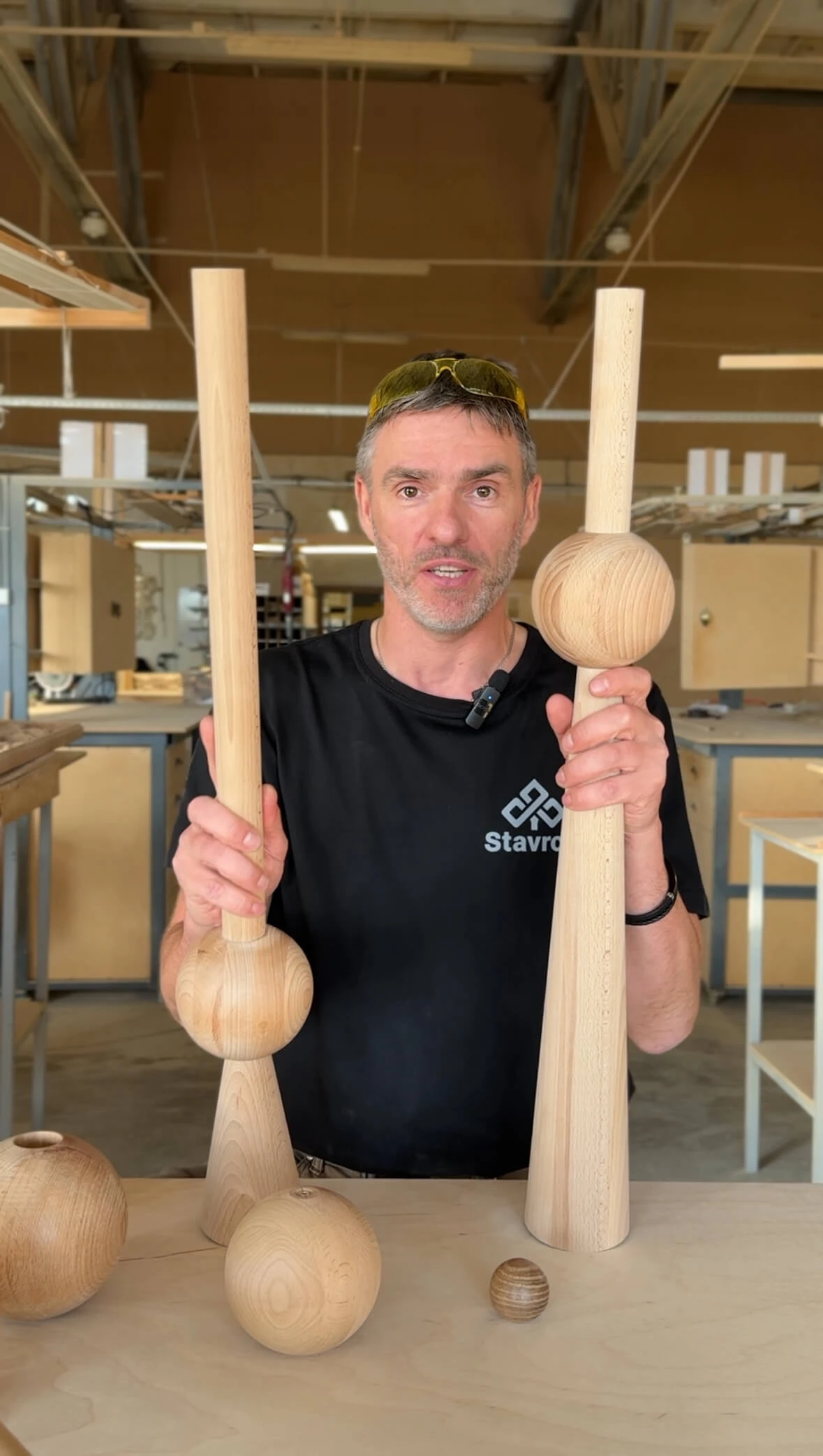
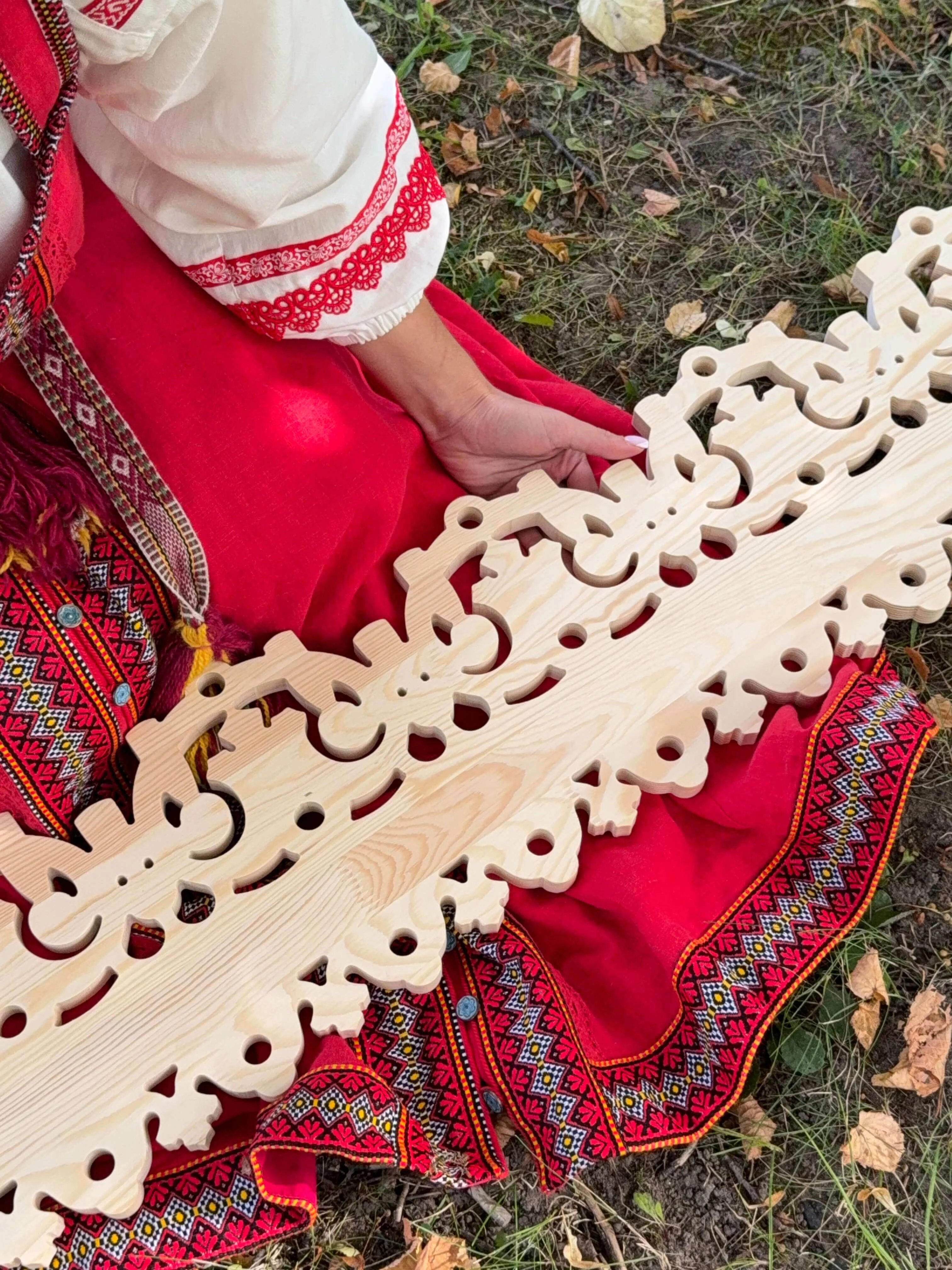
Our factory also produces:

Furniture hinges
Hinges are one of the most in-demand types of hardware. They determine how the doors of cabinets, kitchen sets, nightstands, and other case furniture open and close.
Modern furniture hinges are far from the primitive 'hangers' used by Soviet craftsmen. Today, they are precise mechanisms with three-axis adjustment: height, depth, and side-to-side. This allows even an inexperienced assembler to align doors perfectly.
Main types of hinges:
-
Overlay — for doors that completely cover the cabinet edge
-
Half-overlay — when the door covers half of the cabinet side
-
Inset — when the door is positioned inside the cabinet
-
Corner — for corner cabinets with special geometry
-
Hinges with a closer — self-closing mechanisms with a smooth closing action
Hinges with an integrated soft-close mechanism are a separate story. They eliminate slamming when closing, protect facades from impact, and preserve the nerves of the whole family. In modern residential interiors, this is already a de facto standard, not a luxury.
Get Consultation
Drawer guides
Drawers are an integral part of most types of case furniture. And the quality of their operation directly depends on the slides. Cheap roller slides squeak, jam, and poorly hold loads. High-quality ball-bearing or telescopic slides operate smoothly, quietly, withstand dozens of kilograms, and last for years.
Roller slides are the simplest and most budget-friendly option. Suitable for lightweight drawers, load capacity up to 15–25 kg. Installed on the sides of the drawer.
Ball-bearing slides are a higher class. Thanks to the ball bearing, they provide smooth and silent movement. Load capacity up to 35–45 kg. Available with soft-close mechanisms and push-to-open systems (opening with a push, no handle required).
Telescopic slides are professional grade. Full drawer extension (100%), high load capacity (up to 70 kg and above), used in kitchen cabinets, office furniture, medical equipment.
Undermount slides are a modern concealed system: the slide is hidden under the drawer bottom and is practically invisible from the outside. Often used in designer and premium furniture.
When choosing drawer slides, always consider the load capacity, cabinet depth, and required extension percentage.
Furniture handles
The handle is the first thing your hand touches. It is the point of contact between a person and the furniture, and it should be not only comfortable but also beautiful.
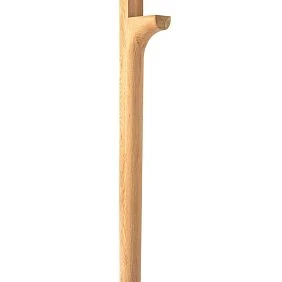
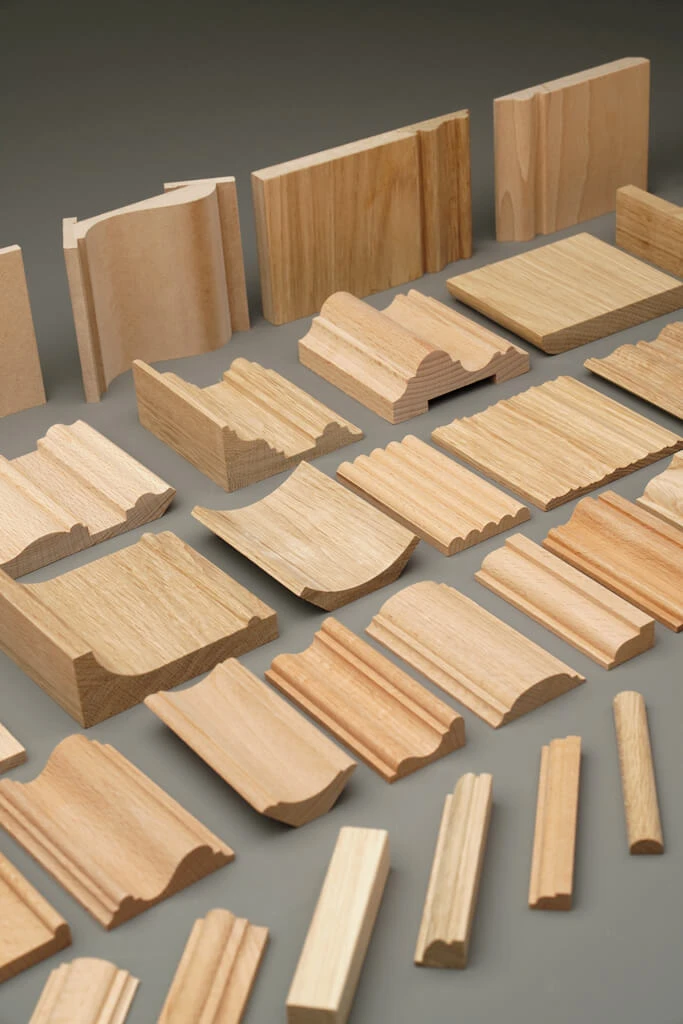
wooden furniture handlesWooden handles are a special type of hardware that combines natural aesthetics with high functionality. Made using 3D milling from beech and oak, such handles are distinguished by perfect geometry, pleasant texture, and durability. They easily fit into Scandinavian, Japandi, rustic, and classic interiors.
Metal handles — chrome, matte nickel, gold, anthracite, bronze — create the image of modern, functional, and stylish furniture. Pull handles, knob handles, profile handles — each type carries its own aesthetic and solves a specific task.
Handles should be chosen not only for beauty but also based on the center-to-center distance (distance between mounting holes), projection (how far the handle protrudes from the front), and material, considering the operating environment. For the kitchen, where there is high humidity and constant contact with greasy hands, metal or painted wooden handles with a protective coating are better suited.
Fastening hardware
Fasteners are the foundation of foundations. Without them, no cabinet would stand, no drawer would hold. Yet, fastening hardware often remains in the shadows—it's not visible, but it does all the main work.
Confirmat (also known as a Euro screw) is the most common furniture fastener. It is used for connecting particleboard and MDF panels at a right angle. It is simple to use, reliable, and does not require special equipment.
A dowel is a wooden cylindrical pin. It is used for precise positioning of parts during assembly and to create additional reinforcement of the joint.
Minifix (furniture connector) is a detachable fastener that allows furniture to be assembled and disassembled multiple times without loss of strength. It consists of a bolt and an eccentric (or coupling). Ideal for knockdown furniture.
Corner connectors, metal brackets, shelf supports—these complement the fastening system and provide additional structural rigidity.
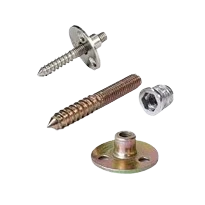
Important: structural screws, mounting plates, and all fastening hardware for furniture legs must be selected according to the specific material and load. A mounting plate with a 10° angle or a straight one are not interchangeable parts; each serves its own purpose.
Lifting and sliding mechanisms
Gas lifts—spring-gas shock absorbers—ensure smooth lifting of mezzanine fronts, pouf lids, and bed bases. They operate on the principle of compressed gas: when opened, the front lifts by itself; when closed, it lowers smoothly without impact.
Lifting systems include:
-
Vertical lift — the front panel moves upward parallel to the cabinet
-
Folding type — the front panel folds in half when lifted
-
Flap systems — the front panel tilts horizontally
Each type is designed for a specific weight of the front panel, so choosing a gas lift or lifting mechanism always starts with weighing the door.
Push-to-open — a handleless opening system: a light push on the front panel — and the drawer or door slides out on its own. Used in handleless kitchen and minimalist furniture design. Often integrated into telescopic slides or hinge assemblies.
Furniture legs and supports
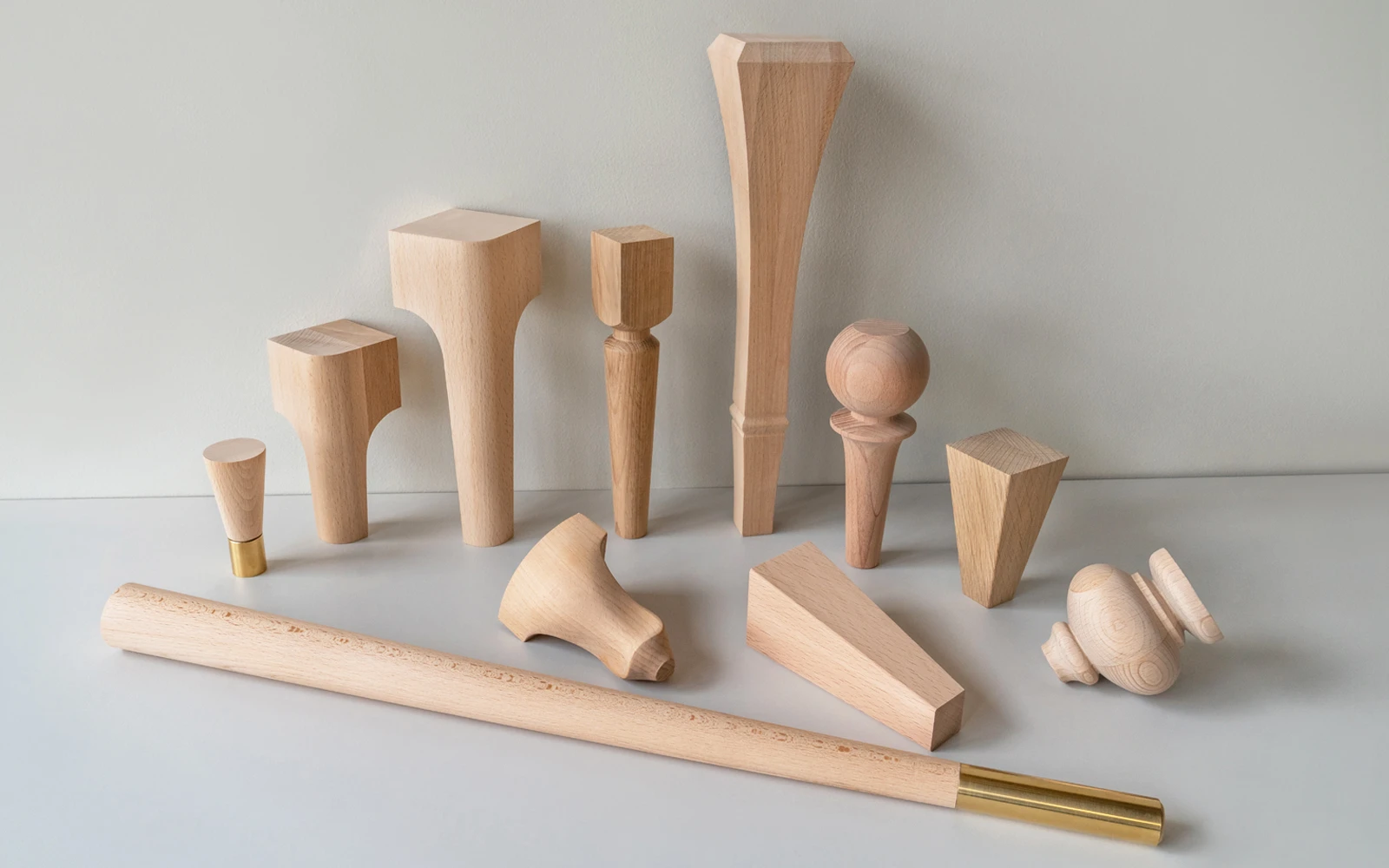
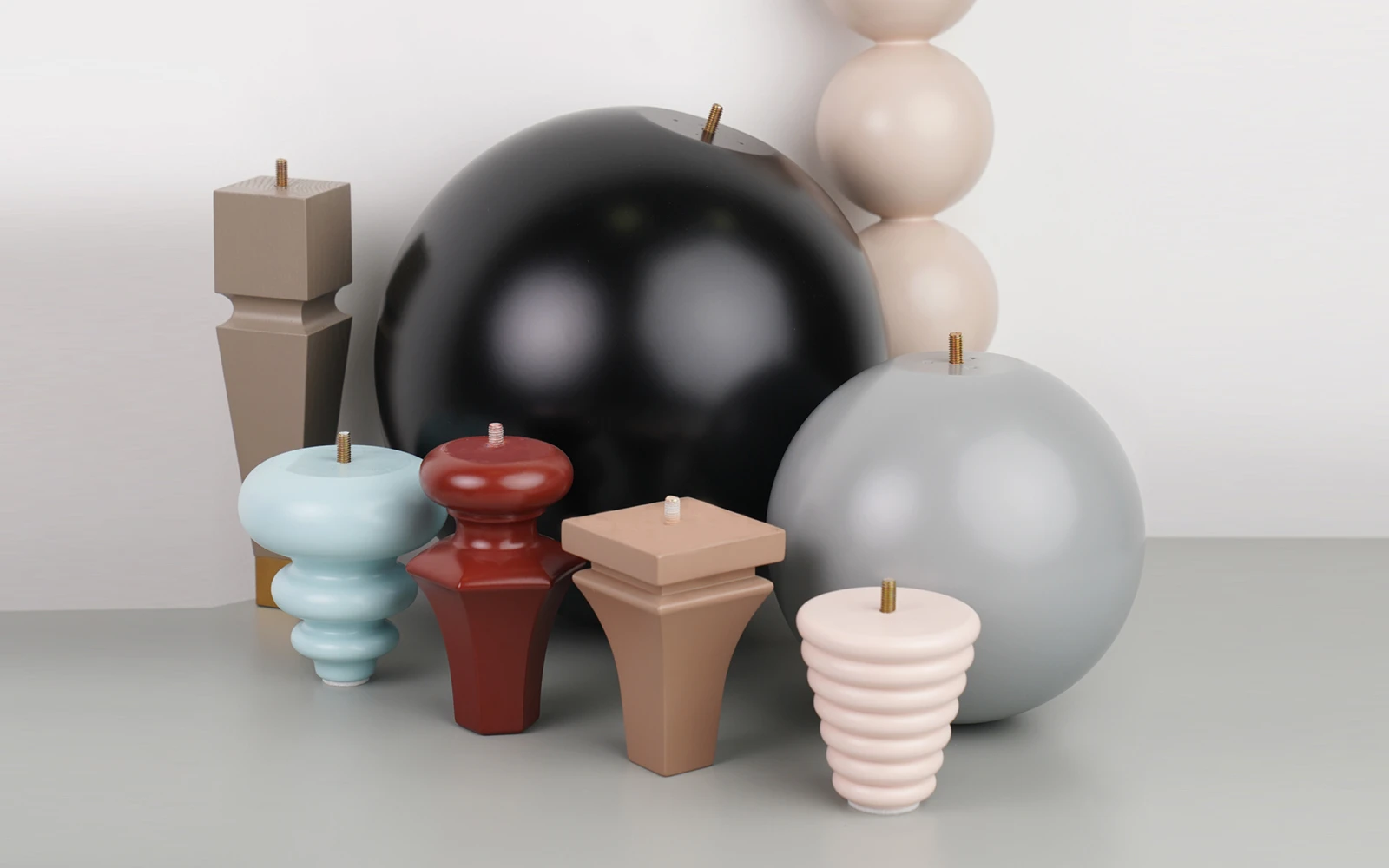
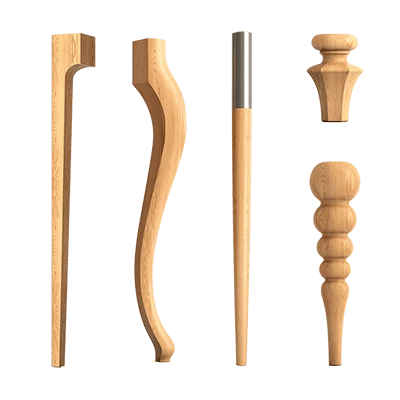
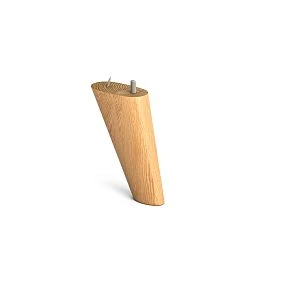
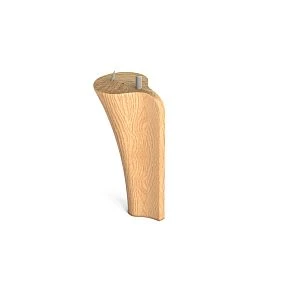
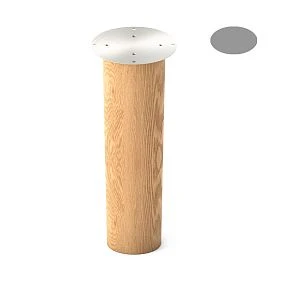
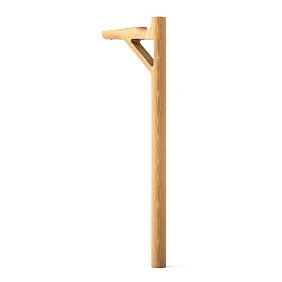
Legs are not just an aesthetic element. They bear the load of the entire product, ensure its stability, protect the floor covering, and affect cleaning convenience.
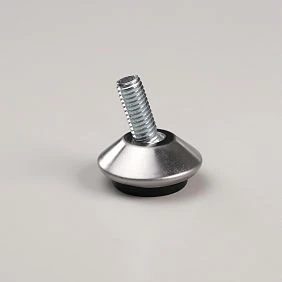
Adjustable furniture legs allow for compensating floor unevenness — especially relevant for kitchen units where the slightest misalignment creates visible gaps between front panels.
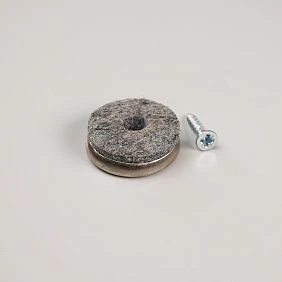
Glides — protective pads on the bottom end of the leg. Felt glides slide smoothly over parquet and laminate without leaving scratches. Plastic adjustable glides D25 and D32 allow precise height leveling. Square glides 25×25 mm — for furniture with rectangular leg sections.
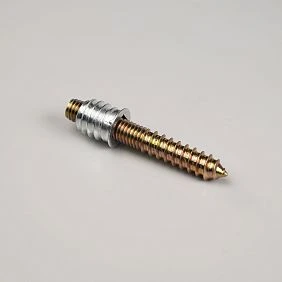
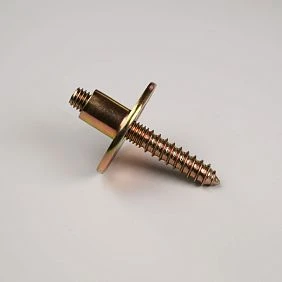
Metric studs and mounting plates ensure reliable connection of the leg to the furniture body. Angled plates 10° are used where the leg is installed not vertically but at an incline — for designer and Scandinavian furniture models.
How to Choose Furniture Hardware: A Practical Guide
A question that arises for everyone who faces buying or replacing components: how to avoid mistakes? The market is huge, there are thousands of offers, and prices vary significantly. Let's break down the key selection criteria.
By Load and Operating Conditions
The first question is how much will the item that the hardware holds weigh? A hinge for a lightweight bedroom cabinet door and a hinge for a heavy solid oak front are fundamentally different products, although they may look similar externally.
Rule: always choose hardware with a load capacity 20–30% above the calculated load. If a door weighs 5 kg, select hinges with a permissible load of 7–8 kg per pair.
For the kitchen, where drawers are often loaded with heavy dishes and groceries, choose ball-bearing or telescopic slides with a load capacity from 35 kg. For lightweight drawers in a child's room, roller slides will do just fine.
By Product Material
The operating environment dictates the requirements for the hardware material. The kitchen is an area of high humidity, grease, and temperature fluctuations. Here, galvanized steel, stainless steel, or anodized aluminum will last much longer than untreated metal or cheap alloys.
The bathroom is an even more aggressive environment. Here, hardware with anti-corrosion coating or made of stainless steel is needed.
Bedroom, living room, study — less demanding conditions. Here, aesthetics come to the forefront, and you can afford beautiful bronze or gold finishes.
For solid wood furniture, special importance is given toMounting and finishing materials— wood oils, mounting adhesives, decorative plugs. Rubio Monocoat oil is a professional product for deep wood protection that not only preserves but also highlights the natural beauty of the grain.
By furniture type
Different types of furniture require different solutions. This is an axiom that cannot be ignored.
Case furniture (wardrobes, cabinets, chests of drawers) — foundation: soft-close hinges, ball-bearing slides, confirmat screws, dowels, minifix fasteners.
Kitchen set — extended set: gas lifts for top cabinets, telescopic slides for bottom drawers, adjustable legs for leveling, hinges with increased opening angle for corner cabinets.
Solid wood furniture — requires a special approach: wooden dowels, concealed hinges, fasteners with the ability to compensate for wood thermal expansion, natural oils and waxes for finishing.
Built-in sliding wardrobes — specialized sliding door systems: bottom and top tracks, rollers, stoppers, seals.
Hardware for different types of furniture
Hardware for kitchen furniture
The kitchen is the most heavily used area in an apartment. Here, furniture is used most intensively, opened and closed hundreds of times a day, and exposed to moisture, heat, and aggressive cleaning agents. That is why choosing hardware for the kitchen requires special attention.
Key elements of kitchen hardware:
-
Hinges for kitchen fronts with an opening angle of 110° or 165° (for corner cabinets), must have a soft-close mechanism
-
Telescopic drawer slides for under-sink and tall unit drawers — with full extension and a load capacity from 40 kg
-
Gas lifts for upper cabinets — precisely matched to the weight of the front
-
Adjustable legs for lower cabinets — with an adjustment range of at least 15 cm
-
Push-to-open systems — for handle-free minimalist design
-
Metal or wooden handles — resistant to moisture and frequent use
It is worth mentioning separatelyfurniture handles for kitchen sets— they should fit comfortably in the palm, not collect grease in hard-to-reach areas, and withstand thousands of openings. In this context, bracket handles are one of the best choices: they are hygienic, modern, and durable.
Cabinet hardware
A cabinet is a complex structure, and its performance is primarily determined by hinges. Properly selected hinges ensure:
-
Precise door positioning without sagging
-
Smooth opening and closing
-
Quiet soft-close action
-
Adjustability without re-drilling holes
For built-in sliding wardrobes, the choice of sliding system is crucial: the quality of rollers determines whether doors will glide easily after five years or start squeaking within six months.
Shelf supports are also important for cabinets—they secure shelves at the desired height and must withstand the load of books, dishes, or clothing without deforming.
Hardware for case furniture
Case furniture is a broad concept: it includes cabinets, chests, dressers, shelving units, bathroom furniture, and office storage systems. The basic hardware set is similar for all, but details vary.
Basic set of hardware for cabinet furniture:
-
Confirmats or minifix — for assembling the cabinet
-
Dowels — for precise positioning of parts
-
Hinges — for hanging doors
-
Runners — for drawers
-
Shelf supports — for adjustable shelves
-
Legs with glides — for stability and floor protection
-
Mounting plates — for attaching side panels and legs
Hardware for solid wood furniture
Solid wood furniture is a special category. Wood is alive: it breathes, expands with humidity, and contracts with dryness. This means that fasteners must account for these movements, otherwise the structure will eventually start to crack and deform.
For solid wood, the following are used:
-
Wooden dowels — natural fasteners compatible with wood
-
Concealed hinges — to preserve the aesthetics of natural wood
-
Mounting plates with flexible connection — to compensate for thermal expansion
-
Natural oils and waxes — for finishing surfaces
-
Wooden handles made of beech or oak — an organic extension of the furniture material
Wooden furniture handles, made from solid beech or oak using 3D milling — it's not just beautiful. It's functional: wood is warm to the touch, feels pleasant in the hand, doesn't heat up or chill fingers like metal in winter.
Why hardware quality determines furniture lifespan
Here's the paradox of the furniture market: people are willing to spend 50,000–100,000 rubles on a beautiful veneer facade made of valuable wood species, but save on hardware by buying components three times cheaper than possible. And then they wonder why after a year the hinges sag, drawers jam, and legs wobble.
Let's talk honestly about what happens with cheap hardware:
Hinges without soft-close — slamming doors hit the cabinet, gradually loosening the fastener holes. After 1–2 years the hinge starts to 'play', and the door stops closing evenly.
Low-quality roller guides — after just a few months of intensive use, they start to squeak, then jam. Replacement requires a complete drawer overhaul.
Cheap confirmat screws made of soft metal — over time, they 'wallow out' the mounting hole in the particleboard, and the joint becomes loose. The furniture literally starts to fall apart at the seams.
Poor-quality legs without adjustment — the kitchen set inevitably stands crooked, doors don't close evenly, and the load is distributed unevenly.
QualityFurniture hardware— is an investment. Hinges from leading manufacturers are rated for 100,000–200,000 open/close cycles. Ball-bearing slides with smooth action — for a similar lifespan. Good confirmat screws made of hardened steel maintain the joint in particleboard for years without losing strength.
Another aspect rarely discussed: the quality of hardware affects safety. A sagging door on a heavy cabinet is a hazard. A broken gas lift for an overhead cabinet risks a heavy door falling. Wobbly legs risk the structure tipping over. These aren't scare stories; they are real scenarios easily avoided by choosing reliable furniture components.
Furniture hardware wholesale: when it's profitable
For furniture manufacturers, design studios, construction crews, and developers, purchasing hardware wholesale isn't just a way to save money; it's a production necessity. The retail price for hinges, slides, and fasteners can drop by 20–40% with wholesale volumes.
What's important to consider with a wholesale purchase:
-
Unification of part numbers — where possible, use one type of hinge, one model of slide for the entire project: this simplifies installation and reduces errors.
-
Stock availability — in furniture production, downtime due to missing hardware is critical. Choose a supplier with guaranteed stock reserves.
-
Package contents — ensure the kit includes all necessary fasteners (screws, mounting plates, templates)
-
Technical documentation — specifications, installation diagrams, load ratings must be available
Furniture hardware: current trends
The furniture industry is constantly evolving. Recent trends are setting new requirements for hardware:
Handleless design — one of the main trends in kitchen interiors. Push-to-open systems allow eliminating handles entirely, creating perfectly smooth cabinet fronts. This requires precise mechanisms and high-quality spring systems.
Concealed systems — invisible hinges, hidden slides, integrated mechanisms. Furniture should appear monolithic, with all technical solutions hidden inside.
Natural materials — eco-design dictates the use of wooden handles, brass components, natural oils for finishing. Solid wood furniture is experiencing a renaissance, andwooden handles made of beech and oak— are its organic complement.
Smart furniture — integration of electric lifting mechanisms, touch controls, lighting into furniture systems. The smart hardware market is growing, though it remains niche for now.
Ergonomics — increasing attention is being paid to usability: drawer height adapts to user height, internal organizers are built directly into pull-out systems, fronts open at the perfect angle.
Installation of furniture hardware: what's important to know
Even the highest quality hardware won't reach its full potential if installed incorrectly. Several key installation rules:
Hinges
-
Marking for the hinge cup must be done strictly according to the template — a deviation of 1–2 mm changes the door position
-
Standard distance from the door edge to the center of the cup is 22 mm (for a hinge with a 35 mm cup diameter)
-
For heavy doors, install three hinges instead of two — the load will be distributed more evenly
Drawer slides
-
Install slides strictly horizontally — even a slight incline leads to spontaneous opening or jamming of the drawer
-
For ball-bearing slides, the gap between the drawer and the cabinet is important — standard is 12.5 mm on each side
-
When installing telescopic slides, ensure the drawer moves without skewing—otherwise the soft-close mechanism will not work correctly.
Fasteners
-
Tighten confirmat screws with a special key until fully seated, but without stripping the drive.
-
Adjust minifix fasteners after fully assembling the cabinet—otherwise the geometry will shift during final tightening.
-
For chipboard with decorative laminate, use a drilling jig—this will prevent chipping.
Legs and glides
-
Install adjustable feet before assembling the cabinet—it is much harder to access them afterwards.
-
Adjust leg height using a level—a deviation of 1–2 mm over a 2–3 meter kitchen unit length causes visible front misalignment.
Materials for furniture assembly and finishing
A separate and very important category—materials for assembly and final finishing. These include adhesives, oils, caps, decorative overlays, mounting foams, and other auxiliary means, without which a professional result is unattainable.
Mounting adhesive — used for gluing wooden parts, fixing decorative elements, and additional reinforcement of joints. TYTAN Prof.classic Fix adhesive, based on hybrid polymers, provides high initial adhesion and seam elasticity, compensating for thermal deformations.
Wood oil — a finishing coating that penetrates the fiber structure and protects furniture from the inside. Rubio Monocoat Oil Plus 2C is a professional European-class product specifically developed for furniture and wooden surfaces. The coating is matte, natural, emphasizing the wood grain, and environmentally safe.
Decorative plugs — conceal confirmat screw heads and technological holes. Metal plugs look significantly more presentable than plastic ones and are used in premium segment furniture.
All theseMounting and finishing materials — the finishing touch that turns a set of parts into a finished product. This is the stage most often skipped by non-professional assemblers — and this is precisely where the difference lies between furniture that is admired and furniture that is replaced after a few years.
Buying furniture hardware: what to look for
When you make a purchase decision, it's important not only to choose the right item but also to ensure the reliability of the supplier. Here's a checklist:
✅ Product availability in stock — readiness for quick shipment without waiting 'on order'
✅ Technical documentation — specifications, drawings, installation diagrams
✅ Quality guarantee — the manufacturer or supplier must stand behind the product
✅ Assortment depth — the ability to buy everything in one place: hinges, slides, fasteners, handles, legs, mounting materials
✅ Delivery — across all of Russia, with tracking available
✅ Minimum order — important for private buyers: the ability to order from just one piece
This is exactly the approach implemented by the STAVROS online store:buy furniture hardwarehere you can buy by the piece or in batches, with fast delivery across all of Russia and the CIS.
FAQ: answers to popular questions about furniture fittings
Which furniture fittings are better — European or Chinese?
It's not a question of geography — it's a question of production quality. Leading European brands set a high bar for reliability and manufacturing precision. Their products are designed for hundreds of thousands of usage cycles, which is confirmed by laboratory testing. Chinese manufacturers vary widely: from outright low-quality goods to quite acceptable mid-price segment products. The main criterion is the availability of technical data sheets, load testing, and manufacturer warranties.
How much do furniture fittings cost?
The price range is huge. An adjustable D25 glider — from 135 rubles. A mounting plate — from 79 to 6,990 rubles depending on type and finish. A handcrafted solid beech wooden handle — significantly higher. When budgeting for hardware, allocate at least 5–10% of the furniture's own cost — then you will get components of sufficient quality that won't let you down.
Where to buy furniture hardware with Contact us to confirm shipping to your destination.?
The STAVROS online store delivers to all regions of Russia and CIS countries. The stock program allows shipping goods the next day after ordering. Orders from a single piece are possible.
What types of furniture hardware are there?
Main categories: hinges (overlay, half-overlay, inset, with soft-close), drawer slides (roller, ball-bearing, telescopic), handles (metal, wooden, pulls, knobs, profile), fasteners (confirmat, dowel, minifix, connectors), lifting mechanisms (gas springs, flap systems), legs and gliders, mounting materials (adhesives, oils, caps).
How to choose hinges for a wardrobe?
Determine: the door mounting type (overlay, half-overlay, inset), the door weight, the opening angle (110°, 165° for corner cabinets), the presence of a soft-close mechanism. For heavy fronts, choose hinges with reinforced construction and additional adjustment. For solid wood furniture — concealed hinges or special solid wood hinges with an extended adjustment zone.
Is it possible to install hardware yourself?
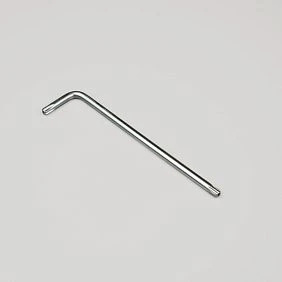
Yes, most types of furniture hardware are designed for self-installation. Minimum tool set: electric drill, drill bits of the required diameter, a jig for marking, a level, a screwdriver or power driver. Confirmats require a special hex key (TORX T-25 for most modern models). Gas springs and lifting systems are more complex — it is recommended to study the manufacturer's instructions before installation.
What is the difference between a furniture connector and a confirmat?
A confirmat is a non-disassemblable fastener, a threaded screw. After tightening, it is difficult to disassemble the joint without damaging the material. A furniture connector (minifix) is a disassemblable fastener based on an eccentric and a bolt. It allows furniture to be assembled and disassembled multiple times. The choice depends on the task: for stationary furniture - confirmat, for transportable or transformable - minifix.
Are adjustable legs necessary for a kitchen set?
Absolutely necessary. Floors in apartments and houses are almost never perfectly level. Adjustable legs allow you to level the base cabinets, ensuring the countertop sits flat and the doors open without sticking. The adjustment range of standard furniture legs is 10-15 cm, which covers most real floor irregularities.
STAVROS — your partner in the world of furniture hardware
Concluding this overview, I want to say the main thing: choosing a supplierfurniture components— is a decision that affects the final result no less than the choice of the hardware itself.
STAVROS is a Russian online store with deep specialization in furniture hardware, decorative elements, and components for solid wood products. Here you will find everything you need: from mounting plates and glides to premium handcrafted wooden handles, from mounting adhesives and wood oils to the full range of hardware for furniture legs.
What sets STAVROS apart in a large market:
-
Warehouse program — products are always in stock, shipping from one day
-
Orders from a single piece — convenient for both private clients and small-scale productions
-
Assortment for solid wood — a rare specialization combining quality wooden handles of our own production, fasteners, and finishing materials
-
Contact us to confirm shipping to your destination. and CIS — fast and reliable logistics to any region
-
Professional expertise — consultations on hardware selection tailored to your specific task
Furniture hardware is not a category where you should compromise on quality. It is a category where a wise choice today ensures decades of flawless service tomorrow. Make the right choice with STAVROS.