Article Contents:
- What to look for in an interior decor store
- Decorate walls
- Decorate the wall-to-ceiling transition
- Finish the bottom line of the wall
- Create an accent
- Decorate an opening
- Add furniture decor
- Interior accessories
- Architectural Decoration
- Why this distinction matters before buying
- Wall
- Ceiling
- Floor
- Doorway
- Furniture
- Moldings
- Wall Panels
- Slatted panels
- Decorative appliqués
- Pilasters
- Carved decoration
- Profile width
- Depth
- Material
- Product length
- Relief
- Compatibility with cornice and skirting
- Quantity
- Cornices: choose the right profile, not just the picture
- Wall height
- Ceiling Height
- Profile projection
- Relief
- Material
- Compatibility with moldings
- Skirting: an architectural element, not the last purchase of a renovation
- Height
- Thickness
- Material
- Combination with a casing
- Combination with molding
- Where there's a wooden skirting board and where there's another material
- Moldings
- Cornices
- Recessed Outlets
- Moldings
- Pilasters
- Brackets and Consoles
- Decor for moldings
- How to include polyurethane in a general order
- Moldings
- Recessed Outlets
- Picture rail
- Furniture elements
- Decorative moulding
- Oak and beech
- When wood is especially logical
- When wood can be excessive
- Surface size
- Pattern direction
- Slat spacing
- Joints
- Radius
- Material
- Number of modules
- Start with molding
- Choose a cornice
- Choose a skirting board
- Choose accent decor
- Check the ornament
- Check the scale
- Ready-made stylistic system
- Self-assembly
- How to use collections wisely
- Why the name alone is not enough
- Why you should check the dimensions before ordering
- Why the material relates to a specific configuration
- Why you should save the product code
- How to save the link
- Product photo vs. real scale — why your eye gets it wrong
- Step 1. Find the actual size
- Step 2. Mark it on the wall
- Step 3. Make a paper template
- Step 4. Look from a normal viewing point
- For molding
- For cornice
- For baseboard
- Profile
- Texture
- Scale
- Sanding
- Color after finishing
- Compatibility of multiple items
- When a sample is especially justified
- Linear trim: meters → cutting → whole planks
- Panels: area → module → layout plan
- Piece decor
- Frame systems
- Skirting
- Cornice
- When to add a reserve
- Example with molding
- Example with overlay
- Finish
- When online is especially convenient
- When it's better to get a sample first
- Why online doesn't replace layout
- Moscow, Saint Petersburg, or delivery order: what really matters
- Interior decor store in Moscow
- Saint Petersburg
- Delivery order
- What to keep after ordering
- How to build an interior from compatible elements
- Wall system
- Panel system
- Furniture system
- What to check
- 1. Scale
- 2. Material
- 3. Ornament
- 4. Color
- 5. Transitions
- How to use collections without the risk of buying too much
- Scenario 1. Buyer without a designer
- Scenario 2. Designer project
- Scenario 3. Small room
- Scenario 4. Large space
- Why the collection reduces risk
- When a physical sample is not needed
- When digital data is sufficient
- When a sample is still better
- When you shouldn't buy decor in advance
- Dimensions not confirmed
- Material is not selected
- Doors not installed
- Furniture layout not ready
- Lighting not approved
- The project uses a provisional 3D model
- How to place your first architectural decor order
- What to put on a separate list before payment
- 4. Not checking the material
- 5. Mixing too many ornaments
- 6. Ignoring room height
- 7. Not calculating the cutting layout
- 8. Buying exactly the net square footage with no reserve
- 9. Not ordering a sample for a complex project
- 10. Not saving product codes for reordering
- How to assemble a STAVROS order
- 1. Choose a room
- 2. Define decorative zones
- 3. Choose base profiles
- 4. Add accent elements
- 5. Check materials and dimensions
- 6. Calculate quantity
- 7. Check compatibility
- 8. Add samples if needed
- 9. Check delivery method
- 10. Place the order
- How to tell if the chosen decor is right for your space
- Wall scale
- Furniture scale
- Scale of openings
- Ceiling scale
- A simple proportion test
- How to choose between smooth and ornamental decor
- Smooth profile
- Ornamental
- Combination
- How to choose decor for painting
- Color matched to the wall
- Contrast color
- Natural Wood
- How to buy decor for several rooms without getting confused
- Why you shouldn't store everything as "decor"
- Labeling
- Remnants
- How to check compatibility before paying for an online order
- How to choose decor for doorways
- Door casing and baseboard
- Molding near the door
- Pilaster
- Decorative overlay above the door
- Why the door affects the entire order
- How to choose decor for furniture
- Handles
- Legs
- Moldings
- Picture rail
- How to check the size on the facade
- How to choose a decorative overlay by the size of the wall or furniture
- For the wall
- For the frame
- For furniture
- For a symmetrical pair
- How to choose a ceiling rose
- By fixture size
- By height
- By ornament
- Centered
- How to choose wall panels for a TV zone
- What you need to know before ordering
- Why the panel doesn't have to cover the entire wall
- How to calculate
- Why the TV can't be "moved later"
- How to choose decor for a small room
- What often works better
- What can overload
- How to check
- How to choose decor for a large room with high ceilings
- How to compare wood, MDF, and polyurethane in one project
- Materials can be mixed
- But the specification must store the material
- Living room — the main system
- Bedroom — a simplified version
- Home office — a natural accent
- Entryway — fewer details
- Kitchen
- How to unify the order
- Why repetition pays off not only visually
- How to calculate the total order
- How to check that the system hasn't become boring
- Edge cases where the usual choice of decor doesn't work
- A very narrow wall section
- A very high ceiling
- One hidden end of the molding
- Asymmetric wall
- Insufficient plank length
- A short piece remains
- Multiple orientations of a single element
- Final cart audit before payment
- Test 1. Every item has a place
- Test 2. Size is known in millimeters
- Test 3. Material is clear
- Test 4. Quantity is calculated
- Test 5. Adjacent elements do not conflict
- Test 6. SKUs preserved
- Test 7. Clean links
- Test 8. Clear delivery
- Test 9. Sample needed or not — decided
- Test 10. Reserve justified
- Mini-specification for a home order: a simple format that saves time
- Where to buy home decor?
- What does an architectural decor store sell?
- How to choose wall decor?
- Which is better — wooden or polyurethane decor?
- Where to buy wall moldings?
- How to match a cornice to a molding?
- Which wall panels to choose?
- Can I order decor samples?
- How to calculate the number of moldings?
- Can I order decor online?
- How to order decor with delivery?
- Final checklist before purchase
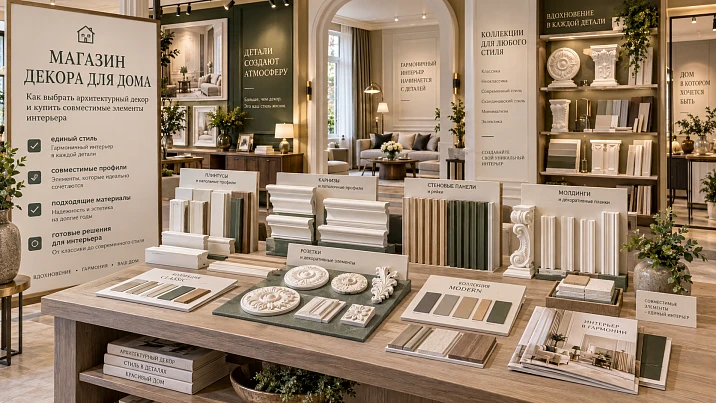
When searching for “home decor store,” completely different products easily get mixed together: vases, candles, textiles, posters, wall decorations, stucco, moldings, skirting boards, panels, wooden overlays, and furniture decor. That is not enough for renovation. If a buyer wants to change the architecture of a room, they need not just an interior accessories store, but a decor store where products can be assembled as a system: the bottom of the wall, the middle, the top, accent surfaces, doorways, and furniture elements.
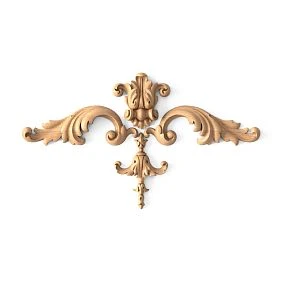
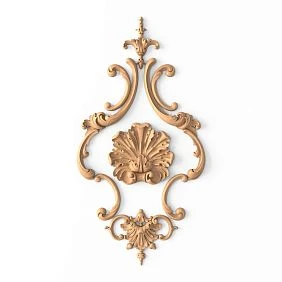
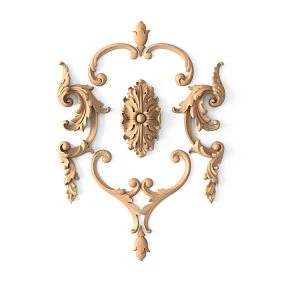
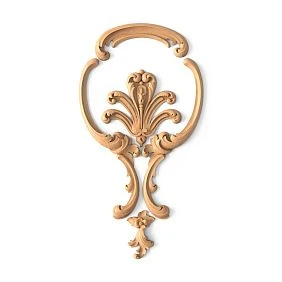
STAVROS belongs precisely to this segment. In Stavros catalog products made of wood and MDF, carved decor, molded decor, wall panels, furniture elements, collections, samples, and professional materials for design. This is architectural and object decor that is tied to interior geometry and requires selection by actual size, material, profile, and purpose.
Therefore, it is better not to buy home decor using this pattern:
saw a beautiful element → added it to the cart → then look for a place for it.
A different sequence is stronger:
room → surface → task → size → material → style → specific item code → quantity → compatible elements → delivery.
This is how an interior decor store stops being an endless catalog and becomes a selection tool. The buyer understands whether they need a molding, panel, or overlay; which size will look appropriate; what to pair the profile with; how much to order; where a sample is needed and when a product in a photo may turn out to be on a completely different scale in reality.
This article is specifically about purchasing. Not about the history of interior styles and not about a wholesale assortment matrix. The goal is to help a person move from a task in a room to specific STAVROS product categories and place an order without incompatible elements or excess quantity.




What to look for in an interior decor store
It is useful to start not with the “decor” category, but with the surface that needs to be finished.




Finish the walls
For walls, the following are used:
-
moldings;
-
wall panels;
-
slat panels;
-
decorative overlays;
-
pilasters;
-
carved decor;
-
individual stucco elements.
If the task is to create frames on the wall, it makes sense to start with molding.
If a large textured surface is needed, start with a panel.
If a focal point is needed, start with an applique or rosette.
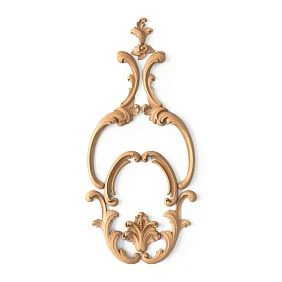
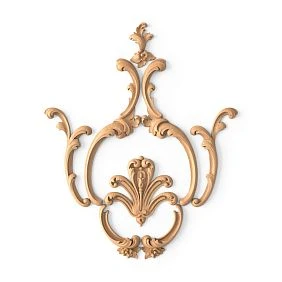
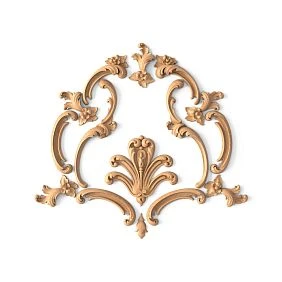
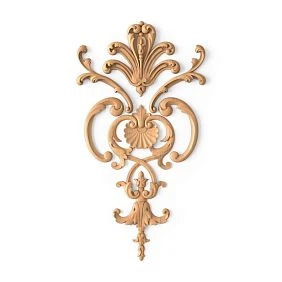
Our factory also produces:



Decorate the transition from wall to ceiling
Decorative ceiling cornices work here.
The buyer should check:
-
size;
-
profile;
-
projection;
-
relief;
-
material;
-
connection with molding.
It is important not to confuse a decorative ceiling cornice with a curtain cornice: these are different product groups and different search intents.
Get Consultation
Complete the lower wall line
A skirting board is not the "final small detail of a renovation." It defines the lower architectural line and visually connects:
-
a wall;
-
doors;
-
furniture;
-
moldings;
-
Panels.
The mistake is especially noticeable when a tall, expressive molding is paired with a random thin skirting board.
Create an accent
Suitable for an accent:
-
decorative overlay;
-
socket;
-
a carved corbel;
-
pilaster;
-
a large stucco element;
-
Panel.
The choice depends on the wall area and viewing distance.
Frame the opening
In the area of a door or open portal, the following are used:
-
trim;
-
moldings;
-
pilasters;
-
decorative overlays;
-
carved moulding.
It is necessary to check the thickness and protrusion of elements so that they do not conflict with the skirting board and furniture.
Add furniture decor
The following are used here:
-
furniture overlays;
-
handles;
-
legs;
-
supports;
-
a baguette;
-
carved elements.
That is why main catalog it is more convenient to perceive them as a set of interior systems rather than as a list of individual decorations.
Architectural decor and interior accessories are not the same thing
A user looking for an interior and decor store may expect completely different categories.
Interior accessories
Typically these are:
-
vases;
-
candles;
-
textile;
-
small items;
-
seasonal decorations;
-
posters;
-
dishes;
-
souvenirs.
Such items do not require matching to the wall size or a finishing unit.
Architectural decor
It is tied to the geometry of the space:
-
molding;
-
cornice;
-
baseboard;
-
wall panel;
-
pilaster;
-
column;
-
decorative overlay;
-
socket;
-
a baguette;
-
casing.
Here size is critical.
A molding 30 mm and 90 mm wide are not two similar products, but two different scales of the interior.
Why this distinction matters before purchase
If a buyer is looking for “stylish decor” and expects small accessories, an architectural decor catalog may seem too technical.
But if the task is to change walls, ceilings, openings, or furniture, technical precision becomes an advantage. For such products, you need to know:
-
article number;
-
material;
-
sizes;
-
product length;
-
quantity;
-
actual profile.
That is why STAVROS is more accurately seen as a store for architectural and interior decor, not a store for vases, pillows, and candles.
How to buy decor: first the zone, then the specific product
The most reliable selection method:
room → surface → task → size → material → style → SKU.
Wall
First decide:
-
frames;
-
panel;
-
the rhythm of the battens;
-
single accent;
-
portal.
Only after that, choose the product.
Ceiling
Check:
-
height;
-
cornice size;
-
the rosette;
-
proximity to light fixtures.
Floor
Determine:
-
the height of the baseboard;
-
thickness;
-
joining to the trim.
Door opening
Understand:
-
whether a door casing is needed;
-
whether there is a pilaster;
-
how the baseboard ends;
-
whether a decorative accent is needed.
Furniture
First, understand the function of the element:
-
handle;
-
leg;
-
overlay;
-
frame moulding.
Don't buy furniture decor just because it looks beautiful in photos.
Wall decor store: which categories to browse
For walls, it's convenient to divide the assortment by scale.
Moldings
Suitable for:
-
frames;
-
horizontal belts;
-
wall dividers;
-
panel compositions.
STAVROS wooden and MDF trim useful if you need a natural material or a paintable MDF system.
The polyurethane profile is located in a separate product branch.
Wall panels
Wall Panels needed when the decorative surface is built with large modules.
Before purchasing, you should know:
-
wall width;
-
height;
-
format;
-
number of modules;
-
direction;
-
add-ons.
Slatted panels
Rafter panels suitable for rhythmic surfaces, niches, columns, and accent areas.
It is especially important to check:
-
flat or curved surface;
-
step;
-
module;
-
material;
-
length.
Decorative inlays
Decorative Inserts used for:
-
inside the frame;
-
above furniture;
-
on the door;
-
on the facade;
-
as the center of the composition.
It is especially important for them to assess the real scale.
Pilasters
The pilaster occupies a noticeable part of the wall. You cannot choose based on a single photo here.
Need to check:
-
width;
-
height;
-
composition;
-
adjacency to the baseboard;
-
Upper termination.
Carved decor
Carved Decor includes different types of products, so the task is selected first, and then the category.
Moldings: what to check before adding to cart
Molding is one of the most versatile decorative profiles, but precisely because of its versatility, it is often chosen too quickly.
Profile width
Width affects scale.
For a small frame, a very wide profile can take up too much of the field.
For a large wall, a thin one gets lost.
Depth
Two moldings of the same width can differ greatly in projection.
Deep profile:
-
catches light more actively;
-
projects more strongly;
-
may conflict with furniture.
Material
The specific configuration is checked:
-
oak;
-
beech;
-
MDF;
-
polyurethane;
-
another material.
Properties of one version cannot be transferred to another.
Product length
It affects:
-
number of slats;
-
number of joints;
-
cutting.
Before purchasing, you need to open the product card and check the actual length of the selected SKU.
Relief
Smooth and ornamental profiles serve different visual purposes.
If the room already has a lot of active decor, additional complex ornamentation can overload the wall.
Compatibility with cornice and skirting board
It is better to compare all three elements together:
bottom → middle → top.
Quantity
First calculate the parts and cutting layout, not just the total linear meters.
Cornices: choosing not a picture, but the right cross-section
Ceiling decorative cornices should be chosen as an architectural profile.
Wall height
Low ceilings and high ceilings require different scales.
Ceiling height
A cornice visually takes up part of the upper wall area.
A large profile in a small room can feel heavy.
Profile projection
You should look not only at the frontal height, but also at how much the product protrudes.
Relief
An ornamental cornice interacts more strongly with light and wall decor.
Material
Check the material of the specific model.
Compatibility with moldings
Better not to assemble:
-
very thin molding;
-
oversized cornice;
-
random baseboard
without visual verification of the overall system.
Baseboard: an architectural element, not the last purchase of a renovation
STAVROS baseboards needs to be chosen earlier than it seems.
Height
A tall baseboard participates more actively in the room's architecture.
A low one is visually calmer.
Thickness
Thickness matters for the joint with the door casing.
If the skirting board protrudes significantly more, the junction near the door must be planned in advance.
Material
The skirting board must match the finishing system.
Combination with the architrave
This is one of the most common points of error.
Combination with molding
If the wall is built with frames, the skirting board is part of the same composition.
Where the skirting board is wooden and where another material is used
Natural wood is justified if the project requires texture or a corresponding finish.
If the entire profile is painted, other solutions are possible — but they should be chosen based on the specific project, not by a universal rule.
Polyurethane stucco decor: what can be bought as a single system
molded decoration made of polyurethane it is convenient to consider not as a set of random ornaments, but as a system of related elements.
The following can work together in a single interior composition:
-
molding;
-
a decorative cornice;
-
ceiling medallion;
-
overlay;
-
pilaster;
-
bracket;
-
molding decor.
Moldings
Polyurethane molding is selected based on the same basic parameters:
-
width;
-
depth;
-
length;
-
relief;
-
article number.
However, its logic of use may differ from wooden trim, so they should not automatically be considered interchangeable.
Crown Mouldings
A ceiling cornice is checked by:
-
dimensions;
-
orientation;
-
relief;
-
its relationship to ceiling height.
If the room already has ornamental moldings, it is better to choose a cornice in a compatible style.
Outlets
A ceiling medallion is especially sensitive to real scale. In photos it may seem compact, but in the room it can occupy most of the ceiling composition.
Before ordering, it helps to:
-
check the size in the product card;
-
mark the diameter or overall dimensions on the ceiling;
-
compare with the chandelier or light fixture.
Plates
The overlay must have a specific place:
-
inside the frame;
-
above the door;
-
on the panel;
-
on the furniture.
Pilasters
A pilaster is a large architectural element. It requires checking the overall size and adjacent profiles.
Brackets and corbels
They are chosen not only by ornament, but also by the scale of the furniture, shelf, or architectural unit.
Decor for moldings
If the decorative insert is intended for a specific frame system, it makes sense to first determine the molding itself, and then the accent.
How to include polyurethane in the overall order
There is no need to assemble a separate “stucco room” if the interior is built from different materials.
Polyurethane can work alongside:
-
MDF skirting;
-
wooden baguette;
-
wall panels;
-
carved decor.
The main thing is to coordinate the scale, style, and color finish.
The phrase buy stucco decor should lead to the selection of specific products, not to the purchase of "stucco in general."
Wooden decor: when natural material is justified
carved wooden decor is needed where natural texture, depth of carving, or a furniture/architectural detail made of wood is important.
Plates
A wooden overlay is suitable for:
-
furniture;
-
wall frame;
-
doors;
-
panels;
-
portal.
Outlets
Wooden sockets can be used:
-
on furniture;
-
in wall compositions;
-
as the center of a decorative focal point.
Picture frame moulding
Wooden baguette is especially appropriate:
-
in frames;
-
mirrors;
-
panel compositions;
-
furniture facades.
Furniture elements
Legs, handles, supports, and overlays create the object layer of the interior.
Decorative moulding
Wooden mouldings, cornices and skirting boards allow you to assemble a single system from natural material.
Oak and beech
They differ in:
-
texture;
-
the color;
-
finish;
-
cost;
-
available configurations.
The buyer should look at the material of a specific product card, and not transfer the characteristics of one item to the entire catalogue.
When wood is especially logical
If the project involves:
-
transparent finish;
-
tinting;
-
visible texture;
-
solid wood furniture;
-
wooden panels.
When wood can be excessive
If the entire system is fully painted with opaque enamel, the natural texture may not be visually utilized. In that case, it is worth comparing alternative materials within the specific product group.
Wall panels: how to buy a large decorative surface
A panel is not just "larger decor." It is a modular system where it is important to calculate the surface in advance.
STAVROS wall panels are selected according to several parameters.
Surface size
Need to know:
-
wall width;
-
height;
-
niches;
-
openings;
-
protrusions.
Pattern direction
If the panel has a pronounced direction, rotating the module may be unacceptable.
Slat spacing
In slatted panels, the rhythm is part of the design.
Joints
Before purchasing, you need to determine:
-
Where will the joints be;
-
when the last module ends;
-
whether an add-on is needed.
Radius
If the surface is curved, you should choose a flexible solution specifically, if the product provides one.
Material
MDF and solid wood give a different character to the surface.
Number of modules
You need to count more than just square meters.
Example:
wall 4200 mm, module 1000 mm.
Naively:
4.2 modules → 5.
But it is important to understand:
-
where a 200 mm filler will fit;
-
whether the leftover can be used on the adjacent wall;
-
whether the pattern is preserved.
How to choose decor in a single style instead of assembling a random set
The main mistake with a beautiful catalog is assembling an interior from “cards you liked.”
It is better to start with a base profile.
Start with the molding
Molding sets the character of frames and lines.
Selected:
-
smooth;
-
ornamental;
-
geometric;
-
Classic.
The remaining elements can be built from it.
Choose a cornice
The cornice should not clash with the molding in:
-
ornament;
-
scale;
-
depth.
Choose a baseboard
The baseboard completes the composition from below.
Choose accent decor
After the base lines, the following is added:
-
overlay;
-
socket;
-
bracket;
-
pilaster.
Check the ornament
If the molding already has an active pattern, three more different ornaments can overload the interior.
Check the scale
You need to lay out all the dimensions side by side:
-
baseboard;
-
molding;
-
cornice;
-
the overlay.
Even a simple paper diagram helps to see the mismatch.
Buy by collections or assemble it yourself
STAVROS has a separate section decor collections. This is a convenient way to reduce the risk of random combinations.
A ready-made stylistic system
Suitable if the buyer:
-
does not want to assemble everything from scratch;
-
prefers a single visual language;
-
wants to approve the decor faster.
The current collections section features styles such as Versailles, Modern, Art Deco, Gothic, Modernist, Classic, Empire, and others.
Self-assembly
Suitable if the designer or buyer controls:
-
proportions;
-
ornament;
-
material;
-
rhythm.
You can take:
-
molding from one group;
-
overlay from another;
-
baseboard from a third.
But then the responsibility for compatibility lies with the project.
How to use collections wisely
Do not treat the collection as a mandatory "buy everything" set.
Stronger:
-
choose a stylistic direction;
-
identify the basic elements;
-
add only the necessary accents.
How to read a product card in an online decor store
For architectural decor, the product card is more important than the advertising description.
Before purchasing, check:
-
article number;
-
full dimensions;
-
material;
-
execution variant;
-
price;
-
unit of sale;
-
availability or lead time;
-
photographs;
-
a drawing;
-
possible related items.
Why the name alone is not enough
Two "classic moldings" can differ:
-
width;
-
depth;
-
in length;
-
by material.
This is not apparent from the name.
Why you need to check dimensions before ordering
Photos are taken at different scales.
A profile that looks massive on screen may be only a few centimeters wide.
Why the material relates to a specific configuration
If the product page offers several materials, the price and lead time may differ.
Why you need to save the product code
The product code is needed for:
-
reorder;
-
approval with the designer;
-
comparison;
-
specifications.
How to save the link
Use the clean product page URL without ad parameters.
Product photo and real scale — why the eye gets it wrong
A close-up makes a small element look more massive.
A white profile on a white background may appear thinner.
Relief with side lighting — deeper.
That's why the buyer needs a simple method.
Step 1. Find the actual size
For example:
the overlay width is 310 mm.
Step 2. Mark on the wall
You can use painter's tape.
Step 3. Make a paper template
Especially useful for:
-
overlays;
-
sockets;
-
bracket;
-
Panels.
Step 4. Look from a normal viewpoint
Don't stand too close.
Evaluate the interior from the distance at which the element will be perceived every day.
For molding
Note:
-
outer dimensions of the frame;
-
the width of the profile itself.
For the curtain rod
Attach a paper strip to the upper area of the wall.
For the skirting board
Mark the height at the door and furniture.
When a physical sample is needed
STAVROS product samples useful not for every order, but for situations where an image is not enough.
Profile
You need to see the actual cross-section and depth.
Texture
Especially for:
-
wood;
-
veneer;
-
complex surface.
Scale
A large profile is easier to evaluate in person.
Sanding
For a wooden product, the actual surface matters.
Color after finishing
If the material will be tinted or painted, a sample helps coordinate the finish.
Compatibility of multiple items
You can physically place:
-
molding;
-
baseboard;
-
cornice;
-
a wall color sample.
When a sample is especially justified
-
an expensive item;
-
large batch;
-
large profile;
-
natural wood;
-
complex molding;
-
a designer project.
How to calculate quantity before purchase
Architectural decor cannot be calculated with a single formula. Different product groups are sold and installed differently.
Linear trim: meters → cutting plan → whole planks
Let's say 18.6 m of molding is needed for wall frames.
If the product length is 2400 mm:
18,6 / 2,4 = 7,75
Naive conclusion:
8 slats.
But this may not be enough if the pieces are long.
Let's imagine:
-
8 verticals of 2100 mm each;
-
8 horizontals of 900 mm each.
Net length:
8×2.1 + 8×0.9 = 16.8 + 7.2 = 24 m.
By meters:
24 / 2.4 = 10 strips.
But cutting:
-
8 strips for verticals;
-
4 strips for horizontals, two pieces per strip.
Total:
12 planks.
This calculation shows why the math of "total meters / length" can underestimate the order.
Panels: area → module → layout scheme
For a panel, area is only the first check.
You need to:
-
measure the wall;
-
know the module size;
-
lay out the modules;
-
determine the fillers;
-
check whether offcuts can be used.
Piece decor
Caps, sockets, and brackets are counted:
by composition.
For example:
-
4 frames;
-
one cap in the center.
You need to:
4 pcs.
Buying "5 just in case" is only worth it if the reserve is justified.
Frame systems
For the frame:
perimeter = 2×height + 2×width.
But the final order is not this linear footage, but the number of whole strips after cutting.
Baseboard
First, subtract:
-
door openings;
-
built-in furniture zones, if the project does not require skirting there;
-
other gaps.
Then a strip map is built.
Cornice
Considered:
-
wall lengths;
-
internal corners;
-
external corners;
-
joints;
-
commercial length.
When to add a reserve
After the working calculation.
Not:
+10% to each room even before cutting.
Stronger:
clean parts → cutting → finished products → separate reserve.
How to compare prices across different decor stores
The same price in a product card can mean different product configurations.
Comparison is only valid after bringing to identical parameters.
| Check | Why |
|---|---|
| Material | wood, MDF and polyurethane are not directly comparable |
| Size | a large profile usually cannot be compared with a small one |
| Length | affects the number of slats |
| Unit of sale | piece, slat, set |
| Finish | a finished product and a blank are different stages |
| Packaging | important for long-length items and large decor |
| Delivery | affects the outcome |
| Quantity | a large batch and 1 piece are different scenarios |
Example with molding
Store A:
-
lower price;
-
strip 2000 mm.
Store B:
-
higher price;
-
strip 2400 mm.
For 2150 mm parts, option A is not suitable at all without modifying the assembly.
Therefore, comparing only rubles per strip is pointless.
Example with overlay
Two overlays may look similar in the photo, but:
-
one 190 mm;
-
the other 420 mm.
A higher price for the larger one does not mean it is “more expensive for the same thing.”
Finish
If one product:
for painting,
and the other:
ready painted,
the comparison should account for the cost of bringing it to the same result.
Online decor store: when buying online is convenient
The query online interior decor store matches architectural decor well if the product cards provide real technical data.
Advantages of online shopping:
-
you can compare the dimensions;
-
open the full catalog;
-
look at the drawing;
-
save the SKU;
-
send the link to a designer;
-
build a specification;
-
reorder by SKU.
When online is especially convenient
If the buyer already knows:
-
product type;
-
size;
-
material;
-
article number.
Then the online store shortens the path to ordering.
When it's better to get a sample first
if:
-
the profile is large;
-
natural texture matters;
-
the shade is critical;
-
the item is expensive;
-
you need to combine several elements.
Why online doesn't replace layout
The product card gives the size.
But only the layout on the wall shows how it looks in a specific room.
Moscow, Saint Petersburg, or delivery order: what really matters
For complex interior decor, the distance to the store is not the only criterion.
More important:
-
assortment;
-
documentation;
-
availability of the required SKU;
-
preservation of the SKU;
-
packaging;
-
delivery;
-
ability to reorder.
Interior decor store in Moscow
If it is convenient for the buyer to physically visit the showroom, they can evaluate:
-
scale;
-
material;
-
samples.
However, it should not be assumed that the entire product range is necessarily in stock in a single store. The specific status is checked on the product page or with the salesperson.
Saint Petersburg
For a buyer in another city, the principle is the same:
select the exact item → check availability.
There is no need to change the SKU just because a store is nearby if the project has already been approved.
Order with delivery
Before placing an order for a large long-length item or panel, check:
-
packaging method;
-
address;
-
lifting;
-
overall dimension;
-
number of seats.
What to keep after ordering
-
article numbers;
-
clean URLs;
-
invoice;
-
quantity;
-
purchase date.
This makes reordering easier.
How to build an interior from compatible elements
It is more convenient for the buyer to think in terms of a system rather than individual products.
Wall system
For example:
-
baseboard;
-
molding;
-
cornice;
-
the overlay.
Panel system
-
wall panel;
-
baseboard;
-
side profile;
-
decorative element.
Furniture system
-
legs;
-
handles;
-
overlays;
-
Picture frame molding.
What to check
1. Scale
Compare dimensions.
2. Material
It doesn't have to be identical, but it should produce the desired finish.
3. Ornament
Don't mix too many different patterns.
4. Color
If everything is painted in one color, materials may still be prepared differently for finishing.
5. Transitions
Especially:
-
baseboard ↔ casing;
-
molding ↔ panel;
-
cornice ↔ ceiling.
How to use collections without the risk of buying too much
STAVROS collection help reduce selection time, but do not mean that you need to buy all items from one collection.
Scenario 1. Buyer without a designer
You can take a collection as a ready-made reference:
-
choose a base molding;
-
cornice;
-
one accent.
Scenario 2. Designer project
The collection is the base, but some elements can be replaced if the proportions are controlled by the designer.
Scenario 3. Small room
There is no need to transfer a large palace system in its entirety.
One or two motifs are enough.
Scenario 4. Large space
A more advanced system can be used:
-
frames;
-
cornice;
-
the rosette;
-
pilasters.
Why the collection reduces risk
The elements are already assembled according to a similar stylistic logic, and it is easier for the buyer to avoid a random selection.
When a physical sample is not needed
A sample is useful, but not always rational.
You can do without it if:
-
the item has already been used;
-
the SKU is familiar;
-
the size is simple;
-
the material is clear;
-
the order is small;
-
no need to return to the project.
When digital data is sufficient
For example, the buyer has already installed a specific skirting board and wants to order 4 more strips.
Then:
SKU + size + photo + product card
are usually sufficient.
When a sample is still better
If the buyer is choosing for the first time:
-
the wood;
-
large ornament;
-
a textured socket;
-
complex panel.
When you don't need to buy decor in advance
There are several situations where "not buying yet" is the right decision.
Dimensions not confirmed
If the wall is still changing, it's too early to buy panels and long linear trim.
Material not selected
You can't order MDF if the client is still comparing it with oak.
Doors not installed
The thickness of the baseboard and door casing may conflict.
Furniture layout not ready
The trim may end up behind the wardrobe or sofa.
Lighting not approved
The cornice and the ceiling rose may conflict with the light fixture.
The project uses a conditional 3D model
First, find the real SKU.
How to place your first order for architectural decor
A practical algorithm:
-
choose the room;
-
identify the decorative zones;
-
choose the base profiles;
-
add accent elements;
-
check materials and dimensions;
-
make the markings;
-
calculate the quantity;
-
check compatibility;
-
add samples if necessary;
-
check the delivery method;
-
save the item codes;
-
place the order.
What to put on a separate list before payment
For example:
| Code | Product | SKU | Material | Size | Quantity | ||||||||||||||||||||||||||||||||||||||||||||||||||||||||||||||||||||||||||||||||||||||||||||||||||||||||||||||||||||||||||||||||||||||
|---|---|---|---|---|---|---|---|---|---|---|---|---|---|---|---|---|---|---|---|---|---|---|---|---|---|---|---|---|---|---|---|---|---|---|---|---|---|---|---|---|---|---|---|---|---|---|---|---|---|---|---|---|---|---|---|---|---|---|---|---|---|---|---|---|---|---|---|---|---|---|---|---|---|---|---|---|---|---|---|---|---|---|---|---|---|---|---|---|---|---|---|---|---|---|---|---|---|---|---|---|---|---|---|---|---|---|---|---|---|---|---|---|---|---|---|---|---|---|---|---|---|---|---|---|---|---|---|---|---|---|---|---|---|---|---|---|---|---|---|
| M-01 | Molding | ___ | ___ | ___ | ___ | ||||||||||||||||||||||||||||||||||||||||||||||||||||||||||||||||||||||||||||||||||||||||||||||||||||||||||||||||||||||||||||||||||||||
| P-01 | Baseboard | ___ | ___ | ___ | ___ | ||||||||||||||||||||||||||||||||||||||||||||||||||||||||||||||||||||||||||||||||||||||||||||||||||||||||||||||||||||||||||||||||||||||
| K-01 | Cornice |
4. Not checking the materialWhy it happens: the product name is the same. Consequence: a different price, finish, and geometry. How to prevent it: check the configuration. 5. Mixing too many patternsWhy it happens: every element is beautiful. Consequence: the interior is overloaded. How to prevent: one base language and a limited number of accents. 6. Ignoring the height of the roomWhy it happens: choosing based on a photo of someone else's interior. Consequence: a large cornice feels heavy. How to prevent: take your own scale into account. 7. Not calculating the cutting layoutWhy it happens: there is a total square footage. Consequence: not enough strips. How to prevent: calculate the details. 8. Buying exactly the net square footage without a reserveWhy it happens: the desire to avoid leftovers. Consequence: one cutting error stops installation. How to prevent: a justified reserve after the cutting plan. 9. Not ordering a sample for a complex projectWhy it happens: confidence in the screen. Consequence: the color or texture is not liked in person. How to prevent: a sample of key items. 10. Not saving product codes for reorderingWhy it happens: after renovation it seems unnecessary. Consequence: during renovation they look for “something similar.” How to prevent: keep the SKU and the link. How to assemble the STAVROS orderThe practical algorithm can be reduced to ten steps. 1. Choose a roomNot the whole house at once. For example:
2. Identify decorative zones
3. Choose base profilesBaseboard, molding, cornice. 4. Add accent elementsOverlay, panel, socket. 5. Check materials and dimensionsNot based on photos. 6. Calculate the quantityFor moulding:
For panels:
For overlays:
7. Check compatibilityTogether:
8. Add samples if necessaryEspecially for expensive and natural materials. 9. Check the delivery methodWatch:
10. Place the orderpayment and delivery terms for STAVROS it's better to check before the final payment. How to tell if the chosen decor is right for your spaceA successful item in someone else's photo doesn't guarantee a successful result in yours. You need to check four scales. Wall scaleA small wall doesn't handle an overly large composition well. Furniture scaleThe panel above the chest of drawers should relate to the width of the furniture. Scale of openingsThe pilaster and casing should work with the door. Scale of the ceilingThe cornice and ceiling rose — with the height of the room. A simple proportion testBefore ordering, you can draw on the wall:
This takes a few minutes but gives much more information than a photo of the product on its own. How to choose between smooth and ornamental decorSmooth decor is not always modern, and ornamental is not always classic. But they have different visual weight. Smooth profileSuitable if:
OrnamentalSuitable if:
CombinationYou can use:
This is often calmer than ornament on every profile. How to choose decor for paintingIf the product is planned to be painted, the buyer needs to know:
You cannot automatically apply one preparation scheme to all materials. Color matched to the wallCreates a more architectural effect. Contrast colorEmphasizes the profile more strongly. Natural woodIf the texture should remain visible, the finish is selected separately. How to buy decor for several rooms without getting confusedIf renovation is underway in several rooms at once, it is worth keeping a mini-specification. For example:
Why you shouldn't store everything as “decor”On site, packages quickly get mixed up. MarkingOn each group:
Remaining stockReturn an unused whole plank to the general stock while keeping the SKU. How to check compatibility before paying for an online orderBefore clicking "buy", go through five questions.
If the answer to at least two questions is "no", it is better to check the order again. How to choose decor for doorwaysA doorway often connects several systems at once:
Therefore, it cannot be installed last. Casing and baseboardCheck:
If the baseboard is noticeably thicker than the door casing, a separate junction detail will be required. Molding near the doorThe frame must not accidentally rest against the door casing. Before purchasing, you need to mark out:
PilasterA pilaster requires even more space. If the width of the wall section is small, a large element may not fit. Decorative overlay above the doorFirst check:
Why the door affects the entire orderIf the skirting board, moulding and casing are not coordinated, the error occurs in several product categories at once. How to choose decor for furnitureAn architectural store for interior products may include not only wall elements, but also furniture elements. HandlesCheck:
LegsThe leg affects:
Technical suitability is determined by the specific product card and furniture project. PlatesFor the facade, you need to know:
Picture frame mouldingBaguette can be used:
How to check the size on the facadeIf the overlay is 310 mm and the facade is 390 mm: 390 − 310 = 80 mm. When centered, approximately the following remains:
Such a simple calculation is more useful than the phrase “it should look harmonious.” How to choose a decorative overlay by the size of the wall or furnitureAn overlay is most often overestimated in a photograph. For a wallNeed to know:
For the frameThe overlay must fit inside the frame with clearance. If the inner width of the frame:
and the overlay:
Only remains: 40 mm, that is, 20 mm on each side when centered. This may be too tight in a specific composition. For furnitureCheck:
For a symmetrical pairLeft and right elements must be ordered as separate items if the article numbers differ. How to choose a ceiling roseA ceiling rose is perceived not on its own, but together with:
By the size of the light fixtureIf the socket is almost equal in size to the shade, the composition will be one. If it is significantly larger — another. There is no universal ratio. It is better to mark the actual dimensions on the ceiling. By heightOn a low ceiling, deep relief may seem heavier. By ornamentIf the cornice is complex, the socket does not have to repeat the same pattern literally, but stylistic conflict is better excluded in advance. In the centerCheck whether the center of the light fixture and the design socket coincide. How to choose wall panels for a TV zoneA TV zone is a typical scenario where a panel is bought based on a picture, and then people encounter geometry. What you need to know before ordering
Why the panel doesn't have to cover the entire wallYou can design:
How to calculateFirst, the area in millimeters. Then:
Why the TV can't be "moved later"The panel and electrical outlets must be coordinated before installation. How to choose decor for a small roomA small space does not require completely abandoning architectural decor. You need to work more carefully with scale. What often works better
What can overload
How to checkMake a full-size layout. This is the simplest way. How to choose decor for a large room with a high ceilingA large wall allows you to use:
But "more" does not mean "everything bigger". A hierarchy is needed:
If all elements are equally active, the interior becomes noisy. How to compare wood, MDF, and polyurethane in one projectNeither material is universally better.
Materials can be mixedFor example:
If, after finishing, the system looks consistent. But the specification must store the materialOtherwise, when reordering, it's easy to buy a different configuration. Practical scenario: how to assemble decor for an apartment with several roomsIf decor is being purchased not for a single wall, but for the whole apartment at once, the main task is to maintain a system and avoid ending up with five different interiors in five rooms. Let's imagine an apartment:
The buyer wants to use architectural decor in all rooms, but with varying intensity. Living room — the main systemIn the living room:
This room sets the base language. Bedroom — simplified versionCan be preserved:
It is not necessary to repeat the large overlay. Study — natural accentIf the furniture is wooden, you can add:
Hallway — fewer detailsA narrow space often works better with:
KitchenArchitectural decor needs to be coordinated with:
There is no need to automatically continue the molding frame behind a built-in kitchen if it is not visible there. How to unify the orderIt is useful to create a table:
This way you can see which SKUs are repeated. Why repetition is beneficial not only visuallyIf one skirting board is used in four rooms:
How to calculate the total orderDo not add up "meters of decor" in one line. Separately:
How to check that the system hasn't become boringUnification does not mean identical rooms. Differences can be created by:
The base architecture remains coherent. Edge cases where standard decor choices don't workVery narrow wall sectionIf 280 mm remains between the door and the wardrobe, a 300 mm wide overlay physically does not fit. You need to:
There is no need to buy and "try it on later." Very high ceilingA thin cornice may get lost. But the solution is not to automatically take the largest profile. You need to check the entire wall composition. One hidden end of the moldingIf the line goes behind the cabinet, the finished length may differ from the visual project. Asymmetric wallA symmetrical pair of overlays may be inappropriate. Insufficient plank lengthIf you need a single solid piece of 2500 mm, but the product length is 2400 mm, the total linear meters do not solve the problem. You need to:
A short offcut remainsA 500 mm offcut does not equal "another half meter of spare" if the next piece needs 900 mm. Several orientations of one elementLeft and right decorative elements must be checked by item codes. Final cart audit before paymentBefore payment, it is useful to open the cart not as a buyer, but as a kit assembler. Test 1. Every item has a placeFor each item, answer:
If there is no answer, it might be an impulse purchase. Test 2. The size is known in millimetersNot "about 30 centimeters." But the specific size of the card. Test 3. The material is clearIf there are options, the right one is selected. Test 4. The quantity is calculatedFor trim — in whole planks. For overlays — in pieces. For panels — in modules. Test 5. Adjacent elements do not conflictEspecially:
Test 6. Product codes preservedTaking a screenshot is not enough. Better to have a separate SKU list. Test 7. Clean linksNo UTM, ad parameters, or timestamps. Test 8. Delivery is clearThis is especially important for long planks and panels. Test 9. Whether a sample is needed — decidedDon't put this question off until after payment. Test 10. Reserve is justifiedDon't buy "one more of everything." The reserve depends on the risk. If all ten checks are passed, the cart already resembles a small specification rather than a set of random decorative purchases. Mini-specification for a home order: a simple format that saves timeEven if the buyer is not working with a designer, it is useful to put together one small file or table. This is especially helpful when the order contains more than three product groups. Example:
Such a list solves several tasks at once. It shows what has already been selected, helps verify the final cart, simplifies the conversation with the designer, and preserves the SKUs for future renovations. The table does not need to include promotional descriptions. It is enough to include data that can be verified: SKU, material, size, quantity, and a clean link to the product page. If an item has not yet been selected, it is better to mark it as “to be confirmed” than to temporarily insert a similar product and forget to replace it. For architectural decor, one such temporary substitution can change the proportions of the entire wall. This mini-specification is especially useful when renovating several rooms at the same time: it keeps the system in place and prevents accidentally buying two similar but different profiles just because they look the same in the photo. FAQ: buying home decorWhere to buy home decor?If you need architectural and furniture decor, you can start with STAVROS catalog. First determine the surface and the task, then choose the category and the specific SKU. What does an architectural decor store sell?Moldings, cornices, baseboards, wall panels, stucco, carved decor, pilasters, rosettes, overlays, furniture elements, and other products related to interior geometry. How to choose wall decor?Determine exactly what is needed:
After that, choose the size and material. Which is better — wooden or polyurethane decor?These are different tasks. Wood is chosen for its natural material and carving, while polyurethane is used for stucco profiles and ornamental elements. The choice depends on the specific product and interior. Where to buy wall moldings?In the STAVROS catalog of moldings and polyurethane decor. Before purchasing, check the size, depth, length, and material. How to match a cornice to a molding?Compare:
It helps to place samples side by side or make a collage at real scale. Which wall panels should you choose?Depends on the surface:
First determine the geometry, then the panel type. Can I order decor samples?Yes, the website has a section product samples. Samples are especially useful for large, natural, and expensive elements. How do I calculate the number of moldings?Count the finished frame parts, distribute them across product strips, and only then add a reserve. Can I order decor online?Yes. Online is especially convenient if the SKU is known and the dimensions have been verified. How do I order decor with delivery?Compile a list of products and quantities, check the terms, and provide the address. It is best to view the current terms in the section payment and delivery. Final checklist before purchase
If several critical points remain empty, it is better to check the order once more. Final selection chain in the decor storeRoom → surface → task → category → actual size → material → style → item code → compatible elements → layout → sample if needed → quantity calculation → RESERVE → delivery → order → saving SKU for reorder. A good home decor store helps you not just find a beautiful product page, but assemble a compatible interior system. For architectural decor this is fundamental: profile size, relief depth, material, product length, and neighboring elements influence the result just as much as style. That is why the best buying scenario is not "choose the most beautiful one," but "understand the task, check the real scale, and only then buy." This is exactly how molding, cornice, skirting board, panel, and decorative accent begin to work as parts of a single interior, rather than as five random purchases. The final check is simple: every element in the order must have a clear place, real size, material, SKU, and quantity. If a product was chosen only because you liked it in a photo, it is better to first return to the room layout and check the scale at full size. |